Sub-caliber adapter for shotguns: What you need to know

In short: A subcaliber adapter makes a shotgun more versatile, but only within narrow limits. For me, the main points are: exact fit, permissible use in Germany, compatible shotgun type, and realistic expectations regarding range and precision.
If I break the text down to the essentials, it looks like this:
- Short systems are usually only suitable for very short distances, often up to about 8 m.
- Rifled short insert barrels can achieve about 20 to 50 m depending on the caliber.
- Muzzle-length insert barrels extract more from the barrel but often make the weapon front-heavy.
- Break-action firearms usually perform better with such inserts than pump-action or semi-automatic shotguns.
- For me, when hunting: first check hunting laws, minimum energy, proof marks, and PTB questions.
- After shooting, I should clean the adapter and barrel separately and check for cracks, play, and deformations.
The key point: Such an insert can be useful for training, for short distances, and sometimes for the finishing shot. However, it does not replace a weapon that was built specifically for this purpose from the start.
| Type | Typical Distance | My Short Conclusion |
|---|---|---|
| Short insert system | up to about 8 m | For very short ranges, precision clearly limited |
| Rifled short insert barrel | about 20–50 m | More range with little additional weight |
| Muzzle-length insert barrel | more barrel utilization depending on the system | More from the barrel, but often noticeably front-heavy |
When I want to buy an adapter, I don't just look at the caliber. I first check whether it fits legally, sits technically cleanly, and matches my shotgun.
Little Skeeters, Shotgun Subcaliber, Subgauge, Adapters, .410, 28, 20, 12 Gauge, Smoothbore, Fun!
sbb-itb-1cfd233
Designs and Their Functionality in Practice
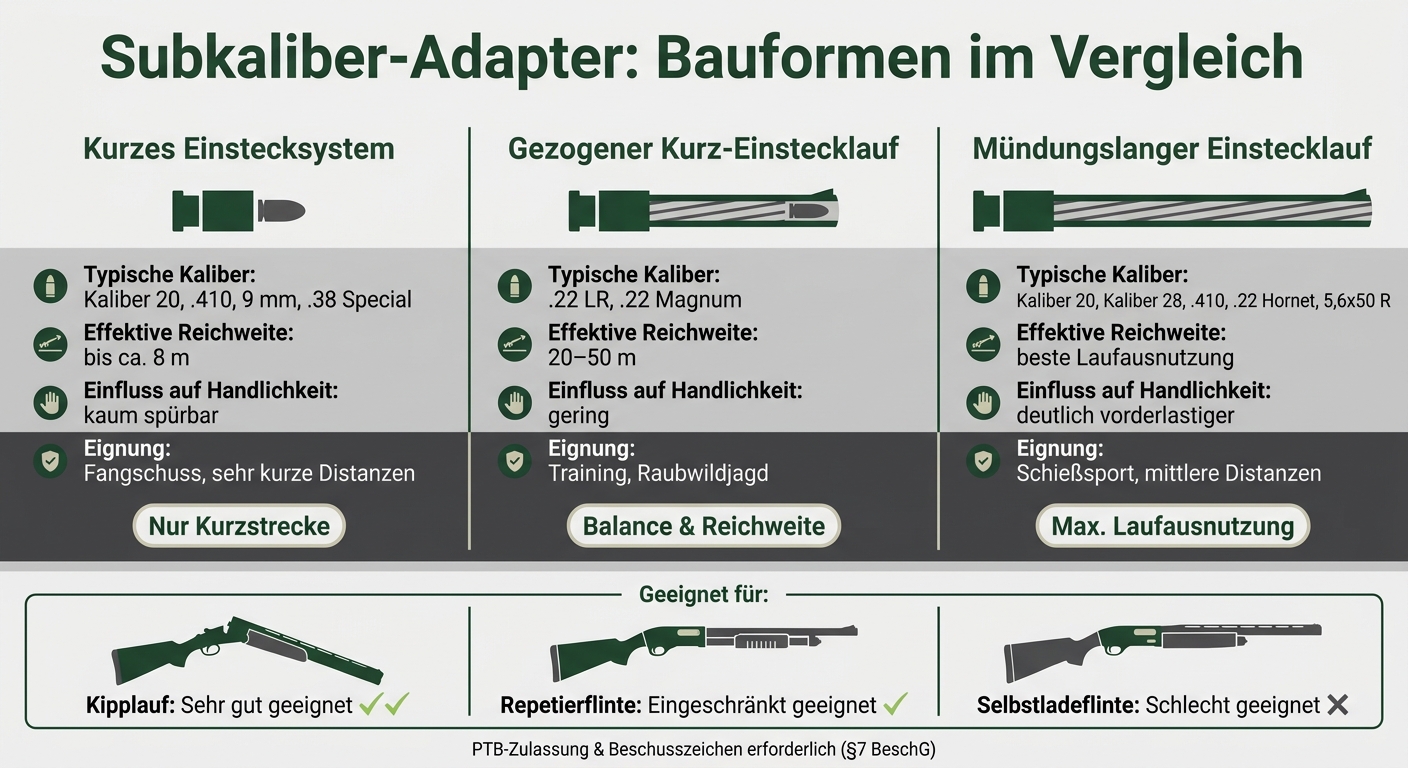
Subcaliber Adapter for Shotguns: Designs Compared
Depending on the design, range, precision, and handling can change significantly.
Short Insert Systems for Smaller Shotgun Calibers
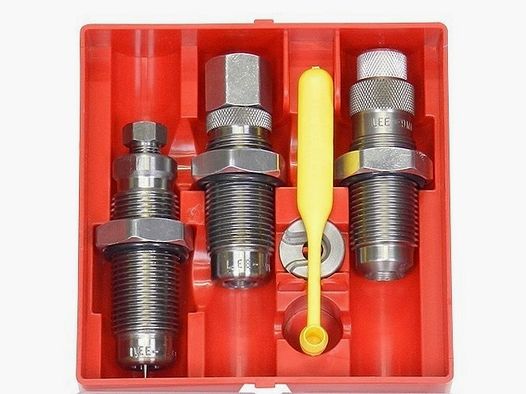
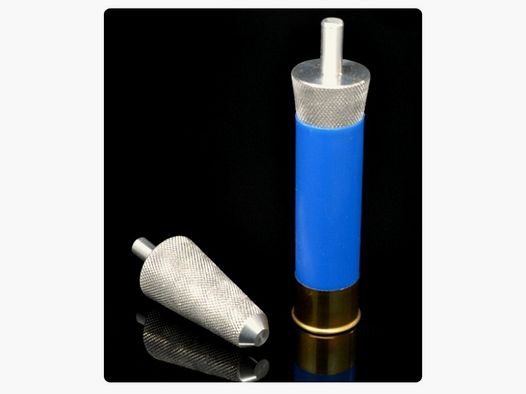
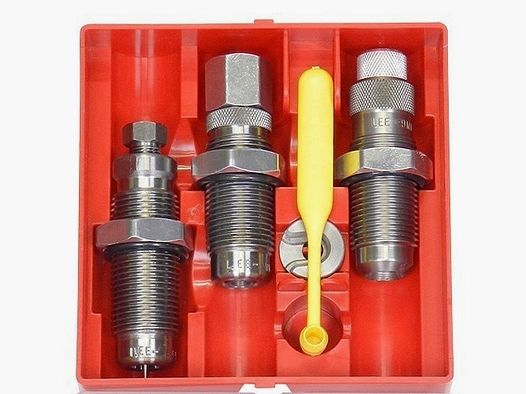
Short insert systems are designed for very short distances. They sit completely in the chamber and are fitted precisely. This keeps them stable during the shot. Typical calibers include caliber 20, .410, 9 mm, or .38 Special.
The precision is clearly limited here. With pistol calibers, about 8 m is realistic[3]. Thus, they are basically only suitable for the follow-up shot. One point from practice is important here: Break-action firearms like drilling guns or over-and-under rifles make manual extraction easier because automatic ejectors often do not grip the small rim of the cartridges cleanly.
Rifled short insert barrels for rimfire and pistol calibers
Rifled short insert barrels provide more range than smooth cartridges, yet remain lightweight. They have a short, rifled barrel. This stabilizes .22 LR or .22 Magnum better than in a smooth cartridge. In practice, 20 to 50 m is achievable[2].
The downside: loading and extraction are done manually and thus slower. However, the weight is low, and the balance of the weapon changes little. This is especially noticeable when one wants to handle the weapon as usual.
Muzzle-length insert barrels in shooting sports
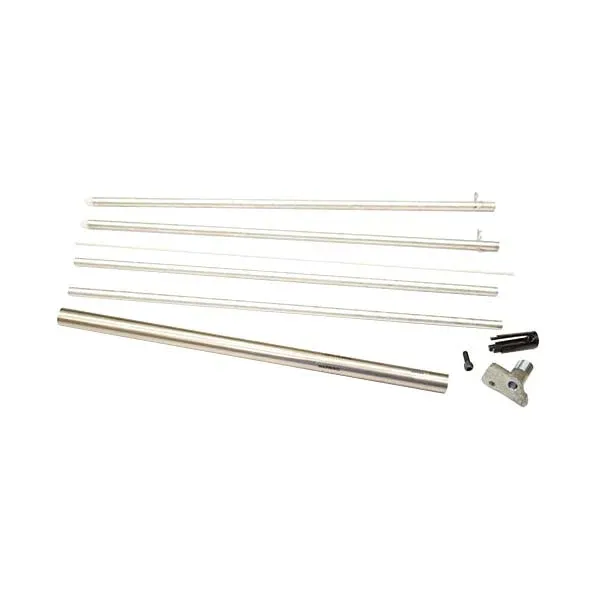
Muzzle-length insert barrels extend from the chamber to the muzzle. This allows them to make the best use of the barrel. Among the designs, they provide the best barrel utilization. Many systems can be adjusted at the muzzle to match the point of impact to the original barrel. Such solutions also exist for stronger cartridges like .22 Hornet or 5.6x50 R.
The catch is obvious: the shotgun becomes noticeably front-heavy. This is where the core difference between the designs shows: not only in range but also in the feel in the hand.
| Design | Typical calibers | Effective range | Influence on handling |
|---|---|---|---|
| Short insert system | Caliber 20, .410, 9 mm | up to approx. 8 m | hardly noticeable |
| Rifled short insert barrel | .22 LR, .22 Magnum | 20–50 m | low |
| Muzzle-length insert barrel | Caliber 20, Caliber 28, .410 | better barrel utilization | significantly front-heavy |
Advantages and disadvantages: Where adapters help and where they reach their limits
The main advantages for hunting and training
After the designs, practice is what counts most. An adapter can make a shotgun significantly more versatile for training and short missions. Anyone who already has a 12-gauge shotgun in the cabinet can also use smaller cartridges like .22 LR or 9 mm without having to buy a second weapon. This noticeably saves money, especially with regular training at the range.
Additionally, there is less recoil. This helps especially young hunters and shooters who are sensitive to strong recoil. This makes the entry easier, and clean training becomes simpler. For the follow-up shot on big game, an adapter for .38 Special can also be a compact additional solution.
Limits in Range, Precision, and Handling
Nevertheless, it holds true: An adapter is not a substitute for a weapon that was specifically built for this purpose. Short insert systems primarily showcase their strengths at short distances. They are not intended for precise shots at medium range.
Long insert barrels extract more from range and precision, but they also come with disadvantages. The shotgun becomes heavier and often front-heavy [3]. You can feel this during quick swings and fluid mounting. Additionally, there is another point: Many adapter solutions are single-shot. Subsequent shots therefore take longer. Cleaning also requires more time because fouling accumulates in the transition between the adapter and the barrel [3].
Typical Use Cases in German Hunting Practice
In everyday hunting, two cases arise repeatedly. In combination guns or buckshot rifles, the shotgun barrel is often fitted with an insert barrel for .22 LR to hunt vermin at short distances [3]. This saves the need to carry a second weapon while on the stand.
At the stand, adapters are particularly interesting for affordable training and for the introduction of new shooters. For the follow-up shot at short distances – up to about 8 m – an insert barrel for the follow-up shot has long been a proven solution in German hunting practice [3]. If it goes beyond that, the purpose-optimized weapon clearly showcases its strengths.
Before purchasing, you must check safety, legality, and fit.
Safety, Legal Situation, and Compatibility in Germany
Safety Rules for Adapters
Depending on design and use, we come to the point where no compromises should be made: safety, approval, and exact fit. Even small deviations in dimensions, missing test marks, or the wrong type of shotgun can lead to an adapter working poorly or even being illegal.
The core rule is simple: Adapters must fit exactly to the chamber – otherwise, gas loss and malfunctions are at risk [5]. Only one type of ammunition should be used per application. Before each use, a quick, thorough check for cracks, deformations, and deposits is worthwhile. After firing, adapters and barrels should be cleaned [1].
With rimfire adapters like .22 lfb in centerfire shotguns, there is an additional point to consider: The firing pin must hit the primer cleanly. If this is not the case, misfires are almost guaranteed[1]. Therefore, check before purchasing whether the adapter is approved for your shotgun.
After that, the design of the shotgun plays a significant role in how smoothly and reliably everything operates.
Weapons Law and Hunting Law: What You Must Check First
Before purchasing, the first consideration is what is legally permitted and usable for hunting. Serially manufactured insert barrels and adapters for smaller cartridges require a PTB approval and the necessary proof marks[4].
For hunting, the Federal Hunting Act and the respective state hunting laws also apply. Especially short adapters often do not meet the minimum energy required for hunting. In practice, this means: They are often not an option for regular hunting and are at best suitable for the finishing shot[1][6].
| Feature | Legal Requirement | Legal Basis |
|---|---|---|
| Type Approval | PTB approval required for serially manufactured adapters and insert barrels | § 7 BeschG |
| Proof Marks | Adapters must bear official proof marks[4] | BeschG |
| Hunting Use | Must meet minimum energy E100 per game species; short adapters usually only suitable for the finishing shot[6] | BJagdG / LJagdG |
Which Shotgun Types Work Best with Adapters
Adapters work best in break-action firearms. There, handling is usually simple, and control is easy. In the case of repeaters and semi-automatics, it often looks different: Reliability noticeably decreases.
| Shotgun Type | Suitability | Extraction and Reliability |
|---|---|---|
| Break-action (Over-Under, Drilling) | Very good | Manual extraction reliable; chamber easily checkable[1] |
| Repeater Shotgun (Pump-action) | Limited | Often weaker reliability when extracting; manual reloading necessary |
| Semi-automatic Shotgun | Poorly suited | Semi-automatic shotguns often function unreliably with sub-caliber and tend to jam |
For older shotguns, you should first check the proof marks.
Purchase, Maintenance, and the Most Important Things at a Glance
What You Should Check Before Buying
Once the fit and legal situation are clarified, it’s time for selection and maintenance. Before purchasing, especially check the fit, the extraction system, and the approval for your shotgun. Especially with break-action firearms, the extractor and chamber dimensions are the crucial points.
It is also important to consider how the adapter extracts the shell. Does it have its own extractor or does it use the shotgun's extractor? With rimless cartridges like .222 Rem, otherwise, extraction problems can occur[3]. Simply put: short for short distances, long for better ballistics.
If the adapter requires a permanent mount or a muzzle thread, it’s not suitable for the home workshop. Then a gunsmith should take over. After that, a new proof may also be necessary.
You can find suitable shotguns, adapters, and ammunition on Gunfinder.
After that, maintenance is what counts. It often determines whether the adapter runs smoothly or causes trouble.
Cleaning, Storage, and Wear Indicators
Remove the adapter after each use, clean the adapter and barrel separately, and store it dry and lightly oiled. It sounds trivial, but it makes a big difference. Residues between the adapter and barrel worsen fit, extraction, and cleaning.
You should regularly pay attention to these wear indicators[7]:
- Cracks or deformations on the adapter housing
- Damaged contact surfaces that no longer center the adapter properly
- Noticeable play in the bearing
- Severe wear on the inside
If the adapter shows any of these characteristics, you should take it out of service immediately[3][7].
This reduces the risk of failures and costly wrong purchases.
Conclusion: The Most Important Points at a Glance
Sub-caliber adapters make a shotgun more versatile. However, their usefulness ends where range and precision are required. Four points remain crucial: fit, legal situation, maintenance, and the suitable weapon.
FAQs
Which adapter fits my shotgun?
The suitable adapter primarily depends on what you want to use it for.
For shotguns in 12 gauge, there are adapters for other shotgun calibers like 20, 16, 28, or .410. Additionally, there are models for various centerfire pistol calibers. When it comes to dry training, there are also adapters for laser training cartridges.
Regarding barrel type, you basically have two options:
- Smooth barrels for simple applications
- Rifled barrels, if precision is important to you
In short: First determine the purpose, then choose the appropriate caliber and barrel type.
What is a sub-caliber adapter useful for?
A sub-caliber adapter makes your shotgun more versatile. With it, you can fire different calibers with the same weapon, for example, to use different ammunition or save money.
This is also practical for affordable training. Depending on the application, the adapter may also be suitable for the legal finishing shot with smaller cartridges from the shotgun.
What is legally allowed in Germany?
In Germany, holders of a WBK can purchase and possess insert barrels, insert systems, and reducer sleeves without a permit - provided the appropriate basic weapon is already registered in the WBK.
The important point here is: These systems are still subject to registration. They must be registered in a timely manner with the responsible authority in the WBK. Furthermore, they are considered essential parts of the weapon and therefore require a valid proof mark.
Hunters may legally use finishing shot devices for the finishing shot.