Barrel length and precision: short or long barrels for .308 Win and 6.5 Creedmoor?

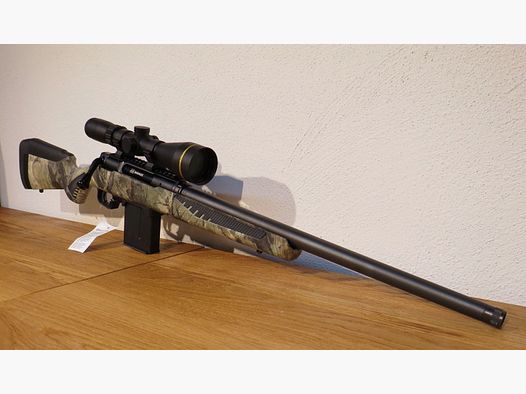
The choice of barrel length in hunting rifles significantly affects precision, energy, and handling. Short barrels (under 55 cm) are lighter, stiffer, and ideal for tight environments like dense forests or driven hunts. However, they lose velocity and energy, especially at lengths under 47 cm. Long barrels (from 61 cm) deliver higher velocities, flatter trajectories, and better results at long distances, but are heavier and less maneuverable.
Key points:
- Short barrels: Better handling, stiffness, ideal for distances under 100 meters.
- Long barrels: Higher muzzle velocity, flatter trajectories, optimal for long distances.
- Caliber choice: .308 Winchester works well with short barrels; .30-06 Springfield requires longer barrels for full performance.
Quick comparison:
| Feature | Short Barrels | Long Barrels |
|---|---|---|
| Handling | More agile, lighter | Heavier, less handy |
| Precision | Good at short distances | More consistent at range |
| Velocity | Lower loss | Higher muzzle velocity |
| Use case | Forest, driven hunt | Stand hunting, long range |
The right choice depends on your hunting style and preferred distances.
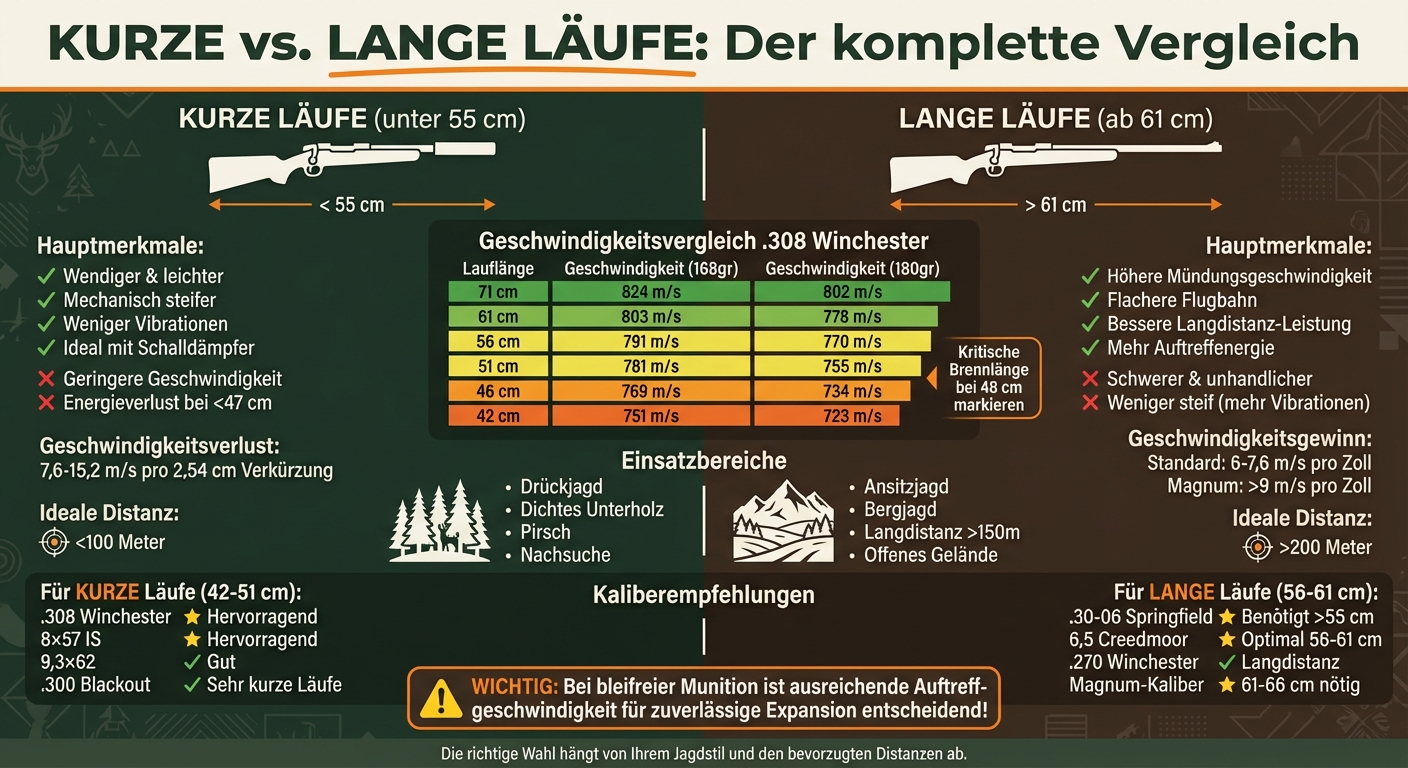
Short vs. long rifle barrels: performance comparison for hunting
Short Barrels: Performance and Characteristics
Velocity and Energy Loss
Short barrels directly affect muzzle velocity because the powder has less time to release its full energy. On average, a rifle loses between 7.6 and 15.2 m/s in velocity for every 2.54 cm reduction in barrel length [7]. How severe this loss is depends on the caliber and type of powder used. Fast-burning powders, like those used in the .308 Winchester, show less loss than slower-burning magnum powders [7].
An example: For the .308 Winchester, shortening the barrel from 50.8 cm to 45.7 cm resulted in a velocity loss of only 9.7 m/s (32 fps) [4]. In comparison, the .30-06 Springfield loses significantly more energy with barrels under 55 cm and thus its advantage over the .308 [1]. The optimal powder burn length for the .308 Winchester is about 48 cm – if this is undershot, losses noticeably increase [1]. This lower velocity affects not only ballistic performance but also precision.
Precision Factors
Besides velocity and energy, the structural properties of a short barrel significantly contribute to precision. Shorter barrels are mechanically stiffer, minimizing vibrations and bending during the shot. This improves precision. Short barrels act like a shorter lever arm, reducing vibration amplitudes and the so-called whip effect [4]. Eugene Nielsen explains:
"A shorter barrel is stiffer and vibrates less... Shorter barrels generally have vibrations with smaller amplitude than longer barrels." [4]
Practical examples show that rifles with 45.7 cm barrels achieve sub-1/4-MOA accuracy and deliver comparable results to 50.8 cm models at distances up to 550 meters [4]. In a test by the Palomino Valley Gun Club in May 2017, a 6.5 x .284 barrel with 58.4 cm length showed a group size of 0.349 inches, while the 66 cm control barrel had a nearly identical group size of 0.338 inches [6]. Especially at short distances under 100 meters, short barrels often offer better shot-to-shot precision, as the reduced vibrations allow for more consistent impacts.
Handling and Use in the Field
Apart from the technical aspects, short barrels convince with their practical handling in everyday hunting. In dense terrain, the compact design is a real advantage [1]. The lighter weight makes them ideal for driven hunts, tracking, or stalking, where agility is required [6]. Mathias Haack from all4shooters sums it up:
"A short barrel makes sense for dog handlers and driven hunters. If you shoot beyond 100 meters, you should consider a standard barrel." [1]
Another plus is compatibility with suppressors. Short barrels prevent the overall length of a rifle with a mounted suppressor from becoming too unwieldy [4]. However, they generate higher muzzle pressure, which can increase the stress on the suppressor [1]. For calibers like .308 Winchester or 8x57, which have a high expansion ratio, barrels from 47 cm are considered optimal – offering a balanced combination of performance and handling [4].
sbb-itb-1cfd233
Long Barrels: Performance and Characteristics
Velocity and Energy Retention
Long barrels ensure more efficient powder combustion, which increases muzzle velocity. The propellant gases act on the projectile over a longer distance, which is especially noticeable with slow-burning powders [8][9]. Dan Lilja from Riflebarrels Inc. explains:
"The powder gases push the projectile for a longer duration, which means the projectile leaves the barrel with a higher muzzle velocity. This is especially true for slow-burning powders." [9]
Standard calibers gain on average 6 to 7.6 m/s (20–25 fps) per additional inch of barrel length, while magnum calibers with slow-burning powders can achieve over 9 m/s (30+ fps) [8]. For the .30-06 Springfield, extending the barrel from 40.6 cm to 61 cm increases the muzzle velocity from about 762 m/s (2,500 fps) to 914 m/s (3,000 fps) and the energy from 2,823 joules to 4,068 joules [11]. However, there are limits: with extremely long barrels—usually over 101.6 cm—the friction between bullet and barrel outweighs the remaining gas pressure force [8][9]. This higher muzzle velocity also affects precision.
Precision and Stability
Mechanical precision is not improved by longer barrels, as they are less stiff and more prone to vibrations [8][9][10]. Nevertheless, the higher velocity positively impacts accuracy: a flatter trajectory and less wind drift make precise hits at long distances easier [8][10]. Black Basin explains:
"Barrel length does not affect the mechanical accuracy of your rifle. What actually happens is that the ballistic curve of the bullet becomes flatter with increasing velocity." [8]
To compensate for the lower stiffness, long barrels are often equipped with a heavier profile that reduces the so-called whip effect and harmonic inconsistencies [9][10]. For example, with the .30-06 Springfield, the effective range increases from 400–500 meters with a 16" barrel to over 1,000 meters with a 24" barrel [11]. For magnum calibers with more than 70 grains of powder, barrels from 24" are necessary to ensure complete powder burn and consistent velocity spread [10].
Weight and Handling in Compromise
The extra weight of long barrels brings pros and cons. On one hand, the additional mass reduces recoil and muzzle rise, provides more stability, and makes aiming easier – especially in prone position or in competitions [2][3][5]. Lancetkenyon from the Long Range Hunting Forum says:
"I gladly accept one or three pounds more on the rifle to gain stability and consistency." [10]
On the other hand, long barrels can be unwieldy in tight environments [1][3][5]. Shortening from 690 mm to 660 mm already saves about 280 grams without affecting precision [2]. While short barrels play to their strengths in tight situations, long barrels offer clear advantages for shots at long distances. Gert Mürmann from Waffen Mürmann notes:
"A barrel shortening on the .30-06 only makes sense if you use the rifle exclusively at distances under 100 meters." [1]
For lead-free ammunition, which requires higher impact velocities for expansion, the velocity increase through longer barrels is especially important to ensure ethical hunting [1].
Performance Comparison: Velocity, Energy, and Precision
Velocity and Energy Data
When reducing the barrel length of a .308 Winchester from 71 cm to 42 cm, the bullet loses on average 22.7 fps per inch. This corresponds to a drop in muzzle velocity from 824 m/s to 751 m/s – a total loss of 240 fps[12][15].
For the .30-06 Springfield, the effects are even more pronounced. A reduction in barrel length from 61 cm (24″) to 56 cm (22″) already leads to an average velocity loss of 116 fps[14]. Phillip Engelbreit from EP-Arms explains:
“With the .308 Win., a barrel shortening down to about 47 cm usually has no major impact on energy. Only below that does this caliber lose velocity and thus energy"[1].
The so-called critical burning length of the .308 Winchester is about 48 cm. If this value is undershot, the powder can no longer burn completely[1].
| Barrel Length | .308 Win (168gr Match) | .308 Win (180gr Soft Point) | .30-06 (180gr) |
|---|---|---|---|
| 71 cm (28″) | 824 m/s (2,706 fps) | 802 m/s (2,632 fps) | – |
| 61 cm (24″) | 803 m/s (2,635 fps) | 778 m/s (2,553 fps) | 870 m/s (2,854 fps) |
| 56 cm (22″) | 791 m/s (2,597 fps) | 770 m/s (2,527 fps) | 834 m/s (2,738 fps) |
| 51 cm (20″) | 781 m/s (2,565 fps) | 755 m/s (2,478 fps) | – |
| 46 cm (18″) | 769 m/s (2,523 fps) | 734 m/s (2,411 fps) | – |
| 42 cm (16.5″) | 751 m/s (2,466 fps) | 723 m/s (2,373 fps) | – |
Data from tests by Rifleshooter.com and Dallas Safari Club[12][14]
These losses in muzzle velocity have direct effects on precision, especially at longer distances.
Precision at Different Distances
A difference of 2,660 fps to 2,630 fps in muzzle velocity hardly affects terminal ballistics. Up to a distance of about 600 meters, barrels with lengths of 46 cm and 51 cm show almost identical groupings with the .308 Winchester[4].
Beyond 500–600 meters, however, the lower velocity, greater bullet drop, and increased susceptibility to wind become noticeable[12][1]. The so-called Maximum Point Blank Range (MPBR) – the distance within which no elevation adjustment is needed for a 20-cm target – decreases for the .308 Winchester from 297 m (71-cm barrel) to 270 m (42-cm barrel). This corresponds to a loss of 27 yards[12].
Additionally, with lead-free ammunition, too low an impact velocity can trigger the so-called “full metal jacket effect,” where the bullet no longer reliably expands. Tests with a 180-grain bullet from a 42-cm barrel showed a velocity loss of 5.7% at 100 meters, which led to a lack of expansion in soap block experiments[1].
These differences in ballistics are also reflected in the requirements of various hunting scenarios.
Comparison of Field Use
The choice of barrel length strongly depends on the intended use. Shorter barrels (40–46 cm) are excellent for driven hunts and dense underbrush. They offer high maneuverability, can be shouldered quickly, and are ideal for shots at distances under 100 meters[14][1].
Longer barrels (56–61 cm), on the other hand, are optimal for stand hunting and shots at longer distances over 200 meters. They allow for higher impact energy, a flatter trajectory, and reliable bullet expansion over long ranges[16][1]. With the .30-06 Springfield, it is shown that a shortened barrel (52 cm) loses so much energy that at distance it even falls behind the performance of a .308 Winchester with a comparable barrel length. Phillip Engelbreit warns:
“A further shortening leads to a loss of performance, which goes hand in hand with a correspondingly shorter effective range"[1].
Gert Mürmann from Waffen Mürmann adds:
“Shortening the barrel on the .30-06 only makes sense if you use the rifle exclusively at distances under 100 meters. Beyond that, shortening the barrel on the .30-06 caliber is rather counterproductive"[1].
Caliber-Specific Guidelines
Calibers for Short Barrels
The .308 Winchester shows impressive performance in barrel lengths from 46 to 51 cm, as the powder burn is fully completed in this range[1]. Phillip Engelbreit from EP-Arms explains:
“A .308 can actually be shortened to about 47 cm without major problems. Further shortening leads to a loss of performance, which goes hand in hand with a correspondingly shorter effective range"[1].
The 8×57 IS is also ideal for short barrels and is especially appreciated in driven hunts[1]. Short cartridges with a powder charge of 35 to 50 grains work particularly efficiently in barrel lengths of 42 to 51 cm[17]. For very short barrels (from about 25 cm), special calibers like .300 Blackout and 7.62×39 mm are excellent. These calibers achieve the necessary velocity with less muzzle blast and are therefore quieter than a .308 Winchester with the same barrel length[13].
The choice of caliber for short barrels is crucial to optimally utilize ballistic performance and meet the specific requirements of hunting use.
Calibers for long barrels
The .30-06 Springfield only unfolds its full potential at a barrel length of at least 55 cm. Gert Mürmann emphasizes:
“Shortening the barrel on the .30-06 only makes sense if you use the rifle exclusively at distances under 100 meters. Beyond that, shortening the barrel on the .30-06 caliber is rather counterproductive”[1].
With the 6.5 Creedmoor, a clear difference appears: in a 66-cm barrel, the bullet drop is about 20% less than in a 46-cm barrel[18]. Standard cartridges with long actions (45 to 60 grains of powder) require a barrel length of about 58 to 61 cm, while magnum calibers (60 to 80 grains) work optimally in barrels from 61 to 66 cm[17]. Colton Bagnoli, gunsmith and SWAT sniper, explains:
“Magnum cartridges are a completely different category, with 60–80 grains of powder, which typically need 24–26 inches (61–66 cm) to burn the full charge”[17].
For long barrels, tuning to the caliber is crucial to ensure maximum precision and energy at long distances.
Match barrel length to hunting style
The right barrel length depends heavily on the hunting style. For stalking and driven hunts in dense underbrush, short barrels (42 to 51 cm) in calibers like .308 Winchester or 8×57 IS are ideal. They remain handy and maneuverable even with a suppressor[1][17]. For stand or mountain hunting at distances over 150 to 200 meters, longer barrels (from about 56 cm) in calibers like .30-06 Springfield, .270 Winchester, or 6.5 Creedmoor are indispensable. These provide sufficient impact energy and a flat trajectory[1][17].
Especially with lead-free ammunition, barrel length becomes even more important. Too low impact velocities can prevent bullet expansion, which can impair hunting effectiveness[19].
| Caliber | Ideal barrel length | Short barrel suitability | Typical use |
|---|---|---|---|
| .308 Winchester | 47–51 cm | Excellent | Universal, suppressor, forest |
| 8×57 IS | 47–51 cm | Excellent | Driven hunt, forest, big game |
| .30-06 Springfield | 56–60 cm | Poor (<52 cm) | Field, mountains, big game |
| 6,5 Creedmoor | 56–61 cm | Moderate | Precision, long range |
| 9,3×62 | 47–51 cm | Good | Driven hunt, big game |
Lies have short barrels - 10 points you need to know when it comes to short barrels
Conclusion
The choice between a short and long barrel depends entirely on your hunting practice. Short barrels (approx. 42 to 51 cm) convince with their stiffness and maneuverability. Thanks to reduced vibrations and minimal flexing, they offer mechanically more precise performance [4]. They are especially practical for driven hunts, stalking in dense underbrush, or use with a suppressor [1]. But what does that mean concretely for hunting practice?
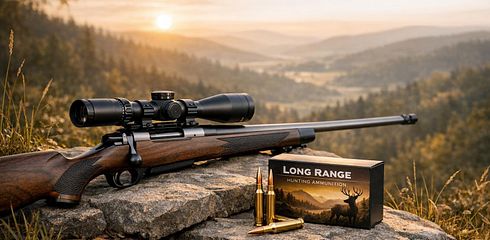
Long barrels (from about 56 cm) play to their strengths when it comes to distance and impact energy. Calibers like .30-06 Springfield or 6.5 Creedmoor benefit from the extra length as they can develop their maximum performance. At distances of 200 meters and more, they deliver the necessary velocity for reliable bullet performance [1][17]. Shortening the barrel can lead to a loss of 10 to 20 fps per centimeter, which can be crucial especially with magnum calibers or lead-free ammunition [1][17]. These differences have direct effects on precision and hunting results.
How do you make the right choice?
- Do you mainly hunt at short distances under 100 meters, move through dense terrain, or use a suppressor? Then a short barrel combined with a suitable short cartridge caliber is ideal.
- Are you often on distances over 150 meters or prefer magnum calibers? Then a longer barrel is the better option [1][17].
An important point: The ammunition must match the barrel length. For example, the RWS Short Rifle series was specifically developed for short barrels, while standard loads lose power in shortened barrels [1]. Therefore, always check the impact velocity at your maximum shooting distance – especially with lead-free ammunition, as its effectiveness strongly depends on velocity [1].
FAQs
What barrel length is ideal for my typical hunting distance?
For the typical hunting distances in Germany of 50 to 200 meters, a barrel length of 18 to 22 inches is excellent. This length offers a balanced combination of precision, range, and easy handling.
- Shorter barrels (around 16 inches): These are significantly more handy but show weaknesses in precision at longer distances.
- Longer barrels (over 24 inches): They improve ballistic properties but make the firearm less maneuverable and handy.
The choice of the right barrel length ultimately depends on the environment and distances you mainly hunt at.
How much does the effectiveness of lead-free ammunition suffer with short barrels?
The performance of lead-free ammunition is less affected by short barrels if the ammunition is specifically designed for these conditions. Current technologies, such as specially adapted projectiles, help reduce performance losses caused by shorter barrel lengths. However, stability and energy delivery, especially with longer bullets, can vary. Therefore, it is important to carefully select the ammunition to ensure both precision and effectiveness.
What barrel length is ideal with a suppressor?
The ideal barrel length combined with a suppressor depends on finding the right balance between precision, handling, and noise reduction. Shorter barrels of about 42 cm are particularly practical, as they are easier to handle with a suppressor and lose hardly any precision.
Longer suppressors have the advantage that they often provide better noise reduction because they offer more space for gas expansion. A barrel length in the range of 42 to 52 cm is often considered a good compromise, suitable for both hunting and precise shots.