Checklist: Buying Handmade Hunting Knives
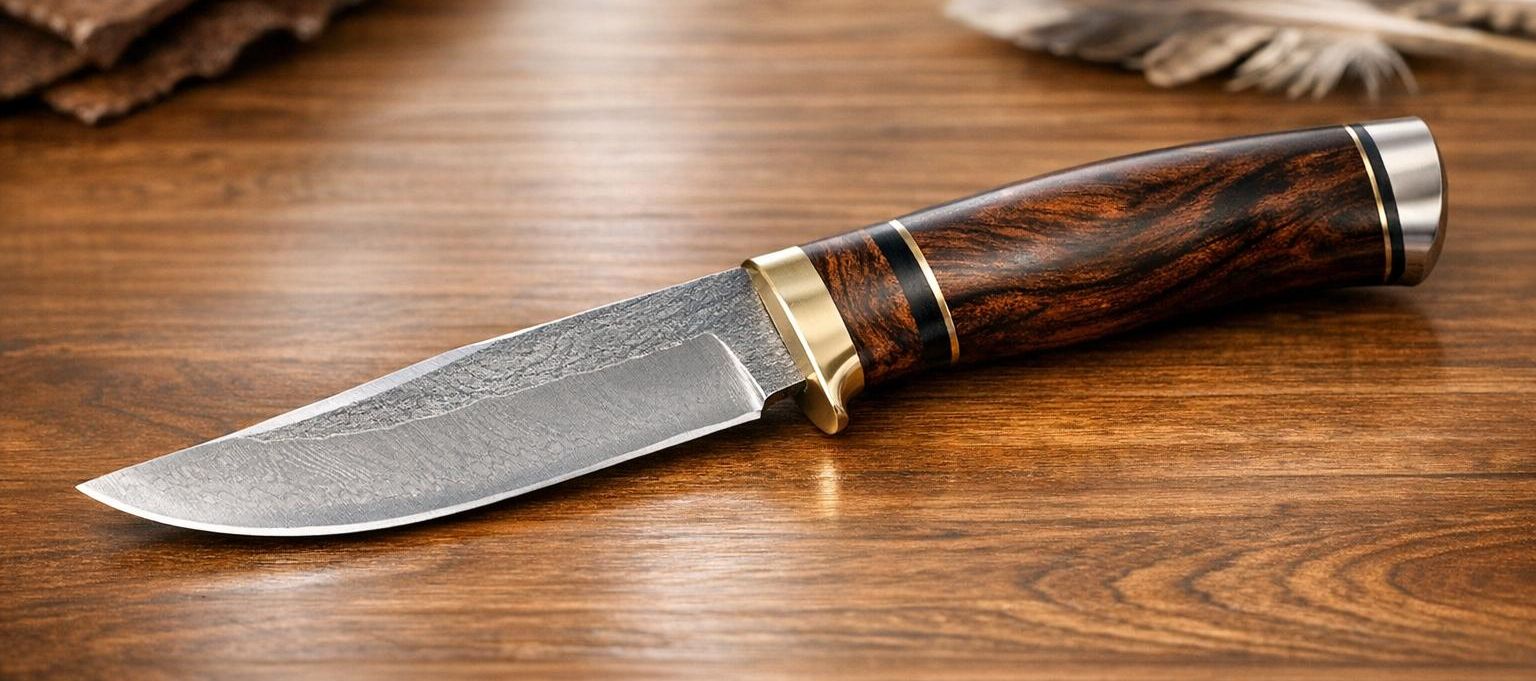
Handcrafted hunting knives offer precision, durability, and individuality. They differ significantly from industrially manufactured models through high-quality materials such as stag horn or stabilized wood, precise workmanship, and technical features like full tang constructions. These knives are not just tools but also expressions of craftsmanship and functionality. Here are the key points to consider when purchasing:
- Material and hardness of the blade: Choose stainless steels like Böhler N690 (60–61 HRC) for high edge retention and corrosion resistance. Carbon steel is sharper but requires more maintenance.
- Blade shape and size: Drop-point or skinner blades are ideal for precision tasks, while hunting blades are suitable for heavy work. Pay attention to a blade length that fits your requirements (e.g., 8–12 cm depending on the game).
- Handle material: G-10, Micarta, or stabilized wood offer durability and good grip, even when wet. Natural materials like stag horn are grippy but more sensitive.
- Legal requirements: In Germany, knives with fixed blades over 12 cm may only be carried with a legitimate interest. One-handed knives with locking mechanisms are generally prohibited.
- Price range and quality: Entry-level knives start at €70, while premium models made of Damascus steel can reach up to €2,500. Look for precise workmanship and seamless transitions between blade and handle.
Quick Comparison
| Criterion | Options | Recommendation |
|---|---|---|
| Blade material | Carbon steel, Böhler N690, Sandvik 14C28N | Böhler N690 (60–61 HRC) |
| Handle material | G-10, Micarta, stabilized wood, stag horn | G-10 or stabilized wood |
| Blade shape | Drop-point, skinner, hunting blade | Drop-point for versatility |
| Price | €70 – €2,500 | €150 – €350 |
| Legal requirements | Blade length ≤ 12 cm, one-handed knives prohibited | Carry hunting license |
With Gunfinder, you can find handcrafted hunting knives from brands like PUMA or Rotwild, compare prices, and filter specifically according to your requirements. Pay attention to details like blade hardness, handle material, and accessories like leather sheaths to choose the ideal knife for your hunting needs.
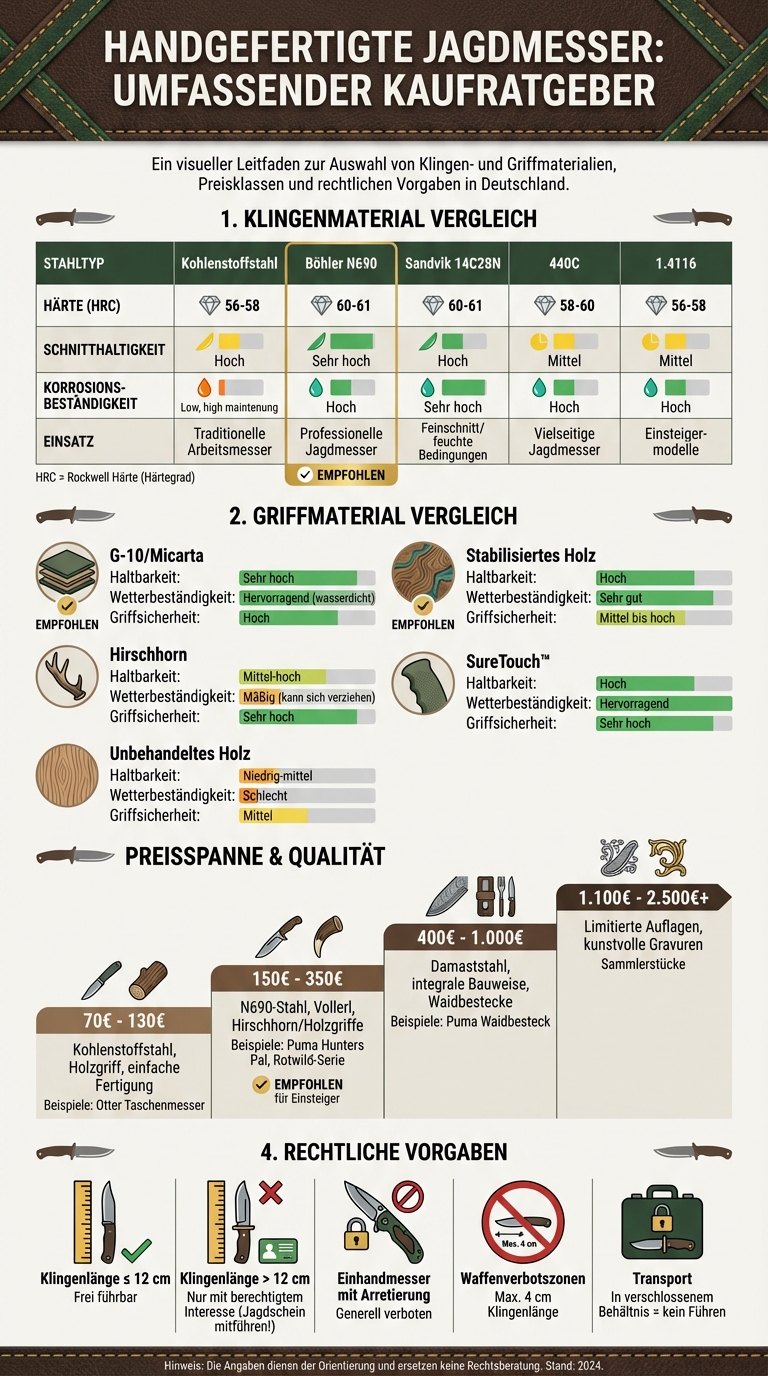
Handcrafted Hunting Knives Purchase Decision: Materials, Prices, and Quality Features Compared
Legal and Ethical Foundations in Germany
Legal Requirements
In Germany, the purchase and possession of a handcrafted hunting knife is generally permitted. However, strict rules apply to the public carrying of such knives, as specified in § 42a of the Weapons Act (WaffG). A crucial limit is the blade length of 12 cm: If a fixed knife exceeds this measurement, it may only be carried with a legitimate interest. Hunting is explicitly counted among these legitimate interests.
One-handed knives with locking mechanisms – that is, knives that can be opened with one hand and whose blade is fixed – are subject to a general carrying ban. Both features must be met simultaneously for a knife to be classified as a one-handed knife. In so-called weapon prohibition zones, which can be designated by municipalities, even stricter rules apply: Here, the blade length for fixed or lockable knives may be a maximum of 4 cm.
However, there is an important exception for transport to the hunting area: If the hunting knife is transported in a closed container – such as a lockable bag or a special case – this is not legally considered carrying. It is also advisable to always carry the hunting license with you to prove legitimate interest during a check. In addition to complying with legal requirements, responsible handling of the knife plays a central role.
Ethical Guidelines
In the German hunting tradition, the knife is much more than just a tool – it represents a respectful and species-appropriate handling of game. Activities such as "nicking," which is the precise cut to quickly relieve injured game of its suffering, or "gutting," require specially adapted blades. Typical forms like the hunting knife or the hunting blade are indispensable for this. It's not just about efficiency but also about approaching the animal with dignity.
The design of a hunting knife follows clear functional requirements. Ergonomic handles with finger grooves and a well-thought-out blade geometry – such as belly-shaped edges or narrow drop-point blades – ensure that precise work is possible under all weather conditions. Therefore, anyone choosing a handcrafted hunting knife should always prioritize functionality over aesthetics. After all, a knife is a tool, not a piece of jewelry.
Checklist: Blade Selection
Blade Shape and Size
The choice of blade shape should always be tailored to the specific hunting task. The drop-point, one of the most popular shapes, is characterized by a convex spine leading to the tip, allowing for precise control. For gutting, a gutting blade is ideal – its rounded or thickened tip prevents accidentally piercing the entrails. A skinner with its belly-shaped edge is specifically designed for skinning. For heavier tasks, such as intercepting injured game, robust blades like the hunting blade or the boar catcher are used. These blades are often equipped with a blood groove to make use more efficient.
The blade length should also be matched to the game: For roe deer, 8–10 cm is suitable, while for wild boar, 10–12 cm is ideal. However, note that fixed blades over 12 cm may only be carried in public with a legitimate interest. The blade thickness also plays an important role: Work knives with a thickness of 4–5 mm, such as the Puma Hunters Pal or Rotwild Falke, provide the necessary stability for demanding tasks.
Steel Types and Hardness
Once the blade shape is determined, the steel decides on cutting performance and durability. This depends on sharpness, edge retention, and maintenance effort. Stainless steels like 440C, N690, or 14C28N are a good choice as they are corrosion-resistant and maintain their sharpness for a long time. Knives made from N690 or 14C28N often achieve a hardness of 60–61 HRC. Carbon steel, such as 1095 or C75, is extremely sharp and easy to sharpen but requires regular maintenance as it rusts more quickly.
Damascus steel, which is created by welding different types of steel, impresses not only with its characteristic appearance but also with a hardness of up to 61–62 HRC, depending on the materials used. For beginners, a stainless steel with medium hardness (56–58 HRC) is recommended, as it is easy to maintain and forgives minor handling errors.
| Steel Type | Hardness (HRC) | Edge Retention | Corrosion Resistance | Application Area |
|---|---|---|---|---|
| Carbon Steel | 56–58 | High | Low | Traditional Work Knives |
| Böhler N690 | 60–61 | Very High | High | Professional Hunting Knives |
| Sandvik 14C28N | 60–61 | High | Very High | Fine Cutting/Wet Conditions |
| 440C | 58–60 | Medium | High | Versatile Hunting Knives |
| 1.4116 | 56–58 | Medium | High | Entry-Level Models |
Blade Quality and Workmanship
The quality of a knife is reflected in its workmanship. High-quality blades are recognized by precise, symmetrical grinds and seamless transitions between blade and handle. In top-notch knives, the handle scales are adjusted by hand so that no gaps occur between the guard or bolster. Another quality feature is the centered alignment of the blade – it should not be offset to the side.
Integral constructions, where the blade, tang, guard, and pommel are made from a single piece, offer maximum stability and hygiene. A ricasso (unground area above the handle) facilitates precise cuts and directional changes. Textured backs (jimping) improve grip in difficult conditions. An engraved manufacturer’s mark rounds off the appearance and confirms the high-quality craftsmanship.
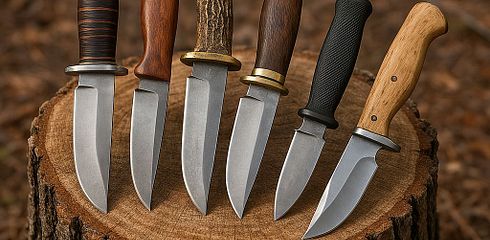
4 Extraordinary MORLOS Hunting Knives by Claude Dozorme, Handmade in France
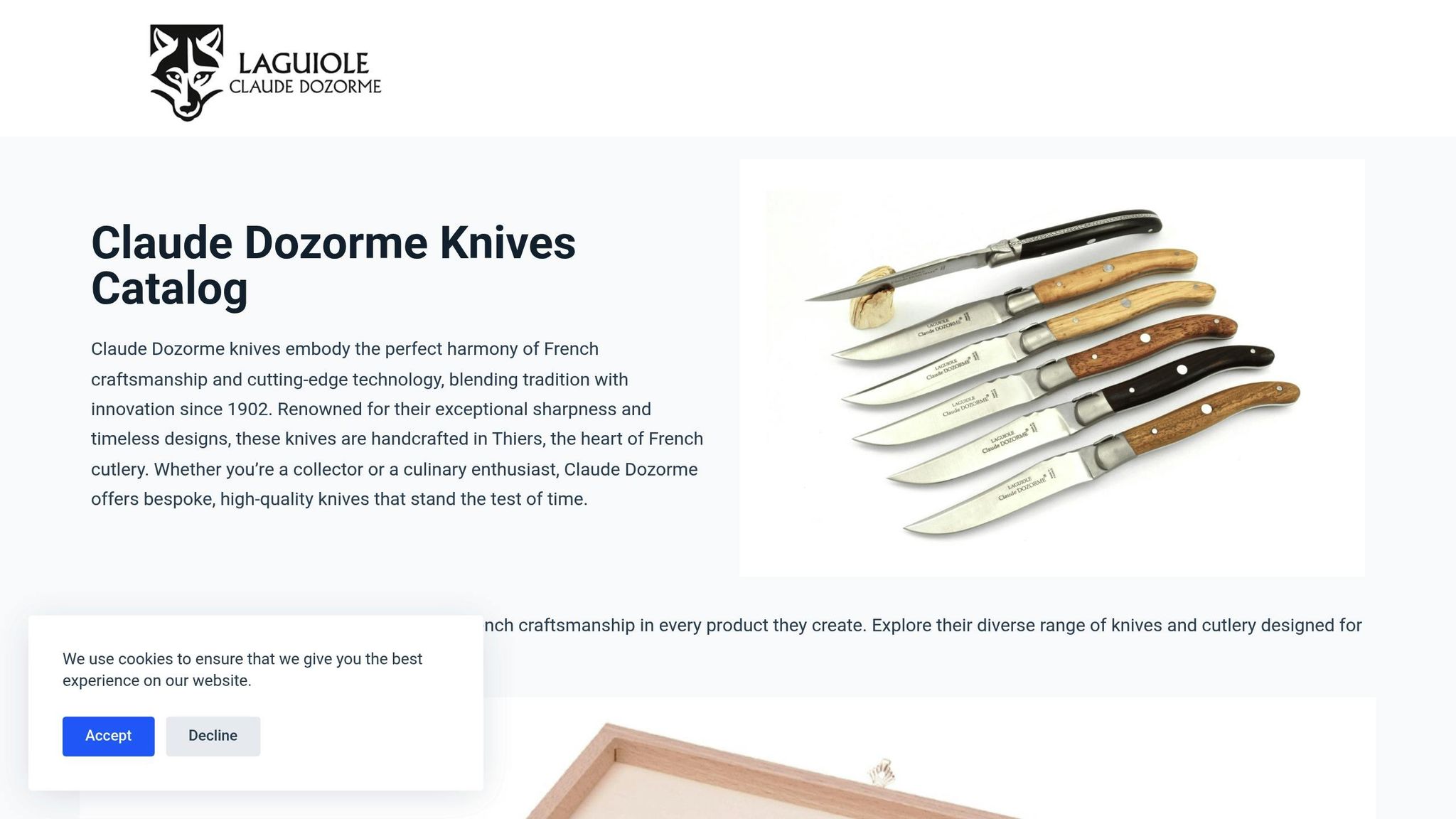
Checklist: Handle and Ergonomics
After checking the blade quality, you should also closely examine the handle and ergonomics. After all, they significantly influence how securely and comfortably a knife fits in the hand.
Handle Materials and Grip
The material of the handle plays a crucial role, especially in wet, cold, or bloody hands. Synthetic materials like G-10 and Micarta are real favorites here. G-10, a fiberglass-reinforced plastic, is extremely resistant to moisture, heat, and chemicals. Micarta, made from resin-pressed linen, canvas, or paper, also scores with its robustness and is excellent for outdoor use as it neither shrinks nor tears. Both materials remain comfortable in hand even at extreme temperatures.
Stabilized wood is another exciting option. It is treated in a vacuum with synthetic resin, making it resistant to moisture, temperature fluctuations, and game juices. This keeps it dimensionally stable and prevents swelling or shrinking. For particularly slip-resistant properties, SureTouch™ is recommended, a composite material made of G-10 and rubber. It combines durability with excellent grip, even in difficult conditions. Natural materials like stag horn have a textured surface that is naturally grippy. However, they are hygroscopic, meaning they can warp or crack under high moisture or heat.
“Wood swells when it absorbs moisture and shrinks when drying... Stresses can build up in wood when exposed to large moisture changes... leading to cracking, warping, or separating from the tang.” – Richard Kappeller, Master Knife Maker
Handle Construction and Tang
In addition to the material, the construction of the handle is crucial. A full tang construction, where the blade steel runs the entire length and width of the handle, ensures maximum stability. Ensure that the handle scales are cleanly and flush connected to the tang to avoid moisture damage. High-quality knives often use fiber inlays (liners) between the handle and tang to reinforce the connection and enhance aesthetics.
An integral construction, where the blade, tang, guard, and pommel are made from a single piece, offers the highest stability and hygiene. There are no seams through which moisture could penetrate. A seamless transition between the guard and handle scales is another quality feature.
Comfort and Balance
A knife handle should not only be well-made but also comfortable in the hand. A balanced weight distribution, often achieved through a tapered flat grind in full tang models, facilitates cutting and ensures stability. Safety features such as a pronounced finger groove or a hand guard prevent the hand from slipping onto the blade during heavy or wet work and support an ergonomic hand position. Additional grip is provided by textured backs (jimping) on the spine of the blade – particularly useful in bad weather.
For longer tasks, handles with a convex or slightly downward-curved shape are ideal. Wooden handles feel "warmer" and offer a special look but require more maintenance and can warp under extreme conditions. Synthetic materials like G-10, on the other hand, are maintenance-free and retain their shape even when in contact with water, blood, or extreme cold. For outdoor or survival knives, a lanyard hole at the end of the handle is practical: it allows for the attachment of a wrist strap to prevent losing the knife.
| Material | Durability | Weather Resistance | Grip Security |
|---|---|---|---|
| G-10 / Micarta | Very High | Excellent (waterproof) | High (with textured surface) |
| Stabilized Wood | High | Very Good | Medium to High |
| Stag Horn | Medium-High | Moderate (can warp) | Very High (natural texture) |
| SureTouch™ | High | Excellent | Very High (rubberized) |
| Untreated Wood | Low-Medium | Poor (hygroscopic) | Medium |
sbb-itb-1cfd233
Checklist: Quality, Manufacturer, and Price
After checking the blade and handle, it's time to consider overall quality, the manufacturer's reputation, and pricing. These three aspects determine whether you acquire a knife that will reliably accompany you for years.
Craftsmanship Quality
In a handcrafted hunting knife, quality often lies in the details. Ensure that the transitions between the blade and handle, as well as between handle material and metal fittings, are clean and seamless. This prevents dirt or moisture from penetrating. The grinding patterns on the blade should run evenly, and all metal elements – such as brass or nickel silver fittings – must be smooth and flawlessly polished. You can test the balance of the knife by balancing it on a finger at the guard – a well-balanced knife remains horizontal. For handles made of natural materials like stag horn or wood, color variations and grain patterns are not flaws but signs of authenticity. This precision and attention to detail are hallmarks of high-quality craftsmanship and significantly contribute to the manufacturer's reputation.
Manufacturer Reputation and Information
The reputation of the knife maker is a crucial factor. Memberships in professional associations such as the German Knife Makers Guild or a background from well-known cities like Solingen often signify verified quality and craftsmanship tradition. Good manufacturers provide detailed information about the type of steel and the Rockwell hardness value of their knives. Additional services such as sharpening courses, repair services, or satisfaction guarantees can also indicate the seriousness of a provider. Brands like Schmiedeglut, Otter, or the Rotwild series score with excellent customer reviews and high standards. Regular participation in trade fairs like the Olchinger Knife Days also indicates a committed and reliable manufacturer. Ultimately, quality, reputation, and service are also reflected in the price – more on that in the pricing categories.
Price Range and Value
Handcrafted hunting knives come in various price ranges, depending on the materials used and workmanship:
- Entry-level models: Knives from regional production, often with carbon steel and wooden handles, cost between €70 and €130.
- Mid-range: Professional knives with full tang construction, N690 steel, and handles made of stag horn or stabilized wood range from €150 to €350.
- Premium models: Knives made of Damascus steel or titanium, often in custom designs, are priced between €400 and €1,000.
- Collector's items: Limited editions with artistic engravings or special designs start at €1,100 and can cost up to €2,500 or more.
| Price Range | Typical Features | Examples |
|---|---|---|
| €70 – €130 | Carbon steel, wooden handle, simple manufacturing | Otter pocket knife, Au Sabot |
| €150 – €350 | N690 steel, full tang, stag horn or wooden handles | Puma Hunters Pal, Rotwild series |
| €400 – €1,000 | Damascus steel, integral construction, hunting cutlery | Puma hunting cutlery, Martin Huber |
| €1,100 – €2,500+ | Limited editions, artistic engravings | Collector's items from renowned forges |
A reasonable price reflects not only the quality of materials and craftsmanship but also the service. High-quality knives often come with a handcrafted leather sheath. Some manufacturers even include vouchers for professional sharpening or a lifetime maintenance consultation. Such extras underline the value of a good hunting knife.
Where and How to Buy
Where can you find your perfect handcrafted hunting knife? Choosing the right knife should be well thought out – whether you visit a local specialty store or use a specialized online platform.
Inspection Before Purchase
If possible, you should hold the knife personally. This way, you can check if it fits well in your hand and if the balance is right. Ensure that the blade and handle are seamlessly and precisely connected. The handle scales should fit cleanly against the guard and tang to prevent moisture from penetrating.
For handle materials like stag horn or walnut, color and structure variations are completely normal – these make each knife a unique piece. If a personal inspection is not possible, online platforms offer a practical alternative. A recommended address for this is Gunfinder.
Using Gunfinder
Gunfinder offers a wide selection of handcrafted hunting knives from well-known brands like PUMA, Rotwild, and Hartkopf. The platform provides you with three purchasing options:
- Classified ads to negotiate directly with sellers.
- Auctions, ideal for bargain hunters.
- Immediate purchases at fixed prices if you want to act quickly.
To find a knife, simply navigate through “Browse” > “Accessories” > “Hunting Knives.” Using the filter options, you can narrow your search by criteria such as blade material, handle type (e.g., stag horn, Micarta, or wood), and price range.
Trust the high-resolution photos and detailed product descriptions. Reputable providers include important details such as the type of steel (e.g., Böhler N690 or Sandvik 14C28N), the hardness level (usually 55–62 HRC), and the blade thickness (usually 4–5 mm). Ensure that a leather sheath is included in the delivery.
A particularly useful feature: You can save search requests and will be automatically notified when new handcrafted knives are listed. Solingen brands like PUMA, Rotwild, or Hartkopf are especially recommended as they stand for precise craftsmanship.
Many dealers on Gunfinder offer additional benefits, such as vouchers for professional sharpening or a price guarantee. If you find the knife cheaper elsewhere, you receive a 3% discount. Some shops even offer extended return periods of up to 60 days, allowing you to test the knife thoroughly.
Conclusion
Our checklist summarizes all the important points – from legal requirements to quality checks. The purchase of a handcrafted hunting knife should be well thought out and meet clear criteria, such as legal regulations and quality features. Remember to always transport larger knives in a closed container and to observe local regulations.
When assessing quality, tangible properties play a central role: High-quality steels like Böhler N690 or Sandvik 14C28N with a hardness of 55 to 61 HRC, a full tang construction for stability, and precisely crafted handle scales. Brands from Solingen like PUMA, Rotwild, or Hartkopf stand for traditional craftsmanship and verified materials.
The price range ranges from about €75.00 to €799.99. For a reliable work knife with natural handle materials like stag horn or walnut, a budget between €119.00 and €290.00 is recommended.
Gunfinder offers you numerous advantages as a specialized platform: Security through identity verification, a wide selection of handcrafted knives, and flexible purchasing options – from classified ads to auctions to immediate purchases. With the filter functions, you can specifically search for steel types, handle materials, and price ranges and be informed about new offers through saved search requests.
With this checklist, you will find a handcrafted hunting knife that is legally compliant, well-crafted, and optimally tailored to your hunting needs. This makes the purchase of your ideal knife simple and secure.
FAQs
Which blade shape is ideal for different tasks in hunting?
The choice of the appropriate blade shape strongly depends on the planned hunting tasks. A straight blade, as found in the classic hunting knife, is excellent for gutting and skinning game. It allows for powerful and precise cuts. For more versatile tasks, a drop-point knife is recommended. Thanks to its rounded tip and slightly curved edge, it is suitable for both precise and powerful cuts.
When skinning, the skinner shows its strengths. With its narrow, pointed blade, it is specifically designed for this task. If bones or larger pieces of meat need to be cut, a gutting blade is ideal. Its wide, blunt tip provides the necessary stability and safety. If you are looking for a knife that is as versatile as possible, a normal blade is a good choice. Its straight back and slightly curved edge make it a true all-rounder.
If you are looking for a custom, handcrafted hunting knife, it is worth taking a look at Gunfinder. There you will find a wide selection of models that you can filter by blade shape and other criteria.
What legal requirements apply to carrying hunting knives in Germany?
In Germany, the Weapons Act (WaffG) precisely stipulates under what conditions hunting knives may be carried. In general, carrying knives with a blade length over 12 cm or one-handed knives in public is prohibited. However, there are exceptions if a legitimate reason exists – for example, during hunting, in professional contexts, during sporting activities, or for the maintenance of traditions.
In such cases, the knife may be used but must be securely transported in a closed container when not immediately needed. If you choose a handcrafted hunting knife through Gunfinder, you can specifically select models that meet both legal requirements and your quality and functionality demands.
What are the differences between handcrafted and industrially manufactured hunting knives?
Handcrafted hunting knives represent true craftsmanship and attention to detail. They are made individually, often taking specific customer wishes into account. First-class materials such as Damascus steel, stabilized wood, Micarta, or stag horn are used. The result? A true one-of-a-kind that impresses not only with its durability and robustness but also visually.
Industrially manufactured hunting knives, on the other hand, are produced in series. This ensures consistent quality and usually lower prices. However, they often offer less room for customization and rely on standardized materials. The decisive difference lies in the craftsmanship, the choice of materials, and the ability to design the knife according to personal preferences.