Note:
The item location is abroad. Please note that this may affect delivery conditions, shipping times, and/or the purchasing process.
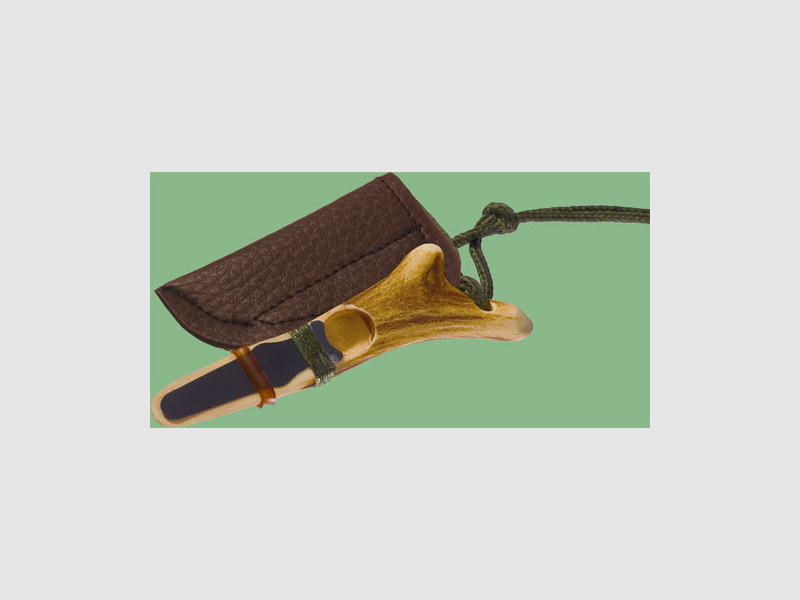
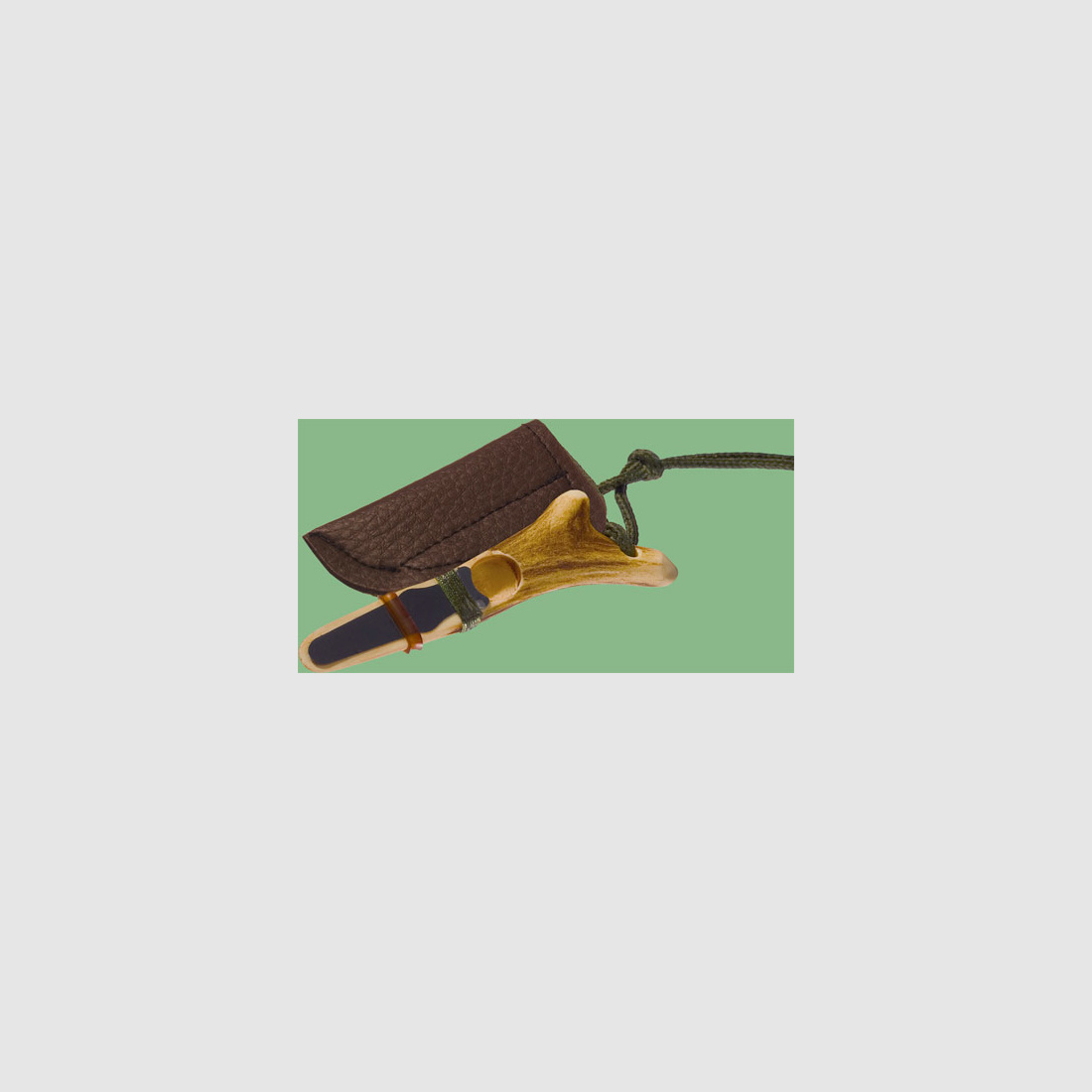
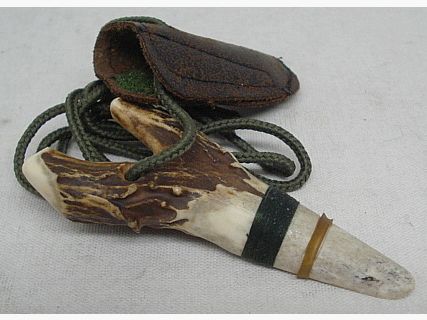
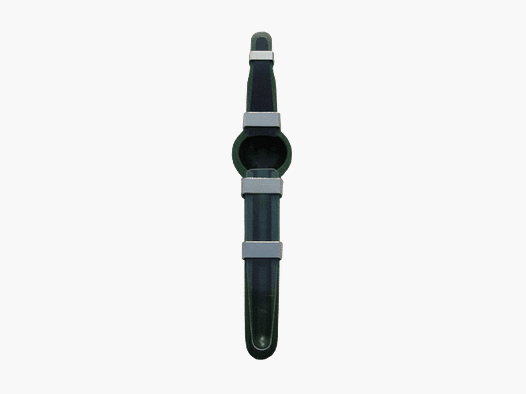
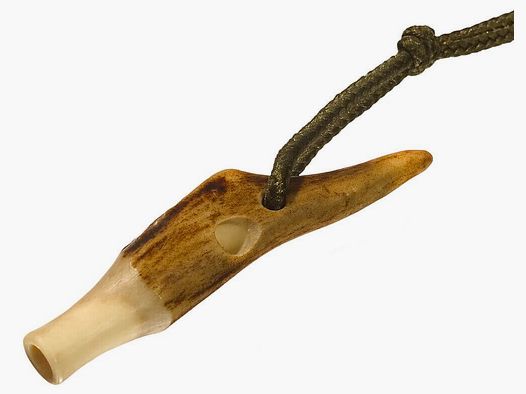
Neue Seite 1 @ Original Rottumtaler Rehblatter Mod.2 Rehstange mit Gabel @ REHBLATTER Mod. 2 The original by Klaus Demmel... ...The original by Klaus Demmel Handcrafted from roe deer antlers with carrying cord ~NEW ITEM DIRECTLY FROM KLAUS DEMMEL, THE SPECIALIST IN LOCK HUNTING~ 100% realistic sound = 100% success! !! Essential for a perfect call hunt !! The Rottumtaler Rehblatter Mod. 2 roe deer stick with fork The Rottumtaler-Rehblatter is a universal roe deer call that has been developed over the years from practical experience. This call offers unique properties that are extremely important for successful calling. The Rottumtaler-Rehblatter is handcrafted in about forty different steps from roe deer antlers. Thus, each one is visually unique, but it is not the appearance that matters, but the practicality. For good reason, roe deer antlers were chosen as the material, as this sound body allows for the production of a very soft tone to imitate the natural sounds of roe deer as realistically as possible. Furthermore, the Rottumtaler-Rehblatter is absolutely not sensitive to moisture. Who doesn't know it, a little saliva or a few raindrops and the call instrument fails; this happens very often with wooden calls, but not with the Rottumtaler-Rehblatter. This call is also equipped with a carrying cord, making it always readily available. A leather case also protects the mouthpiece from contamination. Due to its finely tuned technical design, it is possible to imitate all sounds from the fawn's bleat to the scream from a single mouthpiece. The Rottumtaler-Rehblatter is the only call that does not have a continuous air channel, as this is the only way to modulate the various sounds, from a delicate soft bleat to a loud, aggressive, tortured scream. This allows for a huge range of sounds to be imitated so that our calling attempts do not sound monotonous, because a too one-dimensional, monotonous call "is not believed by any roe deer buck." The Rottumtaler-Rehblatter is also characterized by its user-friendliness. The enormous successes with the Rottumtaler-Rehblatter in calling hunts are now very popular among hunters. The Rottumtaler Rehblatter is available in 2 types: HERE IS TYPE 2: Roe deer stick with fork (smaller version) Additionally, there is the functionally identical Type 1: Roe deer stick with rose (larger version) Correct calling with the Rottumtaler Rehblatter; Here is a brief info on handling: - To let the sounds resonate softly, the remaining fingers are placed on the call so that the round hole is dampened but not blocked. - Take the call into the mouth up to the rubber ring while rolling the lips inward. This creates a certain lip pressure on the membrane. By applying more or less pressure, the pitch can be determined. - To produce bleating sounds, keep the mouth closed and forcefully expel air from the larynx. It is important that the lips remain rolled in, as this prevents saliva flow. If the lips are not rolled in, it is possible for the membrane in the mouth to vibrate, causing a very unpleasant tickling sensation. This can be easily avoided by rolling the lips and simultaneously applying lip pressure to the membrane. - To imitate the "Pia" sound, the call is also taken into the mouth with rolled-in lips up to the rubber. After a prolonged bleat, the lower jaw is opened abruptly while keeping the upper lip on the membrane. The "Pia" sound can be varied by different lengths of bleats. Example: P ii iia - P ia - Pi ii ii iii ii ia. - The fawn's bleat is achieved by rolling the lips even more and applying a bit more lip pressure. The mouthpiece should only be taken into the mouth just before the rubber (not as deep as with the old fawn bleat), creating a very fine, bright tone. Important: To avoid sounding monotonous, the individual calling series must be modulated accordingly: From quietly restrained to aggressive and tortured. - Place the call in the hollow between the thumb and index finger. - Mouthpiece visible up to the rubber. - The more the hand is closed, the more muted the sound becomes. - Enclose the call with both hands so that a hollow space forms inside. This allows sounds to be imitated in a somewhat tortured manner. - By opening and closing one hand, a wide range of muted, tortured, and aggressive sounds, such as screams, can be imitated. - After finishing, carefully insert the call into the leather protection and press the Velcro fastener firmly. - All of this cannot, of course, be learned in one day, but with diligent practice, anyone can truly learn it.
(Show description in original language)
Neue Seite 1 @ Original Rottumtaler Rehblatter Mod.2 Rehstange mit Gabel @ REHBLATTER Mod. 2 Das Original von Klaus Demmel... ...Das Original von Klaus Demmel Handgearbeitet aus Rehgeweih mit Umhängekordel ~NEUWARE DIREKT VON KLAUS DEMMEL DEM LOCKJAGDSPEZIALISTEN~ 100% naturgetreuer Klang = 100% Erfolg! !! Unverzichtbar für eine perfekte Blattjagd !! Der Rottumtaler Rehblatter Mod. 2 Rehstange mit Gabel Der Rottumtaler-Rehblatter ist ein universeller Rehwildlocker der über Jahre aus der Praxis heraus entwickelt wurde. So bietet dieser Blatter einmalige Eigenschaften die bei der Blattjagd wirklich enorm wichtig sind um kontinuierlich Erfolg zu haben. Der Rottumtaler-Rehblatter wird in ca. vierzig verschiedenen Arbeitsgängen in reiner Handarbeit aus Rehgeweih hergestellt. Somit ist von der Optik her jeder ein Unikat, aber nicht die Optik zählt sondern die Praxistauglichkeit. So wurde aus gutem Grund das Rehgeweih als Material gewählt, denn mit diesem Klangkörper ist es möglich einen sehr weichen Ton zu erzeugen um die natürlichen Laute des Rehwildes möglichst naturgetreu nachahmen zu können. Weiter ist der Rottumtaler-Rehblatter absolut nicht Feuchtigkeits- empfindlich. Wer kennt es nicht, ein wenig Spucke oder ein paar Regentropfen und das Blattinstrument versagt, dies kommt gerade bei Blattinstrumenten aus Holz sehr häufig vor, so aber nicht beim Rottumtaler-Rehblatter. Auch ist dieser Blatter mit einer Umhängekordel versehen und somit immer griffbereit. Ebenso schützt ein Lederetui das Mundstück vor Verschmutzung. Durch den sehr fein abgestimmten technischen Aufbau ist es möglich alle Laute vom Kitzfiep bis zum Geschrei aus einem einzigen Mundstück nachzuahmen . Der Rottumtaler - Rehblatter ist der einzige Blatter der keinen durchgehenden Luftkanal besitzt, denn nur so ist es möglich die verschiedenen Laute, von einem zarten- weichen Fiep bis hin zum lautem - aggressiv -gequält klingenden Geschrei zu Modulieren. So kann eine enorme Palette an Lauten nachgeahmt werden um unsere Blattversuche nicht monoton klingen zu lassen, denn zu einsilbiges - monotones Blatten " glaubt uns kein Rehbock". Auch zeichnet sich der Rottumtaler - Rehblatter durch seine Bedienungsfreundlichkeit aus. Die enormen Erfolge mit dem Rottumtaler - Rehblatter bei der Blattjagd erfreuen sich in der Jägerschaft mittlerweile größter Beliebtheit. Der Rottumtaler Rehblatter ist in 2 Typen erhältlich: HIER DER TYP 2: Rehstange mit Gabel(kleinere Ausführung) Weiters gibt es den funktionsgleichen Typ 1: Rehstange mit Rose (größere Ausführung) Richtig Blatten mit dem Rottumtaler Rehblatter; Hier eine kurze Info zur Handhabung: - Um die Laute gedämpft erklingen zu lassen, werden die restlichen Finger auf den Blatter gelegt, so dass das runde Loch abgedämmt, aber nicht zugedrückt, wird - Den Blatter bis zum Gummiring in den Mund nehmen und dabei die Lippen nach innen einrollen. Dadurch entsteht ein gewisser Lippendruck auf die Membrane. Durch mehr oder weniger Druck kann die Tonhöhe bestimmt werden. - Um Fieplaute zu erzeugen bleibt der Mund geschlossen und die Luft wird stoßartig aus dem Kehlkopf gepresst. Dabei ist er wichtig, dass die Lippen eingerollt bleiben, denn so wird Speichelfluss vermieden. Werden die Lippen nicht eingerollt, ist es möglich, dass die Membrane im Mund ein vibrieren und so ein sehr unangenehmes Kitzeln hervorgerufen wird. Dies kann durch einrollen der Lippen und gleichzeitigen Lippendruck auf die Membrane leicht vermieden werden. - Um den "Pia"-Laut nach zuahmen wird der Blatter wie beim Fieplaut ebenfalls mit eingerollten Lippen bis zum Gummi in den Mund genommen. Nach einem langgezogenen Fiepton wird der Unterkiefer ruckartig geöffnet, dabei bleibt die Oberlippe auf der Membrane. Durch unterschiedlich lange Fieplaute kann der "Pia"-Laut variiert werden. Beispiel: P ii iia - P ia - Pi ii ii iii ii ia. - Den Kitzfiep erreicht man, indem die Lippen noch stärker eingerollt werden, und etwas mehr Lippendruck ausgeübt wird. Dabei sollte das Mundstück nur bis kurz vor den Gummi, (nicht ganz so tief wie beim Altrehfiep), in den Mund genommen werden. So entsteht ein sehr feiner, heller ton. Wichtig: Um nicht monoton zu klingen müssen die einzelnen Blattserien dementsprechend moduliert werden: Von verhalten leise bis aggressiv und gequält -Den Blatter in die Kuhle zwischen Daumen und Zeigefinger legen. - Mundstück bis zum Gummi sichtbar - Je weiter die Hand geschlossen wird, desto gedämpfter klingt der Laut.- Den Blatter mit beiden Händen so umschließen, damit sich im Innenraum ein Hohlraum bildet. So können Laute etwas gequält nachgeahmt werden. - Durch Öffnen und Schließen einer Hand kann eine große Palette an gedämpften, gequälten und aggressiven Lauten, wie dem Geschrei, nachgeahmt werden. - Nach beendigung den Blatter vorsichtig in den Lederschutz einführen und den Klettverschluss festdrücken. - Dies alles kann selbstverständlich nicht an einem Tag erlernt werden, aber durch fleißiges Üben kann es wirklich jeder erlernen.






 A-TEC
A-TEC
 AEA Airguns
 AKAH
AKAH
 ASG
ASG
 Aimpoint
 Alpen Optics
 Alpha Industries
 Anschütz
 Antonio Zoli
 Ares
Ares
 B&T Schalldämpfer
 Baikal
 Ballistol
 Balzer
 Barbour
 Barnes
 Barnett
 Benelli
 Beretta
 Bergara
 Blaser
 Brandit
 Bremer Tresor
 Brenneke







 Classified ad