Recognizing fake buyers on social media
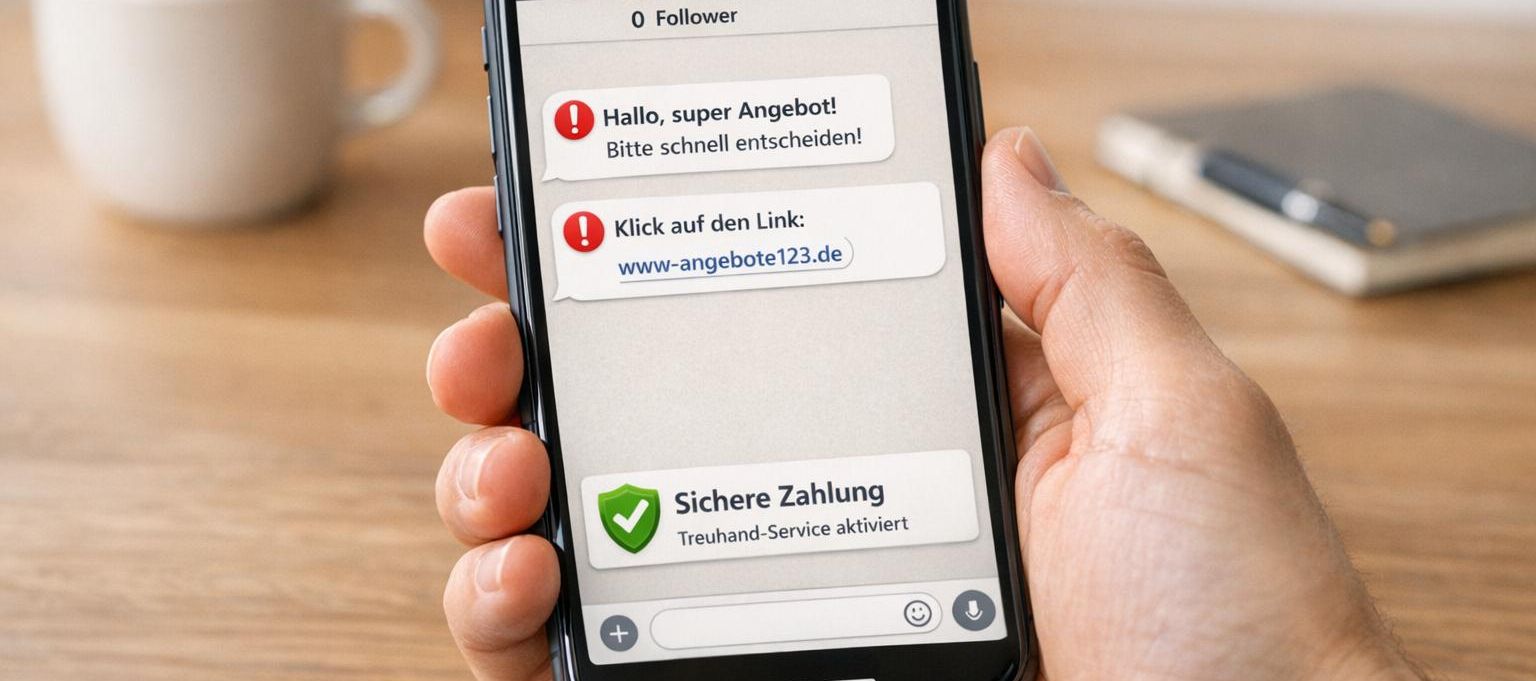
Fake buyers on social media are a growing problem. They use stolen identities, phishing methods, and fraudulent tactics to deceive sellers. This is particularly dangerous when trading regulated goods like firearms, where legal consequences may arise. Here are the key warning signs and tips to stay safe:
- Profile Analysis: Watch out for new accounts, unusual usernames (e.g., with many numbers), little activity, or unnatural follower ratios.
- Communication Patterns: Fraudsters often remain vague, use poor grammar, or apply time pressure.
- Payment Methods: Avoid advance payments, unsecured transfers, or unusual IBANs. Use secure options like PayPal "Goods and Services".
- Verification: Use reverse image search, video calls, or platform-specific security features to verify identity.
Important: Always stay in the platform's internal chat and do not ship goods before the payment has been securely received. Tools like Gunfinder offer additional protective measures such as identity verification and watermarks for shared images.
With these precautions, you can effectively avoid fraud and trade safely.
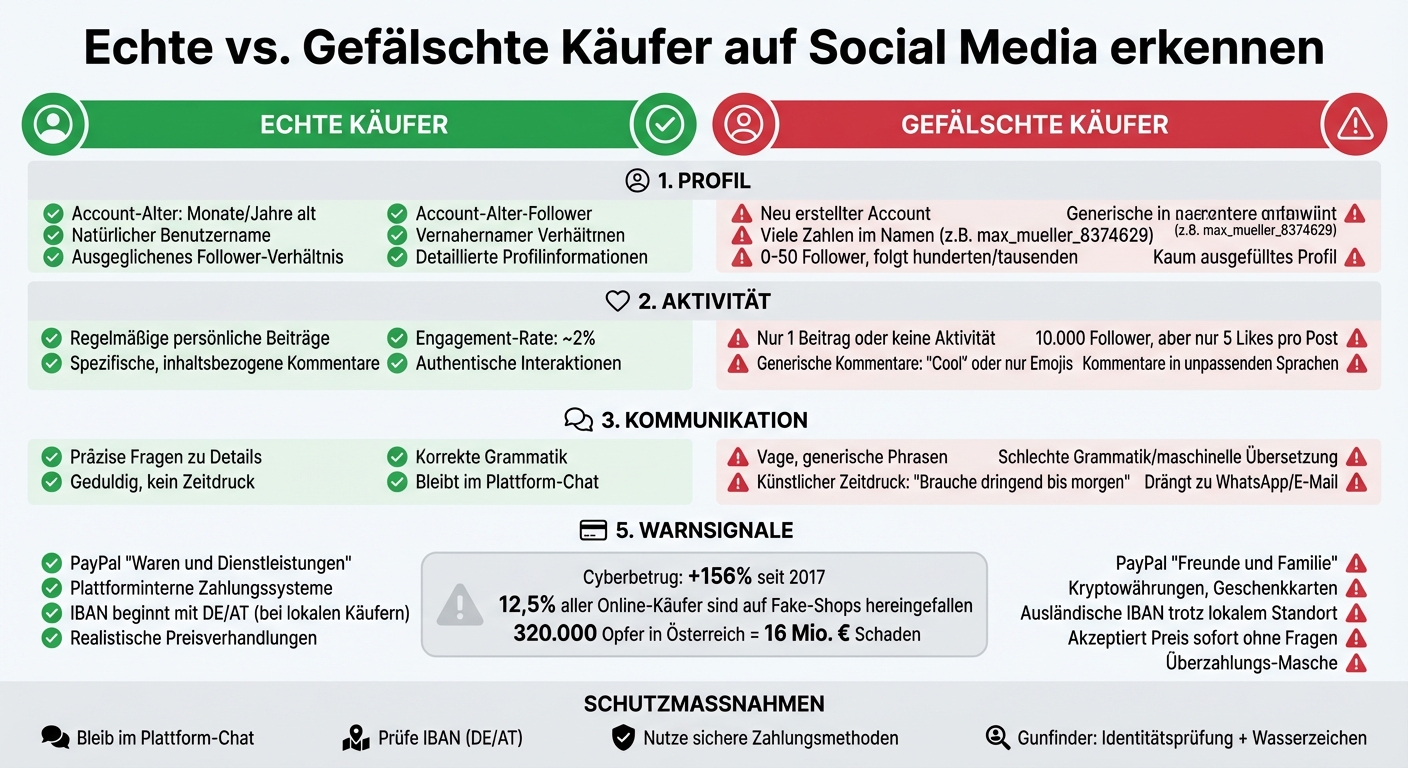
Recognizing real vs. fake buyers on social media
Fake Accounts on Facebook and Instagram: Recognizing Fraudsters, Deleting Profiles, and Protecting Effectively!
sbb-itb-1cfd233
Profile Characteristics: Real vs. Fake Buyers
A close look at the profile can often reveal the difference between a real buyer and a fraudster. While real buyers rely on established, active accounts, fraudsters often use new and barely filled-out profiles. Here you will learn how account age, activity, and other details help to separate the wheat from the chaff.
Account Age and Activity History
The age of an account is one of the most reliable indicators of its legitimacy. Real buyers often use accounts that have been actively used for months or even years. In contrast, fake profiles are usually newly created and often exist only for a short time. Striking nicknames that contain many numbers (e.g., "max_mueller_8374629") are another warning sign, as they are often automatically generated. Also suspicious: An account that follows hundreds or thousands of others but has very few followers itself – often the number of followers here is between 0 and 50[5].
Posts and Engagement
The activity of a profile also provides insight into its authenticity. Real buyers regularly share personal content and interact with other users. Fake profiles, on the other hand, often have only a single post that receives little to no reactions. The quality of comments is also an important factor: Generic comments like “Cool", pure emoji responses, or comments in an inappropriate language can indicate spam. For real users, the average engagement rate is about 2%[5]. However, if a profile has 10,000 followers but only five likes per post, it suggests that followers were purchased.
Follower and Friend Networks
The network of an account is another key to identification. Real profiles typically have a balanced ratio between followers and following and establish connections that make geographical and linguistic sense. Fake profiles, on the other hand, often show unnatural patterns: followers from distant countries, accounts without profile pictures or with randomly appearing names, as well as abrupt increases in follower numbers without apparent reason[5].
Fraudsters also resort to brazen tricks, such as copying a real profile. They then send friend requests to contacts of the copied person. If you receive a request from a familiar name, check your contact list. A second profile of the same person is often a warning signal. Especially on platforms like Facebook Marketplace, you should also pay attention to mutual friends or local groups – if these are missing, caution is advised.
Communication Patterns: Serious vs. Suspicious Messages
The way someone communicates can often provide clues as to whether they are a serious buyer or a fraudster. Real buyers ask precise questions, such as: “Is the scope still in its original packaging?” or “What signs of use does the weapon have exactly?”. Such questions show genuine interest. Fraudsters, on the other hand, often remain vague and use generic phrases that lack substance – often garnished with emojis instead of clear words[5].
Another warning sign: messages with poor grammar, faulty syntax, or obviously machine-translated German. If someone claims to be from Germany but addresses you with a false name or uses a strange email address, you should be skeptical[4]. Such linguistic anomalies are often the first indication of potential fraud – and they often go hand in hand with other tactics such as the use of time pressure.
Urgency and Pressure Tactics
A common method used by scammers is to create artificial time pressure to rush you into hasty decisions. Often, such individuals contact you surprisingly quickly after your ad is published – a behavior that is particularly noticeable with expensive items. They try to build pressure with emotional stories, such as: “I urgently need the rifle as a gift for tomorrow.” The goal is to get you to hand over the goods before the payment has actually arrived in your account[6].
“Don’t let yourself be rushed – no goods leave your house without real payment.”[6]
Serious buyers know that safety takes time and respect precautions. Scammers, on the other hand, often combine their pressure tactics with further tricks, such as using external payment requests.
External Links and Payment Requests
If someone asks you to move communication to external channels like WhatsApp or email, you should be cautious. Scammers use such methods to bypass the platform's security filters[4]. Such messages often contain links to phishing sites that look deceptively real and aim to capture your login details or credit card information[7][9].
Statistics show that cyber fraud has increased by 156% since 2017. Almost one in eight online buyers (about 12.5%) has fallen for a fake shop in the last two years[7][8].
Payment requests in advance to foreign accounts are particularly critical. Always pay attention to the first two letters of the IBAN: German accounts start with “DE”, Austrian ones with “AT”. If a supposed local buyer suddenly provides an IBAN from another country, that is a clear warning sign. In such cases, you should terminate contact. Secure platforms like Gunfinder offer protection here: They automatically watermark all exchanged images to make misuse more difficult[4].
Transaction Behavior: Normal Offers vs. Fraudulent Tactics
How buyers handle price and payment can often indicate fraudulent behavior. Once suspicious communication is detected, price and payment strategies often reveal further clues to fraud attempts. Serious buyers act understandably: they ask questions, want to clarify details, negotiate the price, or request additional pictures. Fraudsters, on the other hand, accept prices immediately – without negotiations or follow-up questions. This behavior is a typical warning signal. On platforms like Kleinanzeigen, where an average of 700 new ads appear per minute, fraudsters exploit this volume to quickly find victims[6].
Price Offers
A well-known trick is the so-called overpayment scheme. Here, a supposed buyer transfers more than the agreed price and then asks for a refund of the difference. Shortly thereafter, the original payment is canceled, and the refund is irretrievably lost[6][10]. Such cases lead to you losing not only the item but also your money.
Serious buyers operate within realistic market prices and know the value of items like scopes or hunting gear. Caution is advised if someone asks you to purchase gift cards (for example, from Amazon or Steam) and send them – a clear sign of fraud[6]. You should always ship goods only after confirmed receipt of payment[6].
In addition to conspicuous price offers, insecure payment methods are another warning signal.
Payment Methods
The choice of payment method says a lot about the seriousness of a buyer. Trustworthy buyers use secure options like PayPal "Goods and Services" or platform-internal payment systems like the secure payment feature from Gunfinder. Fraudsters, on the other hand, prefer insecure methods: cryptocurrencies, cash by mail, gift cards, or PayPal "Friends and Family." These options offer neither buyer nor seller protection[6][11]. It becomes particularly problematic when someone insists that you ship the goods before payment is received ("purchase on account")[6].
“Sounds too good to be true, it usually is.” – Kleinanzeigen Help Center [11]
Another important point: Carefully check each IBAN. Local accounts should start with "DE" or "AT." If a supposedly local buyer provides a foreign IBAN, caution is advised – it's better to break off contact in such cases[4][11]. You should only process refunds through the official "Refund" function and never make them via separate transfer[6].
How to Verify Buyers
After identifying suspicious payment methods, it is important to thoroughly check the buyer profile to distinguish real users from potential fraudsters. A study by the University of Copenhagen shows that people often evaluate real profiles as more suspicious than AI-generated fakes – an indication of how deceptively real fakes can appear nowadays [9]. The following steps will help you verify profile and domain data, image authenticity, and the buyer's reputation.
Profile and Domain Verification
Start with a basic analysis of the profile. Newly created accounts with only one post and cryptic, number-heavy usernames often indicate automated creation. Real user profiles typically contain detailed information, such as details about profession, hobbies, or place of residence [5][9]. Also, pay attention to unusual follower ratios, which can be another warning sign [5].
Also take a close look at emails: Official messages from platforms like @gunfinder.de are trustworthy. Emails from unknown domains or those without a personal salutation should be viewed skeptically [4].
Reverse Image Search
The Google reverse image search is an effective tool to verify the authenticity of profile pictures. Upload the image and check if it appears on other websites or under different names [4][9]. Look out for pixelated or "too perfect" images – these can indicate fakes [2]. AI-generated faces often reveal themselves through subtle visual errors, such as asymmetrical features [9].
An additional security measure: Ask the buyer for a live video call in which they identify themselves with their ID. This way, you can directly confirm their identity [4].
Research on Buyer Reputation
To further verify the buyer's identity, search for their name and profile picture on other platforms [2][9]. The nature of the interactions on their profile can also provide insights: Authentic accounts often leave specific, content-related comments. Generic statements like "Cool" or pure emojis, on the other hand, indicate bots or purchased followers [5].
Another warning sign is language inconsistencies. If a supposedly German buyer receives comments in foreign languages or sends machine-translated messages, you should be particularly vigilant [4][9]. In transactions involving sensitive items such as firearms or optics, you can also have relevant documents verified directly by the responsible authority [4].
Platform-specific Risks: Facebook vs. Instagram
Now that you know how to verify buyers, let's take a closer look at the risks that specifically lurk on Facebook Marketplace and Instagram.
Each platform has its own vulnerabilities that fraudsters exploit. While Facebook Marketplace is primarily used for financial fraud, Instagram scammers focus on data theft and phishing. Knowing these differences allows you to recognize warning signs more quickly and respond accordingly.
Facebook Marketplace Fraud
One of the most common fraud methods on Facebook Marketplace is the so-called overpayment scam. Here, a supposed buyer intentionally transfers "too much," often using fake payment methods, and asks for the difference to be refunded. Once you refund the money, it turns out that the original payment was not genuine [13][14].
“If a buyer ever tries to send you too much money, they are most likely acting with fraudulent intent." – F-Secure [13]
A new trick is the verification code request. The scammer asks you to provide a code received via SMS, supposedly to prove that you are not a bot. In reality, they use this code to register a fraudulent Google Voice number in your name. Another risk involves shipping: scammers could send you fake shipping labels, which can later lead to complaints if the shipping is not traceable [13][14].
Instagram scammers, on the other hand, rely on different tactics, as described in the next section.
Instagram Shopping Fraud
On Instagram, automated bots and phishing links are the most common fraud methods. Bots generate fake requests to increase engagement or lure you to fraudulent websites. Additionally, scammers send suspicious links via Direct Message (DM), often under the pretense of price adjustments or verifications, to gain access to your login credentials [12][5].
For example, in 2024, Nindo Influencer Analytics documented an Instagram post that initially had over 40,000 likes. Within a month, the number dropped by more than 10,000 after Instagram removed bot accounts [12].
Particularly dangerous is the method of cloned profiles. Scammers copy images and biographies of real influencers or shops to deceive both buyers and sellers [1][7]. According to a study by Ofcom, 61% of children aged 12 to 17 classified a social media post as "real" based solely on a brand logo – an indication of how convincing such fakes can be [7].
The following table summarizes the differences in fraud methods on both platforms:
| Feature | Facebook Marketplace | Instagram Shopping |
|---|---|---|
| Main Target Tactic | Direct financial fraud, e.g., overpayment or account takeover | Data theft, phishing, and engagement manipulation |
| Most Common Method | Overpayment with fake checks or P2P apps | Phishing links via DM or fake requests |
| Verification Fraud | Requests for phone-based OTPs for account takeover | Fake brand logos and cloned profiles |
| Shipping Risk | Fraudulent prepaid shipping labels | Redirecting to external "fake shops" via ads or DMs |
These differences highlight the importance of remaining vigilant during any interaction on social media platforms.
How to Secure Your Transactions
To protect your transactions, secure payment methods and the use of platform-internal communication are crucial. These measures help you effectively avoid fraud.
Use secure payment options
Secure payment methods are essential as they provide you with buyer protection in case something goes wrong. When using PayPal, you should always choose the option “Goods and Services” – the “Friends and Family” option offers no protection [6]. Make sure to only ship to the address registered with PayPal.
Another option is Cash on Delivery. Here, you pay the amount directly to the delivery person upon receipt of the goods [4]. Escrow services are also a sensible alternative. In this case, the money is only released once both parties confirm the transaction. Important: Never transfer money before it has actually arrived in your account – screenshots or pressure from the buyer should not convince you [6].
Combine these secure payment methods with the rule of using only platform-internal communication channels.
Avoid external transfers
Fraudsters often try to shift communication to external channels like WhatsApp or email to evade platform monitoring [4][6]. Therefore, always stay in the platform-internal chat. This is logged, and the platform can intervene in disputes.
Pay close attention to the IBAN when making transfers: German accounts start with “DE”, Austrian accounts with “AT” [4]. If a supposedly German seller requests a foreign account, caution is advised. Also, avoid payment methods that cannot be reversed, such as cryptocurrencies or cash by mail, especially with unknown individuals. Be vigilant about the overpayment scam: here, the fraudster supposedly transfers too much and requests a refund. Later, the original payment is canceled [6]. Always wait until the payment is confirmed in your account.
Additionally, use the security features of Gunfinder to further minimize risk.
Use Gunfinder for secure transactions
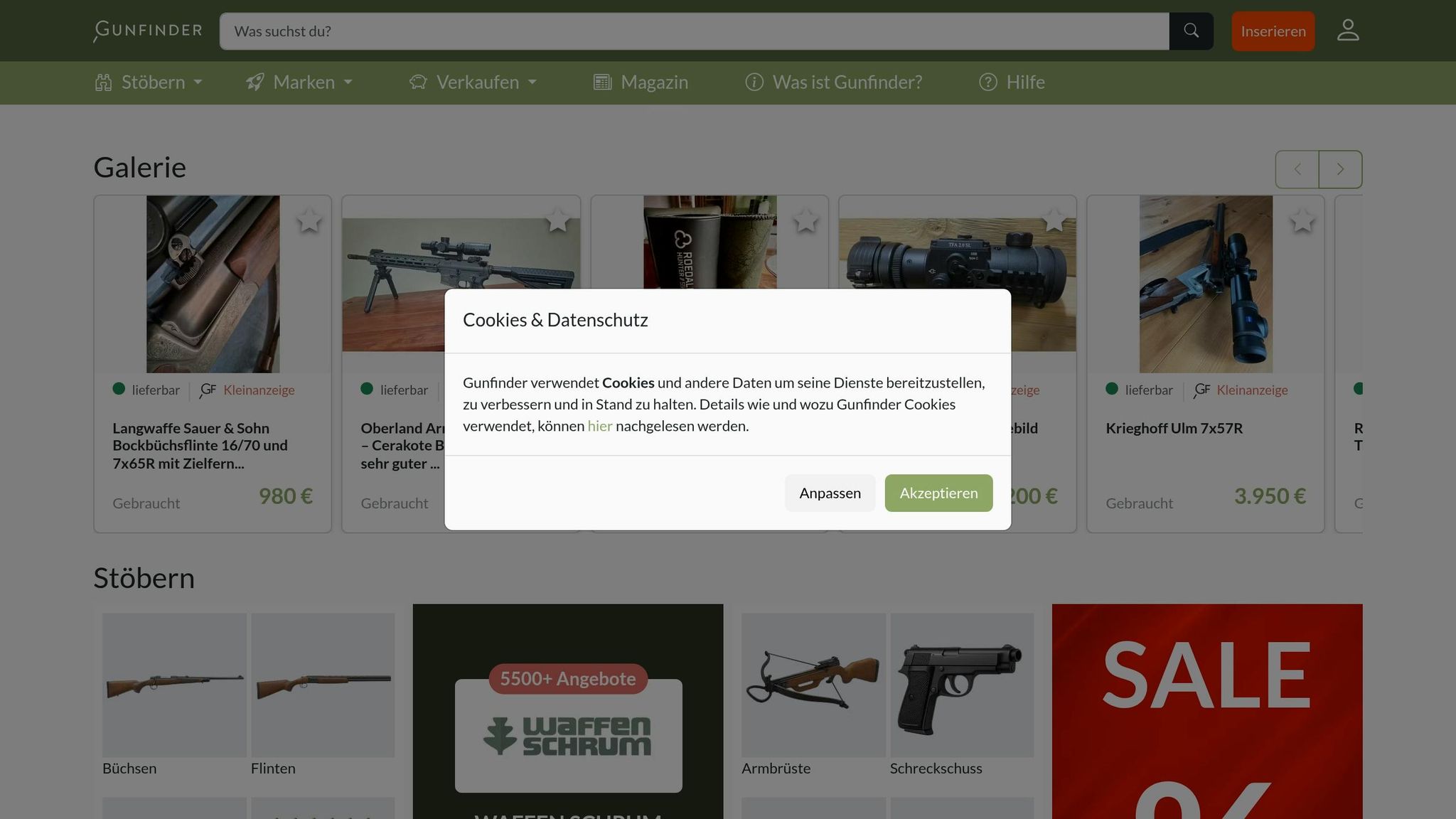
Gunfinder offers special security features that significantly hinder fraud. All sellers must verify their identity by uploading a valid ID and a selfie through the partner Veriff before they can list items [4]. This prevents the use of fake profiles.
In the Gunfinder chat, all shared photos and documents are automatically watermarked with a watermark. This makes it difficult for fraudsters to misuse them for other offers [4]. Additionally, you can use a video call where both parties can show the item and their ID live [4]. For firearms-related documents, it is advisable to contact the issuing authority to verify authenticity [4].
These measures make your transactions safer and protect you from fraudsters.
Conclusion
Recognizing fake buyers on social media is not rocket science – provided you know what to look for. Unusual profile names with many numbers, pixelated or strikingly perfect AI-generated photos, and a strong imbalance between followers and followed are clear warning signs [2][5]. The way of communication often gives clues as well: Poor grammar, generic phrases, and attempts to redirect you to WhatsApp or email are typical tricks of fraudsters [4][5].
The numbers are alarming: In Austria, about 320,000 consumers fell victim to fake shops – with a total damage of 16 million euros [15]. Fraudsters are becoming increasingly skilled and are increasingly using AI to create deceptively real offers [3]. Therefore, it is crucial not only to be vigilant but also to use appropriate security measures.
Gunfinder offers exactly these protective mechanisms: seller identity verifications, automatic watermarks in chat, and the option for video calls significantly complicate fraud [4]. Always stay in the platform's internal chat, check IBANs for the correct country code (DE for Germany, AT for Austria), and use only payment methods with buyer protection [4].
With these simple basic rules and the use of secure platforms, you can significantly reduce the risk. Your vigilance is the best defense – and with the right tools, you are always one step ahead of fraudsters.
FAQs
What warning signs are really clear?
Clear warning signs can include that the seller has verified their identity, you communicate exclusively through the Gunfinder chat, and you receive a selfie of the seller with their ID card. Be sure to add watermarks to documents to prevent misuse.
How do I quickly verify a buyer's identity?
On Gunfinder, you can quickly and easily verify a buyer's identity. For this, an identification document, such as an ID card, is verified using the camera of a laptop, tablet, or smartphone.
Important tips to avoid fraud:
- Communication exclusively through the Gunfinder chat: This keeps everything documented and traceable.
- Use photos with watermarks: This protects your images from misuse.
- Verify data in case of uncertainties: In case of doubt, contact the responsible weapons authority to verify the information.
With these measures, you can significantly reduce the risk of fraud and act safely.
What to do if I have already sent data?
If you have already shared data, use the Gunfinder chat for all further communications. This chat is protected with watermarks and provides an additional layer of security. If you must share documents outside of the chat, ensure they are also watermarked.
Additionally, it is important to verify the seller's data with the responsible weapons authority to ensure everything is lawful.
Do you suspect you are a victim of fraud? Then immediately cut off contact, stop the transaction, and document all previous communications. You should promptly report suspicious activities to the platform so that further steps can be initiated.