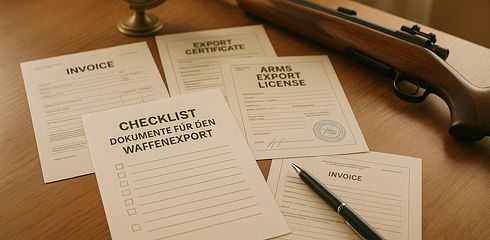
Customs declaration of ammunition vs. weapons: differences

The customs declaration of weapons and ammunition from non-EU countries is mandatory. Both categories are subject to the German Weapons Act (WaffG), but there are differences in the requirements, quantity restrictions, and permits:
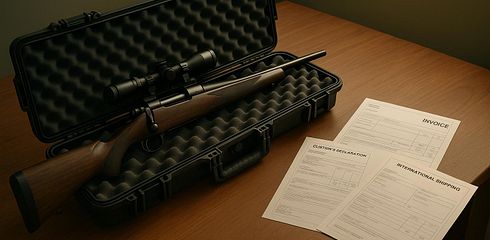
- Weapons: Require a transport permit and entry in the firearms ownership card. Within the EU, the European Firearms Pass facilitates transport. Strict controls apply to weapons from third countries.
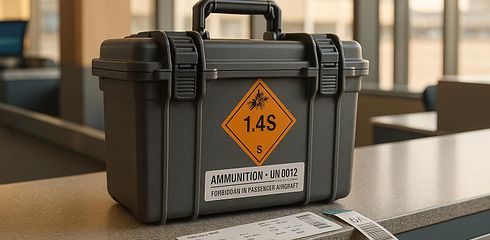
- Ammunition: Must be registered separately. Quantity restrictions vary depending on the purpose (e.g., hunting or sport). Explosive components are additionally subject to the Explosives Act.
Important: Violations lead to severe penalties, including imprisonment and confiscation. Plan ahead and check all regulations in advance.
Customs Declaration of Weapons
Following the general customs regulations, we now take a look at the specific requirements for the import of weapons. Before transporting weapons, a permit from the responsible weapons authority is required – regardless of how the import occurs. The costs for this permit range from 19.00 EUR to 220.00 EUR[4].
Permit Requirement for Weapons
For permanent import, a transport permit is necessary, which is issued by your local regulatory office or district office. Commercial dealers can apply for a general transport permit, which is valid for three years. After crossing the border, you have 14 days to update your firearms ownership card (WBK) with the responsible authority. Important: Processing such applications can take several months. Therefore, plan ahead.
EU Regulations for Weapons
Within the EU, for hunters and sports shooters, the European Firearms Pass is often sufficient for temporary transport – for example, for hunting trips or competitions. This pass serves as proof of your entitlement and significantly facilitates transport. However, a permit from the German weapons authority is also required in advance. Interestingly, countries like Iceland, Norway, Switzerland, and Liechtenstein, which are associated with the EU, are treated similarly in this context.
Import of Weapons from Third Countries
When importing from non-EU countries, strict controls apply at the EU external borders. You must actively declare your weapons at customs – for this, you use the red channel. For exports to third countries, an export permit from the Federal Office for Economic Affairs and Export Control (BAFA) is additionally required, as weapons are classified as military goods. Note: Some weapons that are freely available in third countries – such as butterfly knives or fully automatic firearms – are strictly prohibited in Germany and will be confiscated immediately upon entry.
In the next section, we will discuss the specific regulations for the import of ammunition.
sbb-itb-1cfd233
Customs Declaration of Ammunition
According to the regulations for weapons, there are also specific regulations for the import of ammunition. Although both fall under the Weapons Act (WaffG), there are important differences in customs declaration.
Register Ammunition Separately
Ammunition is subject to strict controls at the EU external borders as well as during mobile checks within the country[1]. The WaffG distinguishes between "transporting" (crossing the border with transfer of ownership, e.g., in a sale of weapons) and "carrying" (temporary transport without transfer of ownership, such as for competitions)[1]. In both cases, a governmental permit is required before transport.
“Firearms and ammunition must be voluntarily declared at customs when transported from a non-EU country.” – Customs online[1]
Additionally, there are specific quantity limits that regulate the transport.
Quantity Limits for Ammunition
For ammunition, clear limits apply within the EU to minimize administrative effort. For temporary exports to third countries, hunters may take up to 800 rounds and sports shooters up to 1,200 rounds without additional export permit from the BAFA[7]. The prerequisite is that the ammunition belongs to your personal luggage, you possess a European Firearms Pass or a firearms ownership card, and re-entry occurs within 24 months[7]. If you exceed these quantities, a regular export procedure with a permit requirement becomes necessary.
Ammunition from Third Countries
In addition to registration, there are additional requirements for the import of ammunition from third countries. According to EU Regulation 2025/41, a special permit is necessary, and the ammunition must meet certain labeling standards[3]. Furthermore, certain types of ammunition are fundamentally prohibited in Germany, regardless of their origin. It is therefore important to check in advance whether the ammunition is on the list of war weapons or subject to other prohibitions[6][2]. Violations can lead to severe penalties and immediate confiscation.
Ammunition vs. Weapons: Direct Comparison
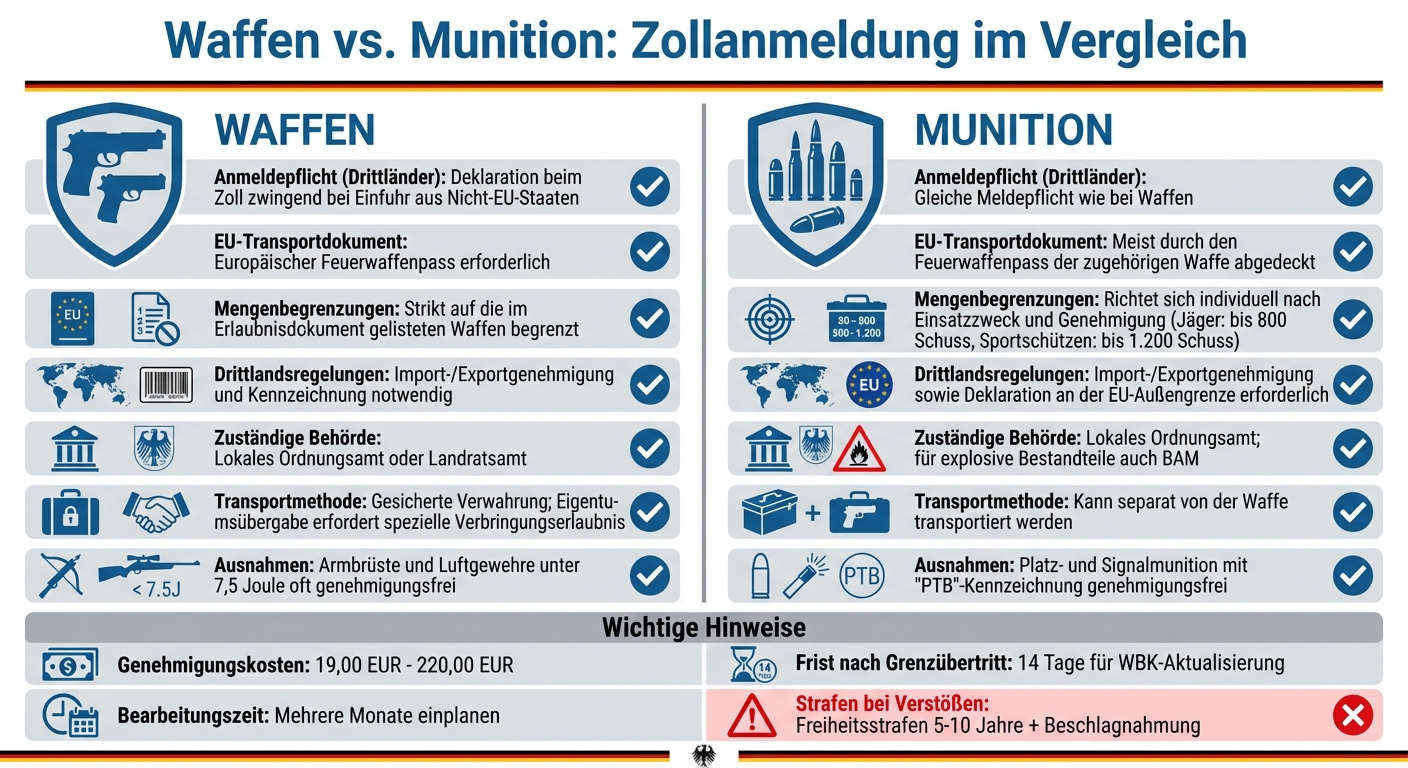
Customs Declaration Weapons vs. Ammunition: Comparison of Requirements and Regulations
Ammunition and weapons both fall under the Weapons Act, but differ significantly in their customs processing. The central differences concern documentation, quantity limits, and the approval process. The following table provides a clear overview.
Comparison Table
| Feature | Weapons | Ammunition |
|---|---|---|
| Registration Requirement (Third Countries) | Declaration at customs mandatory for import from non-EU countries | Same reporting obligation as for weapons |
| EU Transport Document | European Firearms Pass required | Usually covered by the firearms pass of the associated weapon |
| Quantity Limits | Strictly limited to the weapons listed in the permit document | Varies individually according to purpose and permit |
| Third Country Regulations | Import/export permit and labeling required | Import/export permit and declaration at the EU external border required |
| Responsible Authority | Local regulatory office or district office | Local regulatory office; for explosive components also BAM |
| Transport Method | Secure storage; transfer of ownership requires special transport permit | Can be transported separately from the weapon |
| Exceptions | Crossbows and air rifles under 7.5 Joules often exempt from permits | Blank and signal ammunition with "PTB" marking exempt from permits |
The table provides a compact overview. The following sections will highlight the most important differences in detail.
Main Differences Between Ammunition and Weapons
Weapons require a separate entry in the European Firearms Pass, which contains detailed information such as manufacturer, model, and serial number. Ammunition, on the other hand, is usually recorded as an accessory to the corresponding weapon.
Another difference lies in the quantity limits: While weapons are strictly limited to the number specified in the permit document, the allowed quantity of ammunition varies depending on the purpose and permit. Additionally, ammunition offers a logistical advantage, as it can be transported independently of the weapon – an aspect that is not possible when transporting weapons.
Legal violations in this area can have serious consequences, including prison sentences of five to ten years[5]. Explosive components of ammunition, such as black powder or primers, are additionally subject to the Explosives Act and require permits from the state authorities as well as approval from the Federal Institute for Materials Research and Testing (BAM).
Special Regulations and Risks
Exceptions for Hunters and Sports Shooters
Hunters, sports shooters, and traditional shooters enjoy certain relaxations when crossing borders within the EU. With a European Firearms Pass, you may transport weapons between EU member states, provided the requirements of Article 32 of the Weapons Act are met. A legitimate reason is required, such as an official hunting invitation or participation in a competition. In such cases, ammunition may be transported separately from the weapons. If you have a German firearms ownership card, you do not need additional documents for transport to or through Germany. Furthermore, Iceland, Norway, Switzerland, and Liechtenstein are treated like EU member states in this context due to association agreements. However, these regulations are only part of the special provisions that apply to such trips.
Prohibited Items and Penalties
Despite the exceptions, there are strict regulations that can lead to serious consequences for violations. Anyone who violates the weapons law must expect a criminal proceeding, which usually leads to the confiscation of the imported weapons, ammunition, or other items. [8]
Penalties can include prison sentences of up to five years, and in particularly severe cases, even up to ten years. Additionally, hefty fines may be imposed. If you are convicted of at least 60 daily rates, you will also lose your reliability under weapons law. [14, 19] It is particularly important to note that certain items such as fully automatic weapons, butterfly knives, switchblades, brass knuckles, and precision slingshots with arm support are fundamentally prohibited and will be confiscated immediately in case of a violation.
Effects of the EU Firearms Directive
In addition to national regulations, EU Regulation 2025/41 aims to harmonize the provisions for the import, export, and transit of weapons and ammunition within the EU and to implement the UN Firearms Protocol. [3] Among the most important innovations are mandatory permits for cross-border transports and an electronic licensing system (Article 34), which digitizes application processes and facilitates monitoring.
Furthermore, the regulation requires strict labeling of all imported weapons (Article 6) to ensure their traceability. With the help of the Internal Market Information System (IMI), authorities can monitor legal cross-border trade and quickly identify incorrect registrations. Nevertheless, you should note that each EU country still has its own national weapons laws. Therefore, it is important to thoroughly check the specific regulations of the destination country before traveling.
Conclusion
Summary of the Differences
Weapons and ammunition generally fall under the same customs framework – both must be declared when crossing the border from non-EU countries. However, the crucial difference is that ammunition is additionally subject to the provisions of the Explosives Act when it contains explosive substances such as black powder or primers. In such cases, additional permits are required, which must be issued by both the state authorities and the Federal Institute for Materials Research and Testing (BAM).
For both categories, all necessary permits must be obtained before transport. These differences make it easier for you to keep track – and now to the practical tips that will help you comply with the regulations.
Tips for Compliance with Regulations
- Early Contact: Contact the responsible authority several weeks before your trip. If you do not live in Germany, contact the regulatory office or district office of the district where your event takes place or where you will cross the border. Clarify exactly which documents are required for your undertaking.
- Regular Checks: Ensure that your weapons or ammunition do not fall under a prohibition. For exports to non-EU countries, you should check the Export List (Part I, Section A of the Foreign Trade Regulation) and, if necessary, apply for a permit from the Federal Office for Economic Affairs and Export Control (BAFA).
- Correct Declaration: Always use the "Red Channel" or the responsible customs office for voluntary declaration when entering from third countries. Carry all required permits and identification documents with you – even for transports within the EU. Also, note that these regulations apply to online orders and mail shipments.
With these measures, you are optimally prepared to meet the legal requirements. Gunfinder also supports you in finding legally compliant offers.
How Gunfinder Can Help You
Gunfinder is your go-to place to find weapons, ammunition, and accessories that comply with German regulations. The platform offers a targeted search function that allows you to quickly find items from verified dealers – whether new or used. Additionally, Gunfinder keeps you updated on current legal requirements. This way, you can manage cross-border transport stress-free and without surprises.
FAQs
What documents do I need for weapons and ammunition?
For the import of weapons and ammunition into Germany, several steps and documents are required. Weapons and ammunition must be declared at customs, and depending on the type or category, additional permits or proofs may be required.
Similar regulations apply within the EU. It is advisable to coordinate in advance with the responsible authorities to ensure that all requirements are met. Additionally, weapons must be registered in Germany in the national weapons register to comply with legal requirements.
What quantities of ammunition are allowed for hunting and sport?
In Germany, there are no fixed legal maximum quantities for ammunition that may be possessed for hunting or sport. However, ammunition may only be transported with a corresponding permit. The quantity that may be taken along depends on the weapons law provisions and the proofs you must present.
What happens if I incorrectly declare weapons or ammunition?
In the case of incorrect declaration of weapons or ammunition, legal consequences may arise. These include fines or even criminal measures. It is therefore crucial to adhere precisely to the legal requirements for declaration to avoid legal problems from the outset.