Checklist: Hunting boots for long missions
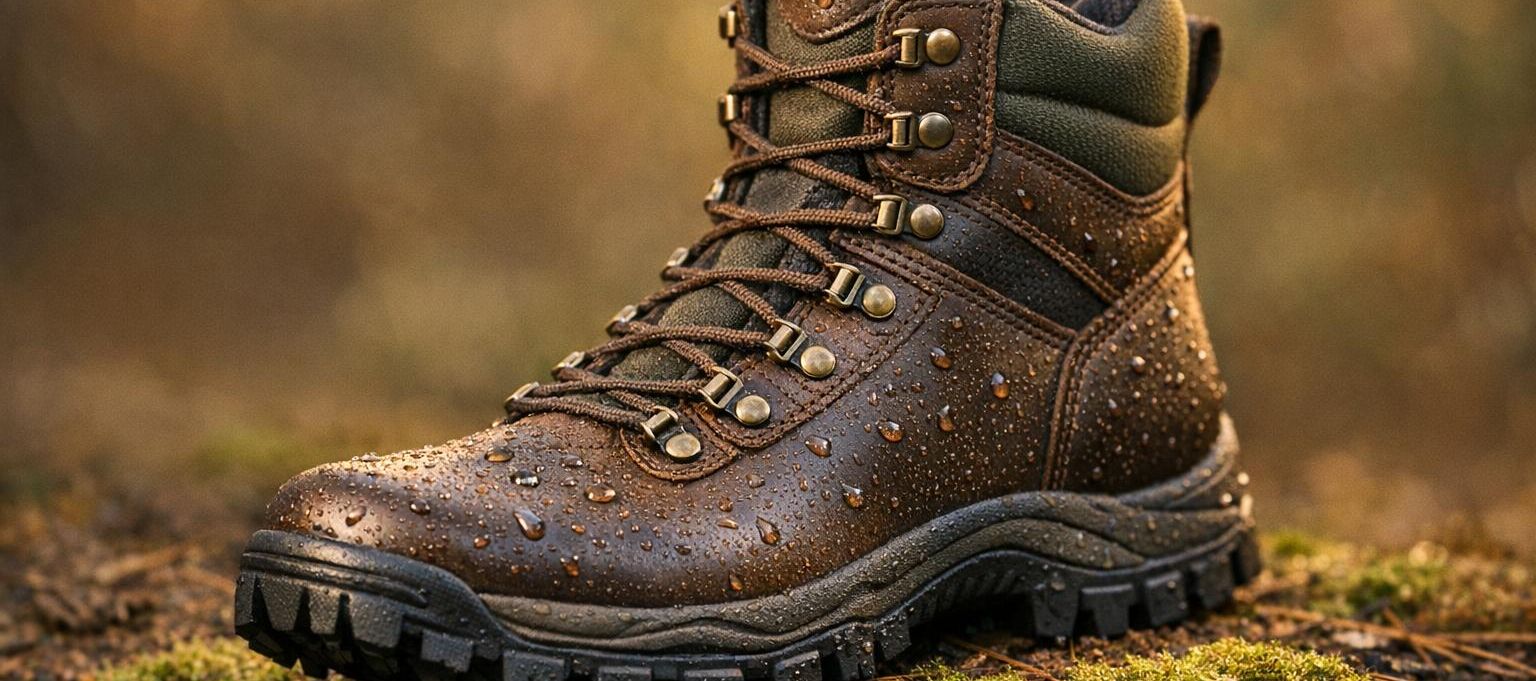
The choice of suitable hunting boots can make the difference between a successful hunting trip and painful feet. Inappropriate boots quickly lead to blisters, cold feet, and loss of concentration. Here are the most important points to consider:
- Fit and Comfort: There should be 1.3 cm of space between your toes and the boot's toe. Try on boots in the evening with your hunting socks.
- Terrain Suitability: Soles with deep profiles provide grip on muddy ground. For mountainous areas, stiffer soles with stabilizing cores are ideal.
- Weather Resistance: GORE-TEX membranes keep feet dry while breathable systems wick away moisture.
- Durability: Full-grain leather is durable but requires maintenance. Reinforced toe caps and robust seams increase lifespan.
- Weight: Lightweight models weigh about 740 g and are ideal for flat terrain, while heavier boots provide stability in mountainous terrain.
The right combination of size, material, and features ensures that you can fully concentrate on your hunt.
The Best Hunting Shoe for YOU 🥾 Points to Consider | Part 2
sbb-itb-1cfd233
Fit and Comfort Checks
A good fit is crucial to avoid painful feet and distractions during long deployments. It forms the basis for comfort and safety. Four points are particularly important: sufficient length, correct width, secure heel hold, and appropriate arch support [3].
Size and Fit
There should be about a finger's width (approximately 1.3 cm) of space between the longest toe and the boot's toe. At the same time, the heel should fit snugly and allow no more than 0.6 cm of movement. This prevents pressure points and "black toenails" during descents and takes into account the natural swelling of the feet [3][4]. Men should add 8 mm to their foot length, while women should add 6 mm [5].
Try on boots best in the evening, as your feet tend to be slightly swollen at that time. Wear the socks that you will later use for hunting [3][4]. With a simple test, you can check the fit: Push your foot forward until your toes touch the front of the boot – there should be exactly one finger's width between your heel and the end of the boot [4].
In addition to the right size, arch support is also an important factor.
Arch and Ankle Support
The insole should comfortably adapt to your arch without exerting pressure. This keeps the natural alignment of the foot intact and reduces fatigue [3]. If the factory insole does not fit, a high-quality replacement insole can help [3].
A mid to high shaft (about 18 cm) protects the ankle and provides stability on uneven terrain [1]. Models like the Meindl Island Lady MFS use memory foam that adapts individually to your ankles and the boot's collar through body heat [1]. Additionally, the flex rating indicates the stiffness of the boot: Flex 2 is ideal for mountainous terrain, while Flex 3–4 provides maximum support on extreme inclines and with heavy loads [3].
Once you have found the right fit and support, it is time to break in the boots.
Breaking in the Boots
“A new boot should feel good from the start. The break-in phase is meant for the boot to adapt to the unique shape of your foot – not to correct a fundamentally poor fit." – Technical Team, 3515 [3]
Before you wear the boots in action, you should break them in. This way, the leather and foams will optimally adapt to your feet, and injuries will be avoided [3]. Full-grain leather molds to your foot over time, while synthetic materials retain their original shape. Therefore, fit is particularly crucial when purchasing synthetic boots [4].
Never buy boots that are already uncomfortable in the store – breaking them in cannot fix fundamental fit issues [3]. Make sure that all adjustments to your equipment are completed so that you can fully concentrate on your mission later [6].
Terrain-Specific Requirements
Your hunting area significantly influences what features your boots should have. A shoe that performs well on flat terrain may quickly reach its limits in rugged mountains or on muddy forest floors. Here you will learn how the sole and construction should be adapted depending on the terrain.
Grip and Traction
The sole is the link between you and the ground – and thus crucial for your safety. On muddy surfaces, deep lug profiles are essential as they provide optimal grip.
In the mountains and on scree, soles with stabilizing cores, such as the Vibram® Multigrip®, offer secure footing while being flexible enough to minimize fatigue during steep ascents [1] [7] [9].
For icy or frozen ground, there are special rubber compounds that grip reliably even on smooth surfaces like the rungs of high seats [1]. Examples like the Meindl Bergstiefel Perfekt and the Haix Scout 2.0 GTX, both rated 5.0/5 on Gunfinder, demonstrate how important high-quality soles are [8] [9].
Waterproofness and Breathability
The right balance between water protection and breathability is crucial. GORE-TEX membranes keep external moisture out but limit breathability [3]. In wet and cold driven hunts, they are indispensable, while in dry regions, non-membrane boots are often more suitable [3].
“Waterproof membranes keep your feet excellently dry from external moisture, but they naturally limit breathability." – Technical Team, 3515 [3]
Advanced systems like the HAIX Climate System utilize walking movements to actively dissipate moisture through ventilation openings [1]. Leather boots without a membrane, such as the Meindl Perfekt, require regular impregnation to maintain their water-repellent properties [8]. The Haix Nature One GTX combines membrane protection with an active climate system and achieves a rating of 4.0/5 on Gunfinder [8].
Shaft Height and Protection
The shaft height plays an important role alongside the material in keeping external influences like water or mud at bay. Mid-height models with about 18 cm shaft height provide good protection against brush and moisture. The Härkila Forest Hunter GTX is a solid all-rounder – it weighs only about 740 g per boot and is rated 4.0/5 on Gunfinder [1] [2].
For more demanding tasks, such as tracking or working in dense underbrush, higher models like the Härkila Pro Hunter Ridge 2.0 GTX are ideal, as they prevent water and dirt from entering from above [2]. In extreme conditions, such as winter or in wetlands, tall rubber boots like the Muck-Boots Arctic Sport or the Lady Arctic Ice Tall provide reliable protection [10].
Insulation and Weather Adaptability
After considering the terrain-specific requirements, we now turn to insulation and the ability to adapt to various weather conditions. The right insulation ensures that your feet stay warm without overheating or cooling down. It heavily depends on the type of hunting and the prevailing weather conditions.
Insulation Levels
In active hunting forms, the HAIX Climate System plays a crucial role. It ensures effective moisture transport through targeted ventilation. The natural pumping motion while walking helps to dissipate moisture through ventilation openings in the shaft and tongue. The result: Your feet stay dry and warm, without sweat accumulation during periods of stillness causing uncomfortable cooling.
However, for driven hunts in winter or long sits, boots with stronger insulation are indispensable. Materials like nubuck leather and memory foam adapt perfectly to your foot shape and prevent cold bridges. Recommended models include the Meindl Arosa Lady for €359.90 or the insulated rubber boots Aigle Parcours 2 for €179.95 – both provide reliable protection in low temperatures [1].
In addition to insulation, adaptability to different seasons also plays an important role.
Seasonal Versatility
To ensure comfort in changing weather conditions, flexible adaptation is crucial. GORE-TEX® Performance membranes combine waterproofing with breathability, making them ideal for unpredictable weather. The HAIX Nature One GTX, rated 4.0/5 on Gunfinder, is an excellent all-rounder suitable for both stalking and sitting throughout the year [1].
In hot and dry climates, however, non-membrane boots are often the better choice. They minimize the risk of excessive sweating and blistering. For unpredictable weather conditions and challenging terrain, a “Flex 2” boot is recommended, combining stability for mountainous terrain with comfort for longer walks [3].
A precise fit, combined with high-quality materials and thoughtful insulation, forms the basis for safe and comfortable use – regardless of weather conditions.
Durability and Material Quality
The quality of the material is crucial for the longevity of hunting boots. Especially on uneven or rough terrain, the material is put under significant stress. Whether your boots last for many years or wear out quickly largely depends on the choice of materials and craftsmanship.
In addition to comfort and fit, the choice of robust materials plays a central role, especially in long and demanding operations. Let's take a closer look at the properties of leather and synthetic materials.
Leather and Synthetic Materials
Full-grain leather is often regarded as the most durable material for hunting boots. Its dense fiber structure provides high tear resistance, and it adapts over time to the individual foot shape. Adrian Ostermayer from Ostermayer Jagd summarizes it aptly:
“High-quality leather is extremely durable and long-lasting. Moreover, it adapts to the foot like no other material” [12].
Leather also has the advantage of developing an attractive patina over time and gaining character – provided it is properly cared for. To maintain the suppleness of the leather, the moisture content should be between 14 and 18% [12]. Wax-based care products are ideal here, as they protect the leather without drying it out. Pure fats, on the other hand, can displace water from the material and make it brittle. For comparison: The natural fat content of tanned cowhide is only about 1% [12].
Synthetic materials offer a more cost-effective and easier-to-care-for alternative, but they do not age as “naturally” as leather [11]. Many modern hunting boots combine leather with synthetic or textile components in hybrid constructions. This design reduces weight and increases functionality without significantly compromising durability [12]. A good example is the Härkila Forest Hunter GTX, which is rated 4.0/5 on Gunfinder [1].
Reinforcements and Seams
Especially stressed areas of the boots, such as seams and lacing zones, should be regularly cleaned to avoid dirt accumulation. These can increase the stress on the material and lead to premature wear [12].
High-quality models often feature reinforced toe caps and rubber edges, which provide additional protection against abrasion and impacts. The inner lining should also be robust. HAIX boots, which are also rated 4.0/5 on Gunfinder, are a good example [1]. A stable sole, such as the Vibram Multigrip, prevents excessive bending and thus relieves seams and upper material [1].
Brands like Meindl or Hanwag stand for excellent craftsmanship and durability. Models like the Hanwag Alaska GTX Wide for €349.90 or the Meindl Arosa Lady for €359.90 are indeed an investment, but they pay off through their quality and durability over the years [1].
Weight and Endurance Aspects
The weight of a boot is not just a detail, but a crucial factor, especially during long deployments. Every additional gram costs energy and can impair endurance – particularly during extended stalking or tracking. An example of a successful balance between robustness and low weight is the Härkila Forest Hunter GTX. Weighing about 740 g per boot, it offers impressive weight optimization despite its leather construction and a shaft height of 18 cm [1]. For active hunting styles, high abrasion resistance is also important, combined with a design that allows reliable performance even in difficult terrain [1].
Light vs. Heavy Boots
The choice between light and heavy boots primarily depends on the area of use. In flat or hilly terrain, where mobility and a natural gait are crucial, lighter, flexible models are suitable. They reduce fatigue and make longer distances easier. In contrast, in alpine terrain or when carrying heavy loads, stiffer, heavier models are the better choice. They provide more stability and protect the ankles more effectively.
A versatile boot like the HAIX Nature One GTX is designed to meet both the mobility requirements for stalking and the insulation needs for sitting [1]. For particularly demanding conditions in rough terrain, models like the HAIX Nature Trace GTX come into play, which impress with additional reinforcements [1].
However, not only the weight and construction of the boot are decisive – the sole technology also plays a significant role.
Midsole and Outsole
The midsole is crucial for cushioning and has a direct impact on endurance. Materials like EVA foam or polyurethane (PU) reduce shocks and relieve the joints. Systems like the HAIX Climate System utilize the natural "pumping motion" while walking to transport moisture out of the boot. The result: dry feet and less fatigue during long marches [1].
The outsole provides stability and secure grip. Special soles like the Vibram Multigriff guarantee a firm stance on slippery or uneven surfaces – a crucial factor for safety and mobility in the field. A stable heel hold, which limits movements to ≤ 6 mm, also supports cushioning performance and minimizes the risk of blisters [3].
10-Point Checklist for Hunting Boots
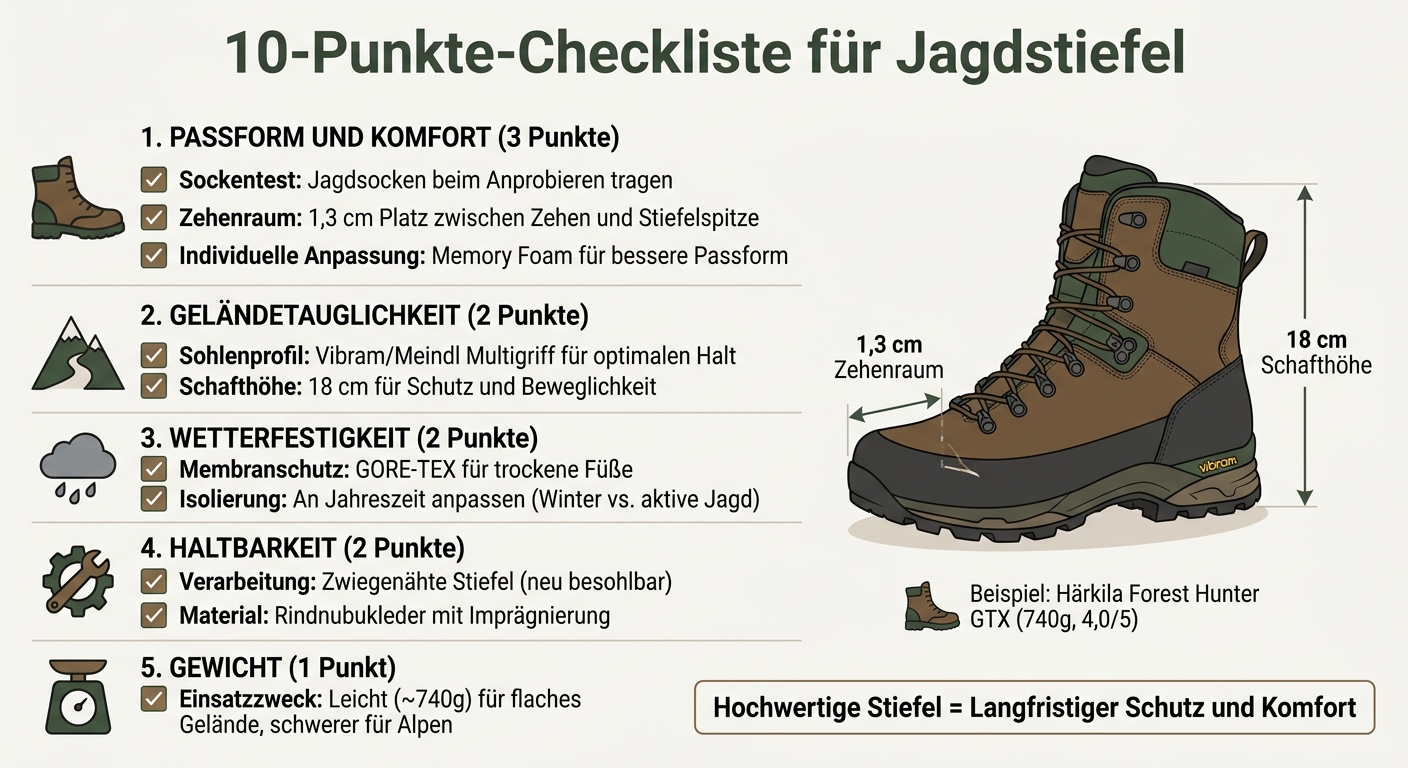
10-Point Checklist for Hunting Boots: Fit, Terrain, and Weather Resistance
Here you will find the most important criteria that your hunting boots should meet for extended use. This checklist serves as a practical guide to make an informed decision before purchasing.
Fit and Comfort
- Sock Test: Put on your hunting socks before trying on the boots. Thick winter socks take up more space than light summer variants, which affects the fit[1].
- Toe Space: Make sure your toes have enough room. A wider last shape helps avoid pressure points[1].
- Custom Fit: Boots with memory foam conform to your foot, providing more comfort[1].
Terrain Suitability
- Sole Profile: Choose a sole that fits the area of use. Examples include Vibram Multigrip or Meindl Multigrip for optimal grip[1].
- Shaft Height: A shaft height of 18 cm offers a good compromise between protection and mobility. For particularly demanding terrain, models with reinforced construction, such as the HAIX Nature Trace GTX (Rating: 4.0/5), are recommended[1].
Weather Resistance
- Membrane Protection: GORE-TEX membranes keep your feet dry and wick moisture away while walking[1].
- Insulation: Adjust the insulation to the season. For winter sits, stronger thermal insulation is required, while lighter insulation is sufficient for active hunting movements.
Durability
- Construction: Goodyear-welted boots are durable and can be resoled. An example is the Meindl Bergstiefel Perfekt, which receives a top rating of 5.0/5[8].
- Material: Robust cow nubuck leather with special impregnation offers protection and longevity. Reinforced seams are a quality feature that is superior to glued soles[8].
Weight
- Purpose: For flat terrain and longer distances, lighter models like the Härkila Forest Hunter GTX (approx. 740 g) are ideal[1]. In alpine areas, heavier and stiffer boots provide more stability.
With this checklist, you can ensure that your hunting boots meet all your requirements and reliably accompany you on your outings.
Conclusion
The choice of the right hunting boots plays a crucial role in your success and safety in the field. Gamekeeper Roman v. Fürstenberg puts it aptly:
“This quiet approach to a stand is what is absolutely necessary during a driven hunt." [6]
Inappropriate or poorly fitting boots can not only cause unnecessary noise but also alarm the game prematurely – a risk that should be avoided.
Especially during long outings, where you struggle through dense vegetation, clear paths, or cover extensive marches, durable boots are a must. High-quality models help avoid foot pain and material issues, allowing you to fully concentrate on your tasks.
The choice of the right boots depends on your individual requirements. Lightweight models like the Härkila Forest Hunter GTX (approx. 740 g) are ideal for flat terrain and longer distances. For more difficult, rugged conditions, sturdier variants are better suited. Investing in quality pays off in the long run, as such boots provide reliable protection and comfort for years.
In summary: Your equipment, especially your shoes, is a key factor for safety while hunting. Slippery, frozen ground or other challenging conditions can be safely managed with the right footwear. Additionally, they assist you in the safe transport of game. With the right hunting boots, you are optimally prepared for any challenge.
FAQs
Which insoles are worth it for hunting boots?
Insoles can significantly enhance the comfort and cushioning of hunting boots. Especially during longer outings, they help increase comfort and reduce foot fatigue. It is important to pay attention to high-quality materials and a perfect fit to achieve the desired effect.
Which socks prevent blisters best?
To avoid blisters in hunting boots, breathable and moisture-wicking socks are an excellent choice. They should fit snugly enough to prevent bunching and friction, but not so tight that they impair circulation. Make sure they fit well and effectively wick moisture away from the foot to maximize comfort and protection during the hunt.
How do I properly care for leather boots after wet outings?
Clean your leather boots thoroughly after a wet outing. Use a brush and clear water to remove dirt and moisture. Afterwards, the boots should dry completely in a warm, well-ventilated area – keep them away from direct heat, as this can damage the leather.
Once the boots are dry, treat the leather with leather oil or leather grease. This keeps it supple and protects it from wear. For additional protection, you can use a waterproofing spray to maintain water resistance.