Top 5 camouflage patterns for hunting
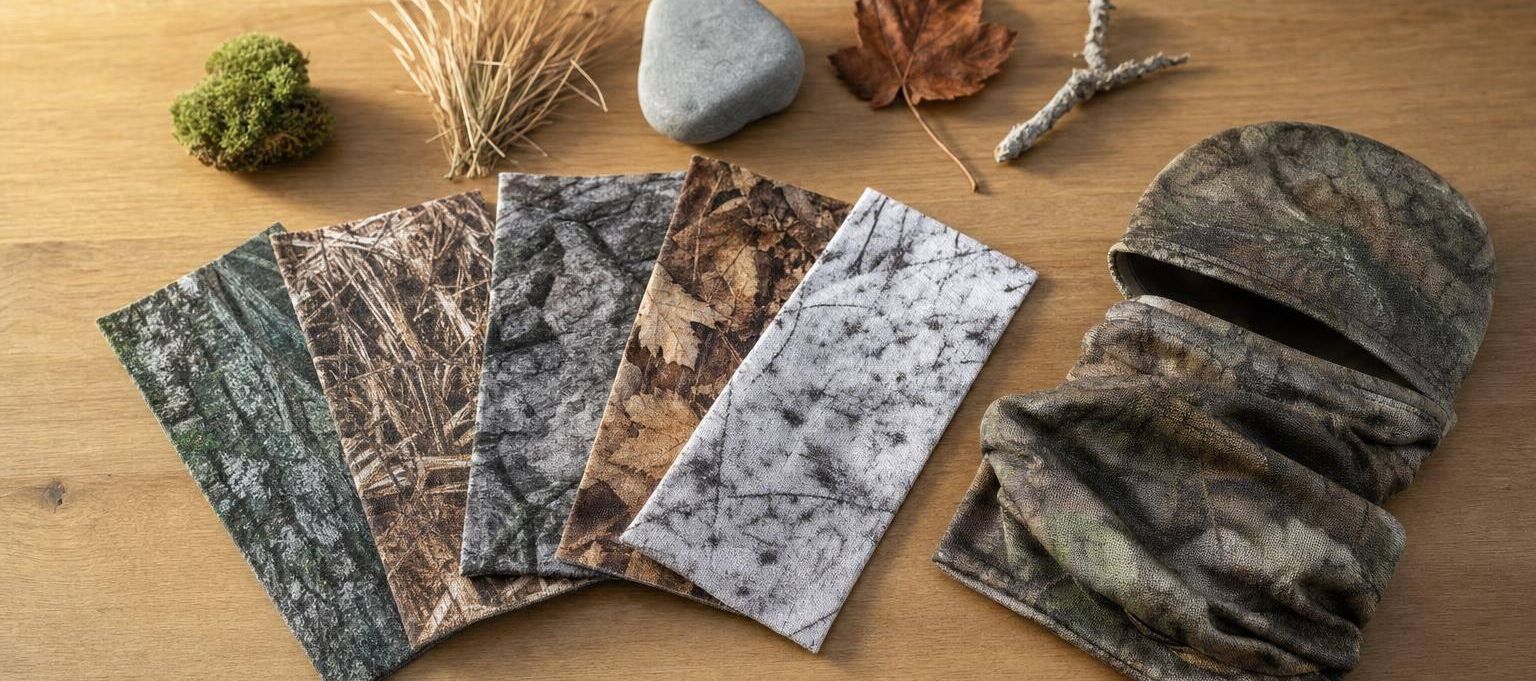
When I choose a camouflage pattern for hunting, I first pay attention to silhouette, not color. That is the core here: wildlife often recognizes shape and movement more readily than red or green. Deer and other game animals can perceive movement at distances of up to 300 m, but clear outlines are usually only recognized from around 50 m.
Therefore, the answer is simple: There is no best camouflage pattern. I choose based on terrain, season, and type of hunting.
This is clearly shown in the article:
- Realtree Edge works well in deciduous forests and more in autumn/winter
- Mossy Oak Break-Up Country often performs well in mixed forests and at forest edges
- Sitka Optifade Subalpine is strong in open, light areas
- PenCott Greenzone often fits well in green terrains, mixed forests, and at field edges
- Flecktarn / Multicam divides: Flecktarn is more suited for dense forests, Multicam for drier transitions
What I immediately look for when reading:
- Macrostructures for effectiveness at greater distances
- Microstructures for effectiveness at short distances
- light or dark tones matching the background
- covering face and hands, as exposed skin reflects light strongly
- for driven hunts: <u>signal orange remains mandatory</u>
In short: For forests, rather darker and more structured; for fields and open areas, rather lighter and softer. And if I am unsure, I tend to choose not too dark, as a dark block in the terrain quickly stands out.
Camouflage in Test - From the Wild's Perspective - Part 2
sbb-itb-1cfd233
Quick Comparison
| Camouflage Pattern | Best Terrain | Best Time | Short Conclusion |
|---|---|---|---|
| Realtree Edge | Deciduous Forest | Autumn, Winter | Strong in trunk, branch, and shadow patterns |
| Mossy Oak Break-Up Country | Mixed Forest, Transitions | Late Summer to Winter | Good for short and medium distances |
| Sitka Optifade Subalpine | Open, Light Stands | Spring to Early Autumn | Good for stalking in brighter terrain |
| PenCott Greenzone | Green Mixed Forest, Field Edge | Spring, Summer | Strong all-rounder for Central European green |
| Flecktarn / Multicam | Forest / Transition to Open Land | depending on the pattern | Flecktarn is rather green-dense, Multicam is rather dry-bright |
I summarize the article as follows: It is not the "most beautiful" pattern that counts, but the one that dissolves the human contour best in one's own territory.
What makes a good camouflage pattern
A good camouflage pattern must achieve one main thing: break the human silhouette. Shoulders, head, and the line of the weapon together create a shape that wild animals often immediately classify as a danger. In the end, what matters is how well a pattern dissolves exactly this shape [4][3].
It is important on two levels. Good patterns work with macro and microstructures: Macrostructures break the silhouette at greater distances, while microstructures allow the hunter to blend in more strongly with the background up close [4][3]. The five patterns below are evaluated according to this criterion.
The type of hunting also plays a significant role. In still hunting, it is especially important how the silhouette appears against the sky or forest edge. In stalking, besides the pattern, the material is crucial: It should be as quiet as possible, because in the forest, rustling fabric often gives away more than any color [1][10]. In driven hunts, however, camouflage is not the priority, but visibility. The UVV specifies signal orange [1][7].
There is no one pattern for everything. The terrain and season dictate the direction in color choice [1][10]. Those who often hunt in changing territories usually cannot get by with just one pattern.
The following table shows the terrain characteristics by which the five patterns are evaluated equally:
| Terrain | Typical Colors | Pattern Features |
|---|---|---|
| Deciduous Forest | Dark Green, Brown, Black | Vertical Structures, High Contrast |
| Nadelwald | Dark Green, Gray, Moss | Broken surfaces, dark tones |
| Stoppelfeld | Ocher, Straw, Light Brown | Light tones, soft transitions |
| Mischrevier | Green, Brown, Ocher, Gray | Hybrid pattern |
According to these criteria, the following five patterns have been selected. Therefore, the results vary depending on the area.
1. Realtree Edge
Realtree Edge breaks up the human silhouette with structures of tree trunks, branches, and leaves. The pattern shows its strength especially in autumnal and winter forests. It works best where trunks, branches, and shadows break up the contours.
In the German area, Realtree Edge is particularly suitable for late autumn and winter. In green spring and summer foliage, the effect is weaker. Then a greener variant is the better choice [6].
At typical hunting distances between 20 and 100 meters, Realtree Edge is very effective. Structured patterns can significantly reduce the detection distance of red deer [12]. If you want to maximize this effect, your jacket, gloves, and face mask should match in color. Exposed skin reflects light and can alert wildlife [2][1].
For driven hunts, Realtree Edge can be well combined with orange camouflage. This way, you remain clearly visible to other hunters, while wildlife perceives orange as hardly a signal color [7][13]. At Gunfinder, you can find matching jackets, pants, and accessories in Realtree Edge. In dense summer green, the pattern then needs more leaf content and less brown.
2. Mossy Oak Break-Up Country
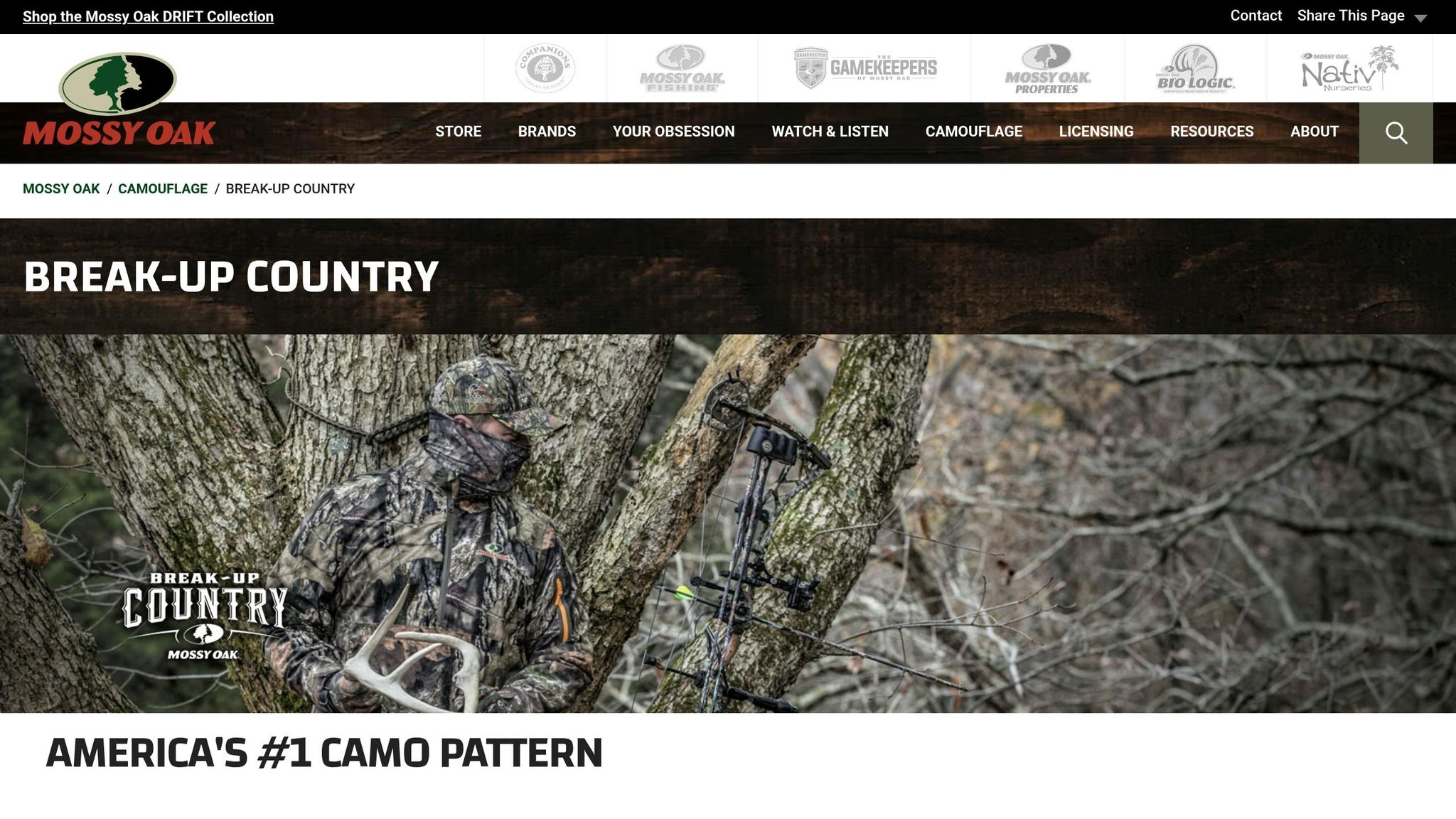
While Realtree Edge scores primarily in the forest during autumn and winter, Mossy Oak Break-Up Country is often a bit more versatile in classic mixed forests. The pattern mixes shades of brown, gray, and green, making it well-suited for mixed forests and transition zones where light, shadow, and organic shapes constantly change [9][12].
The core point is the disruption of silhouettes at short and medium distances. Structured patterns can significantly reduce detection distance [12]. This is particularly important during stalking, as the pattern quickly dissolves contours and makes the body less clearly defined.
For everything to work well, you should wear a face mask and gloves in the same pattern. Light skin on the face and hands often gives away the hunter early [1][14]. Also, avoid detergents with optical brighteners. Otherwise, you unnecessarily weaken the effect of the pattern.
You can also find suitable clothing and equipment in this pattern at Gunfinder.
3. Sitka Optifade Subalpine
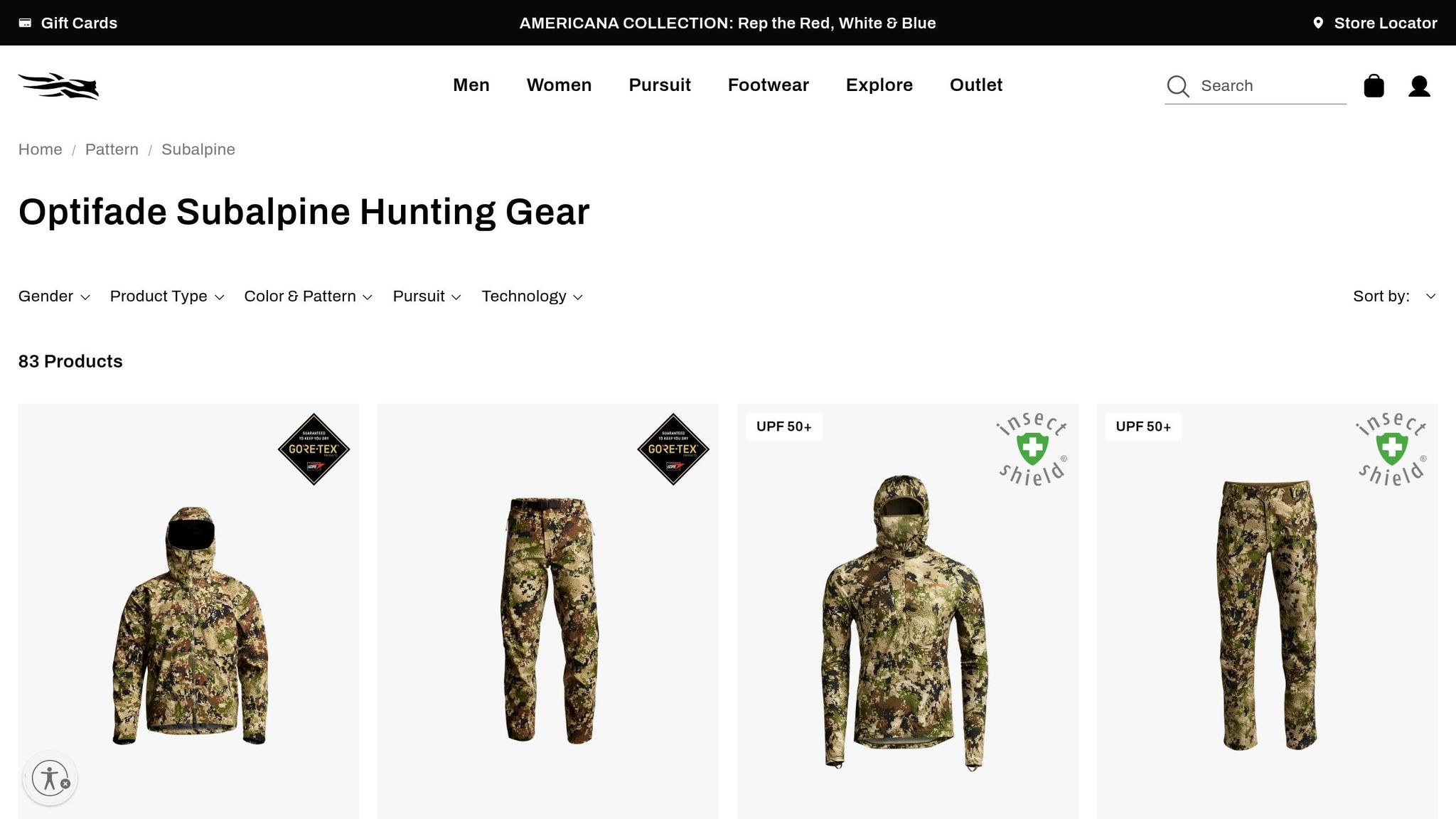
Sitka Optifade Subalpine goes a step further than classic forest patterns. It does not display typical leaves or bark structures. Instead, the pattern is tailored to the perception of wildlife: The goal is not to appear completely invisible, but to not be recognized as a threat by the wildlife—even when it is looking directly at you [16][17].
This is exactly where the difference lies. Large areas break the silhouette. Small details disrupt the contour at short distances, especially up to around 50 meters [15][16][17]. This is not a "pretty forest pattern" for humans. It is meant to work in the territory.
Where you hunt makes the difference. Subalpine showcases its strengths primarily in open, light-permeable stands. For stalking roe deer, it is particularly suitable in German territories, such as in young forests, at field edges, in dwarf pine fields, and on slopes [17].
You can also find suitable Sitka clothing at Gunfinder.
4. PenCott Greenzone
After the specialized Subalpine, here comes the Central European all-rounder. PenCott Greenzone works strongly in mixed forests, at field edges, and in shaped landscapes. The mix of green, brown, and beige fits well with changing vegetation. About 40 to 50 % of the color area consists of brown and beige tones [18][20].
Its three-tiered structure of micro, midi, and macro elements helps to break contours at short and medium distances. That is exactly the point: The pattern remains more readable at a distance and does not simply merge into a dark area [20][21]. A field test in European mixed forests also showed strong contour resolution at short distances [19].
For stalking, lightweight, quiet clothing in the Greenzone pattern is suitable. When sitting, you should also wear gloves and a face mask in the same pattern. Exposed skin can ruin even very good camouflage [19].
Suitable clothing is available from:
On Gunfinder, you can specifically search for clothing and equipment in this pattern.
For green areas, Greenzone is one of the strongest all-rounders. The comparison below shows how it performs against the other patterns.
5. Flecktarn / Multicam
Fifth place goes to a duo: Flecktarn for dense, green areas and Multicam for drier transitions.
Flecktarn was specifically developed for Central European forests, while Multicam was designed for use in as many environments as possible [23][25].
The difference is mainly evident in the structure of the patterns. Flecktarn works with finely speckled transitions. This makes hard color boundaries disappear, and the silhouette breaks up better in dense, shady forests [23]. Multicam uses seven colors with soft transitions. This works well in many situations, but often appears a bit too bright in dark forest areas [22][24][25][26].
For hunting, the situation is quite clear: Flecktarn fits strongly into the green spring and summer, especially in dense forest sections. Multicam is more suitable where forest transitions into open areas, such as at the edge of fields, on dry stubble fields, and in autumn and winter when the vegetation is brown and dry [22][25].
Both patterns are readily available in Germany, for example from Leo Köhler, Helikon-Tex, and UF PRO [11][22][23]. On Gunfinder you can find hunting clothing and equipment in both patterns.
The direct comparison quickly makes the areas of application visible:
| Feature | Flecktarn (5-Color) | Multicam |
|---|---|---|
| Best Environment | Dense mixed forest, shade | Field edge, dry grass, transitional areas |
| Best Season | Spring / Summer | Autumn / Winter |
| Silhouette Resolution | High | Medium |
| Availability in Germany | Very high | High |
Quick Comparison of the 5 Camouflage Patterns
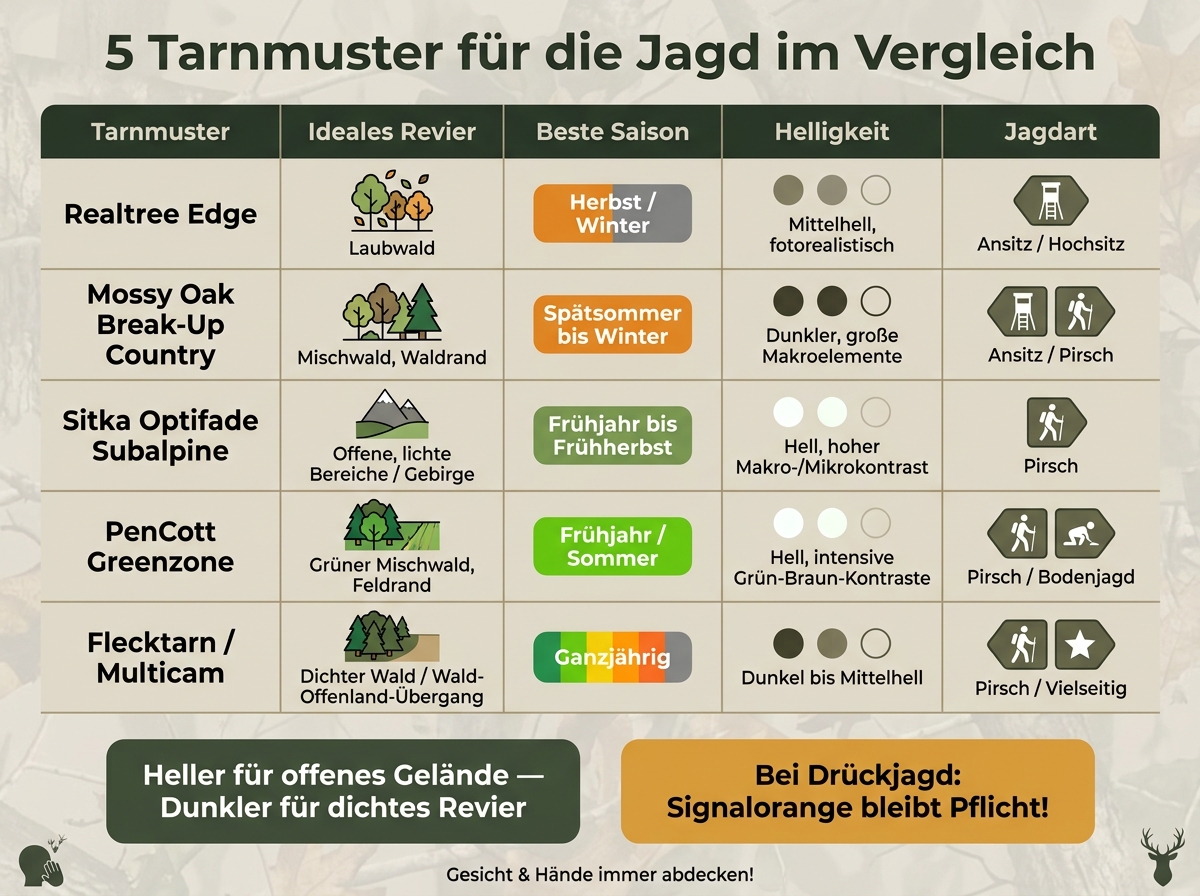
5 camouflage patterns compared: habitat, season & application
After the individual profiles, it quickly becomes clear in the quick comparison which pattern fits best in which habitat. If you are stuck between two options, you can see the most important differences side by side here.
| Camouflage Pattern | Ideal Habitat | Best Season | Brightness/Contrast | Application |
|---|---|---|---|---|
| Realtree Edge | Deciduous forest, areas with a lot of foliage | Late summer to autumn | Medium bright, photorealistic | Stalking / High seat |
| Mossy Oak Break-Up Country | Mixed forest, forest edge | Late summer to winter | Darker, large macro elements | Stalking / Stalking |
| Sitka Optifade Subalpine | Mountains, subalpine zones | Spring to early autumn | Bright, high macro/micro contrast | Stalking |
| PenCott Greenzone | Saturated green forest, meadows, forest edges | Spring / Summer | Bright, intense green-brown contrasts | Stalking / Ground hunting |
| Flecktarn / Multicam | Central European forest (Flecktarn) / forest and open land (Multicam) | Year-round (Flecktarn) / year-round (Multicam) | Dark to medium (Flecktarn) / medium bright (Multicam) | Stalking / versatile |
One point stands out immediately: natural patterns and structural patterns work differently. Realtree and Mossy Oak mimic vegetation. Sitka Optifade and PenCott Greenzone focus more on breaking up the silhouette [1][5][4][22].
Brightness also plays a significant role. A brighter pattern often blends better into the background than one that is too dark. In other words: brighter for open terrain, darker for dense areas [5].
This allows you to narrow down your selection cleanly according to terrain and type of hunting.
Choose the right camouflage pattern for your area
From the comparison, the actual buying rule emerges: terrain and season dictate the pattern. Photograph your area during the hunting season and match the color tones with the camouflage pattern [3].
In a dark green, shady background, flecktarn or Realtree Edge fits well. In open, bright, and grassy areas, a brighter pattern with soft transitions is usually the better choice [4].
If you are unsure, it is better to choose a slightly brighter pattern than one that is too dark. Too dark camouflage often quickly appears as a solid block in the forest [5]. This is exactly where it shows that not only the jacket and pants matter.
The face and hands are the most critical zones. A face mask and camouflage gloves often provide more than a completely coordinated outfit [2][8]. A hood or scarf also helps to break up the head-shoulder line [8].
However, there is a clear exception for driven hunts: Signal orange is mandatory. This can be achieved through orange clothing or additional parts. Game animals perceive orange hardly differently than green or gray, while other hunters recognize it immediately [7][5].
On Gunfinder, you will find jackets, pants, backpacks, and accessories in the same camouflage pattern.
Conclusion
The quick comparison makes it clear: There is no best camouflage pattern - only the one that fits your hunting area. Whether classic natural patterns or camouflage through structure: In the end, what matters is how well the pattern works in your environment.
It all comes down to this: It is not the color that is the key point, but the silhouette. The better your pattern breaks up contours, the less noticeable you appear in the hunting area [3].
Choose your camouflage pattern according to the hunting area and season. It’s best to check the color tones directly on site. And very importantly: You should always cover your face and hands.
Once your hunting area is set, you can find suitable clothing and accessories in the presented patterns on Gunfinder.
FAQs
Which camouflage pattern is the most versatile for beginners?
For beginners, universal camouflage patterns are usually the best choice. The reason is simple: They work well in various hunting areas and across multiple seasons without needing a new pattern for each environment.
Patterns that combine several elements are considered particularly universal. An example is Huntec Camouflage from Blaser. Such designs are intended to perform well not just in a single setting.
Additionally, there are modern, fractal-based designs like the InVis camouflage pattern from Seeland. These patterns are meant to blend into many landscapes, providing exactly what beginners often seek: a solution for many instead of specialized patterns for every individual case.
How important is the camouflage pattern compared to movement and noise?
A good camouflage pattern is important because it breaks up your silhouette and helps you blend better with the surroundings. But: It does not replace disciplined behavior.
Wild animals quickly notice hasty or unnatural movements. That’s why slow, steady movements, natural cover, and as little noise as possible are just as important as visual camouflage.
Is one pattern enough for all seasons?
Most of the time no. Vegetation, light, and background change significantly throughout the year. In spring and summer, green tones prevail, in autumn, brown colors are more common, and in winter, white camouflage is often required.
Versatile combination patterns cover more than a purely seasonal pattern. However, they are not always a substitute for adapting to the season. Ultimately, what matters is something very simple: The pattern should break up contrasts and ensure that your silhouette blends in with the background.