10 tips for storing large ammunition

The proper storage of large ammunition is not only legally required in Germany but also crucial for the safety and quality of the ammunition. Here are the key points:
- Legal Requirements: According to § 36 WaffG, ammunition that requires a permit must be stored in certified steel containers with a swing bolt lock. These regulations also apply within the household.
- Storage Conditions: Store ammunition in a dry, cool place with a stable temperature (15-21 °C) and a humidity level of 30-50%. Moisture and temperature fluctuations can cause corrosion and chemical damage.
- Container Choice: Steel or plastic containers with airtight seals protect against moisture. Silica gel packets help additionally to bind moisture.
- Organization: Sort ammunition by caliber, type, and purchase date. Use the FIFO principle (First In, First Out) to use older stocks first.
- Safety Measures: Keep away from ignition sources and install child- and theft-proof locks. Electronic combination locks provide additional protection.
- Regular Inspections: Regularly check for rust, chemical deposits, or damage. Replace desiccants and check the seals of the containers.
In short: With the right storage conditions, certified containers, and thoughtful organization, you protect your ammunition from damage and comply with legal requirements.
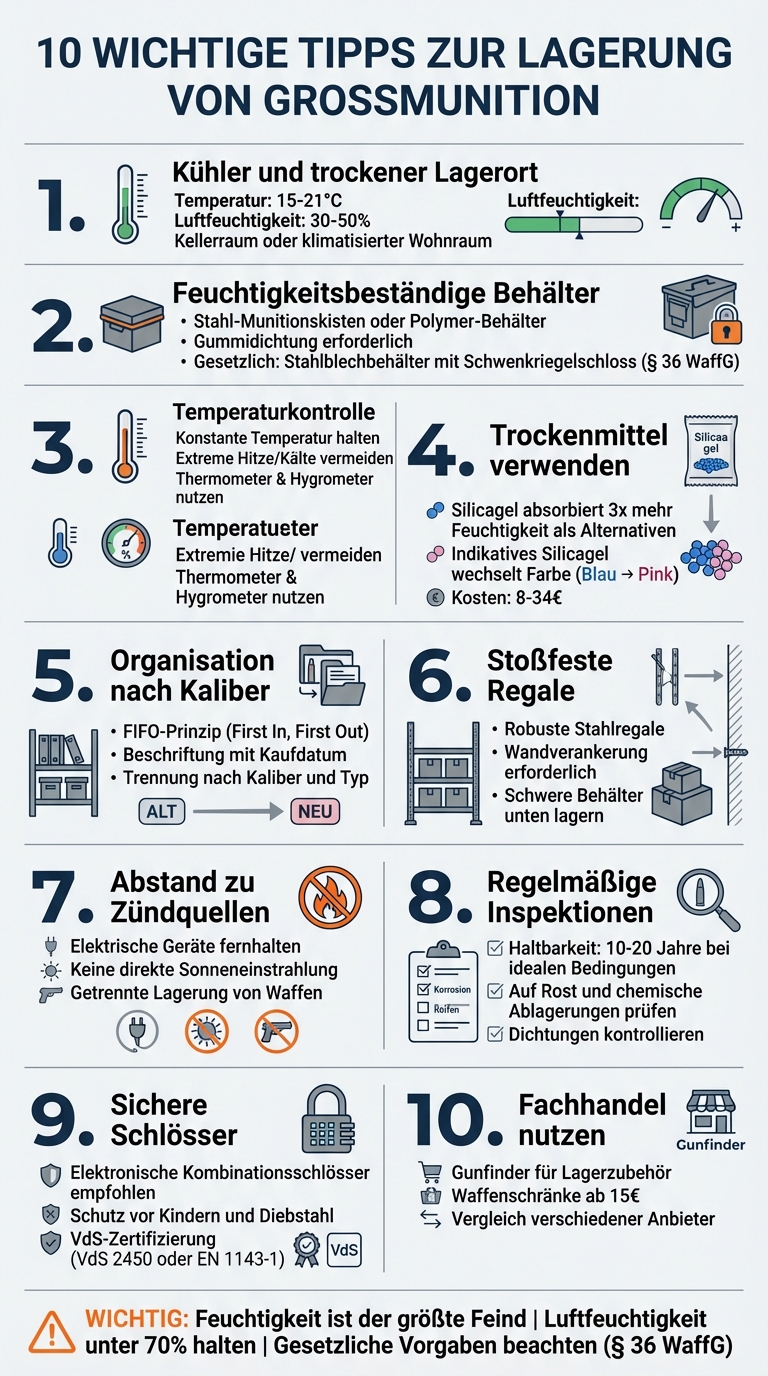
10 Tips for Safe Storage of Large Ammunition - Overview
Storage of Ammunition - In Detail!!!
1. Choose a Cool and Dry Storage Location
The right storage location is crucial when it comes to the safe storage of ammunition. A dry, little-used basement room is ideal—provided there are no moisture issues[1]. Alternatively, air-conditioned living spaces are suitable, as heating and ventilation systems provide stable conditions[6]. This stable environment is essential to maintain temperature and humidity levels in the optimal range.
The recommended storage temperature is between 15.5 °C and 21 °C, while the relative humidity should remain consistently between 30% and 50%. Deviations from these values can lead to problems: A humidity level above 50% poses a risk of corrosion on metal parts, while values below 20-25% can make packaging materials like wood, laminate, or paper brittle[6].
“To prevent moisture-related damage to firearms during storage, the NRA recommends keeping the humidity in your safe room or gun cabinet between 30% and 50% and the temperature as close to 15.5–21 °C as possible.” – Liberty Safe[6]
Avoid rooms near water sources such as pipes or areas at risk of flooding. For basements, it may be wise to install water level alarm devices[1]. If the storage room has no windows, controlled ventilation through ducts with a maximum diameter of 12 cm is recommended[1].
To monitor storage conditions, you should use a hygrometer and a thermometer. A practical tip: Allow cold ammunition to reach room temperature before storage to avoid condensation[6].
2. Use Moisture-Resistant Containers
The right container plays a crucial role in protecting your ammunition from moisture and water damage. Steel ammunition boxes, as used in the military, are a tried-and-true classic. These containers are extremely robust, heat-resistant, and equipped with a tight rubber seal in the lid that ensures an airtight and waterproof closure. This not only protects against moisture but also against temperature fluctuations that could harm the ammunition.
A modern alternative is polymer containers, such as those from the Pelican Vault series. These containers are lighter, shock-resistant, dustproof, and weather-resistant—without the rust risk that can occur with steel. High-quality models also feature stainless steel fittings and sturdy locks that ensure a secure seal.
“The first step to keeping your ammunition dry is to find a suitable waterproof or sealed container.” – Drew Wallace[7]
In Germany, it is particularly important to observe legal requirements. According to § 36 WaffG, ammunition that requires a permit must be stored in a locked steel sheet container with a swing bolt lock or an equivalent locking device[5]. So make sure your container meets these requirements.
To make storage even safer, you should regularly check the seals and add desiccants like silica gel to absorb moisture. Place the container on a shelf or elevated surface, never directly on the basement floor where moisture could be a problem. With these measures, your ammunition remains not only safe but also legally compliant. In the next section, you will learn how to prevent further risks with temperature control.
3. Keep the Optimal Temperature in Check
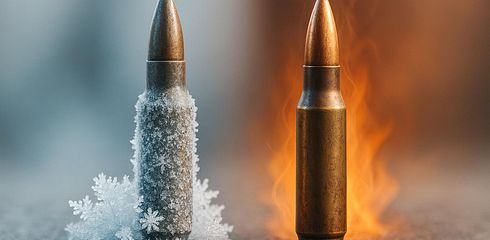
The right temperature is just as important as protection from moisture. Extreme heat or cold, combined with moisture, can trigger chemical reactions that damage your cartridges. In the worst case, deposits can form that may impair the function of the ammunition [4].
Experts recommend storing ammunition at a constant temperature between 15 and 21 °C and a relative humidity of 30 to 50 %. Therefore, avoid places with strong temperature fluctuations. Special caution is advised in coastal regions: Here, the salt content in the air, along with temperature fluctuations, can jeopardize the chemical stability of the cartridges [4]. To keep conditions in check, sensors are a practical solution.
With thermometers and hygrometers, you can easily monitor the storage conditions [1]. For even more precise control, digital data loggers like the Testo 184 or IoT-based sensors like the Monnit ALTA are recommended. These devices send immediate alerts to your smartphone in case of deviations. Many of these sensors are surprisingly small—some measure just 19 mm—and have batteries that last up to 15 years.
If you use a dedicated gun room, investing in an integrated heating and ventilation system is worthwhile. Electronic controls can automatically switch between air circulation and dehumidification as soon as humidity levels rise [1]. This way, you not only keep the temperature stable but also ensure an optimal climate.
For smaller safes, electric dehumidifiers work excellently. They provide slight heating and promote air circulation, further improving storage conditions. These measures complement protection against moisture and mechanical damage.
Also, do not forget protection against light exposure. Both direct and reflected sunlight can damage ammunition in the long term [4]. A dark, cool storage location with stable conditions is key to preserving the quality of your ammunition.
4. Protect Your Ammunition with Desiccants from Moisture
Desiccants work by absorption: they draw moisture from the air and bind it, keeping the air in your ammunition container dry [7]. Moisture can cause corrosion and impair ignition capability [9]. Even in sealed containers, trapped moisture can cause long-term damage such as corrosion or ignition failure [9].
Silica gel is the most effective desiccant when it comes to storing ammunition. It can absorb up to three times more moisture than alternatives like rice or wood shavings [9]. Scott Murdock, a Marine Corps veteran and equipment expert, sums up the importance of desiccants:
“Moisture corrodes casings, primers, and bullets, rendering them unusable... A few silica gel packets could save you thousands of euros.” [9]
A particularly useful variant is indicative silica gel, which changes color—usually from blue to pink—once it is saturated [9]. Even when saturated, it retains about 60% of its capacity [9].
Application of Silica Gel in Ammunition Storage
To use silica gel effectively, you should place at least one packet in each ammunition box before sealing it. For larger storage areas, such as gun cabinets, rechargeable dehumidifier units are the better choice [9].
-
Cost Overview:
- Small silica gel packets: approx. €8–11
- Rechargeable models: approx. €14
- Electric heating rods: approx. €34 [9]
Saturated silica gel can be reactivated by heating. Place the beads in a stainless steel bowl and heat them in the oven at about 120 °C for around 2 hours until they regain their original color [9].
Additional Tips for Maximum Effectiveness
Ensure that your ammunition containers have an airtight rubber seal. Without a good seal, desiccants lose their effectiveness significantly [9]. Check indicative silica gel packets at least once a year—in particularly humid regions even more frequently [9]. These measures are an important part of your strategy for safe and long-lasting ammunition storage.
5. Organize Your Ammunition by Caliber and Type
A clear organization of your ammunition by caliber, type, and age saves time and prevents confusion. Properly stored ammunition remains ready for use for many years. A well-thought-out rotation system helps you keep track.
Adopt the FIFO principle (First In, First Out): Store new ammunition at the back or bottom and use older stocks first. Label containers carefully with purchase and storage dates so you always know which cartridges should be used next.
Also, separate ammunition that has already been used in the field and may have been exposed to temperature fluctuations or moisture from your long-term supplies. These cartridges are ideal for your next training session and should not return to long-term storage.
Remember to comply with legal requirements for storing ammunition that requires a permit. High-security containers according to DIN/EN 1143-1 (Resistance Grade 0 or I) allow you to store weapons and ammunition together, significantly simplifying access[2].
For larger collections, a specially designed gun room may be advisable. Good lighting, electronic locks, and a clear arrangement not only facilitate organization but also enhance security. This way, your ammunition storage remains not only safe but also well-structured.
6. Use Shock-Resistant Shelves and Storage Systems
In addition to optimal climate control, mechanical safety also plays a crucial role in storage. Opt for robust steel shelves with reinforced construction that can safely hold heavy large ammunition. Always pay attention to the maximum load capacity of individual shelf levels to prevent bending or even collapse.
Another important point is the secure anchoring of the shelves. Secure them with heavy-duty anchors, chemical anchors, or continuous threaded rods to stable walls. Suitable are masonry from 240 mm thickness or reinforced concrete with a thickness of 140–170 mm. Avoid nylon plugs, as they cannot provide the necessary hold. Heavy containers should always be placed on the lower shelves. Additional safety measures such as ammunition box shelves or cross braces prevent boxes from slipping and ensure stability. Such system solutions are an important part of a well-thought-out storage strategy and provide you with safe and practical options for storage.
For ammunition that requires a permit, there are specific regulations in Germany. Steel containers with a swing bolt lock or an equivalent locking device are required [3][5]. If you want to store larger quantities, certified security containers according to DIN/EN 1143-1 (Resistance Grade 0 or I) are a good choice. These allow for the storage of larger quantities with a net weight starting from 200 kg.
When planning the storage room, also consider accessibility. If you store ammunition on Euro pallets (800 x 1200 mm), shelves and door openings should be appropriately sized [1]. It is also advisable to sink door thresholds flush with the floor to avoid tripping hazards when transporting heavy loads. This ensures a smooth and safe process.
sbb-itb-1cfd233
7. Keep Away from Ignition Sources
The spatial separation of ammunition and potential ignition sources is a crucial factor for safety. Plan your storage room so that electrical devices and other possible ignition sources are stored far away from the ammunition. Heating systems should also be at a safe distance to avoid overheating. Always keep windows closed to prevent direct sunlight from raising temperatures in the room. For better air circulation and safety, ventilation ducts with a maximum diameter of 12 cm and several directional changes can be used. To keep temperature and humidity in check, it is advisable to install thermometers and hygrometers [1].
Moreover, there are clear legal requirements for handling ammunition. For example, it is mandatory to store weapons and ammunition separately [11]. This separation minimizes the risk of both being endangered simultaneously. For ammunition that requires a permit, storage in a steel sheet container with a swing bolt lock is recommended. This provides a robust physical barrier against external influences [3][8]. Important to know: Ammunition with tracer, explosive, or incendiary components may not be possessed by private individuals in Germany [8].
8. Conduct Regular Inspections
Under ideal conditions, ammunition remains ready for use for 10 to 20 years [4]. To ensure this remains the case, a well-thought-out inspection plan is essential. Check your ammunition every time you take it out of storage or return from the shooting range. Especially important: Rotate! Regularly replace stocks that you have set aside for emergencies or concealed carry—do not wait until the maximum storage duration is reached [4]. These inspections complement routine storage checks and ensure a safe storage environment.
During each check, you should specifically look for warning signs. Rust appears on steel casings as orange-brown spots, while brass casings can develop a green-white crust [4]. Crystal deposits on the cartridge or primer are a sign of chemical decomposition that can be dangerous. A sharp chemical smell when opening the storage also indicates an acid-forming reaction [4].
“Constant humidity is the main cause of ammunition deterioration, especially when it comes to corrosion.” – uwk.com
Additionally, you should regularly check seals and silica gel bags. Use thermometers and hygrometers to keep an eye on temperature and humidity in the storage room [1]. The FIFO principle (First In, First Out) helps to use older stocks in a timely manner. These measures should be an integral part of your inspection plan to identify problems early.
Another important point: Always store oils, solvents, and cleaning chemicals separately from your ammunition. Their vapors can penetrate the cartridges and damage the powder or primers. Also, avoid storage locations with vibrations, such as the trunk of a car, as colliding cartridges could be damaged [4].
9. Install Child- and Theft-Proof Locks
In addition to the proper storage of your ammunition, it is crucial to strictly control access.
In Germany, the law requires ammunition to be protected from unauthorized access—not only from outsiders but also from individuals within the household. According to § 36 WaffG, you are obliged to take measures to prevent theft or loss [11]. The specific requirements depend on whether the ammunition is subject to a permit or not.
For large ammunition that requires a permit, a steel sheet container with a swing bolt lock or an equivalent locking mechanism is needed. For ammunition that does not require a permit, a locked container is sufficient. If you store ammunition together with weapons, a security container according to DIN/EN 1143-1 (Resistance Grade 0 or I) is required [3][2].
The locking system also plays a central role. Electronic combination locks are particularly practical as they do not require keys. A physical key can be discovered by children or copied by unauthorized persons. With a numeric code, however, only authorized individuals have access, significantly increasing security [1].
Ensure that your containers are VdS certified, for example, according to VdS 2450 or EN 1143-1. This not only provides more security but also legal protection [3][1]. Never share information about the storage location or access codes with unauthorized persons [11]. For extensive collections, a specially secured gun room with a door according to EN 1143-1 (Resistance Grade 1) can be a sensible addition [1]. This ensures that all your equipment is optimally protected.
10. Find Storage Accessories on Gunfinder
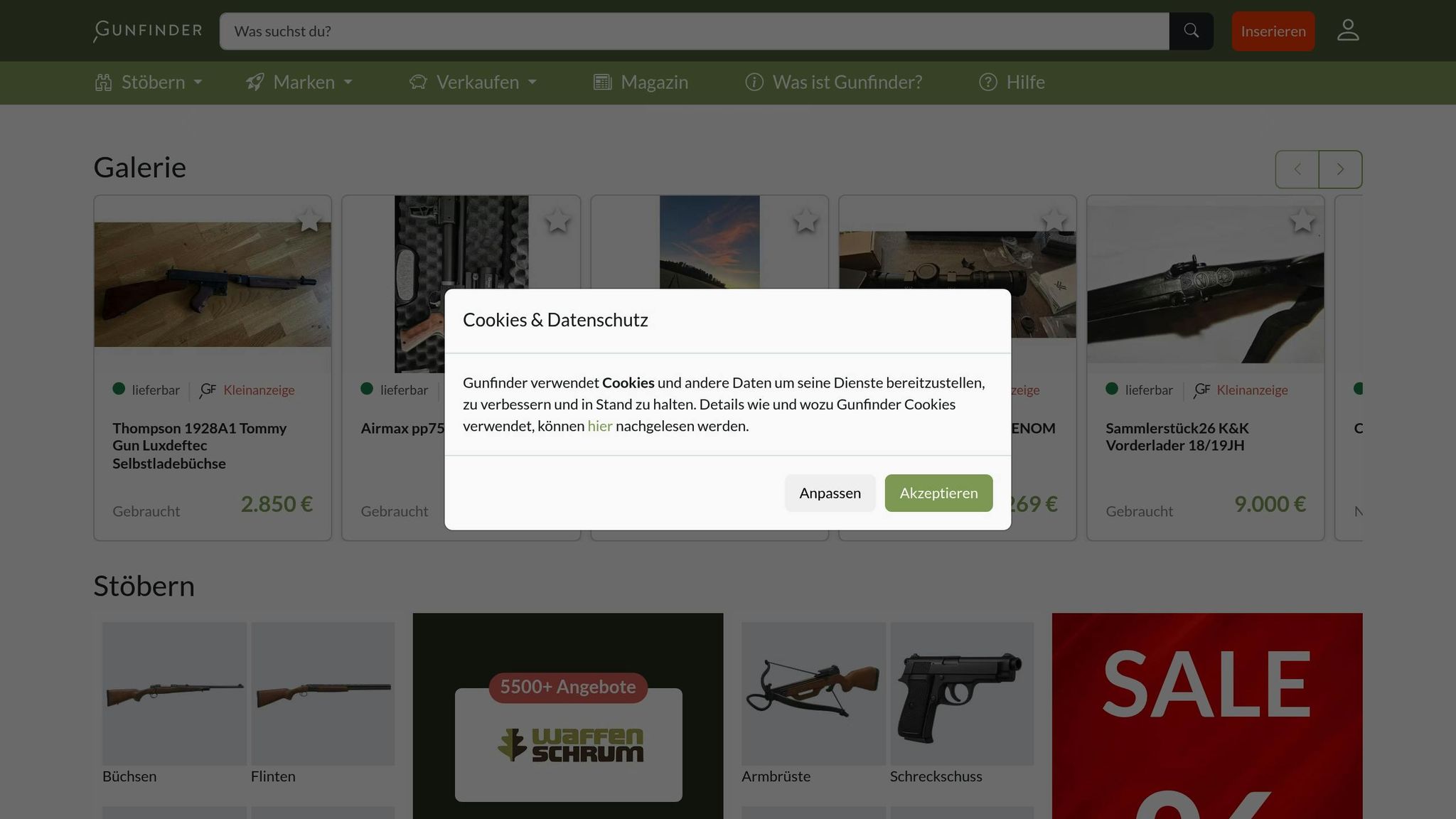
Do you know how crucial proper storage is for your equipment? Then it’s time to find the right accessories! Gunfinder, the specialized search engine and marketplace for hunters and sport shooters, consolidates offers from numerous dealers and private sellers [14].
In the “Accessories” category, you can navigate directly to “Gun Cabinets.” Here you will find everything from simple steel cabinets to highly secure safes [14]. You can specifically filter by resistance grades such as 0 or I to quickly find solutions that meet legal requirements [13].
For better organization, Gunfinder offers practical 3D-printed ammunition boxes, for example, for calibers like .308 Win or .30-06, starting at around €15 [14]. Sort the offers by price, condition (new or used), or type of offer. With the wishlist, you can keep track of price developments, and in the “% Outlet” section, you will find reduced storage solutions [14].
Whether you are looking for a format MNS cabinet with light fire protection (from 642 CHF [12]) or a safe with an electronic lock—Gunfinder has the right solution. Check it out and find your ideal storage accessories!
Comparison: Plastic vs. Metal Ammunition Containers
The choice of material for your ammunition container is an important factor that depends on your requirements for safety and transport. Metal containers, such as those made from carbon or military steel (like M2A1 or M19A1), impress with their high stability and stackability without losing their shape [16]. However, they are heavier and susceptible to rust if the protective coating is damaged [17]. Plastic containers made from polyethylene or ABS score with low weight, rust resistance, and are particularly suitable for transport to the shooting range [16][17]. However, they may give way under heavy loads. These differences help you choose the container that best fits your storage requirements.
Important: For ammunition that requires a permit, a steel sheet container is legally required [3][5]. For ammunition that does not require a permit, you can choose the material freely.
When it comes to moisture protection, plastic has clear advantages: it is naturally corrosion-resistant and withstands temperatures from -20 °C to +60 °C [17]. Metal containers, on the other hand, rely on intact coatings and rubber seals to keep moisture out. However, both materials benefit from the additional use of desiccants [18].
Plastic containers are often cheaper: simple models start at around €5.50, while high-quality polymer cases can cost up to €52 [16]. Metal containers range in price from €15 to €33 each [15][16]. For those needing larger quantities, four-packs of military steel containers can be purchased for about €61 to €77 [16]. These price differences provide you with a guideline for your decision.
Customer reviews also provide helpful insights: The Strategy 50 Caliber metal box achieves 4.5 out of 5 stars with 509 reviews, while the Plano 1312 plastic box scores slightly better with 4.6 out of 5 stars from 386 reviews [16]. Both options have their advantages—your decision should be based on legal requirements, your transport needs, and your budget.
Conclusion
The safe storage of large ammunition relies on three essential aspects: climate control, moisture protection, and safety measures. Only when these factors are considered together will your ammunition remain functional and safe over a long period. Improper storage poses significant risks, including dangerous malfunctions that can damage your weapon and present a safety hazard.
Moisture is the greatest enemy of ammunition [10]. To avoid damage from corrosion and chemical changes, you should keep the relative humidity below 70%, use desiccants like silica gel, and avoid strong temperature fluctuations. Do not store your ammunition directly on the floor to prevent rising moisture [19]. Electronic hygrometers and thermometers help you continuously monitor the conditions in storage [1]. These measures not only protect the quality of your ammunition but also ensure that you comply with legal requirements.
Speaking of the law: In Germany, there are clear regulations for the storage of ammunition that requires a permit. This must be stored in a steel sheet container with a swing bolt lock or a comparable locking device [2][5]. Electronic combination locks provide additional protection as they minimize the risk of unauthorized access through lost or stolen keys [1].
For the right storage solution, you can rely on Gunfinder. The platform offers certified storage options for every need—from affordable plastic boxes starting at €5.50 to robust metal containers. This way, you can ensure that your ammunition is stored safely and in compliance with the law.
FAQs
What regulations apply to the safe storage of large ammunition in Germany?
In Germany, the Weapons Act (WaffG) and the General Weapons Regulation (AWaffV) govern the requirements for the safe storage of ammunition, including large-caliber ammunition. For ammunition that requires a firearms permit (e.g., cartridges over 7.62 mm), at least a locked container is required. This must meet security levels A or B according to VDMA 24992 (as of May 1995). For safes purchased after July 2017, the current legal provisions apply. Older approved safes may continue to be used as long as they do not change ownership.
A central point is that ammunition must be always stored separately from weapons. The container should also be protected from unauthorized access. For optimal storage conditions, a dry and temperature-controlled room is recommended to avoid moisture and extreme temperatures, as these can jeopardize the stability and safety of the ammunition. Violations of these regulations can be punished as administrative offenses—gross negligence may even lead to criminal consequences.
How do I keep the humidity in the storage room for large ammunition constant?
To keep the humidity in your storage room stable, a reliable hygrometer is essential. The optimal range is 50–60% relative humidity. Too much moisture can cause rust, mold, or damage to the ammunition. An electric dehumidifier is a practical solution to automatically reduce excess moisture. Alternatively, you can use airtight containers or silica gel packets to specifically avoid local moisture problems.
Never store ammunition directly on the floor. Shelves or pallets are better suited as they allow for better air circulation. The storage room should be cool, dark, and equipped with a constant temperature, as temperature fluctuations can promote additional moisture. Regular checks of the humidity help you detect deviations early and take action.
Do you need accessories like dehumidifiers or other tools? Gunfinder offers a selection of products specifically designed for the safe storage of ammunition.
What advantages do plastic containers offer over metal containers for storing large ammunition?
Plastic containers offer some clear advantages when it comes to storing ammunition. One of the biggest plus points is their ability to maintain the temperature of the stored ammunition stably. While metal quickly absorbs and releases heat, plastic acts as an insulating layer. This prevents abrupt temperature fluctuations that could negatively affect the performance of the ammunition.
Another advantage: plastic does not rust. This makes it insensitive to moisture and ensures that the ammunition remains dry—a crucial factor for its durability and reliability.
Additionally, plastic containers are significantly lighter than their metal counterparts. This makes them not only easier to transport but also safer and more practical to handle, especially when storing large ammunition.