-10 %
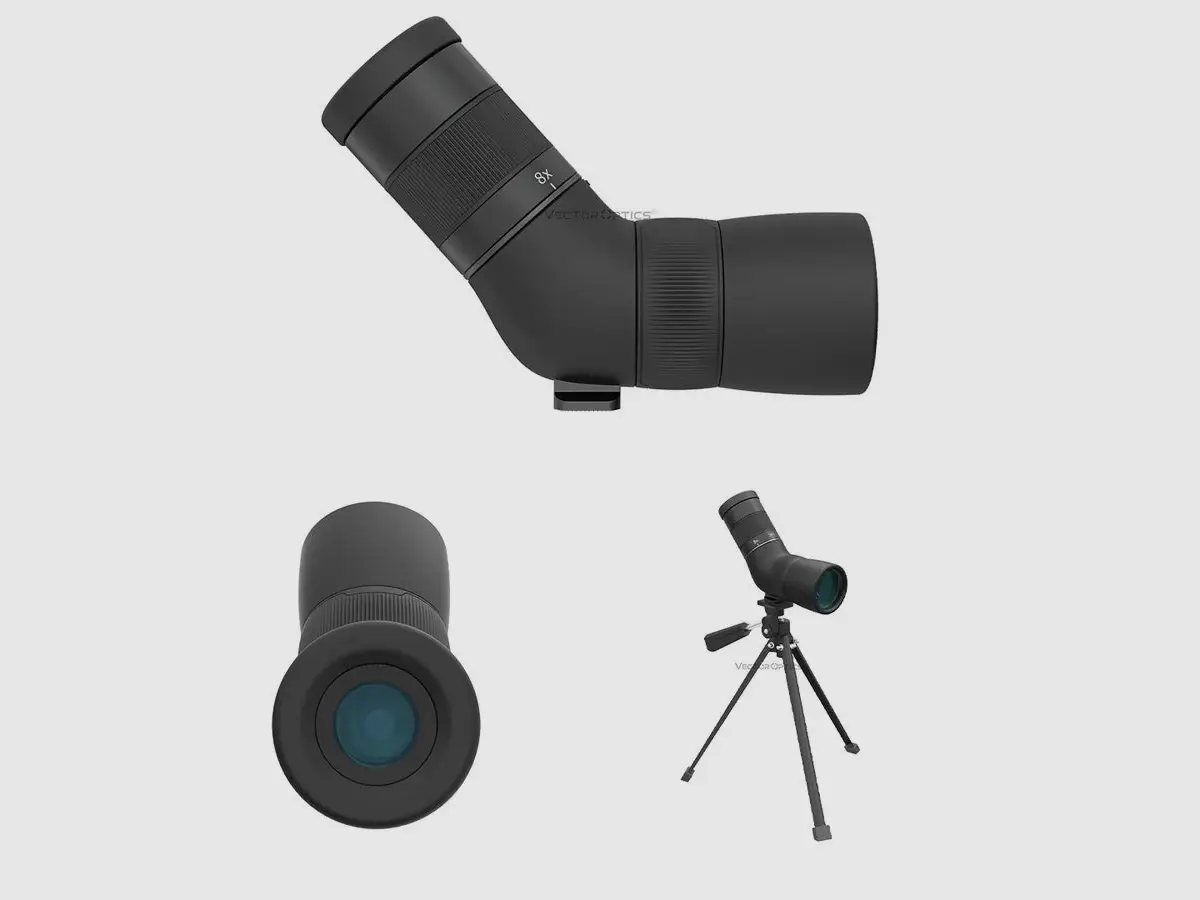
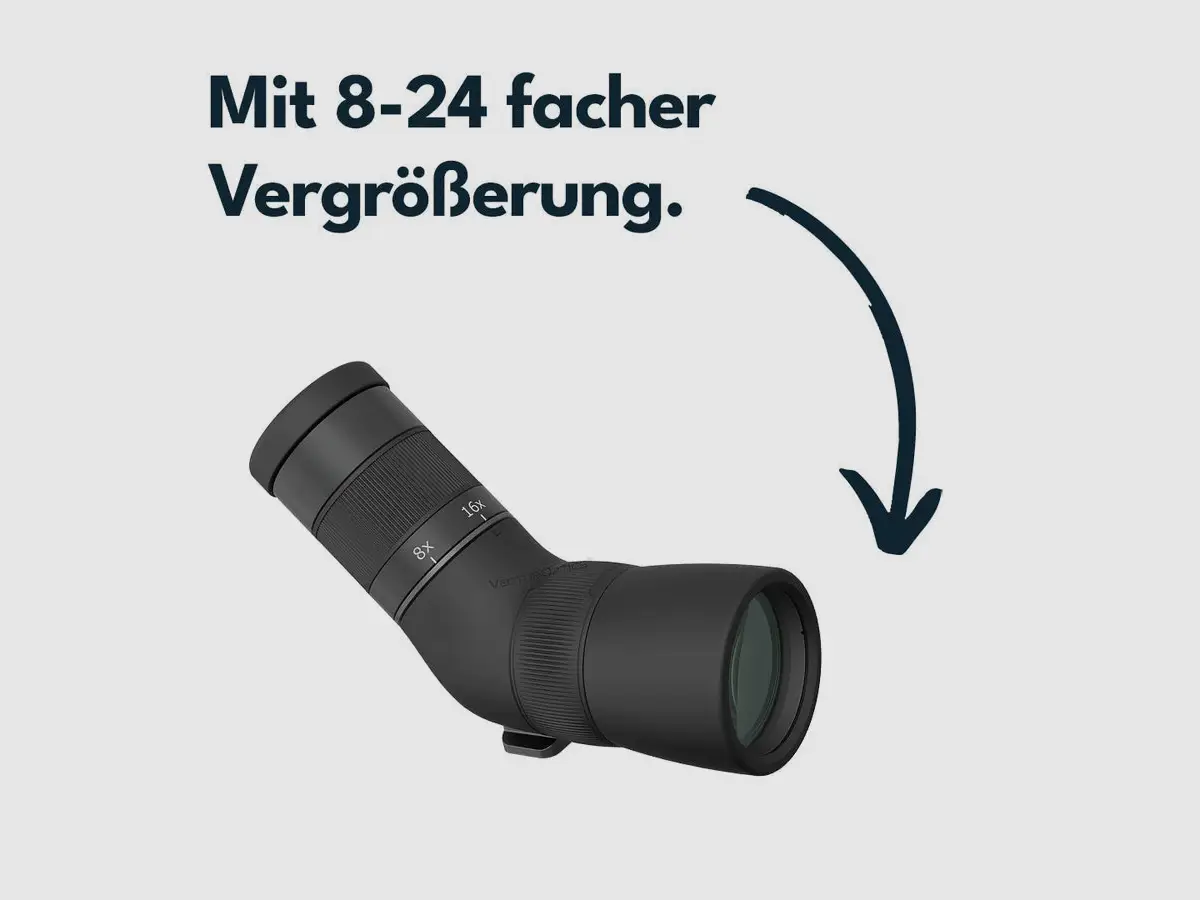
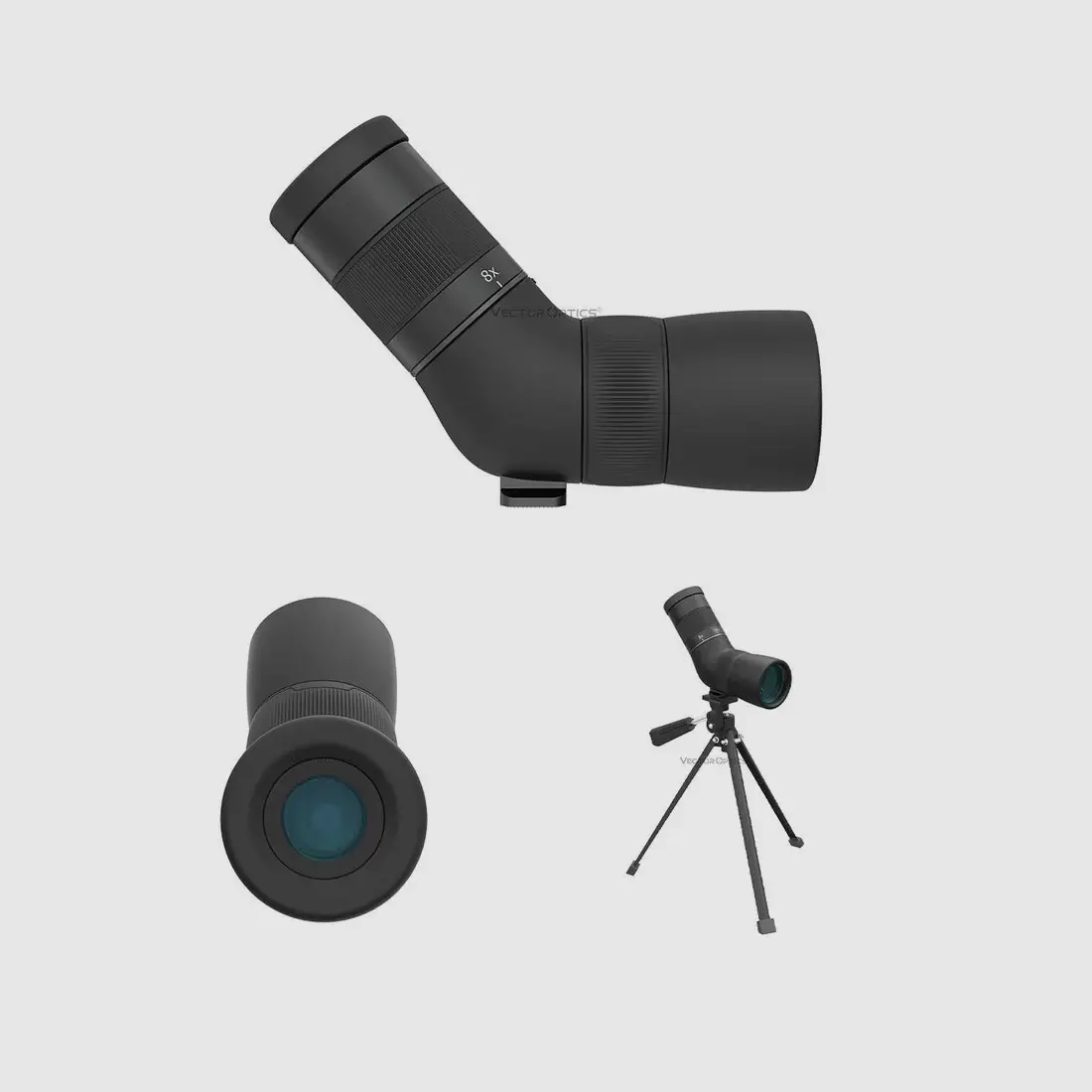
Vector Optics SCSS-10 Paragon 8-24x50ED Ultra Short
72479 Straßberg, Germany
9
ID: 9893844
Shop safely with Gunfinder
Our AI-powered seller identity verification makes Gunfinder the safest marketplace online.
Learn more
Details
- Original language
- German
- Category
- Condition
- New
- Location
- 🇩🇪 72479 Straßberg, Germany
- Availability
- In stock
Freshness
This listing is based on a mirrored offer, where the listing data was synced to us from a shop, dealer, or external marketplace. Please note that temporary price discrepancies may occur due to possible delays in data transmission.
- Source
- Black Raptor
- Last updated
- about 3 hours ago
Description
Note:
The item is located abroad. Please note that delivery conditions, shipping times, and/or the purchase process may differ.
.br-product-v3 *{box-sizing:border-box}.br-product-v3 p{margin:0 0 12px}.br-product-v3 a{color:#145848;text-decoration:underline;text-underline-offset:3px}.br-product-v3 .br-hero-v3,.br-product-v3 .br-final{background:var(--br-green);border-radius:14px;padding:26px;margin:0 0 24px}.br-product-v3 .br-hero-v3 p,.br-product-v3 .br-hero-v3 strong,.br-product-v3 .br-hero-v3 span,.br-product-v3 .br-hero-v3 a:not(.br-cta),.br-product-v3 .br-final p,.br-product-v3 .br-final strong,.br-product-v3 .br-final span,.br-product-v3 .br-final a{color:#fff!important;opacity:1!important}.br-product-v3 .br-eyebrow{display:block;color:#f3d98f!important;font-size:.78rem;font-weight:800;letter-spacing:.12em;text-transform:uppercase;margin-bottom:8px}.br-product-v3 .br-hero-title{display:block;color:#fff!important;font-size:clamp(1.45rem,4vw,2.05rem);line-height:1.2;margin-bottom:12px}.br-product-v3 .br-cta{display:inline-block;background:var(--br-gold);color:#15211d!important;font-weight:800;text-decoration:none;border-radius:8px;padding:11px 16px;margin-top:5px}.br-product-v3 .br-section-title{display:block;font-size:1.18rem;line-height:1.3;margin:26px 0 10px;font-weight:800}.br-product-v3 .br-box{background:var(--br-soft);border:1px solid var(--br-line);border-radius:12px;padding:18px;margin:14px 0}.br-product-v3 .br-grid{display:grid;grid-template-columns:repeat(2,minmax(0,1fr));gap:12px;margin:14px 0}.br-product-v3 .br-card{border:1px solid var(--br-line);border-radius:10px;padding:15px;background:#fff}.br-product-v3 .br-card-title{display:block;font-weight:800;margin-bottom:5px}.br-product-v3 details{border:1px solid var(--br-line);border-radius:9px;background:#fff;margin:9px 0;padding:12px 14px}.br-product-v3 summary{font-weight:800;cursor:pointer;color:var(--br-ink)}.br-product-v3 details p{margin:10px 0 2px}.br-product-v3 .br-note{border-left:4px solid #b48a2c}.br-product-v3 .br-final{margin-top:26px}.br-product-v3 .br-final a{font-weight:800}.br-product-v3 .br-kicker{font-weight:800;color:#145848}.br-product-v3 .br-fact{display:block;font-size:1.02rem;font-weight:800;margin-bottom:4px}@media(max-width:680px){.br-product-v3{font-size:16px;line-height:1.62}.br-product-v3 .br-grid{grid-template-columns:1fr}.br-product-v3 .br-hero-v3,.br-product-v3 .br-final{padding:20px}.br-product-v3 .br-section-title{font-size:1.08rem}}
Compact ED Spotting Scope · SCSS-10
The shot group is set – and you stay behind the line
On the range, one glance should be enough: find the target, focus cleanly, and check details without interrupting the session for every check. The Paragon 8–24×50ED combines a moderate zoom range with an unusually short housing.
The core benefit: more detail than a typical binocular, but significantly less bulk than classic 60- or 80-mm spotting scopes.
Compare suitable spotting scopes
Our honest assessment
The SCSS-10 is strong when a spotting scope really needs to come along. 8× makes quick spotting easy, 24× delivers the detail level. ED glass and full multi-coating aim for better contrast and color reproduction – but they don’t eliminate heat shimmer or poor light.
At maximum magnification, the exit pupil shrinks to 2.1 mm. In twilight or hazy air, less zoom is often the visibly better tool. Vector Optics does not specify a reliable waterproof rating; only nitrogen filling against internal fogging is confirmed.
Fits well if …
you check shot groups on the range, watch birds or game during the day, and want a compact spotting scope with tripod in your gear.
Fits less if …
you want to track quickly freehand, regularly observe in deep twilight, or explicitly a...
cklich wasserdicht klassifizierte Optik einsetzen willst.
What the features do outdoors and on the range
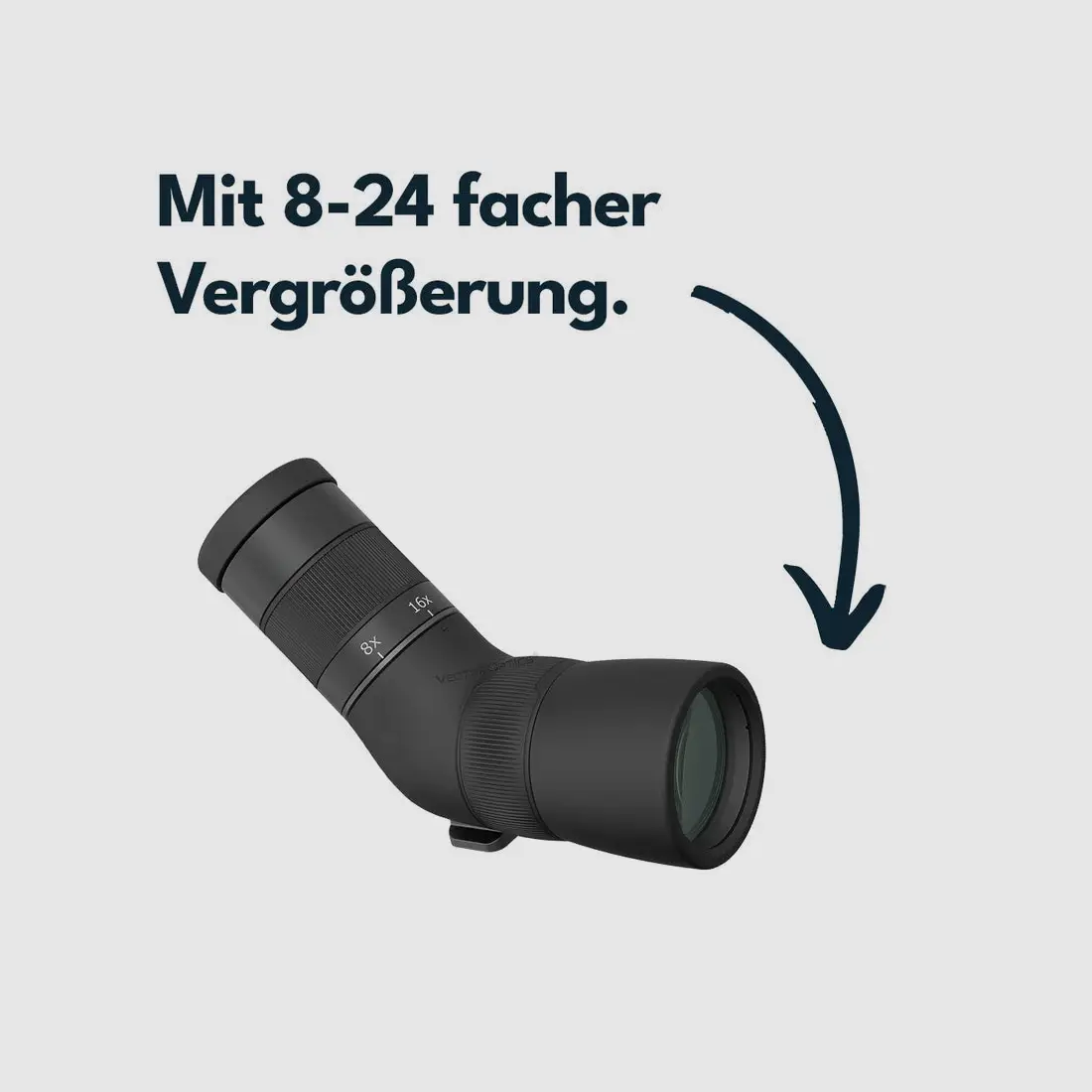
8–24× zoom At 8× you find the target faster and use the largest field of view. Only then do you increase for detail control.
50-mm ED objective The ED glass is supposed to reduce disturbing color fringes. 50 mm keeps the system compact but collects less light than large 60- or 80-mm objectives.
Internal focusing The wide focus ring allows smooth focus adjustment without having to move a long external part.
Twist-up eyecup The eye relief can be adjusted for glasses and face. At 24× the specified 16.7 mm is tighter than the 20 mm at the lower end.
Trainer and user tips
Always start low: bring the target into view at 8×, focus, and only then zoom in. After each zoom change, readjust the focus – the original manual also points this out.
Stability before max zoom: set up on a flat surface and tighten the 1/4"-20 screw securely but not overly tight. In wind or frequent panning, a larger tripod may be more sensible than the compact supplied one.
Read mirage: if the image flickers above the ground, more zoom does not improve the information. Reduce magnification, change the observation line, or wait for a calmer phase.
The sensible comparison
Paragon SCSS-11 9–27×56ED stays in the same ultra-short concept but offers a bit more objective diameter and magnification – at the cost of extra weight and size. Those who clearly prioritize maximum detail reserve and better light gathering over compactness look to the larger Continental SCSS-03 20–60×80 ED. For mobile observation from the hand, binoculars are usually the more coherent choice.
Technical data with practical interpretation
Magnification 8–24× · overview to detail control
Objective 50 mm, ED, fully multi-coated
Field of view at 100 m 8.6–4.4 m · narrows with more zoom
Exit pupil 6.2–2.1 mm · 24× needs more light
Eye relief 20–16.7 mm · twist-up eyecup
Close focus 2.2 m · also interesting for close nature details
Design Internal focusing, roof prism, rubberized exterior
Fog protection Nitrogen-filled; no confirmed waterproof rating
Product weight currently 665 g according to manufacturer; older datasheets list 673 g
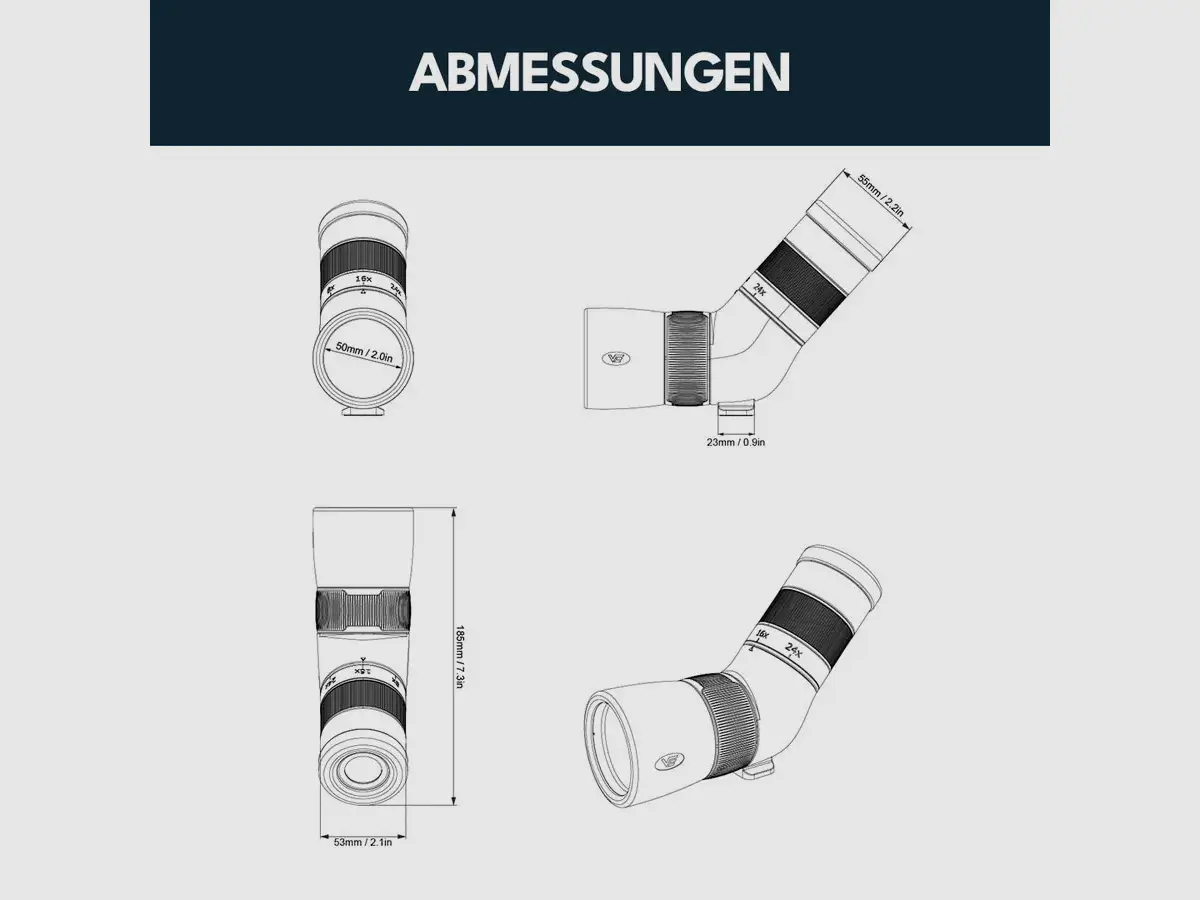
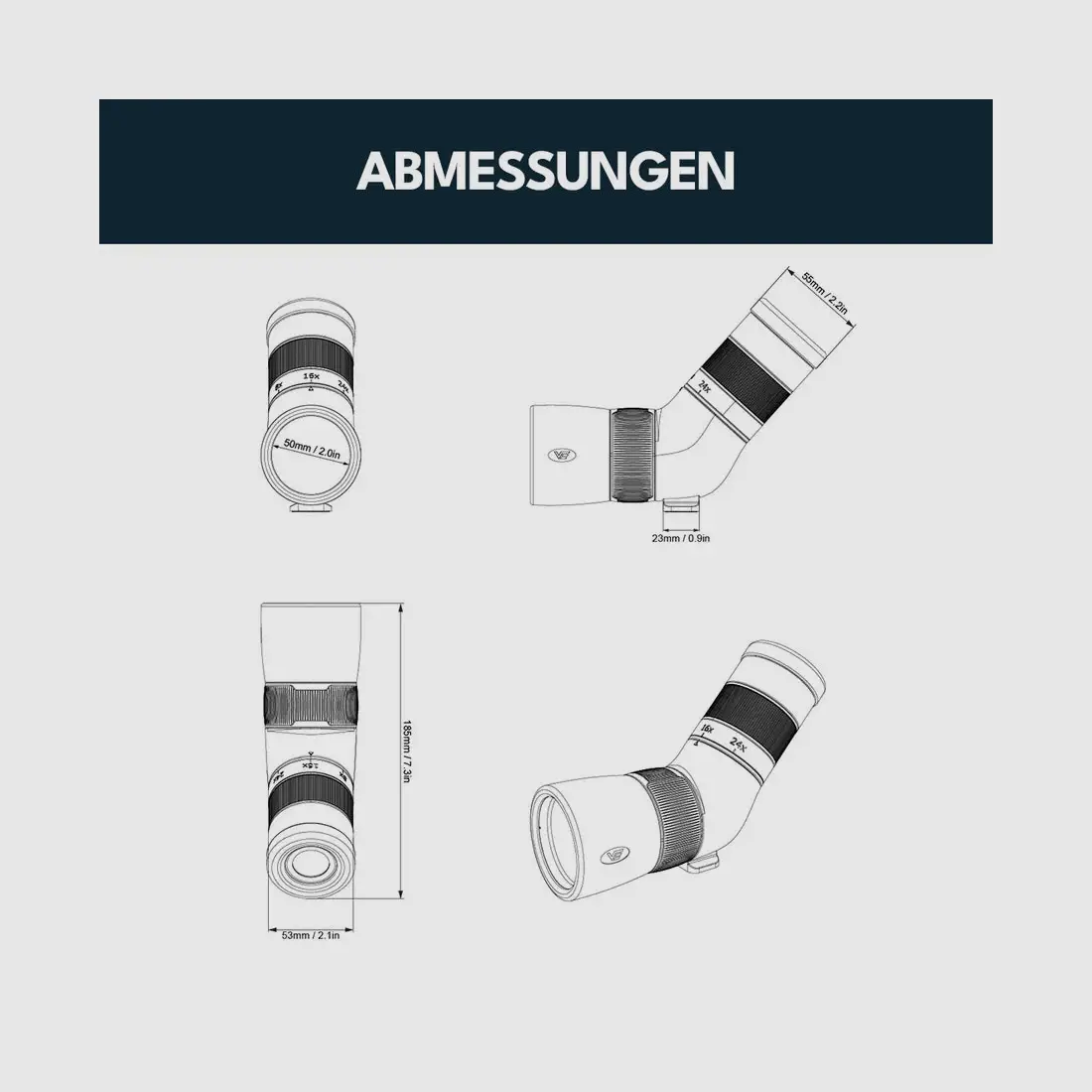
Length approx. 185 mm according to regional manufacturer page/dealer
Scope of delivery
SCSS-10 Paragon spotting scope, soft case, carrying strap, tripod, original manual and cleaning cloth. Protective caps are documented in product images and on the German brand page.
Setup, safety and care
Assembly: fully spread tripod legs on a flat surface, place spotting scope, and hand-tighten the 1/4"-20 mount. Never force moving parts beyond their stops.
Safety: Never look directly into the sun with the spotting scope – severe eye damage is possible. During shooting, position so that optics, tripod, and operator do not obstruct firing or safe procedures.
Care: First blow off dust or remove with a soft optics brush. Only then remove fingerprints with an optics cloth and suitable lens cleaner. Do not re-oil permanently lubricated moving parts and do not disassemble the spotting scope yourself.
Storage: Store dry, protected, and not in a heated vehicle. Avoid direct sun through objective or eyepiece.
FAQ
Can I reliably see bullet holes at 100 m? That depends not only on 24× but also on caliber, target color, light, heat shimmer, and stability. The SCSS-10 is intended for hit confirmation; a blanket guarantee of recognition would still be unprofessional.
Is the supplied tripod sufficient? For a compact setup and calm conditions, it is the suitable starter solution. In wind, high ve
Magnification or frequent panning usually benefits from a heavier, well-damped tripod for more image stability.
Is the SCSS-10 waterproof? Vector Optics currently does not specify a waterproof rating. It is confirmed to have nitrogen filling to prevent internal fogging. Therefore, do not treat it as waterproof and protect it from heavy rain.
What does ED glass bring at only 24×? ED glass aims for reduced chromatic aberration and clearer edges – especially with high-contrast subjects. However, image quality also depends on light, focus, atmospheric turbulence, and stable setup.
Is it suitable for eyeglass wearers? The twist-up eyecup and 20 to 16.7 mm eye relief allow adjustment. Whether the entire field of view remains comfortably visible at 24× depends on the eyeglass geometry and individual positioning.
More guidance can be found in our tested selection for hunting and observation optics.
BLACK RAPTOR · Practical advice
We don’t sell magnification numbers, but a tool for your use.
Honest advice from trainers and users for users – with clear limits, proper classification, and a community where experience counts more than spec sheet superlatives.
To spotting scope selection (Show description in original language)
.br-product-v3{--br-ink:#17201d;--br-green:#173f35;--br-gold:#e3bf68;--br-soft:#f4f5f2;--br-line:#d9ded9;color:var(--br-ink);font-size:16px;line-height:1.65}
.br-product-v3 *{box-sizing:border-box}.br-product-v3 p{margin:0 0 12px}.br-product-v3 a{color:#145848;text-decoration:underline;text-underline-offset:3px}.br-product-v3 .br-hero-v3,.br-product-v3 .br-final{background:var(--br-green);border-radius:14px;padding:26px;margin:0 0 24px}.br-product-v3 .br-hero-v3 p,.br-product-v3 .br-hero-v3 strong,.br-product-v3 .br-hero-v3 span,.br-product-v3 .br-hero-v3 a:not(.br-cta),.br-product-v3 .br-final p,.br-product-v3 .br-final strong,.br-product-v3 .br-final span,.br-product-v3 .br-final a{color:#fff!important;opacity:1!important}.br-product-v3 .br-eyebrow{display:block;color:#f3d98f!important;font-size:.78rem;font-weight:800;letter-spacing:.12em;text-transform:uppercase;margin-bottom:8px}.br-product-v3 .br-hero-title{display:block;color:#fff!important;font-size:clamp(1.45rem,4vw,2.05rem);line-height:1.2;margin-bottom:12px}.br-product-v3 .br-cta{display:inline-block;background:var(--br-gold);color:#15211d!important;font-weight:800;text-decoration:none;border-radius:8px;padding:11px 16px;margin-top:5px}.br-product-v3 .br-section-title{display:block;font-size:1.18rem;line-height:1.3;margin:26px 0 10px;font-weight:800}.br-product-v3 .br-box{background:var(--br-soft);border:1px solid var(--br-line);border-radius:12px;padding:18px;margin:14px 0}.br-product-v3 .br-grid{display:grid;grid-template-columns:repeat(2,minmax(0,1fr));gap:12px;margin:14px 0}.br-product-v3 .br-card{border:1px solid var(--br-line);border-radius:10px;padding:15px;background:#fff}.br-product-v3 .br-card-title{display:block;font-weight:800;margin-bottom:5px}.br-product-v3 details{border:1px solid var(--br-line);border-radius:9px;background:#fff;margin:9px 0;padding:12px 14px}.br-product-v3 summary{font-weight:800;cursor:pointer;color:var(--br-ink)}.br-product-v3 details p{margin:10px 0 2px}.br-product-v3 .br-note{border-left:4px solid #b48a2c}.br-product-v3 .br-final{margin-top:26px}.br-product-v3 .br-final a{font-weight:800}.br-product-v3 .br-kicker{font-weight:800;color:#145848}.br-product-v3 .br-fact{display:block;font-size:1.02rem;font-weight:800;margin-bottom:4px}@media(max-width:680px){.br-product-v3{font-size:16px;line-height:1.62}.br-product-v3 .br-grid{grid-template-columns:1fr}.br-product-v3 .br-hero-v3,.br-product-v3 .br-final{padding:20px}.br-product-v3 .br-section-title{font-size:1.08rem}}
Kompaktes ED-Spektiv · SCSS-10
Das Trefferbild steht – und du bleibst hinter der Linie
Auf der Bahn soll ein Blick genügen: Scheibe finden, sauber fokussieren und Details prüfen, ohne für jede Kontrolle den Stand zu unterbrechen. Das Paragon 8–24×50ED verbindet dafür einen moderaten Zoombereich mit einem ungewöhnlich kurzen Gehäuse.
Der Kernnutzen: mehr Detail als mit einem typischen Fernglas, aber deutlich weniger Packmaß als bei klassischen 60- oder 80-mm-Spektiven.
Passende Spektive vergleichen
Unsere ehrliche Einordnung
Das SCSS-10 ist dann stark, wenn ein Spektiv wirklich mitkommen soll. 8× erleichtert das schnelle Erfassen, 24× liefert die Detailstufe. ED-Glas und vollständige Mehrfachvergütung zielen auf bessere Kontrast- und Farbwiedergabe – sie heben aber weder Hitzeflimmern noch schlechtes Licht auf.
Bei maximaler Vergrößerung schrumpft die Austrittspupille auf 2,1 mm. In der Dämmerung oder bei trüber Luft ist deshalb weniger Zoom oft das sichtbar bessere Werkzeug. Eine belastbare Wasserdichtigkeitsklasse nennt Vector Optics nicht; bestätigt ist lediglich die Stickstofffüllung gegen inneres Beschlagen.
Passt gut, wenn …
du Trefferbilder auf der Range kontrollierst, Vögel oder Wild tagsüber beobachtest und ein kompaktes Spektiv samt Stativ im Gepäck haben möchtest.
Passt eher nicht, wenn …
du freihändig schnell verfolgen, regelmäßig in tiefer Dämmerung beobachten oder eine ausdrücklich wasserdicht klassifizierte Optik einsetzen willst.
Was die Merkmale draußen und auf der Range bewirken
8–24× Zoom Bei 8× findest du die Scheibe schneller und nutzt das größte Sehfeld. Erst danach erhöhst du für die Detailkontrolle.
50-mm-ED-Objektiv Das ED-Glas soll störende Farbsäume reduzieren. 50 mm halten das System kompakt, sammeln aber weniger Licht als große 60- oder 80-mm-Objektive.
Innenfokussierung Der breite Fokusring erlaubt eine ruhige Schärfenachführung, ohne ein langes Außenteil verschieben zu müssen.
Twist-up-Augenmuschel Der Augenabstand lässt sich an Brille und Gesicht anpassen. Bei 24× sind die angegebenen 16,7 mm knapper als die 20 mm am unteren Ende.
Ausbilder- und Anwender-Tipps
Immer unten beginnen: Ziel bei 8× ins Bild holen, fokussieren und erst dann vergrößern. Nach jeder Zoomänderung die Schärfe nachführen – genau darauf weist auch die Originalanleitung hin.
Stabilität vor Maximalzoom: Auf ebener Fläche aufstellen und die 1/4"-20-Schraube sicher, aber nicht übermäßig festziehen. Bei Wind oder häufigem Schwenken kann ein größeres Stativ sinnvoller sein als das kompakte mitgelieferte.
Mirage lesen: Wenn das Bild über dem Boden flimmert, verbessert mehr Zoom die Information nicht. Vergrößerung reduzieren, Beobachtungslinie verändern oder eine ruhigere Phase abwarten.
Der sinnvolle Vergleich
Paragon SCSS-11 9–27×56ED bleibt im gleichen Ultra-Short-Konzept, bietet aber etwas mehr Objektivdurchmesser und Vergrößerung – gegen zusätzliches Gewicht und Packmaß. Wer maximale Detailreserve und bessere Lichtsammlung klar über Kompaktheit stellt, schaut zum größeren Continental SCSS-03 20–60×80 ED . Für mobiles Beobachten aus der Hand ist dagegen ein Fernglas meist die stimmigere Wahl.
Technische Daten mit Praxisdeutung
Vergrößerung 8–24× · Übersicht bis Detailkontrolle
Objektiv 50 mm, ED, vollständig mehrfachvergütet
Sehfeld auf 100 m 8,6–4,4 m · wird mit mehr Zoom enger
Austrittspupille 6,2–2,1 mm · 24× benötigt mehr Licht
Augenabstand 20–16,7 mm · Twist-up-Augenmuschel
Nahfokus 2,2 m · auch für nahe Naturdetails interessant
Bauweise Innenfokussierung, Dachkantprisma, gummierte Außenhaut
Beschlagschutz Stickstoffgefüllt; keine bestätigte Wasserdichtigkeitsklasse
Produktgewicht aktuell 665 g laut Hersteller; ältere Datenblätter nennen 673 g
Länge ca. 185 mm laut regionaler Herstellerseite/Fachhandel
Lieferumfang
SCSS-10 Paragon Spektiv, weiche Tasche, Trageriemen, Stativ, Originalanleitung und Reinigungstuch. Schutzkappen sind auf den Produktabbildungen und bei der deutschen Markenseite dokumentiert.
Aufbau, Sicherheit und Pflege
Montage: Stativbeine vollständig auf ebenem Untergrund ausbreiten, Spektiv aufsetzen und die 1/4"-20-Befestigung handfest sichern. Bewegliche Teile niemals über ihren Anschlag zwingen.
Sicherheit: Niemals mit dem Spektiv direkt in die Sonne sehen – schwere Augenschäden sind möglich. Beim Schießbetrieb so positionieren, dass Optik, Stativ und Bediener weder Schussabgabe noch sichere Abläufe behindern.
Pflege: Staub zuerst abblasen oder mit einem weichen Optikpinsel entfernen. Fingerabdrücke erst danach mit Optiktuch und geeignetem Linsenreiniger lösen. Die dauerhaft geschmierten beweglichen Teile nicht nachölen und das Spektiv nicht selbst zerlegen.
Lagerung: Trocken, geschützt und nicht im aufgeheizten Fahrzeug lagern. Direkte Sonne durch Objektiv oder Okular vermeiden.
FAQ
Kann ich Einschusslöcher auf 100 m sicher erkennen? Das hängt nicht nur von 24× ab, sondern auch von Kaliber, Scheibenfarbe, Licht, Luftflimmern und Stabilität. Das SCSS-10 ist für Trefferkontrolle gedacht; eine pauschale Erkennungsgarantie wäre trotzdem unseriös.
Reicht das mitgelieferte Stativ? Für einen kompakten Aufbau und ruhige Bedingungen ist es die passende Startlösung. Bei Wind, hoher Vergrößerung oder häufigem Schwenken bringt ein schwereres, sauber gedämpftes Stativ meist mehr Bildruhe.
Ist das SCSS-10 wasserdicht? Vector Optics nennt aktuell keine Wasserdichtigkeitsklasse. Bestätigt ist eine Stickstofffüllung gegen inneres Beschlagen. Deshalb nicht als wasserdicht behandeln und vor starkem Regen schützen.
Was bringt ED-Glas bei nur 24×? ED-Glas zielt auf geringere Farbsäume und klarere Kanten – besonders bei kontrastreichen Motiven. Die Bildqualität hängt dennoch ebenso von Licht, Fokus, Luftunruhe und stabiler Aufstellung ab.
Ist es für Brillenträger geeignet? Die Twist-up-Augenmuschel und 20 bis 16,7 mm Augenabstand ermöglichen Anpassung. Ob bei 24× das gesamte Sehfeld bequem sichtbar bleibt, hängt von der Brillengeometrie und der individuellen Position ab.
Mehr Orientierung findest du in unserer geprüften Auswahl für Jagd- und Beobachtungsoptik .
BLACK RAPTOR · Beratung mit Praxisbezug
Wir verkaufen keine Vergrößerungszahl, sondern ein Werkzeug für deinen Einsatz.
Ehrlich beraten von Ausbildern und Anwendern für Anwender – mit klaren Grenzen, sauberer Einordnung und einer Community, in der Erfahrung mehr zählt als Datenblatt-Superlative.
Zur Spektiv-Auswahl
.br-product-v3 *{box-sizing:border-box}.br-product-v3 p{margin:0 0 12px}.br-product-v3 a{color:#145848;text-decoration:underline;text-underline-offset:3px}.br-product-v3 .br-hero-v3,.br-product-v3 .br-final{background:var(--br-green);border-radius:14px;padding:26px;margin:0 0 24px}.br-product-v3 .br-hero-v3 p,.br-product-v3 .br-hero-v3 strong,.br-product-v3 .br-hero-v3 span,.br-product-v3 .br-hero-v3 a:not(.br-cta),.br-product-v3 .br-final p,.br-product-v3 .br-final strong,.br-product-v3 .br-final span,.br-product-v3 .br-final a{color:#fff!important;opacity:1!important}.br-product-v3 .br-eyebrow{display:block;color:#f3d98f!important;font-size:.78rem;font-weight:800;letter-spacing:.12em;text-transform:uppercase;margin-bottom:8px}.br-product-v3 .br-hero-title{display:block;color:#fff!important;font-size:clamp(1.45rem,4vw,2.05rem);line-height:1.2;margin-bottom:12px}.br-product-v3 .br-cta{display:inline-block;background:var(--br-gold);color:#15211d!important;font-weight:800;text-decoration:none;border-radius:8px;padding:11px 16px;margin-top:5px}.br-product-v3 .br-section-title{display:block;font-size:1.18rem;line-height:1.3;margin:26px 0 10px;font-weight:800}.br-product-v3 .br-box{background:var(--br-soft);border:1px solid var(--br-line);border-radius:12px;padding:18px;margin:14px 0}.br-product-v3 .br-grid{display:grid;grid-template-columns:repeat(2,minmax(0,1fr));gap:12px;margin:14px 0}.br-product-v3 .br-card{border:1px solid var(--br-line);border-radius:10px;padding:15px;background:#fff}.br-product-v3 .br-card-title{display:block;font-weight:800;margin-bottom:5px}.br-product-v3 details{border:1px solid var(--br-line);border-radius:9px;background:#fff;margin:9px 0;padding:12px 14px}.br-product-v3 summary{font-weight:800;cursor:pointer;color:var(--br-ink)}.br-product-v3 details p{margin:10px 0 2px}.br-product-v3 .br-note{border-left:4px solid #b48a2c}.br-product-v3 .br-final{margin-top:26px}.br-product-v3 .br-final a{font-weight:800}.br-product-v3 .br-kicker{font-weight:800;color:#145848}.br-product-v3 .br-fact{display:block;font-size:1.02rem;font-weight:800;margin-bottom:4px}@media(max-width:680px){.br-product-v3{font-size:16px;line-height:1.62}.br-product-v3 .br-grid{grid-template-columns:1fr}.br-product-v3 .br-hero-v3,.br-product-v3 .br-final{padding:20px}.br-product-v3 .br-section-title{font-size:1.08rem}}
Kompaktes ED-Spektiv · SCSS-10
Das Trefferbild steht – und du bleibst hinter der Linie
Auf der Bahn soll ein Blick genügen: Scheibe finden, sauber fokussieren und Details prüfen, ohne für jede Kontrolle den Stand zu unterbrechen. Das Paragon 8–24×50ED verbindet dafür einen moderaten Zoombereich mit einem ungewöhnlich kurzen Gehäuse.
Der Kernnutzen: mehr Detail als mit einem typischen Fernglas, aber deutlich weniger Packmaß als bei klassischen 60- oder 80-mm-Spektiven.
Passende Spektive vergleichen
Unsere ehrliche Einordnung
Das SCSS-10 ist dann stark, wenn ein Spektiv wirklich mitkommen soll. 8× erleichtert das schnelle Erfassen, 24× liefert die Detailstufe. ED-Glas und vollständige Mehrfachvergütung zielen auf bessere Kontrast- und Farbwiedergabe – sie heben aber weder Hitzeflimmern noch schlechtes Licht auf.
Bei maximaler Vergrößerung schrumpft die Austrittspupille auf 2,1 mm. In der Dämmerung oder bei trüber Luft ist deshalb weniger Zoom oft das sichtbar bessere Werkzeug. Eine belastbare Wasserdichtigkeitsklasse nennt Vector Optics nicht; bestätigt ist lediglich die Stickstofffüllung gegen inneres Beschlagen.
Passt gut, wenn …
du Trefferbilder auf der Range kontrollierst, Vögel oder Wild tagsüber beobachtest und ein kompaktes Spektiv samt Stativ im Gepäck haben möchtest.
Passt eher nicht, wenn …
du freihändig schnell verfolgen, regelmäßig in tiefer Dämmerung beobachten oder eine ausdrücklich wasserdicht klassifizierte Optik einsetzen willst.
Was die Merkmale draußen und auf der Range bewirken
8–24× Zoom Bei 8× findest du die Scheibe schneller und nutzt das größte Sehfeld. Erst danach erhöhst du für die Detailkontrolle.
50-mm-ED-Objektiv Das ED-Glas soll störende Farbsäume reduzieren. 50 mm halten das System kompakt, sammeln aber weniger Licht als große 60- oder 80-mm-Objektive.
Innenfokussierung Der breite Fokusring erlaubt eine ruhige Schärfenachführung, ohne ein langes Außenteil verschieben zu müssen.
Twist-up-Augenmuschel Der Augenabstand lässt sich an Brille und Gesicht anpassen. Bei 24× sind die angegebenen 16,7 mm knapper als die 20 mm am unteren Ende.
Ausbilder- und Anwender-Tipps
Immer unten beginnen: Ziel bei 8× ins Bild holen, fokussieren und erst dann vergrößern. Nach jeder Zoomänderung die Schärfe nachführen – genau darauf weist auch die Originalanleitung hin.
Stabilität vor Maximalzoom: Auf ebener Fläche aufstellen und die 1/4"-20-Schraube sicher, aber nicht übermäßig festziehen. Bei Wind oder häufigem Schwenken kann ein größeres Stativ sinnvoller sein als das kompakte mitgelieferte.
Mirage lesen: Wenn das Bild über dem Boden flimmert, verbessert mehr Zoom die Information nicht. Vergrößerung reduzieren, Beobachtungslinie verändern oder eine ruhigere Phase abwarten.
Der sinnvolle Vergleich
Paragon SCSS-11 9–27×56ED bleibt im gleichen Ultra-Short-Konzept, bietet aber etwas mehr Objektivdurchmesser und Vergrößerung – gegen zusätzliches Gewicht und Packmaß. Wer maximale Detailreserve und bessere Lichtsammlung klar über Kompaktheit stellt, schaut zum größeren Continental SCSS-03 20–60×80 ED . Für mobiles Beobachten aus der Hand ist dagegen ein Fernglas meist die stimmigere Wahl.
Technische Daten mit Praxisdeutung
Vergrößerung 8–24× · Übersicht bis Detailkontrolle
Objektiv 50 mm, ED, vollständig mehrfachvergütet
Sehfeld auf 100 m 8,6–4,4 m · wird mit mehr Zoom enger
Austrittspupille 6,2–2,1 mm · 24× benötigt mehr Licht
Augenabstand 20–16,7 mm · Twist-up-Augenmuschel
Nahfokus 2,2 m · auch für nahe Naturdetails interessant
Bauweise Innenfokussierung, Dachkantprisma, gummierte Außenhaut
Beschlagschutz Stickstoffgefüllt; keine bestätigte Wasserdichtigkeitsklasse
Produktgewicht aktuell 665 g laut Hersteller; ältere Datenblätter nennen 673 g
Länge ca. 185 mm laut regionaler Herstellerseite/Fachhandel
Lieferumfang
SCSS-10 Paragon Spektiv, weiche Tasche, Trageriemen, Stativ, Originalanleitung und Reinigungstuch. Schutzkappen sind auf den Produktabbildungen und bei der deutschen Markenseite dokumentiert.
Aufbau, Sicherheit und Pflege
Montage: Stativbeine vollständig auf ebenem Untergrund ausbreiten, Spektiv aufsetzen und die 1/4"-20-Befestigung handfest sichern. Bewegliche Teile niemals über ihren Anschlag zwingen.
Sicherheit: Niemals mit dem Spektiv direkt in die Sonne sehen – schwere Augenschäden sind möglich. Beim Schießbetrieb so positionieren, dass Optik, Stativ und Bediener weder Schussabgabe noch sichere Abläufe behindern.
Pflege: Staub zuerst abblasen oder mit einem weichen Optikpinsel entfernen. Fingerabdrücke erst danach mit Optiktuch und geeignetem Linsenreiniger lösen. Die dauerhaft geschmierten beweglichen Teile nicht nachölen und das Spektiv nicht selbst zerlegen.
Lagerung: Trocken, geschützt und nicht im aufgeheizten Fahrzeug lagern. Direkte Sonne durch Objektiv oder Okular vermeiden.
FAQ
Kann ich Einschusslöcher auf 100 m sicher erkennen? Das hängt nicht nur von 24× ab, sondern auch von Kaliber, Scheibenfarbe, Licht, Luftflimmern und Stabilität. Das SCSS-10 ist für Trefferkontrolle gedacht; eine pauschale Erkennungsgarantie wäre trotzdem unseriös.
Reicht das mitgelieferte Stativ? Für einen kompakten Aufbau und ruhige Bedingungen ist es die passende Startlösung. Bei Wind, hoher Vergrößerung oder häufigem Schwenken bringt ein schwereres, sauber gedämpftes Stativ meist mehr Bildruhe.
Ist das SCSS-10 wasserdicht? Vector Optics nennt aktuell keine Wasserdichtigkeitsklasse. Bestätigt ist eine Stickstofffüllung gegen inneres Beschlagen. Deshalb nicht als wasserdicht behandeln und vor starkem Regen schützen.
Was bringt ED-Glas bei nur 24×? ED-Glas zielt auf geringere Farbsäume und klarere Kanten – besonders bei kontrastreichen Motiven. Die Bildqualität hängt dennoch ebenso von Licht, Fokus, Luftunruhe und stabiler Aufstellung ab.
Ist es für Brillenträger geeignet? Die Twist-up-Augenmuschel und 20 bis 16,7 mm Augenabstand ermöglichen Anpassung. Ob bei 24× das gesamte Sehfeld bequem sichtbar bleibt, hängt von der Brillengeometrie und der individuellen Position ab.
Mehr Orientierung findest du in unserer geprüften Auswahl für Jagd- und Beobachtungsoptik .
BLACK RAPTOR · Beratung mit Praxisbezug
Wir verkaufen keine Vergrößerungszahl, sondern ein Werkzeug für deinen Einsatz.
Ehrlich beraten von Ausbildern und Anwendern für Anwender – mit klaren Grenzen, sauberer Einordnung und einer Community, in der Erfahrung mehr zählt als Datenblatt-Superlative.
Zur Spektiv-Auswahl