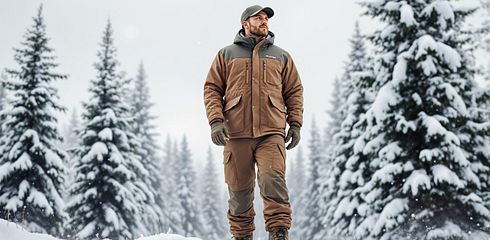
Waterproof hunting pants: models for alpine weather
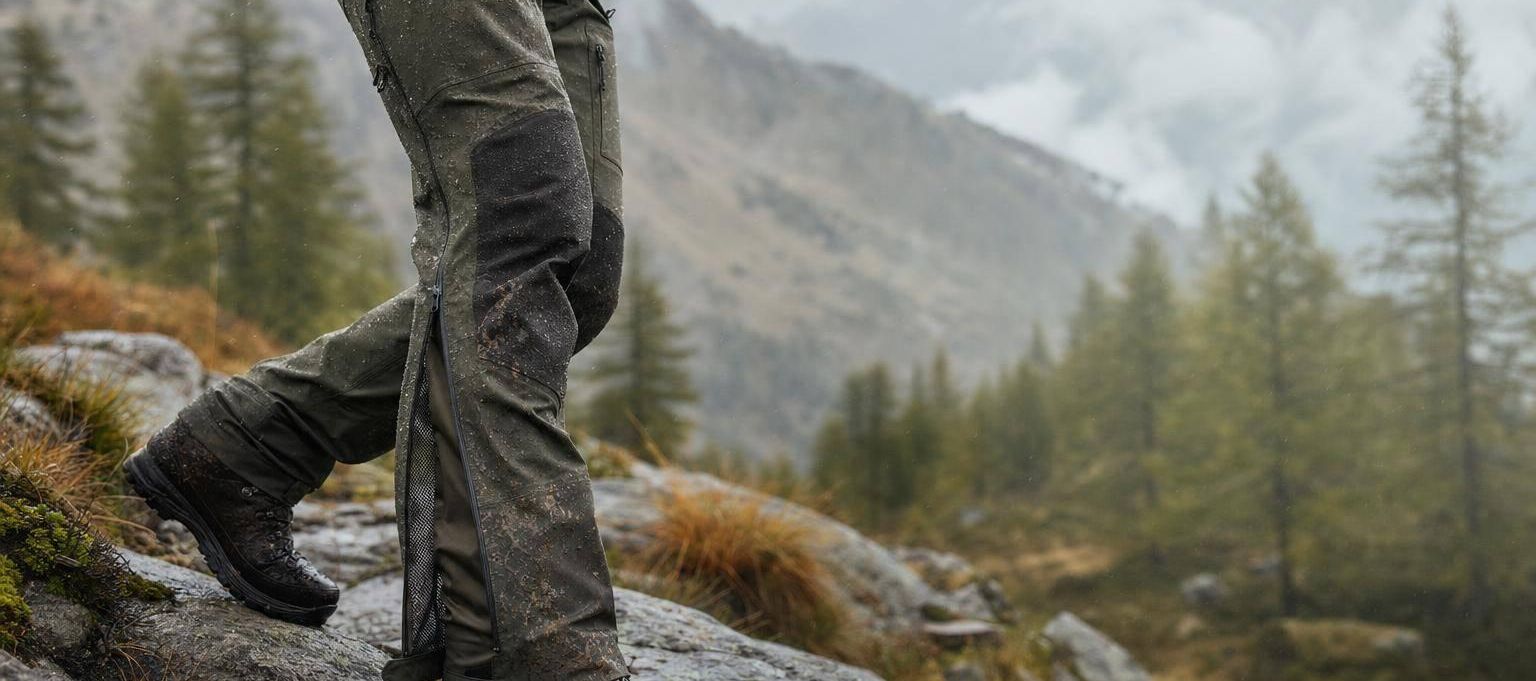
If I had to focus on just one thing in the Alpine hunting area, it would be the mix of weather protection, freedom of movement, and abrasion resistance. That’s exactly what this is about: 8 pants, around €150 to just under €600, and the question of which fits best in rain, wet grass, steep climbs, and brush.
For me, the comparison can be categorized immediately like this:
- For tough use in thick brush: Härkila Pro Hunter Endure
- For light stalking in changing weather: Härkila Aspire HWS
- For ascent with focus on ventilation: Blaser Venture 3L
- For plenty of fabric reserve and cool weather: Fjällräven Barents Pro Hydratic
- For quiet, reinforced use in mountain terrain: Northern Hunting GUNNAR ALP
- For simple wetness protection: Hillman 5WL
- With partly open data sheets: Bergans Hogna 3L and some Hart models
What I first look for in such pants:
- from 10,000 mm water column for prolonged rain
- sealed seams and waterproof zippers
- pre-shaped knees for steep terrain
- edge protection at leg ends against rocks, boots, and brush
In short: Light 3-layer pants are often better for climbing. Heavier, reinforced models suit tracking and wet undergrowth better. And with models with little data, classification is only limited.
Quick comparison:
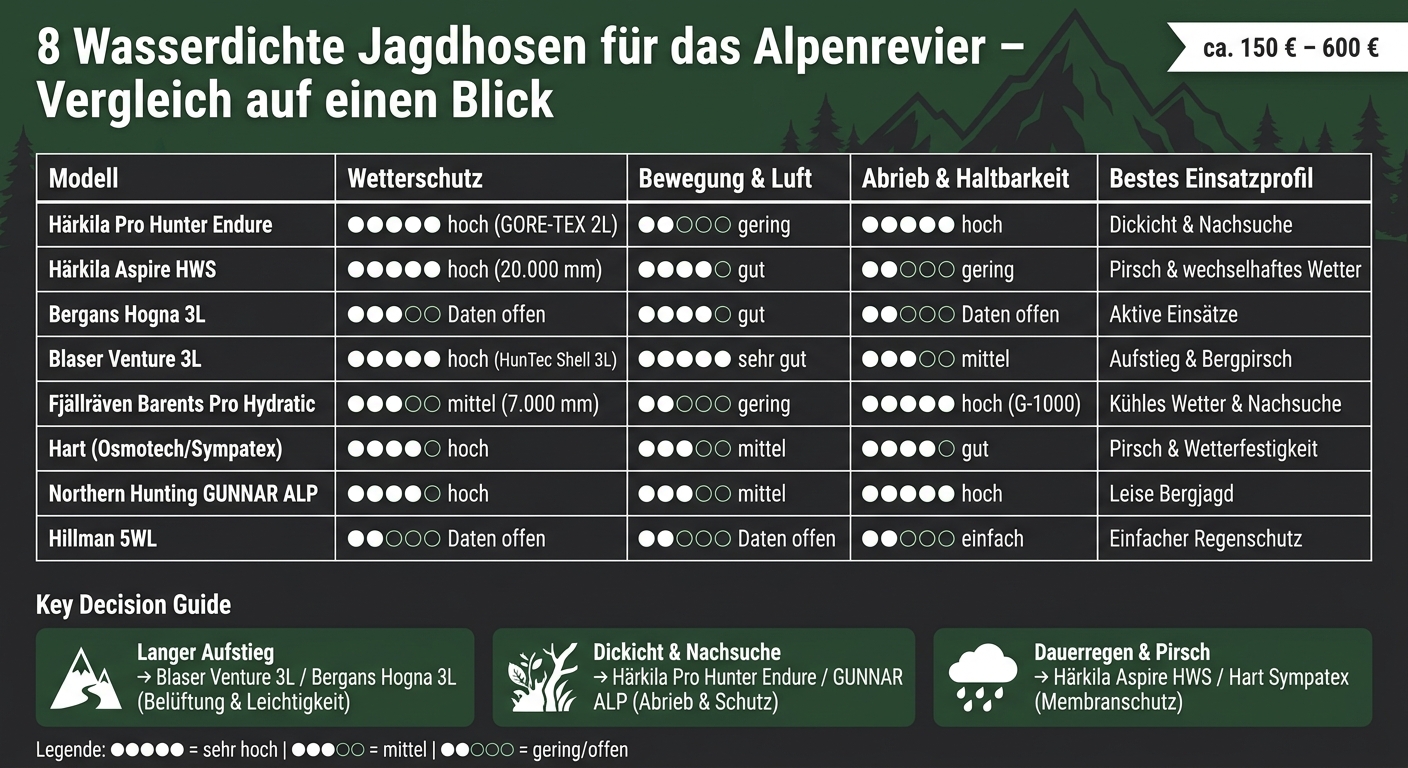
| Model | Weather Protection | Movement/Air | Abrasion/Durability | Summary |
|---|---|---|---|---|
| Härkila Pro Hunter Endure | high | rather low | high | For rough, wet terrain |
| Härkila Aspire HWS | high, up to 20,000 mm | light, flexible | rather low | For stalking and changeable weather |
| Bergans Hogna 3L | data partly open | according to text good for active use | data open | Hard to classify clearly |
| Blaser Venture 3L | high | good through side zips | more for movement than heavy fabric | For ascent and mountain stalking |
| Fjällräven Barents Pro Hydratic | 7,000 mm | rather low | high | For cool, wet weather |
| Hart with Osmotech/Sympatex | high | rather warm on ascent | good, depending on model | For weather resistance and long use |
| Northern Hunting GUNNAR ALP | high | decent, but not ultralight | high due to reinforcements | For quiet mountain hunting |
| Hillman 5WL | data open | data open | rather simple | More rain overpants than all-round pants |
I summarize the article for myself like this: Whoever climbs a lot needs air. Whoever has to go through thick brush needs fabric protection. Whoever is outside in constant rain needs clean membrane work.
8 Waterproof Hunting Pants Compared: Protection, Mobility & Durability
1. Härkila Pro Hunter Endure Trousers
Weather Protection
The Härkila Pro Hunter Endure Trousers use a GORE-TEX 2-layer membrane and keep out rain, wind, and wet grass well. Especially if you are outside for a long time and the weather changes, this is a big plus.
Breathability & Ventilation
During steep climbs, you sweat despite the membrane. Ventilation openings are not mentioned. Bottom line: protection clearly takes priority here, not maximum air circulation.
Durability & Reinforcements
These pants are made for abrasion, thorns, and wetness. That’s exactly what makes them interesting for work in dense and tough terrain, where lighter models often reach their limits.
Use Profile
They show their strengths especially in tracking, driven hunts, and dense, wet underbrush. If you value less maximum durability and more mobility, it’s worth looking at the next model.
sbb-itb-1cfd233
2. Härkila Aspire HWS Trousers
Weather Protection
The Aspire HWS uses the Härkila Weather System (HWS) membrane. Behind it is a 2-layer construction that is wind- and waterproof and usually provides 20,000 mm water column. That’s a good buffer against rain, wind, and wet grass in alpine terrain.
Especially on longer climbs, not only protection counts but also low weight. This model plays to that strength. The HWS construction is also designed for quiet, unobtrusive use.
Breathability & Ventilation
There is no information on breathability or ventilation.
Durability & Reinforcements
The Aspire HWS is light and mobile. However, it is not made for maximum durability.
Use Profile
These pants are well suited for stalking in changeable alpine weather when mobility counts more than high abrasion resistance. If you want more reserve for rougher terrain, it’s worth looking at the next model.
Driven Hunt Season 2024 | Our TOP PICKS for Any Weather
3. Bergans Hogna 3L Pants
There is only limited reliable info on the Bergans Hogna 3L Pants. That makes direct comparison difficult: Protection values, breathability, and possible reinforcements remain largely unknown.
Weather Protection
No reliable data is available on the specific weather protection values of the Hogna 3L Pants.
Breathability & Ventilation
Reliable info is also missing here. It’s unclear how well the pants wick moisture during strenuous use or if there are additional ventilation options.
Durability & Reinforcements
No reliable info on reinforcements at the knees, seat, or leg cuffs. So it’s unclear how well the pants handle rough terrain, frequent abrasion, or heavy use.
Use Profile
The Hogna 3L Pants seem like an option for active hunting where mobility and weather protection are key. But the abrasion resistance lacks a clear basis for a solid rating. The next model provides more info on protection and durability.
4. Blaser Venture 3L Trousers
The Blaser Venture 3L Trousers use HunTec Shell, a 3-layer laminate for wet, windy alpine weather with high climate comfort. Compared to heavier pants focused more on protection, this model emphasizes airflow. You especially notice this on longer climbs when you start sweating.
Weather Protection
The HunTec Shell provides waterproof protection against rain, wind, and wet grass. This clearly makes the pants suited for alpine use where weather can change fast and dry clothing is more than just comfortable.
Breathability & Ventilation
Long side zippers let heat escape quickly without losing weather protection. This is especially appreciated on climbs. The 3-layer construction also supports moisture transport for a better body climate.
Use Profile
The Venture 3L fits well for stalking and climbing in alpine conditions with wind, rain, and physical exertion. For active mountain hunting, it clearly prioritizes mobility and climate comfort over extra abrasion resistance. If you want pants with more focus on durability, check out the next model.
5. Fjällräven Barents Pro Hydratic
After the lightweight shell pants, here comes a completely different type: a more robust pant made of blended fabric. The Fjällräven Barents Pro Hydratic combines G-1000 Original with a Hydratic membrane on the inside.
Weather Protection
The Hydratic membrane offers a water column of 7,000 mm. This keeps it below the 10,000 mm value mentioned in the introduction, but still provides solid protection in cool rain. The dense G-1000 outer fabric blocks wind well and is quite durable. The catch: with prolonged rain, the outer material can absorb moisture. Then the pants become heavier and dry slower than synthetic shell models.
Breathability & Ventilation
Compared to technical 3-layer pants, the Barents Pro Hydratic is noticeably less breathable. Moisture is transported outward more slowly, and there are no side ventilation zippers. Especially during steep climbs or when you sweat a lot, this is a clear downside. The pants are better suited for cooler weather and lower exertion.
Durability & Reinforcements
The dense G-1000 fabric is robust and long-lasting. This makes the pants interesting for tracking wounded game and rough terrain. When contact with rocks, branches, or uneven ground is almost guaranteed, they play to their strengths.
Use Profile
The Barents Pro Hydratic is well suited for stalking in cool, wet weather and for tracking wounded game. If you value durable material and good cold protection, it’s a strong option. If you need more airflow, it’s worth checking out the next pair.
6. Hart Hunting Trousers with Osmotech or Sympatex Membrane
After the lightweight shell pants, here the focus is on a more robust concept. Hart models with Sympatex or Osmotech are designed for wet conditions in alpine terrain and clearly prioritize weather protection.
Weather Protection
The Sympatex membrane is waterproof. This makes it a good choice for rain, wind, and wet grass in alpine areas.
Breathability & Ventilation
During steep climbs, heat builds up faster here than with lighter shell pants. For longer, steep ascents, a more breathable 3-layer pant is usually more comfortable.
Durability & Reinforcements
Sympatex is durable and has proven itself after many uses. For tracking wounded game or dense underbrush, extra reinforced zones against thorns and brush are useful.
Use Profile
Overall, this model is well suited for stalking and tracking wounded game when weather resistance and durability matter more than maximum ventilation. Those wanting more airflow should check out the next model.
7. Northern Hunting GUNNAR ALP
Weather Protection
The GUNNAR ALP reliably keeps out rain, wind, and wet grass. This clearly fits the alpine terrain and is one of the weatherproof models for wet alpine weather.
Breathability & Ventilation
Heat builds up quickly on steep climbs. The pants therefore focus more on protection than on high breathability. No specific details on ventilation are given.
Durability & Reinforcements
The outer fabric is durable and quiet. Knees and inner ankles are reinforced, so the pants handle abrasion from rocks, scree, and brush well. The ergonomic cut helps ensure freedom of movement is not compromised.
Use Profile
The GUNNAR ALP is well suited for stalking and tracking in alpine terrain. For long, tough ascents, it is less designed for low weight and more for protection and durability. If you’re looking mainly for simple rain protection instead of quiet durability, the next model offers a more straightforward approach.
8. Hillman Waterproof Rain Trousers 5WL
There are no reliable technical details available for the Hillman Waterproof Rain Trousers 5WL. Therefore, it remains unclear how well they protect against rain, wind, and abrasion in alpine terrain. Information on water column, breathability, and reinforcements is missing.
Compared to the models that are clearly described technically, the 5WL is the least clear option. In practice, it can only be safely classified as a basic rain pant for wet conditions.
Considerations for Alpine Use
In the end, the eight models come down to three things: protection, mobility, and durability. For alpine use, what matters most is how you are on the move – during long ascents, stalking, or in dense terrain.
On long climbs, ventilation zippers are often more important than membrane values on paper. Bergans Hogna and Blaser Venture channel heat outward effectively. You especially notice this when the path gets steep and you don’t want to be sweating after a short time.
More abrasion resistance almost always means more weight. The Härkila Pro Hunter Endure is clearly made for rough terrain, not for the lightest possible ascent. Those who often have to go through thorns, rocks, or thick brush will accept this trade-off.
The outer fabric also plays a role. Quiet fabrics are a real plus when stalking, while technical hardshells can rustle audibly when walking. This may seem minor but can make a difference outdoors.
Here’s a quick classification of the models:
| Model | Advantages | Disadvantages |
|---|---|---|
| Härkila Pro Hunter Endure | Very durable, thorn-resistant | Heavy, low breathability |
| Härkila Aspire HWS | Light, stretchable | Less mechanical protection |
| Bergans Hogna 3L | Very breathable, ventilation zips | Can feel stiffer in cold |
| Blaser Venture 3L | Very good weather protection, designed for mountain hunting | High price, slight rustling |
| Fjällräven Barents Pro Hydratic | Durable G-1000, windproof | Heavy, limited breathability |
| Hart Hunting (Osmotech/Sympatex) | Good value for money, reliable membrane | Less athletic cut |
| Northern Hunting GUNNAR ALP | Quiet, mountain cut | The water-repellent surface wears off faster |
| Hillman 5WL | Light rain protection, small pack size | Low tear resistance |
These three points ultimately make the difference: protection, weight, and noise. On Gunfinder you can directly compare waterproof hunting pants, rain jackets, and other hunting gear.
Conclusion
In high mountains, the right mix of weather protection, mobility, and abrasion resistance counts in the end. For quiet stalking, Bergans Hogna and Blaser Venture fit better. They are more mobile and work well with a suitable base layer.
It’s different for tough tracking. If you have to go through wet thickets or thorn bushes, abrasion protection clearly takes priority. That’s exactly what reinforced pants like the Härkila Pro Hunter Endure are made for.
For continuous rain, unlined membrane pants have the edge. They keep you dry without getting too warm. In alpine use, it’s about the layering principle, good ventilation, and reinforcement zones. Because if the pants fit poorly when climbing, even the best membrane won’t help much.
On Gunfinder you can directly compare waterproof hunting pants.
FAQs
Which hunting pants are suitable for long ascents?
For long ascents in alpine terrain, function, lots of freedom of movement, and a fabric that doesn’t give out quickly are especially important. Breathable materials help keep sweat somewhat in check. Additional ventilation can noticeably improve moisture exchange, especially when the climb is long and the sun is shining.
Equally important are solid workmanship and a fit that works. Nothing is more annoying than pants that pull, slip, or restrict big steps in steep terrain. In alpine weather, which can change quickly, a layering system works well: inside matched to the activity, outside a wind- and waterproof layer.
Is 7,000 mm water column enough in alpine weather?
That depends on how wet it gets. For light rain or short moisture, 7,000 mm is often enough.
It’s different with long heavy rain or pressure, for example when sitting on wet grass. Then membranes with higher values usually offer safer protection. Especially in alpine terrain, the combination of waterproofness and breathability counts.
What should I look for in hunting pants for thick brush?
Important are durable, tear-resistant materials so the pants protect against thorns and heavy wear. At the same time, they should offer enough freedom of movement and stay as quiet as possible when walking.
For tracking wounded game or working as a driver, boar protection pants are important. They have additional stab- and cut-resistant reinforcements. Also check for a sturdy outer material as well as neatly finished seams and zippers.