Oil stone vs. water stone for hunting knives
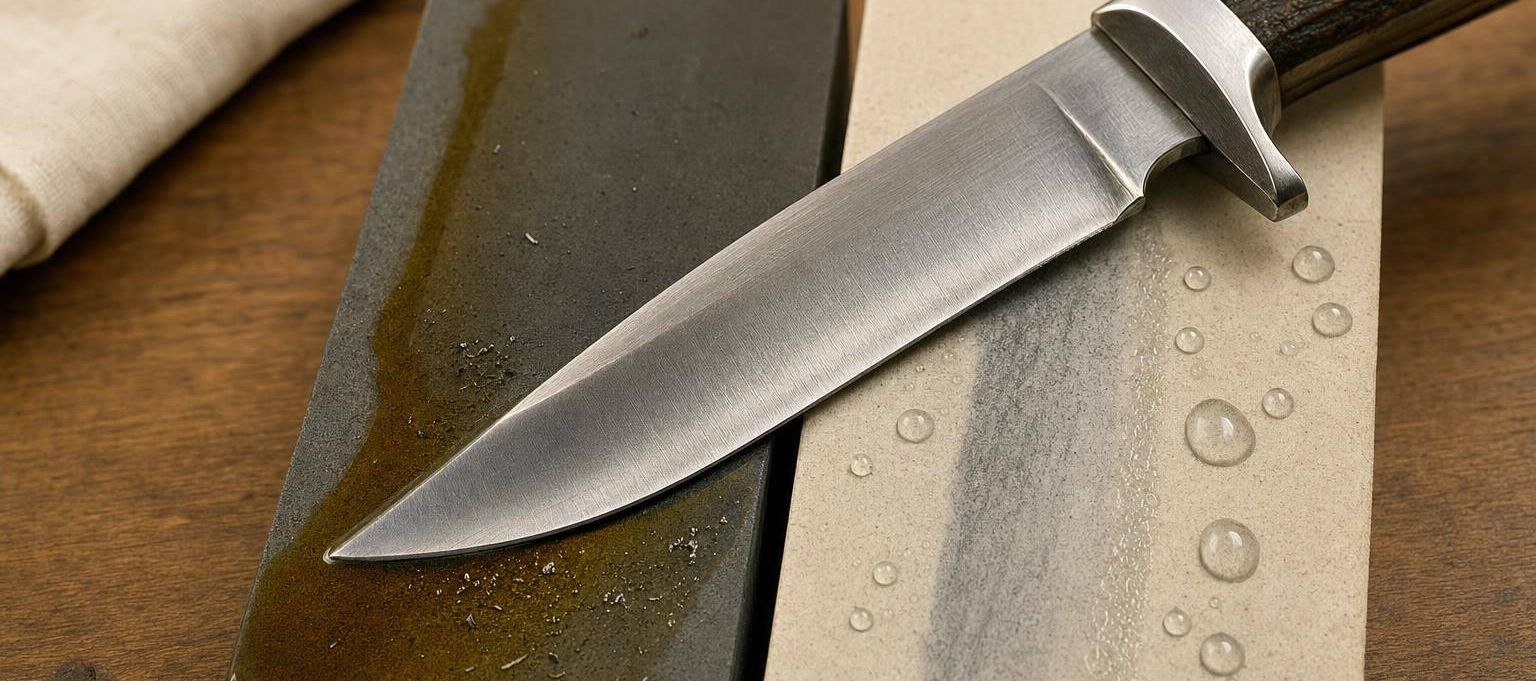
When I sharpen a hunting knife outdoors, I usually reach for the oilstone.
When I want to remove more steel and work precisely at home, I usually take the waterstone.
That’s what the comparison boils down to in the end:
- Oilstone: good in frost, without water, and for a rather grippy edge
- Waterstone: good for more material removal, easy cleaning, and a finer edge
- Carbon steel and 1.4116: often good on oilstone
- N690, VG-10 and S30V: often better on waterstone
- 56–58 HRC is often considered a sensible range for hunting knives between edge retention and resharpening
- After field dressing, water is often more pleasant for cleaning than oil
If you just want the short version:
For the field and cold days, an oilstone is often the better choice.
For the fixed workstation and duller blades, a waterstone is often the easier choice.
Quick Comparison
| Point | Oilstone | Waterstone |
|---|---|---|
| Abrasive | Oil | Water |
| Material removal | lower | higher |
| Edge | rather rough, biting | rather fine, smoother |
| Cleaning | greasy, more effort | usually easier |
| Stone maintenance | stays flat longer | needs more frequent flattening |
| Use in the field | strong in cold and without water | weaker in frost |
| Suitable steels | C-steel, 1.4116 | N690, VG-10, S30V |
Here’s a brief summary of the article’s core without going into all the details again.
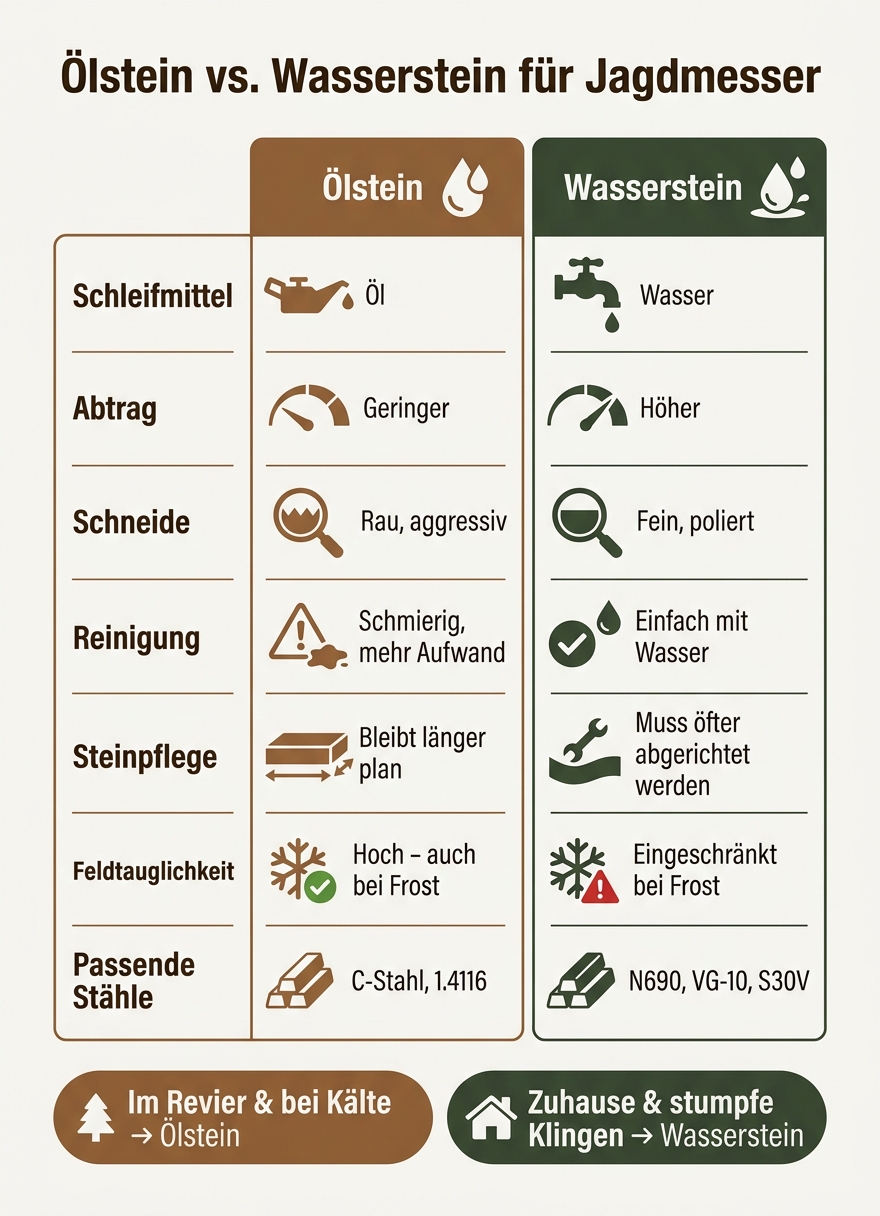
Oilstone vs. Waterstone for Hunting Knives – The direct comparison
Oil or Waterstones? Which sharpens better?
sbb-itb-1cfd233
Oilstones for Hunting Knives
Oilstones are used with honing oil. The oil binds the swarf and keeps the pores of the stone clear.
For carbon steel, this is a good choice because the blade can be sharpened cleanly and the stone fits well into an oily maintenance routine in the field. This is especially helpful when you bring your knife back into shape right after field dressing.
Where oil stones have their strengths
Oil stones are hard and durable. They wear down much slower than water stones and therefore rarely need to be resurfaced [3]. In practice, this means: You have a stone that works reliably for years without you constantly having to worry about its shape.
Then there’s the edge. Oil stones often create a slightly rough cutting edge. And that plays into the hands of hunting knives: wild boar hide, connective tissue, and bristles need a blade that is not only smooth but also grips and cuts cleanly [3].
Where oil stones have limits
But there is a catch: oil makes hands, knives, and gear greasy [1]. If a blade is very dull, material removal usually takes longer than with a water stone. And once a stone has been used with oil, there’s practically no going back. You can’t just continue using it with water because the pores are permanently saturated with oil [2].
If you prefer to work only with water and want more material removal on dull blades, a water stone is often the better choice.
Water stones for hunting knives
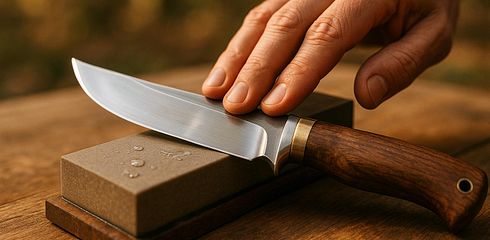
Compared to oil stones, water stones are mainly about speed and maintenance effort. You use them with water, and usually just a quick wetting is enough. Plus: they remove steel faster than oil stones. So you can quickly get a dull blade sharp again. That’s the big difference in everyday hunting use.
Where water stones have their strengths
When field dressing and butchering, a clean, finely guided edge is worth its weight in gold. Water stones are a good fit if you want to sharpen the blade precisely and with a lot of control.
Cleaning is also straightforward: after sharpening, you can simply clean the water stone with water and then dry it.
Where water stones need more care
When sharpening, you should keep the angle constant so the edge stays clean [1]. That’s the point where water stones require a bit more attention.
For carbon steel, it also applies: dry thoroughly after use and apply a thin layer of oil before long-term storage [1][2]. This is exactly where the difference to oil stones in everyday hunting use becomes especially clear.
Direct comparison for hunting practice
After the individual strengths, it quickly becomes clear in the field what really matters in the end: Both systems work. The better choice depends on how and where the knife is used.
Edge, Care and Field Suitability
Oil stones usually produce a rougher edge. Water stones deliver a finer edge. In practice, this makes a difference: A slightly rougher edge can help when field dressing wild boar with hide and bristles. A finer edge often works cleaner and more precisely through meat.
When used outdoors, oil stones often have the edge. They are simply easier to use in frost and without a water source. A water stone needs water for sharpening. At subzero temperatures or in remote hunting grounds, this can quickly become annoying.
In summary, the differences can be broken down into three key points: Sharpening speed, Type of edge, and Everyday care.
| Factor | Oil Stone | Water Stone |
|---|---|---|
| Sharpening Speed | Slower | Faster |
| Edge Character | Rough, aggressive | Fine, polished |
| Care | Stays flat longer; needs oil | Needs regular flattening; needs water |
| Field Suitability | High – even in cold and without water | Limited in frost or water shortage |
Cleaning After Field Dressing and Suitable Steels
After field dressing, things often get messy. Blood and fat settle and make cleaning more tedious. With water stones, this is usually easier: after sharpening, water and some dish soap are enough. Oil stones, on the other hand, absorb fat and oil. This makes cleaning more complex and often requires a degreasing agent.
The steel also plays a big role. Carbon steel and common stainless steels work well on both stone types. With VG-10 and S30V, water stones usually have the advantage because they remove material faster.
| Steel Type | Examples | Oil Stone | Water Stone |
|---|---|---|---|
| Carbon Steel | Traditional C-Steel | Very good | Very good |
| Standard Stainless Steel | 440C, AUS-8 | Good | Good |
| Premium Stainless Steel | VG-10 | Good | Better |
| Powder Steel | S30V | Limited | Best |
Which Stone Fits Your Hunting Knife
Choice Based on Hunting Style and Knife Steel
In the end, it’s not just about how fast a stone sharpens or how much care it needs. Above all, steel and place of use set the direction.
The steel is the first clue. For 1.4116 and classic carbon steel, an oil stone often fits best. Outdoors in the hunting ground, it plays to its strengths. At a fixed workstation, the water stone is often advantageous.
With harder steels and if you sharpen more often, the water stone scores clearer. For N690, VG-10 or S30V, it is usually the better choice because it removes material faster and makes regular resharpening easier.
| Hunting Situation | Recommendation |
|---|---|
| On the go, in frost or without water | Oil stone |
| Carbon steel or 1.4116 | Oil stone |
| N690, VG-10, S30V | Water stone |
| Solid break-in area, work cleanly | Water stone |
Conclusion: The crucial compromise at a glance
In short: Oil stone stands more for toughness in the field, Water stone more for speed and a finer edge.
If you carry a classic hunting knife made of 1.4116 or carbon steel and spend a lot of time outdoors, an oil stone is usually the more practical solution. If quick resharpening is more important to you and you want a finer edge, a water stone is often the better choice.
FAQs
Which grit is suitable for my hunting knife?
For your hunting knife, a mix of several grits is usually the best choice. In many cases, 1,000 is enough for normal sharpening and 3,000 for fine honing.
If the blade is heavily damaged or very dull, a coarse stone with 220 grit helps. If you want an even finer finish at the end, you can use 6,000 to 8,000 grit stones.
When is a combo setup of oil stone and water stone worthwhile?
A combo setup is worthwhile if you want to use both types of stones purposefully with your hunting knife. Water stones are good for the initial sharpening and fine honing. Oil stones are strong when it comes to ongoing maintenance and small corrections.
This is especially useful if you have knives made of different steel types in use. That way, you can choose the sharpening effect that fits best depending on the blade. The only important difference is the handling: Water stones need to be soaked before use, Oil stones are used with some honing oil.
How often should I resharpen my hunting knife after field dressing?
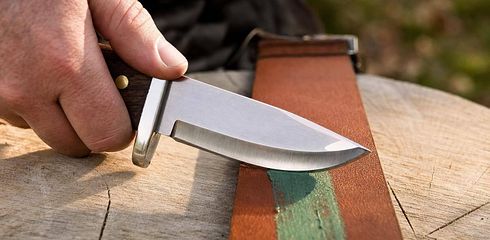
That depends on the condition of the edge. If the knife still cuts but noticeably worse than usual, usually stropping is enough.
As soon as the blade slips on skin or tendons, tears tissue rather than cuts it, or you need significantly more force, resharpening is due. Then you need a sharpening stone, a ceramic rod, or a diamond rod.
After field dressing, you should clean and dry the knife well. If necessary, strop the blade with 5 to 20 strokes per side so the edge is properly aligned for the next use.