8 Tips for Safe Firearm Maintenance
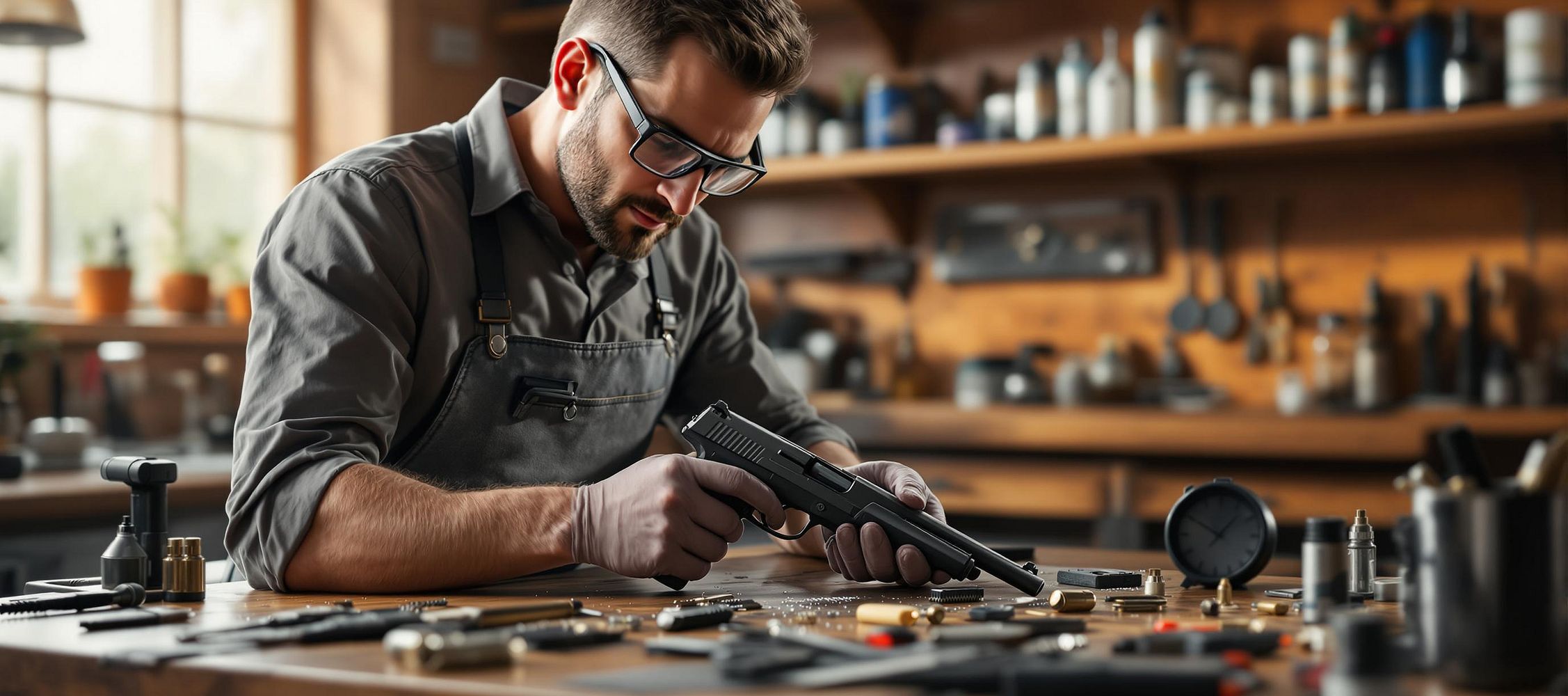
Safe gun maintenance is crucial to keep your firearm reliable and functional. Neglect can lead to dangerous malfunctions. With these 8 tips, your firearm will remain in top condition:
- Use the right tools: Cleaning rods, bronze brushes, and lint-free patches.
- Use suitable cleaning agents: No PTFE-containing products.
- Careful disassembly: Unload the firearm and follow the manufacturer's instructions.
- Clean the barrel: Always from the breech end.
- Maintain moving parts: Bolt, firing pin, and magazines.
- Store dry: Gun safe with moisture control.
- Care for wood and leather: Treat regularly with appropriate products.
- Regular inspections: Check for damage and wear.
Important: Less is more – use oil sparingly and clean after each use. With these measures, your firearm will remain safe and durable.
How to Clean Your Hunting Rifle - First Steps as a New Hunter
Required Tools for Gun Maintenance
Here you will find an overview of the most important tools necessary for safe and thorough gun maintenance.
Cleaning Rods, Brushes, and Patches
For effective cleaning, cleaning rods, bronze brushes, and lint-free patches are indispensable. It is crucial that these tools are matched to the caliber of your firearm to avoid damage [1]. For example, a .22 cleaning rod is not suitable for a .308 rifle and could damage the barrel.
Important tools include:
- Cleaning rod: Safely guides the cleaning tools through the barrel.
- Bronze brushes: Gently remove deposits without damaging the material.
- Lint-free patches: Efficiently absorb residues and leave no fibers behind.
Cleaning Agents and Oils
The choice of the right cleaning agents and oils is crucial for the preservation of your firearm. Avoid products containing PTFE, as they can release dangerous hydrofluoric acid at high temperatures [1]. Instead, use cleaning and maintenance products specifically designed for firearms that are both effective and safe.
Additional Aids
Practical additions significantly ease maintenance. These include:
- Microfiber cloths: Ideal for cleaning exterior surfaces.
- Swab sticks: Reach hard-to-access areas like the chamber and bolt.
- Precise oil applicators: Prevent excessive lubrication and ensure targeted maintenance.
Regularly organize and clean your tools to extend their lifespan and always be optimally prepared. With these aids, gun maintenance is carried out efficiently and safely.
How to Clean Your Firearm
With the mentioned tools and cleaning agents, you can safely and thoroughly clean your firearm.
Disassembly and Safety Precautions
Start with disassembly. Remove the magazine, fully unload the firearm, and check the chamber. Strictly follow the manufacturer's instructions to avoid damage [1].
Clean the Barrel
A clean barrel is important for the precision and durability of your firearm. Always clean from the breech end to protect the muzzle [1][3].
Steps for Barrel Cleaning:
- Preparation: Apply an appropriate amount of cleaning agent to the barrel.
- Cleaning: Use the appropriate tools to thoroughly clean the barrel. Insert the rod straight through the barrel and change the patches until they remain clean.
Clean the Bolt and Other Parts
The moving parts require as much attention as the barrel. Pay special attention to:
- Bolt: Thoroughly clean all accessible surfaces.
- Firing pin: Carefully remove powder residues.
- Surfaces of the bolt and adjacent parts: Remove deposits to ensure functionality.
After cleaning, you should check the firearm for wear and proper function [2].
| Component | Cleaning Frequency | Notes |
|---|---|---|
| Barrel | After each shooting | Remove deposits |
| Bolt | Every 200-300 shots | Check firing pin |
| Magazine | Monthly | Check magazine spring |
After cleaning, proper storage is crucial to maintain functionality in the long term.
sbb-itb-1cfd233
Storage and Maintenance of Your Firearm
Dry and Secure Storage
A secure, dry gun safe is a must. It should be located in a well-ventilated and dry room [2].
Important rules for storage:
- Always store firearms unloaded and with the action open.
- Store ammunition separately.
- Secure the gun safe firmly to the wall.
- Avoid fluctuations in temperature and humidity.
Moisture control is particularly important to prevent corrosion.
Use Dehumidifiers and Silica Gel
Moisture can cause significant damage to your firearm. Dehumidifiers and silica gel packets are helpful tools to regulate moisture in the gun safe [1].
| Dehumidifier Type | Advantages |
|---|---|
| Electric Dehumidifiers | Actively reduce moisture |
| Silica Gel Packets | Inexpensive and straightforward |
| Moisture Absorbers | Easy to use |
Despite good moisture control, you should regularly check your firearm for potential damage.
Regular Inspections
A thorough inspection every two to three months is essential [2]. Pay attention to:
- Rust or discoloration on metal parts.
- Damage to wood or leather components.
- Wear and function of moving parts.
- The tension of the magazine spring.
If you notice any damage, you should consult a gunsmith immediately. With regular maintenance and proper storage, your firearm will remain safe and functional [3].
Additional Maintenance Tips for Firearms
Care for Leather and Wood
Leather and wooden parts of your firearm require regular attention to extend their lifespan. Leather straps should be treated with suitable care products to keep them flexible and supple [1]. Neglected care can lead to cracks and brittleness.
Wooden stocks benefit from high-quality wood oils. These protect against drying out and preserve the grain. An application every 3-4 months is sufficient to keep the stock in good condition.
Caution with the Amount of Oil
A common mistake in gun maintenance is the excessive use of oil. Too much oil attracts dirt and can impair functionality [3].
Tips for Proper Oil Use:
- Only use resin-free oils [1].
- Apply sparingly – less is more.
- Remove excess oil with a clean cloth.
- PTFE-containing products are unsuitable for barrel maintenance [1].
Proper Handling
Proper handling of your firearm helps avoid unnecessary damage and wear. Always use fitting cleaning tools to prevent scratches or other damage [5].
After each use, it is advisable to clean the firearm with a soft cloth and check the magazines for powder residues [4]. A well-maintained firearm is not only safer but also functions more reliably.
With these tips, your firearm will remain in top condition – both functionally and aesthetically.
Conclusion: Important Points for Safe Gun Maintenance
After a detailed examination of the maintenance aspects, we summarize the key points that are crucial for reliable and long-term gun maintenance.
Overview of the 8 Tips
For thorough gun maintenance, special products such as Ballistol (excellent for rust protection) and Gunex (perfect for deep cleaning) [1] are suitable. Proper storage, with the barrel pointing down, helps avoid moisture and effectively protects against corrosion [4]. Regularly checking moving parts, such as the barrel and magazines, is also essential [1].
Why Regular Maintenance is Important
Continuous maintenance not only ensures the flawless function and safety of your firearm but also extends its lifespan [1]. The most important maintenance tasks include:
| Maintenance Area | Recommended Actions | Frequency |
|---|---|---|
| Basic Cleaning | Clean barrel and moving parts | After each use |
| Wood and Leather Parts | Treat with suitable care products | Every 3-4 months |
| Overall Inspection | Check wear on all components | Every three months |
| Maintenance & Storage | Control and maintain moisture | Monthly |
The use of high-quality cleaning tools pays off in the long run [5]. With these measures, your firearm will not only remain functional but also safe and durable.
FAQs
Here you will find answers to some frequently asked questions about gun maintenance to avoid mistakes and extend the lifespan of your firearms.
How often should a firearm be oiled?
This depends on how often the firearm is used. After 30–40 shots, a thorough cleaning is recommended [1]. For firearms that are rarely used, it is sufficient to maintain them once or twice a year. Regular maintenance ensures that the firearm functions reliably.
Which cleaning agents are best suited?
The choice of the right cleaning agent is crucial. Here are some proven products:
| Application Area | Recommended Product | Field of Use |
|---|---|---|
| General Cleaning | Hoppe's No. 9 | For thorough cleaning |
| Barrel Cleaning | Wipeout Foaming | Removes stubborn residues |
| Universal Care | Break Free CLP | Versatile use |
| Rust Protection | Ballistol | Provides long-term protection |
Note: PTFE-containing products should be avoided as they can damage the barrel at high temperatures [1].
What are the most important steps in cleaning?
- Clean the barrel and metal parts.
- Always clean the barrel from the chamber side.
- Repeat the process until the cleaning cloth remains clean [4].
Magazines should also be cleaned regularly to remove powder residues. After cleaning, it is advisable to apply a thin film of oil to prevent corrosion.
With these answers, you have a grasp of the fundamentals of gun maintenance and can keep your equipment in excellent condition.