Subsonic with suppressor: Caliber choice guide
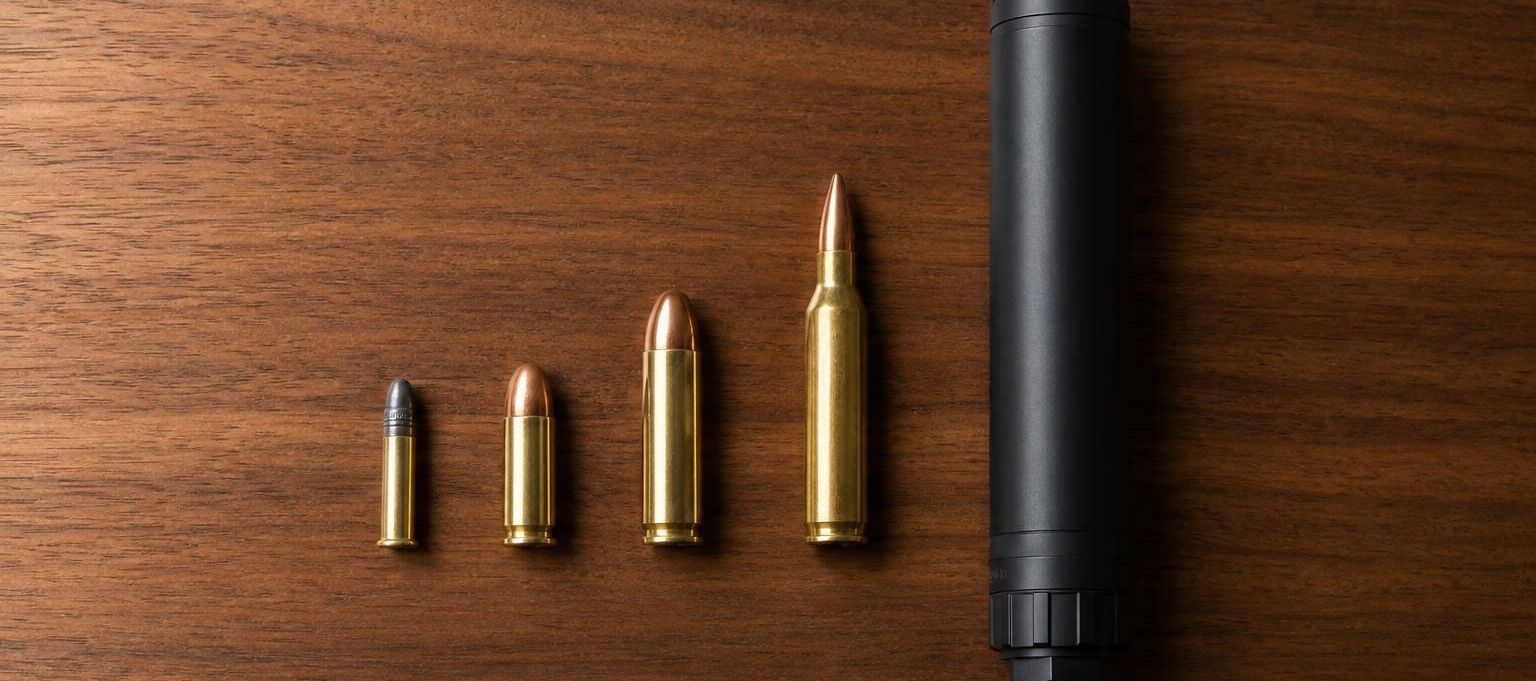
I choose a subsonic caliber based on purpose, function, and cost – not just noise level. Subsonic ammunition stays below about 340 m/s. This avoids the supersonic crack but doesn’t automatically make the firearm hearing-safe with a suppressor.
For the initial selection, I compare four calibers:
| Caliber | Strength | Limit |
|---|---|---|
| .22 LR | Cheap range training, very low recoil | Low energy |
| 9 mm Luger | Range training with pistol or PCC | Not every load stays subsonic |
| .45 ACP | 230-gr loads often already subsonic | Usually more recoil than 9 mm |
| .300 AAC Blackout | Highest energy of this selection, for rifles | Hunting suitability must be checked separately; strictly separate from .223 Remington and 5.56 NATO |
The caliber alone does not decide. I also check bullet construction, velocity, barrel length, stabilization, and suppressor approval. At the range, reliable function, accuracy, and total cost matter to me; for hunting, also legal energy and suitable bullet effect.
<u>Before purchase and use, I have the combination professionally checked.</u> This includes German weapons and hunting regulations, manufacturer information, and a documented test at the shooting range. Hearing protection remains mandatory for my safety – a listing does not replace these checks.
Top 3 subsonic rounds to suppress!
sbb-itb-1cfd233
Understanding Noise and Compatibility
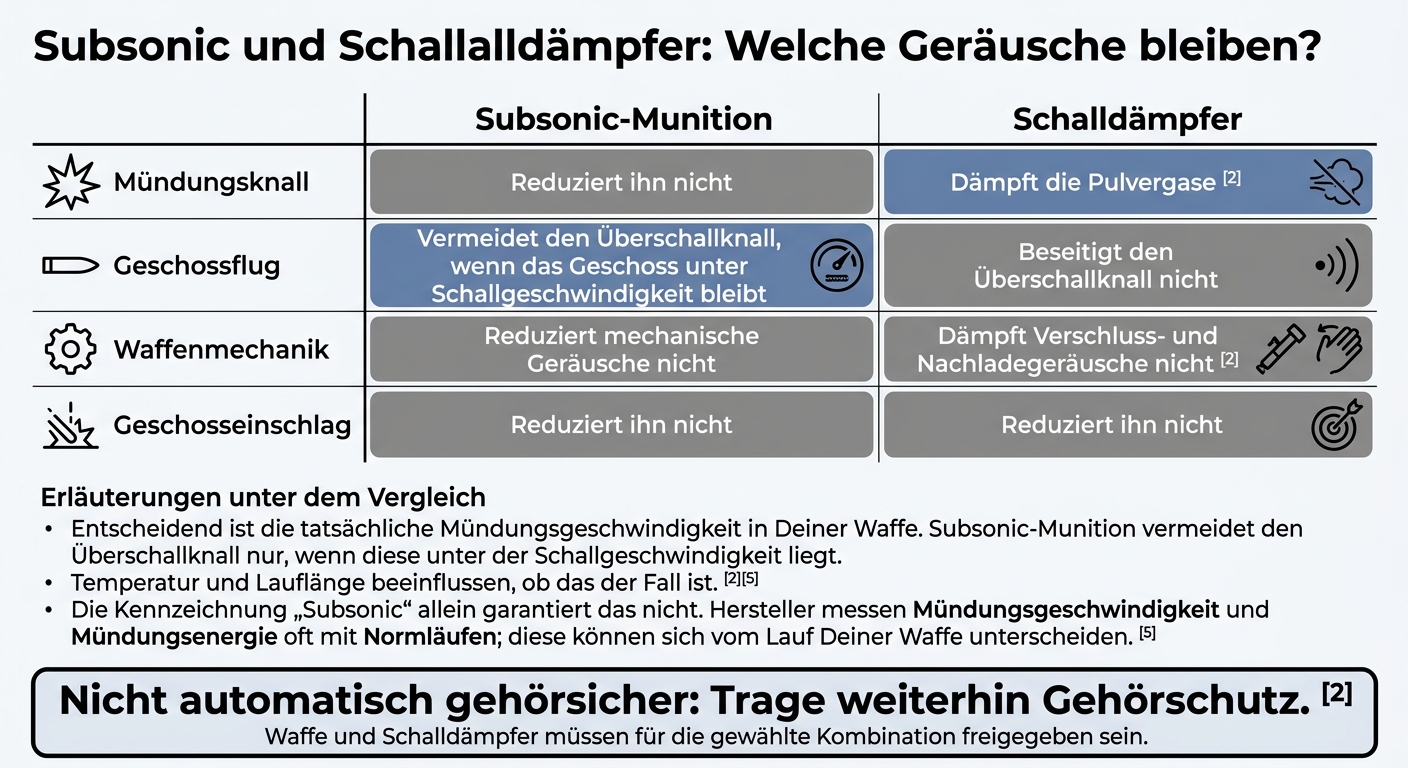
Subsonic and Suppressor: What noises remain?
What matters is whether the chosen ammunition stays below the speed of sound in your firearm and functions reliably.
Recognizing Noise Sources When Shooting
Subsonic ammunition only avoids the supersonic crack if the actual muzzle velocity in your firearm is below the speed of sound. Temperature and barrel length influence whether this is the case.[2][5]
The label “Subsonic” alone does not guarantee that. Manufacturers often measure muzzle velocity and muzzle energy with standard barrels. These can differ from the barrel of your firearm.[5]
| Noise source | Effect of subsonic ammunition | Effect of suppressor |
|---|---|---|
| Muzzle blast | Does not reduce it | Dampens the powder gases [2] |
| Bullet flight | Avoids the supersonic crack if the bullet stays below the speed of sound | Does not eliminate the supersonic crack |
| Firearm mechanism | Does not reduce mechanical noises | Does not dampen bolt and reloading noises [2] |
| Bullet impact | Does not reduce it | Does not reduce it |
Keep wearing hearing protection.[2] Then check if the firearm and suppressor are approved for the chosen combination.
Check details on firearm and suppressor
Chamber, ammunition, suppressor approval, pressure limits, barrel length and mounting must all match. The twist rate must also be correct: it has to stabilise the usually heavier subsonic bullets.[6]
A shorter barrel can reduce bullet velocity while increasing gas pressure at the muzzle.[5][6] Have any open questions about approval clarified before use by the manufacturer or a qualified gunsmith. This is especially important with different barrel lengths or uncertainty about pressure limits and bullet stabilization. A matching thread is not proof of safety.[2][6]
Assess ammunition performance
If firearm and suppressor are approved, the specific load matters. It determines not only the noise level but also energy, function and suitability for your purpose.
Check bullet weight, construction and energy
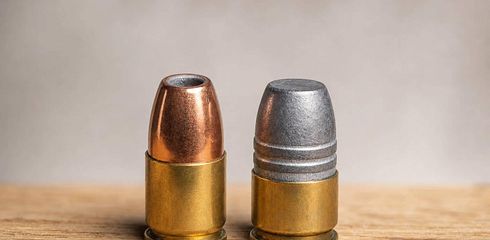
Check bullet weight, construction, velocity (m/s), test barrel length and energy (J) in the datasheet. For factory ammunition, the caliber designation or the “Subsonic” label alone is not enough. The documented values for your firearm are decisive.[1] More bullet mass means more energy at the same velocity. But that alone says nothing about terminal effect. A full metal jacket or match bullet for the shooting range is therefore not automatically suitable for hunting.
For hunting, both energy and bullet effect must be right. Expansion is not guaranteed at low impact velocity. Pay attention to an explicit manufacturer statement about effect at low velocity. Check if this fits your intended use and observe the applicable hunting law energy requirements.[1]
Check feeding, bullet stability and precision
Whether a load reliably feeds, ejects and reloads depends on your firearm. Especially with semi-automatic firearms, subsonic factory ammunition can cause function problems.[2] Also check if the bullet is sufficiently stabilized. Heavy, long bullets can wobble if not stabilized enough. Their stability must therefore be checked before use with a suppressor.[1]
After checking the datasheet, document the approved combination at the shooting range: Record the load, possible function issues and point of impact at the intended distances. A different load or a suppressor can change function and point of impact. If the combination does not deliver reliable results, have the cause clarified or check another approved factory load.[1][2] The documented values will later serve as a basis for direct comparison of calibers.
Compare four subsonic calibers
If firearm, suppressor and load are approved, a direct comparison helps with caliber choice. The following four calibers cover the most common subsonic applications. Besides noise level, recoil, function, energy and intended use count.
The data are guidelines for factory ammunition. How reliably the firearm functions and how strong the recoil is also depends on firearm and suppressor.
| Caliber | Platform | Typical bullet weights | Recoil | Relative energy | Function in semi-autos | Intended use | Main limitation |
|---|---|---|---|---|---|---|---|
| .22 LR | Rifle, pistol | 40 gr ≈ 2.6 g | Very low | Low | Load-dependent | Cheap range training | Limited energy and terminal effect |
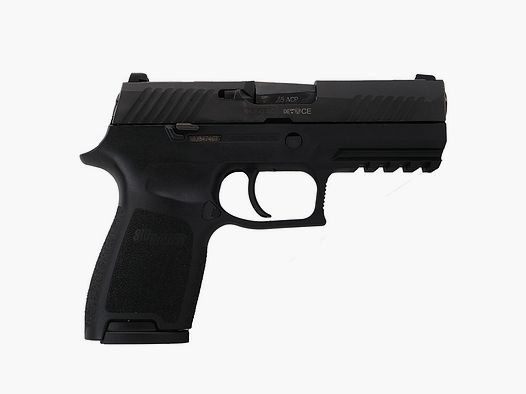
| 9 mm Luger | Pistol, long gun in pistol caliber (PCC) | 147–165 gr ≈ 9.5–10.7 g | Low to medium | Medium | Depends on firearm and load | Range training | Subsonic not guaranteed with all loads |
| .45 ACP | Pistol, PCC | 230 gr ≈ 14.9 g | Medium to stronger | Medium | Depends on firearm and load | Range training | Often lower magazine capacity |
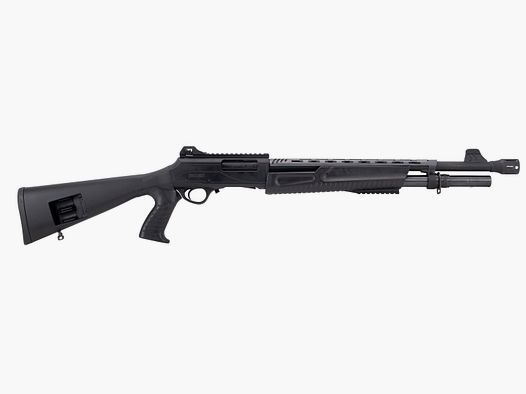
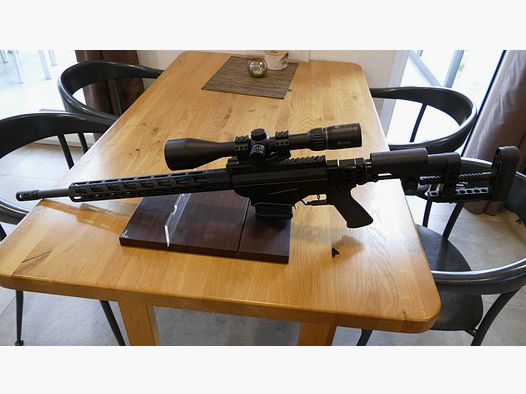
| .300 AAC Blackout | Semi-automatic rifle, bolt-action rifle | About 220 gr ≈ 14.3 g | Rather low for rifles | Relatively high within this selection | Depends on gas system for semi-autos | Rifle training; hunting only after separate evaluation | Risk of confusion with .223 Remington and 5.56 NATO |
.22 LR: Low-recoil range training
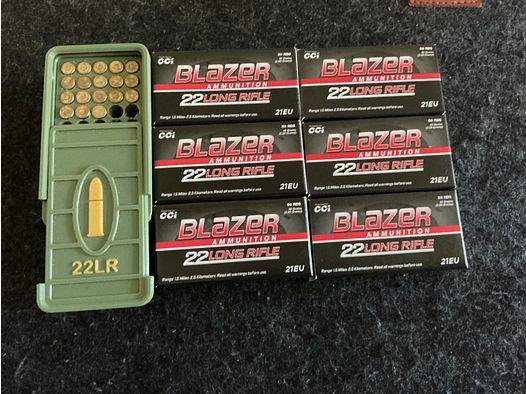
For pure range training, .22 LR is the easiest base: low recoil and affordable ammo. The suppressor must be approved for rimfire ammunition. When used on small game, hunting laws and sufficient terminal effect must be evaluated separately.[1]
9 mm Luger and .45 ACP: Pistol calibers
9 mm Luger often offers less recoil. With .45 ACP, 230-gr standard loads are often already subsonic. For your choice, availability of suitable ammo and magazine capacity of the respective model also matter.
| Selection criterion | 9 mm Luger | .45 ACP |
|---|---|---|
| Ammunition availability | Check specific heavy subsonic load | Check suitable 230-gr load |
| Magazine capacity | Depends on firearm model and magazine | Also model-dependent, not generally lower |
.300 AAC Blackout: Subsonic loads for rifles
While .22 LR and 9 mm mainly score for training, .300 AAC Blackout is the most powerful rifle option in this group. A separate evaluation is required for hunting.[1]
Store and handle .300 AAC Blackout separately from .223 Remington and 5.56 NATO. Confusing them can cause severe firearm damage and injuries.[1]
Choose the caliber for your purpose
Which suitable subsonic option you choose depends on your use: range, hunting, or both. After the technical preselection, practical requirements count. Priorities at the range differ from those in hunting.
Range Training: Reliability and Costs
At the range, what counts is which caliber works reliably, accurately, and affordably with your firearm. Maximum noise reduction is less important here. Check your range’s suppressor rules.[4] Record point of impact, group sizes, and malfunctions for your specific setup.[1]
Consider firearm, suppressor, ammunition, and maintenance together and compare the total cost per shot and per year. Clean the suppressor according to the manufacturer’s instructions. Whether and when cleaning is necessary depends on the model.[2]
For hunting, additional requirements apply: The combination must be legally permitted and deliver sufficient terminal performance.
Hunting: Legal Situation and Terminal Performance
Check the datasheets to see if the load is suitable for your hunting use. Your specific combination must meet the current federal and state legal requirements for game species and use. This includes caliber requirements, minimum energy, and suppressor approval.[1]
Energy alone is not enough. Also check the manufacturer’s data on performance at your planned hunting distance. Pay attention to the barrel length these specifications are based on.[1][4]
Once the technical and legal selection is set, you can compare specific offers with your requirements.
Find Equipment on Gunfinder
On Gunfinder you can compare firearms, ammunition, and accessories by availability and price. Check the manufacturer’s details for model, load, barrel length, muzzle thread, and suppressor approval for the caliber. You should request missing data from the seller before purchase. A listing does not replace technical or legal checks.[2][4]
Conclusion: Finalise Your Selection with This Checklist
Subsonic means suppressed, not silent. Therefore, check firearm, ammunition, and suppressor as a complete system.[1][2]
After comparing calibers, this checklist helps you finalise your selection. Before use, check the following points:
- Use and Law: Decide whether you want to use the combination at the shooting range or for hunting. Check the applicable firearms and hunting law requirements.
- Firearm and Barrel: Match the cartridge chamber, barrel length, and barrel data with the intended ammunition.[1]
- Suppressor Approval: Have the specific combination of firearm, suppressor, and ammunition confirmed. Also clarify the required entry in the WBK.[1][4]
- Factory Ammunition: Choose a suitable factory load.[1]
- Check Data: Check velocity, bullet construction, energy, and subsonic behaviour based on the actual barrel length.[1][2]
- Control Check: Test function, point of impact, and precision under expert supervision and document the results.[1][4]
FAQs
How do I know if my ammunition actually stays subsonic?
Measure the muzzle velocity (V0) at the shooting range with a precise chronograph. This lets you check if your ammunition stays in the subsonic range. Velocity depends, among other things, on barrel length, temperature, and load.
Document point of impact, group size, and bullet drop at 50, 75, and 100 m. Oval bullet holes or poor precision at short distances can indicate insufficient bullet stabilization. Often the barrel twist rate is too slow for the chosen bullet weight.
Can I use the same suppressor for multiple calibers?
Yes, as long as the suppressor is designed for the largest caliber you want to shoot. Follow the manufacturer’s specifications for the maximum caliber diameter: a too-small bore can cause damage. The barrel threads of your firearms must be identical or adapted with suitable adapters.
Firearm, suppressor, and ammunition together affect the point of impact. So check them at the shooting range after every change of firearm or load.
Where can I check the current hunting regulations for my federal state?
Before using your firearm in the field, check the Federal Hunting Act and the current state hunting law of your federal state. The Federal Hunting Act sets the nationwide minimum framework; the state hunting laws may provide stricter rules [1][2]. Therefore, inform yourself in advance about which regulations apply to you [1][3][2].
If you are unsure, experienced hunters, specialist dealers, or hunting schools can help you [3]. Gunfinder supports you in finding equipment that fits your requirements [4].