6 Hunting Boots for Every Season Compared

For still-hunting, I’d focus on weight and support; for sitting in a stand, warmth. None of these six hunting boots is equally suited to all four seasons. My first check when buying: try them on with hunting socks and <u>check waterproofing and insulation separately</u>.
I compare weight, grip, shaft height, lining, and price. Some weight and price details have not been confirmed. That’s why I prioritize the right use over an offer that only seems like a bargain.
Quick comparison
| Model | Strength and use | Limitation | Price listed in the article |
|---|---|---|---|
| Meindl Dovre Extreme MFS | Tall leather shaft, plenty of support on steep terrain | Heavy; no dedicated winter insulation | Not confirmed |
| Le Chameau Vierzonord | Waterproof rubber boot with neoprene lining for cold, wet days | Less lateral support; heats up quickly when moving | Not confirmed; €269 is for the Plus version |
| Aigle Parcours 2 Vario | Waterproof, cushioned, for longer walks through wet hunting grounds | Limited warmth and breathability | €165–190 |
| Haix Nature One GTX | Sturdy leather boot with GORE-TEX for active hunting | Not insulated enough for long sits in a stand in freezing weather | €219–279 |
| Lowa Zephyr GTX MID TF | Lightweight, mid-height boot for spring and summer still-hunting | Less support and protection in deep water | Not confirmed |
| Meindl Rofan GTX | Leather boot for woods and varied terrain in mild temperatures | Extra warmth needed when sitting in a stand in winter | Conflicting information |
My rule of thumb: For mud, I choose a tall rubber boot; for steep trails, a supportive lace-up boot. When sitting in a stand in winter, I don’t rely on the word “waterproof” alone.
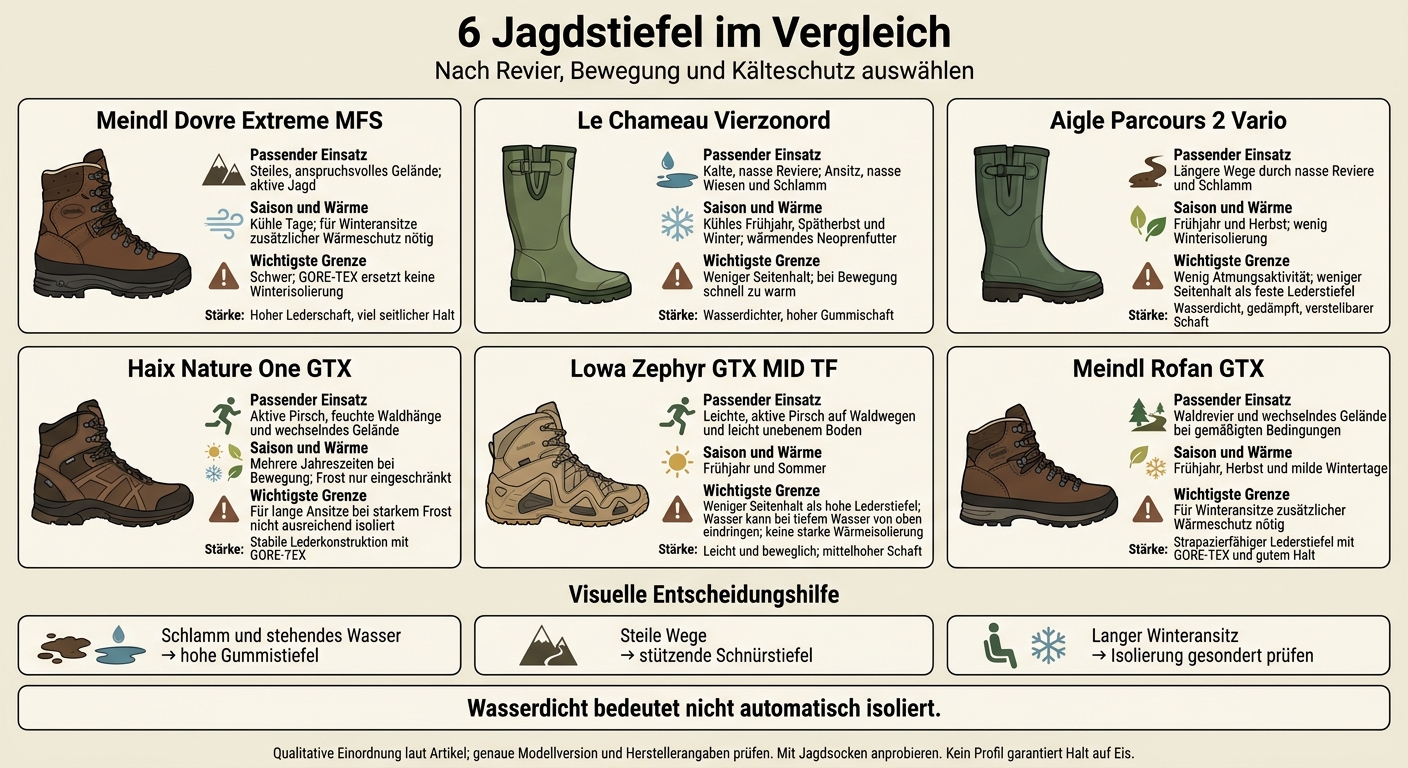
6 hunting boots compared: Which one suits your hunting grounds?
1. Meindl Dovre Extreme MFS
Weight and support
With the Dovre Extreme MFS, stability comes before lightness. The tall nubuck upper supports your ankle more than the mid-height Lowa Zephyr GTX MID TF. You’ll notice the extra weight most on long, flat stretches.
The MFS in the ankle and upper area adapts to the shape of your foot with body heat. This can reduce pressure points and shorten the break-in period. You should still wear the boots in briefly before your first stalk. [1][3]
Waterproofing and insulation
The GORE-TEX membrane keeps water out while allowing moisture to escape. But it doesn’t replace winter insulation. This construction makes sense if you’re out in the hunting grounds in cold, wet weather. For a long sit in freezing temperatures, you may need additional thermal insoles or a hunting seat bag. Care for the nubuck regularly so it continues to repel water. [1][3]
Grip and hunting terrain
On scree and slopes, the firm upper provides more lateral support than the more flexible rubber boots from Aigle and Le Chameau. Rubber boots, on the other hand, are practical in wet and muddy hunting grounds. [1][2]
Seasonal comfort and value for money
The available data contains no reliable pricing information for the Dovre Extreme MFS. So your decision mainly comes down to whether you need stability and protection in rough terrain. [1][3][2] If lower weight matters more to you, you’ll find lighter alternatives in the rest of this comparison.
sbb-itb-1cfd233
2. Le Chameau Vierzonord
Weight and support
After the sturdy leather boot, this one is all about protection from wet and cold while sitting out. The tall natural rubber shaft can be adjusted to your calf with a buckle. However, it provides less ankle support than sturdy leather boots. On long, active stalks, it feels heavier than the lightweight Lowa Zephyr.
Waterproofing and insulation
The waterproof Vierzonord keeps you warm with its 4 mm neoprene lining—a good fit for cold, wet hunting stands. [1][2] When you're moving, heat and moisture build up in the boot more quickly. [1] Its strength lies in situations where water and mud are the order of the day.
Grip and hunting terrain
It’s made for wet meadows, mud, and standing water.
Seasonal comfort and value
The Vierzonord is best suited to late fall, winter, and early spring. The neoprene lining is too warm for summer stalking. For reference, the Vierzonord Plus costs around €269. [2] If you need more freedom of movement and less warmth, take a look at the next model.
Review: Comparing 4 hunting boots - Lundhags Jaure II - Meindl Dovre - Härkila Pro Hunter - Lowa Z-11S
3. Aigle Parcours 2 Vario
The Parcours 2 Vario is the lighter choice for anyone covering long distances in wet terrain.
Weight and support
The cushioning is designed for long distances. However, there’s no reliable weight specification. The adjustable shaft fits comfortably but provides less ankle support than lace-up leather boots. [1][2]
Waterproofing and insulation
Natural rubber and a waterproof gusset keep water out. The lightweight lining dries quickly, but doesn’t provide enough insulation for winter. This makes the boot best suited to spring and fall use. [2]
Grip and hunting terrain
The sole provides grip on slippery ground. This makes the Parcours 2 Vario suitable for wet meadows and active hunting in the woods. [1][2]
Seasonal comfort and value for money
At €165 to €190, this boot is especially worthwhile in wet hunting areas and on longer walks. It lacks breathability for summer stalking and insulation for winter sits. [1][2]
The next model puts more emphasis on protection and stability again.
4. Haix Nature One GTX
Weight and support
Compared with the lighter rubber boot, this model offers more stability. Its sturdy leather construction supports your foot on long stalking trips and provides a secure grip even on difficult terrain. [1]
Waterproofing and insulation
The GORE-TEX membrane keeps water out and lets moisture escape. However, the insulation in the standard version is not enough for long winter sits in severe frost. [1][3]
Grip and hunting terrain
The slip-resistant rubber sole provides good grip on muddy paths and damp forest slopes. [1][3]
Seasonal comfort and value for money
The Haix is especially suited to active hunting across several seasons. Expect to pay around €265, within the stated price range of €219 to €279. Regular leather care helps preserve its water-repellent properties and durability. [1]
5. Lowa Zephyr GTX MID TF
Weight and support
The Zephyr is lighter than the Meindl Dovre Extreme and the Haix Nature One GTX. This makes it especially appealing for long stalking trips, changing terrain, and plenty of movement in the hunting area. Its mid-height shaft supports your foot better than the rubber boots in this comparison, but offers less lateral support than tall leather boots. [1][2]
Waterproofing and insulation
The mid-height shaft limits waterproofing: in deep water and tall, wet vegetation, water can get in from above. It also lacks the strong insulation needed for winter sits. [1][2][3]
Grip and hunting terrain
The Zephyr is well suited to forest paths and slightly uneven ground. For deep mud, the tall rubber boots in this comparison are a better choice. On steep or rocky terrain, sturdier leather boots offer more support. [1][2]
Seasonal comfort and value for money
No price is listed. Its biggest advantage is therefore its low weight with moderate protection. [1] If you’re looking for a taller shaft and more support, the next model offers a sturdier build.
6. Meindl Rofan
Construction and support
The Meindl Rofan GTX in Sil-Nubuck leather is suited to varied terrain and long days in the hunting grounds. It is usually classified as category B, and sometimes B/C. [1] This puts it between a hard-wearing hunting boot and a versatile all-rounder.
Waterproofing
The Gore-Tex membrane keeps water out while allowing moisture to escape. Matching hunting socks provide extra warmth on cold days. For winter sits, you’ll need additional insulation.
Grip
The Multigrip sole, sometimes in a Vibram version, provides secure footing on wet forest floors and slopes.
Price and season
At €280 to €320, the Rofan is in the premium range. [3] It offers plenty of protection and stability and is best suited to spring, fall, and mild winter days. Regular care keeps the nubuck leather supple and water-repellent. The next comparison puts weight, waterproofing, and intended use side by side.
Side-by-side comparison: features and seasons
The individual profiles cover the details. Here you can see which model suits each season and type of hunting ground. The focus is on weight, waterproofing, and support. The information is based on technical specifications. Weights are approximate and are not always directly comparable.
| Model | Construction | Weight, approx. per pair¹ | Waterproofing | Lining | Shaft height | Sole tread | Season | Hunting ground use | Price, approx. |
|---|---|---|---|---|---|---|---|---|---|
| Meindl Dovre Extreme MFS | Leather | 1,900 g | Gore-Tex | MFS foam; Gore-Tex | High | Rubber tread | Fall, winter | Challenging, steep terrain; active hunting | €320; unconfirmed |
| Le Chameau Vierzonord | Natural rubber | 1,800 g | Waterproof rubber shaft | Neoprene; thickness unconfirmed | High | All-terrain tread | Cool spring, fall, winter | Wet, flat hunting grounds | Unconfirmed² |
| Aigle Parcours 2 Vario | Natural rubber | 2,000 g | Waterproof rubber shaft | Polyester/jersey | High | Cushioned sole | Spring, fall; limited use in summer | Wet ground and mud | €165–190 [2] |
| Haix Nature One GTX | Nubuck leather | 1,600 g | Gore-Tex | Gore-Tex | Mid-height | Rubber/PU | Year-round when moving; limited use in freezing temperatures | Active stalking | €249 [1] |
| Lowa Zephyr GTX MID TF | Suede/Cordura | 1,100 g | Gore-Tex | Textile/membrane | Mid-height | Unconfirmed | Spring, summer | Light, active stalking | €160–190; unconfirmed |
| Meindl Rofan GTX | Leather | 1,400 g | Gore-Tex | Leather/textile; unconfirmed | Mid-height | Unconfirmed | Spring, fall | Woodland hunting grounds, moderate conditions | €230; unconfirmed |
¹ Weights and shaft heights in centimeters are unconfirmed; shoe sizes and measurement methods are missing. “Unconfirmed” means not clearly verified or attributed to the model. ² The listed €269 price applies to the Vierzonord Plus, not clearly to the Vierzonord. [2]
Weight, protection, grip, and season matter more when choosing than the promise that one boot can do it all. Keep these four points in mind:
- Weight and support: Sturdy leather boots offer more stability, while lighter models offer more freedom of movement. On steep trails, you need a secure heel fit and lateral support.
- Waterproofing and insulation: Check separately how well a boot keeps water out and insulates against the cold. This is especially important when sitting in a stand for a long time. [1][3]
- Grip and hunting grounds: Tall rubber boots are suited to mud, while supportive lace-up boots are better for steep terrain. No tread guarantees grip on ice. [1][2][3]
- Model version: Check the exact version before comparing prices—especially for the Vierzonord and Vierzonord Plus. [2]
Advantages and limitations of each boot
The data shows the differences. But what do they mean out in the hunting grounds? The table shows where each boot excels and where its limitations lie.
| Model | Support and mobility | Weight and break-in | Waterproofing and warmth | Best suited hunting use |
|---|---|---|---|---|
| Meindl Dovre Extreme MFS | Tall shaft for maximum stability. | Heavy; MFS adapts to your foot. | Gore-Tex protects against moisture but does not replace winter insulation. | Fall and winter stalking, as well as mountain hunting grounds. |
| Le Chameau Vierzonord | Flexible, but offers less lateral support. | Requires little to no break-in time. | Waterproof and very warm; gets too warm quickly when moving. | Cold, wet hunting grounds in fall and winter; hunting from a stand and driven hunts. |
| Aigle Parcours 2 Vario | Cushioned sole, but less lateral support than leather boots. | Requires little break-in time. | Waterproof; not insulated enough for extreme winter cold. | Wet trails and mud in spring and fall. |
| Haix Nature One GTX | Stable yet flexible. | Medium weight; needs the usual break-in time for leather. | Waterproof and breathable. | All-around stalking across several seasons; only suitable to a limited extent in freezing temperatures. |
| Lowa Zephyr GTX MID TF | Very flexible, but offers less protection. | Very lightweight; requires little to no break-in time. | Waterproof; the mid-height shaft limits protection in deep water and snow. | Active stalking from spring through summer. |
| Meindl Rofan | Durable leather boot with good support on uneven ground. | Medium weight; the leather needs breaking in. | Waterproof and breathable; ideal in moderate temperatures. | Stalking in the woods in spring and fall, as well as lighter mountain hikes. |
Check the fit with hunting socks. Wear moisture-wicking socks and care for the leather regularly according to the manufacturer's instructions.
Conclusion: Choose based on your hunting grounds and type of hunting
Your hunting grounds, activity level, and time spent standing determine your choice. For active stalking, low weight and flexibility matter most. For hunting from a stand, insulation and protection from the cold are the priorities.
| Model | Suitable if … |
|---|---|
| Meindl Dovre Extreme MFS | You stalk for long periods and tackle difficult terrain. |
| Le Chameau Vierzonord | You hunt from a stand in cold, wet conditions. For winter conditions, check the Plus version separately. |
| Aigle Parcours 2 Vario | You walk on wet ground and need an adjustable shaft width. |
| Haix Nature One GTX | You mostly hunt actively. |
| Lowa Zephyr GTX MID TF | You prefer a flexible, mid-height boot. |
| Meindl Rofan | You hunt in varied terrain and the version you choose is suitable for winter. |
Try the boots on with your hunting socks and make sure there's enough room for your toes. If they're too tight, they can restrict circulation.[3] Waterproof doesn't automatically mean insulated.[1]
Find suitable listings on Gunfinder.
FAQs
How can I tell if my hunting boots fit properly?
Measure the length and width of your feet while standing, as they can swell slightly under pressure. If you wear thicker socks, choose hunting boots half to one size larger. This leaves enough room without restricting circulation—and keeps your feet warm.
Well-fitting hunting boots help prevent blisters and pressure points, and give you traction on uneven terrain. Take plenty of time to break them in.
How can I prevent sweaty feet in waterproof hunting boots?
Moisture needs to escape to the outside. So look for a breathable GORE-TEX membrane. An active climate system like the HAIX Climate System uses your walking motion to support air circulation and pump sweat out of the boot.
Wear merino wool socks to wick moisture away from your skin. The right boot size is also important so air can circulate properly inside the boot.
When is a second pair of hunting boots worth it?
A second pair of hunting boots is worth it if your current boots are badly worn or you hunt in different areas. One pair alone won't suit every situation.
Lightweight, flexible models are a good fit for stalking or warm regions. For challenging alpine hikes, as well as wet and cold conditions, you need heavy-duty, durable boots that provide support and insulation. With a second pair, you can choose the right boots for each outing—for greater comfort, better protection, and longer-lasting gear.