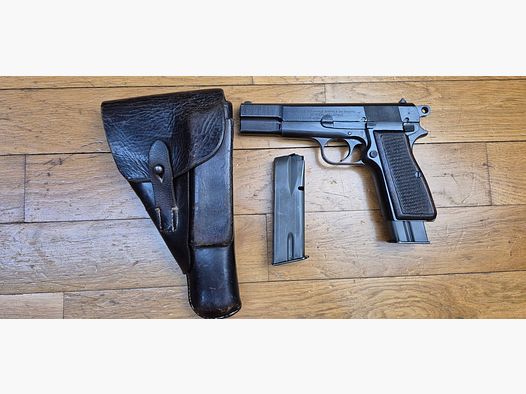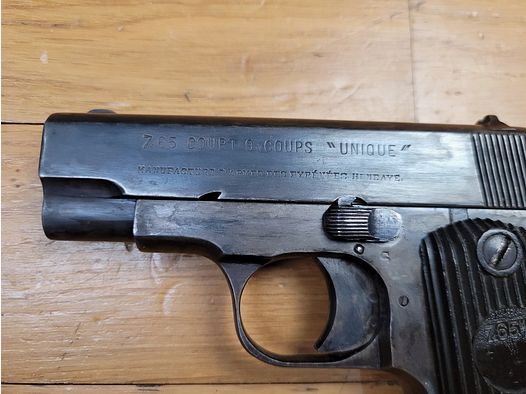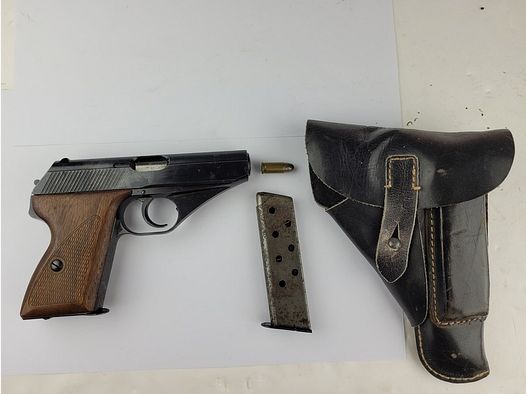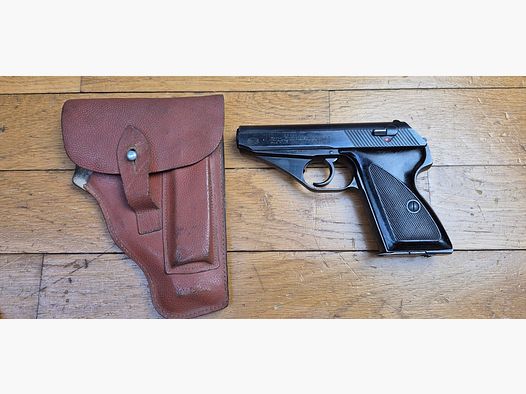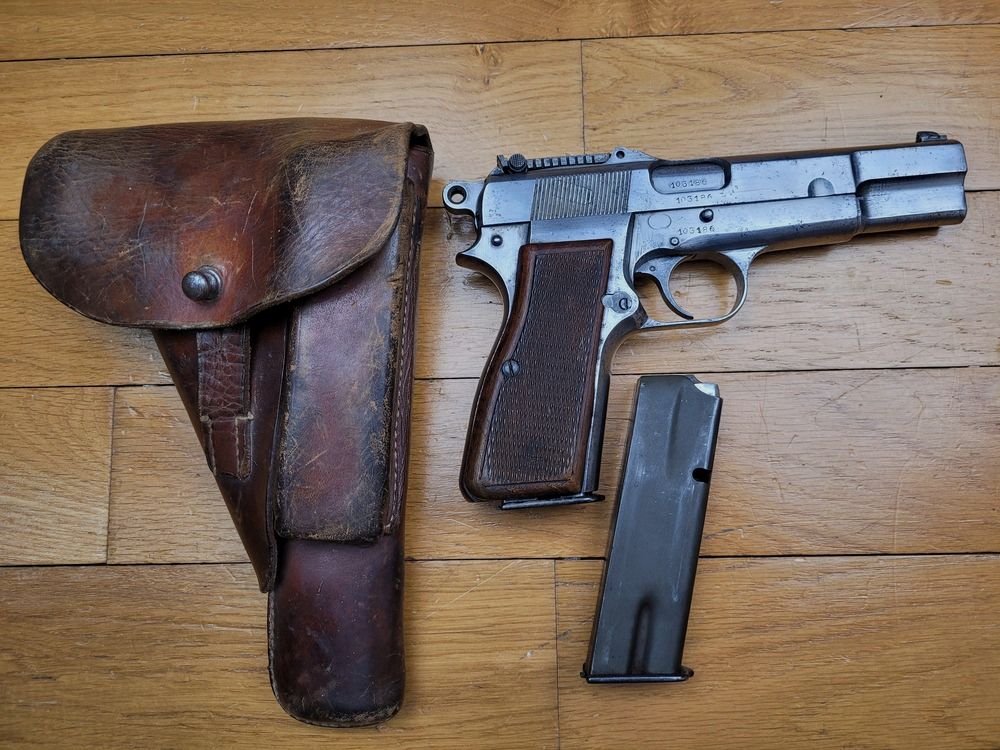
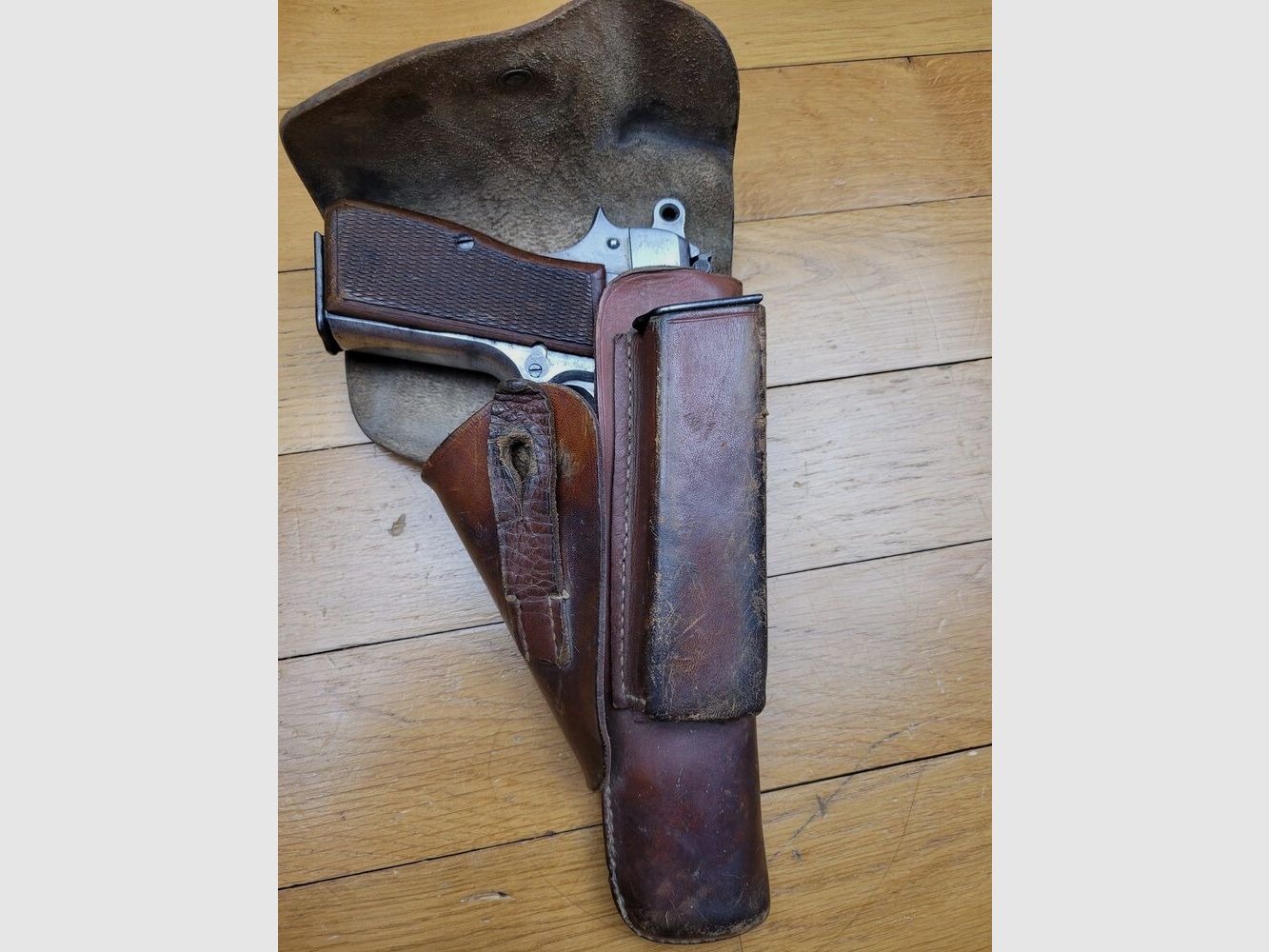
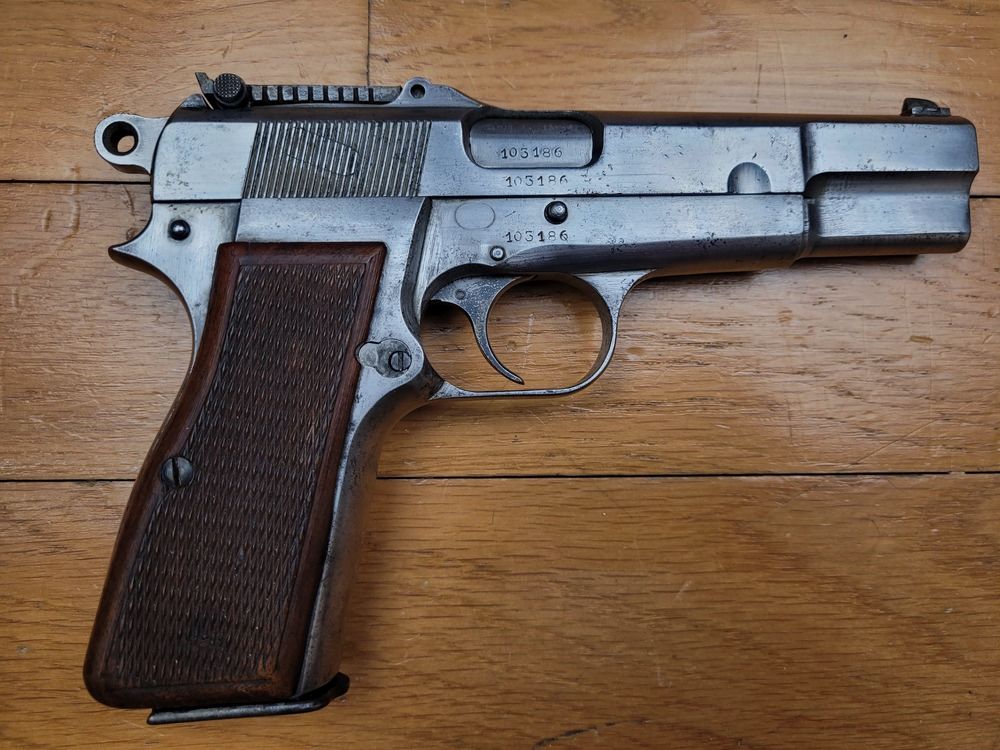
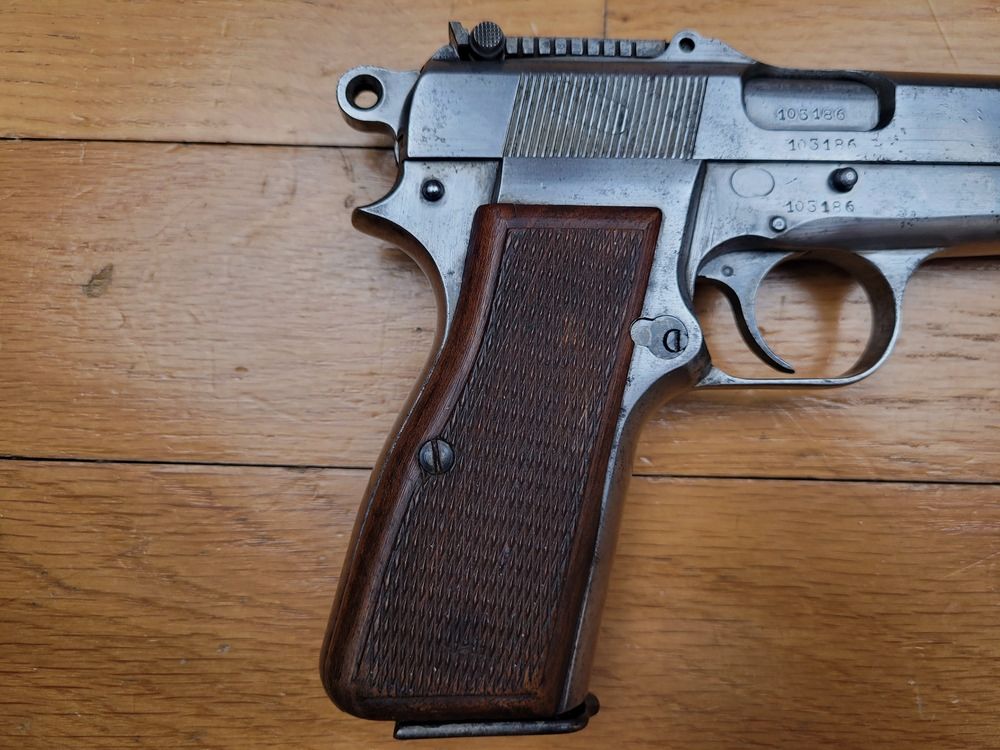

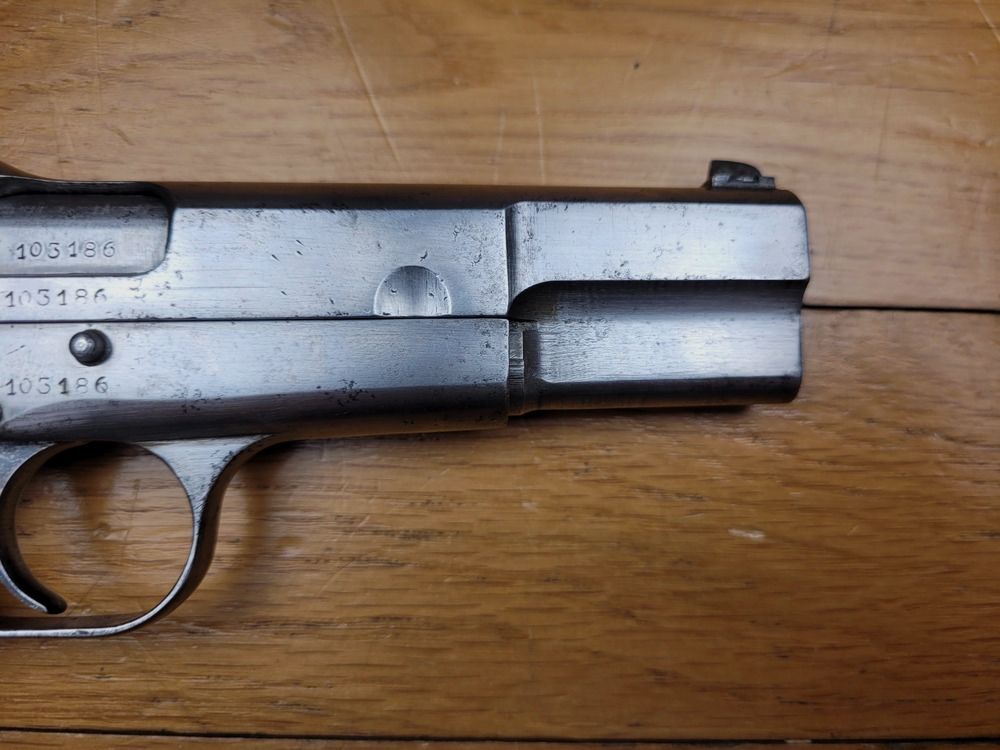

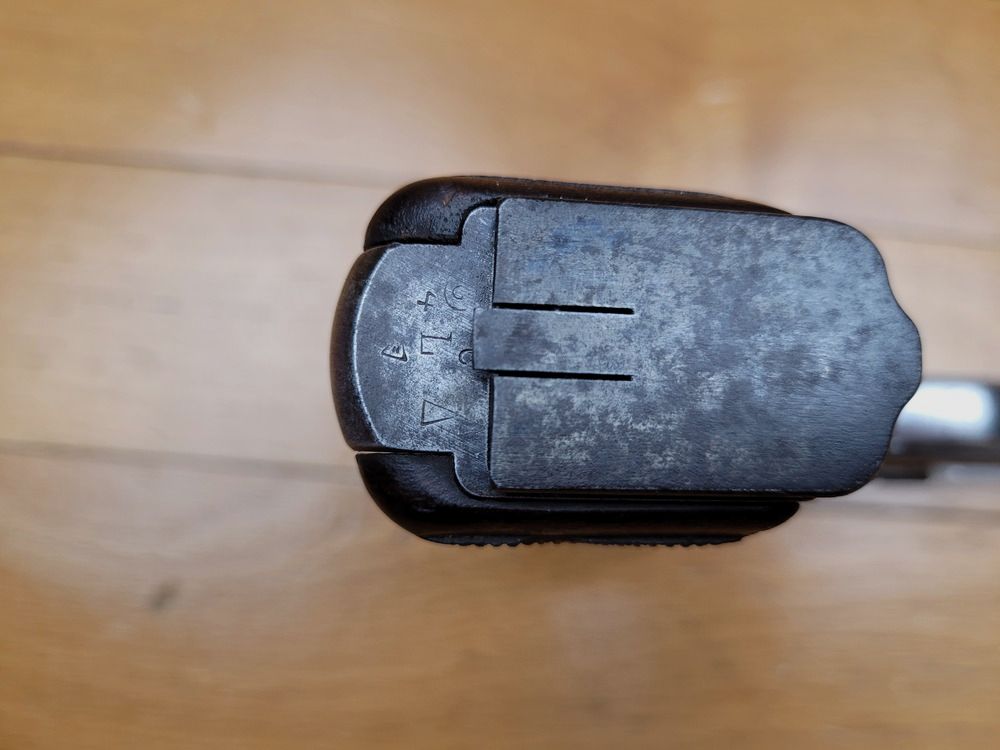
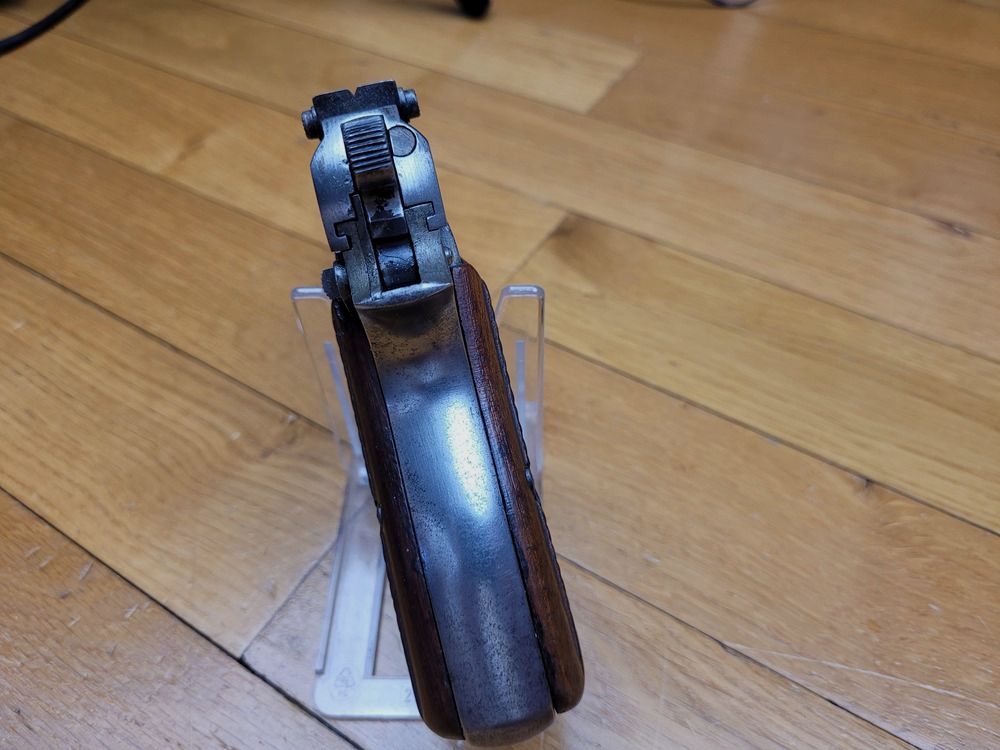

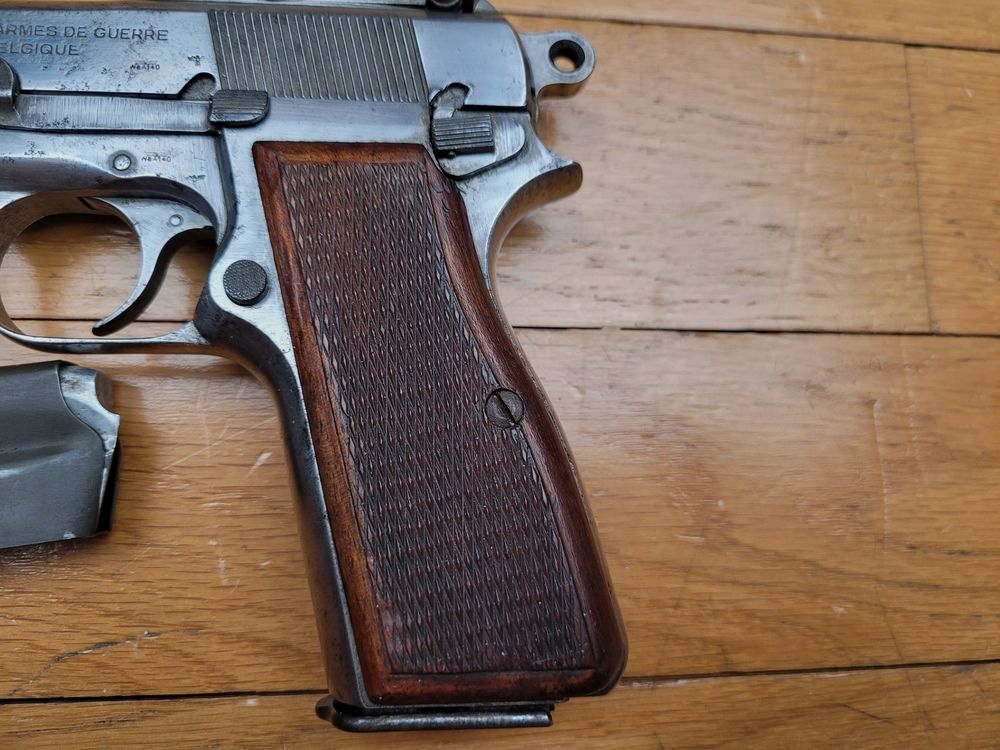
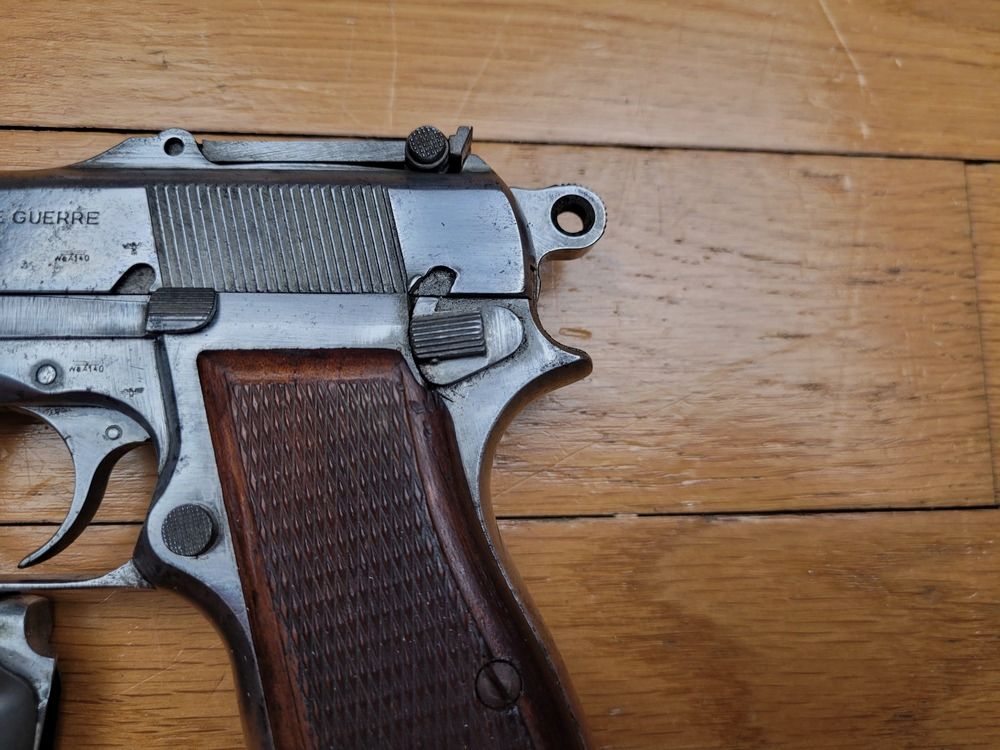



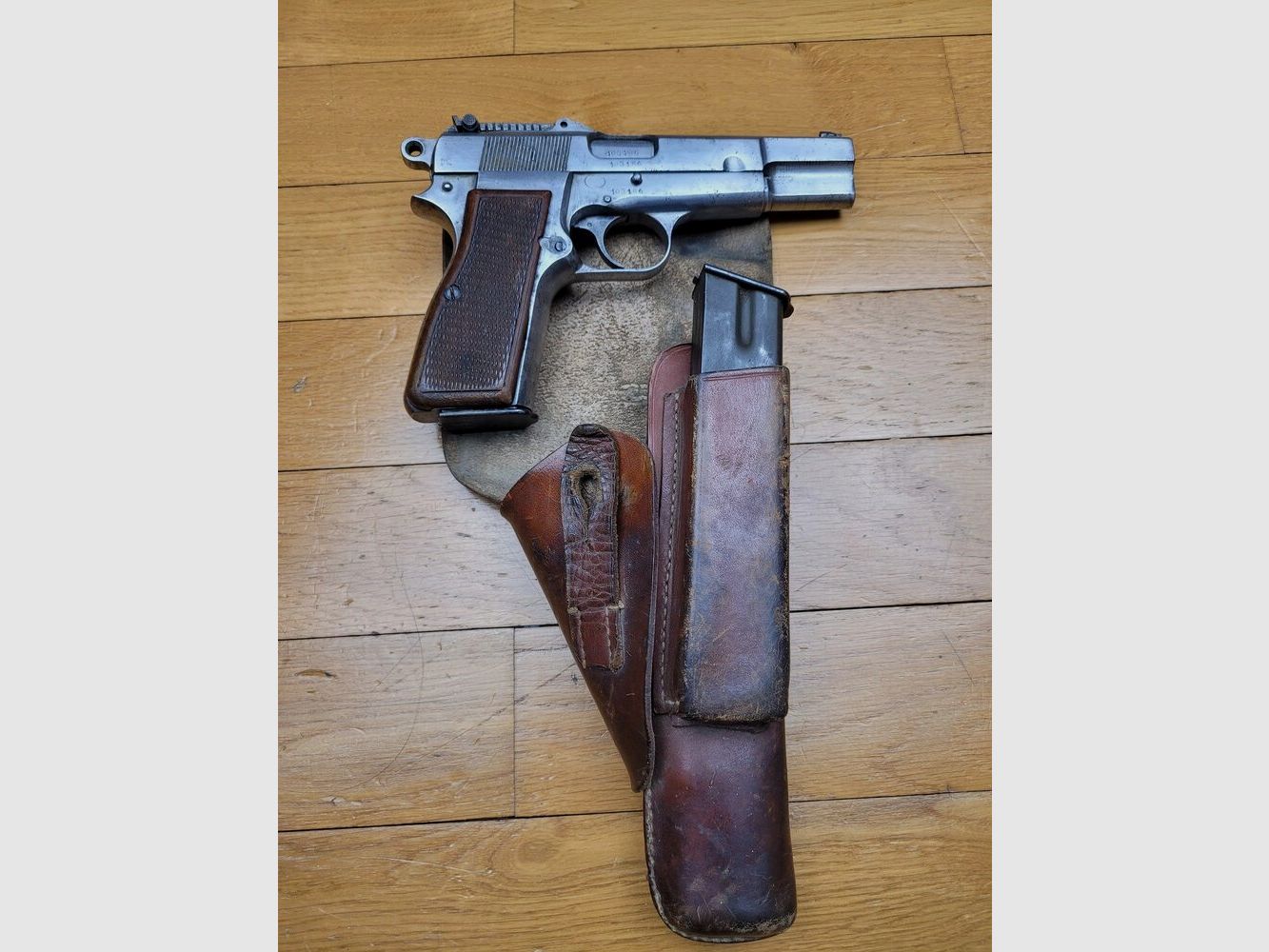
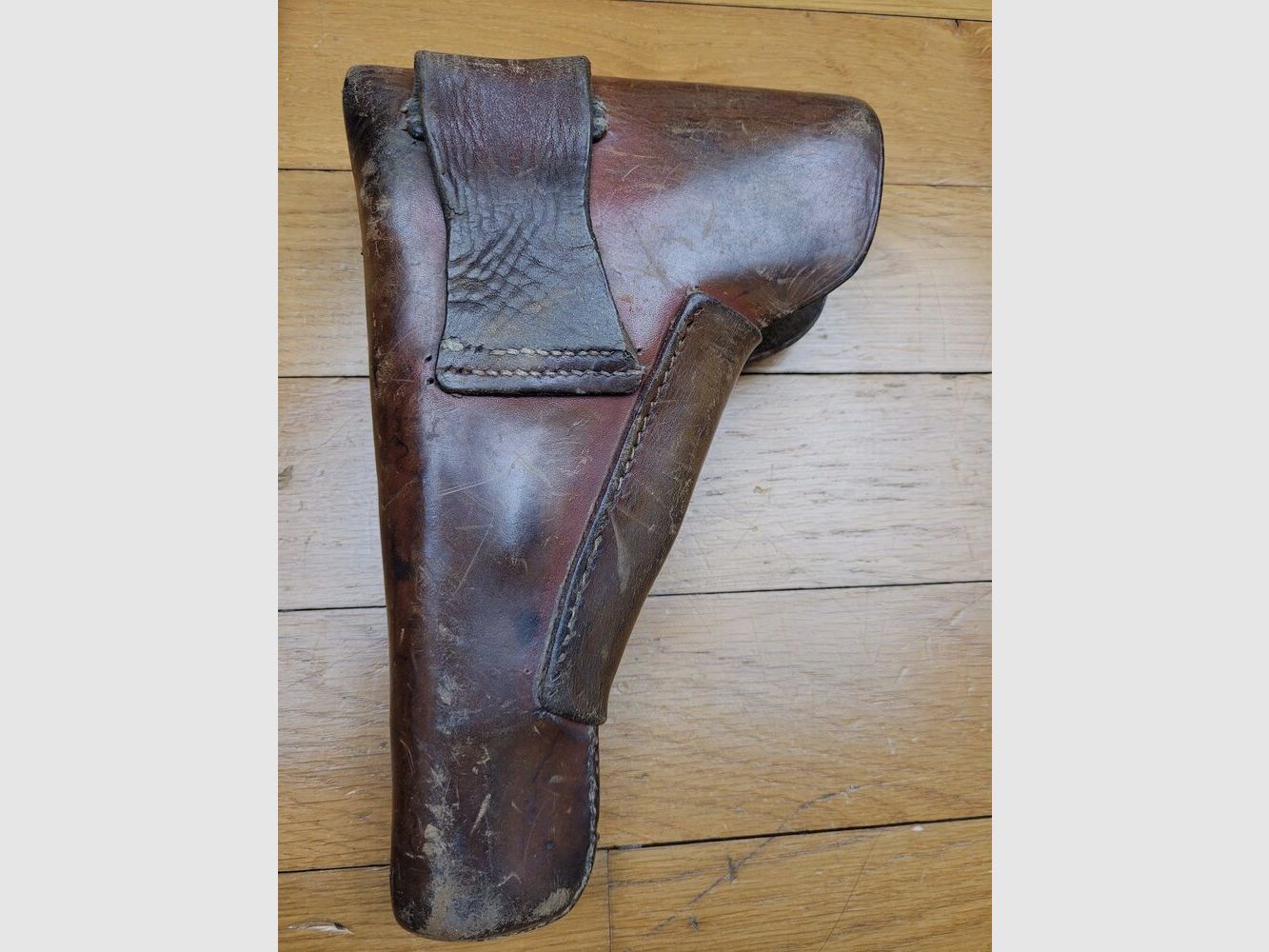

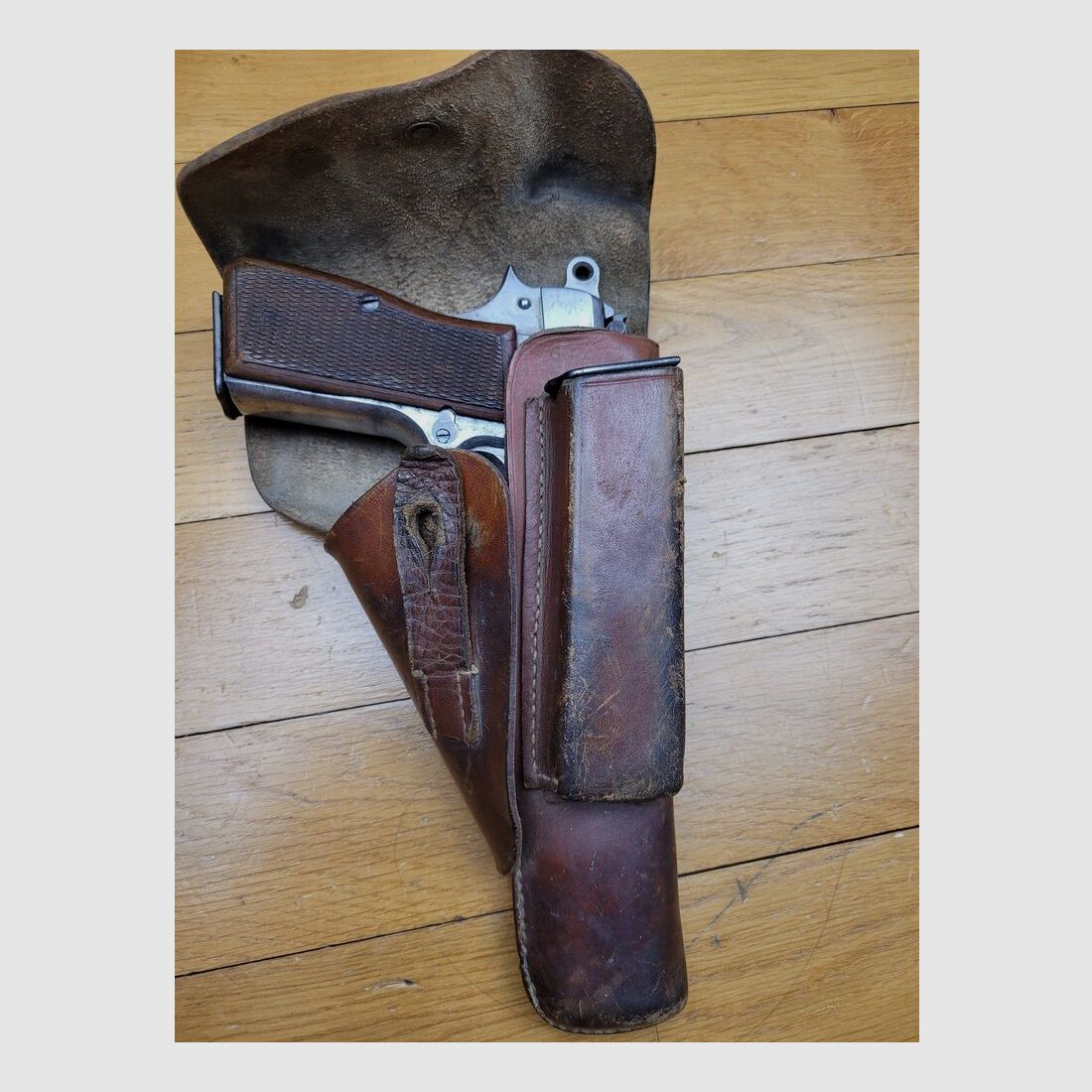


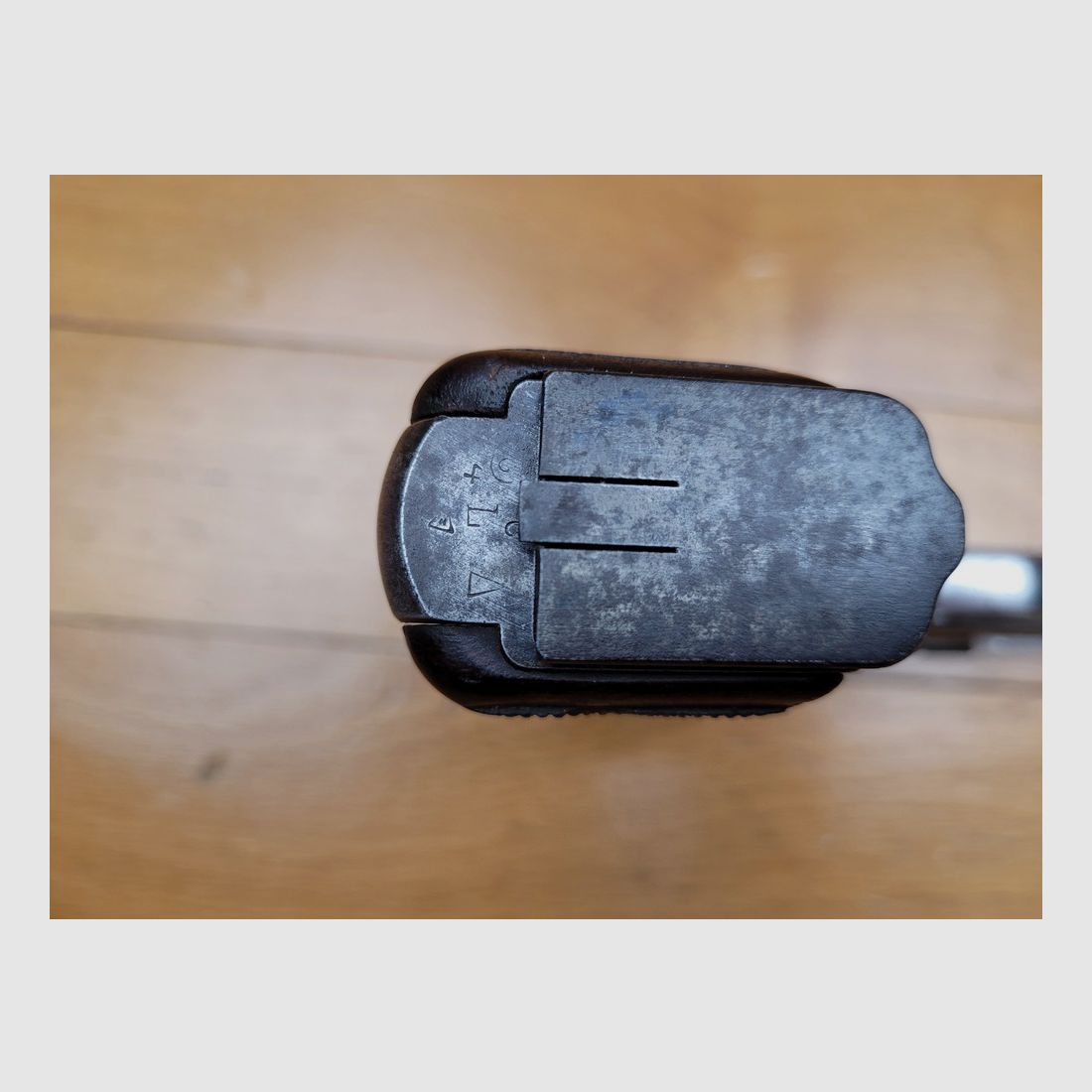

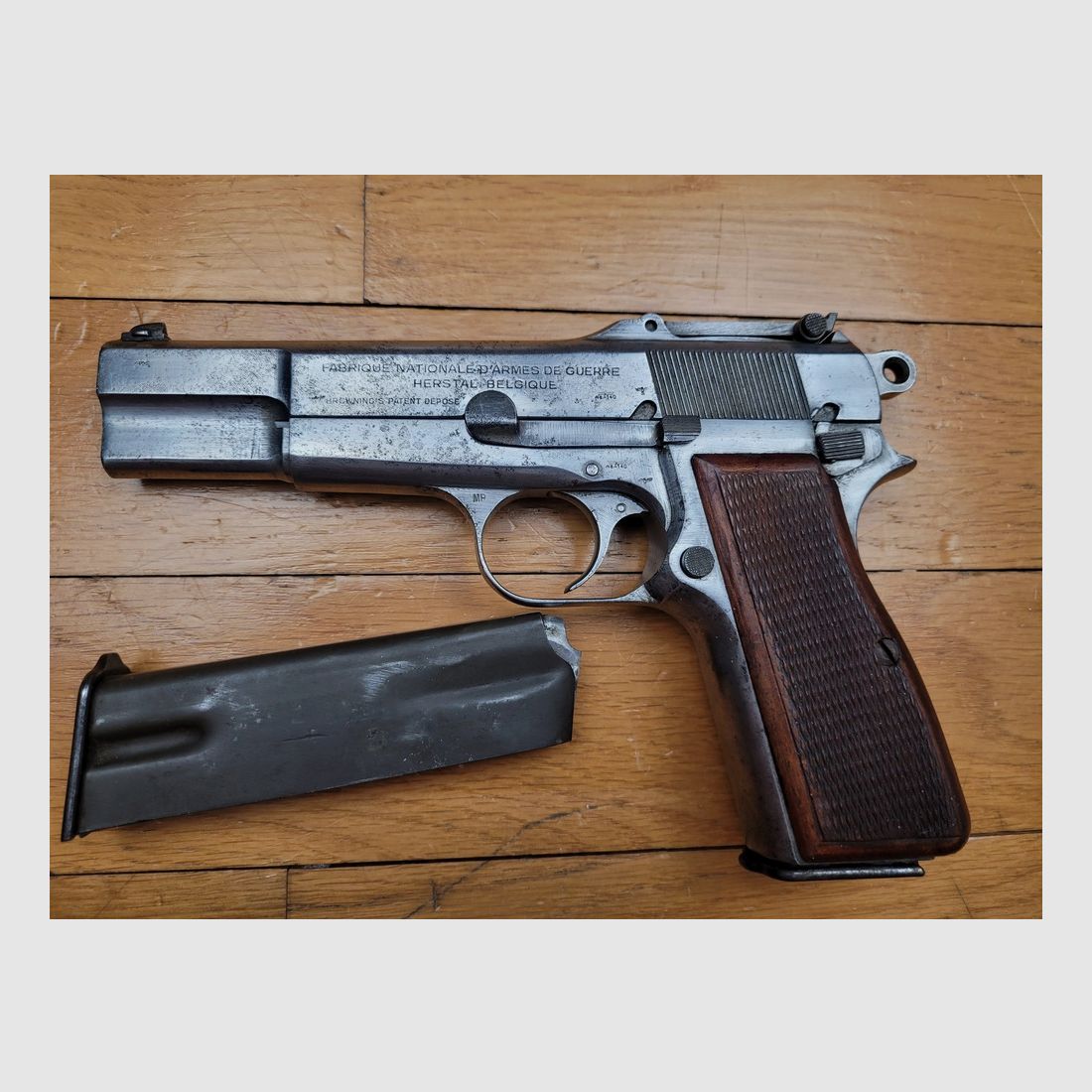




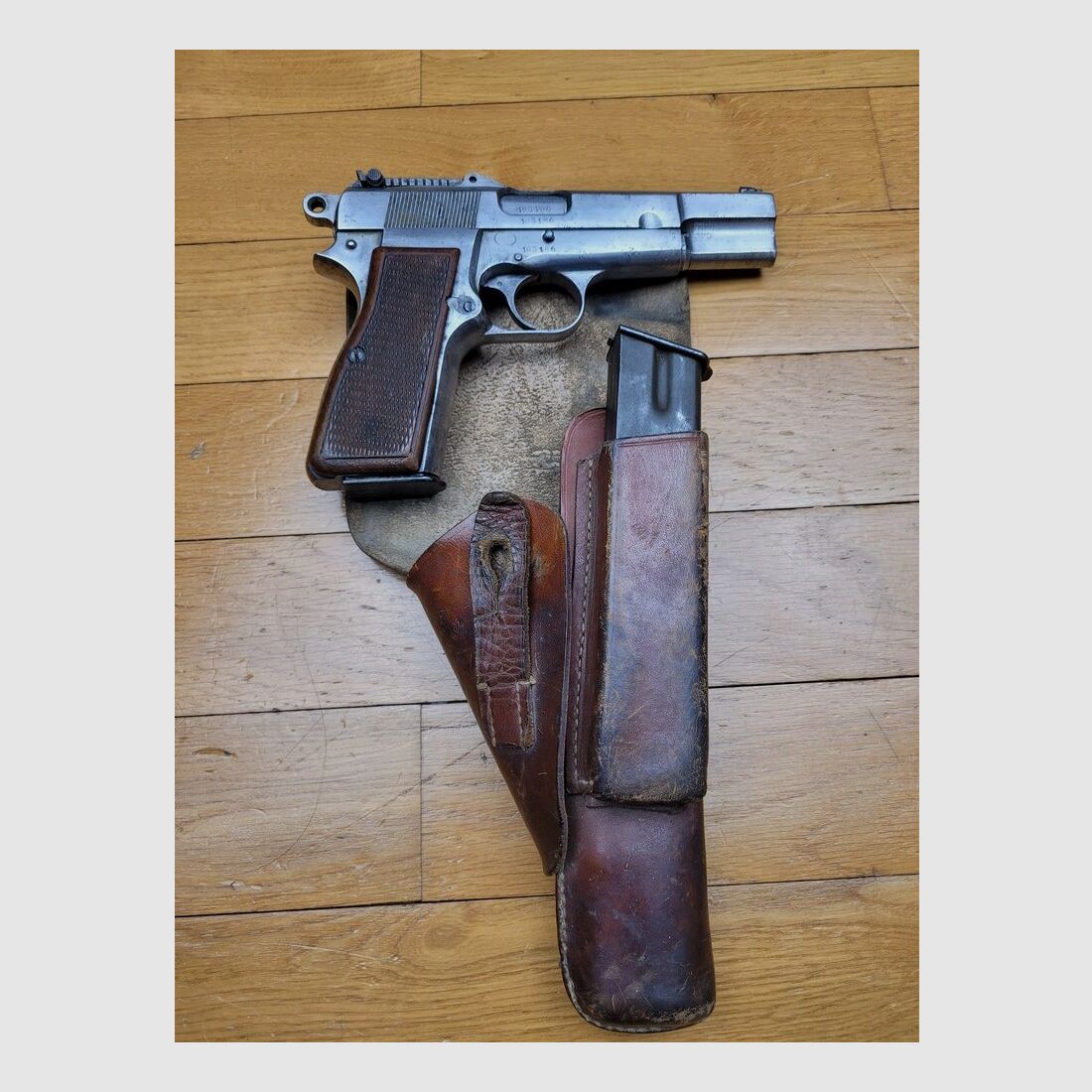


Beautiful Browning GP 35 or P640(b) – 9 para – first occupation productions from 1941 – Captain sight – Holster and two original magazines! – Excellent barrel, beautiful markings and impeccable mechanics – Very good condition
Price on Request
Purchase permit required
75002 Paris, France
10
ID: 10339047
This item is currently unavailable.
Purchase from outside the EU: The firearm goes through an importer in your country, the dealer handles the export.
How buying from Europe works
Shop safely with Gunfinder
Our AI-powered seller identity verification makes Gunfinder the safest marketplace online.
Learn more
Details
- Original language
- French
- Brand
- Browning
- Category
- Purchase eligibility
- Required
- Caliber
- 9mmLuger
- Condition
- New
- Location
- 🇫🇷 75002 Paris, France
- Availability
- Out of stock
Freshness
This listing is based on a mirrored offer, where the listing data was synced to us from a shop, dealer, or external marketplace. Please note that temporary price discrepancies may occur due to possible delays in data transmission.
- Source
- Flingus Maximus
- Last checked with the dealer
- 1 day ago
Description
Note:
The item is located abroad. Please note that delivery conditions, shipping times, and/or the purchase process may differ.
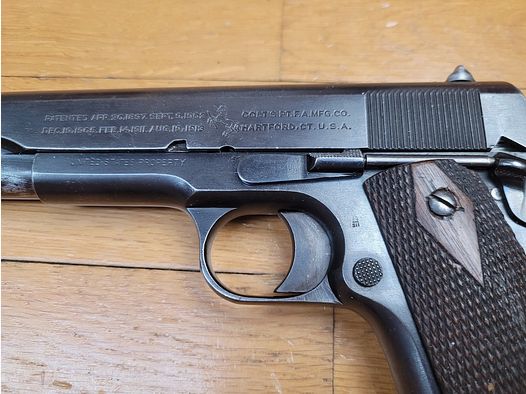
Its story begins in 1913 with the short-lived “Grand Browning,” a Liège cousin of the American Colt 1911 in 9.65mm (yes, yes, it almost existed!).
Like an Olympian, devoured by Chronos, it was reborn in 1921 at the dawn of the surreal French Army rearmament program which gave rise to the longest selection process in history during which it was also tested (I talk about it here).
It was then presented as the “High Performance.” Revolutionary, powerful, both in capacity and caliber, the French officers of the Selection Commission had gold in their hands. France requested a magazine with a minimum of 10 rounds, and Fabrique Nationale of Herstal offered 15!
What did they do with it? Nothing.
This GP35, the final point of the Promethean work of 128 patents by the last-day saint John Moses Browning (1855-1926), like the others, cannot be fully understood without the shadow participation of his brother Matthew (1859-1923), his devoted son Val (1895-1994), and his lifelong collaborator in Belgium, Dieudonné Saive (1889-1970).
The case of the GP is the perfect example of this choral achievement. When you look at the functioning of the firearm, you see that everything that diverges from Browning’s style enhances and extends his genius.
This last iteration of the GP from 1931, reduced to 13 rounds and benefiting from some elements of the Colt 1911 that fell into the public domain in 1928, found buyers in the armies of its native Belgium, Paraguay, and Estonia in 1936. Argentina followed in 1937 as well as Finland and China in 1940.
The trumpets of Mars sounded again on September 3, 1939, the eve of the Third Republic’s anniversary. The first 35,000 GP35s were seized by the Germans who renamed them according to the German designation for captured weapons Pistole 640(b) then P35(b).
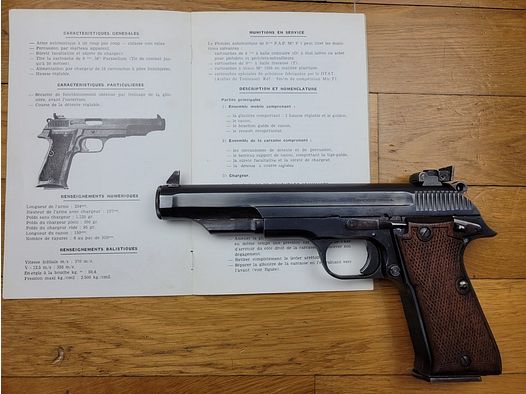
This little parenthesis is very useful because it allows distinguishing it from the P35(p). The “p” stands for “polnisch” and applied to the excellent Polish pistol Vis Radom 1935, also captured by a German occupier who knew good guns…
During the War, 300,000 units were produced under their ruthless control in annexed Belgium, while Canada, under the auspices of an escaped Dieudonné Saive, produced only 150,000.
Because among the exploits of this legendary firearm, the GP35 distinguished itself as the only one to have actively and officially served both the Axis and the Allies, thanks to the daring escape of the FN Herstal service chief, Dieudonné Saive, with several of his collaborators who fled to England, without the firearm’s plans which remained in Toulouse, and who went on to produce it in Canada… The GP35s just had to shoot each other.
In this fratricidal war, our friendly GPs were much appreciated from 1943 onwards by the British SOE, the Chinese warlords, as well as the fallschirmjägers (German paratroopers), the Waffen SS, and the Luftwaffe.
Compared to the charming Luger and the very austere P38, the GP embodied in its modernity all the strength of ancient heroes. It was a true combat weapon, optimized to ensure firepower superiority over its opponents, a shot to get you out of many bad situations. A combat beast like the 1911 but more modern. Dominique Venner even cites the case of a German soldier who, with a GP35 in each hand, abandoning his MP40 sling, overcame an entire squad of Soviet soldiers.
After the él...
oges, now to the description of the hero embodied by our example: 1020 grams of good Herstal steel, complemented by beautiful wooden grips (still marked in red chalk on the back!) with sharp checkering.
The long list of its qualities begins with its stock angled at 13°, identical to that of the 1911A1, just slightly thicker than the 1911 for a much greater capacity, and suitable for the vast majority of medium-sized hands. Only the CZ75 manages to achieve such unanimous praise for its natural pointing ability. Excellent for quick draw in condition 1, hammer cocked and safety engaged.
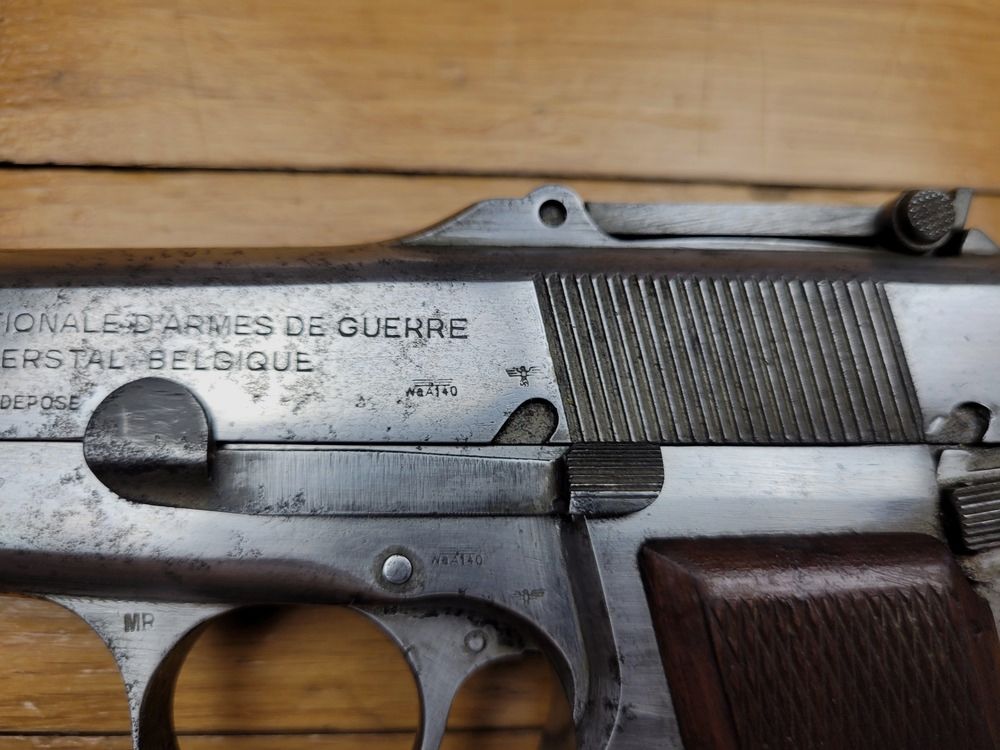
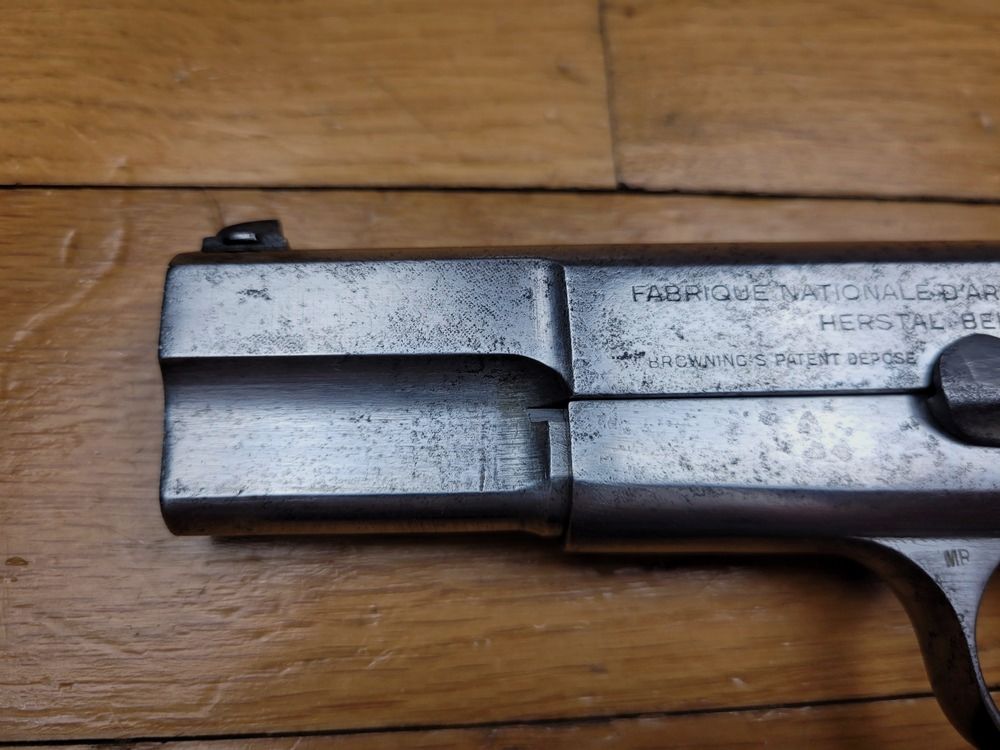
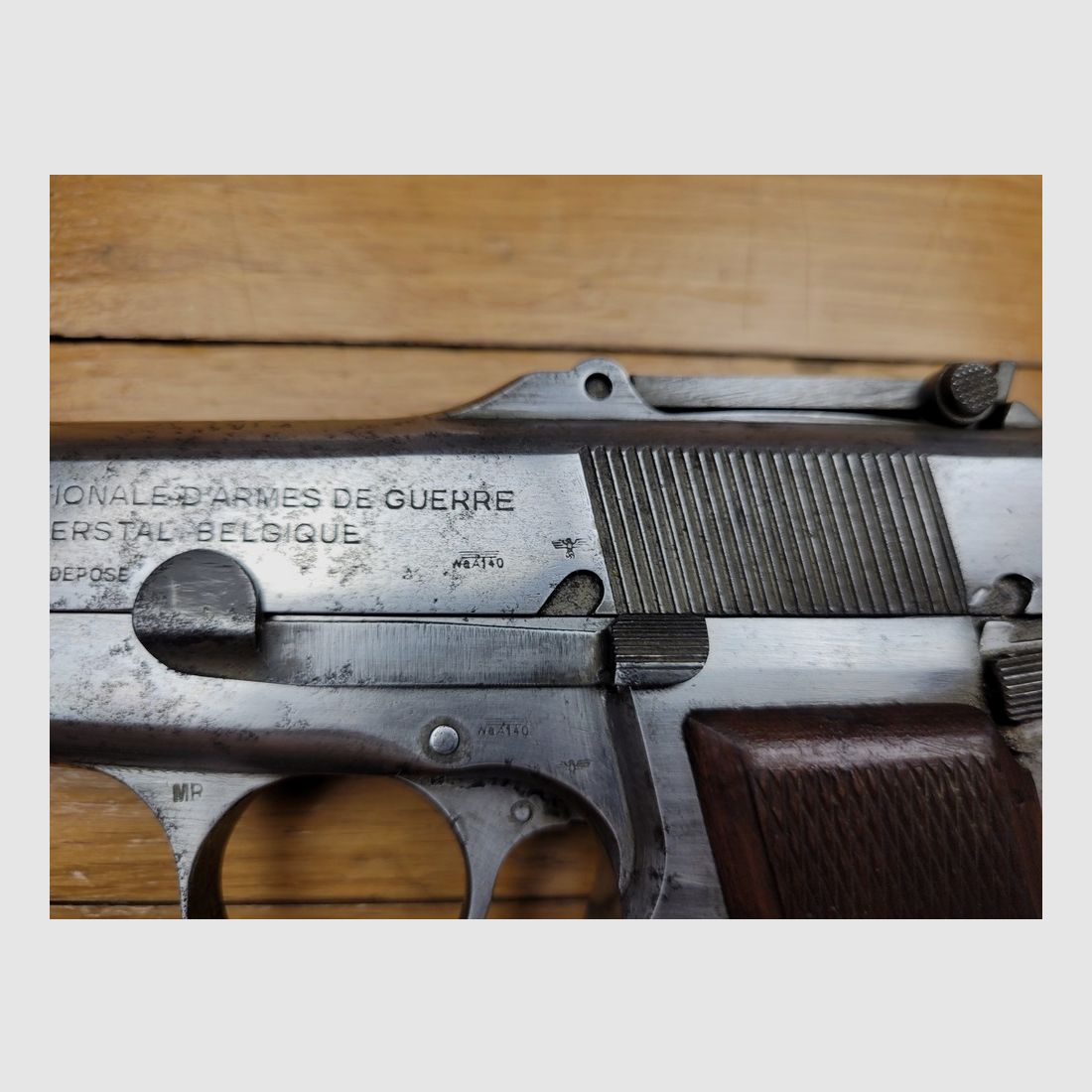
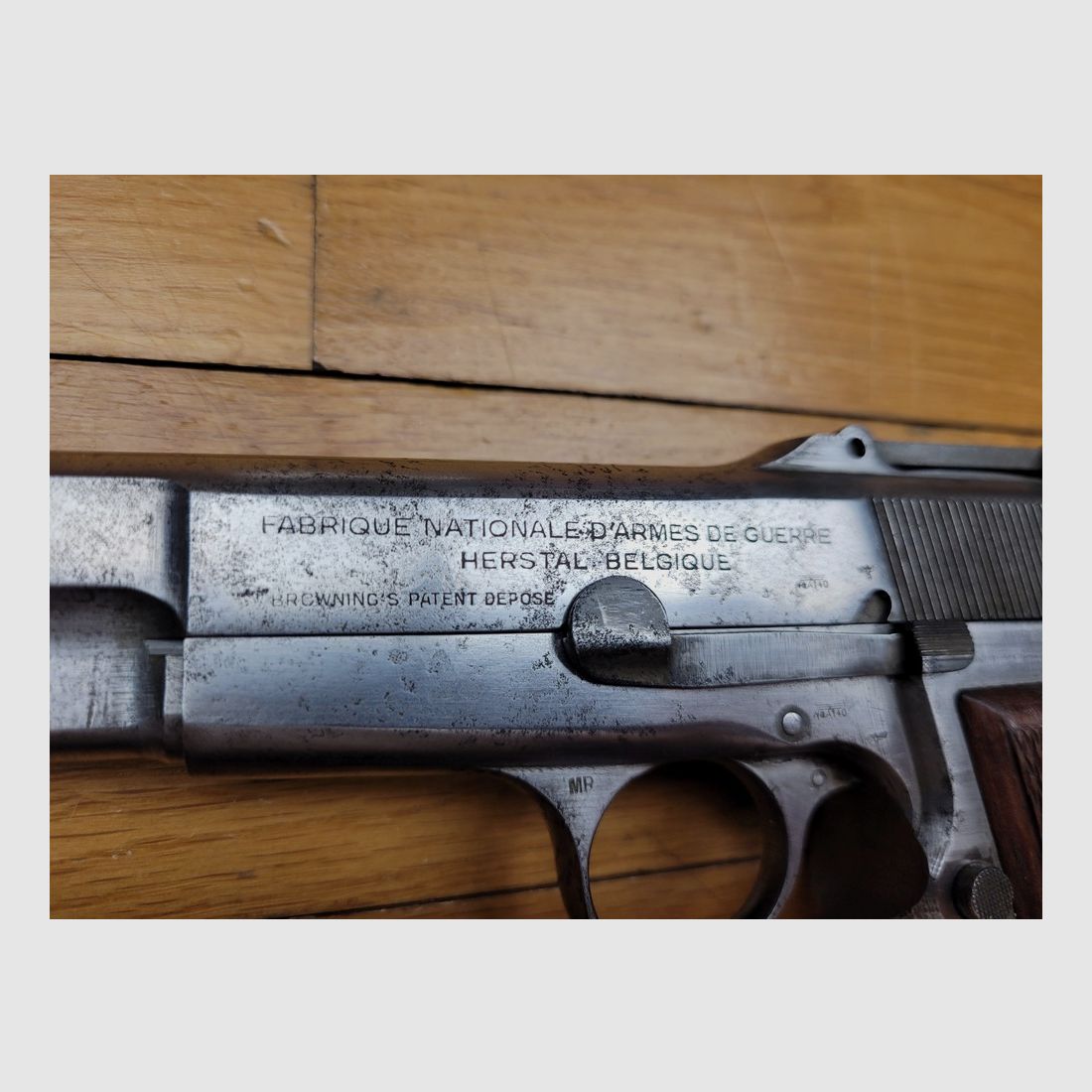
In beautiful bare condition, the metal is very sound (it has not been sanded/polished), with only very light tobacco stains on the slide, almost exclusively on the left side. No orange peel – It is fully re-bluable – A trace of an old phosphating near the front sight and under the hammer (which comes off very easily), similar to the Vis 35 from the Steyr factories, suggests that our example probably went there (in Austria) during the war for a little phosphating refurbishment. Incidentally, the second magazine (new) is also period phosphated.
Overall condition of the firearm is more than very good.
Master Flingus received this weapon in this state out of great kindness. He could have easily re-blued it but that’s not his style at all. He preferred to let its magnificent markings and stamps, clear and visible everywhere, be admired. The second magazine, present in the holster pouch, is in near-original condition. New!
It is essential to keep it as close as possible to its original state, without touching a single hair of its markings, and its very rare scars which are the decorations of a proud warrior, the coat of a fierce leopard… But what are these marks?
First, the waffenamt 103 from 1940 and then its Lüttich stamp (the Belgian city of Liège in Wagner’s language), markings clearly found on the heel of the stock, above the trigger guard, on the barrel, as well as on the bolt end where the bushing is on other weapons. Consistent roller-stamped eagles everywhere. The weapon is entirely original.
The Capitan graduated rear sight, a reduction of that on a K98, allows shooting up to 500m compensating for the drop of the 114-grain projectile used at the time (according to a Rhodesian rebel general, this function increased the cartridge’s power… you be the judge).
This Capitan setup flattered the soldier or more often the officer, who then had a prestigious weapon in hand. He was not just a shooter but a “marksman”… It was complex and more expensive to produce compared to a fixed sight. It disappeared for simplification from 1941. “III° Reich” examples still bearing it are rare.
This function could go hand in hand with the use of a special holster, riveted to a shoulder stock, which equipped artillery crewmen, non-commissioned officers, and troops not equipped with carbines. The concept of the PDW (Personal Defense Weapon) was born and applied half a century before the “P nonante”!
The weapon still has its magazine safety, confirming its rare early production up to early 1941. It disappeared afterwards. This safety scrapes very slightly giving a “military” trigger pull yet very clean, allowing excellent target precision. The barrel is absolutely mirror-like, in perfect condition, with beautiful sharp rifling.
These occupation productions before all the simplifications introduced from 1941 are rare. You almost only see simplified versions. War demands.
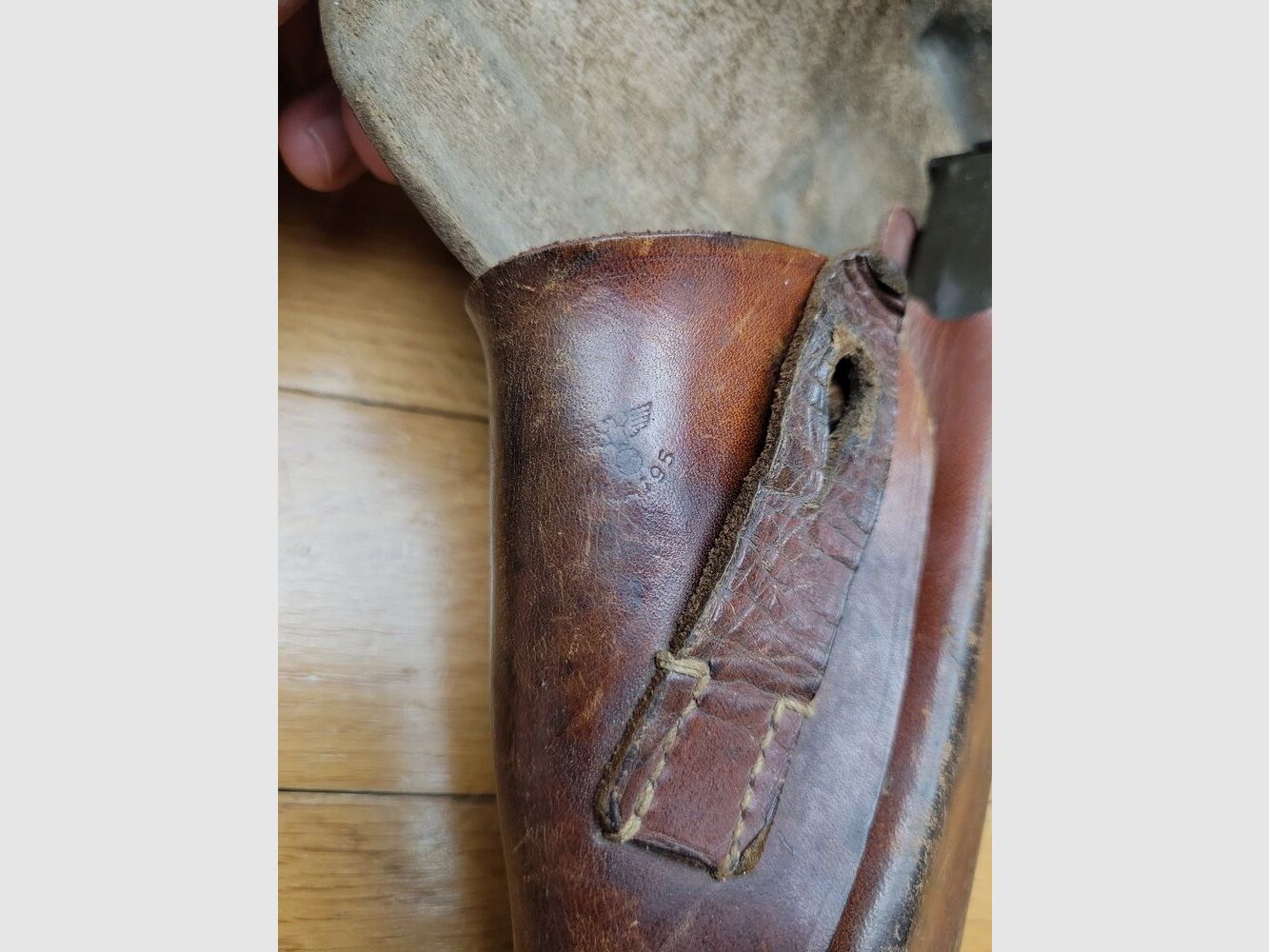
Our hero has returned to us from the iron times in a superb fawn leather holster, also clearly stamped with the roller eagle WaA 195 near the closure strap. This element is of great rar
especially in this condition, without deep scratches, no wear at all, with all its stitching intact. Just handling marks. A little appropriate polish will make it perfect – sworn by Maître Flingus. Alone and without a magazine, it’s already worth over 300 euros… Another dealer would have separated them, but Maître Flingus didn’t have the heart to. They’ve been together from the start, and they will stay that way.
Because, moreover, it doesn’t come with one but TWO original magazines, well stamped Waa 103. This is the German control stamp from Liège for the magazines. These are indeed its two original magazines too!
The firearm’s function is perfect and with both magazines. Quality far superior to Mecgar and modern reproductions…
With astonishing mechanical youth, this little GP 35 is the ideal firearm for the collector-shooter who wants to go to the range with a prestigious, precise weapon that tells a story. It can be fed without fear with current standard manufactured ammunition without any problem. Our GP35 will ask for more and the target will cry mercy!
Very pleasant to shoot, it will also tell you its adventures by the fireside, as it still holds many mysteries. What did it see of that terrible war?
In the end, a very beautiful firearm, in excellent condition, mechanically perfect, to be re-polished only if you wish, and above all a true and rare good production from the early days of the Reich occupation that was supposed to last 1000 years. What arrogance!
But what remains is the magnificent fruit of an exceptional professional duo, two great men in the history of firearms, Browning and Saive.
CATEGORY B FIREARM UNDER CSI: SUBJECT TO AUTHORIZATION, PHOTOCOPY OF ID AND ORIGINALS OF AUTHORIZATION PARTS 1 AND 2 (or Part 1 of a released authorization). Shipment against signature in two separate packages at least 48 hours apart mandatory.
*************************************************************************************************************************************************************************************
Let’s repeat it! Armurerie Flingus Maximus in Paris and throughout France is also here for your private firearm formalities, buying collections of firearms and militaria, your firearm appraisals, your firearm questions in successions and inheritance. Contact your favourite gunsmith via our contact form or at [email protected] (Show description in original language)
Le GP35 (pour Grande Puissance) ou HP35 (pour High Power) ou Inglis Hi Power ou P640(b) ou P35(b) ou L9A1 ou BAP ou « PA 9mm A1 – Grand Rendement » – quelle que soit la dénomination retenue selon les pays, les époques et les circonstances (toujours des plus changeantes à la guerre) est un monument de l’Histoire de l’armement.
Son histoire commence en 1913 avec l’éphémère « Grand Browning », un cousin liégeois du Colt 1911 américain en 9,65mm (oui, oui, cela a faillit exister!).
Tel un olympien, dévoré par Chronos, il renaît en 1921 à l’orée du surréaliste programme de réarmement de l’Armée Française qui donnera vie au plus long processus de sélection de l’histoire au sein duquel il sera aussi testé (je vous en parle ici) .
On le présente alors comme le « Grand Rendement ». Révolutionnaire, puissant, tant en capacité qu’en calibre, les officiers français de la Commission de sélection avaient de l’or dans les mains. La France demandait un chargeur d’un minimum de 10 coups, la Fabrique Nationale de Herstal lui en offrira 15 !
Qu’en feront-ils ? Rien.
Ce GP35, point final de l’œuvre prométhéenne de 128 brevets du saint du dernier jour John Moses Browning (1855-1926) comme les autres, ne saurait être perçue dans sa globalité sans la participation dans l’ombre de son frère Matthew (1859-1923), de son dévoué fils Val (1895-1994) et de son collaborateur de toujours en Belgique, Dieudonné Saive (1889-1970).
Le cas du GP est l’exemple parfait de cette réalisation chorale. Quand on se penche sur le fonctionnement de l’arme, on constate que tout ce qui s’éloigne du style de Browning, le sublime et prolonge son génie.
Cette dernière itération du GP de 1931, ramenée à 13 coups et profitant de certains éléments du Colt 1911 tombés dans le domaine publique en 1928, trouvera preneur dans les armées sa Belgique natale, au Paraguay et en Estonie en 1936. L’Argentine suivra en 1937 ainsi que la Finlande et la Chine en 1940.
Les trompettes de Mars retentiront une nouvelle fois le 3 septembre 1939, veille d’anniversaire de la IIIeme République. Les 35 000 premiers GP35 furent saisis par les allemands qui les renommèrent suivant la dénomination germanique des armes de prise Pistole 640(b) puis P35(b).
Cette petite parenthèse est bien pratique car elle permet de le distinguer du P35(p). Le »p » est l’abréviation de « polnisch » et s’appliquait à l’excellent pistolet polonais Vis Radom 1935 lui aussi tombé dans les mains d’un occupant allemand qui s’y connaissait en bons flingues…
Pendant la Guerre, 300 000 exemplaires seront produits sous leur impitoyable contrôle en Belgique annexée, tandis que le Canada, sous les hospices d’un Dieudonné Saive évadé, n’en produira que 150 000.
Car, parmi les exploits de cette arme de légende, le GP35 se distinguera pour être le seul à avoir servi activement et réglementairement autant l’Axe que les Alliés, grâce à l’évasion rocambolesque du chef de service de la FN Herstal, Dieudonné Saive avec plusieurs de ses collaborateurs qui passèrent en Angleterre, sans les plans de l’arme qui eux étaient restés à Toulouse, et qui iront le produire jusqu’au Canada…Les GP35 n’avaient plus qu’à se tirer dessus les uns les autres.
Dans cette guerre fratricide, nos sympathiques GP furent fort appréciés à partir de 1943 tant par le SOE britannique que par les seigneurs de la guerre chinois ainsi que par les fallschirmjägers (paras allemands) , la Waffen SS et la Luftwaffe.
Par rapport aux séduisants Luger et aux très ascétique P38, le GP incarnait dans sa modernité toute la force des héros antiques. C’était une véritable arme de combat, optimisée pour assurer la supériorité en puissance de feu sur ses adversaires, un coup à vous sortir de bien des mauvais pas. Une bête de combat genre 1911 mais en plus moderne. Dominique Venner nous cite d’ailleurs le cas d’un soldat allemand qui un GP35 dans chaque main, délaissant en bandoulière sa MP40, pris le dessus sur toute une escouade de soldats soviétiques.
Après les éloges, place à la description du héros pris en la personne de notre exemplaire: 1020grammes de bon acier de la Herstal, complété par de superbes plaquettes en bois (encore marquées à la sanguine au dos!) et aux quadrillages aiguisés.
La longue liste de ses qualités commence par sa crosse à l’angle de 13°, identique à celle du 1911A1, à peine plus épaisse que celle du 1911 pour une capacité bien supérieure, et convenant à l’écrasante majorité des mains de taille moyenne. Il n’y a guère que le CZ75 qui arrive à autant faire l’unanimité sur ses facultés de pointage naturel. Excellentissime au dégainé en condition 1, marteau armé et sûreté enclenchée.
D’un bel état nu, le métal est très sain (elle n’a pas été poncée/frottée), avec de toutes petites traces tabac légères de surface sur la glissière quasiment uniquement coté gauche. Aucune peau d’orange – Elle est tout a fait re-bronzable – Une trace d’une ancienne phosphatation près du guidon et sous le chien (ça s’enlève très facilement), à la manière des Vis 35 des usines de Steyr nous indique que notre exemplaire y est probablement allé (en Autriche) durant la guerre pour un petit séjour de remise en forme par phosphatage. D’ailleurs le second chargeur (neuf) est aussi phosphaté d’époque.
État général de l’arme plus que très bon.
Maître Flingus a recueillit cette arme ainsi dans sa grande bonté. Il aurait pu le re bronzer facilement mais ce n’est pas son genre du tout. Il a préféré laisser admirer ses magnifiques marquages et poinçons bien nets et bien visibles partout. Le second magasin, présent dans la pochette de l’étui présente un état proche de celui d’origine. Neuf !
Il est essentiel de le conserver au plus proche de son état d’origine, sans toucher à un seul cheveux de ses marquages, et de ses très rares cicatrices qui sont les décorations d’un fier guerrier, le pelage d’un farouche léopard… Mais quelles sont ces marques ?
D’abord, le waffenamt 103 de 1940 et puis son poinçon de Lüttich (Ville belge de Liège dans la langue de Wagner), marquages qui se retrouvent bien nets au talon de crosse, au-dessus du pontet, sur le canon, ainsi que sur l’extrémité de la culasse à l’emplacement du bushing d’autres armes. Des aigles à roulette bien cohérents partout. L’arme est intégralement d’origine.
La hausse Capitan à degrés, réduction de celle d’un K98, permet le tir jusqu’à 500m compensant la chute du projectile de 114 grains utilisé à l’époque (d’après un général rebelle rhodésien, cette fonction permettait d’augmenter la puissance de la cartouche…à vous de tester).
Cette disposition Capitan flattait cependant le soldat ou plus souvent l’officier, qui avait alors une arme de prestige entre les mains. Il n’était pas un simple tireur mais bien un « marksman »… Elle était complexe et plus chère à produire par rapport à une hausse fixe. Elle a disparue pour simplification dès 1941. Les exemplaires « III° Reich » la portant encore sont rares.
Cette fonction pouvait aller de paire avec l’utilisation d’un étui spécial, riveté à une crosse d’épaule qui équipait les servants de pièces d’artillerie, sous-officiers et troupes non équipés de mousquetons. Le concept du PDW (Personal Defense Weapon) était né et appliqué un demi-siècle avant le « P nonante » !
L’arme possède toujours sa sûreté de chargeur, indice confirmant sa rare fabrication précoce de jusque courant 1941. Elle disparaitra après. Celle-ci gratte très légèrement donnant un départ « militaire » et pourtant très net qui permet une excellente précision en cible. Le canon est absolument miroir, en parfait état, avec de belles rayures bien saillantes.
Ces productions d’occupation avant toutes les simplification introduites à partir de 1941 sont rares. On ne voit quasiment que des simplifiés. Guerre oblige.
Notre héros nous est revenu des temps de fer dans un superbe étui en cuir fauve, bien lisiblement poinçonné lui aussi de l’aigle à roulette WaA 195 près de la lanière de fermeture. Cet élément est d’une grande rareté en particulier dans cet état, sans griffure profondes, sans usure aucune, avec toutes ses coutures. Juste des marque de manipulation. Un tout petit coup de cirage adéquat le rendra parfait – foi de Maître Flingus. Seul et sans chargeur il vaut déjà plus de 300 euros… Un autres marchand les auraient séparés mais Maître Flingus n’en a pas eu le cœur. Ils sont ensemble depuis l’origine, ils le resteront.
Car, en plu,s il ne nous vient pas avec un mais bien DEUX chargeurs d’origine, bien poinçonnés Waa 103. Il s’agit du poinçon de contrôle allemands de Liège pour les chargeurs. Ce sont biens ses deux chargeurs d’origine aussi !
Le fonctionnement de l’arme est parfait et avec avec les deux chargeurs . Qualité largement supérieure aux Mecgar et aux reproductions modernes…
D’une jeunesse mécanique étonnante, ce petit GP 35 est l’arme idéale pour le collectionneur-tireur, qui veut aller au stand avec une arme de prestige, précise, et qui raconte quelque chose. Il pourra le nourrir sans crainte avec les munitions standards manufacturées actuelles sans aucun souci. Notre GP35 en redemandera et la cible criera pitié !
Très agréable au tir, il vous racontera en plus ses aventures au coin du feu, car il possède encore bien des mystères. Qu’a-t’il vu de cette terrible guerre ?
Au final une très belle arme, en excellent état, mécaniquement parfaite, à re bronzer seulement si vous le souhaitez, et surtout une vraie et peu courante bonne production des débuts de l’occupation du Reich qui devait durer 1000 ans. Quelle prétention !
Mais nous reste le fruit magnifique d’un duo professionnel exceptionnel, de deux grands hommes de l’Histoire de l’armement, Browning et Saive.
ARME DE CATÉGORIE B AU CSI : SOUMISE À AUTORISATION, PHOTOCOPIE DE LA PIÈCE D’IDENTITÉ ET ORIGINAUX DES VOLETS 1 ET 2 DE L’AUTORISATION (ou Volet 1 d’une autorisation libérée). Expédition contre signature en deux colis séparés d’au moins 48 heures obligatoire.
*************************************************************************************************************************************************************************************
Répétons le ! L’armurerie Flingus Maximus à Paris et partout en France est là aussi pour vos formalités armes entre particuliers, le rachat de collections armes et militaria, vos estimations d’armes, vos questions armes dans les successions et héritage. Contactez votre armurier préféré via notre formulaire de contact ou à [email protected]