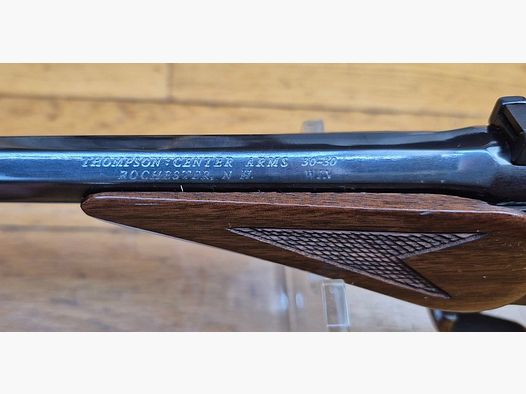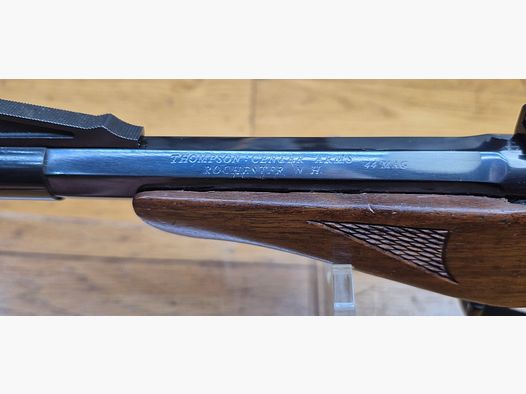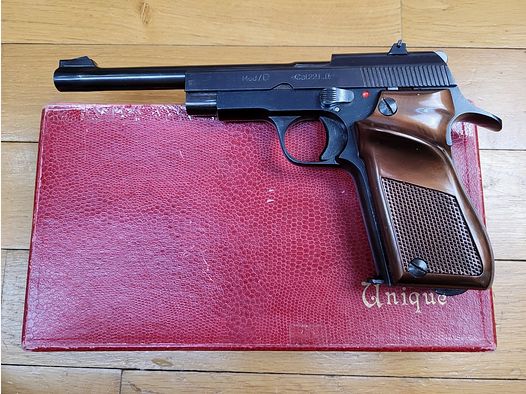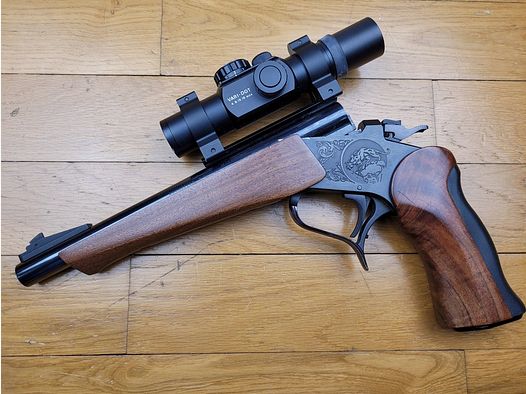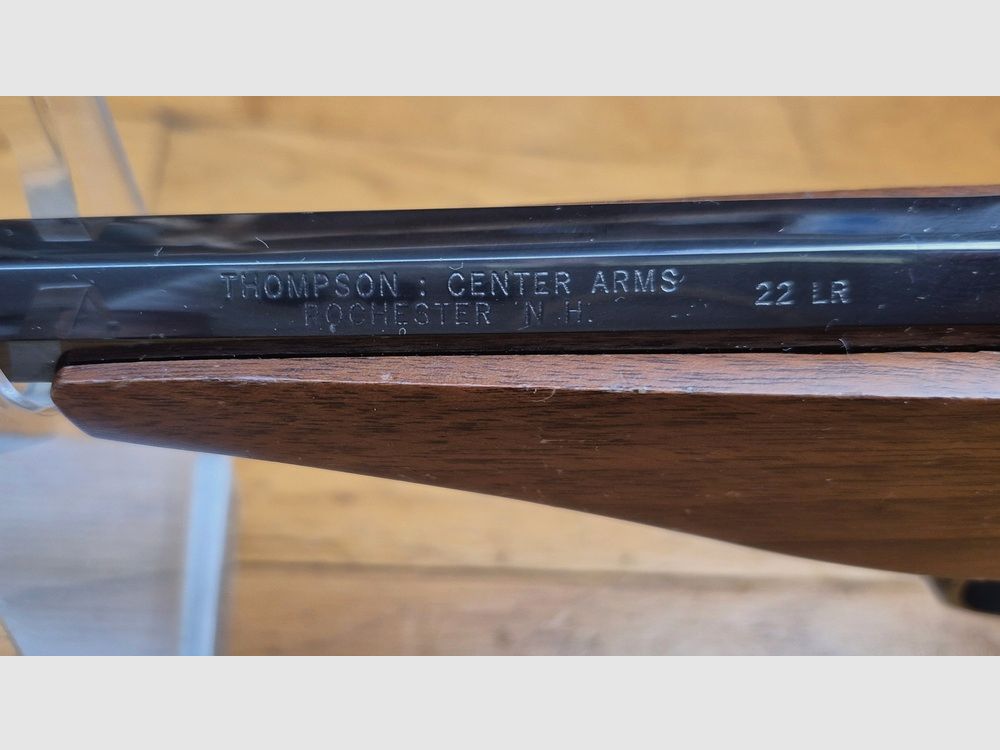

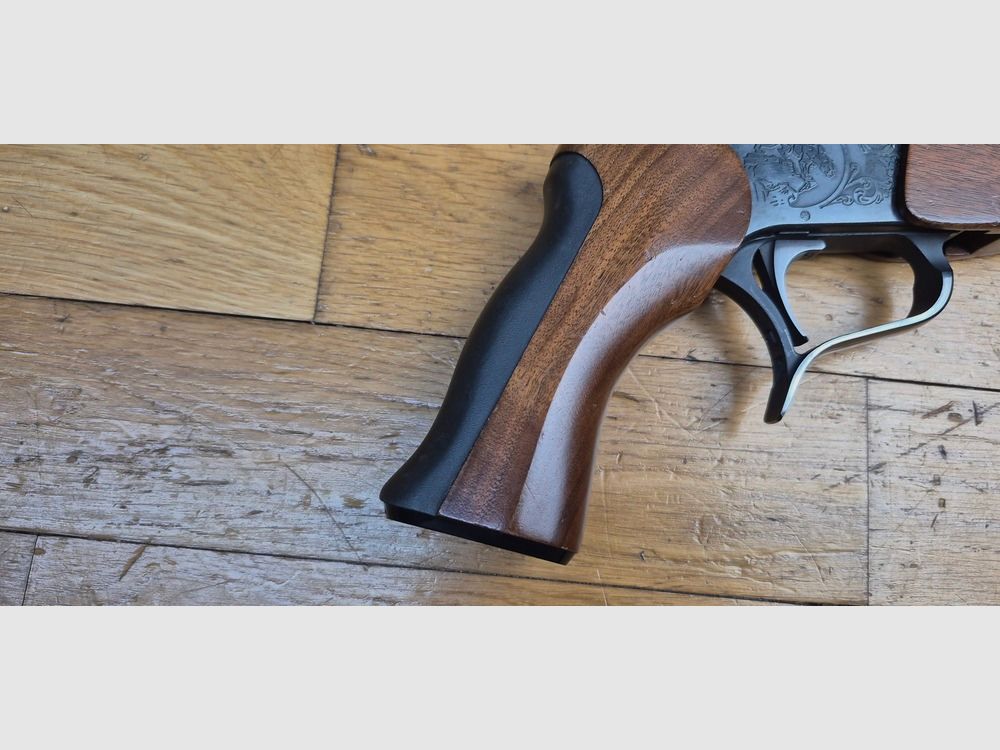
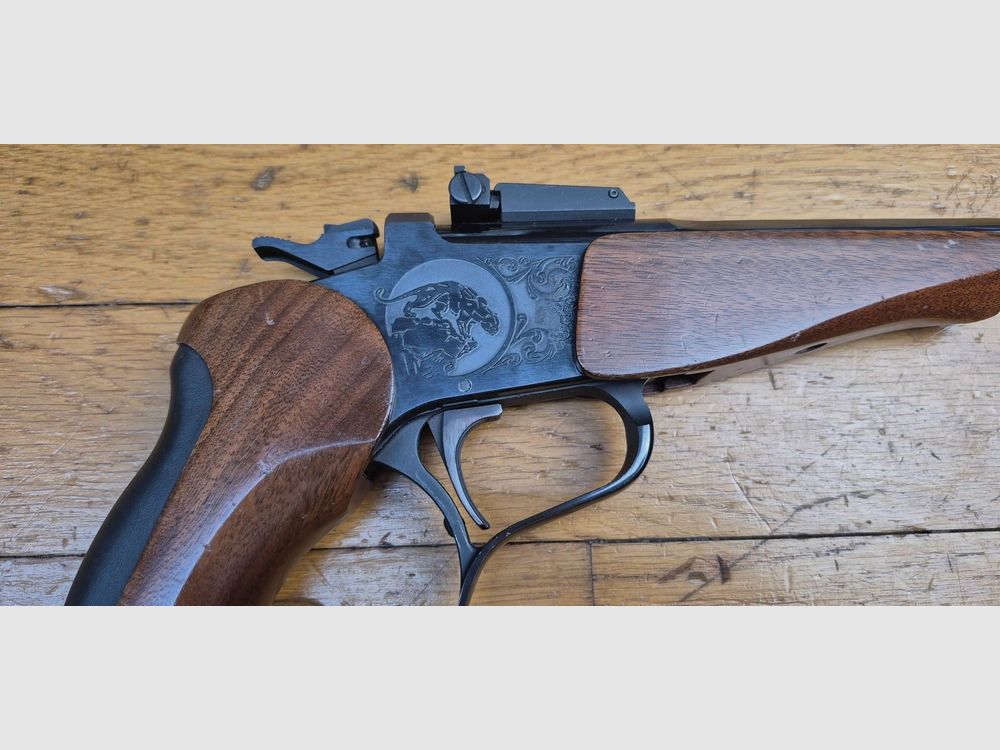

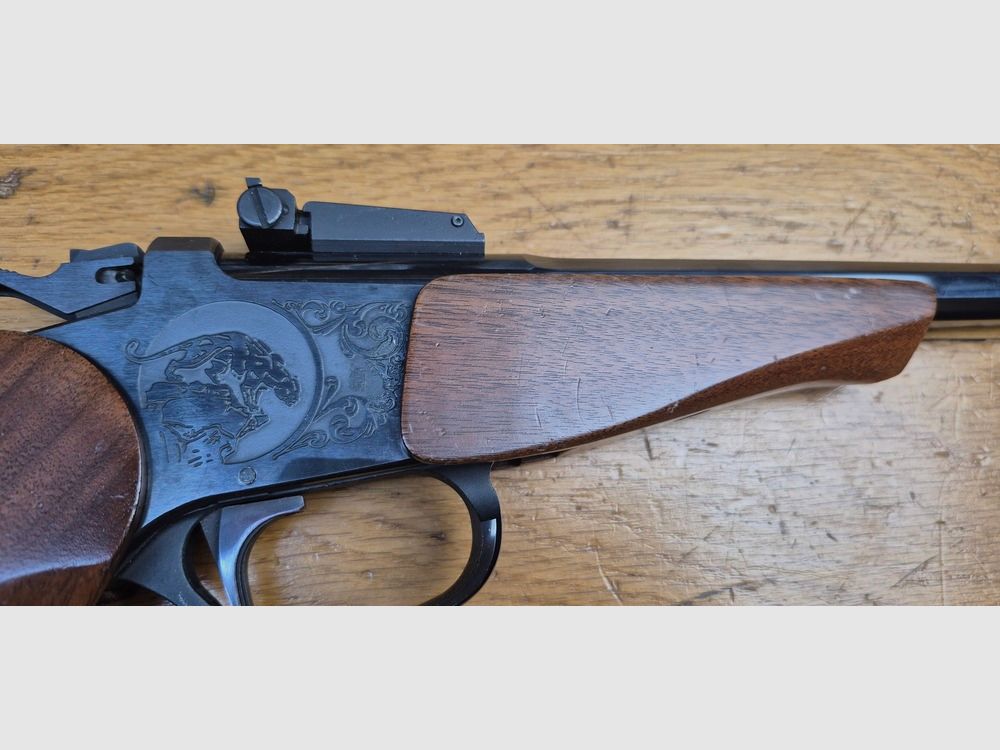
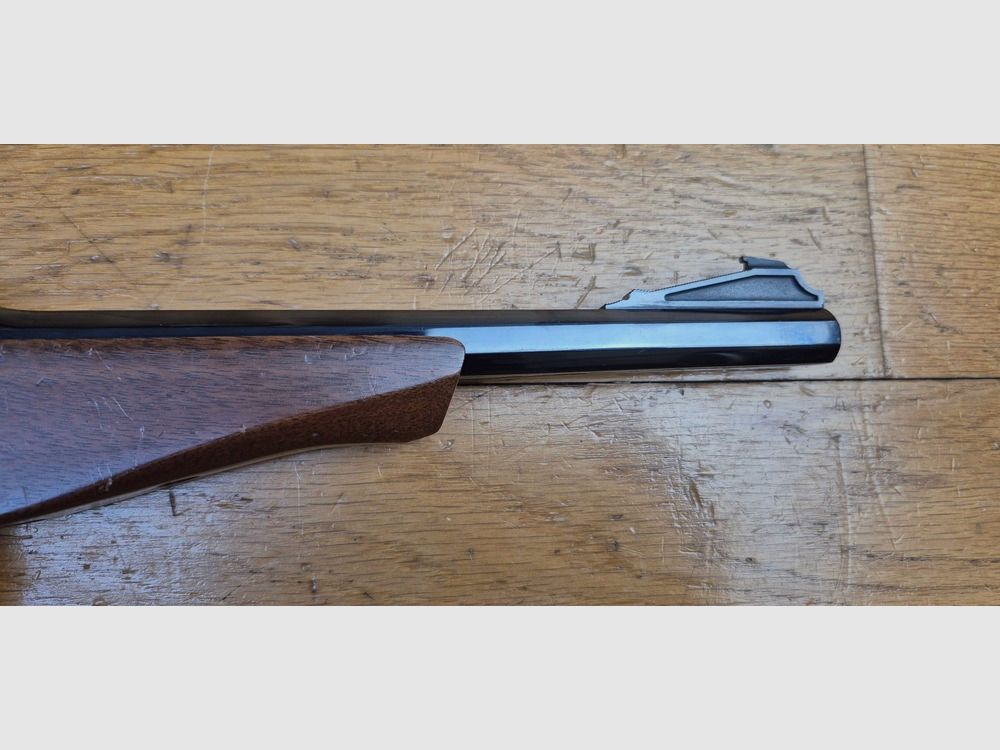
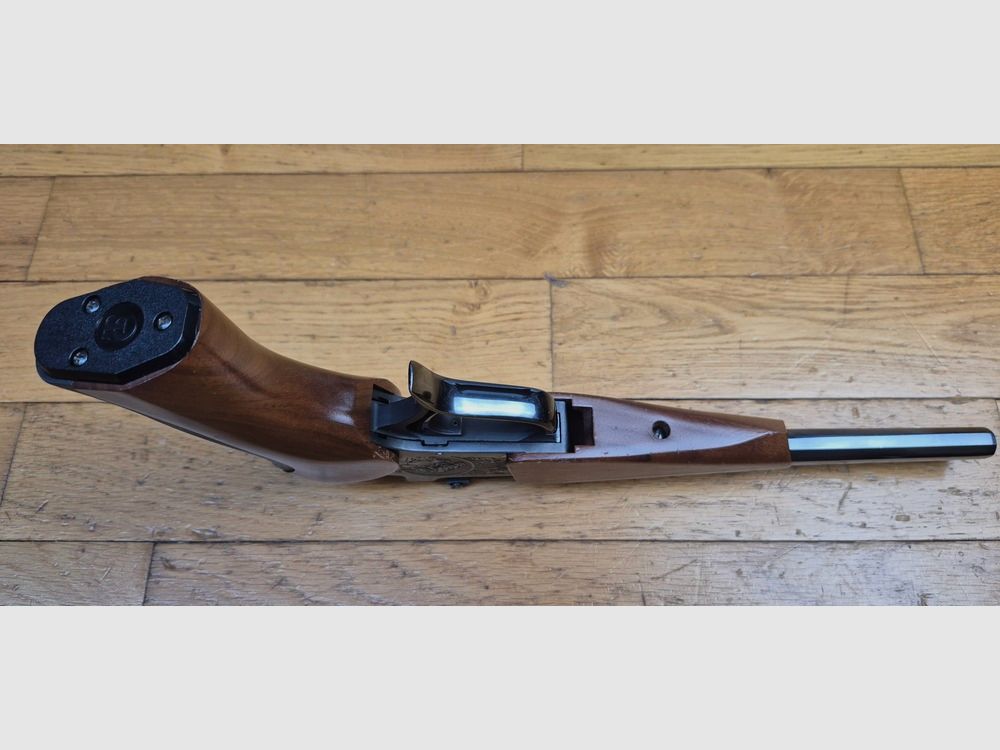




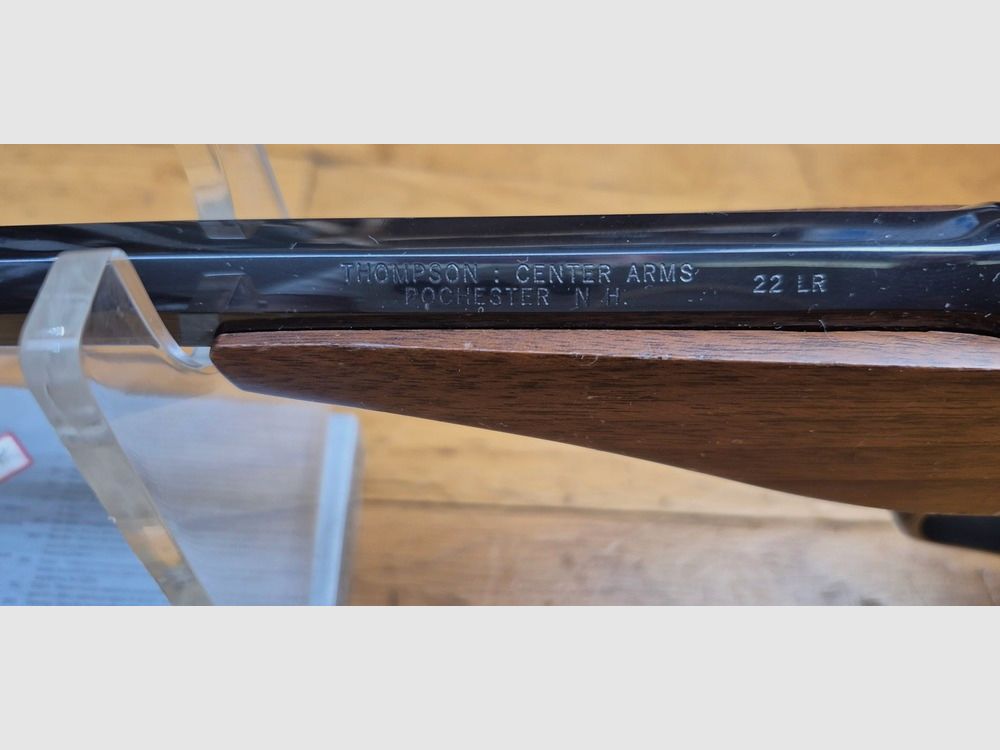


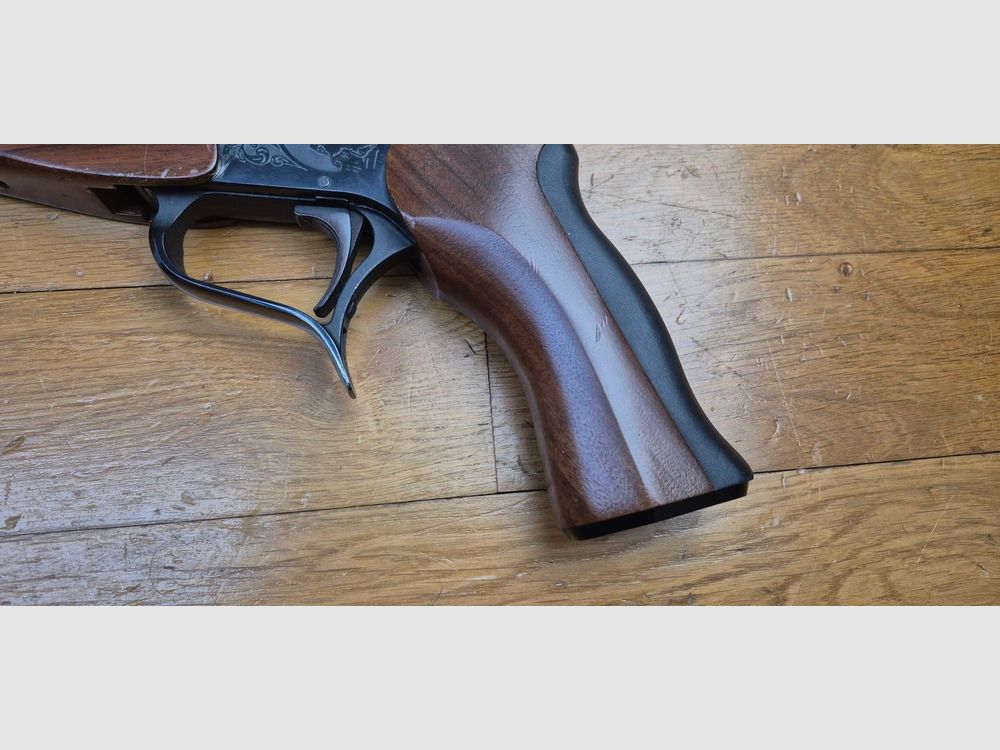
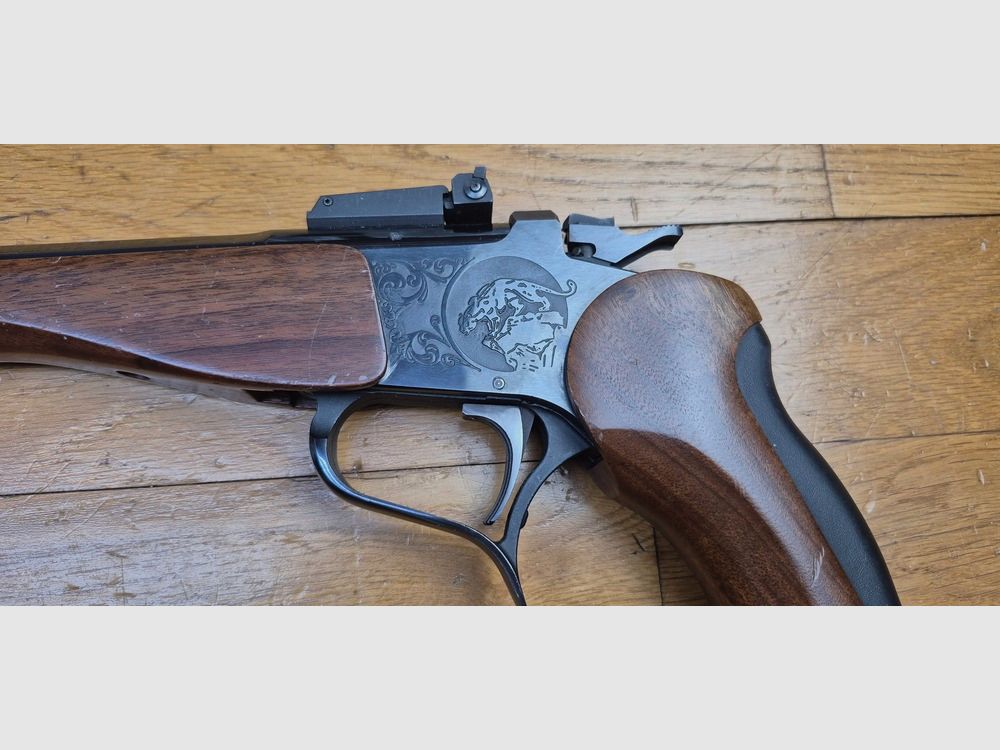


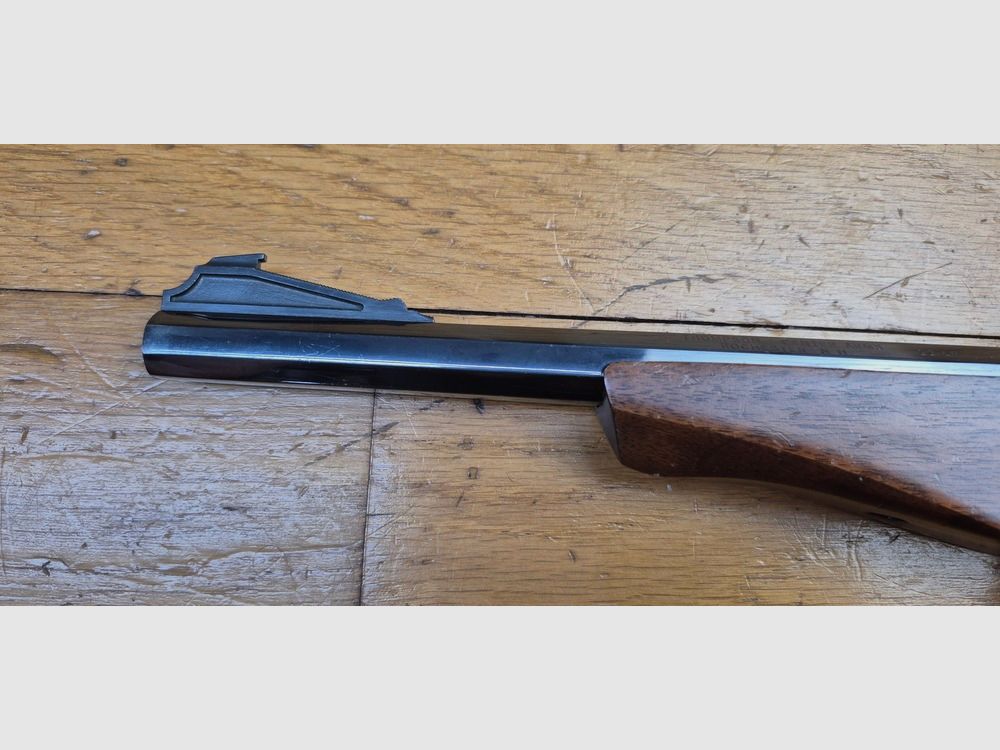
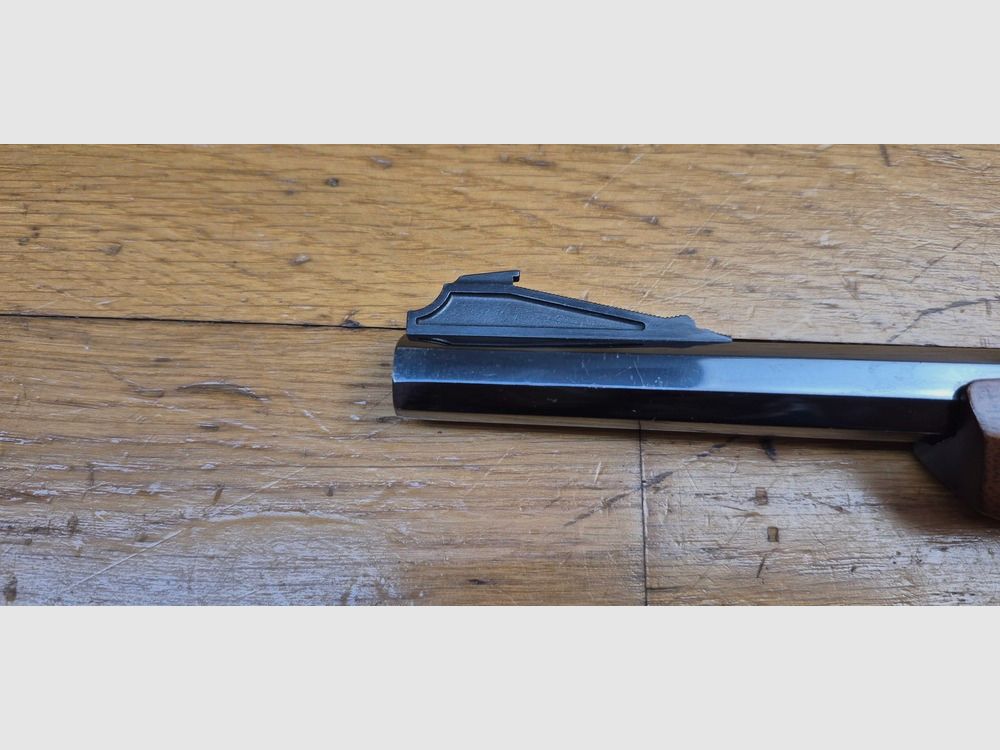
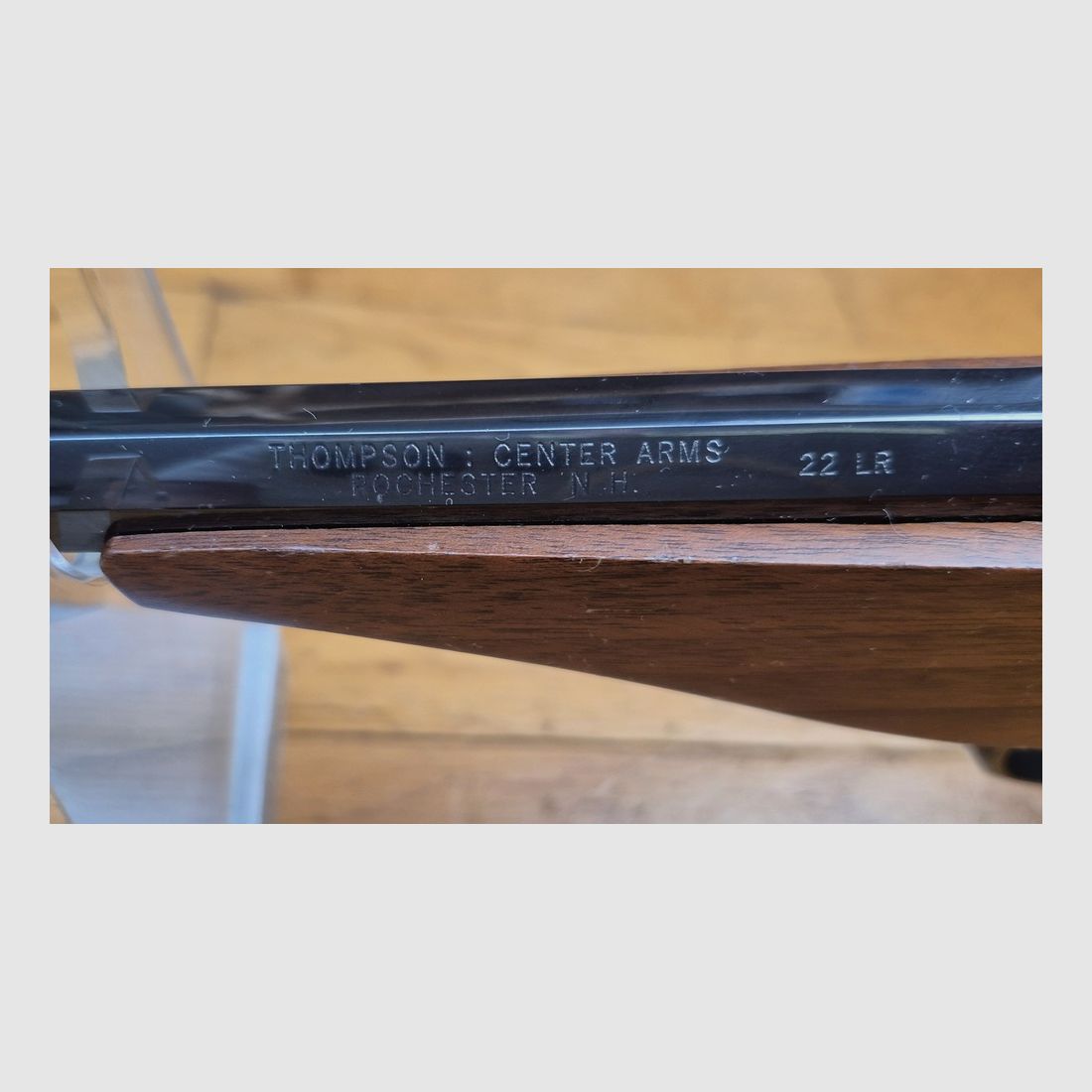

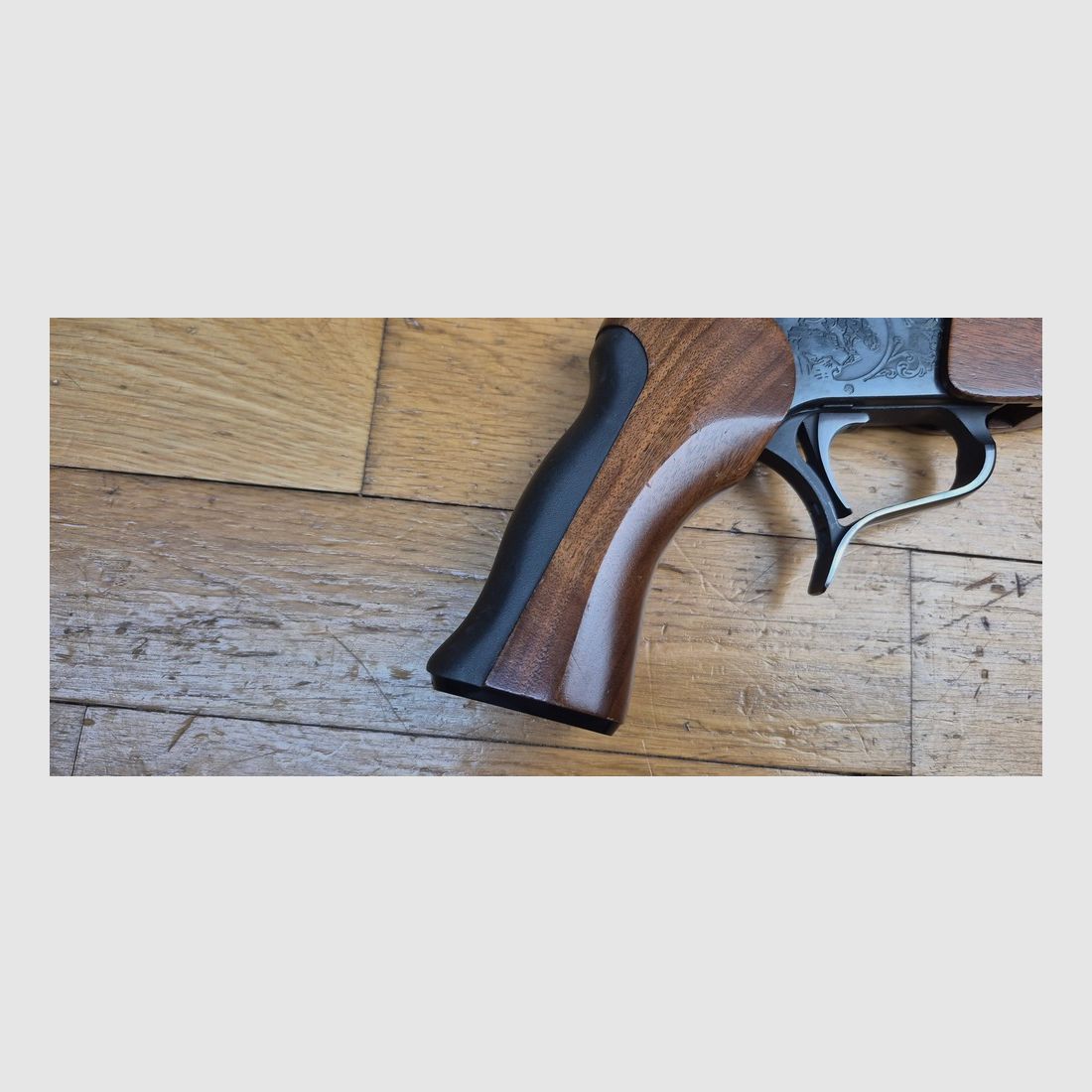


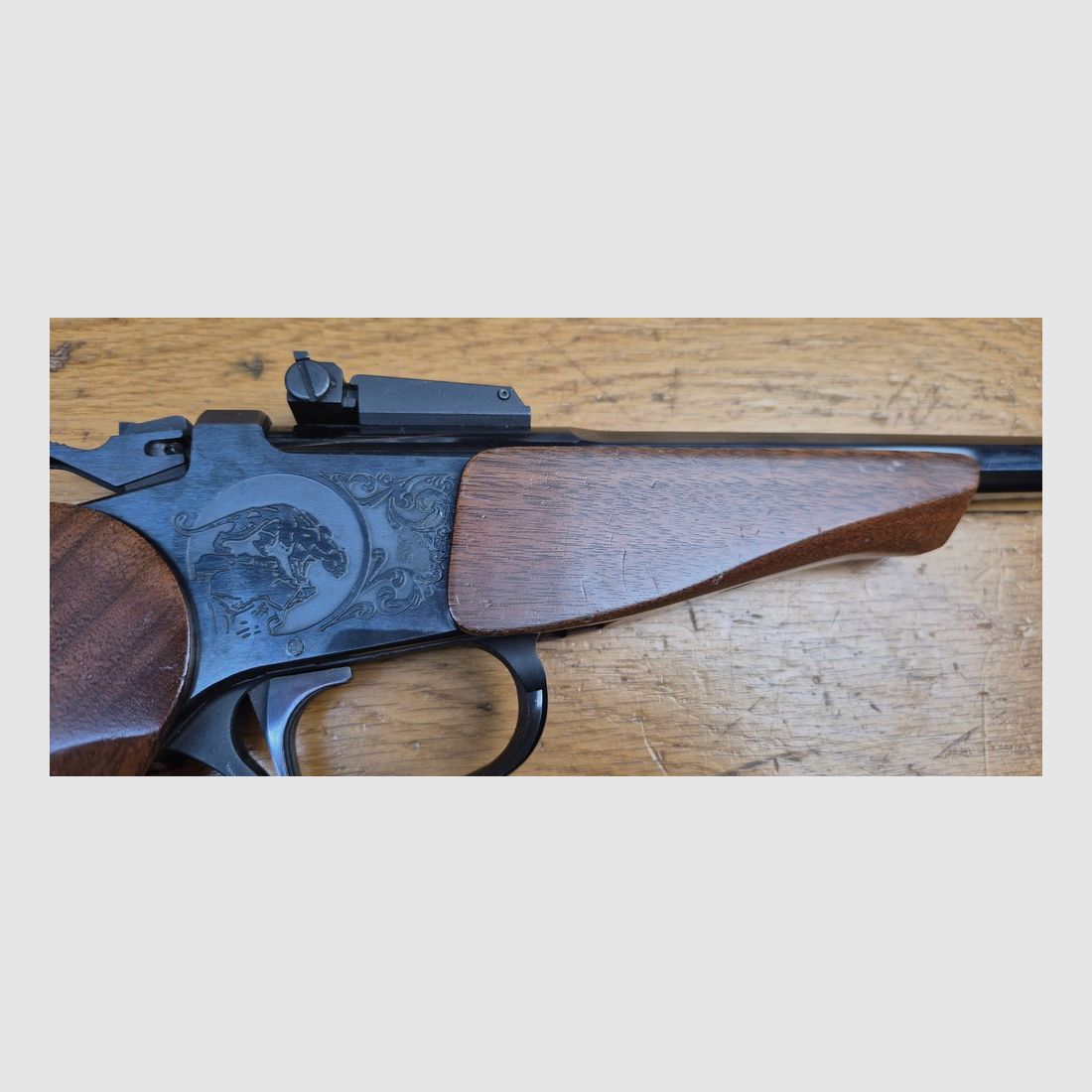
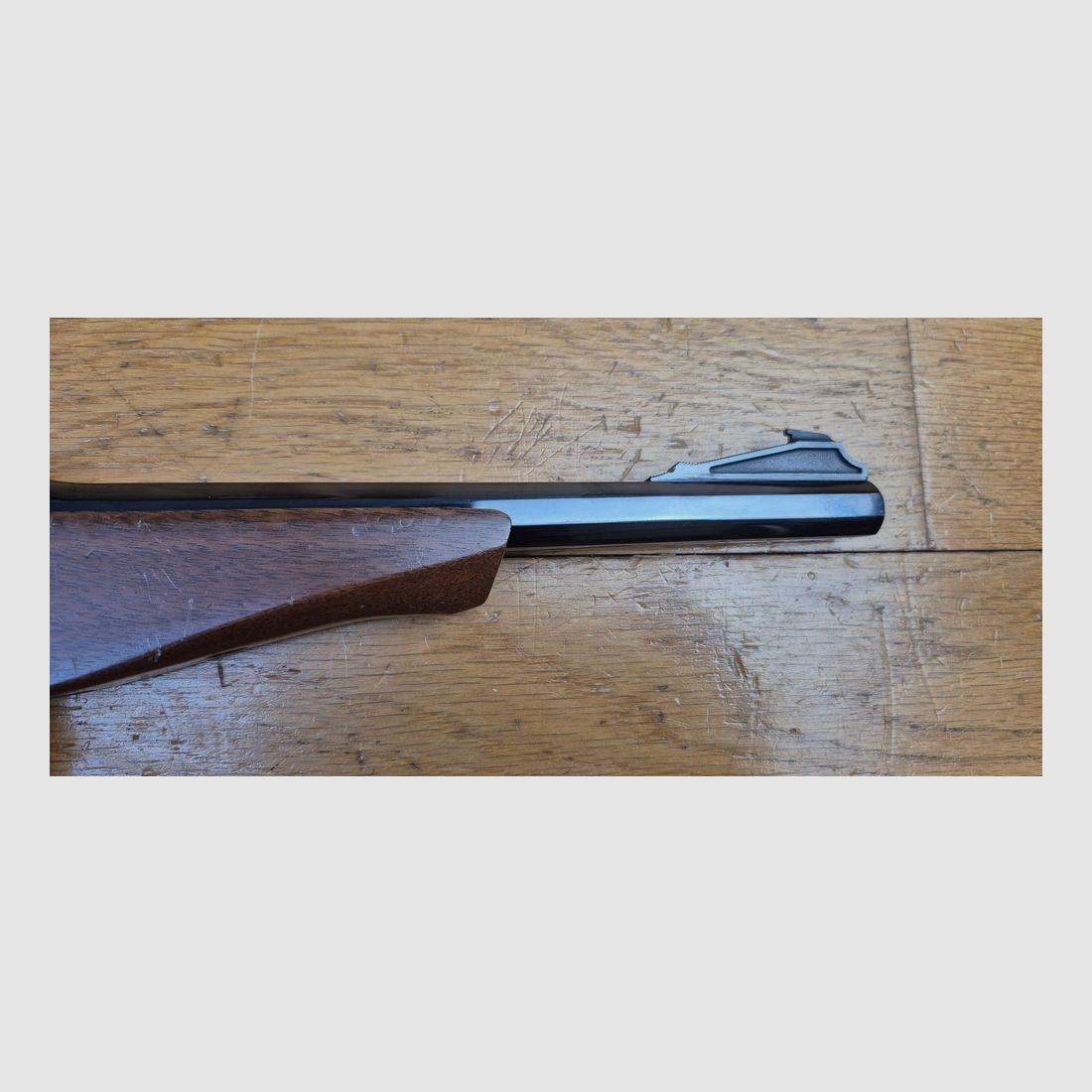


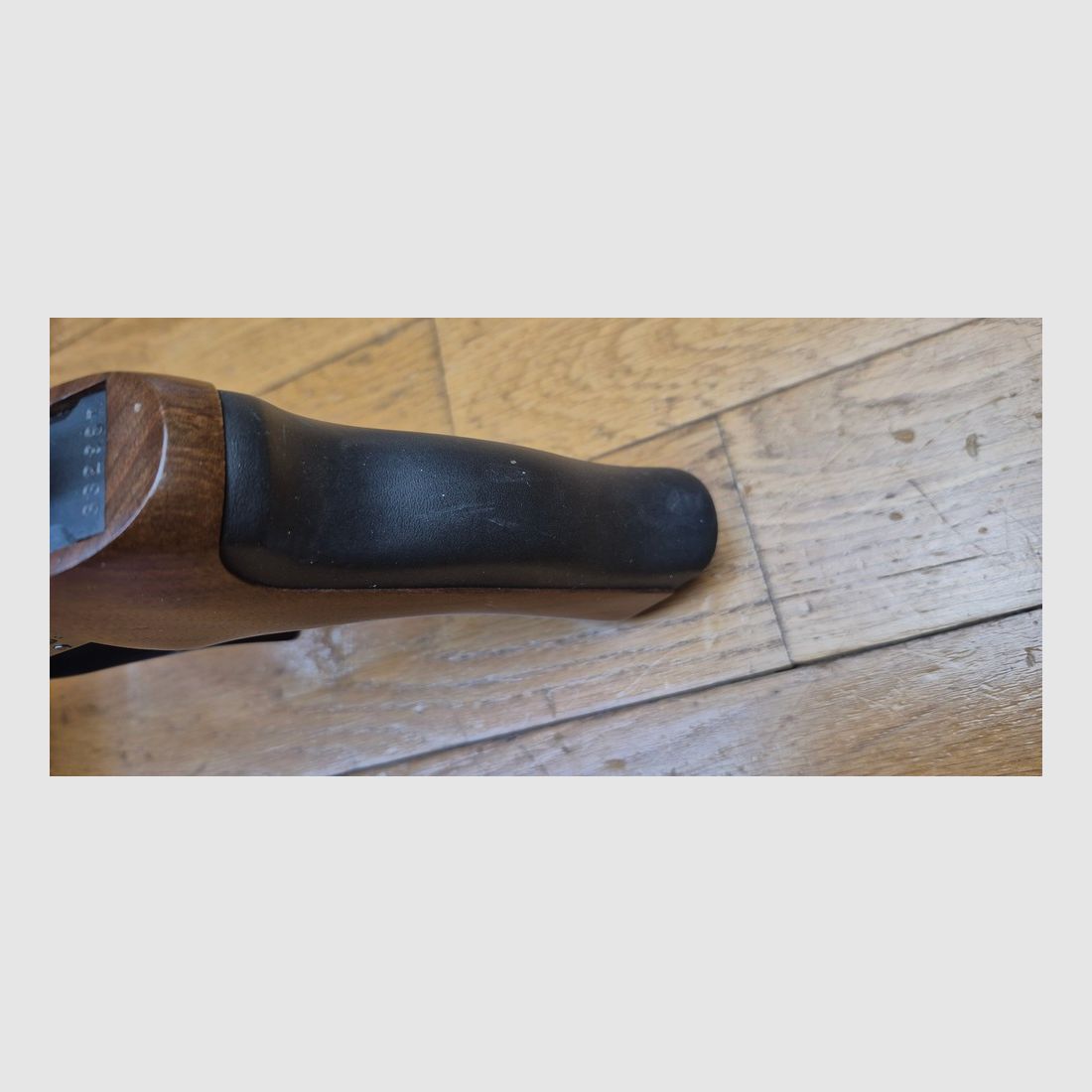

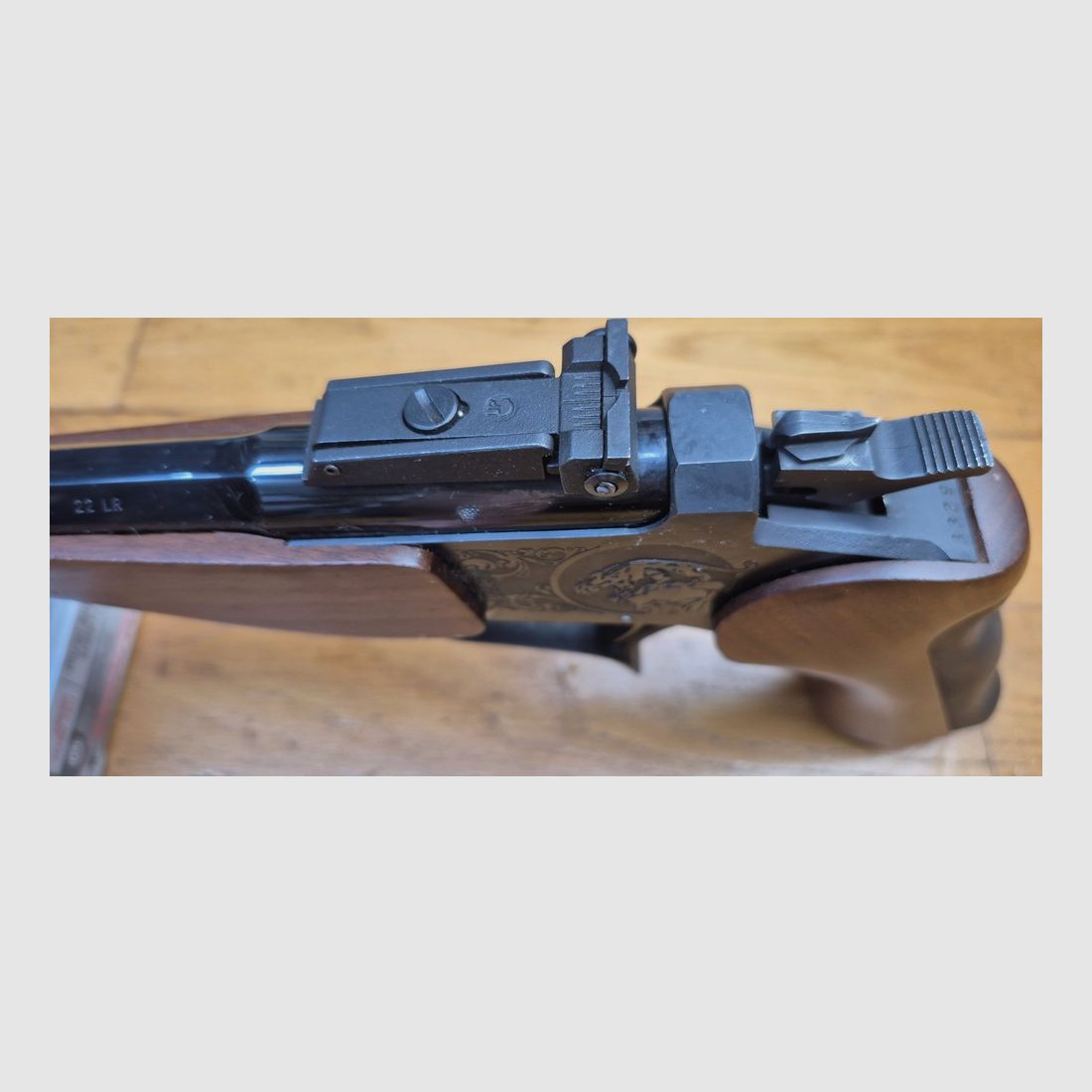


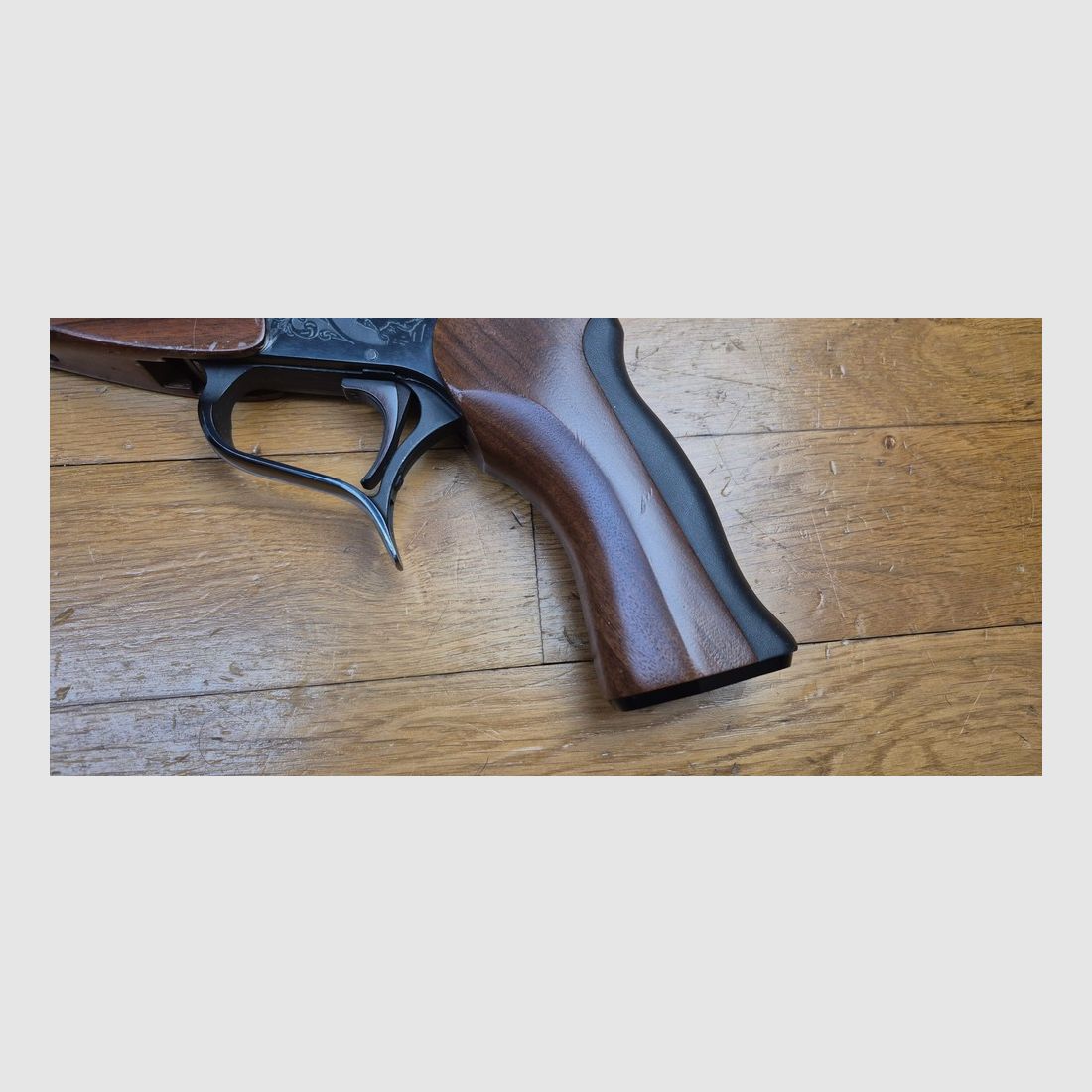
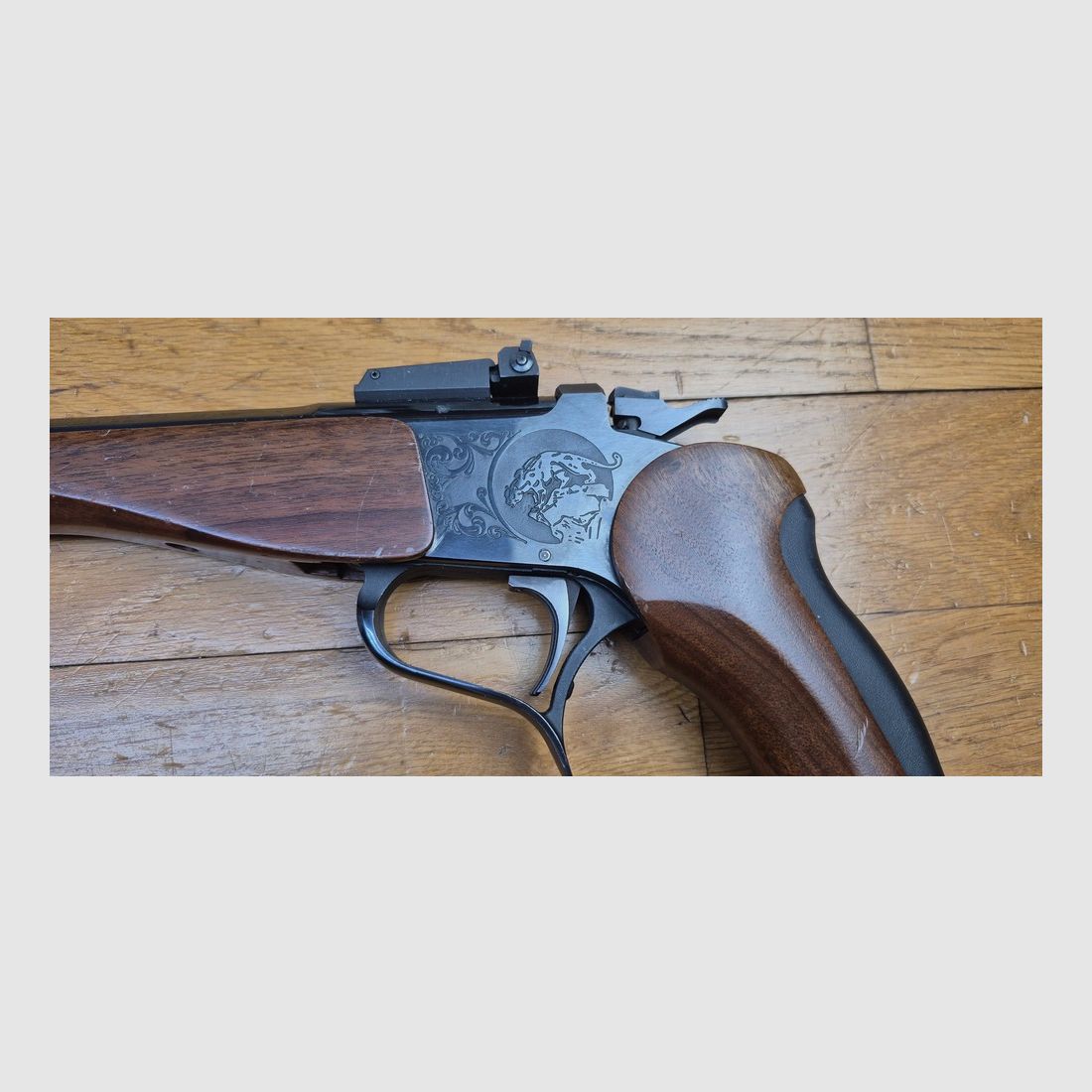


Beautiful Thompson Center Pistol – Model Contender – 10-inch Barrel – Caliber 22LR – Rochester Arms from 1988 – Beautiful Wood – Superb Barrel – Excellent Mechanics – Very Good Condition
≈ $363
Price at the dealer: 330 €. Converted at the ECB rate as of November 20, 2026.
Purchase permit required
75002 Paris, France
20
ID: 10338515
This item is currently unavailable.
Purchase from outside the EU: The firearm goes through an importer in your country, the dealer handles the export.
How buying from Europe works
Shop safely with Gunfinder
Our AI-powered seller identity verification makes Gunfinder the safest marketplace online.
Learn more
Details
- Original language
- French
- Category
- Purchase eligibility
- Required
- Caliber
- .22lr
- Condition
- New
- Location
- 🇫🇷 75002 Paris, France
- Availability
- Out of stock
Freshness
This listing is based on a mirrored offer, where the listing data was synced to us from a shop, dealer, or external marketplace. Please note that temporary price discrepancies may occur due to possible delays in data transmission.
- Source
- Flingus Maximus
- Last checked with the dealer
- 1 day ago
Description
Note:
The item is located abroad. Please note that delivery conditions, shipping times, and/or the purchase process may differ.
It’s this idea, which seems bizarre to us, that gave rise to the story of one of the world’s favorite shooting range guns: the Thompson Center Contender pistol.
In 1945, a man named Kenneth W. Thompson set up a small machine shop in his garage on Long Island. The business grew a little and became the K.W. Thompson Tool Company.
The small fitting and assembly shop wasn’t a firearms manufacturer. It did, however, produce parts for several arms companies.
Ken Thompson and his team also dreamed of making a gun “under their own name” so they wouldn’t be “just” subcontractors. But there was little hope of competing from scratch with the “big players” in the arms industry in the standard firearm market. Unless they came up with a particularly original idea.
Meanwhile, an engineer, shooter, hunter, and passionate reloader named Waren Center had been thinking for some time about marketing a handgun of his own design.
He dreamed of a kind of pistol that would allow longer-range shooting than a conventional handgun (for hunting), and that might come in several easily interchangeable calibers.
So you could hunt pretty much any game. And maybe do a little target shooting, too. A tall order.
Still, he had managed to draw up plans and build a prototype.
Center was a true firearms enthusiast. He often built guns of his own design in his basement, entirely by hand.
But he was also keenly aware of the industrial constraints involved in mass production. Having worked for Iver Johnson and Harrington & Richardson, he knew he couldn’t produce a marketable firearm from home.
Center had an excellent professional reputation among the manufacturers he’d worked for. But his concept of a multi-barrel hunting handgun went far beyond what the traditional American firearms industry considered “acceptable.” So he was left alone with his idea.
In 1965, Warren Center met Kenneth Thompson and told him about his project.
Thompson could tell he’d finally found an innovative concept. But he wasn’t quite sure what it would become, or, above all, who would buy it. That’s always a pretty risky situation in business.
Center nevertheless joined Thompson’s company, now relocated to Rochester, New Hampshire. And they got to work. Two years.
Although less common than they are today, interchangeable-barrel firearms were nothing new in the history of firearms.
The idea had been around for a long time, especially with hunting rifles, which most often had two barrels (not 4, 8, or 15!), though they weren’t as fashionable as they are today. Break-action firearms were nothing new, either.
But Warren Center’s firearm was specifically designed for barrel changes. And that was still “out of the ordinary.”
How does it work?
Its ingenious mechanism separates the loading and extraction mechanism from the frame and attaches it to the barrel itself. This lets you change calibers in the blink of an eye, just by collecting barrels from the same brand!
To do this, you just push a large pin that splits the break-action firearm in two in a fraction of a second. The selector just mustn’t be set to “Safe.”
The frame/receiver retains only the trigger and firing mechanism. An assembly that can potentially work with all rifle or pistol calibers.
Someone just had to think of it!
All calibers? How is that possible?
Center’s pistol had another difference that I find quite brilliant: this single-action firearm with an external hammer had not one, but two firing pins. One for Boxer-type centerfire primers and another
for rimfire primers.
The firearm can therefore be either centerfire or rimfire simply by installing the appropriate barrel and selecting the “right” firing pin.
Finally, the design of the assembly itself makes the receiver extremely rigid and robust for a break-action firearm, potentially allowing for very powerful calibers.
The combination of the simple barrel change, the excellent strength of the firearm’s lockup regardless of barrel and caliber, and this dual-firing-pin system was just… brilliant.
No one had thought of this before Warren Center.
But what for?
Hunting, as Center had envisioned? Really?
In the mid-1960s, the world of handguns in the USA was a little different from what it has become.
To be sure, a decade earlier (1955), the iconic Elmer Keith, inventor of the .357 Magnum and .44 Remington Magnum, and plenipotentiary persona grata at Smith & Wesson, had given hunting shooters a practical and powerful handgun hunting platform with the six-inch Smith 27 and 29.
And the sport was beginning to grow.
A very American sport that calls for great shooting skills, both from the firearm and the shooter, as well as cunning and reflexes, combined with a certain spirit of adventure. Because we’re in an area where wildlife is much more unruly than in Europe (cougar, bear, coyote, moose…).
But it wasn’t yet very widespread. Legal authorizations (in terms of seasons, game, and permitted hunting methods) were still rare. So there was no guarantee that a hunting pistol of this design would succeed.
On the other hand, handgun competition shooting was still mainly centered on “bullseye,” the black circle on the target. In other words, it was largely focused on accuracy.
Practical, action, or speed shooting (broadly speaking, “silhouette” shooting) with a handgun, as it would come to be called, was only just getting started. Several more years would pass before Elgin Gates pioneered handgun silhouette shooting. The IHMSA (International Handgun Metallic Silhouette Association) would not be founded until 1976.
So, in 1965, when Center and Thompson were working on their baby, the main potential uses for a handgun with an interchangeable barrel were self-defense and sport shooting. And the former was still fairly unlikely for a single-shot firearm…
On the other hand, the massive, long barrel designed by Center, which allowed the handgun to use heavy calibers, could easily accommodate any precision sighting device.
What’s more, the uncompromising rigidity of its lockup also made for superior accuracy, even with cartridges far more powerful than those used in any other revolver or semi-automatic pistol then on the market.
The firearm went from being a hunting gun to a range and target-shooting gun. More specifically, it was suited to silhouette shooting, including moving targets—a sport that, at its core, is somewhat similar to hunting…
The Thompson / Center “Contender” pistol (“the competitor”) was born.
A dedicated subsidiary of Thompson’s company was established: the Thompson/Center Arms Company. The first “T/C Contender,” as it was most commonly known in the USA, rolled off the production line in 1967.
Center’s original prototype was chambered in .22LR and .38 Special.
That changed quickly.
From the outset, it was firmly marketed as a handgun with an interchangeable barrel, so the first barrels offered to the public included .22LR, .22WMR, .22 Remington Jet (now forgotten), .22 Hornet, .38 Special, and .357 Magnum (see the first 1967 advertisement). Right away!
And not really geared toward hunting, then.
But Center stuck to his idea. And it wasn’t long before the .44 Magnum, .45 Colt/.410, and .30-30 Winchester were also available.
ment proposed.
And success was immediate. Even among hunters!
Today in the USA, Contender pistols take down bears, cougars, and wild boars.
At a good distance, with a single shot. I gather there must still be a few real pistoleros in the Wild West.
For the first time, there was a pistol with an easily interchangeable barrel. You could carry several barrels in your bag or backpack without suffering too much.
This pistol could just as easily be fitted with a scope, all kinds of special front sights and tunnels, and various grips.
It could even be turned into a rifle simply by adding a stock to the grip frame!
The Thompson Contender also offered greater range and power than any competing handgun on the market at the time.
Long-range pistol shooting (100 meters and beyond) had just been born. Silhouette shooting was taking off. And pistol hunting (banned in France) was entering a whole new dimension.
The range of barrels (in both calibers and lengths) grew rapidly. T/C filled special, even very special, orders on request. Companies making so-called “aftermarket” barrels for the Contender sprang up.
Of course, beyond the “historic” calibers, including the rarest ones, dozens of wildcat calibers were invented for it (“wildcat” = a new caliber made by modifying the size and shape of an existing cartridge case to create a different cartridge with different performance or one that can be fired in a different firearm).
Examples include the .30 and .357 Herret, the .10 Eichelberger Long Rifle (a .22 LR with a 2.5 mm diameter bullet!), the 5.7mm Spitfire (a .30-30 with a 5.56 mm projectile!), and the surreal, utterly obscure .22 Eargesplitten Loudenboomer (based on a modified .378 Weatherby Magnum, it reaches 1,500 m/s—Mach 4.2!—with a 3.2-gram bullet! You read that right. In my opinion, it’s the only one that’s truly impractical)…
But the man who invented that last one, Parker Otto Ackley, a highly skilled gunsmith from Colorado, created a good thirty of these wildcats, several of which are still regularly fired at ranges in the USA for their excellent performance.
Of course, the T/C Contender also helped bring about all the TCU cartridges, as their name suggests, including the 7mm TCU, which has fans even in our own beautiful country thanks to its outstanding qualities.
In short, for our friends Thompson and Center, it all got a little—or completely—crazy.
Today, Master Fligus wouldn’t dare try to compile a complete list of the calibers for which Contender barrels have been made. Given the already impressive list of T/C’s standard offerings, factory-made barrels produced on request, and aftermarket options, such a list could probably never be exhaustive…
And that’s not even counting barrel profiles and other options like round or octagonal barrels, colors…
There are also some magnificent engraved Thompson Center Contenders. One of these beauties belonged to General Norman Schwarzkopf, commander-in-chief of the US forces in the 1991 Gulf War and an opponent of the 2003 invasion.
There were also engraved, inlaid, ultra-luxury versions made for high-end African safaris, which Americans are so fond of.
Classy, right! But Master Flingus won’t find everything. And that makes him sad.
The smallest cartridge I know of that’s been fired in a Contender may be the .17 Mach II (1.1 grams and a 4.4 mm bullet, yet it reaches 530 m/s at the muzzle. The 9mm Parabellum is 350 to 400 m/s. And it’s rimfire).
The largest (not counting 12 gauge—because yes, this pistol can also fire 12 gauge!) was at least a custom barrel.
nnalized in .600 Nitro Express, an English caliber developed for big-game Express rifles, and it’s a 15.7×76 mm!
This cartridge was also used for counter-sniping in 1915–1916 because it punched through the extra armor plates on German snipers’ steel helmets (the famous Stirnpanzer) like butter. This one is centerfire. Best reserved exclusively for hunting elephants with a single-shot pistol…
Beyond these extremes, reserved for passionate shooters, it’s clear that the good old .45-70 Gvt is still a fairly standard option in Thompson Contender barrels in the USA today.
It’s perfectly manageable. The frame, even though it’s a break-action, still has a reasonably conservative pressure limit of 48,000 psi. And the .45-70 Gvt has a maximum allowable CIP pressure of 32,000 psi.
That leaves some room to spare.
For reference, the .600 Nitro I mentioned above has a maximum CIP pressure of 40,864 psi and a proof pressure of 46,194. That was getting close to the limits of what was possible. Personally, I wouldn’t have tried it… But it held.
Mechanically, break-action firearms are generally considered less robust and, in theory, less accurate than firearms with a fixed action. And yet, in the world of handguns, the Contender is more robust and rigid than the vast majority of revolvers and semi-automatic pistols available.
Even modern semi-autos have a tiny amount of lateral play due to the fit between the frame and slide, which you won’t find on a Contender.
To hunt even farther out, and to shoot heavy cartridges from a rifle, T/C developed a rifle called the “Encore,” based on the same interchangeable-barrel system as the Contender pistol. But it has a wider, stronger frame and a different trigger assembly, also called the “Encore” trigger assembly. It’s still a huge success in the USA.
Encore barrels aren’t interchangeable with Contender barrels. Note that these rifles also don’t accept rimfire cartridges. So that’s a different story. But we’ll come back to this different “Encore” trigger assembly.
Ultimately, the Contender greatly expanded the world of handgun hunting, both in participation and in concept. It was also an early catalyst for long-range shooting and handgun metallic silhouette shooting.
Warren Center may not have initially envisioned these uses for his handgun. But his pistol opened up these new horizons. He truly remains a visionary. And the firearm is unmatched in its class.
In my opinion, the Contender is really made for those who love shooting and ballistics. A firearm for the discerning enthusiast. The Contender pistol is VERY accurate. That’s also thanks to the brand’s high-quality barrels.
Of course, it’s not a firearm for self-defense, combat, or even paper-target competition.
It’s for shooters who want to explore the extreme limits of accuracy, range, and ballistic performance in the world of handguns. It’s a sporting firearm in every sense of the word.
With impeccable build quality and remarkable accuracy, it’s also ideal for practicing shooting from any position. A real success.
Excellent from the start, the firearm changed very little. But it did change a bit.
The first-generation Contender, known as the G1, had three variants, each involving changes to the design of the rimfire/centerfire selector. This is located on the hammer.
Variant 1 has a small transverse push button on the hammer that requires a small pointed tool to switch between the two firing modes, and has no “safety” mode.
Variant 2 has a simplified horizontal selector, with a rod in the hammer frame and three positions (centerfire–safety–rimfire).
air).
Variant 3 has a kind of side-mounted toggle switch, still on the hammer but at the top, with left-center-right positions to select between centerfire, safety, and rimfire.
Easier to recognize, these first-generation Contenders all have a beautiful cougar engraved on the sides of the receiver, while the Generation 2 has a smooth finish, like an egg.
The Generation 2, or G2, Contender, introduced in 1998, uses a receiver whose dimensions are exactly the same as those of the original Contender, or G1. But it uses the trigger group from the Encore (T/C rifle). This group is sturdier and easier to open and clean, but no more accurate than the previous one.
Only the pistol grips and forends are generally not interchangeable between G1 and G2, due to the changes to the trigger group. Just be careful when buying a Pachmayr grip or a stock…
The main mechanical difference between the G1 and G2 is that the G2 must not be dry-fired. The original G1 Contender can be safely dry-fired in any firing pin position, but only with the hammer at the second notch.
On the other hand, barrels are almost entirely interchangeable between the G1 and G2 Contenders. And that’s the main point. Only the G2 black powder barrels won’t fit G1 frames, and the old Herrett-caliber barrels made for the G1 won’t fit the G2.
So you can enjoy any barrel, whatever your model, G1 or G2.
Buying a replacement barrel for a G1 or G2 Contender requires a B5 permit, which will then allow you to buy ammunition and components in that caliber. In addition to the other documents, I’ll also ask you to provide proof that you already own a Contender in another caliber.
There’s a wide range of accessories for these firearms, in different forms (bipod, rails, forends, stocks, ventilated rib, …) and materials (wood, composite, various metals…), for octagonal or round barrels. There are even versions for very young shooters. The T/C Contender is also a fantastic starter firearm. And not just in 22LR.
The Contender is a world of its own. A world for shooting enthusiasts.
Production of the Thompson/Center Contender ended in 2000. Smith & Wesson took over the business in 2007, focusing on its excellent “Encore” rifle. So there are far more G1s than G2s (introduced in 1998) on the market.
But, as explained above, that makes no difference for the vast majority of barrels, which are the ultimate object of desire for this barrel-swapping oddity.
Dozens of manufacturers in the USA still make accessories for this one-of-a-kind firearm. SSK Industries still makes barrels, including custom orders, because demand for this exceptional firearm remains strong.
Standard barrels in all calibers come in 6, 8 3/4, 10, 12, 14, 16 1/4, 21, and 24 inches!
Of course, the secondhand barrel market is very active in the USA, and prices keep rising.
Sixty years later, Warren Center’s Contender remains what it was in 1967: the world’s most versatile firearm platform. And one of the most interesting for the passionate shooter.
A testament to its remarkable success, nearly 500,000 firearms were produced, including around 456,000 blued versions and 41,000 stainless steel versions. The barrels must number in the hundreds of thousands. There were years when T/C produced 20,000 or 25,000 firearms in a single year.
Not bad for a small business and a firearm designed in a basement.
Its quality of finish and construction made it a legend at shooting ranges around the world.
For a conceptual firearm with no market when it was born, that’s nothing short of a miracle. A real Christmas story.
So there you have it: “the” great classic. Sadly, in some ways. At least here.
Because
The problem with the French Contender in 22LR is that we imported very little from the USA besides … Contenders with 22 LR barrels! Which seriously limits the concept, you’ll admit.
Customers were promised, especially in the 1975–85 period, that other barrels would be imported. Even more fun ones. “A promise made in vain,” as they used to say. Then radio silence. Nothing. NTM.
Not nice.
Because, as explained at length above, a Contender without a spare barrel is a bit like castrating the concept…
That’s why, at the request of the Vox Populi, Maître Flingus has set out to find these other calibers for you, as far as his limited free time allows. And he’ll keep waiting in the wings, as they say in the hunting blind.
But it’s a real pain. Really not easy. Importing from the USA is a nightmare, so I’m searching across Europe.
You do see other barrels here from time to time, though. Sometimes a 30-30 or a 357. But only sometimes. What you see most often are .22 WMR barrels (or 22 Winchester Magnum Rimfire, a heavy rimfire cartridge), either on their own or fitted to complete .22WMR Contenders.
If you spot one of these .22WMR models, which are a little more common, snap it up. It’s also an excellent target-shooting caliber, a powerful cartridge even for silhouette shooting, and really interesting to shoot.
But for a newcomer who doesn’t yet own one of these magnificent Contenders, I’m selling this classic 22Lr Contender, which could perhaps be a starting point for buying other barrels.
And perhaps the beginning of a real passion for shooting and reloading.
The additional barrels are B5. You can collect as many barrels as you like.
It’s also true that the T/C Contender in 22LR is already an excellent training firearm for 22LR.
Especially with these excellent 10-inch barrels from the factory. Probably one of the best for pistol practice.
On top of that, the firearm is extremely robust, which is always a plus. And it’s a dream to clean, whatever the caliber.
Our example is a first-generation, or G1, the most classic and common version. It dates from the second half of 1988. It’s in excellent condition.
This is Variation 3, with the “Centerfire – Safety – Rimfire” selector that pivots sideways above the hammer. So it’s an excellent base for buying other barrels.
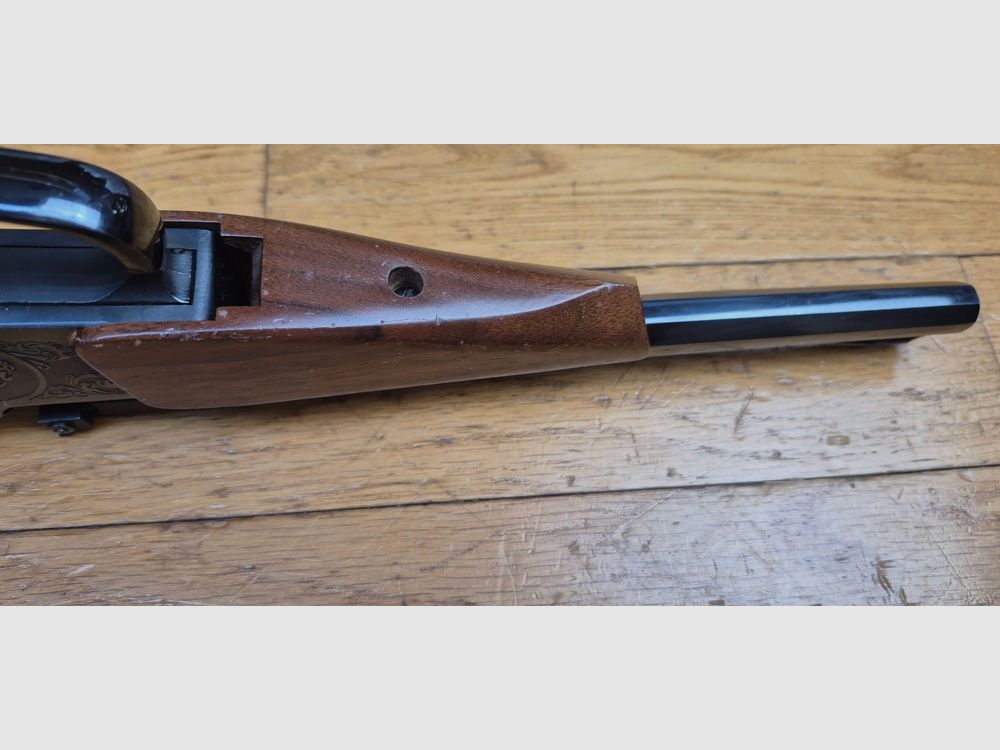
The wood has only a few very minor handling marks. Shown off nicely ;-), and therefore greatly exaggerated, by my obsession with CLOSE-UPS. No cracks or significant scratches – VG/VG+
Beautiful original black bluing with a frosted sheen, 100% intact and with no clearly visible scratches. No oxidation anywhere – Very nice – Excellent condition+
Beautiful Cougar engraving on the sides of the receiver, as on all G1s. It’s genuinely beautiful, and not every manufacturer would have done that. T/C was a serious manufacturer.
The barrel is an original 10-inch barrel (not 6, as I often hear) in 22LR. Original meaning a factory barrel from Thompson in Rochester. Because even in 22LR, there are aftermarket barrels.
It’s a fluted barrel, so it looks great.
Inside, the barrel is mirror-bright. Like new. With splendid rifling. Excellent condition++
The sights (adjustable) are original and in perfect condition. In particular, the adjustment screws, which have sometimes suffered at the hands of their owners.
The mechanical function is impeccable. The trigger is a dream.
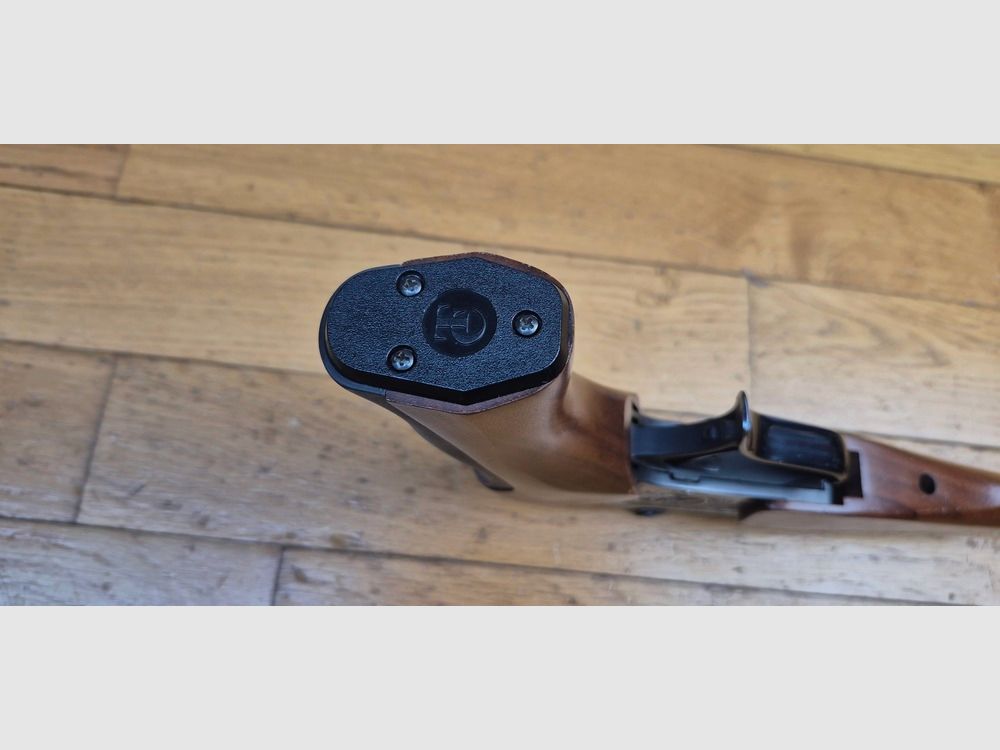
The screws and the buttplate (still original – the original Bakelite-like buttplates have sometimes been replaced) are in very good condition, which is far from always the case with these firearms…
On request, the item will come with the best explanatory guide to the Contender in all its aspects that I could find, and in French! There are also loads of more or less educational YouTube videos on the subject, but they’re always entertaining, like this one or that one. That’s the price of popularity.
ty.
In short, a great opportunity for a discerning handgun shooter who wants to explore new territory and enjoy owning a legend of the firearms world that packs a punch.
CATEGORY B FIREARM UNDER FRENCH LAW: SUBJECT TO AUTHORIZATION. A COPY OF A VALID ID AND LICENSE IS REQUIRED – AN OPEN SIA ACCOUNT IS ALSO REQUIRED, OF COURSE – SHIPPING WITH SIGNATURE REQUIRED IN TWO SEPARATE PACKAGES AT LEAST 48 HOURS APART.
***********************************************************************************************************************
Let’s say it again! Flingus Maximus gun shop in Paris and throughout France is also here to buy firearm and other militaria collections, provide firearm valuations, answer your questions about firearms regulations, and help with estates and inheritances. Contact your favorite gun dealer using our contact form or by email at [email protected]
(Show description in original language)
Aux USA, on a le droit de chasser au pistolet …
C’est de cette idée, baroque chez nous, qu’est pourtant née l’histoire d’un des favoris des stands de tir dans le monde entier, le Pistolet Thompson Center modèle Contender.
En 1945, un certain Kenneth W. Thompson monte un petit atelier d’usinage dans son garage de Long Island. L’affaire prit un peu d’ampleur et devint la K.W. Thompson Tool Company.
La petite entreprise d’ajustage/montage n’était pas un fabricant d’armes à feu. Elle produisait néanmoins des pièces pour plusieurs sociétés d’armement.
Ken Thompson et son équipe rêvaient aussi d’une arme « à leur marque » pour ne plus être « que » sous-traitant. Mais il y avait peu d’espoir de concurrencer ex nihilo les « gros » de l’armement sur le terrain de l’arme à feu standard. Sauf à trouver une idée particulièrement originale.
Pendant ce temps-là, un ingénieur, tireur, chasseur, et rechargeur passionné, Waren Center, songeait depuis un moment à commercialiser une arme de poing de sa conception.
Il rêvait à une sorte de pistolet, permettant un tir à plus longue distance qu’une arme de poing classique (pour chasser), et dont on aurait pu rêver qu’elle existât en plusieurs calibres aisément interchangeables.
Pour pouvoir chasser un peu tous les gibiers. Et peut-être faire un peu de tir aussi. Une quadrature du cercle.
Il avait néanmoins réussi à bâtir des plans et un prototype.
Center était un vrai passionné d’armes. Il fabriquait d’ailleurs fréquemment des armes de sa conception, totalement artisanales, dans son sous-sol.
Mais il avait aussi une nette conscience des contraintes industrielles liées à une production en série. Ayant travaillé pour Iver Johnson et Harrington & Richardson, il savait ne pas pouvoir produire une arme commercialisable depuis chez lui.
Center jouissait d’une excellente réputation professionnelle chez les fabricants pour lesquels il avait travaillé. Mais son concept d’arme de poing de chasse à canons multiples dépassait largement le cadre de « l’acceptable » pour l’industrie américaine traditionnelle des armes à feu. Il restait donc seul avec son idée.
En 1965, Warren Center rencontra Kenneth Thompson et lui parla de son projet.
Thompson sentit bien tenir enfin un concept novateur. Mais sans trop savoir ce que ce serait et surtout à qui on le vendrait. Ce qui est toujours assez dangereux en matière de business.
Center rejoignit néanmoins l’entreprise de Thompson désormais relocalisée à Rochester, dans le New Hampshire. Et on se mit au travail. Deux ans.
Bien que moins courantes qu’aujourd’hui, les armes à canon interchangeable n’étaient pas une nouveauté dans l’histoire des armes.
L’idée existait déjà depuis longtemps, en matière de carabines de chasse notamment, disposant de deux canons le plus souvent (et pas 4,8 ou 15!), et sans être aussi à la mode qu’aujourd’hui. Les armes basculantes n’étaient certainement pas des nouveautés non plus.
Mais l’arme de Warren Center était, elle, une arme conçue spécifiquement pour le changement de canon. Et cela restait « hors normes ».
Comment fonctionne t-elle?
Son ingénieux mécanisme consiste à séparer la partie mécanique chargement et extraction du bâti de l’arme pour l’adjoindre au canon lui-même. Ce qui permet de changer de calibre en un clin d’œil juste en collectionnant les canons de la marque !
Pour ça, il suffit de pousser une grosse goupille qui désolidarise l’arme basculante en deux en une fraction de seconde. Le sélecteur ne doit juste pas être en position « Safe ».
Le bâti/carcasse lui conserve juste l’ensemble détente/départ. Un ensemble qui fonctionne potentiellement sur tous les calibres de fusils ou de pistolet.
Fallait juste y penser !
Tous les calibres ? Comment est-ce possible ?
Ce pistolet de Center comporte une autre différence, assez brillante à mon sens: l’arme, à chien externe et à simple action, possédait non pas un, mais deux percuteurs. L’un pour les amorces à percussion centrale type Boxer et un autre pour les amorces à percussion annulaire.
L’arme peut donc être à la fois en percussion centrale ou en percussion annulaire simplement en installant le canon approprié et en sélectionnant le « bon » percuteur.
Enfin la conception même de l’ensemble rend le boitier extrêmement rigide et robuste pour une arme basculante ce qui autorise potentiellement des calibres très puissants.
La conjonction de la simplicité du changement du canon, de l’excellente robustesse du verrouillage de l’arme quel que soit le canon et le calibre, et de ce système de double percussion était juste… géniale.
Personne n’avait songé à cela avant Warren Center.
Mais pourquoi faire?
De la chasse comme l’imaginait Center? Vraiment ?
Au milieu des années 60, le monde de l’arme de poing aux USA était un peu différent de ce qu’il est devenu.
Certes une décennie plus tôt (1955), l’iconique Elmer Keith, inventeur du 357 Magnum et de la 44 Magnum Remington, et personna grata plénipotentiaire chez Smith & Wesson, avait offert aux tireurs-chasseurs, avec les Smith 27 et 29 en six pouces, une plateforme de chasse à l’arme de poing à la fois pratique et puissante.
Et ce sport commençait à se développer.
Un sport très américain qui demande à la fois de grandes qualités de tir, pour l’arme et pour le tireur, autant que de ruse et de réflexes, conjugués à un certain esprit d’aventure. Car nous sommes dans une zone où la faune est nettement plus rebelle qu’en Europe (puma, ours, coyote, orignal…).
Mais ce n’était pas encore très répandu. Les autorisations légales (en termes de saisons, de gibier et de méthodes de chasse autorisées) étaient encore rares. Rien ne garantissait donc le succès pour un pistolet de chasse de ce concept.
De son coté, la compétition de tir au pistolet était encore principalement centrée sur le « bullseye », le rond noir de la cible. C’est à dire largement axée sur la précision.
Le tir pratique ou sportif ou de vitesse (au sens large « sur silhouette ») au pistolet, comme on l’appellera, n’en était qu’à ses débuts. Plusieurs années passeraient encore avant qu’Elgin Gates ne se fasse le pionnier du tir sur silhouette au pistolet. L’IHMSA (International Handgun Metallic Silhouette Association) ne sera fondée qu’en 1976.
Donc, en 1965, quand Center et Thompson se penchent sur leur bébé, les principales utilisations d’un pistolet à canon interchangeable restent donc possiblement l’autodéfense et le tir sportif. Et la première était quand même assez peu probable pour une arme mono-coup…
En revanche, le canon massif et long conçu par Center, permettant le passage à des calibres lourds au pistolet, avait la capacité d’accepter facilement n’importe quel dispositif de visée de précision.
De plus, la rigidité intraitable de son verrouillage militait elle aussi pour une précision supérieure même avec des cartouches autrement plus puissantes que dans n’importe quel autre revolver ou pistolet semi-automatique alors sur le marché.
De chasse, l’arme devenait arme de stand et de tir. Et plus précisément de tir sur silhouette, y compris mobile, un sport qui, sur le fond, se rapproche un peu de la chasse…
Le Pistolet Thompson / Center modèle « Contender » (« le compétiteur » ) était né.
Une société filiale de celle de Thompson dédiée fut créée, la Thompson/Center Arms Company. Le premier exemplaire de « T/C Contender », selon l’acronyme le plus en vogue aux USA, sorti d’usine en 1967.
Le prototype original de Center était chambré en .22LR et en .38 Special.
Cela changea rapidement.
Proposé résolument dès le départ comme un pistolet à canon interchangeable, les premiers canons offerts au public comprenaient donc le 22LR, le .22WMR, le .22 Remington Jet (aujourd’hui oublié), le .22 Hornet, le .38 Special et le .357 Magnum (voir 1ière publicité de 1967). Direct !
Et pas vraiment axé chasse donc.
Mais Center tenait à son idée. Et il ne fallut pas longtemps avant que le .44 Magnum, le .45 Colt/.410 et le .30-30 Winchester ne fussent également proposés.
Et le succès fut foudroyant. Y compris chez les chasseurs !
Aujourd’hui aux USA, des pistolets Contender tuent de l’ours, du puma, du sanglier.
A bonne distance et au mono-coup. J’en déduis qu’il doit rester quelques vrais pistoleros dans le Grand Ouest.
Désormais, un pistolet à canon interchangeable très simplement existait. Canons dont il est possible de trimballer plusieurs exemplaires dans sa musette ou son sac dos sans souffrir le martyr.
Ce pistolet pouvait tout aussi facilement recevoir une lunette, un tas de guidons et de tunnels spéciaux, des poignées diverses.
Il pouvait même se transformer… en carabine par simple adjonction d’une crosse sur le bâti de poignée!
Le Thompson Contender offrait de plus une portée et une puissance supérieures à tout ce qui existait alors dans le commerce comme armes de poing concurrentes.
Le tir à longue distance (100 mètres et bien plus) au pistolet venait de naître. Le tir sur silhouette prenait du poil de la bête. Et la chasse au pistolet (interdite en France) en prenait elle-même une toute nouvelle dimension.
L’offre de canons (tant en calibres qu’en longueurs) augmenta rapidement. Des demandes particulières, voire très particulières, furent servies par T/C sur commande. Des sociétés de fabricants de canons dit « aftermarket » pour le Contender se montèrent.
Bien sûr, hors des calibres « historiques », y compris les plus rares, des dizaines de canons dans des calibres »wildcat » furent inventés pour lui (« Wildcat » = calibre nouveau obtenu à partir de l’étui d’une cartouche existante modifiée en taille et forme pour en dériver une autre cartouche de performances différentes ou pouvant être tirées dans une arme différente).
Citons les .30 et .357 Herret, le .10 Eichelberger Long Rifle (une 22LR à balle de diamètre 2,5mm!), le 5.7mm Spitfire (une 30-30 à projectile de 5.56!), le sur-réaliste et totalement anecdotique .22 Eargesplitten Loudenboomer (basée sur une .378 Weatherby Magnum modifiée, elle sort à 1.500m/s -mach 4,2! – avec une balle de 3.2 grammes !- Vous avez bien lu – la seule d’ailleurs véritablement impraticable à mon sens)…
Mais le gars qui a inventé cette dernière, Parker Otto Ackley, un armurier très compétent du Colorado, en a quand même créé une bonne trentaine de ces Wildcats dont plusieurs sont encore régulièrement tirés sur les stands aux USA pour leur excellentes performances.
Bien sûr, le T/C Contender contribua aussi à la naissance de toutes les cartouches TCU, comme leur nom l’indique, dont le 7mm TCU qui a des adeptes jusque dans notre beau pays compte tenu de ses éminentes qualités.
Bref, pour nos amis Thompson et Center, tout cela devint, un peu, voire complètement, fou.
Aujourd’hui, Maître Fligus n’oserait rêver de dresser une liste complète des calibres pour lesquelles des canons de Contender ont été usinés. Compte tenu de la liste déjà fort impressionnante des offres standards de T/C, des canons réalisés d’usine sur demande et des options aftermarket, il est peu probable qu’une telle liste puisse jamais être exhaustive…
Et je ne parle même pas des tailles de tube et autres options genre canon rond, octogonal, couleurs…
Il existe d’ailleurs de somptueux Thompson Center Contender gravés. Des splendeurs dont l’un a appartenu à Normann Schwartzkopf le Général en chef US de la Tempête du Desert irakien en 1991 et opposant à celle de 2003.
Il y a aussi eu des versions gravées et incrustés de très grand grand luxe pour participation à des safaris africains haut de gamme dont les américains sont friands.
La classe,quoi! Mais Maître Flingus ne trouvera pas tout. Et ça l’attriste.
La plus petite cartouche, connue de moi, tirée dans un Contender est peut-être la .17 Mach II (1.1 gramme et 4.4 mm en ogive pour 530m/s en sortie de bouche quand même. La 9 para c’est 350 à 400 m/s. Et c’est une annulaire).
La plus grosse (sans compter le calibre 12 – car, oui, ce pistolet peut aussi tirer du 12!) fut, au moins, un canon personnalisé en .600 Nitro Express, un calibre anglais développé pour les Express au très gros gibier et qui est une 15.7×76 mm!
Munition qui fut aussi employée en anti-sniping en 1915-1916 car elle perçait les sur-plaques de protection des casques d’acier (les fameuses stirnpanzer) des snipers allemands comme du beurre. C’est de la percussion centrale celle-là. A réserver uniquement pour la chasse à l’éléphant au pistolet mono-coup…
Au delà de ces extrêmes réservés à des tireurs passionnés, force est de constater que la bonne grosse .45-70 Gvt est encore aujourd’hui une option assez standard dans les canons Thompson Contender aux USA.
C’est parfaitement gérable. Car le boiter, même basculant, a quand même une limite de pression raisonnablement conservatrice de 48 000 psi. Et la 45-70 Gvt est donnée pour une pression CIP maximale tolérable de 32,000 psi.
Ça laisse de la marge.
Pour rappel, la 600 Nitro dont je parlais au dessus, c’est 40 864 PSi en pression Max CIP et 46 194 en pression d’épreuve. On arrivait là, quand même, aux limites du possible. Et, personnellement, je n’aurai pas joué à ça… Mais ça a tenu.
Mécaniquement, les armes basculantes sont généralement considérées comme moins solides et, en théorie, moins précises que les armes à culasse fixe. Et pourtant, dans le monde des armes de poing, le Contender est pourtant plus solide et plus rigide que l’immense majorité des revolvers ou les pistolets semi-automatiques disponibles.
Car même des semi-auto modernes ont un infime jeu en latéral du fait de l’ajustement carcasse culasse que vous ne trouverez pas sur un Contender.
Pour tirer en chasse, encore plus loin, et à la carabine en munition lourde, T/C développa une carabine dite « Encore » reposant sur le même système de canons multiples interchangeables que le pistolet Contender. Mais elle a un boitier plus large, plus solide et un groupe détente différent dit aussi groupe détente « Encore ». Et c’est toujours un grand succès aux USA.
Les canons d’Encore ne sont pas interchangeables avec ceux du Contender. A noter que ces carabines n’acceptent pas non plus la percussion annulaire. C’est donc une autre histoire. Mais on va reparler de ce groupe détente « Encore » différent.
In fine le Contender a donc largement étendu le monde de la chasse au pistolet, tant en participation qu’en concept. Et il fut un catalyseur précoce du tir longue distance et sur silhouette métallique au pistolet.
Warren Center n’avait peut-être pas initialement envisagé ces usages pour son arme de poing. Mais c’est son pistolet qui a ouvert ces nouveaux horizons. Il reste véritablement un visionnaire. Et l’arme est inégalée dans son genre.
A mon sens, le Contender est vraiment fait pour les amoureux purs du tir et de la balistique. Une arme d’amateur éclairé. Le pistolet Contender est TRÈS précis. Et c’est aussi du à la grande qualité des canons de la marque.
Ce n’est bien évidemment pas une arme de défense, de combat, ni même de compétition sur cible papier.
C’est une arme pour le tireur qui veut explorer les frontières extrêmes de la précision, de la portée et de la performance balistique dans le domaine de l’arme de poing. C’est une arme de sport dans toute l’acception du terme.
Arme d’une qualité de fabrication irréprochable et d’une précision remarquable, elle est idéale également pour s’entrainer au tir dans toutes les positions. Une réussite.
Excellente dès la naissance, l’arme évolua peu. Mais quand même un peu.
Le Contender de première génération dit G1 a connu trois variantes qui se rapportent à des modifications de dessin du mode de passage Percussion annulaire /Percussion Centrale. C’est sur le chien que cela se passe.
La variante 1 a petit un bouton poussoir transversal sur le chien qui nécessite une petite pointe pour choisir entre les deux modes de percussion et n’a pas de mode « sécurité ».
La variante 2 a une sélection horizontale simplifié par tige en bâti de chien en trois positions (centrale-sécurité-annulaire).
La variante 3 a une sorte d’interrupteur à bascule latérale, toujours en chien mais en sommet, avec des positions gauche-centre-droite pour choisir entre centrale-sécurité-annulaire.
Plus facile à reconnaitre, ces Contender de première génération ont toutes un très beau couguar gravé sur les côtés du boitier alors que celui du Generation 2 est lisse comme un œuf.
Le Generation 2 ou G2 du Contender, introduite en 1998, utilise un boitier-culasse dont les dimensions sont strictement identiques à celles du Contender original ou G1. Mais il utilise le groupe de détente de l’Encore (carabine T/C). Ce groupe est plus solide, plus facile à ouvrir et à nettoyer mais pas plus précis que le précédent.
Seules les poignées et devants de pistolet ne sont généralement pas interchangeables entre G1 et G2 en raison des modifications du bloc détente justement. Faut juste faire attention quand on s’achète une poignée Pachmayr ou une crosse…
La principale différence mécanique de fonctionnement entre G1 et G2 est que le G2 ne doit pas être percuté à sec. Le Contender original G1 lui peut être tiré à sec en toute sécurité dans n’importe quelle position de percuteur mais avec le chien au second cran uniquement.
En revanche, l’interchangeabilité des canons est quasi totale entre les Contender G1 et G2.Et c’est bien là le principal intérêt de la chose. Seuls les caons à poudre noire du G2 ne se montent pas sur les carcasses G1 et les anciens canons en calibre Herrett destinés aux G1 ne vont pas sur le G2.
Vous pourrez donc vous faire plaisir avec n’importe quel canon quelque soit votre modèle, G1 ou G2.
L’achat de canon de rechange de Contender G1 ou G2 suppose une autorisation B5 qui vous permettra ensuite d’acheter munitions et éléments de munitions dans le dit calibre. Je vous demanderai en sus des autres documents la preuve de la détention préalable d’un Contender dans un autre calibre.
Il y a une foule d’accessoires pour ces armes, en nature (bipied, rails, avants, crosses, bande ventilée, …), en matière (bois, composite, métaux divers..), pour les canons octogonaux ou ronds. Il existe même des versions pour les très jeunes tireurs. Car le T/C Contender aussi une formidable arme d’initiation. Et pas qu’en 22LR.
Le Contender est un monde en soi. Un monde passionnés amoureux du tir.
La production du Thompson/Center Contender a cessé en 2000. Smith & Wesson a repris l’affaire en 2007 en l’orientant sur son excellente carabine « Encore ». Il y a donc sur le marché bien plus de G1 que de G2 (sorti en 1998).
Mais, comme expliqué plus haut, cela ne change rien pour l’écrasante majorité des canons qui sont l’ultime objet du désir sur cet Ovni à changement de canon.
Des dizaines de fabricants aux USA produisent encore des accessoires pour cette arme hors normes. SSK Industries produit encore des canons notamment sur commande tant le marché reste actif pour cette arme d’exception.
Les canons standard tous calibres eux sont en 6, 8 3/4, 10, 12, 14, 16 1/4, 21 et 24 pouces !
Évidemment, le marché de seconde main des canons est plus qu’actif aux USA et leur cote monte continuellement.
Soixante ans plus tard, le Contender de Warren Center demeure ce qu’il était en 1967 : la plateforme d’armes à feu la plus polyvalente au monde. Et une des plus intéressante pour le tireur passionné.
Preuve d’un succès plus qu’estimable, l’arme été produite en près de 500.000 exemplaires dont environ 456.000 en version bronzée et 41.000 en version inox. Les canons, eux, doivent se compter en centaines de milliers produits. Il y a des années où T/C a sorti 20 ou 25.000 armes dans l’année.
Pas mal pour une PME et une arme conçue dans un sous-sol.
Ses qualités de finition et de fabrication en ont fait une légende dans les stands du monde entier.
Pour une arme conceptuelle, qui n’avait pas de marché à sa naissance, cela tient du miracle. Un vrai conte de Noël.
Voilà donc « le » grand classique. Hélas, quelque part. Au moins chez nous.
Car le drame du Contender français en 22LR c’est qu’on a fort peu importé autre chose des USA que … des Contender en canon de 22 LR ! Ce qui limite quand même sérieusement le concept vous l’avouerez.
On a promis au client, dans les années 75-85 surtout, qu’on en importerait d’autres, des canons. Des encore plus marrants. Promesse de gascon disait-on autrefois. Puis silence radio. Que tchi. NTM.
C’est pas gentil.
Car comme longuement expliqué plus haut, le Contender, sans canon de rechange, c’est un peu castrer le concept…
C’est pour cela, et à la demande de la Vox Populi, que Maître Flingus, dans la modeste mesure de son temps disponible, s’est mis en quête de vous les chercher ces autres calibres. Et lui continuera à rester posté comme on dirait à la hutte.
Mais c’est une tannée. Vraiment pas facile. Importer des USA est un cauchemar. Je ratisse donc l’Europe.
On en voit pourtant de temps à autres d’autres canons ici. Parfois un 30-30 ou un 357. Mais parfois. On en voit surtout en .22 WMR (ou 22 Winchester Magnum Rimfire, c’est de l’annulaire lourde) qu’il s’agisse de canons isolés ou de Contender complets en .22WMR.
Si vous en voyez un de ces .22WMR qu’on voit un peu plus, sautez dessus. Car c’est aussi un excellent calibre de tir, une munition puissante même à la silhouette et vraiment très intéressant à pratiquer.
Mais, pour un néophyte non encore propriétaire d’un de ces magnifiques Contender, je vends ce classique Contender en 22Lr qui lui servira peut-être de base de départ à l’achat d’autres canons.
Avec aussi peut-être le début d’une vraie passion de tireur /rechargeur.
Les canons supplémentaires, c’est du B5. Il peut en collectionner autant qu’il veut des canons.
Il est aussi exact que le T/C Contender en 22LR est déjà en soi d’une arme excellente d’entrainement au 22LR.
Surtout dans ces excellents canons de la maison en 10 pouces. Sans doute une des meilleures pour s’entrainer au pistolet.
En plus, l’arme est d’une extrême robustesse ce qui ne gâte rien. Et c’est un rêve à nettoyer, quel que soit le calibre.
Notre exemplaire est un première génération ou G1, le plus classique et le plus courant. Il est du second semestre 1988. Il est en état excellent.
C’est la variation 3 avec le sélecteur » Percussion centrale- Sécurité – Percussion annulaire » à bascule latérale en dessus de chien. Donc une excellnet base pour l’achat d’autres canons.
Les bois ne comportent que de très rares marques de manipulation. Bien mises en valeur ;-), et donc très exagérées, par ma manie des GROS plans. Aucune fracture ou griffure importante – BE/BE+
Beau bronzage noir à reflets glacés d’origine présent à 100% sans griffure vraiment visible. Aucune oxydation nulle part – Très beau – TBE+
Belle gravure au Cougar en flancs de boitier comme sur tous les G1. C’est franchement beau et tous les producteurs n’auraient pas fait cela. T/C était un fabricant sérieux.
Le canon est un 10 pouces (et pas 6 comme je l’entends souvent) en 22LR d’origine. D’origine c’est à dire un canon usine de chez Thompson à Rochester. Car même en 22LR il y a des canons aftermarket.
C’est un canon en version torsadé. Il est donc très beau.
Intérieurement, le canon est miroir. Neuf. Avec de splendide rayures. TBE++
Les organes de visées (réglables) sont d’origine et en parfait état.Notamment les vis de réglage qui ont parfois souffert de la nature humaine.
Le fonctionnement mécanique est impeccable. La détente est un rêve.
Les vis et la plaque de couche (toujours d’origine – les plaques de couche, en espèce de bakélite d’origine, ont parfois été changées) sont en très bon état ce qui est loin d’être toujours le cas sur ces armes…
La pièce sera fournie sur demande avec la meilleure synthèse explicative du Contender sous tous ses aspects que j’ai pu trouvé et en français ! Et il existe une foultitude de videos youtube plus ou moins pédagogiques sur le sujet mais toujours marantes comme celle-ci ou celle-là. C’est la rançon de la popularité.
Bref une belle occasion pour un tireur exigeant à l’arme de poing qui veut explorer de nouveaux territoires et se faire plaisir tout en possédant une légende de l’armement mondial qui pose son homme.
ARME DE CATÉGORIE B AU CSI : SOUMISE À AUTORISATION, PHOTOCOPIE DE LA PIÈCE D’IDENTITÉ EN COURS DE VALIDITÉ ET DE LA LICENCE OBLIGATOIRE – COMPTE SIA OUVERT BIEN ÉVIDEMENT – Expédition contre signature en deux colis séparés d’au moins 48 heures obligatoire.
***********************************************************************************************************************
Répétons le ! L’armurerie Flingus Maximus à Paris et partout en France est là aussi pour le rachat de collections d’armes et d’autre militaria, vos estimations d’armes, vos questions relatives à la règlementation des armes, les successions et héritage. Contactez votre armurier préféré via notre formulaire de contact ou au courriel [email protected]