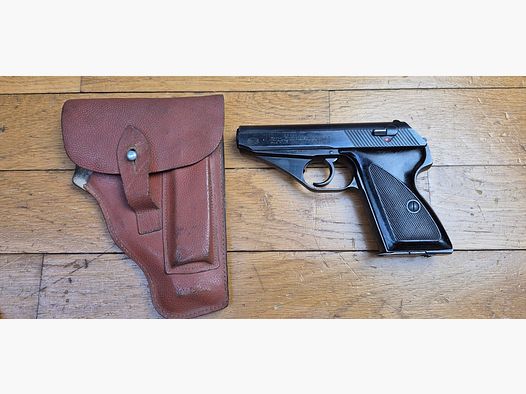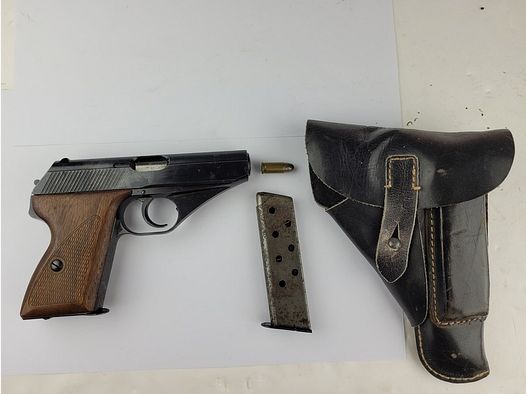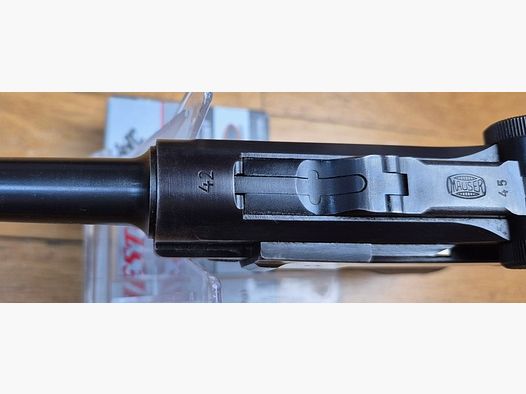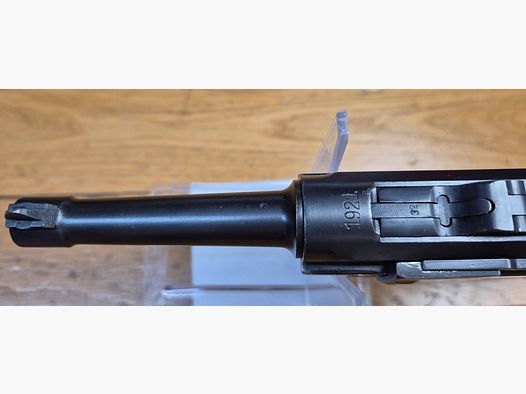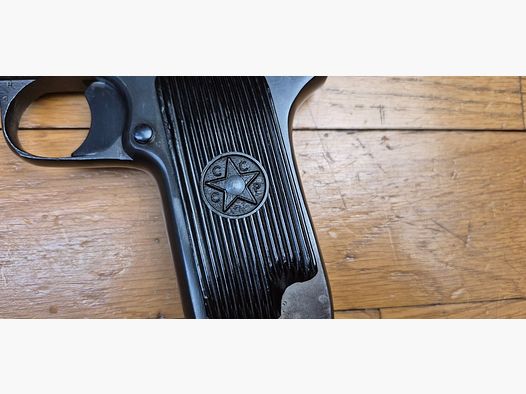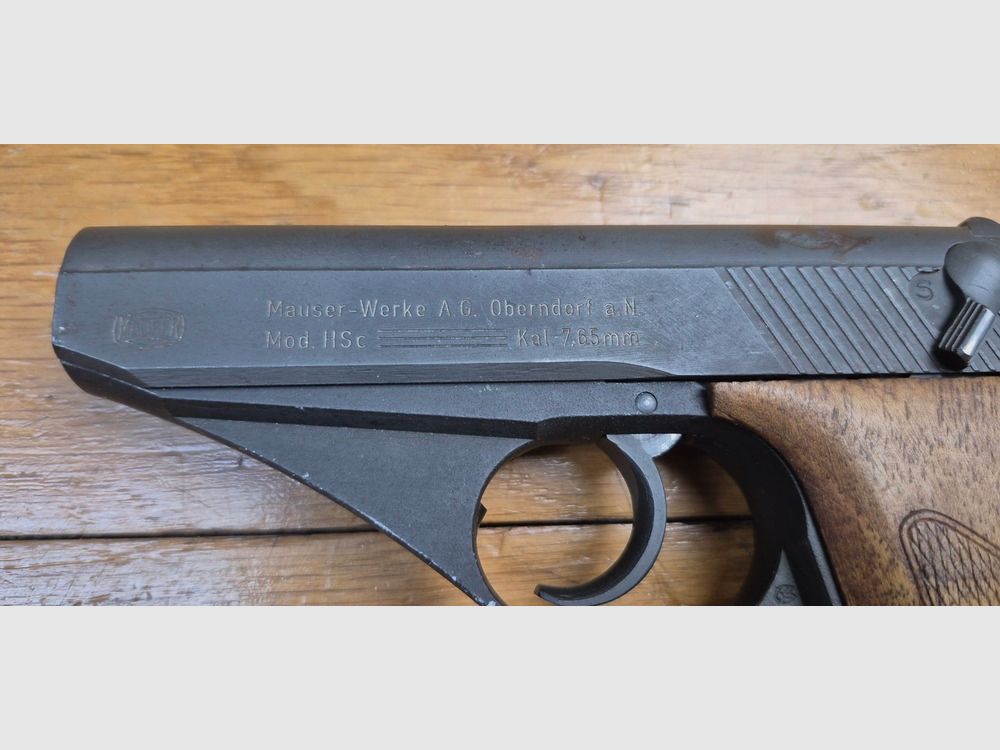
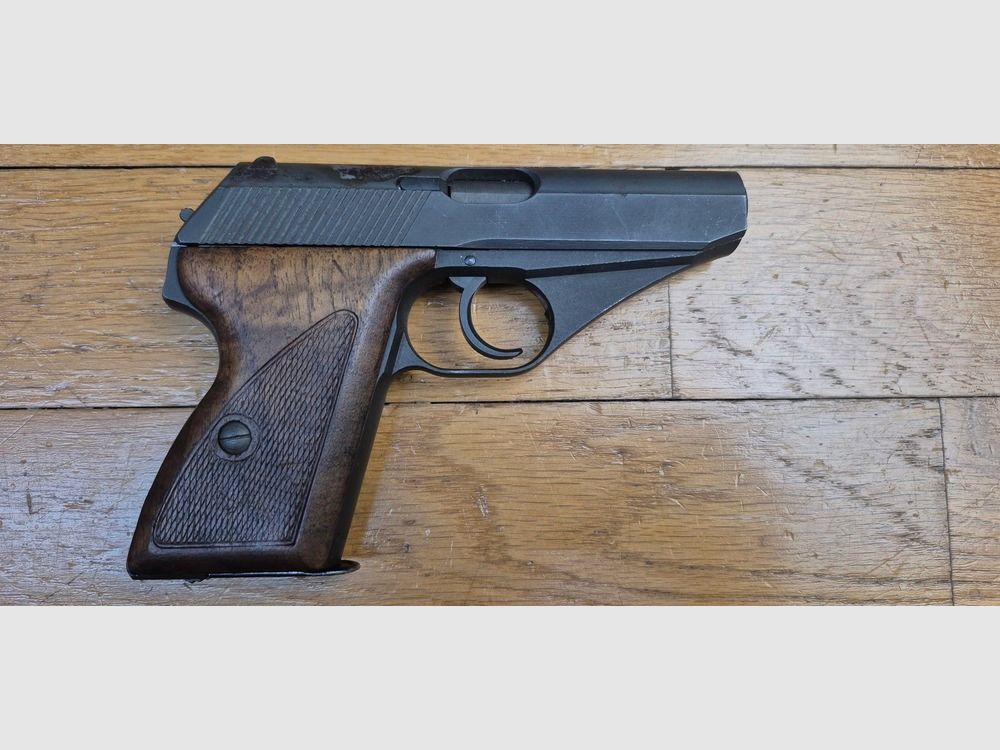
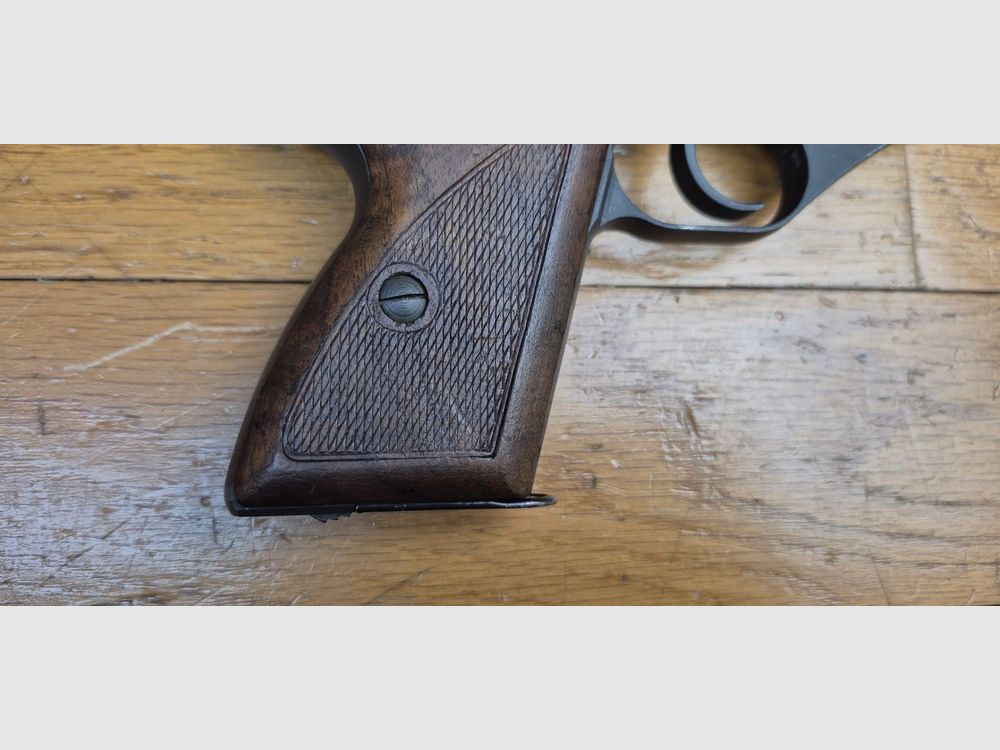
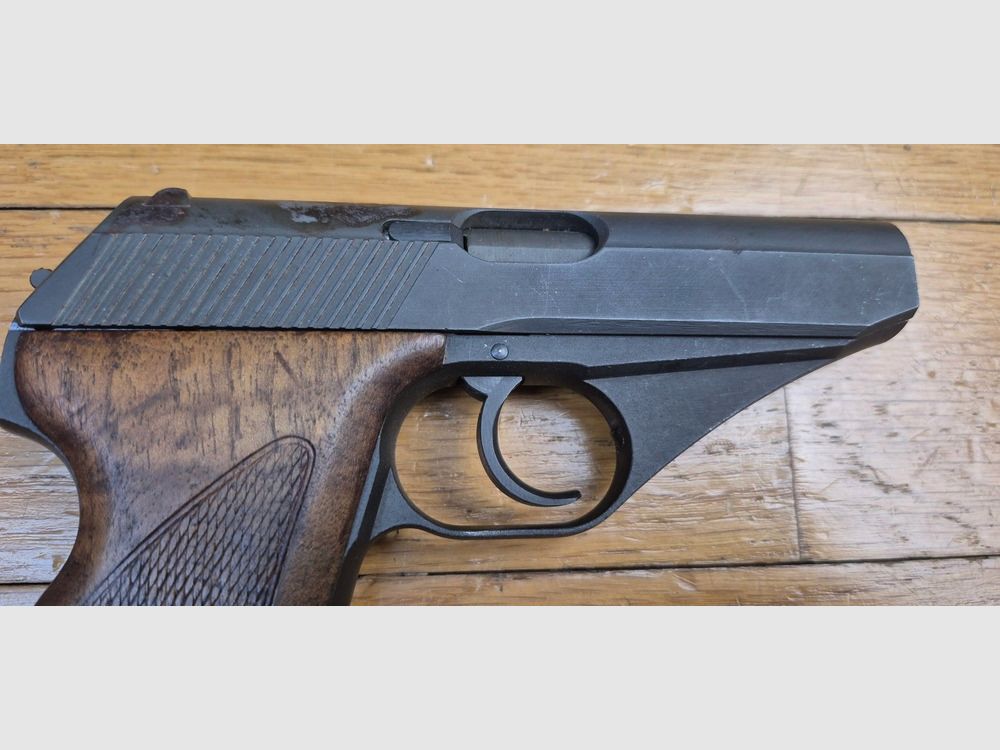


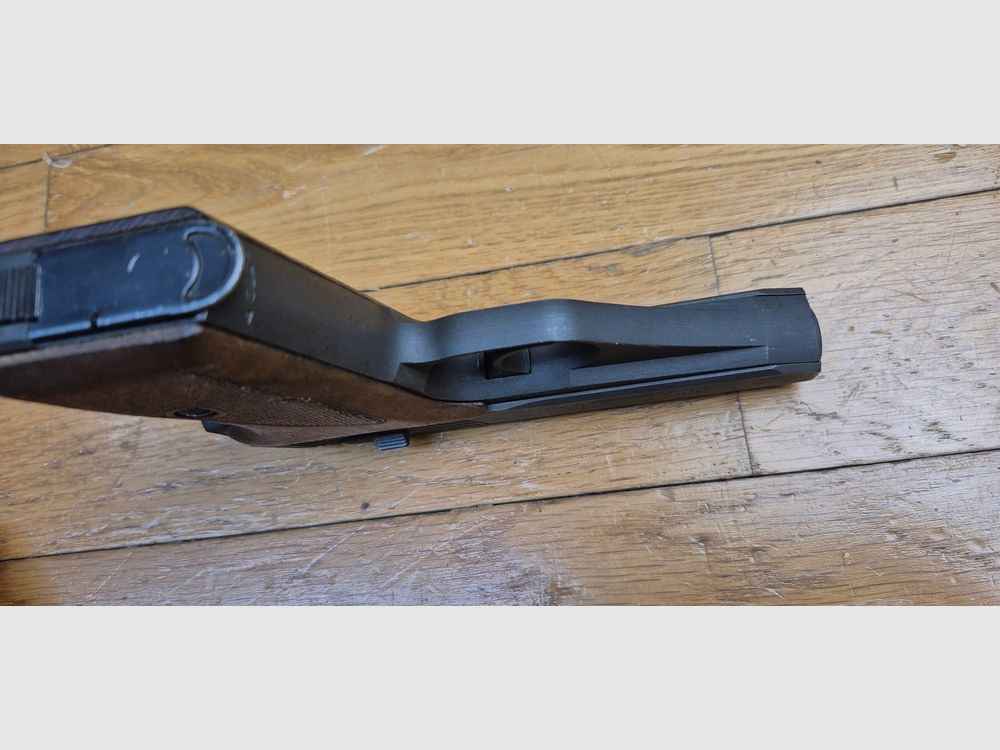
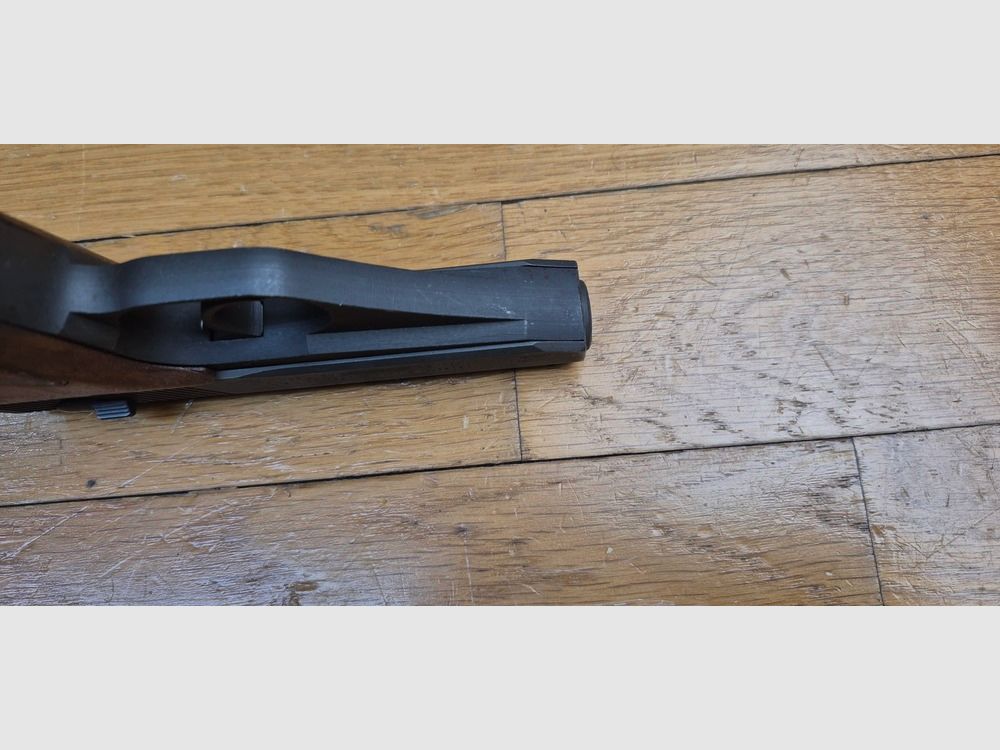
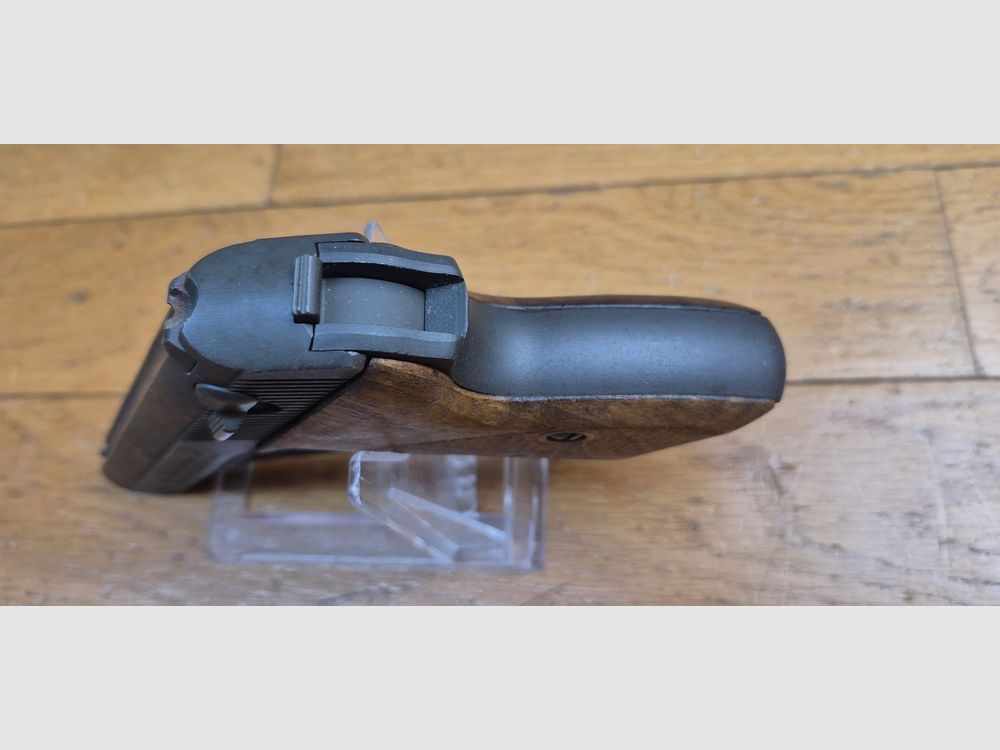
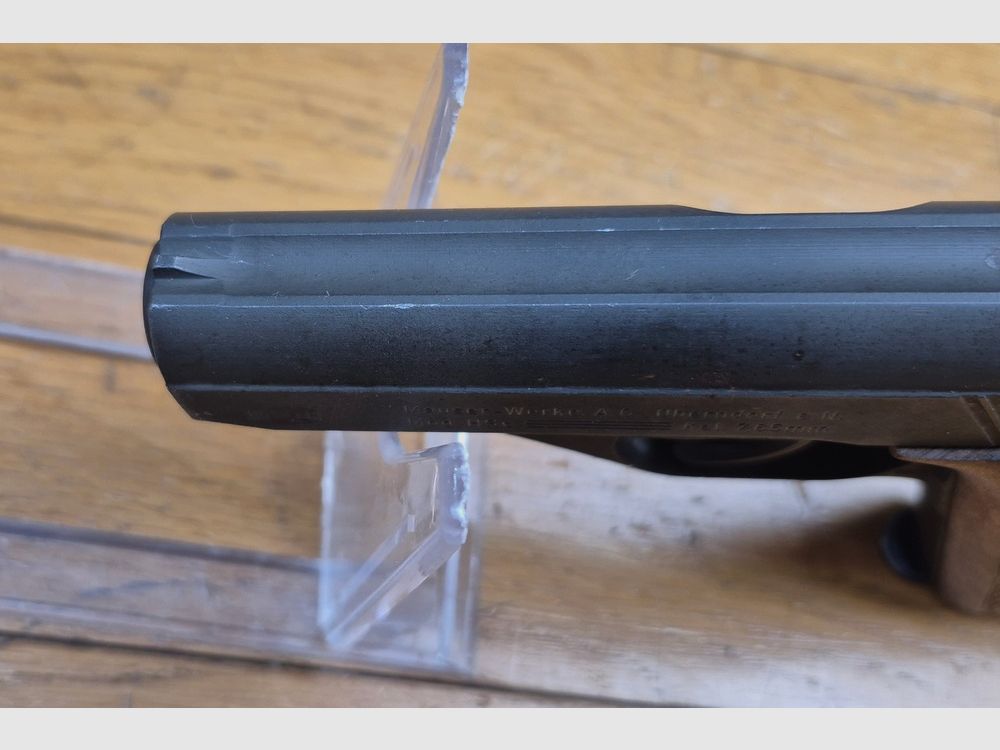
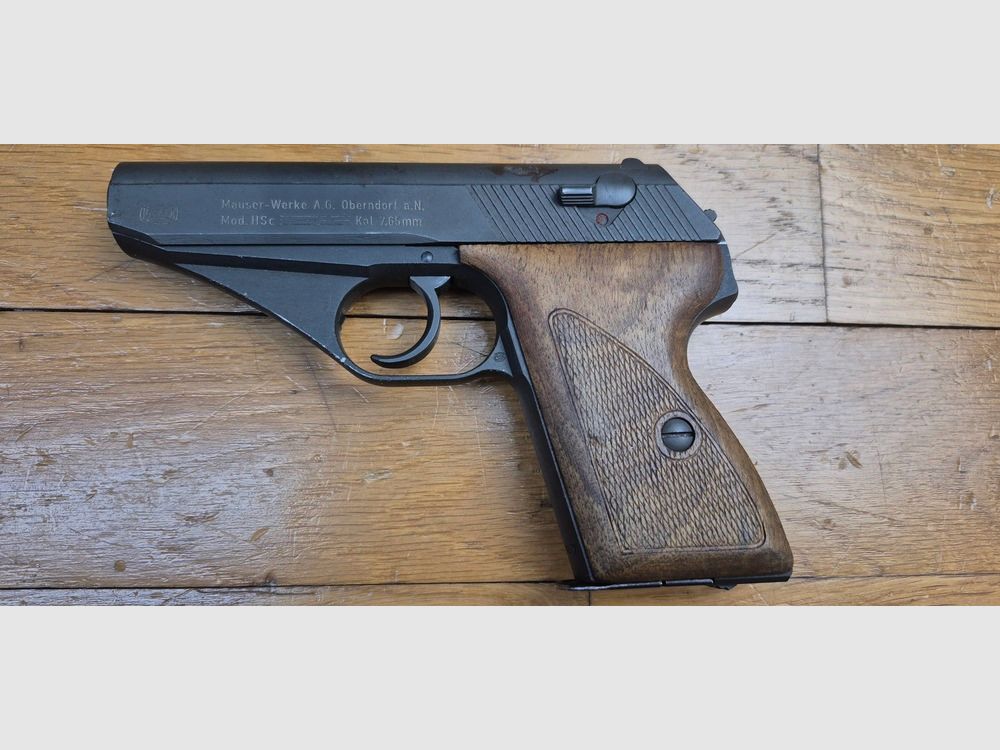
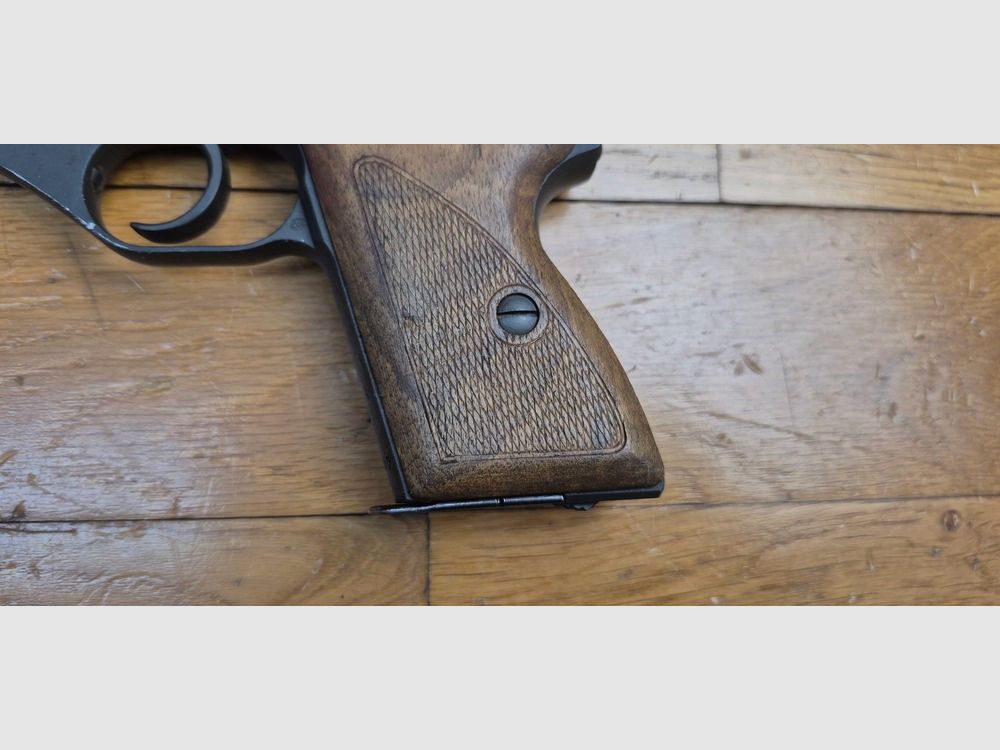
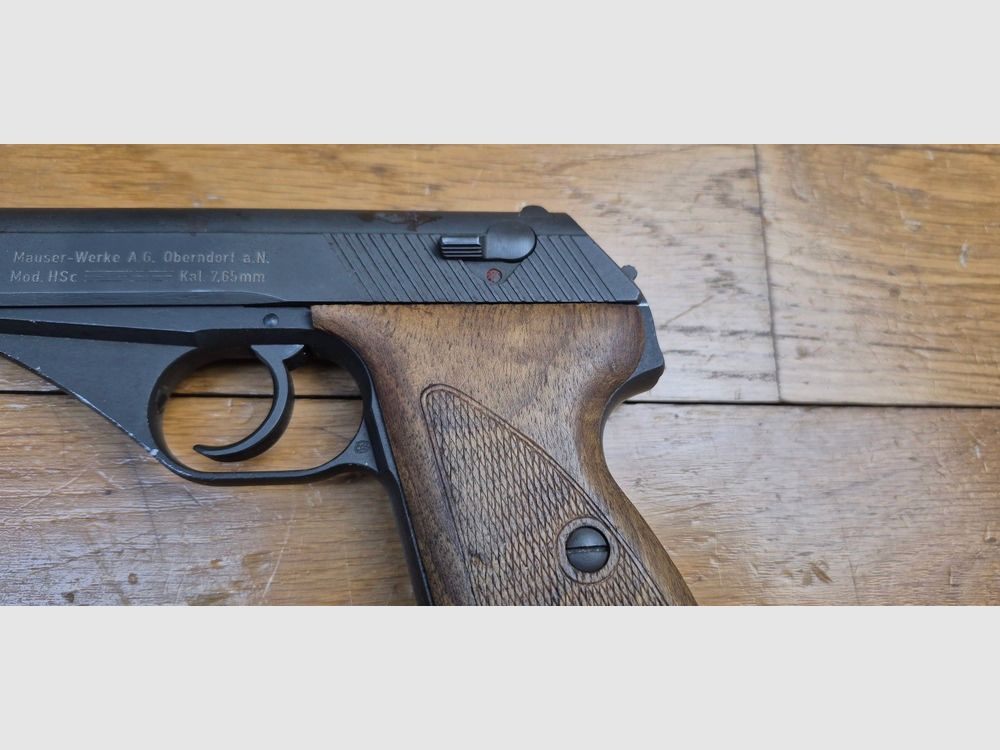
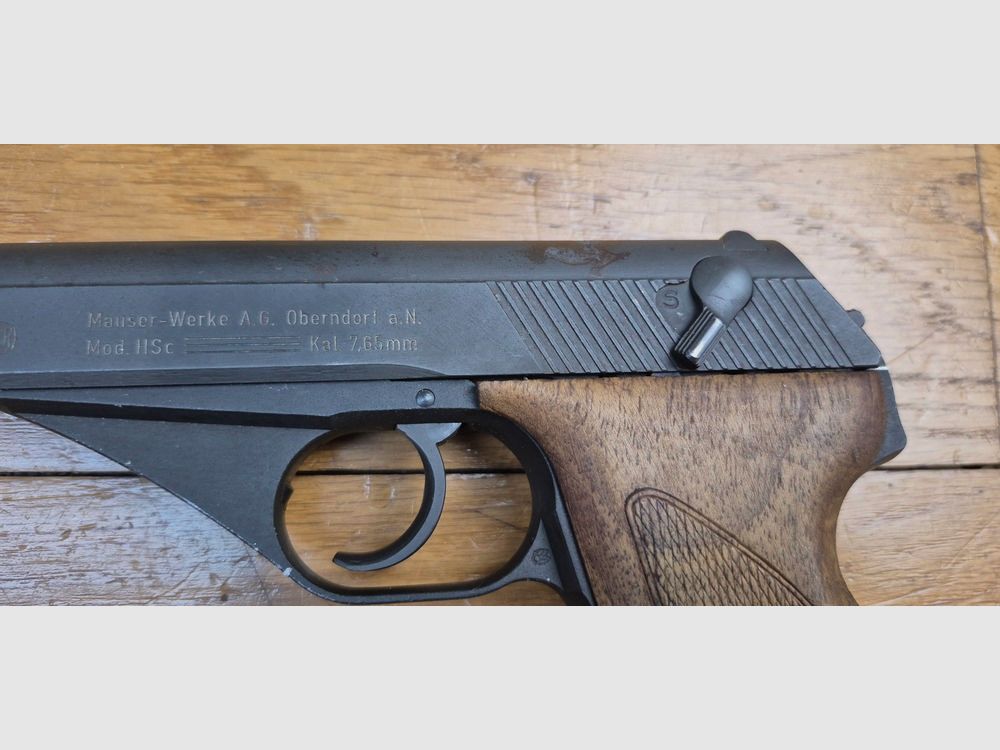

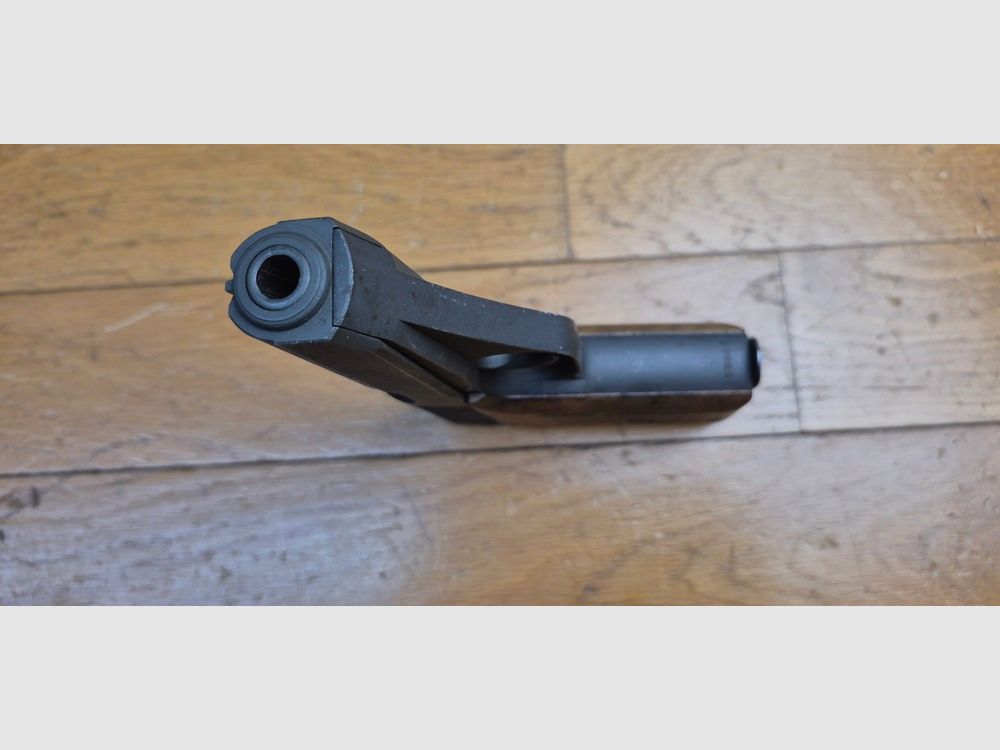


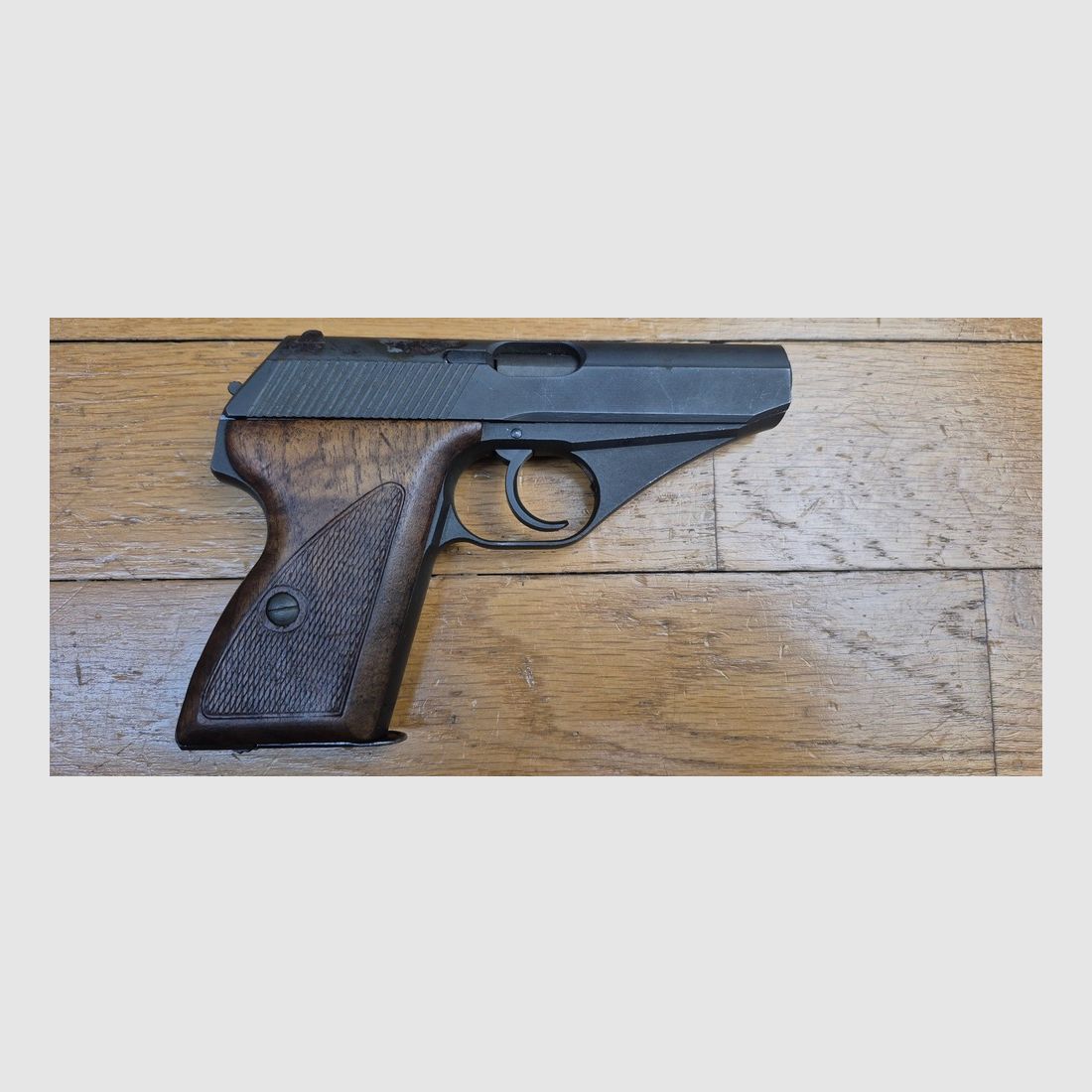
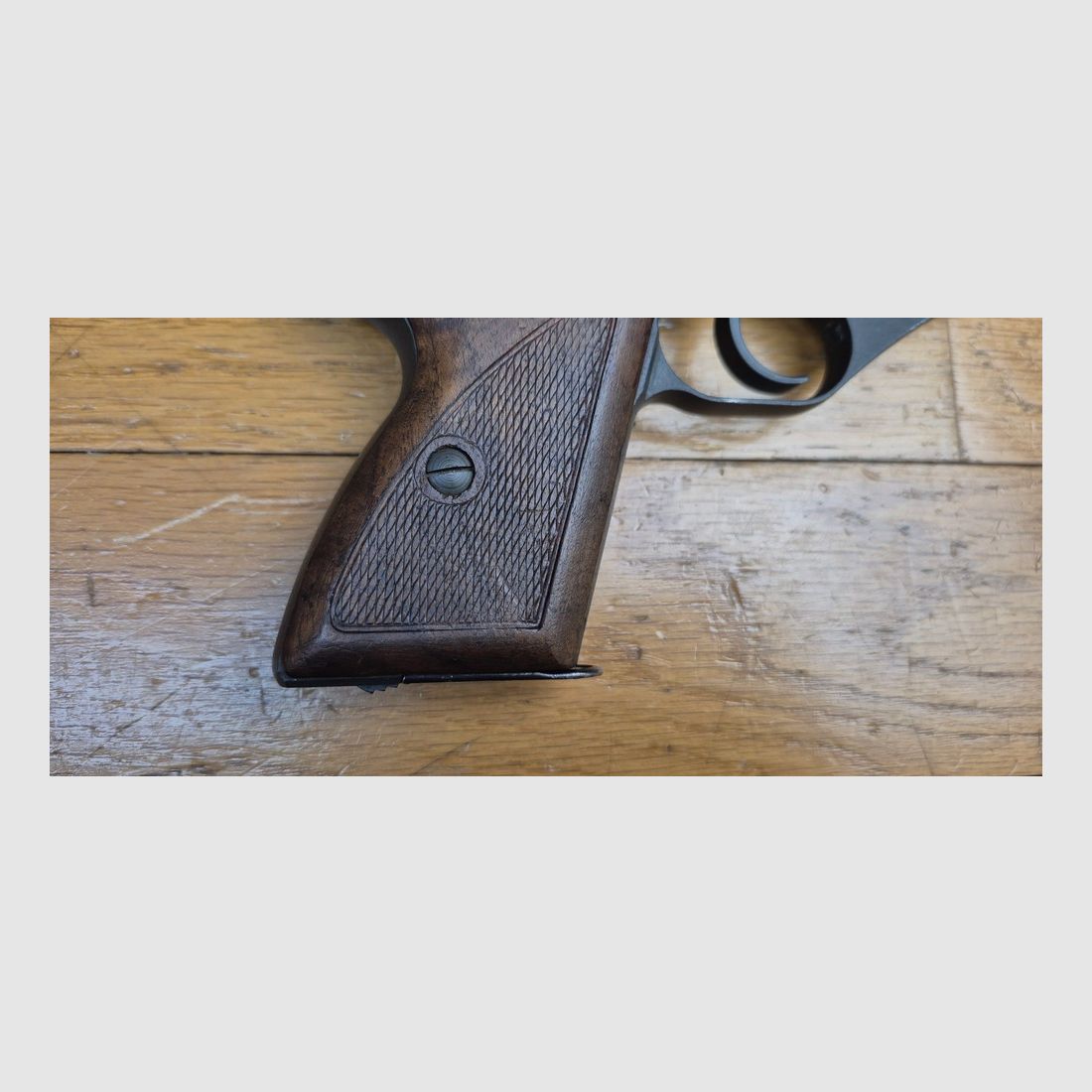
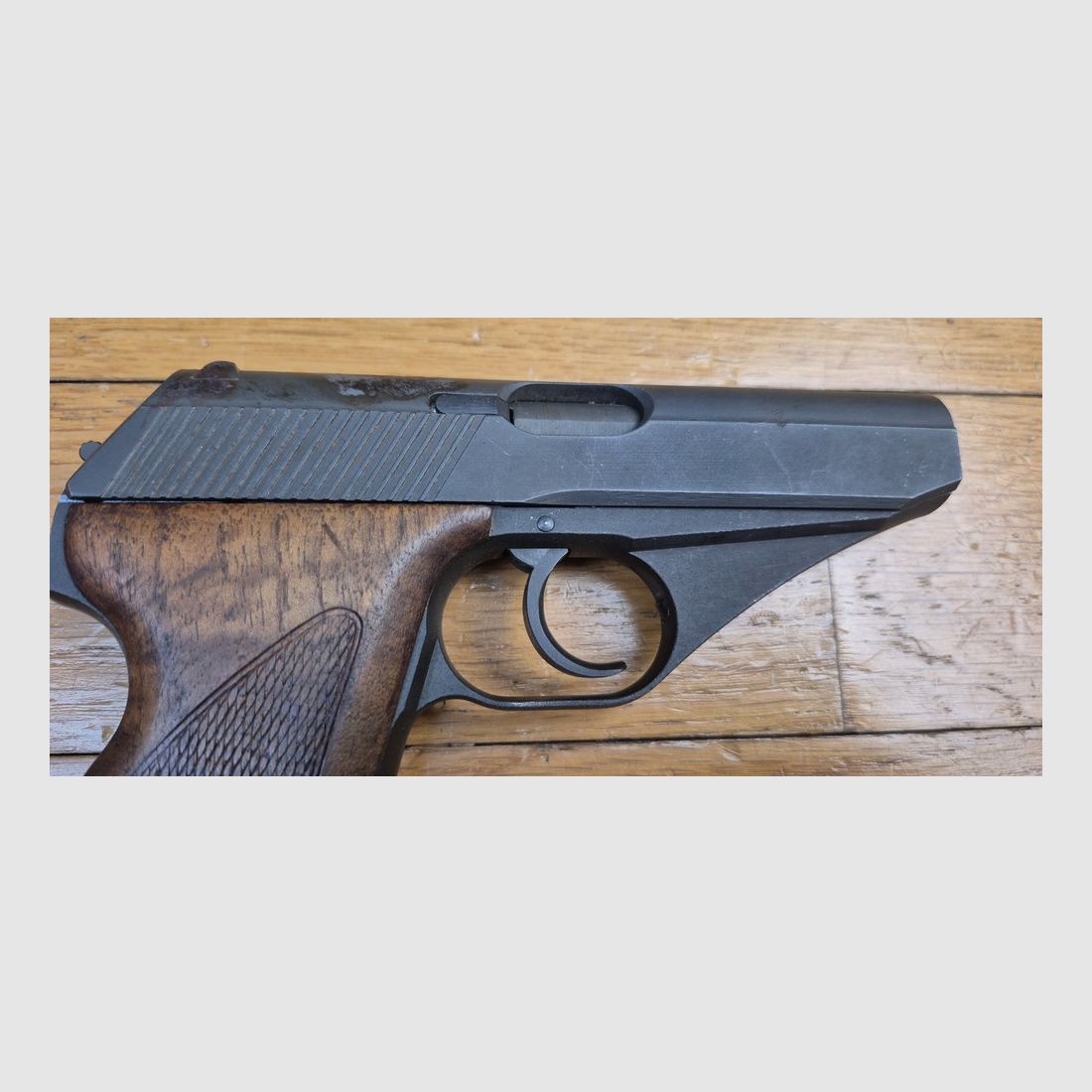


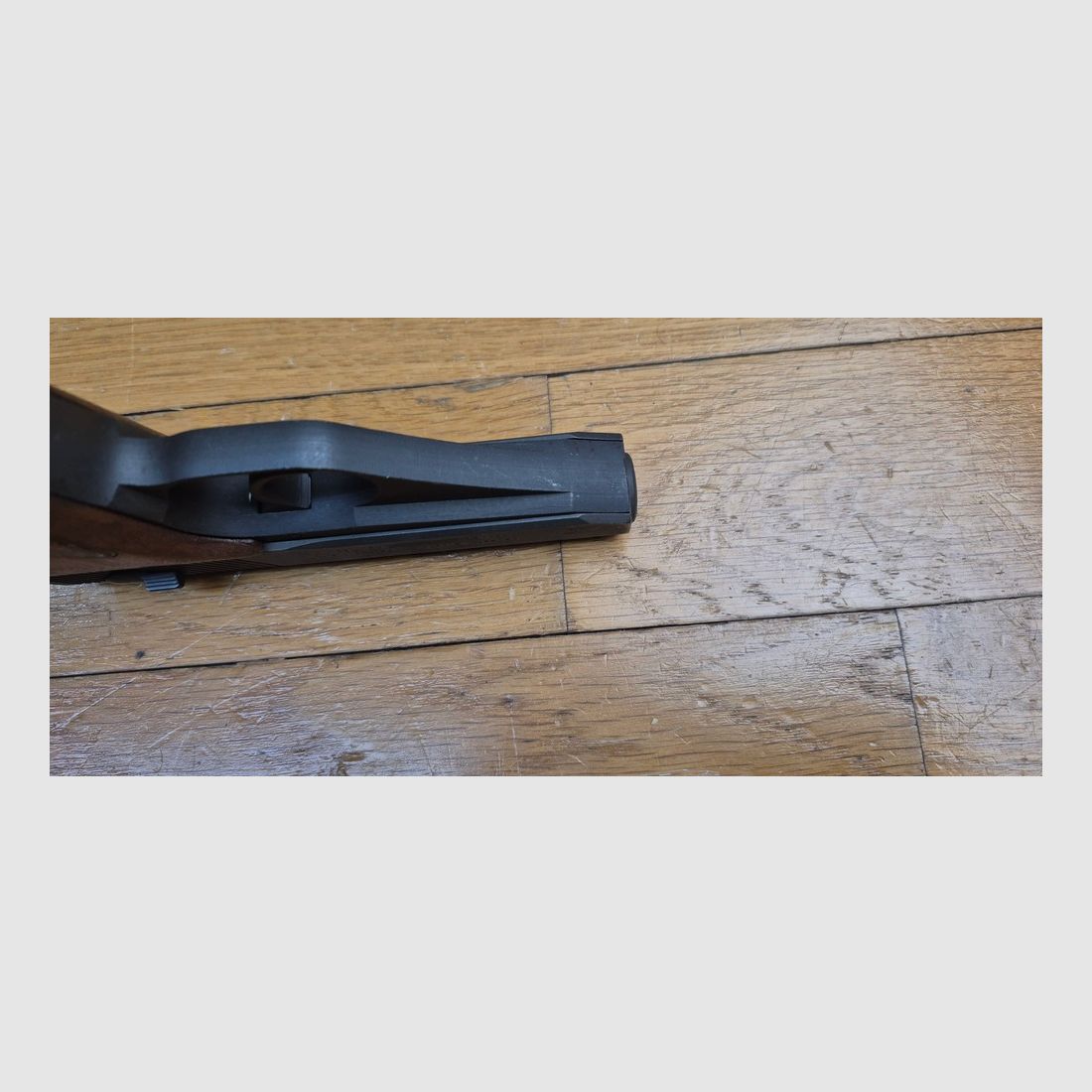
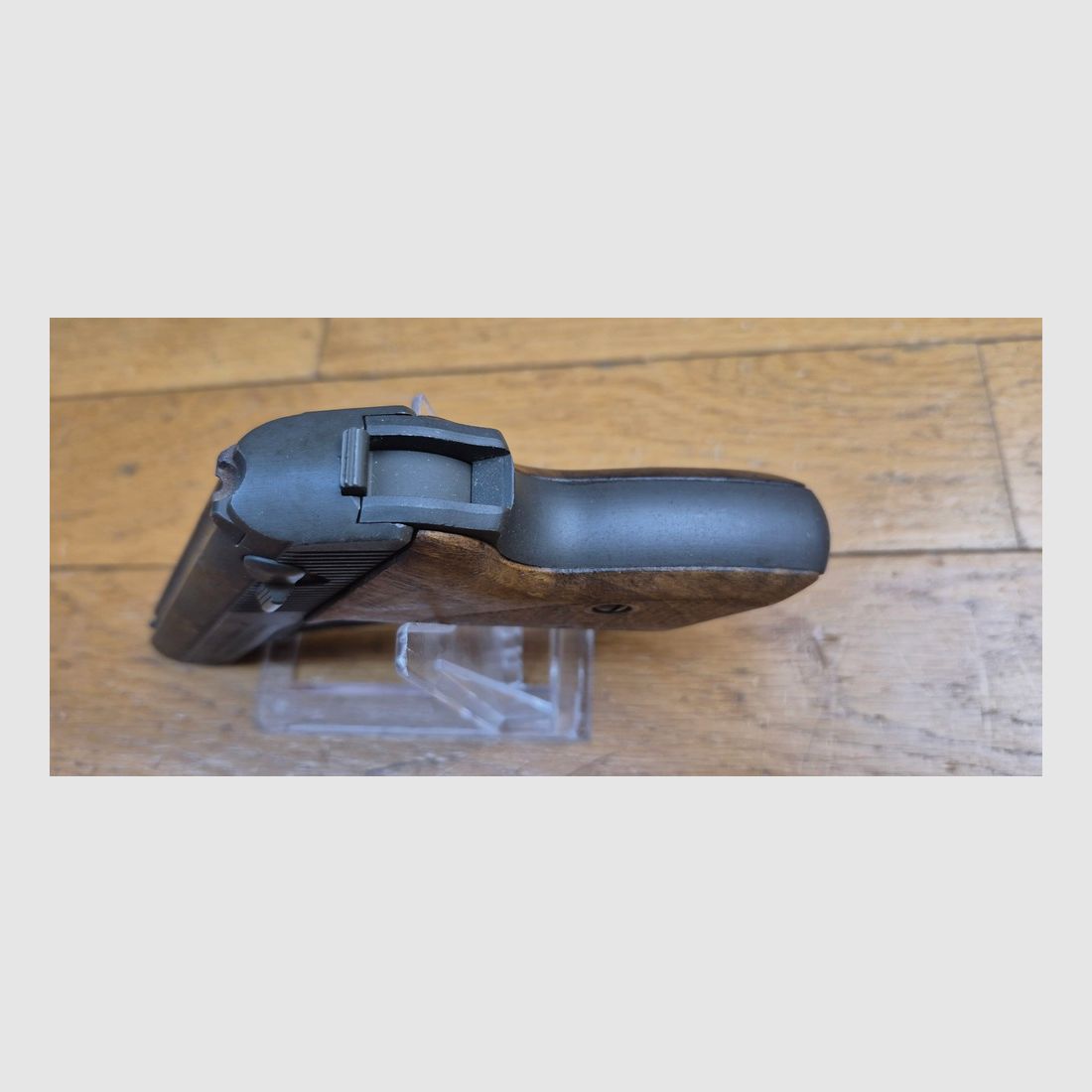
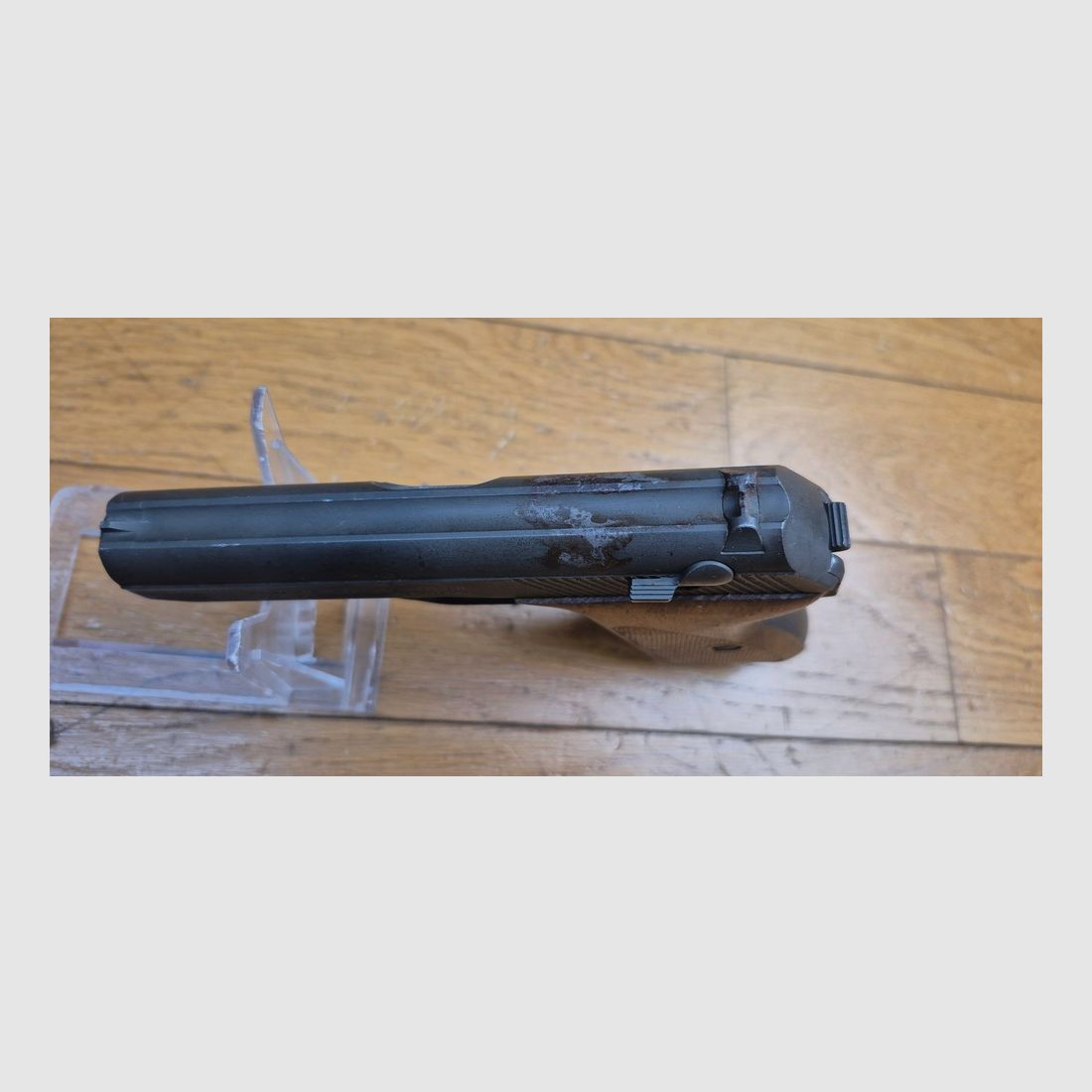

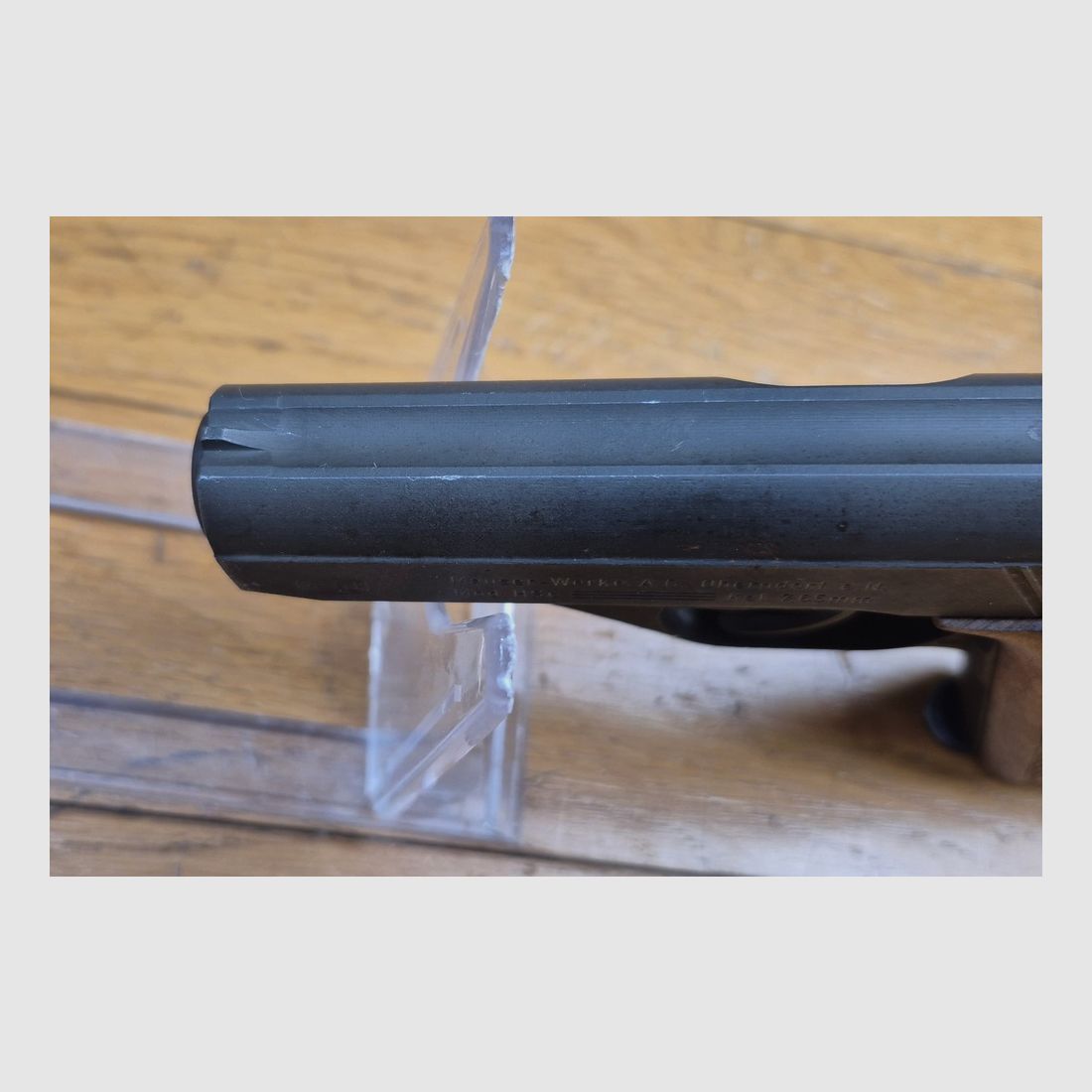
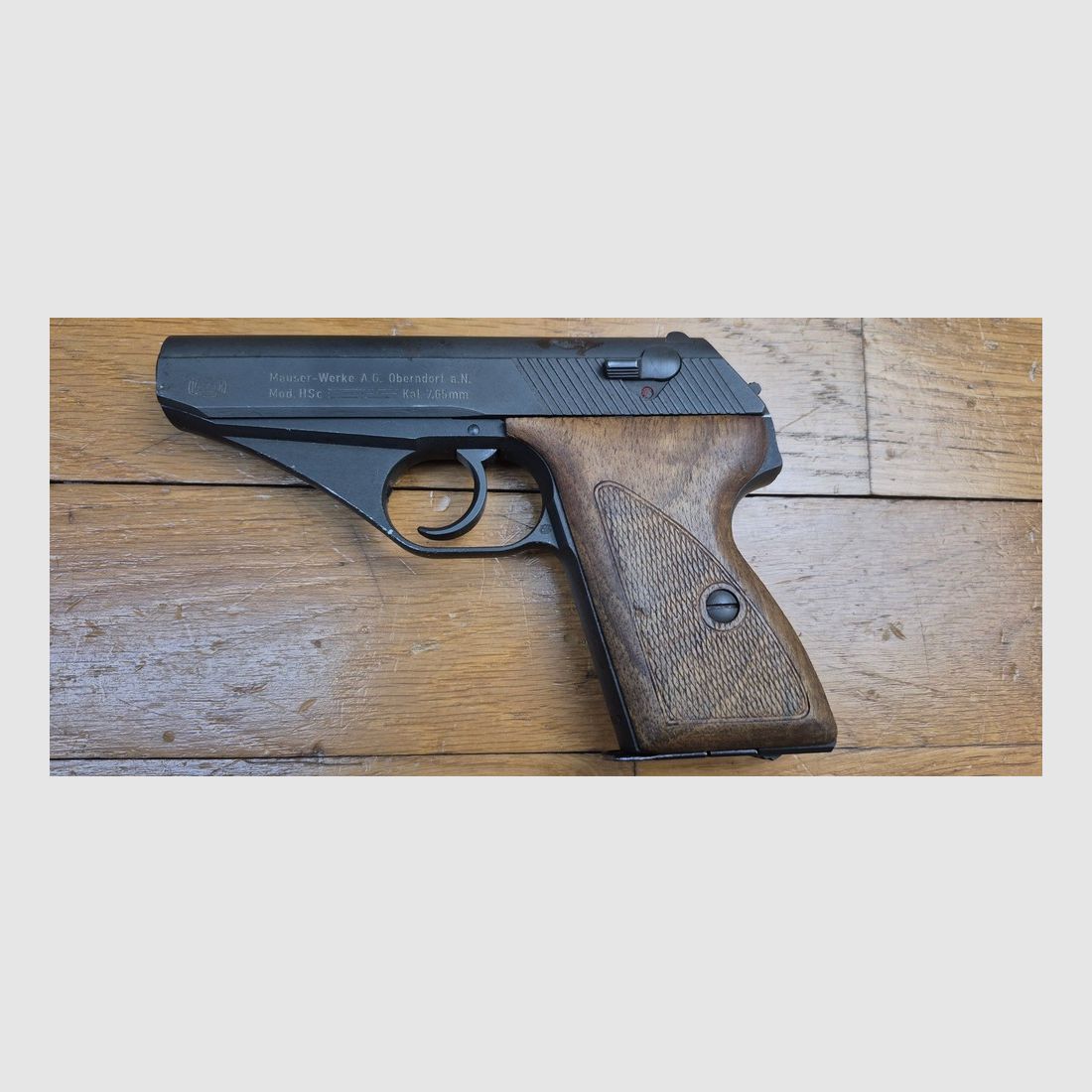


Beautiful Mauser Pistol Model HSC – Rare Mauser production under French Occupation (“early model”) – In 7.65mm and eight rounds – Piece from 1945 – Good aesthetic and mechanical condition – Excellent barrel – TBE+
≈ $659
Price at the dealer: 600 €. Converted at the ECB rate as of November 20, 2026.
Purchase permit required
75002 Paris, France
9
ID: 10338383
Purchase from outside the EU: The firearm goes through an importer in your country, the dealer handles the export.
How buying from Europe works
Shop safely with Gunfinder
Our AI-powered seller identity verification makes Gunfinder the safest marketplace online.
Learn more
Details
- Original language
- French
- Brand
- Mauser
- Product
- Mauser HSc
- Category
- Purchase eligibility
- Required
- Condition
- New
- Location
- 🇫🇷 75002 Paris, France
- Availability
- In stock
Freshness
This listing is based on a mirrored offer, where the listing data was synced to us from a shop, dealer, or external marketplace. Please note that temporary price discrepancies may occur due to possible delays in data transmission.
- Source
- Flingus Maximus
- Last checked with the dealer
- 1 day ago
Description
Note:
The item is located abroad. Please note that delivery conditions, shipping times, and/or the purchase process may differ.
You could even say that, among German close-combat pistols from World War II, it’s probably one of the ones I see least often.
That’s not all that surprising, either.
Total production of the Mauser HSC (including postwar production, with the guns made for the US as well) did not exceed 335,000 in all.
That’s not a particularly impressive figure (in fact, it’s quite low) in the history of firearms—especially for a gun supposedly adopted during a major conflict.
During World War II, only around 252,000 were produced.
137,000 guns went to the Army, 27,000 to the Navy, 28,000 to various police units and similar organizations (Gestapo, Kripo, Eastern Police, Customs and the Ministry of Justice), and 59,000, all the same, went to the commercial market.
To be perfectly objective, I think a significant portion—and probably most—of the examples described by authors as “commercial” nevertheless ended up in the pockets and holsters of a number of soldiers and police officers who had not been officially assigned one as part of their duties, so to speak.
But in the end, you can’t say that this excellent gun is common.
Another reason for the gun’s relative rarity is tied to its production history.
Mauser saw the HSC as a quality response to the insolent success of its archrival Walther and its star models, the Walther PP and PPK. From the outset, the Mauser HSC was therefore intended for the police and self-defense markets.
Mauser also aimed to produce a gun that was easier to manufacture than its Mauser Model 1934, which was merely an evolution of its Model 1914. Development of the Mauser HSC had begun back in 1934. Pre-production prototypes were ready by 1937, and it was selected and ready for mass production by 1938.
However, the German Armaments Office refused to allow production to begin until 1940, on the grounds that it wanted Mauser to focus on fulfilling its existing military contracts.
Don’t be skeptical when you look at the serial numbers on your Mauser HSC and compare them with what I’ve told you above.
The clever folks at Momo started numbering the guns at the magic number of… 700,000! That’s right.
They had to make it look like a successful gun from the start if they wanted to catch up with the little Walther PP and PPK, which had entered the race much earlier and were already adored.
All these HSCs were made at Mauser’s main factory in Obendorf am Neckar. “HSc” stands for Hahn-Selbstspanner C / Hahn-Selbstspanner Pistole Ausführung C = Model C self-cocking pistol. The gun is available in 7.65 or .32 ACP. It holds 8 rounds.
The gun is modern. Its almost invisible but accessible hammer and contoured trigger guard made it very practical to carry in a coat pocket, with no protrusions to get in the way when drawing it quickly.
Accurate, discreet, reliable, and firing the 7.65 cartridge, which in my opinion has better ballistics at very close range than 9mm Para for this kind of use (your ears are spared, there’s almost no recoil, it works well in more compact and discreet guns, ultimately making it better suited to close-range shooting that’s still under control).
The Mauser HSC really is a gun for very, very close combat.
It’s no surprise that many German police officers and army officers took a liking to it. Production even resumed for the police between 1968 and 1977, such a good job had it done for its owners. This later production included blued examples instead of browned ones, and was also made in .380 ACP (most postwar examples are American Eagle models made for the US market). Even the French would adopt it. We’ll get to that.
Ours is a very fine French example from the period of the
Fall of the Third Reich. Yes, really.
This is one of the first few pistols made at the Mauser factory in Oberndorf under French occupation, from April 1945 (Adolf had not yet used his personal Walther PPK for an act that brought relief to many people) until the site was destroyed by our own hands in May 1946.
The firearm is in excellent condition. It is a phosphate-finished model, not blued, with wooden grips. This is how you can tell the early production models from the later ones, which are blued and most often have black Bakelite grips. They can be found with or without a lanyard ring (especially the very earliest ones).
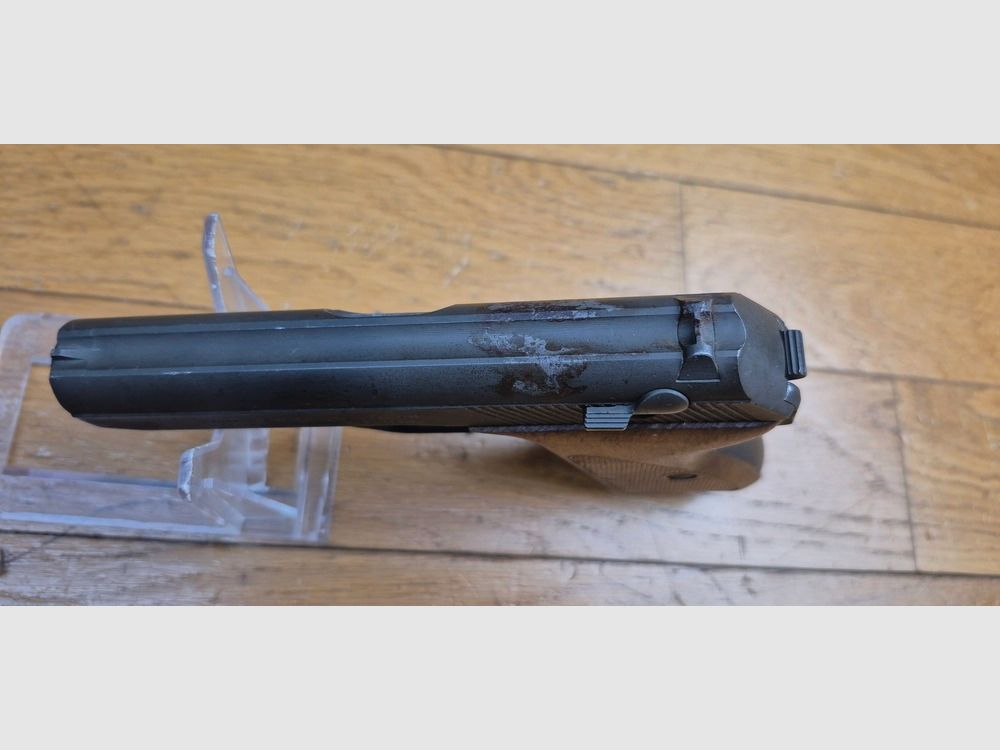
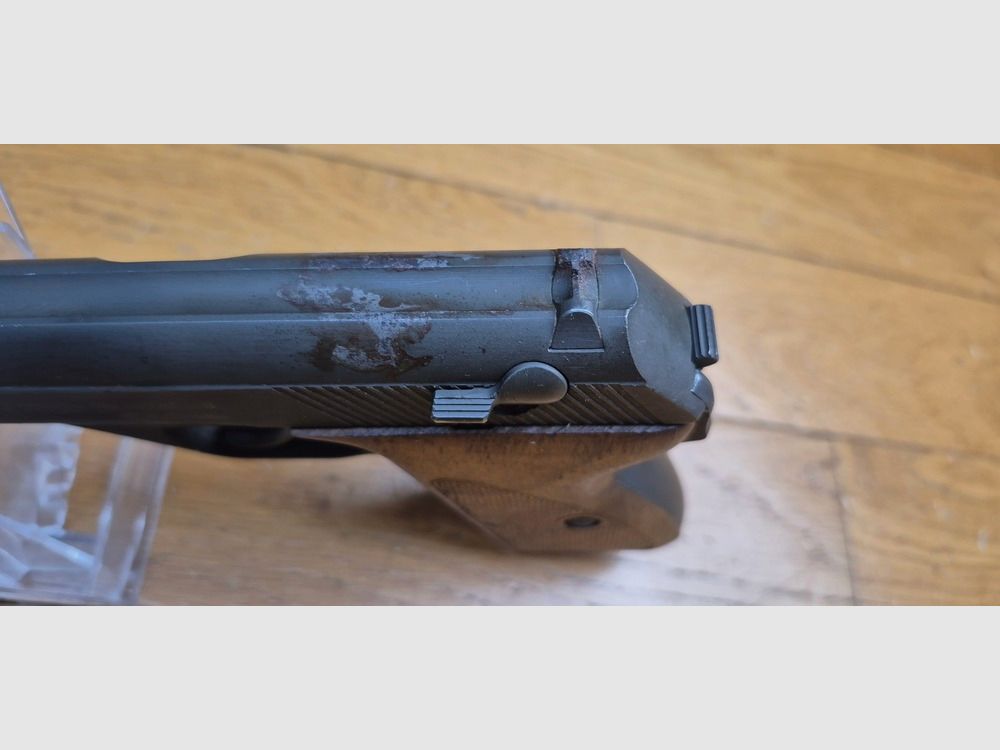
It still retains 85% or more of its phosphate finish, with just one worn spot on the top of the frame. That’s quite rare, as it isn’t scratched all over like this finish often is. It’s even very attractive.
The small worn spot in the phosphate finish looks much worse in my EXCESSIVELY close-up photos, which make the slightest flaw look like a gigantic problem. But at least you know everything. Otherwise, this is a truly beautiful firearm. Very good condition+
Besides the model’s inherent qualities and the firearm’s excellent condition, this is a rare and highly collectible piece.
The testimony of August Weiss, the company’s last Director of Production, a position he had held since the 1930s, made it possible to estimate this Mauser production accurately, despite the loss of records when the complex was destroyed. Between August 1945 (although the factory was occupied in April, production did not resume until August 1945) and May 1946, Mauser produced 47,696 98k rifles, 6,375 .22 L.R. rifles, just under 20,000 HSC pistols (about 19,400 according to Weiss) and, even more rarely, about 2,560 Luger P.08s and about 3,500 P.38s. There’s one of those P.38s here, and you can also read about the particular history of the French occupation of Mauser.
Ours is one of the roughly 20,000 Mauser HSCs produced under French control. That gives you an idea of just how “common” this variant is.
Many of these firearms stayed in military pockets and went on to Indochina and Algeria, where more were lost. This HSC is a genuine little collector’s item, highly sought after in the USA. They’re much rarer there than here, for the obvious reason that the French brought them home.
How can you identify these “ham and butter” HSCs?
Our American friends have identified three types, with some variations.
The “early” types, like ours, are phosphate-finished with wooden grips, then phosphate-finished with black Bakelite grips, with or without lanyard rings (some “early” models do have them, while “late” models don’t). The “late” models are blued and have Bakelite grips.
But there were also combinations specific to these turbulent times. Just under 15,000 were actually “produced” using different materials at different times, while about 5,000 were simply assembled from whatever was left in the Mauser factory when we arrived.
The only way to be sure you have a Mauser HSC made at Mauser under French control is to have one with a serial number between 952002 and 971239, the lowest and highest recorded numbers (19,237 firearms in total, a figure consistent with August Weiss’s estimate of fewer than 20,000 firearms produced).
Above all, the firearm must have an “RW” stamp where the trigger guard meets the frame. Its meaning is unknown, but it marks HSCs produced under French control.
The serial number of today’s Mauser HSC, 953.xxx, confirms that it is an early model, probably made in the fall of 1945. The stamp is present on the trigger guard in the same spot.
Mechanically, it’s impeccable. The recoil spring is nice and firm. The firing action is crisp and positive.
Personally, having handled quite a few military firearms from that era, I was surprised by how light the trigger pull is in double action.
The action for a firearm like this. Its barrel is mirror-bright and even like new! An excellent firearm.
In very good condition and uncommon in this well-preserved phosphated version, it’s the best alternative to the Walther PP or PK, which are much more common. An excellent and uncommon addition for a collector of iconic German firearms from World War II.
CATEGORY B FIREARM UNDER THE CSI: FIREARM REQUIRING A PERMIT, VALID ID AND LICENCE PHOTOCOPIES REQUIRED – SIA ACCOUNT MUST BE OPENED. Shipment with signature required in two separate parcels at least 48 hours apart.
*****************************************************************************************************************
Let’s say it again! Flingus Maximus gun shop in Paris and throughout France is also here to buy your firearm and militaria collections, appraise your firearms, and answer your questions about legislation or firearms in estates and inheritances. Contact your favorite gun dealer via our contact form or at [email protected]
(Show description in original language)
Finalement, on ne le voit pas souvent le petit Mauser HSC.
On peut même dire que parmi les pistolets de sécurité immédiate allemands de la seconde guerre mondiale, c’est sans doute un de ceux que je vois le moins souvent.
Ce n’est pas non plus si étonnant que cela.
La production total du Mauser HSC (y compris l’après guerre avec les productions pour les USA en plus) n’a pas dépassé les 335.000 exemplaires en tout.
Ce qui n’est pas un chiffre si considérable (et même assez peu) dans l’Histoire de l’armement. Surtout quand l’arme est censée avoir été adoptée dans un conflit majeur.
Pendant la seconde guerre mondiale, il n’en a été produits qu’environ 252.000 seulement.
137.000 armes ont rejoint l’Armée, 27.000 la Marine, 28.000 diverses unités de Police ou assimilés (Gestapo, Kripo, Polizei de l’Est, Douanes et Ministère de la Justice) et 59,000, quand même, sont allés sur le marché commercial.
Très objectivement, je pense qu’une partie significative et sans doute le gros de ces exemplaires dits « commerciaux » par les auteurs sont quand même partis rejoindre les poches et étuis d’un certains nombres de soldats et policiers auquel ils n’étaient pas attribués « par fonction » si je puis dire.
Mais, au final, on ne peut pas dire que l’arme, excellente, soit courante.
Une autre raison de la relative rareté de l’arme est liée à l’historique de sa production.
Le Mauser HSC était vu chez Mauser comme une réponse de qualité à l’insolent succès de l’ennemi intime de chez Walther avec ses stars Walther PP et PPK. Le Mauser HSC était donc destiné dès l’origine au marché policier et de l’auto-défense.
Mauser visait aussi à produire une arme plus simple en fabrication que son Mauser modèle 1934, qui n’était qu’une évolution de son modèle 1914. Le développement du Mauser HSC avait commencé lui commencé en 1934. Les prototypes de pré-série étaient prêts dès 1937. Et il était sélectionné et prêt pour la production de masse dès 1938.
Toutefois, le Bureau Allemand de l’Armement refusa le début de la production jusque 1940 au motif qu’il souhaitait que Mauser se concentre sur l’exécution de ses contrats militaires déjà signés.
Ne soyez pas dubitatif en regardant les numéros de série de vos Mauser HSC et en les comparant avec ce que je vous raconte plus haut.
Les petits malins de chez Momo commencèrent la numérotation des armes au chiffre de magique de…700.000! Rien que cela.
Fallait bien faire croire à une arme à succès dès la naissance si on voulait rattraper les petits Walther PP et PPK partis bien plus tôt dans la compétition et déjà adulés.
Ces HSC là ont tous été fabriqués à l’usine mère de Mauser à Obendorf am Neckar. « HSc », cela se développe en Hahn-Selbstspanner C / Hahn-Selbstspanner Pistole Ausführung C = pistolet semi-automatique modèle C). L’arme existe en calibre 7,65 ou 32 acp. C’est un 8 coups.
L’arme est moderne. Son chien quasi non visible mais accessible et son pontet profilé rendait cette arme très pratique à porter dans une poche de manteau, aucune aspérité ne s’opposant sa sa sortie rapide d’une poche.
Précis, discret, fiable, et tirant la cartouche de 7,65, ayant à mon sens une meilleure balistique à très courte distance que le 9 para pour un tel usage (oreilles préservées, quasi aucun recul, adaptée aux arme plus compactes et discrètes, in fine plus aptes aux tirs rapprochés et néanmoins contrôlés).
Le Mauser HSC, c’est vraiment l’arme des combats très très rapprochés.
Pas étonnant que beaucoup de policiers allemands et officiers de l’armée en aient fait leur miel. On a même repris sa production pour la police entre 1968 et 1977 tant il avait bien servi ses propriétaires. Cette dernière production a vu des exemplaires bleutés au lieu de bronzé et a été aussi produite en court ou 380 ACP ( la plupart de ceux d’après guerre sont des American Eagle produits pour le marché US ). Même les français l’adopteront. On va le voir.
Le notre est une très bonne pièce française de la période de la chute du III°Reich. Eh oui.
Car c’est une des rares premières fabrications de l’Usine de Mauser Oberdorf sous occupation par les français à partir d’avril 1945 (Adolf n’avait pas encore utilisé son Walther PPK personnel à un usage qui a soulagé bien du monde) jusqu’à sa destruction du site par nos blanches mains en mai 1946.
L’arme est en excellent état. C’est un modèle phosphaté et non bronzé à plaquettes bois. C’est à cela qu’on distingue les premières fabrication des suivantes qui sont bronzées et le plus souvent avec des plaquettes de crosses bakélites noires. On les trouve avec ou sans anneau de dragonne (surtout les tout premiers).
Il possède encore tout son phosphatage à 85% ou plus avec juste un manque en sommet de carcasse. C’est assez rare car il n’est pas griffé de partout comme souvent avec ce revêtement. Il est même très beau.
Ce petit manque de phosphatage est très exagéré par mes EXCESSIFS gros plans qui font du moindre défaut un gigantissime problème. Mais bon, comme ça vous savez tout. Autrement arme vraiment très belle. TBE+
Outre les qualité intrinsèques du modèle et l’excellent état de la pièce, c’est une arme rare très intéressante en collection.
Le témoignage d’August Weiss, dernier Directeur de la Production de la maison depuis les années 30, a permis d’évaluer, faute des documents perdus lors de la destruction du complexe, mais avec précision, cette production d’armes Mauser entre août 1945 (car si l’usine a été occupée en avril, la production n’a repris qu’en août 45) et mai 1946.
Mauser a produit sur cette courte période 47.696 fusils 98k, 6.375 carabines 22 L.R, un peu moins de 20.000 pistolets HSC (environ 19.400 selon Weiss) et, plus rares encore, environ 2.560 Luger P.08 et environ 3.500 P.38. Il y en a un ici de ces P38 et vous y retrouverez aussi l’histoire particulière de l’occupation de Mauser par les français.
Le notre est de ces quelques 20.000 Mauser HSC produits sous contrôle français. C’est vous dire si cette variante est « courante ».
Beaucoup de ces armes sont restées dans des poches militaires et reparties en Indochine et Algérie où il s’en est encore perdu. Cet HSC est un vrai petit collector très recherché aux USA. Ils y sont bien plus rares que chez nous pour la raison évidente que ce sont les français qui les ont ramenés à la maison.
A quoi les reconnait-on ces HSC « jambon beurre » ?
Nos amis américains en ont répertoriés trois types avec des mix.
Les types « early » (précoces) comme le notre sont phosphatés et plaquettes bois puis phosphatés avec plaquettes bakélite noires du meilleur aloi, anneaux de dragonne ou pas (il y a quand même des « early » avec et les « late » sont sans). Les « late » (tardifs), eux, sont bronzé et à plaquettes bakélite.
Mais il y a eu des mélanges propres à ces périodes troublées. Environ un peu moins de 15.000 ont été effectivement « produits » avec des matières différentes selon les périodes mais environ 5.000 ont été juste assemblés avec ce qu’il restait dans l’usine mauser à notre arrivée).
Le seul moyen d’être sûr est d’avoir en main un Mauser HSC produit chez Mauser sous contrôle français en main est de l’avoir avec un numéro compris entre 952002 et 971239 pour les numéros extrêmes répertoriés (soit 19.237 pièces, chiffre cohérent avec l’estimation d’August Weiss de moins de 20.000 armes produites).
Et surtout il convient que l’arme soit doté d’un poinçon « RW » à la jonction pontet-carcasse dont la signification n’est pas connue mais qui est la marque des HSC produits sous contrôle français.
Le numéro de série en 953.xxx de notre Mauser HSC de ce jour confirme bien un tout modèle précoce produit encore en 1945 probablement à l’automne. Le poinçon est bien présent toujours en pontet au même endroit.
Il est mécaniquement impeccable. Le ressort de culasse est bien ferme. La percussion est nette et franche.
A titre personnel, maniant pas mal d’armes militaires d’époque, j’ai été surpris par sa détente assez souple en double action pour une telle arme. Son canon est miroir et même neuf ! Une excellente arme.
Pièce en TBE et peu fréquente en version phosphatée bien conservée, elle constitue la meilleure alternative au Walther PP ou PK qui,eux, sont nettement plus fréquents. Une excellente et peu courante addition pour un collectionneur amateur d’armes allemandes symboliques de la 2ième guerre mondiale.
ARME DE CATÉGORIE B AU CSI: ARME SOUMISE À AUTORISATION, PHOTOCOPIES DE LA PIÈCE D’IDENTITÉ EN COURS DE VALIDITÉ ET DE LA LICENCE OBLIGATOIRES – COMPTE SIA OBLIGATOIREMENT OUVERT. Expédition contre signature en deux colis séparés d’au moins 48 heures obligatoire.
*****************************************************************************************************************
Répétons le ! L’armurerie Flingus Maximus à Paris et partout en France, est là aussi pour pour vos rachats de collections armes et militaria, vos estimations d’armes, vos questions de législation ou sur les armes dans les successions et héritage. Contactez votre armurier préféré via notre formulaire de contact ou à [email protected]