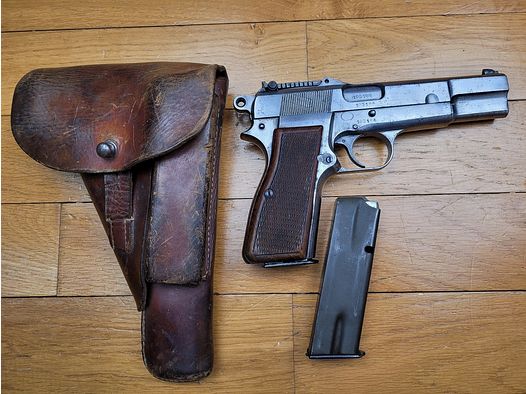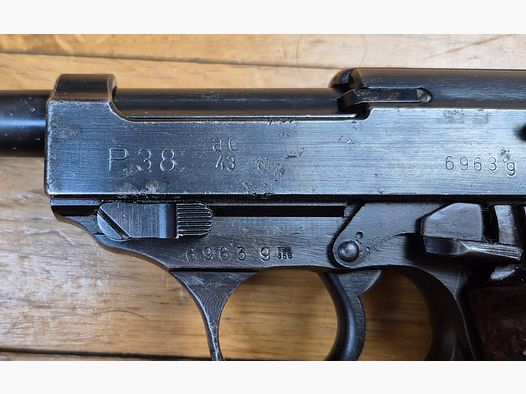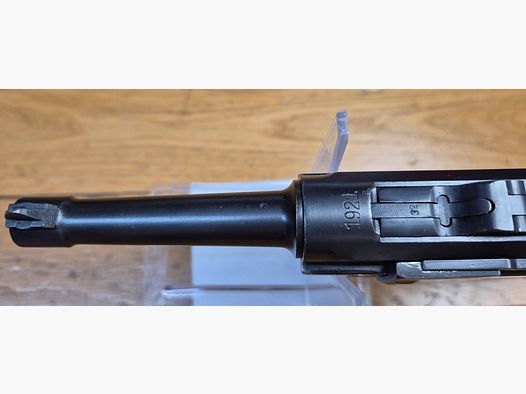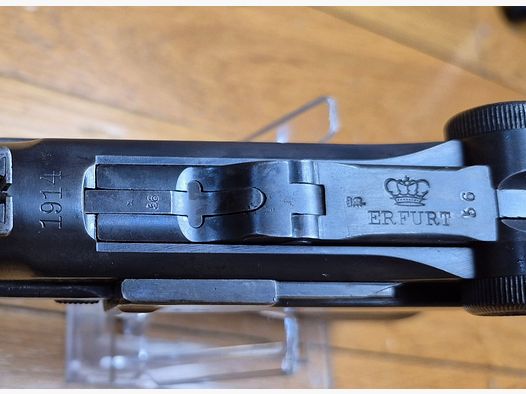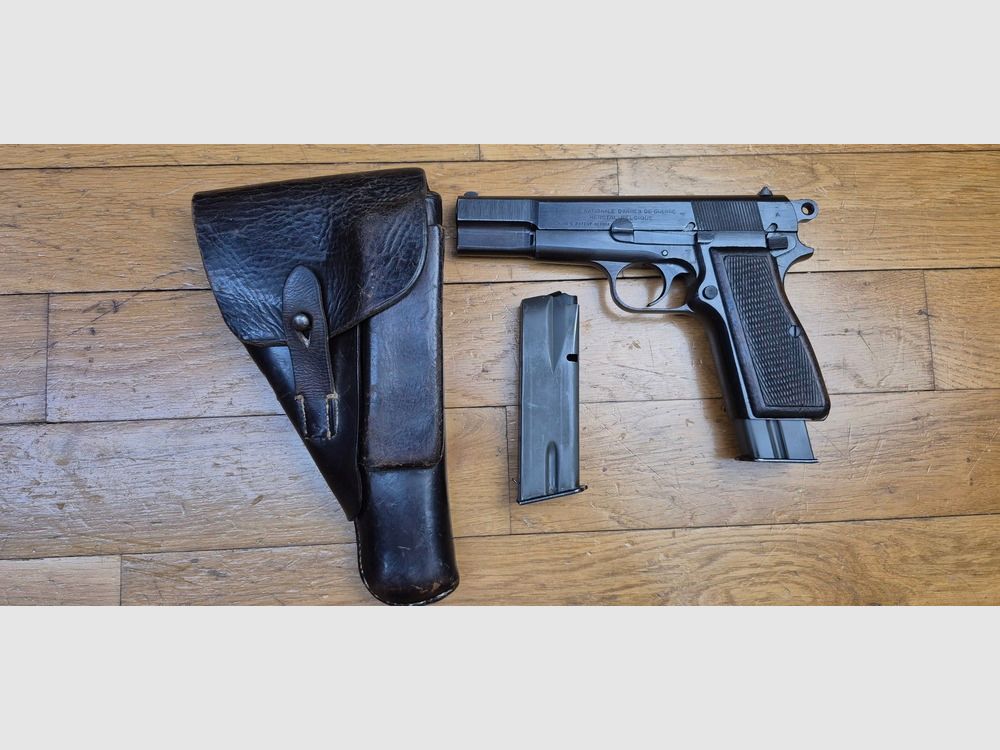
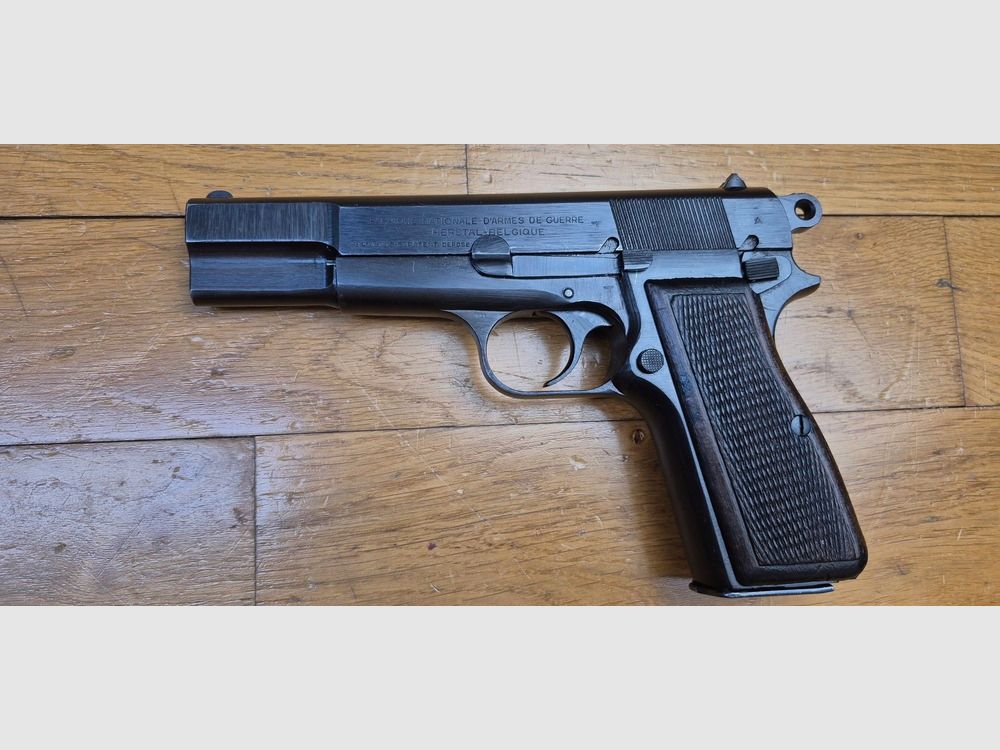


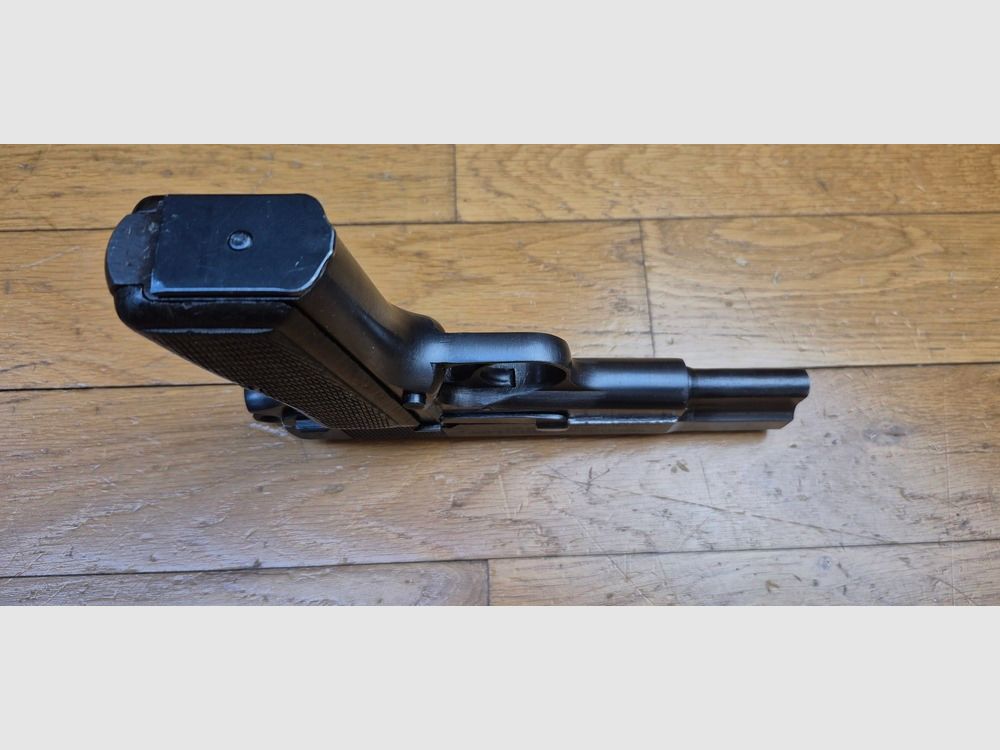


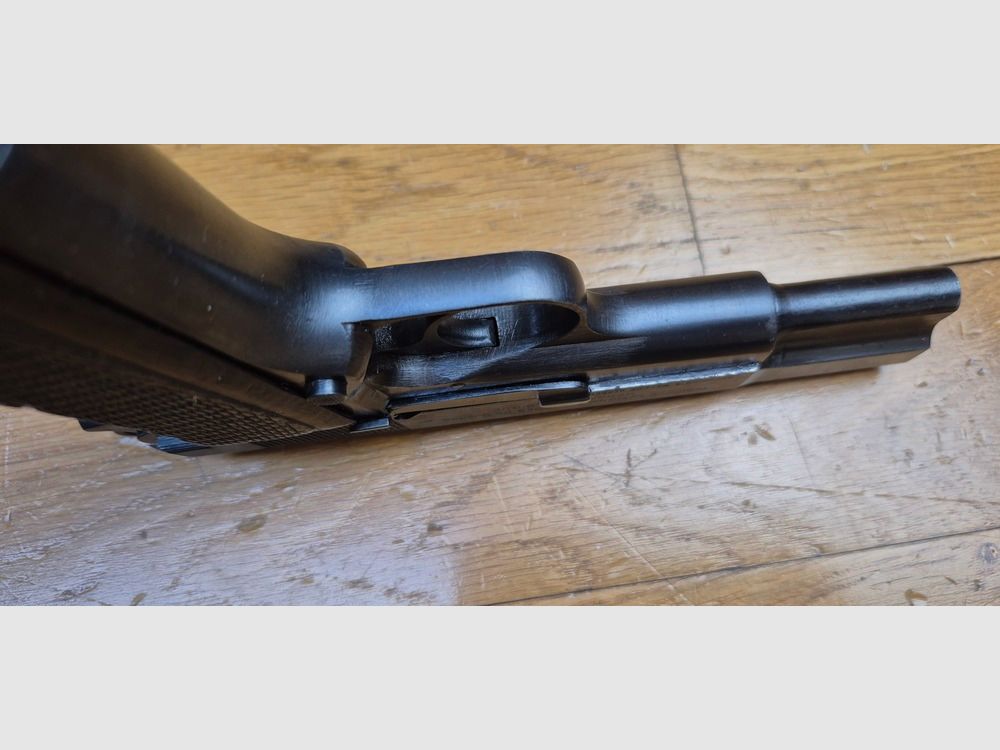


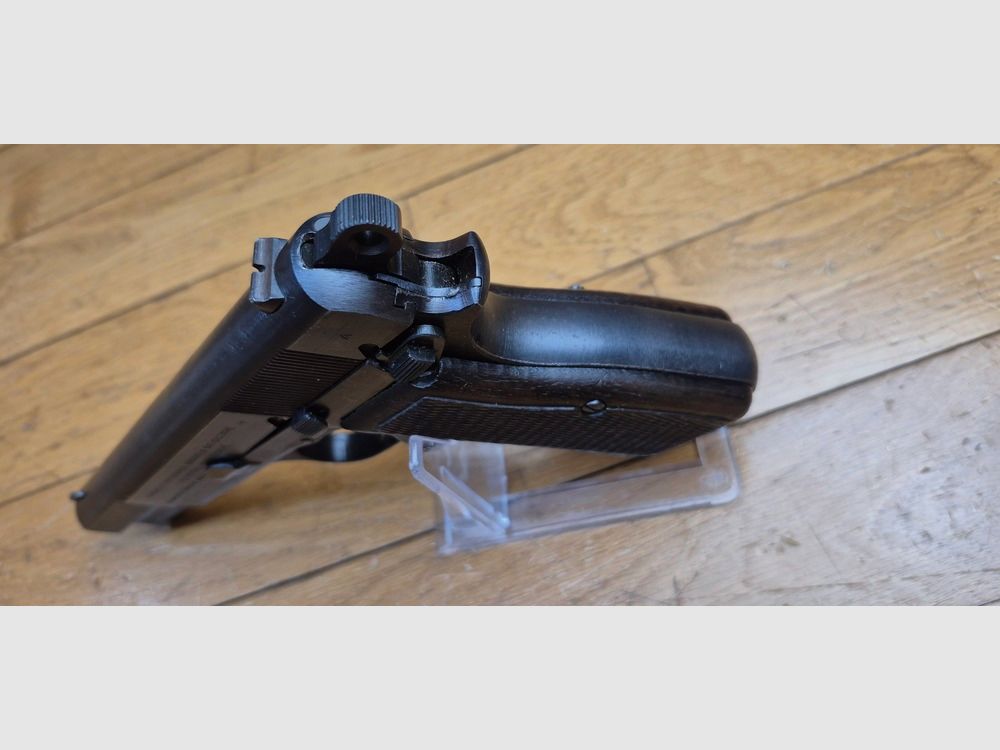


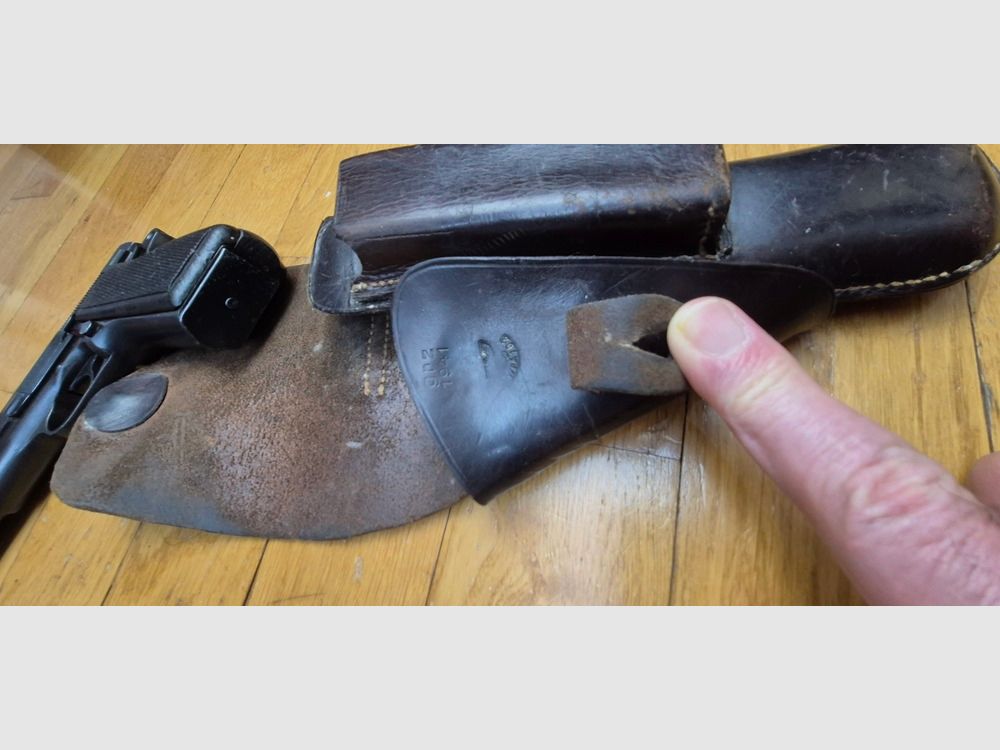

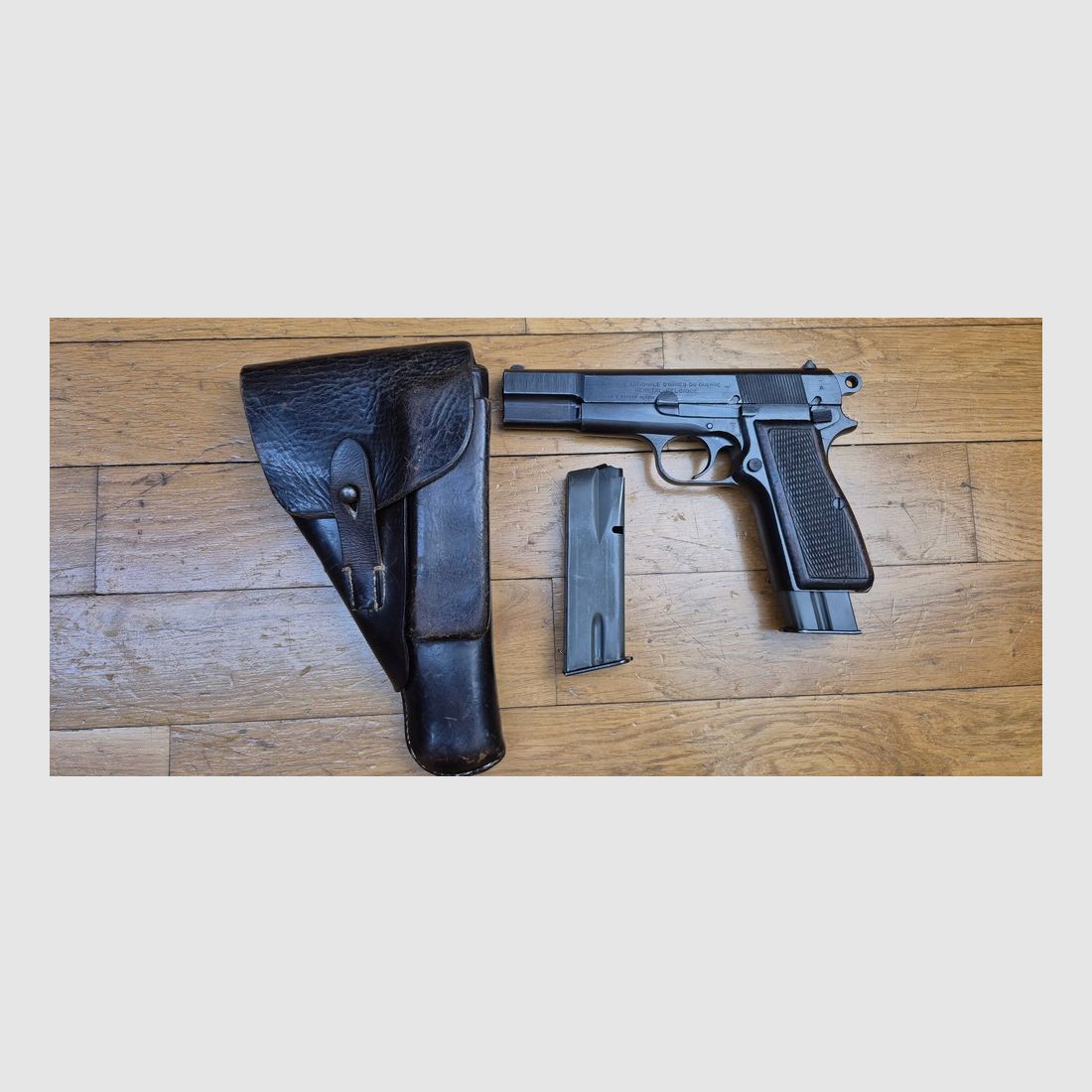


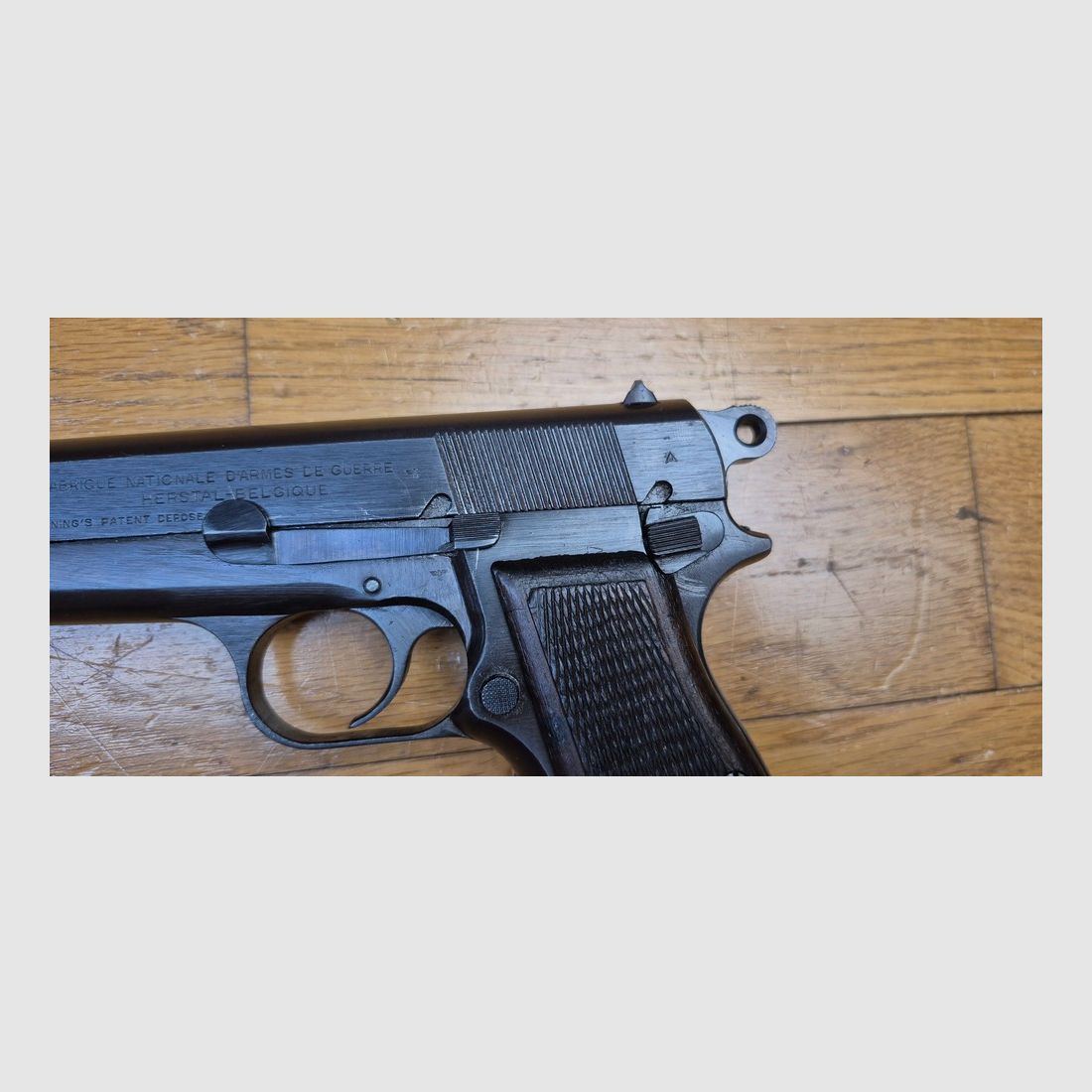
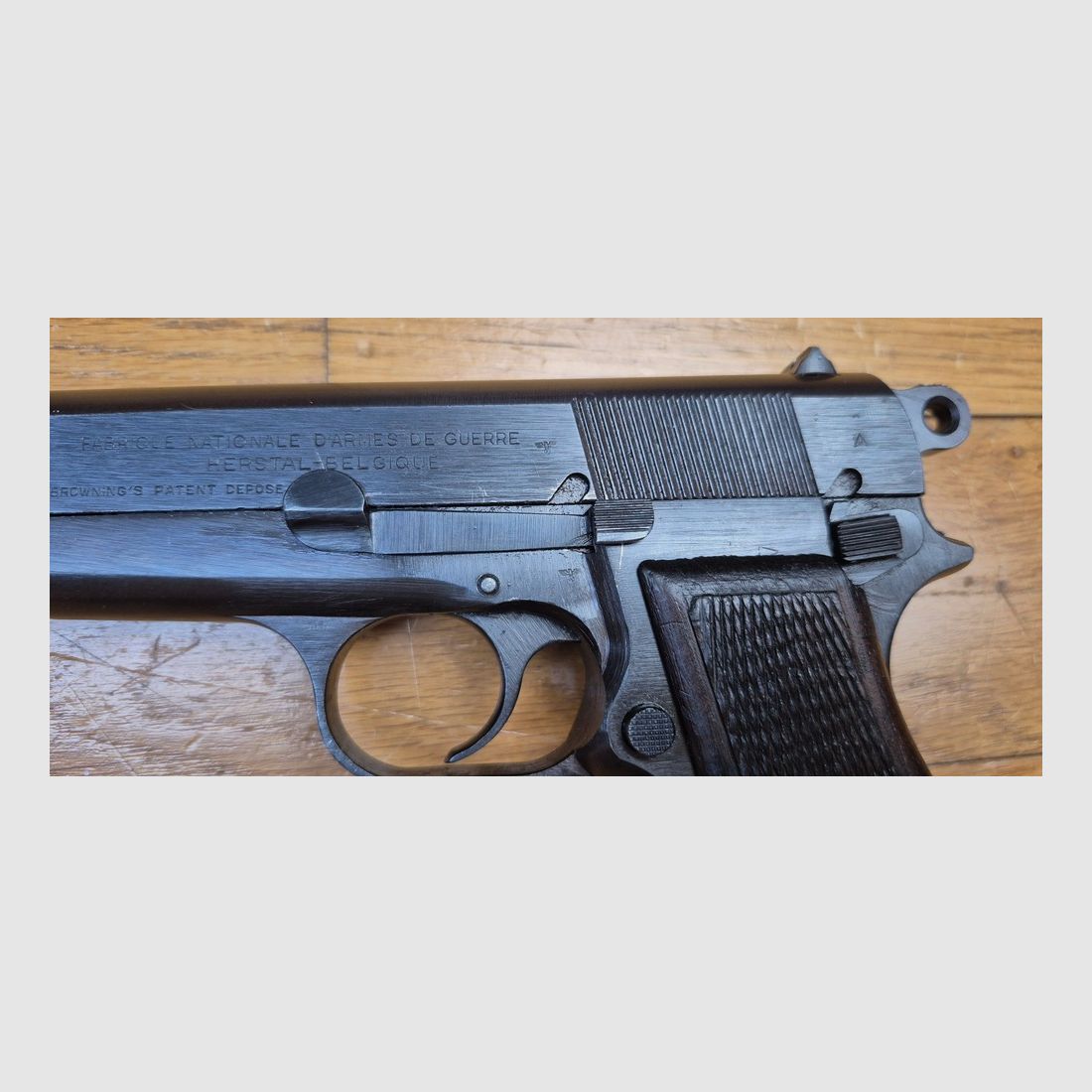
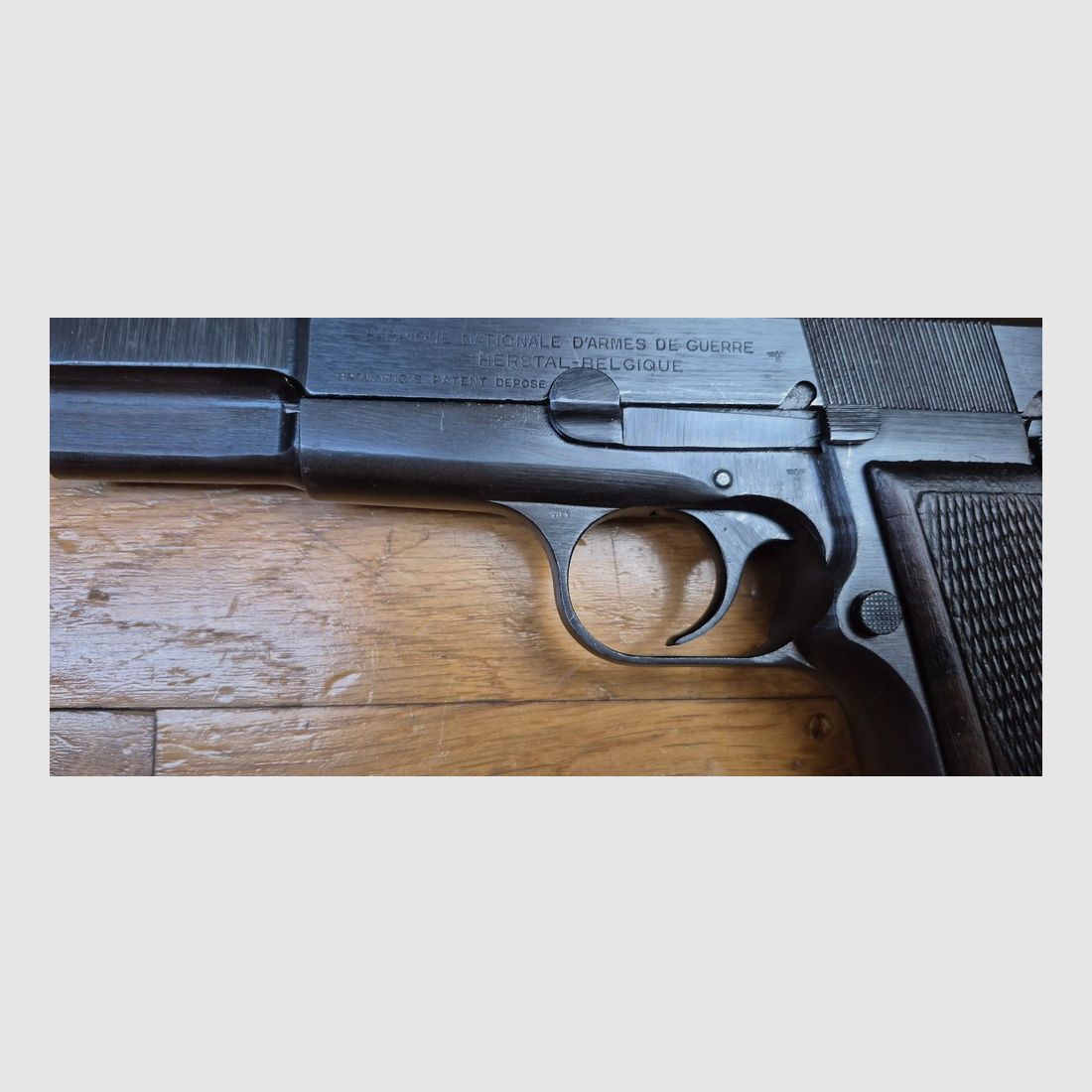


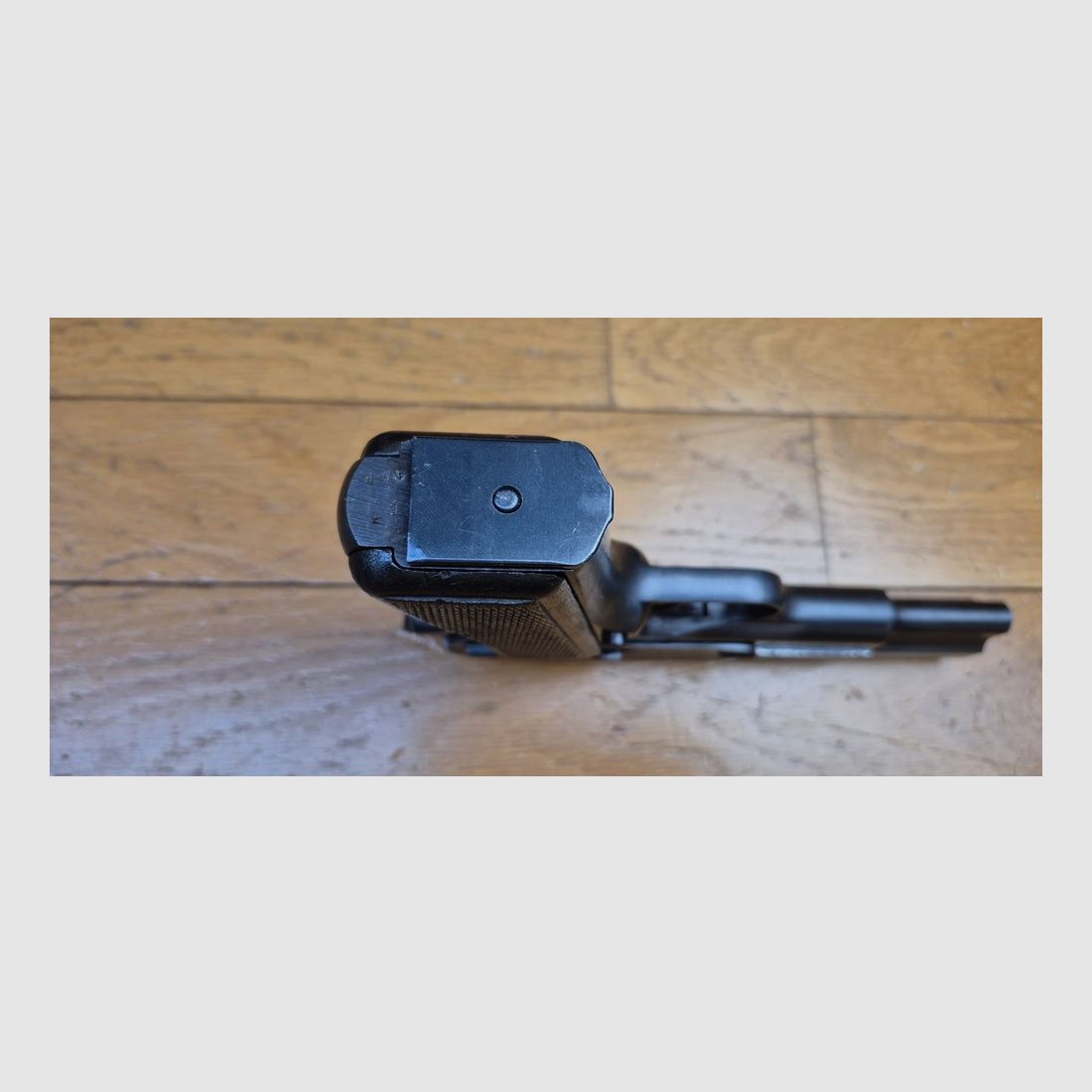


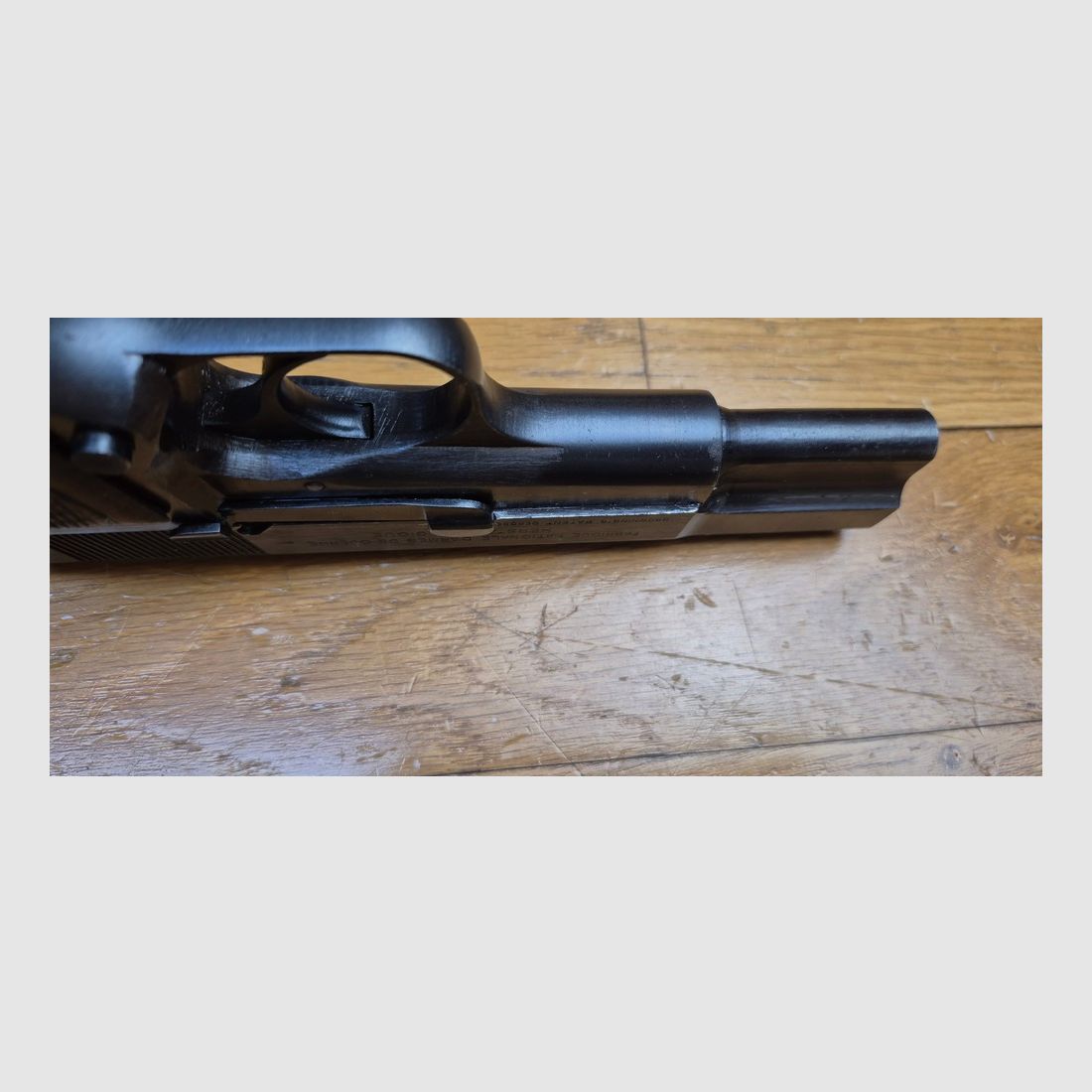


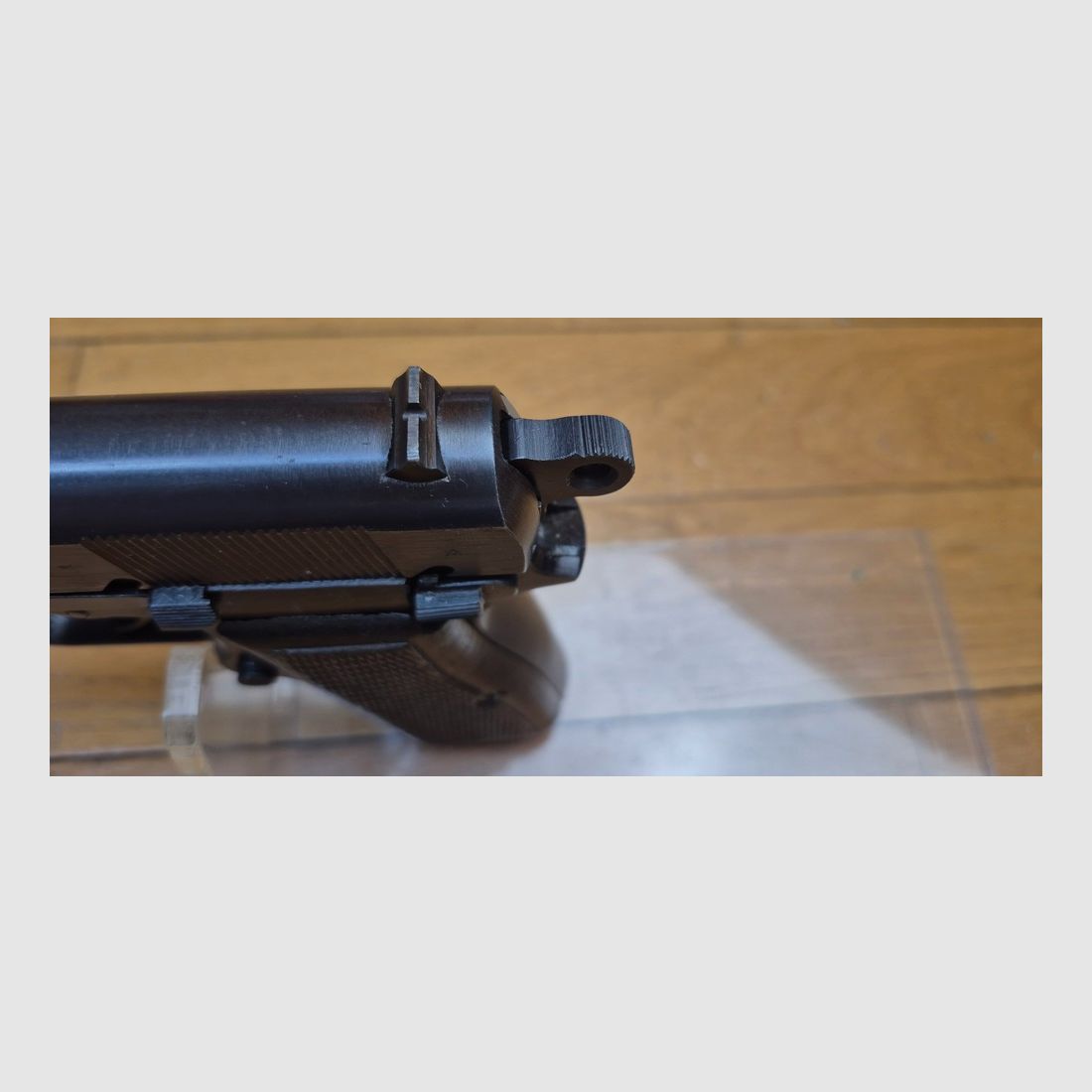


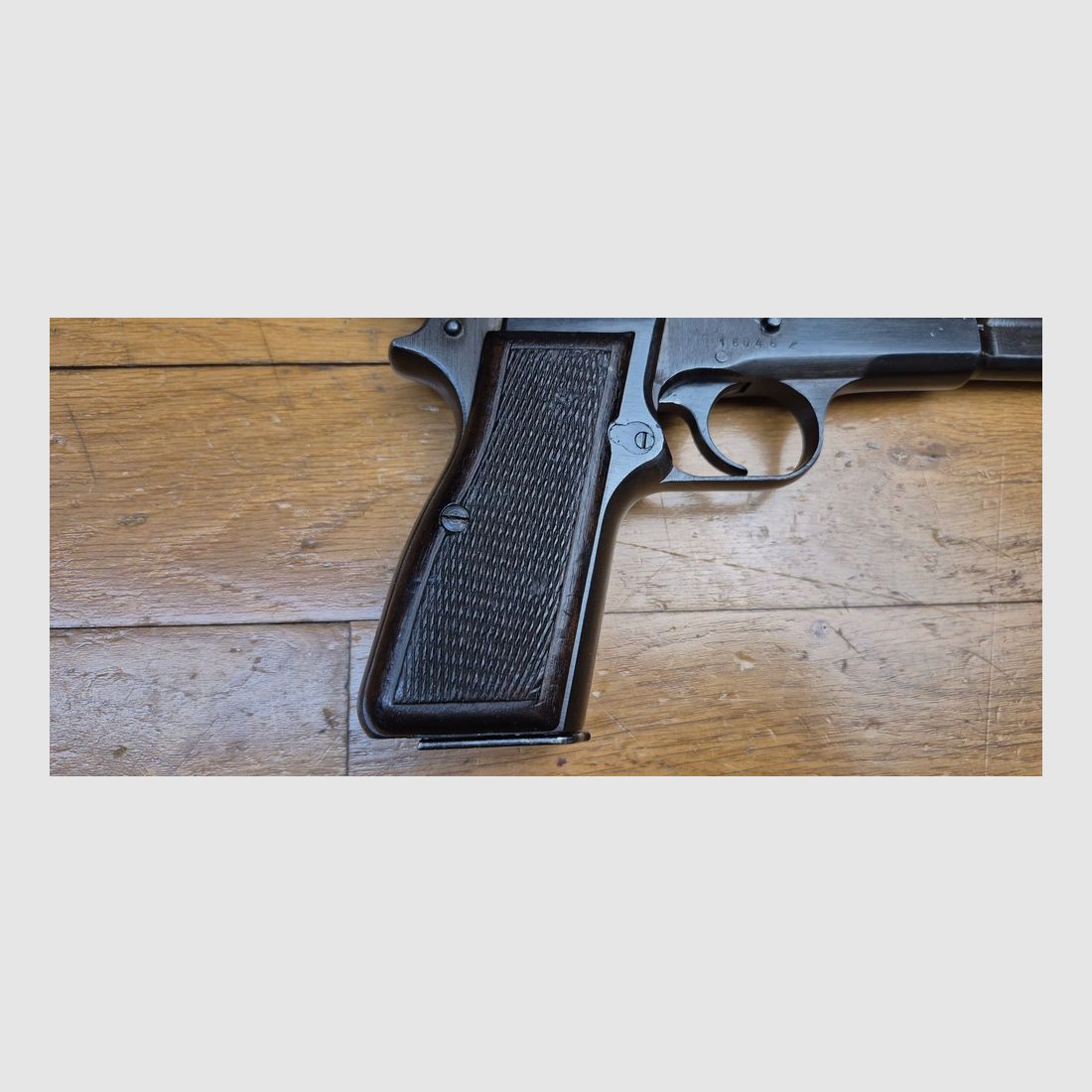


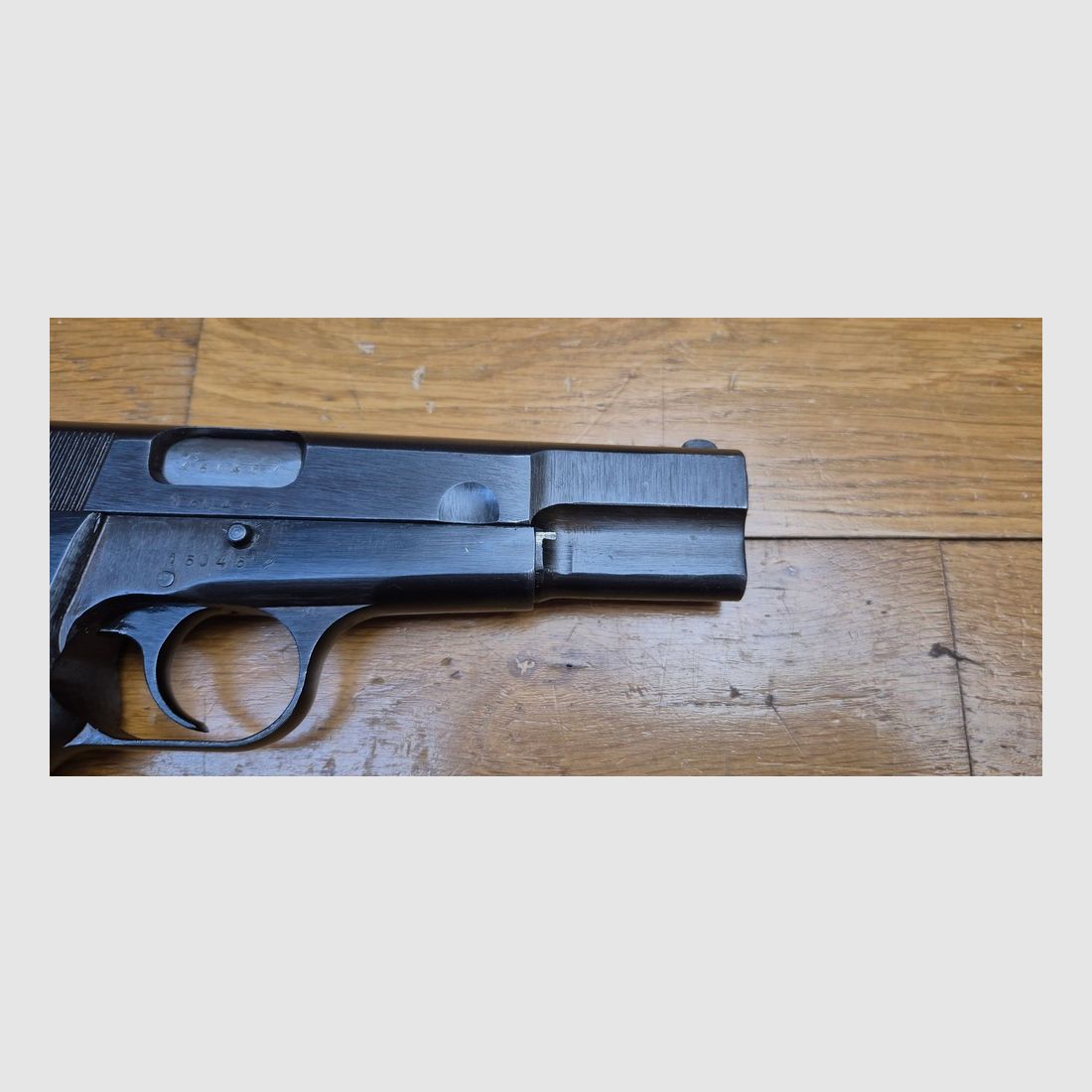


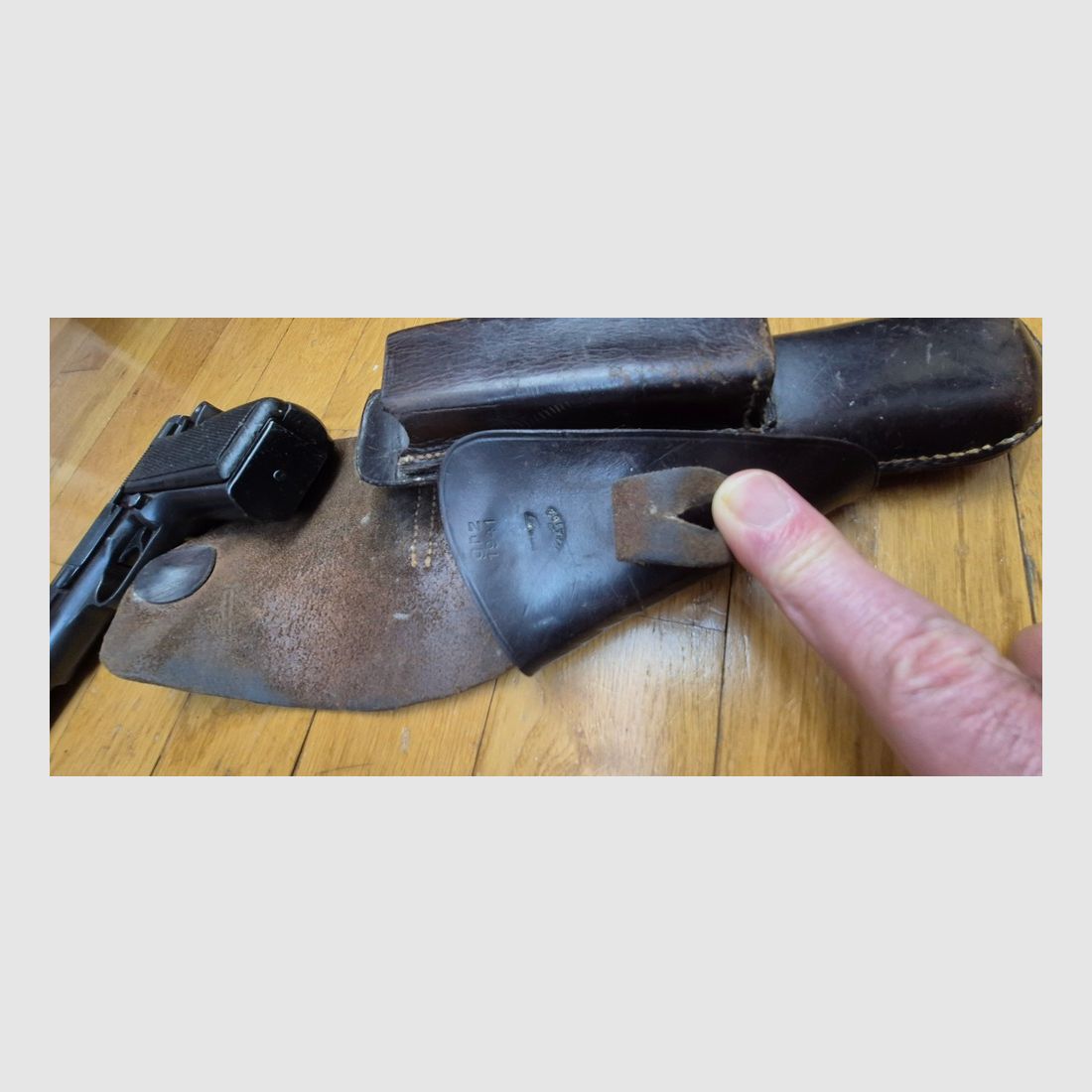
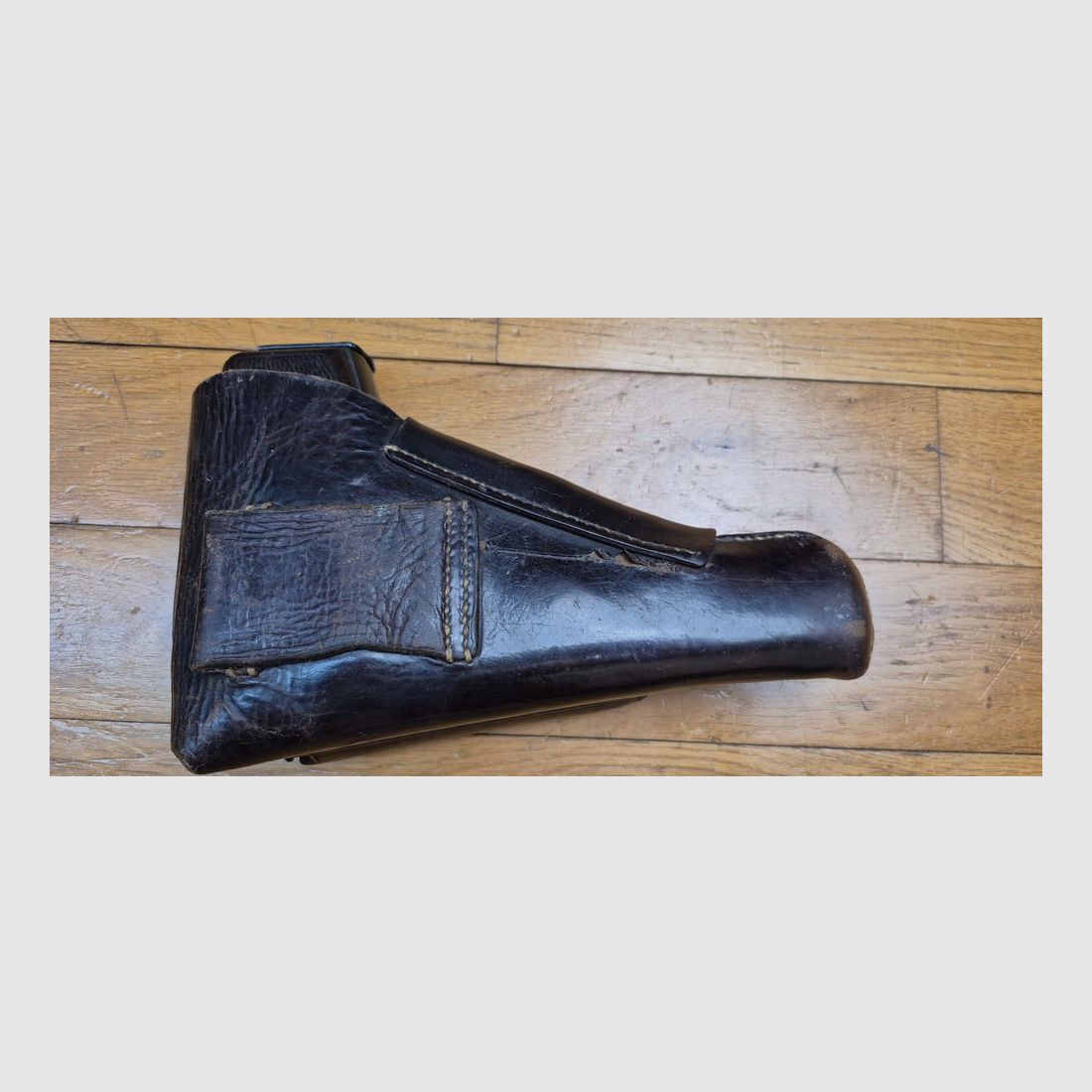
Beautiful Browning GP 35 or P640(b) / P35(b) – 9 para – Latest production from the summer of 1944 – Fixed sight – Magazine of the same production – Frost and Jahnel holster from Breslau from 1941 and 2nd modern magazine – Good barrel, beautiful markings and impeccable mechanics – Very nice example in TBE / TBE+
≈ $1,978
Price at the dealer: 1,800 €. Converted at the ECB rate as of November 20, 2026.
Purchase permit required
75002 Paris, France
3
ID: 10338433
This item is currently unavailable.
Purchase from outside the EU: The firearm goes through an importer in your country, the dealer handles the export.
How buying from Europe works
Shop safely with Gunfinder
Our AI-powered seller identity verification makes Gunfinder the safest marketplace online.
Learn more
Details
- Original language
- French
- Brand
- Browning
- Category
- Purchase eligibility
- Required
- Caliber
- 9mmLuger
- Condition
- New
- Location
- 🇫🇷 75002 Paris, France
- Availability
- Out of stock
Freshness
This listing is based on a mirrored offer, where the listing data was synced to us from a shop, dealer, or external marketplace. Please note that temporary price discrepancies may occur due to possible delays in data transmission.
- Source
- Flingus Maximus
- Last checked with the dealer
- 1 day ago
Description
Note:
The item is located abroad. Please note that delivery conditions, shipping times, and/or the purchase process may differ.
Its story began in 1913 with the short-lived “Grand Browning,” a Liège cousin of the American Colt 1911 in 9.65mm (yes, yes, it almost existed!).
Like an Olympian devoured by Chronos, it was reborn in 1921 on the eve of the surreal French Army rearmament program, which would give rise to the longest selection process in history—and in which it would also be tested (I tell you about it here).
It was presented as the “Grand Rendement.” Revolutionary and powerful, both in capacity and caliber compared with the classic 7.65 or 8-92 of the time, the French officers on the selection commission had a real gem in their hands. France asked for a magazine holding at least 10 rounds; Fabrique Nationale de Herstal offered it 15!
What did they do with it? Nothing.
This GP35, the culmination of the 128-patent Promethean work of the latter-day saint John Moses Browning (1855–1926), cannot be fully understood without acknowledging the behind-the-scenes contributions of his brother Matthew (1859–1923), his devoted son Val (1895–1994), and his longtime Belgian collaborator, Dieudonné Saive (1889–1970).
The GP is the perfect example of this collaborative achievement. When you look at how the firearm works, you see that everything that departs from Browning’s style enhances and extends his genius.
This final iteration of the GP, from 1931, now reduced to 13 rounds and incorporating certain elements of the Colt 1911 that had entered the public domain in 1928, found buyers in the armies of its native Belgium, Paraguay and Estonia as early as 1936. Argentina followed in 1937, as did Finland and China in 1940.
The drums of Mars sounded once again on September 3, 1939, the eve of the anniversary of the Third Republic. The Germans seized the first 35,000 GP35s and renamed them according to the German designation for captured weapons: Pistole 640(b), then P35(b). The little “b” stands for Belgium, of course.
This little aside is useful because it helps distinguish it from the P35(p). The “p” stands for “polnisch” and was applied to the excellent Polish Vis Radom 1935 pistol, which also fell into the hands of a German occupier who knew a thing or two about good guns…
During the war, 300,000 examples were produced under their ruthless control in annexed Belgium, while Canada, under the auspices of an escaped Dieudonné Saive, produced only 150,000.
Among the many feats of this legendary firearm, the GP35 stands out as the only one to have seen active, official service on both the Axis and Allied sides, thanks to the daring escape of FN Herstal department head Dieudonné Saive and several of his colleagues. They made it to England without the firearm’s plans, which had been left behind in Toulouse, and went on to produce it all the way in Canada… The GP35s had no choice but to shoot at one another.
In this fratricidal war, our likeable GPs were highly prized from 1943 onward by the British SOE (British special operations services kept using them until at least 1975), as well as by Chinese warlords, the Fallschirmjäger (German paratroopers), the Waffen-SS and the Luftwaffe.
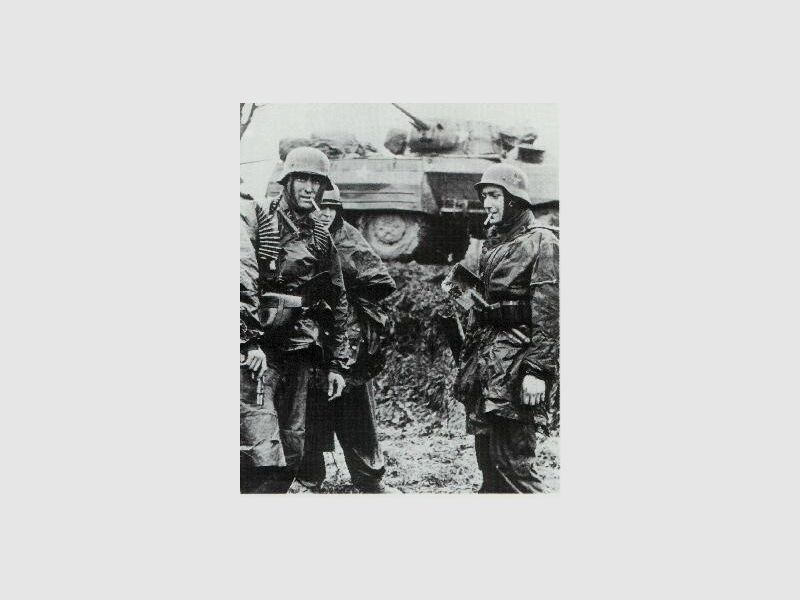
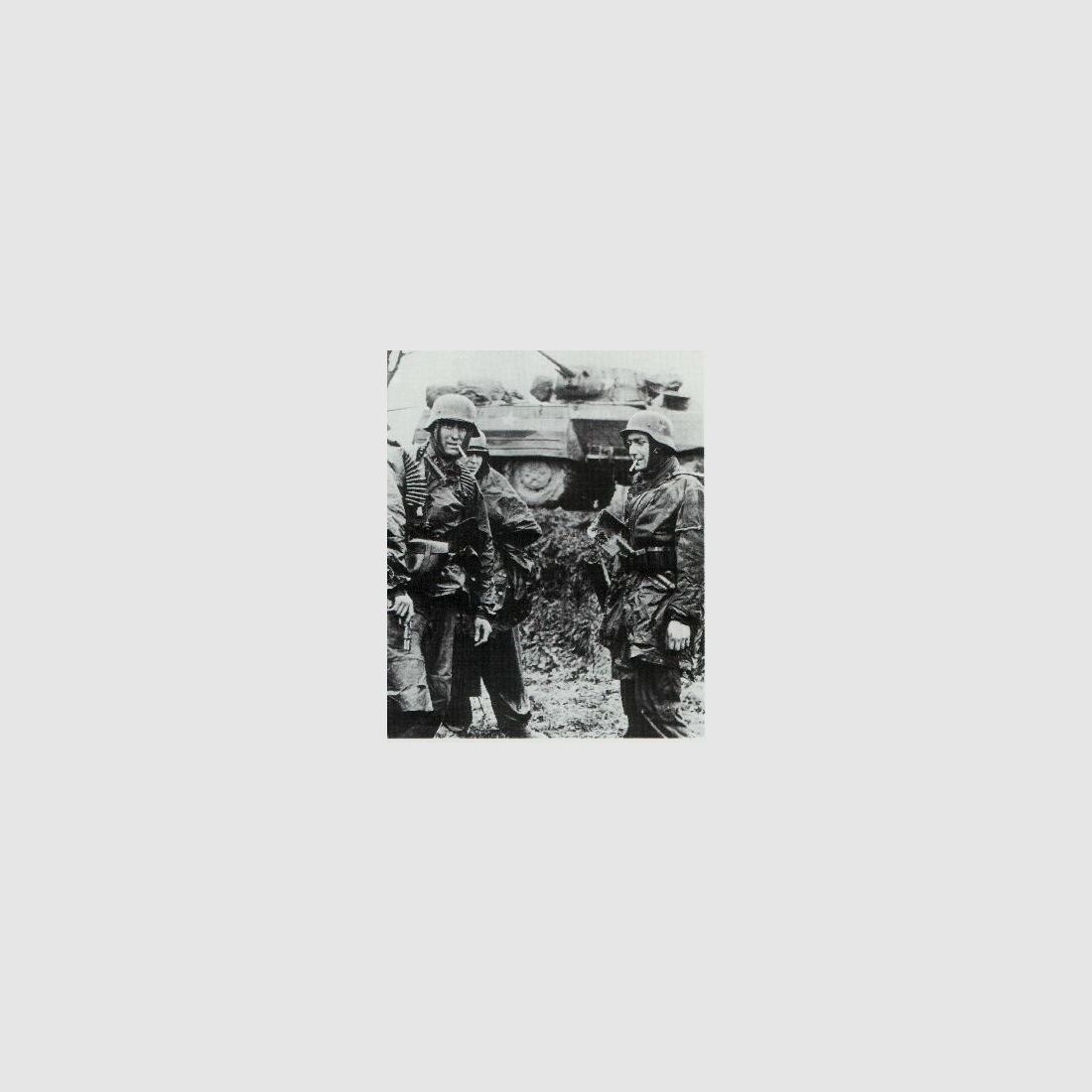
For the illustration, I’ve included a famous photo of our GP35 in the hands of a soldier from Kampfgruppe Hansen, one of the combat groups of the 1st SS Panzer Division, in front of an American M28 tank from the 14th Cavalry Group during the Battle of Poteau (Ardennes), on December 18, 1944. American propaganda removed this captured tank from the photo during the war. It didn’t…
s pu cacher les cigarettes de prise…
Compared with the seductive Luger and the very austere P38, the GP embodied all the strength of the heroes of antiquity in its modern design. It was a true combat weapon, optimized to ensure firepower superiority over its adversaries—a gun that could get you out of many a tight spot. A fighting beast like the 1911, but more modern and with a higher capacity.
Dominique Venner also tells us about a German soldier who, with a GP35 in each hand and his MP40 slung over his shoulder, got the better of an entire squad of Soviet soldiers… Capacity does matter, after all.
After the praise, let’s describe our hero: 920 grams of fine Herstal steel (without the pralines), complemented by superb wooden grips with sharp checkering. The grips are in very good condition.
The long list of its qualities starts with its grip, set at a 13° angle, identical to that of the 1911A1 and only slightly thicker than the 1911’s, yet offering much greater capacity and fitting the overwhelming majority of average-sized hands. Only the CZ75 comes close to being as universally praised for its natural pointability. Excellent for drawing in condition 1, with the hammer cocked and the safety engaged.
The metal is in very sound condition, with a beautiful bare finish (it hasn’t been sanded or rubbed down). These are indeed late-production guns made under Wehrmacht control, as the machining marks are clearly visible beneath the bluing too… No oxidation and no orange peel—this is not so common on these guns. The metal parts are in very good condition.
The first thing that catches the eye is the black bluing, with “plum” reflections on some parts (“plum,” as the Anglo-Saxons call it). We’ll come back to this, because the machining and other details tell part of its interesting story.
The bluing is 99% intact, with just a few marks on the edges. It was carried in a holster, but not for very long. The screws are also in very good condition.
Overall, the gun is in more than very good condition.
The gun is entirely matching-number, and its serial number follows the “German” format, with a letter suffix. This is quite rare on GP 35s. It only appeared in early 1944, with a first block using the letter “a” and a second using “b.” This confirms our assessment that it is a late, or even very late, gun (in addition to the absence of the famous Capitan rear sight, discontinued from December 1942).
Production of the “a” block was completed (up to 99,999 “a”). Production of the “b” block did not reach the end. The highest recorded number is around 62,000. The Allies landed at FN before the Germans could finish production. Ours is from the late “b” block, and its serial number probably places it around April or May 1944.
These last-hour occupation productions, in German-style serial blocks, only existed from early 1944 to August 1944. The Germans left FN on September 5, 1944, without dismantling the entire factory as planned, but looting a significant part of its machinery.
Regarding our gun, it’s also worth knowing that FN had a repair workshop for German-issue GP pistols.
This workshop had grown considerably by mid-1944, as FN was characterized by a fairly high number of sabotaged guns. Many parts suddenly broke after just a few dozen cartridges…
These guns had nevertheless been approved by the Waffenamt before eventually being returned for repair. The workshop also handled guns deemed non-compliant during inspection. These are indeed the guns that were blued—or rather, in some cases, partially reblued—on certain parts in that famous “plum” color I mentioned above.
All of this is explained in great detail in the bible on the subject, Vanderlinden’s two-volume work on pistols from…
the FN from page 745 of volume 2.
These firearms also bear (sometimes under the left grip panel) a number of cabalistic markings (triangles, S’s…) that remain unexplained to this day (probably depending on the number and type of operations performed on the firearm). They were applied when the firearm was brought back into compliance. This is also the case with ours, which has a triangle under the grip.
That doesn’t stop the firearm from bearing the Waffen Amt140 on the frame (poorly struck and hard to read), as well as the regulation acceptance eagles with wheels in the right places (on the frame, slide and barrel). So this is indeed one of FN’s last productions from spring 1944, and it was also brought back into compliance right at the very end of German inspections.
After the occupation ended, the Belgians would also use these German parts to rebuild their own firearms, restoring the Liège proof mark, removing the little eagles, of course, and changing the markings.
The firearm no longer has its magazine safety, another indication that it wasn’t an early production, as this manufacturing feature had already disappeared during 1941.
The trigger has a fairly “military” pull, with a long travel, which is common on these military firearms. It is nevertheless firm but crisp after the take-up, allowing for good accuracy on target.
The barrel is certainly “gray,” but it isn’t pitted with rust at all, and has beautiful, sharp rifling all the way down the barrel. It will be accurate.
All the springs are very firm and the mechanism is impeccable. It has seen very little use. A very good example overall. You rarely see these occupation-era GP35s in such good condition.
Our hero has returned to us from the Iron Age in a superb brown leather holster, also clearly stamped with the WaA 182 eagle with wheel, that of Frost und Jahnel in Breslau, beneath the closure strap.
Breslau, the scene of fierce fighting at the end of World War II, no longer exists. Today it is called Wrocław and is in Poland. This GP 35 holster, dated 1941, is therefore also a witness to Europe’s turbulent history.
These Frost und Jahnel holsters are quite rare and sought after by collectors, especially in this condition. It has no deep scratches, no significant wear, and all its stitching is strong. A little polish of the right kind will make it perfect—take it from Master Flingus.
Even on its own and without a magazine, it’s already worth at least 300 euros… Another dealer would have split them up.
This firearm comes with its period magazine from the same manufacturer. These are indeed the late-war ones, phosphated and without any inspection or manufacturer’s marks. This is its original magazine. This type of manufacture is also typical of the very end of production (see Vanderlinden, two volumes, page 750 and following). The second is a more recent magazine, but a similar color so it doesn’t spoil the set.
The firearm functions perfectly with both magazines. All the firearm’s minor flaws, including its late-war machining, are of course, as usual, GREATLY EXAGGERATED by my TOO close-up photos. Look at the overall shots of the firearm to get an idea.
With remarkably youthful mechanics and a very attractive appearance, this little GP 35 is the ideal firearm for the collector-shooter who wants to take a prestigious firearm like the HP/GP35 to the range, one with a story to tell. They can feed it current factory-made standard ammunition without worry. It’s just a matter of finding what suits it best, but that’s your job. I’m not going to do everything.
A pleasant firearm to shoot, it will also tell you about its adventures by the fireside, as it still holds many mysteries. What did it see at the end of that terrible war?
All in all, a very beautiful classic piece, a little legendary in this con
German configuration, and in excellent condition. Above all, a genuine and uncommon example of late-occupation lettering from a Reich that was supposed to last 1,000 years. Quite a claim! At FN, it lasted 4 years.
But we’re left with the fine result of an exceptional professional partnership between two great figures in the history of firearms: Browning and Saive. The firearm is still in service with a number of countries.
Reliable, functional, and high-capacity, it will very likely be the only one, alongside the 1911, to soon surpass a century of service… That says it all.
CATEGORY B FIREARM UNDER THE CSI: FIREARM REQUIRING AUTHORIZATION. PHOTOCOPIES OF A VALID ID AND FIREARMS LICENSE REQUIRED – SIA ACCOUNT MUST BE OPENED. Shipment with signature required in two separate packages, sent at least 48 hours apart.
*********************************************************************************************************************************************
Let’s say it again! Flingus Maximus gun shop in Paris and throughout France is also here to help with private firearm transfers, buying firearm and militaria collections, firearm appraisals, and questions about firearms in estates and inheritances. Contact your favorite dealer using our contact form or at [email protected]
(Show description in original language)
Le GP35 (GP pour Grande Puissance) ou HP35 (pour High Power) ou Inglis Hi Power ou P640(b) ou P35(b) ou L9A1 ou BAP ou « PA 9mm A1 – Grand Rendement » – quelle que soit la dénomination retenue selon les pays, les époques et les circonstances (toujours des plus changeantes à la guerre) est un monument de l’Histoire de l’armement.
Son histoire commence en 1913 avec un éphémère « Grand Browning », un cousin liégeois du Colt 1911 américain en 9,65mm (oui, oui, cela a faillit exister!).
Tel un olympien, dévoré par Chronos, il renaît en 1921 à l’orée du surréaliste programme de réarmement de l’Armée Française qui donnera vie au plus long processus de sélection de l’histoire au sein duquel il sera aussi testé (je vous en parle ici) .
On le présente alors comme le « Grand Rendement ». Révolutionnaire, puissant, tant en capacité qu’en calibre par rapport aux classiques 7.65 ou 8-92 de l’époque, les officiers français de la Commission de sélection avaient de l’or dans les mains. La France demandait un chargeur d’un minimum de 10 coups, la Fabrique Nationale de Herstal lui en offrira 15 !
Qu’en feront-ils ? Rien.
Ce GP35, point final de l’œuvre prométhéenne de 128 brevets du saint du dernier jour John Moses Browning (1855-1926) ne saurait être perçue dans sa globalité sans la participation dans l’ombre de son frère Matthew (1859-1923), de son dévoué fils Val (1895-1994) et de son collaborateur de toujours en Belgique, Dieudonné Saive (1889-1970).
Le cas du GP est l’exemple parfait de cette réalisation chorale. Quand on se penche sur le fonctionnement de l’arme, on constate que tout ce qui s’éloigne du style de Browning, sublime et prolonge son génie.
Cette dernière itération du GP de 1931, ramenée cette fois à 13 coups et profitant de certains éléments du Colt 1911 tombés dans le domaine publique en 1928, trouvera preneur dans les armées de sa Belgique natale, au Paraguay et en Estonie dès 1936. L’Argentine suivra en 1937 ainsi que la Finlande et la Chine en 1940.
Les tambours de Mars retentiront une nouvelle fois le 3 septembre 1939, veille d’anniversaire de la IIIeme République. 35 000 premiers GP35 furent saisis par les allemands qui les renommèrent suivant la dénomination germanique des armes de prise Pistole 640(b) puis P35(b). Le petit « b » c’est pour Belgique bien sûr.
Cette petite parenthèse est bien pratique car elle permet de le distinguer du P35(p). Le »p » est l’abréviation de « polnisch » et s’appliquait à l’excellent pistolet polonais Vis Radom 1935 lui aussi tombé dans les mains d’un occupant allemand qui s’y connaissait en bons flingues…
Pendant la Guerre, 300 000 exemplaires seront produits sous leur impitoyable contrôle en Belgique annexée, tandis que le Canada, sous les hospices d’un Dieudonné Saive évadé, n’en produira que 150 000.
Car, parmi les exploits de cette arme de légende, le GP35 se distinguera pour être le seul à avoir servi activement et réglementairement autant l’Axe que les Alliés, grâce à l’évasion rocambolesque du chef de service de la FN Herstal, Dieudonné Saive avec plusieurs de ses collaborateurs qui passèrent en Angleterre, sans les plans de l’arme qui eux étaient restés à Toulouse, et qui iront le produire jusqu’au Canada…Les GP35 n’avaient plus qu’à se tirer dessus les uns les autres.
Dans cette guerre fratricide, nos sympathiques GP furent fort appréciés à partir de 1943 tant par le SOE britannique (les services actions britanniques les conserveront jusque 1975 au moins) que par les seigneurs de la guerre chinois ainsi que par les fallschirmjägers (paras allemands) , la Waffen SS et la Luftwaffe.
Pour l’illustration, je vous ai mis une célèbre photo de notre GP 35 au main d’un soldat du Kampfgruppen Hansen, un des groupes de combats de la 1ère Panzer SS division devant un char américain M28 du 14th Cavalery Group lors de la bataille de Poteau (Ardennes), le 18 décembre 1944. La propagande américaine a fait disparaitre ce char de prise de la photo pendant la guerre. Elle n’a pas pu cacher les cigarettes de prise…
Par rapport aux séduisants Luger et aux très ascétique P38, le GP incarnait dans sa modernité toute la force des héros antiques. C’était une véritable arme de combat, optimisée pour assurer la supériorité en puissance de feu sur ses adversaires, un coup à vous sortir de bien des mauvais pas. Une bête de combat genre 1911 mais en plus moderne et en mieux alimenté.
Dominique Venner nous cite d’ailleurs le cas d’un soldat allemand qui un GP35 dans chaque main, délaissant en bandoulière sa MP40, pris le dessus sur toute une escouade de soldats soviétiques…. La capacité cela compte quand même.
Après les éloges, place à la description du héros pris en la personne de notre exemplaire: 920 grammes de bon acier de la Herstal (sans les pralines), complété par de superbes plaquettes en bois et aux quadrillages aiguisés. TBE les plaquettes.
La longue liste de ses qualités commence par sa crosse à l’angle de 13°, identique à celle du 1911A1, à peine plus épaisse que celle du 1911 pour une capacité bien supérieure, et convenant à l’écrasante majorité des mains de taille moyenne. Il n’y a guère que le CZ75 qui arrive à autant faire l’unanimité sur ses facultés de pointage naturel. Excellentissime au dégainé en condition 1, marteau armé et sûreté enclenchée.
D’un bel état nu, le métal est très sain (elle n’a pas été poncée/frottée). Il s’agit bien des dernières fabrications sous contrôle Wehrmacht car les traces d’usinages elles aussi sont bien visibles sous le bronzage… Aucune oxydation et aucune peau d’orange – Ce n’est pas su fréquent sur ces armes. TBE++ pour les fers.
La première chose qui attire l’œil sur cette arme est son bronzage noir avec des reflets « plum » sur certaines pièces (« Prune » comme disent les anglo-saxons). On va y revenir car cela comme l’usinage et d’autres détails nous racontent une partie de son intéressante histoire.
Le bronzage est là à 99% avec juste quelques marques en arrêtes. Il a été porté en étui mais pas très longtemps. Les vis aussi sont en très bon état.
État général de l’arme donc plus que très bon.
L’arme est intégralement mono-matricule Et ce matricule est en série à « l’allemande » c’est à dire avec une lettre suffixe. C’est assez rare sur les GP 35. Cela n’est apparu que début 44 avec un premier lot en lettre « a » et un second en lettre « b » . Ce qui confirme notre analyse d’une arme tardive voire très tardive (outre l’absence de la fameuse hausse Capitan supprimée à partir de décembre 1942).
La production du bloc « a » fut complète (jusqu’au 99 999 « a »). Celle du bloc « b » n’est pas allée jusqu’au bout. La plus élevée répertoriée est ici dans les 62.000. Les alliés ont débarqué à la FN avant que les allemands aient pu finir la production. Et la notre est du bloc tardif « b » et son numéro la situe probablement vers avril mai 1944.
Ces productions d’occupation de la dernière heures en blocs de série à l’allemande n’ont existé que sur la période début 44 – août 44. Les allemands ont foutu le camps de la FN le 5 septembre 1944 sans déménager toute l’usine comme prévu mais en pillant une partie significative de son outillage.
A propos de notre arme, il faut aussi savoir qu’il y avait un atelier de réparation de GP réglementaires allemands à la FN.
Cet atelier avait même pris une ampleur certaine à la mi mi-44 car la FN se caractérisaient par un nombre assez important d’armes sabotées. De nombreuses pièces cassaient subitement après quelques dizaines de cartouches…
Ces armes avaient pourtant été validées par le Waffenamnt avant de finalement revenir en réparation. Cet atelier traitait aussi les armes jugées non conformes au contrôle. Ce sont bien ces armes là qui ont été bronzées ou plutôt re-bronzée parfois partiellement pour certaines pièces dans cette fameuse couleur à reflets « plum » (prune) dont je parlais au dessus.
Tout cela est fort bien expliqué dans la bible sur le sujet, le Vanderlinden en deux volumes, sur les pistolets de la FN à partir de la page 745 du volume 2.
Ces armes portent aussi (parfois sous la plaquette de crosse coté gauche) un certains nombres de poinçons cabalistiques (des triangles, des S…) encore inexpliqués à ce jour (probablement en fonction du nombre et type d’opérations effectuées sur l’arme) qui furent apposés lors de la remise en conformité de l’arme. C’est aussi le cas de la notre avec un triangle sous crosse.
Cela n’empêche pas l’arme d’être au Waffen Amt140 (mal venu et peu lisible) en carcasse et d’avoir ses petit aigles à roulette réglementaires de réception dans l’armée là où il faut (en carcasse en culasse et en canon). Il s’agit donc bien d’une des dernières productions de la FN du printemps 44 et repassée en plus en conformité à l’extrême fin du contrôle allemands.
Les belges repartiront d’ailleurs de ces pièces allemandes dès la fin de l’occupation pour reconstruire les leurs avec retour du poinçon de Liège, disparition des petits aigles évidemment, et changement de marquages.
L’arme n’a plus sa sûreté de chargeur, indice confirmant aussi une fabrication non précoce car ce luxe de fabrication avait déjà disparu courant 1941.
La détente est celle d’un départ assez « militaire » avec une course assez longue, ce qui est courant sur ces armes militaires justement. Elle est néanmoins ferme mais nette après bossette ce qui permet une bonne précision en cible.
Le canon est certes « gris » mais pas du tout bouffé de rouille et avec de belles rayures bien nettes tout le long du canon. Elle sera précise.
Tous les ressorts sont très fermes et la mécanique est impeccable. Il a assez peu tiré. Très bon exemplaire au global. On les voit rarement en aussi bon état ces GP35 de l’occupation.
Notre héros nous est revenu des temps de fer dans un superbe étui en cuir brun, bien lisiblement poinçonné lui aussi de l’aigle à roulette WaA 182, celui de Frost und Jahnel à Breslau, sous de la lanière de fermeture.
Breslau, qui donna lieu à de féroces combats à la fin de la seconde guerre mondiale, n’existe plus. Aujourd’hui cela s’appelle Wrocław et c’est polonais. Cet étui pour GP 35, daté de 1941, est donc lui aussi un témoin de l’Histoire tourmentée de l’Europe.
Ces étuis Frost und Jahnel sont d’une assez grande rareté et recherchés par les collectionneurs, en particulier dans cet état. Il est sans griffure profonde, sans usure marquée et avec toutes ses coutures bien solides. Un tout petit coup de cirage adéquat le rendra parfait – foi de Maître Flingus.
Seul et sans chargeur il vaut déjà largement au moins 300 euros… Un autre marchand les auraient séparés.
Cette arme nous vient avec son chargeur d’époque de la même fabrication. Il s’agit bien de ceux fin de guerre comme phosphatés et sans marque de contrôle ou de fabricant aucune. c’est bien son chargeur d’origine. Cette fabrication est elle aussi typique de la toute fin de production (toujours le Vanderlinden en deux volumes page 750 et suivantes). Le second est un chargeur plus récent mais d’une couleur proche pour ne pas gâter l’ensemble.
Le fonctionnement de l’arme est parfait et avec les deux chargeurs. Tous les moindres défauts de l’arme y compris son usinage fin de guerre sont évidemment et comme d’habitudes TRÈS EXAGÉRÉS par mes TROP gros plans. Regardez les plans globaux de l’arme pour vous faire une idée.
D’une jeunesse mécanique étonnante et esthétiquement très beau, ce petit GP 35 est l’arme idéale pour le collectionneur-tireur, qui veut aller au stand avec une arme de prestige comme le HP/GP35 et qui raconte quelque chose. Il pourra le nourrir sans crainte avec les munitions standards manufacturées actuelles. Reste à trouver celles qui lui conviennent le mieux mais ça c’est votre boulot. Je vais pas tout faire.
Arme agréable au tir, il vous racontera en plus ses aventures au coin du feu, car il possède encore bien des mystères. Qu’a-t’il vu de la fin de cette terrible guerre?
Au final une très belle pièce classique, un peu mythique dans cette configuration allemande, et en excellent état. Et surtout une vraie et peu courante fabrication en lettrage de la fin de l’occupation par un Reich qui devait durer 1000 ans. Quelle prétention ! A la FN ce fut 4 ans.
Mais il nous en reste le beau fruit d’un duo professionnel exceptionnel, de deux grands messieurs de l’Histoire de l’armement, Browning et Saive. L’arme est encore réglementaire dans un certain nombre de pays.
Fiable, fonctionnelle et de grande capacité, elle sera très probablement la seule, avec le 1911, à dépasser prochainement le siècle de service réglementaire… Tout est dit.
ARME DE CATÉGORIE B AU CSI : ARME SOUMISE À AUTORISATION, PHOTOCOPIES DE LA PIÈCE D’IDENTITÉ EN COURS DE VALIDITÉ ET DE LA LICENCE OBLIGATOIRES – COMPTE SIA OBLIGATOIREMENT OUVERT. Expédition contre signature en deux colis séparés d’au moins 48 heures obligatoire.
*********************************************************************************************************************************************
Répétons le ! L’armurerie Flingus Maximus à Paris et partout en France, est là aussi pour vos formalités armes entre particuliers, le rachat de collections armes et militaria, vos estimations d’armes, vos questions armes dans les successions et héritage. Contactez votre armurier préféré via notre formulaire de contact ou à [email protected]