Which firearms is a hunter allowed to own? Permitted and prohibited hunting firearms
In Germany, the Weapons Act (WaffG) and the Federal Hunting Act (BJagdG) precisely regulate which firearms hunters are allowed to use. Violations can result in heavy fines or even imprisonment. Here are the key points:
- Allowed: Rifles, shotguns, and certain handguns, e.g. for dispatch shots. Semi-automatic firearms are only permitted with a maximum of three cartridges.
- Prohibited: Fully automatic firearms, rifles with short barrels, air and CO2 guns over 7.5 joules without an F mark, as well as certain types of ammunition (e.g. explosive ammunition).
- Obligations: Firearms ownership card (WBK), valid hunting license, and secure storage are mandatory. A maximum of two firearms may be acquired every six months.
Important: Regular legal changes, like the most recent in July 2025, require constant attention. Platforms like Gunfinder can help you find legal hunting firearms and clarify legal uncertainties.
Allowed Hunting Firearms
Approved Firearms for Hunting
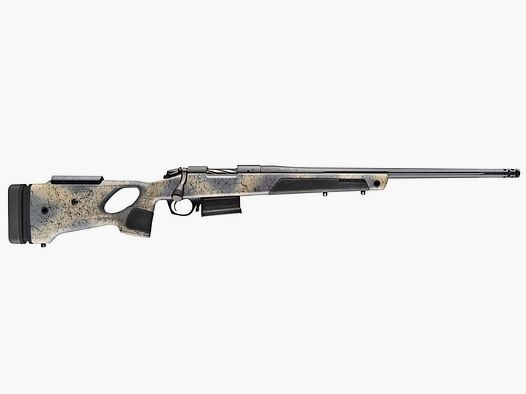
In Germany, there are clear regulations on which firearms are allowed for hunting. Rifles are included – these are long guns with rifled barrels designed for precise shots at longer distances. They are ideal for hunting game such as red deer or wild boar.
For hunting game birds like ducks, pheasants, or pigeons, shotguns with smooth barrels are the right choice. These firearms are designed for shot pellets. Besides single-shot guns, repeating firearms are also allowed, regardless of whether they have rifled or smooth barrels.
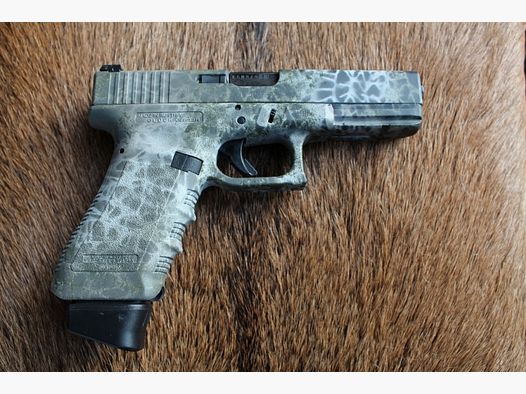
For handguns, the selection is limited. Permitted are single-shot handguns for cartridge ammunition as well as percussion firearms, such as revolvers. These are often used as dispatch weapons to quickly and humanely secure wounded game.
Semi-automatic firearms are also allowed in Germany, but only with a maximum magazine capacity of three cartridges, as stipulated by § 19 Abs. 1 Nr. 2 letter c of the Federal Hunting Act.
Legal Requirements You Must Meet
Besides choosing the firearm, there are important legal requirements you must observe. For possession of live firearms such as pistols, revolvers, or hunting rifles, you need a firearms ownership card (WBK). This allows you to acquire and possess the respective firearm. Additionally, a valid hunting license is required to prove your hunting qualification.
If you want to carry your firearms outside your own property, a firearms license is necessary. Without this, you may only carry the firearms on your own property.
There are also clear rules regarding ammunition. While there are no general caliber restrictions, the ammunition must be suitable for hunting and must not belong to prohibited categories. Fully automatic firearms are strictly forbidden, for example. To acquire ammunition for handguns, an appropriate entry in the WBK is also required.
Another point you should keep in mind: Within six months, you are allowed to buy a maximum of two firearms. This regulation serves to control and trace firearm acquisitions. To make sure you comply with the legal requirements, you can check your listings via Gunfinder.
Find legal firearms on Gunfinder
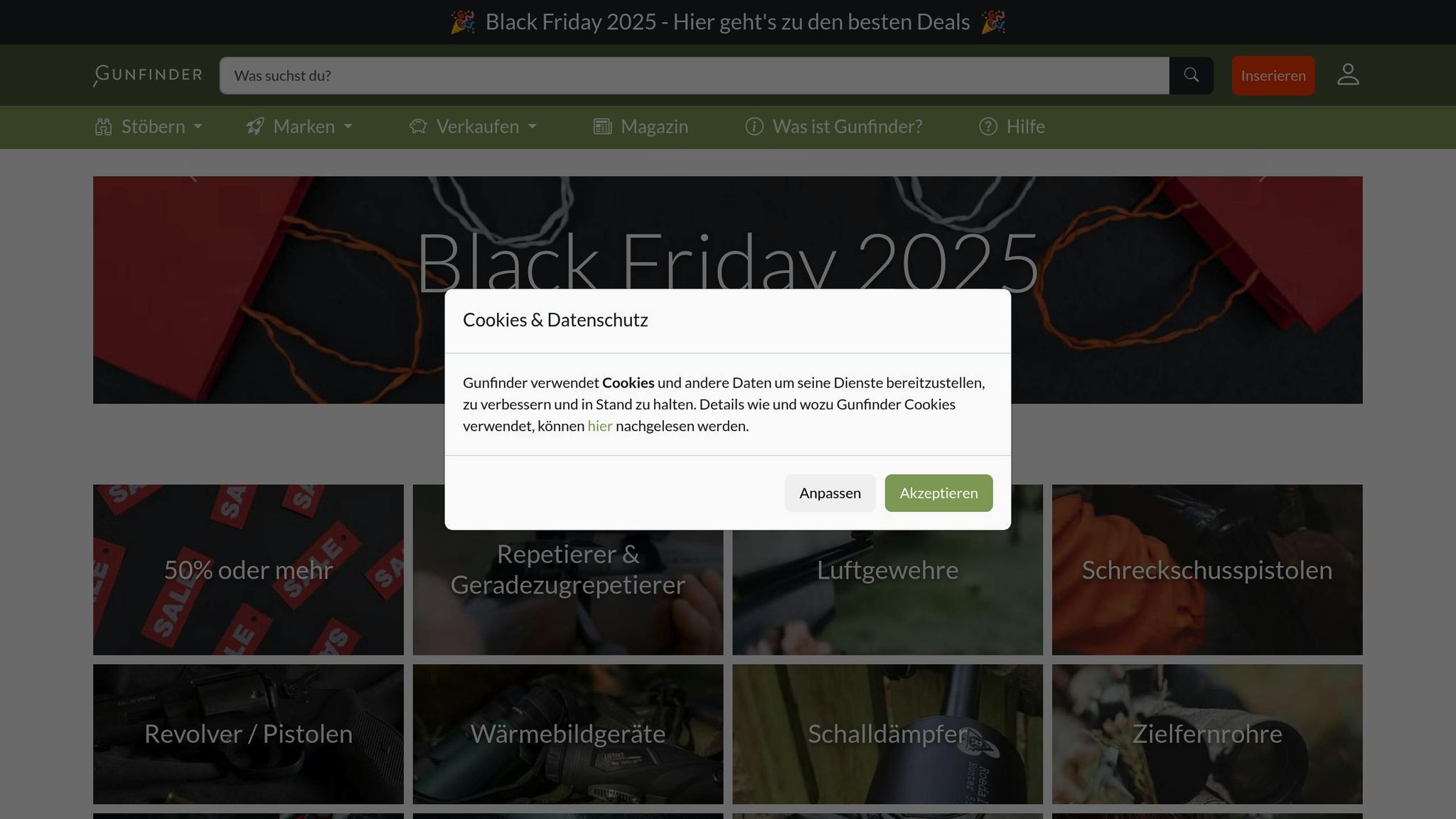
If you meet all the requirements, you can find suitable and safe listings via Gunfinder. The platform offers a wide selection of hunting-appropriate firearms that comply with German laws. Here you will find both new and used rifles, shotguns, and handguns offered by dealers as well as private individuals.
With the search function, you can specifically look for certain types of firearms, calibers, or manufacturers. Detailed product descriptions provide you with all important information about the technical features and condition of the firearms.
Gunfinder also places great emphasis on secure transactions. By verifying the identity of sellers, the risk of fraud is minimized, giving you more security when buying. If you want to sell a firearm yourself, you can post listings on the platform for free.
Additionally, you will find accessories and ammunition on Gunfinder, so you can conveniently put together your entire hunting gear in one place. This way, you are well prepared for your next hunting adventure.
Prohibited Firearms | Gun Law | Back to Hunt
Prohibited Hunting Firearms
After getting to know the permitted firearms, let's now take a look at which firearms are prohibited for hunting in Germany.
Overview of Prohibited Firearms
Fully automatic firearms are strictly prohibited in Germany. This includes submachine guns, assault rifles, and all firearms that fire multiple shots with a single trigger pull. Possession, acquisition, and any handling of such firearms are legally forbidden.
Semi-automatic firearms may generally hold more than three cartridges for hunting. However, during hunting, a maximum of three cartridges may be loaded – two in the magazine and one in the barrel.
Firearms with certain dimensions are also subject to restrictions. Rifles shorter than 660 mm or with a barrel shorter than 457 mm are not approved for hunting. These regulations aim to prevent the use of firearms that are easy to conceal.
Air and CO2 guns with an energy over 7.5 joules or without the required F mark are also prohibited. Likewise, signal guns, blank-firing guns, and irritant weapons are not allowed for hunting.
Ammunition is also subject to strict regulations. Types of ammunition such as tracer, armor-piercing, incendiary, or explosive rounds are not permitted. These types of ammunition can cause unnecessary animal suffering and pose a significant safety risk.
Besides these prohibitions, there are some common mistakes hunters often make.
Typical Mistakes by Hunters
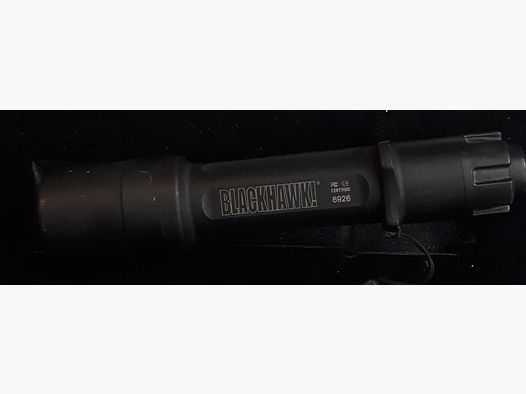
Modifications to hunting firearms often lead to legal problems. For example, according to § 2 Abs. 3 WaffG, it is prohibited to attach light sources like flashlights directly to the firearm. Such changes, which may seem harmless, can make your firearm illegal.
Air guns also cause confusion. Since July 24, 2025, stricter regulations apply: air rifles with projectile lengths over 30 mm and multi-shot capability require a purchase permit. Many hunters are unaware of these new rules.
There are also frequent misunderstandings with historical or collector firearms. Just because a firearm is legal as a collector’s item does not mean it may be used for hunting.
Those who make these mistakes must expect severe consequences.
Consequences of Violations
The use of prohibited hunting firearms has serious consequences. According to § 51 Abs. 1 WaffG, fines or imprisonment of up to five years may be imposed. Even possession of a prohibited firearm is punishable.
Additionally, you can lose your hunting license, and authorities can permanently ban you from acquiring and possessing firearms. Your illegal firearm will be confiscated.
The severity of the penalty depends on whether you acted intentionally or negligently. Even if you unknowingly violate the regulations, this does not protect you from legal consequences. Therefore, it is important to regularly inform yourself about the current regulations.
Repeated violations or particularly serious cases lead to even harsher penalties. Authorities act consistently here to ensure public safety and animal protection.
sbb-itb-1cfd233
Special Cases and Exceptions
After explaining the general rules on permitted and prohibited hunting firearms, we now take a look at special exceptions and cases. These complement your knowledge with important details you should definitely keep in mind.
Air Rifles and Blank-Firing Guns
For air rifles, the legal classification depends on the muzzle energy. Models with a muzzle energy of up to 7.5 joules, marked with the F-symbol in a pentagon, may be possessed without a special permit. However, they are not approved for hunting.
Rifles with muzzle energy over 7.5 joules fall under the category of firearms with live ammunition. You need a firearms ownership card (WBK) and a valid hunting license to possess them. Nevertheless, these firearms are generally not suitable for hunting as they often do not meet the technical requirements of the Federal Hunting Act.
Blank-firing guns, on the other hand, may be possessed from the age of 18 with PTB approval and a small firearms license. However, they are prohibited for use in hunting. In 2022, over 700,000 small firearms licenses for blank-firing guns were issued, showing their widespread use.
Historical and Collector Firearms
Firearms manufactured before January 1, 1871, are often considered permit-free—provided they have not been modified to use modern ammunition. However, this does not mean they may automatically be used for hunting.
Even historical firearms must meet the technical and safety requirements of the Federal Hunting Act to be approved for hunting. Often, antique firearms do not meet today's standards necessary for ethical hunting. This includes aspects such as precision, safety, and reliability.
Special regulations also apply to collector's firearms. Although they have historical value, many of them require a firearms ownership card. The status as a collector's item alone is therefore not enough to use them for hunting. It is always important to check whether the respective firearm complies with current hunting law requirements.
Muzzleloaders can be permit-free, but often do not meet animal welfare requirements for hunting.
Check legal status on Gunfinder
Given these special regulations, it makes sense to clarify the legal status of a firearm before purchase – and Gunfinder can be a valuable help with this. The platform offers useful information on legal regulations and makes your decision easier.
If you are unsure, take a look at the product description. Reputable dealers often provide important notes on permit requirements, hunting suitability, and necessary documents directly in the item details.
On Gunfinder, for example, you will find air rifles with the F mark as well as models that require a permit. The platform helps you understand the differences and choose a firearm that meets your requirements – even if it is not suitable for hunting.
For historical and collector's firearms, Gunfinder often provides detailed information on the year of manufacture, technical specifications, and legal classification. These details help you assess before purchase whether a firearm is suitable for hunting purposes.
If you still have questions, you can contact the seller directly via the platform. Experienced dealers are there to assist you with advice and support regarding legal regulations or practical use of the firearm. This way, you avoid costly mistakes and possible legal issues. Use Gunfinder to find all important information directly in the product descriptions.
How to check if your firearm is legal
Make sure your hunting firearm complies with legal requirements to avoid problems with authorities and hunt properly.
Step-by-step guide to legal check
- Identify firearm type and model: Note manufacturer, model, caliber, and all relevant markings. This information is the basis for further checking.
- Check markings: Make sure all required markings are present, such as the F mark on air guns or the PTB marking on blank-firing guns. If such markings are missing, the firearm could require a permit or even be prohibited.
- Check current legal situation: Consult the Weapons Act (WaffG) and the Federal Hunting Act (BJagdG), especially regarding possible changes since July 24, 2025.
- Check registration requirements: Make sure your firearm is registered in the green firearms ownership card. For certain types of firearms, like handguns, a pre-registration with the responsible firearms authority is often required. Without proper registration, you are not allowed to possess or use the firearm for hunting.
- Clarify uncertainties: If you have questions, contact your firearms authority, the German Hunting Association, or certified firearms dealers. They can help you with legal uncertainties.
Once you have completed these steps, you should always refer to reliable legal sources.
Where to find current legal information
Official sources like the Federal Ministry of the Interior (BMI), your local firearms authority, and the Federal Law Gazette are the best places for up-to-date legal texts. Your local firearms authority is especially helpful, as they not only know the nationwide regulations but are often also informed about regional specifics.
Another tip: Many police authorities publish an annual firearms calendar summarizing all important changes and updates. Hunting associations at state and federal levels also offer guides and fact sheets to make complex legal topics easier to understand.
Gunfinder as support for legal review
Gunfinder can additionally help you assess the legal status of your firearm. The platform offers detailed information in the product descriptions and categorizes firearms by types such as rifles, shotguns, bolt-action rifles, or straight-pull rifles – exactly the models commonly used in hunting.
With practical search filters for caliber and categories, you can specifically look for firearms similar to your model. This way, you get not only an overview of similar models but also hints about their legal classification. In the listings, reputable sellers often indicate whether a firearm is approved for hunting and what requirements must be met for purchase.
If you have questions, you can contact the sellers or Gunfinder customer service. Many experienced dealers and private individuals on the platform have extensive knowledge of legal regulations and can assist you with your assessment.
Keep in mind that Gunfinder offers helpful support but does not replace an official legal review. For a complete and legally binding check, you should always consult the current legal texts and official sources or contact the responsible authorities. Gunfinder is a practical supplement, but the responsibility for complying with the laws ultimately lies with you.
Summary: Staying legal while hunting
Here are the most important rules to stay on the safe legal side: Compliance with firearms laws not only protects you from legal consequences but also ensures your safety. Violations can be costly and may lead to confiscation of firearms, loss of your hunting license, or even imprisonment in the worst case.
Important: Only approved hunting firearms such as rifles, shotguns, or combination guns may be used for hunting. Fully automatic firearms, certain handguns, or unregistered firearms are strictly prohibited. Every firearm must be properly registered in the green firearms ownership card and securely stored in a certified gun safe.
Gunfinder helps you stay legal. All listings are clearly categorized by type and legal classification. With the special search filters, you quickly find approved hunting rifles, while reputable sellers directly state the required acquisition conditions. This way, you can be sure you're well prepared before putting your knowledge into practice.
Legal regulations change regularly. Stay informed by using official sources like the Federal Ministry of the Interior or your local firearms authority. Additionally, Gunfinder offers helpful information to keep you up to date.
Besides owning a firearm, safe storage, correct transport, and regular checks of the legal situation are crucial. If in doubt, don’t hesitate to contact the responsible authorities or experienced dealers on Gunfinder. They support you with legal questions and help you avoid costly mistakes.
FAQs
What are the requirements to apply for a firearms ownership card (WBK) and legally own a hunting rifle?
To apply for a firearms ownership card (WBK) and legally own a hunting rifle, you must meet several requirements. These generally include:
- Minimum age of 18 years
- Proof of reliability according to the provisions of the Weapons Act
- Proof of expertise confirming your ability to handle firearms safely
- Proof of need, such as a valid hunting license or membership in a shooting sports club
- Personal suitability, meaning the mental and physical ability to safely carry a firearm
The exact requirements may vary depending on the federal state and individual situation. To be sure, you should inquire with the responsible authority or a specialist advisor. If you are looking for the right hunting rifle, Gunfinder could be a practical solution. This platform is specifically aimed at hunters and sport shooters and makes buying and selling firearms and accessories easier.
How do I find out if a hunting rifle complies with the current legal requirements in Germany?
Before buying a hunting rifle, it is important to thoroughly inform yourself about the current legal regulations in Germany. German firearms law sets clear requirements that must be strictly followed. Violations can not only have legal consequences but also endanger your safety.
A helpful point of contact is the platform Gunfinder. There you can not only choose from a wide selection of hunting rifles but also be sure that the offered products comply with legal requirements. This way, you can make your decision with confidence and be legally on the safe side.
Which changes in firearms and hunting law do I need to know to always be legally protected?
To ensure you are always up to date with the legal requirements, you should regularly check the current changes in firearms law and the Federal Hunting Act. These regulations can change, especially regarding approved or prohibited hunting weapons as well as safety regulations.
A reliable source of information is official authorities such as the Federal Ministry of Food and Agriculture or the Federal Ministry of the Interior. Additionally, specialized platforms for hunters, such as Gunfinder, offer valuable support – whether through current information or the search for suitable equipment.