-14 %

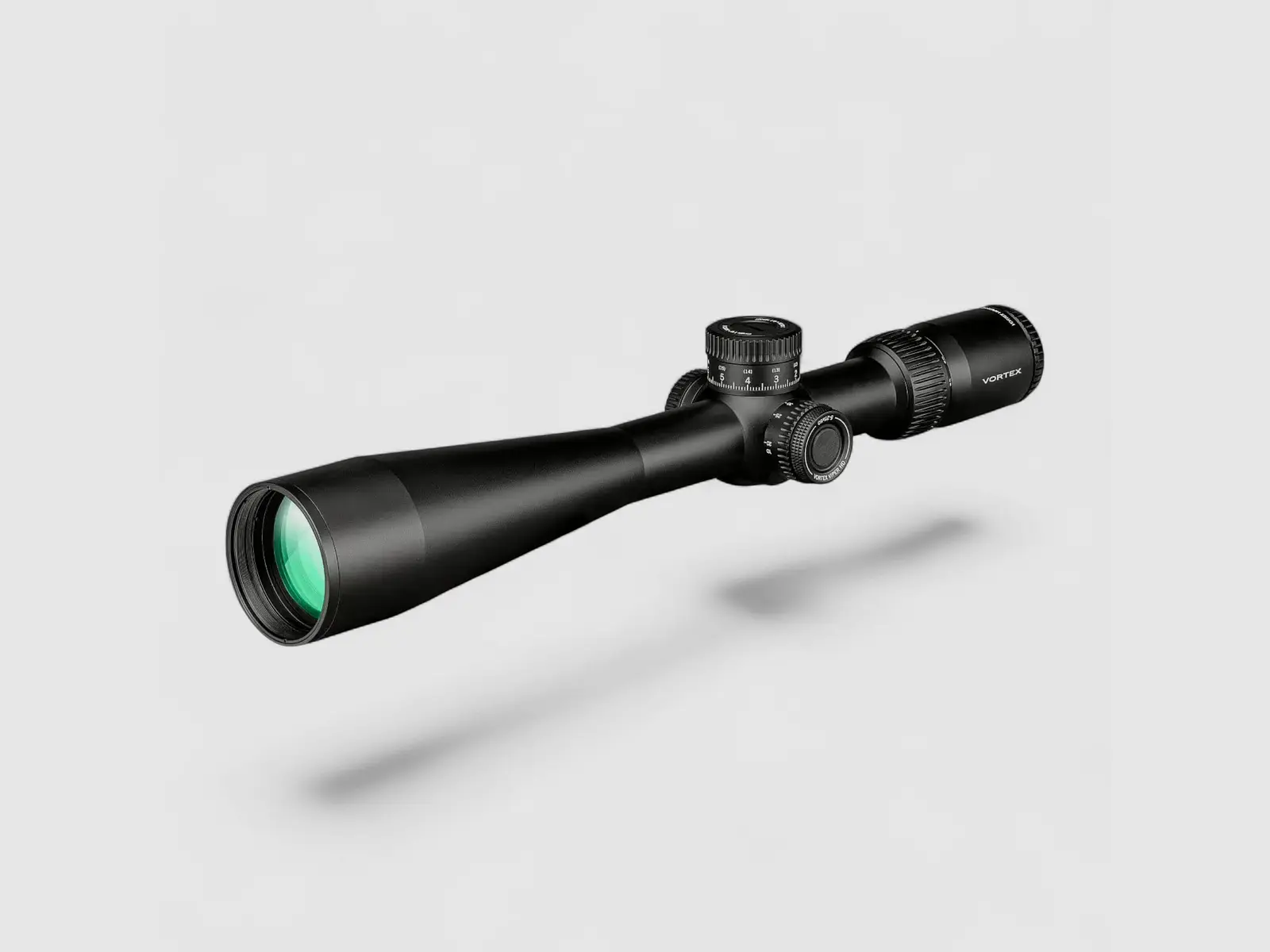


Vortex Viper PST Gen II 5-25x50
Price at the dealer: 1,319 €. Converted at the ECB rate as of October 16, 2026.
No permit required (18+)
72479 Straßberg, Germany
28
ID: 9896167
Purchase from outside the EU: The firearm goes through an importer in your country, the dealer handles the export.
How buying from Europe works
Shop safely with Gunfinder
Our AI-powered seller identity verification makes Gunfinder the safest marketplace online.
Learn more
Details
- Original language
- German
- Brand
- Vortex
- Category
- Condition
- New
- Location
- 🇩🇪 72479 Straßberg, Germany
- Availability
- In stock
Freshness
This listing is based on a mirrored offer, where the listing data was synced to us from a shop, dealer, or external marketplace. Please note that temporary price discrepancies may occur due to possible delays in data transmission.
- Source
- Black Raptor
- Last updated
- about 4 hours ago
Description
Note:
The item is located abroad. Please note that delivery conditions, shipping times, and/or the purchase process may differ.
font-family:Arial,Helvetica,sans-serif;
line-height:1.6;
color:#222;
}
.br-product h2{
font-size:1.2rem;
margin-top:28px;
}
.br-product h3{
font-size:1rem;
margin:0 0 8px;
}
.br-product ul{
padding-left:18px;
}
.br-product .info-box{
background:#ffdddd;
border-left:6px solid #c40000;
padding:12px;
margin:20px 0;
}
.br-product .tip-box{
background:#eef6ff;
border-left:6px solid #2a6fdb;
padding:12px;
margin:20px 0;
}
.br-product .trust-box{
background:#eaf7ea;
border-left:6px solid #2f8f2f;
padding:12px;
margin:20px 0;
}
.br-product .compare-box{
background:#f5f5f5;
border-left:6px solid #444;
padding:12px;
margin:20px 0;
}
.br-product details{
background:#f2f2f2;
padding:10px;
margin-bottom:8px;
border-radius:4px;
}
.br-product summary{
font-weight:600;
cursor:pointer;
}
With a 5-25x50 scope, it’s not just about the magnification. The real difference lies in how you want to work: FFP or SFP, MOA or MRAD, open turrets with Zero Stop or lighter hunting/range setup, complex EBR reticle or calmer VMR reticle.
That’s exactly why we offer these Vortex Viper 5-25x50 models as variant items. You don’t compare five almost identical product pages, but see directly which variant fits your setup. This prevents typical wrong purchases: wrong unit, wrong focal plane, wrong reticle, or a glass that doesn’t fit your training routine.
The Viper PST Gen II variants are the classic, rugged precision line with Tactical RZR Zero Stop, 30mm main tube, illuminated reticle, and clear range focus. The Viper HD variants are lighter, more modern, and geared more towards versatile hunting/range use with VMR-4 reticle and RevStop Zero. Both lines can make sense – but not for the same shooter.
Key Features
5-25x magnification: strong range for long range, target analysis, zeroing, and controlled distance work.
50mm objective: good compromise of light gathering, size, and mounting height.
MOA and MRAD variants: selectable to match ballistics app, data card, turret, reticle, and spotter calls.
FFP variants: reticle values remain correctly usable across the magnification range.
SFP variant: reticle stays visually the same size and appears steadier, values apply at defined magnification.
PST Gen II: rugged precision line with RZR Zero Stop and classic long-range orientation.
Viper HD: lighter line with VMR-4 reticle, RevStop Zero, and versatile hunting/range logic.
Parallax adjustment: useful for precise work from shorter distances to long range.
Illuminated reticles: support contrast and reticle acquisition in difficult light or dark target backgrounds.
Vortex VIP Warranty: Vortex-typical warranty handling in addition to statutory consumer rights.
Our Assessment
This variant family is strong if you’re looking for a serious 5-25x50 scope but still want to clearly decide which system really fits you. Most wrong purchases don’t happen because the glass is bad. They happen because a shooter buys MOA while their environment uses MRAD. Or takes SFP even though they want holdover values on changing magnifications. Or buys FFP even though they actually prefer a steadier reticle image.
The Viper PST Gen II is the more rugged, heavier, and more sport-oriented line. It fits well with bolt actions, chassis systems, long-range entry, PRS-style range use, and shooters who want to work consciously with turrets and reticles. At about 885 g, it’s not a lightweight optic but still much handier than many large premium long-range optics.
The Viper HD is more exciting when weight, handling, and versatile use become more important. At about 708 g for the MRAD variant, it’s significantly lighter than the PST Gen II and thus more interesting for hunting distance work or lighter bolt actions. You get alrea
zdem FFP reticle, RevStop Zero and 5-25x magnification.
Black-Raptor-Short Summary
Buy if: You’re looking for a powerful 5-25x50 scope for range, long range, bolt action, chassis or hunting distance work and want to consciously choose between PST Gen II, Viper HD, MOA, MRAD, FFP and SFP.
Don’t buy if: You want an LPVO, a lightweight stalking scope, a very compact hunting scope or a maximum high-end razor for uncompromising competition setups.
Important classification before purchase
These variants don’t belong blindly in the same shopping cart. Before buying, you should clarify three questions: Which unit do you use? Which reticle plane do you need? And which design fits your firearm?
MOA or MRAD: Decide based on your real environment. If your ballistics app, data card, spotter and training partner work in MRAD, choose MRAD. If you already use MOA, stick with MOA. Mixing both systems costs time and causes errors.
FFP or SFP: FFP makes sense if you want to use holdovers correctly at different magnifications. SFP makes sense if you prefer a steadier, consistently sized reticle and work with a defined working magnification.
PST Gen II or Viper HD: PST Gen II is the heavier, classic precision solution. Viper HD is lighter and more versatile. If your setup is stable and range-oriented, PST Gen II is a strong choice. If maneuverability and weight play a bigger role, Viper HD is very interesting.
Choose variants correctly
Viper PST Gen II 5-25x50 EBR-7C MOA FFP
For shooters who use MOA as their working language and want an FFP reticle with correct holdovers across the magnification range. Suitable for long-range entry, PRS-like use and range setups when app, turret, reticle and data card run in MOA.
Viper PST Gen II 5-25x50 EBR-7C MRAD FFP
Probably the most logical variant for metric-thinking shooters. 0.1 MRAD equals 1 cm at 100 m, 5 cm at 500 m and 10 cm at 1000 m. Very strong if you read impact points directly in the reticle and apply corrections without centimeter detours.
Viper PST Gen II 5-25x50 EBR-4 MOA SFP
For shooters who use MOA but prefer a consistently sized, steadier reticle. The SFP logic is especially interesting for more static applications, target shooting and users who don’t need to hold at changing magnifications constantly.
Viper HD 5-25x50 VMR-4 MOA
For shooters looking for a lighter 5-25x50 with MOA system. Interesting if you work in MOA but don’t need the weight and classic PST Gen II design. The exact MOA adjustment values should be checked against the final datasheet before release.
Viper HD 5-25x50 VMR-4 MRAD
For users looking for a lighter FFP scope with MRAD logic. Especially exciting for bolt actions, range and hunting distance work when a large 56 mm glass would be too heavy but 5-25x magnification is still desired.
MOA or MRAD – don’t mix
MRAD is especially direct for many German-speaking shooters because 0.1 MRAD equals exactly 1 cm at 100 m. At 300 m it’s 3 cm, at 500 m 5 cm and at 1000 m 10 cm. If you read impact points in the reticle, calls like “0.4 up” or “0.3 right” are quick and clear.
MOA isn’t worse, just a different language. 1 MOA roughly equals 3 cm at 100 m. ¼ MOA is about 0.7 cm at 100 m, 2.2 cm at 300 m and 3.6 cm at 500 m. This works very well if you consistently work in MOA and don’t constantly convert back to centimeters.
MRAD: especially intuitive for metric data cards and direct correction calls.
MOA: strong if your app, turrets, data cards and training group already run in MOA.
Most important rule: Reticle, turret, app, data card and calls must use the same unit.
Avoid mistakes: don’t buy MRAD if your entire training process is built in MOA – and to
reversed.
Instructor Principle: One Unit, One Procedure
Don’t build your setup as a mixed system. If you use MRAD, then app, data card, turret, reticle, and spotter calls in MRAD. If you use MOA, then consistently MOA. The biggest time loss doesn’t come from wrong click values, but from converting in your head while you should actually be shooting.
FFP or SFP – the real difference
FFP means: The reticle scales with the magnification. Holdover values remain correct at every magnification. This is powerful if you don’t always work at maximum magnification, but vary depending on target, mirage, position, or time pressure.
SFP means: The reticle stays visually the same size. This can feel steadier and more comfortable, especially for static applications. But the reticle values only apply at the magnification intended by the manufacturer. Those who understand and use this consistently can work very precisely with SFP.
Practical Tip: Don’t confuse magnification with skill
Many shooters immediately turn up to 25x and wonder about a shaky image. Train consciously also with 10x, 14x, and 18x. Often you recognize your position and shot placement better there because mirage, shaking, and target movement are less annoying. High magnification is a reserve – not automatically the best setting.
Application Scenarios
Long-range entry: 5-25x, parallax adjustment and zero-stop systems offer a solid working platform.
PRS-close range use: FFP variants are especially useful when targets are engaged at varying distances and magnifications.
Bolt-action and chassis: PST Gen II fits well with stable setups, Viper HD with somewhat lighter combinations.
Hunting distance work: Viper HD is particularly interesting due to weight and design when 5-25x is sensibly used for hunting.
Target and static training: The SFP-MOA variant can suit shooters who prefer a steady reticle and clear MOA work.
Features & Construction
The Viper PST Gen II variants rely on a robust, one-piece housing with 30 mm main tube, XD™ lens elements, XR™ multi-coating, argon filling, ArmorTek® external lens protection, and RZR Zero Stop. This makes them classic precision scopes for range and long range.
The Viper HD variants focus more on a lighter overall package with HD optics, VMR-4 reticle, and RevStop Zero. The MRAD variant weighs about 708 g, measures 38.61 cm in length, and has parallax from about 18.28 m. This exactly makes it interesting as a lighter 5-25x50 option.
All variants require clean mounting. Especially with 5-25x50, ring height, eye relief, cant, torque, and level determine whether the scope will really work reproducibly later. A good scope cannot compensate for poor mounting.
Technical Data
Product type: 5-25x50 scope – for range, long range, bolt-action, precision shooting, and controlled distance work.
Variants: PST Gen II EBR-7C MOA FFP, PST Gen II EBR-7C MRAD FFP, PST Gen II EBR-4 MOA SFP, Viper HD VMR-4 MOA, Viper HD VMR-4 MRAD.
Magnification: 5-25x – wide range for target analysis, zeroing, and distance work.
Objective diameter: 50 mm – good compromise of image reserve, size, and mounting height.
PST Gen II eye relief: approx. 8.64 cm – important for repeatable cheek weld and proper mounting position.
PST Gen II field of view at 100 m: approx. 8.03 m to 2.66 m – overview at low, focused target image at high magnification.
PST Gen II parallax: from approx. 18 m to infinity – practical for distance training and controlled precision work.
PST Gen II MOA FFP: ¼ MOA click value, 70 MOA elevation, 35 MOA windage, 25 MOA per revolution.
PST Gen II MRAD FFP: 0.1 MRAD click value, 20 MRAD elevation, 10 MRAD windage.
PST Gen II MOA SFP: ¼ MOA click value, 75 MOA elevation, 35 MOA windage.
PST Gen II length: approx. 40.64 cm – large precision scope with corresponding space requirement.
PST Gen II weight: approx. 885
g – solid, but clearly precision-oriented.
Viper HD MRAD: 0.1 MRAD click value, 10 MRAD per revolution, 20 MRAD elevation, 12.4 MRAD windage.
Viper HD MRAD with RevStop Zero: according to data approx. 18.9 MRAD usable elevation travel.
Viper HD Parallax: from approx. 18.28 m to infinity – flexible for training and distance work.
Viper HD field of view at 100 m: approx. 7.8 m to 1.53 m – narrower at high magnification, typical for 25x.
Viper HD length: approx. 38.61 cm – slightly more compact than PST Gen II.
Viper HD weight: approx. 708 g – significantly lighter than PST Gen II and therefore more versatile to handle.
Battery: CR2032 – powers the illuminated reticle.
Delivery contents
Vortex Viper 5-25x50 scope in chosen variant
CR2032 battery
Sunshade
Cleaning cloth
Depending on variant neoprene cover or additional product documents according to manufacturer/dealer information
Note on variant selection:
This product includes different Viper series and reticle logics. Check consciously before purchase: PST Gen II or Viper HD, FFP or SFP, MOA or MRAD. The MOA detail values of the Viper HD MOA variant should still be cross-checked against the manufacturer/dealer datasheet before final publication to avoid incorrect adjustment values in the visible description.
FAQ
Why are PST Gen II and Viper HD listed in one variant article?
All variants cover the same basic range 5-25x50. At the same time, they differ significantly in series, weight, reticle, and adjustment logic. A variant article makes comparison easier when the differences are clearly explained.
Which variant is most sensible for MRAD users?
If you work metrically, the MRAD variant is usually the most logical. 0.1 MRAD corresponds to 1 cm at 100 m. It is crucial that app, data card, turret, and reticle all run in MRAD.
When is the MOA variant useful?
MOA is useful if you already work with MOA data cards, MOA turrets, or MOA calls. It’s not worse than MRAD, just a different working language.
What is the difference between FFP and SFP?
FFP reticles scale with magnification, so holdover values remain correct at every magnification. SFP reticles stay visually the same size, but their values only apply at a defined magnification.
Which variant is more interesting for hunting?
For hunting distance work, the Viper HD is especially interesting due to its lower weight. For pure range and long-range setups, the more robust PST Gen II can be more sensible.
Which mount do I need?
You need a high-quality mount or rings suitable for the respective variant. Important are ring diameter, height, eye relief, cant, objective clearance, and correct torque. (Show description in original language)
.br-product{
font-family:Arial,Helvetica,sans-serif;
line-height:1.6;
color:#222;
}
.br-product h2{
font-size:1.2rem;
margin-top:28px;
}
.br-product h3{
font-size:1rem;
margin:0 0 8px;
}
.br-product ul{
padding-left:18px;
}
.br-product .info-box{
background:#ffdddd;
border-left:6px solid #c40000;
padding:12px;
margin:20px 0;
}
.br-product .tip-box{
background:#eef6ff;
border-left:6px solid #2a6fdb;
padding:12px;
margin:20px 0;
}
.br-product .trust-box{
background:#eaf7ea;
border-left:6px solid #2f8f2f;
padding:12px;
margin:20px 0;
}
.br-product .compare-box{
background:#f5f5f5;
border-left:6px solid #444;
padding:12px;
margin:20px 0;
}
.br-product details{
background:#f2f2f2;
padding:10px;
margin-bottom:8px;
border-radius:4px;
}
.br-product summary{
font-weight:600;
cursor:pointer;
}
Bei einem 5-25x50-Zielfernrohr entscheidet nicht nur die Vergrößerung. Der eigentliche Unterschied liegt in der Frage, wie Du arbeiten willst: FFP oder SFP, MOA oder MRAD, offene Türme mit Zero Stop oder leichteres Jagd-/Range-Setup, komplexeres EBR-Absehen oder ruhigeres VMR-Absehen.
Genau deshalb führen wir diese Vortex Viper 5-25x50 Modelle als Variantenartikel. Du vergleichst nicht fünf fast gleiche Produktseiten, sondern siehst direkt, welche Variante zu Deinem Setup passt. Das verhindert typische Fehlkäufe: falsche Einheit, falsche Bildebene, falsches Absehen oder ein Glas, das nicht zu Deiner Trainingsroutine passt.
Die Viper PST Gen II Varianten sind die klassische, robuste Präzisionslinie mit Tactical RZR Zero Stop, 30-mm-Mittelrohr, Leuchtabsehen und klarer Range-Ausrichtung. Die Viper HD Varianten sind leichter, moderner und stärker auf vielseitige Jagd-/Range-Nutzung mit VMR-4-Absehen und RevStop Zero ausgelegt. Beide Linien können sinnvoll sein – aber nicht für denselben Schützen.
Wichtigste Eigenschaften
5-25x-Vergrößerung: starker Bereich für Long Range, Zielanalyse, Einschießen und kontrollierte Distanzarbeit.
50-mm-Objektiv: guter Kompromiss aus Lichtreserve, Baugröße und Montagehöhe.
MOA- und MRAD-Varianten: passend zu Ballistik-App, Datenkarte, Turm, Absehen und Spotteransagen wählbar.
FFP-Varianten: Absehenwerte bleiben über den Vergrößerungsbereich korrekt nutzbar.
SFP-Variante: Absehen bleibt optisch gleich groß und wirkt ruhiger, Werte gelten auf definierter Vergrößerung.
PST Gen II: robuste Präzisionslinie mit RZR Zero Stop und klassischer Long-Range-Ausrichtung.
Viper HD: leichtere Linie mit VMR-4-Absehen, RevStop Zero und vielseitiger Jagd-/Range-Logik.
Parallaxeausgleich: sinnvoll für präzises Arbeiten von kürzeren Distanzen bis Long Range.
Beleuchtete Absehen: unterstützen Kontrast und Absehenaufnahme bei schwierigerem Licht oder dunklem Zielhintergrund.
Vortex VIP Garantie: Vortex-typische Garantieabwicklung zusätzlich zu den gesetzlichen Verbraucherrechten.
Unsere Einschätzung
Diese Variantenfamilie ist stark, wenn Du ein ernsthaftes 5-25x50-Zielfernrohr suchst, aber noch sauber entscheiden willst, welches System wirklich zu Dir passt. Die meisten Fehlkäufe passieren nicht, weil das Glas schlecht ist. Sie passieren, weil ein Schütze MOA kauft, obwohl sein Umfeld MRAD spricht. Oder SFP nimmt, obwohl er Haltewerte auf wechselnden Vergrößerungen nutzen will. Oder FFP kauft, obwohl er eigentlich ein ruhigeres Scheibenbild bevorzugt.
Die Viper PST Gen II ist die robustere, schwerere und stärker sportlich geprägte Linie. Sie passt gut zu Repetierern, Chassis-Systemen, Long-Range-Einstieg, PRS-naher Range-Nutzung und Schützen, die bewusst mit Türmen und Absehen arbeiten wollen. Mit ca. 885 g ist sie kein Leichtglas, aber noch deutlich handlicher als viele große Premium-Long-Range-Optiken.
Die Viper HD ist spannender, wenn Gewicht, Führigkeit und vielseitige Nutzung wichtiger werden. Mit ca. 708 g bei der MRAD-Variante liegt sie deutlich unter der PST Gen II und ist damit für jagdliche Distanzarbeit oder leichtere Repetierer interessanter. Du bekommst trotzdem FFP-Absehen, RevStop Zero und 5-25x-Vergrößerung.
Black-Raptor-Kurzfazit
Kaufen, wenn: Du ein leistungsfähiges 5-25x50-Zielfernrohr für Range, Long Range, Repetierer, Chassis oder jagdliche Distanzarbeit suchst und bewusst zwischen PST Gen II, Viper HD, MOA, MRAD, FFP und SFP wählen möchtest.
Nicht kaufen, wenn: Du ein LPVO, ein leichtes Drückjagdglas, ein sehr kompaktes Pirschglas oder ein maximales High-End-Razor für kompromisslose Wettkampf-Setups suchst.
Wichtige Einordnung vor dem Kauf
Diese Varianten gehören nicht blind in denselben Warenkorb. Vor dem Kauf solltest Du drei Fragen klären: Welche Einheit nutzt Du? Welche Bildebene brauchst Du? Und welche Bauweise passt zu Deiner Waffe?
MOA oder MRAD: Entscheide Dich nach Deinem echten Umfeld. Wenn Ballistik-App, Datenkarte, Spotter und Trainingspartner in MRAD arbeiten, nimm MRAD. Wenn Du bereits MOA nutzt, bleib bei MOA. Das Mischen beider Systeme kostet Zeit und produziert Fehler.
FFP oder SFP: FFP ist sinnvoll, wenn Du Haltewerte auf unterschiedlichen Vergrößerungen korrekt nutzen willst. SFP ist sinnvoll, wenn Du ein ruhigeres, gleichbleibend großes Absehen bevorzugst und mit definierter Arbeitsvergrößerung arbeitest.
PST Gen II oder Viper HD: PST Gen II ist die schwerere, klassische Präzisionslösung. Viper HD ist leichter und vielseitiger. Wenn Dein Setup stabil und rangeorientiert ist, spricht viel für PST Gen II. Wenn Führigkeit und Gewicht eine größere Rolle spielen, ist Viper HD sehr interessant.
Varianten richtig auswählen
Viper PST Gen II 5-25x50 EBR-7C MOA FFP
Für Schützen, die MOA als Arbeitssprache nutzen und ein FFP-Absehen mit korrekten Haltewerten über den Vergrößerungsbereich wollen. Sinnvoll für Long-Range-Einstieg, PRS-nahe Nutzung und Range-Setups, wenn App, Turm, Absehen und Datenkarte in MOA laufen.
Viper PST Gen II 5-25x50 EBR-7C MRAD FFP
Die wahrscheinlich logischste Variante für metrisch denkende Schützen. 0,1 MRAD entspricht 1 cm auf 100 m, 5 cm auf 500 m und 10 cm auf 1000 m. Sehr stark, wenn Du Trefferlagen direkt im Absehen liest und Korrekturen ohne Zentimeter-Umwege umsetzt.
Viper PST Gen II 5-25x50 EBR-4 MOA SFP
Für Schützen, die MOA nutzen, aber ein gleichbleibend großes, ruhigeres Absehen bevorzugen. Die SFP-Logik ist besonders interessant für statischere Anwendungen, Scheibe und Nutzer, die nicht ständig auf wechselnden Vergrößerungen halten müssen.
Viper HD 5-25x50 VMR-4 MOA
Für Schützen, die ein leichteres 5-25x50 mit MOA-System suchen. Interessant, wenn Du MOA arbeitest, aber nicht das Gewicht und die klassische PST-Gen-II-Bauweise brauchst. Die exakten MOA-Verstellwerte sollten vor Veröffentlichung anhand des finalen Datenblatts geprüft werden.
Viper HD 5-25x50 VMR-4 MRAD
Für Anwender, die ein leichteres FFP-Zielfernrohr mit MRAD-Logik suchen. Besonders spannend für Repetierer, Range und jagdliche Distanzarbeit, wenn ein großes 56-mm-Glas zu schwer wäre und dennoch 5-25x-Vergrößerung gewünscht ist.
MOA oder MRAD – nicht mischen
MRAD ist für viele deutschsprachige Schützen besonders direkt, weil 0,1 MRAD genau 1 cm auf 100 m entspricht. Auf 300 m sind es 3 cm, auf 500 m 5 cm und auf 1000 m 10 cm. Wenn Du Trefferlagen im Absehen liest, sind Ansagen wie „0,4 hoch“ oder „0,3 rechts“ schnell und eindeutig.
MOA ist nicht schlechter, aber eine andere Sprache. 1 MOA entspricht grob 3 cm auf 100 m. ¼ MOA liegt bei etwa 0,7 cm auf 100 m, 2,2 cm auf 300 m und 3,6 cm auf 500 m. Das funktioniert sehr gut, wenn Du konsequent in MOA arbeitest und nicht ständig in Zentimeter zurückrechnest.
MRAD: besonders intuitiv für metrische Datenkarten und direkte Korrekturansagen.
MOA: stark, wenn Deine App, Türme, Datenkarten und Trainingsgruppe bereits in MOA laufen.
Wichtigste Regel: Absehen, Turm, App, Datenkarte und Ansagen müssen dieselbe Einheit nutzen.
Fehler vermeiden: nicht MRAD kaufen, wenn Dein kompletter Trainingsablauf in MOA aufgebaut ist – und umgekehrt.
Ausbilder-Grundsatz: Eine Einheit, ein Ablauf
Baue Dein Setup nicht als Mischsystem. Wenn Du MRAD nutzt, dann App, Datenkarte, Turm, Absehen und Spotteransagen in MRAD. Wenn Du MOA nutzt, dann konsequent MOA. Der größte Zeitverlust entsteht nicht durch falsche Klickwerte, sondern durch Umrechnen im Kopf, während Du eigentlich schießen solltest.
FFP oder SFP – der echte Unterschied
FFP bedeutet: Das Absehen skaliert mit der Vergrößerung. Haltewerte bleiben auf jeder Vergrößerung korrekt. Das ist stark, wenn Du nicht immer auf maximaler Vergrößerung arbeitest, sondern je nach Ziel, Mirage, Position oder Zeitdruck variierst.
SFP bedeutet: Das Absehen bleibt optisch gleich groß. Das kann ruhiger und angenehmer wirken, besonders bei statischen Anwendungen. Die Absehenwerte gelten aber nur auf der vom Hersteller vorgesehenen Vergrößerung. Wer das versteht und konsequent nutzt, kann mit SFP sehr sauber arbeiten.
Praxis-Tipp: Vergrößerung nicht mit Können verwechseln
Viele Schützen drehen sofort auf 25x und wundern sich über ein unruhiges Bild. Trainiere bewusst auch mit 10x, 14x und 18x. Oft erkennst Du dort Deine Position und Trefferlage besser, weil Mirage, Wackeln und Zielbewegung weniger nerven. Hohe Vergrößerung ist Reserve – nicht automatisch die beste Einstellung.
Anwendungsszenarien
Long-Range-Einstieg: 5-25x, Parallaxeausgleich und Zero-Stop-Systeme bieten eine solide Arbeitsplattform.
PRS-nahe Range-Nutzung: FFP-Varianten sind besonders sinnvoll, wenn Ziele auf wechselnden Distanzen und Vergrößerungen gearbeitet werden.
Repetierer und Chassis: PST Gen II passt gut zu stabilen Setups, Viper HD zu etwas leichteren Kombinationen.
Jagdliche Distanzarbeit: Viper HD ist wegen Gewicht und Bauweise besonders interessant, wenn 5-25x jagdlich sinnvoll genutzt wird.
Scheibe und statisches Training: Die SFP-MOA-Variante kann für Schützen passen, die ein ruhiges Absehen und klare MOA-Arbeit bevorzugen.
Merkmale & Konstruktion
Die Viper PST Gen II Varianten setzen auf ein robustes, einteiliges Gehäuse mit 30-mm-Mittelrohr, XD™-Linsenelementen, XR™-Mehrfachvergütung, Argonfüllung, ArmorTek®-Außenlinsenschutz und RZR Zero Stop. Das macht sie zu klassischen Präzisionsgläsern für Range und Long Range.
Die Viper HD Varianten setzen stärker auf ein leichteres Gesamtpaket mit HD-Optik, VMR-4-Absehen und RevStop Zero. Bei der MRAD-Variante liegen ca. 708 g Gewicht, 38,61 cm Länge und eine Parallaxe ab ca. 18,28 m vor. Genau das macht sie als leichtere 5-25x50-Option interessant.
Alle Varianten verlangen eine saubere Montage. Gerade bei 5-25x50 entscheiden Ringhöhe, Augenabstand, Vorneigung, Drehmoment und Wasserwaage darüber, ob das Glas später wirklich reproduzierbar arbeitet. Ein gutes Zielfernrohr kann schlechte Montage nicht ausgleichen.
Technische Daten
Produkttyp: 5-25x50 Zielfernrohr – für Range, Long Range, Repetierer, Präzisionsschießen und kontrollierte Distanzarbeit.
Varianten: PST Gen II EBR-7C MOA FFP, PST Gen II EBR-7C MRAD FFP, PST Gen II EBR-4 MOA SFP, Viper HD VMR-4 MOA, Viper HD VMR-4 MRAD.
Vergrößerung: 5-25x – breiter Bereich für Zielanalyse, Einschießen und Distanzarbeit.
Objektivdurchmesser: 50 mm – guter Kompromiss aus Bildreserve, Baugröße und Montagehöhe.
PST Gen II Augenabstand: ca. 8,64 cm – wichtig für wiederholbaren Anschlag und passende Montageposition.
PST Gen II Sehfeld auf 100 m: ca. 8,03 m bis 2,66 m – Übersicht unten, fokussiertes Zielbild oben.
PST Gen II Parallaxe: ab ca. 18 m bis unendlich – praxisnah für Distanztraining und kontrollierte Präzisionsarbeit.
PST Gen II MOA FFP: ¼ MOA Klickwert, 70 MOA Höhe, 35 MOA Seite, 25 MOA pro Umdrehung.
PST Gen II MRAD FFP: 0,1 MRAD Klickwert, 20 MRAD Höhe, 10 MRAD Seite.
PST Gen II MOA SFP: ¼ MOA Klickwert, 75 MOA Höhe, 35 MOA Seite.
PST Gen II Länge: ca. 40,64 cm – großes Präzisionsglas mit entsprechendem Platzbedarf.
PST Gen II Gewicht: ca. 885 g – solide, aber klar präzisionsorientiert.
Viper HD MRAD: 0,1 MRAD Klickwert, 10 MRAD pro Umdrehung, 20 MRAD Höhe, 12,4 MRAD Seite.
Viper HD MRAD mit RevStop Zero: laut Datenangabe ca. 18,9 MRAD nutzbarer Höhenweg.
Viper HD Parallaxe: ab ca. 18,28 m bis unendlich – flexibel für Training und Distanzarbeit.
Viper HD Sehfeld auf 100 m: ca. 7,8 m bis 1,53 m – enger auf hoher Vergrößerung, typisch für 25x.
Viper HD Länge: ca. 38,61 cm – etwas kompakter als PST Gen II.
Viper HD Gewicht: ca. 708 g – deutlich leichter als PST Gen II und dadurch vielseitiger führbar.
Batterie: CR2032 – versorgt das beleuchtete Absehen.
Lieferumfang
Vortex Viper 5-25x50 Zielfernrohr in gewählter Variante
CR2032 Batterie
Sonnenblende
Reinigungstuch
Je nach Variante Neoprenabdeckung oder weitere Produktunterlagen laut Hersteller-/Händlerangabe
Hinweis zur Variantenwahl:
Dieses Produkt umfasst unterschiedliche Viper-Serien und Absehenlogiken. Prüfe vor dem Kauf bewusst: PST Gen II oder Viper HD, FFP oder SFP, MOA oder MRAD. Die MOA-Detailwerte der Viper-HD-MOA-Variante sollten vor finaler Veröffentlichung noch anhand des Hersteller-/Händlerdatenblatts gegengeprüft werden, damit keine falschen Verstellwerte in der sichtbaren Beschreibung stehen.
FAQ
Warum werden PST Gen II und Viper HD in einem Variantenartikel geführt?
Alle Varianten decken denselben Grundbereich 5-25x50 ab. Gleichzeitig unterscheiden sie sich deutlich bei Serie, Gewicht, Absehen und Verstelllogik. Ein Variantenartikel macht den Vergleich einfacher, wenn die Unterschiede sauber erklärt werden.
Welche Variante ist für MRAD-Anwender am sinnvollsten?
Wenn Du metrisch arbeitest, ist die MRAD-Variante meist am logischsten. 0,1 MRAD entspricht 1 cm auf 100 m. Entscheidend ist, dass App, Datenkarte, Turm und Absehen alle in MRAD laufen.
Wann ist die MOA-Variante sinnvoll?
MOA ist sinnvoll, wenn Du bereits mit MOA-Datenkarten, MOA-Türmen oder MOA-Ansagen arbeitest. Es ist nicht schlechter als MRAD, aber eine andere Arbeitssprache.
Was ist der Unterschied zwischen FFP und SFP?
FFP-Absehen skalieren mit der Vergrößerung, dadurch bleiben Haltewerte auf jeder Vergrößerung korrekt. SFP-Absehen bleiben optisch gleich groß, ihre Werte gelten aber nur auf definierter Vergrößerung.
Welche Variante ist jagdlich interessanter?
Für jagdliche Distanzarbeit ist die Viper HD wegen geringerem Gewicht besonders interessant. Für reine Range- und Long-Range-Setups kann die robustere PST Gen II sinnvoller sein.
Welche Montage brauche ich?
Du brauchst eine hochwertige, zur jeweiligen Variante passende Montage oder passende Ringe. Wichtig sind Ringdurchmesser, Bauhöhe, Augenabstand, Vorneigung, Objektivfreiheit und korrektes Drehmoment.


