




.br-product{
font-family:Arial,Helvetica,sans-serif;
line-height:1.6;
color:#222;
}
.br-product h2{
font-size:1.2rem;
margin-top:28px;
}
.br-product h3{
font-size:1rem;
margin:0 0 8px;
}
.br-product ul{
padding-left:18px;
}
.br-product .info-box{
background:#ffdddd;
border-left:6px solid #c40000;
padding:12px;
margin:20px 0;
}
.br-product .tip-box{
background:#eef6ff;
border-left:6px solid #2a6fdb;
padding:12px;
margin:20px 0;
}
.br-product .trust-box{
background:#eaf7ea;
border-left:6px solid #2f8f2f;
padding:12px;
margin:20px 0;
}
.br-product .compare-box{
background:#f5f5f5;
border-left:6px solid #444;
padding:12px;
margin:20px 0;
}
.br-product details{
background:#f2f2f2;
padding:10px;
margin-bottom:8px;
border-radius:4px;
}
.br-product summary{
font-weight:600;
cursor:pointer;
}
With a 5-25x50 scope, it’s not just about the magnification. The real difference lies in how you want to work: FFP or SFP, MOA or MRAD, open turrets with Zero Stop or lighter hunting/range setup, complex EBR reticle or calmer VMR reticle.
That’s exactly why we offer these Vortex Viper 5-25x50 models as variant items. You don’t compare five almost identical product pages, but see directly which variant fits your setup. This prevents typical wrong purchases: wrong unit, wrong focal plane, wrong reticle, or a glass that doesn’t fit your training routine.
The Viper PST Gen II variants are the classic, rugged precision line with Tactical RZR Zero Stop, 30mm main tube, illuminated reticle, and clear range focus. The Viper HD variants are lighter, more modern, and geared more towards versatile hunting/range use with VMR-4 reticle and RevStop Zero. Both lines can make sense – but not for the same shooter.
Key Features
5-25x magnification: strong range for long range, target analysis, zeroing, and controlled distance work.
50mm objective: good compromise of light gathering, size, and mounting height.
MOA and MRAD variants: selectable to match ballistics app, data card, turret, reticle, and spotter calls.
FFP variants: reticle values remain correctly usable across the magnification range.
SFP variant: reticle stays visually the same size and appears steadier, values apply at defined magnification.
PST Gen II: rugged precision line with RZR Zero Stop and classic long-range orientation.
Viper HD: lighter line with VMR-4 reticle, RevStop Zero, and versatile hunting/range logic.
Parallax adjustment: useful for precise work from shorter distances to long range.
Illuminated reticles: support contrast and reticle acquisition in difficult light or dark target backgrounds.
Vortex VIP Warranty: Vortex-typical warranty handling in addition to statutory consumer rights.
Our Assessment
This variant family is strong if you’re looking for a serious 5-25x50 scope but still want to clearly decide which system really fits you. Most wrong purchases don’t happen because the glass is bad. They happen because a shooter buys MOA while their environment uses MRAD. Or takes SFP even though they want holdover values on changing magnifications. Or buys FFP even though they actually prefer a steadier reticle image.
The Viper PST Gen II is the more rugged, heavier, and more sport-oriented line. It fits well with bolt actions, chassis systems, long-range entry, PRS-style range use, and shooters who want to work consciously with turrets and reticles. At about 885 g, it’s not a lightweight optic but still much handier than many large premium long-range optics.
The Viper HD is more exciting when weight, handling, and versatile use become more important. At about 708 g for the MRAD variant, it’s significantly lighter than the PST Gen II and thus more interesting for hunting distance work or lighter bolt actions. You get alrea
zdem FFP reticle, RevStop Zero and 5-25x magnification.
Black-Raptor-Short Summary
Buy if: You’re looking for a powerful 5-25x50 scope for range, long range, bolt action, chassis or hunting distance work and want to consciously choose between PST Gen II, Viper HD, MOA, MRAD, FFP and SFP.
Don’t buy if: You want an LPVO, a lightweight stalking scope, a very compact hunting scope or a maximum high-end razor for uncompromising competition setups.
Important classification before purchase
These variants don’t belong blindly in the same shopping cart. Before buying, you should clarify three questions: Which unit do you use? Which reticle plane do you need? And which design fits your firearm?
MOA or MRAD: Decide based on your real environment. If your ballistics app, data card, spotter and training partner work in MRAD, choose MRAD. If you already use MOA, stick with MOA. Mixing both systems costs time and causes errors.
FFP or SFP: FFP makes sense if you want to use holdovers correctly at different magnifications. SFP makes sense if you prefer a steadier, consistently sized reticle and work with a defined working magnification.
PST Gen II or Viper HD: PST Gen II is the heavier, classic precision solution. Viper HD is lighter and more versatile. If your setup is stable and range-oriented, PST Gen II is a strong choice. If maneuverability and weight play a bigger role, Viper HD is very interesting.
Choose variants correctly
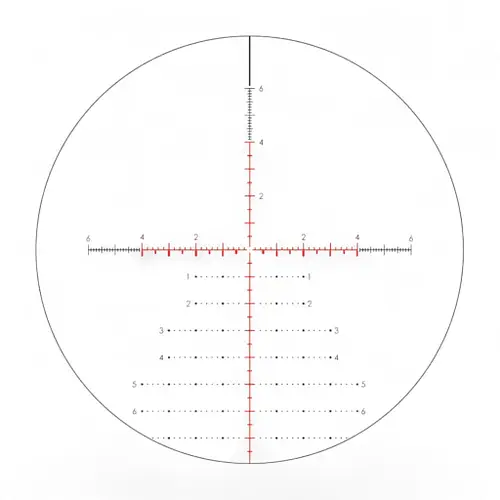
Viper PST Gen II 5-25x50 EBR-7C MOA FFP
For shooters who use MOA as their working language and want an FFP reticle with correct holdovers across the magnification range. Suitable for long-range entry, PRS-like use and range setups when app, turret, reticle and data card run in MOA.
Viper PST Gen II 5-25x50 EBR-7C MRAD FFP
Probably the most logical variant for metric-thinking shooters. 0.1 MRAD equals 1 cm at 100 m, 5 cm at 500 m and 10 cm at 1000 m. Very strong if you read impact points directly in the reticle and apply corrections without centimeter detours.
Viper PST Gen II 5-25x50 EBR-4 MOA SFP
For shooters who use MOA but prefer a consistently sized, steadier reticle. The SFP logic is especially interesting for more static applications, target shooting and users who don’t need to hold at changing magnifications constantly.
Viper HD 5-25x50 VMR-4 MOA
For shooters looking for a lighter 5-25x50 with MOA system. Interesting if you work in MOA but don’t need the weight and classic PST Gen II design. The exact MOA adjustment values should be checked against the final datasheet before release.
Viper HD 5-25x50 VMR-4 MRAD
For users looking for a lighter FFP scope with MRAD logic. Especially exciting for bolt actions, range and hunting distance work when a large 56 mm glass would be too heavy but 5-25x magnification is still desired.
MOA or MRAD – don’t mix
MRAD is especially direct for many German-speaking shooters because 0.1 MRAD equals exactly 1 cm at 100 m. At 300 m it’s 3 cm, at 500 m 5 cm and at 1000 m 10 cm. If you read impact points in the reticle, calls like “0.4 up” or “0.3 right” are quick and clear.
MOA isn’t worse, just a different language. 1 MOA roughly equals 3 cm at 100 m. ¼ MOA is about 0.7 cm at 100 m, 2.2 cm at 300 m and 3.6 cm at 500 m. This works very well if you consistently work in MOA and don’t constantly convert back to centimeters.
MRAD: especially intuitive for metric data cards and direct correction calls.
MOA: strong if your app, turrets, data cards and training group already run in MOA.
Most important rule: Reticle, turret, app, data card and calls must use the same unit.
Avoid mistakes: don’t buy MRAD if your entire training process is built in MOA – and to
reversed.
Instructor Principle: One Unit, One Procedure
Don’t build your setup as a mixed system. If you use MRAD, then app, data card, turret, reticle, and spotter calls in MRAD. If you use MOA, then consistently MOA. The biggest time loss doesn’t come from wrong click values, but from converting in your head while you should actually be shooting.
FFP or SFP – the real difference
FFP means: The reticle scales with the magnification. Holdover values remain correct at every magnification. This is powerful if you don’t always work at maximum magnification, but vary depending on target, mirage, position, or time pressure.
SFP means: The reticle stays visually the same size. This can feel steadier and more comfortable, especially for static applications. But the reticle values only apply at the magnification intended by the manufacturer. Those who understand and use this consistently can work very precisely with SFP.
Practical Tip: Don’t confuse magnification with skill
Many shooters immediately turn up to 25x and wonder about a shaky image. Train consciously also with 10x, 14x, and 18x. Often you recognize your position and shot placement better there because mirage, shaking, and target movement are less annoying. High magnification is a reserve – not automatically the best setting.
Application Scenarios
Long-range entry: 5-25x, parallax adjustment and zero-stop systems offer a solid working platform.
PRS-close range use: FFP variants are especially useful when targets are engaged at varying distances and magnifications.
Bolt-action and chassis: PST Gen II fits well with stable setups, Viper HD with somewhat lighter combinations.
Hunting distance work: Viper HD is particularly interesting due to weight and design when 5-25x is sensibly used for hunting.
Target and static training: The SFP-MOA variant can suit shooters who prefer a steady reticle and clear MOA work.
Features & Construction
The Viper PST Gen II variants rely on a robust, one-piece housing with 30 mm main tube, XD™ lens elements, XR™ multi-coating, argon filling, ArmorTek® external lens protection, and RZR Zero Stop. This makes them classic precision scopes for range and long range.
The Viper HD variants focus more on a lighter overall package with HD optics, VMR-4 reticle, and RevStop Zero. The MRAD variant weighs about 708 g, measures 38.61 cm in length, and has parallax from about 18.28 m. This exactly makes it interesting as a lighter 5-25x50 option.
All variants require clean mounting. Especially with 5-25x50, ring height, eye relief, cant, torque, and level determine whether the scope will really work reproducibly later. A good scope cannot compensate for poor mounting.
Technical Data
Product type: 5-25x50 scope – for range, long range, bolt-action, precision shooting, and controlled distance work.
Variants: PST Gen II EBR-7C MOA FFP, PST Gen II EBR-7C MRAD FFP, PST Gen II EBR-4 MOA SFP, Viper HD VMR-4 MOA, Viper HD VMR-4 MRAD.
Magnification: 5-25x – wide range for target analysis, zeroing, and distance work.
Objective diameter: 50 mm – good compromise of image reserve, size, and mounting height.
PST Gen II eye relief: approx. 8.64 cm – important for repeatable cheek weld and proper mounting position.
PST Gen II field of view at 100 m: approx. 8.03 m to 2.66 m – overview at low, focused target image at high magnification.
PST Gen II parallax: from approx. 18 m to infinity – practical for distance training and controlled precision work.
PST Gen II MOA FFP: ¼ MOA click value, 70 MOA elevation, 35 MOA windage, 25 MOA per revolution.
PST Gen II MRAD FFP: 0.1 MRAD click value, 20 MRAD elevation, 10 MRAD windage.
PST Gen II MOA SFP: ¼ MOA click value, 75 MOA elevation, 35 MOA windage.
PST Gen II length: approx. 40.64 cm – large precision scope with corresponding space requirement.
PST Gen II weight: approx. 885
g – solid, but clearly precision-oriented.
Viper HD MRAD: 0.1 MRAD click value, 10 MRAD per revolution, 20 MRAD elevation, 12.4 MRAD windage.
Viper HD MRAD with RevStop Zero: according to data approx. 18.9 MRAD usable elevation travel.
Viper HD Parallax: from approx. 18.28 m to infinity – flexible for training and distance work.
Viper HD field of view at 100 m: approx. 7.8 m to 1.53 m – narrower at high magnification, typical for 25x.
Viper HD length: approx. 38.61 cm – slightly more compact than PST Gen II.
Viper HD weight: approx. 708 g – significantly lighter than PST Gen II and therefore more versatile to handle.
Battery: CR2032 – powers the illuminated reticle.
Delivery contents
Vortex Viper 5-25x50 scope in chosen variant
CR2032 battery
Sunshade
Cleaning cloth
Depending on variant neoprene cover or additional product documents according to manufacturer/dealer information
Note on variant selection:
This product includes different Viper series and reticle logics. Check consciously before purchase: PST Gen II or Viper HD, FFP or SFP, MOA or MRAD. The MOA detail values of the Viper HD MOA variant should still be cross-checked against the manufacturer/dealer datasheet before final publication to avoid incorrect adjustment values in the visible description.
FAQ
Why are PST Gen II and Viper HD listed in one variant article?
All variants cover the same basic range 5-25x50. At the same time, they differ significantly in series, weight, reticle, and adjustment logic. A variant article makes comparison easier when the differences are clearly explained.
Which variant is most sensible for MRAD users?
If you work metrically, the MRAD variant is usually the most logical. 0.1 MRAD corresponds to 1 cm at 100 m. It is crucial that app, data card, turret, and reticle all run in MRAD.
When is the MOA variant useful?
MOA is useful if you already work with MOA data cards, MOA turrets, or MOA calls. It’s not worse than MRAD, just a different working language.
What is the difference between FFP and SFP?
FFP reticles scale with magnification, so holdover values remain correct at every magnification. SFP reticles stay visually the same size, but their values only apply at a defined magnification.
Which variant is more interesting for hunting?
For hunting distance work, the Viper HD is especially interesting due to its lower weight. For pure range and long-range setups, the more robust PST Gen II can be more sensible.
Which mount do I need?
You need a high-quality mount or rings suitable for the respective variant. Important are ring diameter, height, eye relief, cant, objective clearance, and correct torque.
| ID | 9896167 |
| URL | https://www.gunfinder.com/items/9896167 |
| Category | Optics / Target scopes |
| Condition | Neu |
| Location | 72479 Straßberg, Germany |
| Availability | In stock |
| Shipping costs paid by | Buyer |