-13 %
Bore Tech Proof-Positive Rifle Jag
No permit required (18+)
72479 Straßberg, Germany
9
ID: 9895957
Shop safely with Gunfinder
Our AI-powered seller identity verification makes Gunfinder the safest marketplace online.
Learn more
Details
- Original language
- German
- Category
- Condition
- New
- Location
- 🇩🇪 72479 Straßberg, Germany
- Availability
- In stock
Freshness
This listing is based on a mirrored offer, where the listing data was synced to us from a shop, dealer, or external marketplace. Please note that temporary price discrepancies may occur due to possible delays in data transmission.
- Source
- Black Raptor
- Last updated
- about 19 hours ago
Description
Note:
The item is located abroad. Please note that delivery conditions, shipping times, and/or the purchase process may differ.
A blue patch is supposed to show copper from the barrel – not copper that the cleaner just removes from the cleaning tool. This is exactly where the practical difference of a brass-free jag lies: it keeps a known source of interference out of the copper check without replacing the caliber and patch choice.
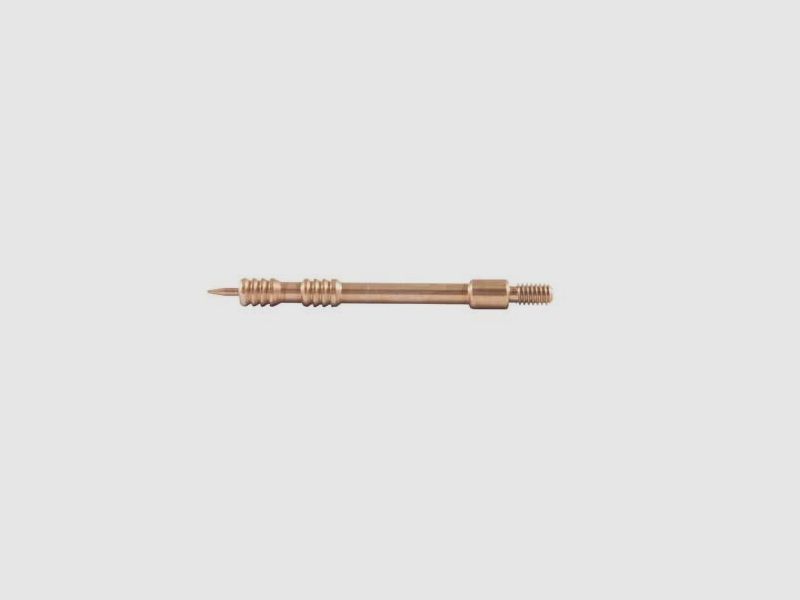
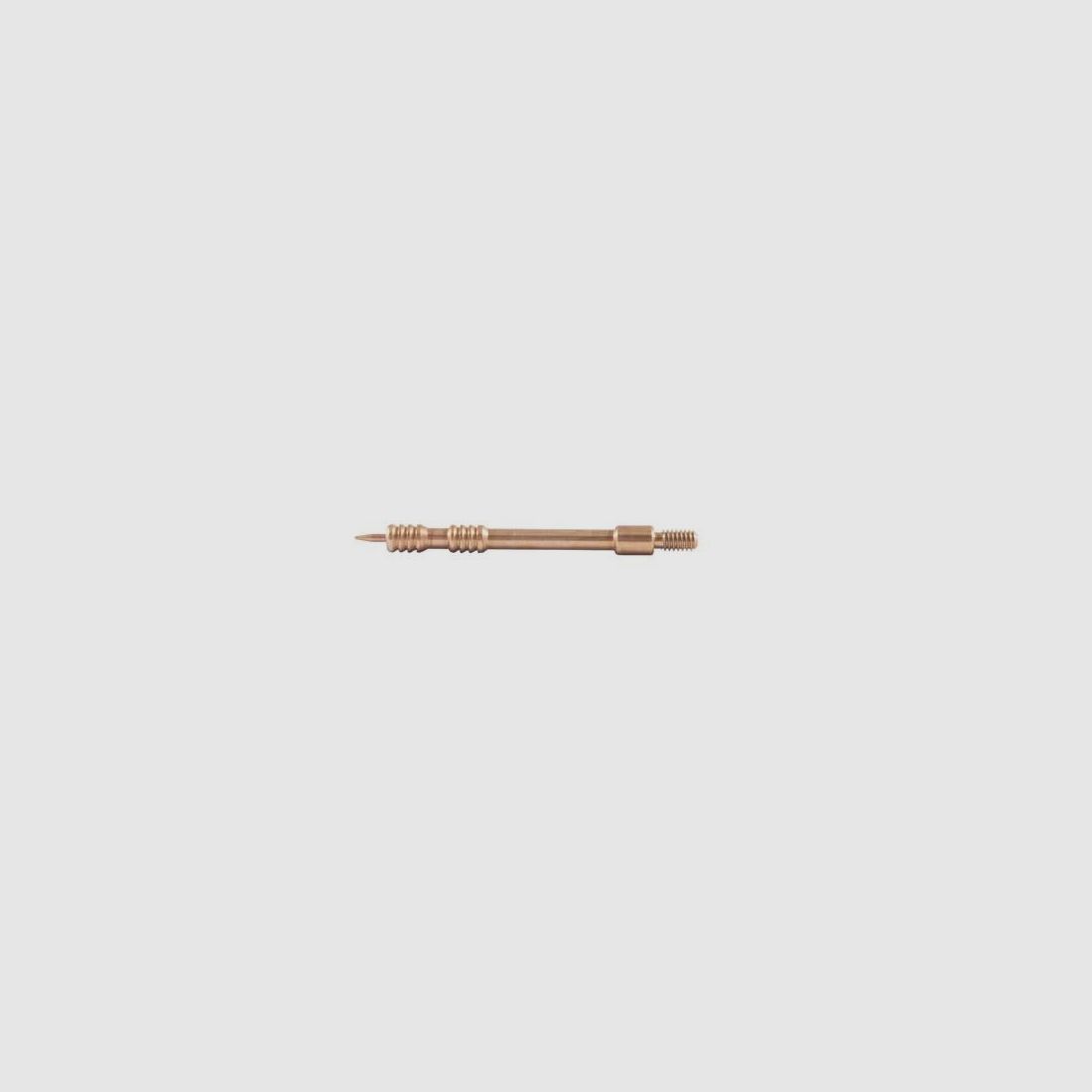
The Proof-Positive Rifle Jag is a caliber-specific cleaning jag for impaled patches. Its task is defined patch contact on the barrel wall. It is not a complete cleaning kit and only works as part of a coordinated chain of barrel caliber, thread, cleaning rod, patch, and possibly cleaner.
What the construction does in the barrel
In the regular versions, Bore Tech uses two ring groups. The first segment is rounded and supports centering; the following segments hold the patch. The space between both groups takes up clean solvent and releases it again before the second contact area. This way, the geometry becomes not only a holder but a controlled part of the wet pass.
The .22 RF variant is deliberately built differently: knurled zones allow, according to the manufacturer, both impaling and wrapping the patch. This is a real variant function and not just a visual difference to the also offered .22 CF version.
At the rear end, the jag has a reversed cone. The edge-free transition described by the manufacturer explicitly applies to the combination with a matching Proof-Positive Bore Stix; with other rods, thread and transition must be checked separately.
Our assessment
The strongest reason to buy is not “more cleaning power” as a blanket promise. It is the cleaner interpretation of copper remover patches: brass is removed as a possible cause of a blue reaction from this tool component. Those who assess barrel condition based on consecutive patches gain a more comprehensible working basis.
The most common misconception is that “matching caliber” alone is enough. In fact, rod thread and patch size must also match. For .17 and .20, the jag requires a female 5/40 counter-thread; the other offered groups need a female 8/32 thread. A patch that is too large or impaled too tightly in the middle can block despite the correct jag.
Black-Raptor purchase limit:
Buy if you clean long gun barrels with impaled patches, clearly know your actual caliber and rod thread, and want to use a brass-free jag component with copper removers.
Don’t buy if you expect a complete set, a cleaning rod, patches, a mechanical brush, or a flexible loop solution. If unsure about the variant, first clarify barrel caliber and rod fitting.
Caliber groups without guesswork
There are 15 variants to choose from in the shop. The shop options sometimes use abbreviations. Therefore, check the actual barrel caliber with the manufacturer group before ordering: .25 corresponds to .25/6.5 mm, .30 to the group .308/7.62 mm, 284 to the group .284/7 mm, 270 to the group .270, and .45 to the group .44/.45.
5/40 thread: .17 and .20.
8/32 thread: .22 RF, .22 CF, .
243/6 mm, .25/6.5 mm, .270, .284/7 mm, .308/7.62 mm, .338, .35/9 mm, .375, .416, .44/.45 and .50.
.22 selection: .22 RF with knurled zones for wrapping or spiking; .22 CF with the regular ring geometry.
Trainer tip:
Before the first cleaning pass, name three points out loud: actual barrel caliber, thread on the jag, and counterbore on the rod. Only then is the patch chosen. This short sequence prevents resistance from being mistakenly interpreted as “thorough cleaning” and met with more force.
User tip: Control patch resistance via the insertion point
For a too tight wet patch, Bore Tech recommends “Side Spiking”: spike not exactly in the center, but more towards a corner or edge. The further out the insertion point is, the looser the patch runs. However, do not go all the way to the outermost edge; enough material must cover the first contact zone. Different patch thicknesses or materials can change the result.
User tip: Do not add chemicals after the cleaner
Bore Tech recommends warm water to clean the jag after using their own cleaners. Then dry thoroughly. This prevents residues from the next step and makes an additional aggressive cleaner for the tool unnecessary.
User tip: Undersize is not a standard solution
According to the manufacturer, a smaller jag is not the usual answer to a sticking patch. First check the intended patch size and shift the insertion point. An undersized variant changes the barrel contact and does not solve the actual tuning of patch, jag, and rod.
Jag, Loop, Brush or Guide?
Firm patch contact: choose jag. More flexible patch guidance: check out the Proof-Positive Patch Loop. Mechanical treatment: use the Proof-Positive Nylon Brush. Rod guidance for bolt actions: depending on the system, check Bore Guide Bolt Action Centerfire or Patch Guide Bolt Action.
For copper residues, depending on desired intensity, Bore Tech Eliminator or the specialized Cu+2 Copper Remover as a separate chemical component are suitable. The jag itself does not chemically dissolve deposits; it transports and guides the soaked patch.
Technical data
Product type: caliber-specific Rifle Patch Jag / cleaning jag.
Material: proprietary, treated Proof-Positive alloy; according to the manufacturer brass-free and barrel-friendly.
Thread: male; 5/40 for .17 and .20, 8/32 for the other offered variants.
Patch contact: two contact groups with centering and holding function; different knurling geometry for .22 RF.
Rod transition: rear cone for a burr-free transition with matching Proof-Positive Bore Stix.
Variants: .17, .20, .22 RF, .22 CF, .243, .25, 270, 284, .30, .338, .35, .375, .416, .45 and .50.
Additionally required: matching cleaning rod, correct patches and depending on the step cleaner; a guide is system-dependent useful.
Scope of delivery
One Bore Tech Proof-Positive Rifle Jag in the chosen caliber variant.
Cleaning rod, adapter, patches, cleaners, Bore Guide, Patch Guide, Loop and brushes are not included.
Work safely: Completely unload the firearm before starting and remove all ammunition from the work area. Do not force resistance. If the patch does not run evenly, correct combination and insertion position instead of bending rod or jag under load.
FAQ
Why is a brass-free jag useful with copper removers? Brass contains copper. Copper removers can therefore also cause a blue reaction on the jag that looks like barrel fouling. The Proof-Positive alloy removes this known interference source from the jag component.
Which thread do I need? The .17 and .20 variants have a male 5/40 thread. All other manufacturer groups offered here have a male 8/32 thread. The cleaning rod each requires the matching female
Close-up shot.
What distinguishes .22 RF from .22 CF? The .22-RF version has knurled zones and can be used according to Bore Tech for wrapping or spearing the patch. .22 CF uses the regular ring geometry. Both are different shop variants.
What to do if the patch is too tight? First check caliber and patch size. With the correct combination, spear the patch further towards the corner or edge, but not right at the edge. This loosens the passage while enough patch material covers the first contact zone.
Should I rather use a smaller jag? Bore Tech generally does not recommend an undersized jag as a standard solution. The intended jag should work with the appropriate patch size; resistance is first corrected by patch choice and seating position.
What is included and what is missing? A jag in the chosen variant is delivered. Cleaning rod, adapter, patches, cleaner, guide, loop, and brushes are separate components. (Show description in original language)
.br-product-v3{--br-ink:#17201c;--br-muted:#54615b;--br-line:#d9e0dc;--br-soft:#f5f7f5;--br-deep:#10271d;--br-gold:#f2d58e;color:var(--br-ink);font-size:16px;line-height:1.68;max-width:1040px;margin:0 auto}.br-product-v3 *{box-sizing:border-box}.br-product-v3 p{margin:0 0 12px}.br-product-v3 a{color:#195e43;text-decoration-thickness:1px;text-underline-offset:3px}.br-product-v3 .br-hero-v3,.br-product-v3 .br-final{background:var(--br-deep);border-radius:18px;padding:clamp(24px,5vw,48px);margin:0 0 28px}.br-product-v3 .br-hero-v3,.br-product-v3 .br-hero-v3 p,.br-product-v3 .br-hero-v3 strong,.br-product-v3 .br-hero-v3 span,.br-product-v3 .br-final,.br-product-v3 .br-final p,.br-product-v3 .br-final strong,.br-product-v3 .br-final span{color:#fff!important;opacity:1!important}.br-product-v3 .br-hero-v3 .br-eyebrow,.br-product-v3 .br-final .br-eyebrow{color:var(--br-gold)!important}.br-product-v3 .br-eyebrow{font-size:.78rem;line-height:1.3;letter-spacing:.12em;text-transform:uppercase;font-weight:800;margin-bottom:10px}.br-product-v3 .br-hero-title{display:block;font-size:clamp(1.65rem,4vw,2.55rem);line-height:1.13;margin-bottom:14px;font-weight:850}.br-product-v3 .br-section-title{display:block;font-size:clamp(1.18rem,2.5vw,1.42rem);line-height:1.25;font-weight:850;margin:30px 0 13px;color:var(--br-ink)}.br-product-v3 .br-box{background:var(--br-soft);border:1px solid var(--br-line);border-radius:14px;padding:20px;margin:0 0 18px}.br-product-v3 .br-grid{display:grid;grid-template-columns:repeat(2,minmax(0,1fr));gap:14px;margin:0 0 18px}.br-product-v3 .br-card{border:1px solid var(--br-line);border-radius:14px;padding:18px;background:#fff}.br-product-v3 .br-card-title{display:block;font-size:1rem;line-height:1.35;font-weight:850;margin-bottom:8px;color:var(--br-ink)}.br-product-v3 details{border:1px solid var(--br-line);border-radius:12px;background:#fff;padding:0 16px;margin:10px 0}.br-product-v3 summary{cursor:pointer;font-weight:800;padding:14px 0;color:var(--br-ink)}.br-product-v3 details p{padding:0 0 14px;color:var(--br-ink)}.br-product-v3 .br-note{border-left:4px solid #b78c2c}@media(max-width:640px){.br-product-v3{font-size:15.8px;line-height:1.62}.br-product-v3 .br-grid{grid-template-columns:1fr}.br-product-v3 .br-hero-v3,.br-product-v3 .br-final{padding:24px 20px;border-radius:14px}.br-product-v3 .br-box,.br-product-v3 .br-card{padding:16px}}
Proof-Positive · Rifle Jag · 15 Kaliber
Bore Tech Proof-Positive Rifle Jag: Patchkontakt ohne Messing als Kupfer-Störquelle Der kaliberspezifische Jag hält aufgespießte Patches definiert an der Laufwand. Seine messingfreie Proof-Positive-Legierung ist besonders interessant, wenn Kupferlöser verwendet und blaue Patches als Reinigungsindikator bewertet werden.
Vor dem Kauf: Laufkaliber, Jag-Variante, Stabgewinde und Patchgröße müssen gemeinsam passen.
Unsere ehrliche Einordnung
Der Vorteil ist nicht „mehr Reinigung“ als pauschales Versprechen, sondern eine sauberere Interpretation von Kupferlösern: Messing als bekannte Kupferquelle fällt an dieser Werkzeugkomponente weg.
Der Jag ist kein Komplettset. Ohne passenden Stab und korrekt dimensionierte Patches bringt selbst die richtige Kaliberangabe nichts; ein zu strammer Patch darf nicht mit mehr Kraft durchgedrückt werden.
Passt gut, wenn … … du Langwaffenläufe mit aufgespießten Patches reinigst und dein Kaliber sowie Stabgewinde eindeutig kennst.
… du bei Kupferlösern eine messingfreie Jag-Komponente möchtest.
Passt eher nicht, wenn … … du Stab, Patches, Reiniger oder Guide als Teil des Lieferumfangs erwartest.
… du eine flexible Patch-Loop statt eines festen Jags bevorzugst oder die Variante nur nach „ungefähr passendem“ Kaliber auswählst.
Variantenwahl und Gewinde
5/40 Für die Varianten .17 und .20. Der Reinigungsstab braucht eine passende weibliche 5/40-Aufnahme.
8/32 Für .22 RF, .22 CF, .243, .25, .270, .284, .30, .338, .35, .375, .416, .45 und .50.
.22 RF Abweichende Rändelgeometrie; laut vorhandenem Datenstand sowohl für Aufspießen als auch Umwickeln des Patches gedacht.
.22 CF Eigene Variante mit regulärer Ringgeometrie – nicht mit .22 RF gleichsetzen.
Grenzen, Nachteile und Fehlkauf vermeiden
Kaliber allein reicht nicht: Das Gewinde am Stab und die Patchgröße entscheiden mit. Bei klemmendem Patch zuerst Kombination und Einstichposition prüfen, nicht einfach einen kleineren Jag wählen oder mehr Kraft einsetzen.
Die Shopbezeichnungen sind teilweise Kurzformen: .25 steht für 6,5-mm-Gruppe, .30 für .308/7,62, 284 für 7 mm und .45 für die .44/.45-Gruppe.
Technische Daten mit Praxisdeutung
Material Proprietäre Proof-Positive-Legierung, laut vorhandenem Bore-Tech-Datenstand messingfrei. Relevant für Kupferlöser und Patchauswertung.
Patchkontakt Ringgeometrie zentriert und hält den Patch; .22 RF arbeitet konstruktiv anders.
Gewinde 5/40 bei .17/.20, sonst 8/32 – die Gegenaufnahme des Stabs muss passen.
15 Varianten Von .17 bis .50. Die große Auswahl reduziert Fehlkäufe nur, wenn nach tatsächlichem Laufkaliber gewählt wird.
Lieferumfang
1 × Bore Tech Proof-Positive Rifle Jag in der gewählten Kalibervariante. Stab, Adapter, Patches, Reiniger, Bore/Patch Guide, Loop und Bürsten sind nicht enthalten.
Sichere Anwendung
Waffe vollständig entladen und Munition aus dem Arbeitsbereich entfernen. Patchwiderstand kontrollieren; bei zu strammem Sitz Patchgröße und Einstichposition korrigieren. Stab oder Jag nicht unter Gewalt belasten. Werkzeug nach der Reinigung säubern und trocknen.
FAQ
Warum messingfrei? Messing enthält Kupfer und kann mit Kupferlösern blau reagieren. Die Proof-Positive-Legierung entfernt diese Störquelle am Jag. Welches Gewinde brauche ich? .17 und .20 nutzen 5/40; die übrigen angebotenen Varianten 8/32. Was unterscheidet .22 RF und .22 CF? .22 RF hat eine abweichende Rändelgeometrie; .22 CF nutzt die reguläre Ringgeometrie. Was tun bei zu strammem Patch? Zuerst Patchgröße und Einstichposition prüfen. Mehr Kraft oder ein beliebig kleinerer Jag sind keine saubere Standardlösung.
Black Raptor · die Kette muss passen
Der Proof-Positive Jag ist ein kleines Teil mit großer Auswirkung auf die Messlogik bei Kupferreinigung. Entscheidend bleibt aber das Gesamtsystem aus Kaliber, Gewinde, Patch und Stab.
Proof-Positive · Rifle Jag · 15 Kaliber
Bore Tech Proof-Positive Rifle Jag: Patchkontakt ohne Messing als Kupfer-Störquelle Der kaliberspezifische Jag hält aufgespießte Patches definiert an der Laufwand. Seine messingfreie Proof-Positive-Legierung ist besonders interessant, wenn Kupferlöser verwendet und blaue Patches als Reinigungsindikator bewertet werden.
Vor dem Kauf: Laufkaliber, Jag-Variante, Stabgewinde und Patchgröße müssen gemeinsam passen.
Unsere ehrliche Einordnung
Der Vorteil ist nicht „mehr Reinigung“ als pauschales Versprechen, sondern eine sauberere Interpretation von Kupferlösern: Messing als bekannte Kupferquelle fällt an dieser Werkzeugkomponente weg.
Der Jag ist kein Komplettset. Ohne passenden Stab und korrekt dimensionierte Patches bringt selbst die richtige Kaliberangabe nichts; ein zu strammer Patch darf nicht mit mehr Kraft durchgedrückt werden.
Passt gut, wenn … … du Langwaffenläufe mit aufgespießten Patches reinigst und dein Kaliber sowie Stabgewinde eindeutig kennst.
… du bei Kupferlösern eine messingfreie Jag-Komponente möchtest.
Passt eher nicht, wenn … … du Stab, Patches, Reiniger oder Guide als Teil des Lieferumfangs erwartest.
… du eine flexible Patch-Loop statt eines festen Jags bevorzugst oder die Variante nur nach „ungefähr passendem“ Kaliber auswählst.
Variantenwahl und Gewinde
5/40 Für die Varianten .17 und .20. Der Reinigungsstab braucht eine passende weibliche 5/40-Aufnahme.
8/32 Für .22 RF, .22 CF, .243, .25, .270, .284, .30, .338, .35, .375, .416, .45 und .50.
.22 RF Abweichende Rändelgeometrie; laut vorhandenem Datenstand sowohl für Aufspießen als auch Umwickeln des Patches gedacht.
.22 CF Eigene Variante mit regulärer Ringgeometrie – nicht mit .22 RF gleichsetzen.
Grenzen, Nachteile und Fehlkauf vermeiden
Kaliber allein reicht nicht: Das Gewinde am Stab und die Patchgröße entscheiden mit. Bei klemmendem Patch zuerst Kombination und Einstichposition prüfen, nicht einfach einen kleineren Jag wählen oder mehr Kraft einsetzen.
Die Shopbezeichnungen sind teilweise Kurzformen: .25 steht für 6,5-mm-Gruppe, .30 für .308/7,62, 284 für 7 mm und .45 für die .44/.45-Gruppe.
Technische Daten mit Praxisdeutung
Material Proprietäre Proof-Positive-Legierung, laut vorhandenem Bore-Tech-Datenstand messingfrei. Relevant für Kupferlöser und Patchauswertung.
Patchkontakt Ringgeometrie zentriert und hält den Patch; .22 RF arbeitet konstruktiv anders.
Gewinde 5/40 bei .17/.20, sonst 8/32 – die Gegenaufnahme des Stabs muss passen.
15 Varianten Von .17 bis .50. Die große Auswahl reduziert Fehlkäufe nur, wenn nach tatsächlichem Laufkaliber gewählt wird.
Lieferumfang
1 × Bore Tech Proof-Positive Rifle Jag in der gewählten Kalibervariante. Stab, Adapter, Patches, Reiniger, Bore/Patch Guide, Loop und Bürsten sind nicht enthalten.
Sichere Anwendung
Waffe vollständig entladen und Munition aus dem Arbeitsbereich entfernen. Patchwiderstand kontrollieren; bei zu strammem Sitz Patchgröße und Einstichposition korrigieren. Stab oder Jag nicht unter Gewalt belasten. Werkzeug nach der Reinigung säubern und trocknen.
FAQ
Warum messingfrei? Messing enthält Kupfer und kann mit Kupferlösern blau reagieren. Die Proof-Positive-Legierung entfernt diese Störquelle am Jag. Welches Gewinde brauche ich? .17 und .20 nutzen 5/40; die übrigen angebotenen Varianten 8/32. Was unterscheidet .22 RF und .22 CF? .22 RF hat eine abweichende Rändelgeometrie; .22 CF nutzt die reguläre Ringgeometrie. Was tun bei zu strammem Patch? Zuerst Patchgröße und Einstichposition prüfen. Mehr Kraft oder ein beliebig kleinerer Jag sind keine saubere Standardlösung.
Black Raptor · die Kette muss passen
Der Proof-Positive Jag ist ein kleines Teil mit großer Auswirkung auf die Messlogik bei Kupferreinigung. Entscheidend bleibt aber das Gesamtsystem aus Kaliber, Gewinde, Patch und Stab.