-15 %


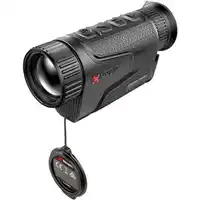
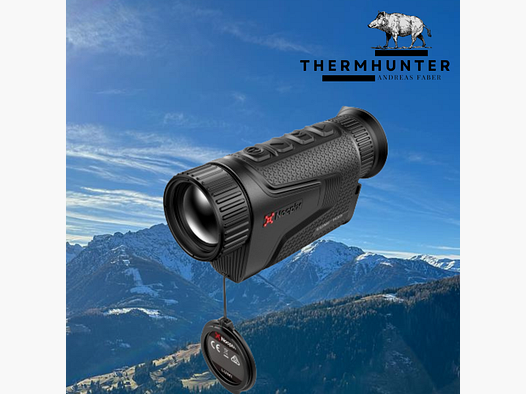
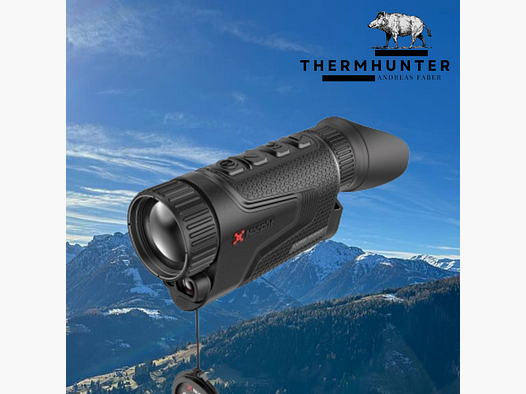
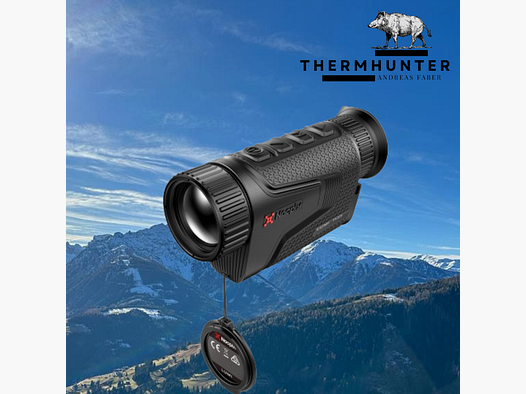
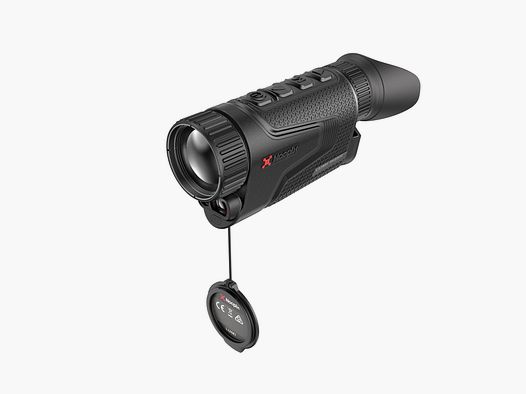
Nocpix Lumi L35 Thermal Monocular
Price at the dealer: 1,099 €. Converted at the ECB rate as of October 19, 2026.
No permit required (18+)
72479 Straßberg, Germany
19
ID: 9894977
Purchase from outside the EU: The firearm goes through an importer in your country, the dealer handles the export.
How buying from Europe works
Shop safely with Gunfinder
Our AI-powered seller identity verification makes Gunfinder the safest marketplace online.
Learn more
Details
- Original language
- German
- Brand
- Nocpix
- Product
- Nocpix Lumi
- Category
- Condition
- New
- Location
- 🇩🇪 72479 Straßberg, Germany
- Availability
- In stock
Freshness
This listing is based on a mirrored offer, where the listing data was synced to us from a shop, dealer, or external marketplace. Please note that temporary price discrepancies may occur due to possible delays in data transmission.
- Source
- Black Raptor
- Last updated
- about 13 hours ago
Description
Note:
The item is located abroad. Please note that delivery conditions, shipping times, and/or the purchase process may differ.
font-family: Arial, Helvetica, sans-serif;
line-height:1.6;
color:#222;
}
.br-product h1{
font-size:1.4rem;
margin-bottom:10px;
}
.br-product h2{
font-size:1.2rem;
margin-top:28px;
}
.br-product ul{
padding-left:18px;
}
.br-product .info-box{
background:#ffdddd;
border-left:6px solid #c40000;
padding:12px;
margin:20px 0;
}
.br-product .tip-box{
background:#eef6ff;
border-left:6px solid #2a6fdb;
padding:12px;
margin:20px 0;
}
.br-product .trust-box{
background:#eaf7ea;
border-left:6px solid #2f8f2f;
padding:12px;
margin:20px 0;
}
.br-product .compare-box{
background:#f5f5f5;
border-left:6px solid #444;
padding:12px;
margin:20px 0;
}
.br-product .scenario-box{
background:#fff7e6;
border-left:6px solid #d88400;
padding:12px;
margin:20px 0;
}
.br-product details{
background:#f2f2f2;
padding:10px;
margin-bottom:8px;
border-radius:4px;
}
.br-product summary{
font-weight:600;
cursor:pointer;
}
Nocpix Lumi L35 – 384 Thermal Imager with 35 mm Lens for Field Edge and More Range
If you need more distance, the focal length becomes more important than just the sensor count.
The Nocpix Lumi L35 combines a 384×288 sensor with a 35 mm F0.9 lens. This makes it significantly more range-oriented than the P13 or L19.
The L35 makes sense for hunters who mainly monitor field edges, meadows, or open areas and don’t need a maximum 640 device.
Why exactly this thermal imager?
✔ 384×288 / 12 µm sensor – solid detail representation with controlled size
✔ 35 mm F0.9 lens – more range and better magnification reserve
✔ NETD ≤18 mK – good contrast separation in humid air and cold
✔ 50 Hz frame rate – smooth display during pans
✔ range-oriented 384 field device
Why the Nocpix Lumi L35?
The L35 is useful if a wide close-range image is no longer enough and you want to better classify heat sources at greater distances.
You get more range than with 13 or 19 mm devices
You can search open areas more precisely
You have a narrower, distance-oriented image
You still stay in a compact device class
Technology clearly classified:
Sensor resolution: 384×288 is solid but not high-end. The range here is mainly created by the 35 mm lens.
Lens: 35 mm bundles more and provides a distance advantage. This narrows the field of view.
Field of view: About 13 m at 100 m is significantly narrower than P13/L19. This helps in the field but is slower in dense forest.
Hunting scenario:
You sit at the field edge and want to detect early if there is movement in the meadow. Here the 35 mm lens helps because it reaches further than compact forest devices.
Key features
384×288 sensor with 12 µm pixel pitch
35 mm F0.9 lens
NETD ≤18 mK
50 Hz frame rate
AMOLED 1024×768 px
Range up to approx. 1800 m
Digital zoom 4× to 16×
Reality+ image processing
Replaceable 18650 battery
IP67 protection class
Our assessment
The L35 is a good compromise for users looking for a range-oriented device but not yet wanting to go into the 640 class.
It is especially strong on open areas, clearings, and field edges. Here the 35 mm focal length brings real benefits.
The downside is the narrower image. For forest, close range, and moving stalking, the L19 is often more comfortable; for maximum detail depth, the H35 is stronger.
Trainer tip: Using thermal imaging correctly
Work with the L35 consciously slower than with a wide-angle device. Due to the narrower field of view, you easily skip heat sources at the edge with too fast pans.
Thermal imaging helps with finding, observing, and classifying. It does not replace responsible decision-making – especially not in poor visibility, vegetation, or unclear situations.
Suitable for
Field edge: when more range is needed
Sitting at meadows: when early detection is more important than maximum overview
384 users: when compact technology mi
t distance focus sought
Budget-conscious field hunters: when 640 devices are not necessarily needed
Why exactly for you?
If your hunting ground offers more open spaces than dense forest situations and you are looking for a compact distance device, the L35 is the right Lumi variant.
Important note:
Detection ranges describe the recognition of heat sources under defined conditions. Reliable hunting identification takes place significantly closer and depends on weather, vegetation, experience, and situation.
Please observe the applicable legal regulations for the use of thermal imaging technology.
Practice: sensor, lens, and application area
35 mm lens = more distance, less close-range overview
384 sensor = solid, but more limited than 640 at strong zoom
Very useful for field edges, clearings, meadows, and clear hunting grounds
Not optimal for dense thickets or fast close-range stalking
Features & construction
Compact housing for one-handed operation
F0.9 lens for high thermal light intensity
Reality+ image processing for noise reduction
Quiet controls for discreet use
Replaceable 18650 battery for flexible operating time
IP67 protection against dust and water
Photo, video, and audio function with internal memory
Technical data
Model: Nocpix Lumi L35
Product type: thermal imaging monocular
Sensor: 384×288 / 12 µm
NETD: ≤18 mK
Lens: 35 mm F0.9
Frame rate: 50 Hz
Field of view: approx. 13×10 m at 100 m
Magnification: 4× to 16× digital
Display: AMOLED 1024×768 px
Detection range: up to approx. 1800 m
Protection class: IP67
Weight: under approx. 345 g
Battery system: 18650 replaceable
Scope of delivery
1x thermal imaging device
1x 18650 battery
1x charging cable
1x carrying strap
1x user manual
FAQ
What is the difference between L35 and L19?
The L35 has a longer focal length and thus more range, but a narrower field of view.
Is the L35 suitable for forest hunting grounds?
Only limited. In tight forest situations, the image is often too narrow.
Why not directly H35?
The H35 offers more detail with 640×512. The L35 is the more budget-friendly distance solution.
What does the F0.9 lens do?
It captures more thermal energy and supports a brighter, higher-contrast image.
Is detection range the same as identification?
No. Detecting a heat source is not the same as reliable hunting identification.
Especially for a thermal imaging device for field edges and open spaces, the combination of 35 mm lens, sensor size, and field of view determines sensible hunting ground use. (Show description in original language)
.br-product-v4{--ink:#18221b;--muted:#59645e;--deep:#10271d;--gold:#efd18c;--soft:#f5f7f5;--line:#dbe2dd;font:16px/1.7 Arial,Helvetica,sans-serif;color:var(--ink);max-width:100%;overflow-wrap:anywhere}
.br-product-v4 *{box-sizing:border-box}.br-product-v4 p{margin:0 0 14px}.br-product-v4 .hero,.br-product-v4 .final{background:var(--deep);color:#fff;border-top:3px solid var(--gold);border-radius:14px;padding:24px;margin:0 0 22px}
.br-product-v4 .kicker{color:var(--gold);font-size:.8rem;letter-spacing:.09em;text-transform:uppercase;margin-bottom:8px}.br-product-v4 .headline{font-size:1.5rem;line-height:1.3;font-weight:800;margin:0 0 14px}
.br-product-v4 h2{font-size:1.2rem;line-height:1.4;margin:28px 0 12px}.br-product-v4 h3{font-size:1.03rem;margin:0 0 8px}.br-product-v4 .grid,.br-product-v4 .specs{display:grid;grid-template-columns:repeat(2,minmax(0,1fr));gap:14px}
.br-product-v4 .card,.br-product-v4 .box{background:var(--soft);border:1px solid var(--line);border-radius:11px;padding:17px}.br-product-v4 .box{margin:14px 0}.br-product-v4 .good{border-left:5px solid #397a43}.br-product-v4 .no{border-left:5px solid #9d3a34}.br-product-v4 .warn{border-left:5px solid #a87421;background:#fff8e8}
.br-product-v4 ul{margin:8px 0 0;padding-left:20px}.br-product-v4 li{margin:5px 0}.br-product-v4 dl{margin:0}.br-product-v4 dt{font-weight:700;margin-top:8px}.br-product-v4 dd{margin:2px 0 9px}
.br-product-v4 details{background:var(--soft);border:1px solid var(--line);border-radius:9px;padding:12px 14px;margin:8px 0}.br-product-v4 summary{font-weight:700;cursor:pointer}.br-product-v4 details p{margin:10px 0 0}
.br-product-v4 a{color:#245d3e;text-decoration:underline;text-underline-offset:3px}.br-product-v4 .final a{color:var(--gold)}.br-product-v4 .note{color:var(--muted);font-size:.9rem}
@media(max-width:700px){.br-product-v4 .grid,.br-product-v4 .specs{grid-template-columns:1fr}.br-product-v4 .hero,.br-product-v4 .final{padding:18px}.br-product-v4 .headline{font-size:1.28rem}.br-product-v4 .card,.br-product-v4 .box{padding:14px}}
Nocpix LUMI L35 · 384er Distanzmodell
Mehr Grundvergrößerung und 35 mm – für Anwender, die Distanz wichtiger finden als großes Sehfeld.
Das Nocpix LUMI L35 kombiniert einen 384×288-Sensor mit 12 µm Pixelpitch, 35-mm-F0,9-Optik und 4× Grundvergrößerung. Damit ist es innerhalb der klassischen LUMI-Serie klar distanzorientierter als L19 oder P13.
Wofür das L35 wirklich gedacht ist
Passt gut, wenn …
du überwiegend Feldkante und offene Flächen beobachtest;
du eine hohe Grundvergrößerung bevorzugst;
du kompakt bleiben und preislich unter einem 640er Modell bleiben willst.
Passt eher nicht, wenn …
du im Wald oder auf kurze Distanz viel Sehfeld brauchst;
du oft digital zoomst und maximale Detailreserve erwartest;
du einen LRF benötigst – dann L35R.
35 mm auf 384×288: bewusst enger
Die Kombination aus 35 mm und 384er Sensor ergibt ein deutlich engeres Sehfeld als beim L19. Das ist kein Fehler, sondern der Charakter dieses Modells: mehr Grundvergrößerung, weniger Übersicht. Wer genau weiß, dass offene Flächen und weiter entfernte Beobachtungen dominieren, bekommt eine klare, kompakte Lösung.
4× Grundvergrößerung
Objekte erscheinen bereits ohne digitalen Zoom größer – gut für Distanz, weniger angenehm beim schnellen Scannen auf kurze Entfernung.
NETD ≤18 mK
Gute Temperaturdifferenzierung innerhalb der 384er LUMI-Klasse.
F0,9
Lichtstarke Wärmebildoptik für bessere thermische Signalausbeute.
18650-Akku
Ein verbreitetes, wechselbares Akkusystem erleichtert längere Einsätze.
L35 oder H35?
L35: günstiger, 4× Grundvergrößerung, 384×288, engeres Sehfeld.
H35: 640×512, 2,5× Grundvergrößerung, breiteres Sehfeld und deutlich mehr Zoomreserve.
Technische Daten
Sensor
384×288 Pixel, 12 µm
NETD
≤18 mK
Bildfrequenz
50 Hz
Objektiv
35 mm F0,9
Sehfeld
7,5×5,7° / ca. 13×10 m auf 100 m
Vergrößerung
4–16× inkl. Digitalzoom
Display
AMOLED 1024×768
Akku
Wechselbarer 18650
Schutzklasse
IP67
Gewicht
ca. 335 g mit Akku
FAQ
Warum ist das Sehfeld kleiner als beim L19? Die längere 35-mm-Brennweite und höhere Grundvergrößerung priorisieren Distanz statt Übersicht. Ist 16× ein optischer Zoom? Nein. Das Gerät startet bei 4×; höhere Stufen enthalten digitalen Zoom. Wann lohnt H35? Wenn dir mehr native Sensorauflösung, breiteres Sehfeld und bessere Zoomreserve wichtiger sind. Ist L35 für Wald ideal? Eher nicht. Für Wald und kurze Distanz sind L19 oder P13 meist übersichtlicher.
Unsere Einordnung: Das LUMI L35 ist ein kompakter 384er Distanzspezialist . Wer bewusst 4× Grundvergrößerung und 35 mm möchte, bekommt ein klares Profil. Wer universeller arbeiten will, sollte L19 oder H35 gegenprüfen.