-14 %


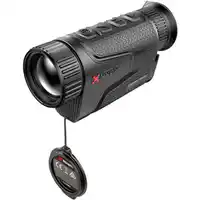
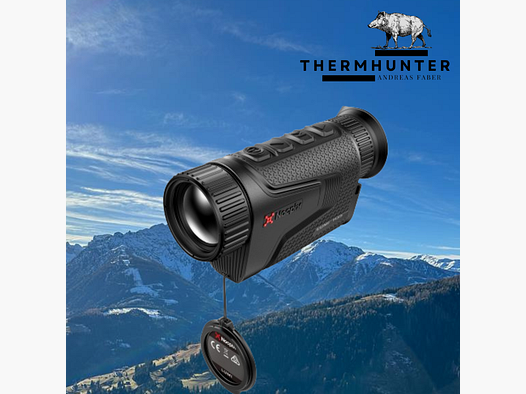
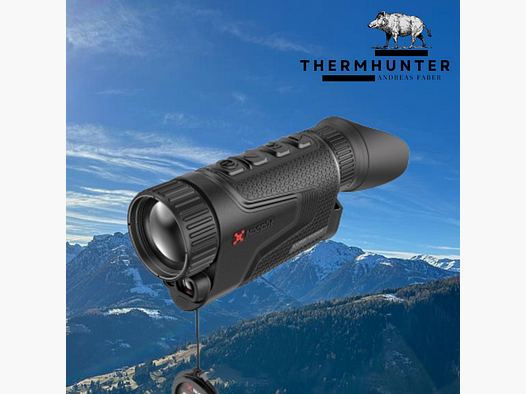
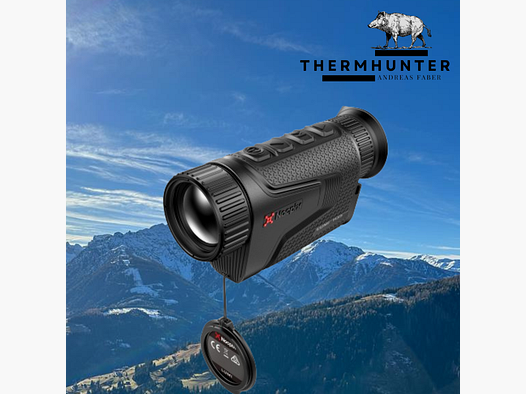
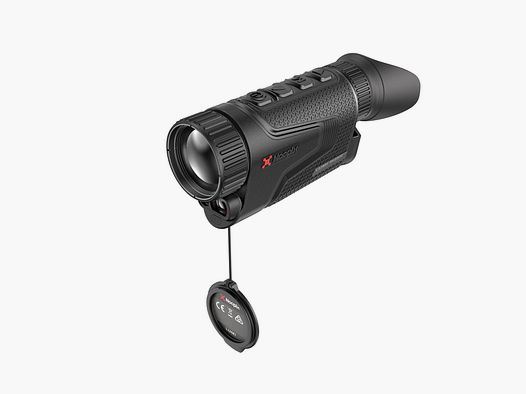
Nocpix Lumi L19 Thermal Monocular
Price at the dealer: 949 €. Converted at the ECB rate as of October 19, 2026.
No permit required (18+)
72479 Straßberg, Germany
18
ID: 9894976
Purchase from outside the EU: The firearm goes through an importer in your country, the dealer handles the export.
How buying from Europe works
Shop safely with Gunfinder
Our AI-powered seller identity verification makes Gunfinder the safest marketplace online.
Learn more
Details
- Original language
- German
- Brand
- Nocpix
- Product
- Nocpix Lumi
- Category
- Condition
- New
- Location
- 🇩🇪 72479 Straßberg, Germany
- Availability
- In stock
Freshness
This listing is based on a mirrored offer, where the listing data was synced to us from a shop, dealer, or external marketplace. Please note that temporary price discrepancies may occur due to possible delays in data transmission.
- Source
- Black Raptor
- Last updated
- about 12 hours ago
Description
Note:
The item is located abroad. Please note that delivery conditions, shipping times, and/or the purchase process may differ.
font-family: Arial, Helvetica, sans-serif;
line-height:1.6;
color:#222;
}
.br-product h1{
font-size:1.4rem;
margin-bottom:10px;
}
.br-product h2{
font-size:1.2rem;
margin-top:28px;
}
.br-product ul{
padding-left:18px;
}
.br-product .info-box{
background:#ffdddd;
border-left:6px solid #c40000;
padding:12px;
margin:20px 0;
}
.br-product .tip-box{
background:#eef6ff;
border-left:6px solid #2a6fdb;
padding:12px;
margin:20px 0;
}
.br-product .trust-box{
background:#eaf7ea;
border-left:6px solid #2f8f2f;
padding:12px;
margin:20px 0;
}
.br-product .compare-box{
background:#f5f5f5;
border-left:6px solid #444;
padding:12px;
margin:20px 0;
}
.br-product .scenario-box{
background:#fff7e6;
border-left:6px solid #d88400;
padding:12px;
margin:20px 0;
}
.br-product details{
background:#f2f2f2;
padding:10px;
margin-bottom:8px;
border-radius:4px;
}
.br-product summary{
font-weight:600;
cursor:pointer;
}
Nocpix Lumi L19 – compact 384 sensor thermal imager for forest, field edge and mobile game management
If the P13 gives you too little detail but you want to stay compact, the L19 is the smarter step.
The Nocpix Lumi L19 combines a 384×288 sensor with a 19 mm F0.9 lens. This gives you more detail reserve than the P13 without losing the wide practical field of view for forest and field edge.
The L19 is a true all-round entry: significantly more sensor area than 256 devices, but not yet a narrow field device. For mixed hunting grounds, this is often just right.
Why exactly this thermal imager?
✔ 384×288 / 12 µm sensor – more detail reserve than 256 devices
✔ 19 mm F0.9 lens – good balance of overview and range
✔ NETD ≤18 mK – finer temperature differentiation in tougher weather
✔ 50 Hz frame rate – smooth display when panning
✔ compact all-round device for forest and field edge
Why the Nocpix Lumi L19?
The L19 is the point where thermal imaging technology becomes clearly more practical without being large or expensive like high-end devices.
You see more structure than with 256 devices
You keep a wide field of view for forest and short distances
You can efficiently monitor game trails and baiting sites
You get a portable device for every hunting trip
Technology clearly classified:
Sensor resolution: 384×288 delivers visibly more information than 256×192. Contours are clearer, small heat points easier to classify.
Lens: 19 mm is not a long-range lens but a practical middle ground for short to medium distances.
Field of view: About 24 m at 100 m provides good overview. Ideal when game is not far but needs to appear quickly in the image.
Hunting ground scenario:
You switch between forest, skid trail, baiting site and field edge. The L19 gives you enough overview for short distances and more detail reserve than a pure close-range device.
Key features
384×288 sensor with 12 µm pixel pitch
19 mm F0.9 lens
NETD ≤18 mK
50 Hz frame rate
AMOLED display 1024×768 px
Reality+ image processing
Replaceable 18650 battery
IP67 protection class
Photo, video and audio function
Compact Lumi design
Our assessment
The Lumi L19 is one of the most sensible devices for users who want to use thermal imaging seriously but don’t need a pure field or long-range device.
It is noticeably more powerful than a 256 device but remains fast, handy and clear.
Those who mainly scan wide fields and need details at long distance should choose the L35 or H35. The L19 is stronger in mixed close to medium range.
Trainer tip: Use thermal imaging correctly
Use the L19 on the stalk with low magnification. Zoom only when you have found a heat source. Constant high digital zoom costs overview and image quality.
Thermal imaging helps with finding, observing and classifying. It does not replace responsible decision-making – especially not in poor visibility, fog
hs or unclear situation.
Who is it suitable for
Mixed hunting grounds: forest, field edge, baiting area, and short open spaces
Beginners with demands: when 256 technology is too limited
Stalkers: when low weight and overview matter
Territory control: when you need to quickly check what’s in stock
Why exactly for you?
If you’re looking for a compact thermal imaging device that can do much more than entry-level 256 models but isn’t too narrow or field-focused, the L19 fits very well.
Important note:
Detection ranges describe the recognition of heat sources under defined conditions. Reliable hunting identification happens much closer and depends on weather, vegetation, experience, and situation.
Please observe the applicable legal regulations for the use of thermal imaging technology.
Practice: Sensor, lens, and application area
384 sensor = better contours and more reserve than P13
19 mm lens = still wide enough for forest and field edge
NETD ≤18 mK helps with weaker temperature contrasts
Ideal as an all-round scanner, less as a pure long-range device
Features & construction
Compact housing for one-handed operation
F0.9 lens for high thermal brightness
Reality+ image processing for noise reduction
Quiet controls for discreet use
Replaceable 18650 battery for flexible operating time
IP67 protection against dust and water
Photo, video, and audio function with internal memory
Technical data
Model: Nocpix Lumi L19
Product type: thermal imaging monocular
Sensor: 384×288 / 12 µm
NETD: ≤18 mK
Lens: 19 mm F0.9
Frame rate: 50 Hz
Field of view: approx. 24×18 m at 100 m
Magnification: 2× to 8× digital
Display: AMOLED 1024×768 px
Detection range: up to approx. 980 m
Protection class: IP67
Weight: under approx. 345 g
Battery system: 18650 replaceable
Scope of delivery
1x thermal imaging device
1x 18650 battery
1x charging cable
1x carrying strap
1x user manual
FAQ
Why L19 instead of P13?
The 384 sensor delivers more detail and better classification, especially at medium distances.
Is the L19 suitable for forest?
Yes. The wide field of view makes it very suitable for forest and field edge.
Is it a long-range device?
No. It detects far but is rather intended for short to medium practical distances.
What does NETD ≤18 mK bring?
Better separation of fine temperature differences, especially in humid air, fog, or low contrast.
When would L35 be better?
If you mainly scan open areas and need more range.
Especially with a 384 thermal imaging device, the balance of sensor size, focal length, and field of view determines whether it works in real hunting everyday life. (Show description in original language)
.br-product-v3{--br-ink:#17201c;--br-muted:#54615b;--br-line:#d9e0dc;--br-soft:#f5f7f5;--br-deep:#10271d;--br-gold:#f2d58e;color:var(--br-ink);font-size:16px;line-height:1.68;max-width:1040px;margin:0 auto}
.br-product-v3 *{box-sizing:border-box}
.br-product-v3 p{margin:0 0 12px}
.br-product-v3 a{color:#195e43;text-decoration-thickness:1px;text-underline-offset:3px}
.br-product-v3 .br-hero-v3,.br-product-v3 .br-final{background:var(--br-deep);border-radius:18px;padding:clamp(24px,5vw,48px);margin:0 0 28px}
.br-product-v3 .br-hero-v3,.br-product-v3 .br-hero-v3 p,.br-product-v3 .br-hero-v3 strong,.br-product-v3 .br-hero-v3 span,.br-product-v3 .br-hero-v3 a,.br-product-v3 .br-final,.br-product-v3 .br-final p,.br-product-v3 .br-final strong,.br-product-v3 .br-final span,.br-product-v3 .br-final a{color:#fff!important;opacity:1!important}
.br-product-v3 .br-hero-v3 .br-eyebrow,.br-product-v3 .br-final .br-eyebrow{color:var(--br-gold)!important}
.br-product-v3 .br-eyebrow{font-size:.78rem;line-height:1.3;letter-spacing:.12em;text-transform:uppercase;font-weight:800;margin-bottom:10px}
.br-product-v3 .br-hero-title{display:block;font-size:clamp(1.65rem,4vw,2.55rem);line-height:1.13;margin-bottom:14px;font-weight:850}
.br-product-v3 .br-hero-v3 a.br-cta{display:inline-block;margin-top:8px;padding:11px 16px;border-radius:999px;background:var(--br-gold);color:#102119!important;font-weight:800;text-decoration:none}
.br-product-v3 .br-section-title{display:block;font-size:clamp(1.18rem,2.5vw,1.42rem);line-height:1.25;font-weight:850;margin:30px 0 13px;color:var(--br-ink)}
.br-product-v3 .br-box{background:var(--br-soft);border:1px solid var(--br-line);border-radius:14px;padding:20px;margin:0 0 18px}
.br-product-v3 .br-grid{display:grid;grid-template-columns:repeat(2,minmax(0,1fr));gap:14px;margin:0 0 18px}
.br-product-v3 .br-card{border:1px solid var(--br-line);border-radius:14px;padding:18px;background:#fff}
.br-product-v3 .br-card-title{display:block;font-size:1rem;line-height:1.35;font-weight:850;margin-bottom:8px;color:var(--br-ink)}
.br-product-v3 details{border:1px solid var(--br-line);border-radius:12px;background:#fff;padding:0 16px;margin:10px 0}
.br-product-v3 summary{cursor:pointer;font-weight:800;padding:14px 0;color:var(--br-ink)}
.br-product-v3 details p{padding:0 0 14px;color:var(--br-ink)}
.br-product-v3 .br-note{border-left:4px solid #b78c2c}
@media(max-width:640px){.br-product-v3{font-size:15.8px;line-height:1.62}.br-product-v3 .br-grid{grid-template-columns:1fr}.br-product-v3 .br-hero-v3,.br-product-v3 .br-final{padding:24px 20px;border-radius:14px}.br-product-v3 .br-box,.br-product-v3 .br-card{padding:16px}}
384 × 288 · 19 mm F0.9 · NETD ≤ 18 mK
Nocpix Lumi L19 – breites Wärmebild zum schnellen Beobachten
Das Lumi L19 ist ein kompaktes Wärmebild-Monokular für Anwender, die ein breites Sehfeld und zügiges Erfassen höher gewichten als maximale Detailreserve auf sehr große Entfernung. Der 384 × 288 Sensor, die 19-mm-Optik und 50 Hz zielen klar auf flüssiges Scannen und übersichtliche Beobachtung.
Wichtig vor dem Kauf: Die native Vergrößerung liegt bei 2× . Digital lässt sich bis 8× vergrößern, dabei entsteht aber keine zusätzliche Sensordetailinformation.
Zur Kaufentscheidung
Passt das L19 zu deinem Einsatz?
Passt gut, wenn …
du Flächen, Waldränder, Wege oder Revierbereiche schnell überblicken möchtest, ein handliches Gerät suchst und ein großes Bildfeld wichtiger ist als maximale Fernidentifikation.
Passt eher nicht, wenn …
du überwiegend sehr weit entfernte Details beurteilen möchtest oder eine hohe native Vergrößerung erwartest. Dann ist eine längere Brennweite meist die passendere Geräteklasse.
Was die Daten in der Praxis bedeuten
19 mm F0.9
Die kurze Brennweite priorisiert Übersicht. Das erleichtert das Auffinden von Wärmequellen, begrenzt aber die Detailgröße weit entfernter Ziele stärker als eine längere Optik.
NETD ≤ 18 mK
Eine niedrige NETD-Angabe spricht für feine Temperaturabstufungen. In der Praxis bleiben Witterung, Distanz und Kontrast des Motivs trotzdem entscheidend für die erkennbare Struktur.
50 Hz Bildrate
Bewegungen und Schwenks wirken flüssig. Gerade beim systematischen Absuchen eines Bereichs ist das angenehmer als ein sichtbar träger Bildaufbau.
AMOLED 1024 × 768
Das interne Display stellt die Sensordaten auf einer hoch aufgelösten Anzeigefläche dar. Die Displayauflösung ersetzt dabei nicht die tatsächliche Sensorauflösung von 384 × 288 Pixeln.
Grenzen & Fehlkaufvermeidung
Ein Wärmebildgerät kann eine Wärmequelle sehr schnell sichtbar machen, aber Detektion ist nicht automatisch sichere Identifikation . Entfernung, Vegetation, Wetter, Objektgröße und Hintergrund beeinflussen die Aussagekraft des Bildes. Auch digitale Vergrößerung ersetzt keine zusätzliche optische Auflösung.
Variante & Kaufprüfung
Dieses Angebot betrifft die Lumi-L19-Ausführung mit der in Shopify geführten SKU 52600319 . Es gibt hier keine Auswahl zwischen verschiedenen Objektiv- oder Sensorvarianten. Vor dem Kauf solltest du deshalb vor allem klären, ob das breite 19-mm-Konzept zu deiner typischen Beobachtungsdistanz passt.
Technische Daten mit Praxisdeutung
Sensor 384 × 288 Pixel bei 12 µm Pixelpitch. Das ist die reale thermische Bildbasis des Geräts.
Objektiv 19 mm, F0.9. Ausgelegt auf Übersicht und schnelles Erfassen statt maximale Fernvergrößerung.
Bildrate 50 Hz. Für flüssige Bewegungsdarstellung beim Schwenken und Beobachten.
Sehfeld ca. 24 × 18 m auf 100 m. Ein klarer Vorteil beim großflächigen Absuchen.
Vergrößerung 2× nativ, digital bis 8×. Höhere digitale Stufen vergrößern das vorhandene Bild, nicht die Sensordetails.
Display AMOLED 1024 × 768. Hoch aufgelöste interne Darstellung der Wärmebilddaten.
Schutz IP67. Für ein Outdoor-Gerät ein sinnvoller Schutz gegen Staub und zeitweiliges Untertauchen gemäß Schutzklasse.
Stromversorgung Wechselbarer 18650-Akku. Praktisch für längere Einsätze, weil ein Ersatzakku mitgeführt werden kann.
Gewicht unter ca. 345 g. Damit bleibt das Gerät als Handscanner relativ leicht und transportfreundlich.
Lieferumfang
Im Lieferumfang sind nach den aktuell im Shop hinterlegten Produktdaten das Nocpix Lumi L19 , ein 18650-Akku, Ladekabel, Trageriemen und Bedienungsanleitung enthalten.
Zusätzliche Ersatzakkus, externe Stromquellen oder sonstiges Zubehör sind nicht als Bestandteil dieses Angebots ausgewiesen.
Sichere und sinnvolle Nutzung
Nutze das Wärmebild als Beobachtungs- und Suchhilfe, nicht als alleinige Grundlage für eine sicherheits- oder rechtsrelevante Identifikation. Halte Linse und Schutzflächen sauber, transportiere das Gerät geschützt und kontrolliere den Akkuzustand vor längeren Einsätzen.
FAQ
Ist das Lumi L19 eher für Nähe oder große Distanz gedacht? Die 19-mm-Optik und 2× native Vergrößerung sprechen klar für Übersicht und kurze bis mittlere Beobachtungsdistanzen. Für kleine Details auf sehr große Entfernung ist eine längere Brennweite meist geeigneter.
Bringt 8× Digitalzoom genauso viel Detail wie 8× optisch? Nein. Der Digitalzoom vergrößert die vorhandenen Sensordaten. Er kann beim Betrachten helfen, erzeugt aber keine zusätzliche thermische Auflösung.
Was bedeutet das Sehfeld von etwa 24 × 18 m auf 100 m? Auf 100 m Entfernung siehst du ungefähr einen 24 m breiten und 18 m hohen Ausschnitt. Das unterstützt schnelles Scannen, weil du weniger schwenken musst.
Ist der Akku fest eingebaut? Nein. In den hinterlegten Produktdaten ist ein wechselbarer 18650-Akku angegeben.
Ist das Gerät wasserdicht? Es ist mit IP67 angegeben. Das ist ein hoher Schutzgrad für Outdoor-Nutzung, ersetzt aber keinen schonenden Umgang oder dauerhaftes Unterwasser-Nutzen.
Black Raptor Einordnung
Das Lumi L19 ist kein „maximale Reichweite um jeden Preis“-Gerät. Seine Stärke liegt im breiten, flüssigen Wärmebild und in der schnellen Orientierung. Wer genau das braucht, bekommt eine schlüssige Konfiguration; wer weit draußen möglichst viel Detail will, sollte bewusst eine andere Brennweitenklasse wählen.
.br-product-v3 *{box-sizing:border-box}
.br-product-v3 p{margin:0 0 12px}
.br-product-v3 a{color:#195e43;text-decoration-thickness:1px;text-underline-offset:3px}
.br-product-v3 .br-hero-v3,.br-product-v3 .br-final{background:var(--br-deep);border-radius:18px;padding:clamp(24px,5vw,48px);margin:0 0 28px}
.br-product-v3 .br-hero-v3,.br-product-v3 .br-hero-v3 p,.br-product-v3 .br-hero-v3 strong,.br-product-v3 .br-hero-v3 span,.br-product-v3 .br-hero-v3 a,.br-product-v3 .br-final,.br-product-v3 .br-final p,.br-product-v3 .br-final strong,.br-product-v3 .br-final span,.br-product-v3 .br-final a{color:#fff!important;opacity:1!important}
.br-product-v3 .br-hero-v3 .br-eyebrow,.br-product-v3 .br-final .br-eyebrow{color:var(--br-gold)!important}
.br-product-v3 .br-eyebrow{font-size:.78rem;line-height:1.3;letter-spacing:.12em;text-transform:uppercase;font-weight:800;margin-bottom:10px}
.br-product-v3 .br-hero-title{display:block;font-size:clamp(1.65rem,4vw,2.55rem);line-height:1.13;margin-bottom:14px;font-weight:850}
.br-product-v3 .br-hero-v3 a.br-cta{display:inline-block;margin-top:8px;padding:11px 16px;border-radius:999px;background:var(--br-gold);color:#102119!important;font-weight:800;text-decoration:none}
.br-product-v3 .br-section-title{display:block;font-size:clamp(1.18rem,2.5vw,1.42rem);line-height:1.25;font-weight:850;margin:30px 0 13px;color:var(--br-ink)}
.br-product-v3 .br-box{background:var(--br-soft);border:1px solid var(--br-line);border-radius:14px;padding:20px;margin:0 0 18px}
.br-product-v3 .br-grid{display:grid;grid-template-columns:repeat(2,minmax(0,1fr));gap:14px;margin:0 0 18px}
.br-product-v3 .br-card{border:1px solid var(--br-line);border-radius:14px;padding:18px;background:#fff}
.br-product-v3 .br-card-title{display:block;font-size:1rem;line-height:1.35;font-weight:850;margin-bottom:8px;color:var(--br-ink)}
.br-product-v3 details{border:1px solid var(--br-line);border-radius:12px;background:#fff;padding:0 16px;margin:10px 0}
.br-product-v3 summary{cursor:pointer;font-weight:800;padding:14px 0;color:var(--br-ink)}
.br-product-v3 details p{padding:0 0 14px;color:var(--br-ink)}
.br-product-v3 .br-note{border-left:4px solid #b78c2c}
@media(max-width:640px){.br-product-v3{font-size:15.8px;line-height:1.62}.br-product-v3 .br-grid{grid-template-columns:1fr}.br-product-v3 .br-hero-v3,.br-product-v3 .br-final{padding:24px 20px;border-radius:14px}.br-product-v3 .br-box,.br-product-v3 .br-card{padding:16px}}
384 × 288 · 19 mm F0.9 · NETD ≤ 18 mK
Nocpix Lumi L19 – breites Wärmebild zum schnellen Beobachten
Das Lumi L19 ist ein kompaktes Wärmebild-Monokular für Anwender, die ein breites Sehfeld und zügiges Erfassen höher gewichten als maximale Detailreserve auf sehr große Entfernung. Der 384 × 288 Sensor, die 19-mm-Optik und 50 Hz zielen klar auf flüssiges Scannen und übersichtliche Beobachtung.
Wichtig vor dem Kauf: Die native Vergrößerung liegt bei 2× . Digital lässt sich bis 8× vergrößern, dabei entsteht aber keine zusätzliche Sensordetailinformation.
Zur Kaufentscheidung
Passt das L19 zu deinem Einsatz?
Passt gut, wenn …
du Flächen, Waldränder, Wege oder Revierbereiche schnell überblicken möchtest, ein handliches Gerät suchst und ein großes Bildfeld wichtiger ist als maximale Fernidentifikation.
Passt eher nicht, wenn …
du überwiegend sehr weit entfernte Details beurteilen möchtest oder eine hohe native Vergrößerung erwartest. Dann ist eine längere Brennweite meist die passendere Geräteklasse.
Was die Daten in der Praxis bedeuten
19 mm F0.9
Die kurze Brennweite priorisiert Übersicht. Das erleichtert das Auffinden von Wärmequellen, begrenzt aber die Detailgröße weit entfernter Ziele stärker als eine längere Optik.
NETD ≤ 18 mK
Eine niedrige NETD-Angabe spricht für feine Temperaturabstufungen. In der Praxis bleiben Witterung, Distanz und Kontrast des Motivs trotzdem entscheidend für die erkennbare Struktur.
50 Hz Bildrate
Bewegungen und Schwenks wirken flüssig. Gerade beim systematischen Absuchen eines Bereichs ist das angenehmer als ein sichtbar träger Bildaufbau.
AMOLED 1024 × 768
Das interne Display stellt die Sensordaten auf einer hoch aufgelösten Anzeigefläche dar. Die Displayauflösung ersetzt dabei nicht die tatsächliche Sensorauflösung von 384 × 288 Pixeln.
Grenzen & Fehlkaufvermeidung
Ein Wärmebildgerät kann eine Wärmequelle sehr schnell sichtbar machen, aber Detektion ist nicht automatisch sichere Identifikation . Entfernung, Vegetation, Wetter, Objektgröße und Hintergrund beeinflussen die Aussagekraft des Bildes. Auch digitale Vergrößerung ersetzt keine zusätzliche optische Auflösung.
Variante & Kaufprüfung
Dieses Angebot betrifft die Lumi-L19-Ausführung mit der in Shopify geführten SKU 52600319 . Es gibt hier keine Auswahl zwischen verschiedenen Objektiv- oder Sensorvarianten. Vor dem Kauf solltest du deshalb vor allem klären, ob das breite 19-mm-Konzept zu deiner typischen Beobachtungsdistanz passt.
Technische Daten mit Praxisdeutung
Sensor 384 × 288 Pixel bei 12 µm Pixelpitch. Das ist die reale thermische Bildbasis des Geräts.
Objektiv 19 mm, F0.9. Ausgelegt auf Übersicht und schnelles Erfassen statt maximale Fernvergrößerung.
Bildrate 50 Hz. Für flüssige Bewegungsdarstellung beim Schwenken und Beobachten.
Sehfeld ca. 24 × 18 m auf 100 m. Ein klarer Vorteil beim großflächigen Absuchen.
Vergrößerung 2× nativ, digital bis 8×. Höhere digitale Stufen vergrößern das vorhandene Bild, nicht die Sensordetails.
Display AMOLED 1024 × 768. Hoch aufgelöste interne Darstellung der Wärmebilddaten.
Schutz IP67. Für ein Outdoor-Gerät ein sinnvoller Schutz gegen Staub und zeitweiliges Untertauchen gemäß Schutzklasse.
Stromversorgung Wechselbarer 18650-Akku. Praktisch für längere Einsätze, weil ein Ersatzakku mitgeführt werden kann.
Gewicht unter ca. 345 g. Damit bleibt das Gerät als Handscanner relativ leicht und transportfreundlich.
Lieferumfang
Im Lieferumfang sind nach den aktuell im Shop hinterlegten Produktdaten das Nocpix Lumi L19 , ein 18650-Akku, Ladekabel, Trageriemen und Bedienungsanleitung enthalten.
Zusätzliche Ersatzakkus, externe Stromquellen oder sonstiges Zubehör sind nicht als Bestandteil dieses Angebots ausgewiesen.
Sichere und sinnvolle Nutzung
Nutze das Wärmebild als Beobachtungs- und Suchhilfe, nicht als alleinige Grundlage für eine sicherheits- oder rechtsrelevante Identifikation. Halte Linse und Schutzflächen sauber, transportiere das Gerät geschützt und kontrolliere den Akkuzustand vor längeren Einsätzen.
FAQ
Ist das Lumi L19 eher für Nähe oder große Distanz gedacht? Die 19-mm-Optik und 2× native Vergrößerung sprechen klar für Übersicht und kurze bis mittlere Beobachtungsdistanzen. Für kleine Details auf sehr große Entfernung ist eine längere Brennweite meist geeigneter.
Bringt 8× Digitalzoom genauso viel Detail wie 8× optisch? Nein. Der Digitalzoom vergrößert die vorhandenen Sensordaten. Er kann beim Betrachten helfen, erzeugt aber keine zusätzliche thermische Auflösung.
Was bedeutet das Sehfeld von etwa 24 × 18 m auf 100 m? Auf 100 m Entfernung siehst du ungefähr einen 24 m breiten und 18 m hohen Ausschnitt. Das unterstützt schnelles Scannen, weil du weniger schwenken musst.
Ist der Akku fest eingebaut? Nein. In den hinterlegten Produktdaten ist ein wechselbarer 18650-Akku angegeben.
Ist das Gerät wasserdicht? Es ist mit IP67 angegeben. Das ist ein hoher Schutzgrad für Outdoor-Nutzung, ersetzt aber keinen schonenden Umgang oder dauerhaftes Unterwasser-Nutzen.
Black Raptor Einordnung
Das Lumi L19 ist kein „maximale Reichweite um jeden Preis“-Gerät. Seine Stärke liegt im breiten, flüssigen Wärmebild und in der schnellen Orientierung. Wer genau das braucht, bekommt eine schlüssige Konfiguration; wer weit draußen möglichst viel Detail will, sollte bewusst eine andere Brennweitenklasse wählen.