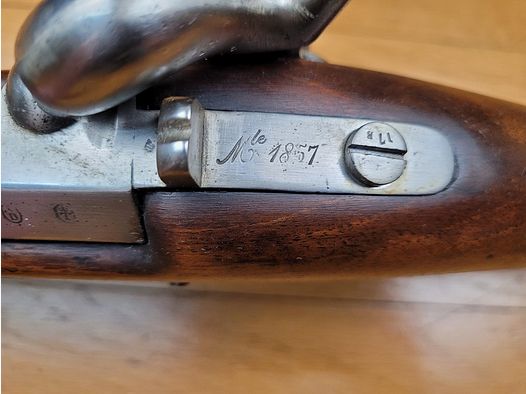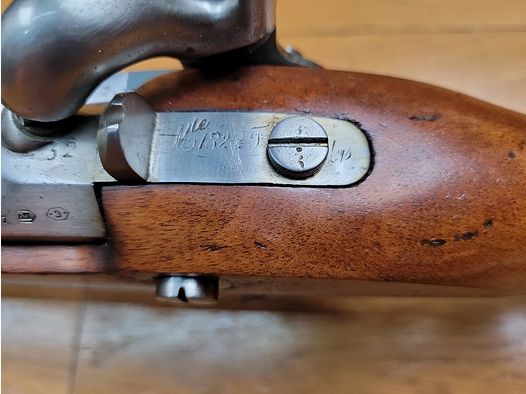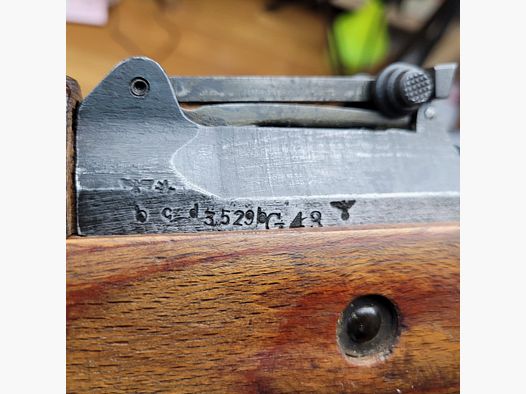

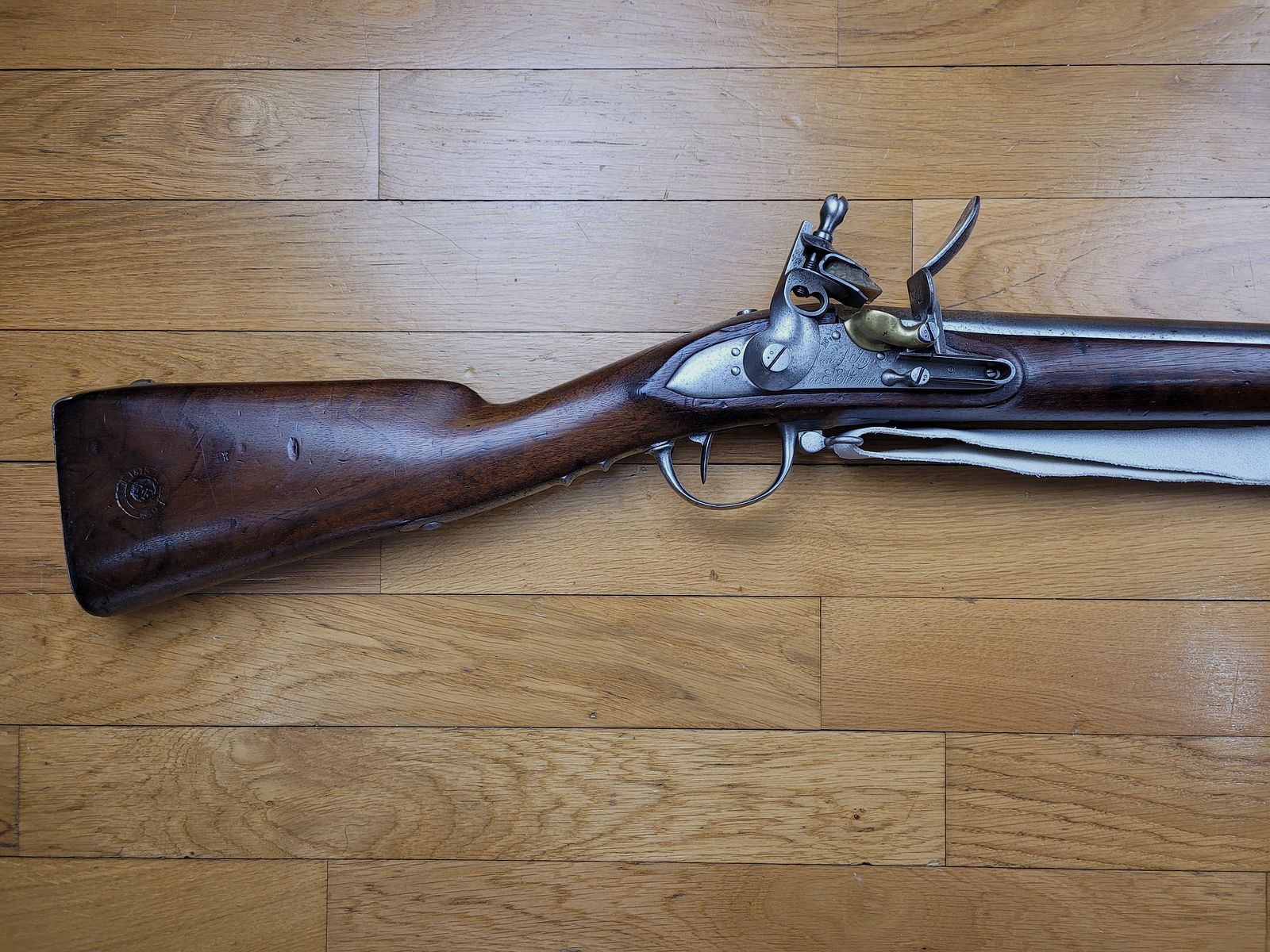







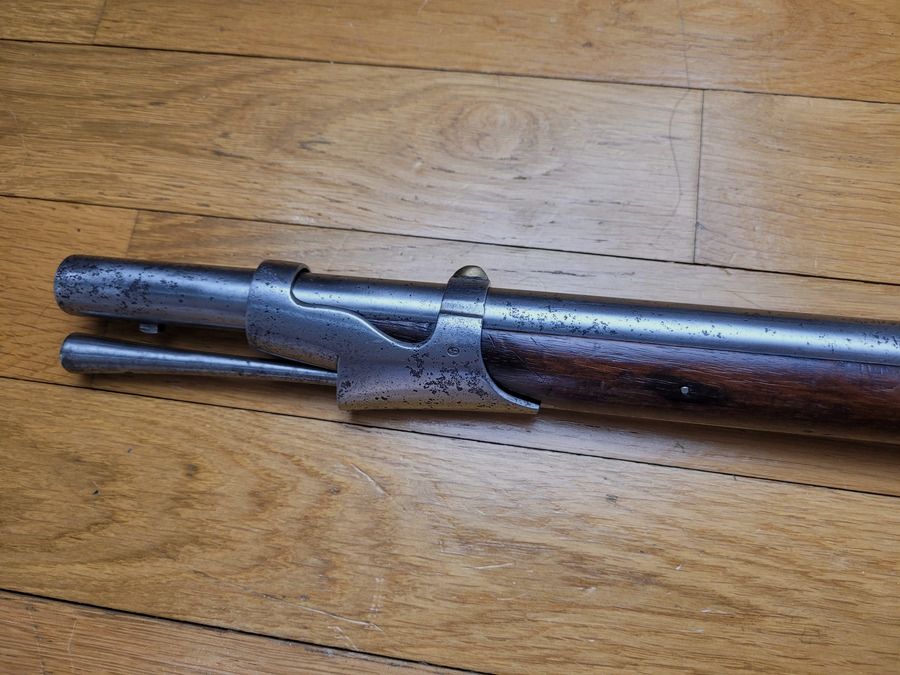
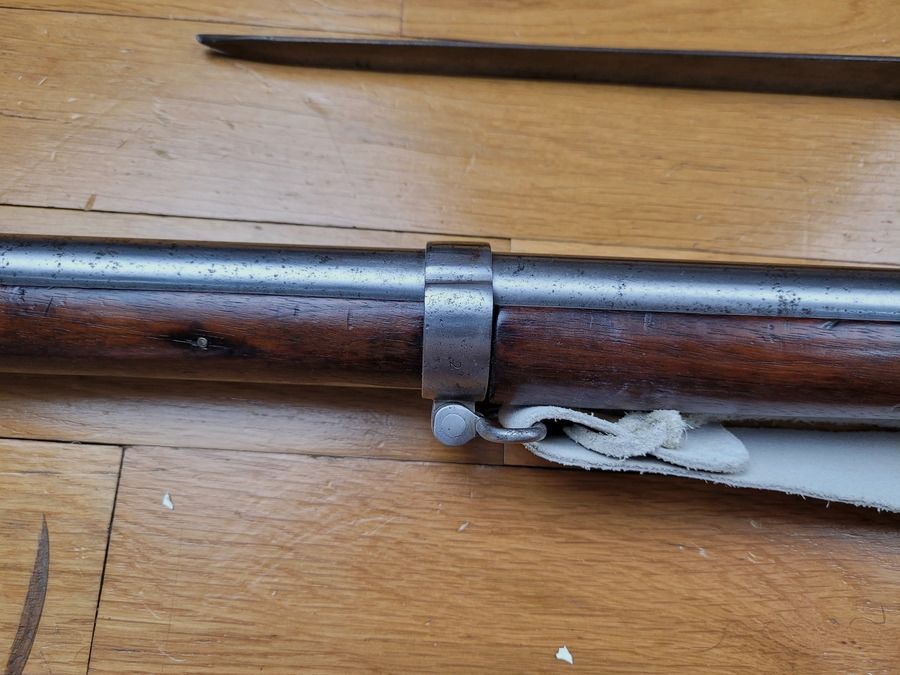


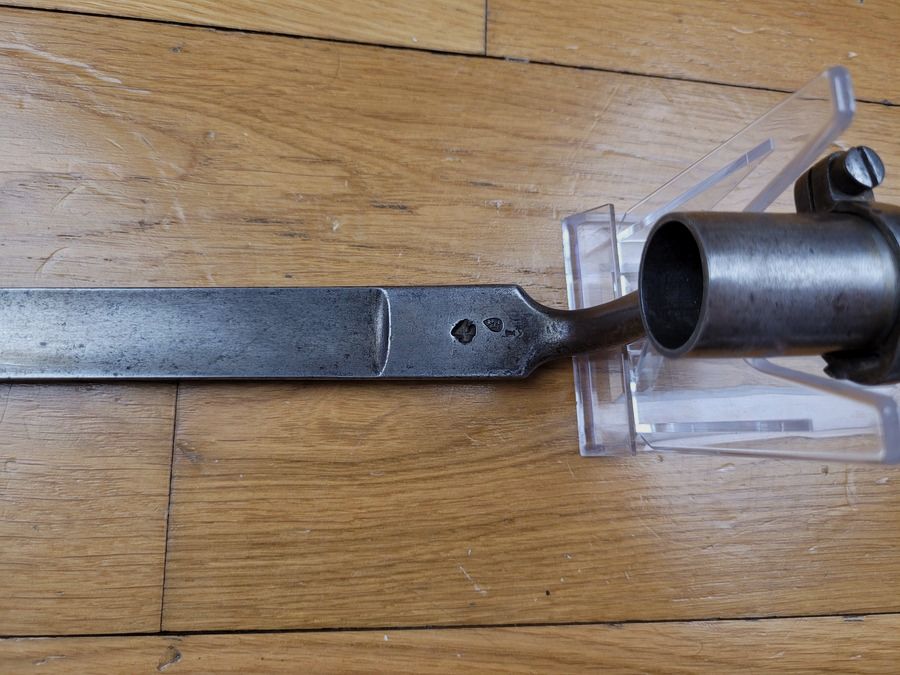

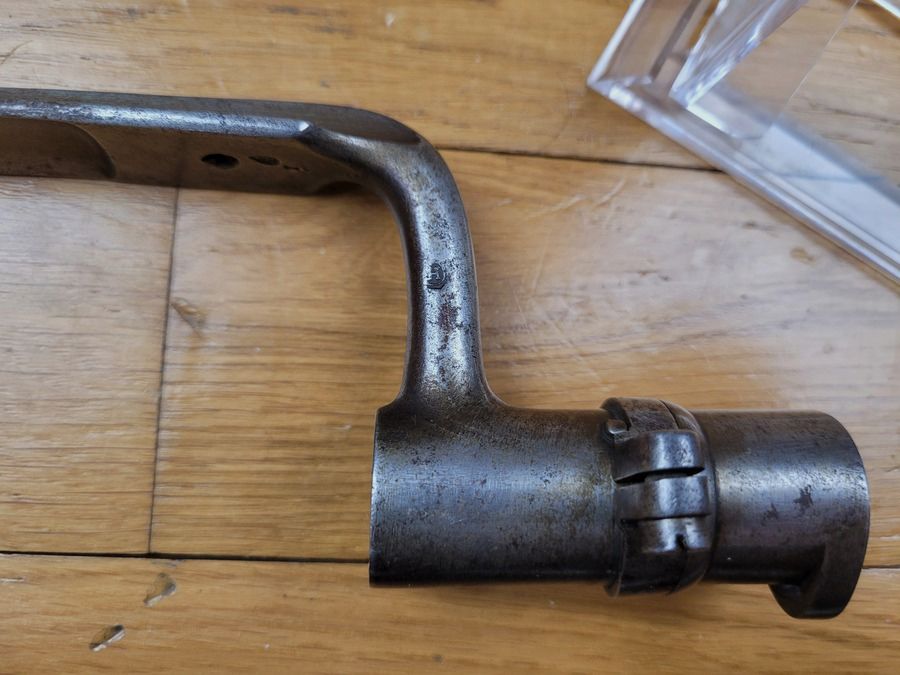











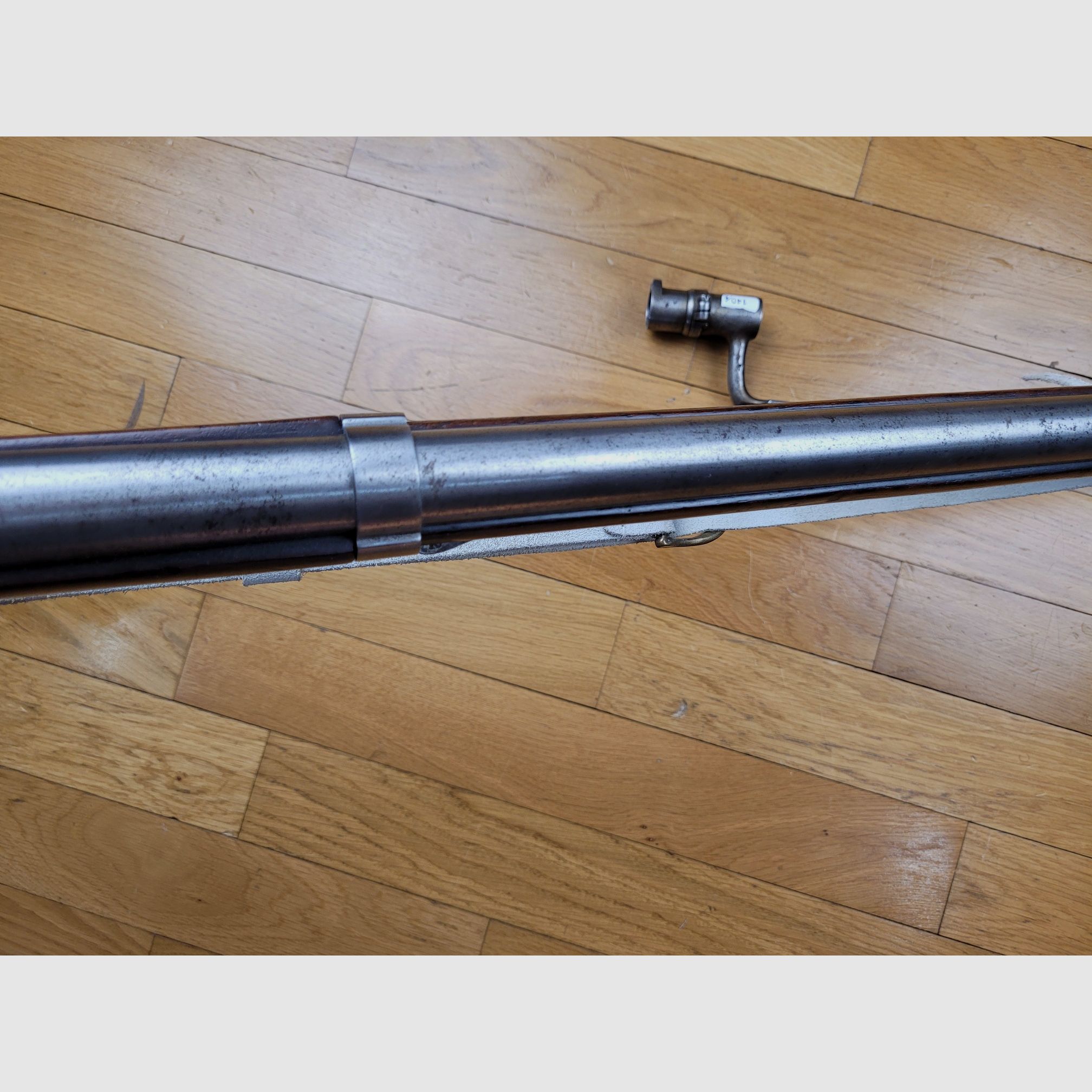
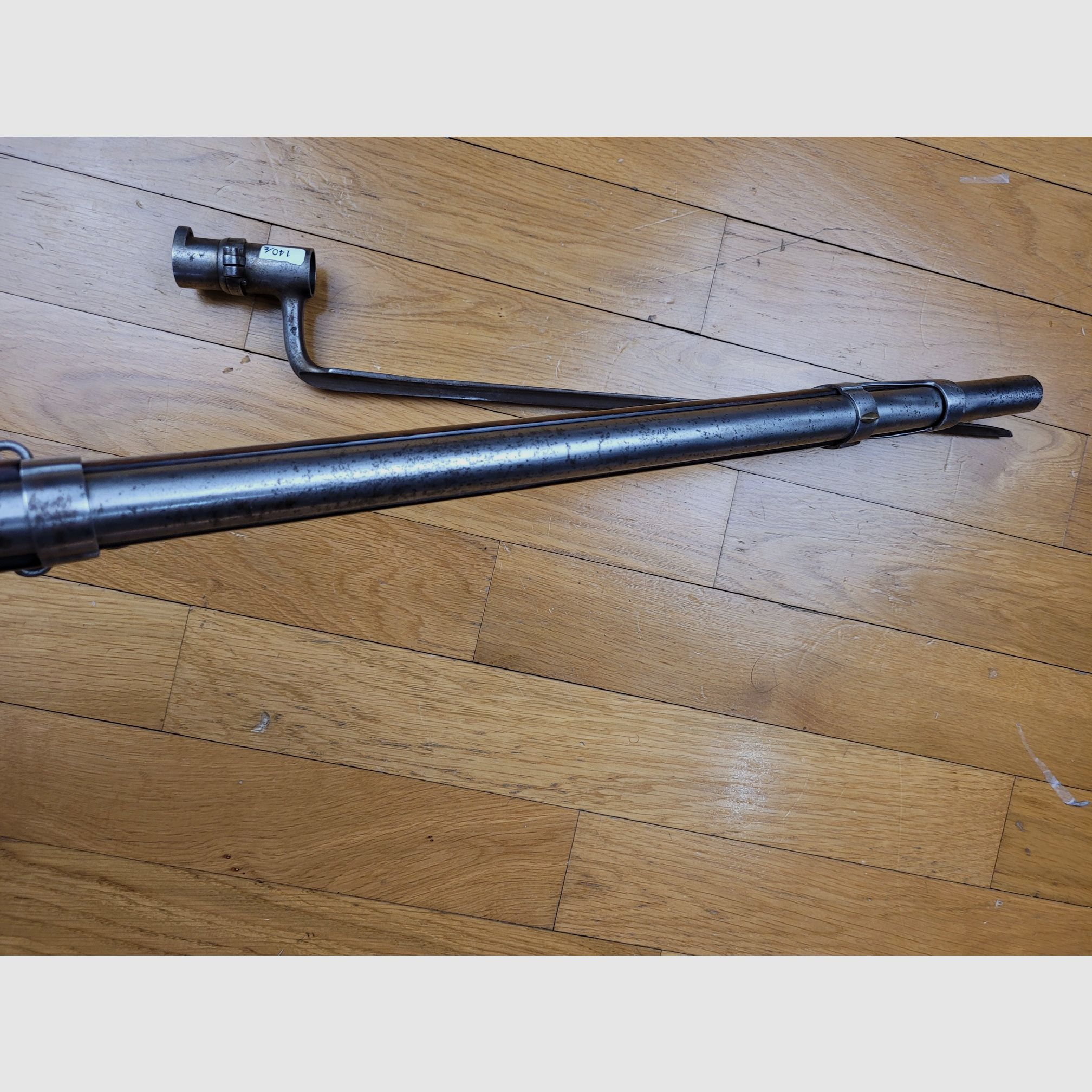

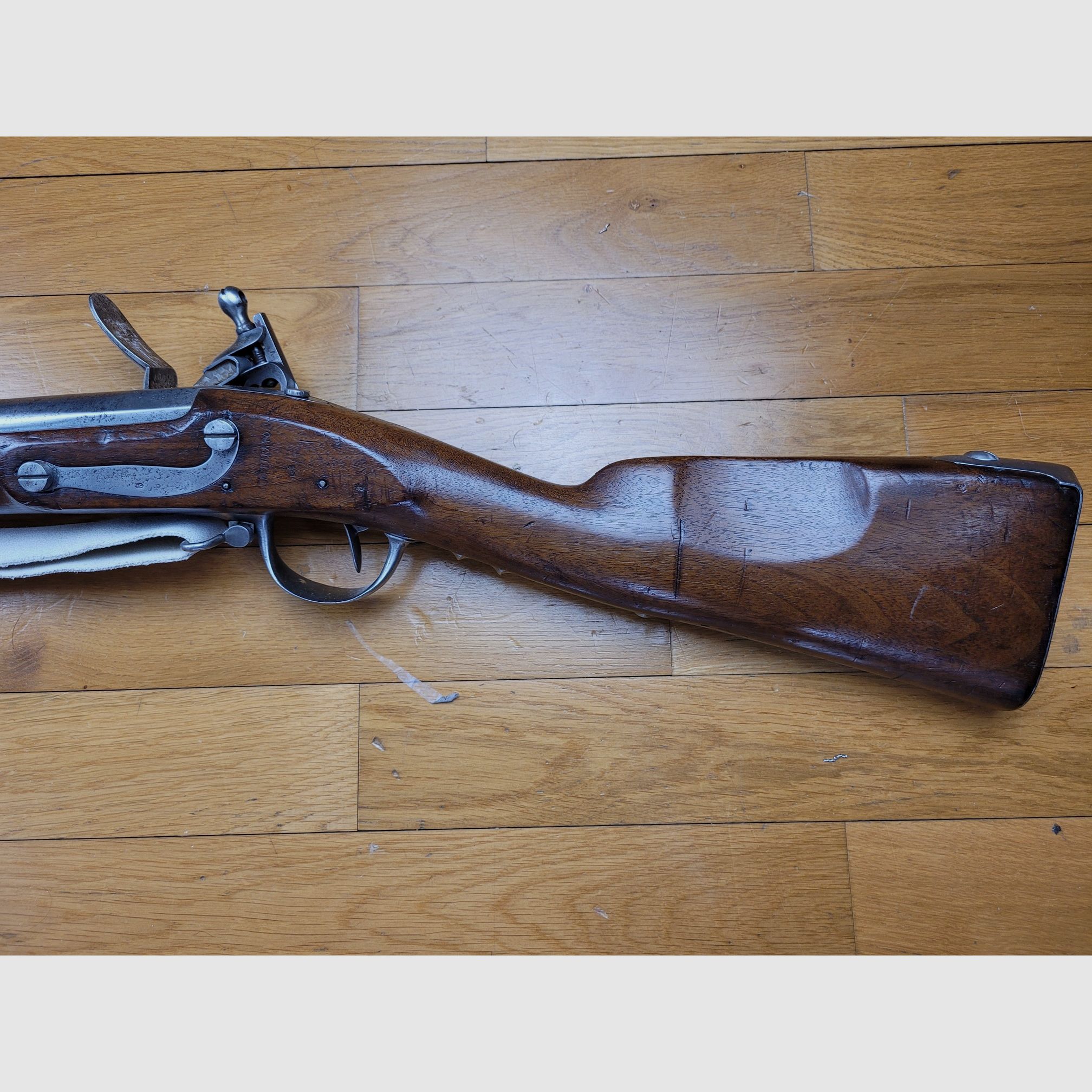


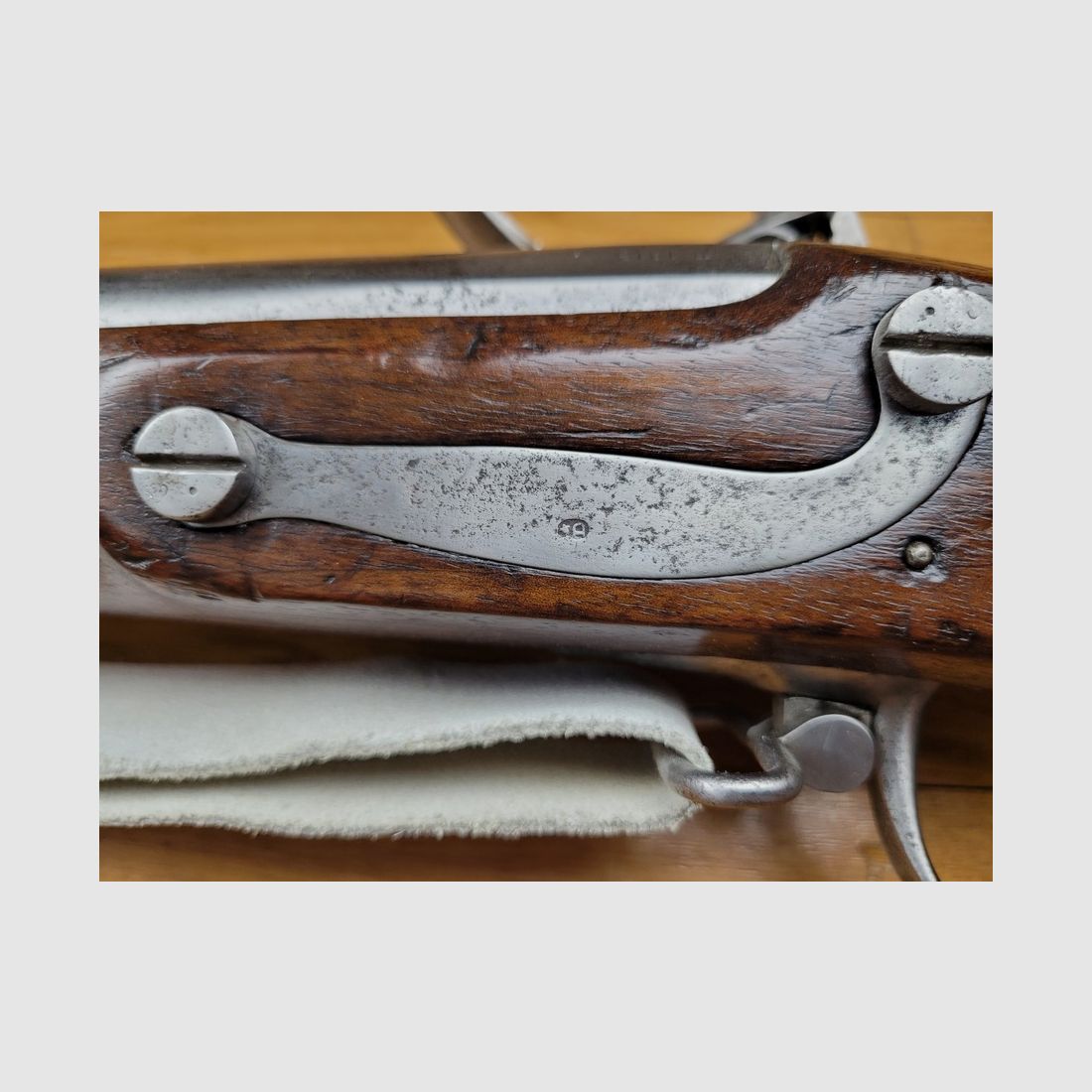






Very beautiful rifle 1777 modified AN IX – Imperial Manufacture of St Étienne – 1813 – homogeneous – Sling and bayonet – Rare condition
Price on Request
Purchase permit required
75002 Paris, France
6
ID: 10339370
This item is currently unavailable.
Purchase from outside the EU: The firearm goes through an importer in your country, the dealer handles the export.
How buying from Europe works
Shop safely with Gunfinder
Our AI-powered seller identity verification makes Gunfinder the safest marketplace online.
Learn more
Details
- Original language
- French
- Category
- Purchase eligibility
- Required
- Condition
- New
- Location
- 🇫🇷 75002 Paris, France
- Availability
- Out of stock
Freshness
This listing is based on a mirrored offer, where the listing data was synced to us from a shop, dealer, or external marketplace. Please note that temporary price discrepancies may occur due to possible delays in data transmission.
- Source
- Flingus Maximus
- Last checked with the dealer
- 1 day ago
Description
Note:
The item is located abroad. Please note that delivery conditions, shipping times, and/or the purchase process may differ.
A piece just the way Maître Flingus likes them… telling a story. Of course, I would have preferred to find an 1806 or 1809 in this condition. But you don’t see them anymore… How many of these old guns made it back from the catastrophe in Russia (June 1812/January 1813)?
In early 1813, Napoleon first had to rally all the somewhat reliable officers and troops who were languishing in Spain or elsewhere and had been furious six months earlier at not being sent to Russia, where they were sure their comrades would earn promotions and decorations in their place while they stayed behind, carrying out inglorious counter-guerrilla operations with Suchet under Spain’s blazing sun. In fact, they were very lucky. Those who survived 1813/14 were able to write their memoirs. The 600,000—the largest army assembled since antiquity—who never returned from Russia wrote nothing… In the history of the Empire, there is clearly a before and after December 1812.
In early 1813, Napoleon also had to restart arms production in a hurry and at full capacity to make up for the catastrophic shortage of equipment left by Russia.
Some of the Empire’s most glorious and heroic campaigns could then begin: the battles fought with their backs to the wall, when Napoleon would rediscover the Genius of Italy, only to end up betrayed, having lost virtually no battles in 1813 apart from Leipzig and having defeated all his enemies in every encounter in 1814! It would take all of united Europe two years of fierce fighting to finish off the French Army, even though it had emerged greatly weakened from the Russian Campaign.
Today, we’re presenting a child of that Iron Age: a very beautiful 1777 modified An IX from 1813.
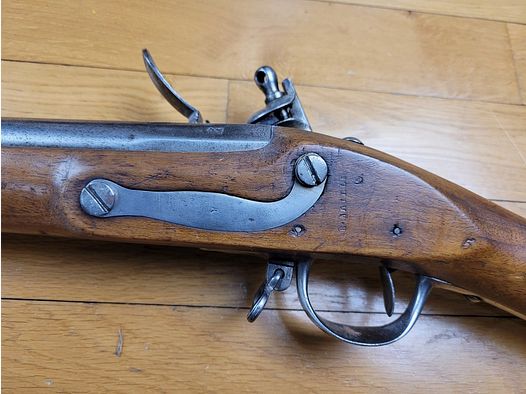
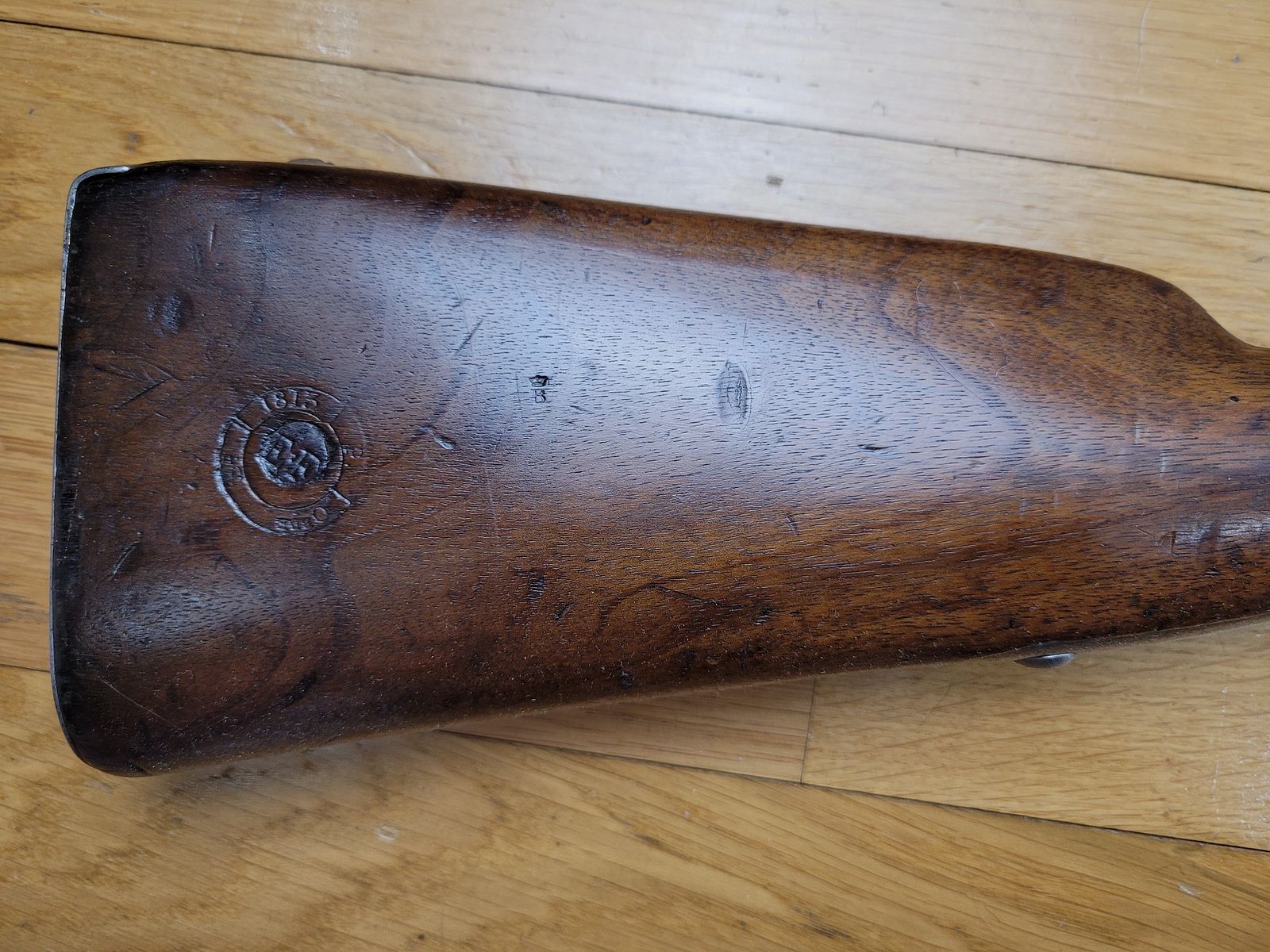
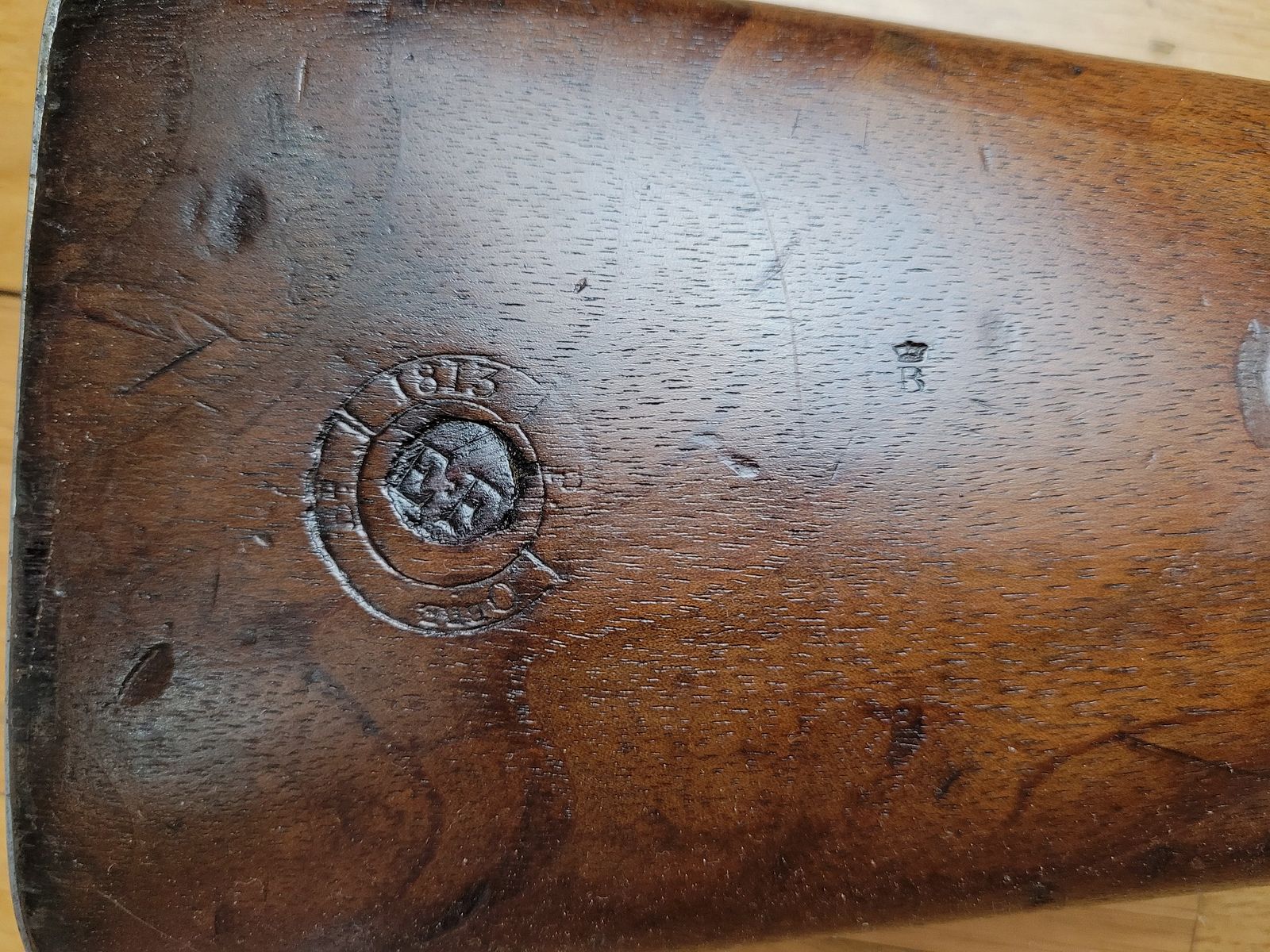
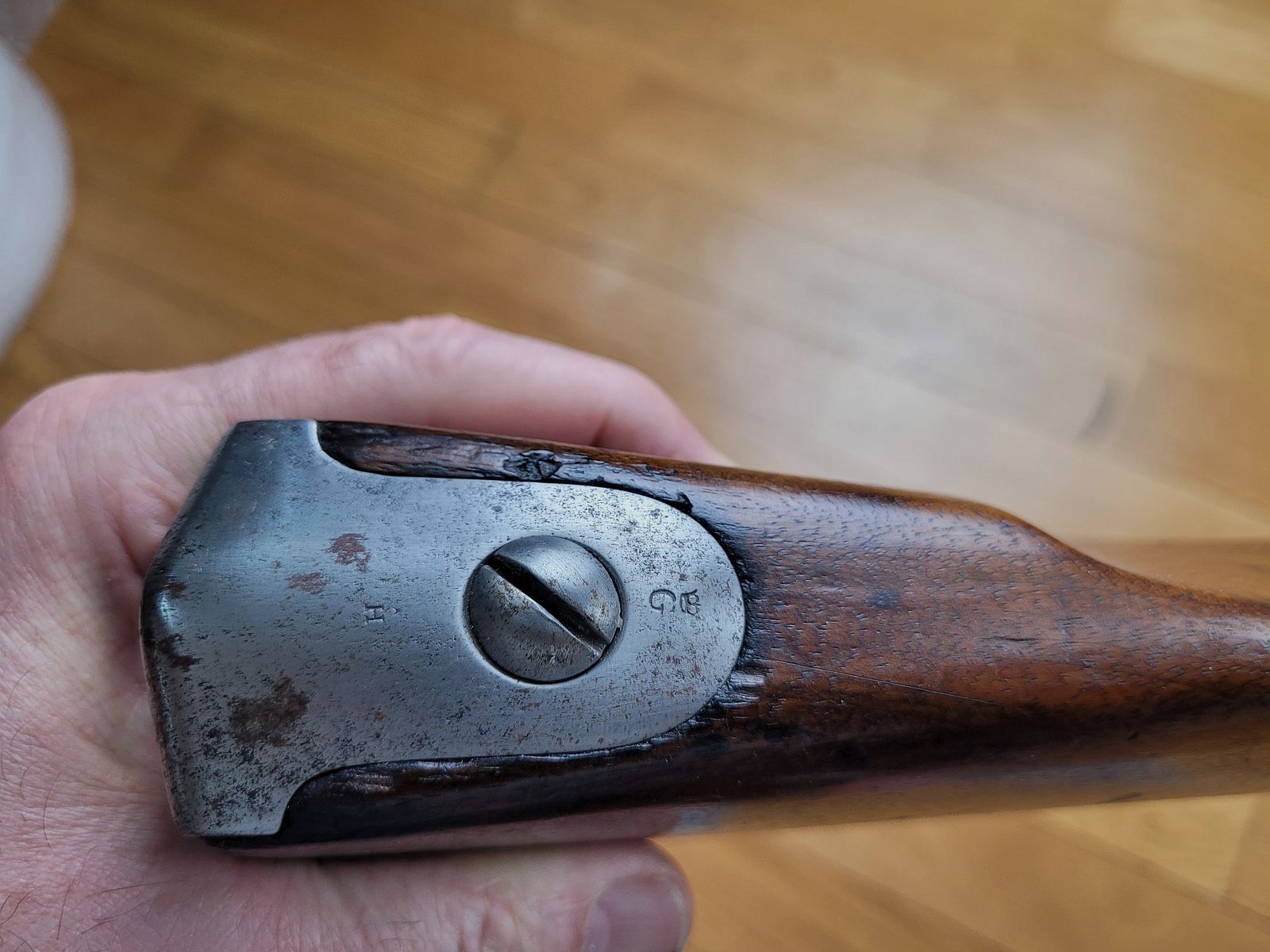
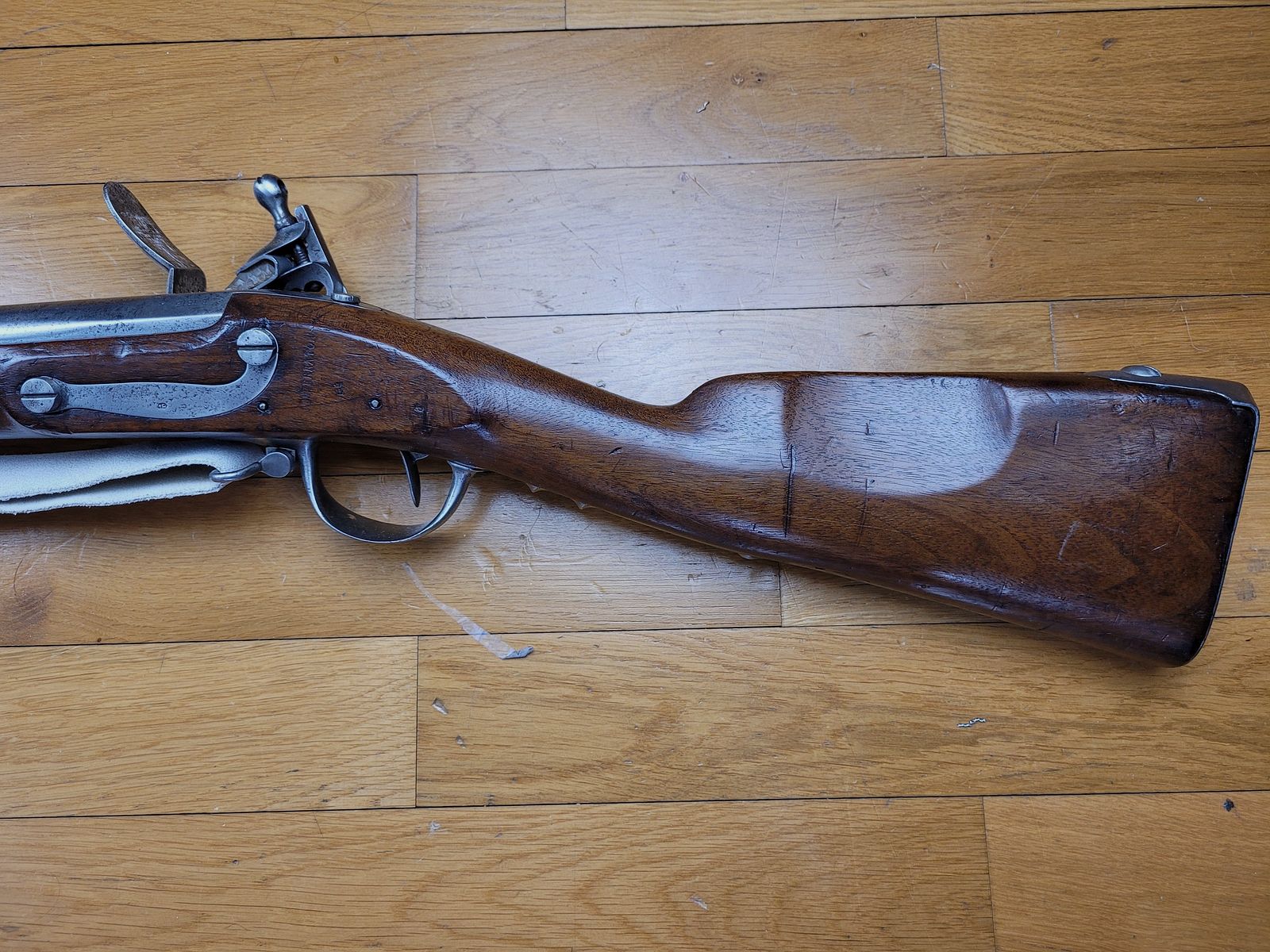
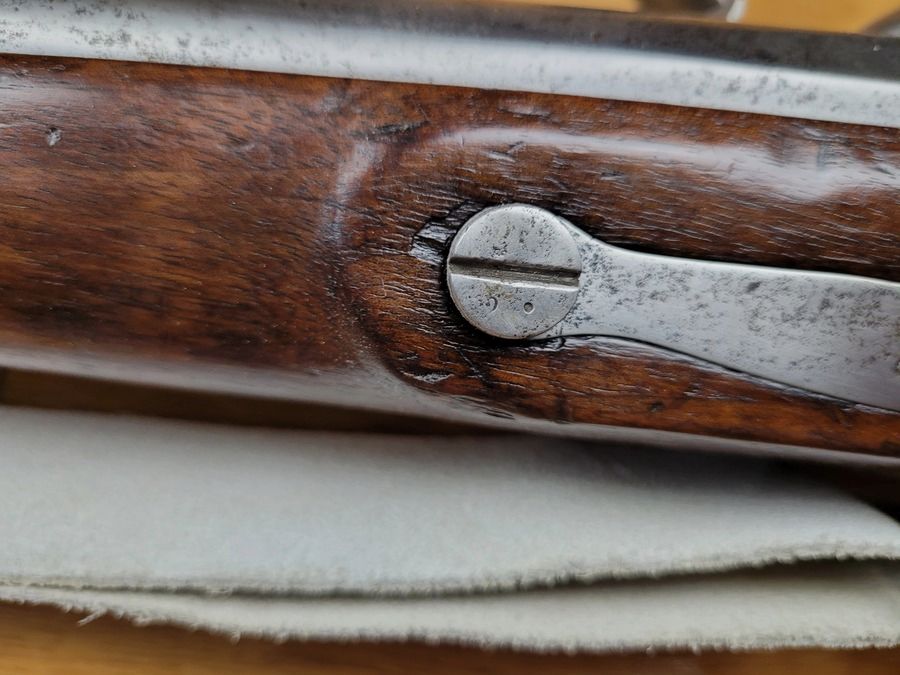
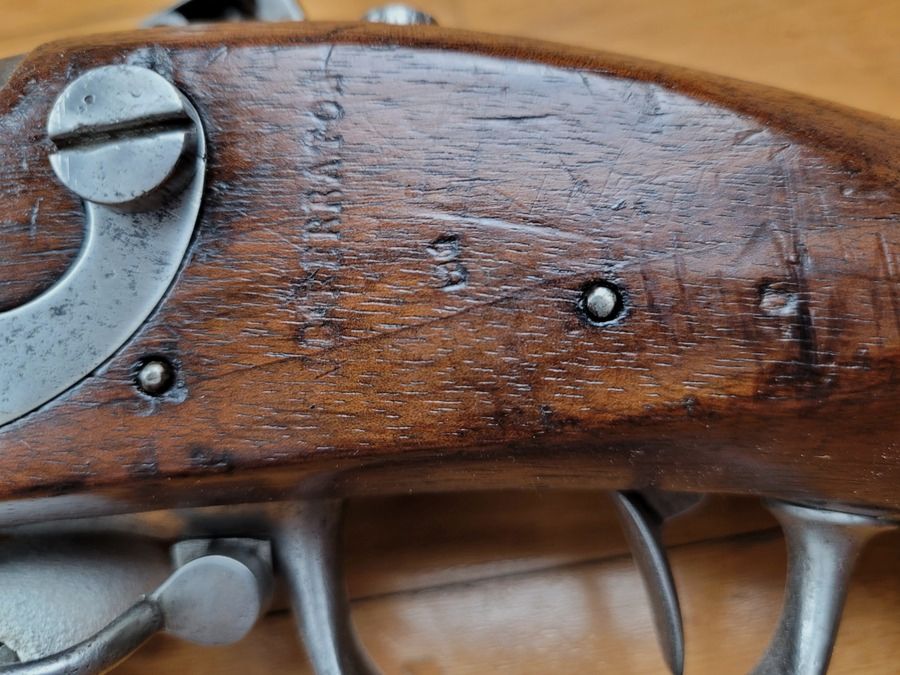
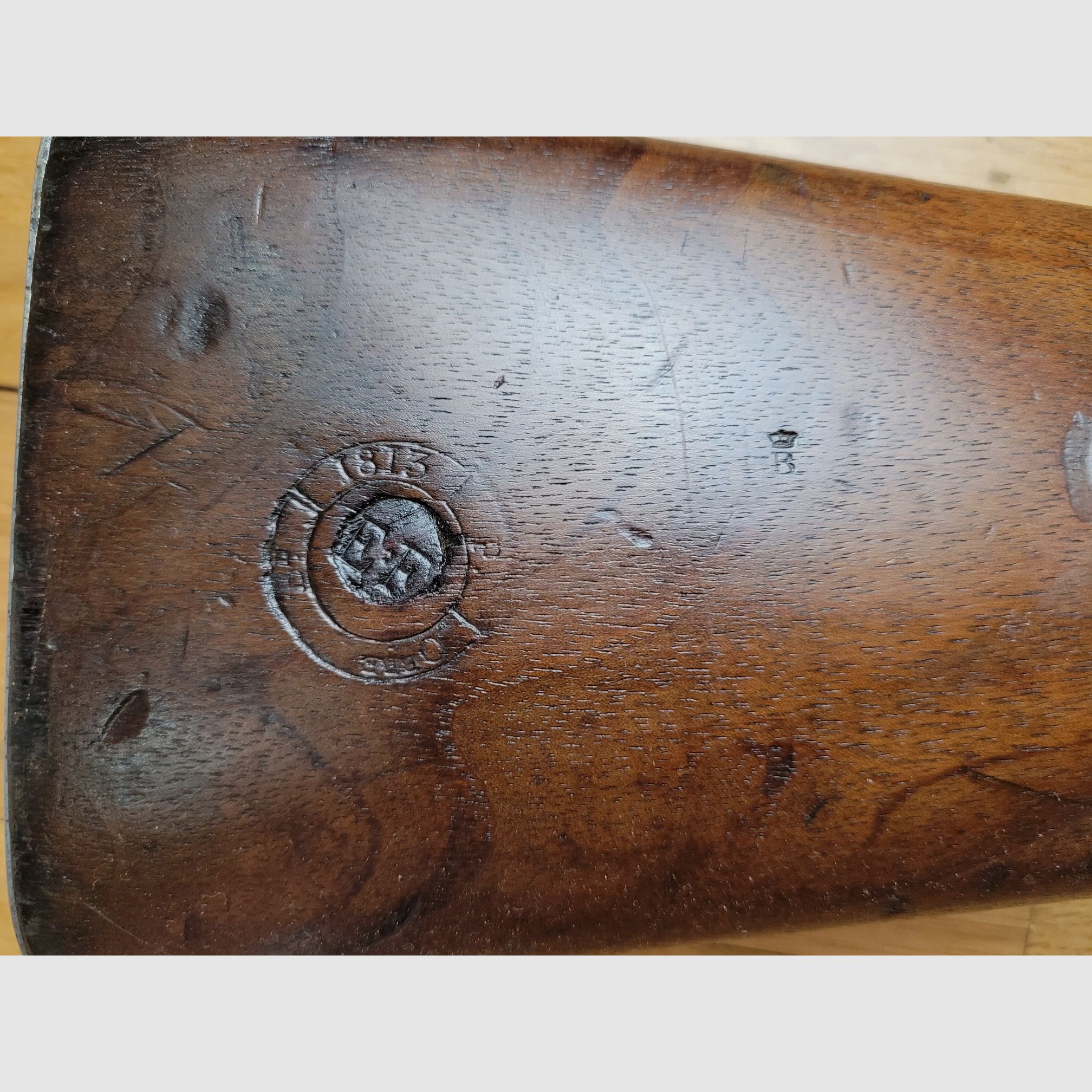
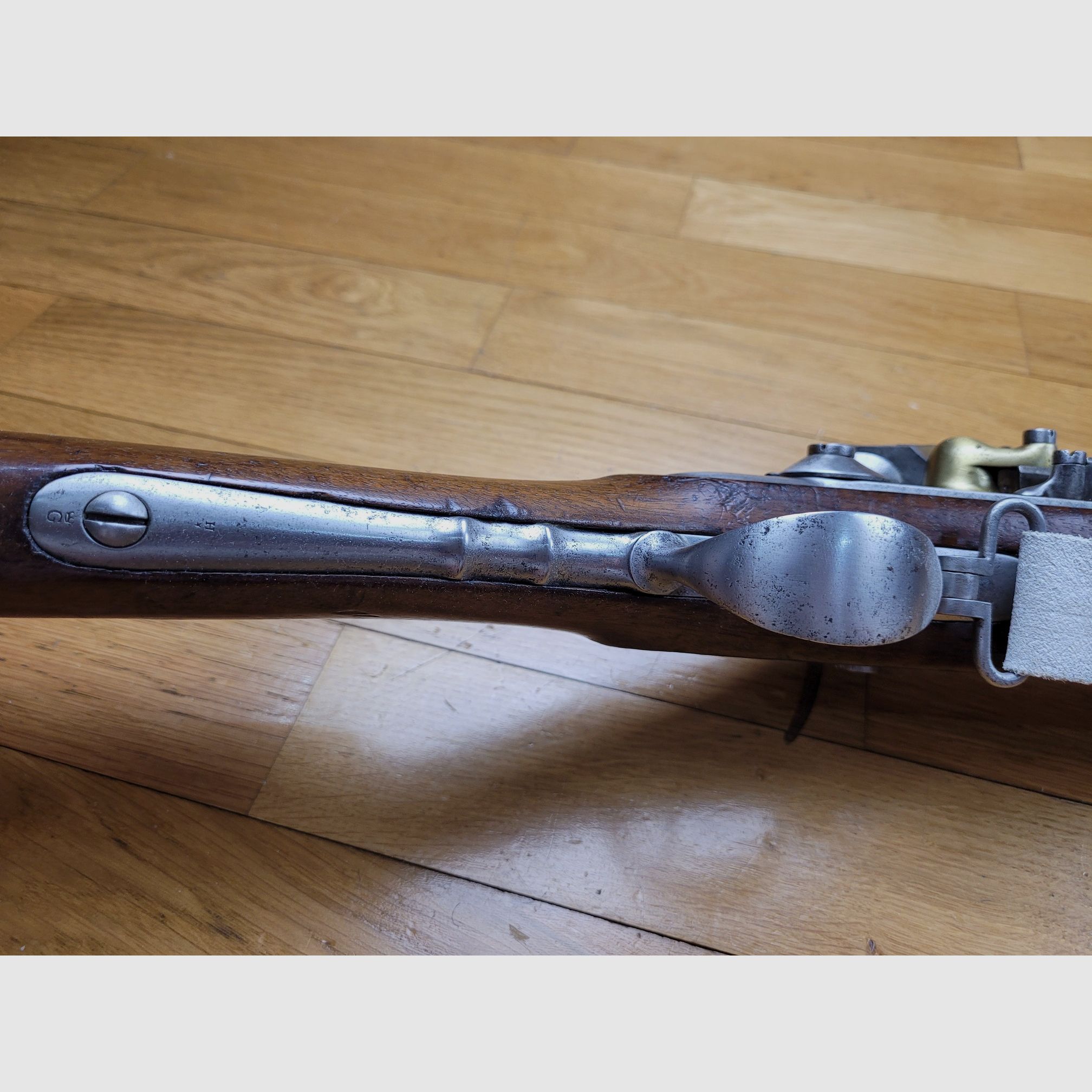
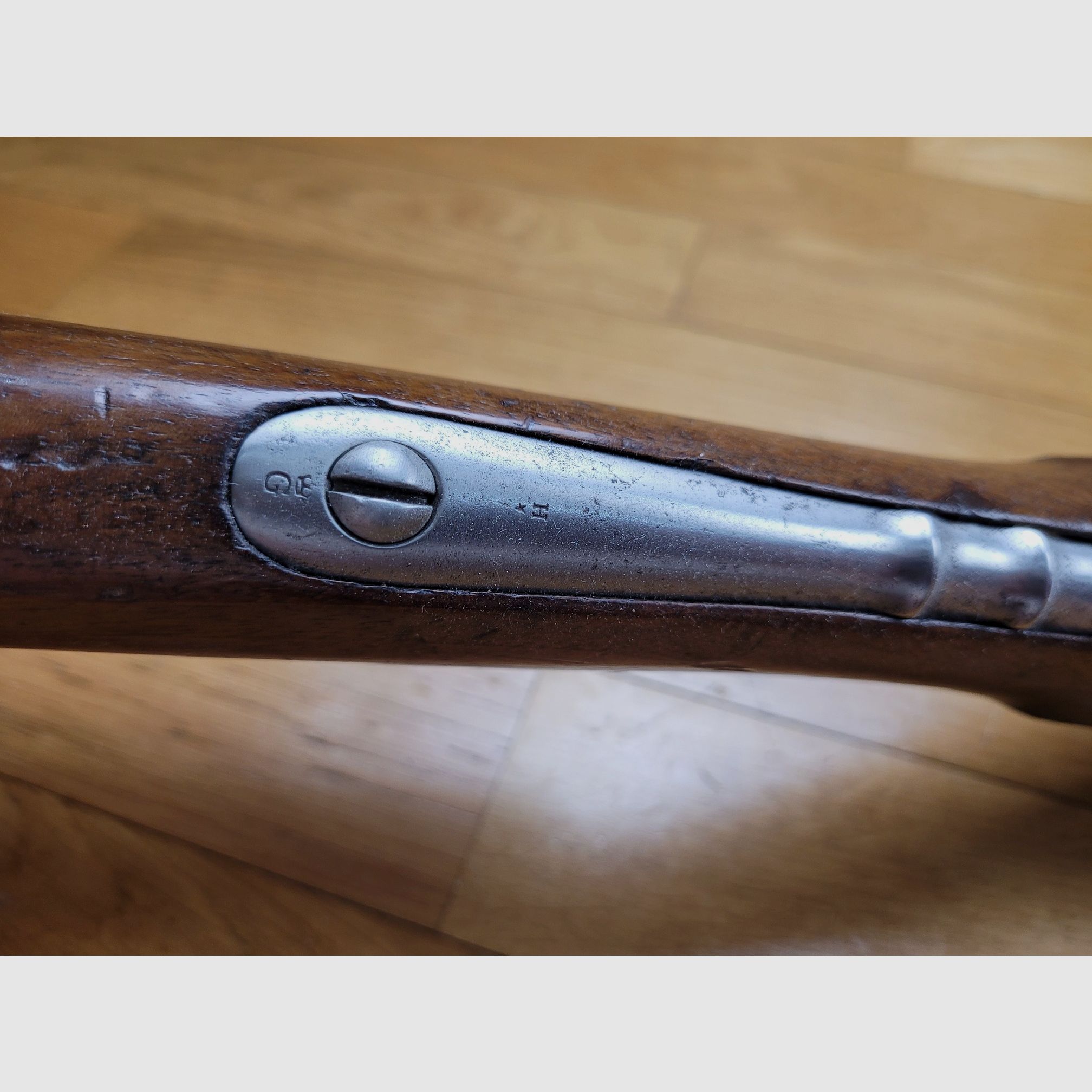
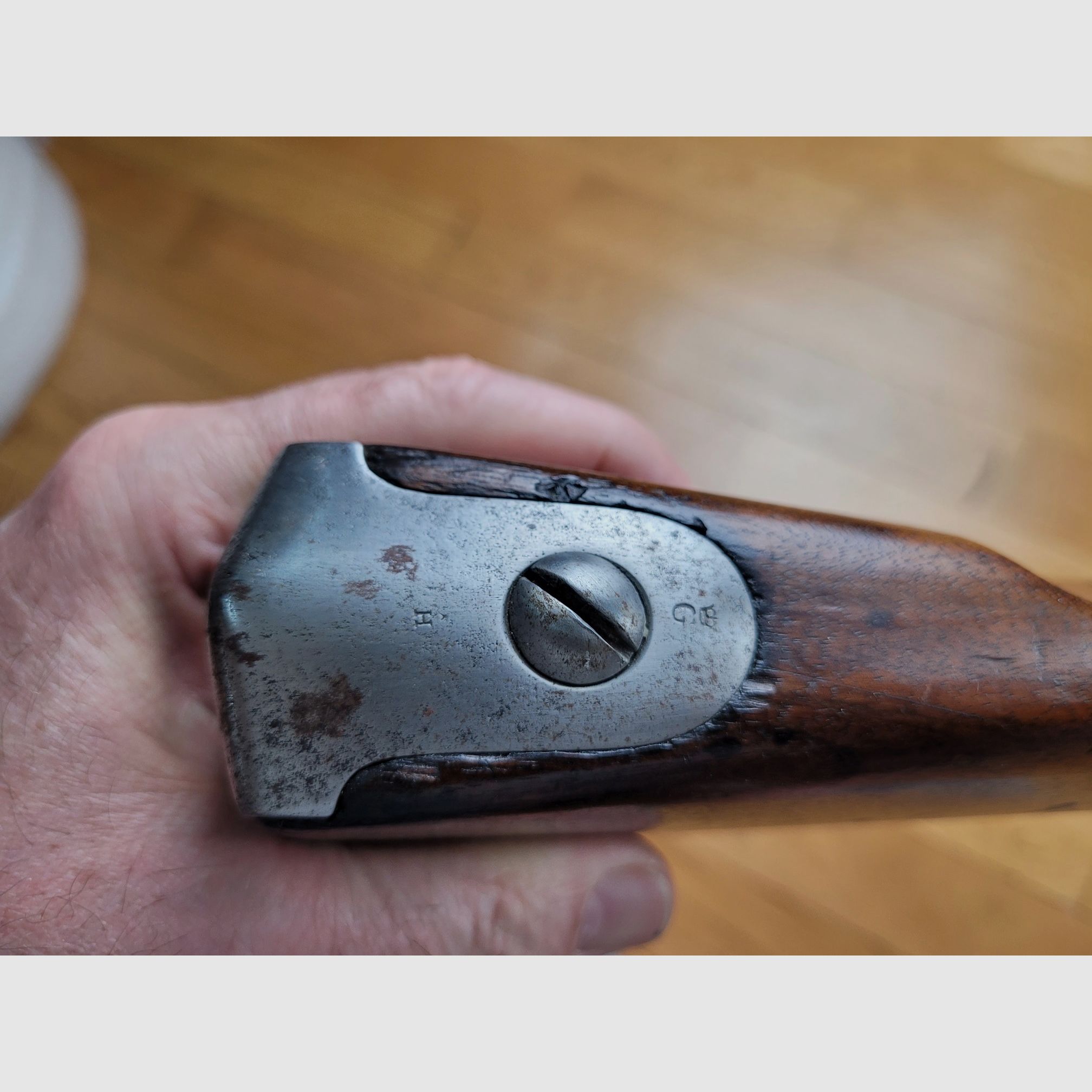
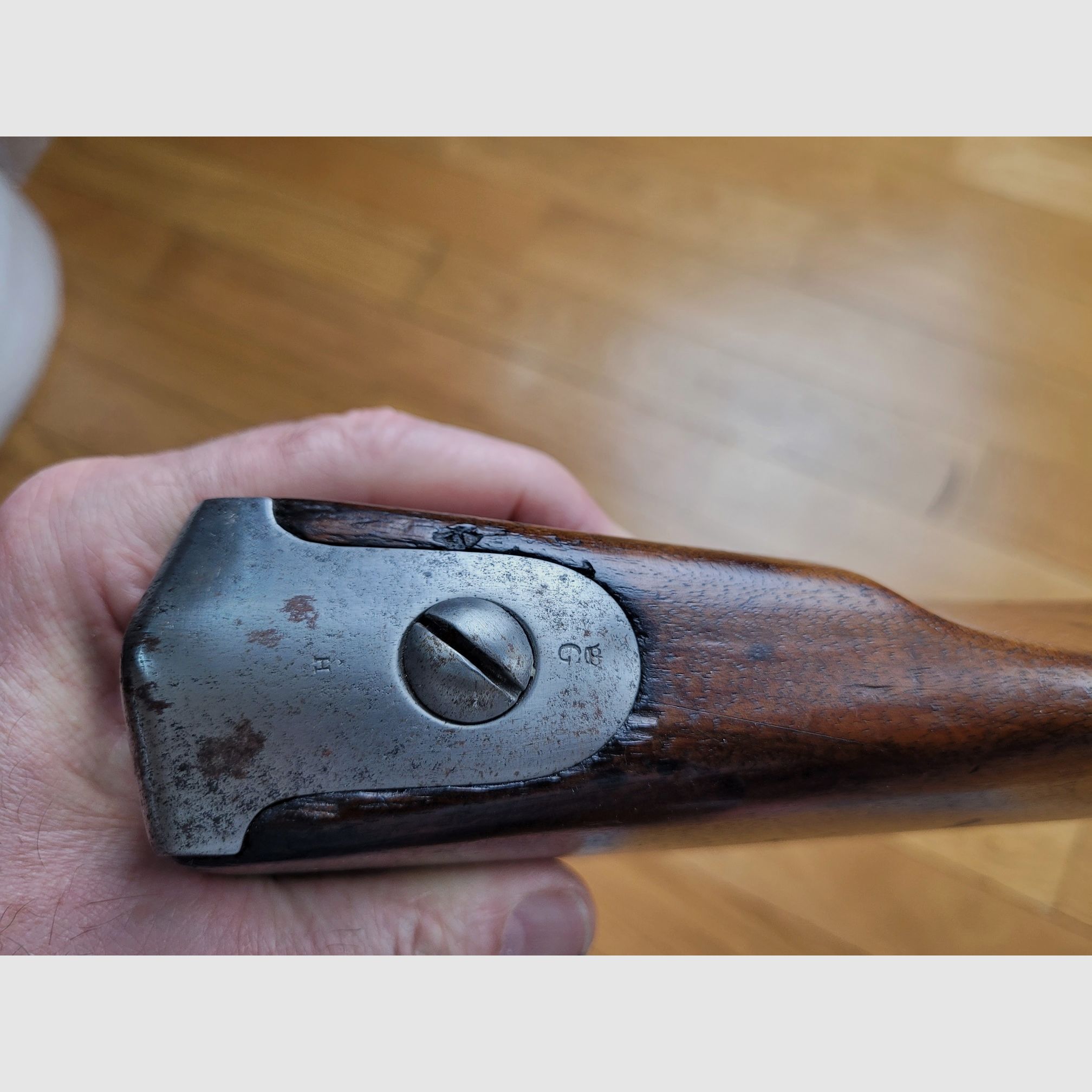
Impeccable wood, 100% period, with no repairs and very few signs of handling – truly rare condition, with a stock roundel still clearly legible 210 years later! Our baby was born in October 1813 in Saint-Étienne, marked “B…1813 – P – Obre”. It is indeed a “Marie-Louise” (named after the Empress, godmother to the child soldiers, the last conscripts of the Imperial era). Prussians, Austrians and Cossacks had better watch out… The stock is correctly stamped with a crowned “B” for the wood inspector – the roundel is also marked “B”, with its proper “EF” pin for “Empire Français” in the middle. The wood inspection “B” also appears near the lock plate, this time on the left side of the weapon.
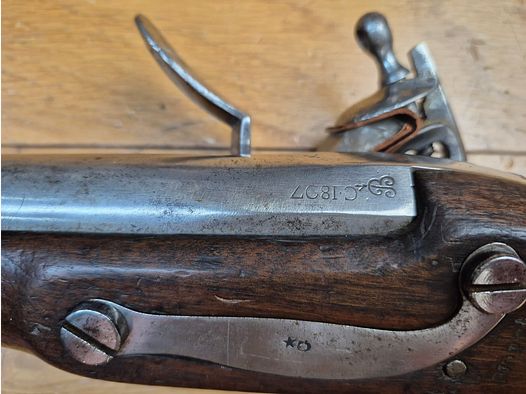
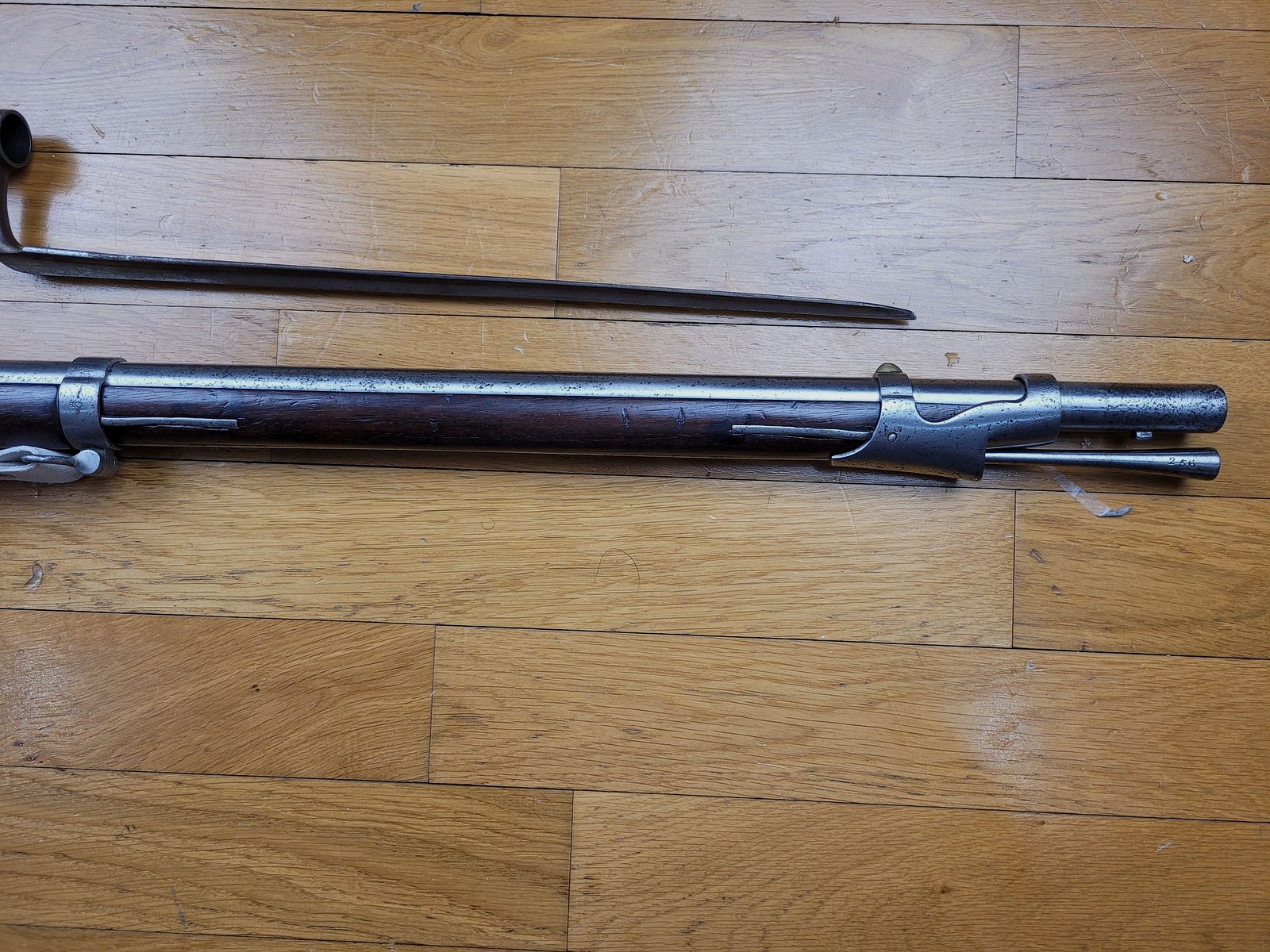
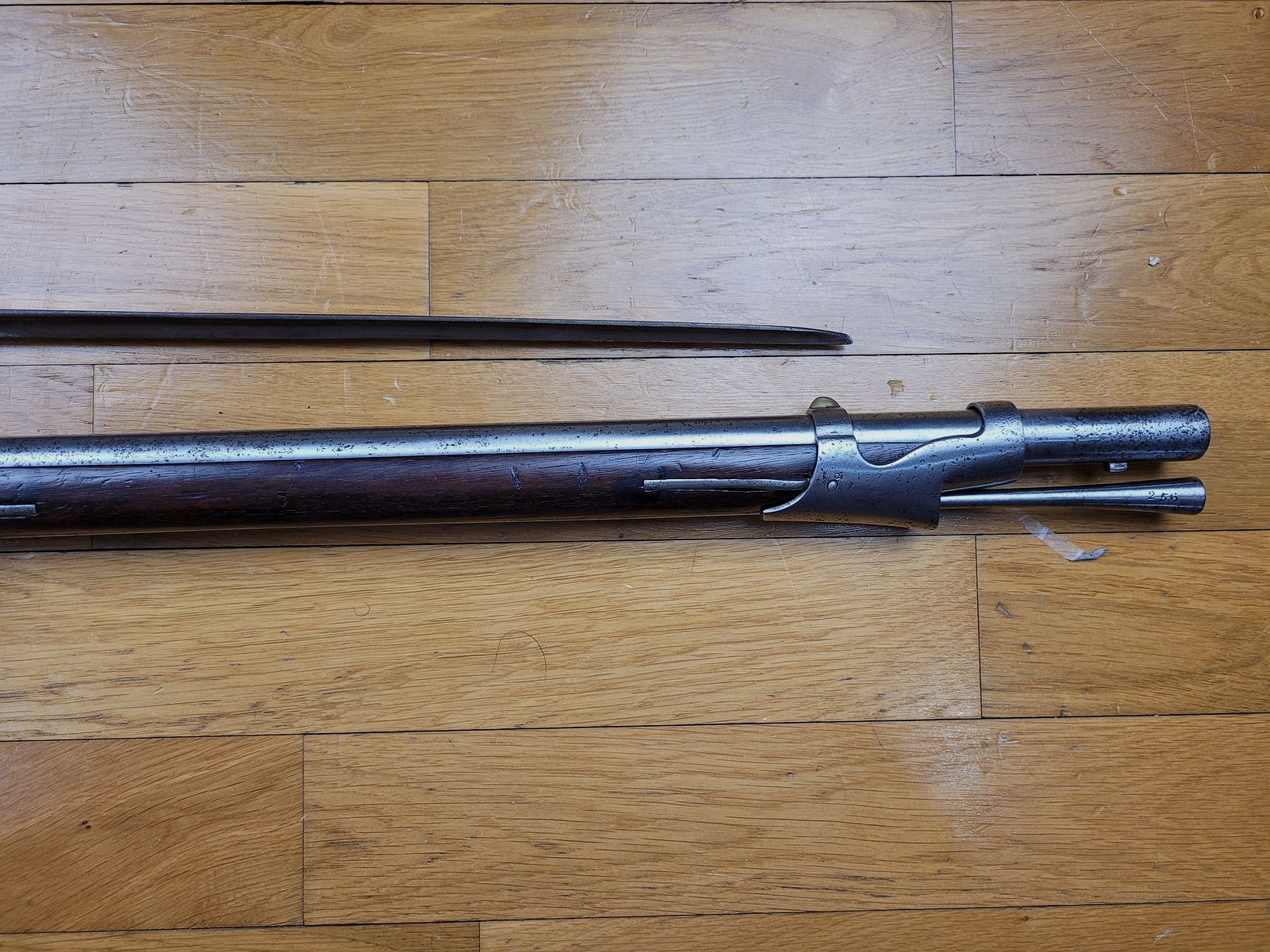
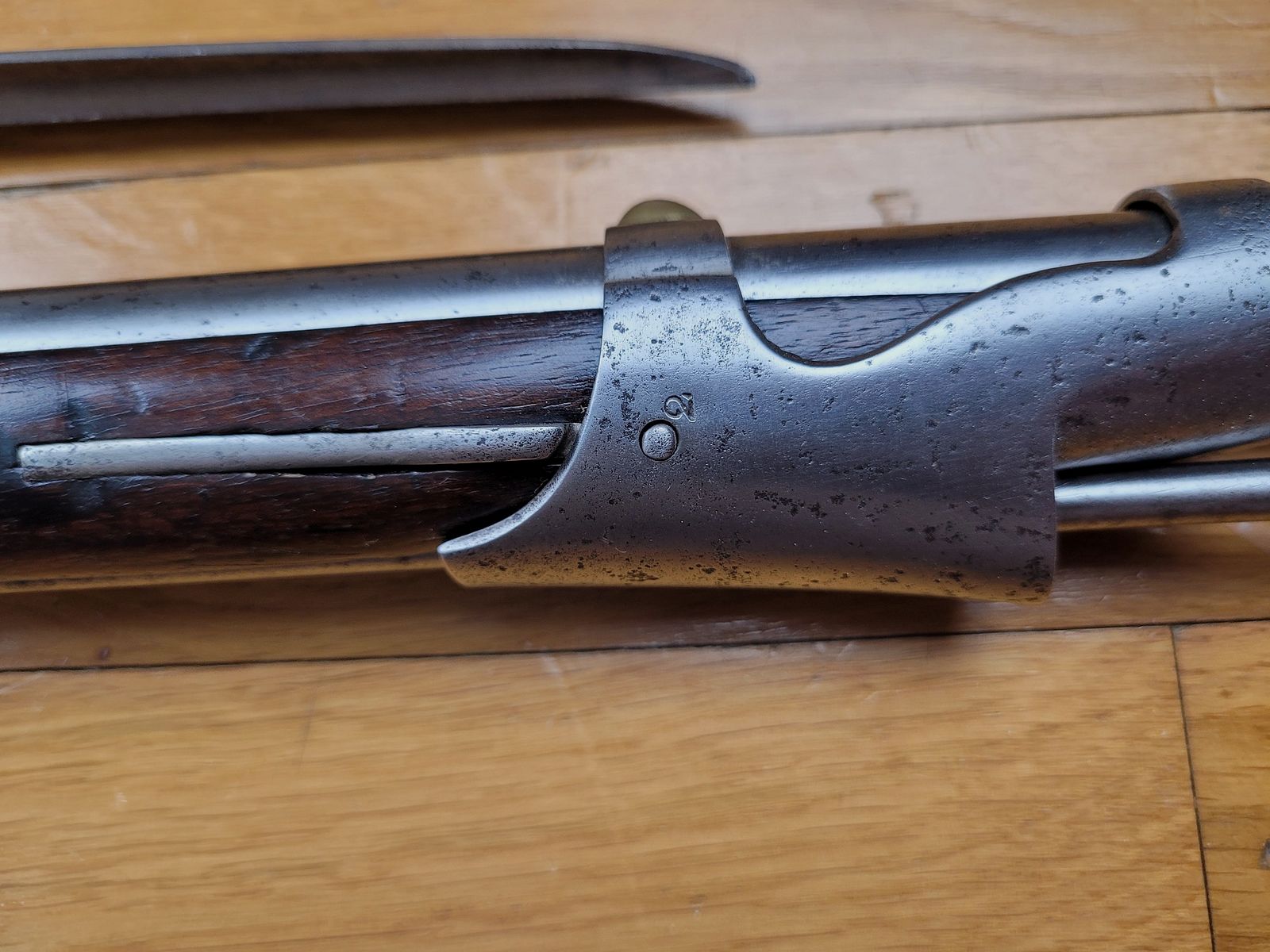
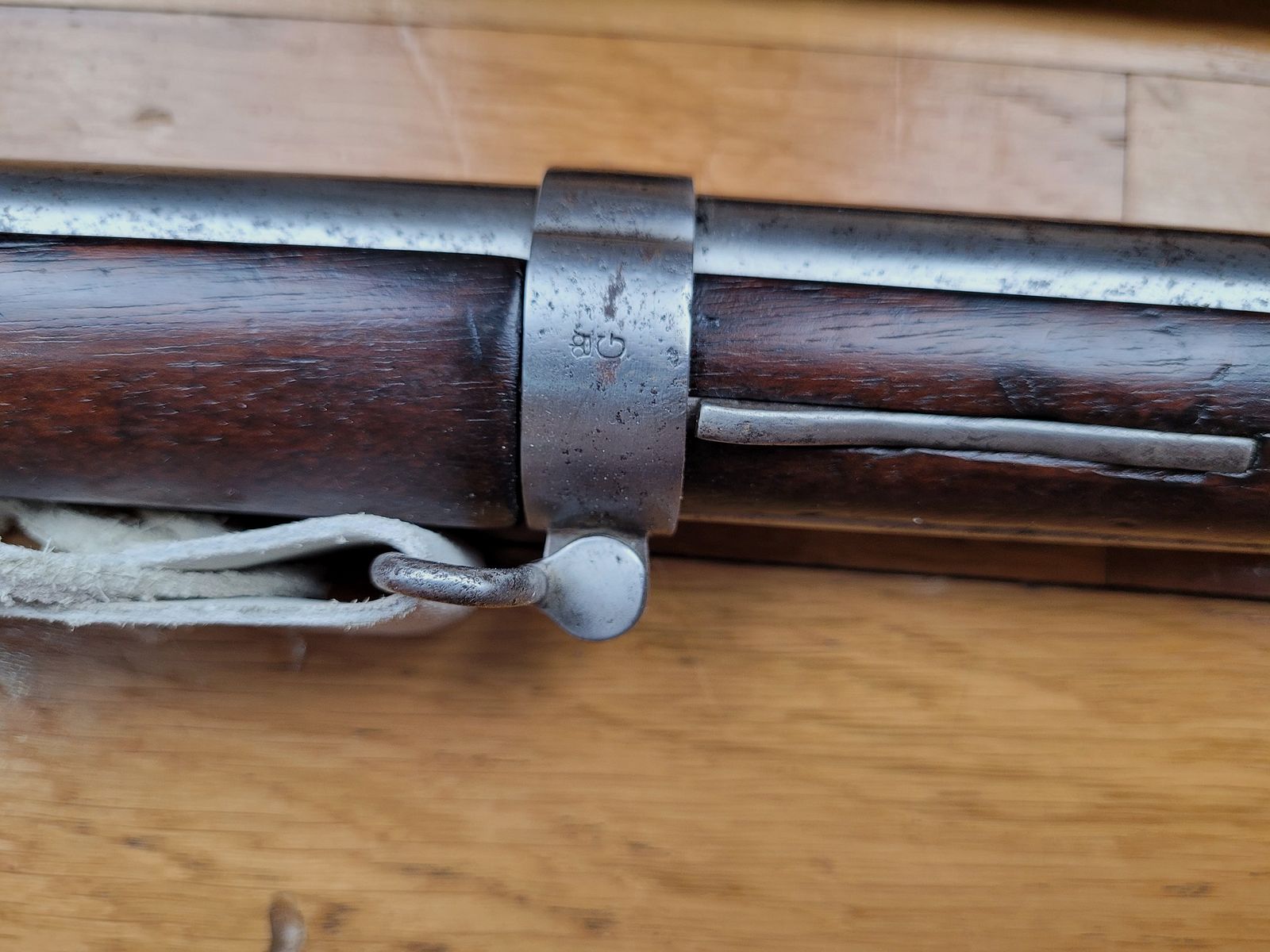
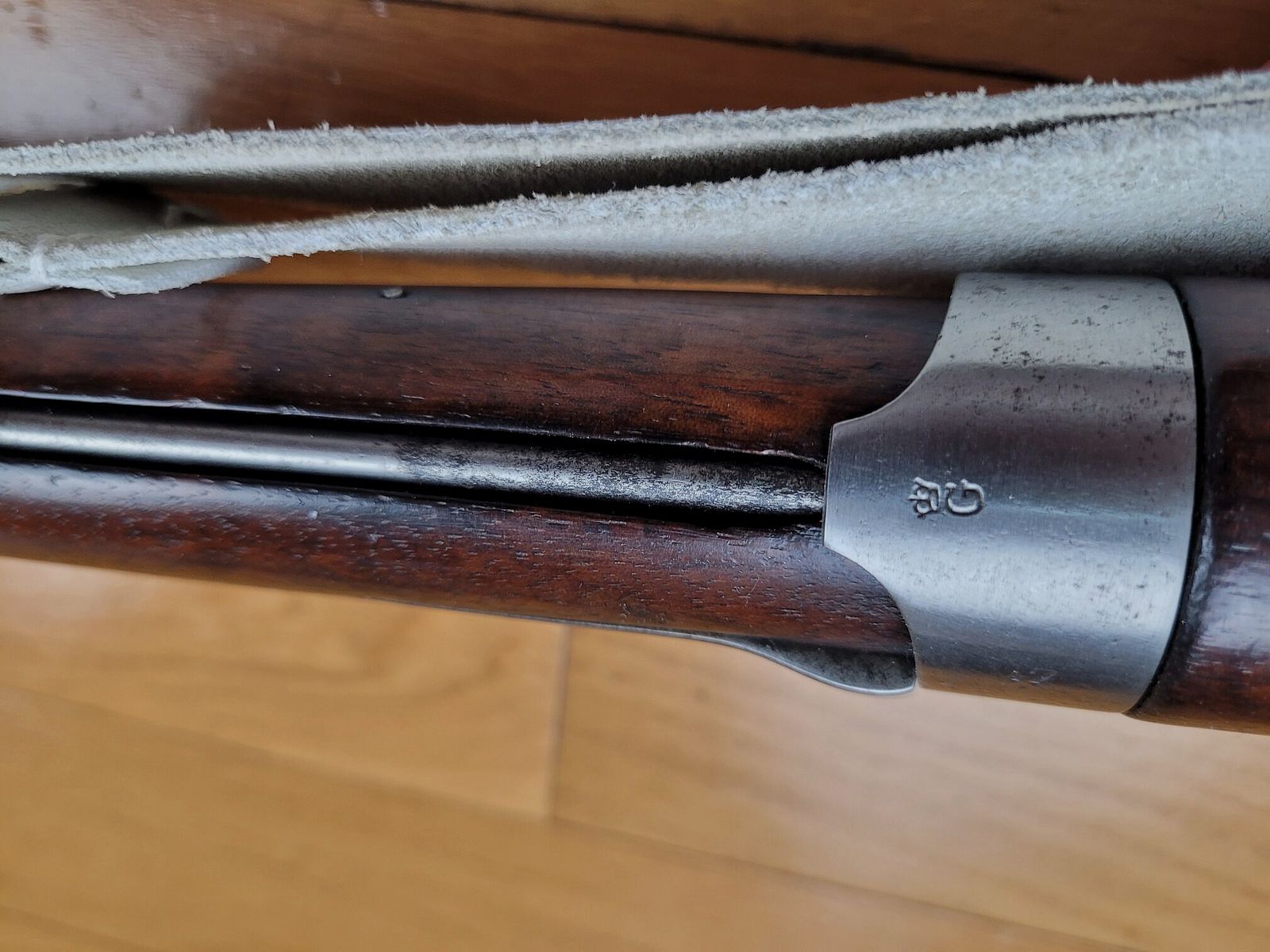
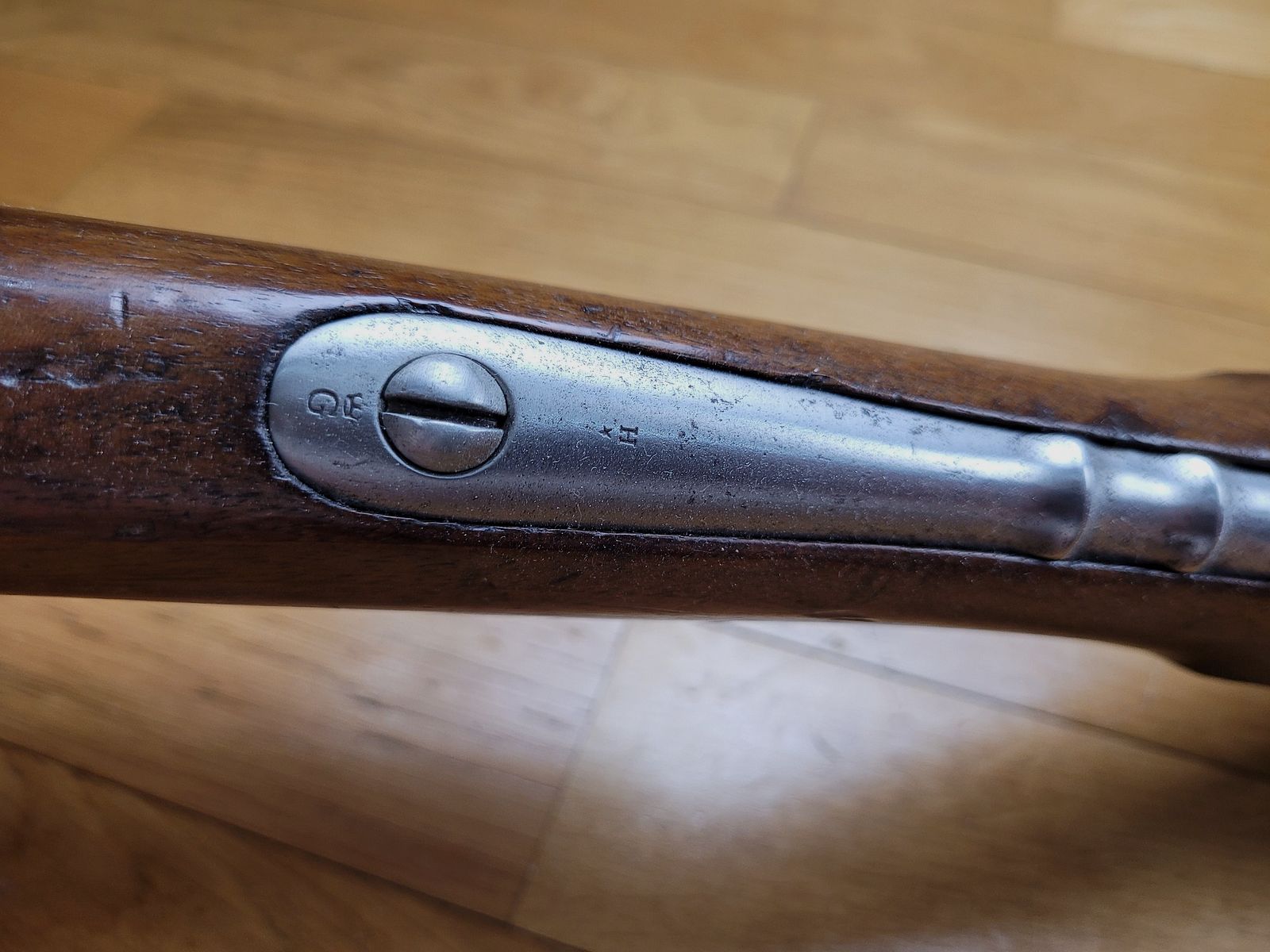
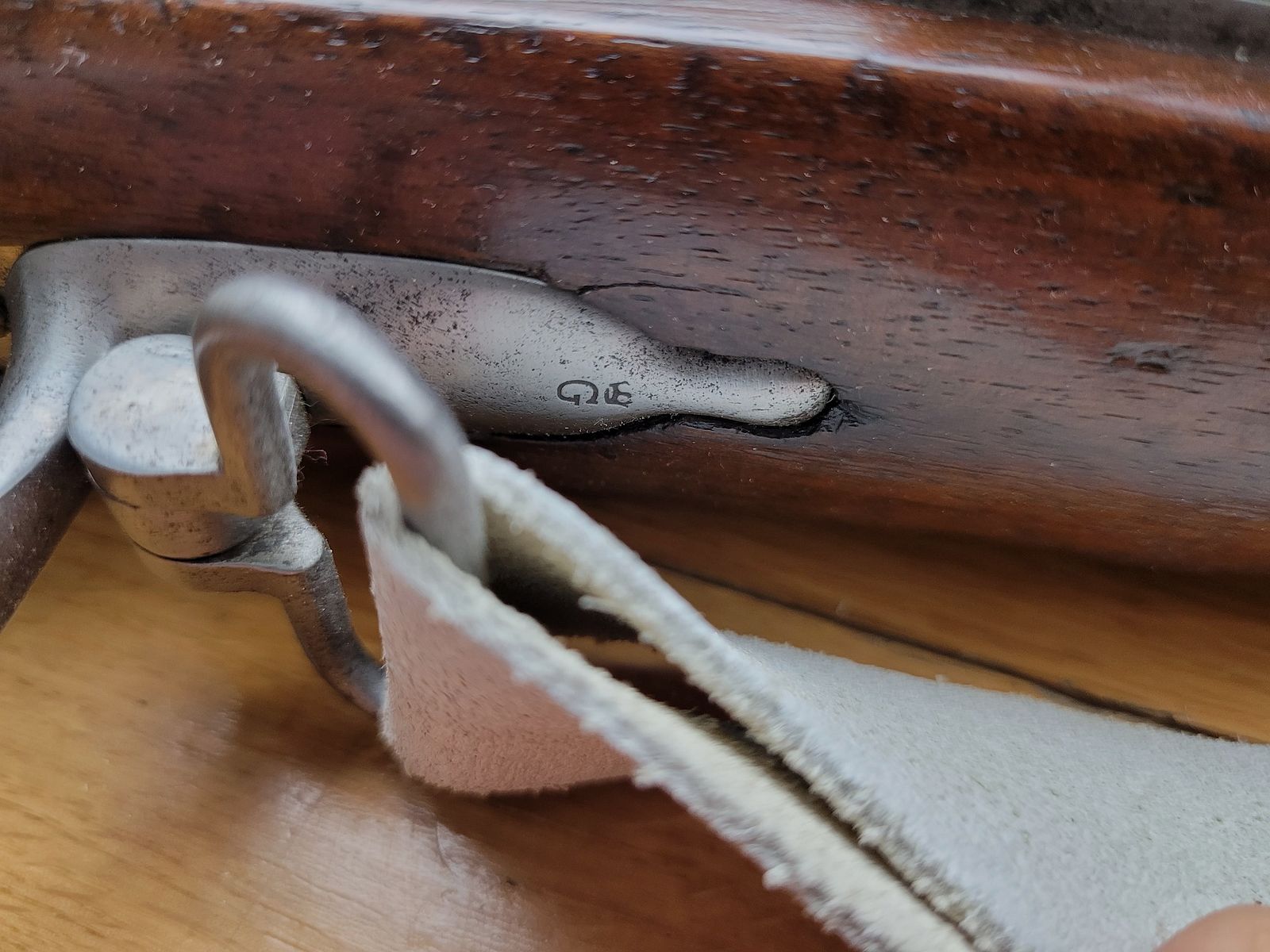
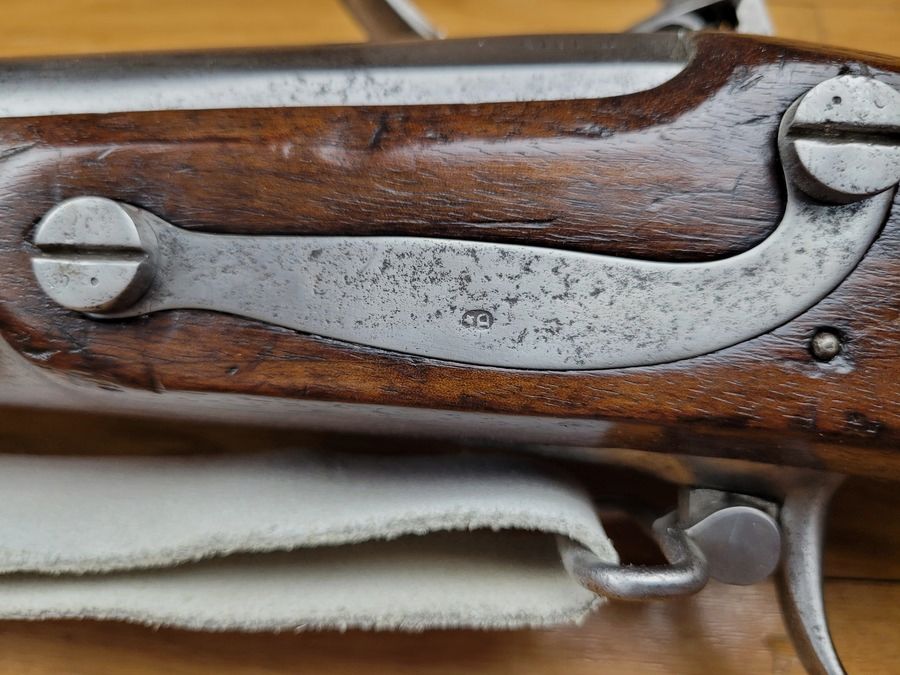
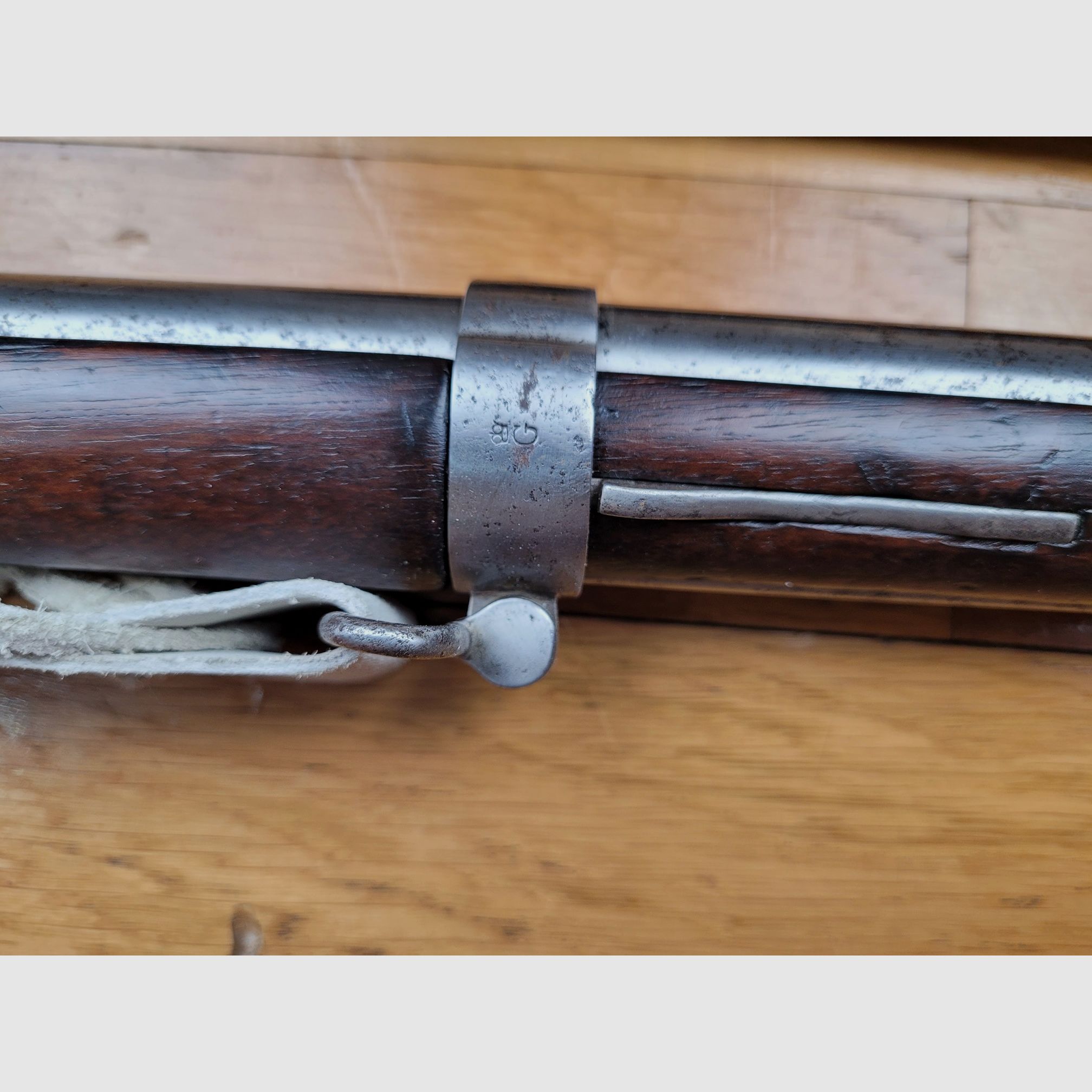
Iron fittings, 100% regulation-compliant and all bearing the same crowned “G” stamp.
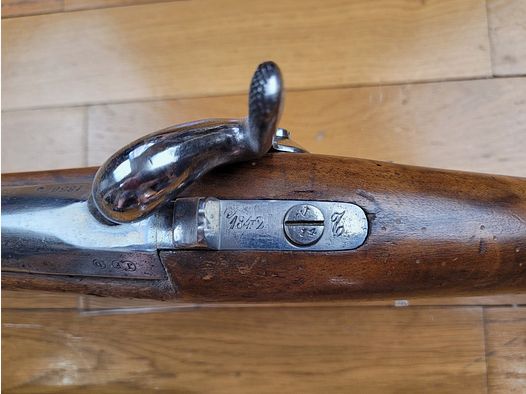
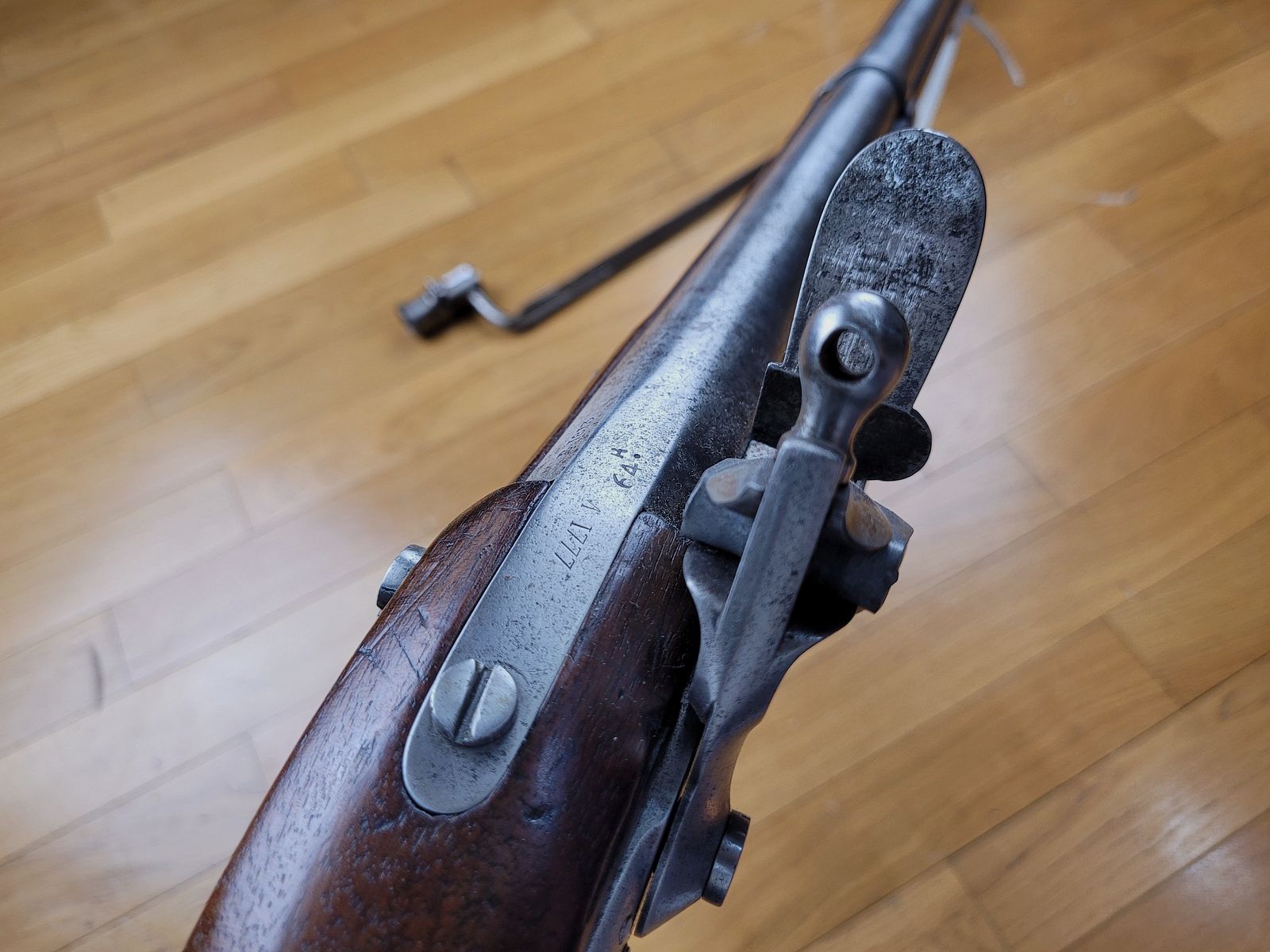
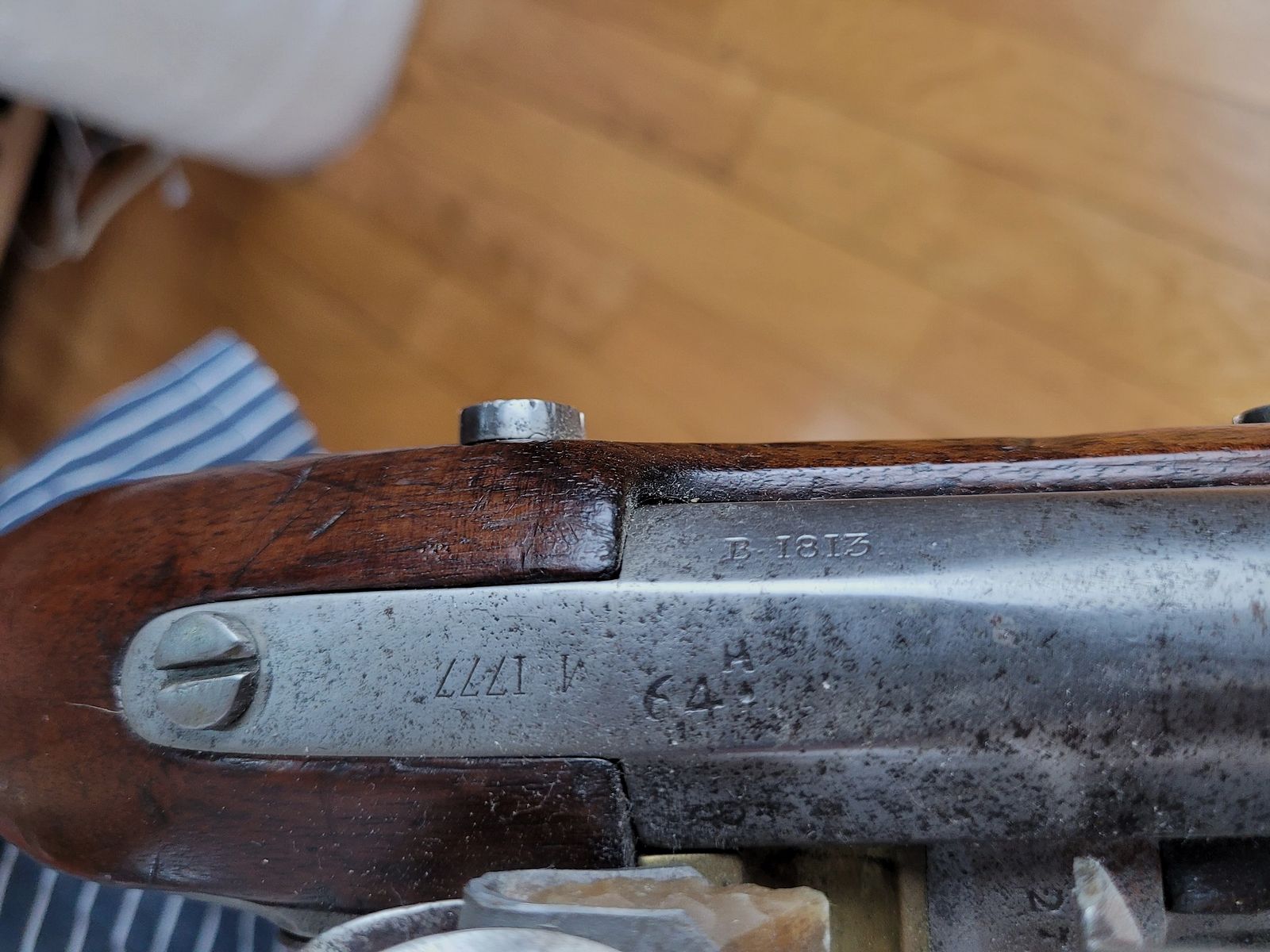
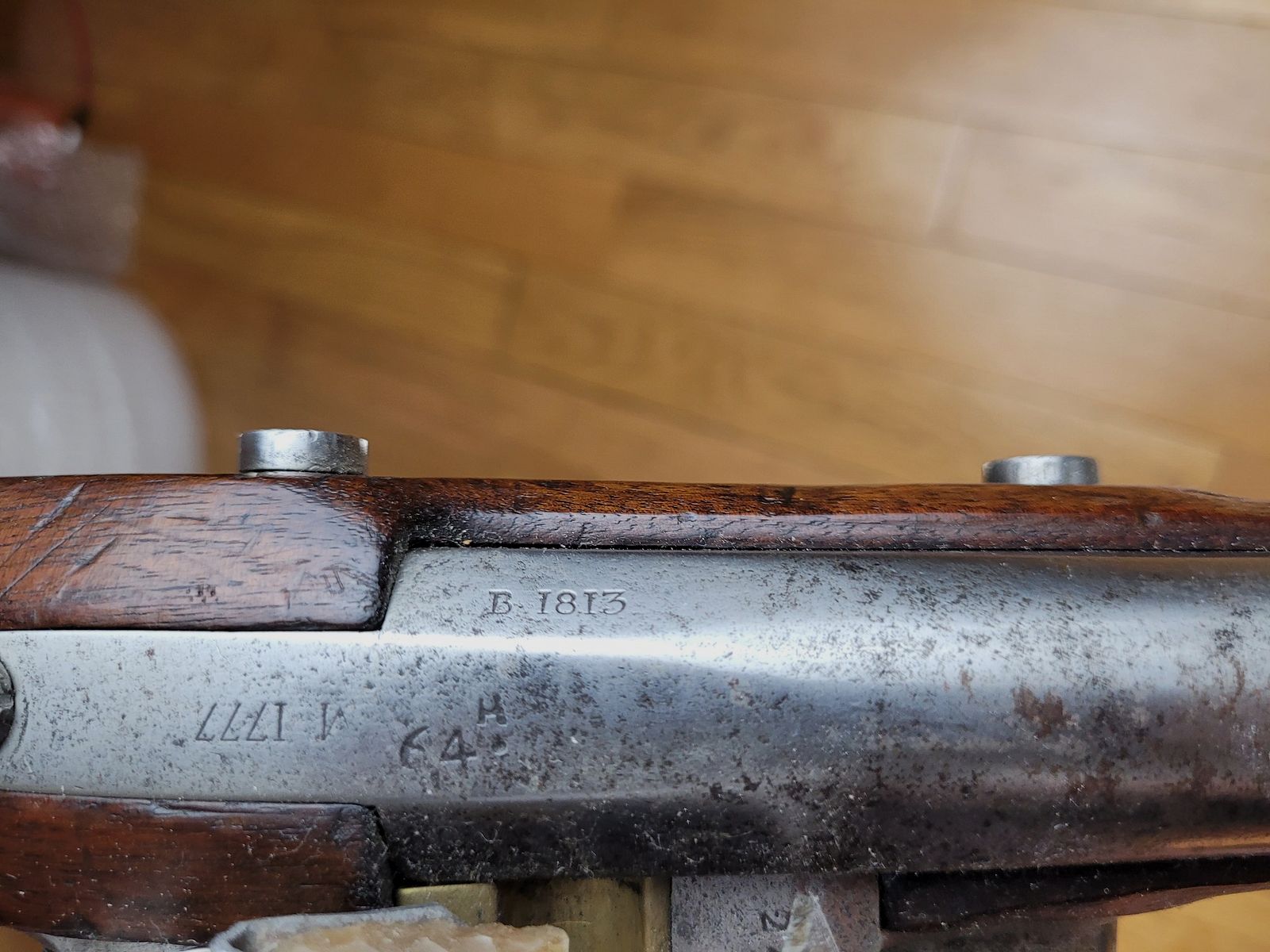
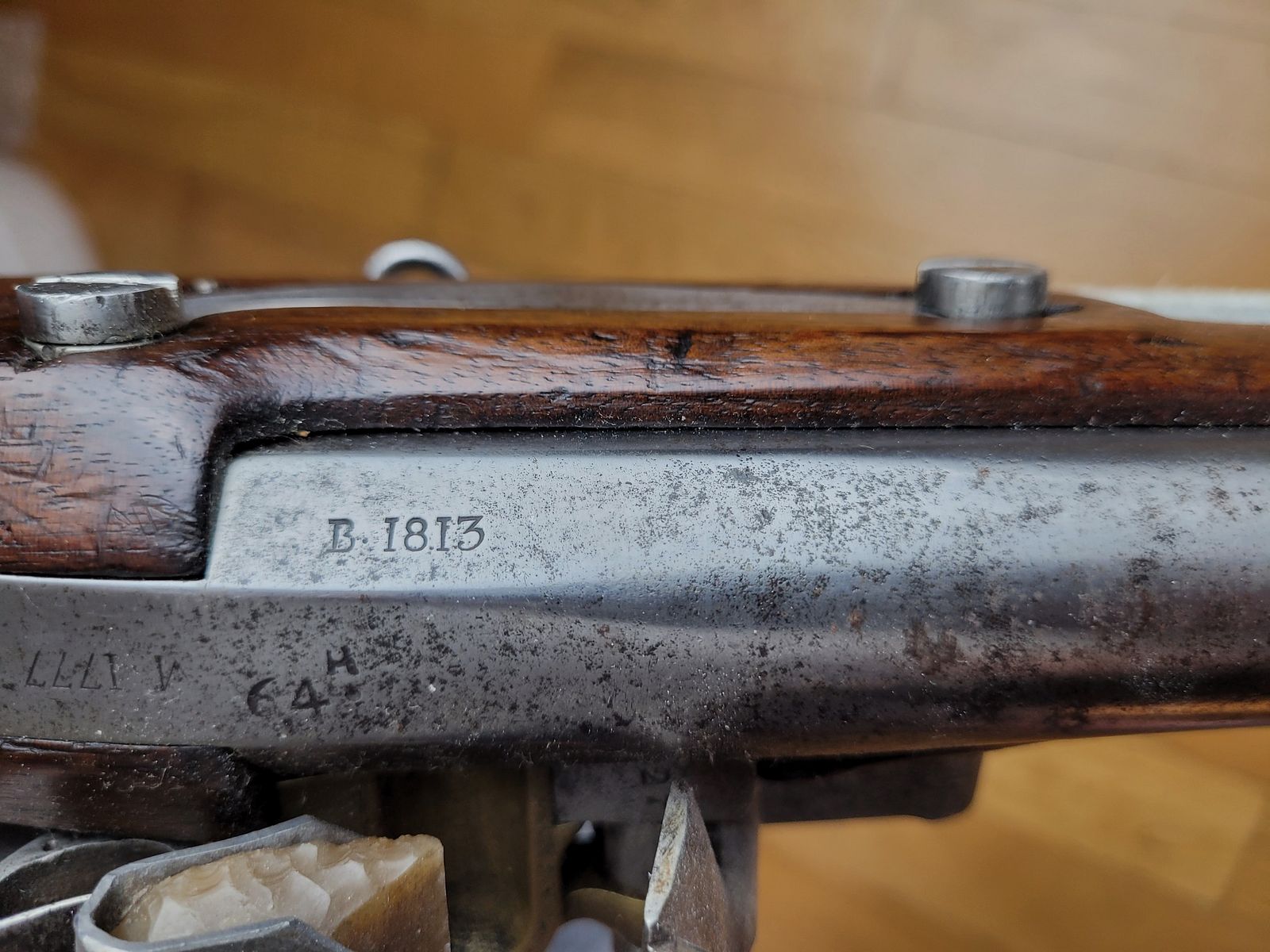
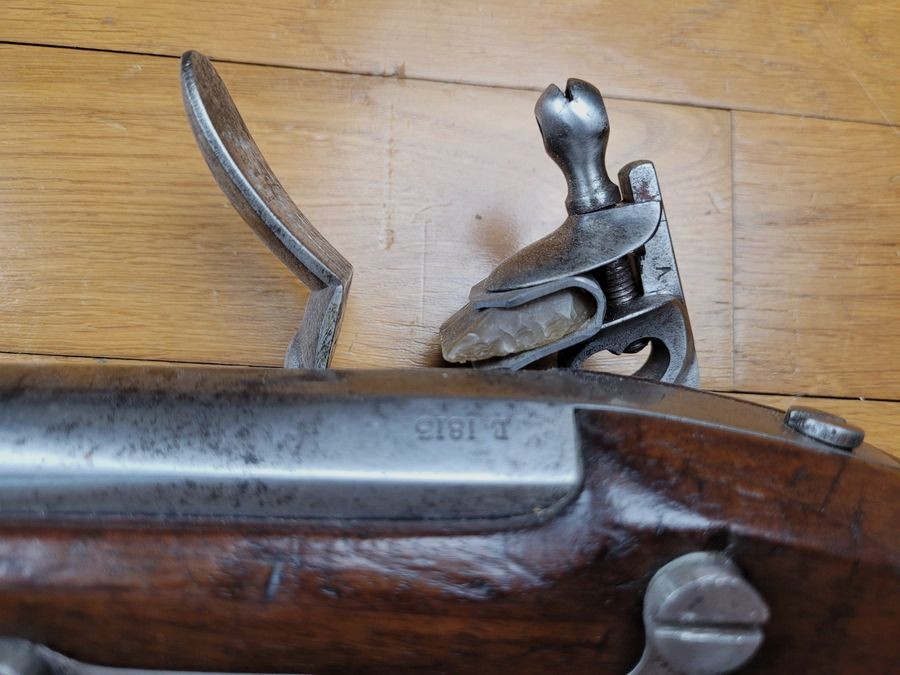
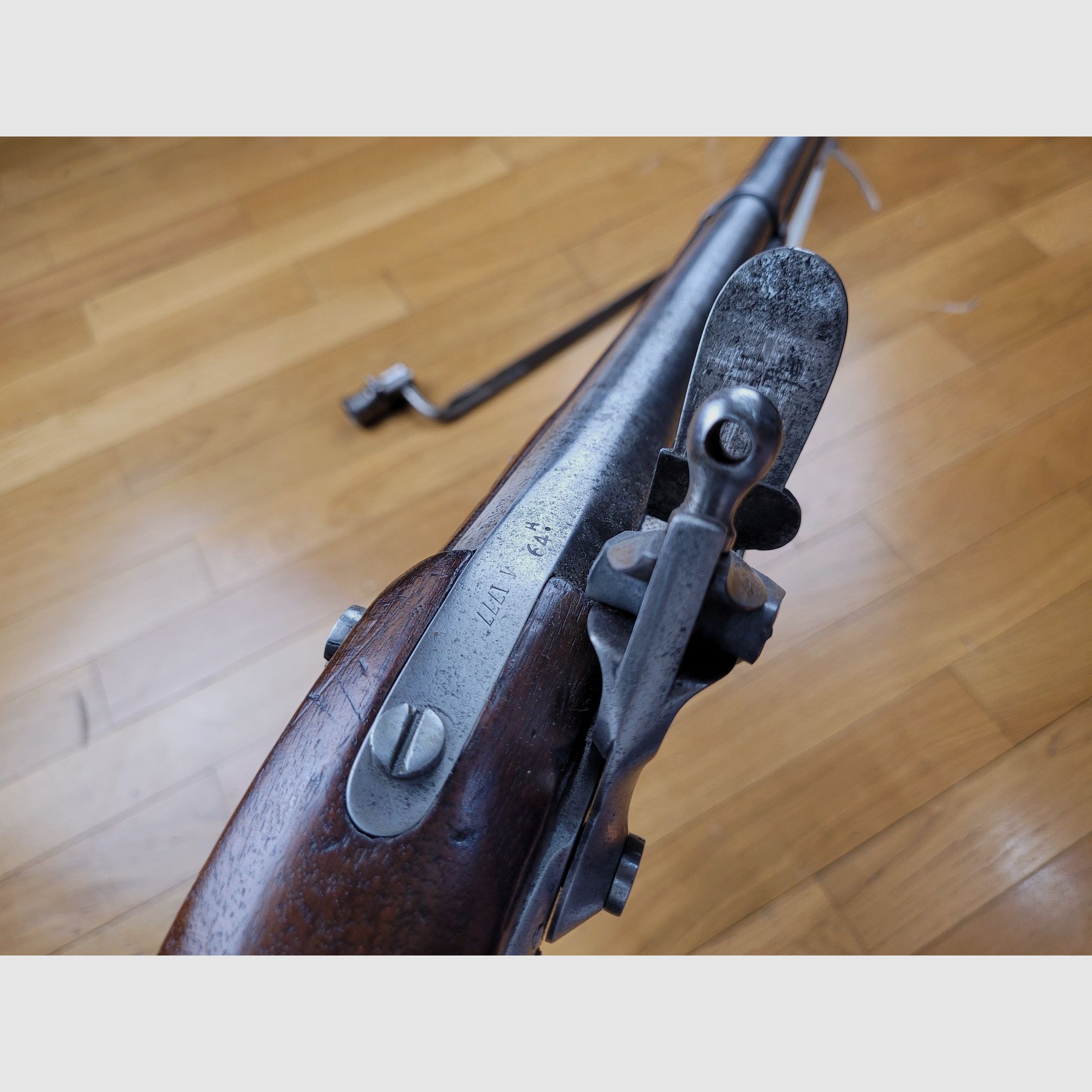
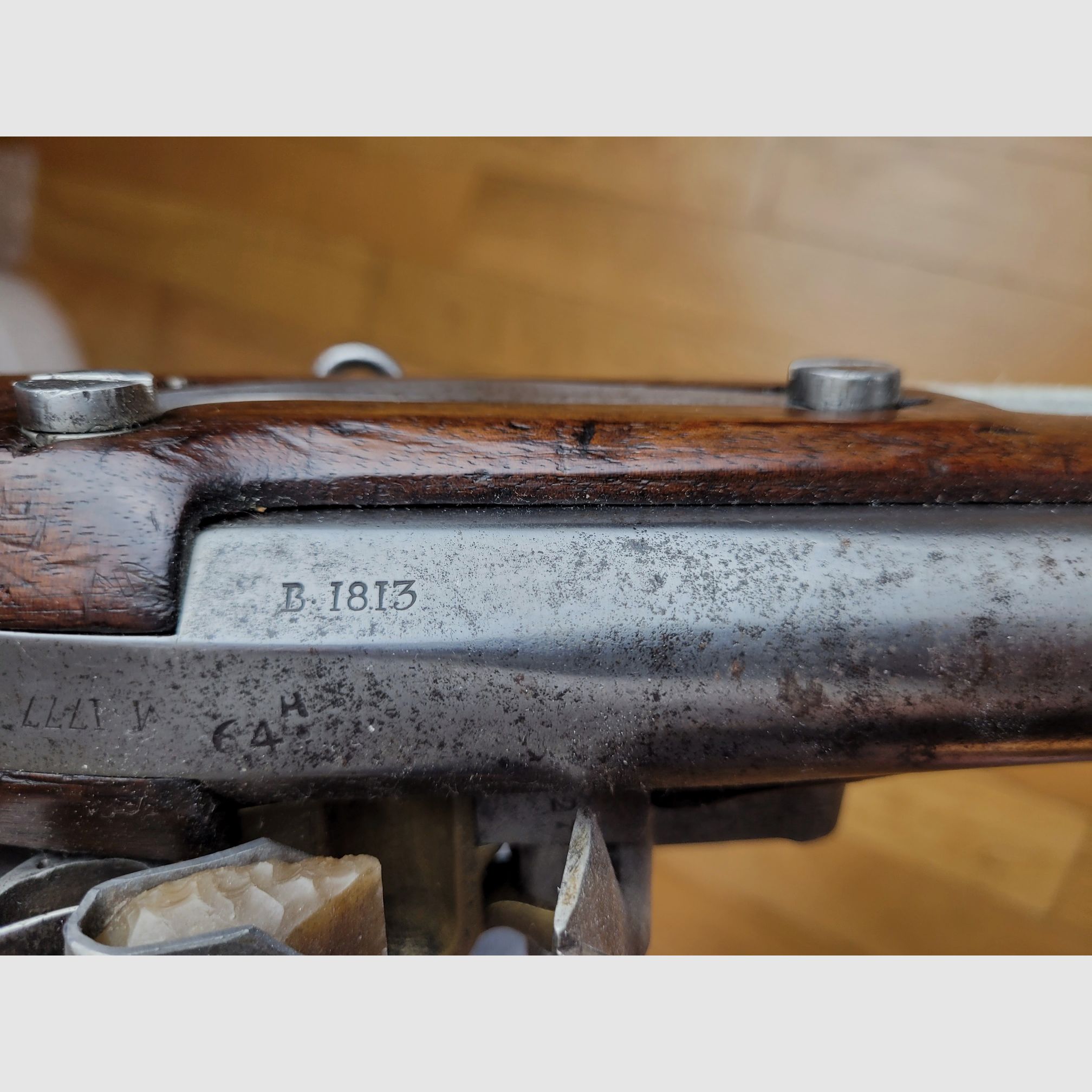
Breech and barrel breech: stamped with a starred “P” on the breech, “64A” and correctly dated “B 1813” – caliber marking “17,5” – the tang is correctly marked with the model “M1777” – very beautiful.
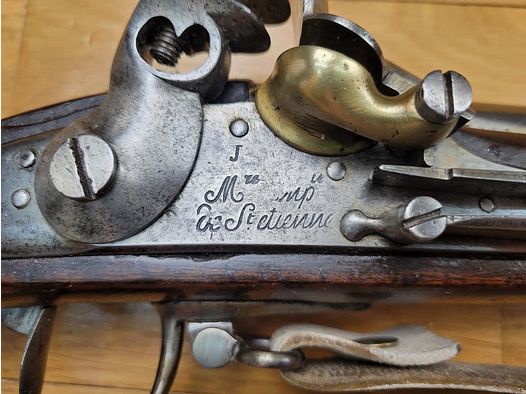
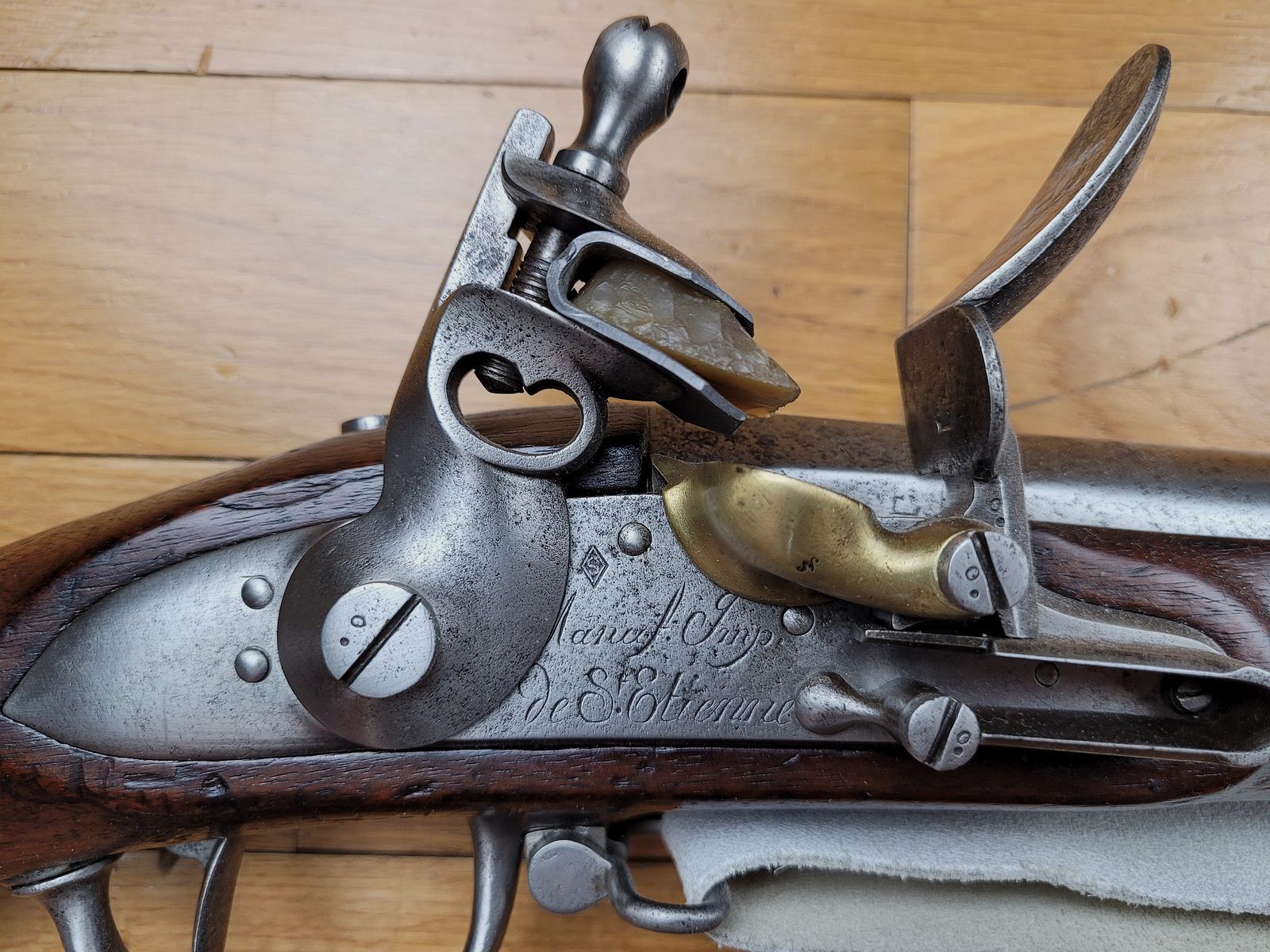
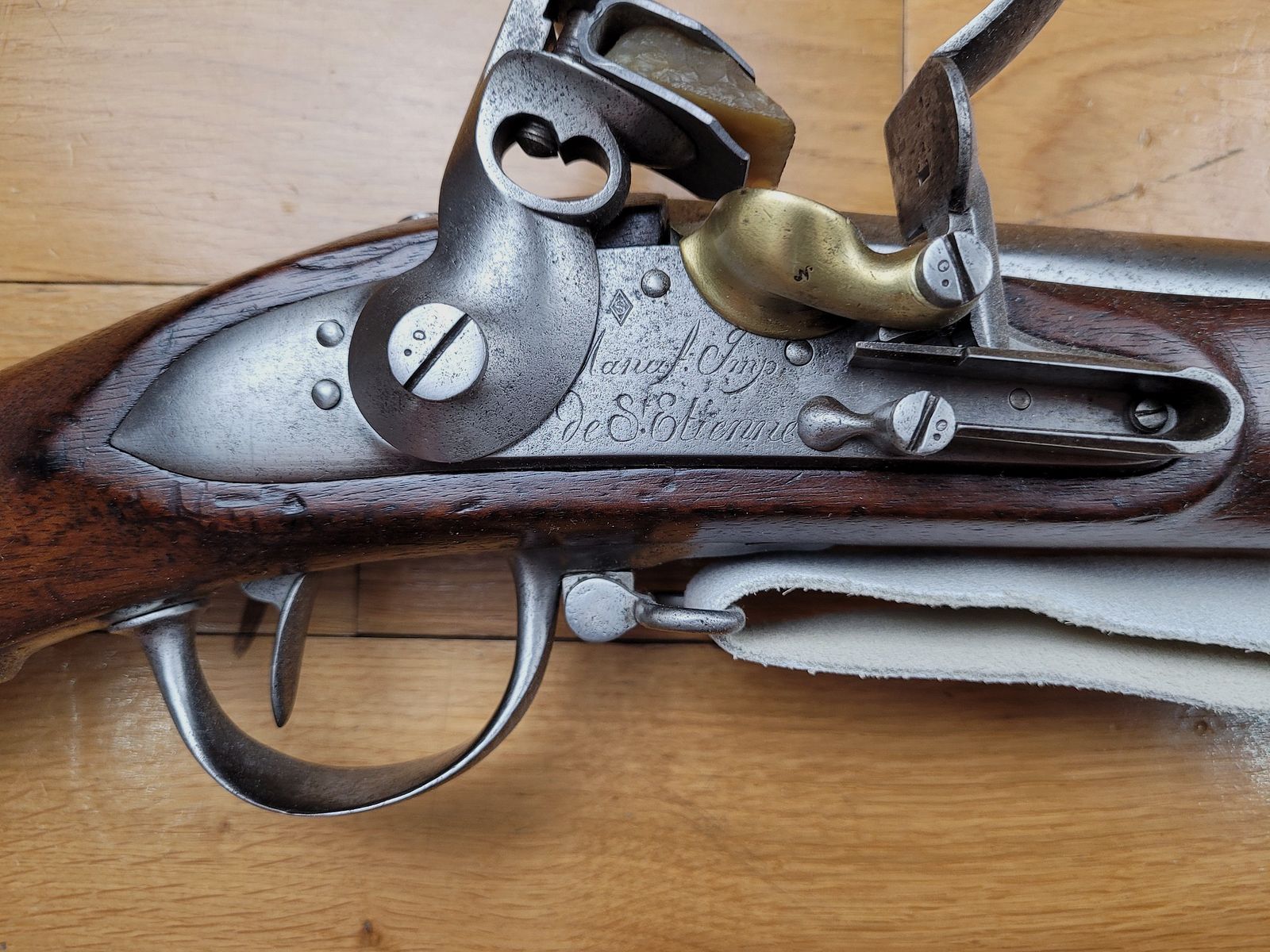
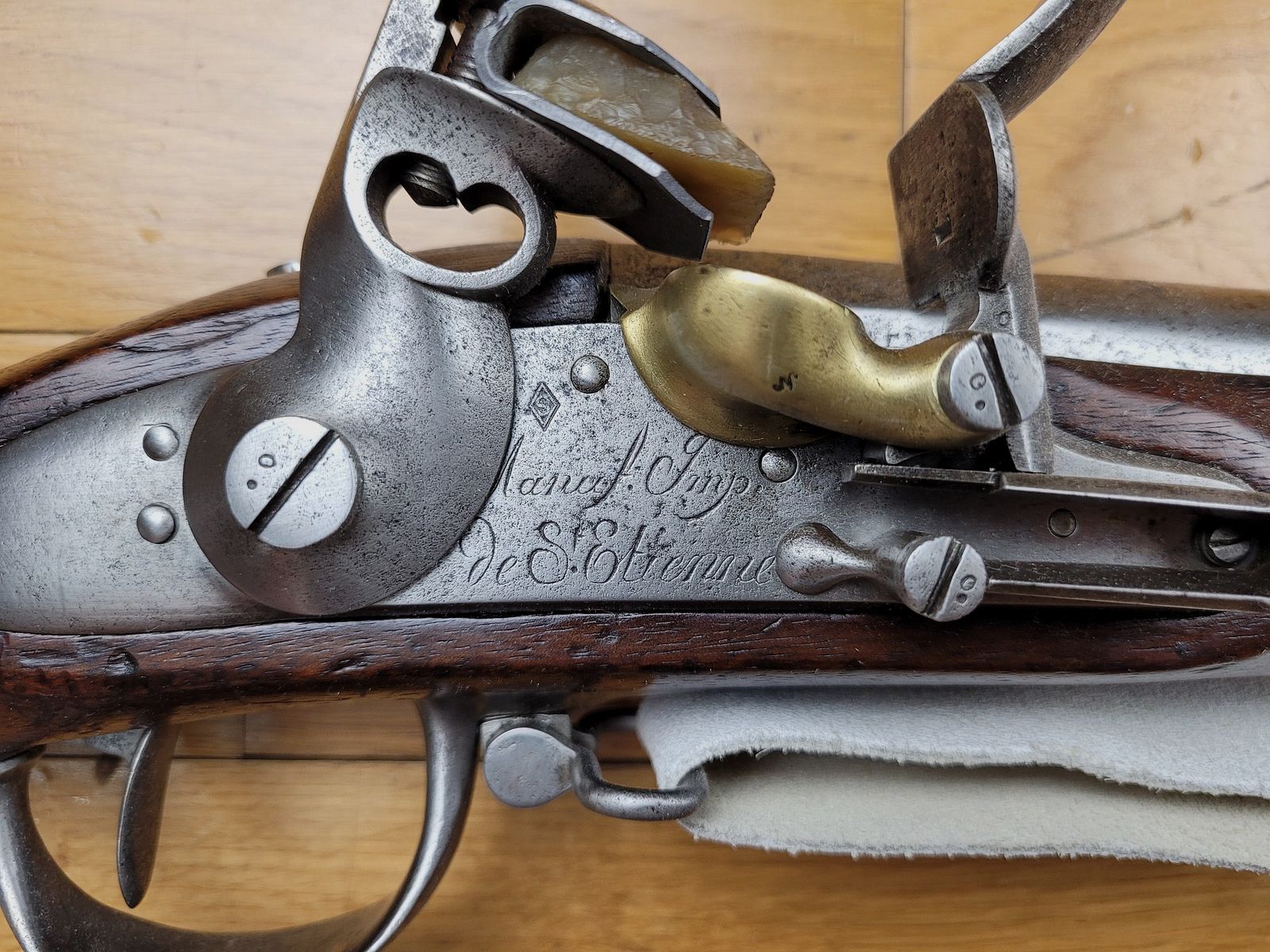
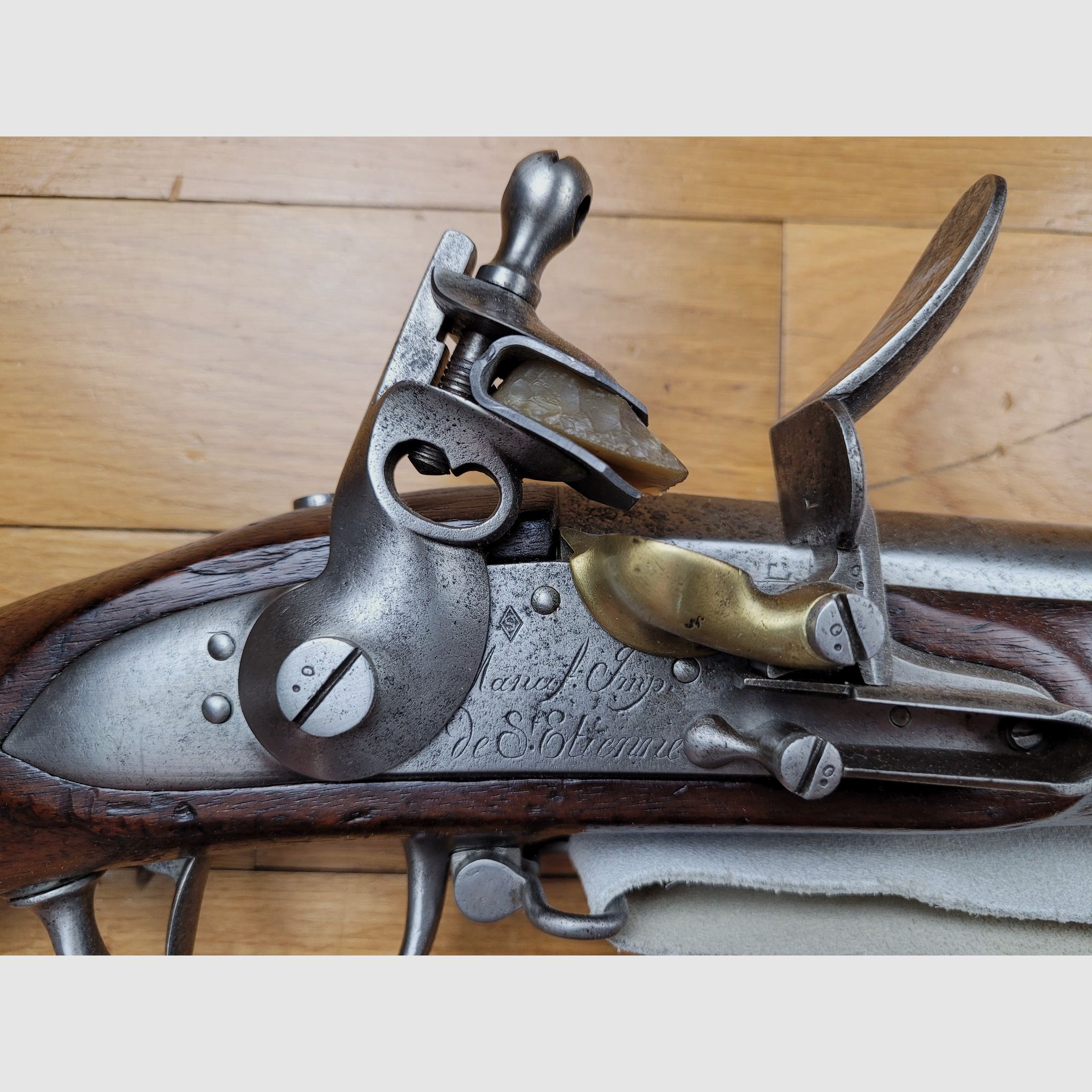
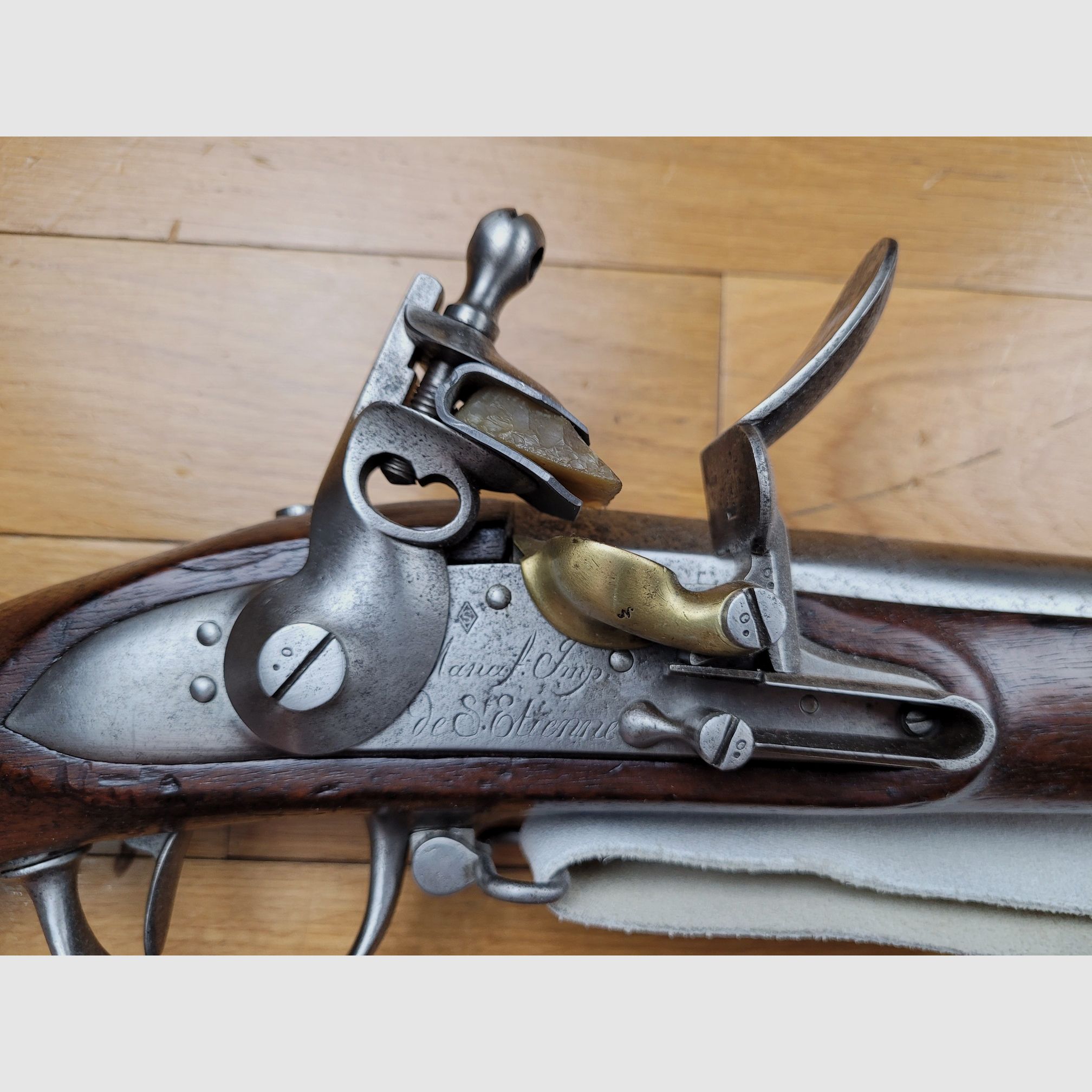
Lock: The lock is signed “Manufacture Impériale de Saint Étienne” and stamped with an “S” inside a diamond (lock inspector). Brass pan, as specified. The back of the hammer still has plenty of life left.
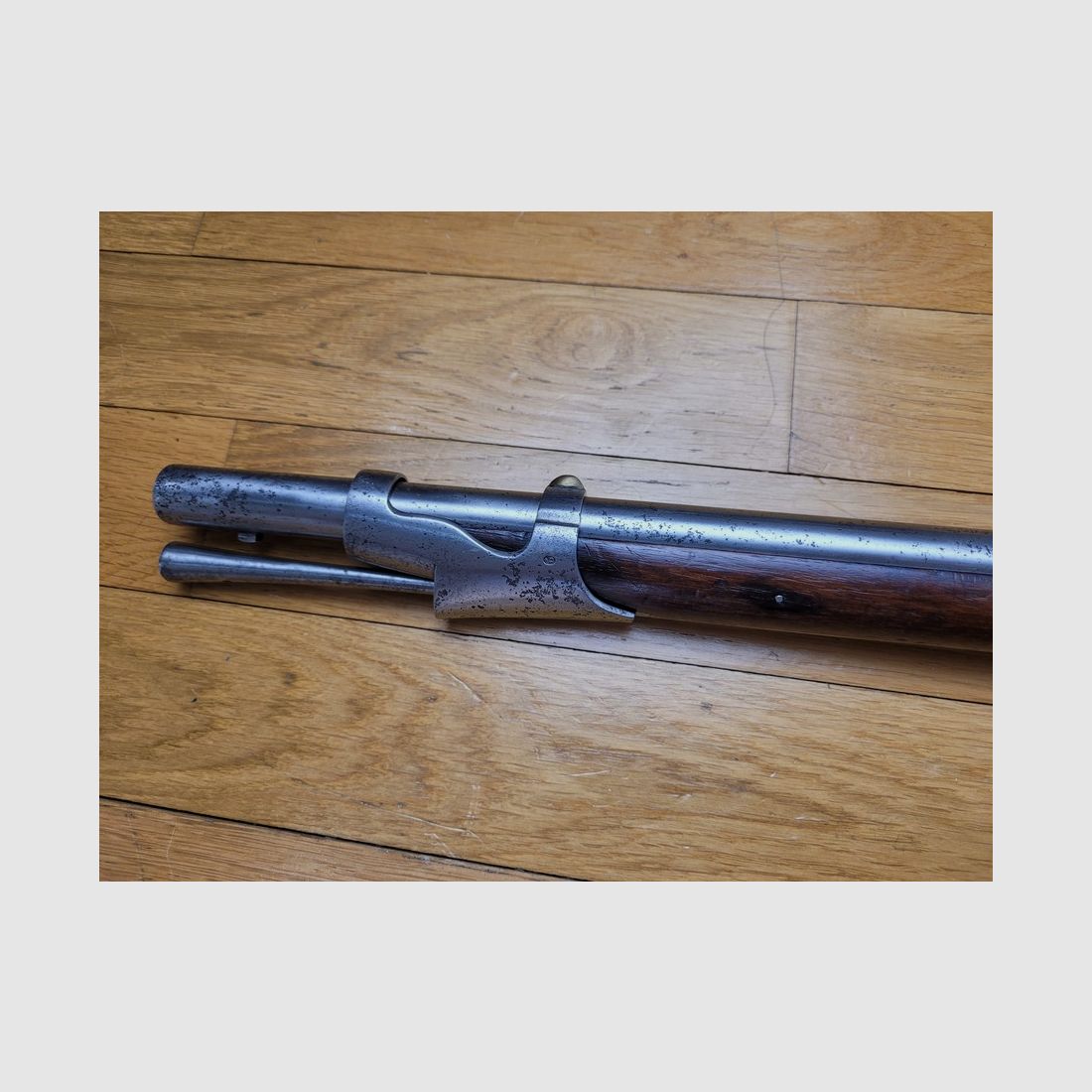
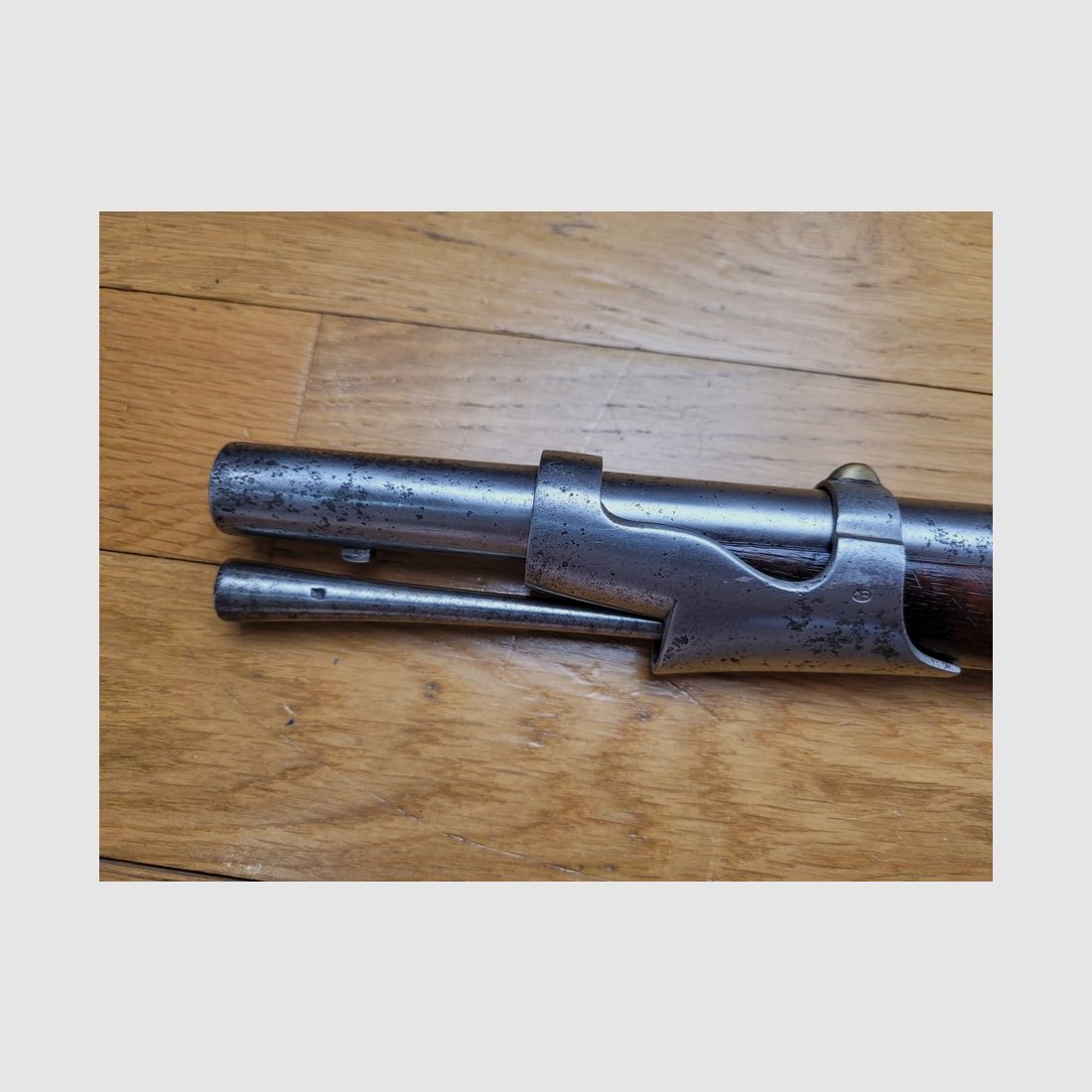
All markings and stamps on this completely matching weapon are clear and legible – just a little patina at the muzzle band – no replacements – no pitting – no rust.
Mechanically: The barrel is in excellent condition – the lock works perfectly. It holds both half-cock and full-cock, and the flint, firmly in place, produces beautiful sparks! (Try it with the lights off to see for yourself – and not too often, so as not to wear down the hammer face, which is original). The touch hole works properly. The hammer spring is impeccable. No play.
Good regulation ramrod – also stamped.
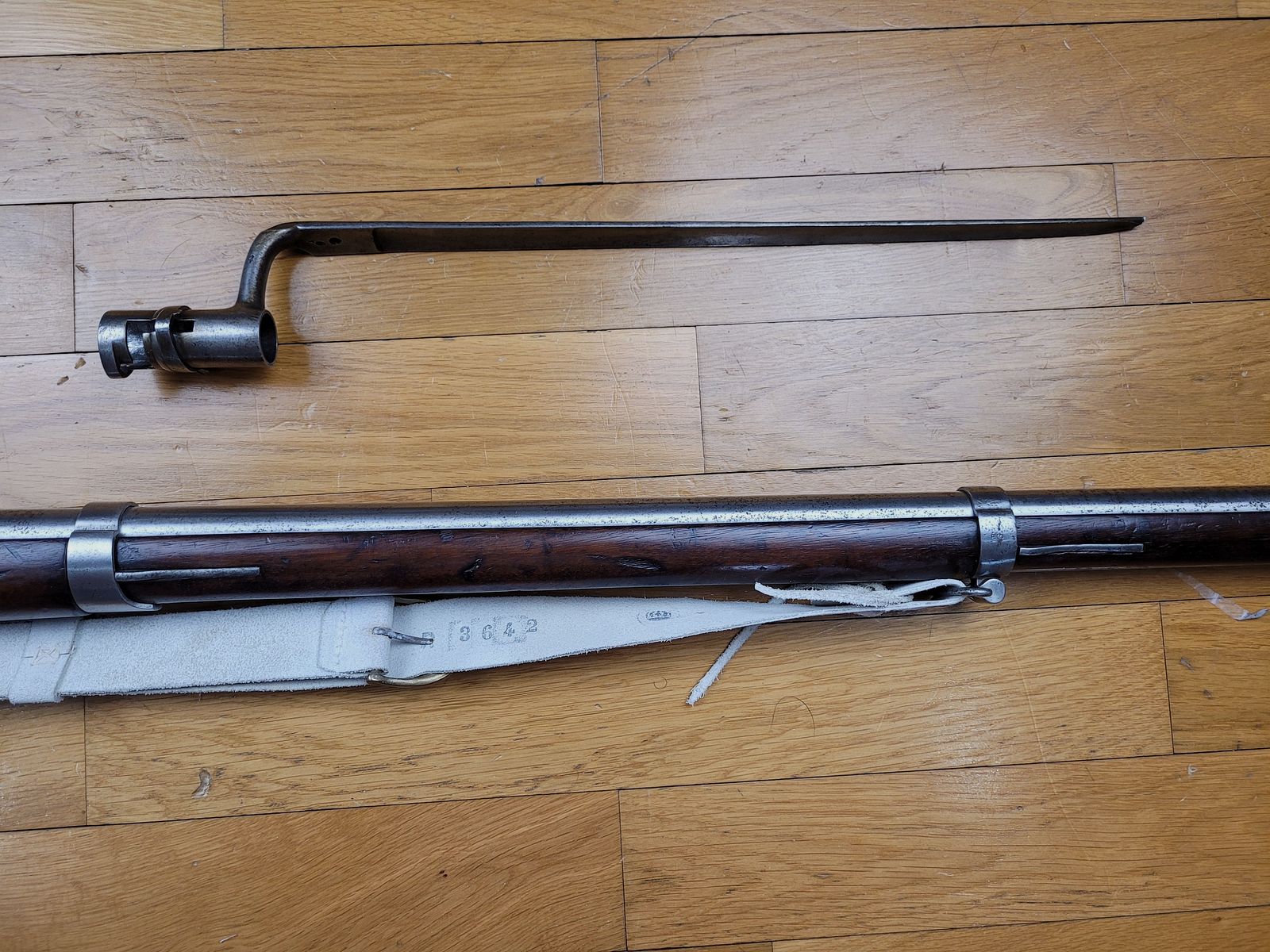
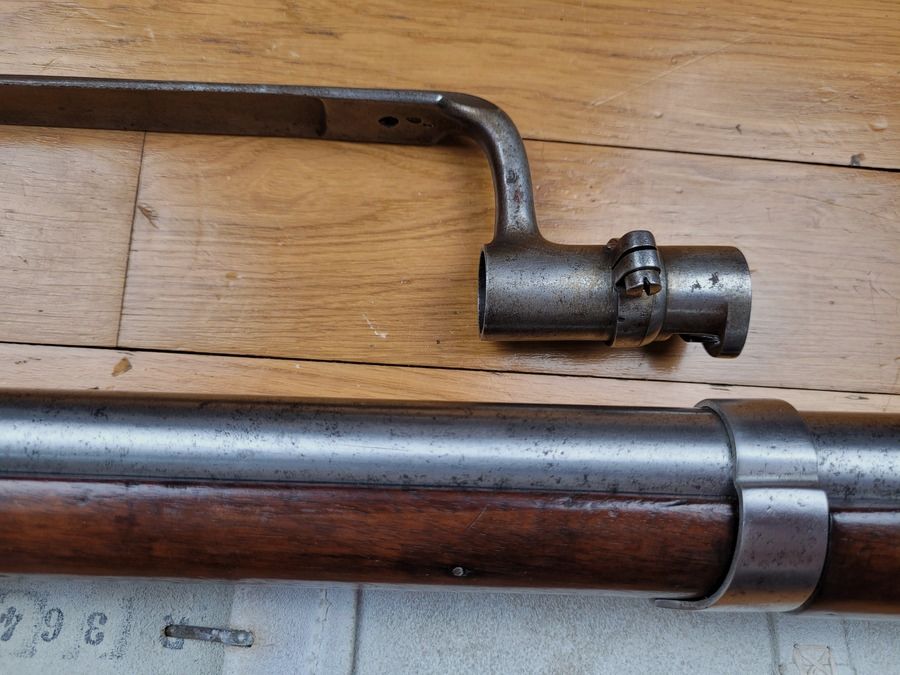
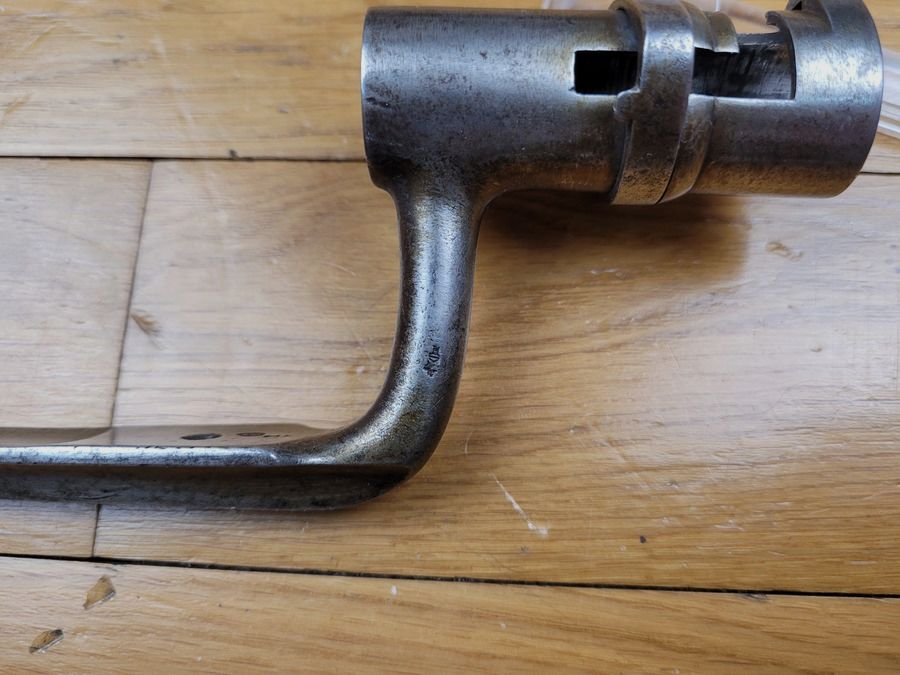
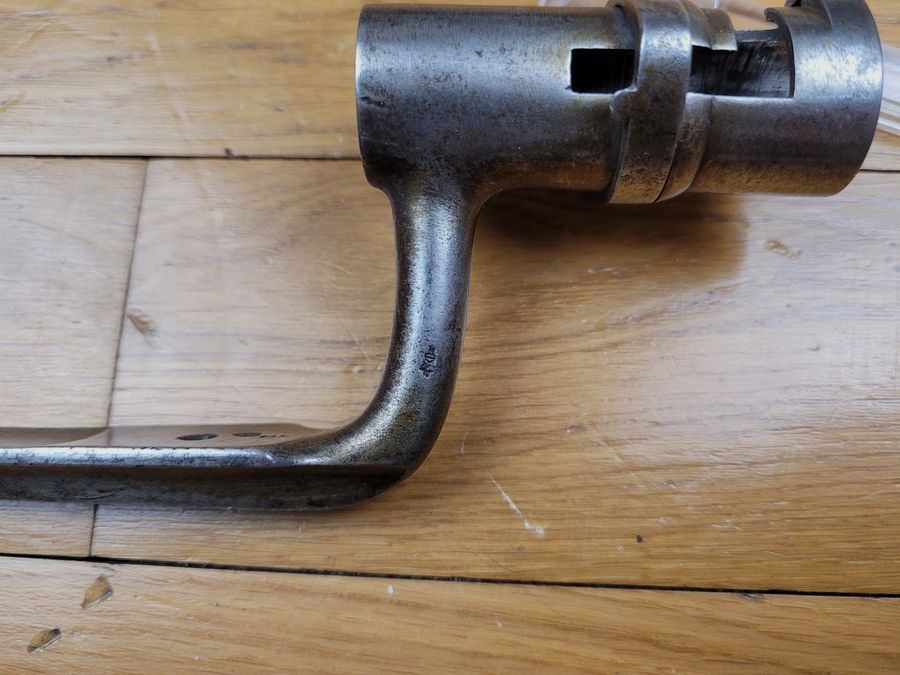
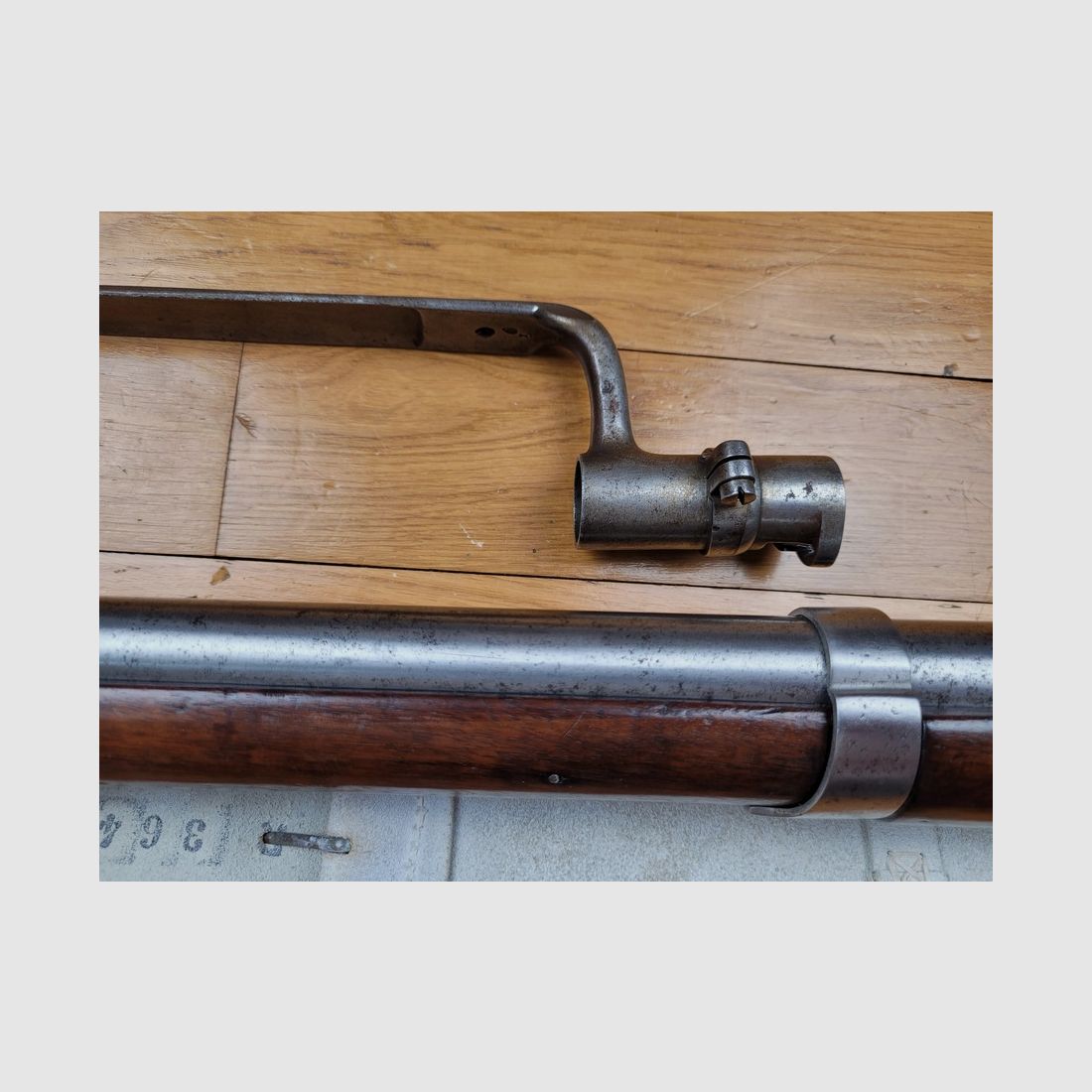
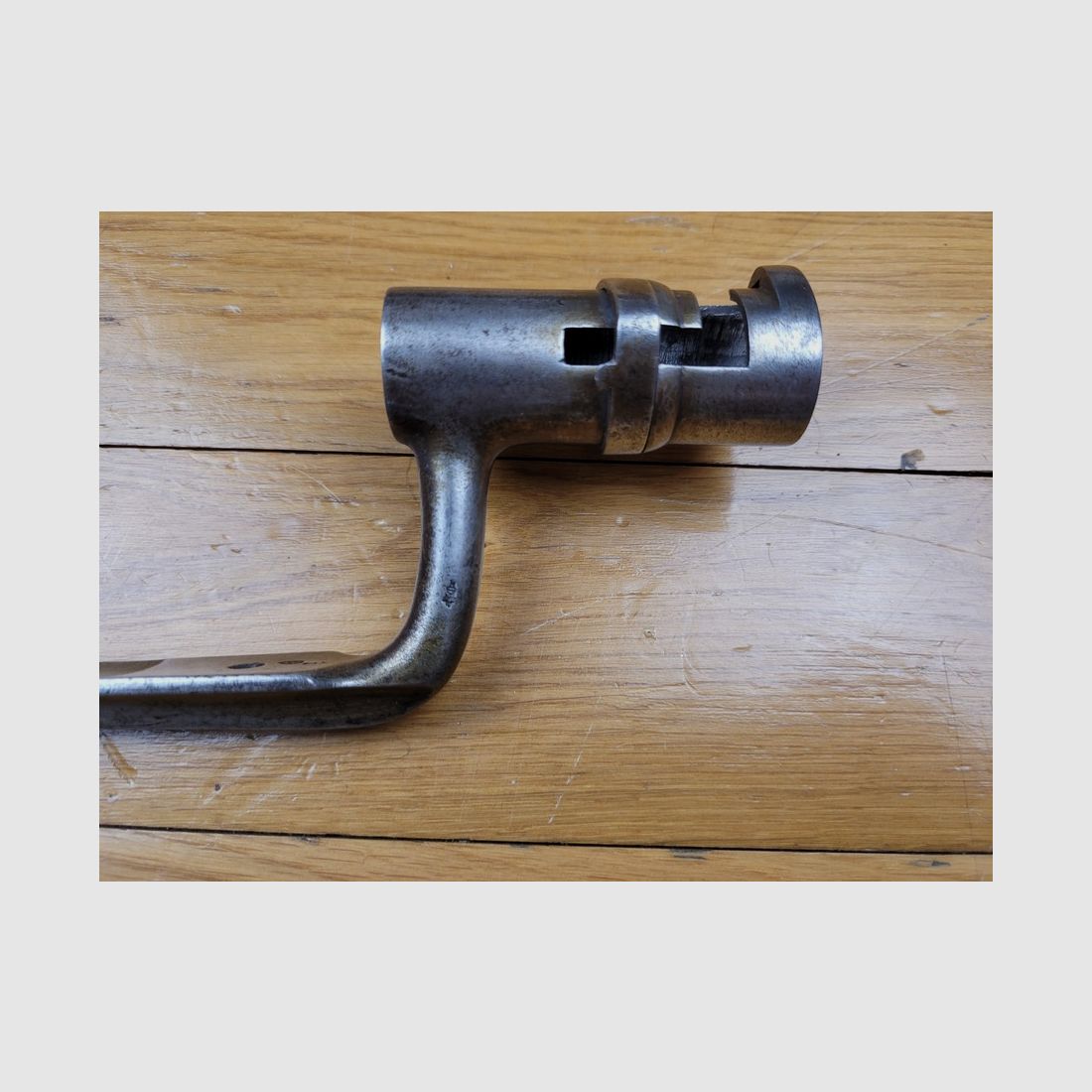
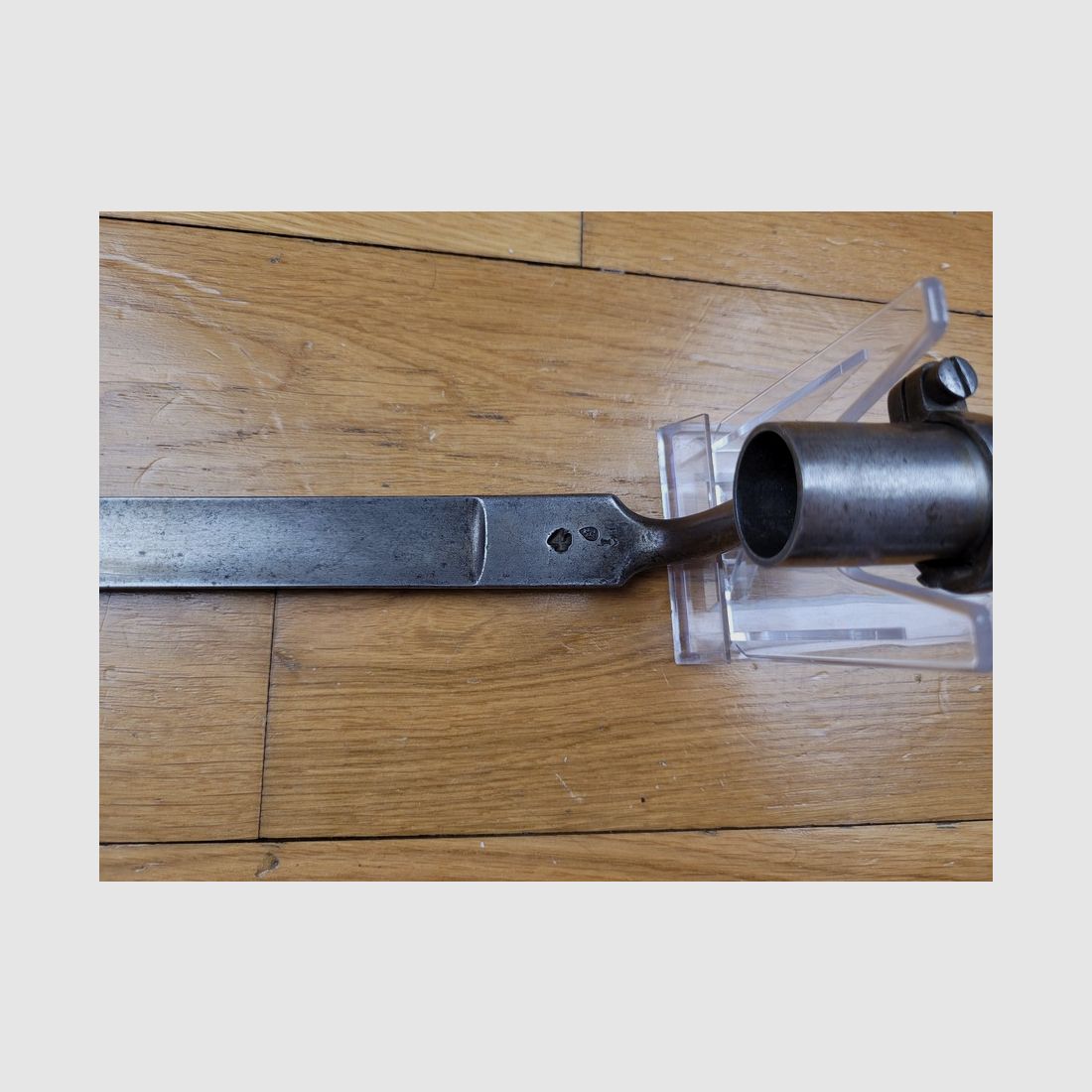
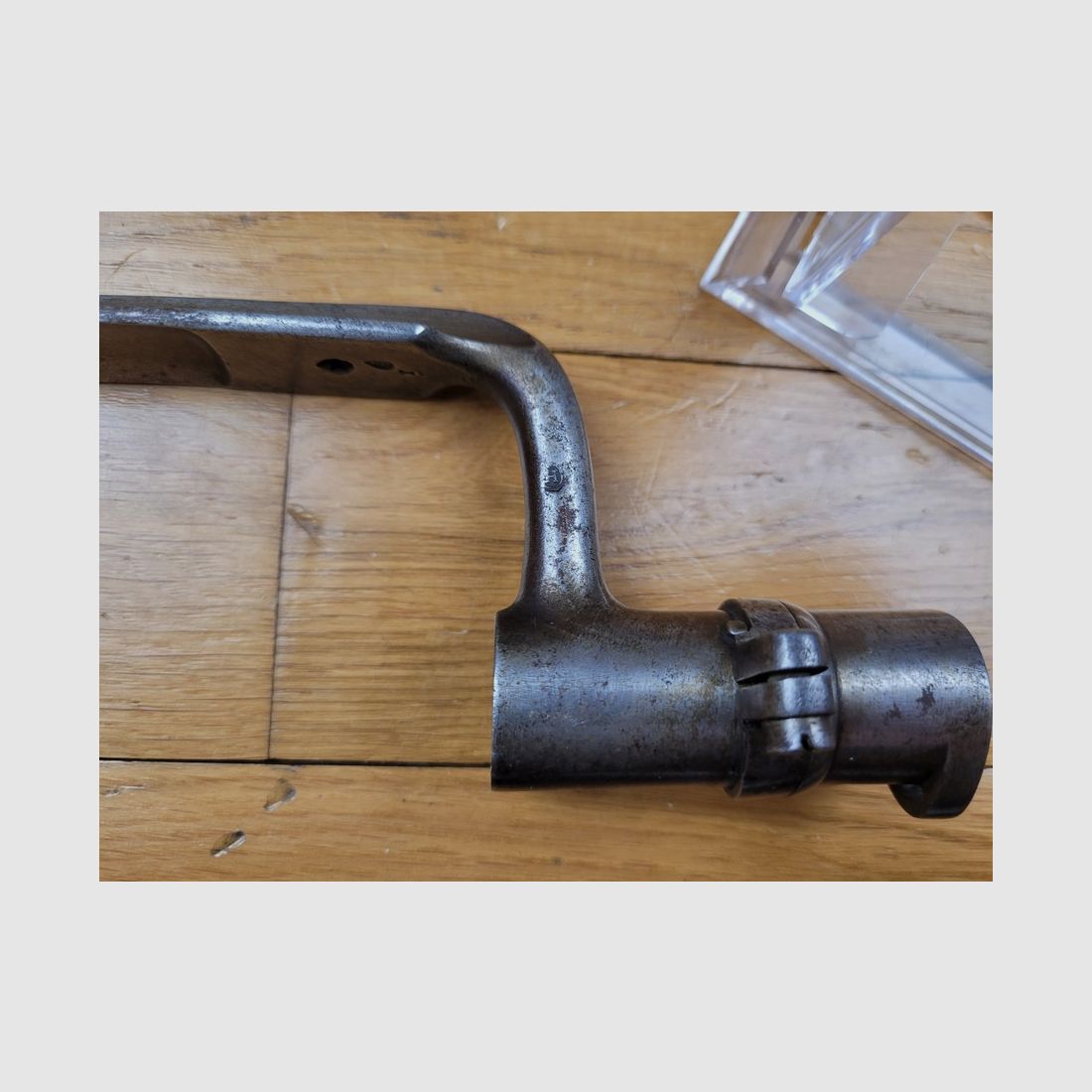
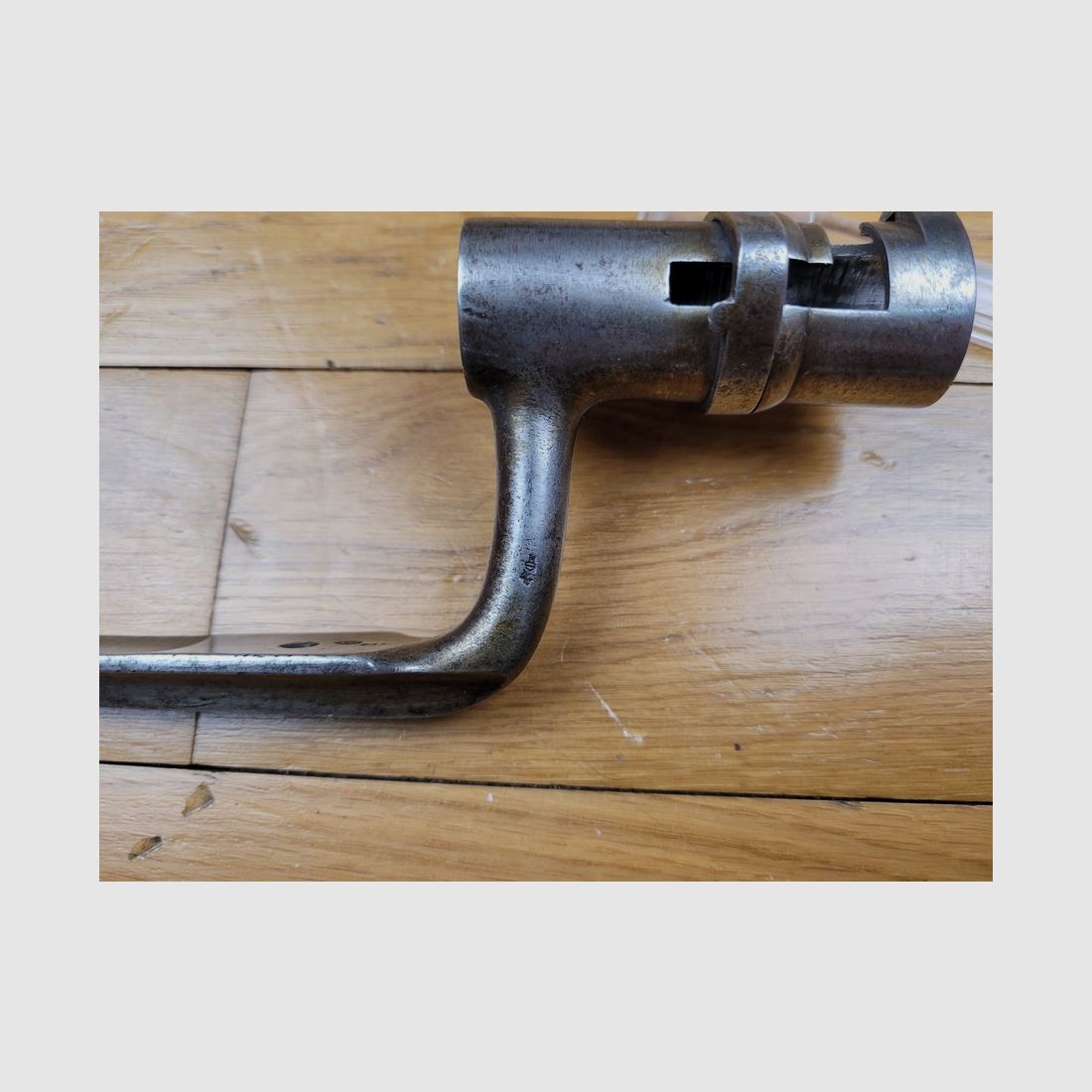
The weapon comes with a period Empire regulation bayonet and a thick buffalo leather sling, a reproduction but true to the troop model of the period.
Once the bayonet…
With the bayonet fixed to the end of the 152 cm rifle, you can really appreciate what an infantry unit defending itself against a cavalry charge was up against. The rifle and bayonet together had to form a wall of pikes to stop the horses and the fearsome swordsmen riding them…
In short, a superb, unmodified and very consistent set in excellent condition, complete with its combat accessories. It’s becoming extremely difficult to find one in this state of preservation today. And it’s also a weapon that tells a story of great historical importance.
If you’re only going to own one 1777, this is the one to get. It’s been a long time since maître Flingus got one this beautiful in!
Weapon from a very high-quality collection, dispersed at Drouot a few years ago.
Category D weapon under the CSI: valid ID card or passport required.
Reminder: All collectible, hunting, and shooting firearms are used and sold as-is, without warranty.
All antique historical firearms sold as category C or D, “Collection” or “Cowboy shooting” are collectible firearms that have not been proof-tested for shooting or tested at a range. They have been visually inspected for their general condition, but none have been used for shooting and they are therefore sold as untested. Anyone wishing to use a firearm for shooting must first contact the National Proof House of Saint Étienne, the only body authorized to issue proof certificates before use for shooting.
(Show description in original language)
Très beau fusil du modèle 1777 modifié an IX – Fabrication de l’épopée impériale en 1813 – toutes garnitures poinçonnées et homogènes – baïonnette du modèle et bretelle de buffle. État remarquable.
Une pièce comme Maître Flingus les aime… qui racontent l’Histoire. Évidemment, j’aurai préféré trouver un 1806 ou un 1809 dans un état comme celui-ci. Mais on en voit plus… Combien de ces anciens sont revenus de la catastrophe de Russie (juin 1812/ janvier 1813)?
Début 1813, Napoléon a du d’abord rameuter tous les officiers et corps de troupes un peu solides qui se languissaient en Espagne ou ailleurs et enrageaient six mois plus tôt de ne pas partir en Russie, où, ils en étaient sûrs, leurs camarades engrangeraient promotions et décorations à leur place pendant que eux restaient à faire de la contre – guérilla sans gloire avec Suchet sous le soleil de plomb d’Espagne. En fait, ils furent très chanceux. Ceux qui ont survécus à 1813/14 ont pu écrire leurs mémoires. Les 600.000 – la plus grande armée réunie depuis l’Antiquité – et qui ne sont jamais revenus de Russie, eux, n’ont rien écrit… Dans l’histoire de l’Empire il y a bien un avant et un après décembre 1812.
Début 1813, Napoléon avait du relancer aussi en catastrophe et à plein régime la production d’armement pour compenser le vide cataclysmique en matériel laissé par la Russie.
Pouvait alors commencer quelques unes des plus glorieuses et héroïques campagnes de l’Empire, celle des combats dos au mur, où Napoléon allait retrouver le Génie d’Italie, pour finir trahi, sans quasiment avoir perdu de bataille en 1813 hors Leipzig et avoir vaincu tous ses ennemis à chaque rencontre en 1814 ! Il faudra deux ans de combats féroces à toute l’Europe coalisée pour en finir avec l’Armée Française pourtant sortie très affaiblie de la Campagne de Russie.
C’est un enfant de cette époque de fer que nous vous présentons aujourd’hui: un très beau 1777 modifié An IX de 1813.
Bois impeccable et 100% d’époque sans une enture et très peu de traces de manipulation – État réellement rare avec un macaron de crosse est encore bien lisible 210 ans après ! Notre bébé est né en octobre 1813 à Saint-Étienne, marqué » B…1813 – P – Obre » . C’est bien un « Marie-Louise » (du nom de l’Impératrice, marraine des enfants-soldats, derniers mobilisés de l’épopée impériale). Prussiens, Autrichiens et cosaques n’ont qu’à bien se tenir… La crosse est bien poinçonnée « B » couronné pour l’inspecteur des bois – le macaron est bien « B » aussi avec sa bonne cheville « EF » pour « Empire Français » au milieu. Le « B » de contrôle des bois apparait aussi près de la contre-platine coté gauche de l’arme cette-fois.
Garnitures fer 100% conformes au règlement et toutes au même poinçon « G » couronné
Culasse et tonnerre: Poinçonné « P »étoilé au tonnerre « 64A » et bien daté « B 1813 » – indication de calibre « 17,5 » – la queue de culasse est bien marquée du modèle « M1777 » – très beau.
Platine : La platine est signée » Manufacture Impériale de Saint Étienne » et poinçonnée « S » dans un losange (inspecteur des platines). Bassinet de laiton conforme. Le dos de batterie a encore du potentiel.
Tous les marquages et poinçons de cette arme absolument homogène sont bien lisibles et clairs – Juste un peu tabac à l’embouchoir – pas de remplacement – pas de piqûres – pas de rouille.
Mécaniquement : Le canon est en excellent état – la platine est en parfait état de fonctionnement. Elle tient bien ses deux crans et le silex, bien en place, produit de très belles étincelles ! (à essayer lumière éteinte pour s’en rendre compte – et pas trop souvent pour ne pas user le dos de batterie – qui est d’origine). La lumière est bien fonctionnelle. Le ressort de batterie est impeccable. Pas de jeu.
Bonne baguette du modèle – poinçonnée également.
L’arme est livrée avec une baïonnette réglementaire d’époque Empire et une bretelle en cuir de buffle épais en repro mais bien conforme au modèle troupe de l’époque.
Une fois la baïonnette fixée au bout des 152 cm de fusil, on se rend bien compte de ce qu’était une troupe d’infanterie qui se défendait contre une attaque de cavalerie. Il fallait bien que l’ensemble fusil + baïonnette constitue un barrage de piques contre les chevaux et les redoutables sabreurs qui les surmontaient…
Bref un superbe ensemble non bricolé – très homogène – dans en excellent état, bien complet de ses accessoires de combat, et qu’il devient très très difficile de trouver aujourd’hui dans cette qualité de conservation. En plus, d’être une arme qui raconte la grande Histoire.
Si vous ne devez avoir qu’un seul 1777 c’est celui-là qu’il faut avoir. Il y a longtemps que maître Flingus n’en avait pas rentré un aussi beau !
Arme venant d’une collection de très haute qualité, dispersée à Drouot il y a quelques années.
Arme de catégorie D au CSI : pièce d’identité, CNI ou passeport, en cours de validité obligatoire
Rappel : Toutes les armes de collection, de chasse, et de tir sont d’occasion et sont vendues dans l’état, sans garantie.
Toutes les armes historiques de fabrication ancienne vendues en tant que C ou D, “Collection” ou “Cow-boy shooting” , sont des armes de collection non éprouvées pour le tir et non testées en stand. Elles ont été inspectées visuellement relativement à leur état général mais aucune n’a été utilisée au tir et elles sont donc vendues comme non testées. L’acquéreur désirant utiliser une arme pour le tir devra impérativement se rapprocher préalablement du banc National d’Épreuve de Saint Étienne, seule entité habilitée à délivrer des certifications d’épreuves préalable à un usage de tir.