
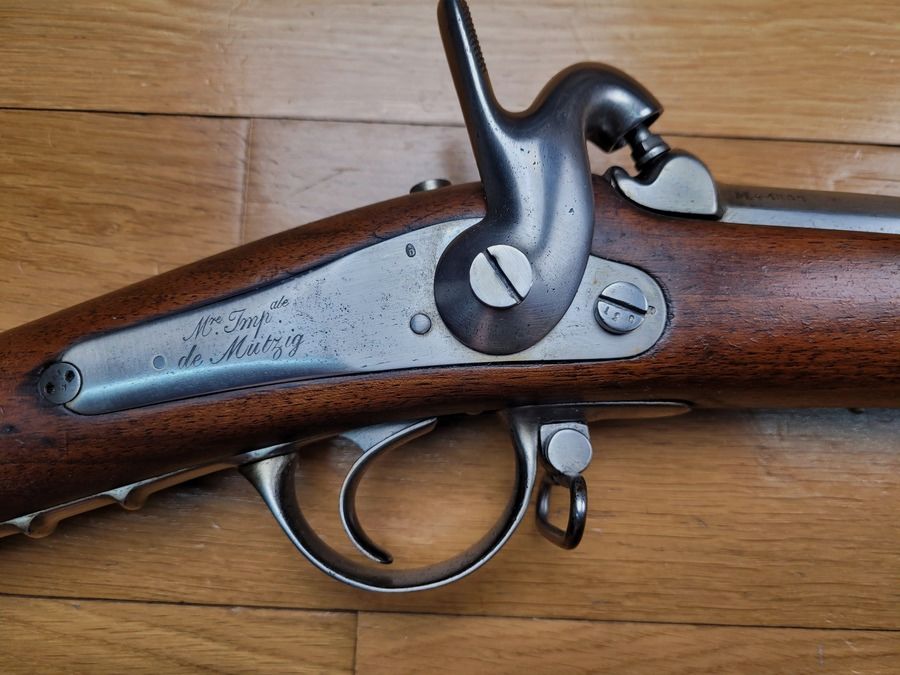
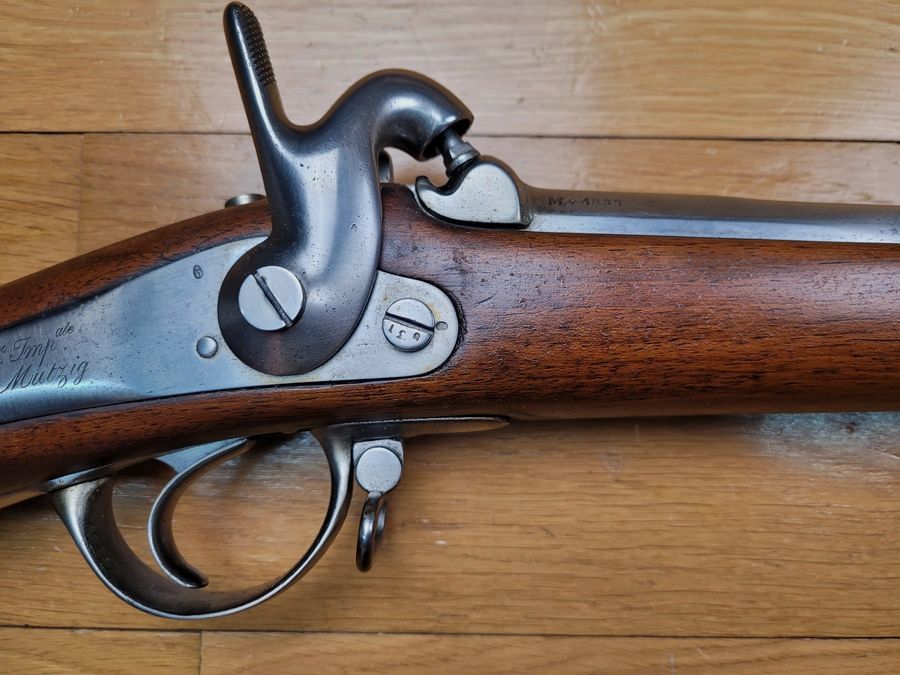

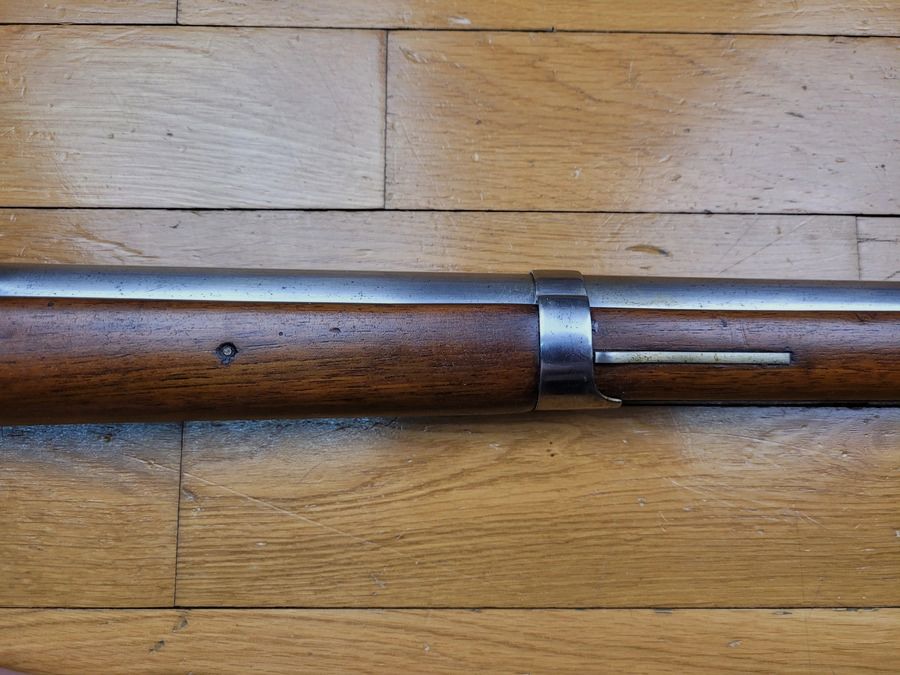
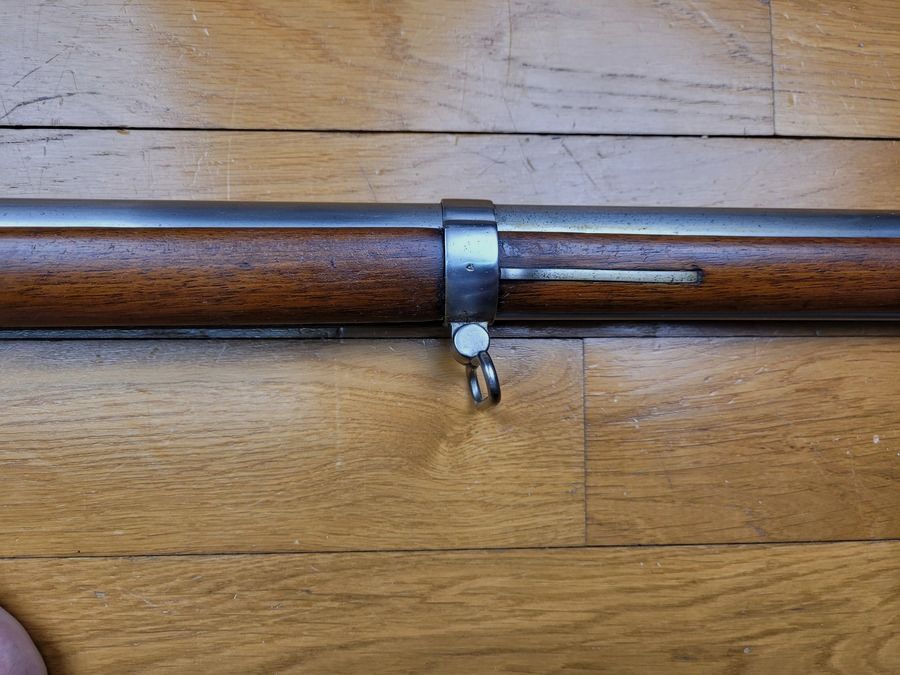





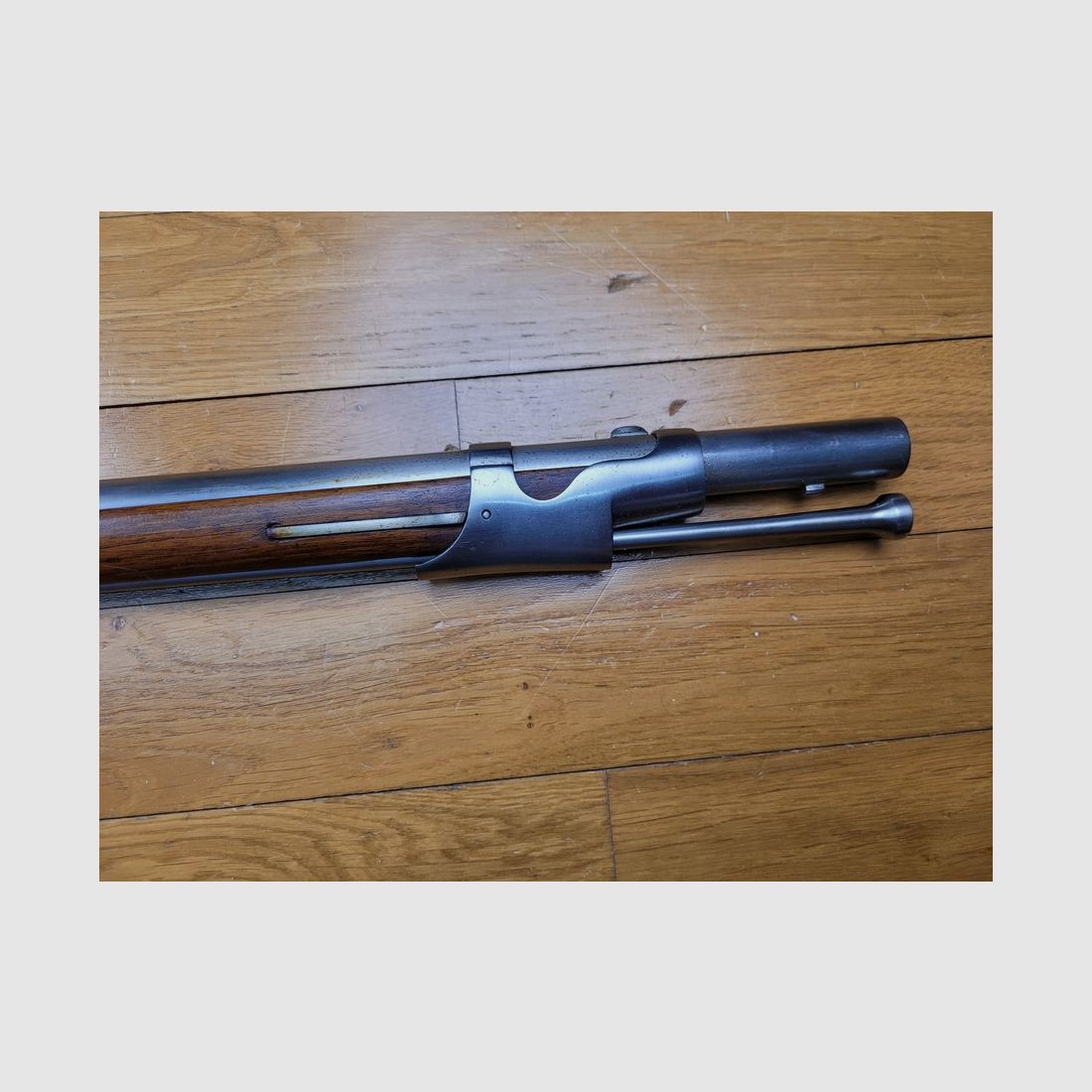
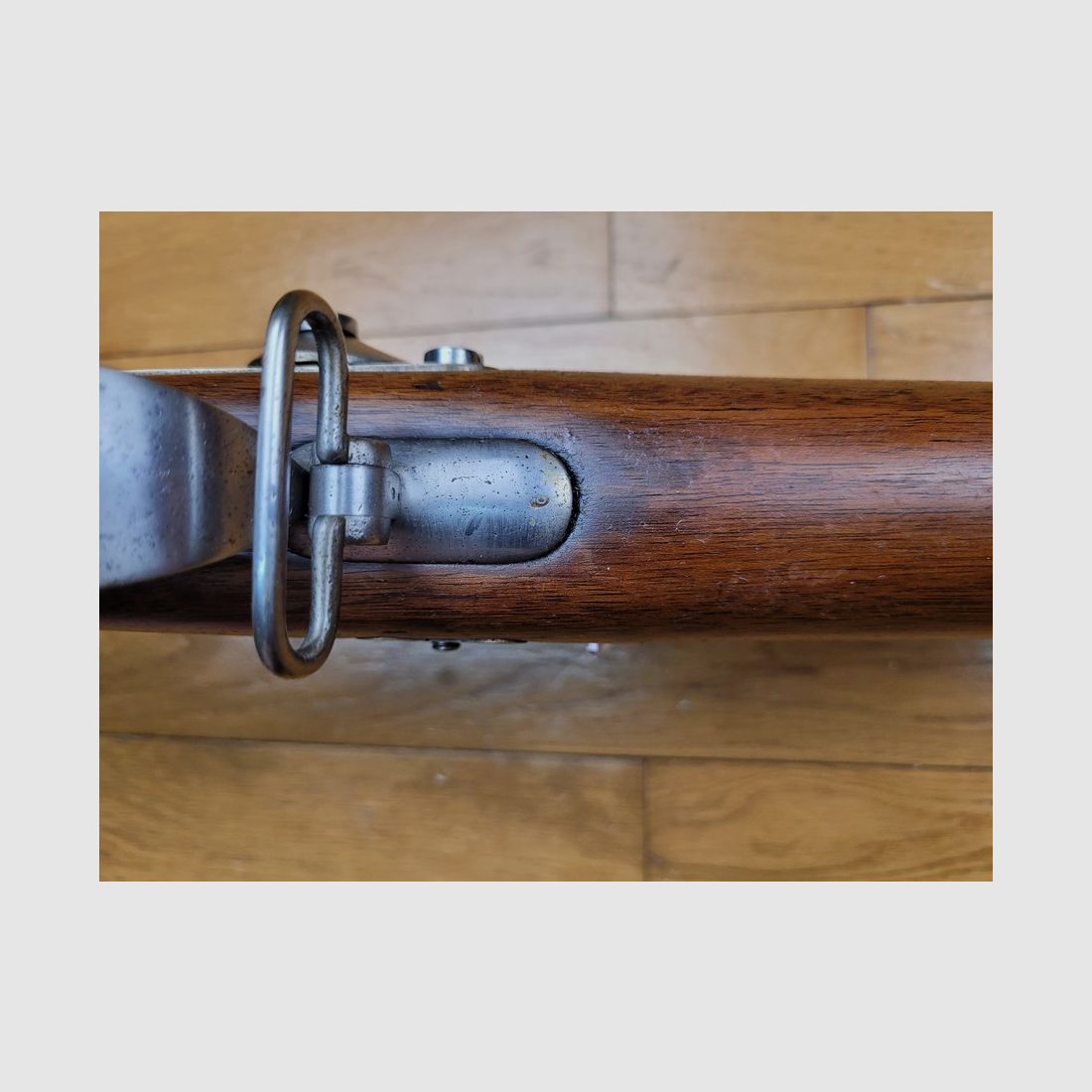
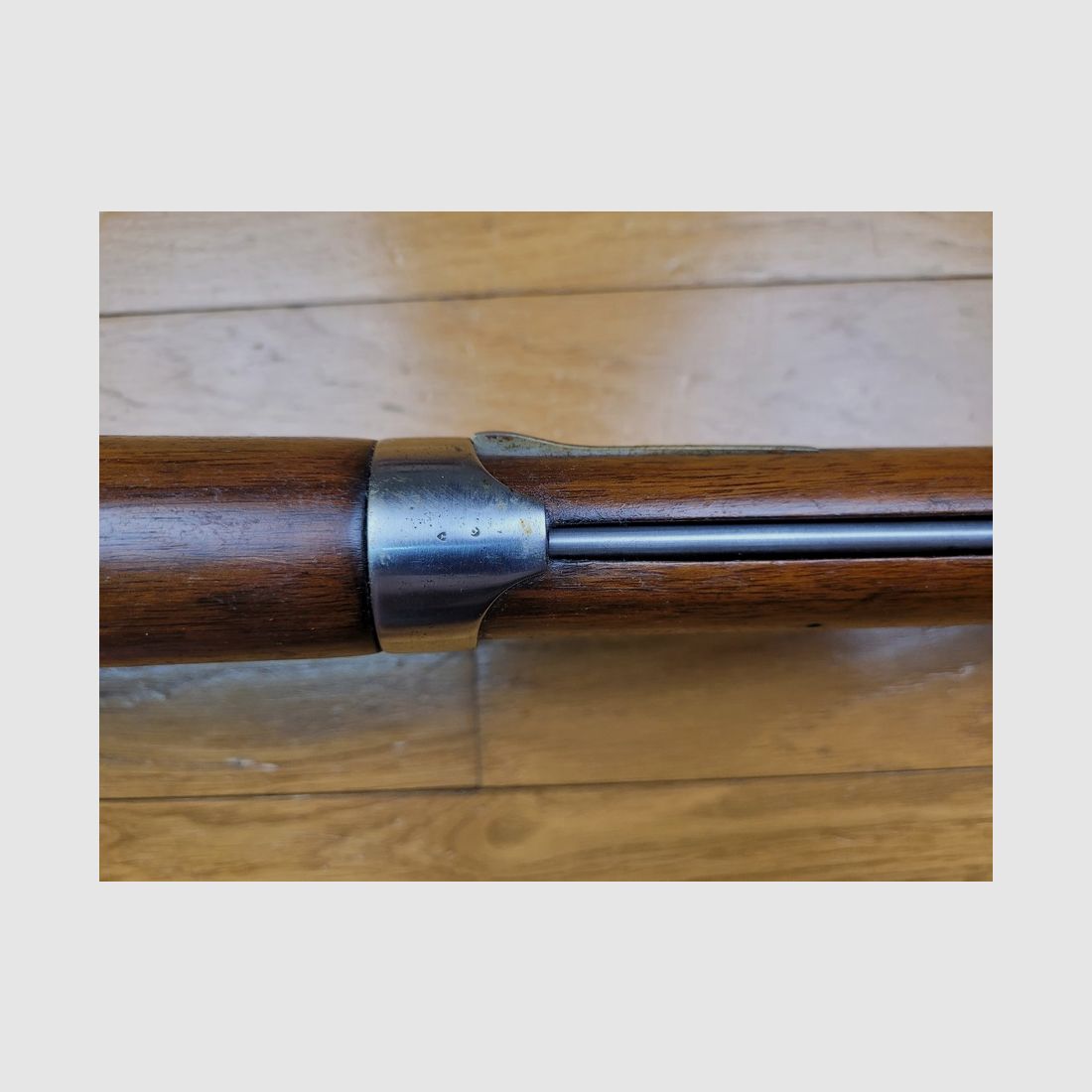
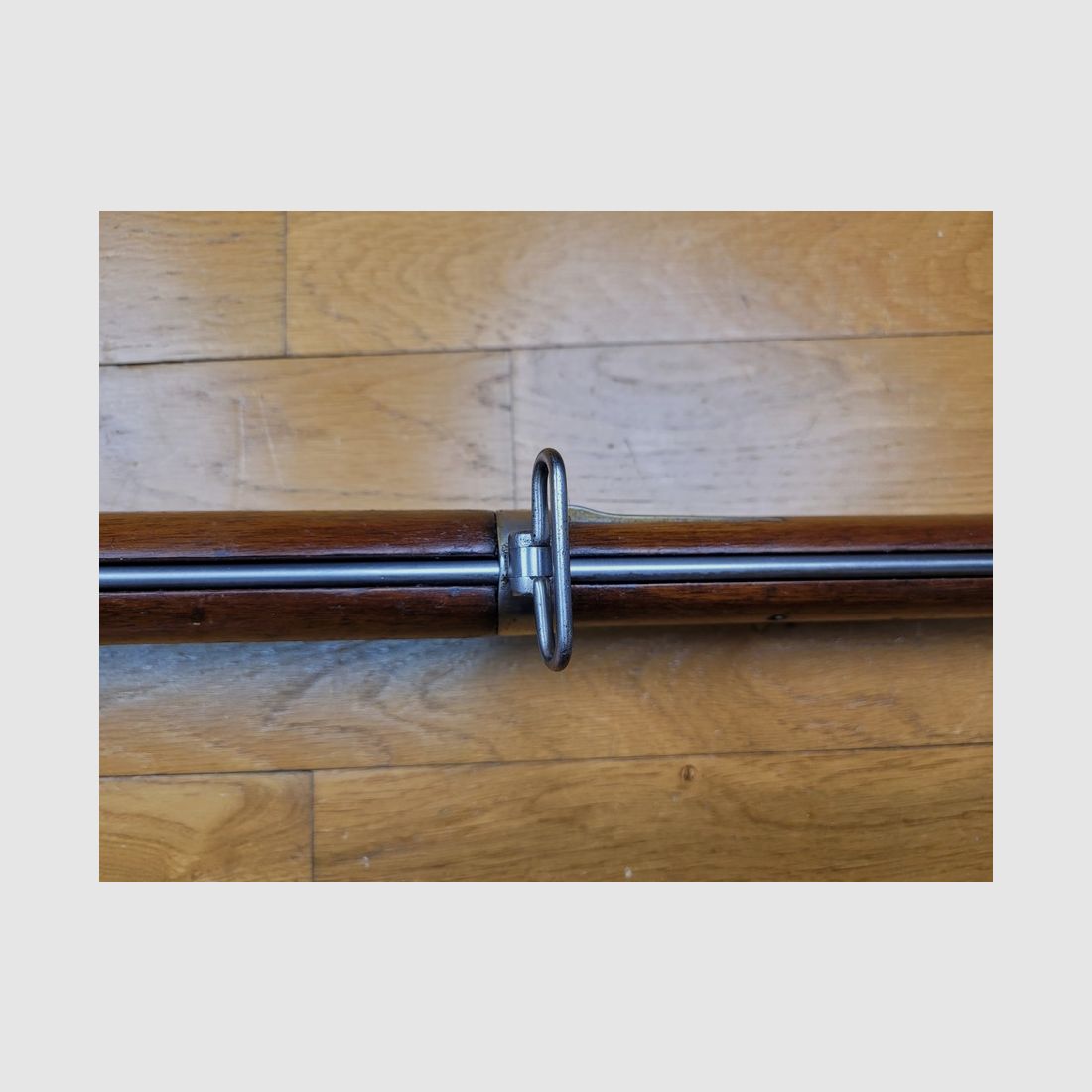
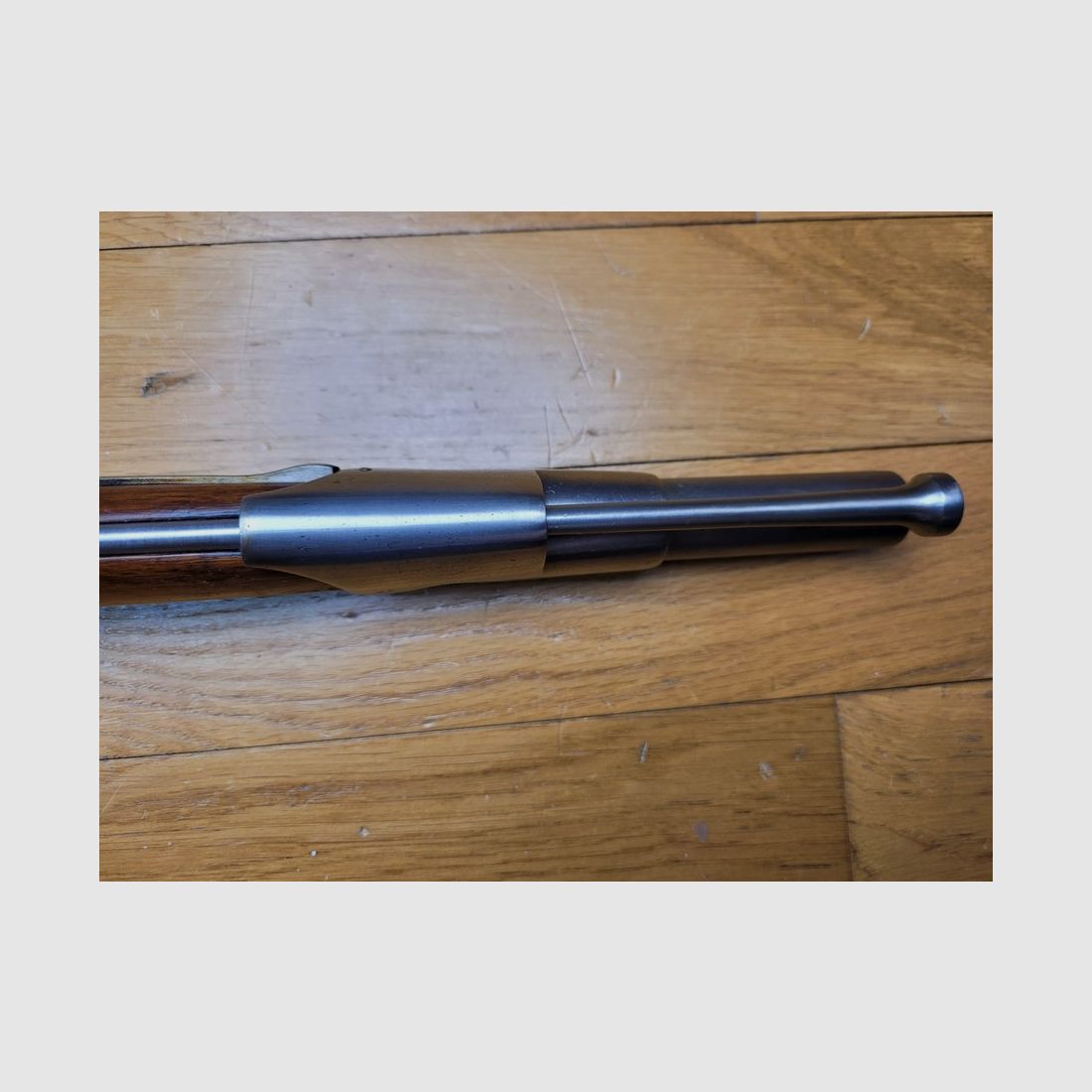
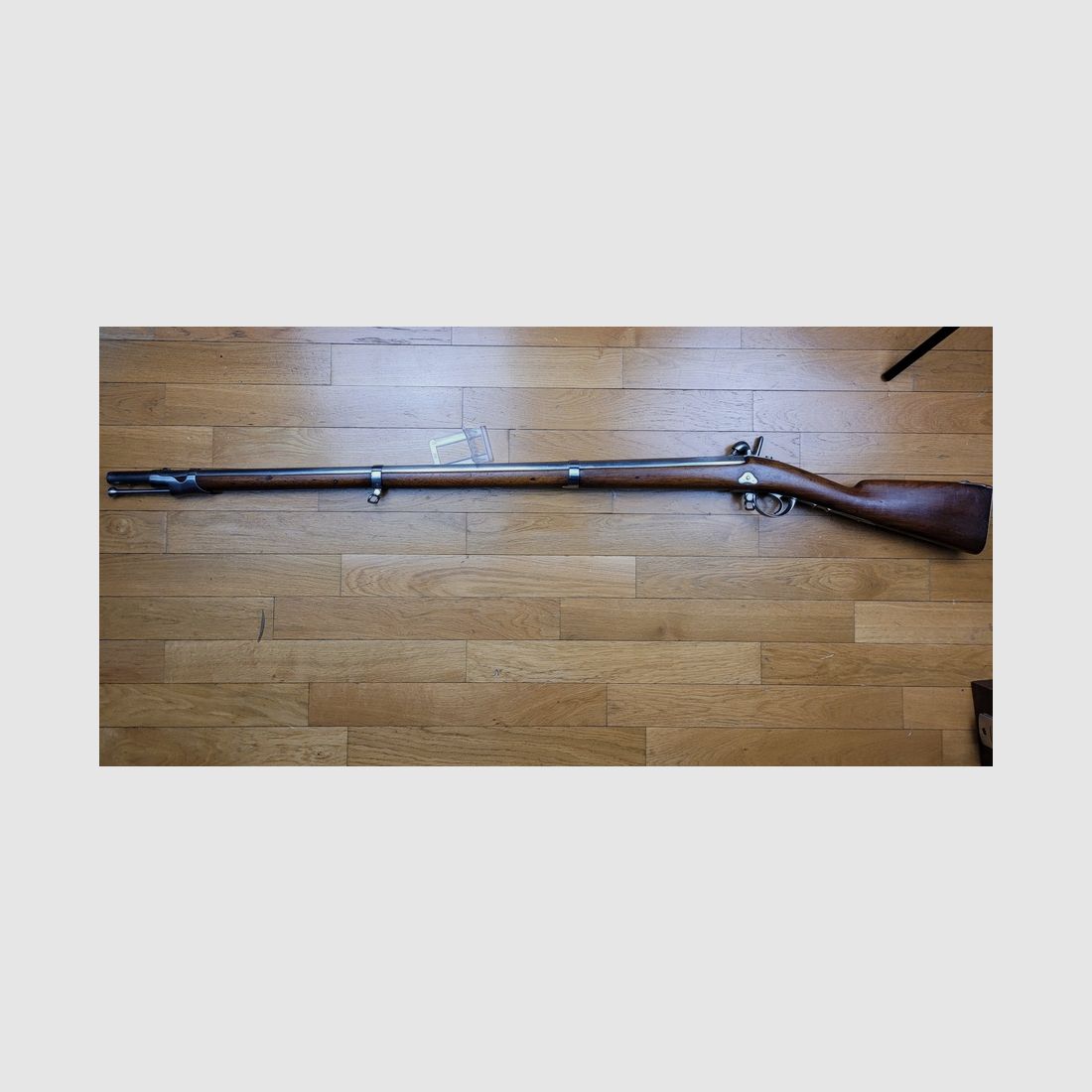


Very rare infantry rifle model 1857 – unaltered tabatière – Imperial Manufacture of Mutzig – beautiful stamps – TBE+
Price on Request
Purchase permit required
75002 Paris, France
16
ID: 10339099
This item is currently unavailable.
Purchase from outside the EU: The firearm goes through an importer in your country, the dealer handles the export.
How buying from Europe works
Shop safely with Gunfinder
Our AI-powered seller identity verification makes Gunfinder the safest marketplace online.
Learn more
Details
- Original language
- French
- Category
- Purchase eligibility
- Required
- Condition
- New
- Location
- 🇫🇷 75002 Paris, France
- Availability
- Out of stock
Freshness
This listing is based on a mirrored offer, where the listing data was synced to us from a shop, dealer, or external marketplace. Please note that temporary price discrepancies may occur due to possible delays in data transmission.
- Source
- Flingus Maximus
- Last checked with the dealer
- 1 day ago
Description
Note:
The item is located abroad. Please note that delivery conditions, shipping times, and/or the purchase process may differ.
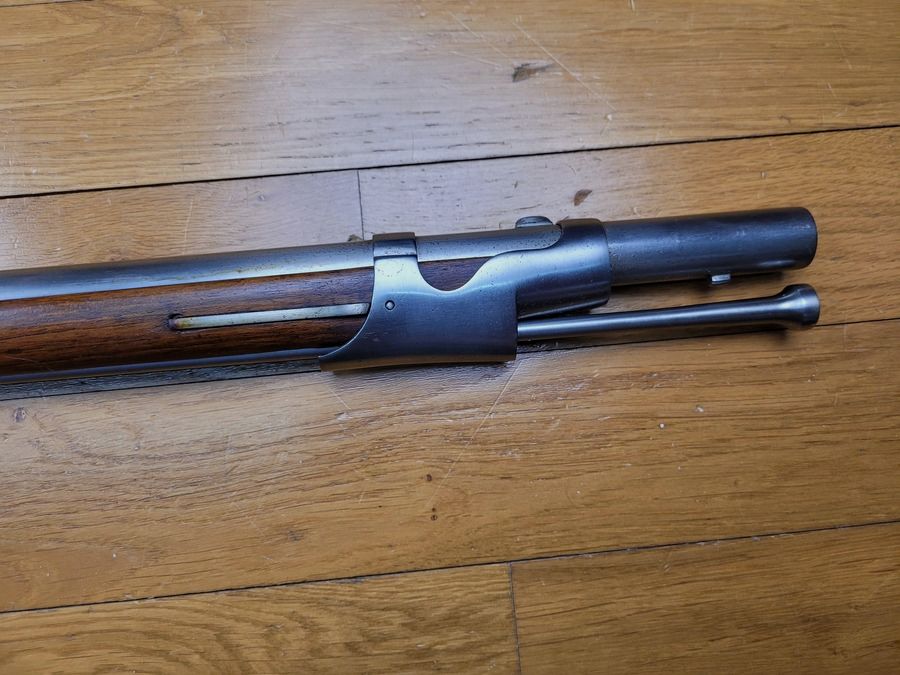
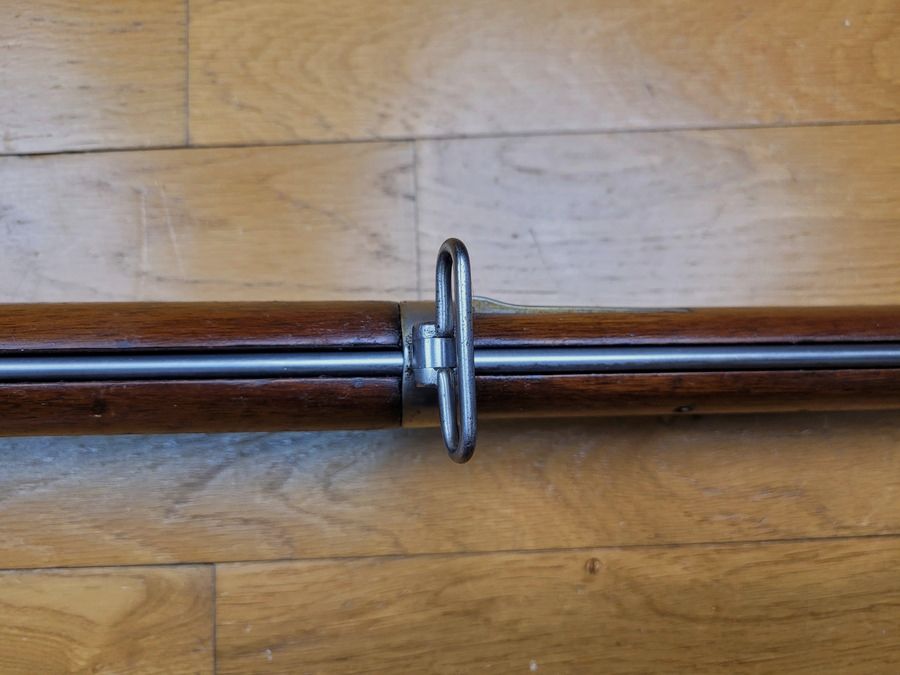
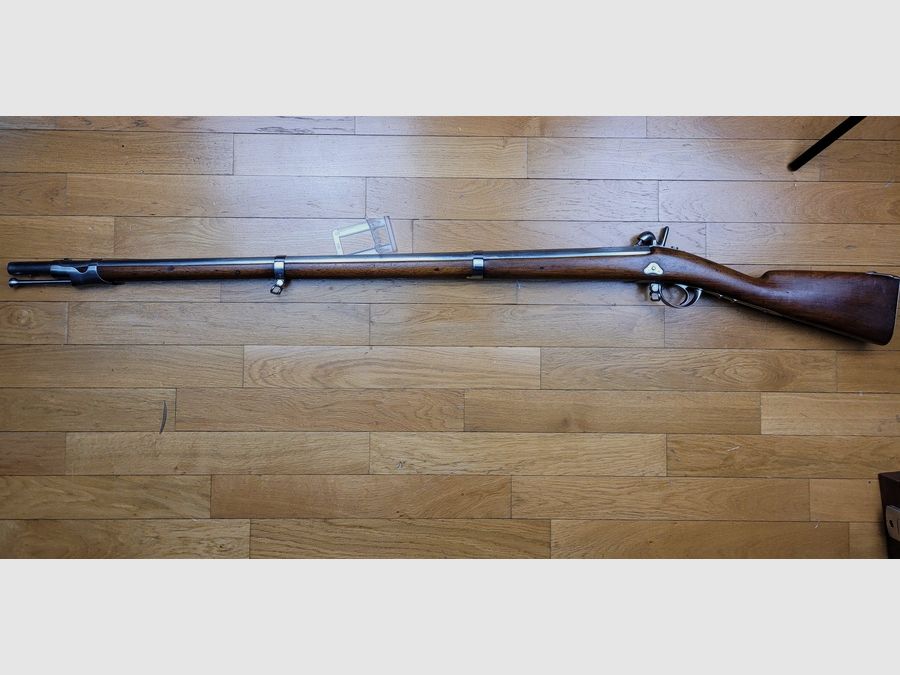
The 1857 system marked the end of muzzle-loading percussion firearms for the French Army. It was the very last percussion firearm in the history of the French Army—a must-have for any serious collector of French regulation firearms.
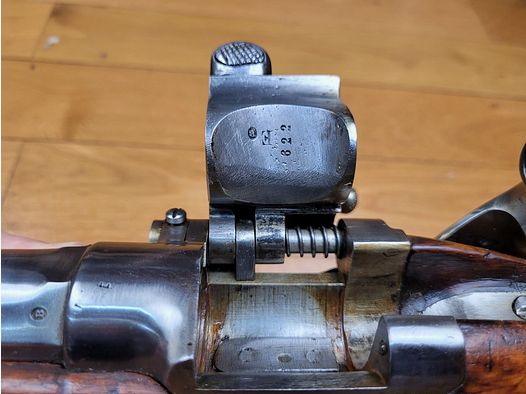
The rifle also benefited from all the improvements made to the percussion-cap system: a shorter barrel (it measures “only” 142 cm, like the old voltigeur rifles), four grooves of uniform depth, simplified machining, a rear-mounted lock, and a rear sight integral with the barrel.
From 1864 onward, firearms made to the 1857 system were the first to be built from cast steel rather than iron. The 1857 is therefore both the last representative of its generation and, thanks to its construction, the first of the modern era.
The 1857 system comprised just four firearms: besides the infantry rifle, there was a Navy rifle, a gendarmerie carbine, and a so-called 1859 hunter’s carbine.
Ballistically, it was also a high point for percussion firearms: it fired its 36-gram bullet at 324 m/s, with a point-blank range of 150 m, and the bullet was still effective at 800 meters…
The 1857 infantry rifle is very rare. Why? Because almost all of these firearms were converted to the tabatière system from 1867 onward, on the orders of Marshal Niel, Minister of War under Napoleon III.
Master Flingus will make a confession: I’ve seen dozens of 1857 rifles converted to the tabatière system in 1867, and I’ve seen the 1859 Gendarmerie carbine several times—it wasn’t normally converted, nor was the Navy rifle—but this is the first time I’ve seen a genuine, untouched 1857 rifle…
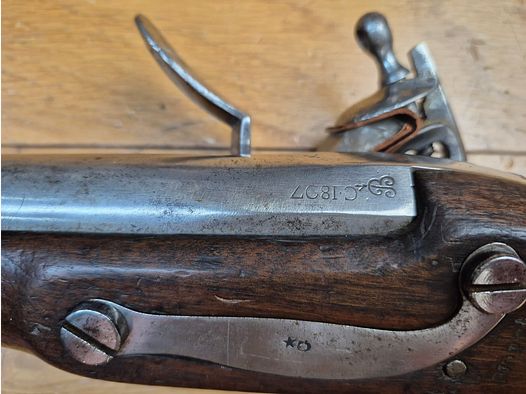
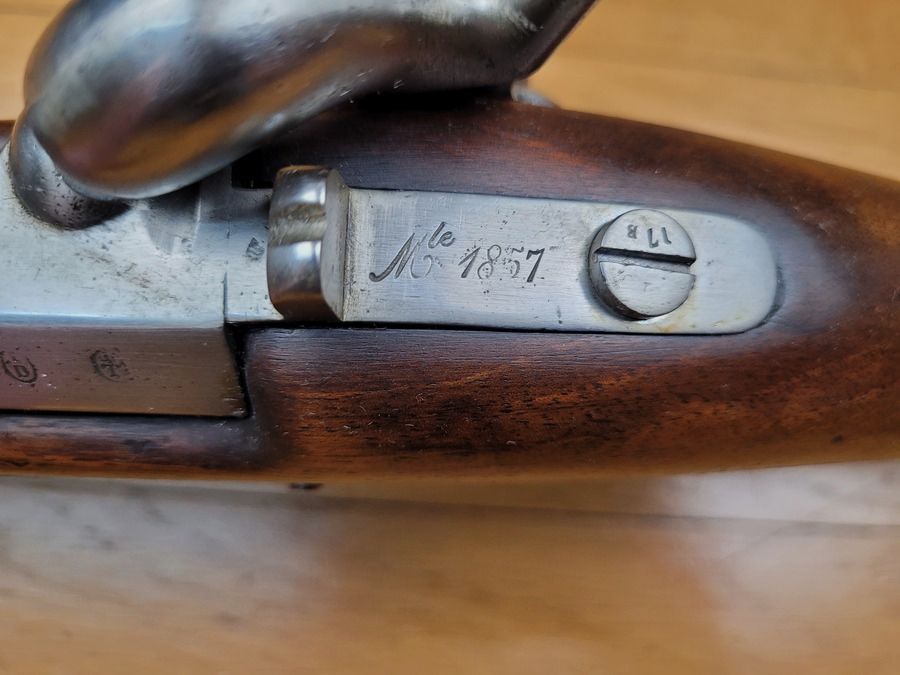
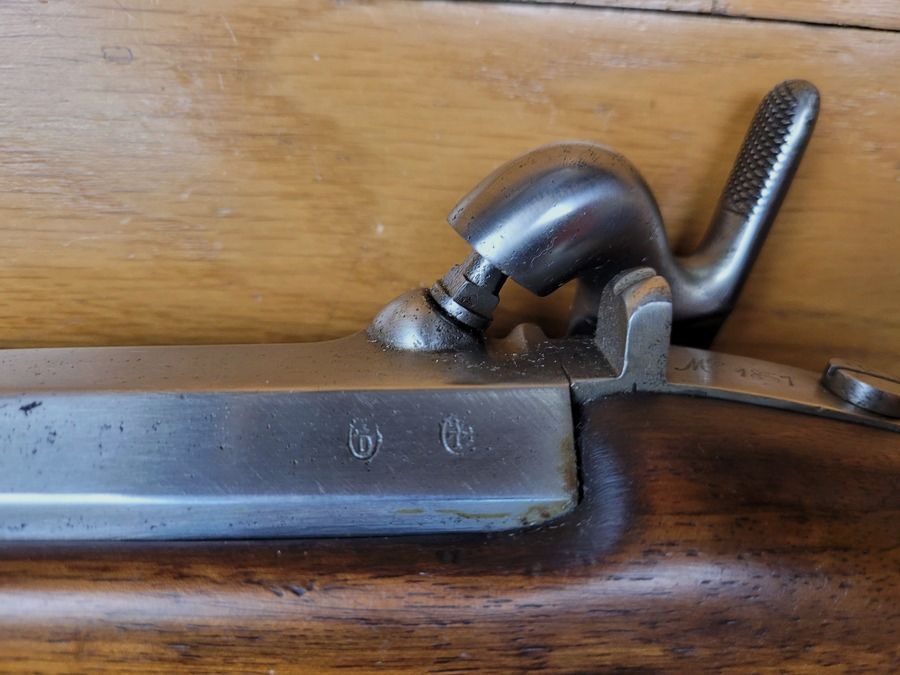
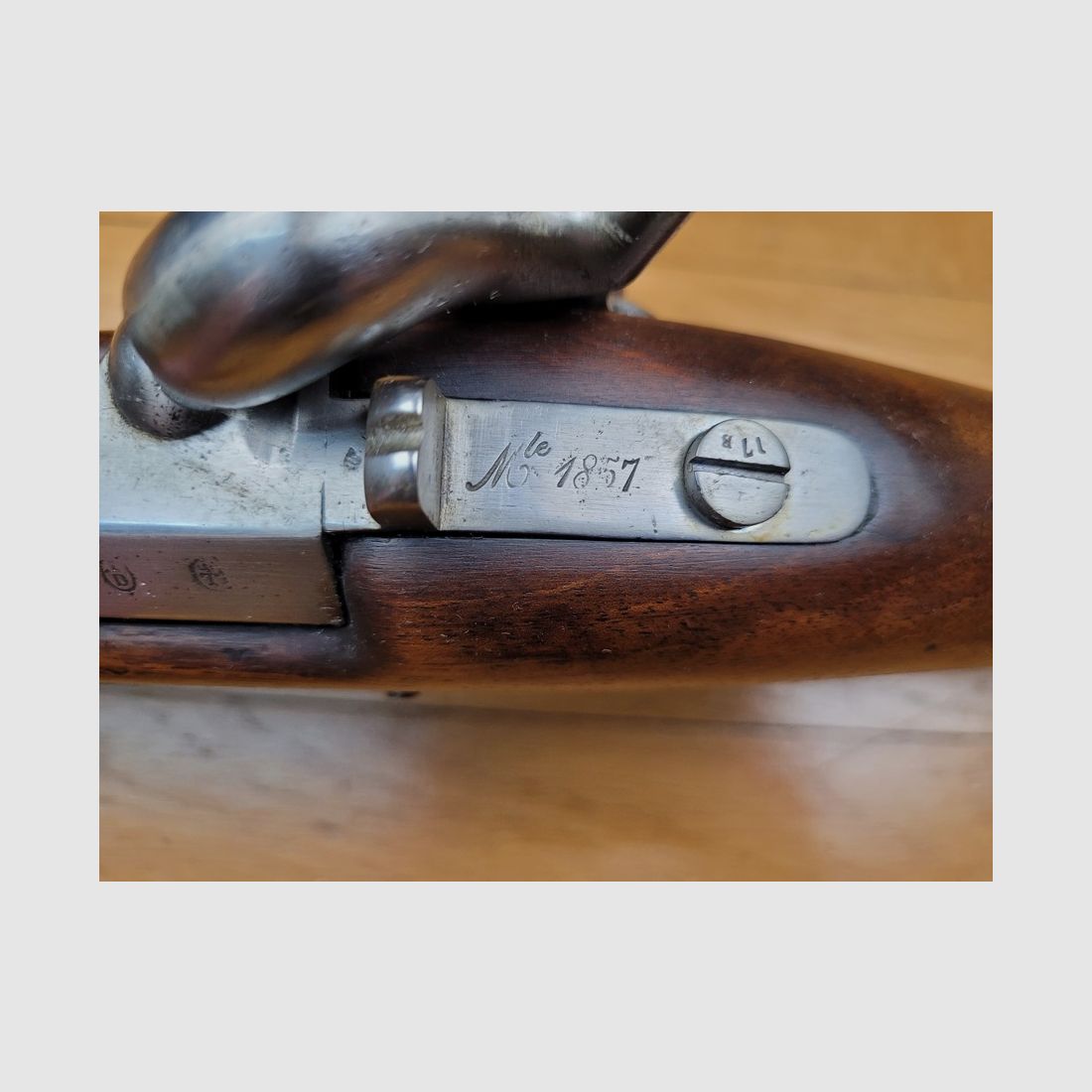
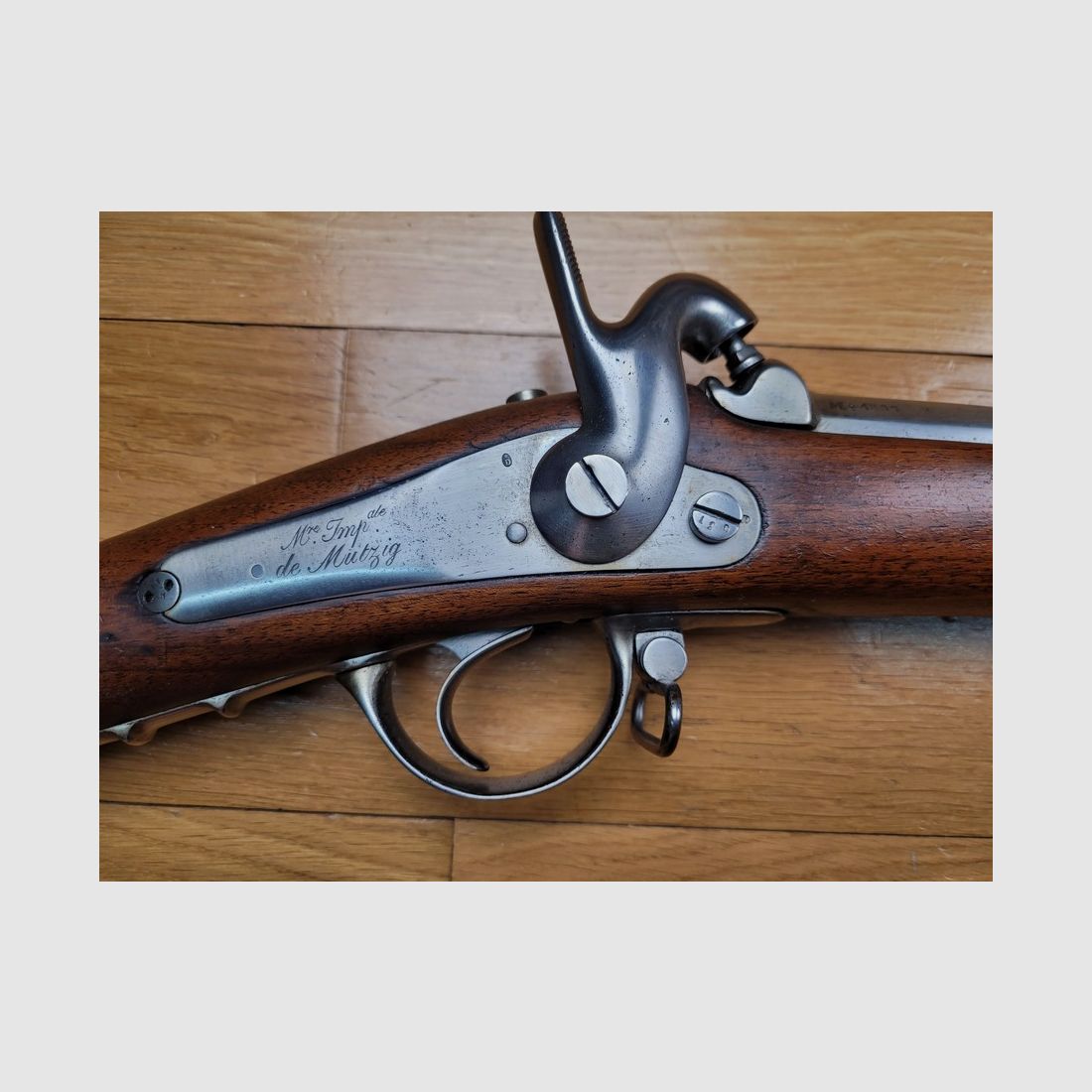
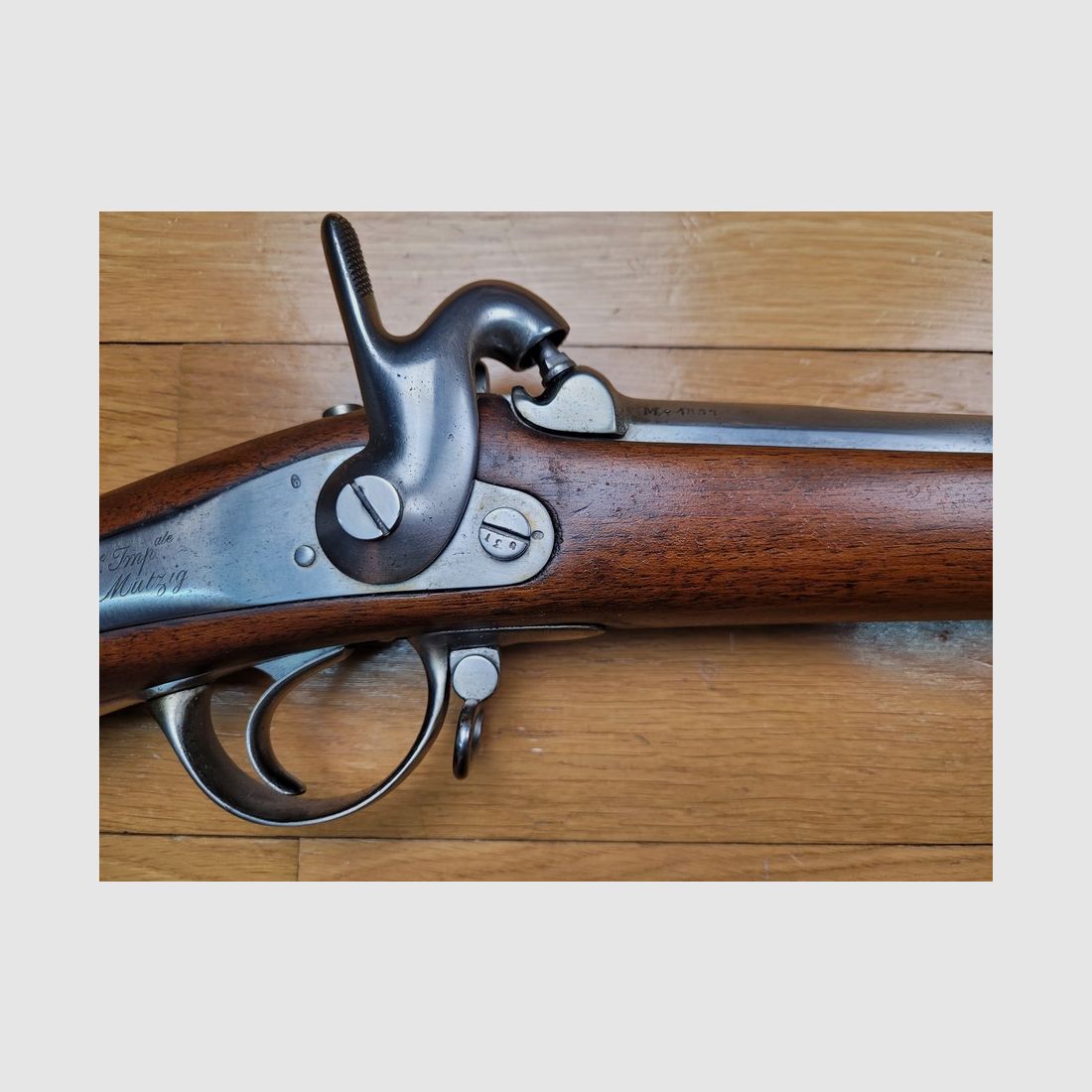
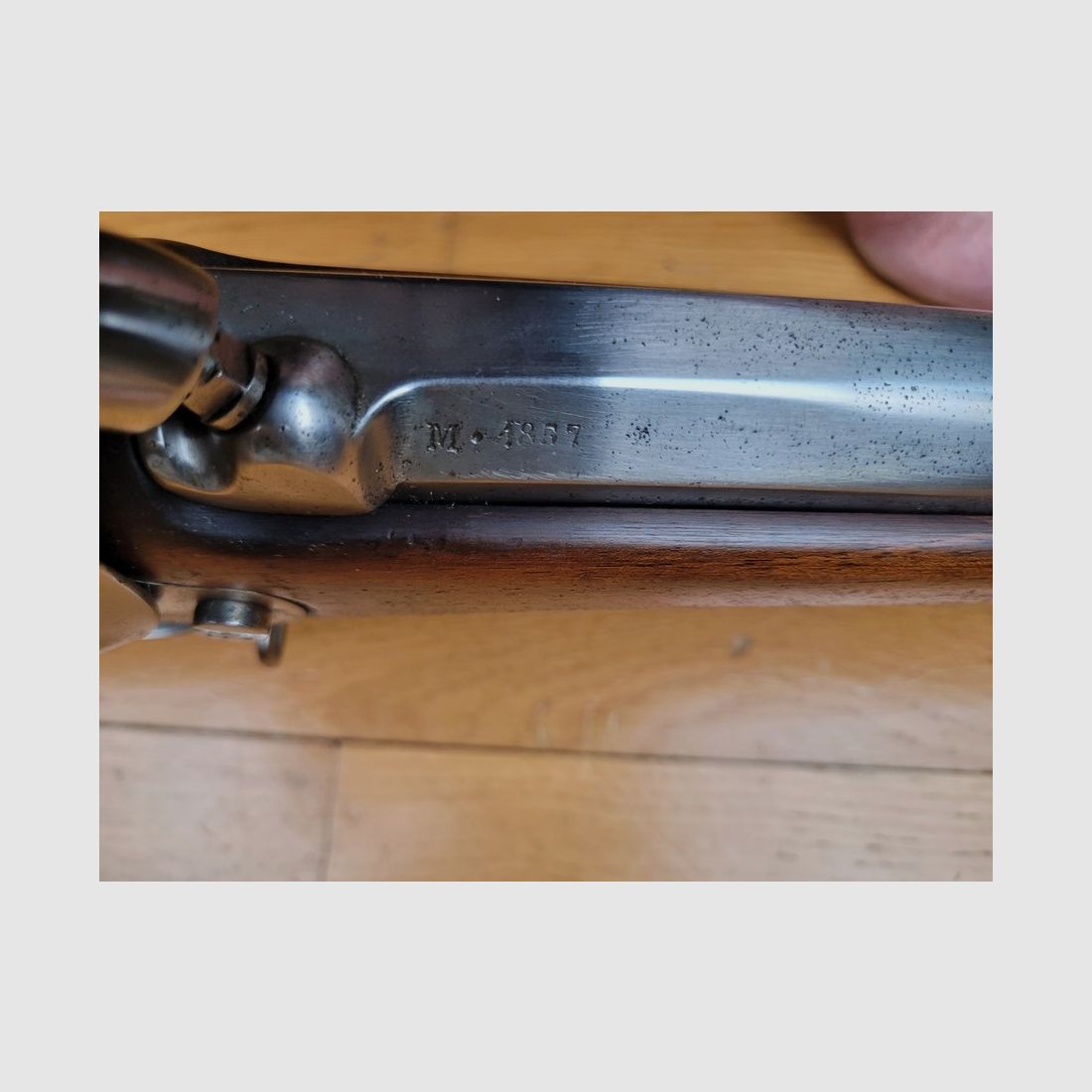
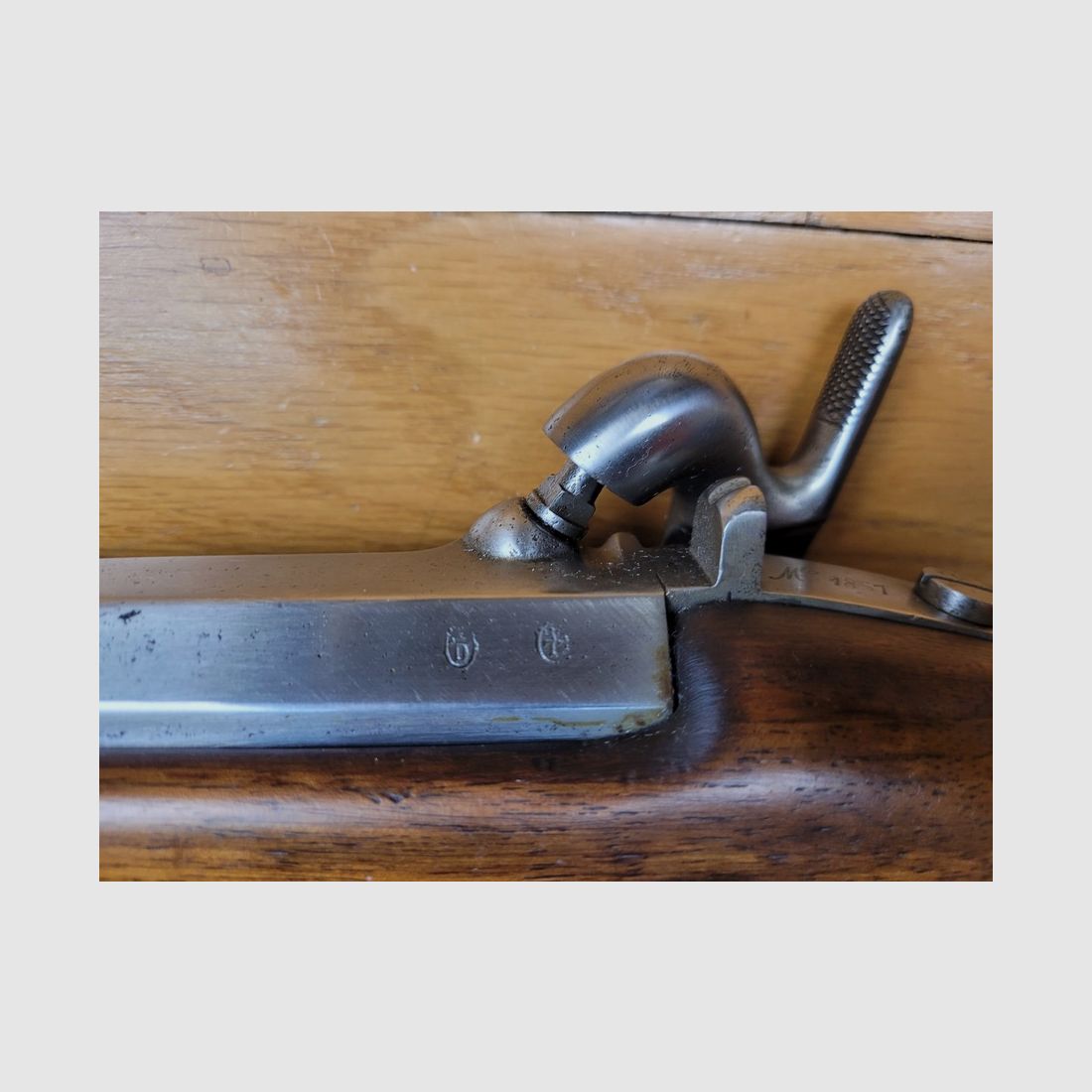
Our example measures 142 cm, as it should. It was made in 1857 (barrel marking) at the Imperial Manufacture of Mutzig, making it one of the very first produced!
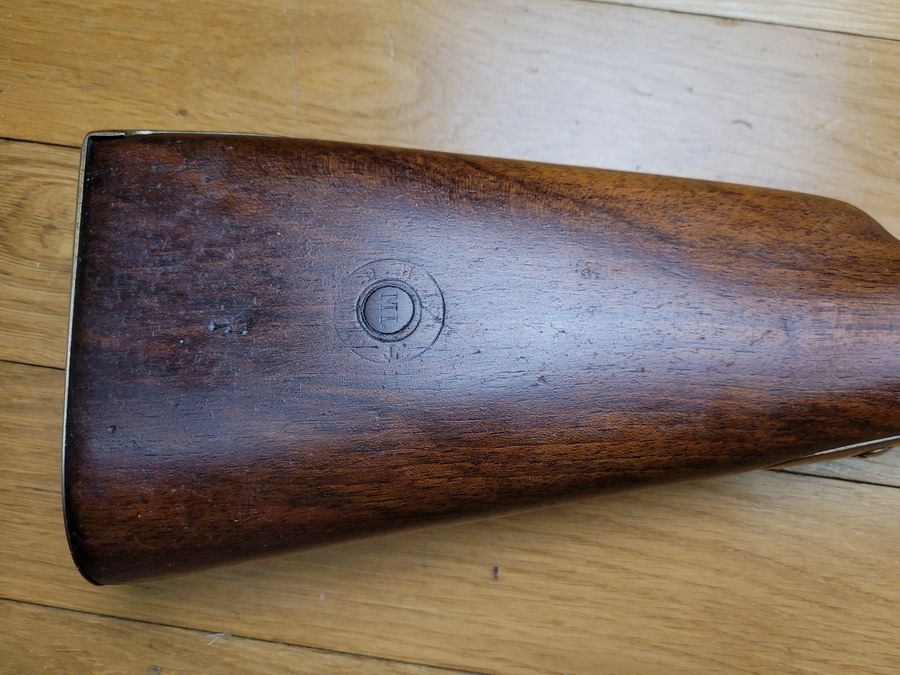
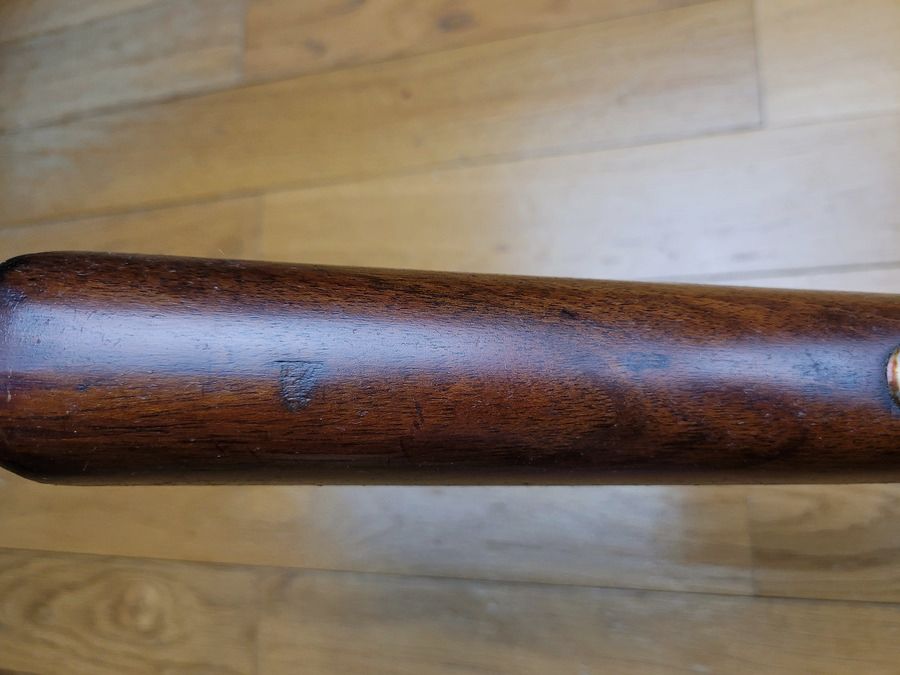
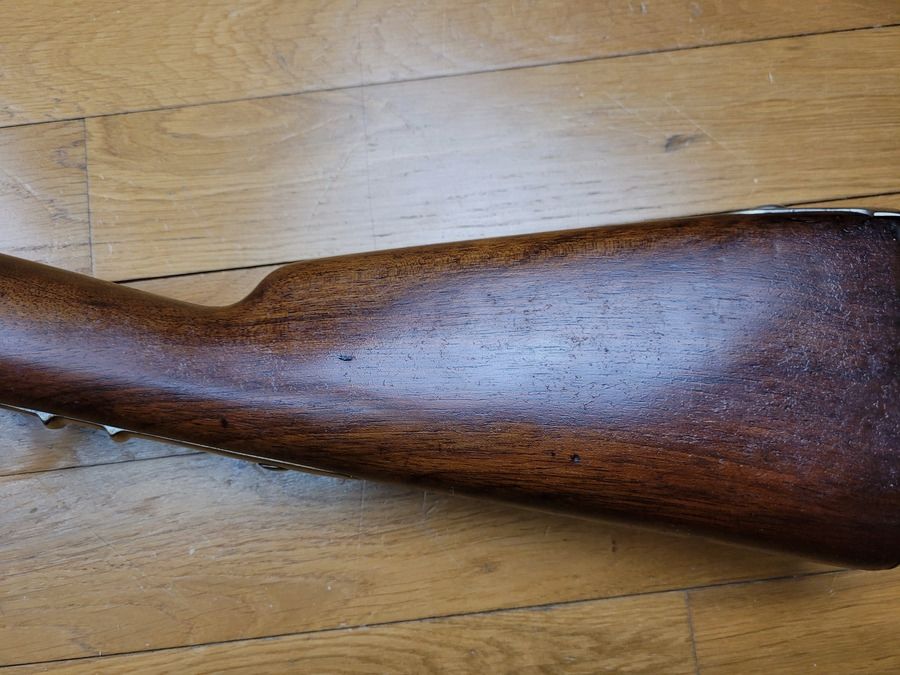
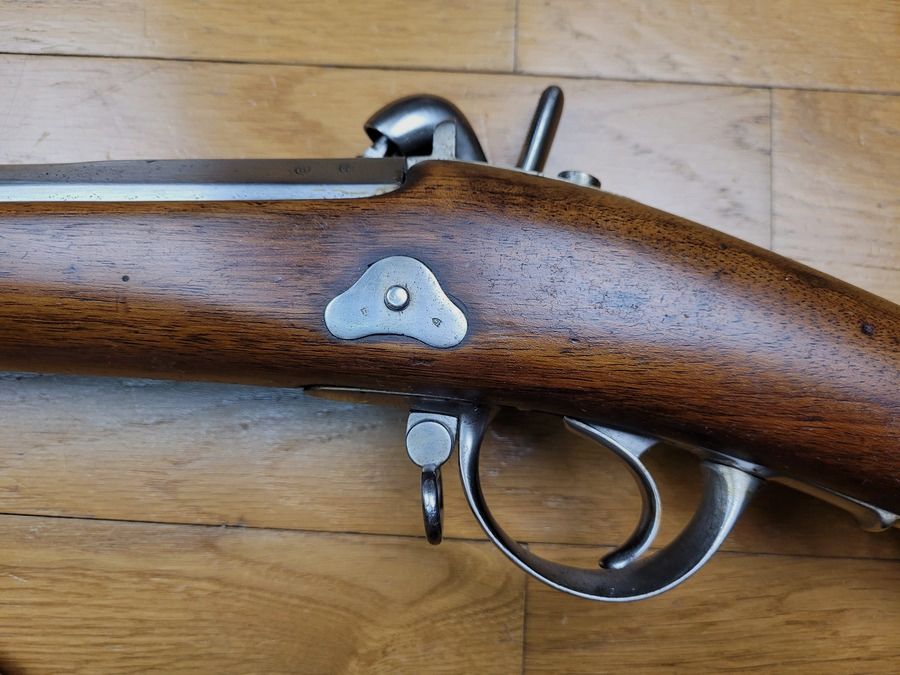
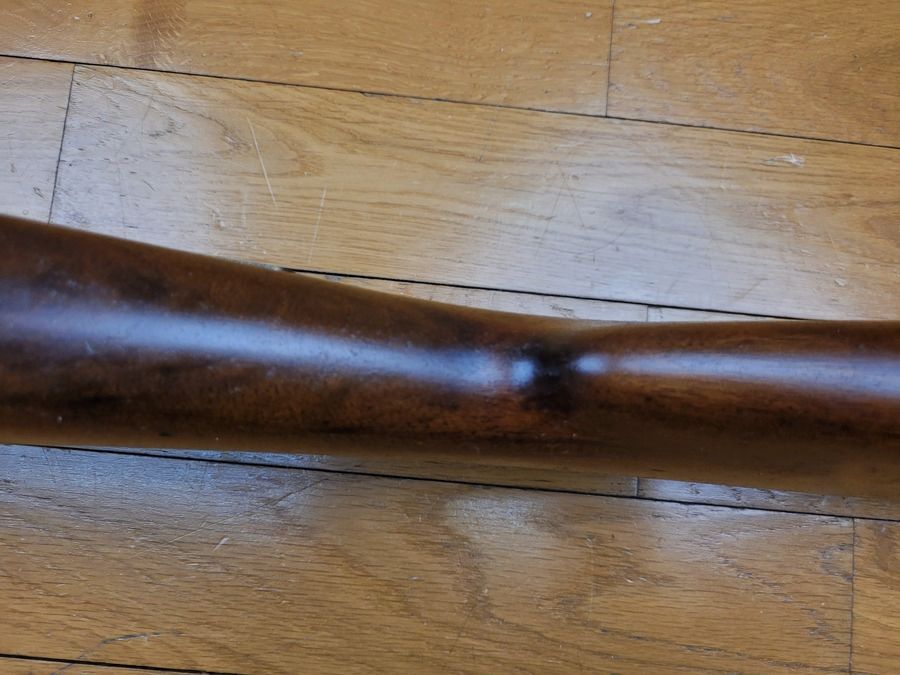
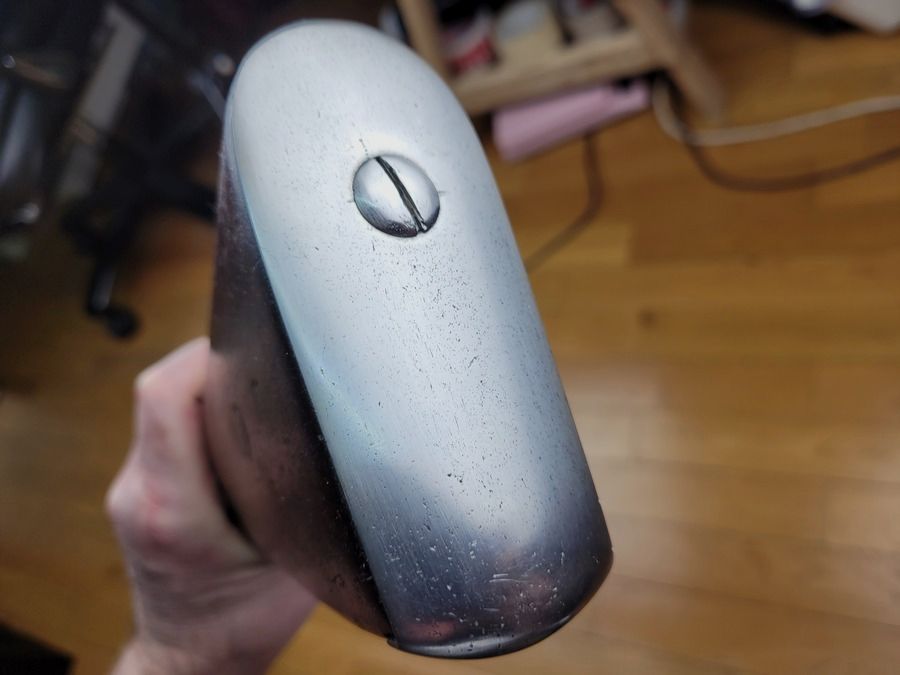
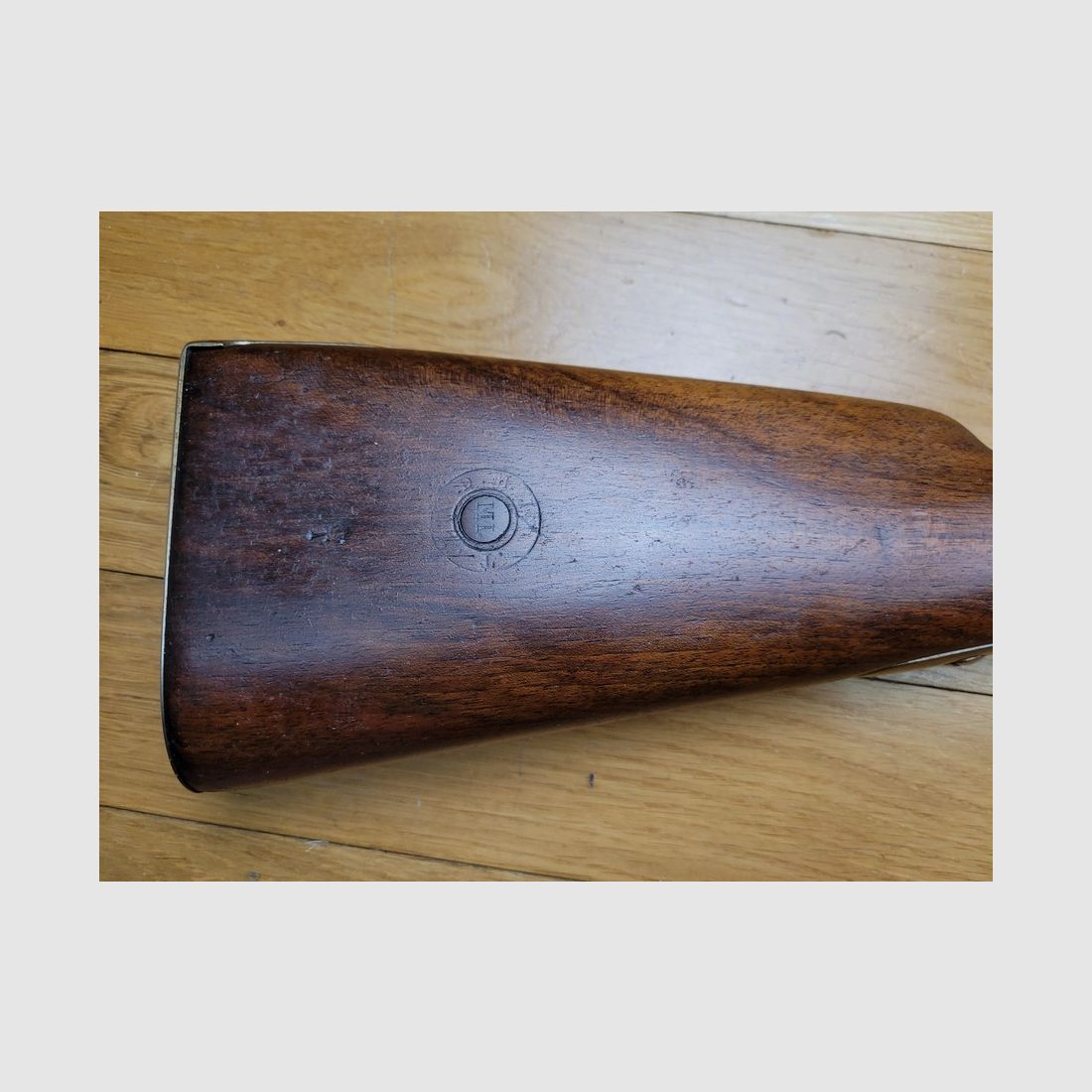
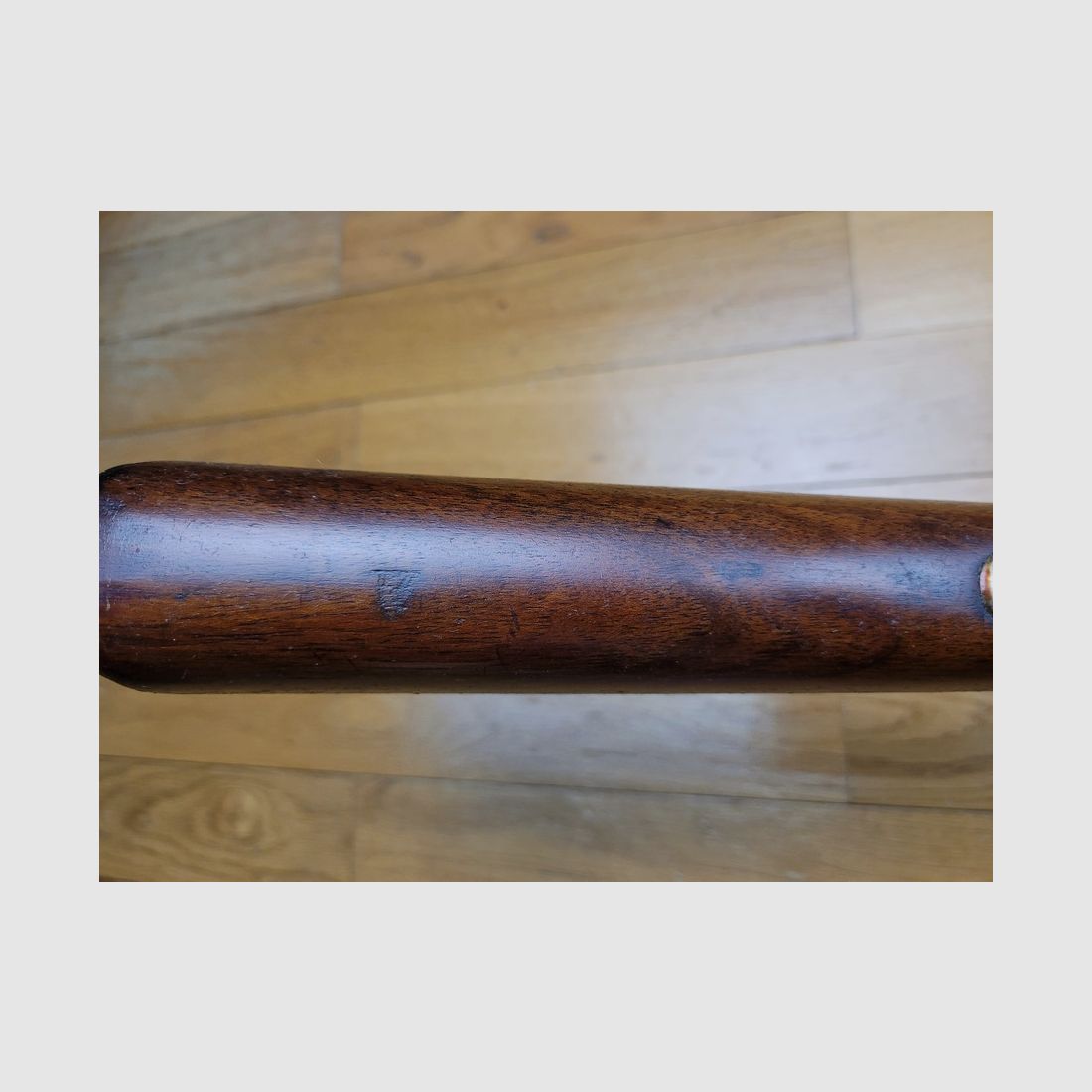
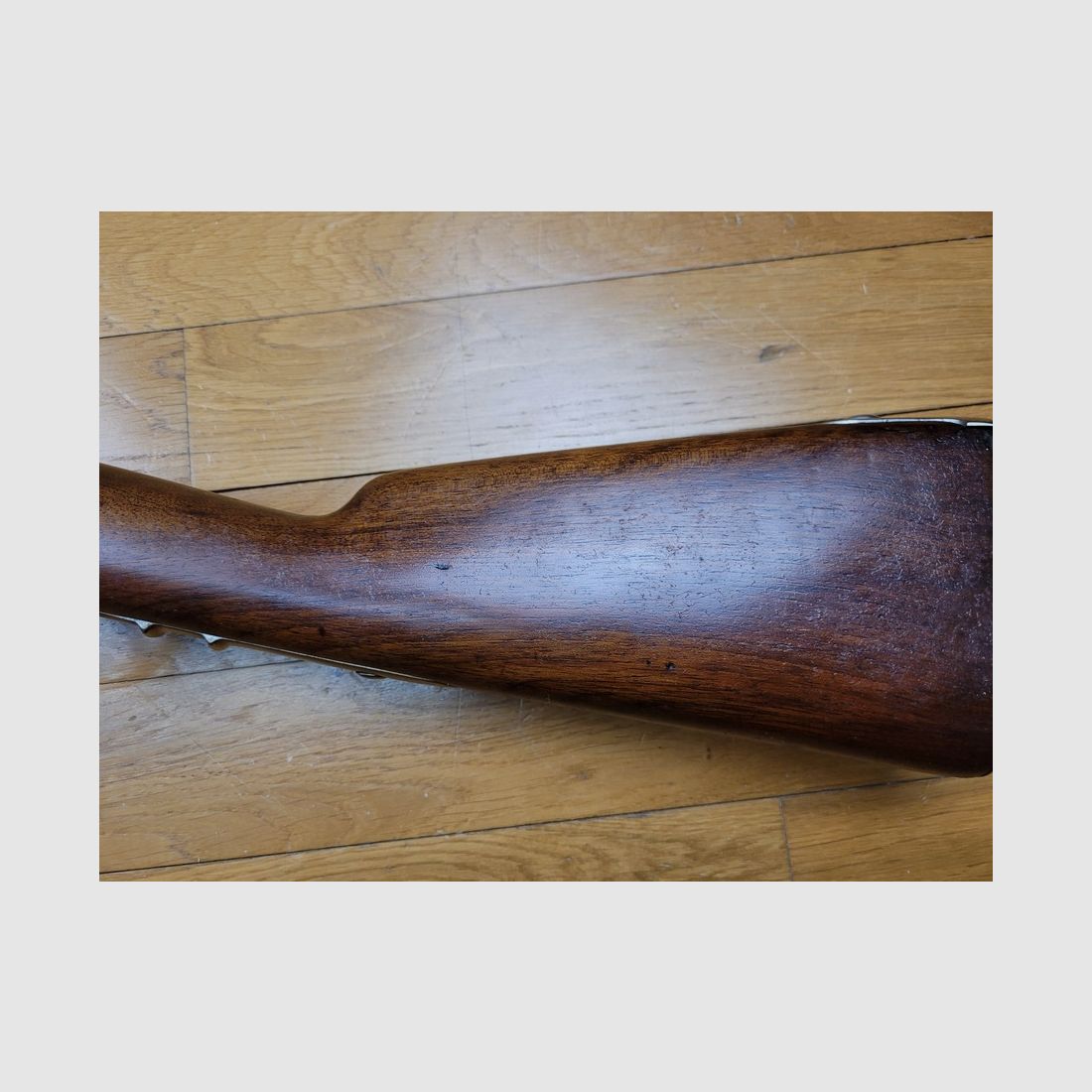
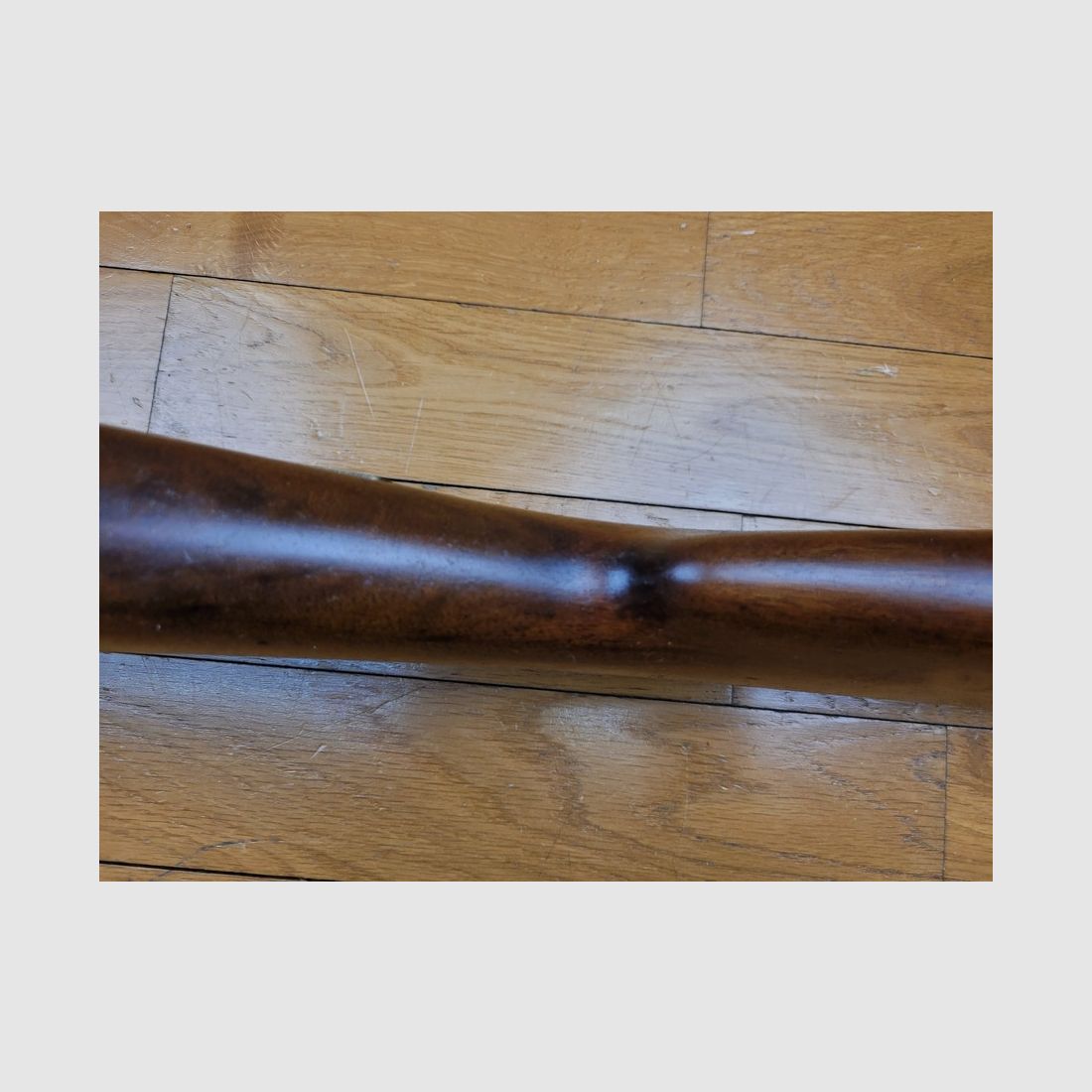
The stock roundel is no longer legible, so its month of manufacture can’t be determined precisely. However, it can still be made out, with its clearly marked boxwood plug bearing the initials MI for Manufacture Impériale. The wood is in excellent condition, with a stamp on the underside of the butt and a crowned T stamp beneath the roundel on the right side. An uncrowned T also appears on the roundel. More on that below.
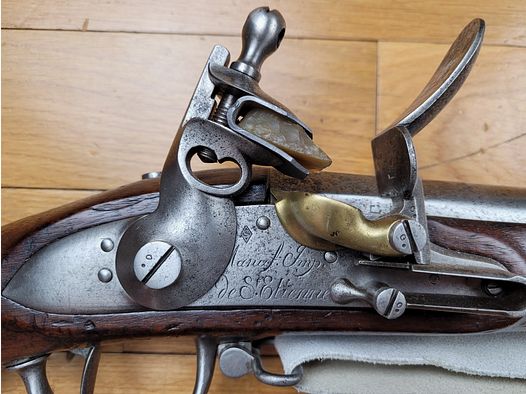
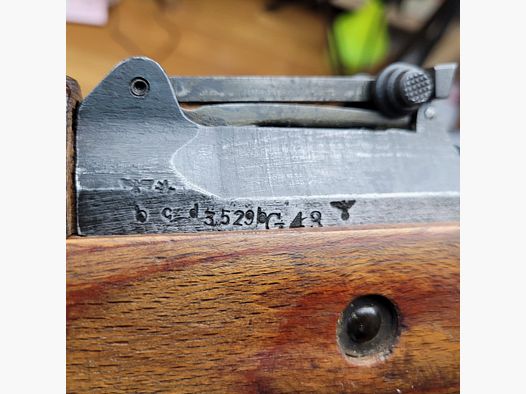
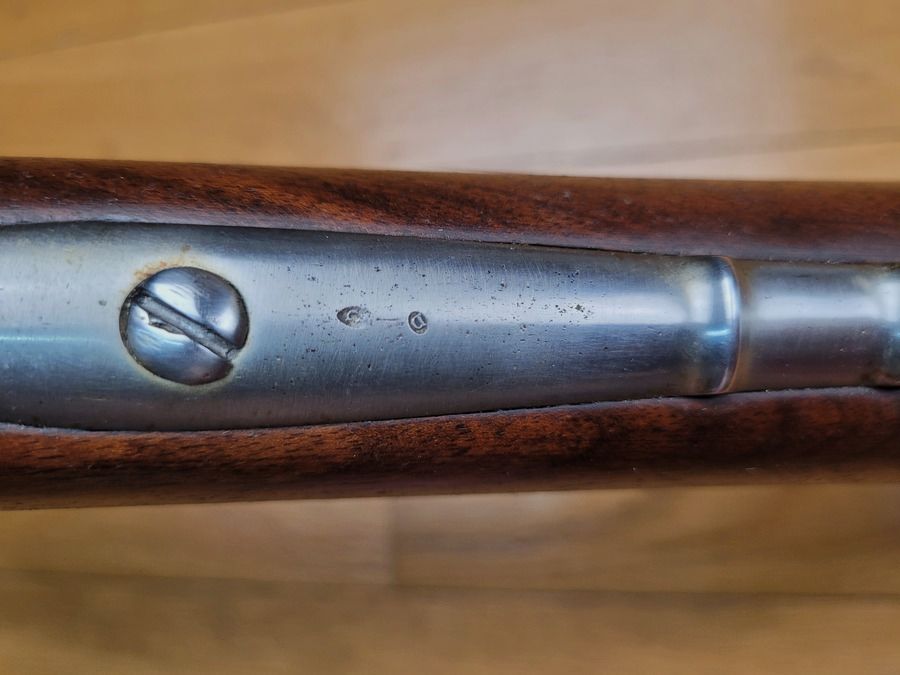
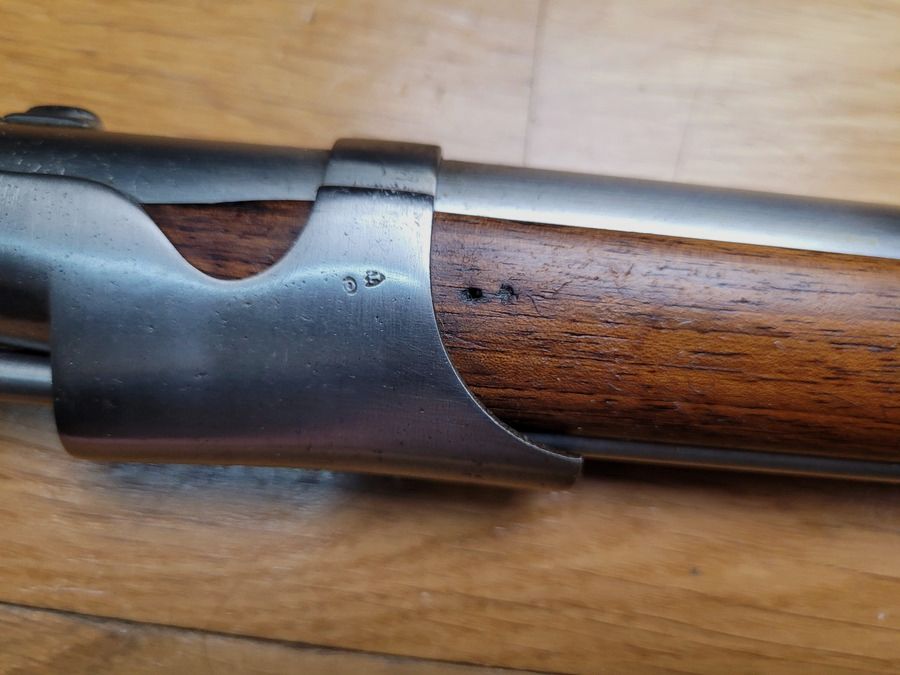
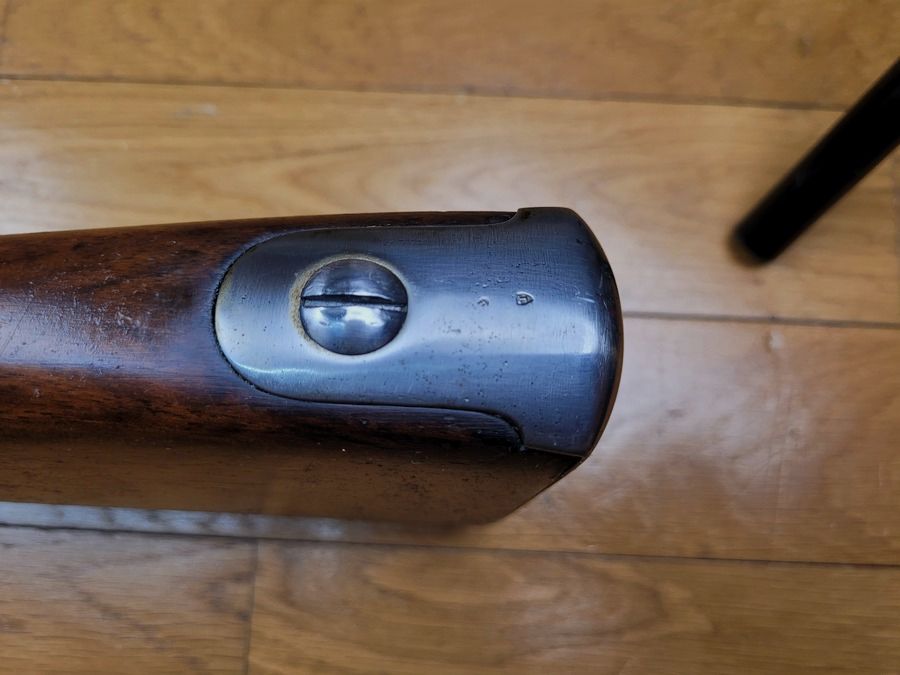
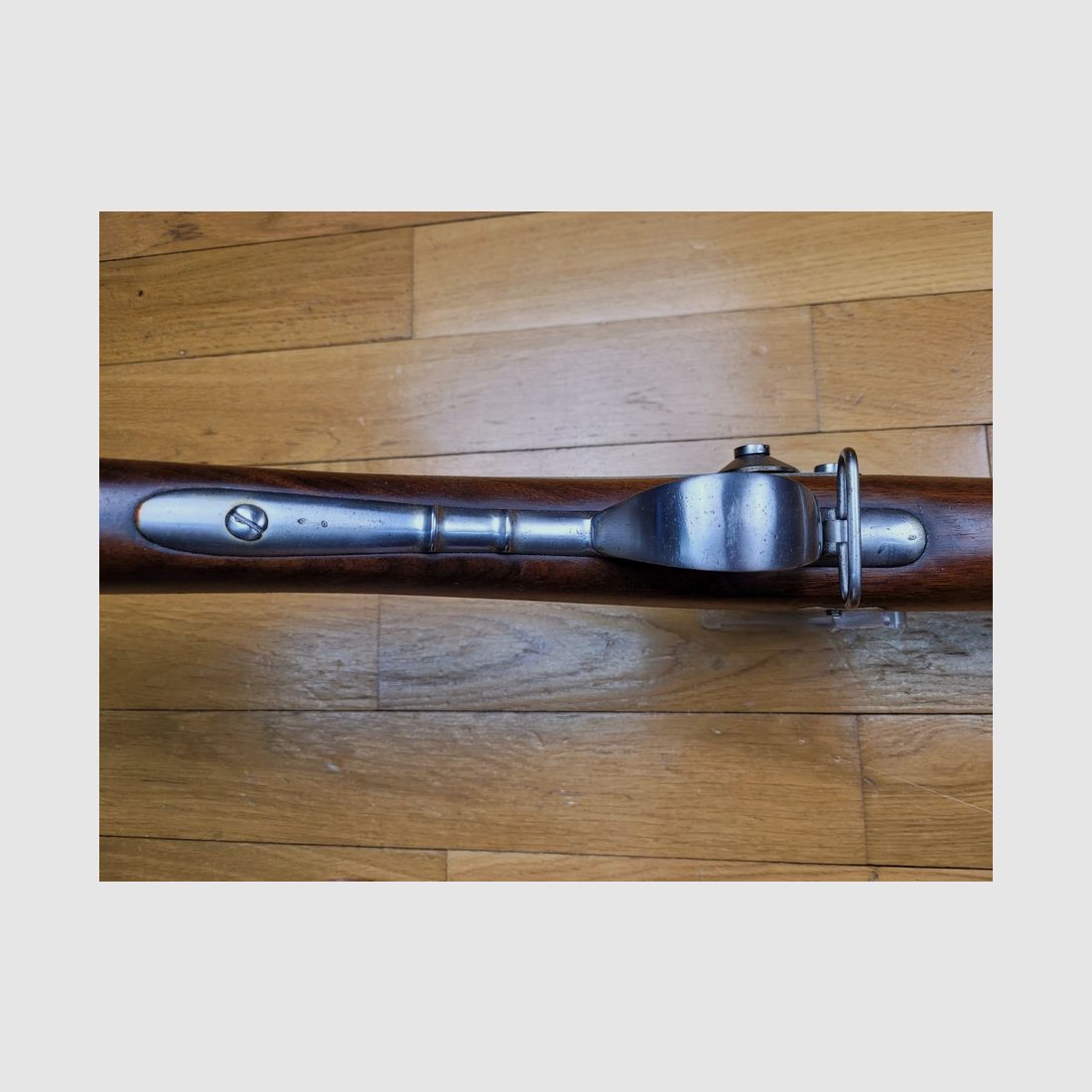
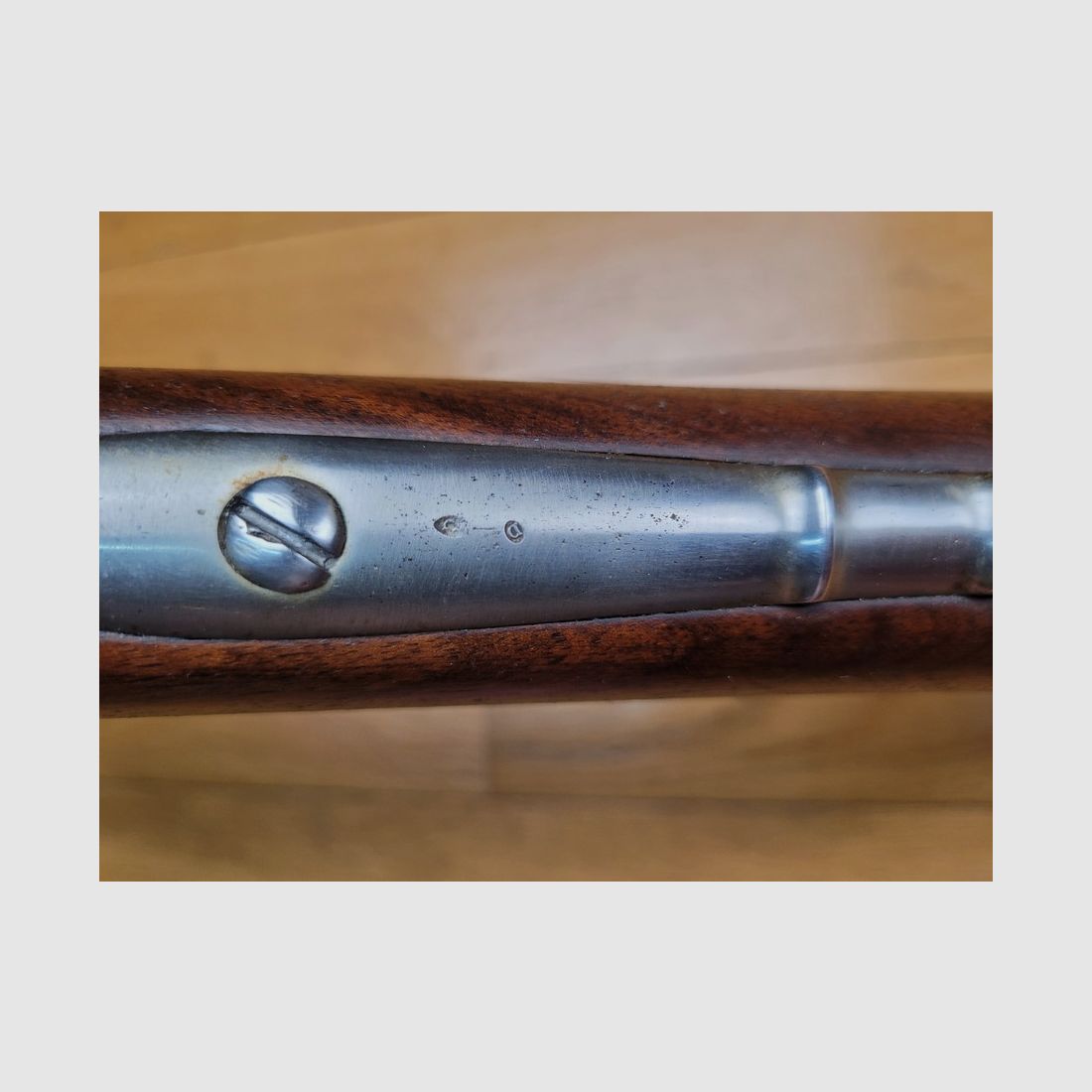
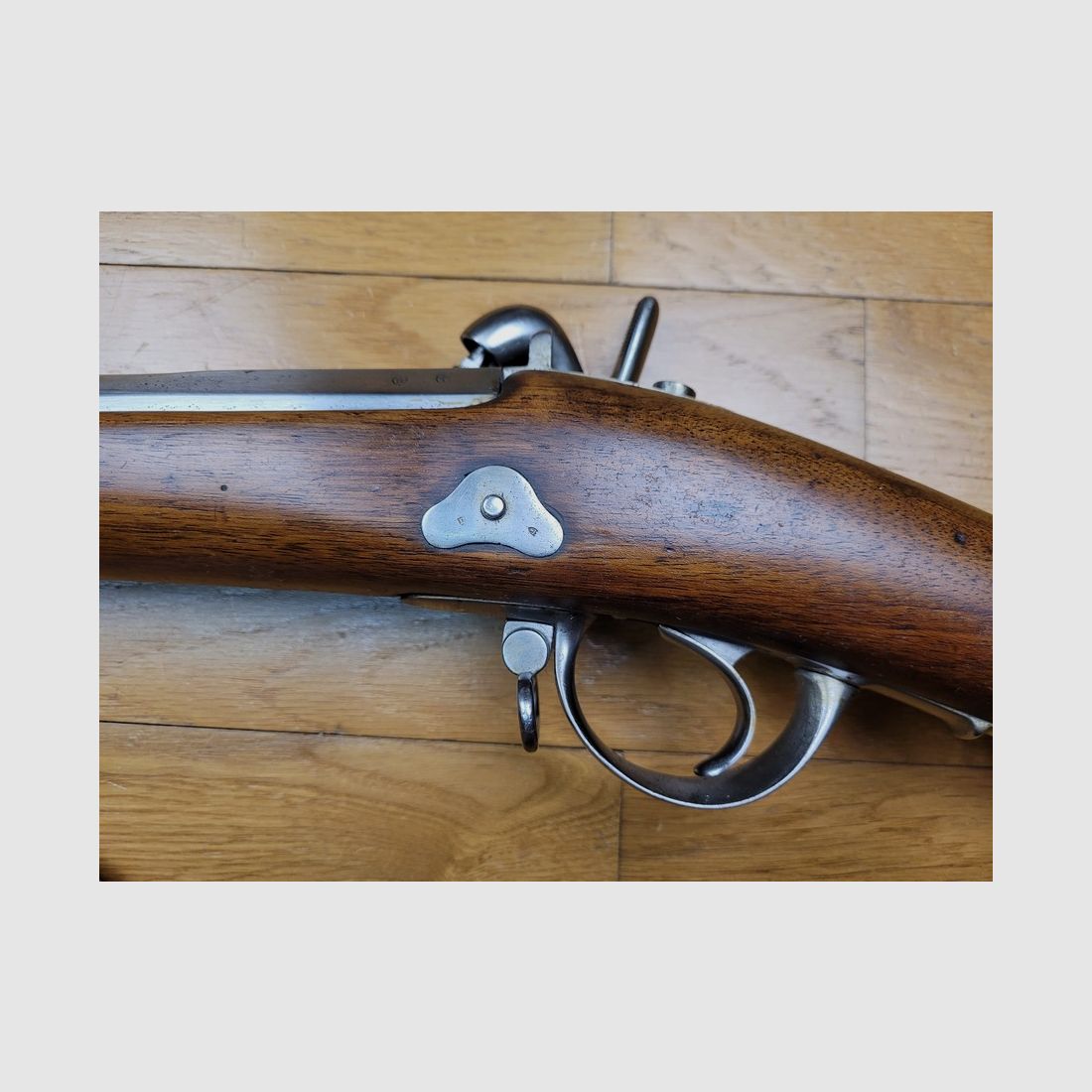
The metal parts are also in excellent condition—cleaned, but not excessively, as all the stamps can still be made out or are clearly legible. The D of Dessaga, 1st Controller from 1856 to 1859 (or perhaps that of Squadron Leader Devoluet, Inspector from 1853 to at least 1857), appears on all the parts and fittings, accompanied by the crowned T, the stamp of Toussaint, controller at Mutzig from 1851 to 1867. A small starred C, in addition to the same D, appears on the trigger guard fitting. I haven’t identified that one. Toussaint’s crowned T is also stamped on the stock.
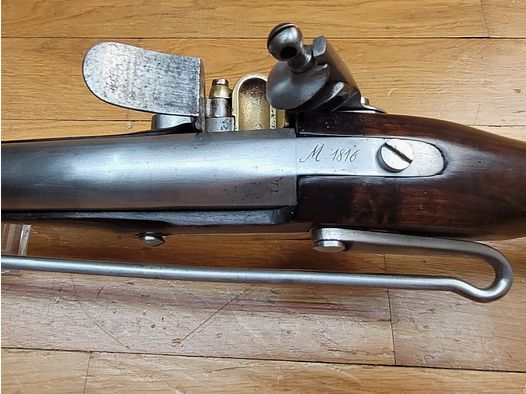
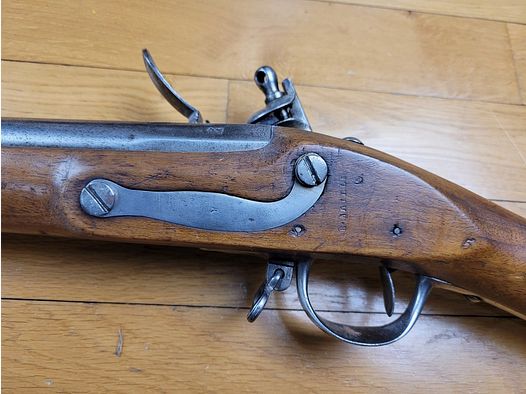
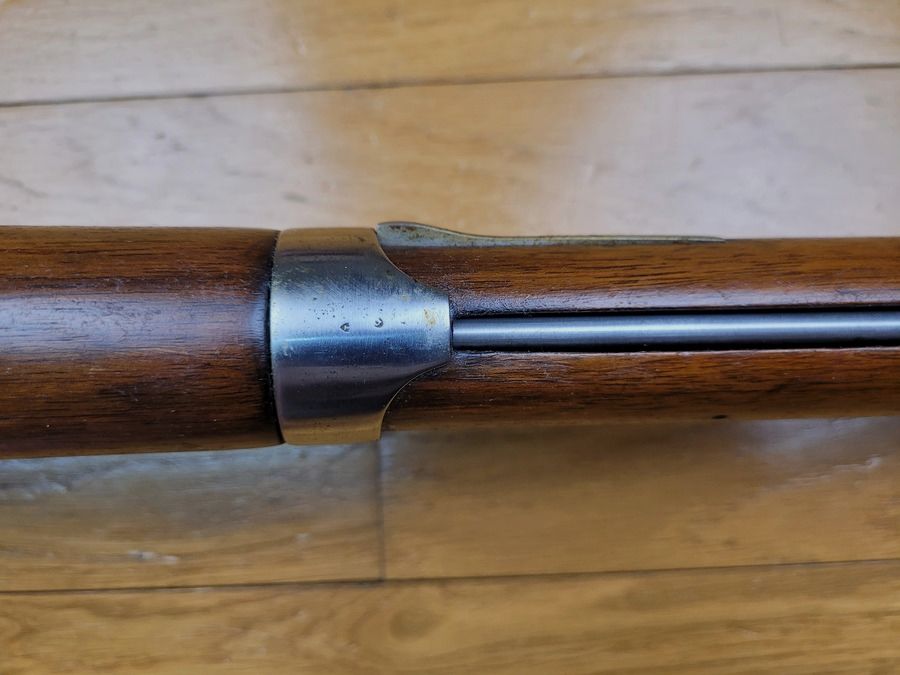
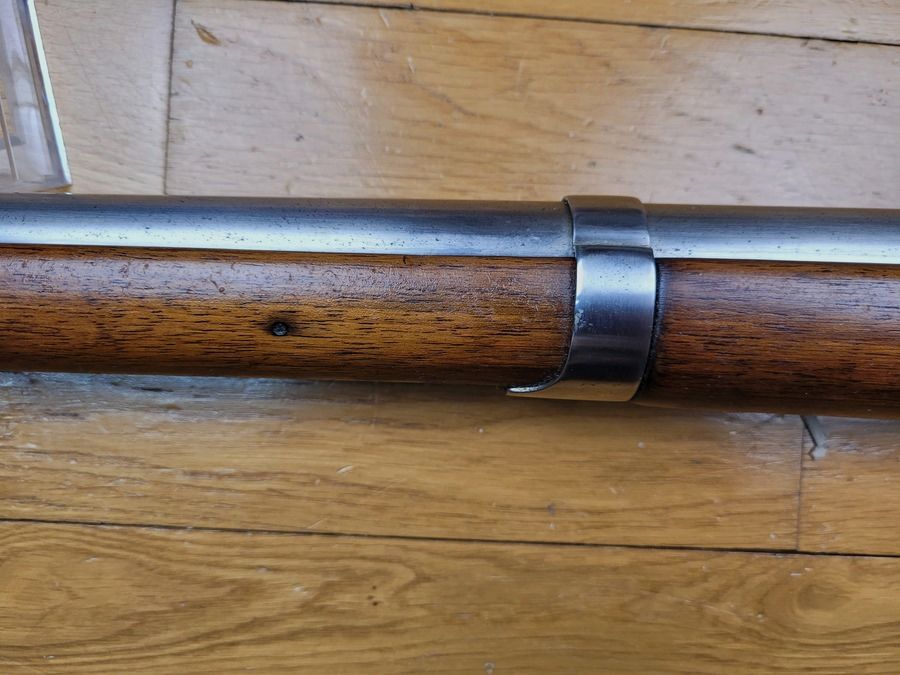
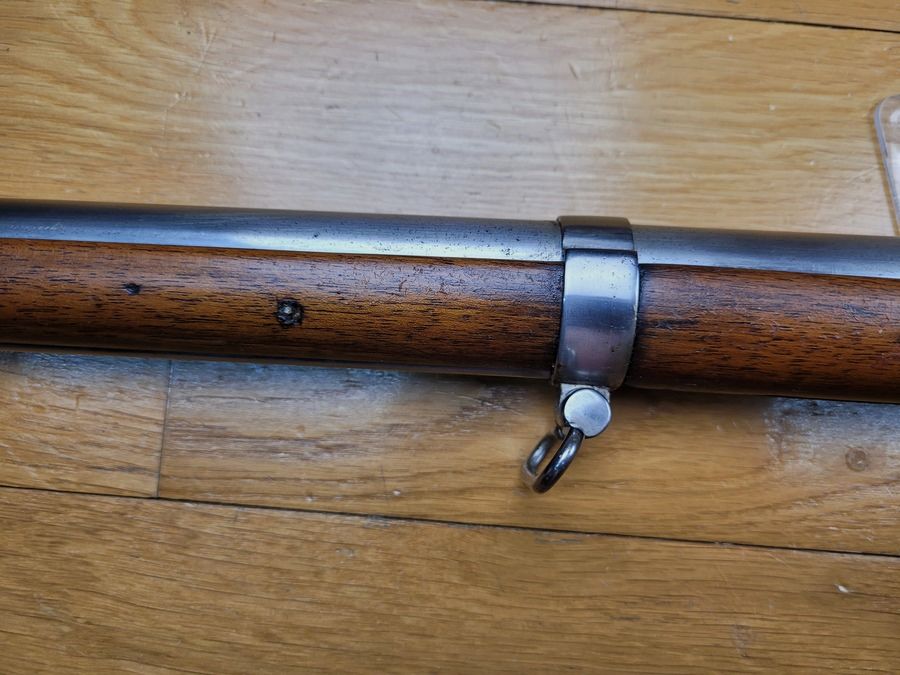
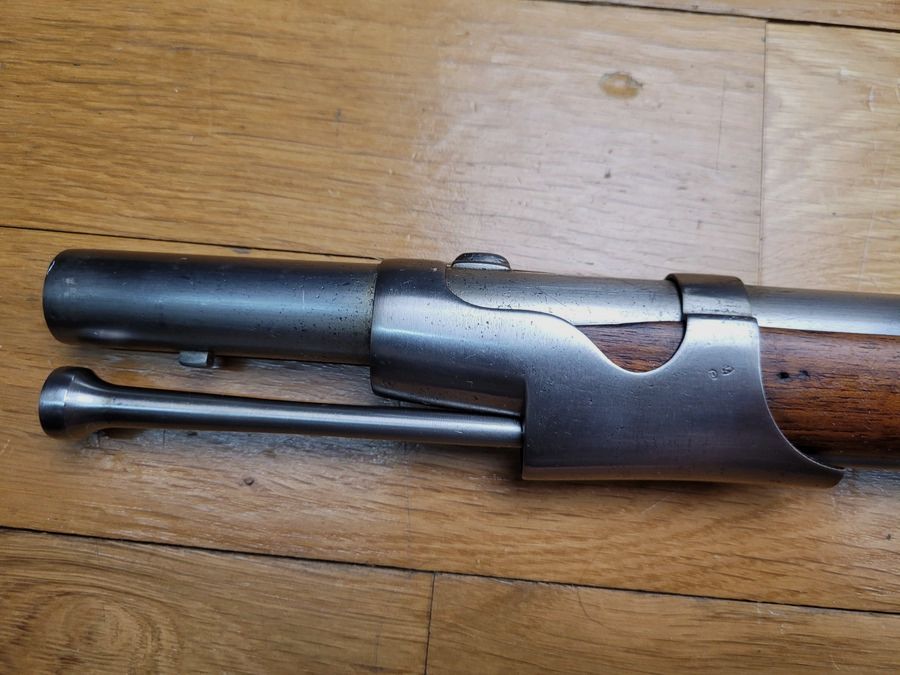
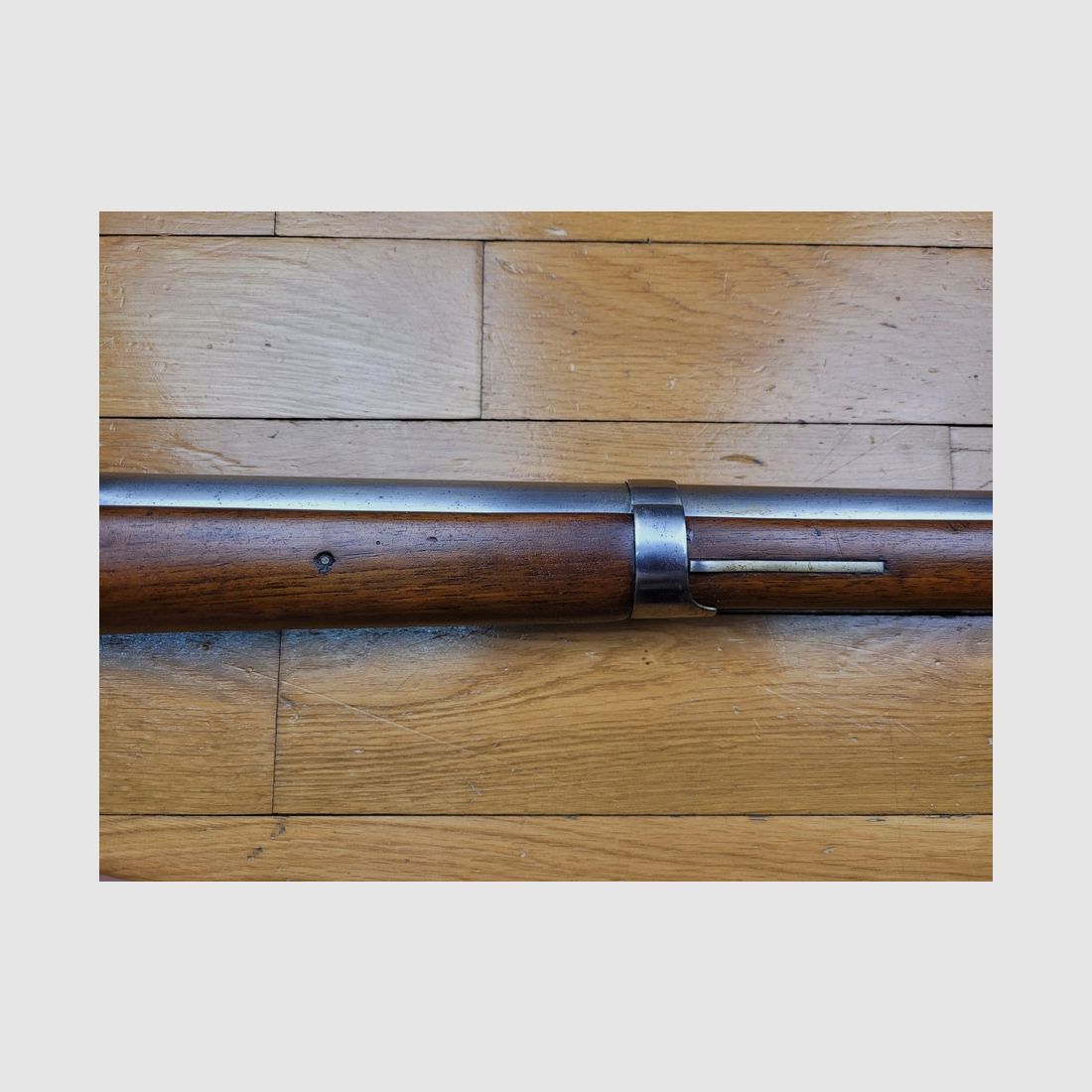
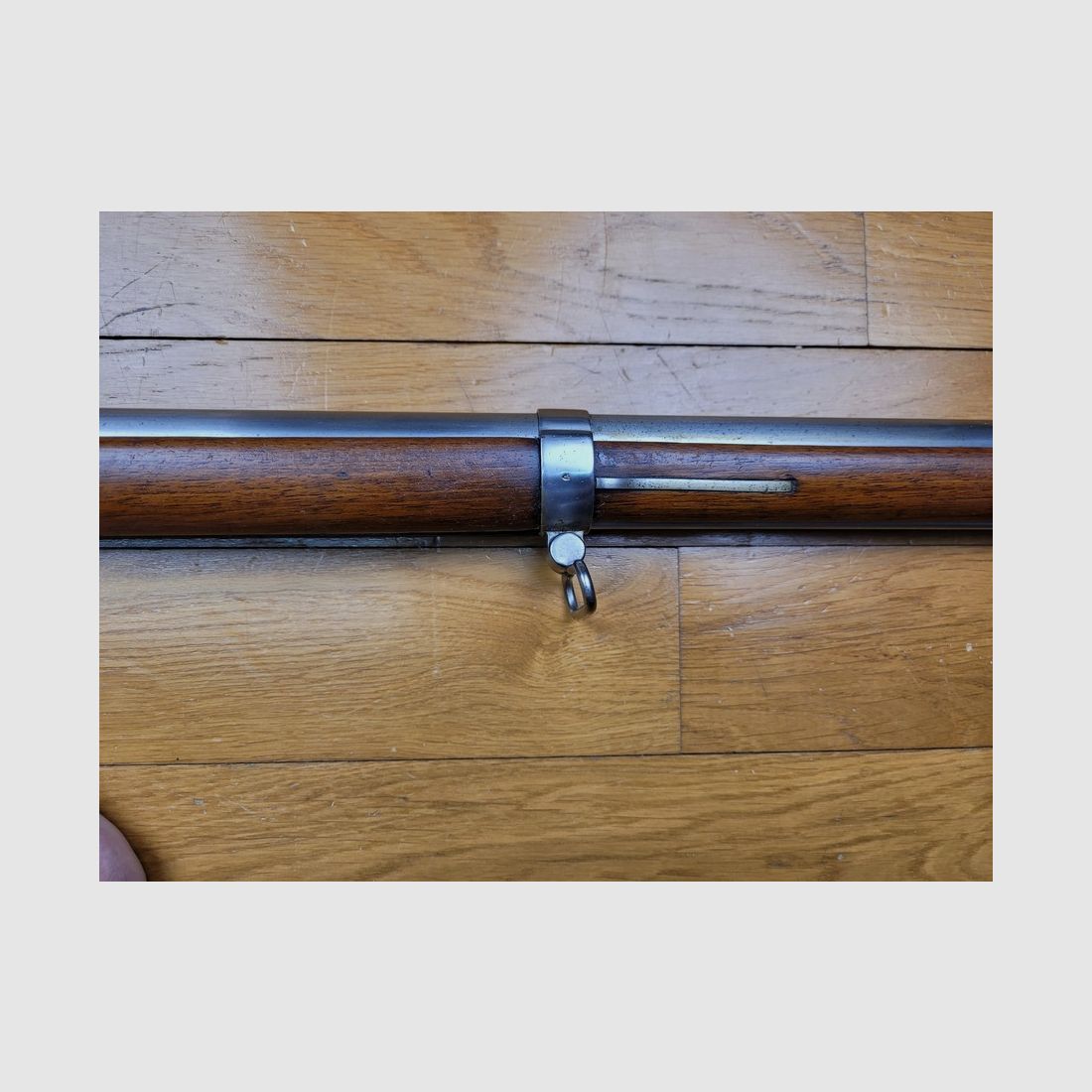
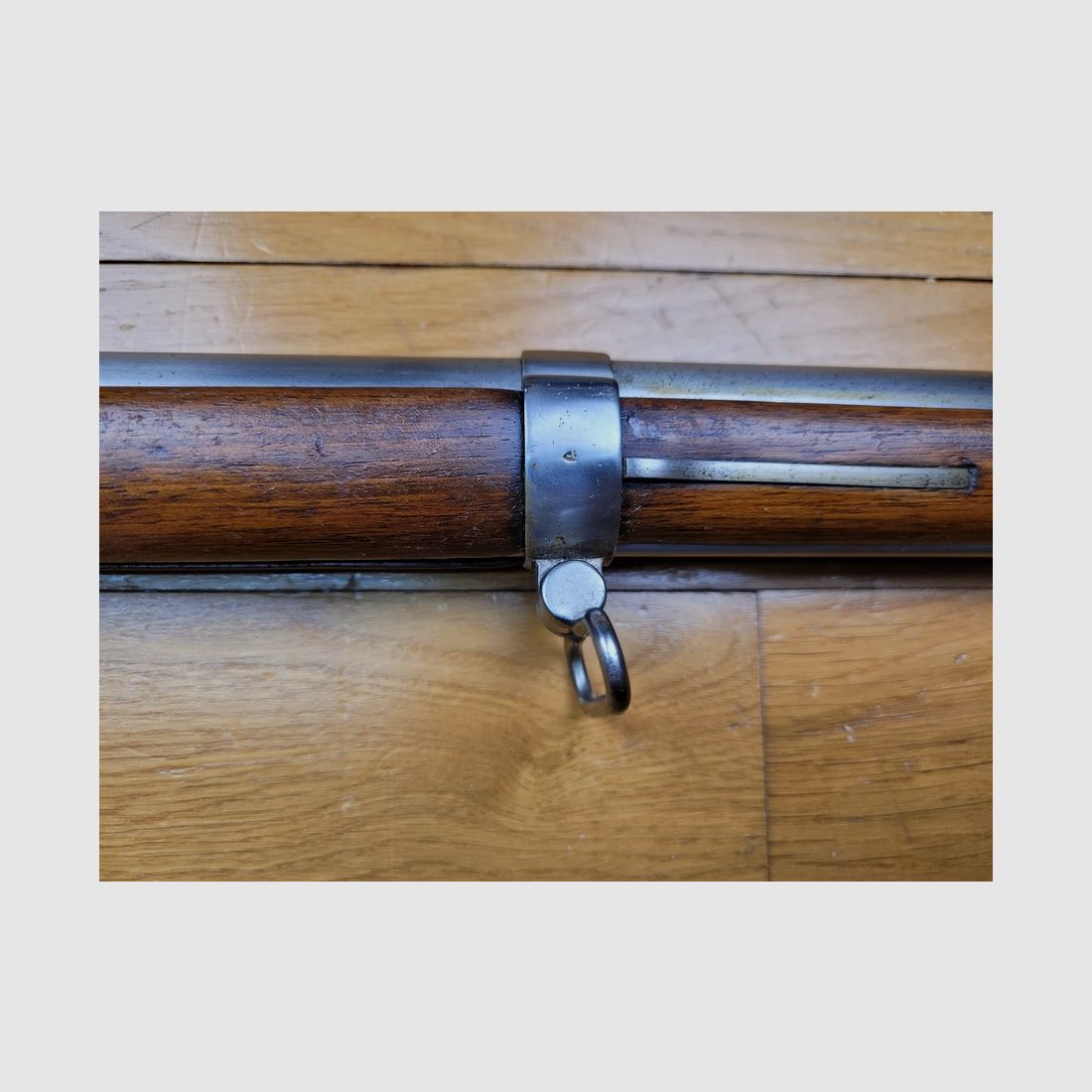
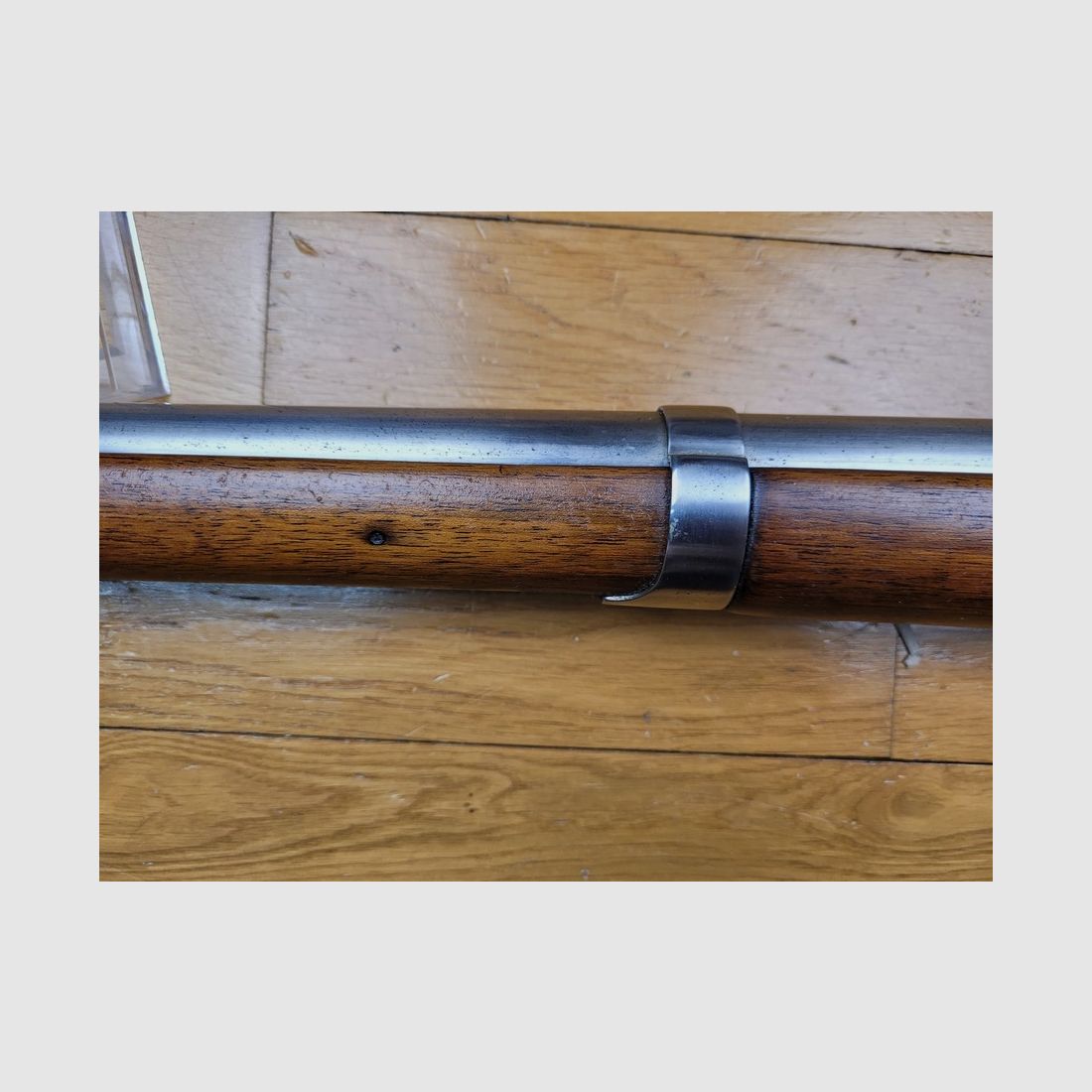
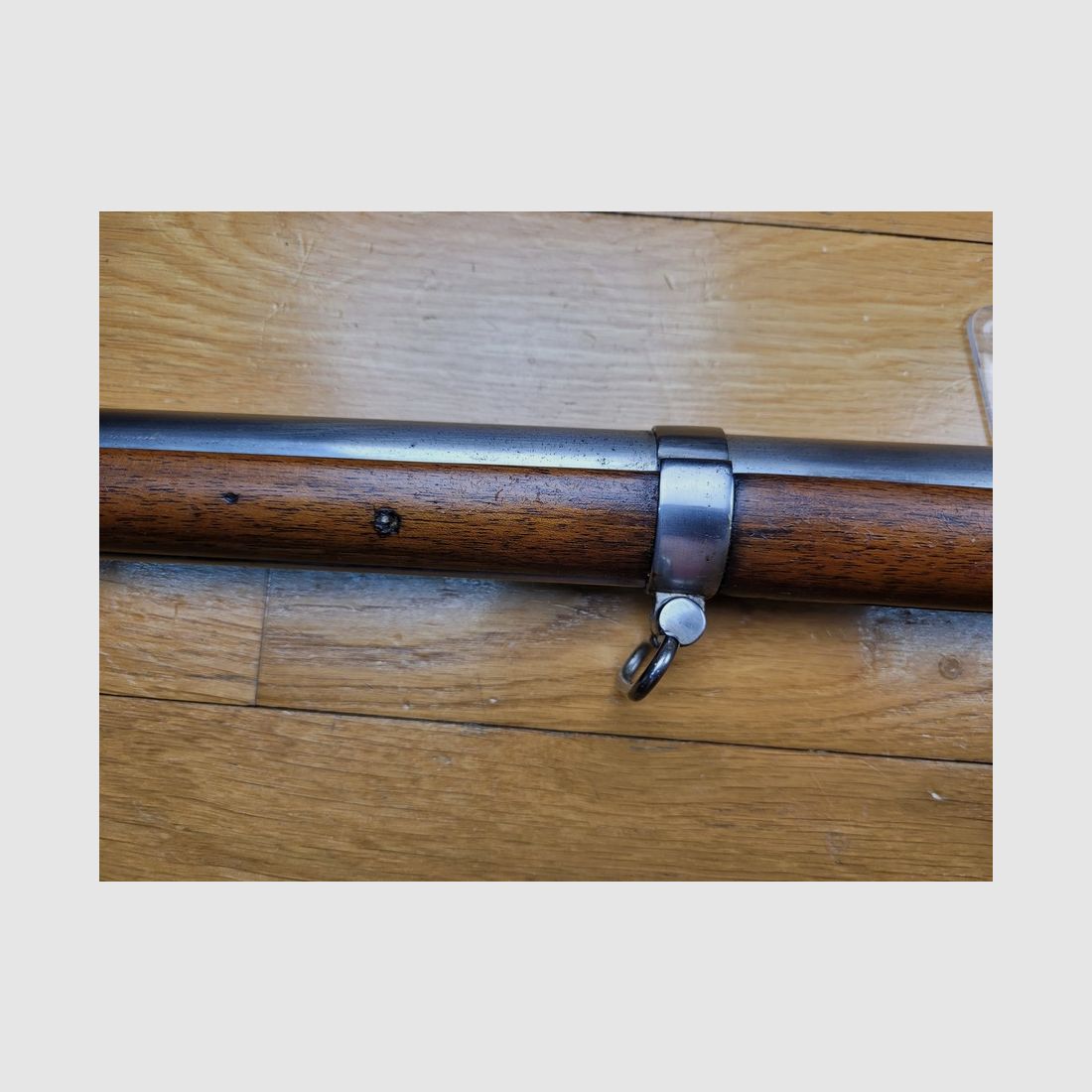
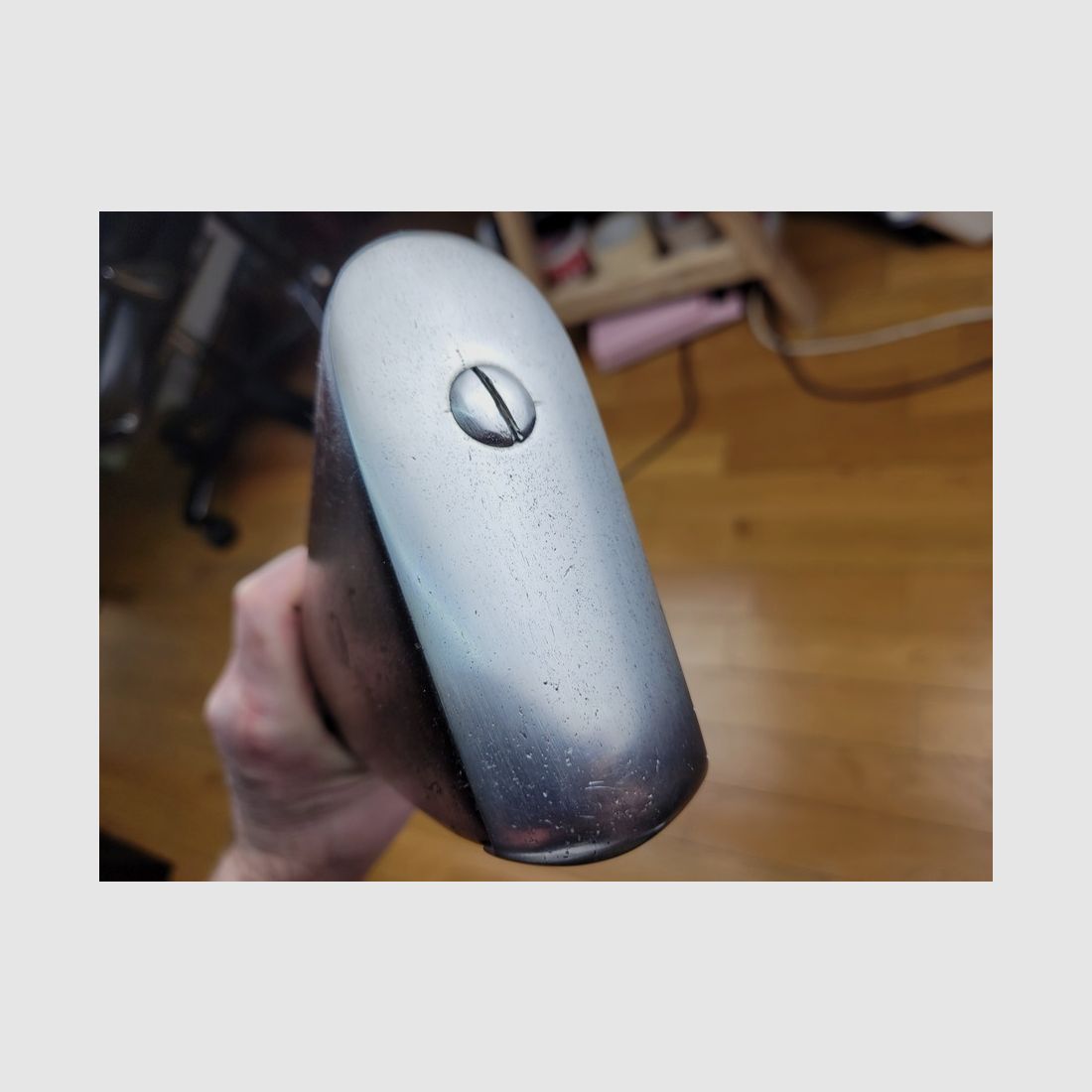
The firearm is mechanically impeccable. The barrel is in excellent condition. It presents very well—almost museum quality, despite the roundel. The ramrod has the correct nail-head tip.
If you ever decide to complete this fine 1857 with its bayonet, note that this rifle was fitted with the 1847 model bayonet.
In short, a very rare firearm and a prestigious addition to a fine collection of rare French regulation firearms. For the discerning enthusiast. In my opinion, it would be hard to “upgrade,” as the Anglo-Saxons say, given how rare it is and how good its condition is.
Category D firearm under the CSI: valid ID card or passport required.
*****************************************************************************************************************************************************************************************************************
Let’s say it again! Flingus Maximus Gun Shop in Paris and throughout France is also here for your needs.
Private firearm sales, the purchase of firearm and militaria collections, firearm appraisals, and questions about firearms in estates and inheritances. Contact your preferred gunsmith using our contact form or at [email protected]
Reminder: All collectible, hunting, and shooting firearms are used and sold as-is, without warranty.
All antique firearms sold as Category C or D, “Collection” or “Cowboy shooting” are collectible firearms that have not been proof-tested for shooting or tested at a shooting range. They have been visually inspected for their general condition and mechanical function, but none have been used for shooting, so they are sold as untested. Anyone wishing to use a firearm for shooting must first contact the National Proof House of Saint-Étienne, the only body authorized to issue proof certificates for shooting use. (Show description in original language)
Une très grande rareté réglementaire française: le 1857 d’infanterie en état d’origine non transformé à tabatière.
Le système 1857 marque la fin des systèmes à percussion se chargeant par la bouche pour l’Armée Française. C’est le tout dernier « percu » de l’histoire de l’armée française. Une étape indispensable pour un collectionneur sérieux de « réglos » français.
L’arme a aussi eu le mérite de bénéficier de tous les perfectionnements qui avaient été apportés au système à piston : suppression du fusil long (il ne fait « que » 142cm comme les anciens voltigeurs), rayures (4) de profondeur uniforme, simplification de l’usinage, platine en arrière, hausse prise dans la masse…
A partir de 1864, les armes fabriquées dans ce système 1857 seront les toutes premières à être construites non plus en fer mais en acier fondu. Par là, le 1857 est à la fois le dernier représentant de sa génération mais aussi le premier de l’ère moderne par sa construction.
Le système d’armes 1857 ne connaitra que 4 armes: outre le fusil d’infanterie, on peut trouver un fusil de Marine, une carabine de gendarmerie et une carabine dite 1859 de chasseur.
Balistiquement parlant, c’est un sommet aussi pour le piston puisqu’il envoie sa balle de 36 grammes à 324 m/s, but en blanc à 150 m et la balle est encore efficace à 800 mètres…
Le fusil d’infanterie 1857 est très rare. Pourquoi ? Parce que la quasi intégralité de ces armes à été transformée à tabatière à partir de 1867 sur ordre du Maréchal Niel, Ministre de la Guerre de Napoléon III.
Maître Flingus va vous faire un aveux : j’ai vu des dizaines de 1857 transformés tabatière en 67, j’ai vu plusieurs fois la carabine de Gendarmerie 59 qui n’a pas en principe subie cette opération (le marine non plus), mais c’est la première fois que je vois un vrai bon fusil 1857 intouché…
Notre exemplaire fait 142 cm comme il se doit. II a été fabriqué en 1857 (indication canon) à la Manufacture Impériale de Mutzig C’est donc un des tous premiers produits !
Le macaron de crosse n’est plus lisible ce qui ne permet pas de connaitre son mois de naissance avec précision mais il est encore bien devinable avec sa bille de buis bien marquée MI pour Manufacture impériale – les bois sont en excellent état avec un poinçon en tranche de crosse sur le dessous et un poinçon en T couronné sous le macaron coté droit. Un T sans couronne apparait d’ailleurs aussi sur le macaron. On va y revenir.
Les fers aussi sont très beaux – nettoyés mais sans aucun excès puisque tous les poinçons sont bien devinables ou carrément nettement lisibles : sur toutes les pièces et garnitures on trouve à la fois le D de Dessaga 1er Contrôleur de 1856 à 1859 (ou bien est-ce celui du Chef d’escadron Devoluet Inspecteur de 1853 à 1857 au moins) accompagné du T couronné, poinçon de Toussaint contrôleur à Mutzig de 1851 à 1867 – un petit C étoilé en plus du même D apparait sur la garniture de pontet. Lui je ne l’ai pas identifié. Le T couronné de Toussaint est celui qui apparait aussi sur la crosse.
L’arme est mécaniquement impeccable. Le canon est très beau. Elle présente mieux que très bien. Quasi muséale nonobstant le macaron. Baguette en tête de clou conforme au modèle
S’il vous prend un jour de compléter ce beau 1857 avec sa baïonnette, sachez que ce fusil était équipé de la baïonnette modèle 1847
Bref une arme très rare complément de prestige pour une belle collection de rares réglementaires français. Pour un amateur exigeant. a mon avis difficilement « up gradable » comme on dit chez les anglo-saxons tant il est rare et dans un très bel état.
Arme de catégorie D au CSI : pièce d’identité, CNI ou passeport, en cours de validité obligatoire
*****************************************************************************************************************************************************************************************************************
Répétons le ! L’armurerie Flingus Maximus à Paris et partout en France est là aussi pour vos formalités armes entre particuliers, le rachat de collections armes et militaria, vos estimations d’armes, vos questions armes dans les successions et héritage. Contactez votre armurier préféré via notre formulaire de contact ou à [email protected]
Rappel : Toutes les armes de collection, de chasse, et de tir sont d’occasion et sont vendues dans l’état, sans garantie.
Toutes les armes historiques de fabrication ancienne vendues en tant que C ou D, “Collection” ou “Cow-boy shooting”, sont des armes de collection non éprouvées pour le tir et non testées en stand. Elles ont été inspectées visuellement relativement à leur état général et mécanique mais aucune n’a été utilisée au tir et elle sont donc vendues comme non testées. L’acquéreur désirant utiliser une arme pour le tir devra impérativement se rapprocher préalablement du banc National d’Épreuve de Saint Étienne, seule entité habilitée à délivrer des certifications d’épreuves préalable à un usage de tir.