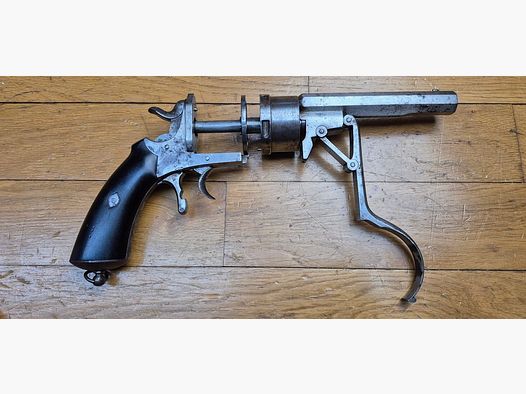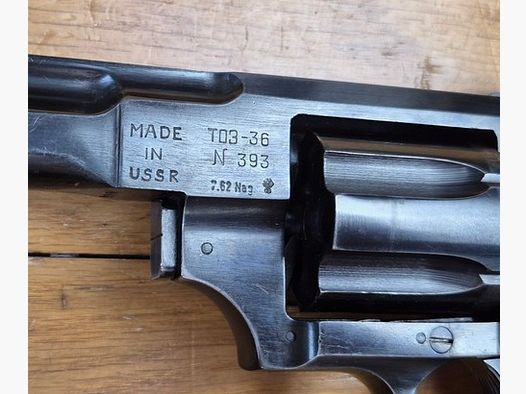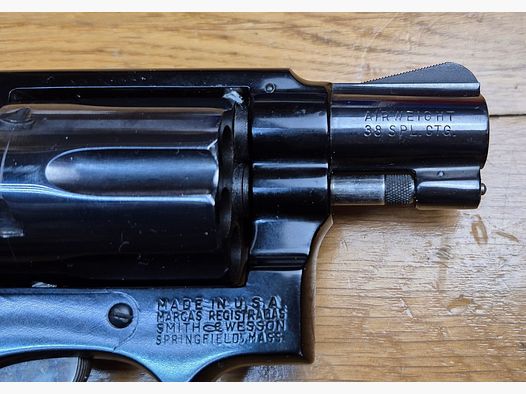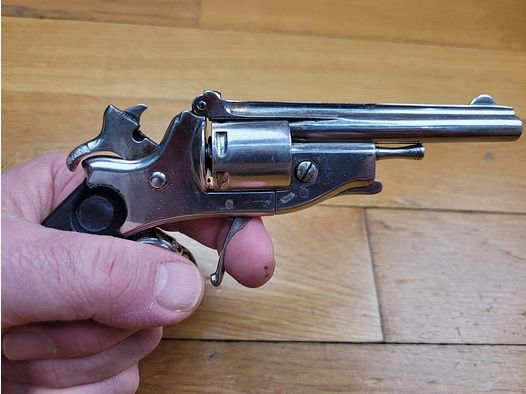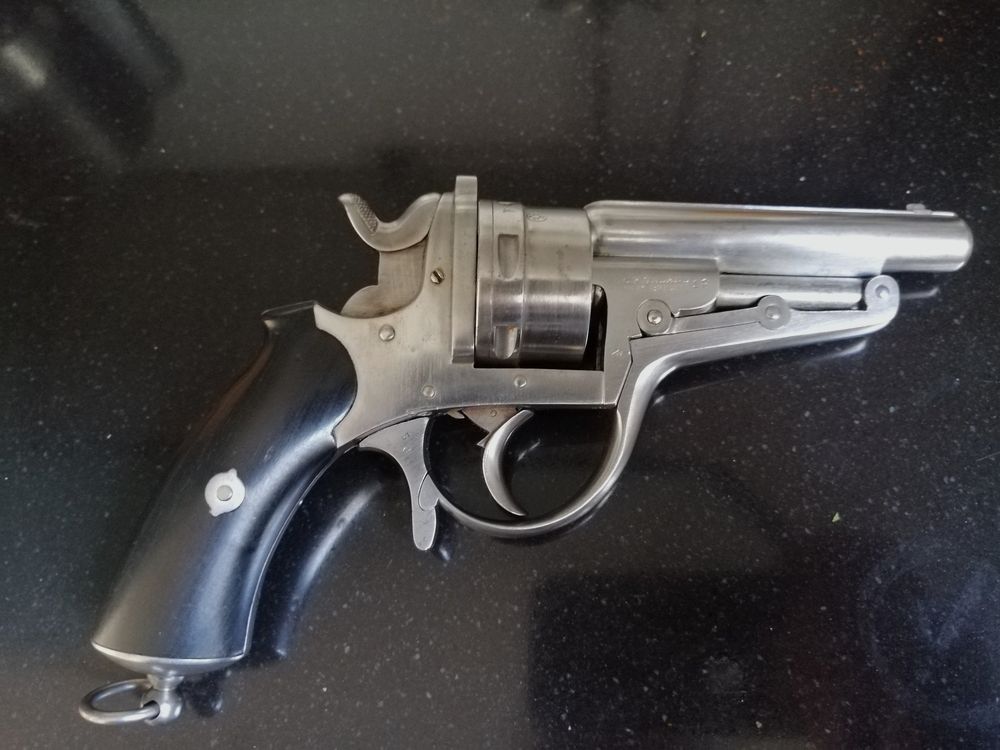



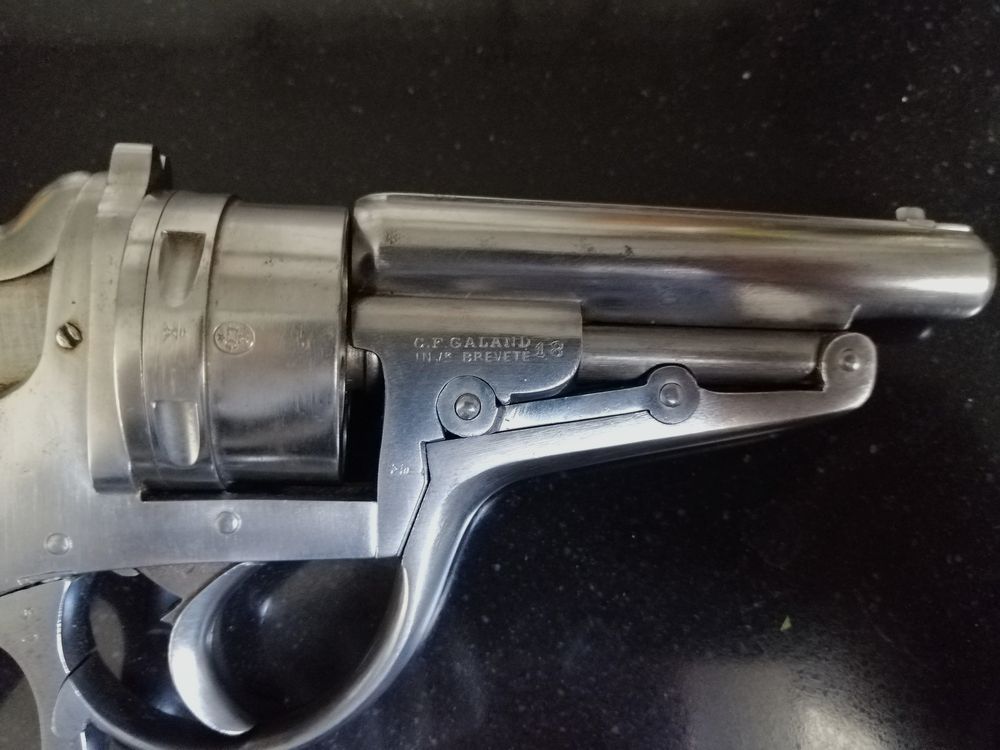
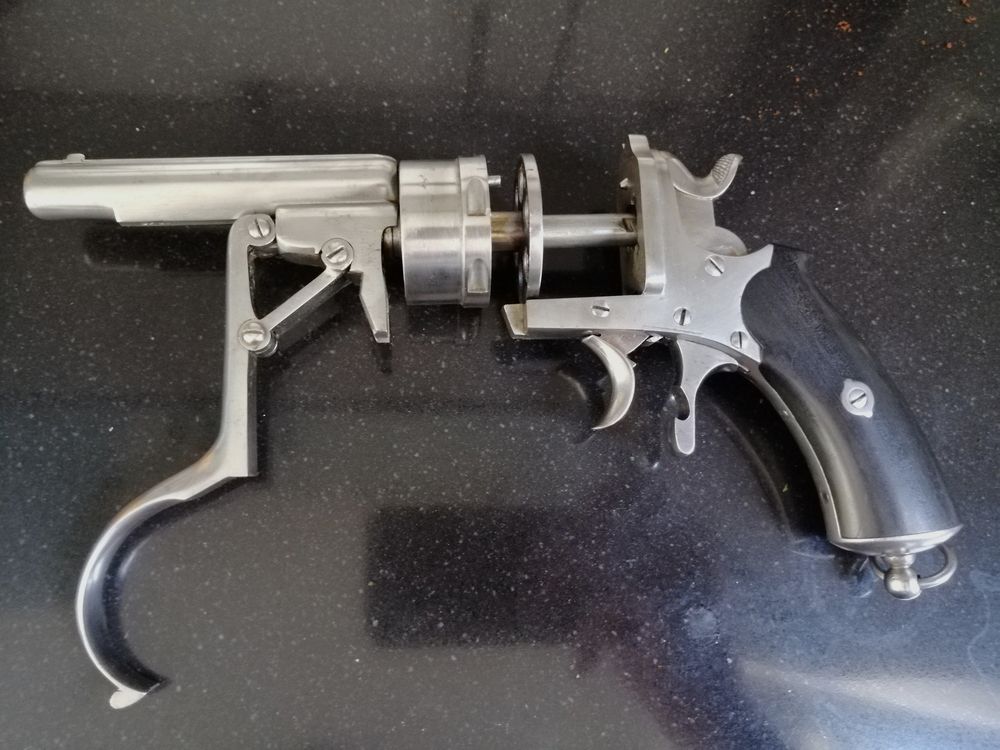

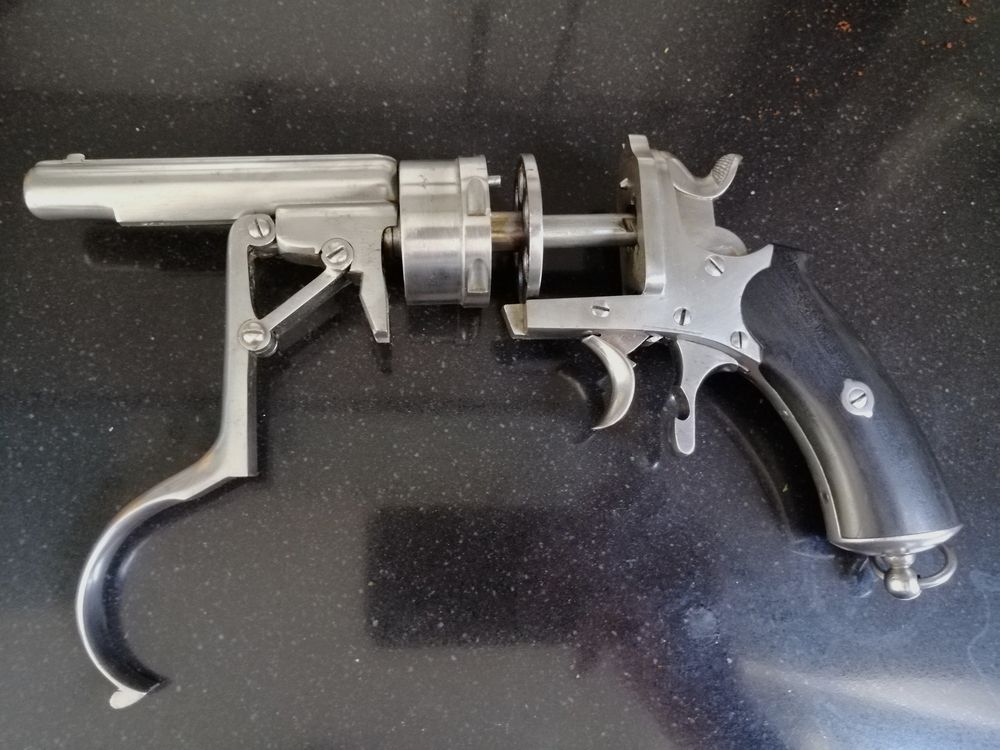

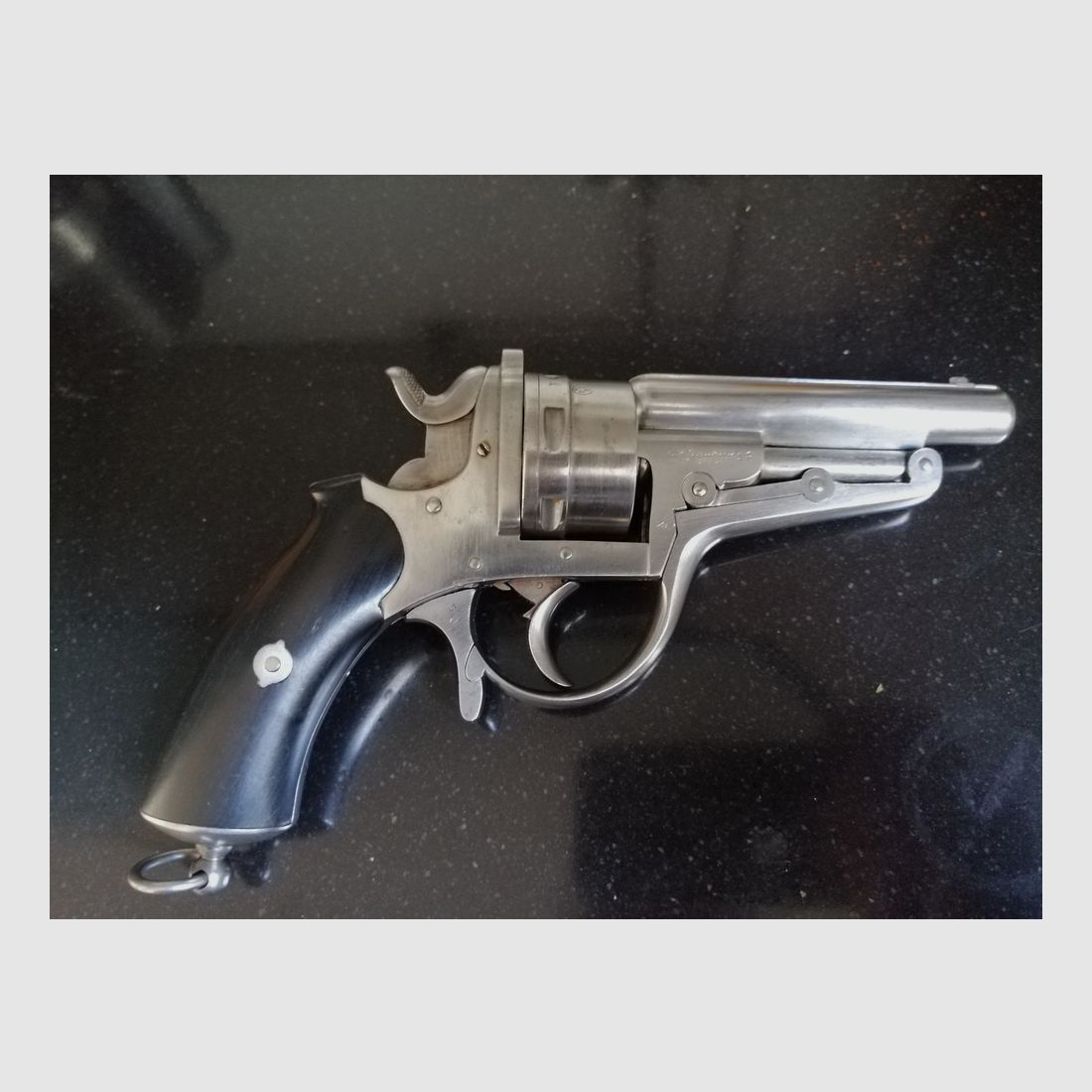

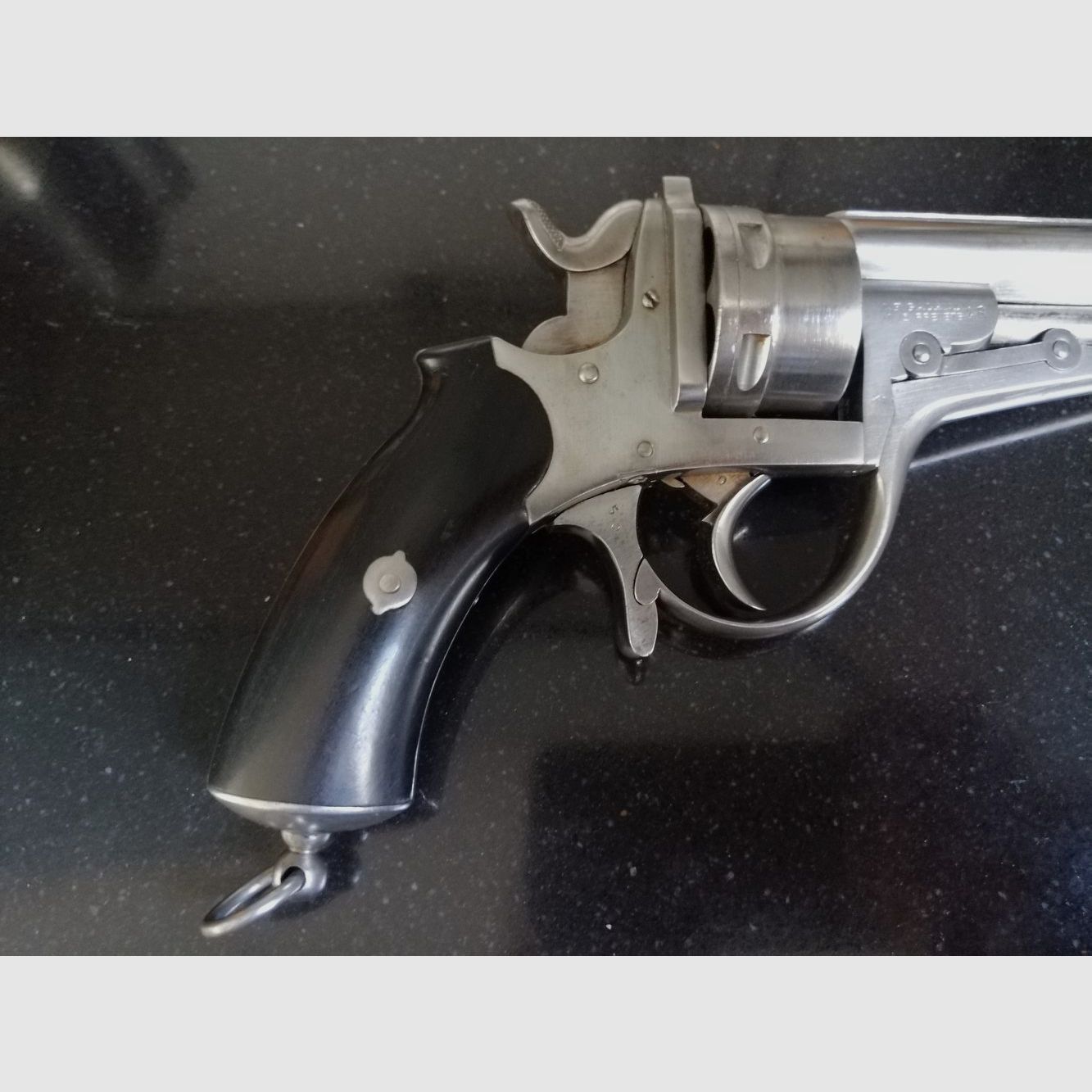
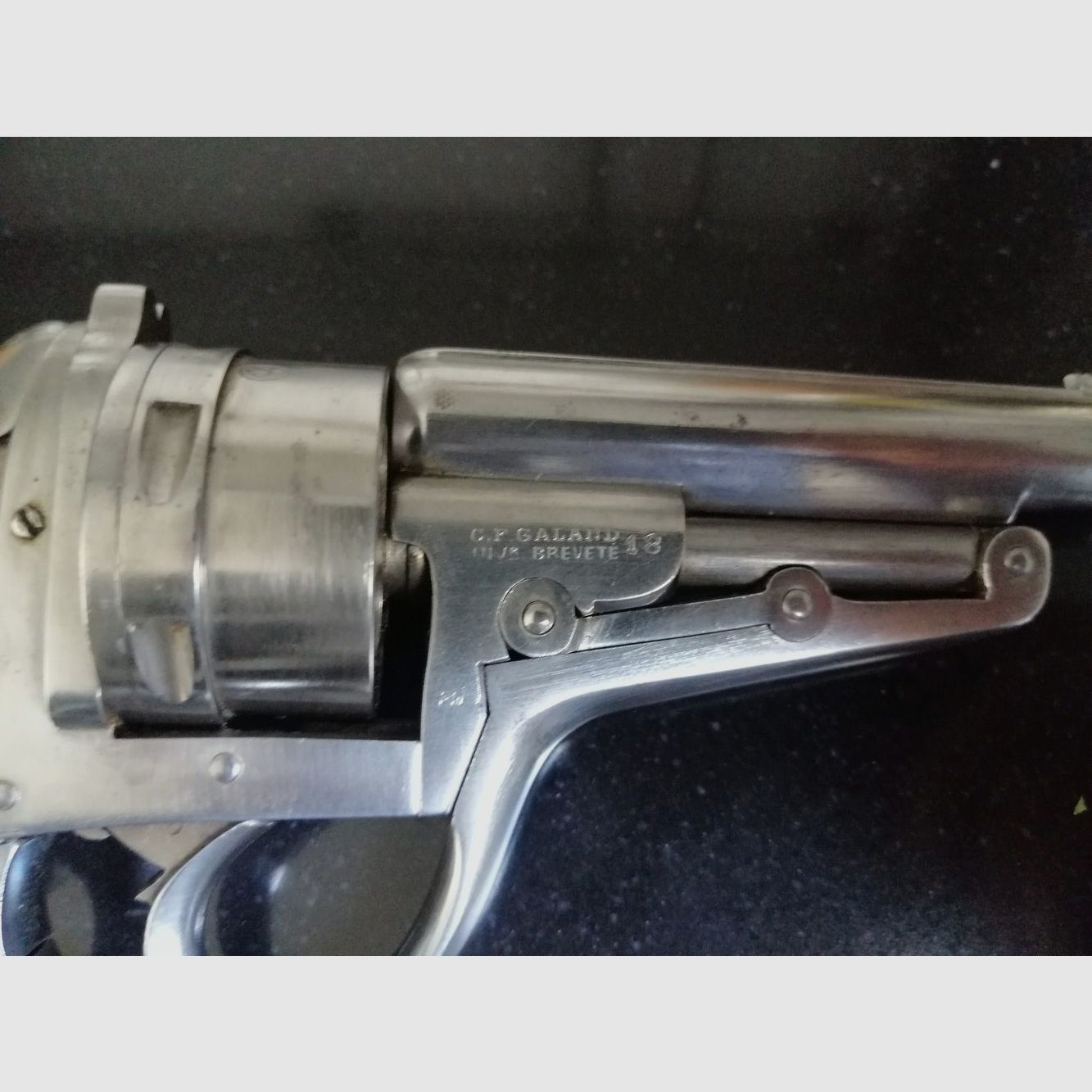

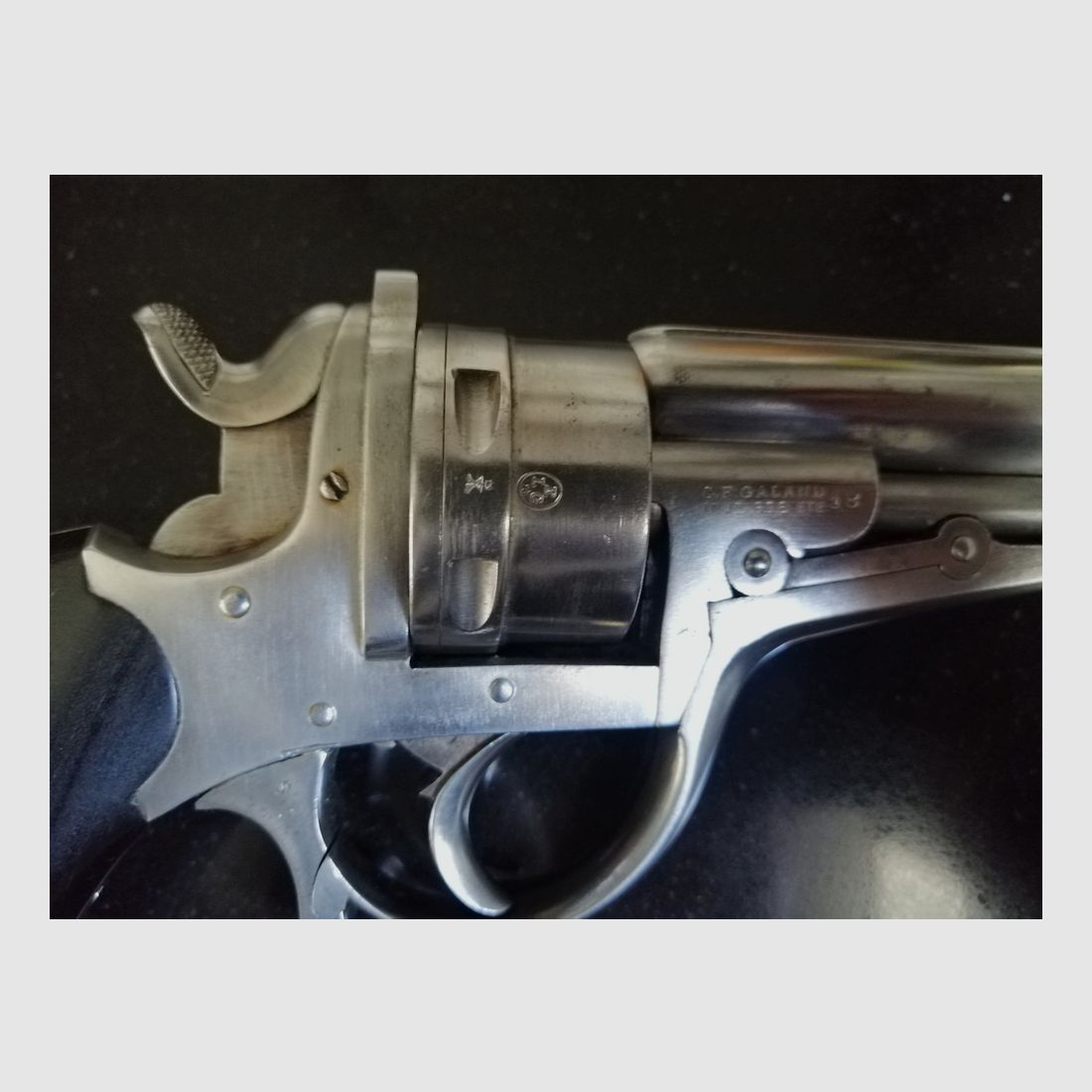
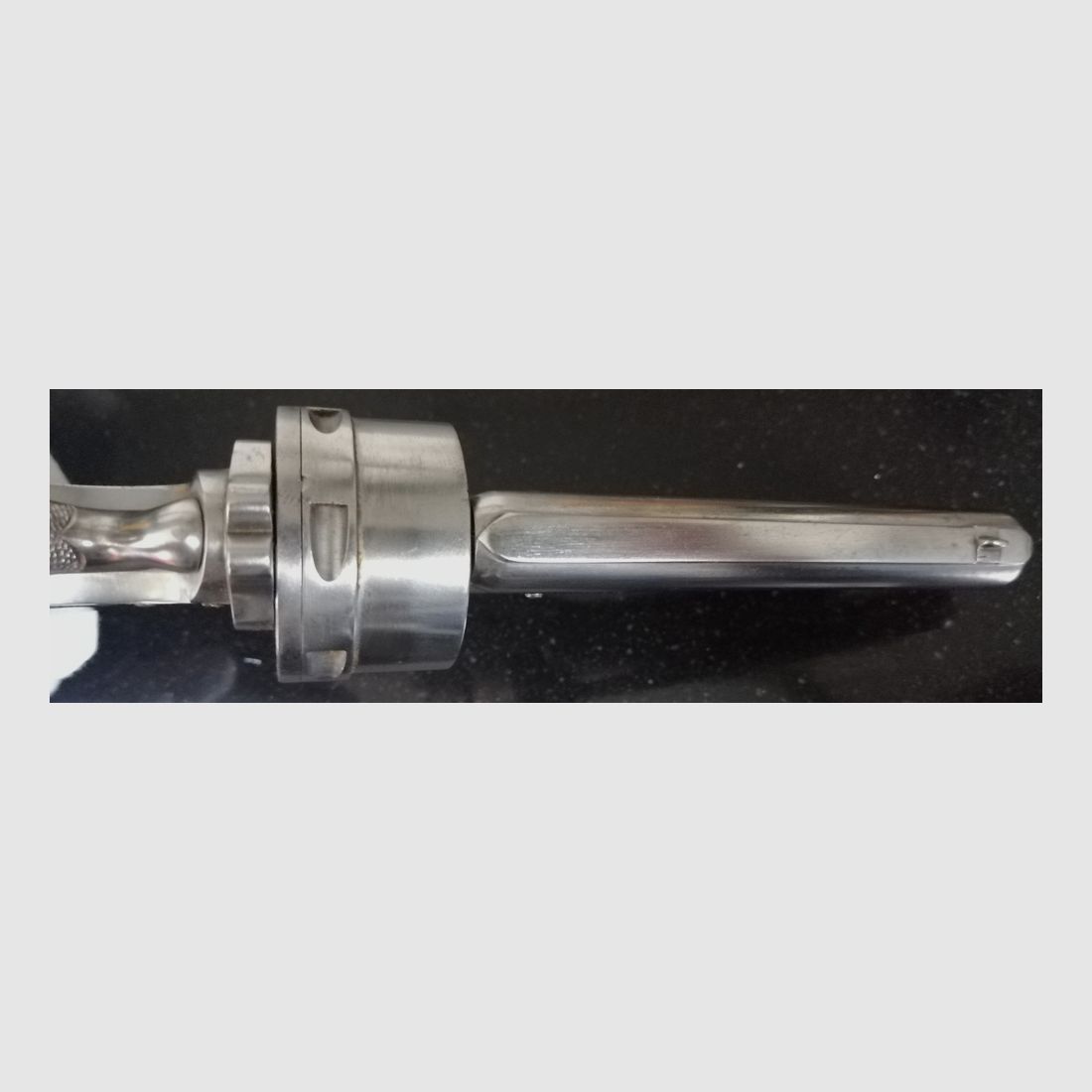




Rare Galand system revolver – rare in 9mm caliber – 6 rounds – almost standard for the 1870/1871 conflict – ingenious collective extraction system – Superb
≈ $1,649
Price at the dealer: 1,500 €. Converted at the ECB rate as of November 20, 2026.
Purchase permit required
75002 Paris, France
8
ID: 10339055
This item is currently unavailable.
Purchase from outside the EU: The firearm goes through an importer in your country, the dealer handles the export.
How buying from Europe works
Shop safely with Gunfinder
Our AI-powered seller identity verification makes Gunfinder the safest marketplace online.
Learn more
Details
- Original language
- French
- Category
- Purchase eligibility
- Required
- Caliber
- 9mmLuger
- Condition
- New
- Location
- 🇫🇷 75002 Paris, France
- Availability
- Out of stock
Freshness
This listing is based on a mirrored offer, where the listing data was synced to us from a shop, dealer, or external marketplace. Please note that temporary price discrepancies may occur due to possible delays in data transmission.
- Source
- Flingus Maximus
- Last checked with the dealer
- 1 day ago
Description
Note:
The item is located abroad. Please note that delivery conditions, shipping times, and/or the purchase process may differ.
Charles-François GALAND was a French citizen and inventor (1832-1900) who worked in Liège.
The Galand revolver (Galand-Sommerville or Galand-Perrin) is an open-frame, double-action revolver, patented in 1868.
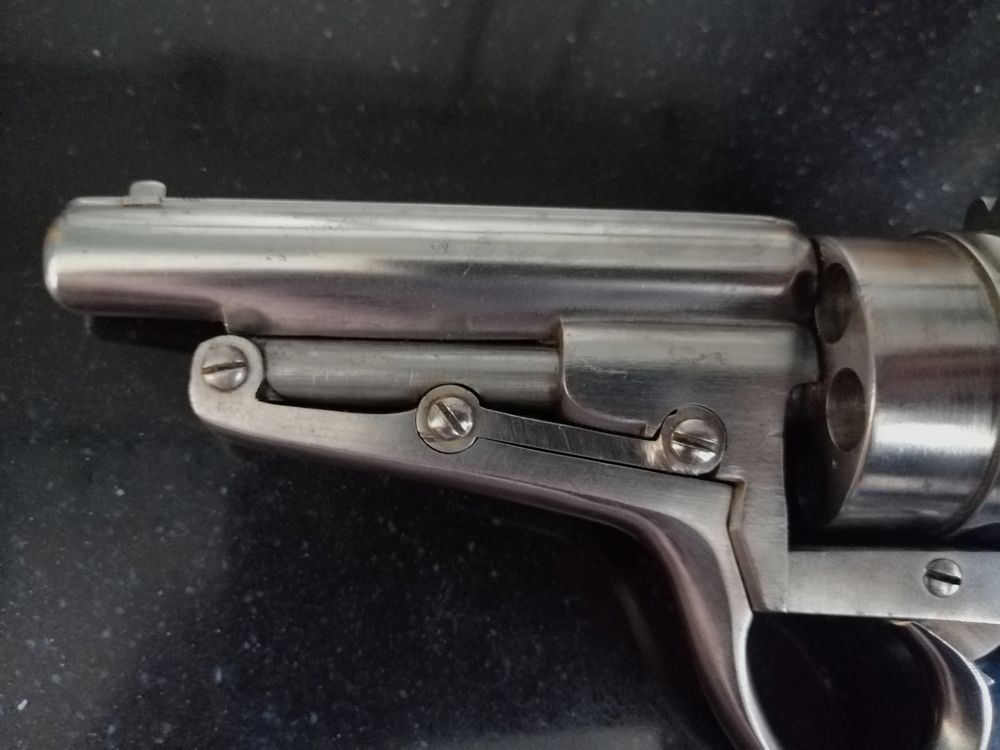
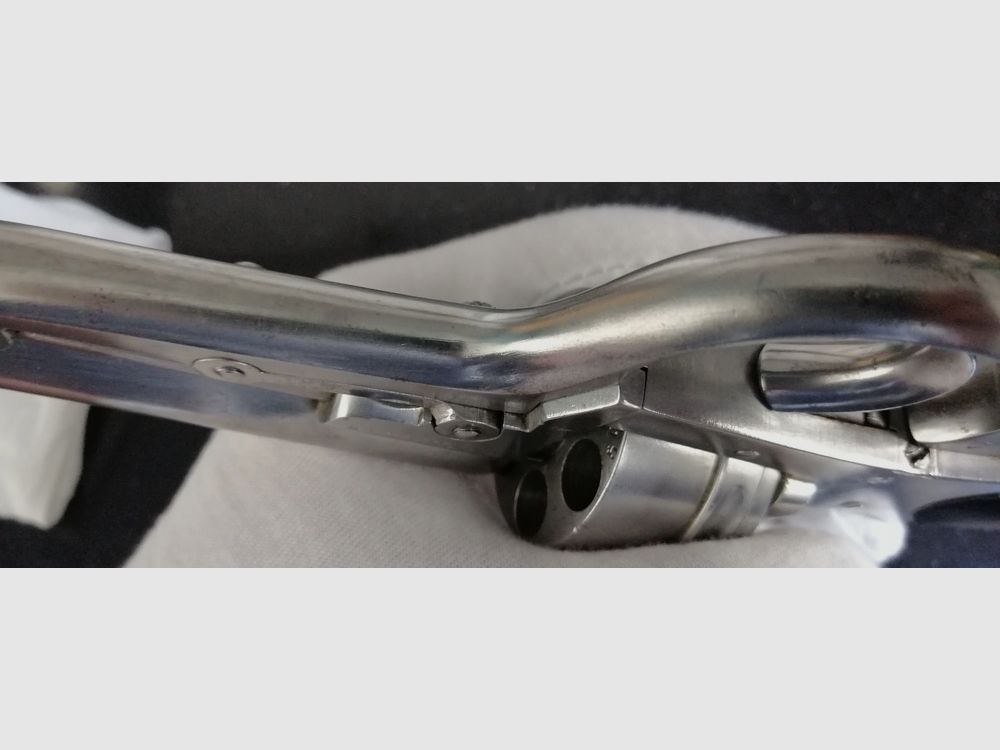
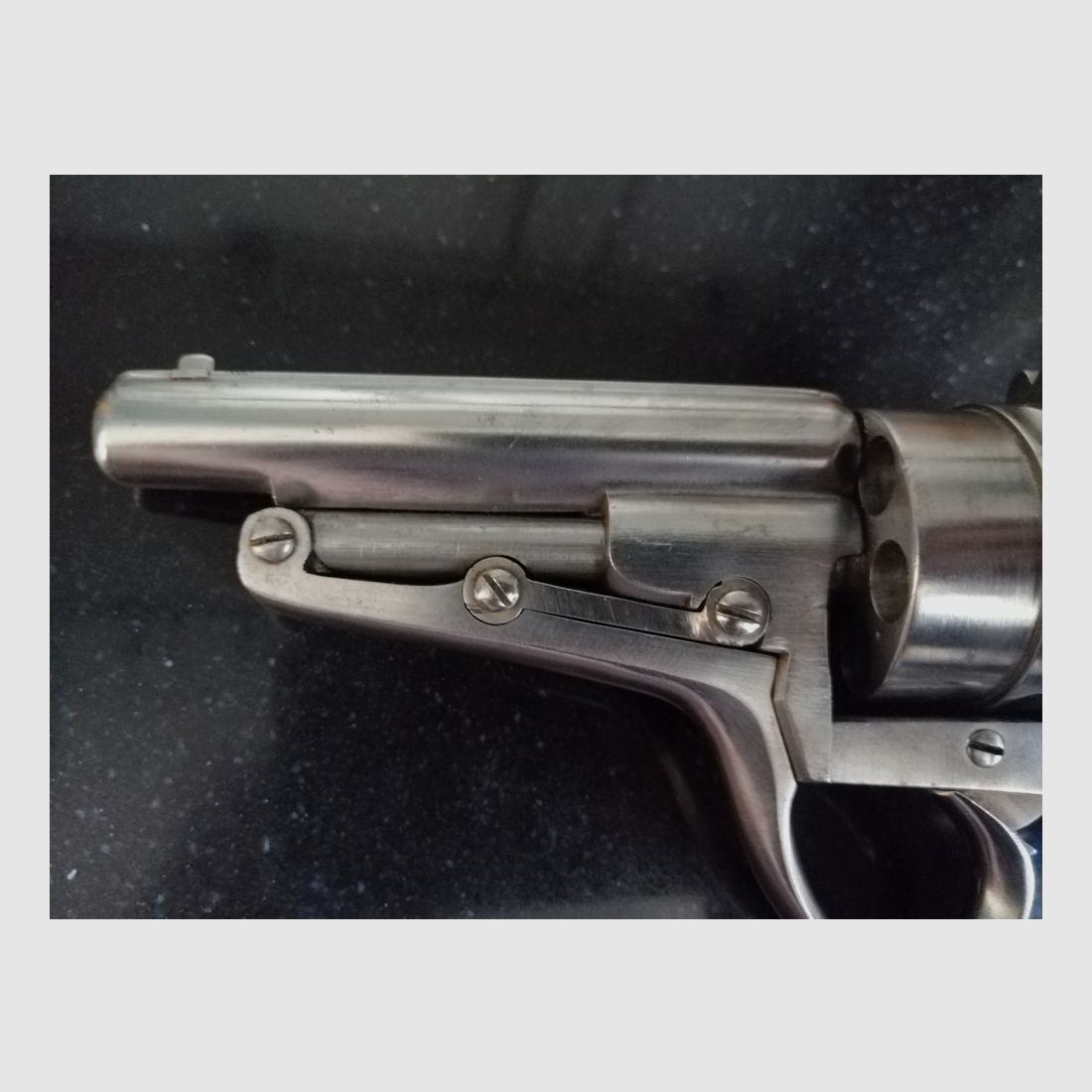
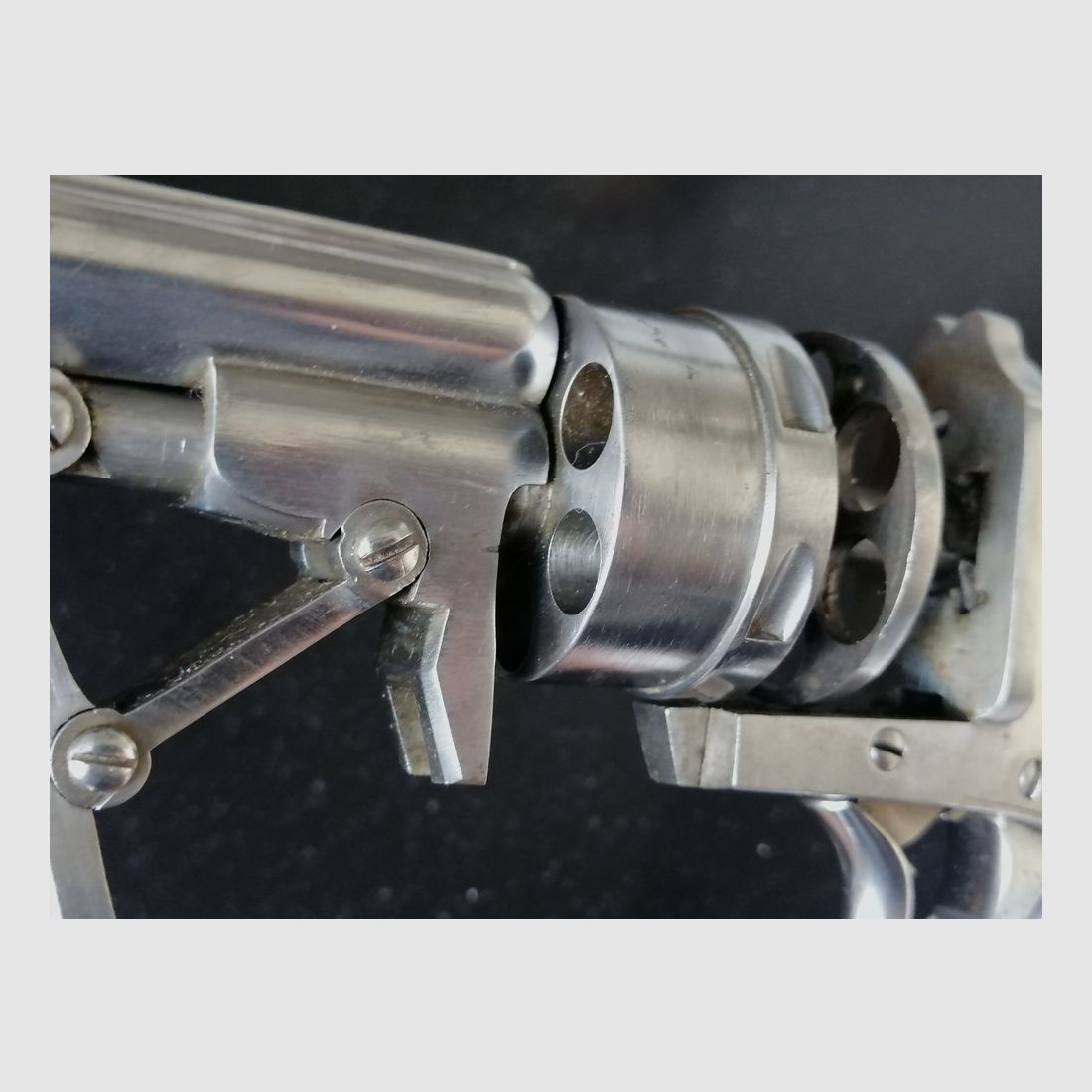
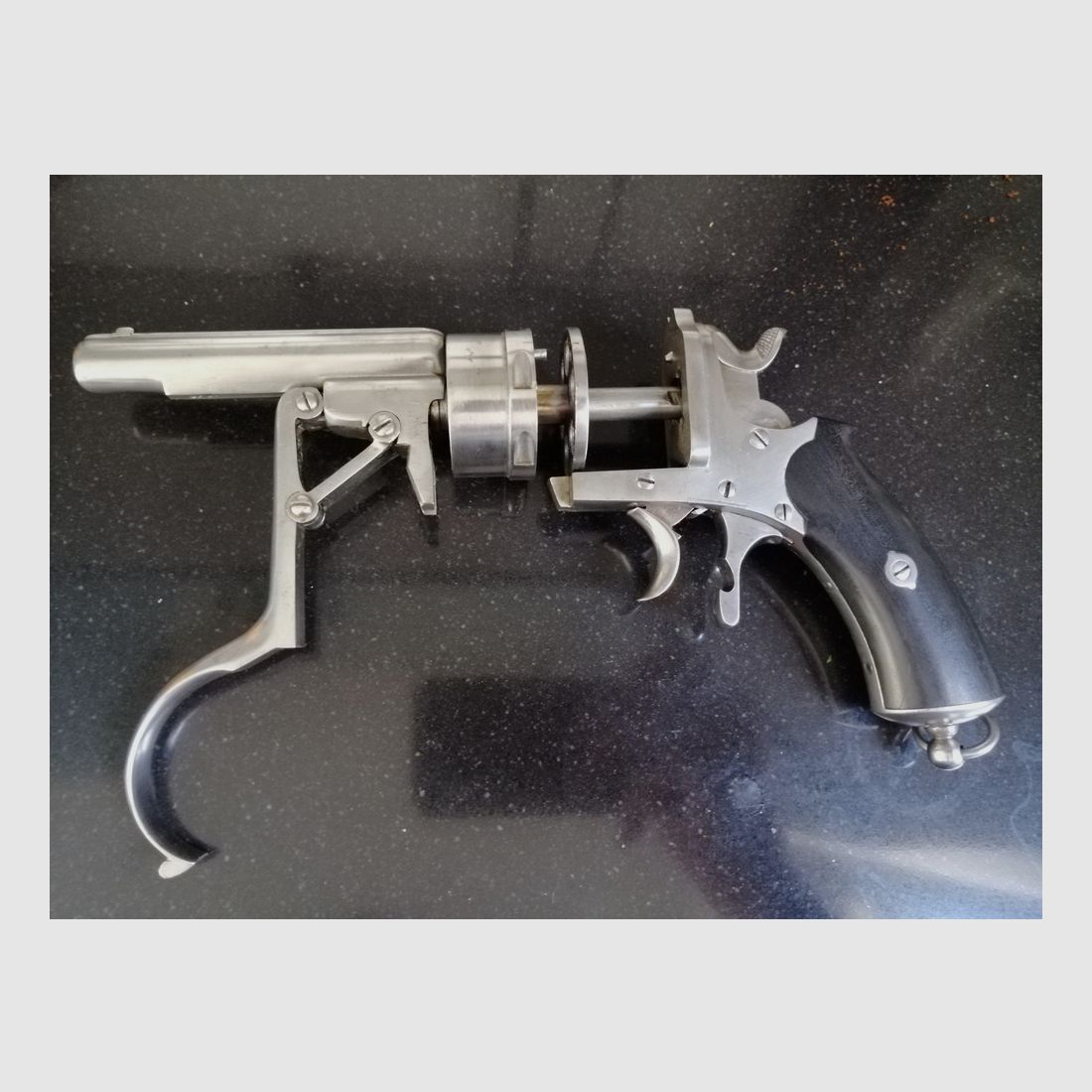
The main feature of this weapon is an ingenious collective extraction and loading system by lifting the trigger guard located under the barrel and frame. By operating the hook attached to the trigger guard, the barrel and cylinder move longitudinally forward. The extractor plate is locked but the cylinder continues its forward movement: the cases are collectively extracted and can be replaced by new cartridges. Then the lever is put back in place and the weapon locks. It was also called Galand-Perrin because it fired a Perrin cartridge with a large rim in 7.9 and 12 mm caliber.
The first examples were manufactured in Great Britain in Birmingham. In October 1868, production was also carried out in Liège and the weapon, very well designed, was a success.
In France, it became the preferred private purchase weapon of many officers before and during the 1870 war who rightly preferred it to the standard 1822 or 1833. This new centrefire revolver with automatic extraction was indeed far superior to the good old “pistons”.
For the civilian market, this revolver was also sold in 12 mm, in 9mm called “belt” (smaller) and in a sport/shoulder shooting version with the Galand Sportman, the same weapon but equipped with a removable skeleton stock.
Especially the Russian Imperial Navy adopted the Galand revolver on March 12, 1871 under the name “boarding pistol revolver model 1870” in 9MM caliber and in the same format as ours, shortly followed by Romania. The weapon was also produced by N.I. Goltiakoff in Tula in 1878.
After participating in the 1870-71 war, Galand proposed an improved version of his 1868 model, but the army preferred a closed-frame weapon. It is the good old 1873 that was preferred.
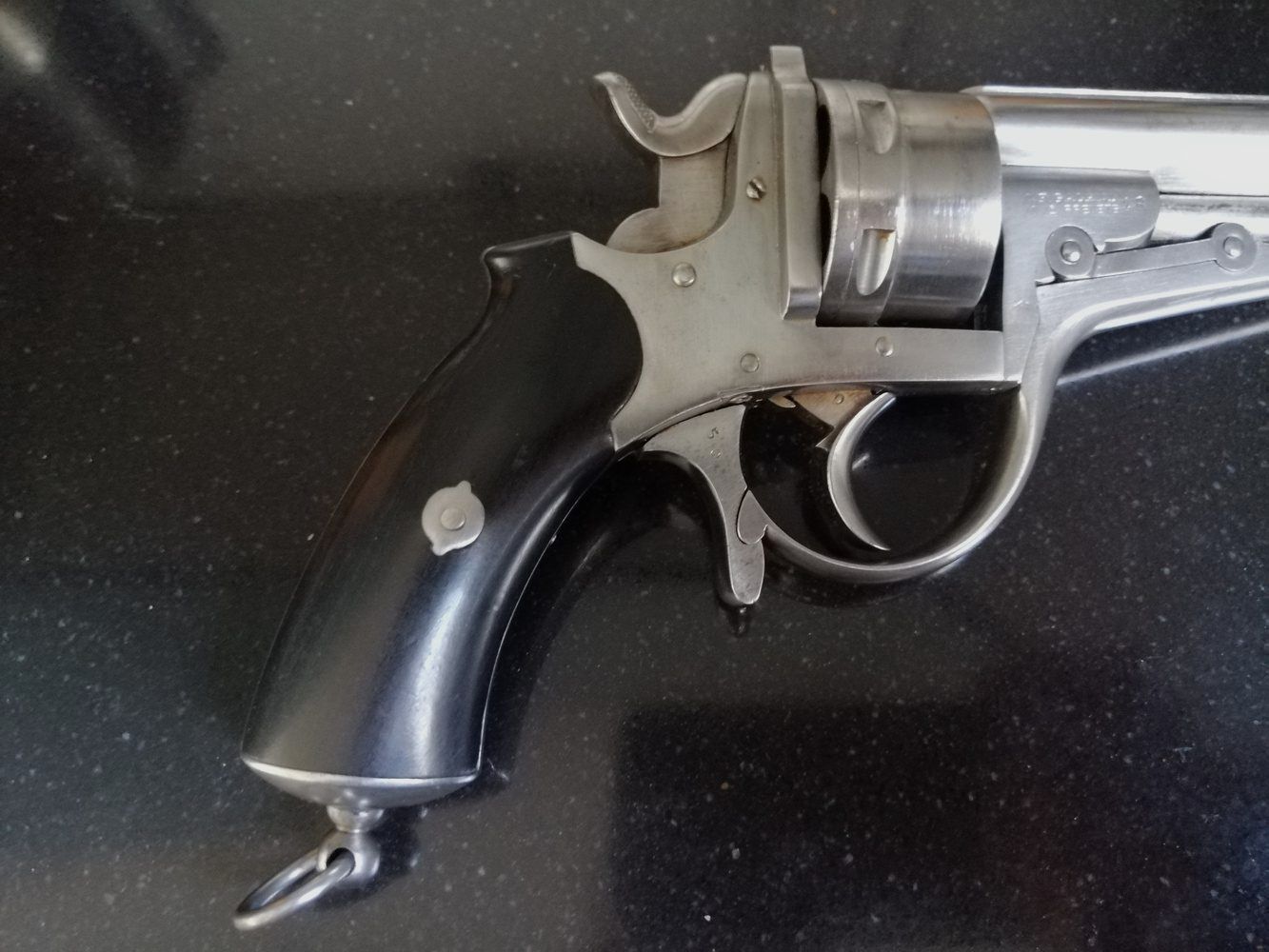
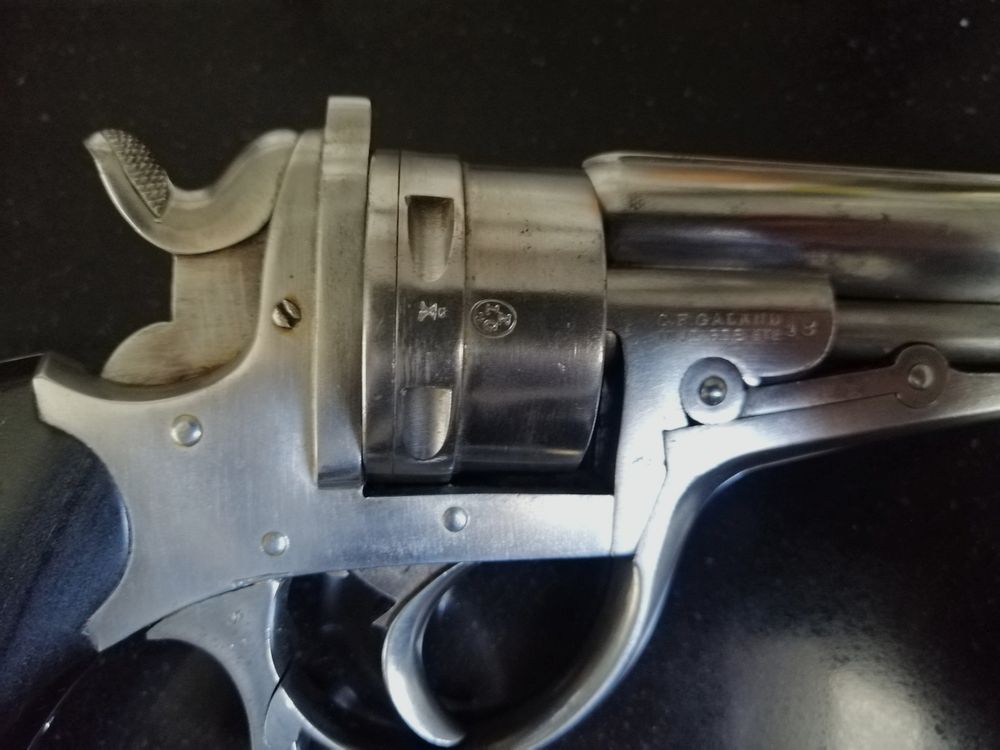
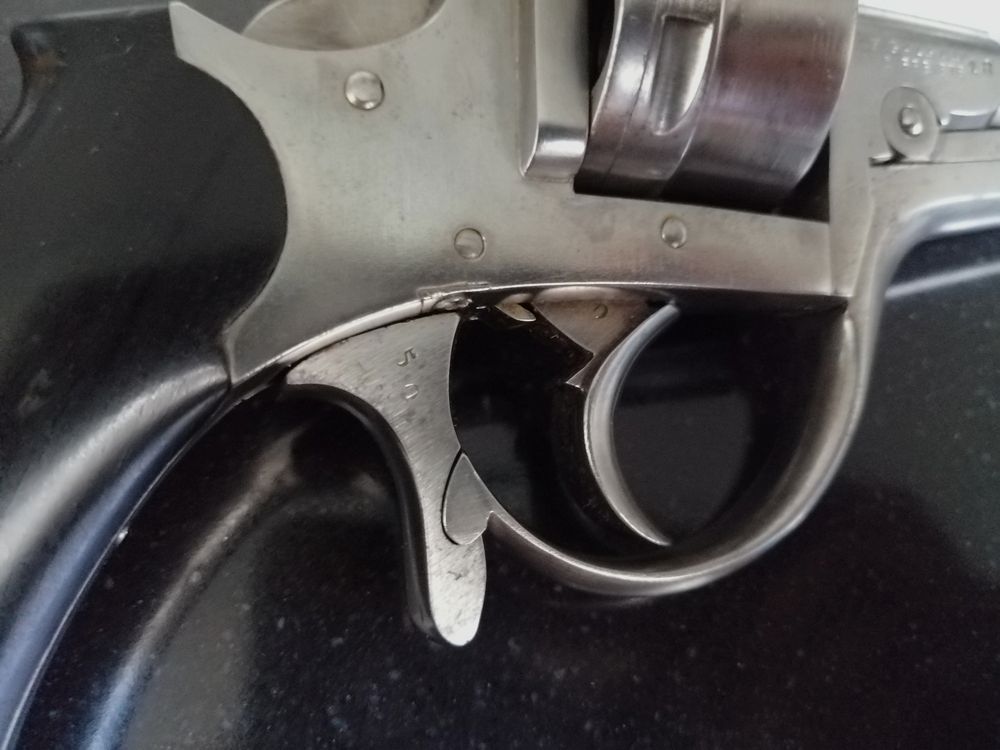
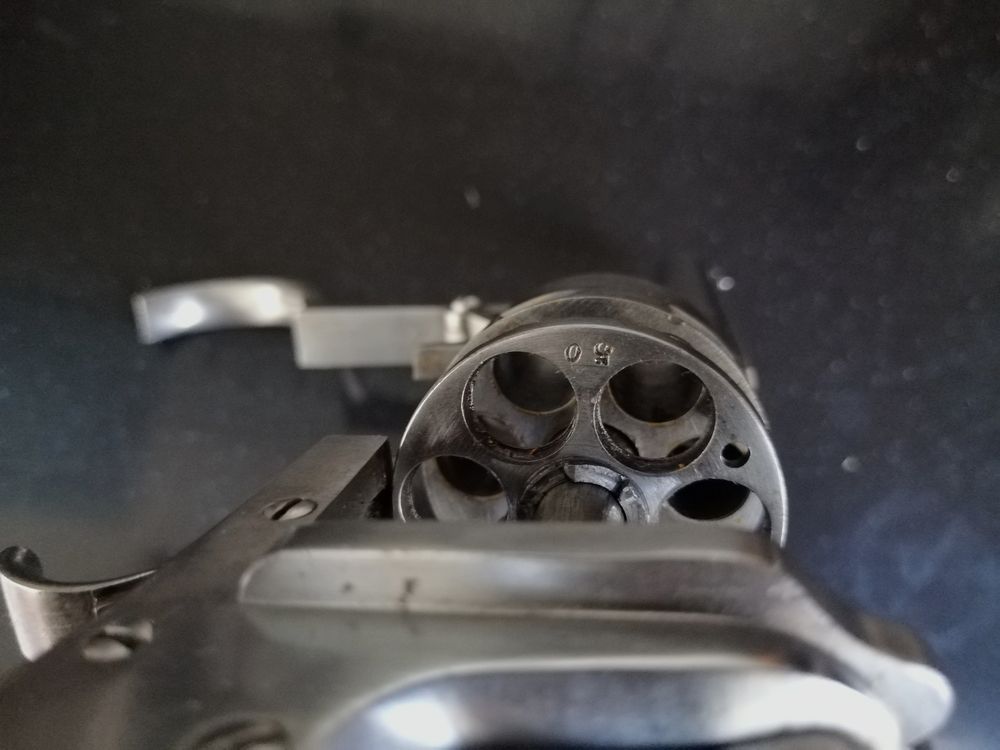
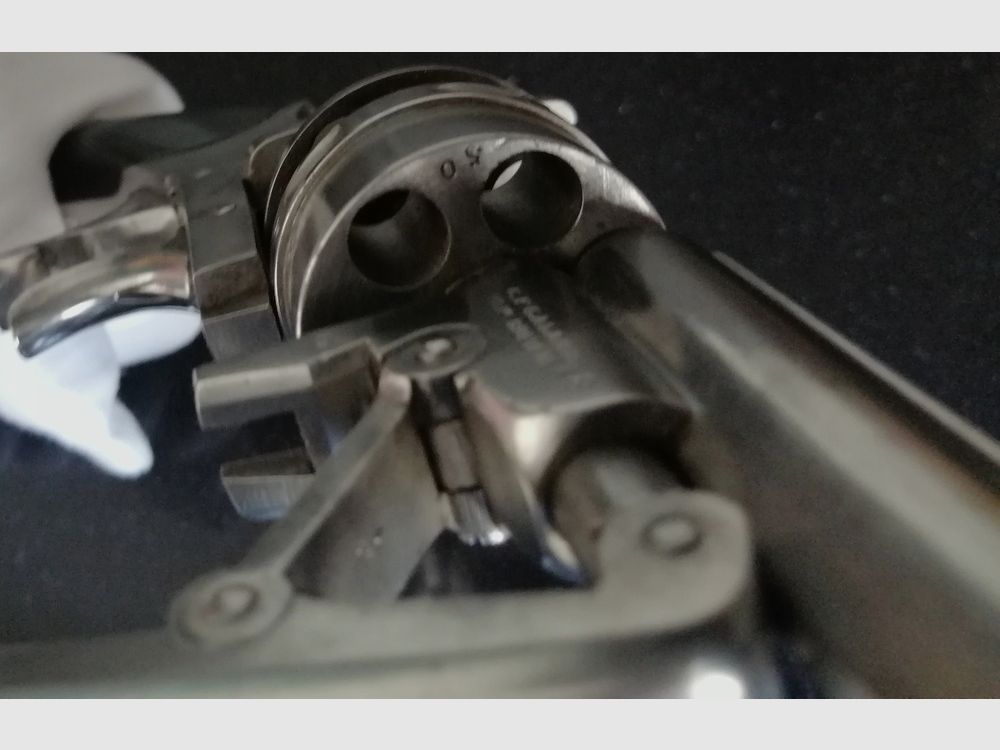
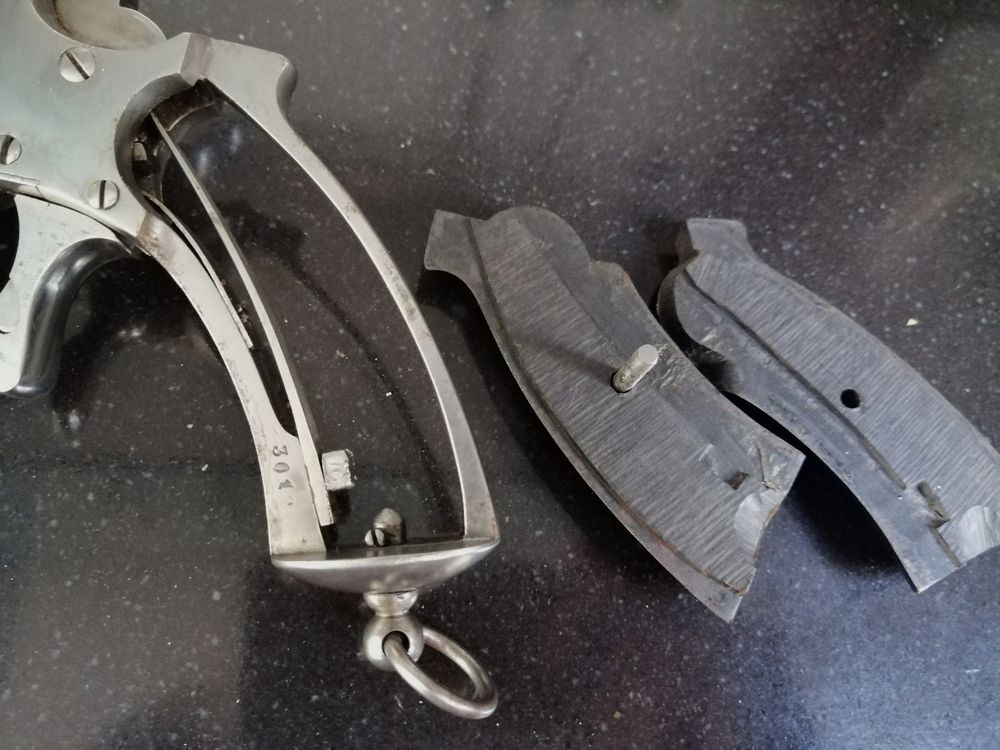
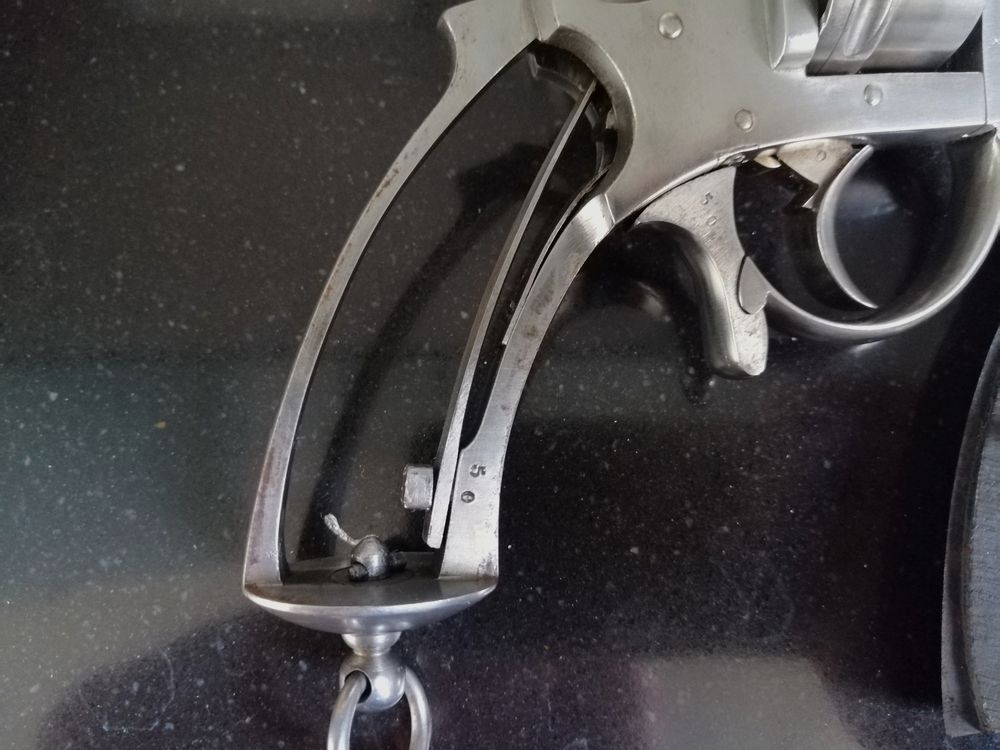
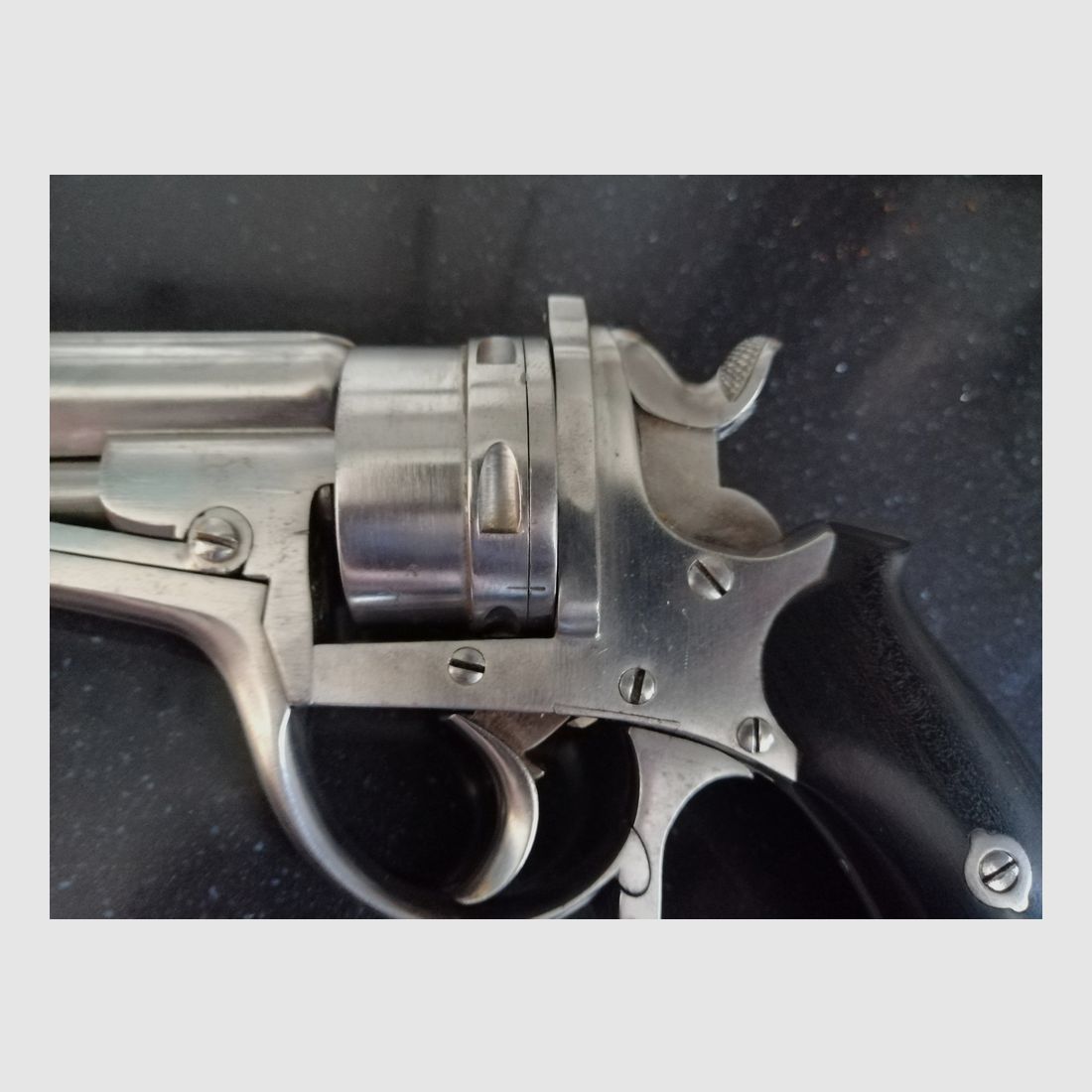
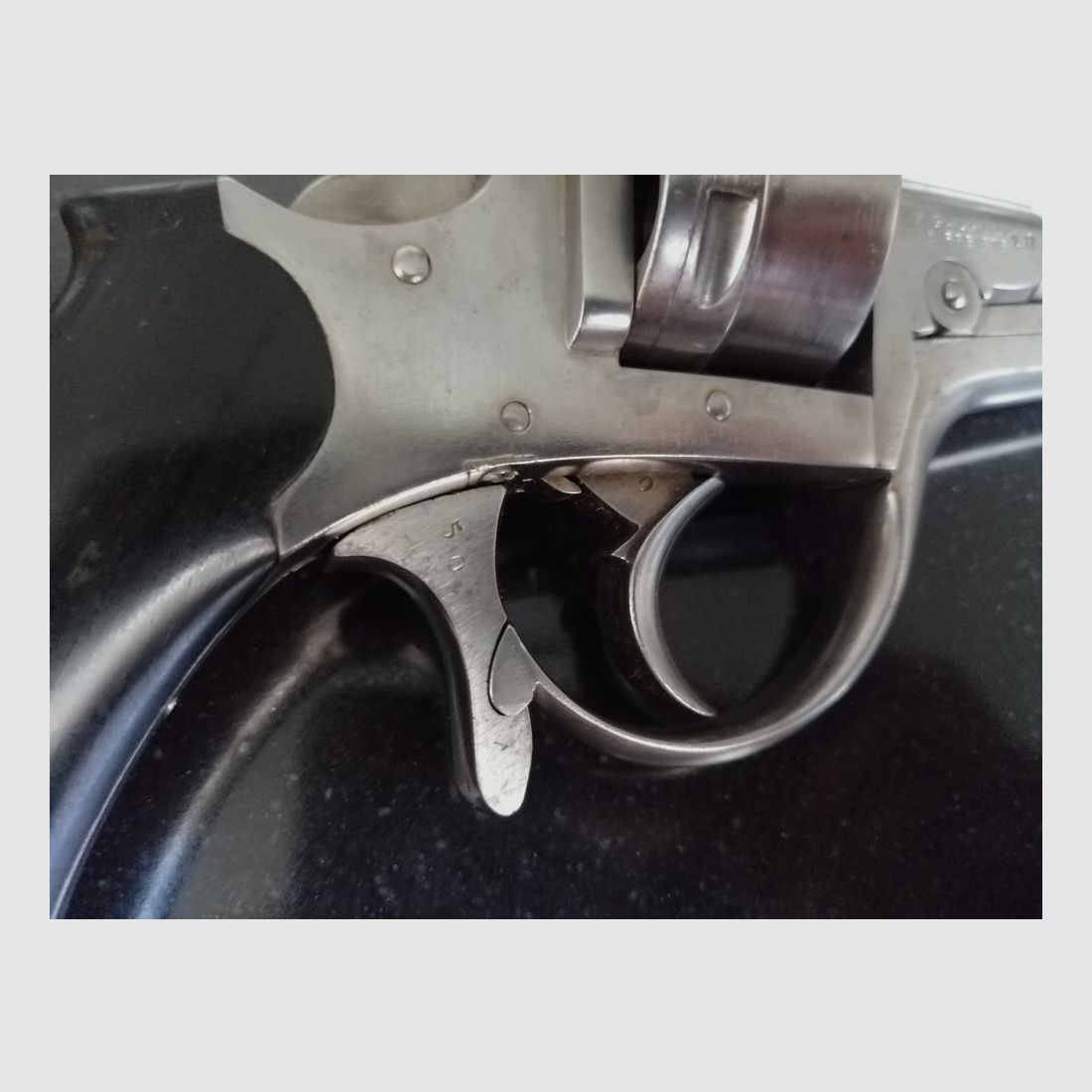
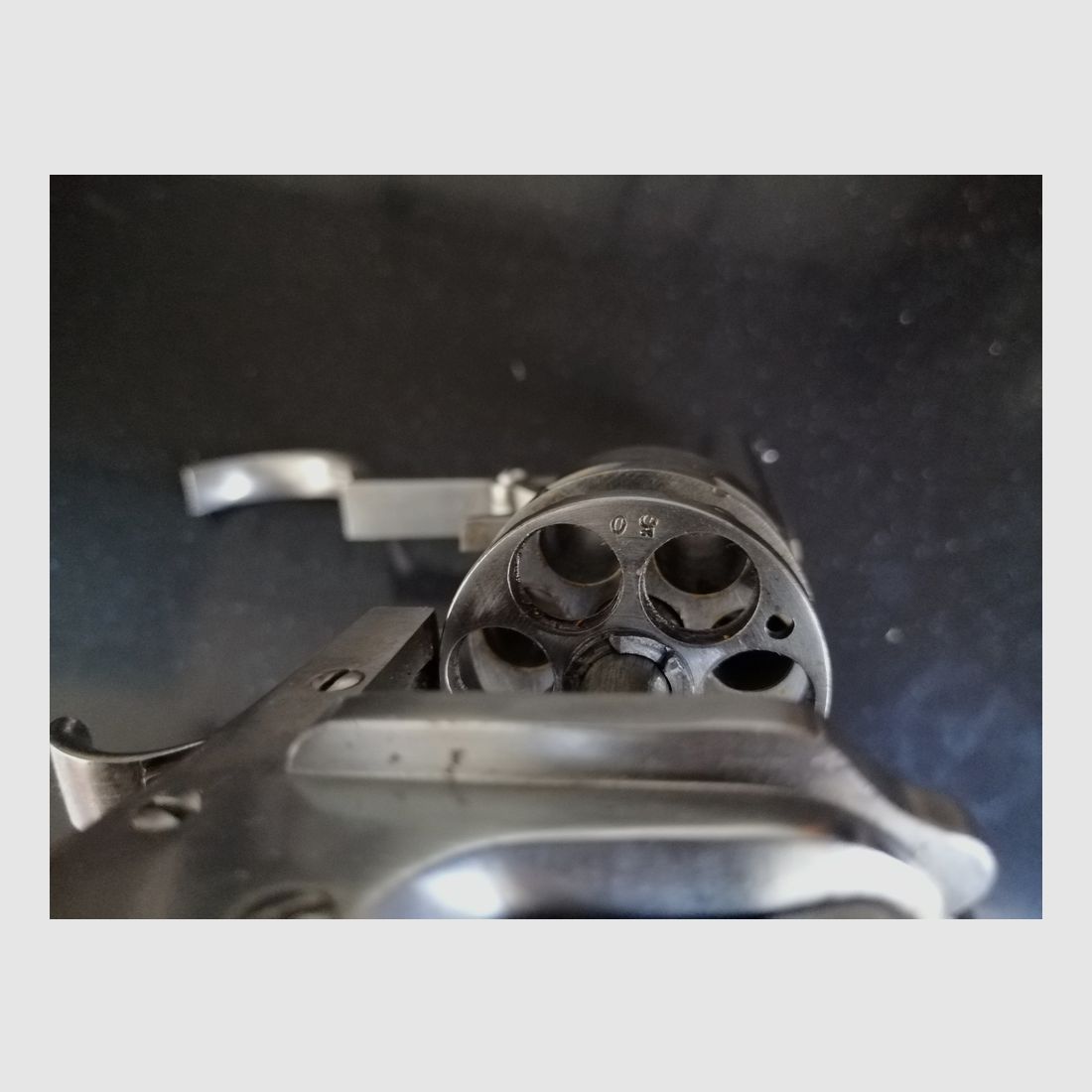
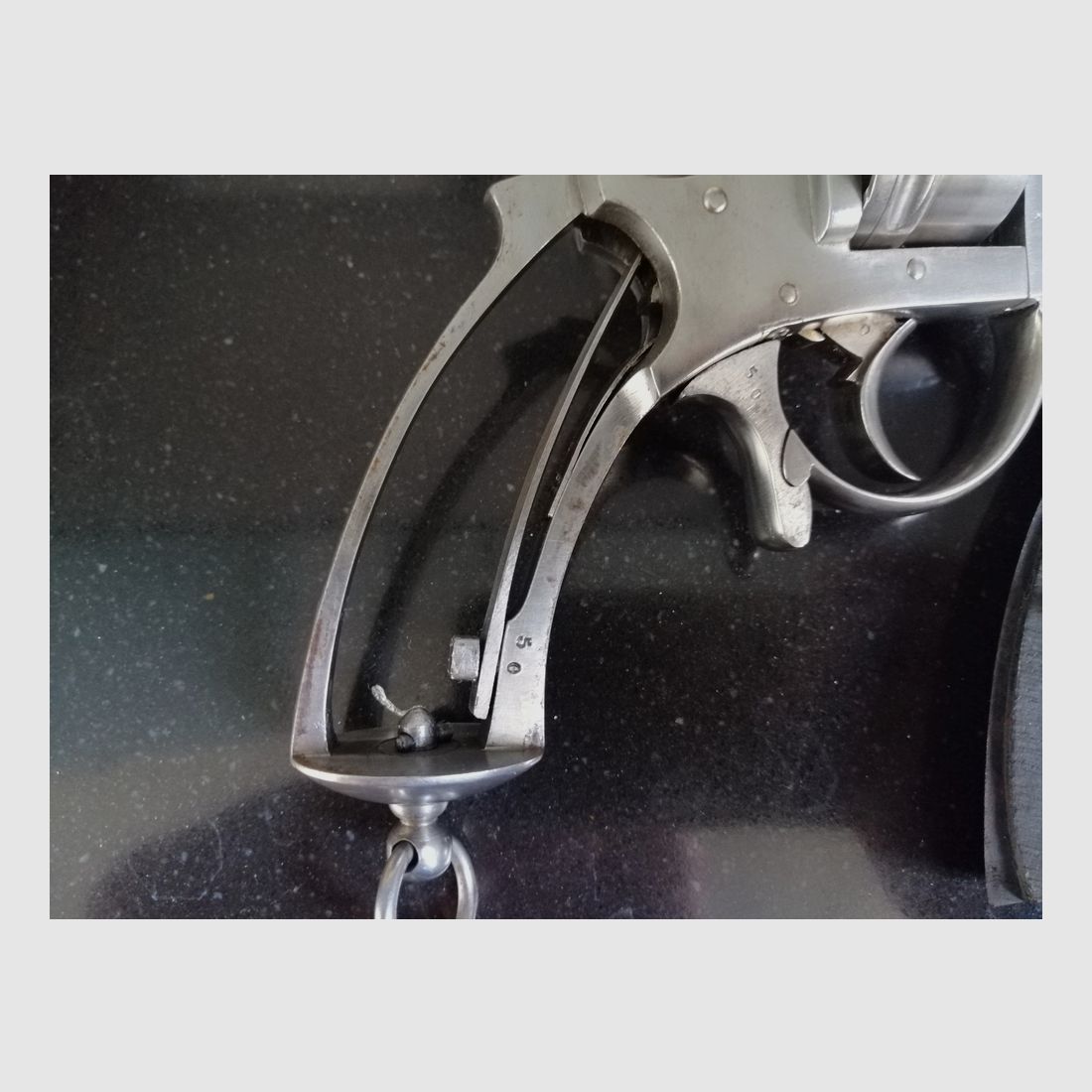
Our weapon is in impeccable mechanical condition, all springs very firm, no play or excessive wear clearance. The clicks are clear. The metal is in excellent condition with all its markings and stamps clearly visible. The parts are numbered 50. It is clearly marked on the frame "CF.Galand.invr.breveté -18". With number 50, is it one of the first made in Belgium? The Liège proof mark is well present on the cylinder and the control stamps are present everywhere.
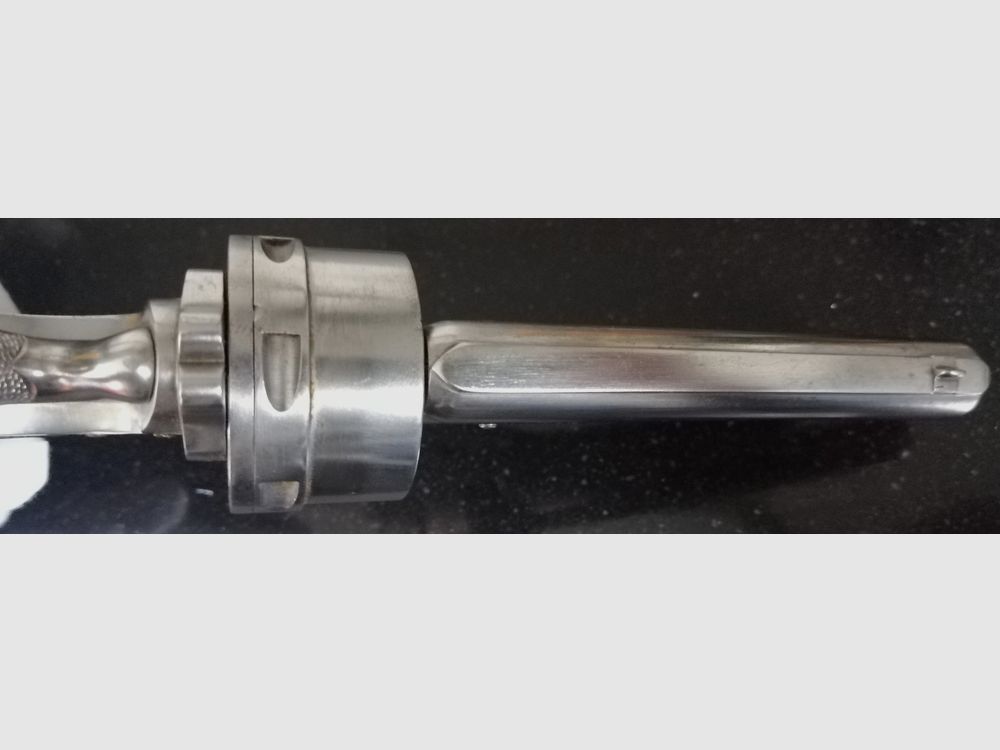
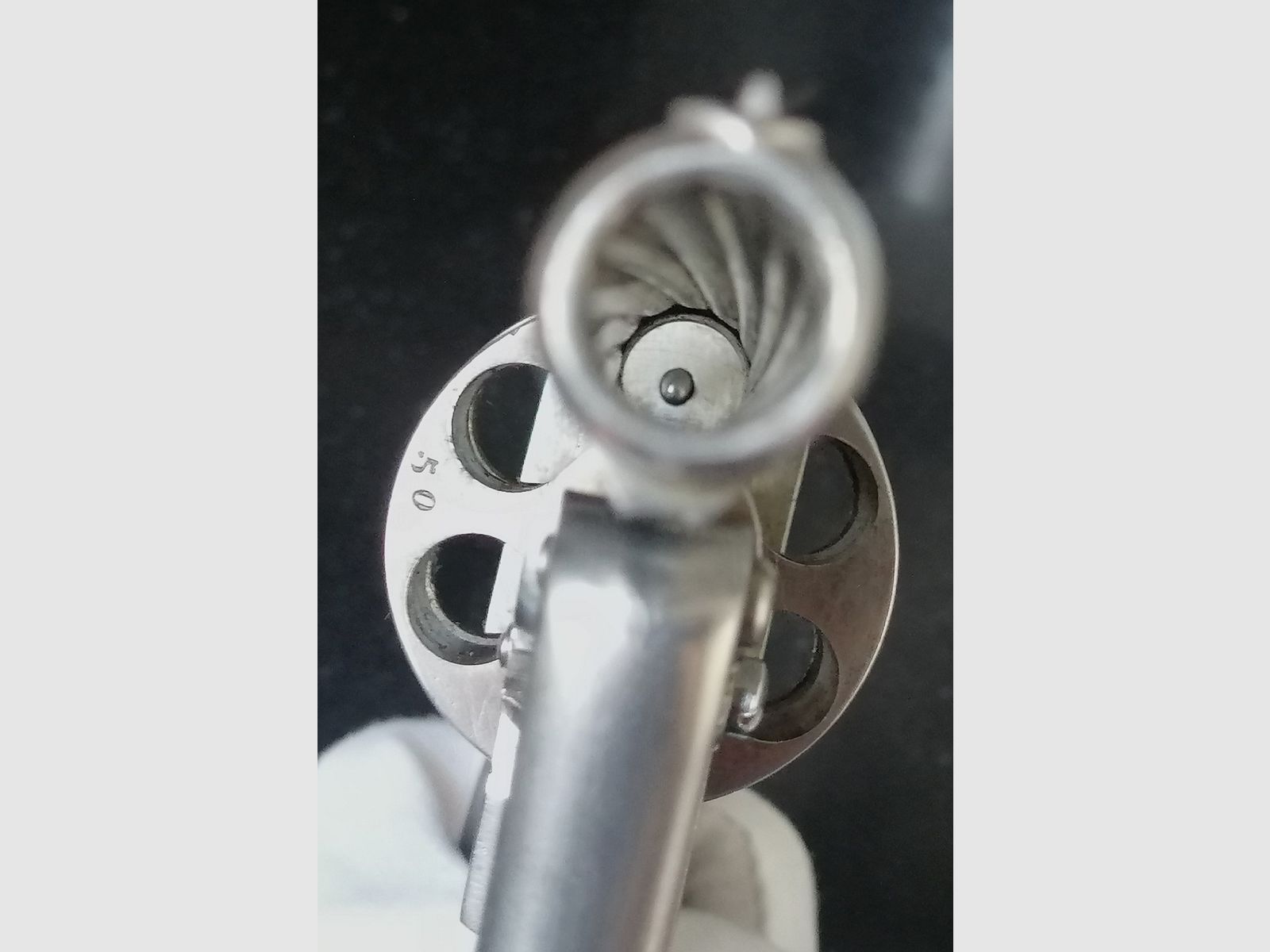
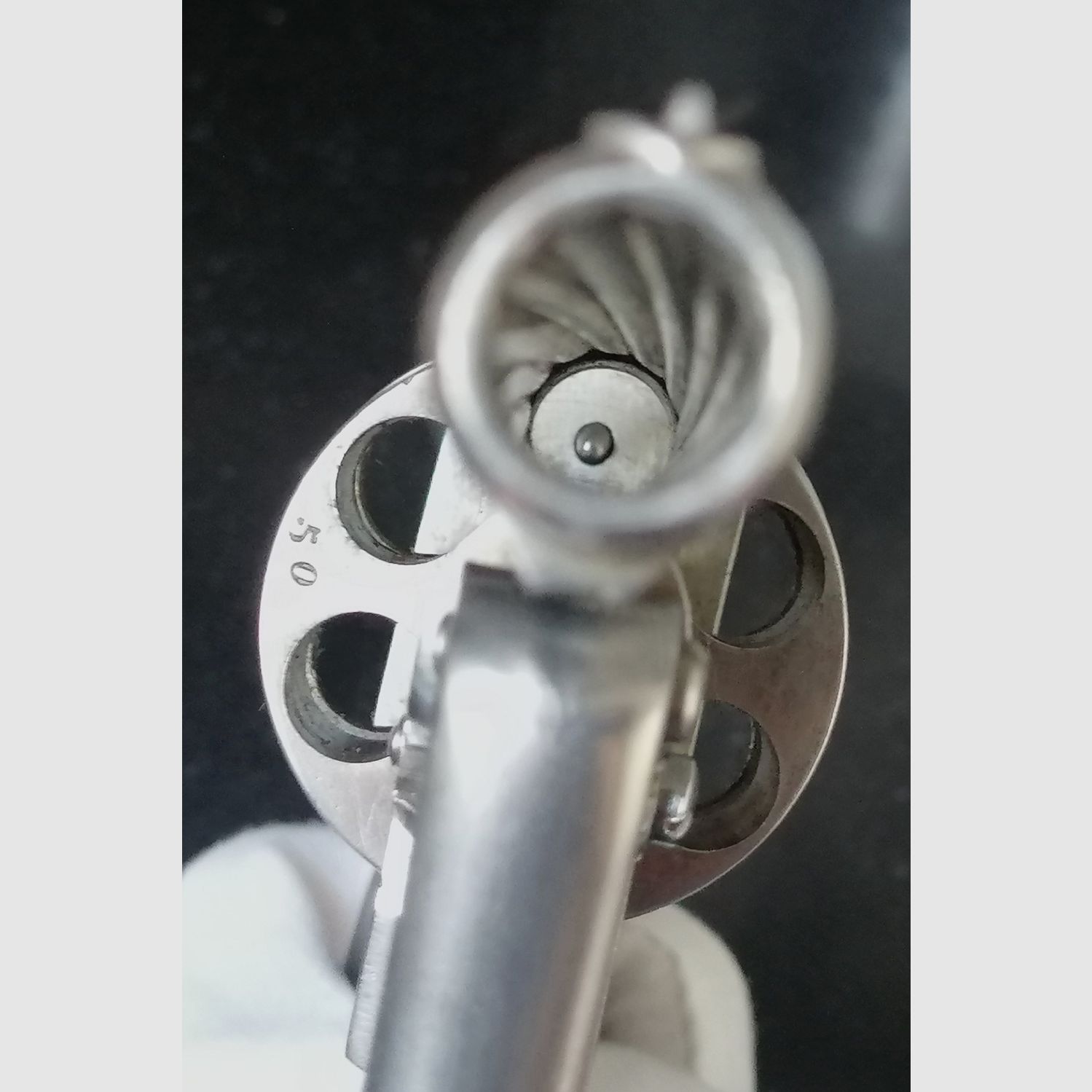
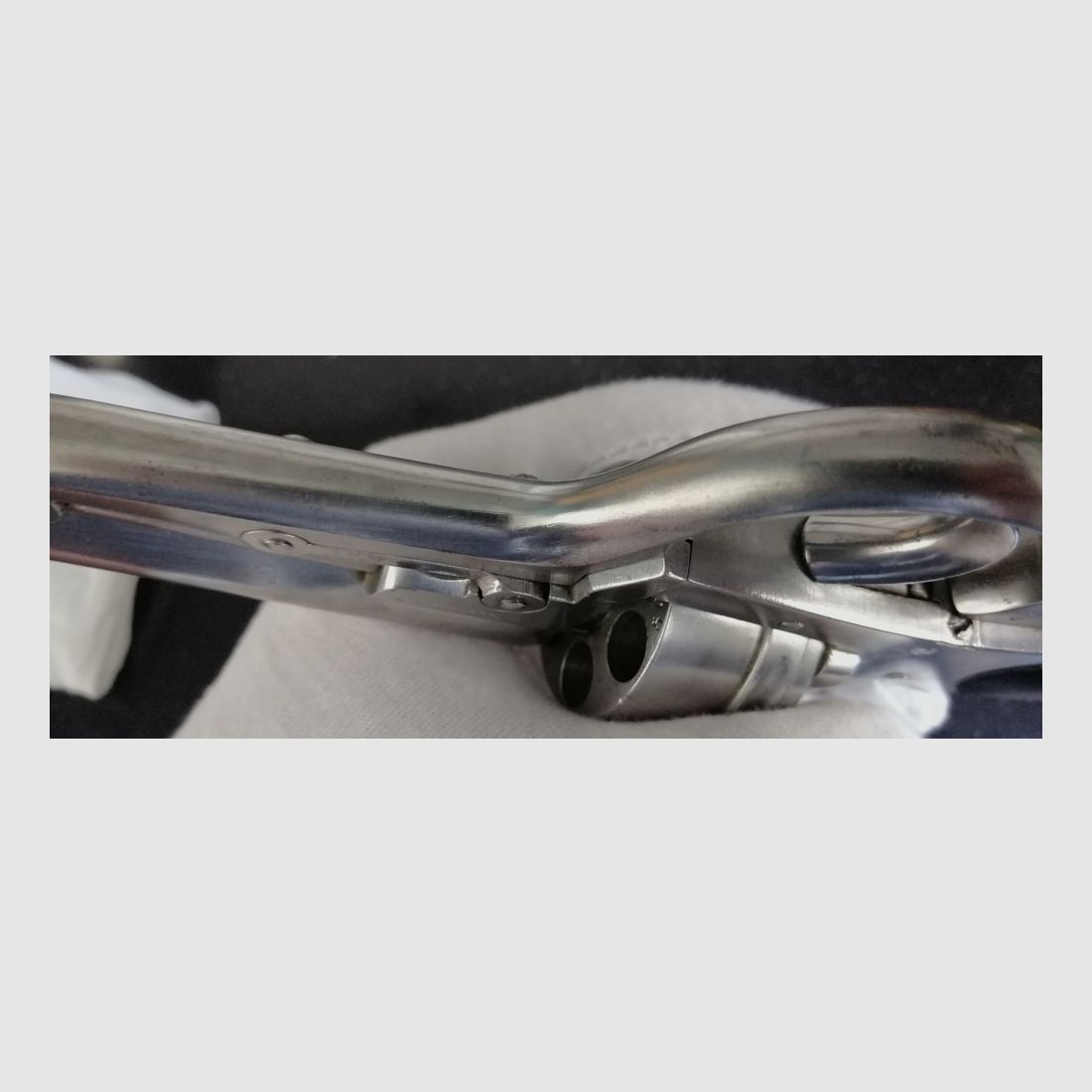
The cylinder and its chambers are in excellent condition as is the barrel with very nice rifling and an almost mirror finish (see photos).
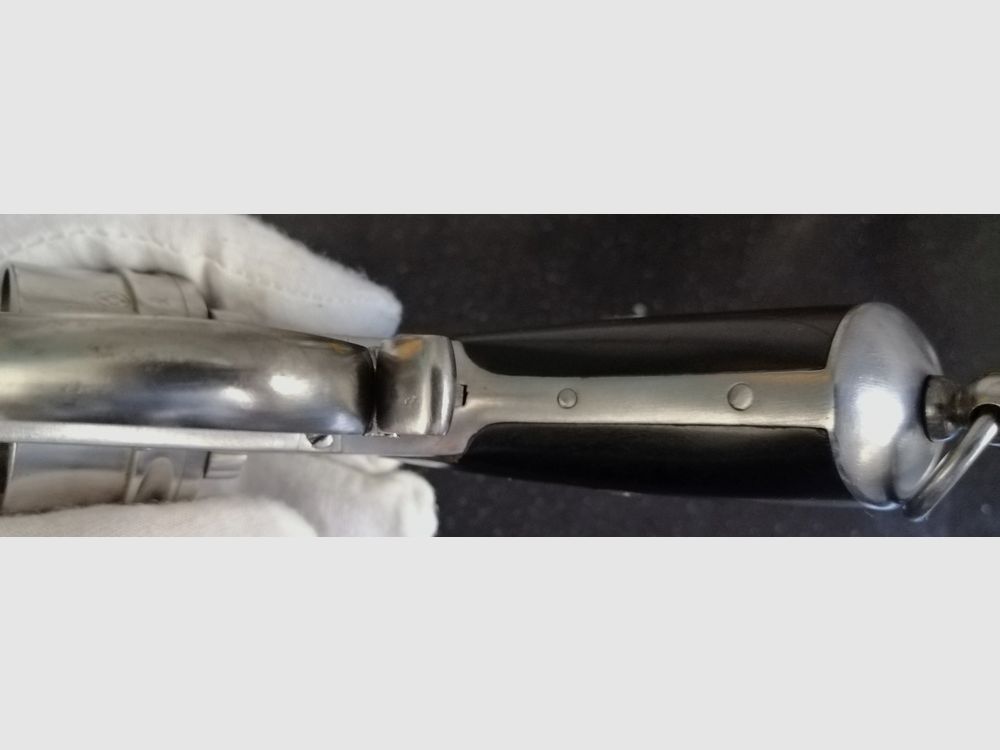
The grips are made of a hard and very dark wood like ebony and are also in excellent condition.
Overall the weapon is superb (see photos).
Beautiful rare weapon of an ingenious system that saw the 1870 battles due to its commercial success and technological advance – an essential addition for a fine handgun collection that can also perfectly complement a collection of French or European service weapons.
Category D weapon under CSI: CNI or passport required
Reminder: All collection, hunting, and shooting weapons are used and sold as is, without warranty.
All historical weapons of old manufacture sold as C or D, “Collection” or “Cow-boy shooting”, are collection weapons not proof-tested for shooting and not tested on a range. They have been visually inspected regarding their general condition but none have been used for shooting and are therefore sold as untested. Buyers wishing to use a weapon for shooting must imperatively contact the National Proof House of Saint Étienne beforehand, the only entity authorized to issue certificates
proof rounds prior to shooting use. (Show description in original language)
Très beau et peu courant revolver Galand en calibre 9mm et en six coups – les plus courants sont les civils en 12mm
Charles-François GALAND est un citoyen et inventeur français (1832-1900) qui travaillait à Liège.
Le revolver Galand (Galand-Sommerville ou Galand-Perrin) est un revolver à cadre ouvert et double action, breveté en 1868.
La principale caractéristique de cette arme est un ingénieux d’extraction et alimentation collective par soulèvement du pontet situé sous le canon et la carcasse. En actionnant le crochet attaché au pontet, le canon et le barillet se déplacent longitudinalement vers l’avant. La plaque de l’extracteur est bloquée mais le barillet continue sa course en avant: les douilles sont collectivement extraites et peuvent être remplacées par des nouvelles cartouches. Puis le levier est remis en place et l’arme se verrouille. On l’a appelé aussi Galand-Perrin car il tirait une cartouche Perrin à gros bourrelet en calibre 7,9 et 12 mm.
Les premiers exemplaires ont été fabriqués en Grande-Bretagne à Birmingham En octobre 1868, la fabrication fût aussi effectuée à Liège et l’arme, très bien conçue, fût un succès.
En France, il est devenu l’arme de prédilection d’achat privé de nombre d’officiers avant et pendant la guerre de 1870 qui le préféraient, à juste titre, aux réglementaire 1822 ou 1833. Ce nouveau revolver à percussion centrale et extraction automatique était en effet très supérieur aux bons vieux « pistons ».
Pour le marché civil, ce revolver fut également commercialisé en 12 mm, en 9mm dit « de ceinture » (plus petit) et dans une version sport/tir d’épaule avec le Galand Sportman, la même arme mais munie d’une crosse squelette amovible.
Surtout la Marine impériale russe a adopté le revolver Galand le 12 mars 1871 sous l’appellation « pistolet revolver d’abordage modèle 1870 » en calibre 9MM et dans le même format que le notre suivi de peu par la Roumanie. L’arme fut aussi produite par N.I. Goltiakoff à Toula en 1878.
Après avoir participé à la guerre de 1870-71, Galand proposa une version améliorée de son modèle 1868, l’armée lui préféra une arme à cadre fermé. C’est le bon vieux 1873 qui lui sera préféré.
Notre arme est dans un état mécanique impeccable, tout ressorts bien fermes, pas de jeu ni d’entrefer d’usage excessif. Les cliquetis sont nets. Le métal est en excellent état avec tous ses marquage et poinçons bien visibles. Les pièces sont au numéro 50. Il est clairement marqué sur le cadre » CF.Galand.invr.breveté -18″ Avec le numéro 50, est-ce l’un des premiers fabriqués en Belgique ? le poinçon de Liège est bien présent sur le barillet et les poinçons de maitrise sont présent un peu partout.
Le barillet et ses chambres sont en excellent état de même que le canon avec des rayures très belles et un fini quasi miroir (voir photos).
Les plaquettes sont dans un bois dur et très sombre genre ébène et en excellent état aussi.
Au global l’arme est superbe (voir photos).
Belle arme rare d’un système ingénieux qui a connu les combats de 1870 de par son succès commercial et son avance technologique – un ajout indispensable pour une belle collection d’armes de poing qui peut parfaitement s’ajouter également à une collection d’armes réglementaires françaises ou européennes.
Arme de catégorie D au CSI : CNI ou passeport obligatoire
Rappel : Toutes les armes de collection, de chasse, et de tir sont d’occasion et sont vendues dans l’état, sans garantie.
Toutes les armes historiques de fabrication ancienne vendues en tant que C ou D, “Collection” ou “Cow-boy shooting” , sont des armes de collection non éprouvées pour le tir et non testées en stand. Elles ont été inspectées visuellement relativement à leur état général mais aucune n’a été utilisée au tir et elles sont donc vendues comme non testées. L’acquéreur désirant utiliser une arme pour le tir devra impérativement se rapprocher préalablement du banc National d’Épreuve de Saint Étienne, seule entité habilitée à délivrer des certifications d’épreuves préalable à un usage de tir.