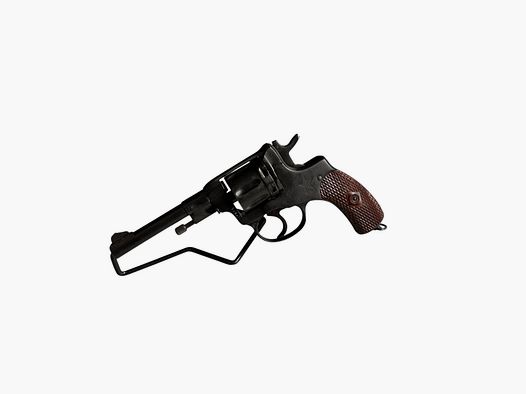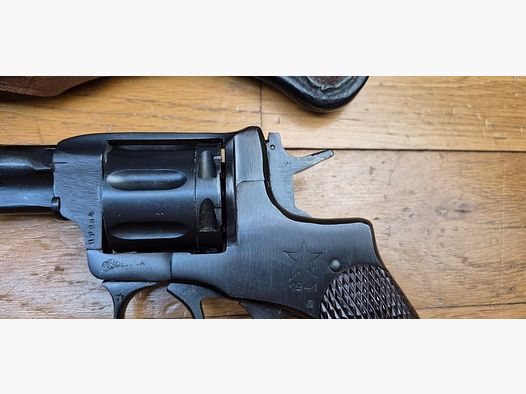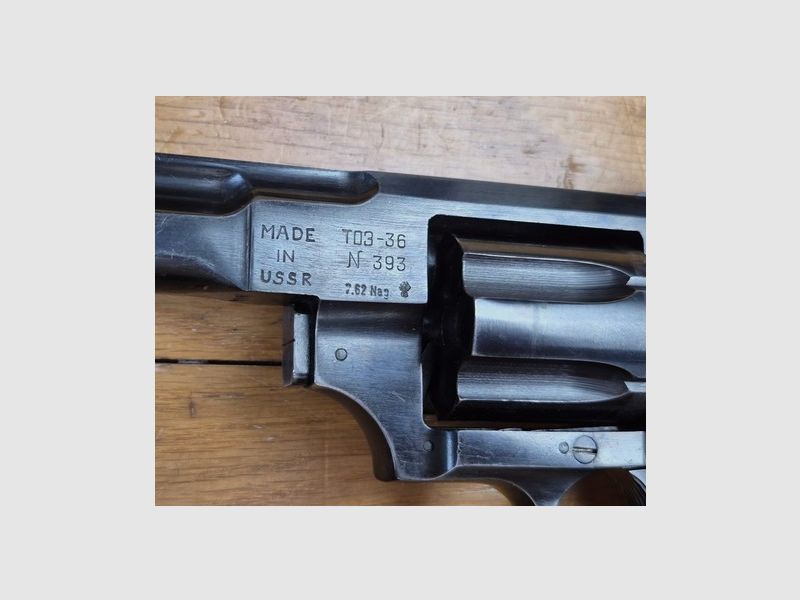


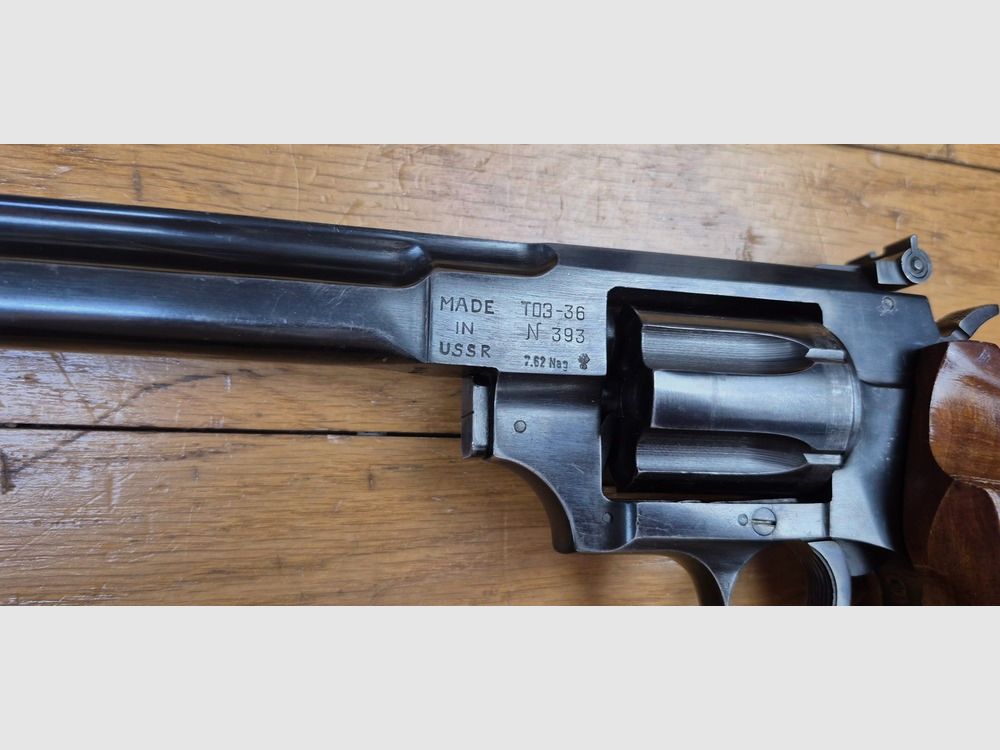


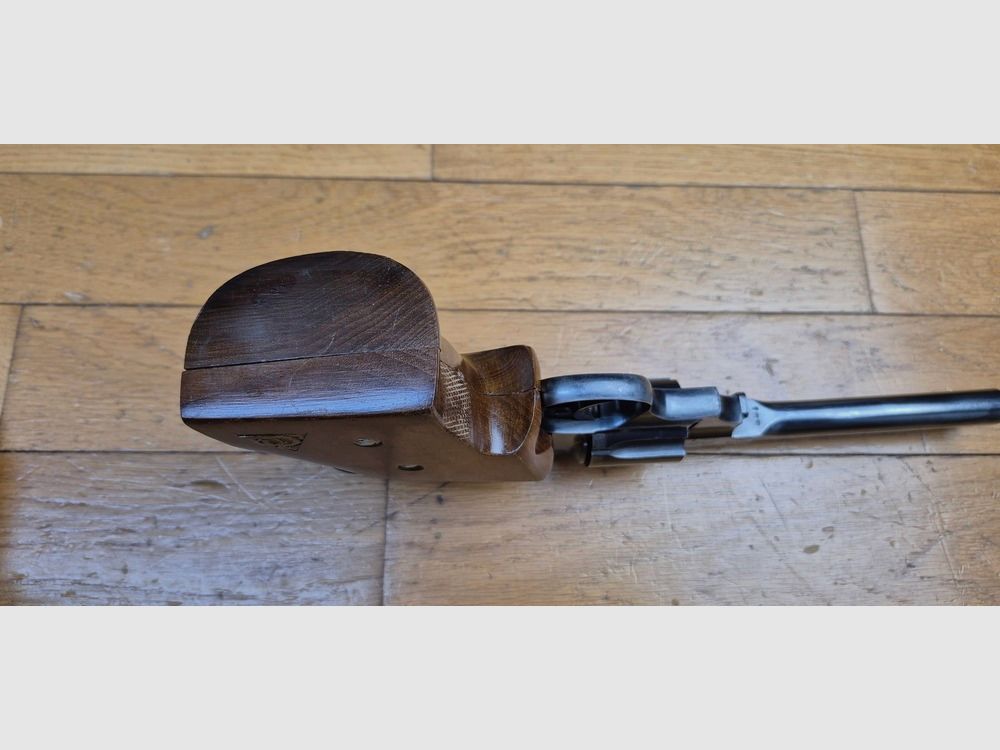

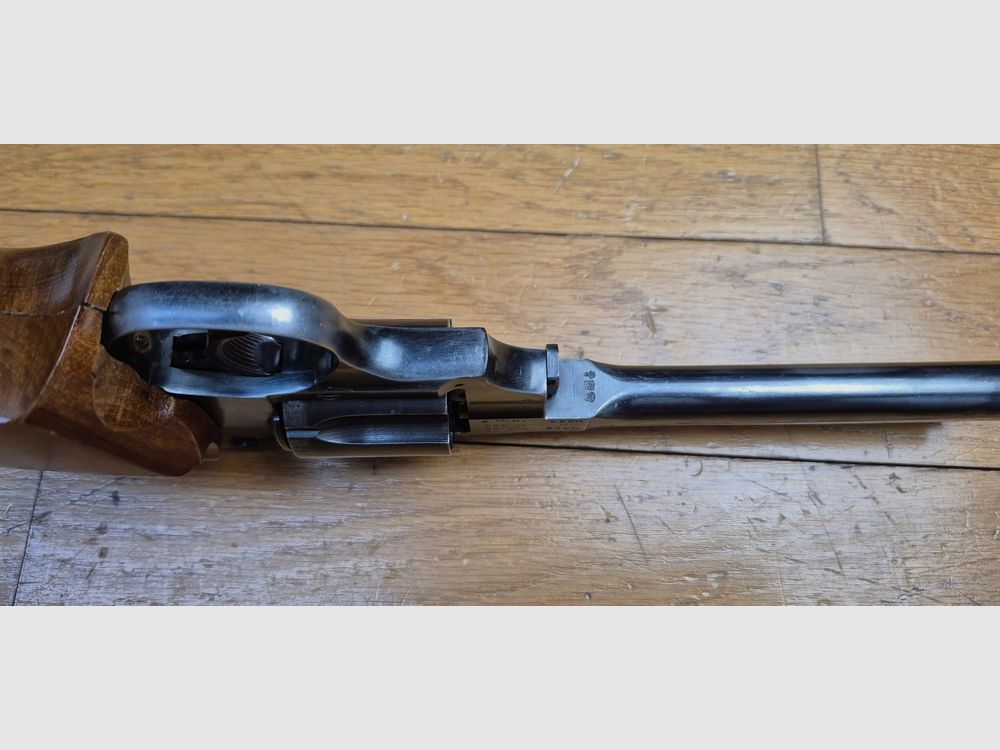
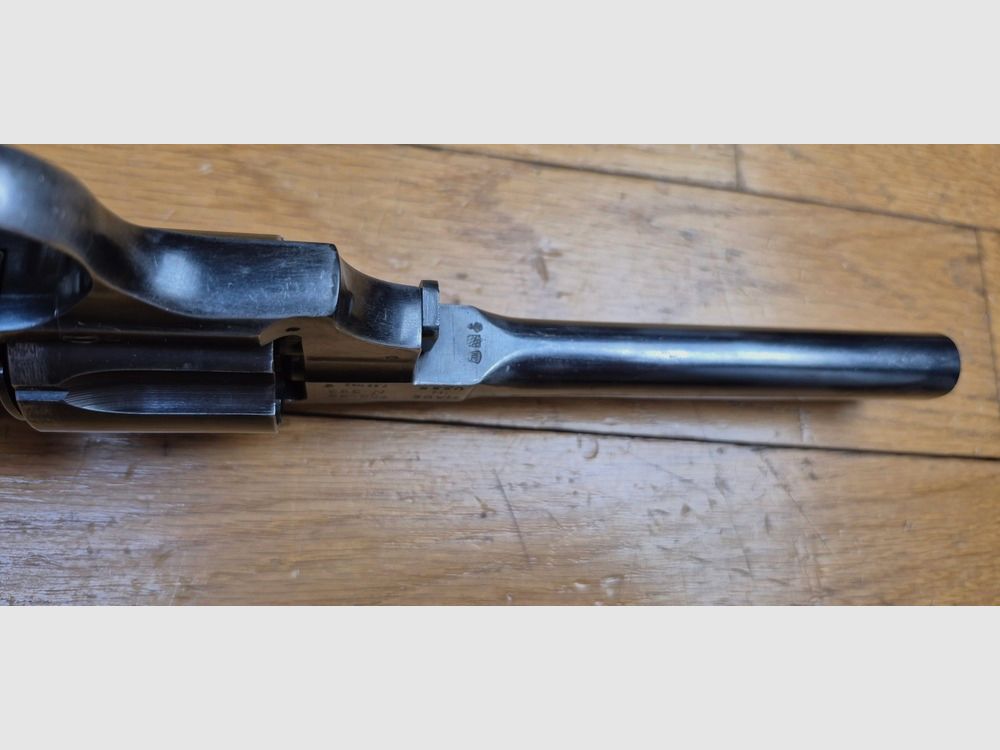

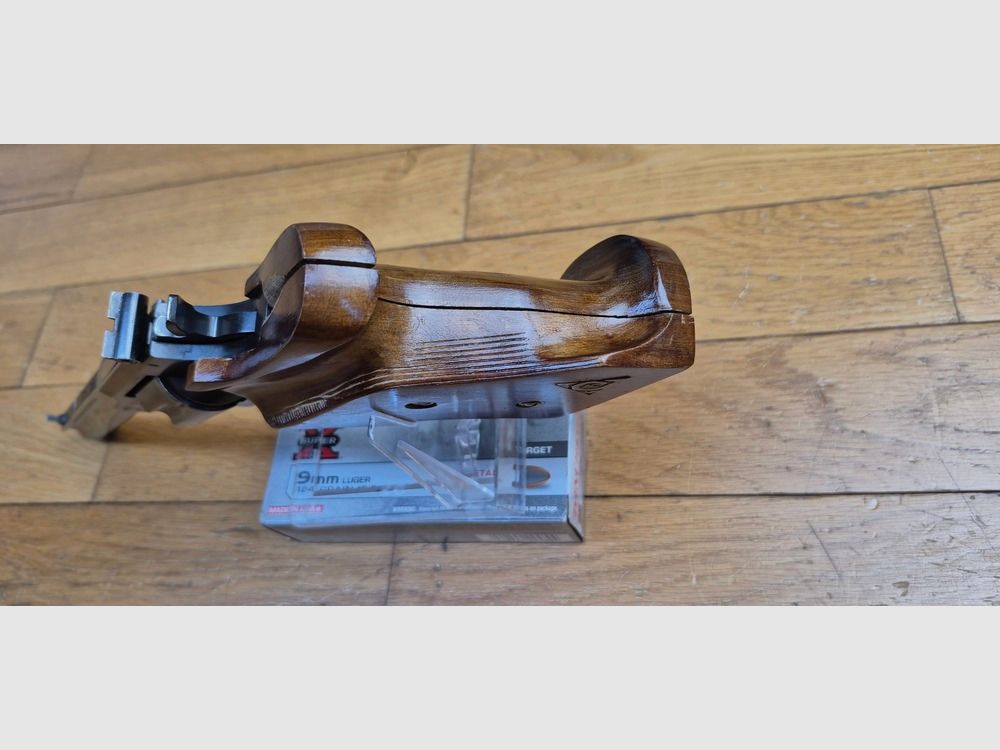


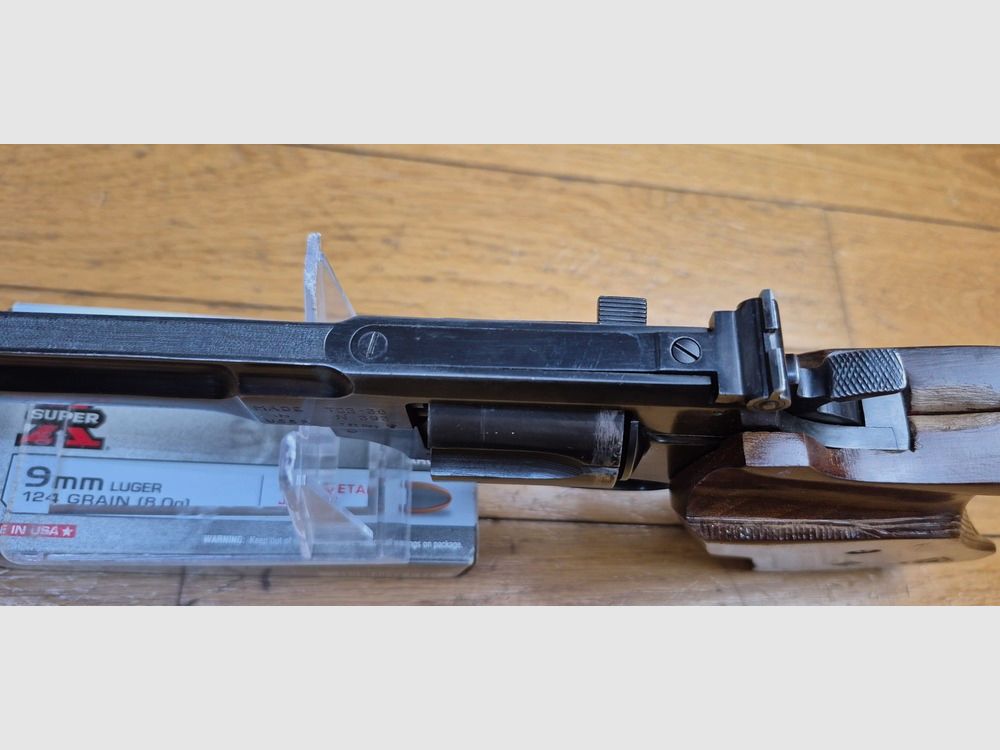

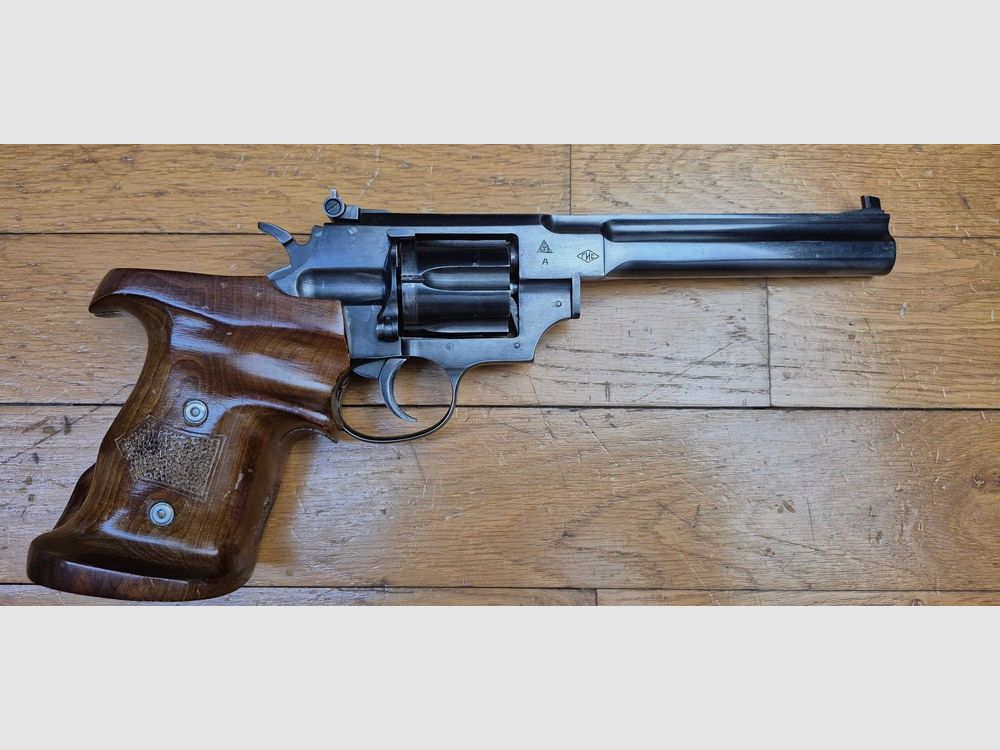

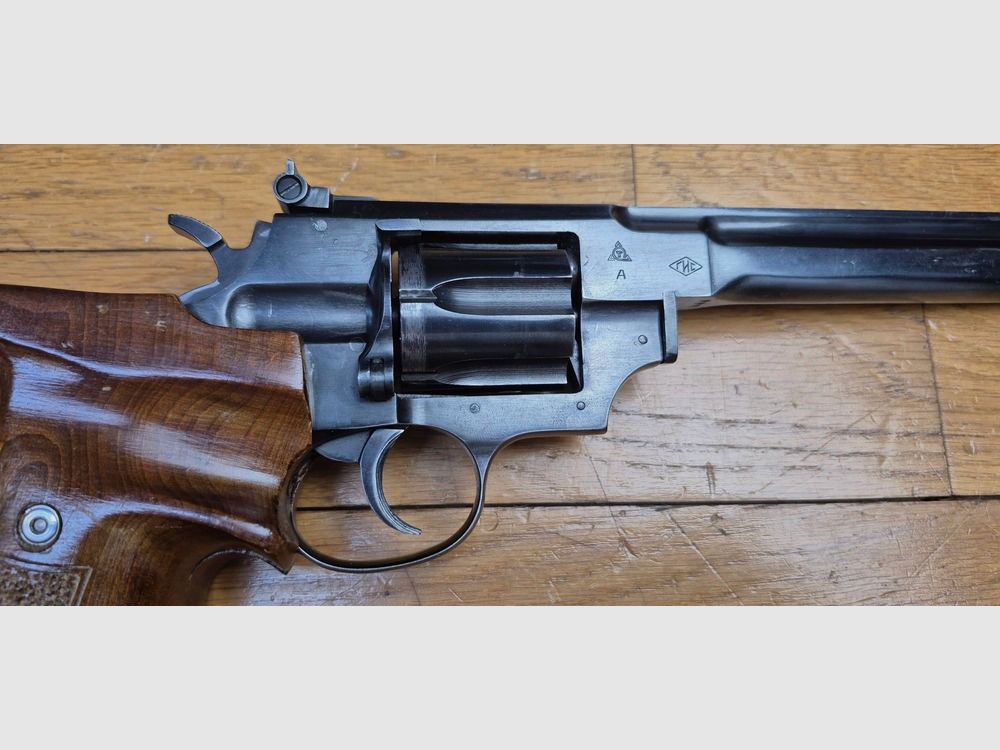
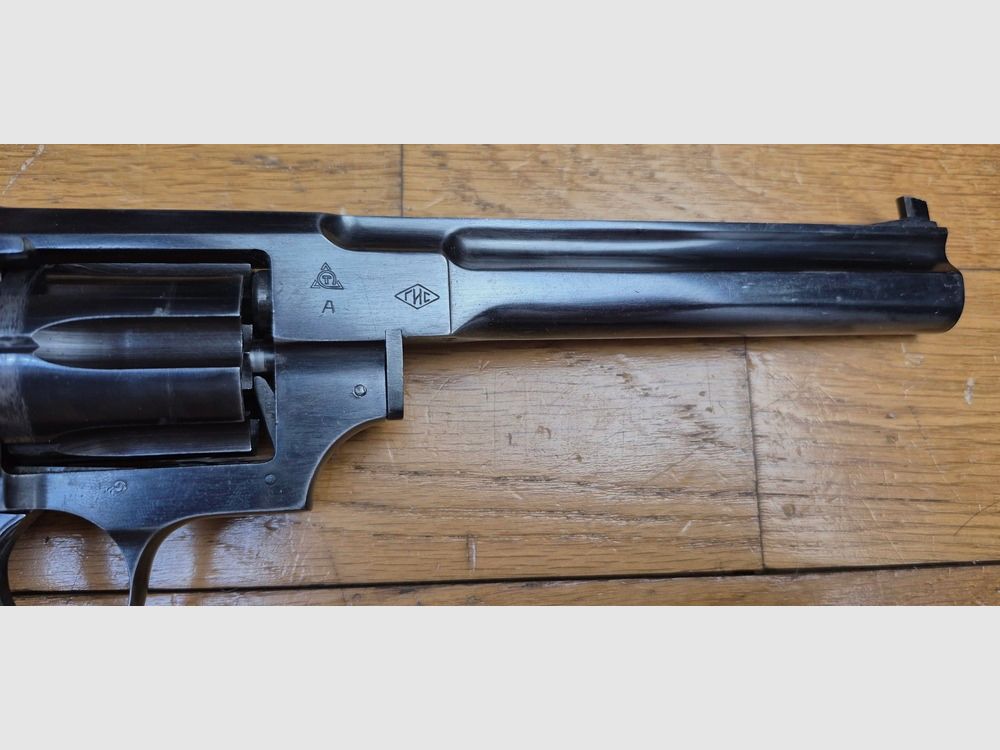

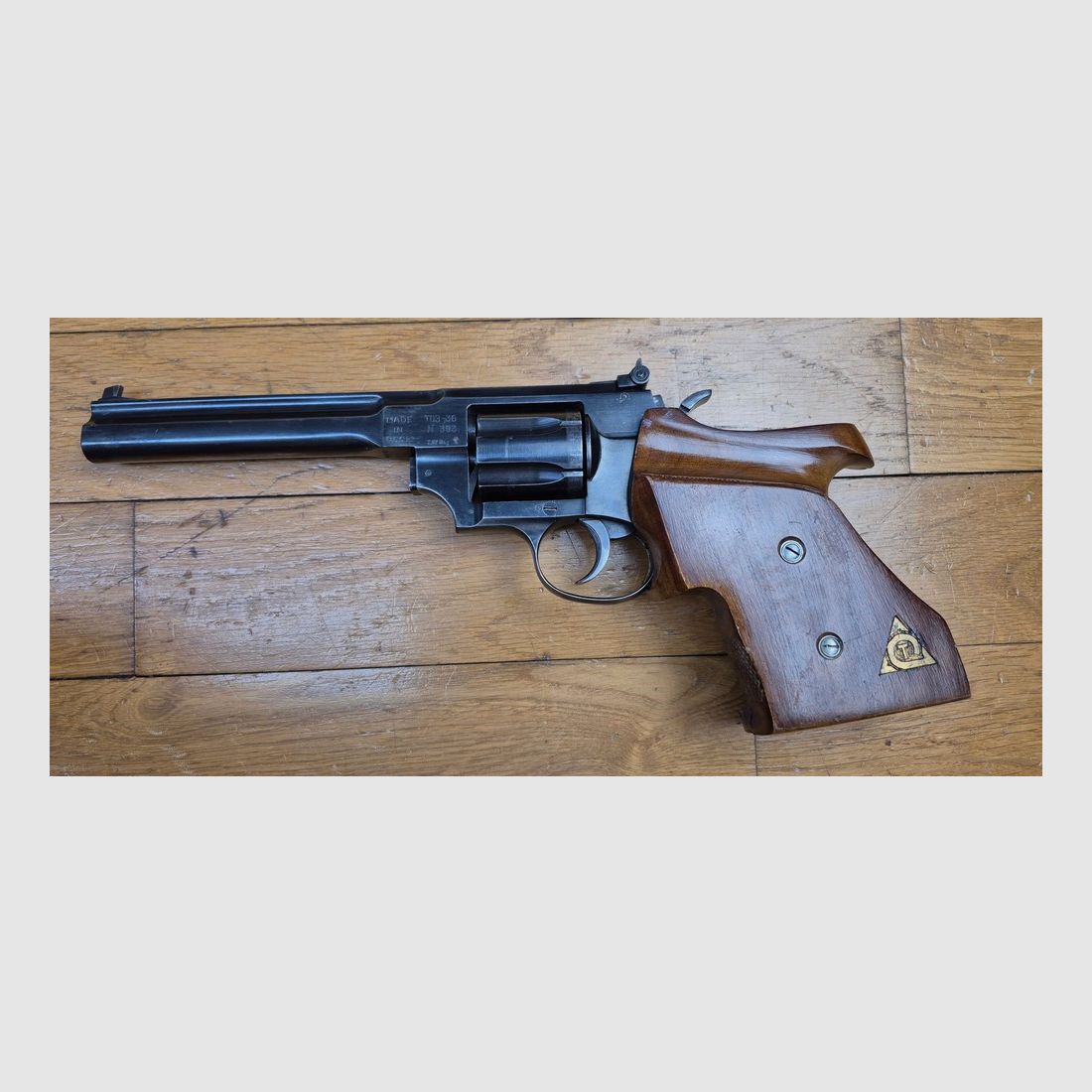


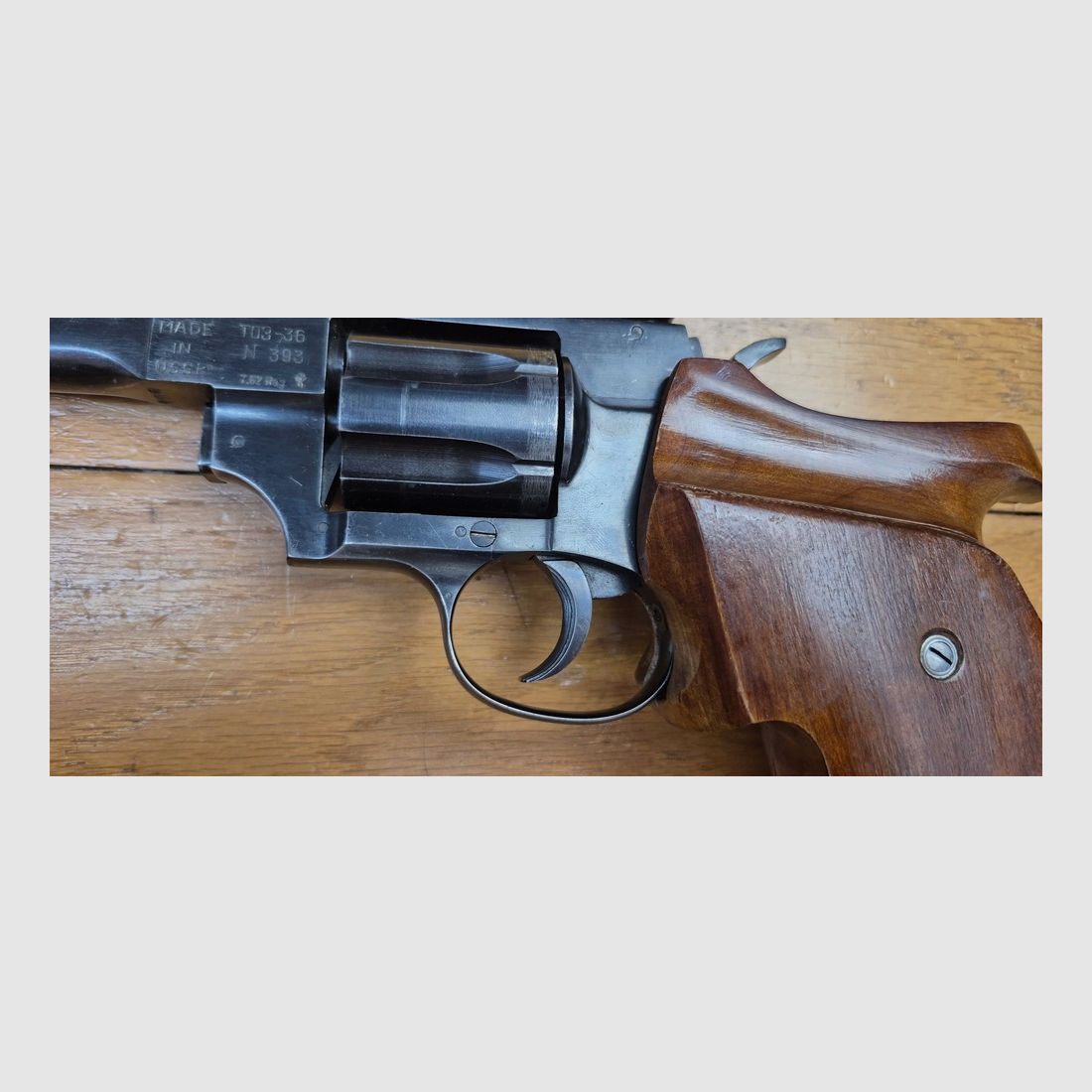


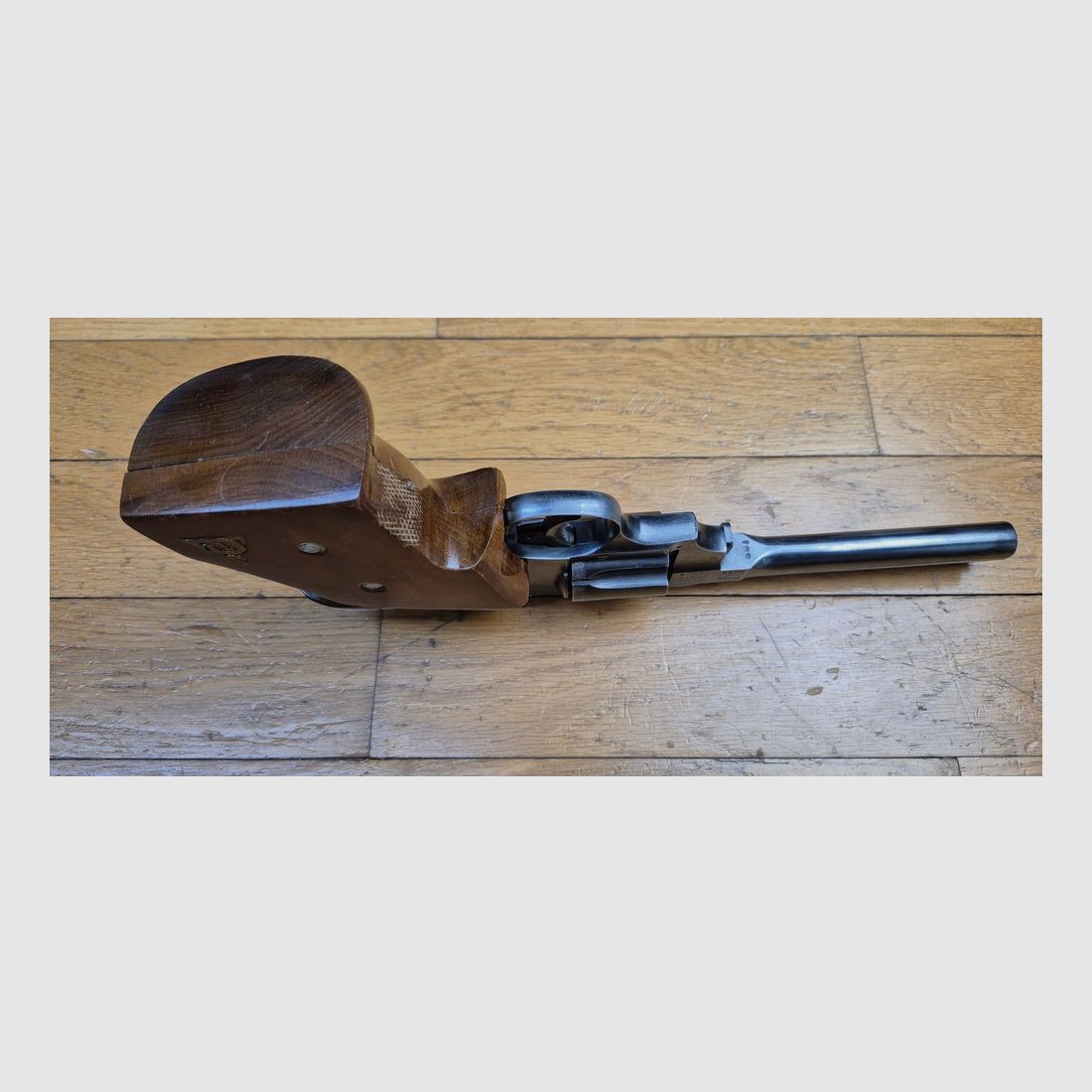

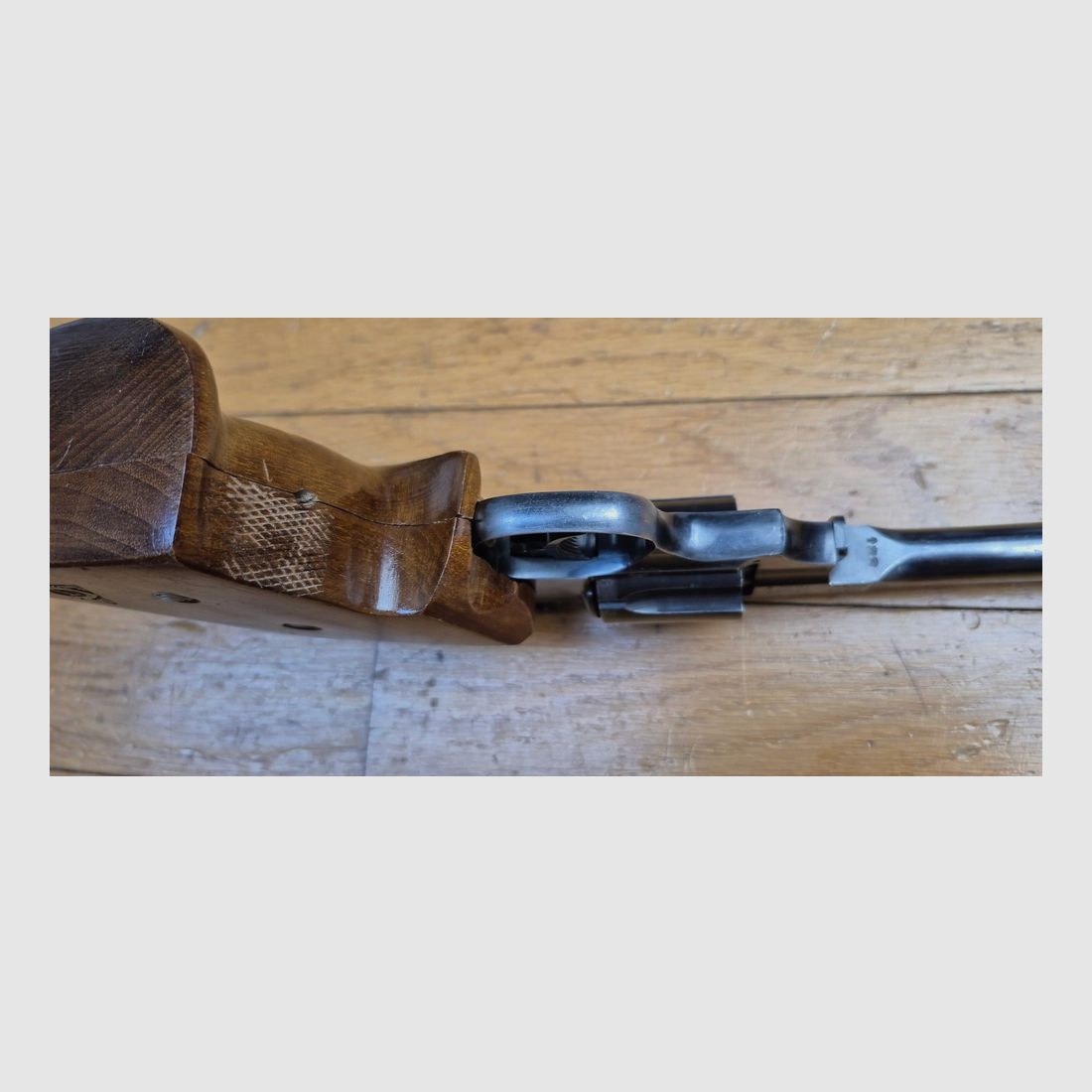





Rare Soviet revolver TOZ-36 – Single action competition firearm in Nagant system – Cal. 7.62×38 Nagant – Tula – 6 Rounds (not 7!) – Competition grip – Very rare firearm in excellent condition.
≈ $1,209
Price at the dealer: 1,100 €. Converted at the ECB rate as of November 20, 2026.
Purchase permit required
75002 Paris, France
15
ID: 10338453
Purchase from outside the EU: The firearm goes through an importer in your country, the dealer handles the export.
How buying from Europe works
Shop safely with Gunfinder
Our AI-powered seller identity verification makes Gunfinder the safest marketplace online.
Learn more
Details
- Original language
- French
- Category
- Purchase eligibility
- Required
- Condition
- New
- Location
- 🇫🇷 75002 Paris, France
- Availability
- In stock
Freshness
This listing is based on a mirrored offer, where the listing data was synced to us from a shop, dealer, or external marketplace. Please note that temporary price discrepancies may occur due to possible delays in data transmission.
- Source
- Flingus Maximus
- Last checked with the dealer
- 1 day ago
Description
Note:
The item is located abroad. Please note that delivery conditions, shipping times, and/or the purchase process may differ.
This is the TOZ-36 revolver in 7.62 Nagant caliber. It uses the ingenious 1895 Nagant system with a sealed cylinder gap, which I discussed in detail here.
With this system, the cylinder moves forward a few millimeters as the hammer is cocked. As it moves forward, the cylinder chamber presses against the barrel’s forcing cone and pushes the front of the cartridge case forward. In this particular caliber, the case extends very slightly beyond the cylinder, right into the barrel’s forcing cone.
When the shot is fired, the bullet moves forward and the mouth of the case, now inside the barrel, expands as it does with any fired round. As it expands, the case mouth presses against the inside of the barrel, creating a complete gas seal.
The cylinder is pressed against the barrel, and the case, pressed into the barrel, has expanded inside it by a few tenths of a millimeter. The cylinder gap is now completely closed. There’s no chance for gas to escape, so it can only push the bullet with its full force.
Once the hammer returns from the fired position, the cylinder moves back out of the forcing cone, pulling the case out of the cone at the same time, then rotates one-seventh of a turn to present the next chamber.
Brilliant, right?
To make this work, the Nagants also invented an equally unusual cartridge.
This cartridge has the unusual feature of a bullet seated completely inside the case, so that only the case mouth protrudes at the front and can press into the barrel. The recovered gas pressure is enough to extract this bullet without any problem, even though it is seated entirely inside the case. Case in point!
The 7.62 Nagant caliber is still made by PPU, and it’s easy to find and reload. You can really have fun and hone your skills with this TOZ-36 revolver.
Is the Nagant system effective?
Answer: yes. Without a doubt. In most cases, it delivers 15 to 25% more power.
For example, the 7.62 Nagant bullet leaves the 1895 Nagant at 305 m/s with Russian military cartridges.
For comparison, the .455 bullet from the British Webley MK VI, weighing 265 grains, leaves the barrel at 210 m/s, while the 8mm bullet from the French 1892 revolver leaves at 225 m/s. The Nagant is much faster!
As for pistols, which don’t have this cylinder-gap issue, a modern 9mm Parabellum round, significantly more powerful than its 1902 predecessors, leaves the barrel at 330 m/s. That’s not much faster than the 1895 Nagant system.
The result is also a very flat trajectory, ideal for competition, especially with a long barrel like the one on the TOZ-36.
The Soviets therefore developed a single-action competition revolver based on their famous 1895 Nagant revolver. It was produced between 1962 and 1975. This is today’s TOZ-36.
The revolver was probably made in fairly small numbers, as I rarely see one even on the international market. Ian McCollum, who has seen plenty of rare firearms, also describes it as rare. Not only was it made in small numbers, but very few ever left the USSR, even after 1990.
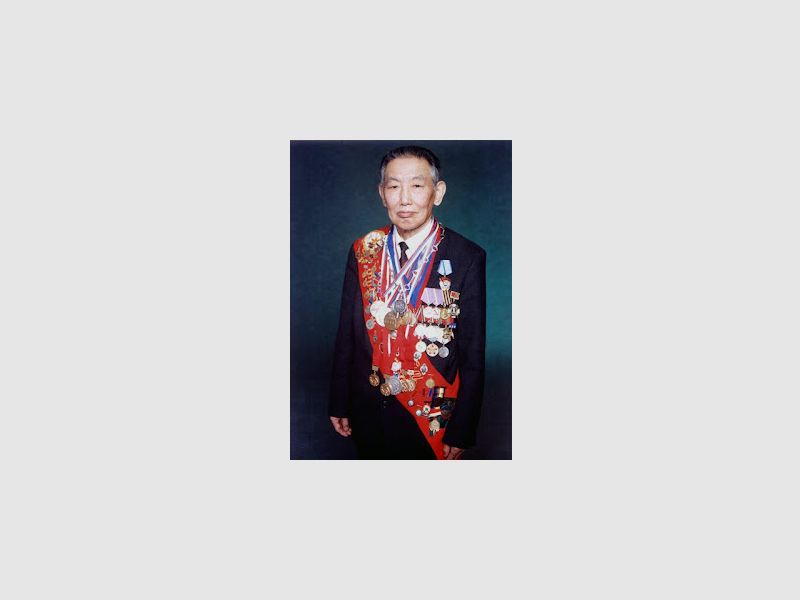
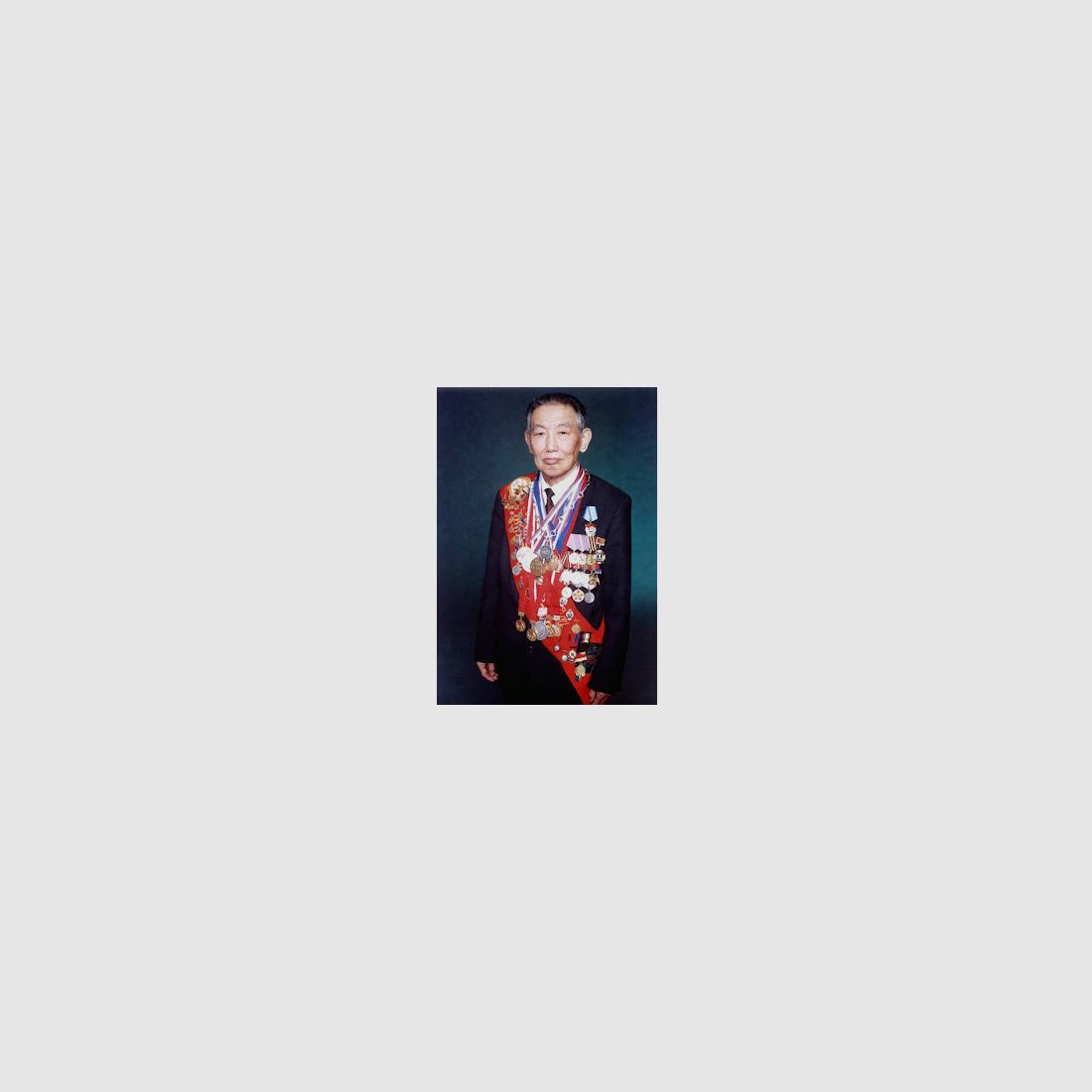
The TOZ-36 was developed by Iefim Leontovitch Khaïdourov (1925–2012), a Buryat from Siberia and a top-level shooter himself. We owe him a lot: among other firearms, he also designed your beloved TOZ35 and TOZ35-M, the same models that served our French Olympic medalists so well for decades…
I briefly told you about him here and shared a photo of him shortly before his death. He was also a veteran of the Great Patriotic War.
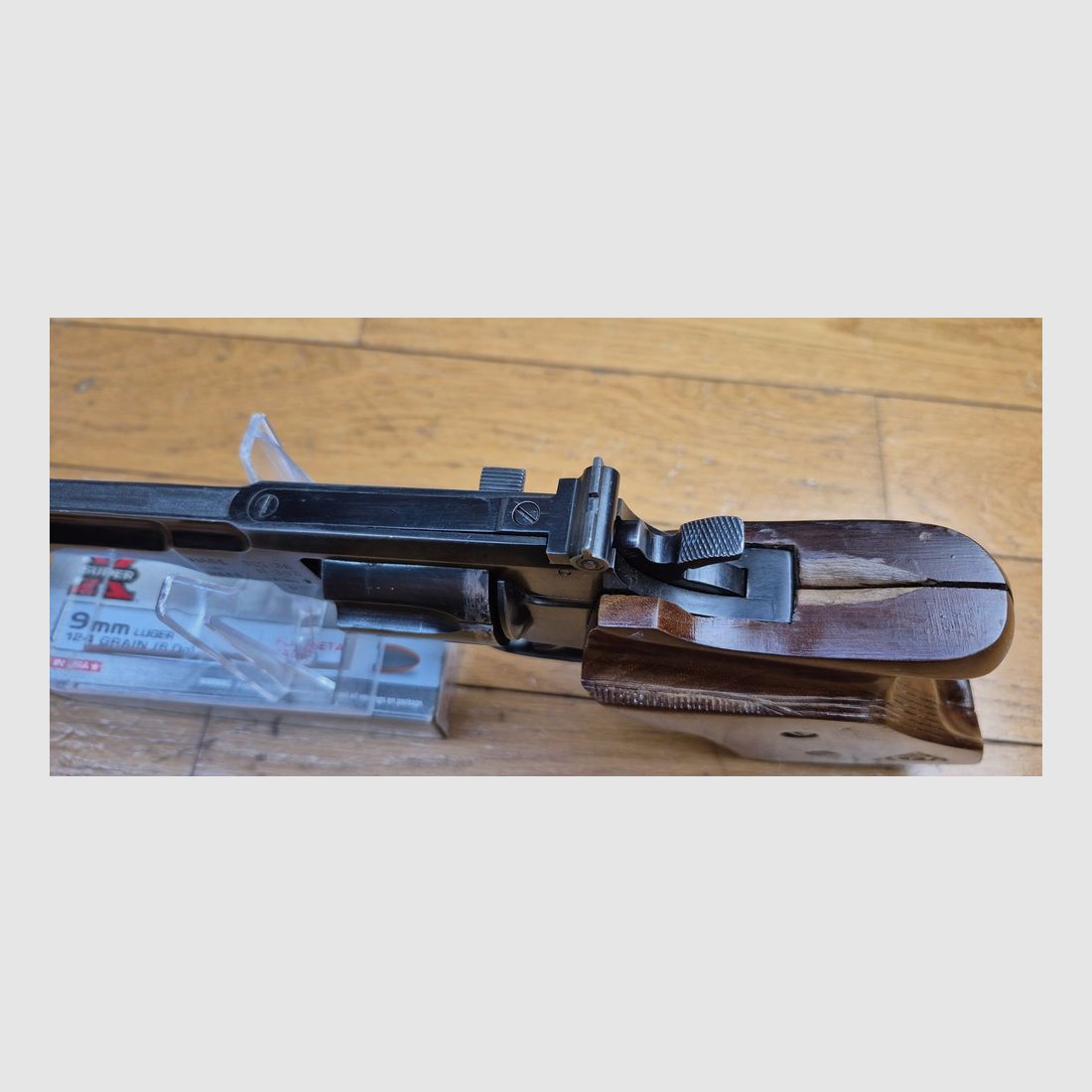
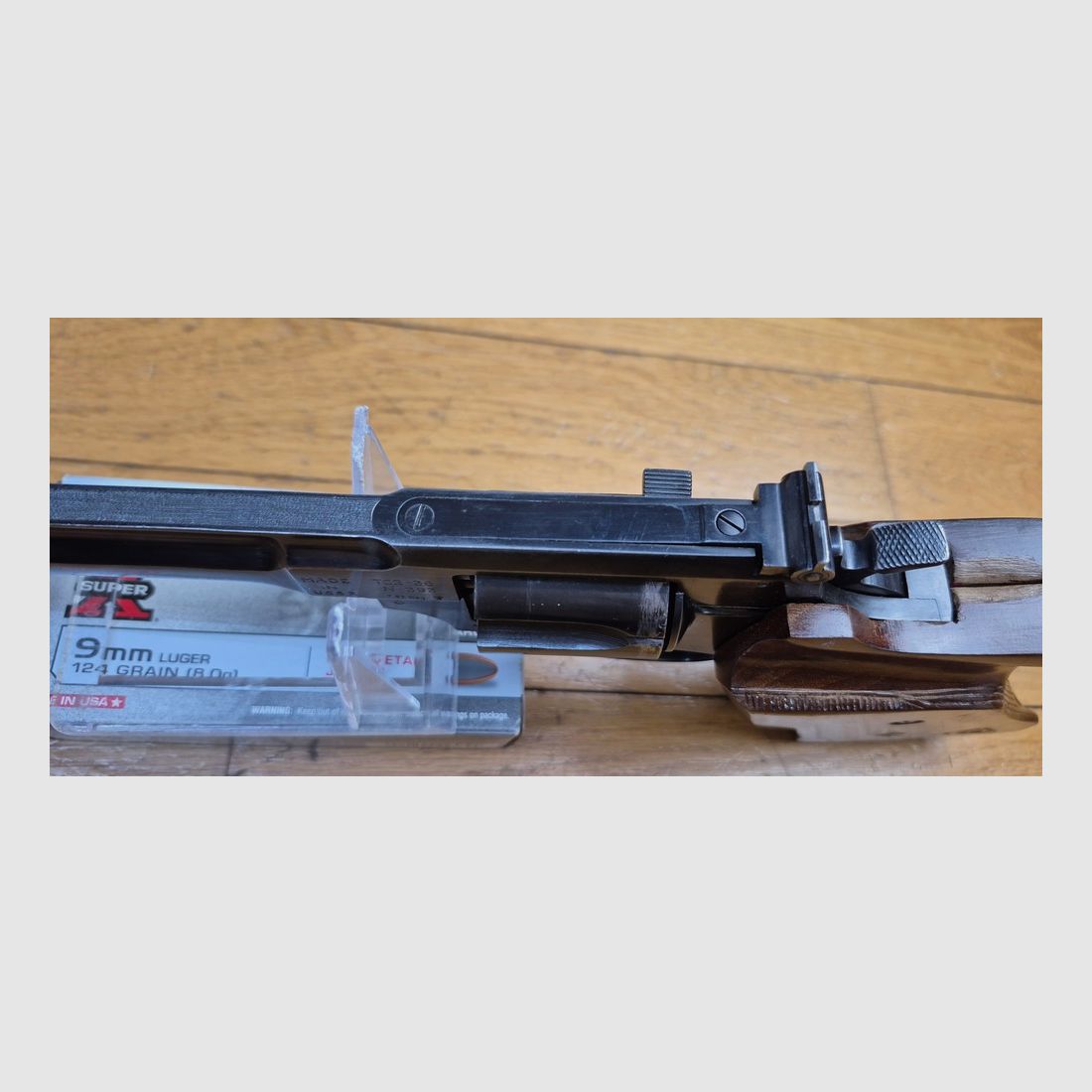
The TOZ-36 was the first sporting revolver to feature an adjustable trigger travel in addition to an adjustable trigger pull weight. Its rear sight is also adjustable for windage and elevation. Its design, with the cylinder moving forward against the barrel, ensures perfect alignment of the cham
barrel gap with the bore. This model came from the factory fitted with an anatomical grip (for medium to large hands).
Its 6-inch barrel and low hand position provide an ideal sight line for competition.
In addition to the very flat trajectory of the 7.62 Nagant, the absence of gas leakage significantly improves shooting stability, making it easier to achieve tight groups.
The firearm was used by the sport shooting teams of many Eastern Bloc countries, with excellent competition results. It was notably used by the Olympic team. The TOZ-36 was also used by the military shooting teams of many Warsaw Pact countries, again with excellent results.
The Czech ZKR 551 revolver, created because the Czechs always wanted to distinguish themselves from the Soviets in terms of individual weapons, is merely a copy intended for the teams of this fine Slavic republic.
These are a few military examples recovered here and there across post-Soviet Eastern Europe that occasionally appear on the market. Production began in 1962 and ended in 1975.
It was replaced by the TOZ-49, a firearm using the same Nagant system but chambered for a slightly less powerful and shorter cartridge, the 7,62 x26 R, fired from a shorter and therefore lighter cylinder. This remarkable firearm was produced until 1990, when the Wall fell. But its cartridge is impossible to find…
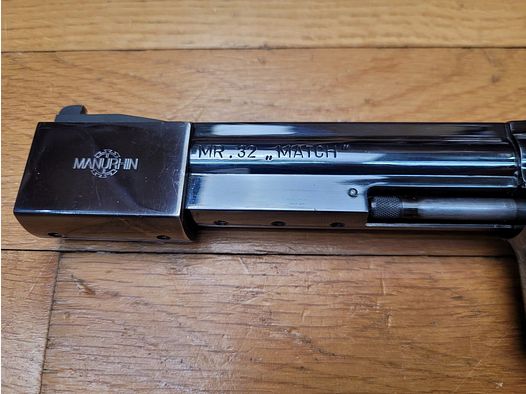
So it’s better to acquire a TOZ-36, undoubtedly one of the best competition revolvers of the second half of the 20th century and a formidable competitor to our MR32 or 38…
Our example is in very good condition—considerably less worn than the few rare examples I’ve seen for sale in recent years.
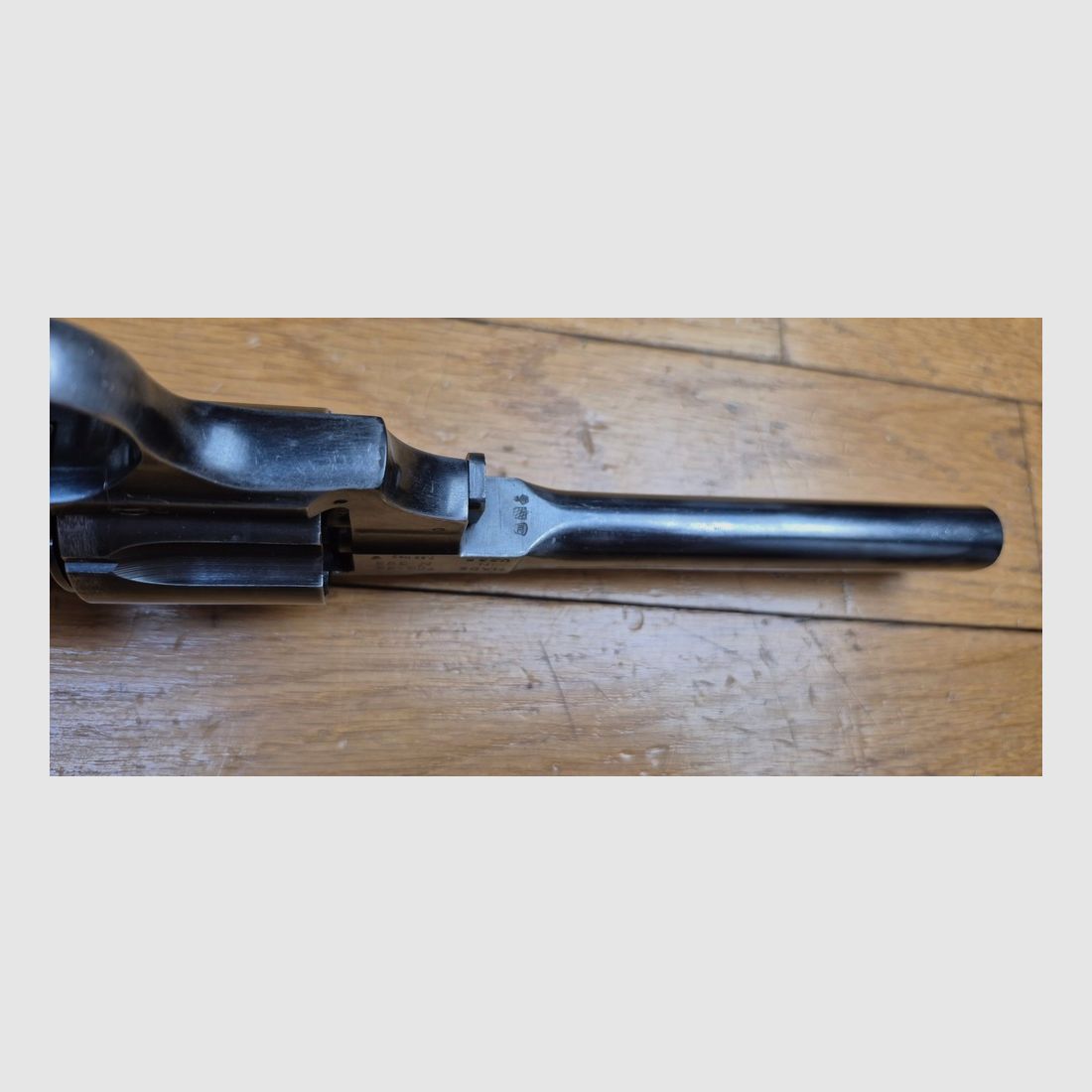
The original bluing is 95% intact, with wear mainly around the cylinder due to the cylinder-advancing system, which is also fitted with locking notches around the rear of each chamber to ensure excellent rigidity when struck by the hammer. No oxidation or orange peel. Very good cosmetic condition.
Unlike the Nagant 1895, its predecessor, this firearm is single-action only (a competition firearm) and has a 6-shot cylinder, whereas the Nagant 1895 (a military firearm) is double-action and has seven chambers. This is sufficient for sport shooting and has allowed for a welcome reduction in weight compared with its predecessor, despite the longer barrel.
Its action is excellent and smooth when cocking, although the firearm deserves a complete disassembly, cleaning, and lubrication. These Soviet-made firearms are renowned for their quality, but above all for their reliability and durability.
The trigger is that of a precision firearm, with no take-up, a sensitive point of resistance, and a very crisp break. Surprising, I’d say. In short, it has everything you need.
The ergonomic grip is an older model, but very comfortable, though suited only to medium to large hands. If you take up competition shooting with this firearm, I think that, given its very high quality, it could be worth having a custom grip made to fit your hand (while of course keeping the original, as this rare firearm is also a collector’s item).
The barrel is superb, absolutely mirror-bright, with very fine rifling. If the firearm has been fired, it still has plenty of life left in it.
I find this firearm’s lines very elegant. It reminds me a little of the Smith&Wesson 14 Masterpiece, but with a touch of Ferrari in the barrel. Actually, looking at the TOZ, I realize that the cylinder-retaining rod protruding beneath the barrel is a little unsightly. And, foolish as I am, I’ve only noticed this in my old age… End of aesthetic musings.
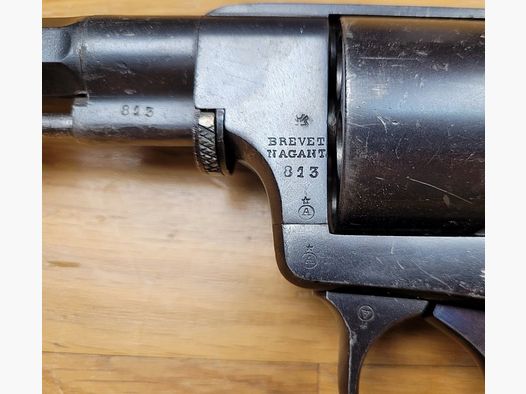
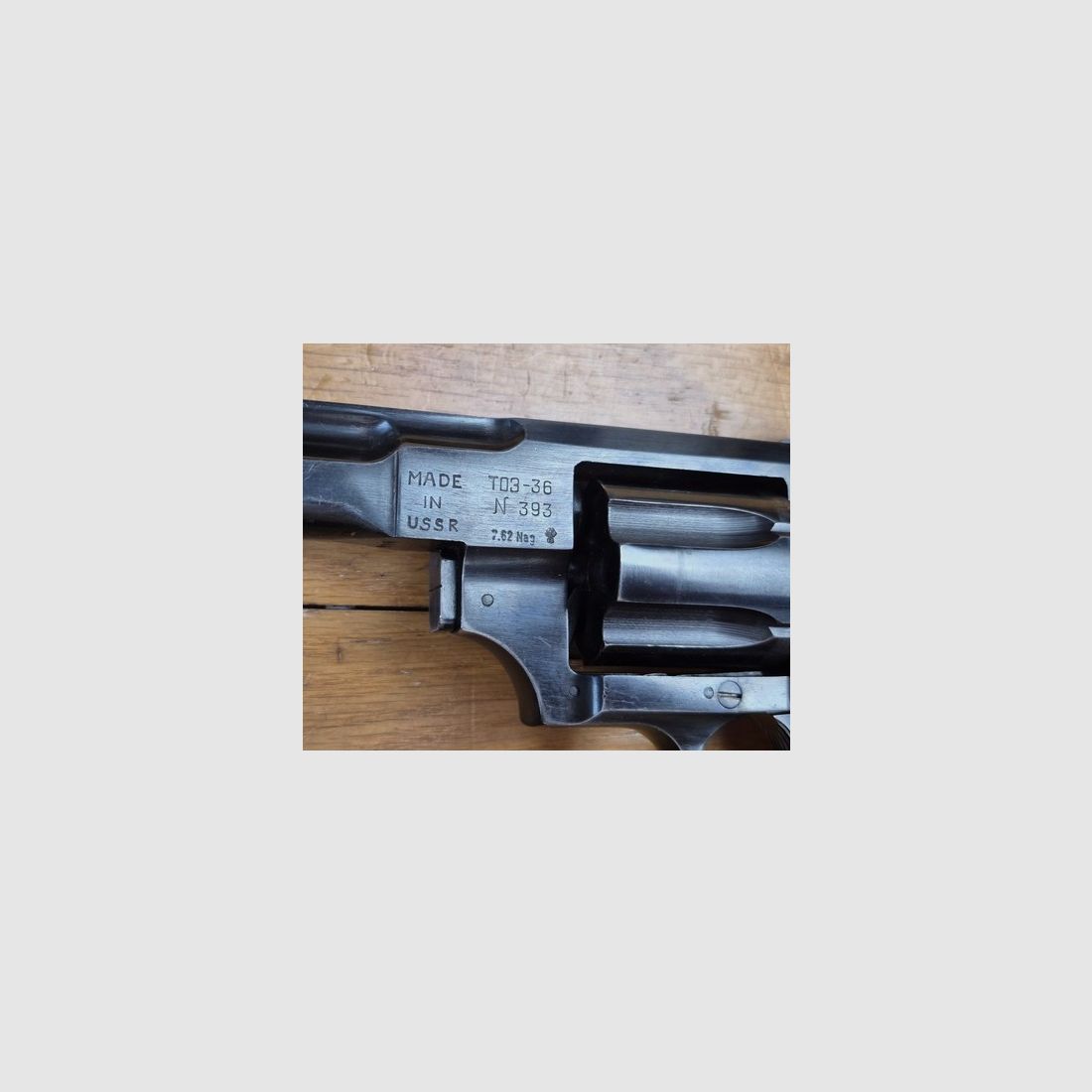
Our example proudly bears the inscription “Made in USSR” and the Tula arsenal mark. All its original proof marks and markings, along with the German proof marks added later, are clear and easy to read.
With serial number 393, it is undoubtedly one of the first
ers products. The highest number I found is in the 7,500 range…
Ultimately, a very fine Soviet competition revolver in a high-velocity caliber renowned for its accuracy. A rare firearm at least on par with the MR32 and MR38, and a rare collector’s item to enjoy.
CATEGORY B FIREARM UNDER FRENCH LAW: FIREARM REQUIRING AUTHORIZATION; VALID ID AND LICENSE PHOTOCOPIES REQUIRED – SIA ACCOUNT MUST BE OPENED. Shipment in two separate packages at least 48 hours apart, with signature required.
**************************************************************************************************************************
Let’s say it again! Flingus Maximus gun shop in Paris and throughout France is also here to help with buying your firearm and militaria collections, appraising firearms, and answering your questions about firearms laws or firearms in estates and inheritances. Contact your favorite gun dealer using our contact form or at [email protected] (Show description in original language)
Que voilà un Ovni… Et un très rare revolver de compétition soviétique. De grande classe !
Il s’agit du révolver TOZ-36 en calibre 7.62 Nagant – Il reprend très exactement l’ingénieux système Nagant 1895 à obturation d’entrefer de barillet dont je vous ai parlé en détail ici.
Dans ce système, le barillet, avance de quelques millimètres vers l’avant concomitamment à l’armement du chien. En avançant, la chambre du barillet vient se coller au cône de forcement du canon et faire buter l’avant de l’étui de la cartouche, qui, dans ce calibre particulier, dépasse très légèrement du barillet, à l’intérieur même du cône du canon.
Quand le coup part, la balle avance et le sommet de l’étui qui est désormais dans le canon gonfle comme pour toute munition tirée. En gonflant, le sommet de l’étui se plaque à l’intérieur du canon, assurant ainsi une totale étanchéité des gaz.
Le barillet est collé au canon, l’étui, plaqué dans le canon, a gonflé à l’intérieur du canon sur quelques dixièmes, l’entrefer est définitivement nul. Aucune chance que du gaz s’échappe, il ne peut donc que pousser la balle de toute sa puissance.
Une fois le chien revenu de l’abattu, le barillet repart en arrière hors du cône de raccordement, extrait par la même occasion l’étui du cône et il pivote d’un septième de tour pour présenter la chambre suivante.
Génial, non ?
Pour cela, les Nagant inventèrent (aussi) une cartouche tout aussi originale.
Cette cartouche présente la particularité d’un inserrement /enfoncement complet de la balle dans la douille pour permettre de n’avoir au sommet que l’extrémité de l’étui qui viendra se coller dans le canon. La puissance de gaz récupérée permet d’extraire sans problème cette balle pourtant totalement enfoncée dans l’étui. CQFD !
Le calibre 7.62 Nagant est encore fabriqué par PPU et il se trouve et se recharge facilement. On peut vraiment s’amuser et se perfectionner avec ce revolver TOZ-36.
Ce système Nagant est-il efficace ?
Réponse: oui. Indubitablement. De 15 à 25% de puissance supplémentaire dans la majeure partie des cas.
A titre d’illustration, la balle de 7,62 Nagant sort du Nagant 1895 à 305 m/s pour les cartouches militaires russes.
Pour comparaison avec des revolvers contemporains, celle de 455 du Webley MK VI anglais en 265 grains sort à 210m/s et celle de 8mm du révolver 1892 français à 225m/s. La Nagant va bien plus vite !
Pour les pistolets, qui n’ont pas ce problème d’entrefer, une 9 para moderne, nettement survitaminée par rapport à ses originaux de 1902, sort à 330 m/s ce qui n’est pas très significativement supérieur au systéme Nagant de …1895.
Le résultat est aussi une trajectoire très tendue favorable à la compétition surtout en canon long comme celui du TOZ-36.
Les soviétiques ont donc extrapolé de leur célébrissime revolver Nagant 1895 une arme de compétition simple action produite entre 1962 et 1975. C’est notre TOZ-36 de ce jour.
L’arme a été sans doute produite à assez peu d’exemplaires car même sur le marché international je vois rarement. Et cette arme est qualifiée de rare par Ian McCollum qui pourtant en voit pas mal des armes rares… Arme peu produite, elle est en plus très peu sortie d’URSS même après 90.
Le TOZ-36 a été mis au point par Iefim Leontovitch Khaïdourov (1925-2012), un bouriate de Sibérie, tireur de très haut niveau lui-même, auquel vous devez beaucoup car il est aussi le concepteur, entre autres armes, de vos chers TOZ35 et TOZ35-M, les mêmes qui ont même bien servis nos médaillés olympiques tricolores pendant des décennies…
Je vous ai parlé brièvement du bonhomme ici et je vous ai mis une photos de lui peu avant son décès. Il était accessoirement un vétéran de la Grande Guerre Patriotique.
Le TOZ -36 a été le premier revolver sportif doté d’une régulation de course de détente en plus du poids de détente. Sa hausse est également réglable horizontalement et verticalement. Sa conception avec avancement du barillet sur le canon assure un alignement parfait de la chambre du barillet avec l’âme du canon. Ce modèle était équipé d’une poignée anatomique (mains moyennes à grandes) dès sa sortie d’usine.
Son canon 6 pouces et son positionnement bas en main assurent une ligne de visée idéale en compétition.
Outre la trajectoire très tendue de la 7.62 Nagant, l’absence de fuite de gaz augmente sensiblement la stabilité au tir ce qui facilite les groupements.
L’arme a équipé les équipes de tir sportif de nombre de pays de l’Est avec de brillants résultats en compétition. Elle équipait notamment l’équipe olympique. Le TOZ-36 a bien sûr aussi équipé les équipes militaires de tir de nombre de pays du Pacte de Varsovie avec aussi d’excellents résultats.
Le revolver tchèque ZKR 551, les tchèques voulant toujours se distinguer des soviétiques en matière d’armement individuel, n’en est que la copie destinée aux équipe de cette belle république slave.
Ce sont ces quelques exemplaires militaires récupérés un peu partout en Europe de l’Est post soviétique que l’on croise parfois sur le marché. Sa production débutée en 1962 et a cessé en 1975.
Il a été remplacé par le TOZ-49, une arme de même système Nagant, mais tirant une munition un peu moins pêchue et plus courte, la 7,62 x26 R, tirée dans un barillet plus court aussi et donc plus léger. Ce TOZ-49, arme également remarquable, a été produite jusqu’en 1990 à la chute du mur. Mais sa munition à lui est introuvable…
Alors mieux vaut acquérir un TOZ-36, sans doute un des meilleurs revolvers de compétition de la seconde moitié du XX° siècle et un concurrent redoutable de nos MR32 ou 38…
Notre exemplaire est en très bon état – Nettement moins usé que les quelques rares exemplaires que j’ai pu voir en vente ces dernières années.
Le bronzage d’origine est présent à 95% avec des manques surtout en pourtour de barillet du fait du système d’avancée du barillet qui est complété d’encoches de fixation en pourtour de chambre à l’arrière qui lui assure une excellente rigidité à la frappe du marteau. Aucune oxydation ou peau d’orange. TBE esthétique.
Contrairement au Nagant 1895, son modèle, l’arme n’est que simple action (arme de compétition) et dotée d’un barillet à 6 coups quand le Nagant 1895 (arme militaire) est double action et compte sept chambres. C’est suffisant en tir sportif et cela a permis un allègement bienvenu de l’arme par rapport à son modèle en dépit d’un allongement du canon.
Sa mécanique est excellente, bien souple en chien, même si l’arme mérite un démontage nettoyage graissage intégral. Ces fabrications soviétiques sont réputées pour leur qualité mais surtout leur fiabilité et leur robustesse.
La détente est celle d’une arme de précision sans course avec un point d’appui sensible et un départ très net. Surprenant je dirais. Bref tout ce qu’il faut.
La poignée ergonomique est un modèle ancien mais très confortable réservée toutefois à des mains moyennes à grandes. Si vous vous lancez en compétition avec cette arme, je pense, compte tenu de sa très grande qualité, que cela pourrait valoir potentiellement le coup de lui en faire faire une sur mesure à votre main (tout en conservant celle d’origine bien sûr car cette arme rare est aussi un collector).
Le canon est superbe absolument miroir avec de très belles rayures. Si l’arme a tiré, elle conserve un très grand potentiel.
Je trouve la ligne de cette arme fort élégante. Je lui trouve un petit coté Smith&Wesson 14 Masterpiece mais avec un petit coté Ferrari en canon en plus. En fait, à y réfléchir en regardant le Toz, une tige de maintien de barillet qui ressort sous le canon c’est un peu disgracieux en fait. Et, sot que je suis, je ne m’en aperçois que dans mon grand âge…Fin des réflexions esthétiques.
Notre exemplaire porte fièrement la mention « Made in USSR » et la marque de l’arsenal de Tula. Tous ses poinçons et marquages d’origines auxquels sont venus s’adjoindre des poinçons d’épreuves allemand sont nets et bien lisibles.
Avec le numéro 393 c’est sans doute un des premiers produits. Le numéro le plus élevé que j’ai trouvé est dans les 7.500…
In fine un très beau revolver soviétique de compétition, dans un calibre très tendu et réputé pour sa précision. Une arme rare d’un niveau au moins équivalent aux MR32 et MR38 et qui permet de se faire plaisir avec un rare collector.
ARME DE CATÉGORIE B AU CSI: ARME SOUMISE À AUTORISATION, PHOTOCOPIES DE LA PIÈCE D’IDENTITÉ EN COURS DE VALIDITÉ ET DE LA LICENCE OBLIGATOIRES – COMPTE SIA OBLIGATOIREMENT OUVERT. Expédition contre signature en deux colis séparés d’au moins 48 heures obligatoire.
**************************************************************************************************************************
Répétons le ! L’armurerie Flingus Maximus à Paris et partout en France, est là aussi pour pour vos rachats de collections armes et militaria, vos estimations d’armes, vos questions de législation ou sur les armes dans les successions et héritage. Contactez votre armurier préféré via notre formulaire de contact ou à [email protected]