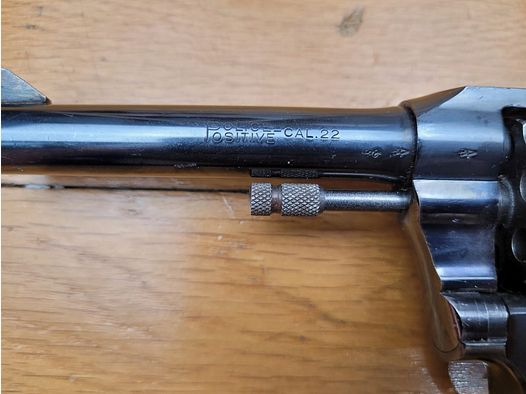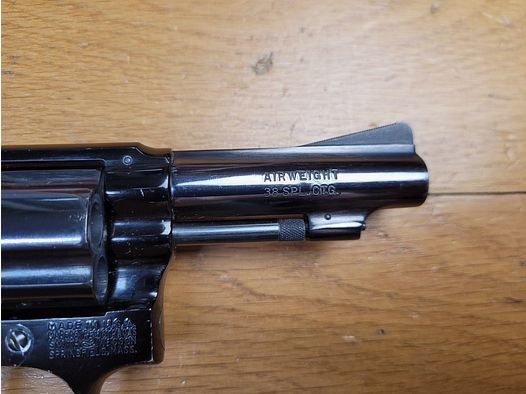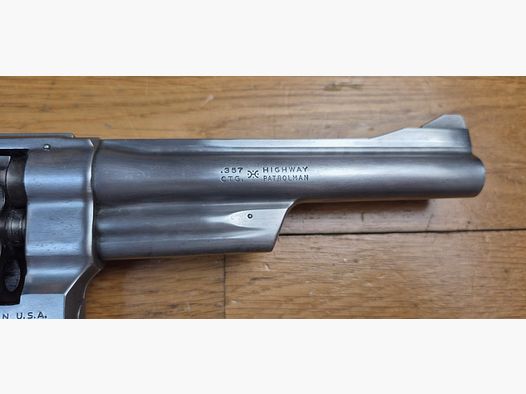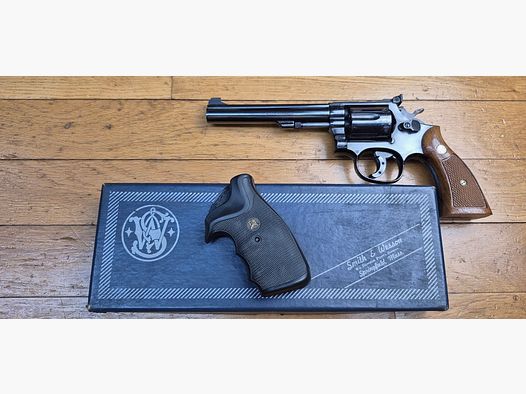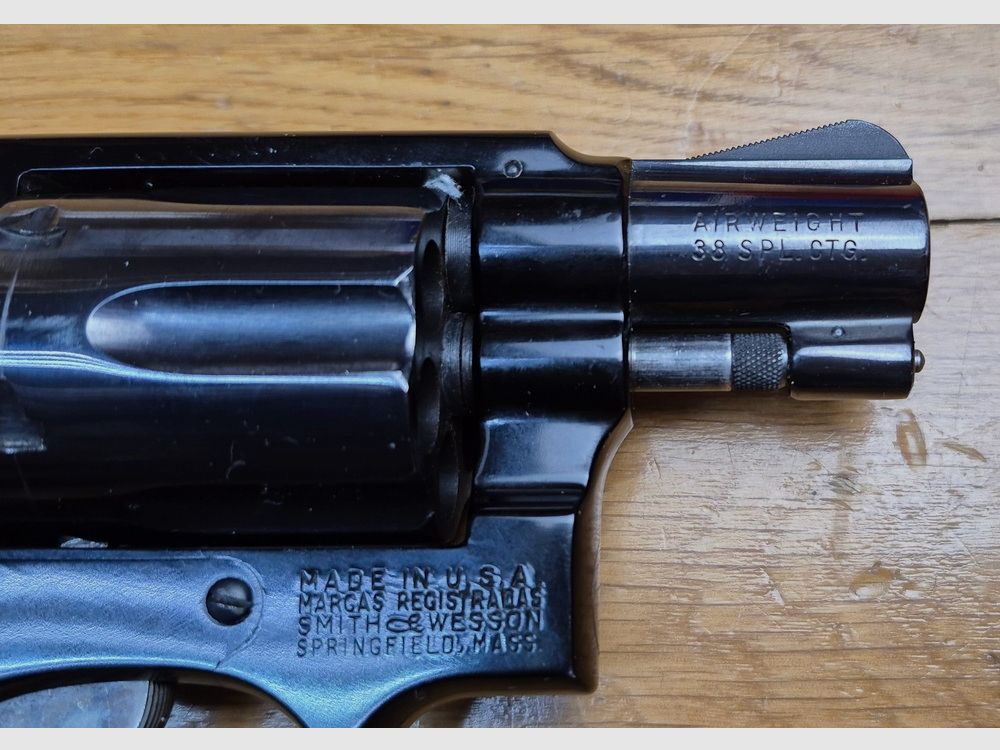
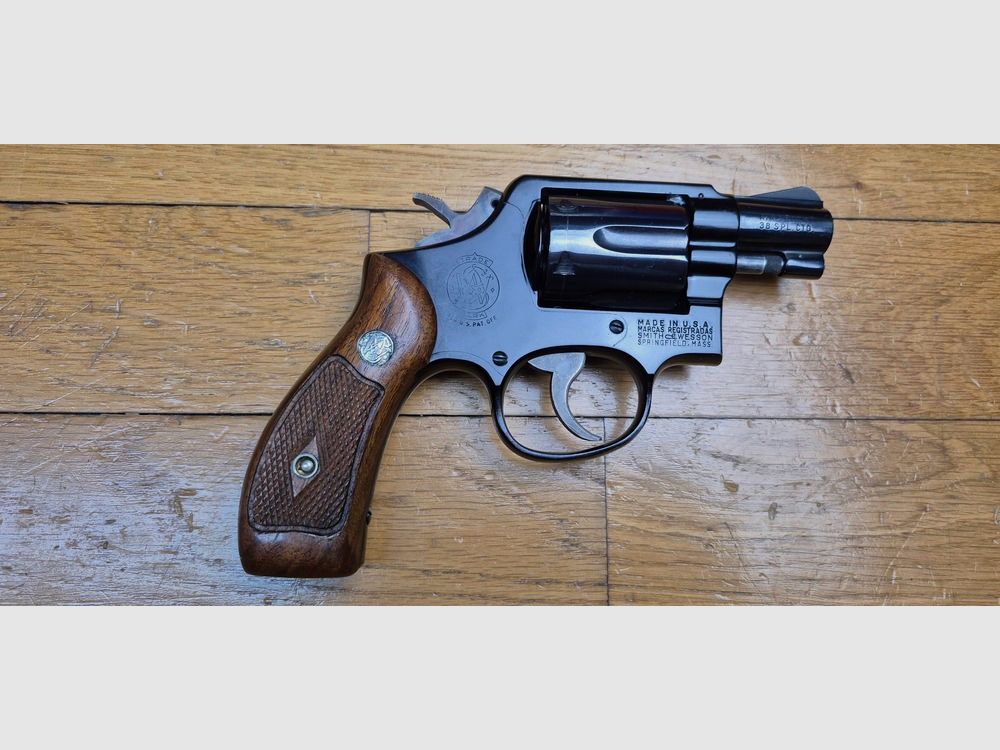
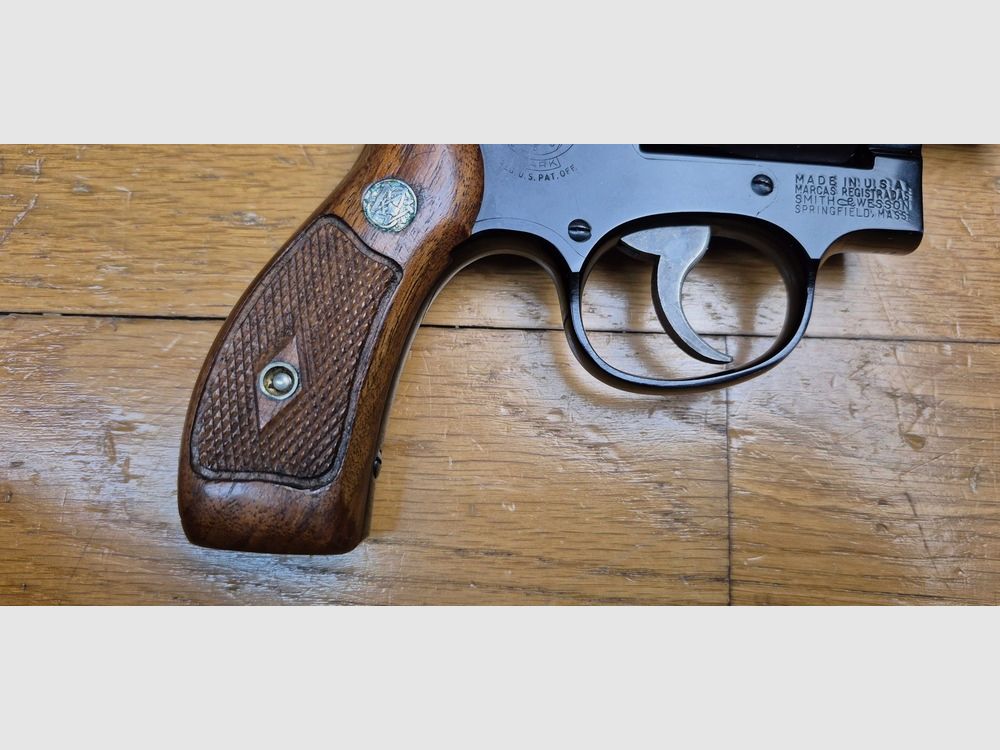
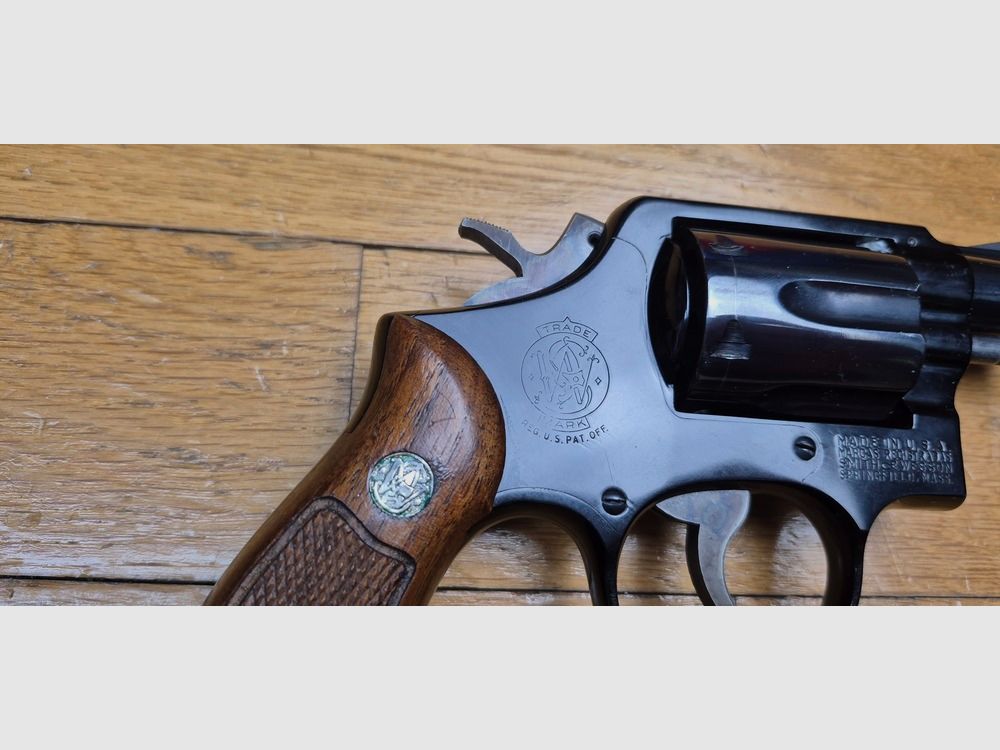

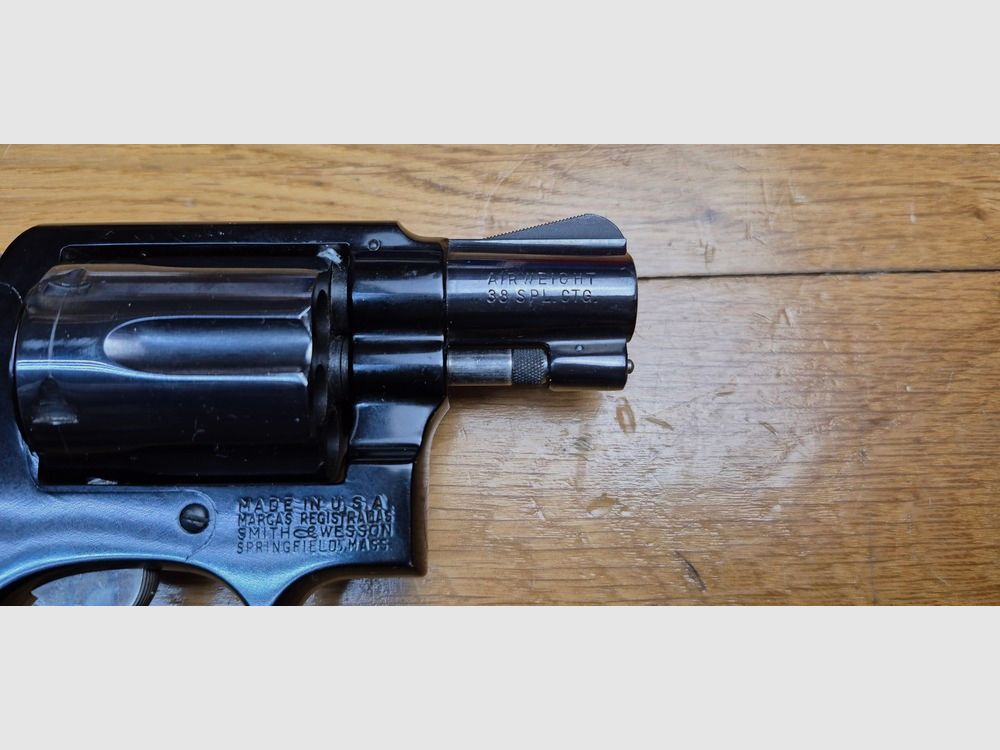
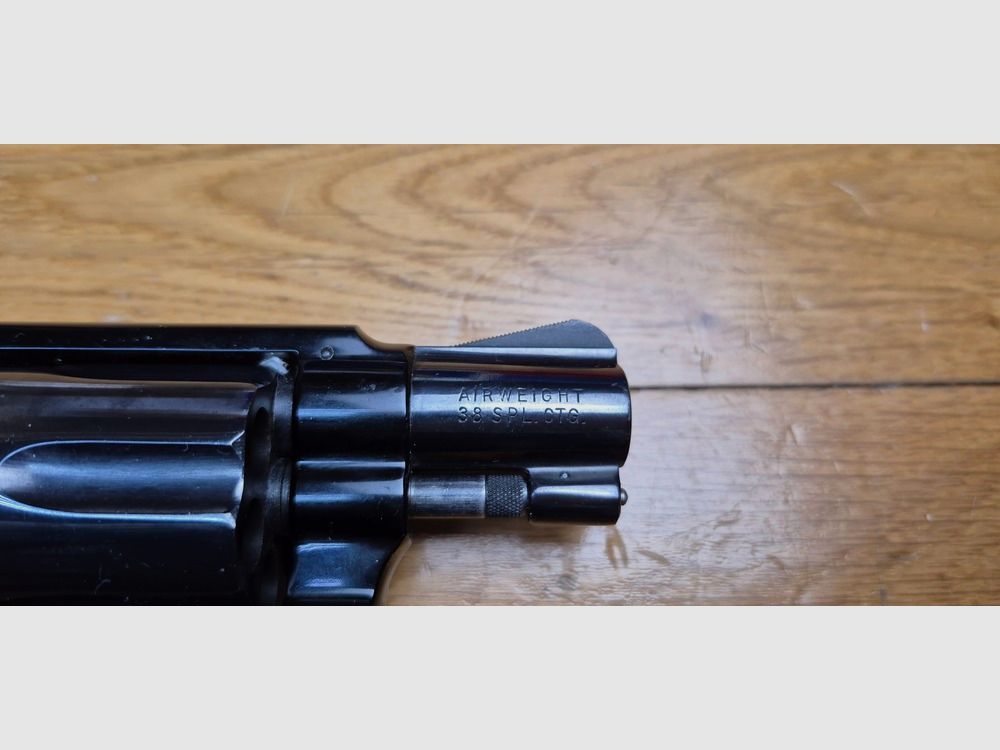
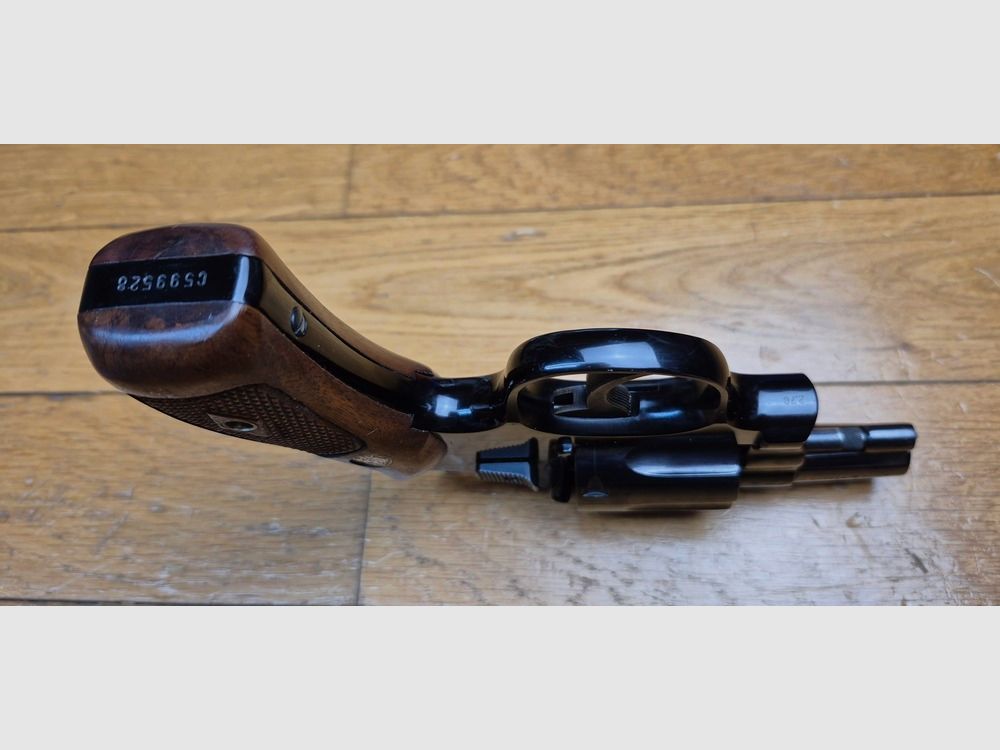
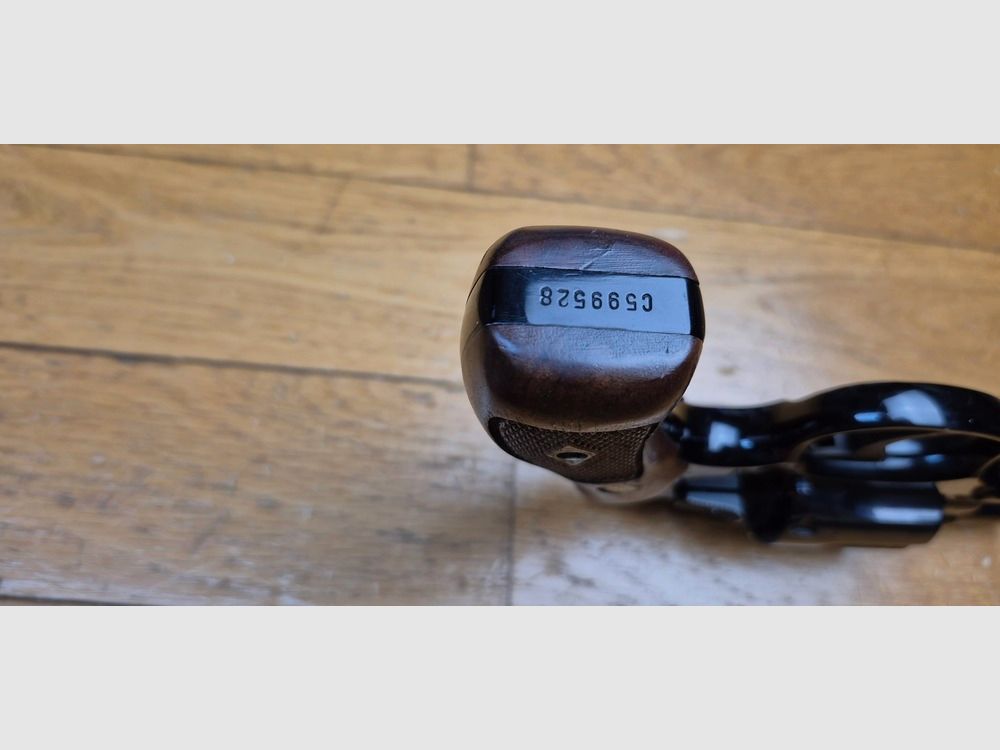
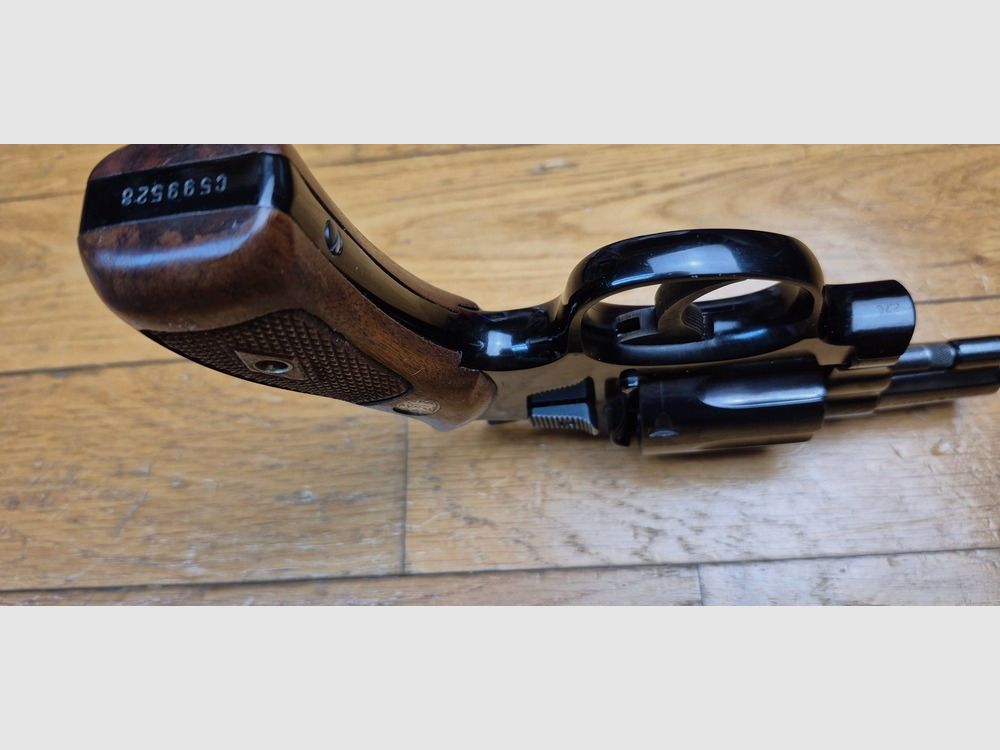
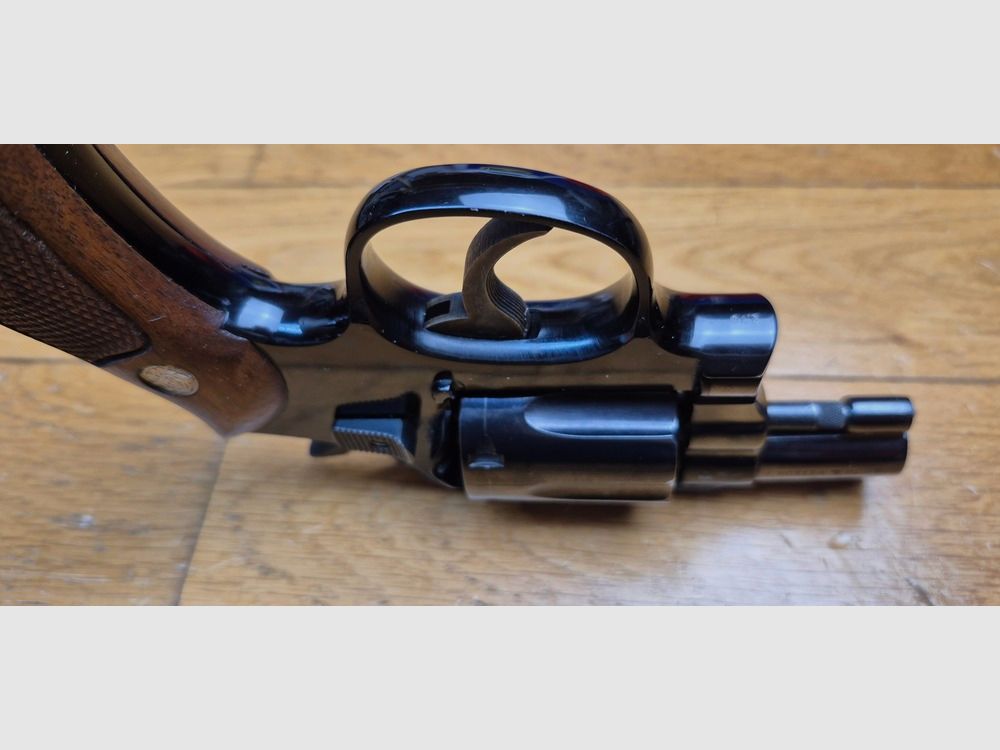
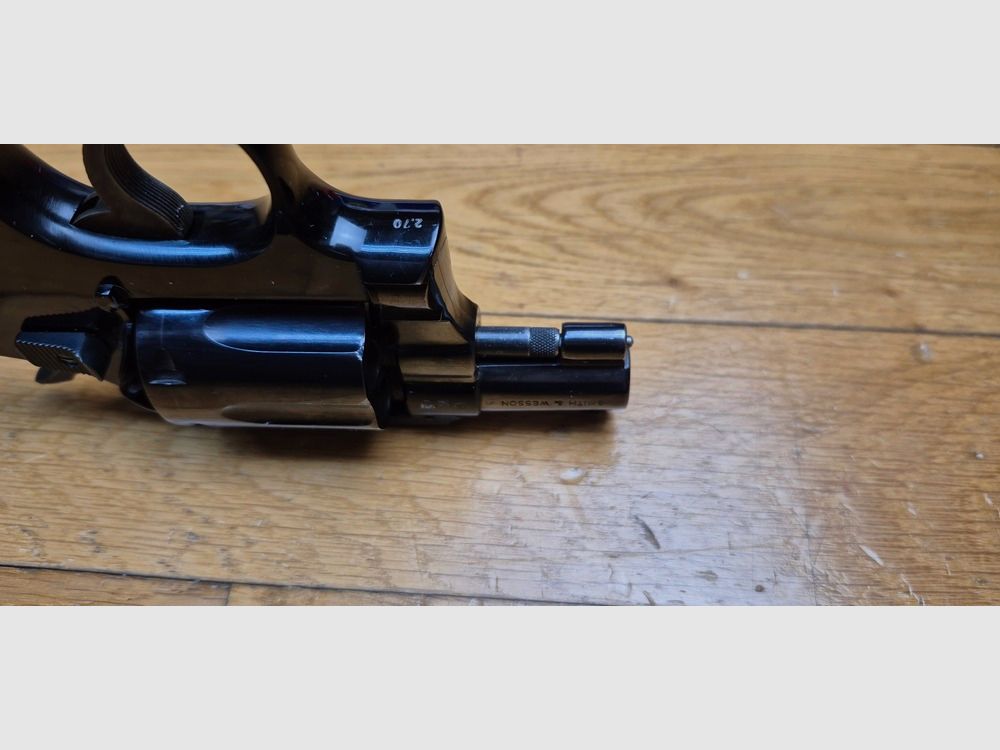
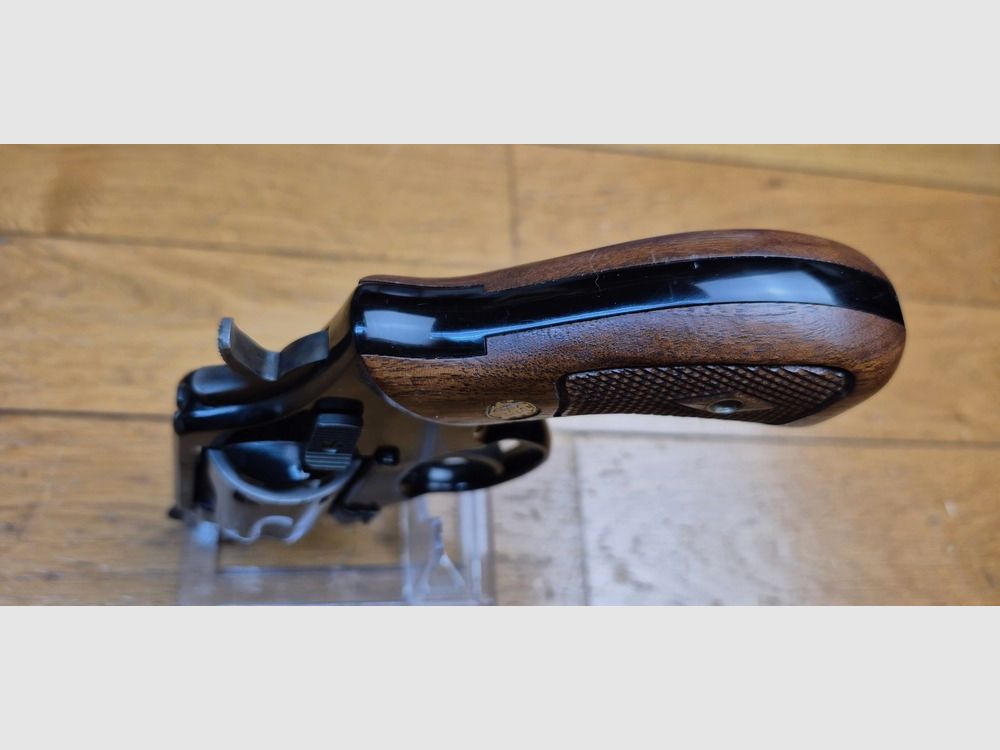
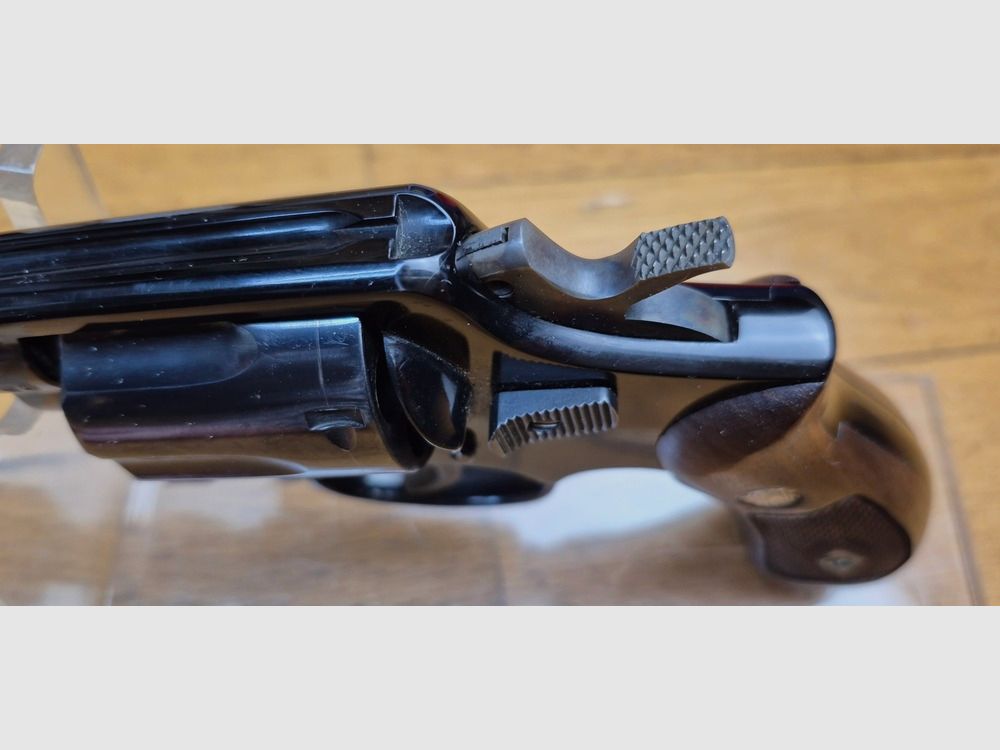
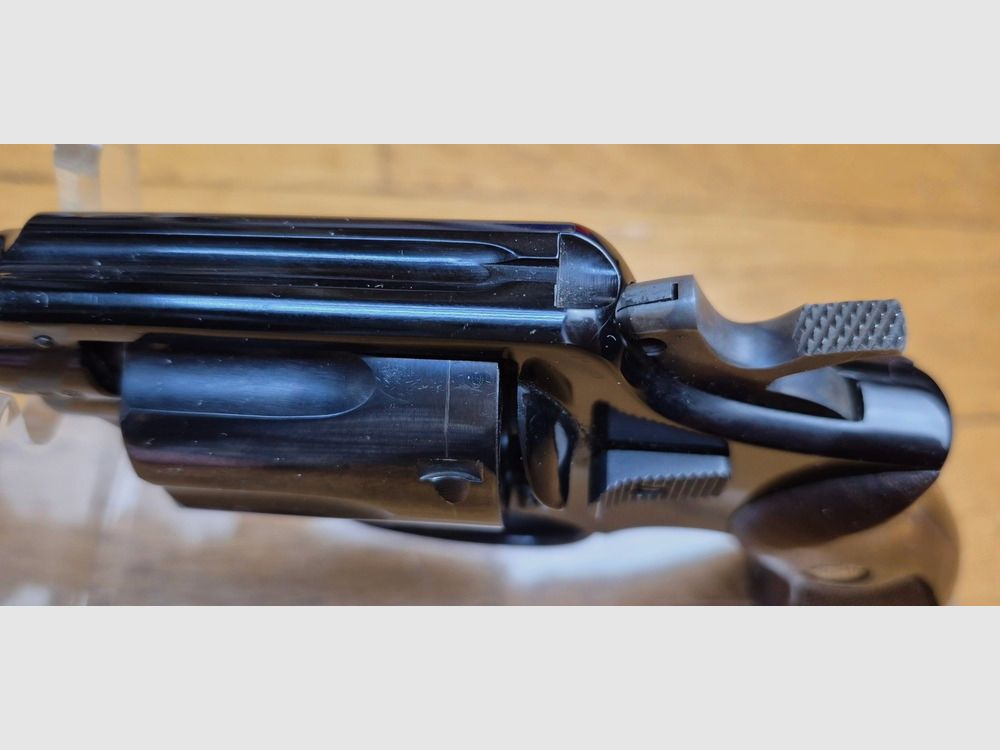
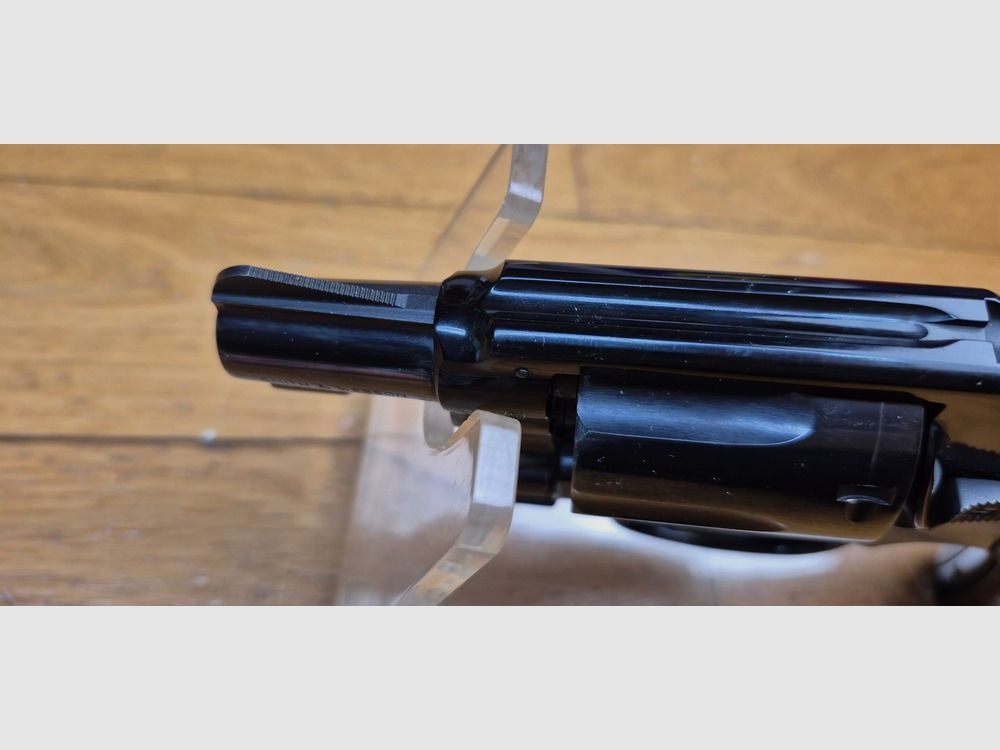
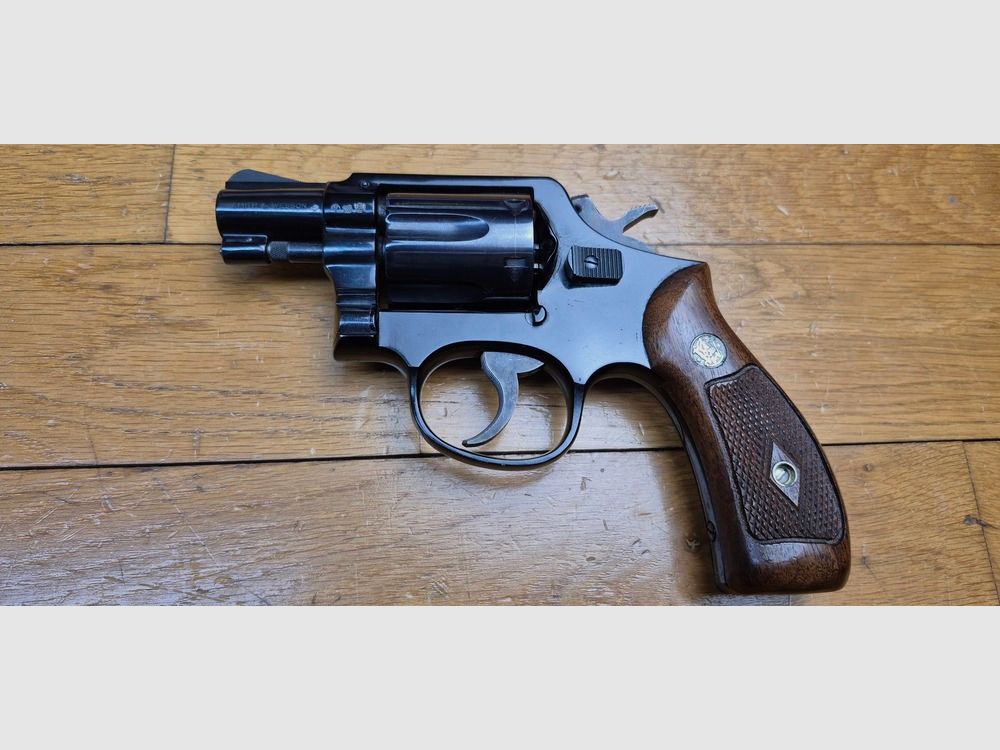
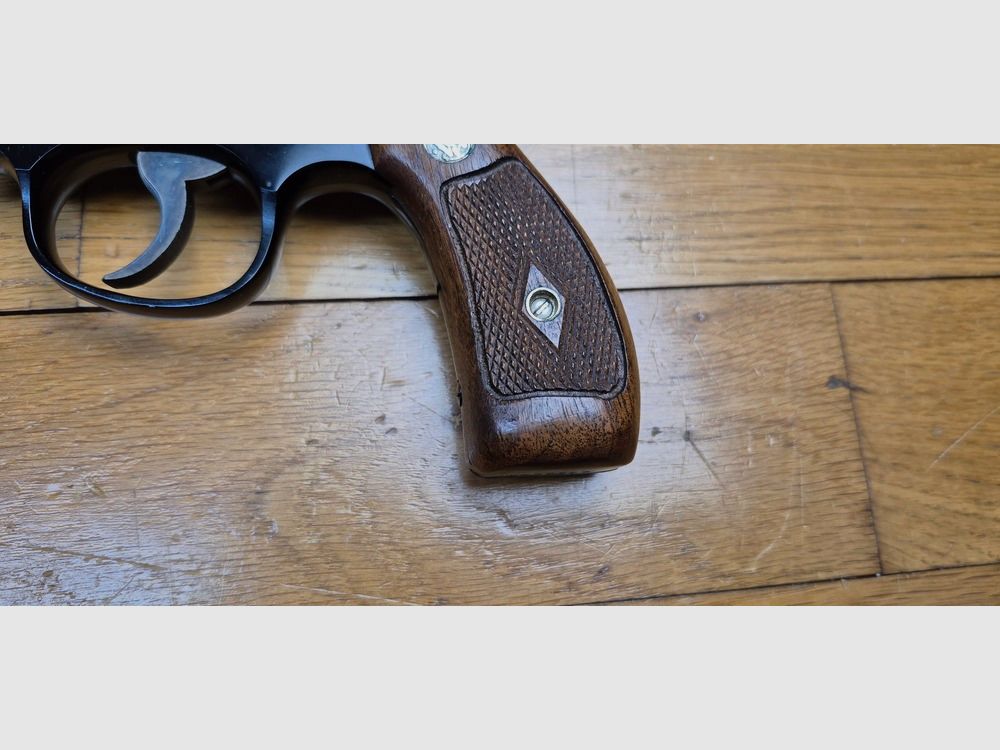
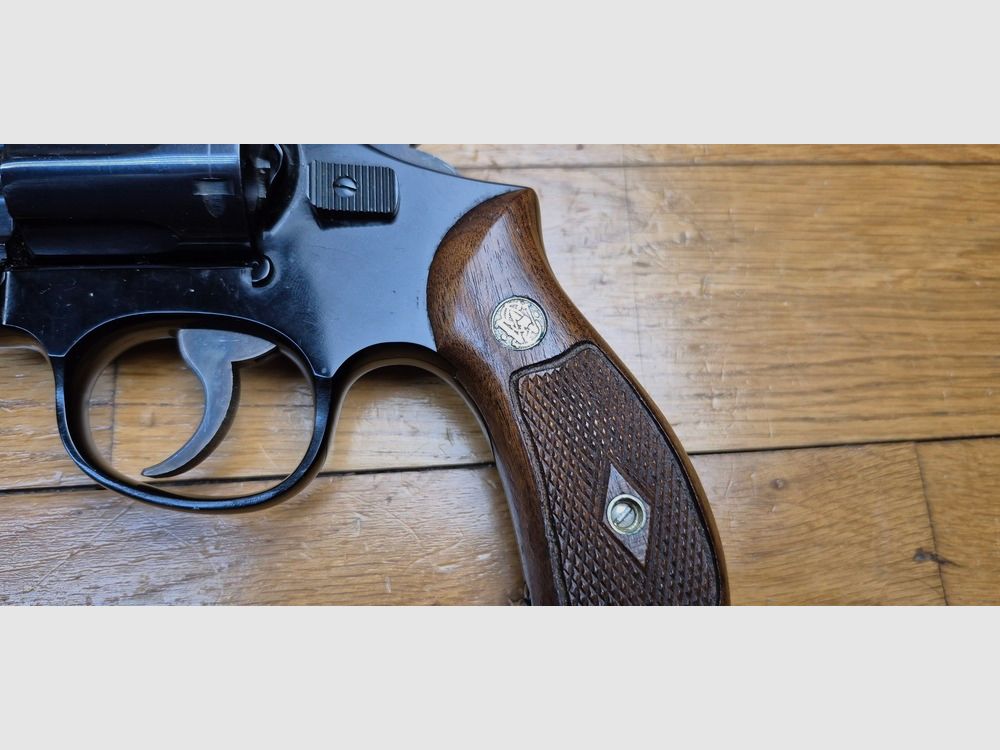
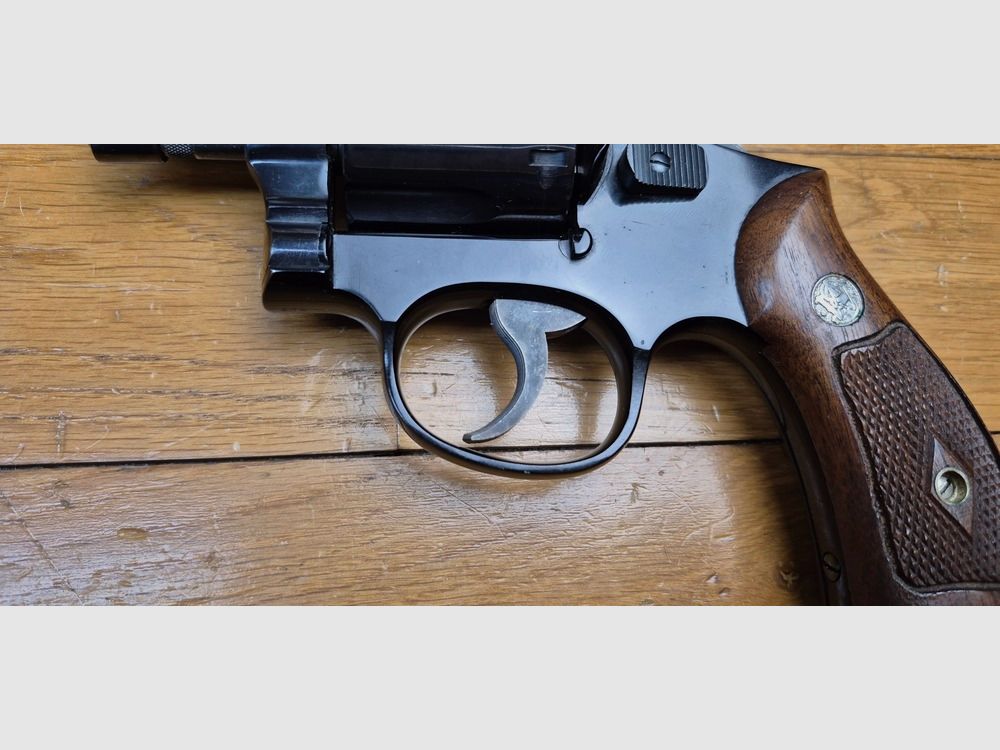
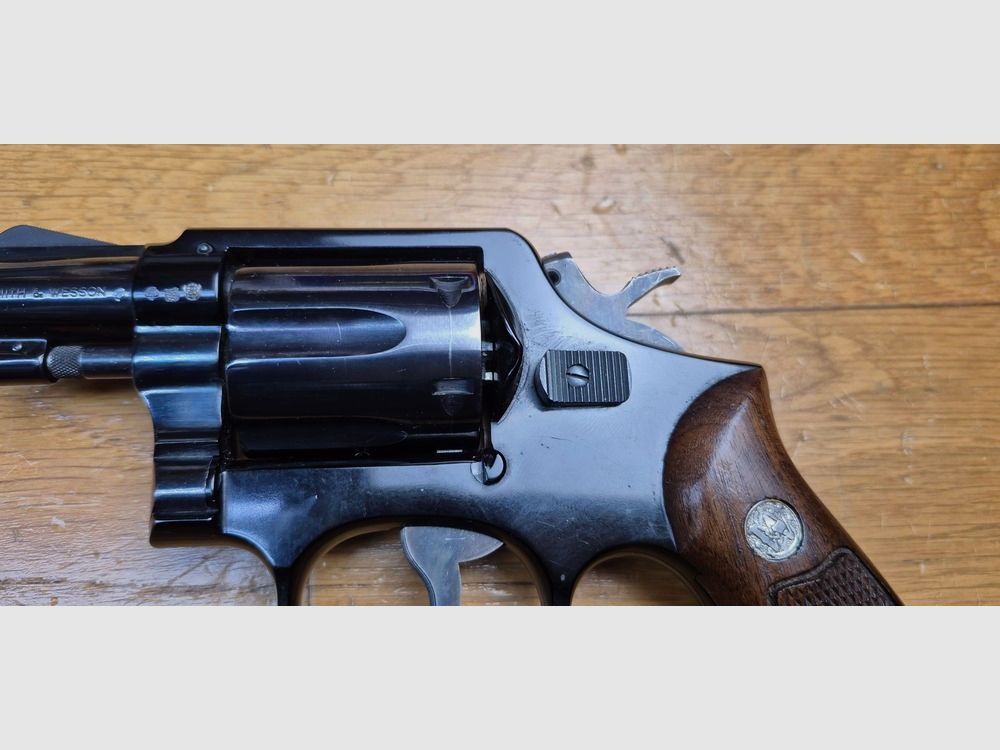
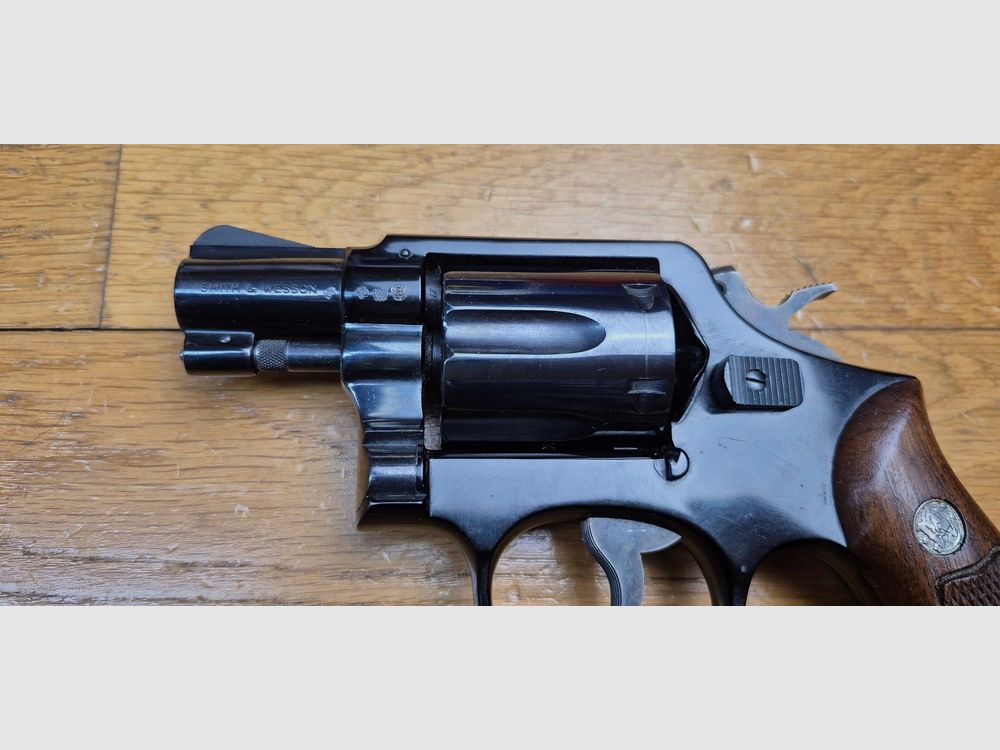
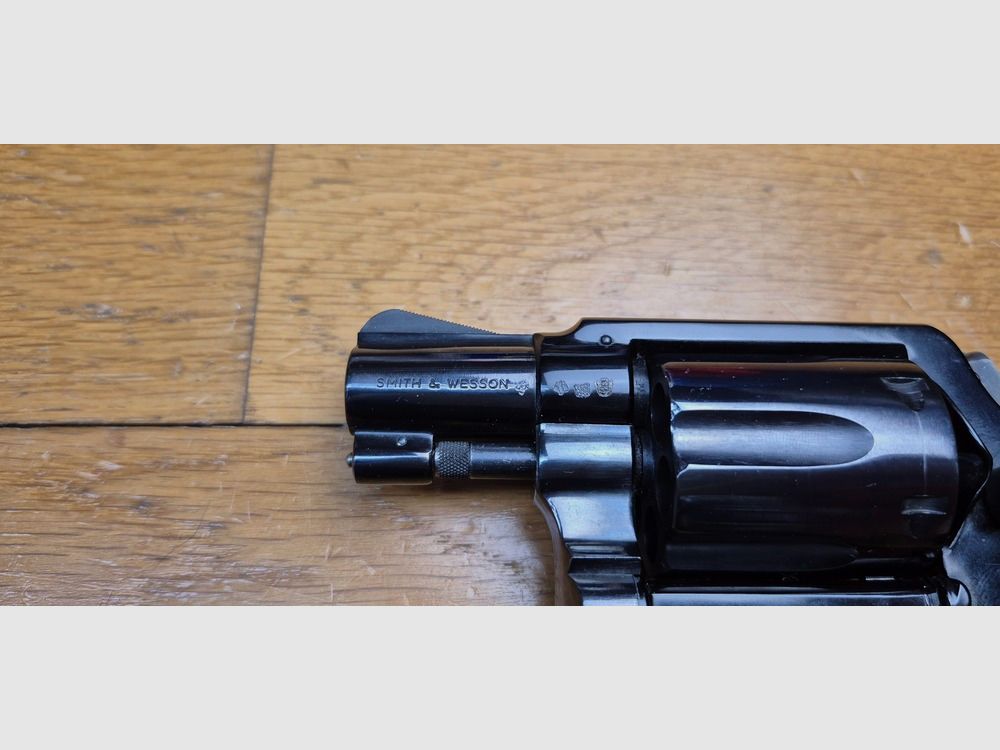
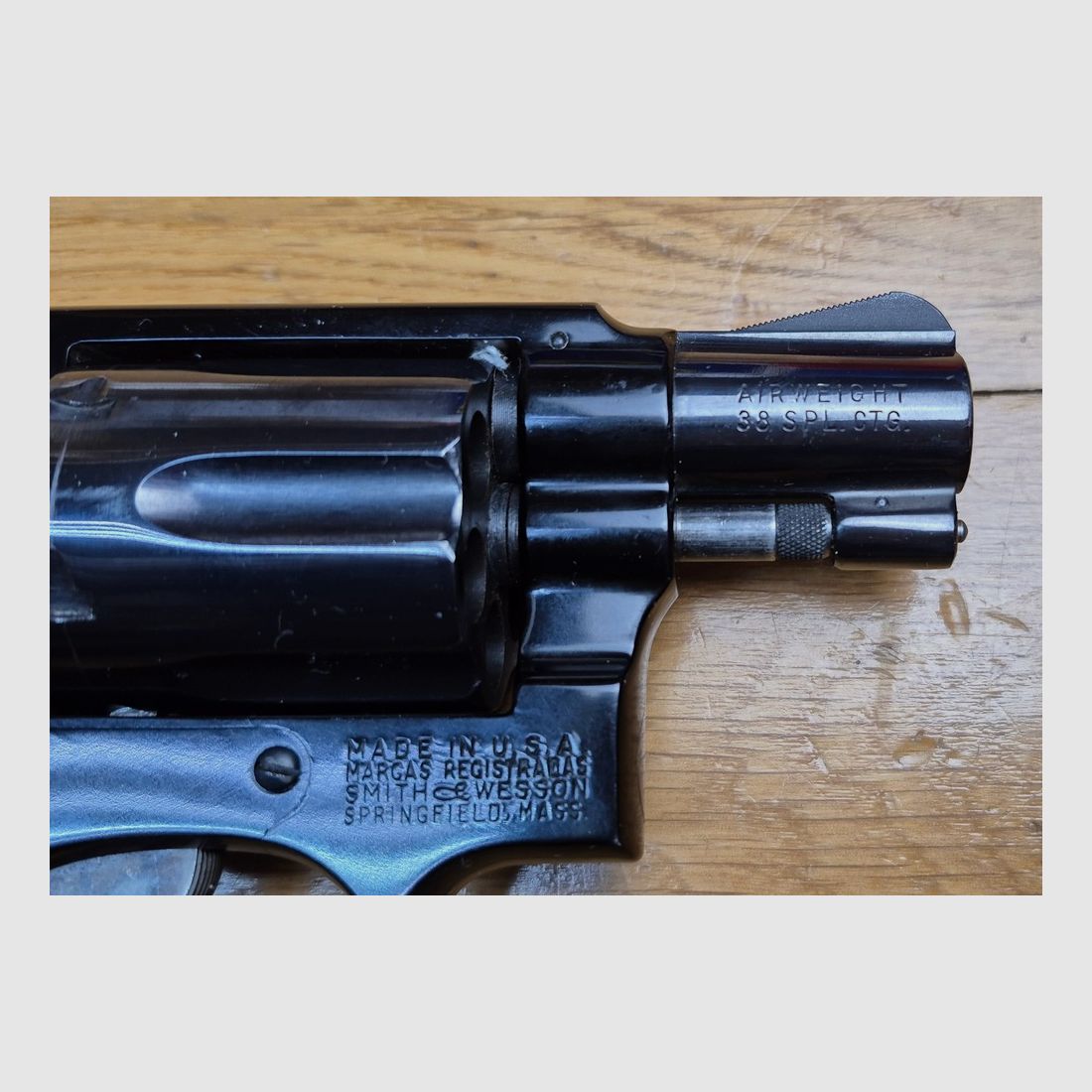
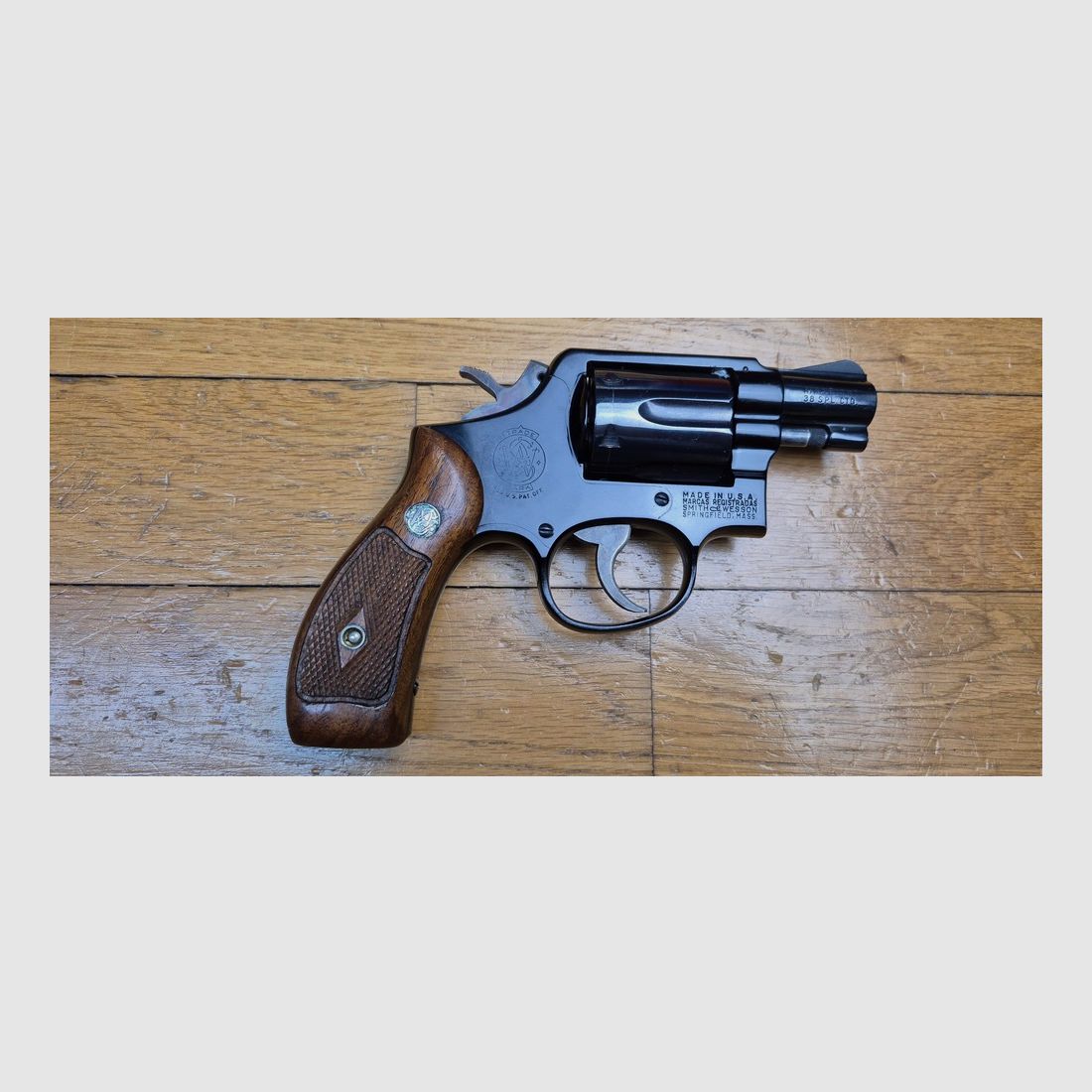
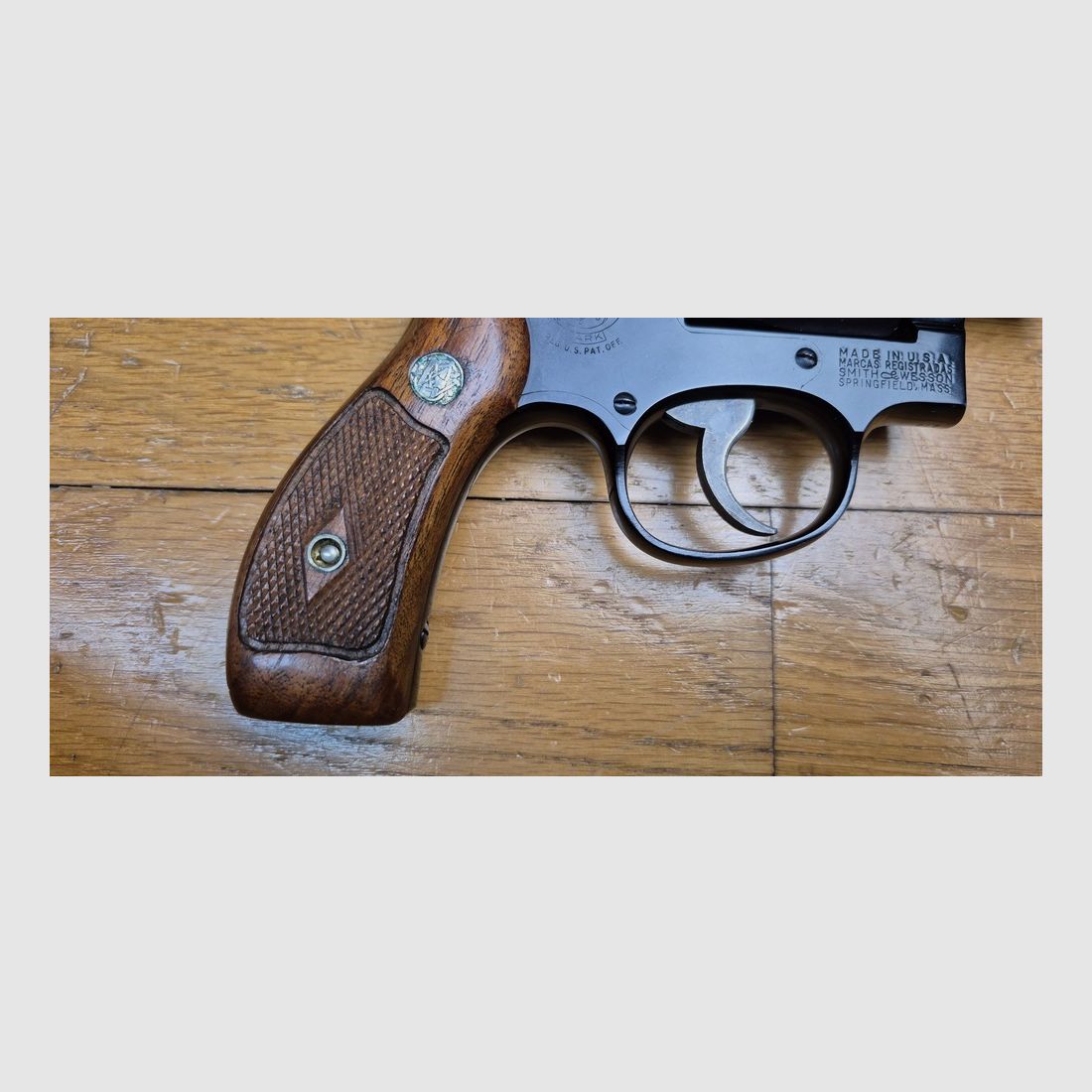
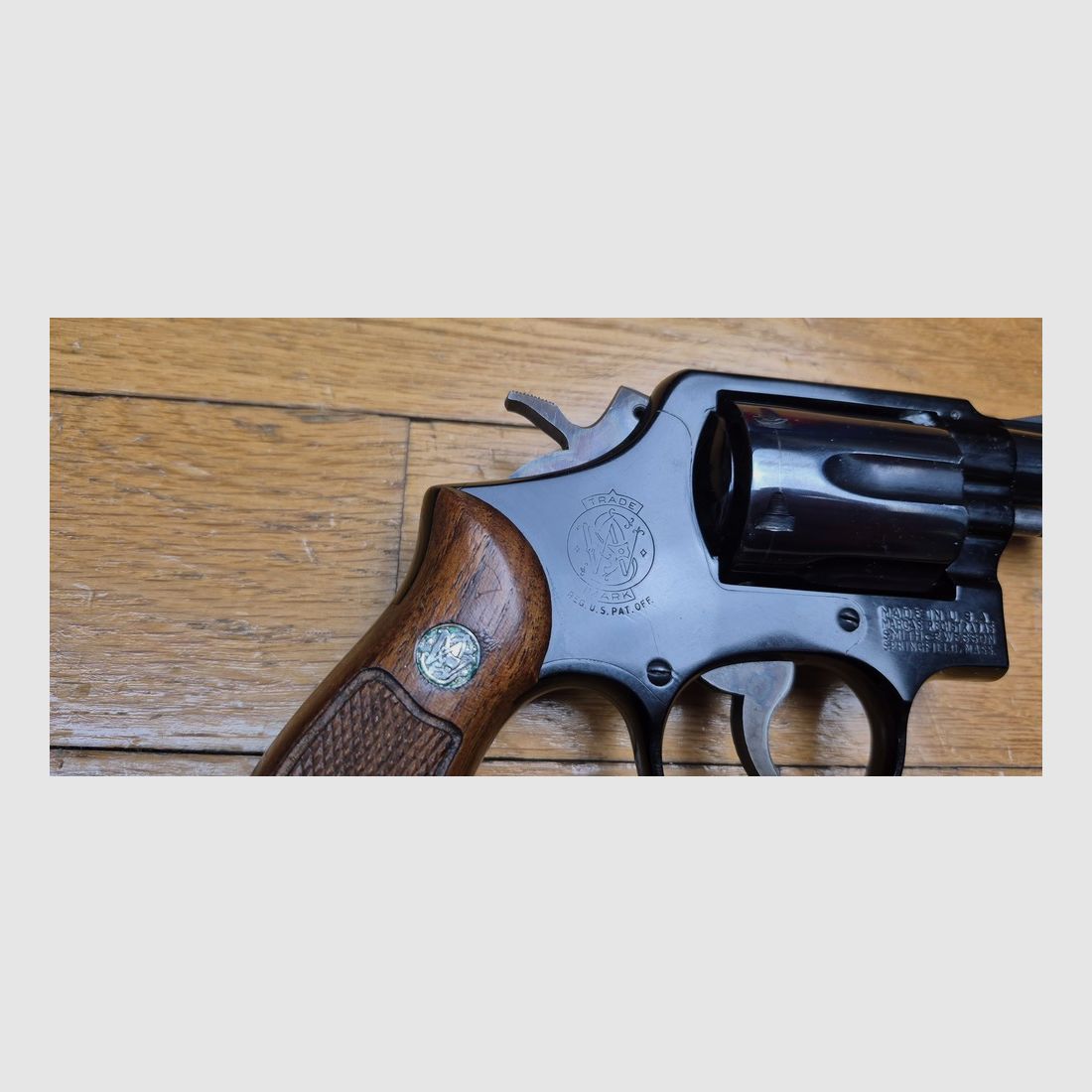
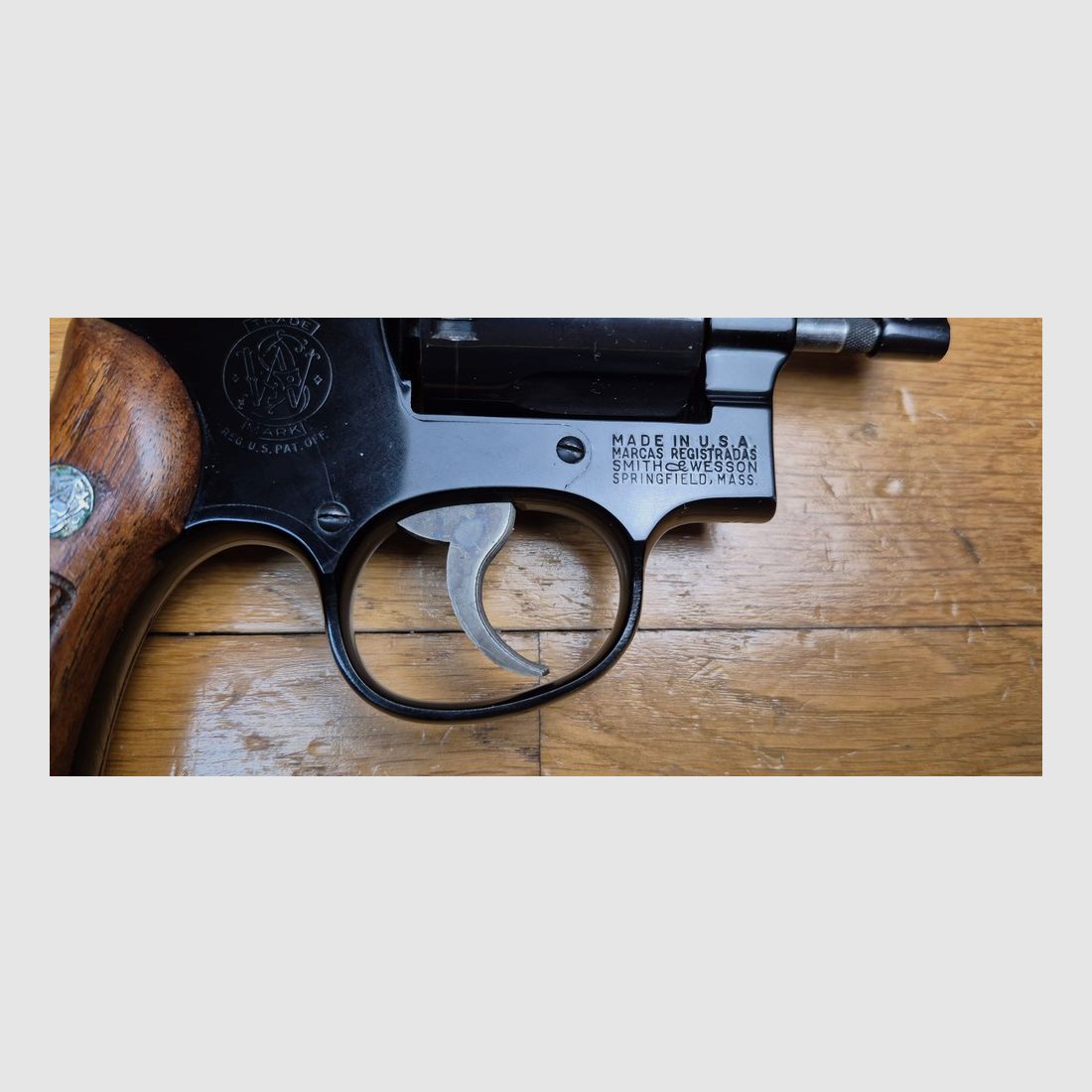
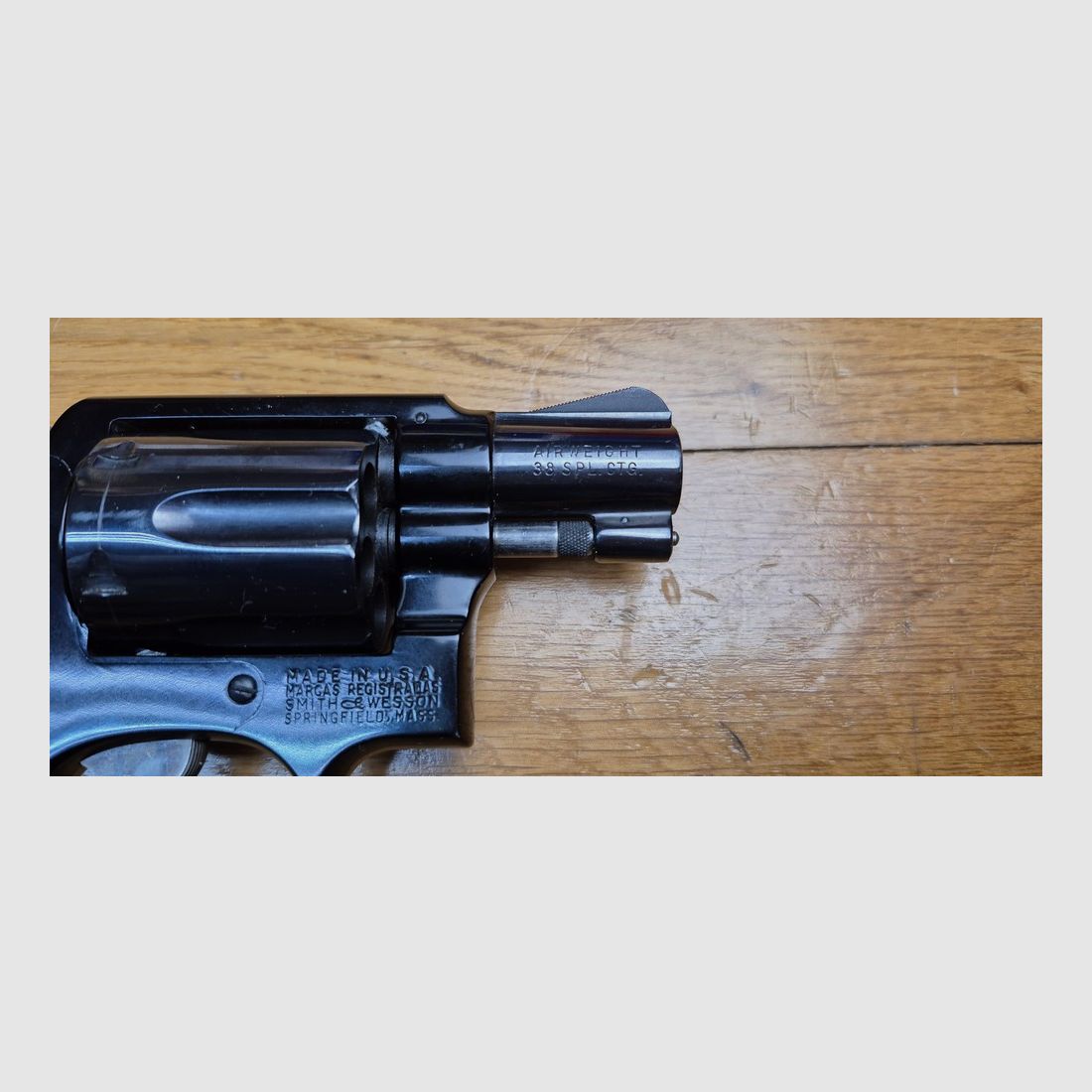

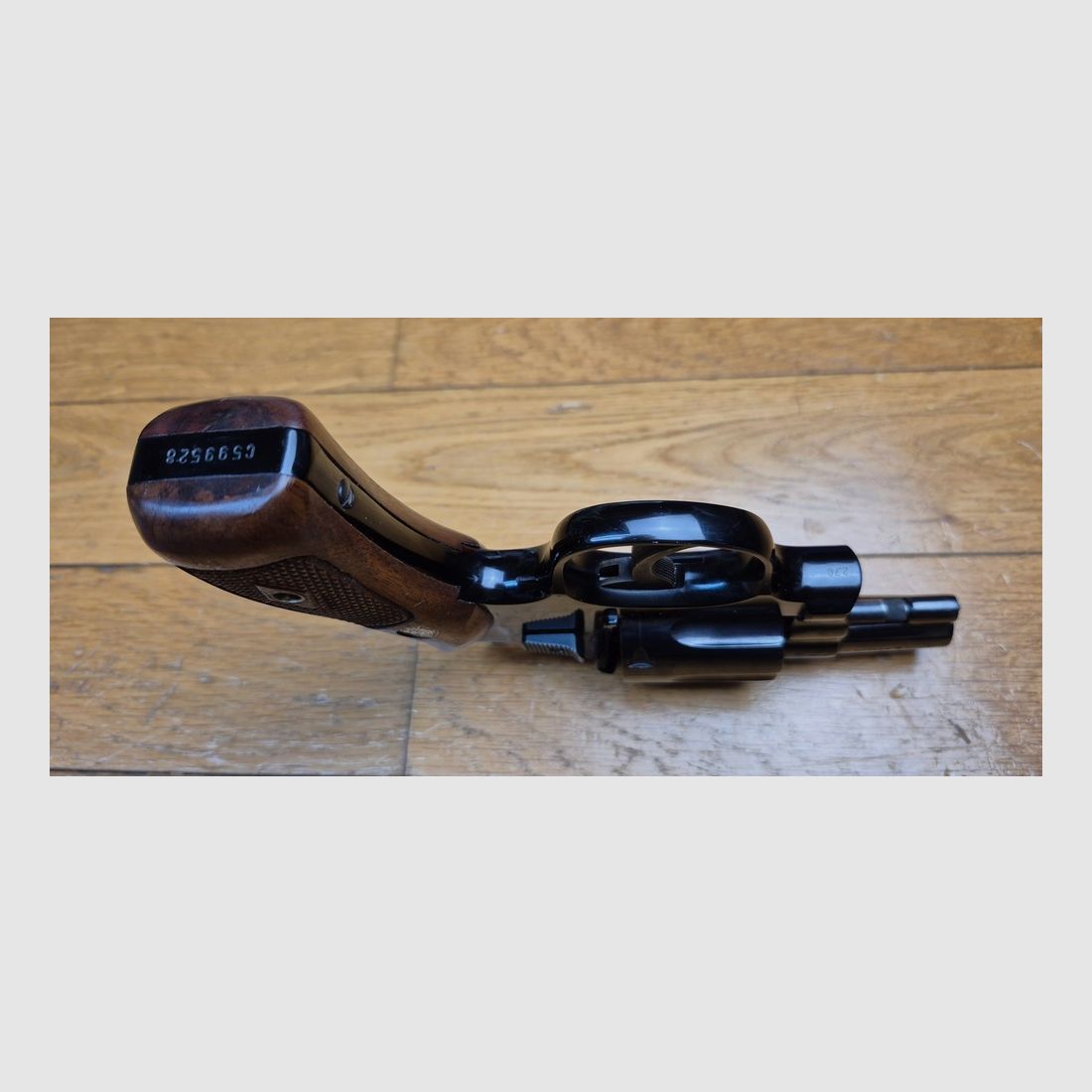
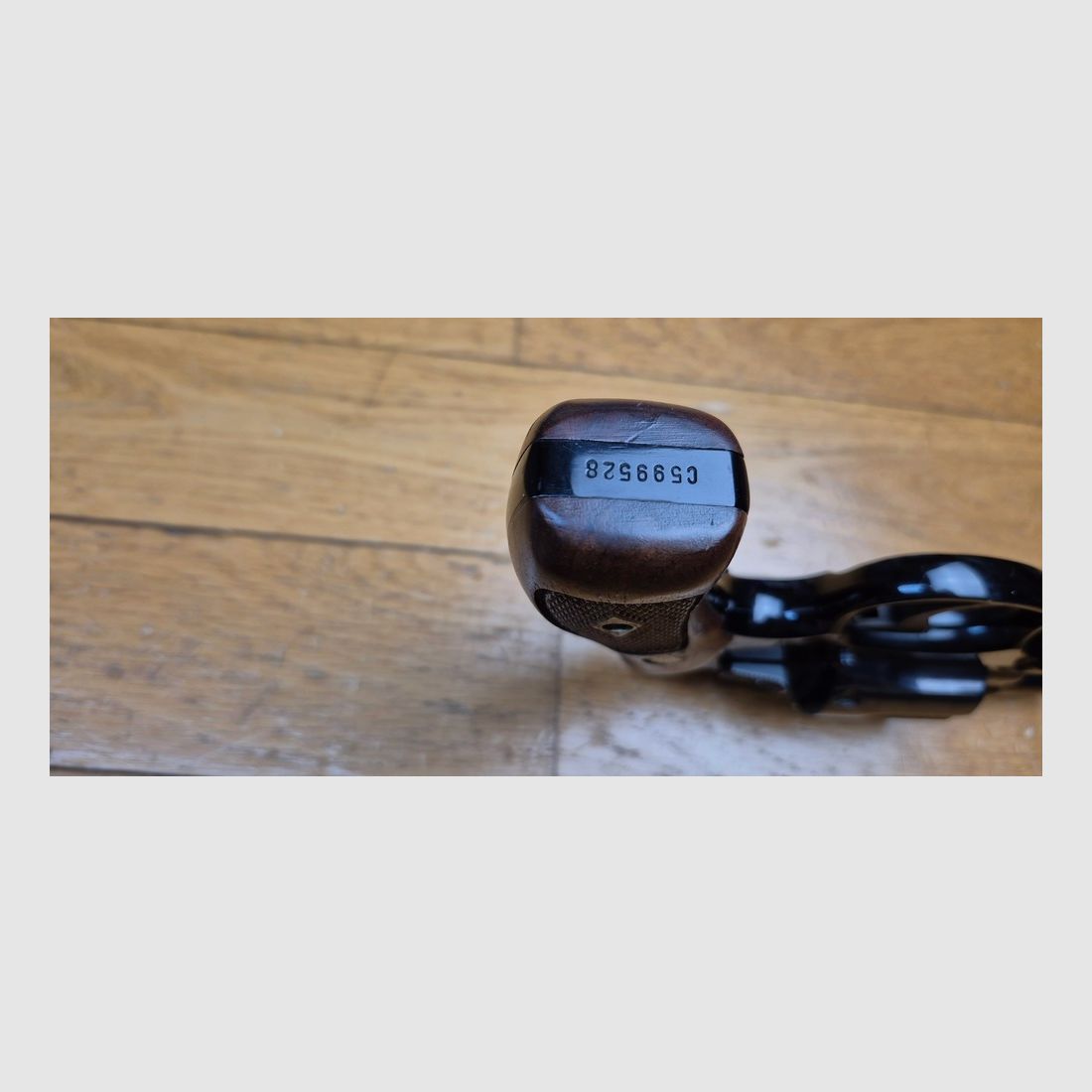

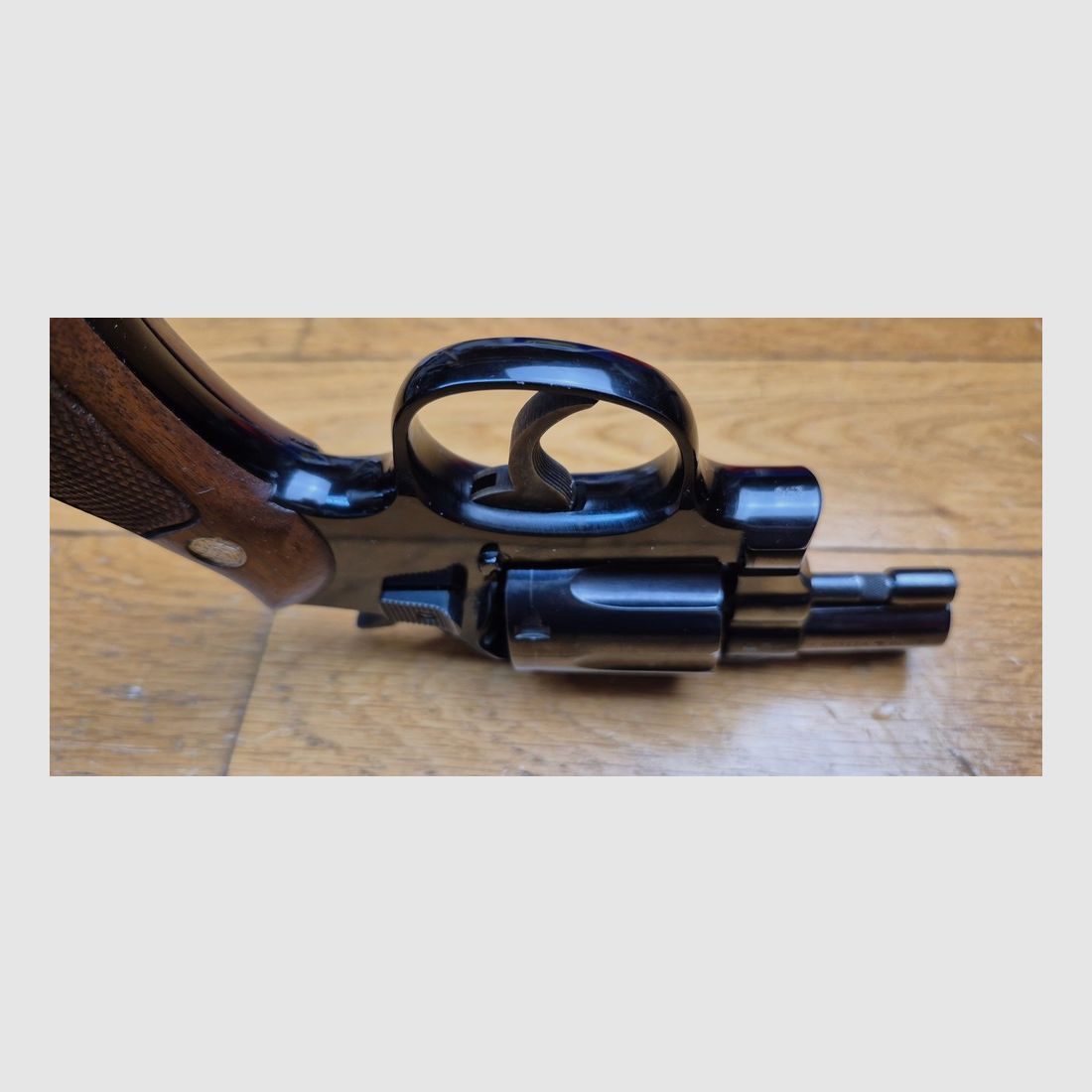


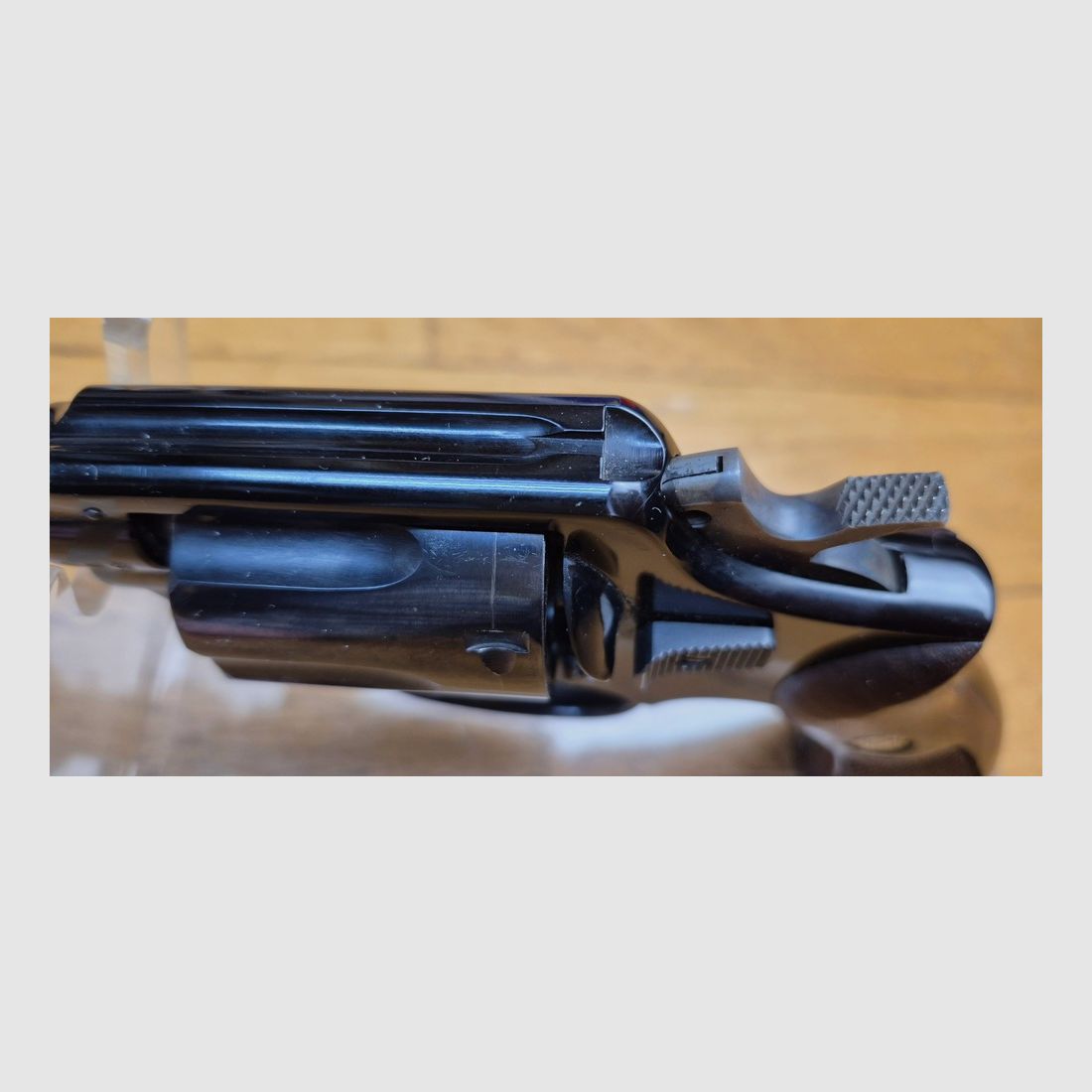
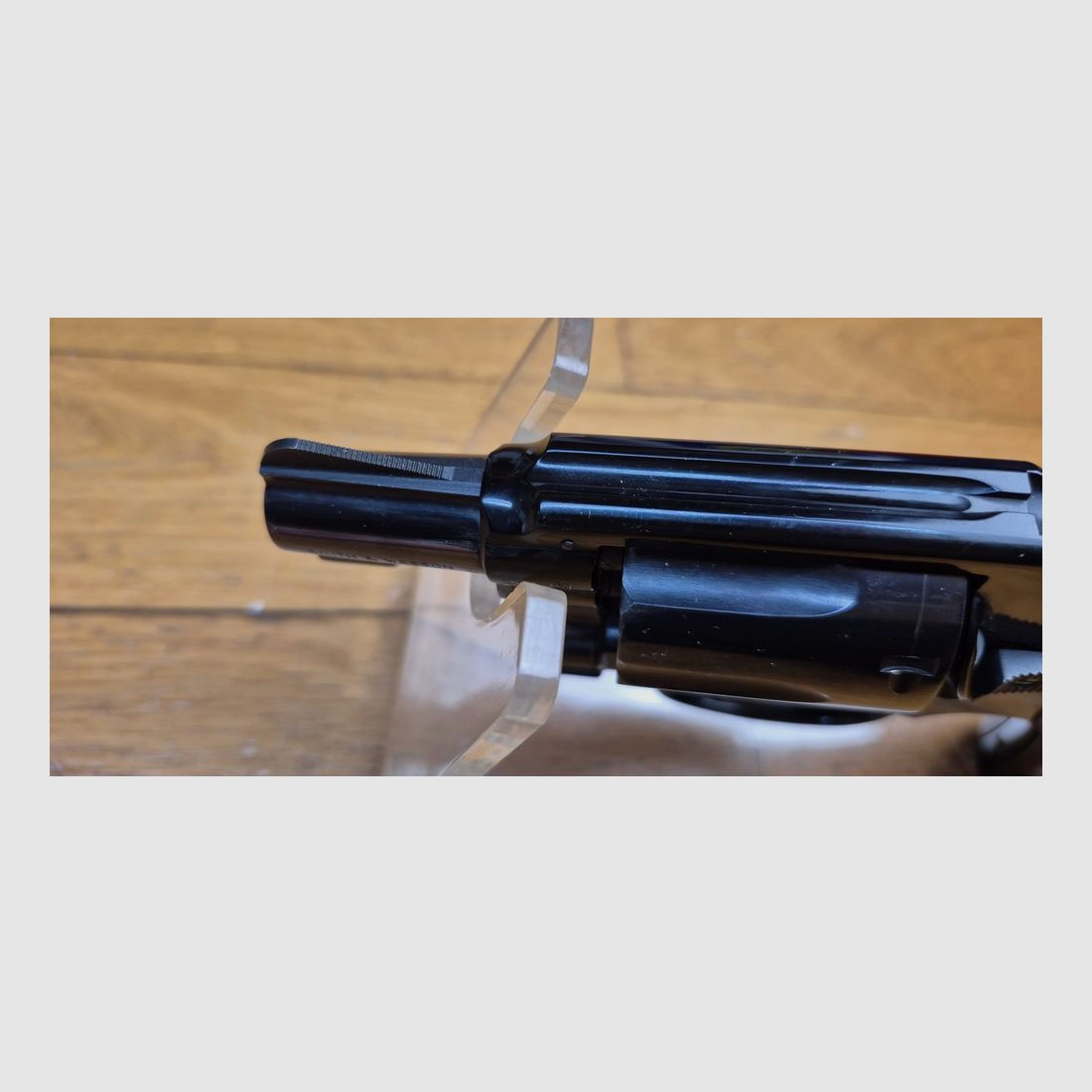

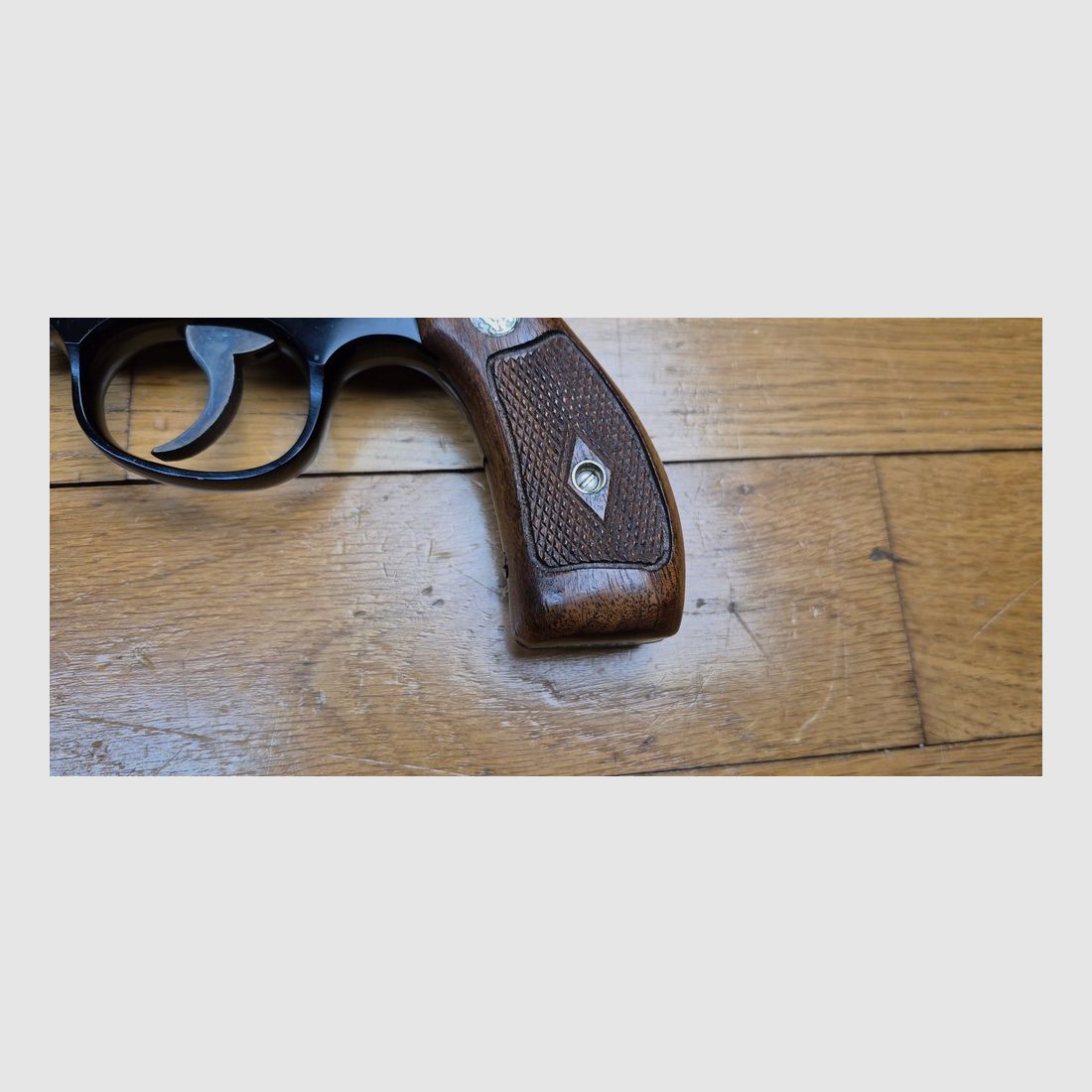
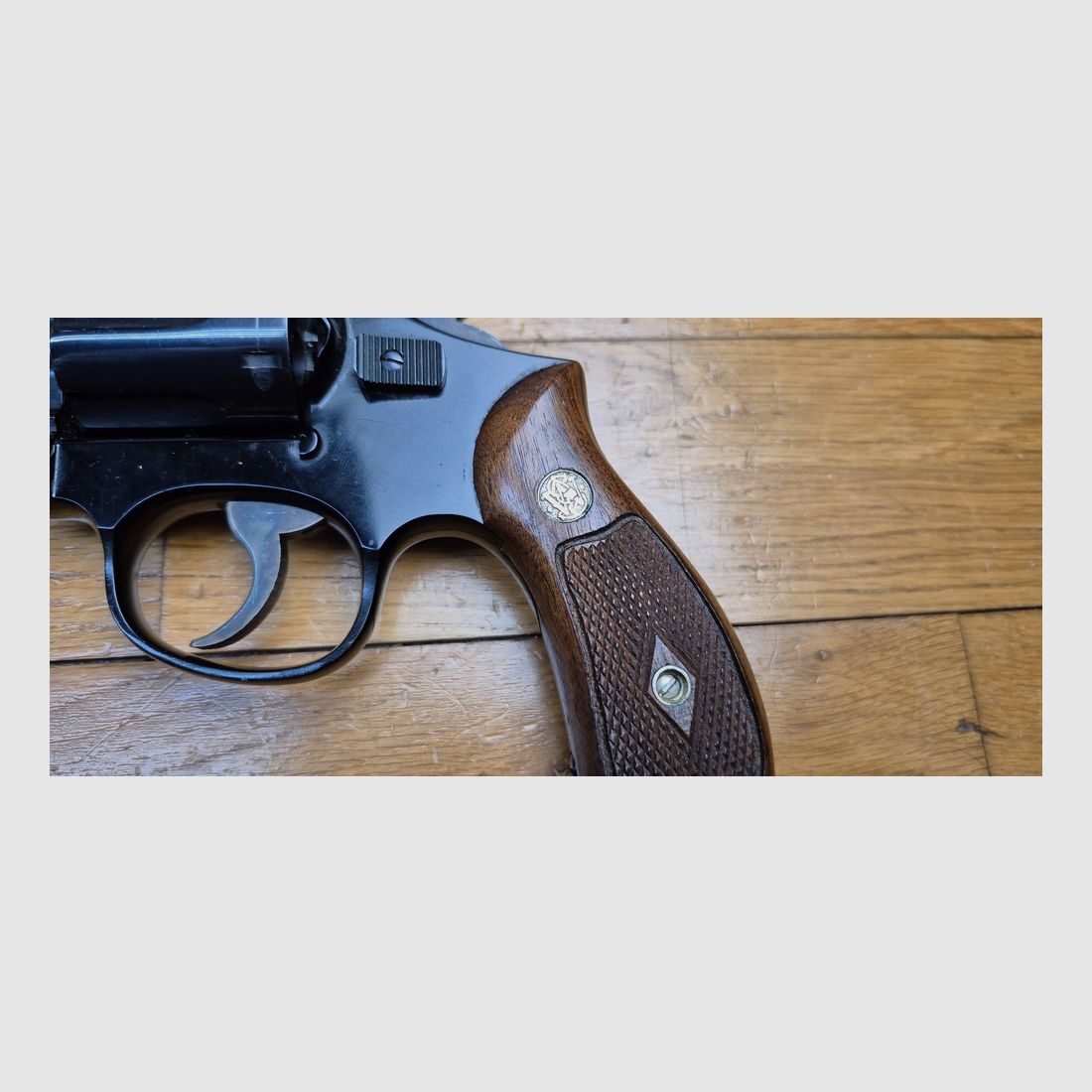
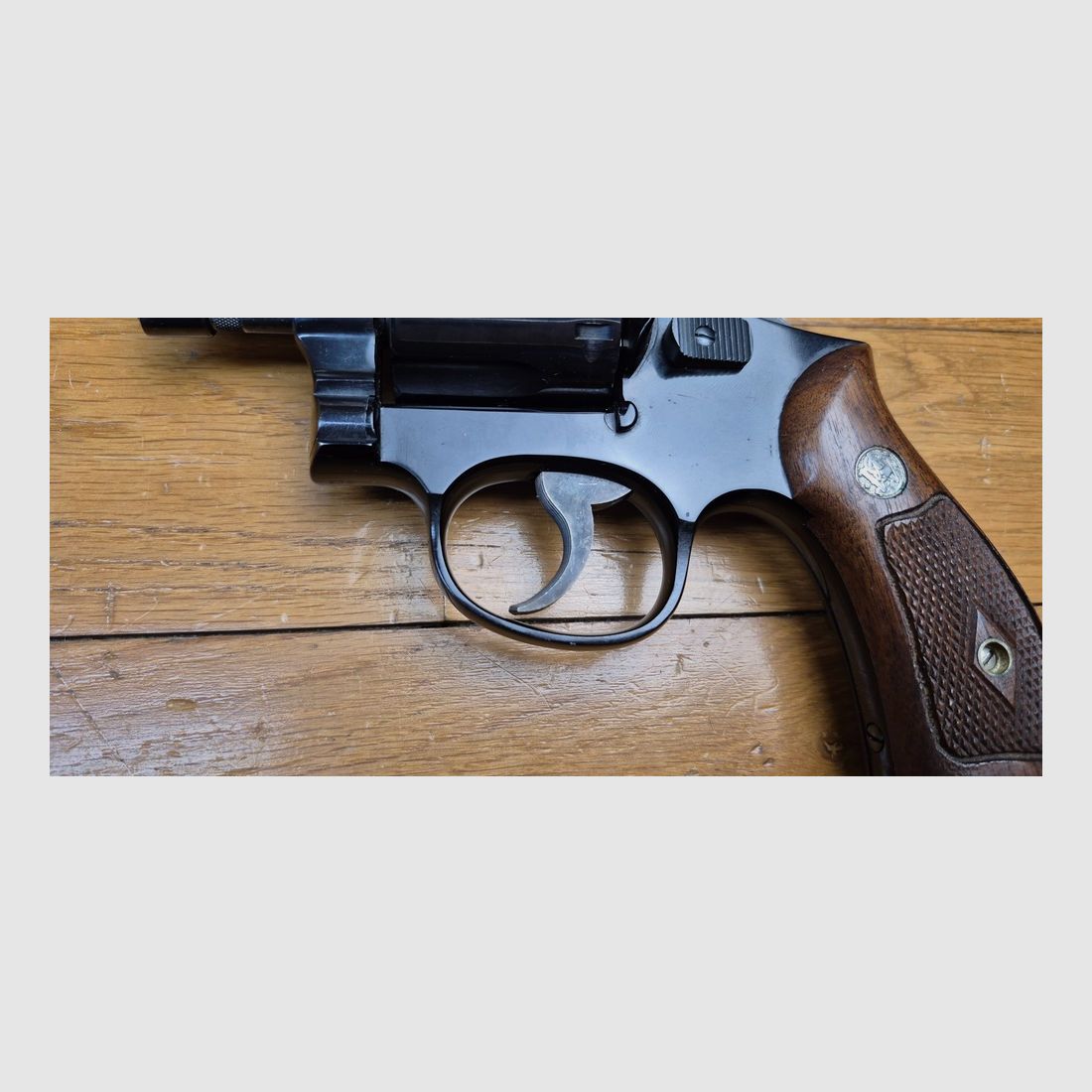
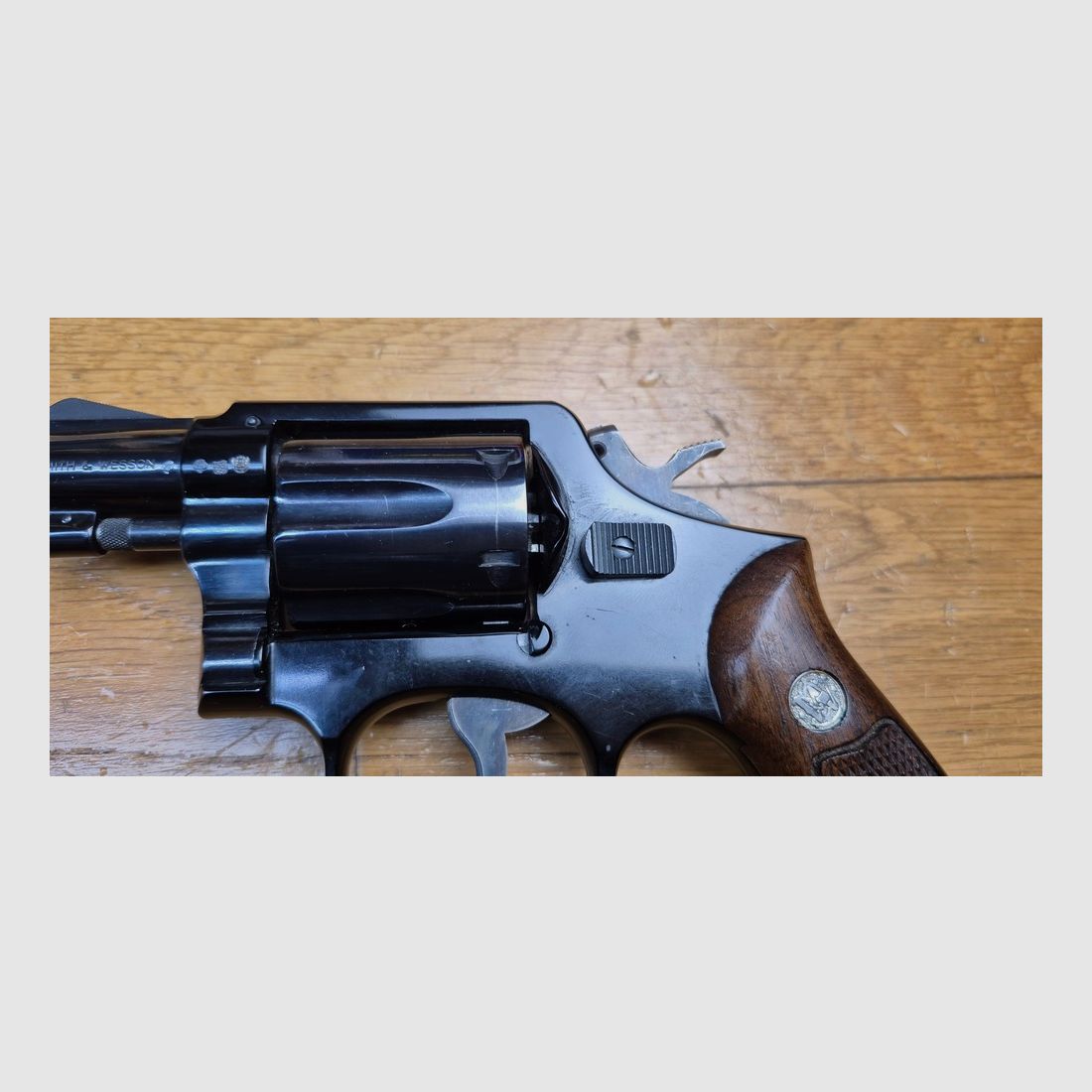

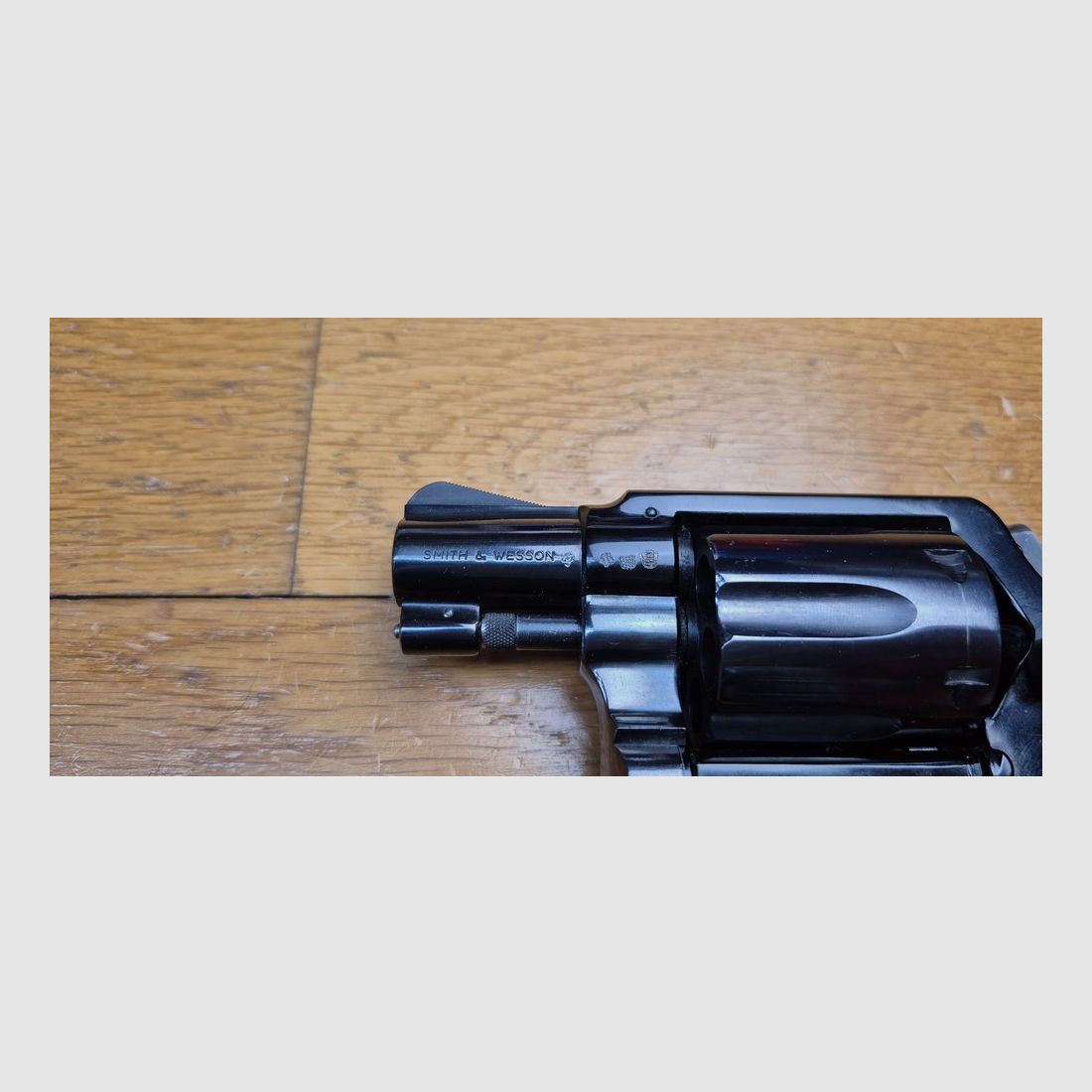
Uncommon and very beautiful Smith&Wesson Mod 12-1 Revolver – Rare Air Weight version of the Military and Police from 1905 – Special alloy in frame and cylinder steel – 6 rounds (not 5!) in caliber 38 SP – New 2-inch barrel – Stunning weapon at …. 520 grams in frame KA! – The big brother of the Smith 37 – Beautiful Smith construction from the great years – Weapon from 1962 – In like new condition! – TBE+/TBE++
≈ $989
Price at the dealer: 900 €. Converted at the ECB rate as of November 20, 2026.
Purchase permit required
75002 Paris, France
8
ID: 10338473
This item is currently unavailable.
Purchase from outside the EU: The firearm goes through an importer in your country, the dealer handles the export.
How buying from Europe works
Shop safely with Gunfinder
Our AI-powered seller identity verification makes Gunfinder the safest marketplace online.
Learn more
Details
- Original language
- French
- Brand
- Smith & Wesson
- Category
- Purchase eligibility
- Required
- Condition
- New
- Location
- 🇫🇷 75002 Paris, France
- Availability
- Out of stock
Freshness
This listing is based on a mirrored offer, where the listing data was synced to us from a shop, dealer, or external marketplace. Please note that temporary price discrepancies may occur due to possible delays in data transmission.
- Source
- Flingus Maximus
- Last checked with the dealer
- 20 minutes ago
Description
Note:
The item is located abroad. Please note that delivery conditions, shipping times, and/or the purchase process may differ.
And they’ve always been fascinated by size.
This is a somewhat common Air Weight, a more-than-useful gun that I rarely see. But it’s not an Airweight “37,” the more classic one, the featherweight brother of the famous Chief Special, known as the “36.” This one is a 12-1.
It’s also a child of the K-frame, and more specifically a refinement of the Military & Police 1905—a little larger than a 37 or a 36 in its K-frame, while those are built on the J-frame, which dates back to 1950.
And, most importantly, our K-frame here holds one extra round.
It’s also the child of an earlier model. The .38 Military & Police Air Weight, or “pre-Model 12” to US collectors. A gun made between 1951 and 1957 on a true K-frame, unlike our 12-1. We’ll come back to that.
I’m not going to retell the story of the K- and J-frames. It’s here.
It all began at the end of the 19th century, in 1899, with the “K” frame. But the search for lighter, more concealable guns began before the J-frame was created.
To achieve this, and also to answer the excellent Colt Detective Special, which was stealing a march on them with plainclothes police officers, Smith went back to its pure K-frame roots with a gun made entirely of lightweight aluminum alloy, including the cylinder. That was a bold move for the cylinder.
Smith’s first attempt to combine power, concealability and featherweight handling was therefore called the .38 Military & Police Air Weight, or “pre-Model 12.”
It was 1951. The Smith 36 in a J-frame had just come out. And its aluminum version, the 37, was still in the works.
At launch, I think the goal of this future Model 12 was to offer a “real” six-shooter, a sure thing (they didn’t know how the five-shot 36 Chief’s Special would be received), while also offering greater concealability with short barrels and, above all, featherweight handling for extended carry.
“Aerospace” aluminum, which covers various alloys, is an excellent material for making firearms. I find it far more appealing than some of today’s polymers. I’ll come back to that.
But making a revolver with an aluminum cylinder, even for police officers who train a lot over there, was a step too far.
It wasn’t that the guns blew up. Far from it. In my opinion, high-quality aluminum alloys handle these problems better than even polymers, because in an accident they deform and stretch rather than sending lots of little bits of plastic flying everywhere, including into your face and eyes.
But it’s clear that even a “competition-grade” aluminum cylinder wasn’t up to intensive training. The frames held up to .38 Special (it is a K-frame, after all), but the gun would deform around the chambers (there’s less metal around them), and things would start to “get loose,” which is never good. Then, inevitably, the chamber, now subjected to uneven forces, would crack.
So Smith switched to an all-steel cylinder on its models in 1954. Same with the 37. Only the frame is made of alloy.
But the gun had potential. Sure, it was a little less concealable than a 37, but with six shots and a K-frame that was probably more comfortable for police officers with large hands than the 37’s J-frame, it was worth pursuing.
Smith made its new version of the 12 a little smaller than the true K-frame used in the earlier attempt, since the alloy frame held up just fine as it was.
So our Smith 12-1 has a less common “KA” frame, meaning a “K” that’s slightly thinner than the standard K-frame to shave off a little more bulk. Exactly 0.080 inches, or 2 mm less in thickness all around.
The result is a lightweight, reliable gun suited to medium-to-large hands, yet still concealable with a short barrel. And it holds six rounds, not five. A real
A police gun and undoubtedly one of the best Airweights from Smith, alongside the classic Model 37. Like its big brother, but with a little more punch!
The gun was also made in a lightweight alloy version with a stainless finish, which is extremely rare. A few blued examples with 5- and 6-inch barrels also exist, and they’re very rare too, since most customers wanted short barrels.
These Smith 12 Airweights enjoyed a real career until… 1986, when production ended. In fact, many customers and police officers preferred it to the Smith 37 Airweight because of its grip and six-shot capacity.
As a side note, the gun also had a military career when the Swedish Air Force acquired 1,500 of them in 1958.
Even more surprisingly, the gun caught the attention of the French police, who ordered it in 1966!
For this special order, the cylinder release latch had to be placed on the right side of the frame, not the left. I’ve always thought it was an order for a particular service that wanted an Airweight… How many? We never found out. But they’re very rare.
If you find one (it’s possible in France), you’re in luck, because in this rare configuration for the French police, the gun is worth at least $5,000 in the US. So keep your eyes open!
Our example today is a 12-1 from the excellent pre-1982 production runs. This is a TRUE Smith from the company’s golden age, and yet it’s an AirWeight.
The fit and finish are stunning, as is how smoothly it handles. Just like the all-steel models from the same era.
Incidentally, the “Mod 12-1” marking on its frame was only used in… 1962. So at least this one isn’t hard to date, unlike many of its little Smith brothers.
Despite being rare in its category and specifications, the gun was still produced from 1951 to 1986.
It’s also a “pinned” model, with a retaining pin securing the barrel at the top of the frame—a hallmark of the best production runs. This feature helps make the gun more rigid, but requires special machining of the barrel. It’s even more useful in this alloy version.
Smith discontinued this pinning process across its entire range in 1982 to reduce production costs.
In short, a beautiful gun from the 1960s in virtually pristine condition. A real Flingus find.
An exceptional weight for a K-frame: just 520 grams unloaded, and perfectly manageable in .38 caliber. No need to worry about durability, either. With this quality of manufacture, it’ll last through your generation and your son’s. A steel Model 10 equivalent would have weighed close to 700 grams.
At this weight, you can carry it all day at the range, even in the height of summer—and still have six shots!
On that note, Master Flingus, a confirmed old crab who loves the finest steel and the tightest tolerances, and isn’t particularly keen on modern polymers, has already told you, paradoxically, how much he appreciates aluminum-alloy guns, provided the alloy is up to the job. I’ve already made this point about the alloy Pardini SP 45 in… .45 ACP (!).
Their exemplary rigidity and featherweight, combined with a good choice of ammunition, are impressive. And this Model 12-1, made from alloy, finished to a very high standard, and still carrying like a dream at at least 64 years old, only confirms my good opinion of the material.
These Airweight guns meet a specific need: discreet, all-day carry without sacrificing the shooting effectiveness and accuracy of their steel brothers.
While steel Smiths from this generation all comfortably exceed 150,000 rounds without losing any accuracy, the AirWeight models will manage tens of thousands of rounds.
Not thousands, with no hope of seeing the end of them before the end of your competitive shooting career…
The firearm’s mechanical condition is flawless—with the smoothness only found in the work of the professional gunsmiths still employed by Smith at the time. You’ll never get that with laser cutting.
The trigger pull is crisp, and all the springs are very strong.
No cylinder gap beyond factory-new specifications, a sign of very moderate use. The cylinder is still fairly stiff to open. The firearm just needs a thorough cleaning and lubrication.
The barrel is also new. Mirror-bright, with beautiful rifling. It’s a perfect two-inch barrel for its original police role.
In short, our Model 12-1 has seen virtually no use…
Very nice custom checkered walnut grips from Smith, with virtually no handling marks—if it hasn’t been used, it hasn’t been carried much either. Those aren’t the same thing.
Its exterior bluing (actually a special coating designed to adhere to the aluminum alloy) is also in near-new condition, without even a significant scratch. Barely any cylinder rotation marks!
What you might spot in my damn photos is just the effect of my IDIOTICALLY close-ups, which exaggerate every flaw. Once again, what you see in my photos is dirt, dust, grease, my fingerprints, etc. And nothing else...
This glossy black coating is both very thick and very attractive. Superb.
The trigger is grooved and case-colored, like the hammer, with 100% of its case coloring still intact. Details, sure. But this is pre-1982 Smith quality… and in like-new condition.
The K-frame square-butt grip is excellent and renowned. And it’s lightweight, too.
In .38 Special, with the wide range of bullets and loads available in this caliber, it’ll also be as economical as it is effective at the range.
Proof-tested when imported into Bavaria.
In short, our Smith&Wesson Model 12-1 is an uncommon piece, suited to discreet, extended carry, yet still a good fit for a fairly large hand. And it holds six rounds, unlike the other Airweights.
It’s also a chance to try a different kind of shooting at the range. It’s time to reread Raymond Sasia’s “Le Tir Rapide”! Our 12-1 will delight discerning fans of police firearms.
Top condition and a rare opportunity to complete your collection of Smiths from the golden years!
CATEGORY B FIREARM AT THE CSI: FIREARM SUBJECT TO AUTHORIZATION. PHOTOCOPIES OF A VALID ID AND FIREARMS LICENSE REQUIRED—SIA ACCOUNT MUST BE OPEN. Shipping with signature required in two separate parcels, at least 48 hours apart.
***************************************************************************************************************************************
Let’s say it again! Flingus Maximus gun shop in Paris and throughout France is also here to help with private firearm transfers, buying firearm and militaria collections, firearm appraisals, and questions about firearms in estates and inheritances. Contact your favorite gun dealer using our contact form or at [email protected] (Show description in original language)
Encore un enfant rare de la carcasse K. Avec une légère variation quand même. On est taquin chez Smith…
Et la taille les a toujours passionné.
C’est un peu courant Air Weight, une arme des plus qu’utiles que je vois rarement. Mais ce n’est pas un Airweight « 37 », le plus classique, le frère poids plume du fameux Chief special dit « 36 ». Lui, c’est un 12-1.
C’est aussi un enfant de la carcasse K et c’est même plus précisément un raffinement du Military & Police 1905 – Un poil plus conséquent en taille en carcasse K qu’un 37 ou un 36 qui, eux, sont en carcasse J, carcasse qui date, elle, de 1950.
Et surtout avec une balle de plus pour notre K de ce jour.
Il est aussi le fils d’un premier lit. Le .38 Military&Police Air Weight ou « pré-model 12 » pour les collectionneurs US. Une arme sortie entre 1951 et 1957 en vraie carcasse K lui à la différence de notre 12-1. On va y revenir.
Je ne vais pas vous refaire l’histoire des carcasses K et J- Elle est ici.
Tout avait commencé à la fin du XIX° siècle, en 1899 pour la carcasse « K. Mais La recherche d’allègement et de discrétion avait précédé la création de la carcasse J.
Pour ce faire, et accessoirement répondre à l’excellent Colt Detective Special qui leur taillait des croupières chez les policiers en civil, Smith reparti de sa carcasse K pur sucre avec une arme tout alliage léger d’aluminium y compris en barillet.Ce qui était osé pour la partie barillet.
Cette première tentative de Smith de concilier puissance, discrétion et poids plume s’appelait donc le .38 Military&Police Air Weight ou « pré-model 12 ».
On était en 1951. Le Smith 36 en carcasse J venait de sortir. Et sa version alu le 37 était encore dans les limbes.
A son lancement, je pense que l’objectif de ce futur modèle 12 était bien d’offrir un « vrai » six coups, une valeur sûre (on ne savait pas comment le 36 Chief’s special en 5 coups seulement serait accueilli) tout en offrant une discrétion accrue avec des canons courts et surtout un poids plume pour un port prolongé.
L’aluminium « aéronautique », qui regroupe divers alliages, est un excellent métal pour faire des armes. Il trouve bien plus grâce à mes yeux que certains polymères actuels. J’y reviendrai.
Mais de là à faire un révolver avec un barillet en aluminium aussi pour des policiers qui, là-bas, s’entrainent beaucoup, il y avait une marge.
Pas que les armes éclataient. Loin de là. Car les alliages d’aluminium de qualité gèrent à mon avis mieux ces soucis que même les polymères car en cas d’accident. Ils se déforment et s’allongent plutôt que de projeter des tas de petits bouts de plastique partout y compris dans le visage et les yeux.
Mais il est clair qu’un barillet en aluminium même « de compétition » pour des entrainements intensifs cela ne le faisait pas. Si les carcasses tenaient en .38 sp (c’est quand même du K), l’arme se déformait en chambre (moins de métal en périphérie) et cela commençait « à flotter » ce qui n’est jamais bon. Puis, inévitablement, la chambre soumise dès lors à des efforts dissymétriques, se fendait.
Donc Smith abandonna le barillet alu pour un barillet pur acier dès 1954 sur ses modèles. Idem en 37. Seule la carcasse est en alliage.
Mais l’arme avait du potentiel. Certes, un peu moins discret qu’un 37, mais en six coups, avec une carcasse K sans doute plus agréable pour des grosses mains policières que la J du 37, il fallait poursuivre.
Sa nouvelle mouture du 12, Smith la fera un poil plus petite que la vraie K de la tentative précédente puisque la carcasse en alliage tenait bien comme ça.
Notre Smith 12-1 est donc dans une peu courante carcasse « KA », c’est à dire une « K » légèrement moins épaisse que la K standard pour gagner encore un poil en volume. De 0.080 pouces exactement soit 2mm de moins de partout en épaisseur.
Il en ressort une arme légère, fiable, adaptée à une main moyenne à grande pour une arme encore dissimulable quand elle est en canon court. Et en six coups et pas cinq. Une vraie arme de police et sans doute un des meilleurs Airweight de chez Smith avec le classique 37. Comme son grand frère qui a mangé un peu plus de vitamines !
L’arme existe dans une version alliage léger mais « inox » et qui est rarissime. Il existe quelques exemplaires bronzés en 5 et 6 pouces qui sont aussi très rares vu que l’essentiel de la clientèle a demandé des canons courts.
Ces Smith 12 Airweight connaitront une vraie carrière jusque… 1986, date de l’arrêt de la production. En effet, nombre de clients et de policiers le profèreront au Smith 37 Airweight du fait de sa prise en main et de ses six coups.
A titre anecdotique, l’arme poursuivra aussi une carrière militaire quand elle sera acquise à hauteur de 1.500 exemplaires par l’armée de l’air suédoise en 1958.
Plus curieux encore, l’arme sera remarquée et commandée par la police française en 1966 !
Cette commande spéciale demandera à ce que le loquet de déverrouillage du barillet soit placé à droite et pas à gauche de la carcasse. J’ai toujours pensé à une commande pour un service particulier en Airweight…. Combien ? On a jamais su. Mais ils sont très rares.
Si vous en trouvez un (c’est possible en France) vous êtes un chanceux car l’arme, dans cette rare configuration pur la Police française, côte au moins dans les 5.000 $ aux USA. Alors ouvrez l’œil !
Notre exemplaire de ce jour est un 12-1 des excellentes fabrications d’avant 1982. C’est VRAI Smith de la grande époque de la firme et c’est néanmoins un AirWeight.
Les ajustements et finitions sont bluffants comme sa souplesse d’utilisation. Et comme pour les modèles en pur acier de la même époque
D’ailleurs sa carcasse porte la mention « Mod 12-1 » ne fut portée qu’en…1962. Au moins celui-là n’est donc pas difficile à dater contrairement à nombre de ces petit frères Smith.
L’arme, pourtant rare dans sa catégorie et ses spécificités, fut quand même produite de 1951 à 1986.
C’est encore un modèle « pinned » avec une goupille de renfort de maintien du canon en sommet de carcasse qui est une des marques des meilleures fabrications. Ce dispositif contribue à renforcer la rigidité de l’arme. Mais cela oblige à un usinage particulier du canon. Cela reste encore plus utile dans cette version alliage.
Ce processus de goupillage a été abandonné sur toute la gamme Smith à partir de 1982 pour des raisons de coûts de production.
Bref une très belle arme des années 60 à l’état juste de neuf quasi absolu. Une vraie occasion Flingus.
Poids tout à fait exceptionnel pour une carcasse K de 520 grammes à vide tout à fait gérable en calibre 38. Et aucun souci de robustesse à anticiper. Il pourra tirer pour votre génération et celle de votre fils dans cette fabrication de qualité. Un équivalent modèle 10 acier aurait pesé pas loin de 700 grammes.
Avec un tel poids vous pourrez le portez toute la journée au stand et même en plein été. Et en restant en 6 coups !
A ce propos, Maître Flingus, vieux crabe amateur définitif des meilleurs aciers dans les plus fins des ajustements, et pas plus que ça passionné par les polymères contemporains, a déjà eu l’occasion de vous confier, paradoxalement, tout le bien qu’il pensait des armes en alliage d’aluminium pourvu que la qualité de l’alliage soit en rendez-vous. Je vous ai déjà fait ce commentaire au sujet du Pardini SP 45 en alliage et en … 45 ACP (!).
Rigidité exemplaire et poids plume, associés à un bon choix de munitions sont bluffants sur ces armes. Et ce Modèle 12-1 en alliage plus que bien fini, et qui se porte comme un charme pour ses au moins 64 ans, ne fait que confirmer ma bonne opinion sur cette matière.
Ces armes Airweigh répondent juste à un besoin précis de discrétion de port prolongé sans rien renier de l’efficacité de tir et de précision de leurs frères en acier.
Si les modèles acier des Smith de cette génération franchissent tous très allègrement les 150.000 coups ou plus sans rien perdre de leur précision, les modèles AirWeight en tiendront des dizaines de milliers sans espoir pour vous d’en voir la fin avant celle de votre carrière de tireur sportif…
L’état mécanique de l’arme est sans faille – avec cette souplesse qui n’appartient qu’au ajusteurs professionnels encore en poste chez Smith à l’époque. Vous n’aurez jamais ça avec une découpe laser.
La percussion est franche et tous les ressorts sont très fermes.
Aucun entrefer différent du neuf, signe d’une usage plus que modéré. Le barillet est encore assez raide à l’ouverture. L’arme doit doit juste être nettoyée à 100% et graisser.
Le canon est neuf aussi.Miroir et avec de belles rayures. C’est un deux pouces parfait pour sa mission policière d’origine.
Bref notre 12-1 de ce jour n’a quasiment pas servi…
Très belle plaquettes maison de noyer quadrillé de chez Smith quasiment sans marques de manipulation – s’il n’a pas servi, il s’est aussi très peu promené. Ce qui n’est pas la même chose.
Son bronzage extérieur (en fait un revêtement spécial capable d’accrocher sur l’alliage d’aluminium) est aussi dans un état quasi neuf sans même aucune griffure significative. A peine de traces de rotation du barillet !
Ce que vous pourriez apercevoir sur mes damnées photos n’est que l’effet de mes TROP gros plans idiots qui accentuent tous les défauts. Encore une fois sur mes photos c’est du sale, de la poussières, de la graisse, mes traces de doigts, etc. Et rien d’autre.. .
Ce revêtement noir brillant est très épais et très esthétique à la fois. Superbe.
La queue de détente est striée et jaspée comme le chien avec encore 100% de son jaspage Des détails. Certes. Mais la qualité Smith d’avant 82… Et en neuf.
La prise en main est celle la carcasse K en square butt : excellente et réputée. Et la légèreté en prime.
En calibre 38 Sp avec la multitudes d’ogives et chargements offerts par ce calibre, il sera en plus aussi économique qu’efficace au stand.
Arme éprouvée lors de son importation en Bavière.
In fine notre Smith&Wesson modèle 12-1 est une pièce peu courante, adaptée à un port long et discret, et néanmoins à une main assez grande. Et en six coups, ce que n’offrent pas les autres Airweight.
C’est aussi l’occasion de se mettre à une autre forme de tir au stand. Il est désormais temps de relire l’ouvrage « Le Tir Rapide » de ce bon Raymond Sasia! Notre 12-1 réjouira tous les amateurs d’armes de police exigeants.
État top et rare occasion de compléter sa série de Smith des grandes années !
ARME DE CATÉGORIE B AU CSI : ARME SOUMISE À AUTORISATION, PHOTOCOPIES DE LA PIÈCE D’IDENTITÉ EN COURS DE VALIDITÉ ET DE LA LICENCE OBLIGATOIRES – COMPTE SIA OBLIGATOIREMENT OUVERT. Expédition contre signature en deux colis séparés d’au moins 48 heures obligatoire.
***************************************************************************************************************************************
Répétons le ! L’armurerie Flingus Maximus à Paris et partout en France, est là aussi pour vos formalités armes entre particuliers, le rachat de collections armes et militaria, vos estimations d’armes, vos questions armes dans les successions et héritage. Contactez votre armurier préféré via notre formulaire de contact ou à [email protected]