

















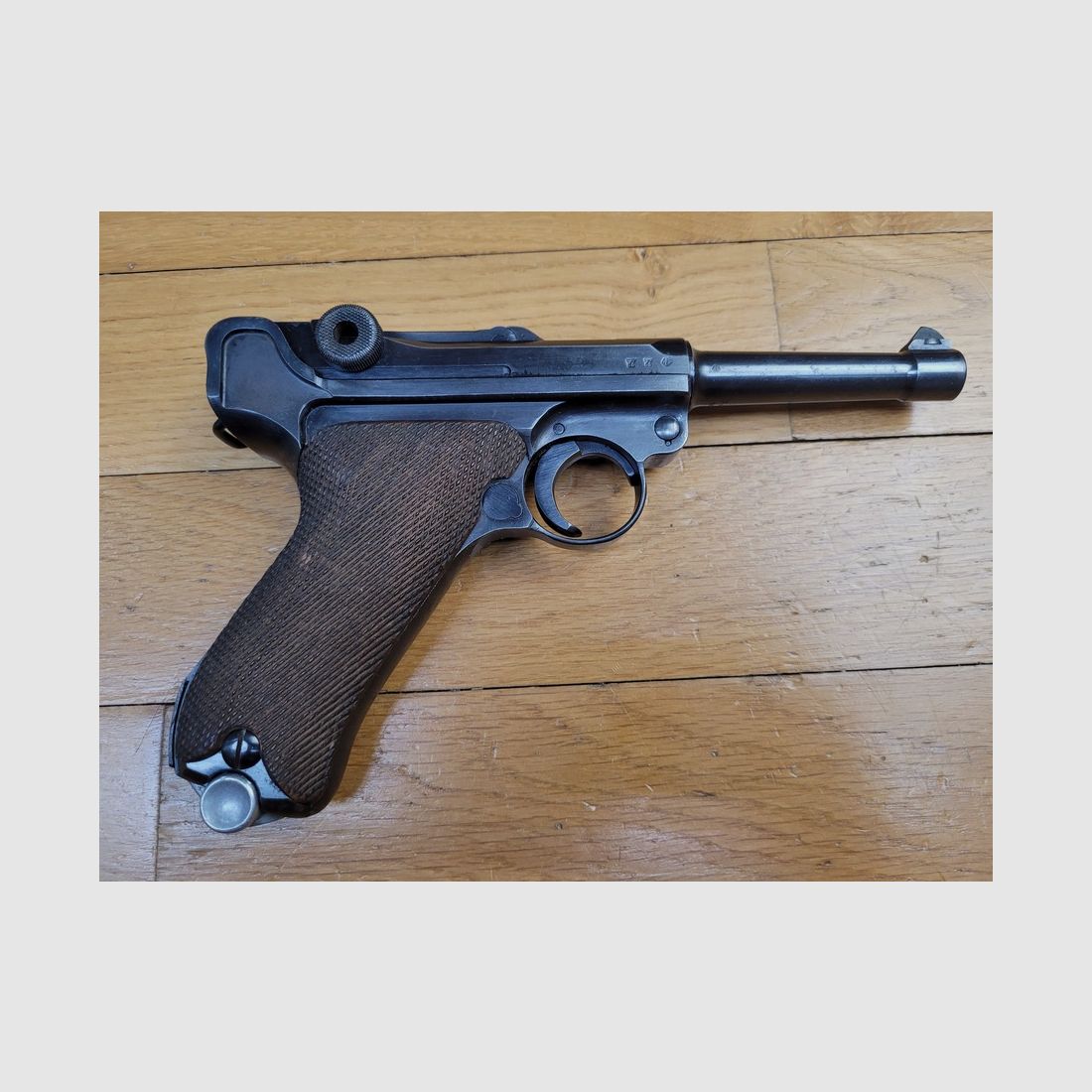







Exceptional Luger P08 Kriegsmarine Pistol – Less than 3900 units – Mauser S/42 manufacture from 1938 – Kriegsmarine holster and original key – Very rare set in perfect condition!
Price on Request
Purchase permit required
75002 Paris, France
13
ID: 10338881
This item is currently unavailable.
Purchase from outside the EU: The firearm goes through an importer in your country, the dealer handles the export.
How buying from Europe works
Shop safely with Gunfinder
Our AI-powered seller identity verification makes Gunfinder the safest marketplace online.
Learn more
Details
- Original language
- French
- Brand
- Mauser
- Category
- Purchase eligibility
- Required
- Condition
- New
- Location
- 🇫🇷 75002 Paris, France
- Availability
- Out of stock
Freshness
This listing is based on a mirrored offer, where the listing data was synced to us from a shop, dealer, or external marketplace. Please note that temporary price discrepancies may occur due to possible delays in data transmission.
- Source
- Flingus Maximus
- Last checked with the dealer
- 6 minutes ago
Description
Note:
The item is located abroad. Please note that delivery conditions, shipping times, and/or the purchase process may differ.
Maître Flingus is moved. One of those moments that make him keep doing this job.
He was feeling down about having vaguely missed out on a Lulu 14 (the artillery model) with its numbered board to offer you. But hey, I’ll see others.
And then, out of the Breton sky, an unexpected and much rarer stinging beast falls into his lap. And in what condition!
Being happy at work is a huge thing. By the way, if anyone dreams of it, I’m looking for a partner. My contact form is there for that too.
Back to the important subject of the dreams of gunsmiths specializing in antique firearms or used ones in very good condition. A population that will soon be as small as that of the Pyrenean bear around 2004. My real first name is Canellito.
What do they dream about at night, the passionate crowd wonders? A winning first-prize lottery ticket? A beautiful red, roaring car? A blonde just as well-built and roaring as the car mentioned above? A heroic battle before besieged Troy? A thunderous Marseillaise in a frenzied stadium, with an Olympic Gold Medal for the Trap event on their chest? The discovery of a cellar filled with forgotten Grand Crus from Burgundy?
No. Just a very beautiful Marine Lulu 37/40 in its case, with its original takedown key, all original and never before on the market. A modest dream?
Not really for anyone passionate about historical firearms. Because the chances of finding one, especially in very good condition, are pretty slim.
Just think: fewer than 7,000 were made for the entire German Navy during the period in question. We’ll come back to that.
Maître Flingus has already given you a broad outline of the chaotic story of the resumption of P08 production by the Third Reich and the somewhat baroque end of this gunsmithing legend, based on civilian parts at Mauser in 1942.
But here, we’re talking about another Mauser subject.
What should you know about the Luger P08s of the Third Reich’s Kriegsmarine and the production of this legendary firearm during that period?
First, they have a glorious ancestor.
The Imperial Navy’s Luger P04 from the First World War, the very first Luger adopted by Germany, produced from 1904 to 1918. These weren’t produced in 53,000 or 104,000 examples, as some older sources have sometimes claimed. But only between 32,000 and 34,000. The source is the Summa Theologica by Joachim Görtz and Goeffrey L. Sturgess, Volume 1/3 – Page 349.
Incidentally, this is the reference work on the Luger. More recent—2010—and more comprehensive than Jan C. Still’s remarkable foundational work from 1994. Its full title is “PISTOLE PARABELLUM – History of the Luger System”—3 volumes and 1,930 richly illustrated pages, published by “Collector Grade Publications.”
An essential bible for any collector who wants to seriously delve into the subject of the Lulu: its feverish birth, tumultuous youth, international career, highly mechanical private life, historical missteps, Promethean output of variants and accessories, and soon-to-be centuries-old legend.
For those interested, and to back up arithmetically this estimate of around 34,000—which, I fear, will be very discouraging for those looking for a beautiful 1904/06 in very good condition—it’s worth knowing that there were only 7 to 99 Luger 1904s aboard a ship in the Imperial Fleet (from a simple Cameroonian river gunboat to a 32,000-ton Bayern-class battleship), 21 to 24 Lugers in a submarine, 8 or 10 in the famous Toperdo-Boats (fast torpedo boats), and rarely more than twenty in the staffs associated with all this… I doubt the proportions of handguns were very different during the Second World War. In short, the Marine Lulu is a rare firearm in its own right, simply because of the relative numbers compared with the Army.
For another comparison, there were about 155,000 examples of...
areas of the sought-after Lulu 14 artillery models produced up to 1918. Sadly, if the Germans had made more than 100,000 Navy P04s, we’d see them more often, to everyone’s great delight. Sadly. Sadly.
So, 32,000 to 34,000 Navy Luger P04s.
But Navy Luger P08s for the Third Reich Navy are another matter.
First, they were produced only by Mauser, and only from 1934 to 1940. That’s a very short time compared with the P04 (14 years for the latter).
The German Navy used it alongside other models, including “newer” ones after 1940, such as the P38, but also Polish Radom 35s after 1939, Mauser Pocket pistols, and even Mauser 34s like the one Langsdorff used to kill himself, lying on his ship’s flag after the Battle of the River Plate.
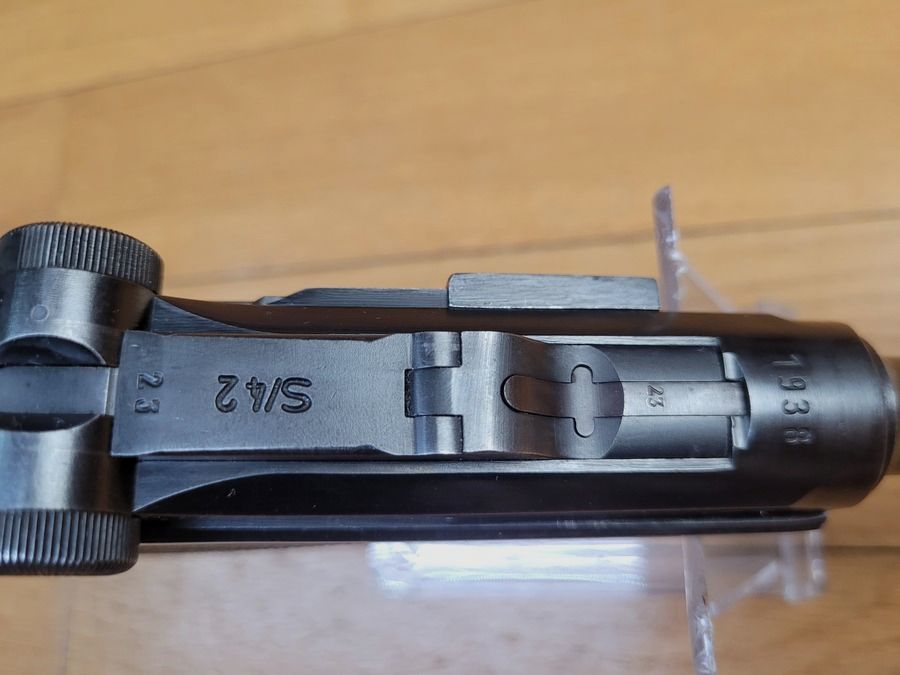
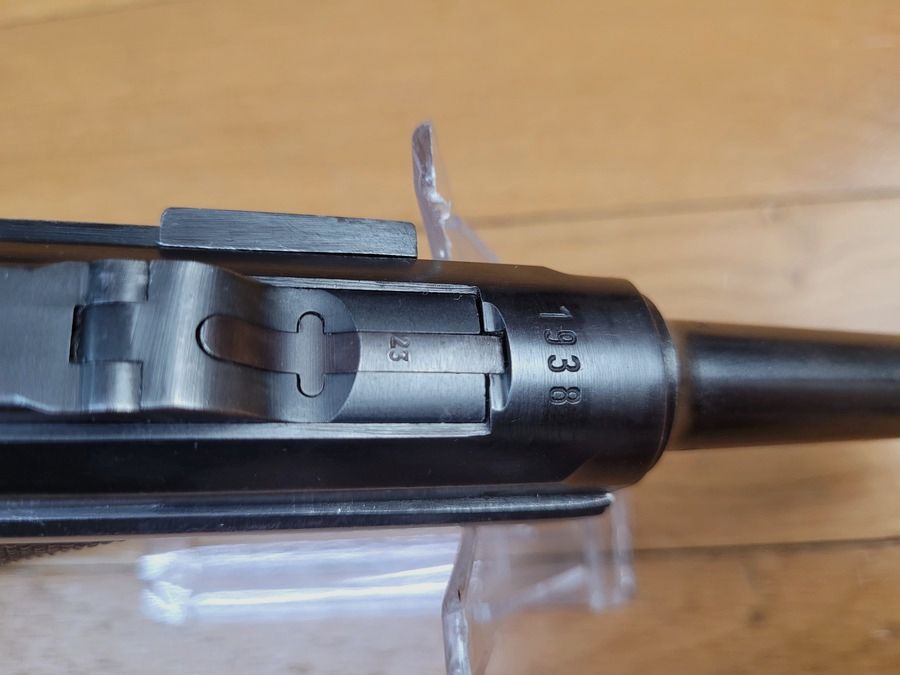
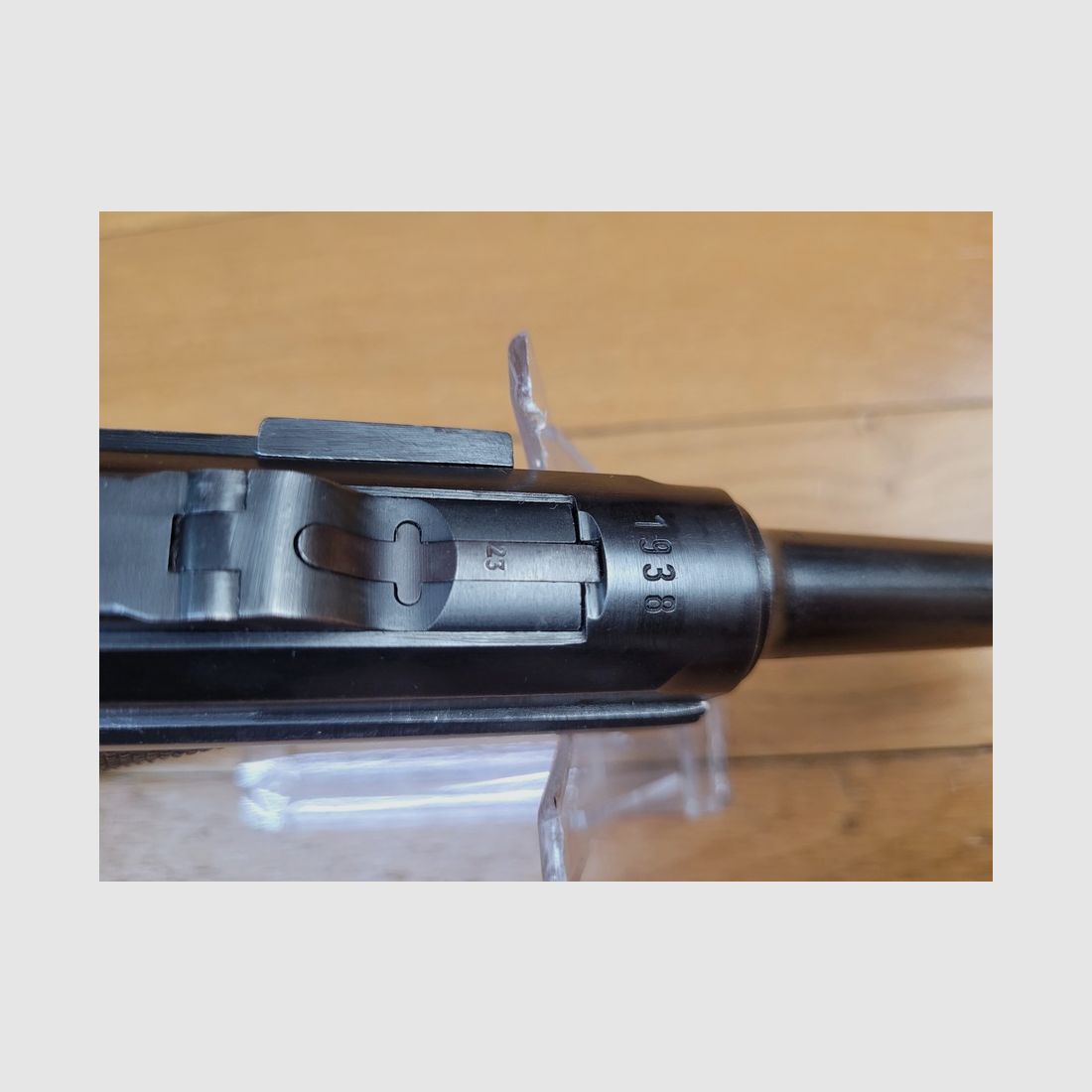
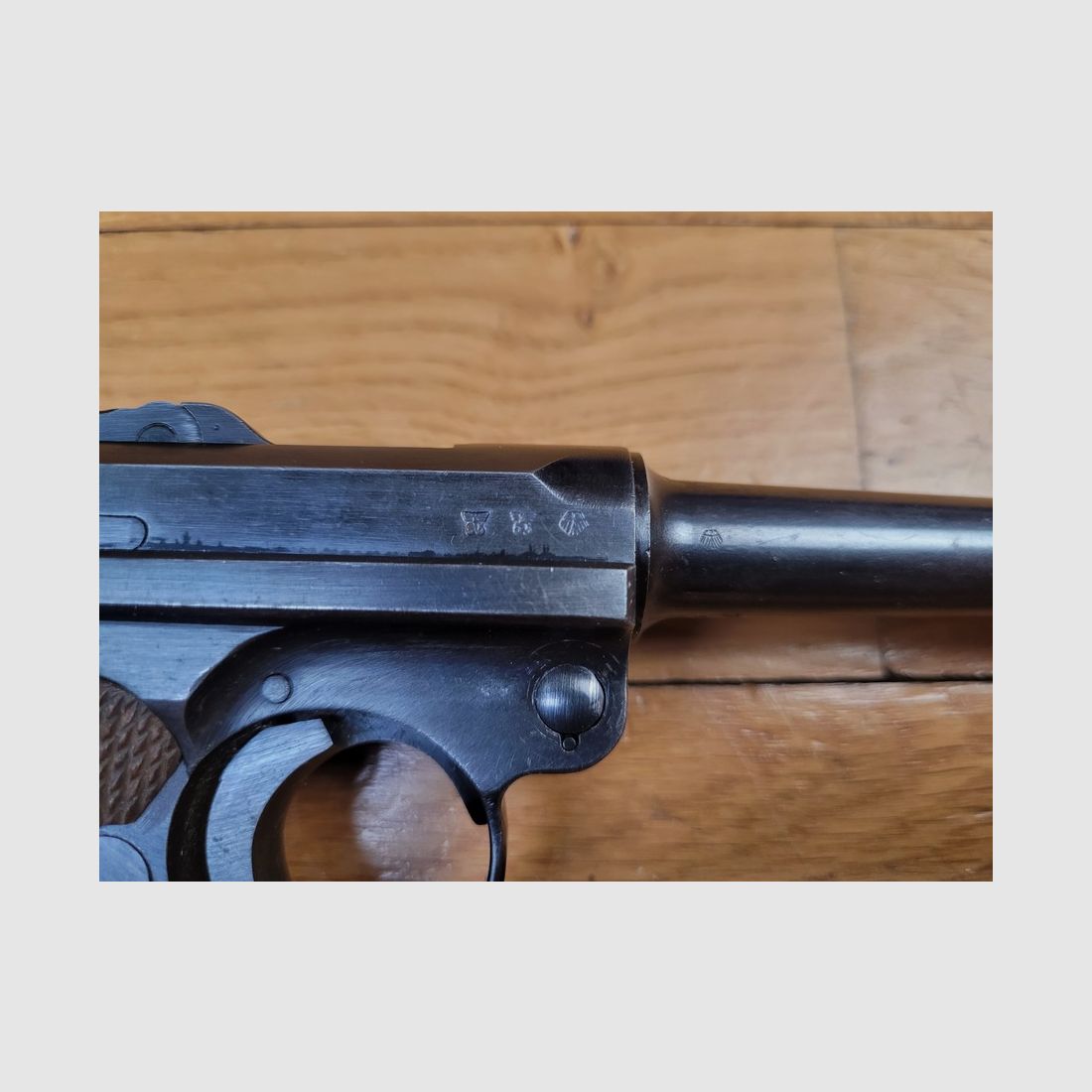
These Third Reich Navy Luger 08s naturally bear Mauser’s “S/42” code, used from 1934 to 1939, a pivotal year, and then only the “42” code from 1939 until production for the Navy ended in 1940. So you can find 1939 Navy models, and only those from 1939, with either the “S/42” or “42” code. Like their Mauser cousins in the Army or Luftwaffe, those from 1934 are marked “K” on the chamber, those from 1935 “G,” and those produced each year from 1936 to 1940 have a four-digit date on the chamber.
Another important point. While Navy Luger P04s from 1904–1918 are marked with an M under a crown, indicating that they belonged to the Imperial Fleet, Mauser Navy Lugers produced from 1934 onward bear a Navy eagle + M marking only on the “K” and “G” examples from 1934/35. Not after that.
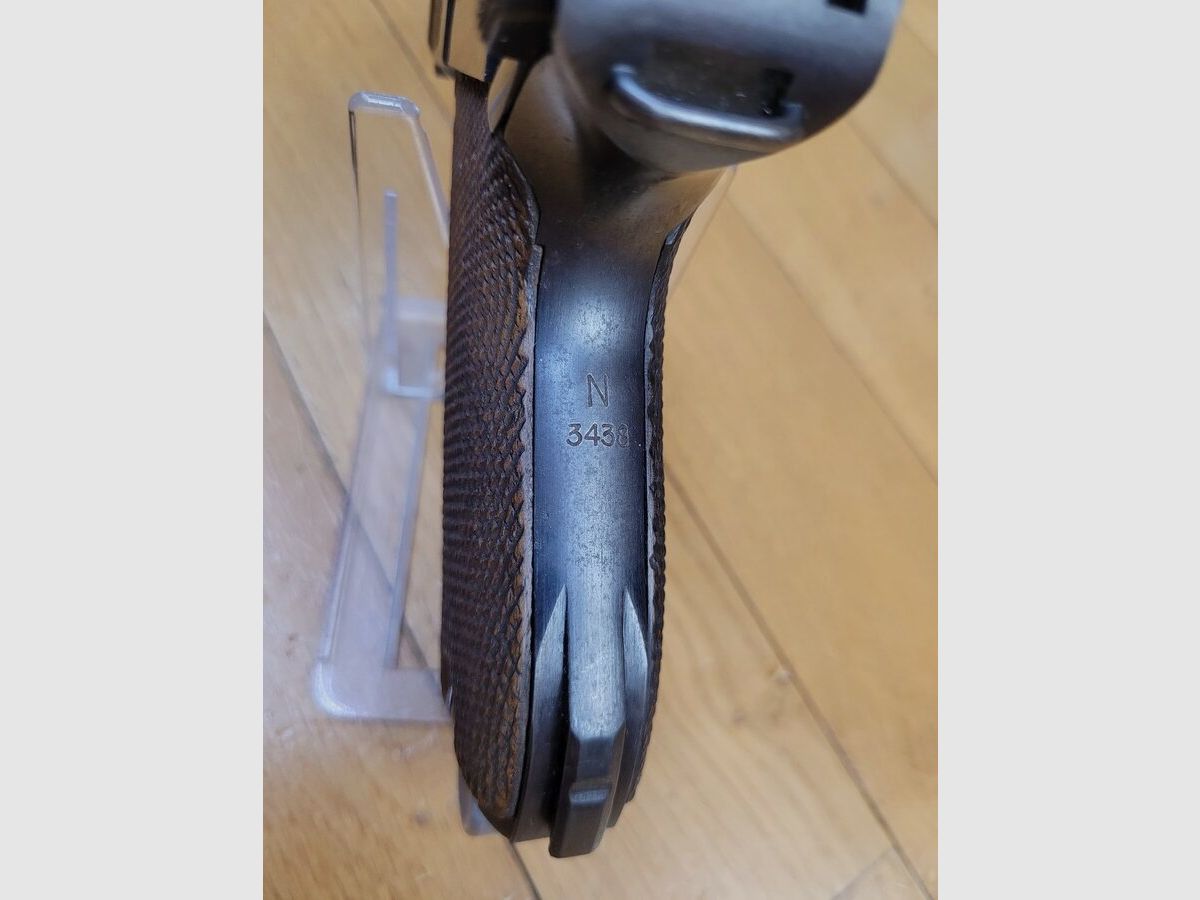
From 1936 onward, the Navy eagle + M disappears until production ends in 1940 (Görtz and Sturgess, Vol. 1, pp. 383 and 384). The only marking left is the assignment to the Fleet, with code O for the “Ost See” (assignment to the Baltic Fleet) or code N for the “Nord See” (assignment to the North Sea Fleet), along with the weapon’s Navy serial number (which is not its Mauser serial number).
Some authors claim that the eagle + Navy M marking disappeared in 1935 at the same time as the name changed from Reichsmarine to Kriegsmarine, but nothing has yet been found to support this view.
What is certain is that during this pivotal period of 1934/1935, a few weapons can be found with an eagle resembling the Army model + M, a very different stylized eagle + M, or a swastika eagle + M. But no eagle + M after 1936.
Let’s return, then, to the markings specific to Navy weapons: code “O” or “N” + the incorporation number in the two main branches of the Reich Navy between 1933 and 1945. This system actually appeared around 1930, before the Third Reich, and replaced Imperial unit markings with the port of assignment (numbers with K for Kiel, W for Wilhelmshaven, etc.).
These numbers, prefixed with N or O and much more often engraved than stamped, are applied to the weapon on the front or back of the grip frame, depending on the period and whether it belonged to the North Sea Fleet (N) or the Baltic Fleet (O). This is where things get complicated.
For example, Mauser Navy “K” Lugers from 1934 exist only for the Baltic Fleet, marked O, and are always engraved on the front of the grip. For “G” models (1935), the marking can be found on the front or back, for both “O” and “N” models. Later, after 1936, only on “N” models, the marking can be found either on the front or back. Always complicated, but that’s part of what makes our Lulus so appealing…
So, what does it all come down to?
Well, it’s “hot,” if I may say so, with my usual bad taste, when I think of the temperature of the seas in question, where far more men on all sides would suffer a slow death from hypothermia than from drowning. In the end.
ut, 3,101 P08 Marine « O » pistols were produced for the Baltic Fleet, and 3,862 « N » pistols were assigned to the North Sea Fleet…
Want to break it down by year? 303 pistols in 1934, all « O » as mentioned, 774 in 1935, 800 in 1936, 510 in 1937, 2,088 in 1938, 425 in 1939 (but these were all « N » only), and 2,063 in the final production effort in 1940.
Want to break it down by Mauser code? Exactly 4,500 guns coded « S/42 » and 2,463 guns coded « 42 ».
Cross all that and you get 13 possible variants of Marine assignment. I seriously doubt any collection, even an American one, has them all.
Whichever way you look at it, that’s just 6,963 P08 pistols for the entire Kriegsmarine between 1934 and 1942, all told.
That compares with total production of 910,000 Mauser Lugers for the entire period from 1934 to 1942, across all branches of service. Mauser handled all P08 production during this period (except for the very limited Krieghoff production—fewer than 20,000 over the entire period, and under rather twilight and anecdotal circumstances at the end). So less than 1% of the total.
In short, these Mauser Marine P08s for the Kriegsmarine are just a tiny drop of water lost in the Atlantic Ocean, where these guns took part in one of the most inhumane naval battles in history.
And yet Master Flingus has just found you a beautiful one. You can now understand his excitement when he realized what he had in his hands, quite by chance.
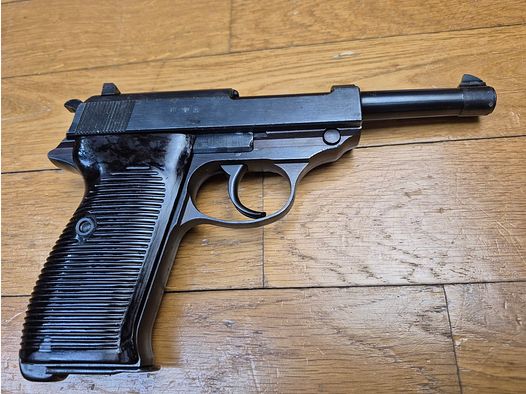
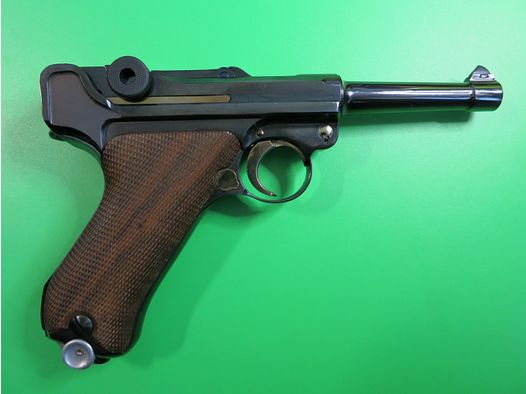
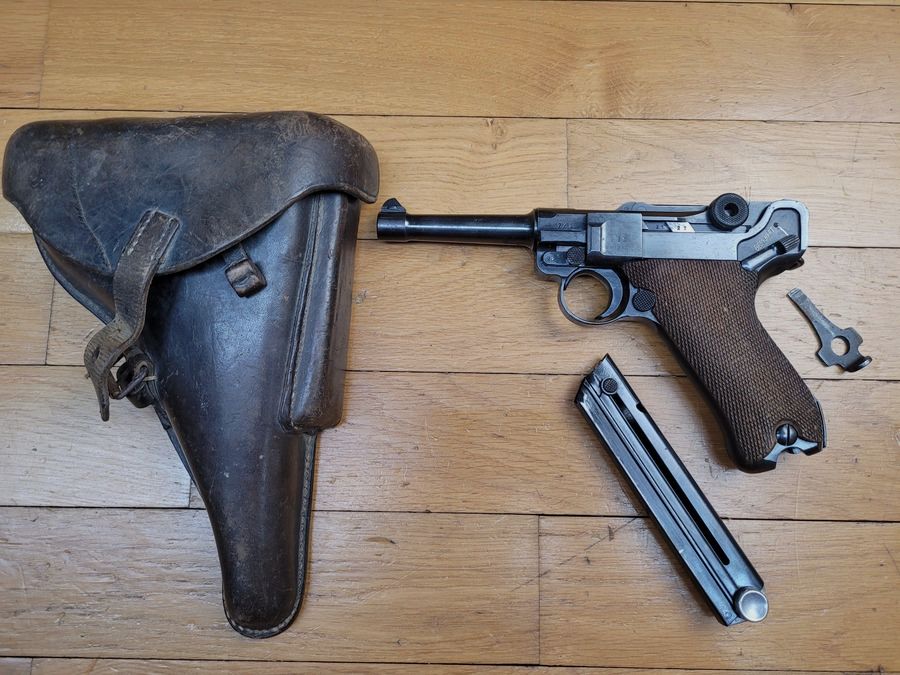
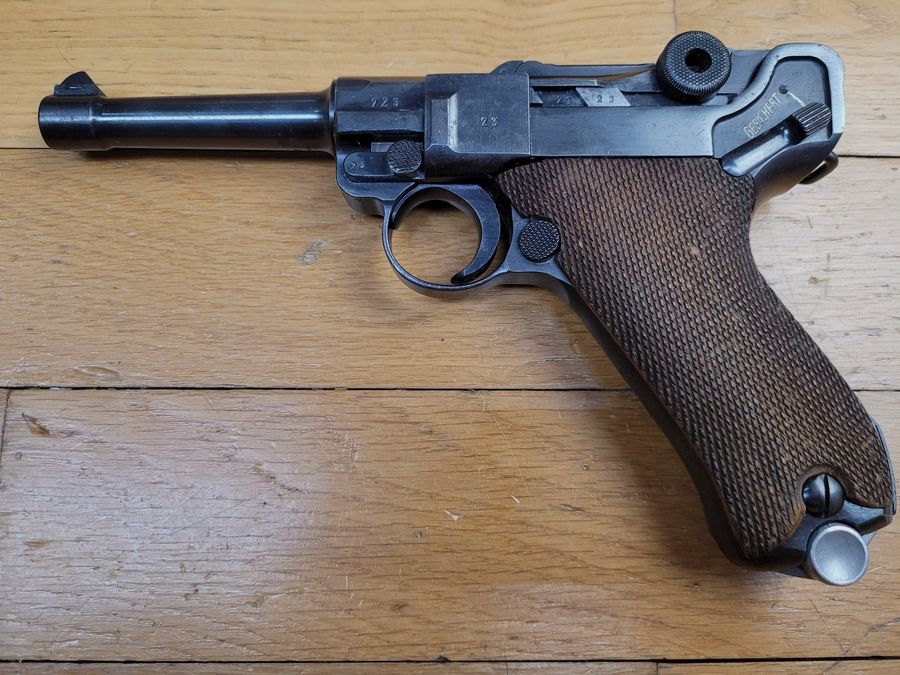
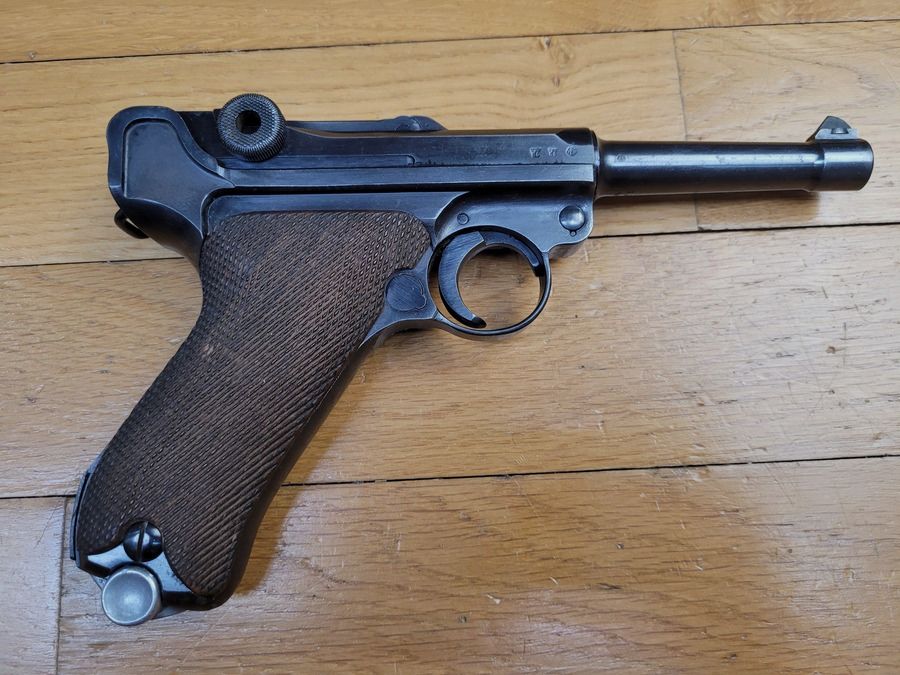
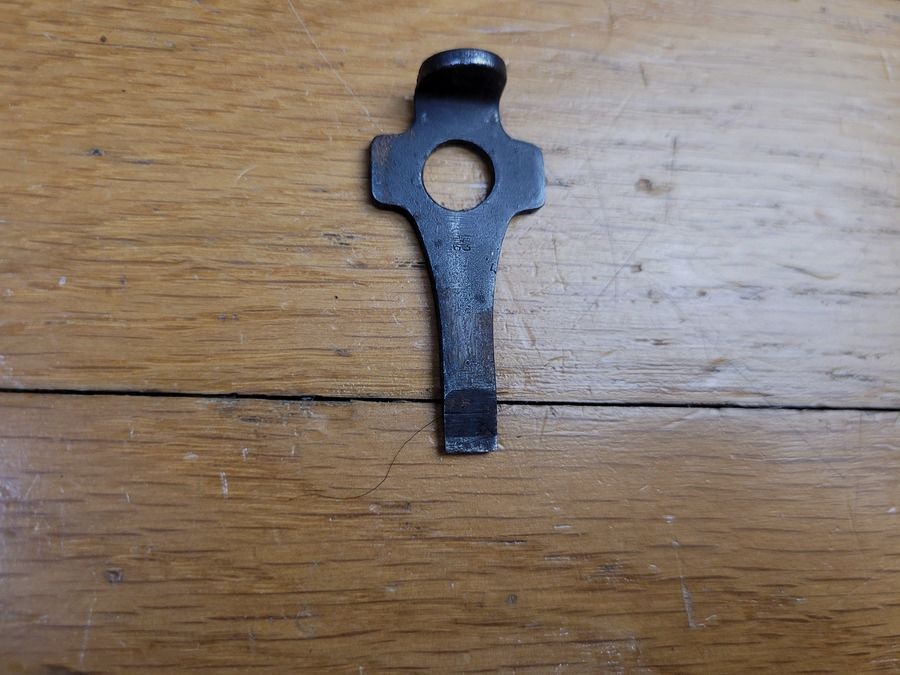
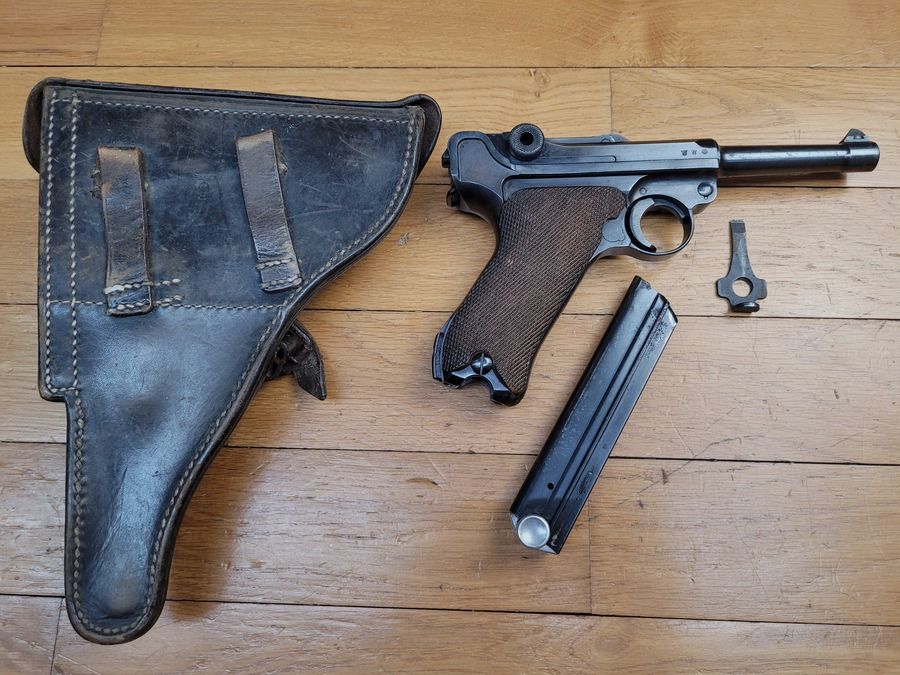
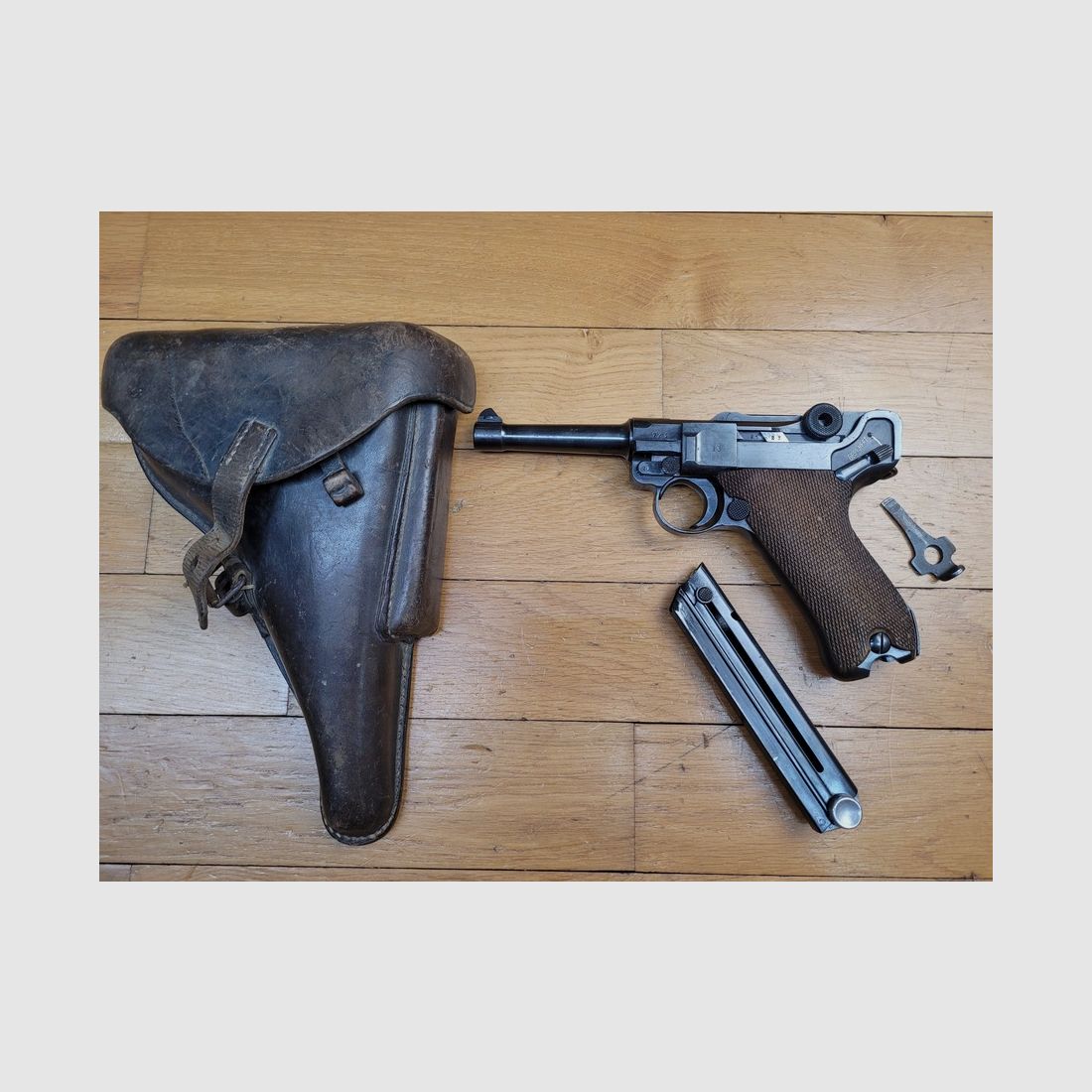
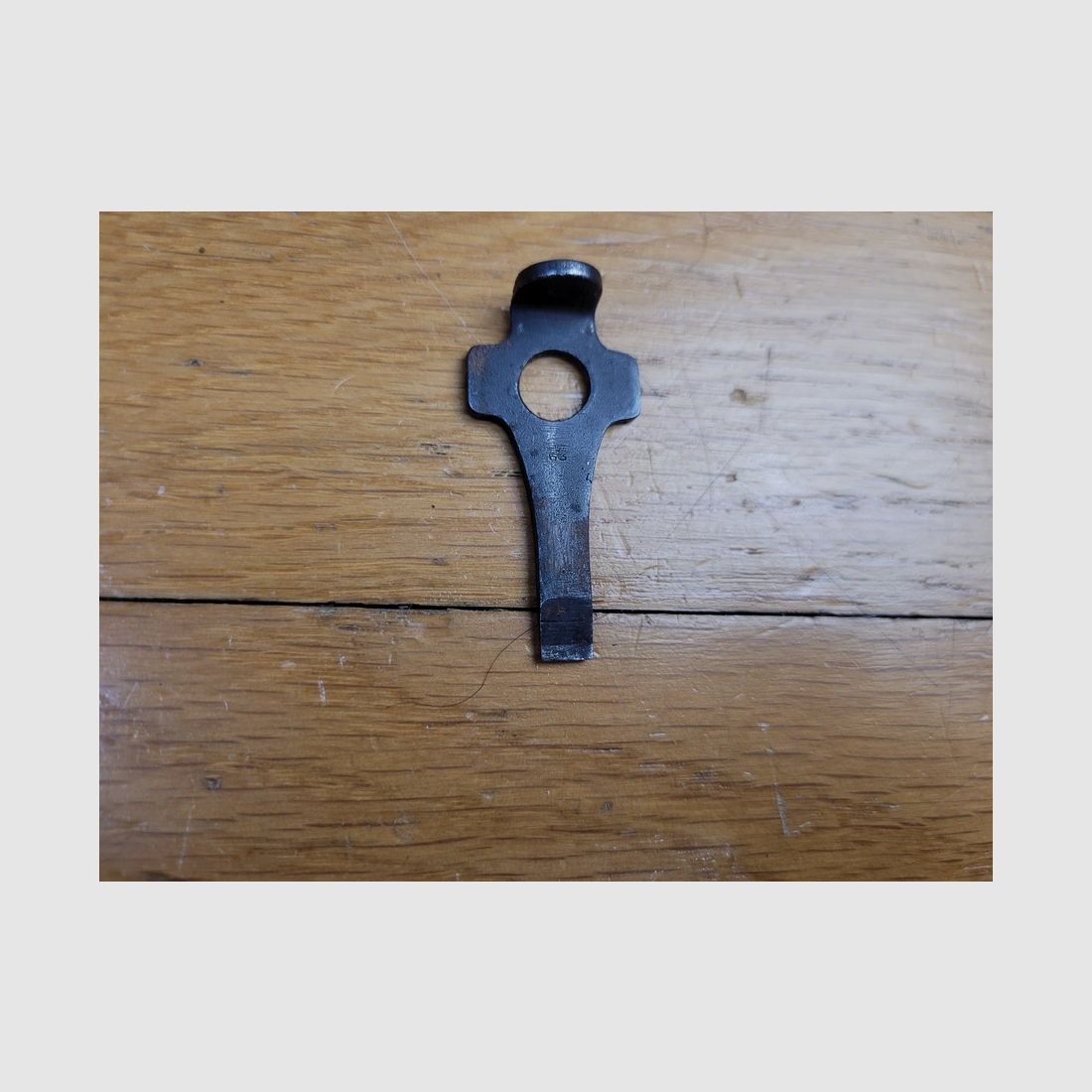
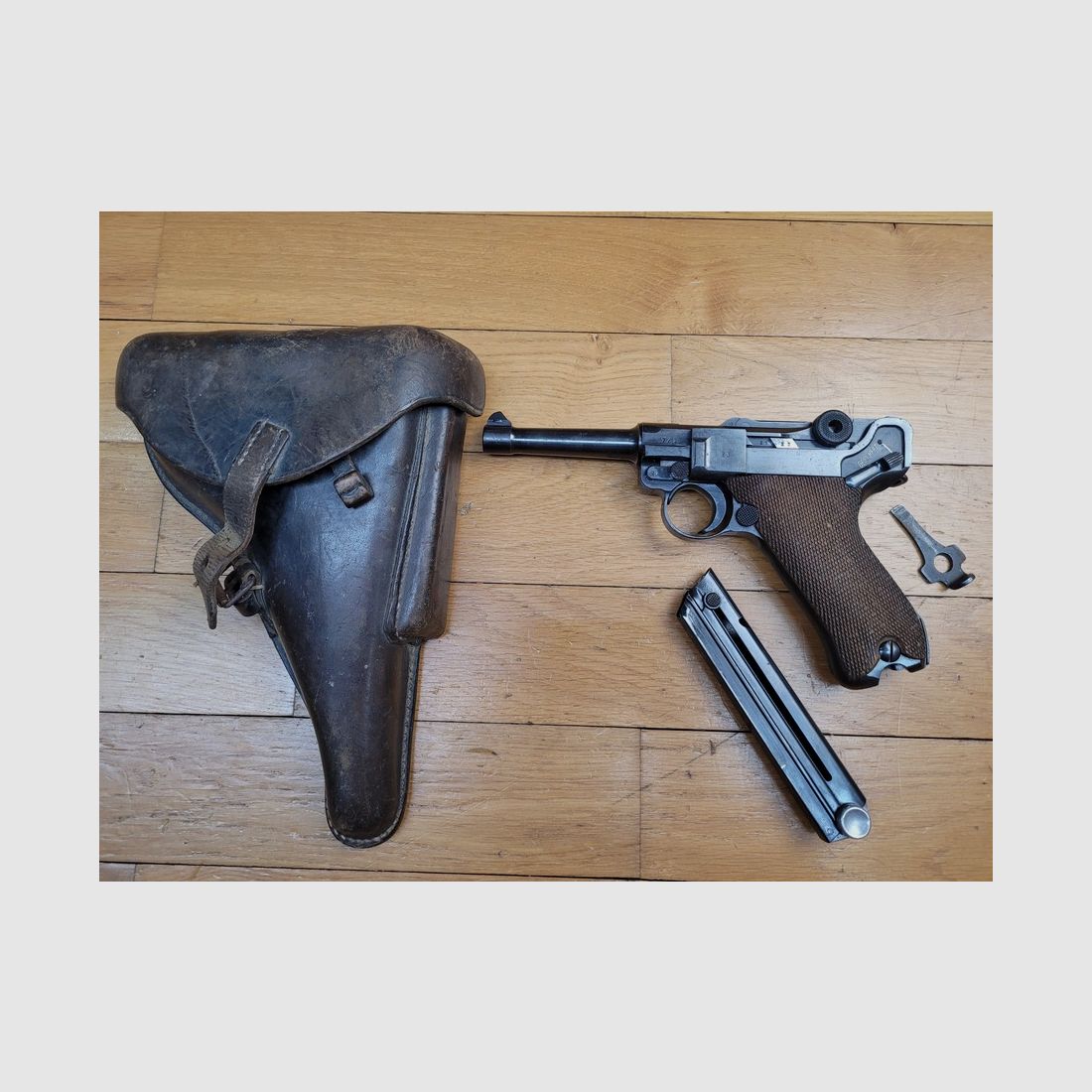
Our example is a magnificent 1938 S/42 code with a matching-number magazine, in its original Marine holster, which still has its takedown tool. Magical!
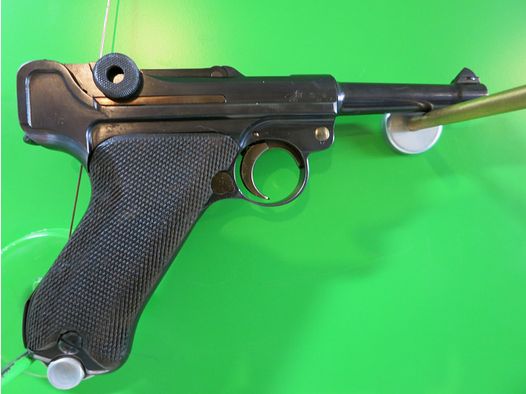
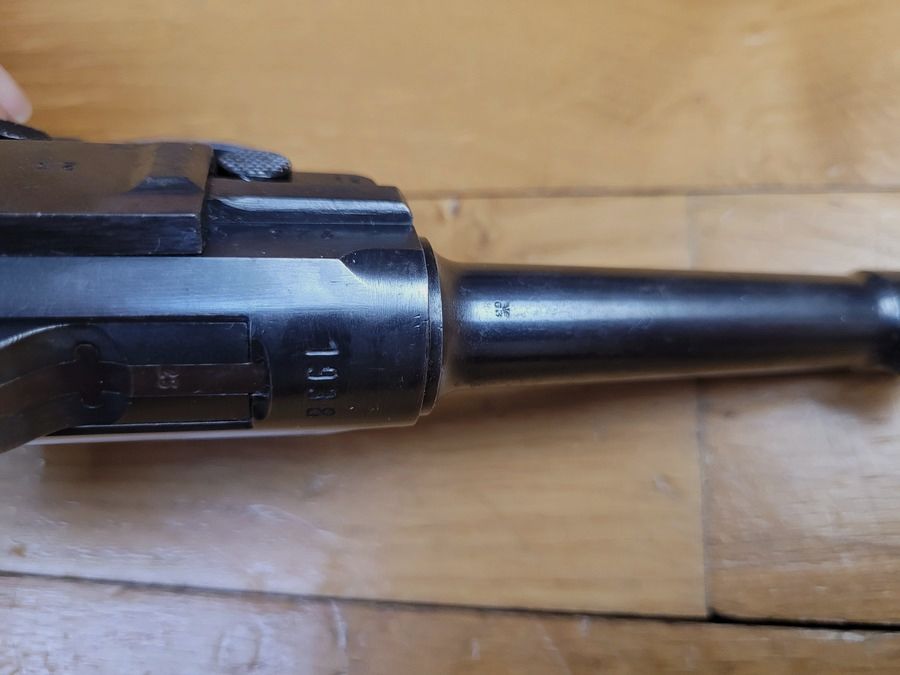
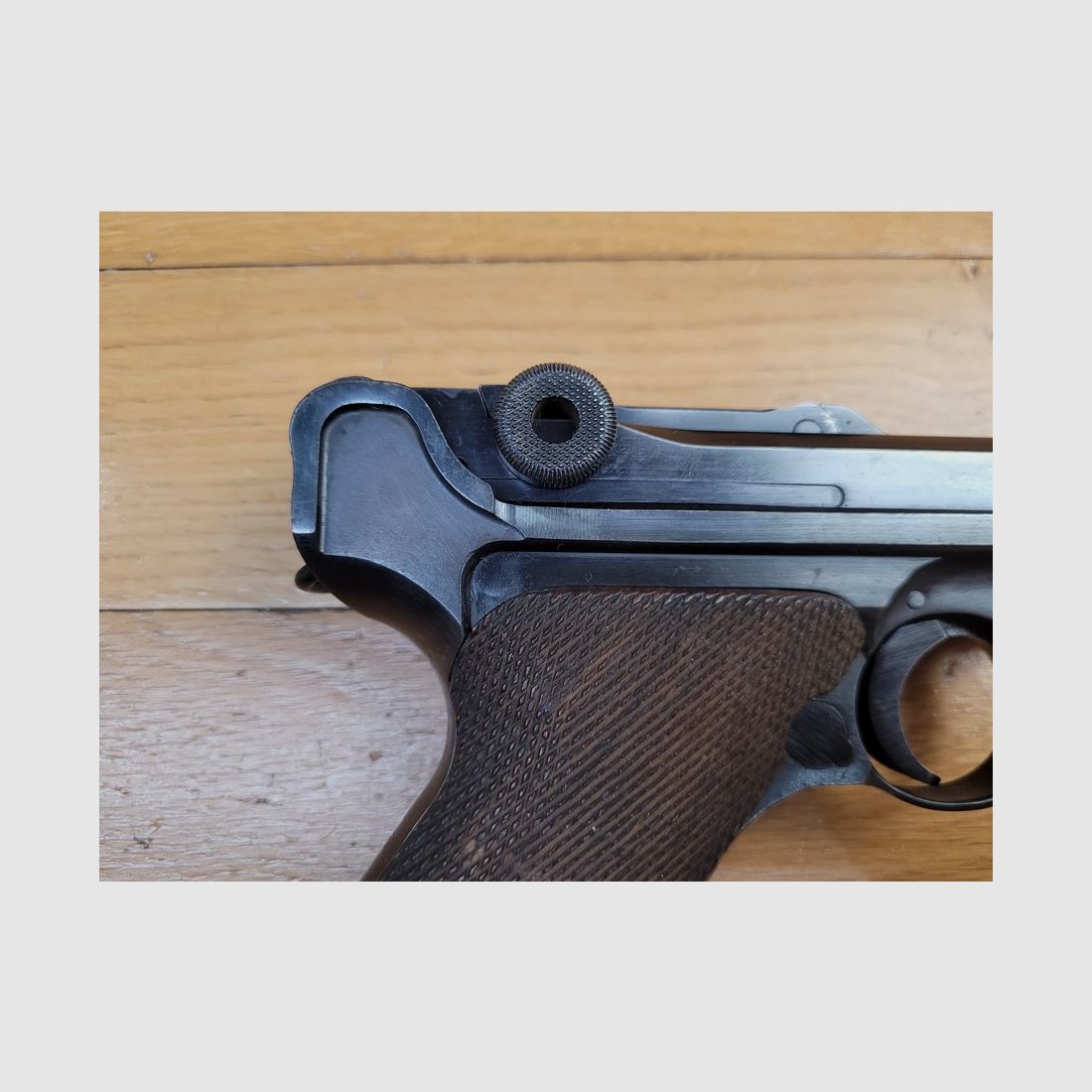
The gun is the post-1936 model, with a reinforced rear frame. It’s a fine pre-war production with a perfect finish.
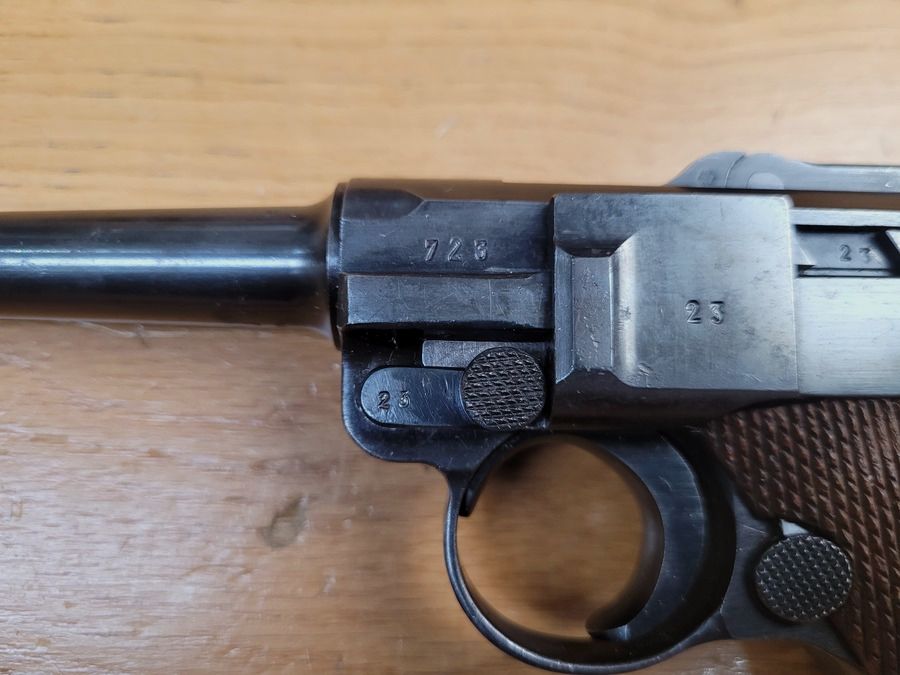
The gun is entirely matching-number, in the three-digit « m » series. I’d place it around September/October 1938.
That year, Mauser produced 114,000 Luger P08s—imagine turning out 450 to 500 of these mechanical marvels every day!
Of those 114,000 guns made in 1938, only 2,088 went to the Navy, and just 1,312 exactly were assigned to the North Sea Fleet, including ours. So this is one of those 1,312, one of fewer than 3,900 Lugers assigned to the Atlantic/North Sea Fleet, and one of fewer than 7,000 examples in total for the entire Kriegsmarine during World War II. You can also see why these examples sell for around $5,000 in the US.
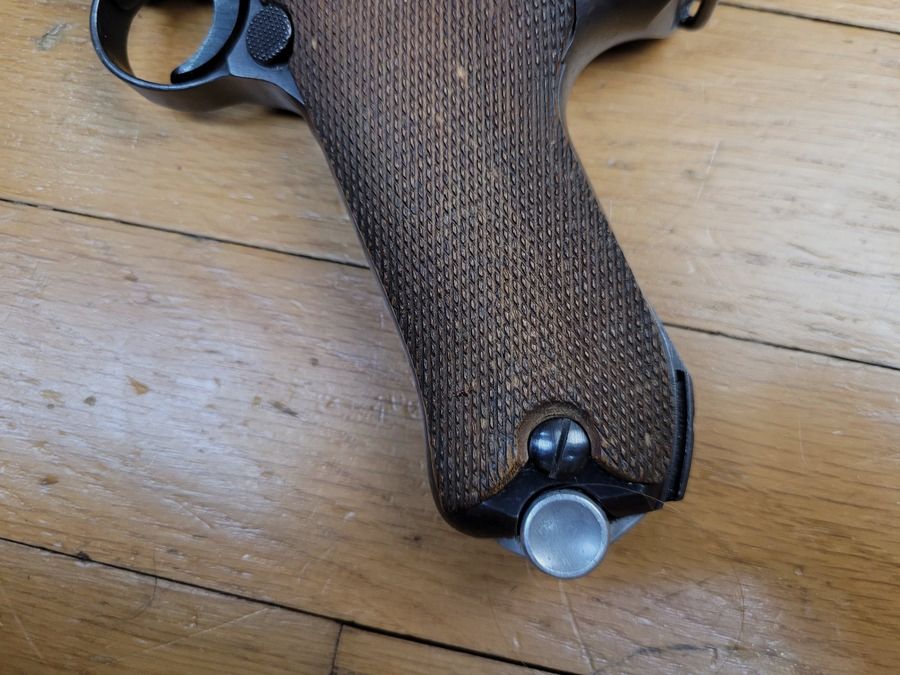
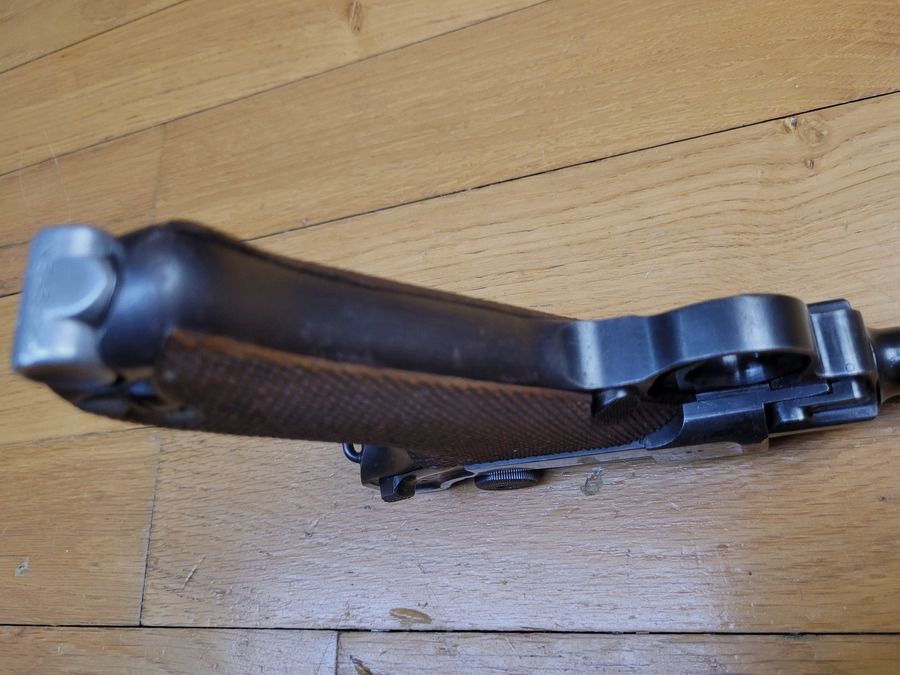
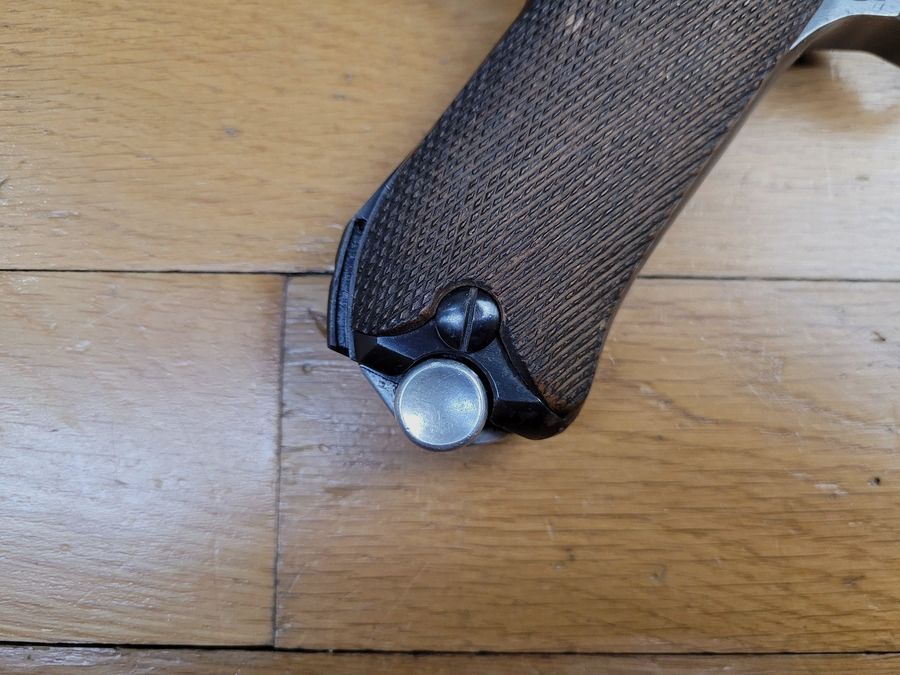
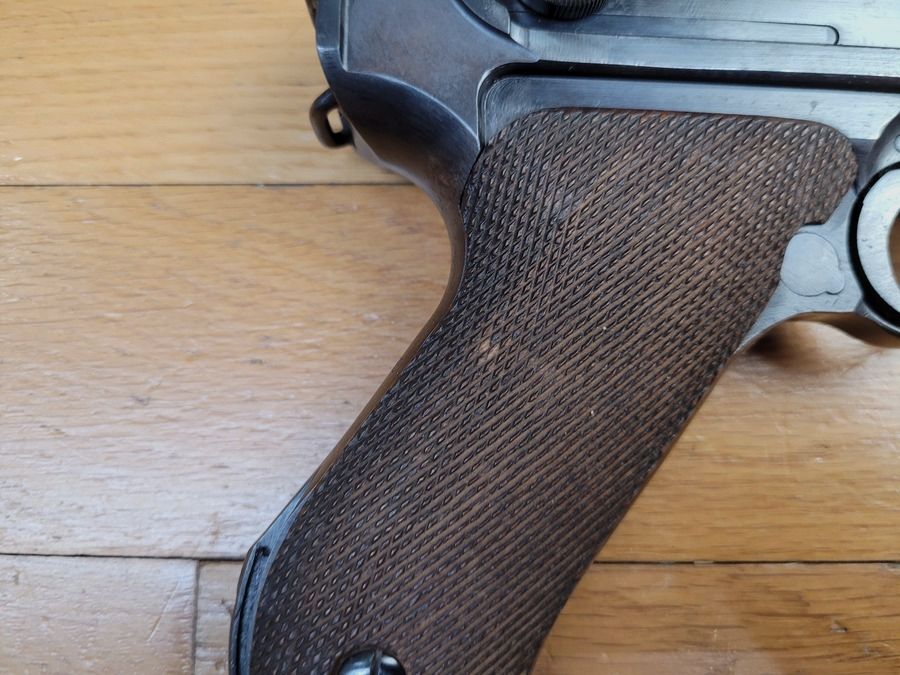
The grips are the post-1936 unoiled wood type (advantage: less handling during production; disadvantage: gets dirty more easily), yet they’re in perfect condition and very clean. They’re both matching-number, too.
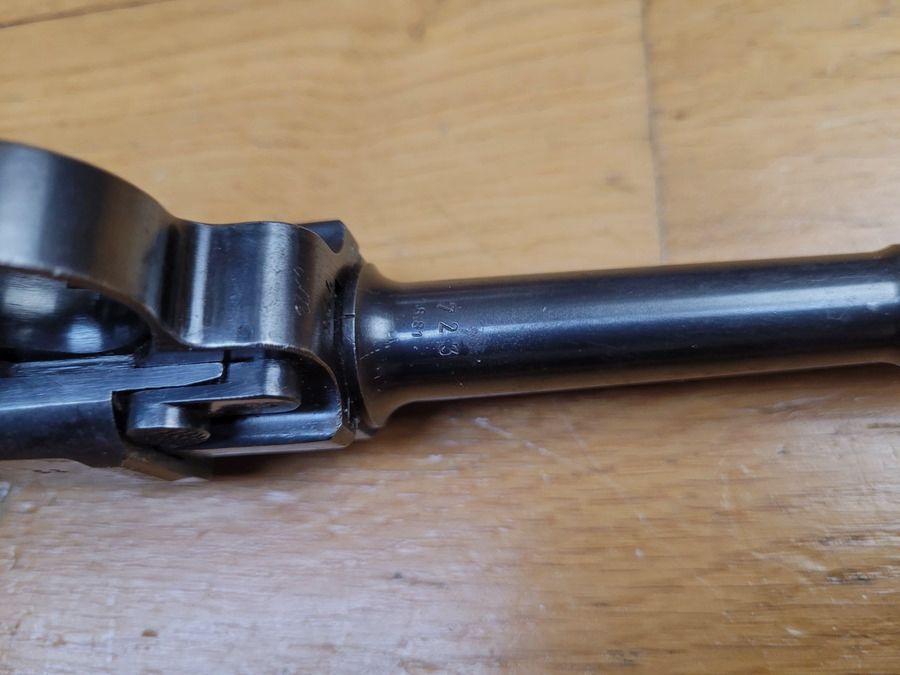
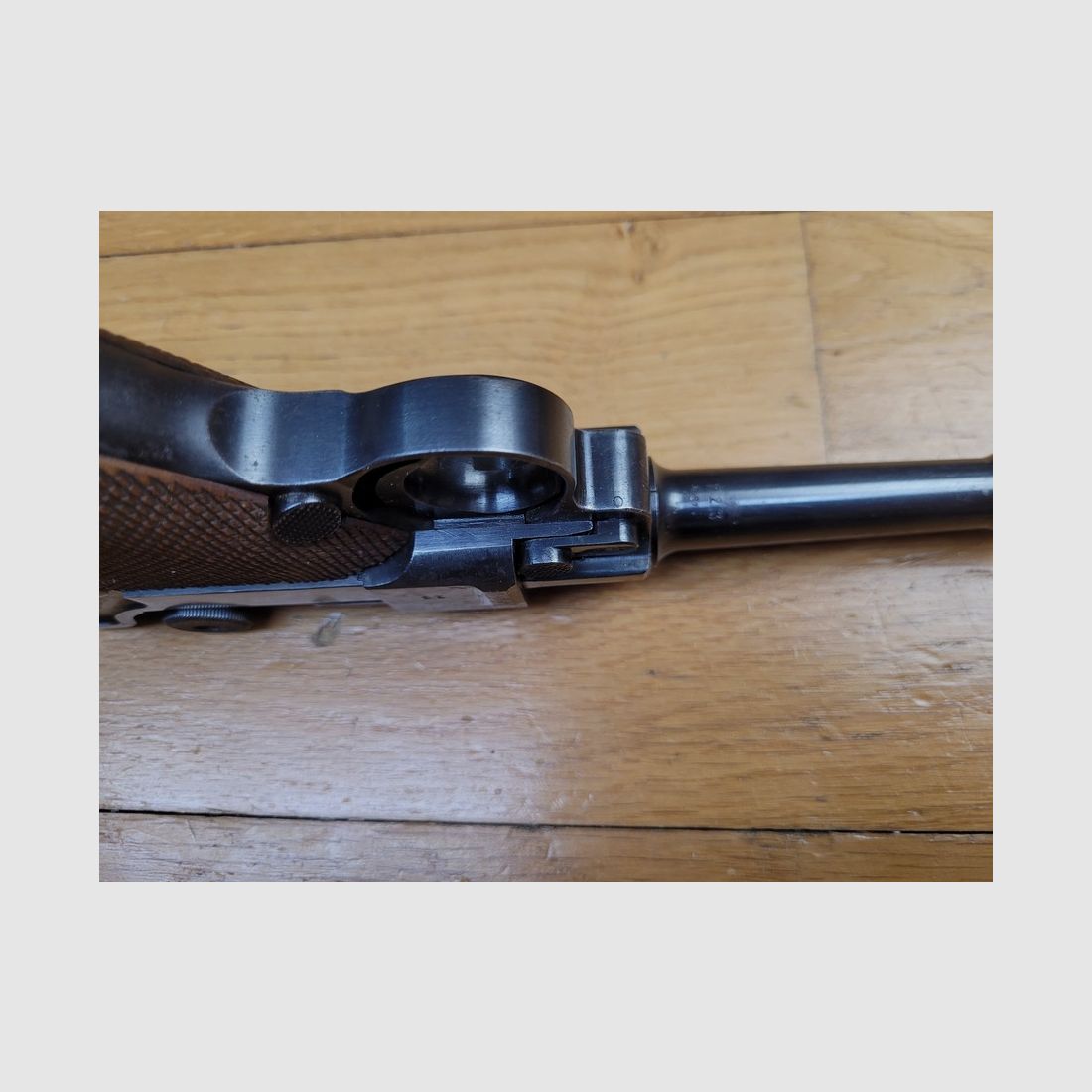
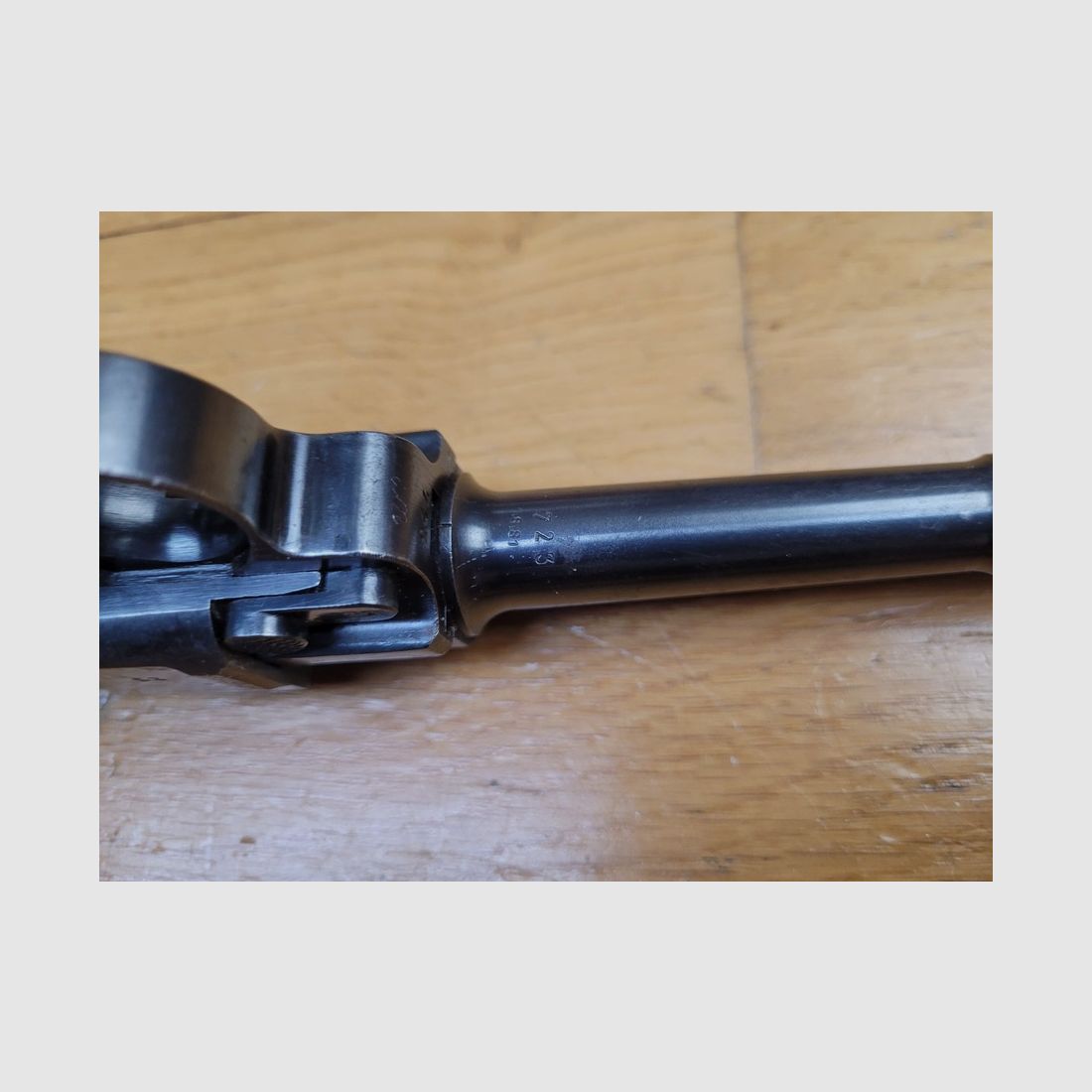
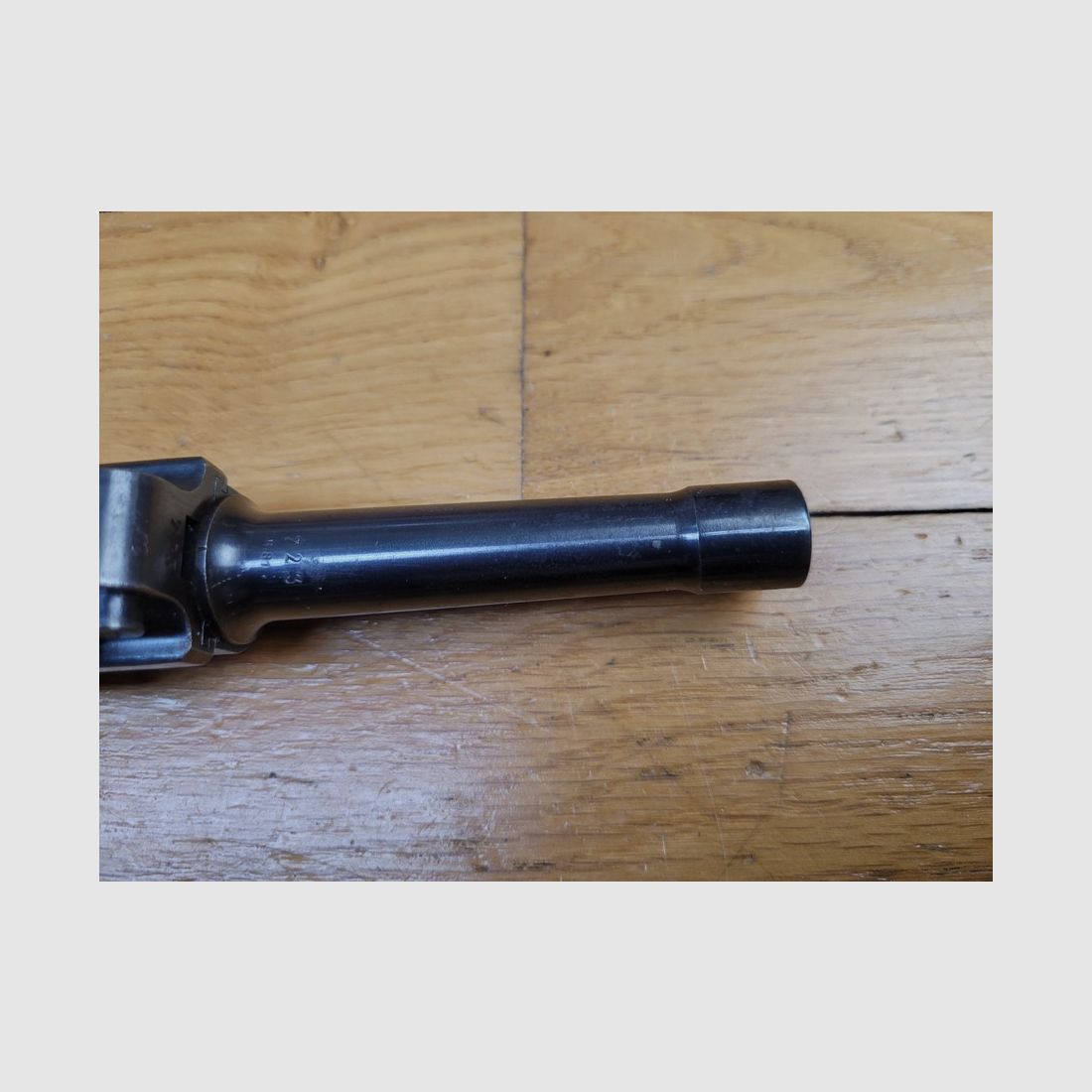
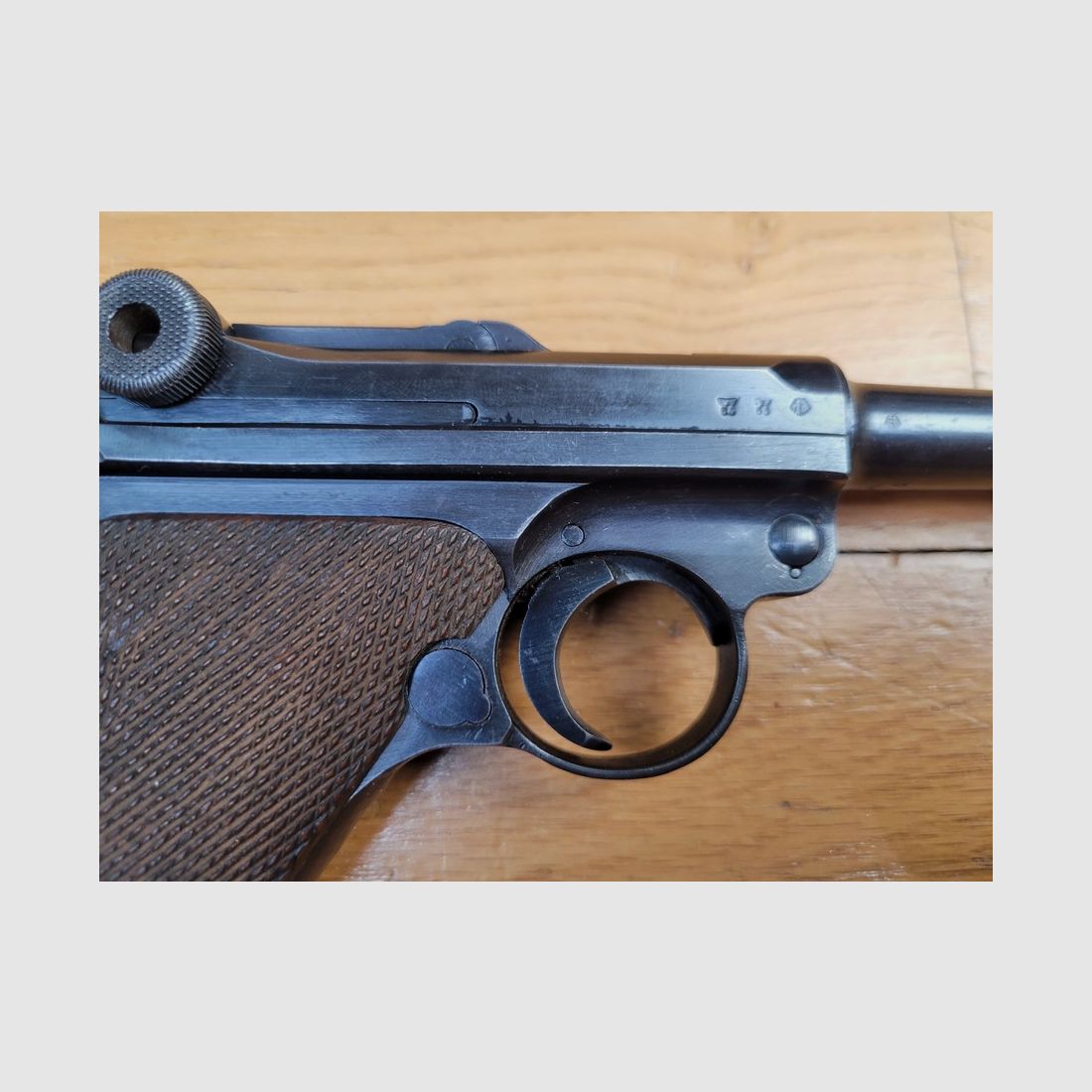
The gun bears all its proper Mauser Waffenamt 63 proof marks, including on the barrel on the left side and on the takedown tool in the holster, too. It’s the original one!
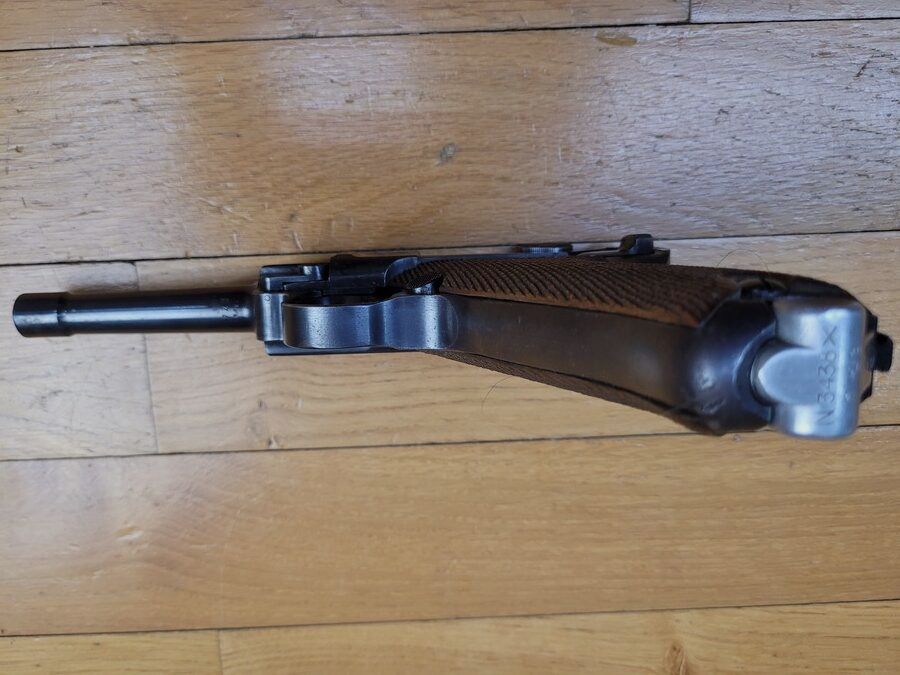
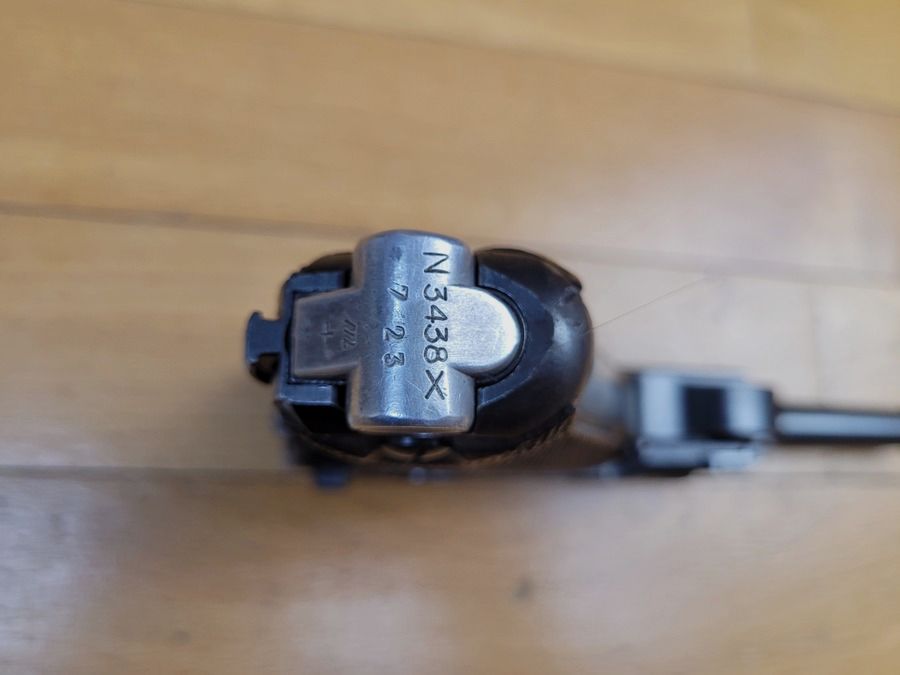
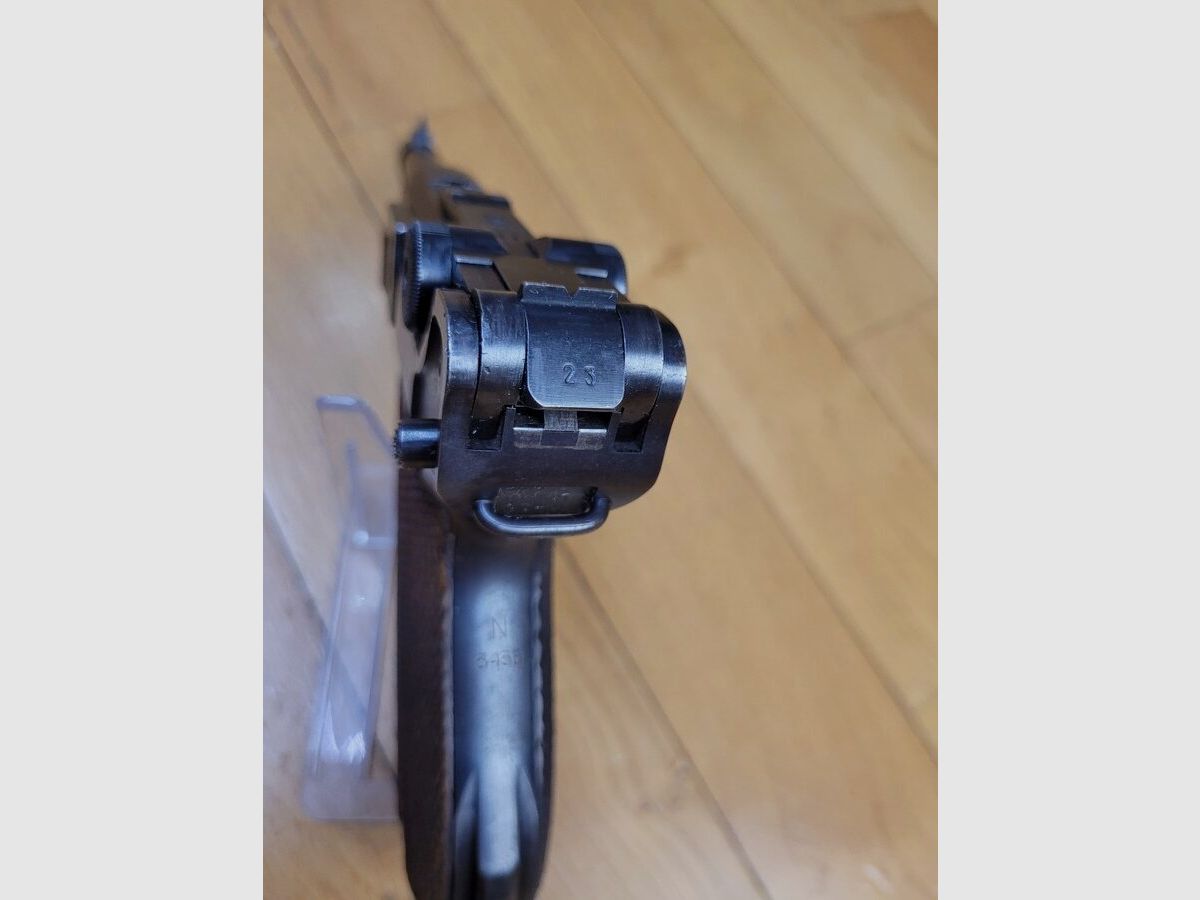
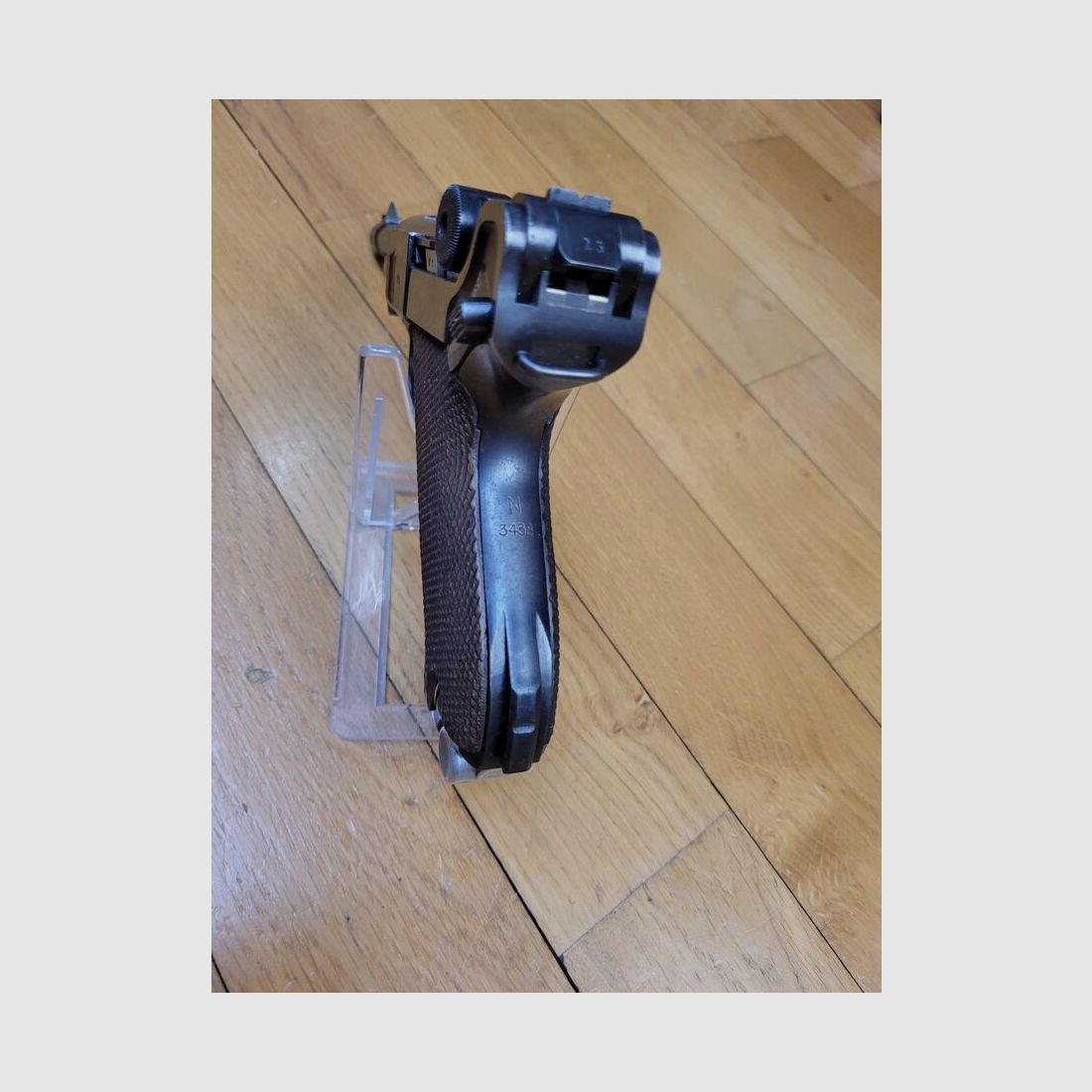
Marine marking « N 3438 » on the rear of the frame, at grip level, as it should be.
Like the serial number, this Marine assignment number is also found on the beautiful period blued magazine with an aluminum base, along with the gun’s Waffenamt 63. So the gun is matching-number throughout and entirely Mauser-made, right down to the magazine. Perfection for a discerning collector.
My only regret: where did the second matching-number magazine go, the one that was always issued with the gun? But there must have been plenty of chances to lose that second magazine, or even for the gun to be scrapped over the 86 years since it was made…
But how many of these 7,000 rare Marine guns are left, given the rate at which they’re still being destroyed? So let’s not spoil our enjoyment.
The surviving magazine’s spring is very firm, a sign that it’ll feed the baby well. A beautiful magazine, born with the gun.
Mechanical gun
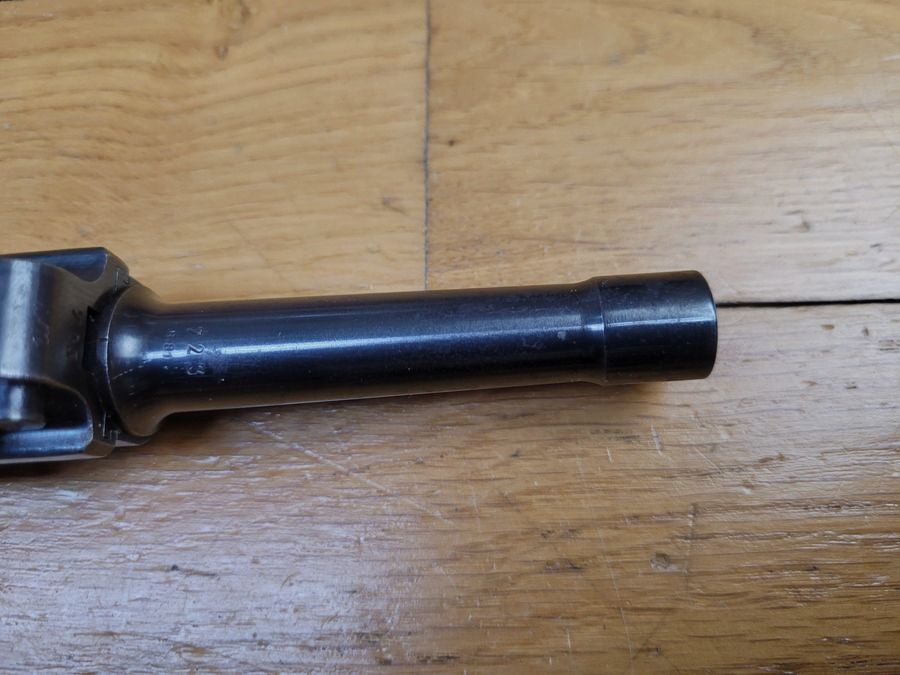
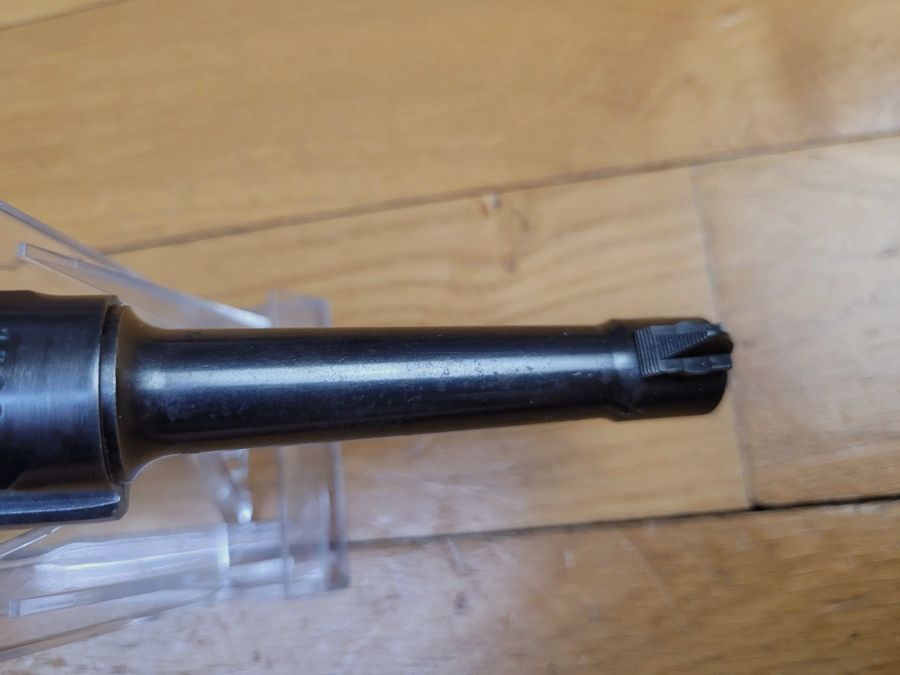
Impeccable condition. All springs are very firm. Crisp firing pin strike. A very pleasant trigger for a military firearm. Very good mirror-finish barrel with very slight traces of surface oxidation at the muzzle and beautiful, deep rifling. Fully suitable for shooting. The bore measures 8.81 for those interested.
Original deep black bluing, 99% intact, with slight fading or spots, mainly behind the grip and on the edges. Screws are impeccable. The firearm is also almost perfect cosmetically. As usual, my close-ups exaggerate even the tiniest microscopic flaw. A superb firearm!
It just needs to be disassembled (without scratching it!), thoroughly cleaned (as it is still dirty) and, above all, lubricated (except for the barrel, of course), and it’ll be in top condition!
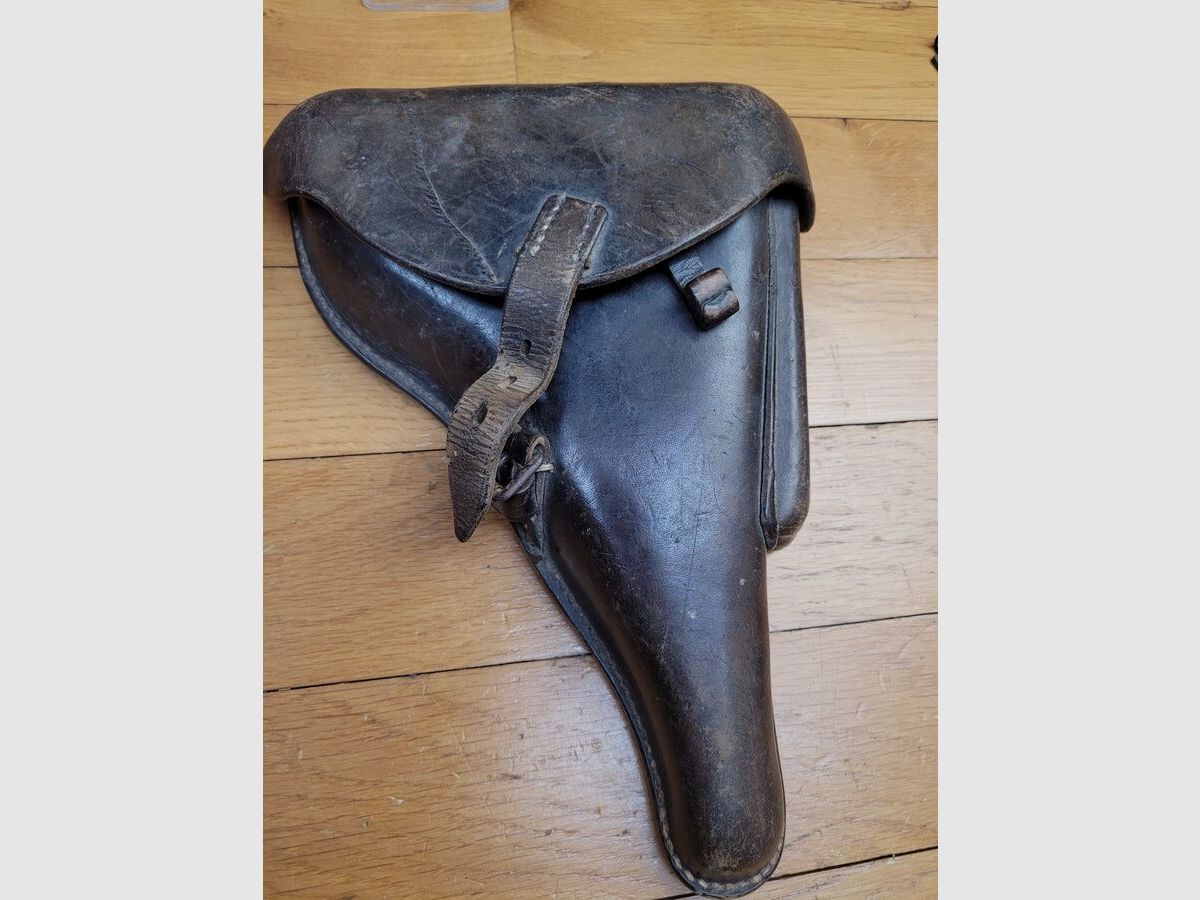
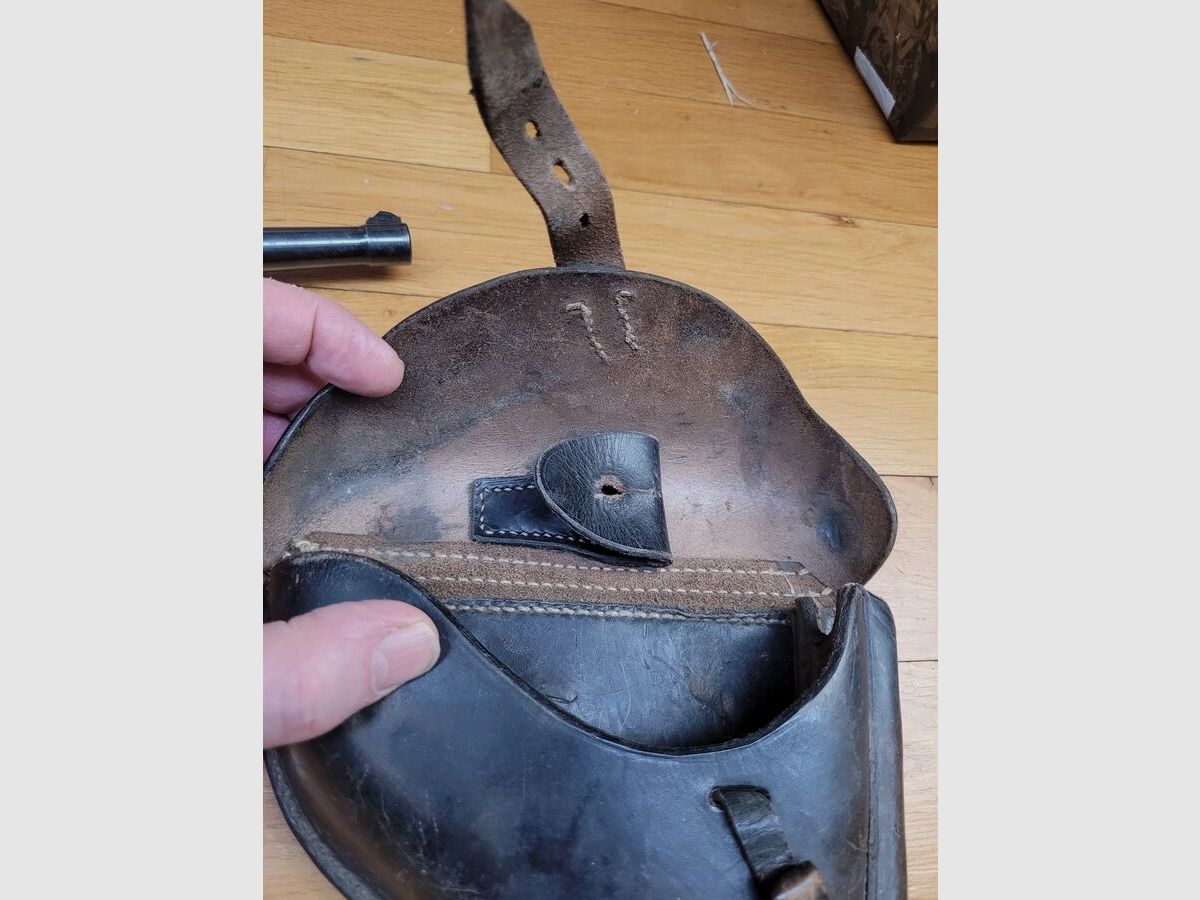
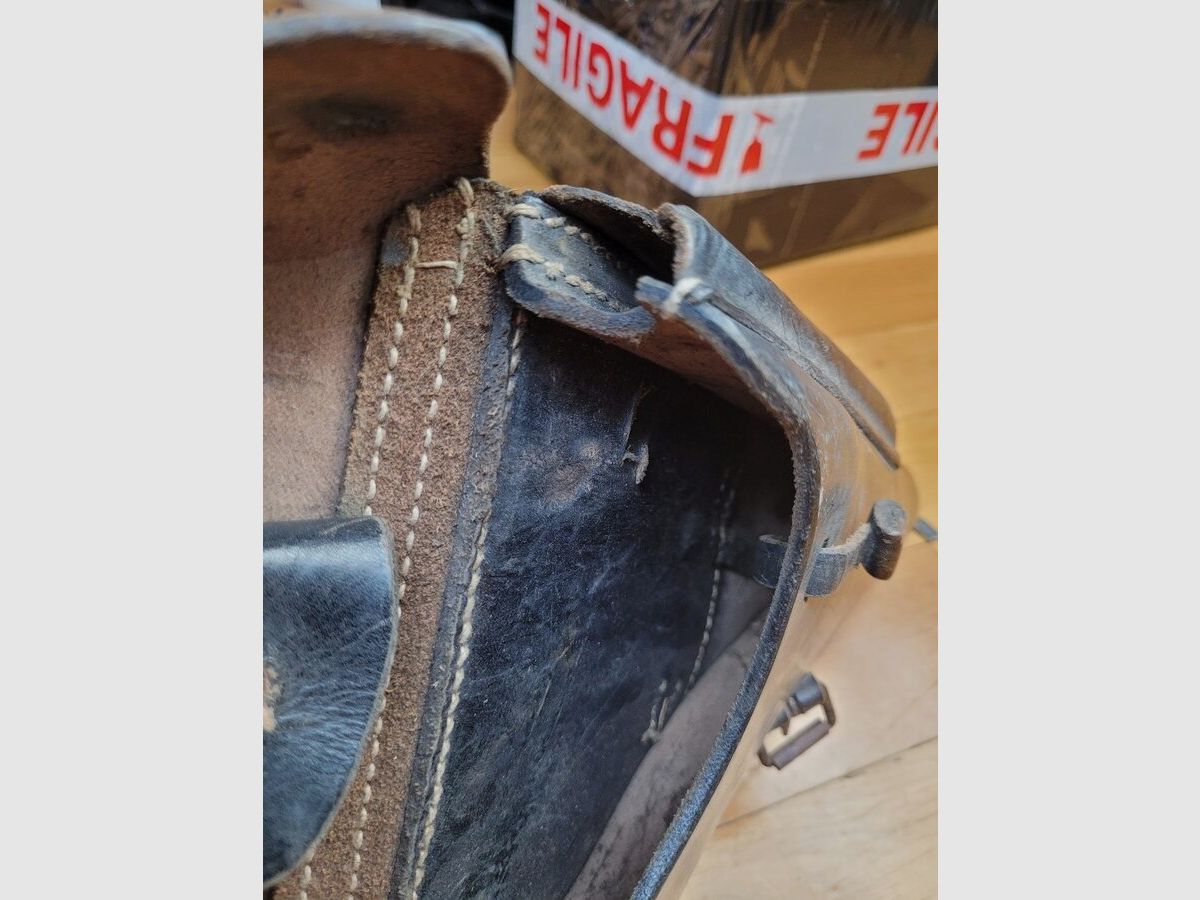
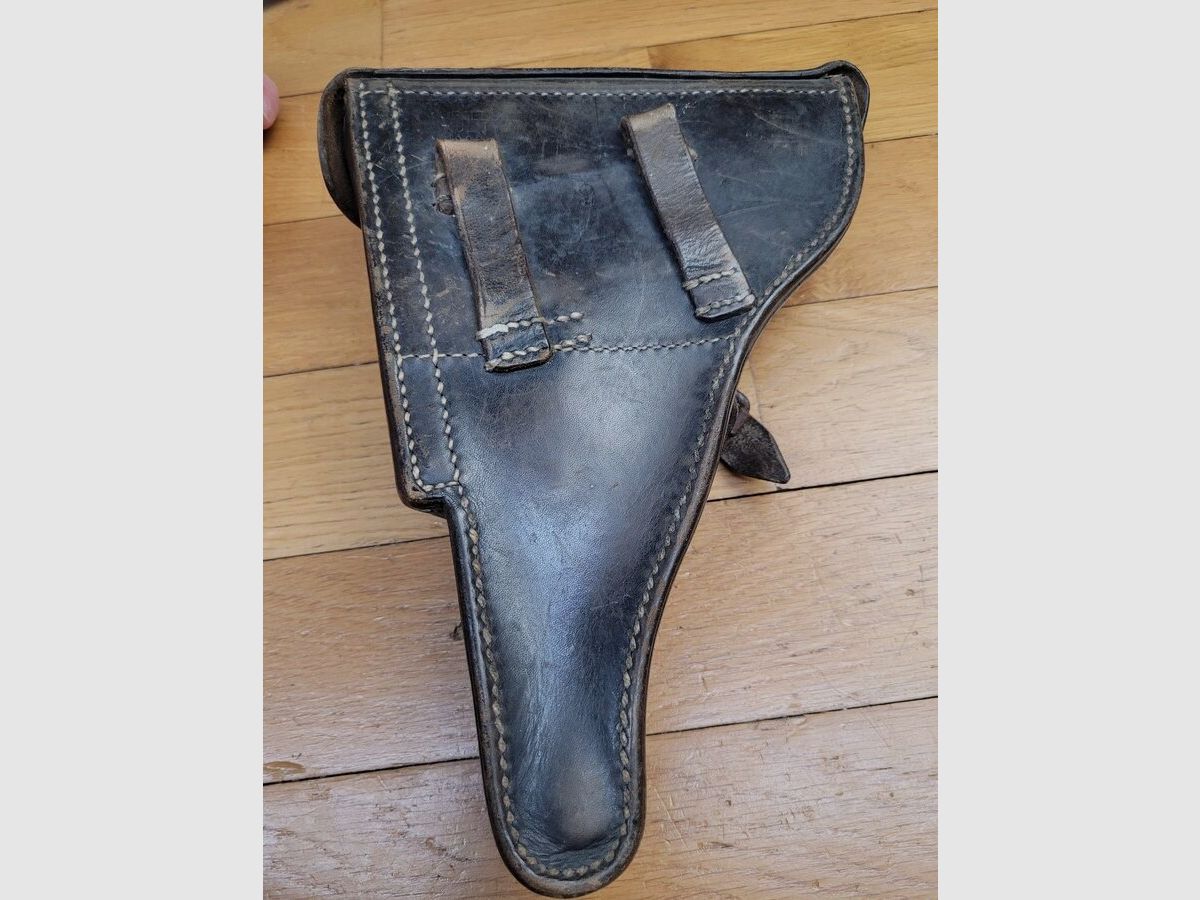
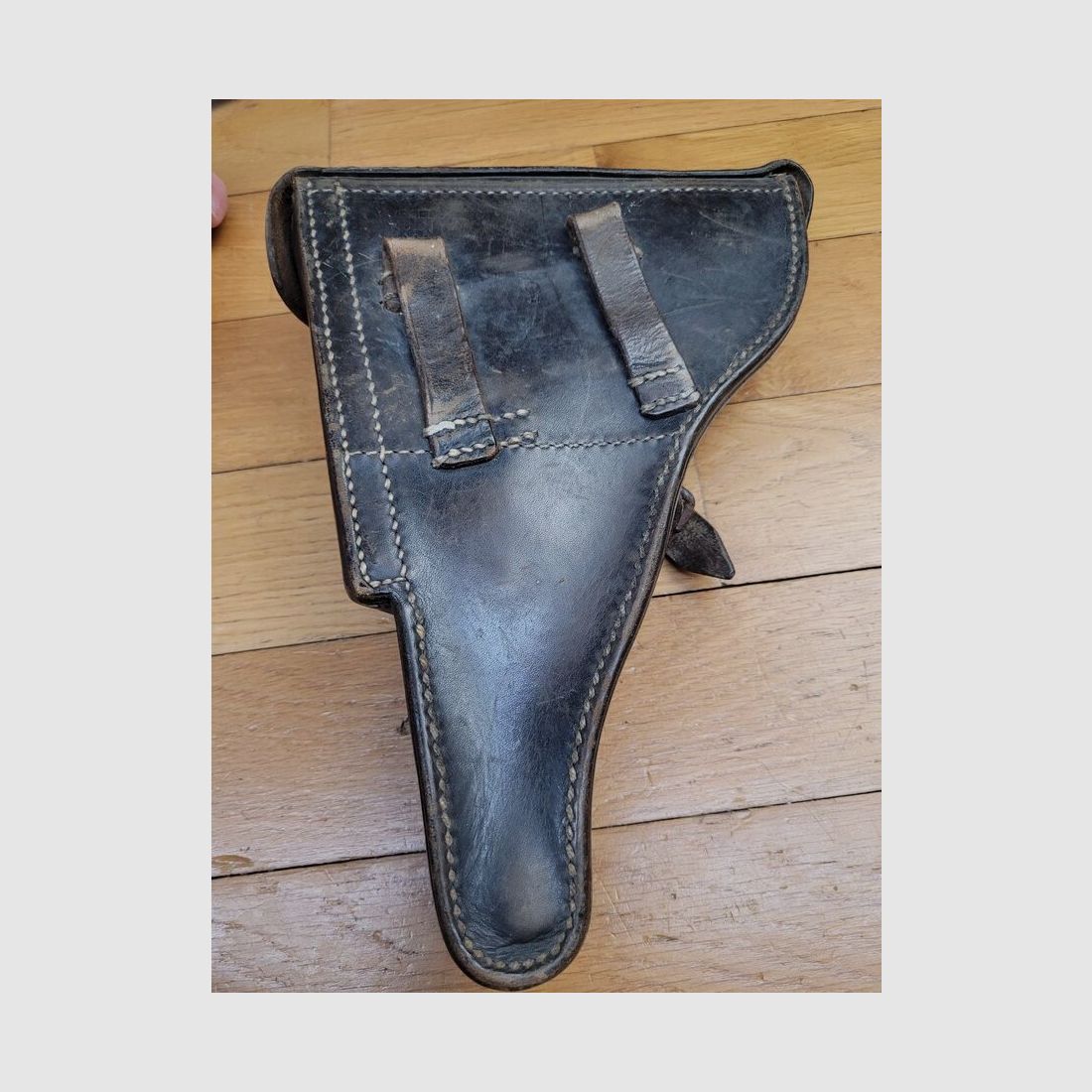
The icing on the cake: this firearm, which had never been on the market before today, came to us with its superb holster, complete, including its pistol lanyard, in perfect condition, with the stitching also in perfect condition. It’s a little “dry.” A very gentle clean with mild soap and a touch of high-quality neutral shoe cream will do it good and make it look 50 years younger. I wish that would happen to me!
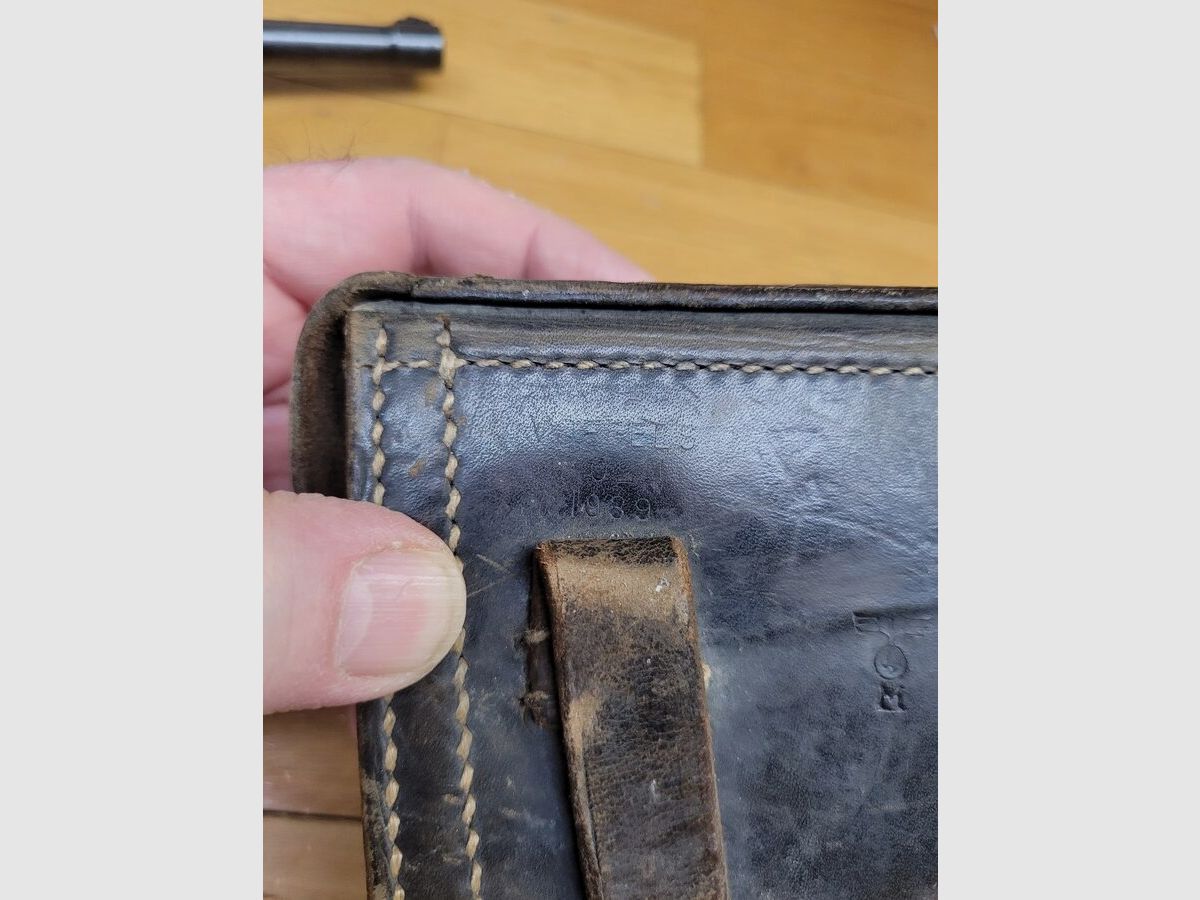
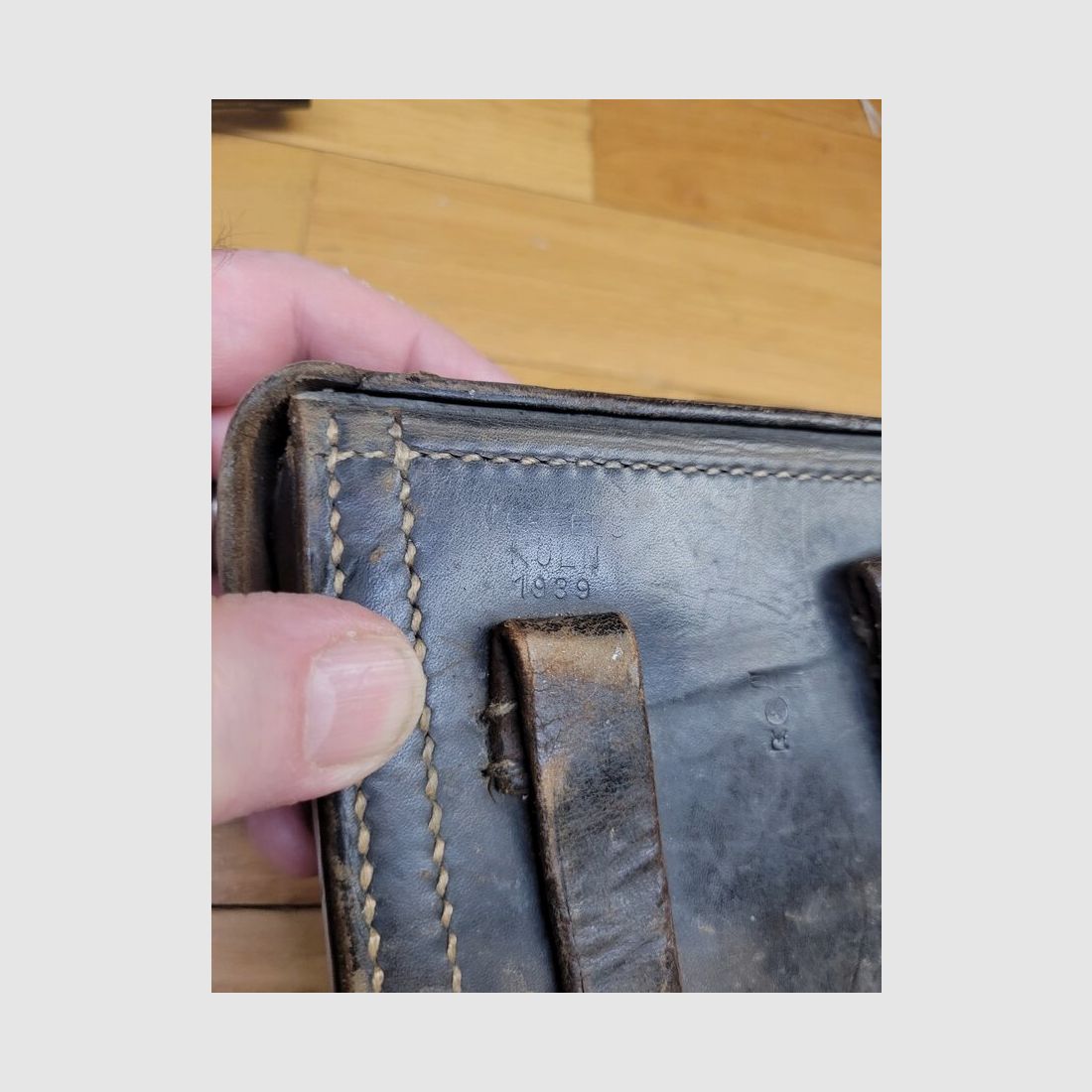
It’s a beautiful marine leather holster in fairly light brown (contrary to what some dark photos might suggest), particularly thick and clearly marked on the back. The manufacturer’s name is only half legible in the leather (but it will surely become much clearer after the gentle cleaning mentioned above).
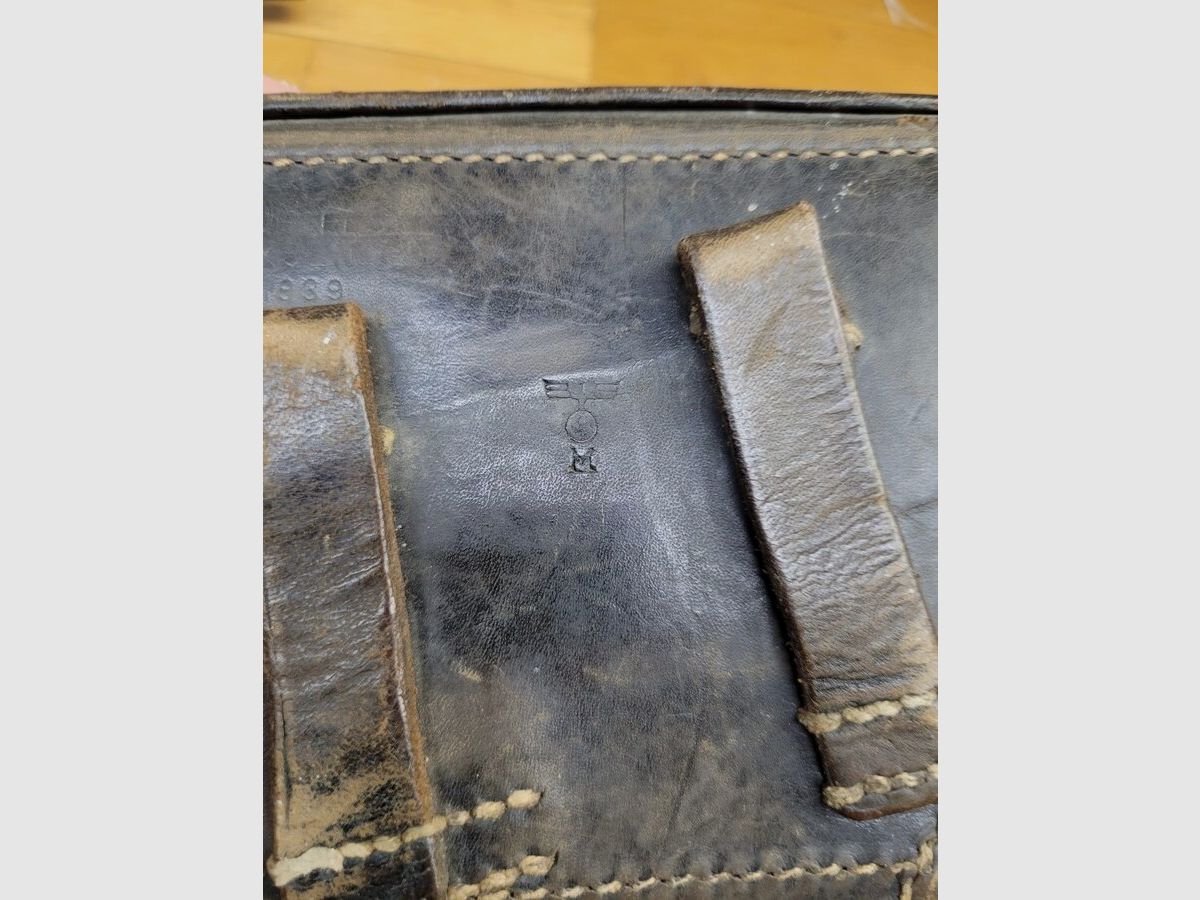
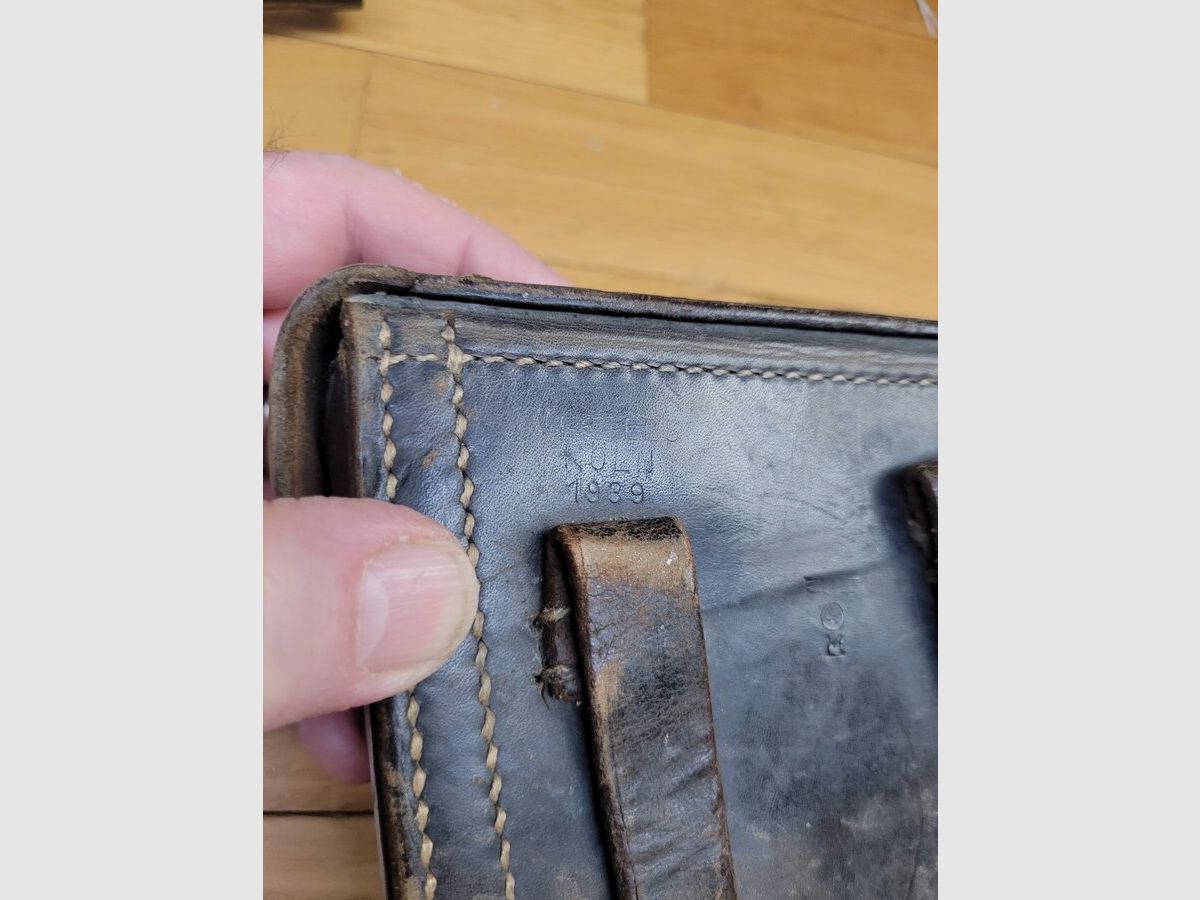
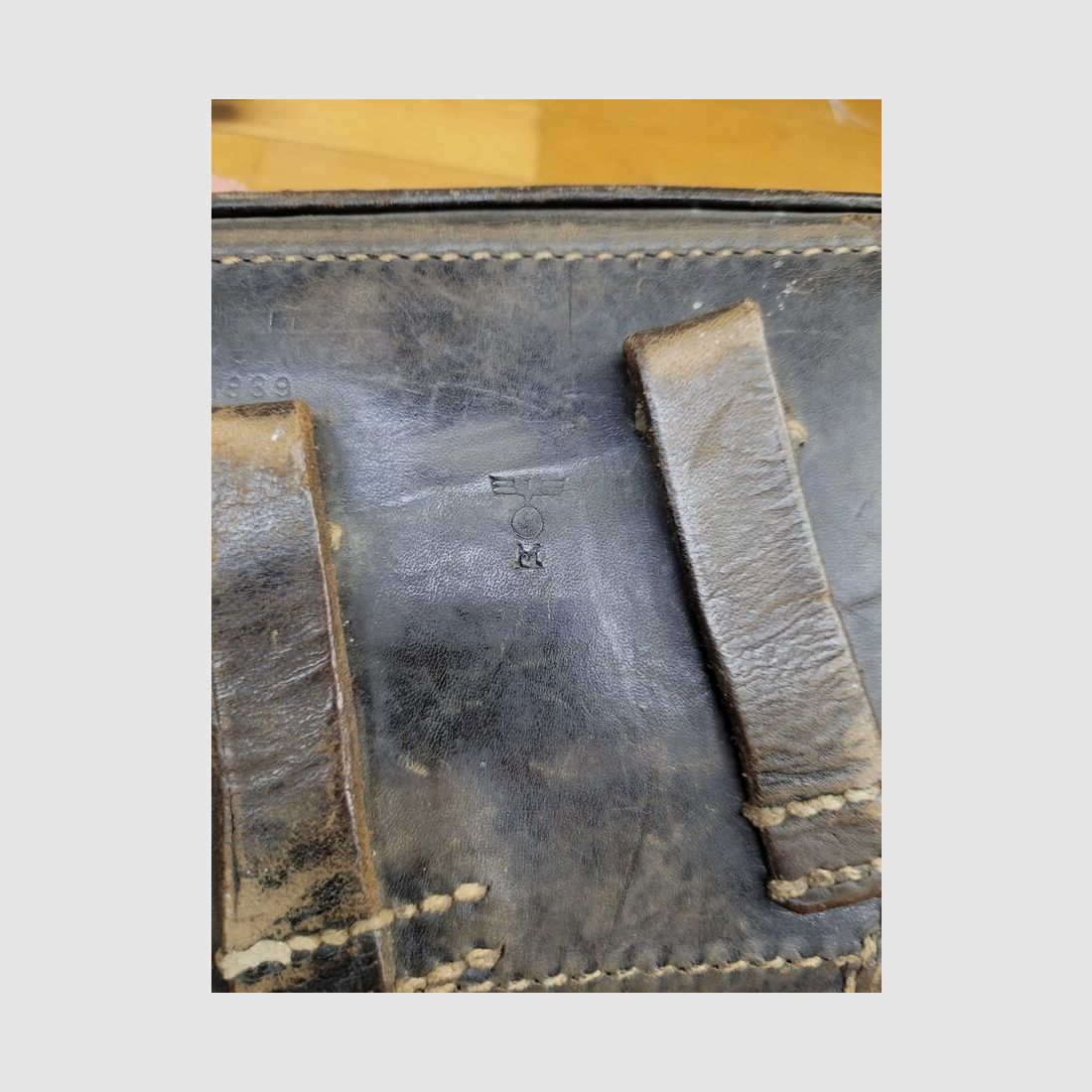
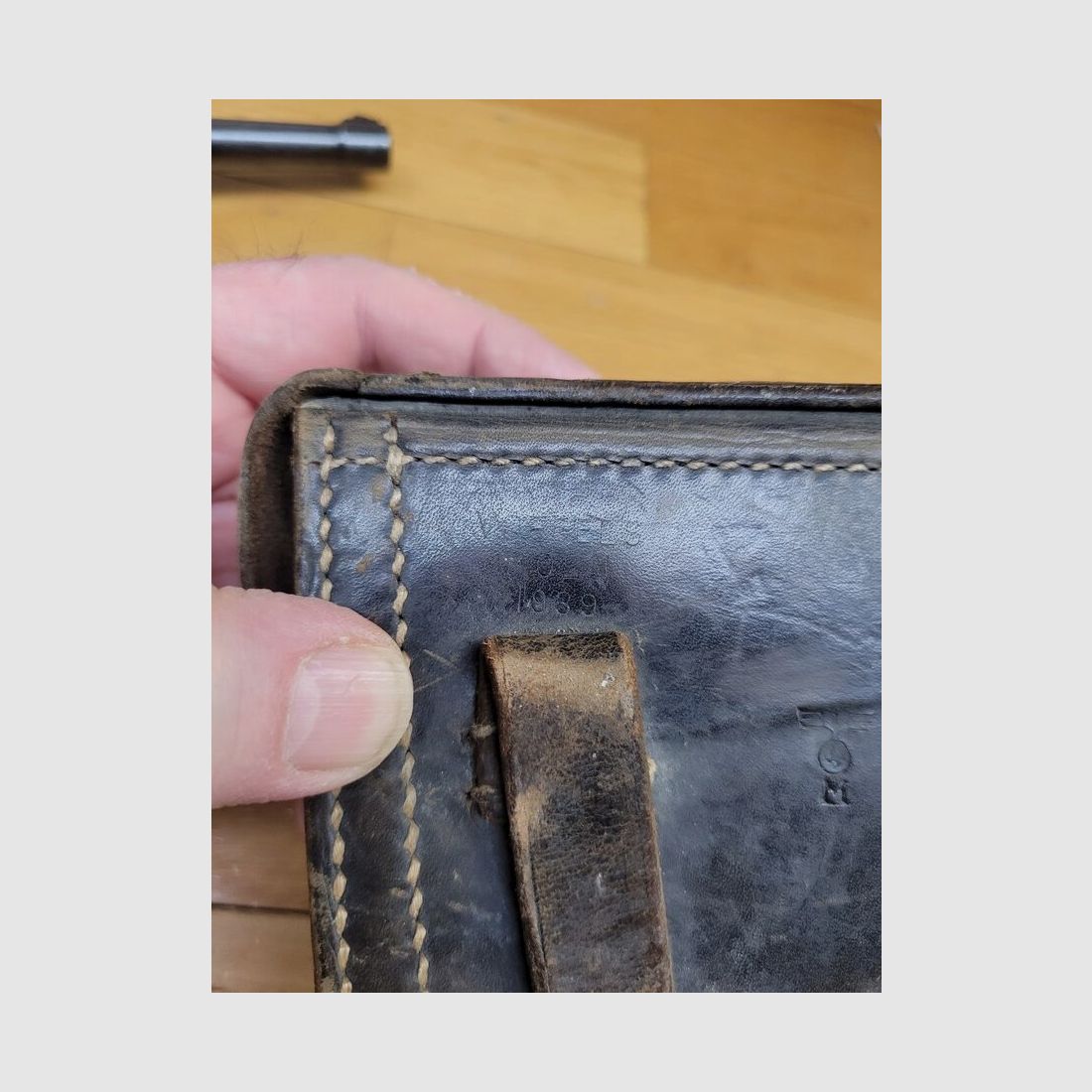
There is no doubt, however: it is indeed a holster made by R&K VOGEL in KÖLN (Cologne), dated 1939. The city and date are perfectly legible even before cleaning, which makes me think that cleaning the manufacturer’s name should make it reappear quite clearly. It also bears a magnificent, crisp Marine acceptance stamp, with a wheeled eagle above the M. It is stamped between the two belt loops, definitively identifying this holster as a Marine holster too.
This holster is a superb piece of military equipment that makes a dream set with the firearm. Much rarer than an equivalent artillery or even WWI Marine set.
All in all, a splendid pre-war Mauser-produced P08 Luger pistol, matching throughout, including the magazine, in excellent condition mechanically, cosmetically and in terms of preservation, and, above all, in a very, very rare Marine variant for the Second World War, complete with its original Marine holster and takedown tool.
An exceptional piece for a very discerning collector of German military firearms or Second World War weapons. A Flingus piece.
And the delirious crowd of collectors cries, “Maximus! Maximus! Maximus!” (*)
(*) Yes. I know. I’m exaggerating. But I’m so happy to have found you such a piece!
ARME DE CATÉGORIE B AU CSI : SOUMISE À AUTORISATION, PHOTOCOPIE DE LA PIÈCE D’IDENTITÉ EN COURS DE VALIDITÉ ET DE LA LICENCE OBLIGATOIRE – COMPTE SIA OUVERT BIEN ÉVIDEMENT – Expédition contre signature en deux colis séparés d’au moins 48 heures obligatoire.
***************************************************************************************************************************************
Let’s say it again! Flingus Maximus gun shop in Paris and throughout France is also here to help with private firearm transfer formalities, buying firearm and militaria collections, firearm valuations, and questions about firearms in estates and inheritances. Contact your favorite gunsmith using our contact form or at [email protected]
. (Show description in original language)
Combien en reste-il ?
Maître Flingus est ému. Une de ces émotions qui lui font continuer le métier.
Il se morfondait d’avoir vaguement raté un Lulu 14 (l’artilleur) avec sa planche au numéro à vous proposer. Mais bon, j’en verrai d’autres.
Et voilà qu’il lui tombe du ciel (breton), une bestiole qui pique inattendue et bien plus rare. Et dans quel état !
Être heureux au boulot, c’est un truc énorme. Au fait, si quelqu’un en rêve, je cherche un associé. Mon formulaire de contact est là pour ça aussi.
Revenons à l’important sujet des rêves chez les armuriers spécialisés dans l’arme ancienne ou d’occasion en très bon état. Une population qui sera bientôt aussi réduite que celle de l’Ours Pyrénéen vers 2004. Mon vrai prénom, c’est Canellito.
De quoi rêvent-ils la nuit se demande la foule passionnée? Un ticket de loto gagnant au 1er rang ? Une belle carrosserie rouge et vrombissante? Une blonde aussi bien carrossée et tout aussi vrombissante que la voiture précédente ? Un combat héroïque devant Troie assiégée? Une Marseillaise tonitruante dans un stade déchainé avec Médaille d’Or Olympique pour l’épreuve de Fosse sur la poitrine? La découverte d’une cave remplie de Grand Crus de Bourgogne oubliés?
Non. Juste un très beau Lulu de Marine 37/40 dans son étui avec sa clé de démontage tout d’origine et jamais passé sur le marché. Un rêve modeste ?
Pas vraiment pour tout fondu d’armes historiques. Car les chances d’en trouver un, surtout en très bon état, sont assez faibles.
Rendez vous compte: moins de 7.000 produits pour toute la Marine de Guerre allemande dans la période en question. On va y revenir.
Maître Flingus vous a déjà expliqué à grands traits l’histoire chaotique de la reprise de production des P08 par le III° Reich et la fin un peu baroque de cette légende armurière à base de pièces civiles chez Mauser en 42
Mais là, on est sur un autre sujet Mauser.
Que savoir sur les Luger P08 de la KriegsMarine du III° Reich et de la production de cette arme mythique sur cette période?
D’abord qu’ils ont un glorieux ancêtre.
Le Luger P04 de Marine Impériale de la première guerre mondiale, toute première arme Luger adoptée par L’Allemagne, et produit de 1904 à 1918. Ceux-là n’ont pas été produits à 53.000 ou 104.000 exemplaires comme certaines sources anciennes l’ont parfois indiqué. Mais seulement entre 32 et 34.000. La source, c’est la Somme théologique de Joachim Görtz et Goeffrey L. Sturgess Volume 1/3 – Page 349.
Au passage, c’est l’ouvrage de référence sur le thème du Luger. Plus récent – 2010 – et plus complet que le remarquable ouvrage fondateur de Jan C. Still de 1994 . Son titre complet c’est » PISTOLE PARABELLUM – History of the Luger System » – 3 volumes et 1.930 pages richement illustrées chez « Collector Grade Publications ».
Une bible indispensable pour tout collectionneur qui ambitionne de se coltiner sérieusement au sujet Lulu: sa naissance fiévreuse, sa jeunesse tumultueuse, sa carrière internationale, sa vie intime des plus mécaniques, ses errements historiques, son œuvre prométhéenne en matière de variantes et d’accessoires et sa légende prochainement multiséculaire.
Pour ceux que ça intéresse, et pour conforter arithmétiquement cette estimation dans les 34.000 qui sera, je le crains, très démoralisante pour ceux qui cherchent un beau 1904/06 en TBE, il faut savoir qu’il n’y avait que 7 à 99 Luger 1904 à bord d’un navire de la Flotte impériale (de la simple canonnière fluviale camerounaise au cuirassé de haute mer type Bayern de 32.000 tonnes), 21 à 24 Luger dans un sous-marin, 8 ou 10 dans les fameux Toperdo-Boats (vedette rapide lance-torpilles) et rarement plus d’une vingtaine dans le États-majors liés à tout ça… Je doute que les proportions d’armes de poing aient été très différentes durant la seconde guerre mondiale. Bref le Lulu de Marine est une arme rare en soi pour une simple question d’effectifs relatifs avec l’Armée.
Pour donner une autre comparaison, il y a eu environ 155.000 exemplaires du recherché Lulu 14 d’artillerie produits jusque 1918. Hélas, si les germains avaient sortis plus de 100.000 P04 de Marine, on en verrait plus souvent pour notre plus grand bonheur à tous. Hélas. Hélas.
32 à 34.000 Luger P04 de Marine donc.
Mais, pour les Luger de Marine P08 pour la Marine de Guerre du III° Reich, c’est encore autre chose.
D’abord, ils n’ont été produits que par Mauser et seulement de 1934 à 1940. C’est très peu de temps comparé au P04 (14 ans pour ce dernier).
La Marine de guerre allemande l’a utilisé concomitamment à d’autres modèles y compris plus « récents » après 1940 comme le P38 mais aussi des Radom 35 polonais après 39, des Mauser Pocket ou même des Mauser 34 comme celui avec lequel Langsdorff s’est suicidé, allongé sur le pavillon de son navire, après la bataille du Rio de la Plata).
Ces Luger 08 de Marine III° Reich portent bien évidement le code Mauser « S/42 », utilisé de 1934 à 1939, année charnière, puis seulement le code « 42 » de 1939 à la fin de leur production pour la Marine en 1940. Vous pouvez donc trouver des Marine de 1939, et seulement de 39, en code « S/42 » ou « 42 ». Comme leurs cousins Mauser de l’Armée de Terre ou de la Luftwaffe ils sont marqués « K » sur chambre pour ceux de 1934 , « G » pour ceux de 1935, puis datés en chambre à quatre chiffres pour ceux produits tous les ans de 1936 à 1940.
Autre point important. Si les Luger P04 Marine de 1904-1918 sont marqués du M sous couronne indiquant leur appartenance à la Flotte Impériale, les Luger de Marine produits par Mauser à partir de 34 ne seront marqués d’un Aigle + M de marine que pour les exemplaires en « K » et « G » de 1934/35. Plus après.
A partir de 1936, l’aigle+ M de Marine disparait jusqu’à la fin de production en 1940 ( Görtz et Sturgess Vol 1 p 383 et 384) et seule ne figure plus que la mention d’affectation à la Flotte en code O pour la « Ost See » (affection à la flotte de la Baltique) ou code N pour la « Nord See » (affectation à la flotte de la Mer du Nord) avec le numéro matricule de l’arme dans la Marine (qui n’est pas le numéro de série de chez Mauser).
Certains auteurs affirment que la disparition de l’aigle + le M de Marine en 1935 fut concomitante avec le changement de dénomination de Reichsmarine à Kriegsmarine opéré cette même année mais rien à ce jour n’est venu documenter cette opinion.
Ce qui est certain c’est que dans cette période charnière de 1934/1935, on trouve quelques armes avec un aigle proche du modèle armée + M ou un un aigle stylisé très différent + M ou un aigle à svastika + M. Mais plus de aigle+ M après 1936.
Revenons donc aux marquages typiquement propres aux armes de Marine en code « O » ou « N » + numéro d’incorporation dans les deux branches essentielles à la Marine du Reich entre 1933 et 1945. Ce système est apparu en réalité vers 1930 avant le III° Reich et s’est substitué aux marquages d’unités impériaux par indication de port de rattachement (numéros en K pour Kiel, en W pour Wilhelmshaffen, etc…)
Ces numéros à préfixe N ou O, bien plus souvent gravés qu’estampés, sont apposés sur l’arme en façade ou dos de carcasse de poignée selon l’époque et selon qu’ils aient appartenu à la Flotte de Mer du Nord (en N) ou bien à celle de la Baltique (en O). C’est là que ça se complique.
Ainsi, par exemple, les Luger Mauser Marine « K » de 1934 n’existent que pour la flotte de la Baltique O et sont toujours gravé en avant de poignée. En « G » (1935), on les trouve sur l’avant ou sur l’arrière que ce soit pour les « O » ou les « N ». Plus tard, après 1936, et pour les « N » seulement, on peut trouver ce marquage à l’avant ou à l’arrière indifféremment. Toujours compliqués mais si séduisants pour ça aussi nos Lulu…
Alors in fine ça donne quoi ?
Et bien c’est « chaud », si je puis dire avec mon mauvais goût habituel quand je songe à la température des mers concernées où bien plus d’hommes de tous les camps connaitront une mort lente par hypothermie que par noyade. En tout, 3.101 P08 Marine « O » produits pour les gars de la Baltique et 3.862 pétards « N » affectés à ceux de la Flotte du Nord…
On se le fait par année ? 303 pistolets pour 1934, tous en « O » comme déjà dit, 774 pour 1935, 800 pour 1936, 510 pour 1937, 2088 pour 1938, 425 en 1939 (en revanche, eux, tous en « N » seulement) et 2.063 dans l’ultime effort de production en 1940.
On se le fait par Code Mauser ? 4.500 armes tout rond codées « S/42 » et 2.463 armes en code « 42 ».
Si on croise tout ça ça fait 13 variantes possibles d’affectation à la Marine. Je doute fort qu’une collection, même américaine, les aient toutes.
Et quel que soit le sens de lecture, ça ne fait que 6.963 P08 pour toute la Kriegsmarine entre 1934 et 1942 en tout et pour tout.
Cela se compare à une production totale de 910.000 Luger Mauser pour toute la période 1934/1942 toutes armes d’appartenance confondues, Mauser ayant assuré l’intégralité de la production des P08 de la période (si l’on excepte ceux de chez Krieghoff en série plus que limitée – moins de 20.000 sur toute la période – et dans des conditions crépusculaires et anecdotiques à la fin). Moins de 1% du total donc.
Bref, ces P08 de Marine de Mauser pour la Kriegsmarine, c’est une toute petite goutte d’Eau Momo perdue dans l’Océan Atlantique où ces armes ont participé à l’une des batailles navales les plus inhumaines de l’Histoire.
Et pourtant Maître Flingus vient de vous en trouver un très beau. Vous comprenez désormais son émotion lorsqu’ il a réalisé ce qu’il avait entre les mains, un peu par hasard.
Notre exemplaire est un magnifique code S/42 de 1938 avec chargeur au numéro de l’arme dans son étui de Marine d’origine qui n’a pas perdu son outil de démontage. Magique !
L’arme est du modèle après 1936 à carcasse renforcée à l’arrière – C’est une belle production d’avant guerre à la finition parfaite.
L’arme est intégralement mono matricule en série « m » à trois chiffre. Je la situe vers septembre/octobre 1938.
Mauser a sorti cette année là 114.000 Luger P08 – imaginez la production de 450 à 500 de ces merveilles mécaniques par jour !
Sur ces 114.000 armes de 1938, seules 2.088 ont rejoint la Marine et seulement 1.312 très exactement ont été affectées à la Flotte du Nord dont la notre. C’est donc un de ces 1.312 là, un des moins de 3.900 Luger affectés à la flotte de l’Atlantique/ Mer du Nord et un des moins de 7.000 exemplaires en tout et pour tout pour toute la Kriegsmarine durant la Seconde guerre mondiale. Vous comprenez aussi pourquoi ces exemplaires se vendent dans les 5.000 dollars aux USA.
Le plaquettes sont du modèle en bois non huilées post 36 (avantage : moins de manipulation à la production – désavantage: plus salissant) et néanmoins en parfait état de conservation et de propreté. Elles sont au numéro aussi et toutes les deux.
L’arme est couverte de ses bon poinçons au waffenamt 63 de Mauser y compris en canon au coté gauche et en clé de démontage dans l’étui aussi. C’est la sienne !
Marquage de Marine « N 3438 » en arrière de carcasse au niveau de la poignée comme il se doit.
Comme le numéro de série, ce numéro d’affectation dans la Marine se retrouve également sur le très beau chargeur à talon aluminium à caisse bronzée d’époque ainsi que, encore, le Waffenamt 63 de l’arme. Arme donc mono matricule en tous point et intégralement de chez Mauser jusqu’au chargeur inclus. Une perfection pour un collectionneur exigeant.
Mon seul regret: où est donc passé le second chargeur au numéro qui était obligatoirement attribué avec l’arme ? Mais il y en a eu sans doute beaucoup des occasions de perdre ce second chargeur ou même que l’arme passe à la trappe en 86 ans depuis sa naissance…
Mais combien en reste-il de ces 7000 rares armes de Marine au rythme où vont encore les destructions ? Alors on va pas bouder notre plaisir.
Le ressort du chargeur survivant est très ferme, gage d’une bonne alimentation du bébé. Très beau chargeur né avec l’arme.
Arme mécaniquement impeccable. Tous ressorts bien fermes. Percussion franche. Détente très agréable pour une arme miliaire. Très bon canon miroir avec de très légère traces d’oxydation de surface en bouche et belles rayures bien profondes. Tout à fait apte au tir. Arme jaugée à 8,81 pour les amateurs.
Bronzage d’origine noir profond à 99 % avec de légers éclaircissement ou tâches essentiellement en arrière de poignée et arrêtes. Vis impeccables. Arme quasi parfaite esthétiquement aussi donc.Comme d’habitude mes gros plan exagèrent le moindre défaut microscopique. Arme superbe !
Il faut juste la démonter (sans la rayer !), intégralement la nettoyer (car elle est encore sale) et surtout la graisser (sauf le canon évidemment) et elle sera topissime !
Cerise sur le gâteau, cette arme qui n’avait jamais été sur le marché avant ce jour, nous est venue avec son superbe étui, complet, y compris de son cordon de remontée d’arme, en parfait état, et y compris dans ses coutures en parfait état aussi. Il est un peu « sec » . Un très délicat nettoyage avec un savon très doux et un poil de crème neutre de très grande qualité pour chaussures lui fera du bien et le rajeunira de 50 ans. Je voudrai bien que ça m’arrive !
C’est un très bel étui de marine en cuir brun assez clair (contrairement à ce que certaines photos sombres peuvent laisser penser), particulièrement épais, et bien marqué au dos. Le nom du fabricant n’est qu’à moitié lisible dans le cuir (mais il le sera sûrement après le délicat nettoyage évoquè ci-dessus).
Mais il n’y a néanmoins aucun doute : c’est bien un étui de chez R&K VOGEL à KÖLN (Cologne) et daté de 1939. Ville et date sont parfaitement lisibles mêmes avant nettoyage ce qui me fait dire que le nettoyage du nom de fabricant devrait le faire réapparaitre très largement. Il porte en plus un magnifique poinçon bien net de réception de Marine à l’Aigle à roulette surmontant le M. Il est estampé entre les deux passants ce qui attribue définitivement cet étui à la Marine aussi.
Cet étui est une superbe pièce de harnachement qui constitue un ensemble de rêve avec l’arme. Bien plus rare qu’un ensemble équivalent d’artilleur ou même de Marine de 14-18.
In fine un splendide Pistolet P08 Luger de production Mauser d’avant guerre, intégralement mono matricule jusqu’au chargeur inclus, dans un excellent état de conservation, de mécanique et de présentation, et surtout dans une très très rare variante de Marine pour la seconde guerre mondiale, bien complet de son étui d’origine de marine et de son outil de démontage.
Une pièce d’exception pour un collectionneur très exigeant d’armes réglementaires allemandes ou de la seconde guerre mondiale. Une pièce Flingus.
Et la foule des collectionneurs en délire crie » Maximus ! Maximus ! Maximus ! » (*)
(*) Oui. Je sais. J’exagère. Mais je suis tellement heureux de vous avoir trouvé une pièce pareille !
ARME DE CATÉGORIE B AU CSI : SOUMISE À AUTORISATION, PHOTOCOPIE DE LA PIÈCE D’IDENTITÉ EN COURS DE VALIDITÉ ET DE LA LICENCE OBLIGATOIRE – COMPTE SIA OUVERT BIEN ÉVIDEMENT – Expédition contre signature en deux colis séparés d’au moins 48 heures obligatoire.
***************************************************************************************************************************************
Répétons le ! L’armurerie Flingus Maximus à Paris et partout en France, est là aussi pour vos formalités armes entre particuliers, le rachat de collections armes et militaria, vos estimations d’armes, vos questions armes dans les successions et héritage. Contactez votre armurier préféré via notre formulaire de contact ou à [email protected]
.