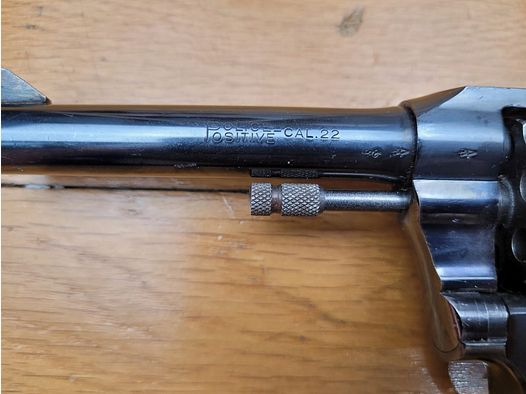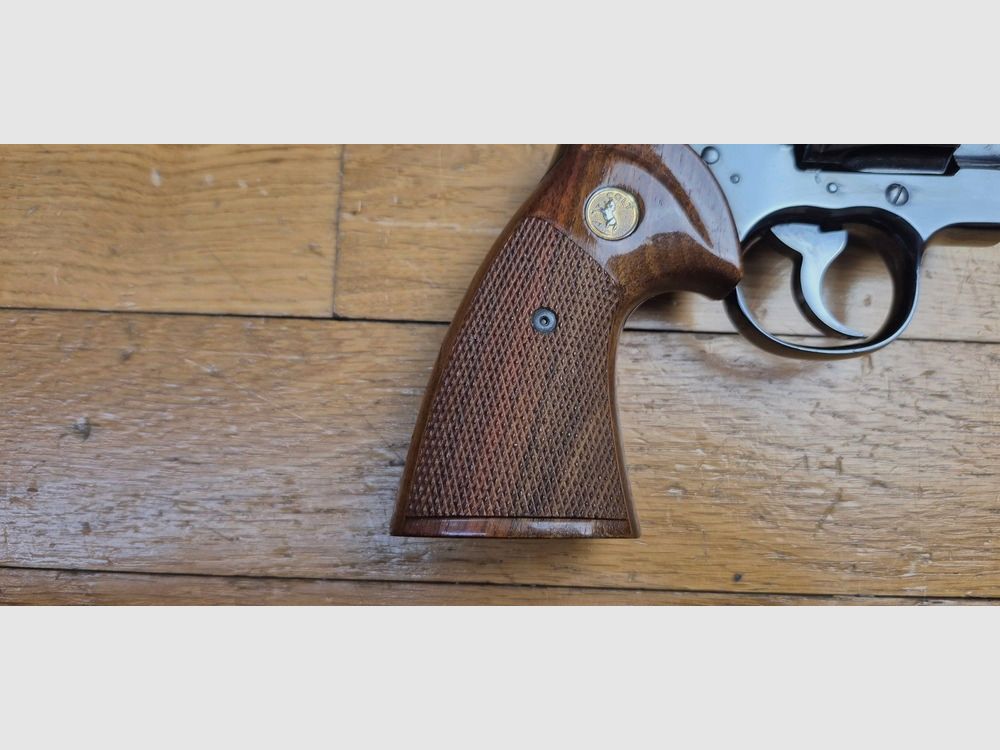
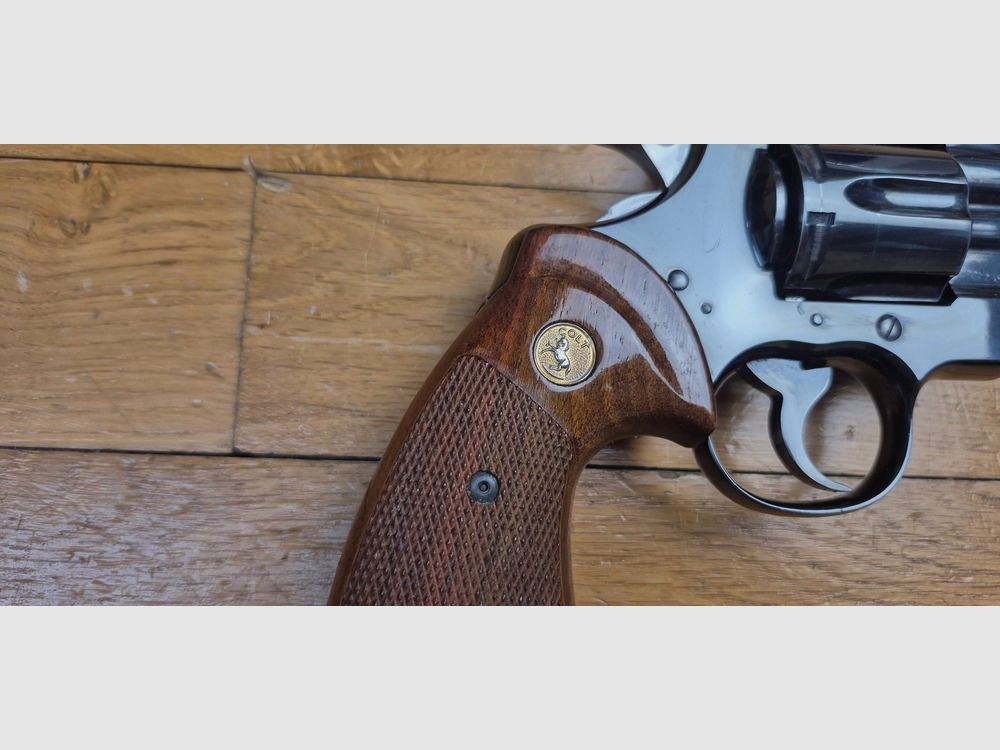
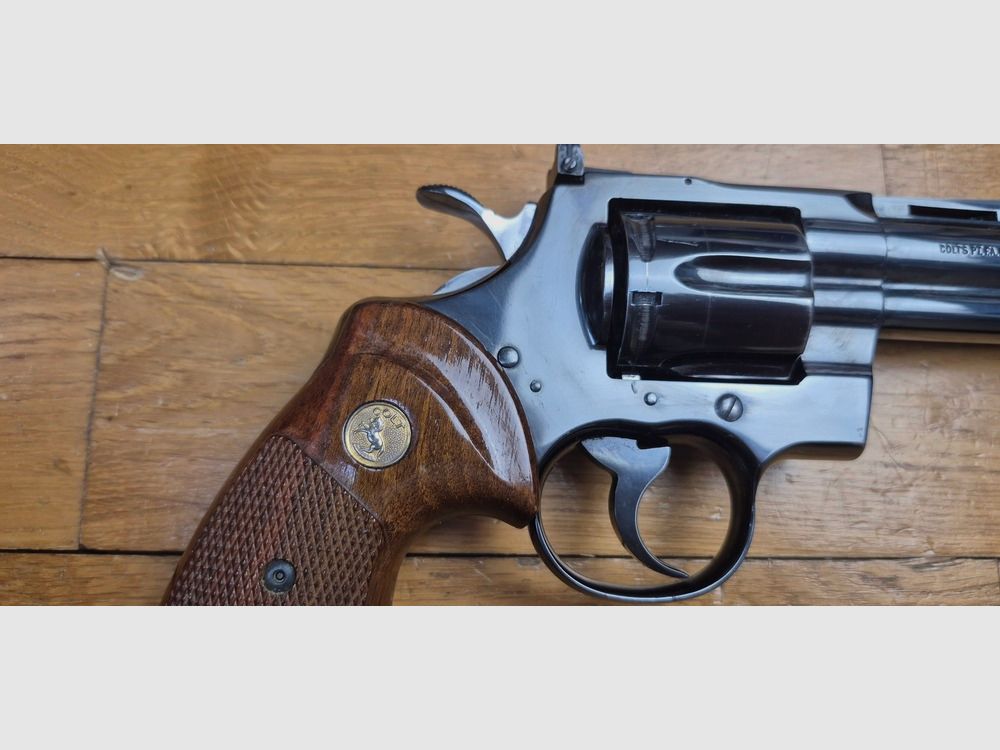


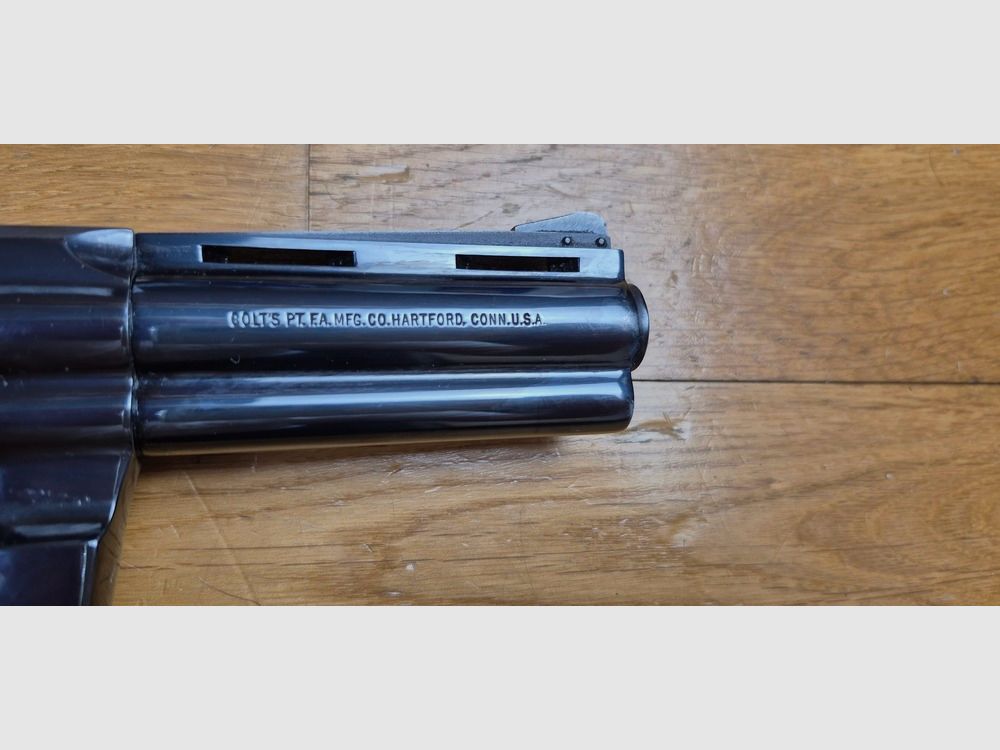
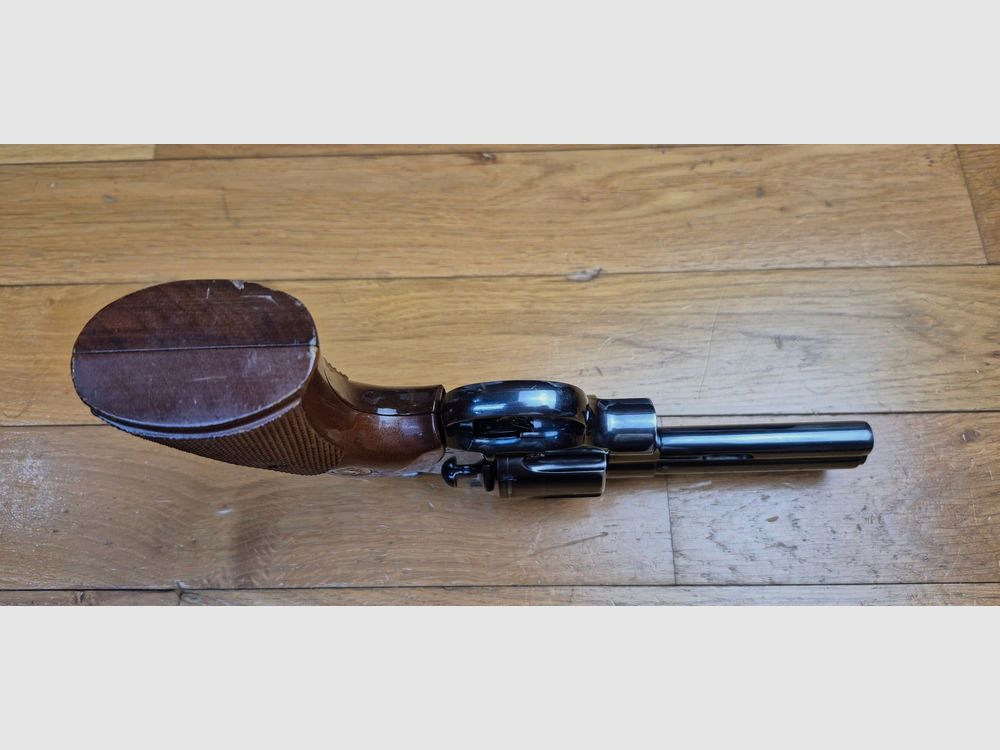
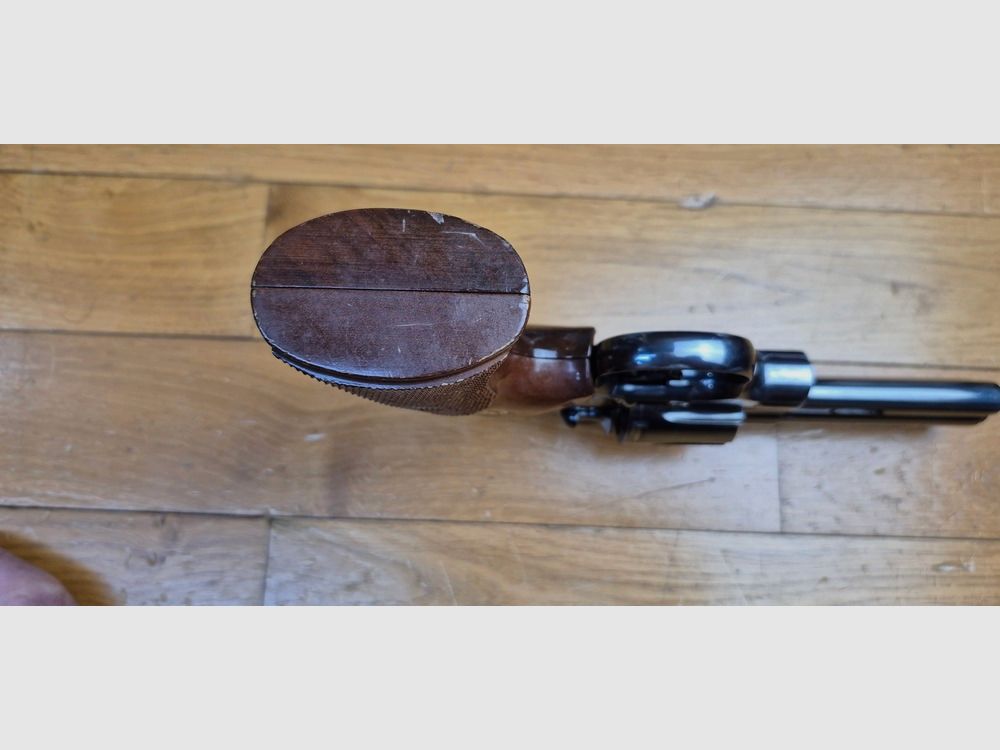
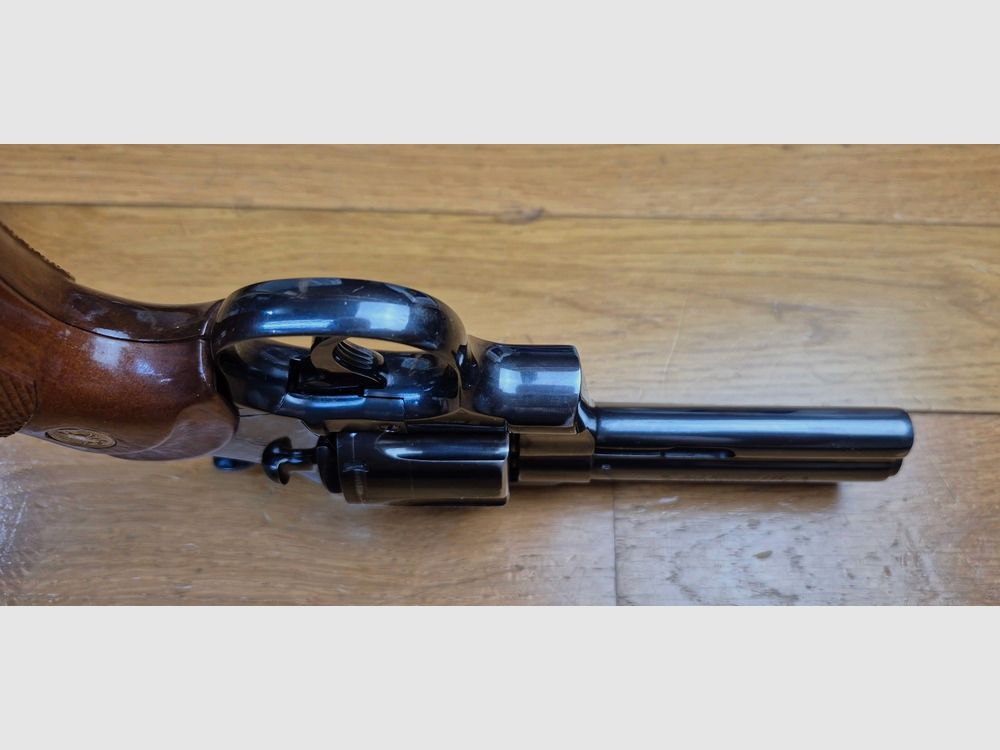
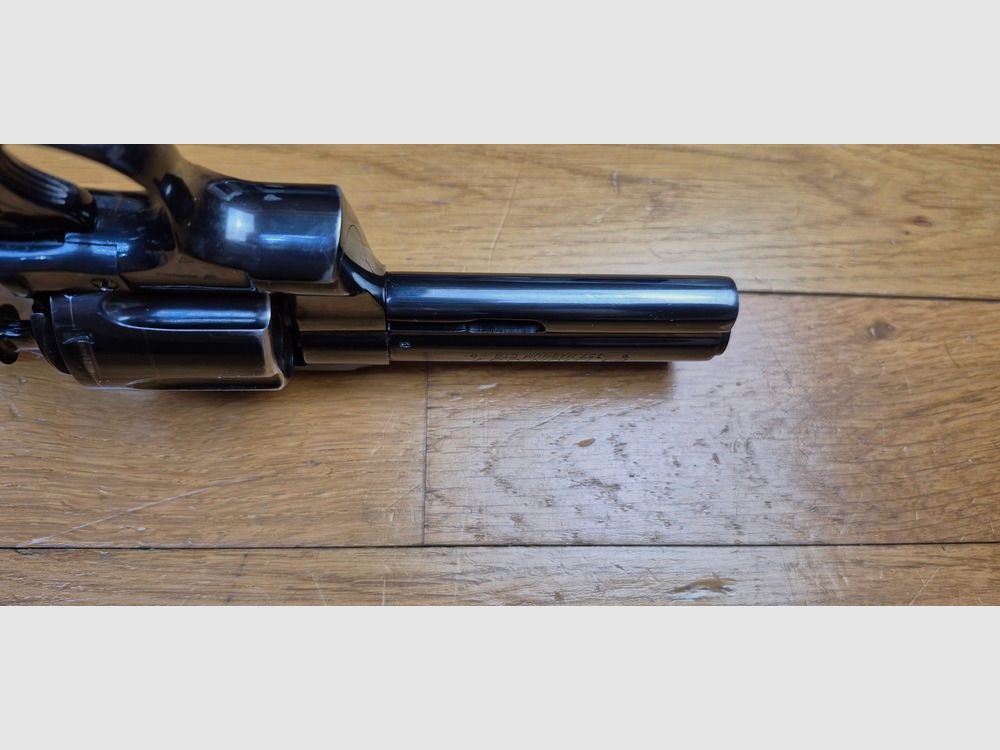


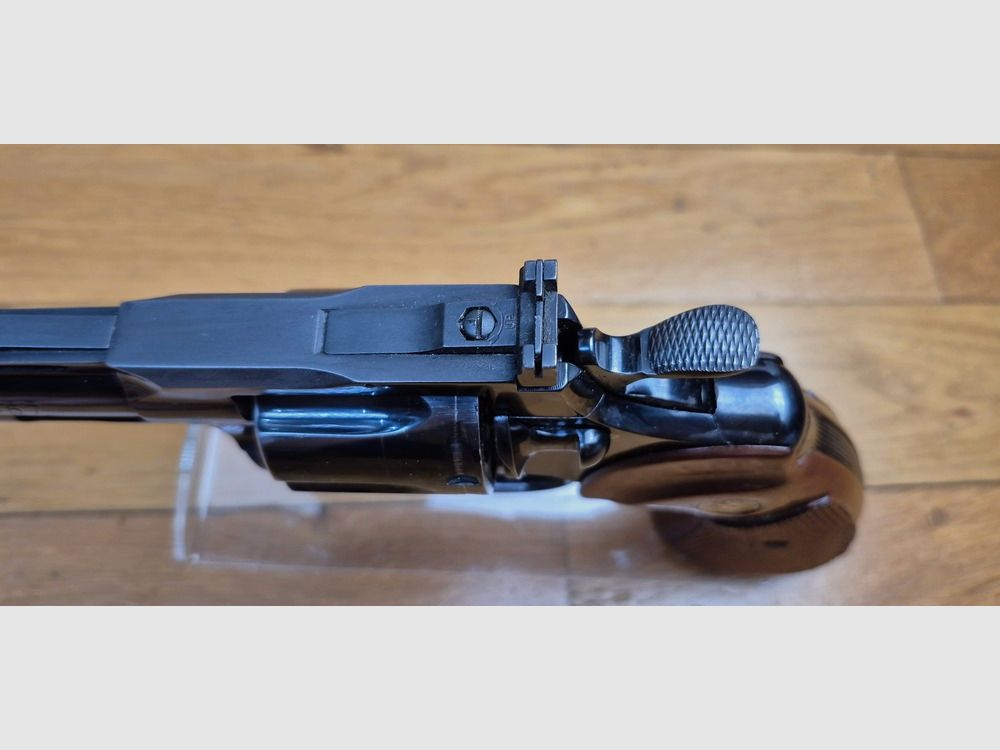
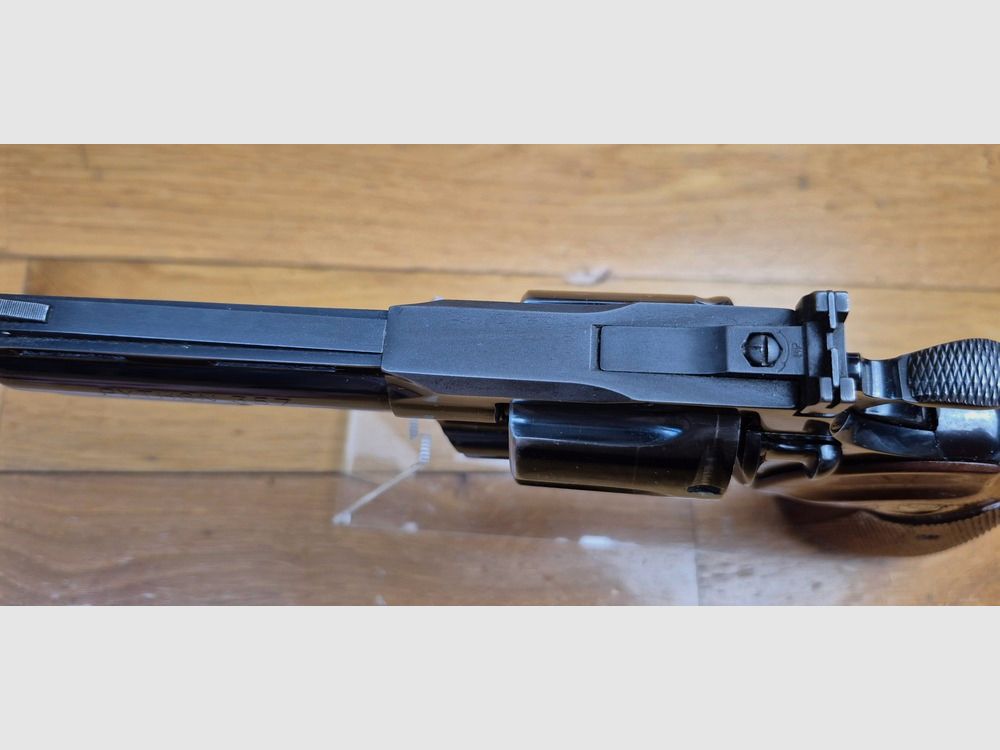
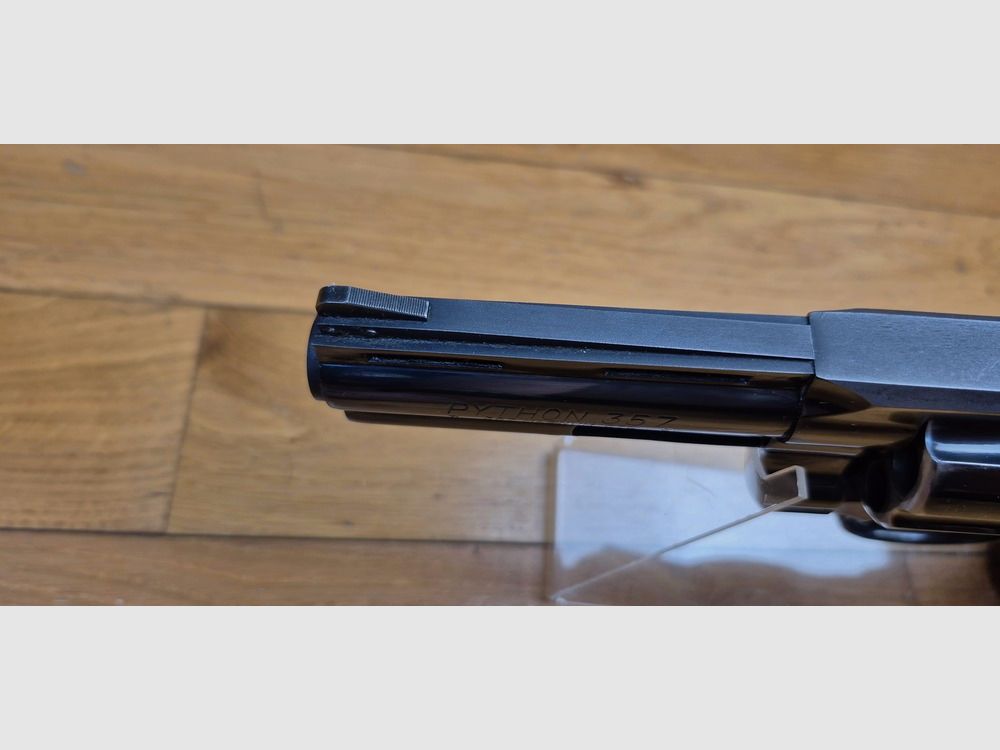

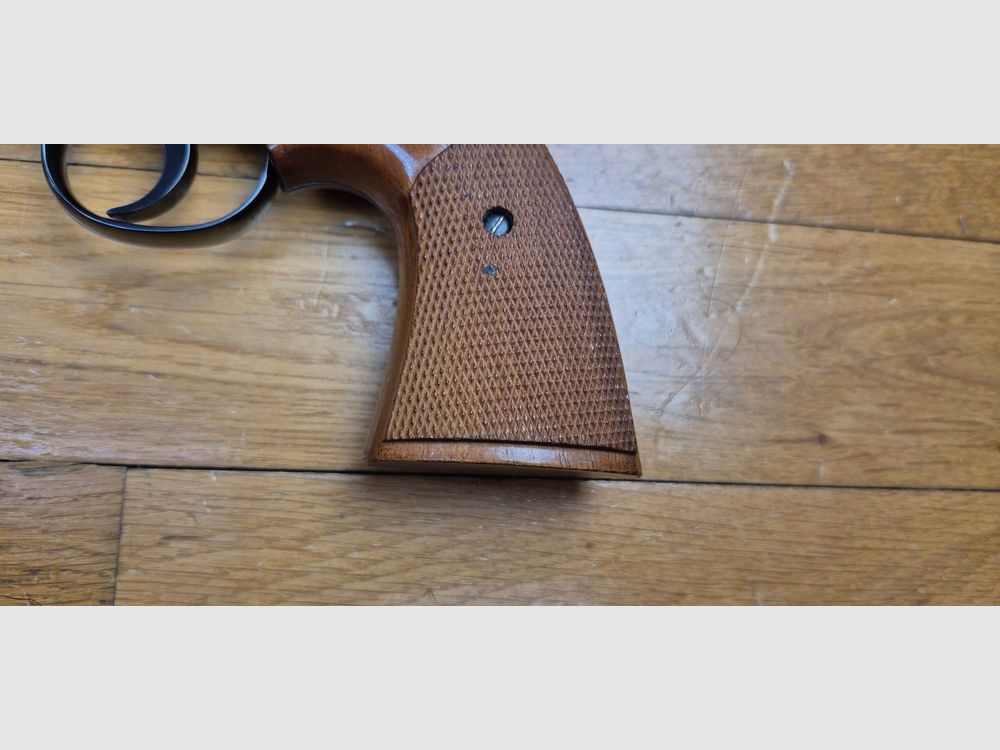
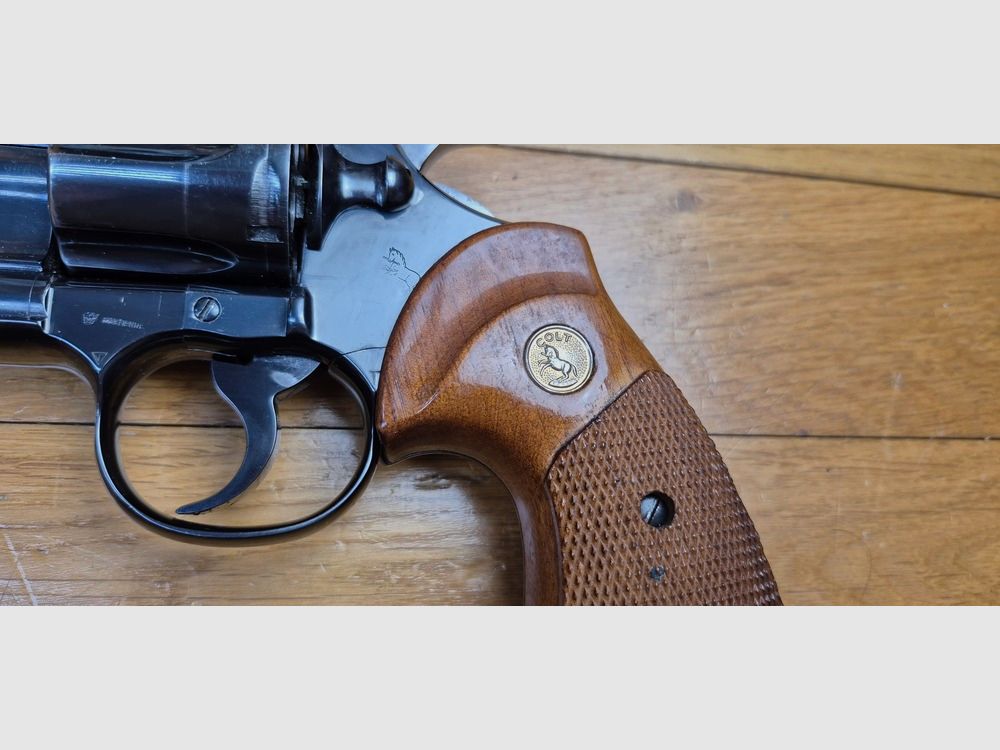
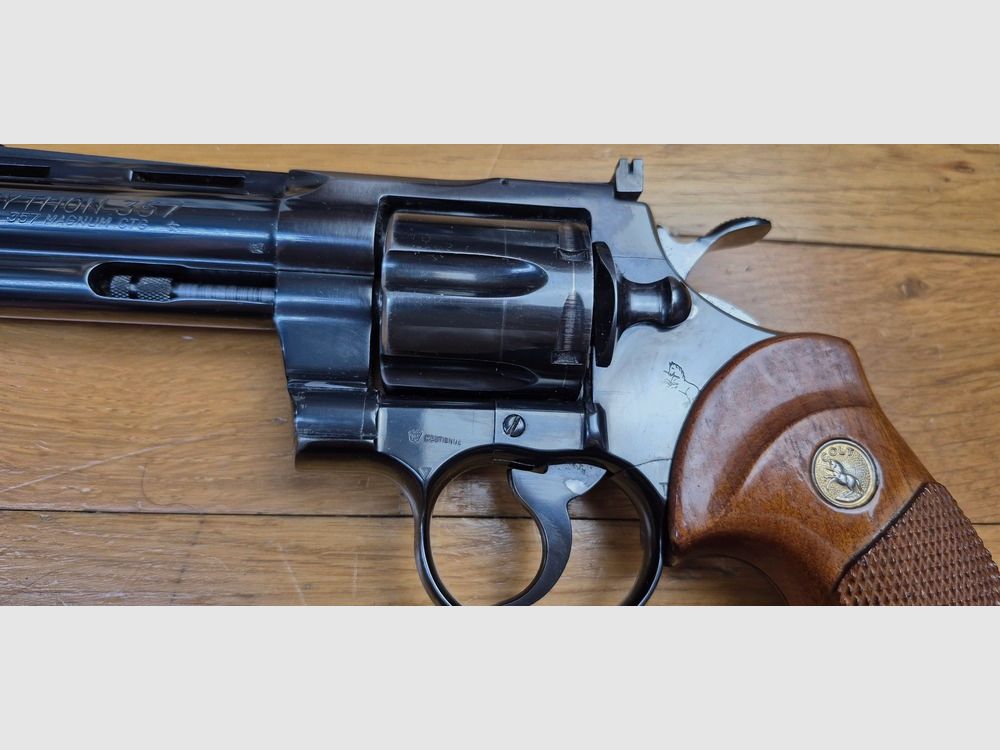

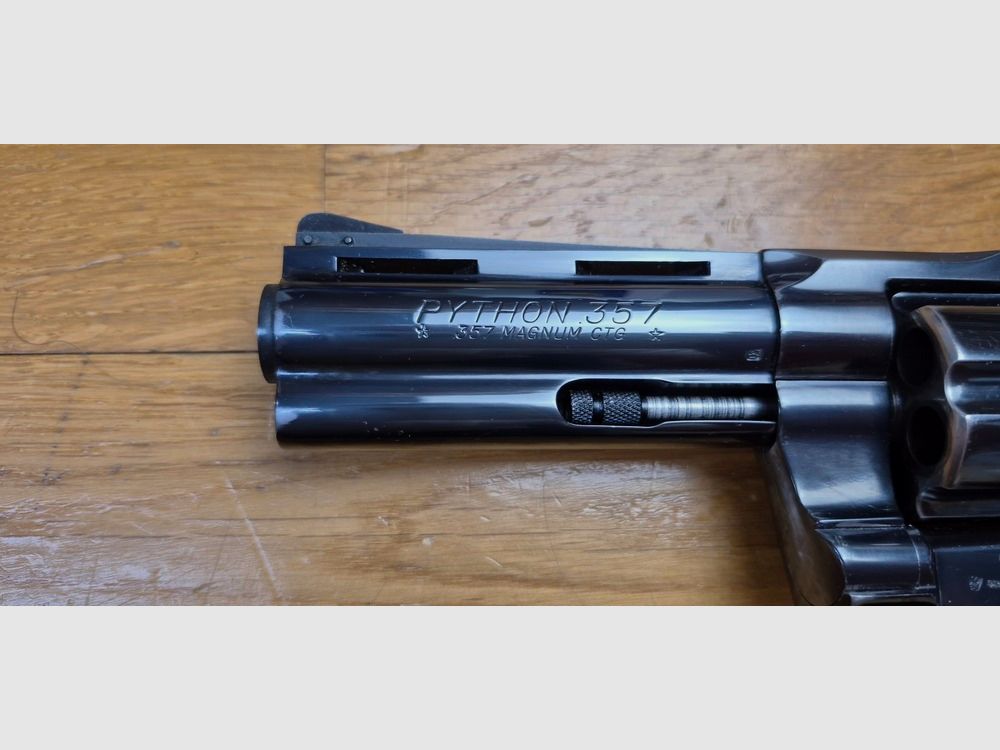
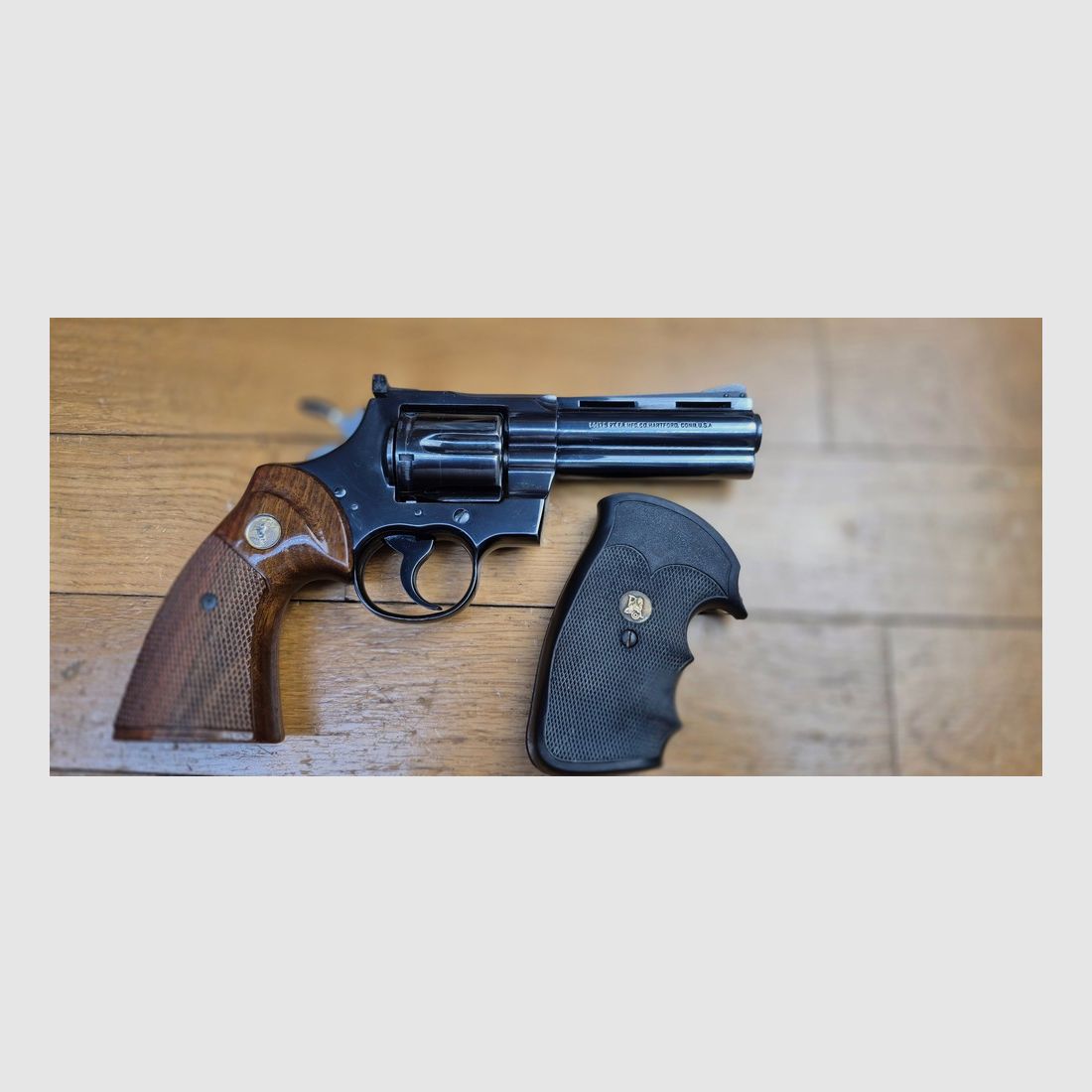


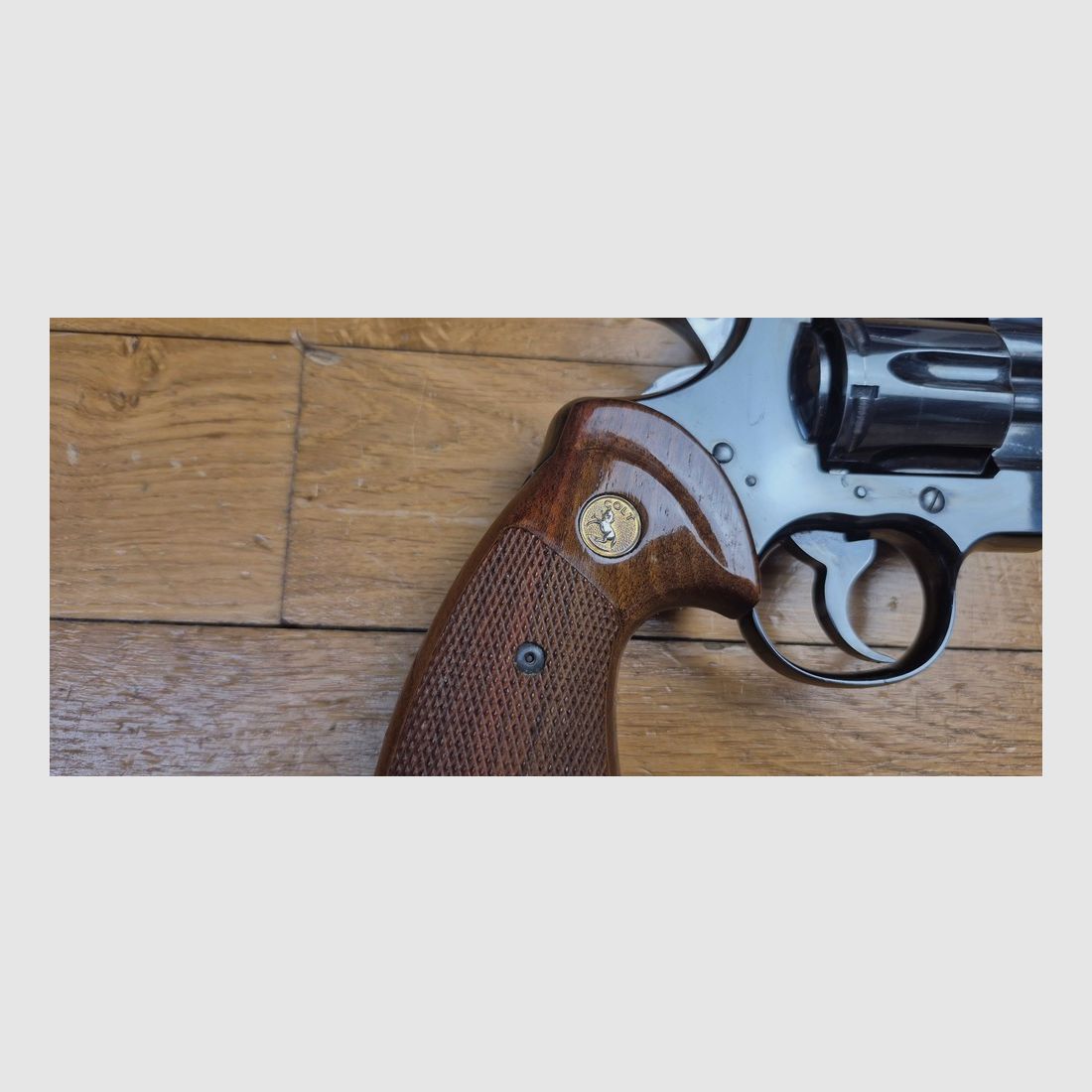
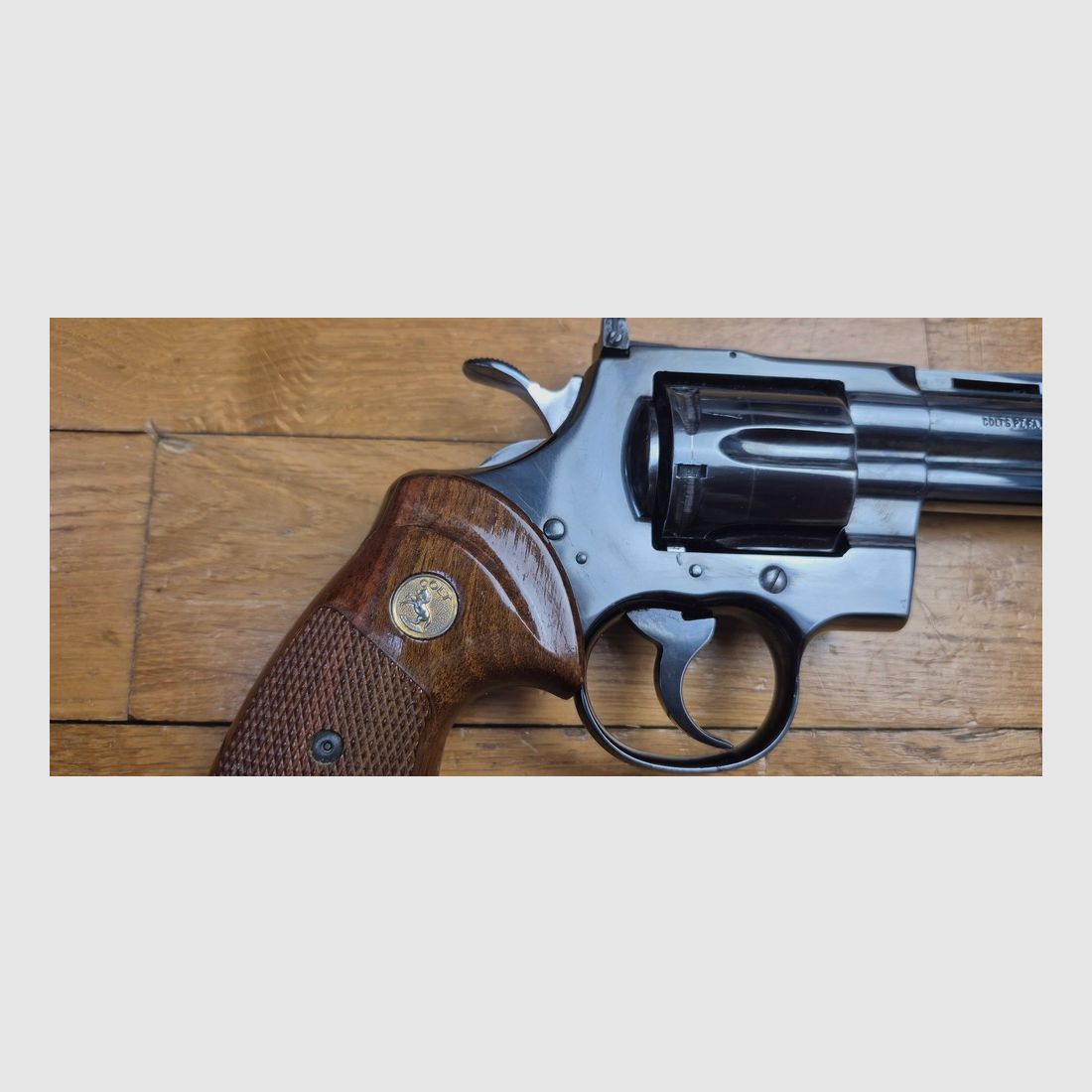

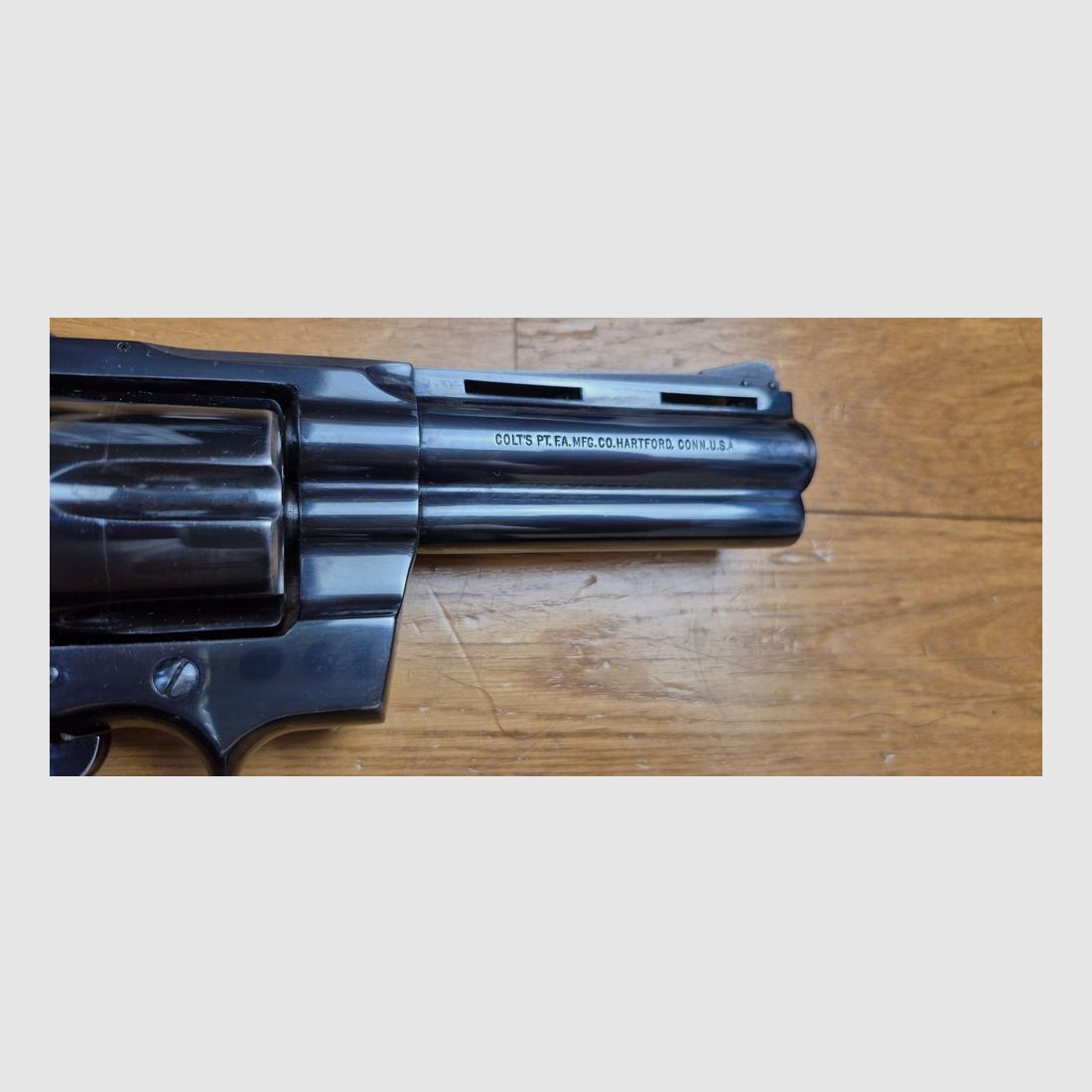
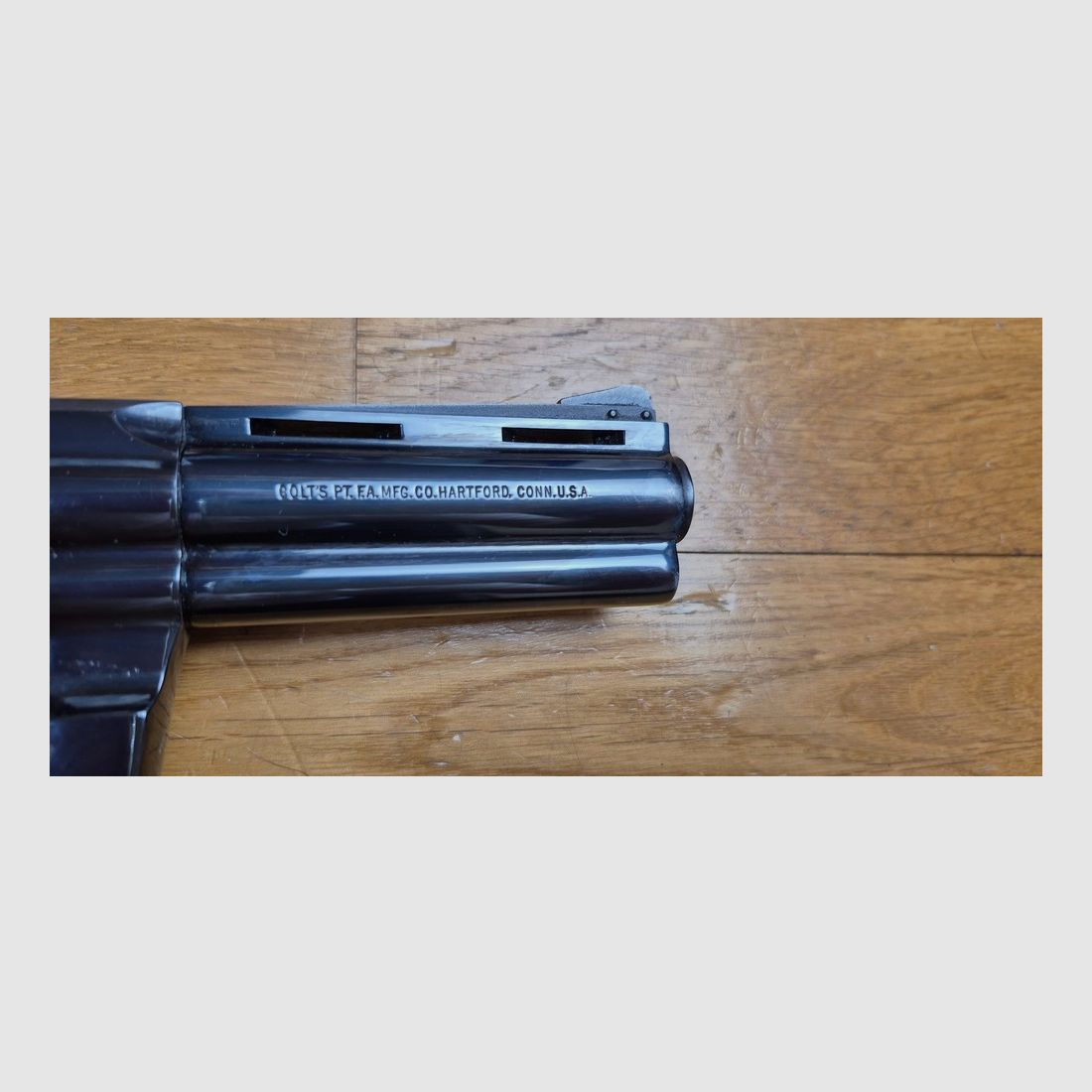
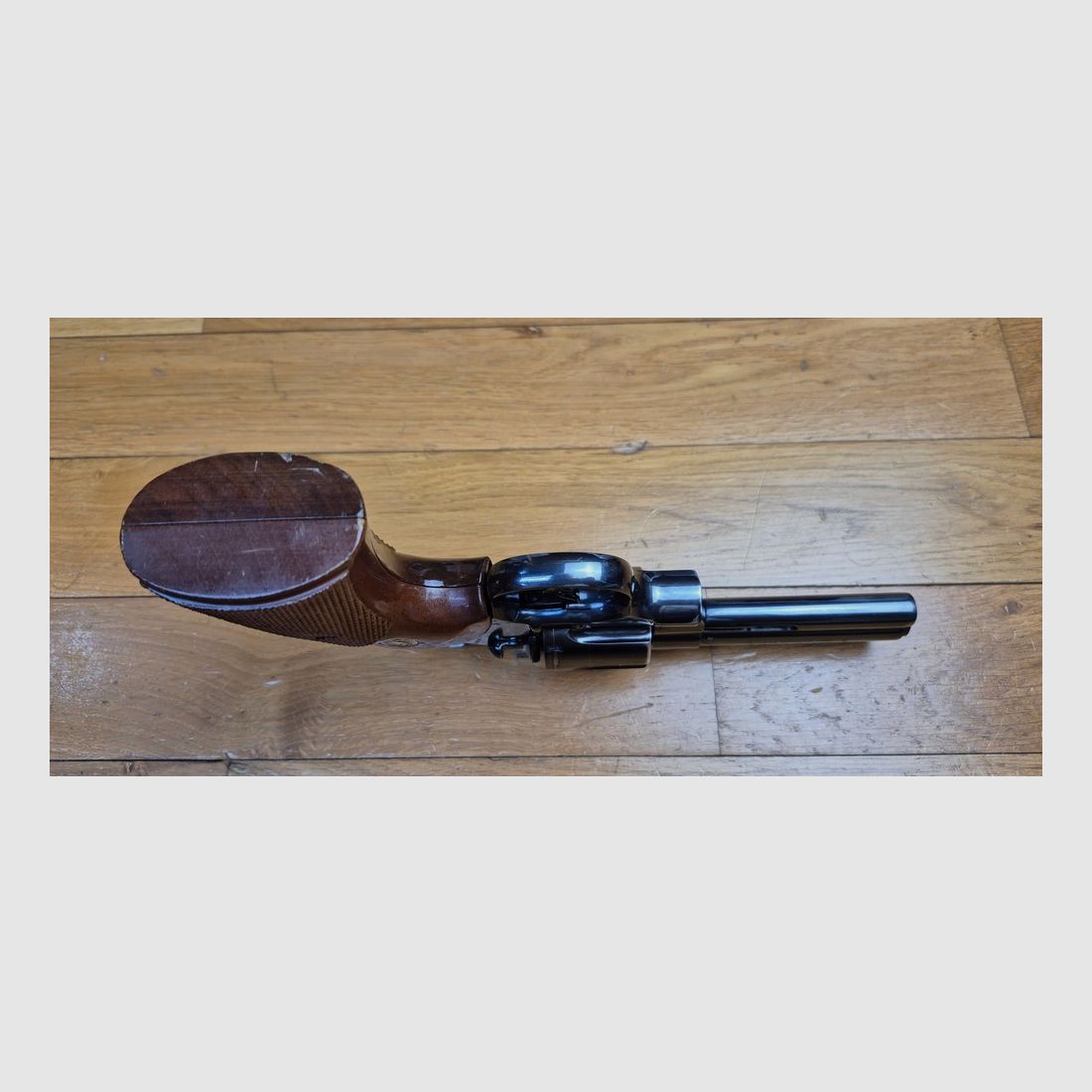
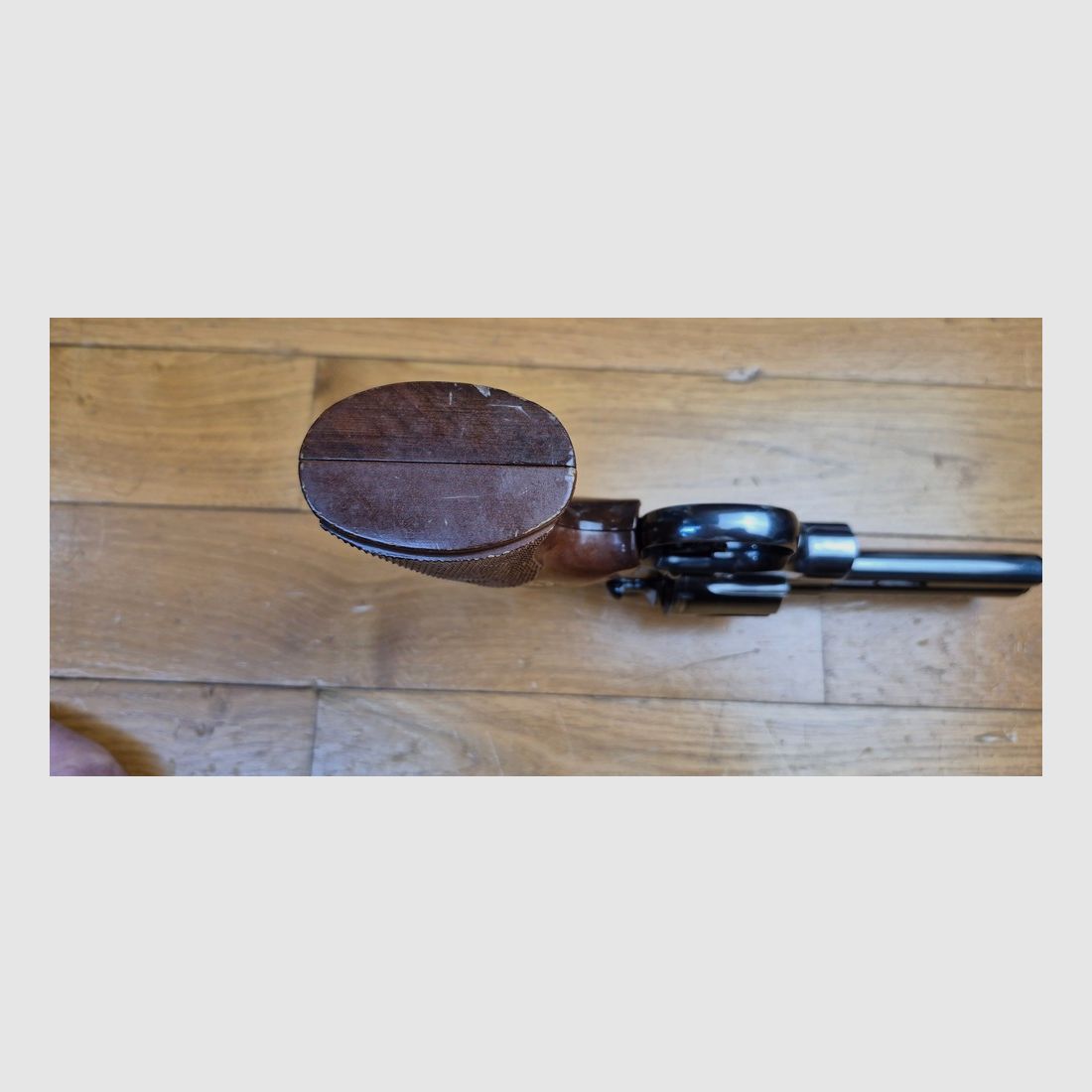

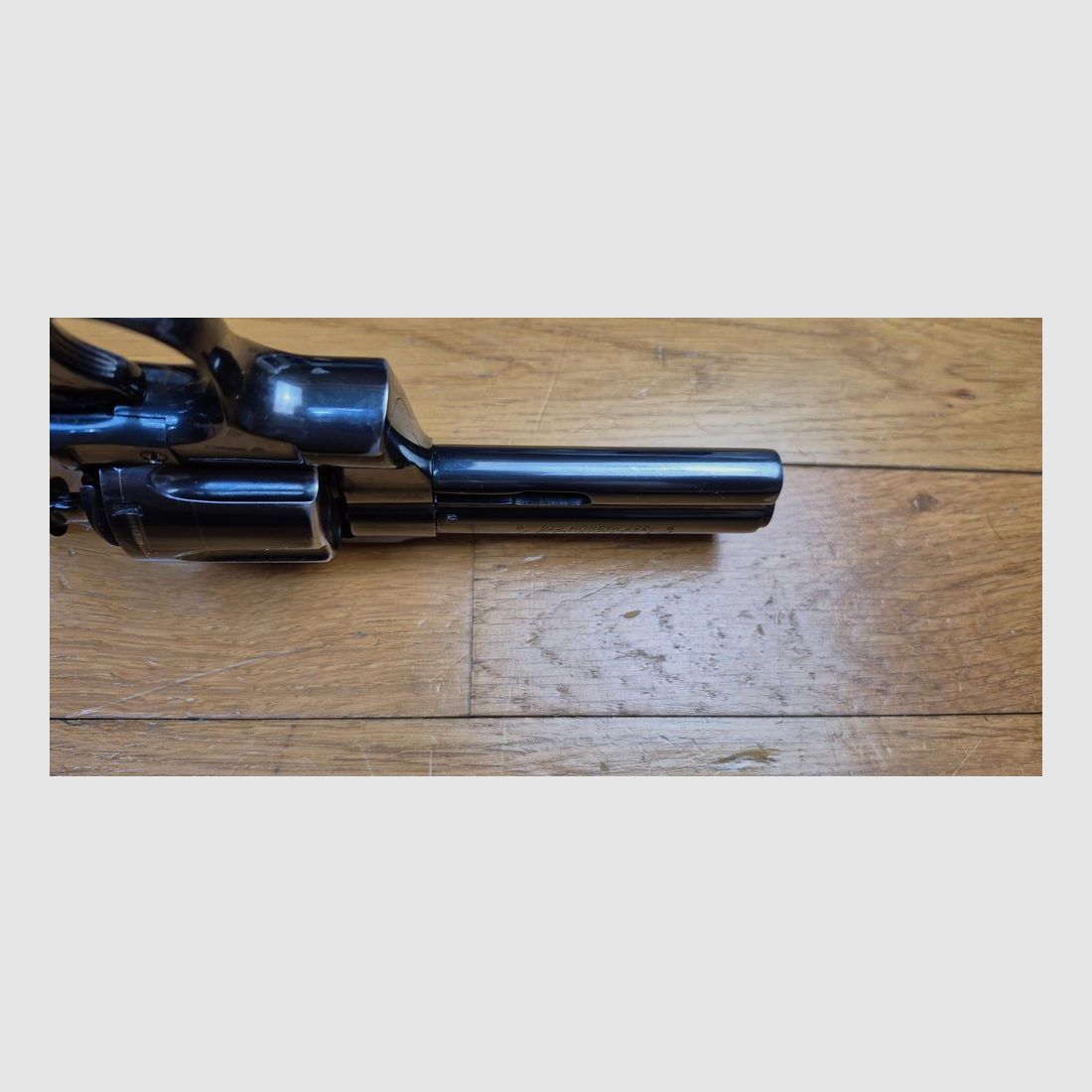
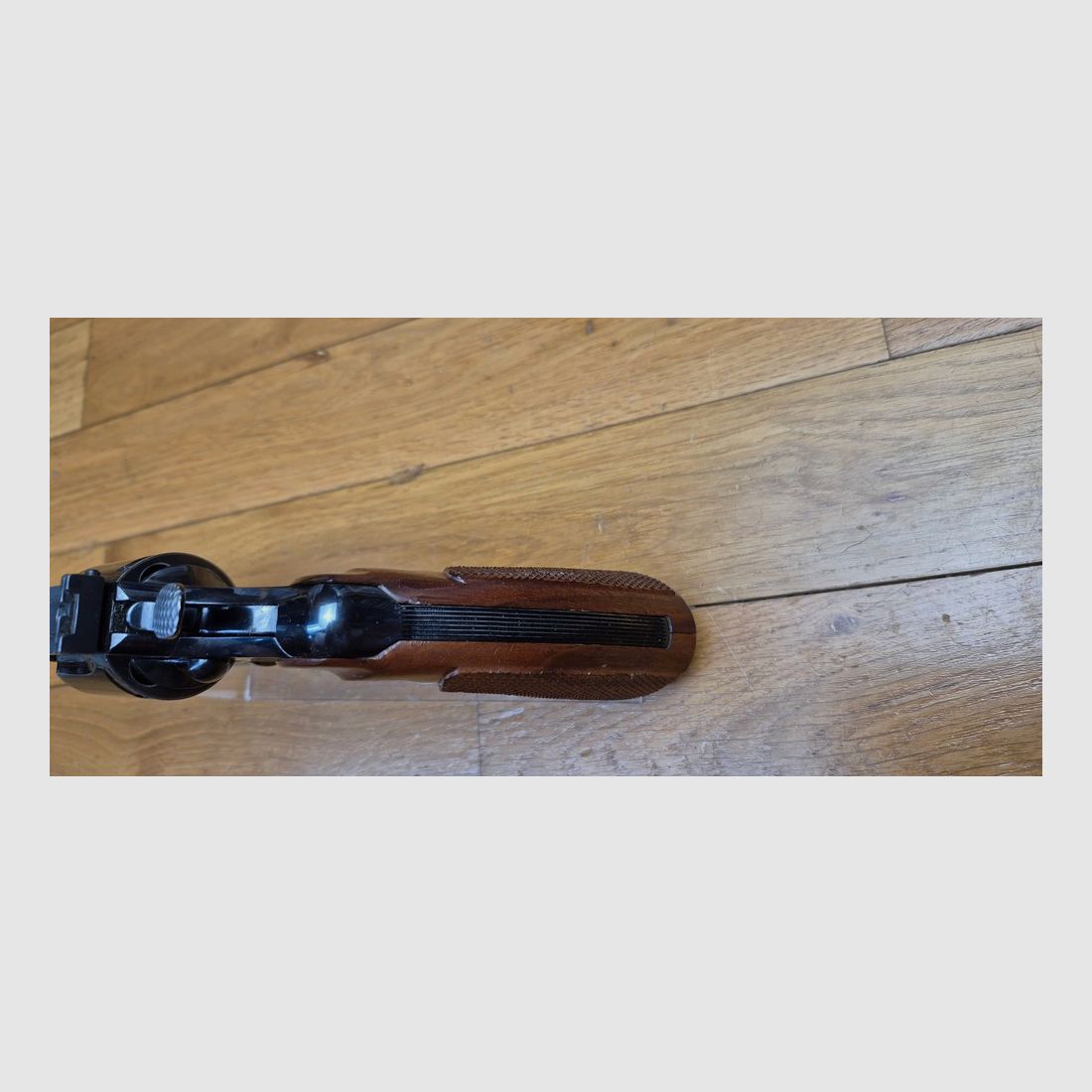
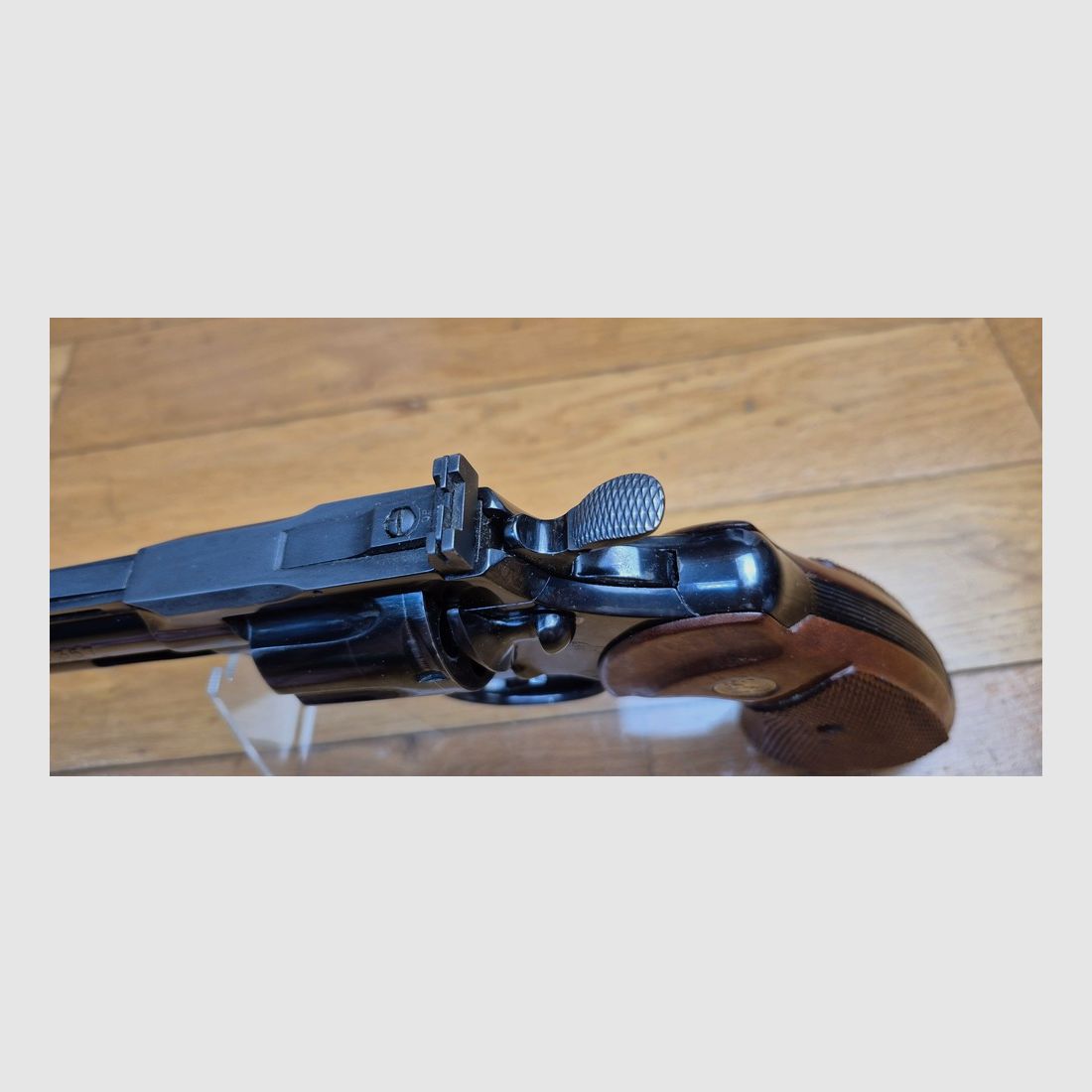

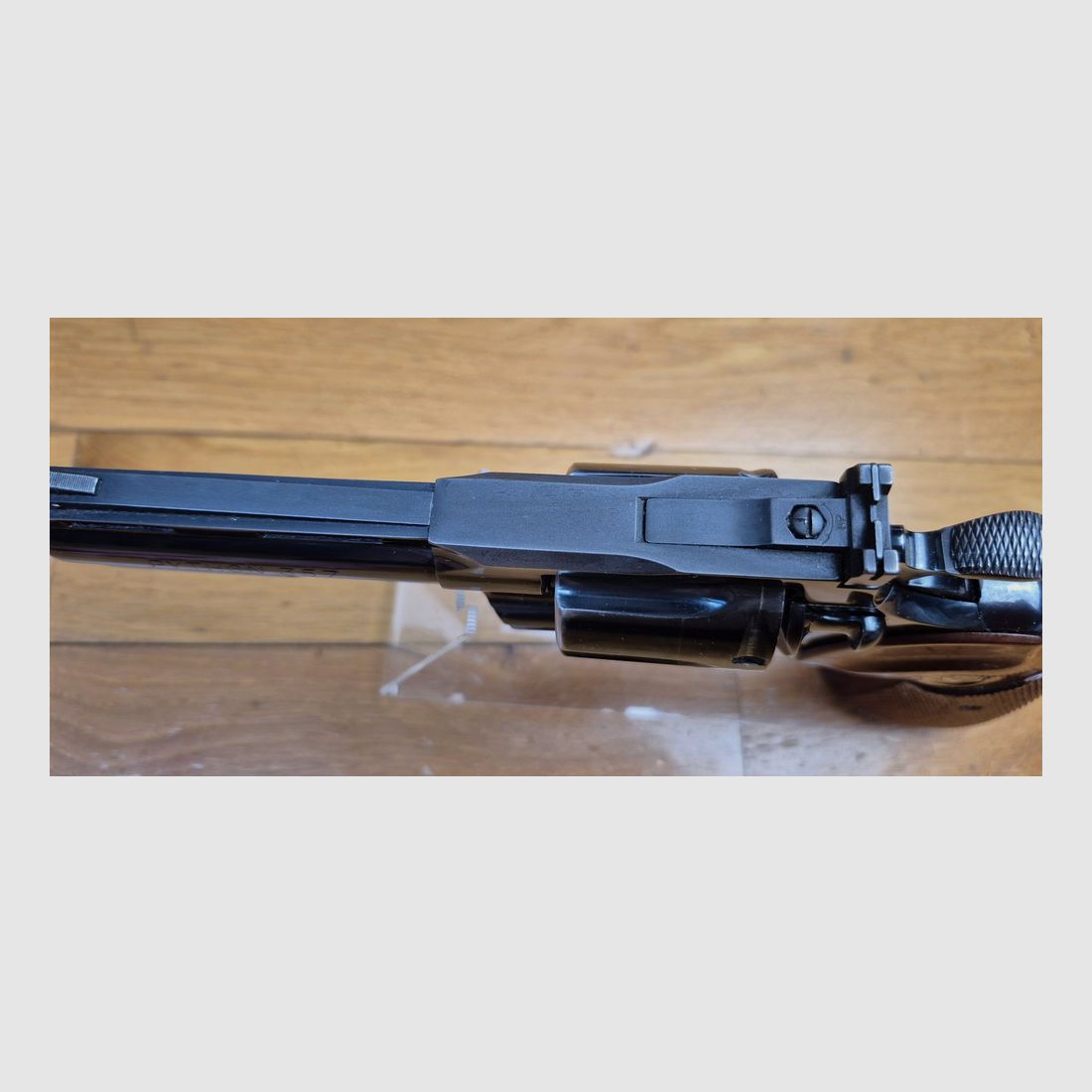
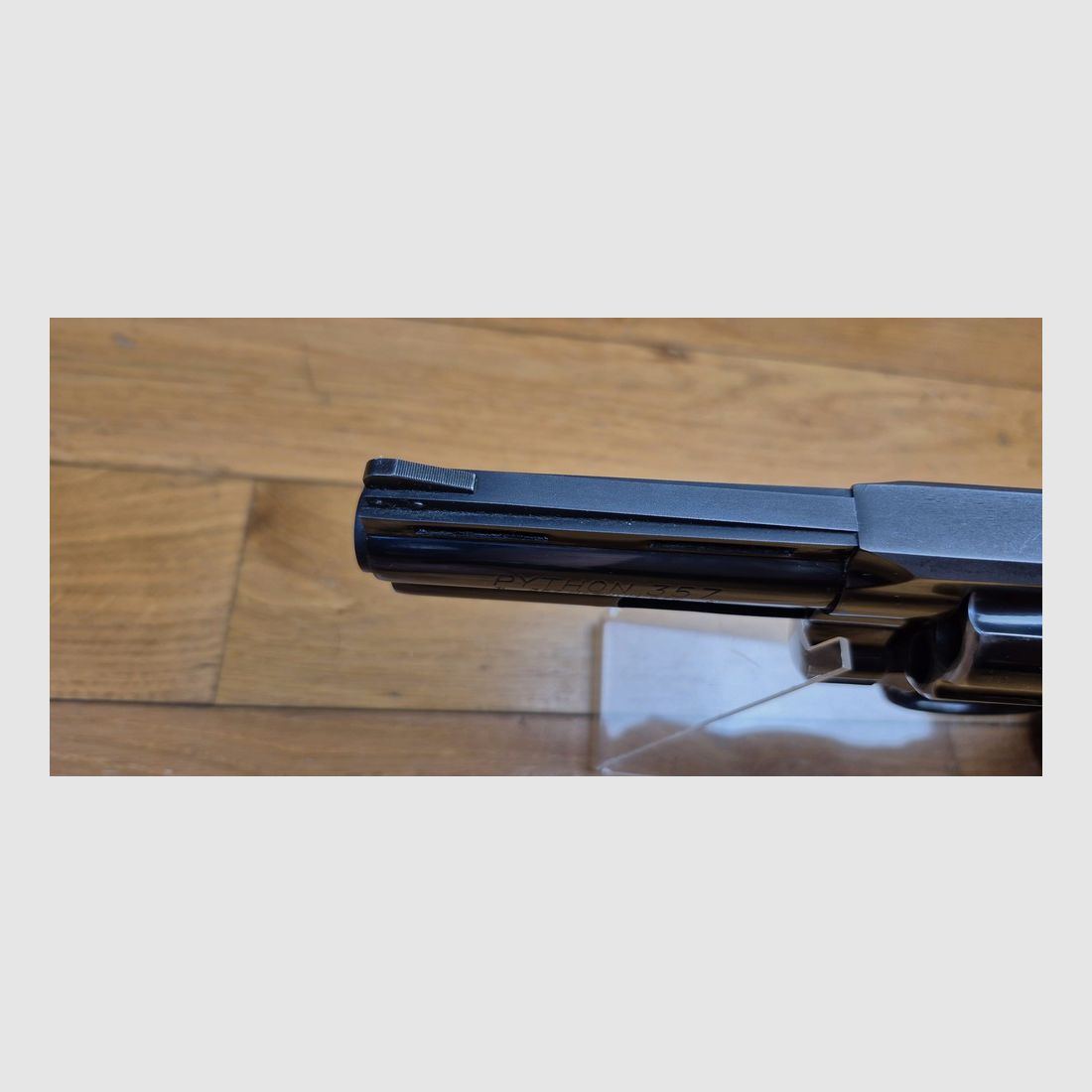
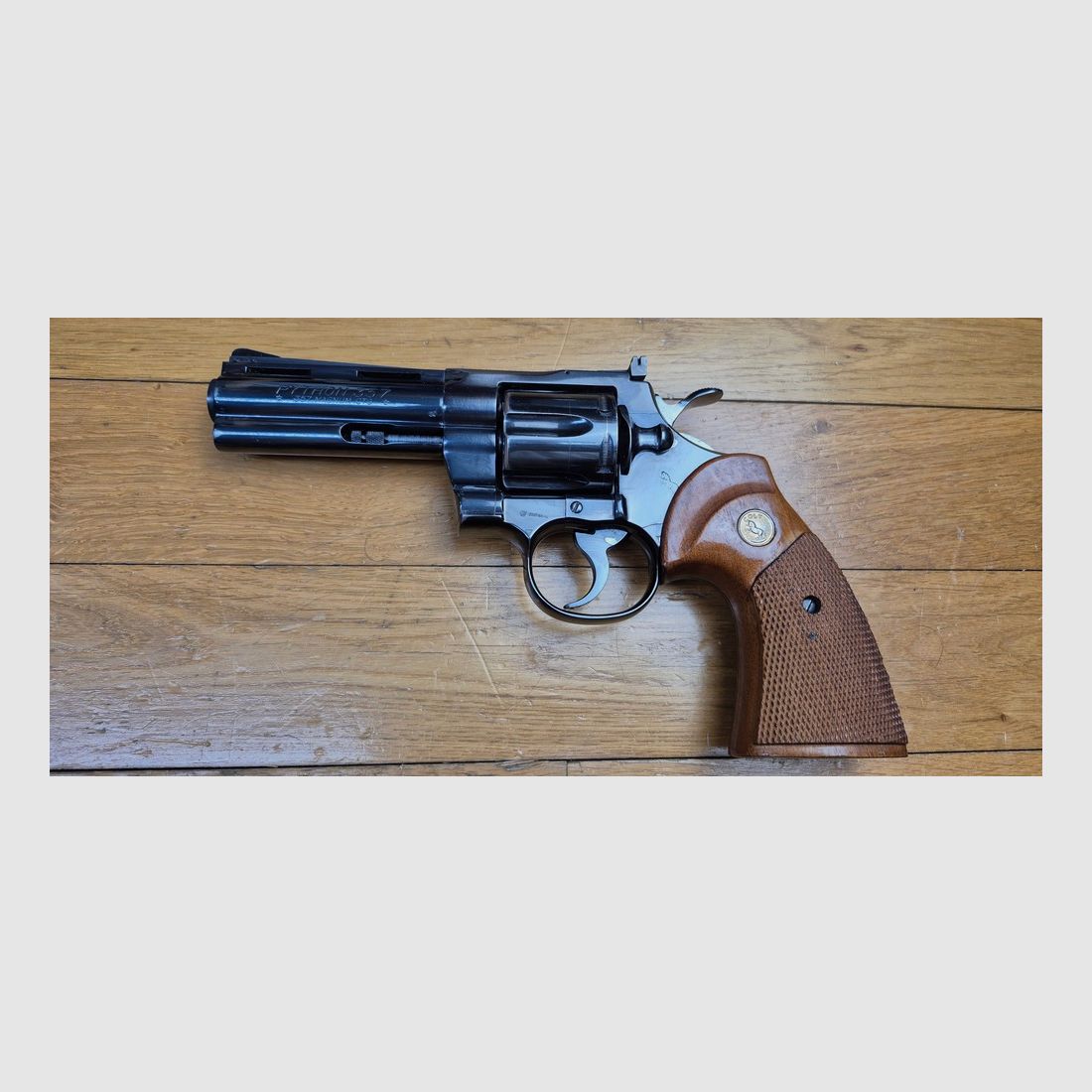

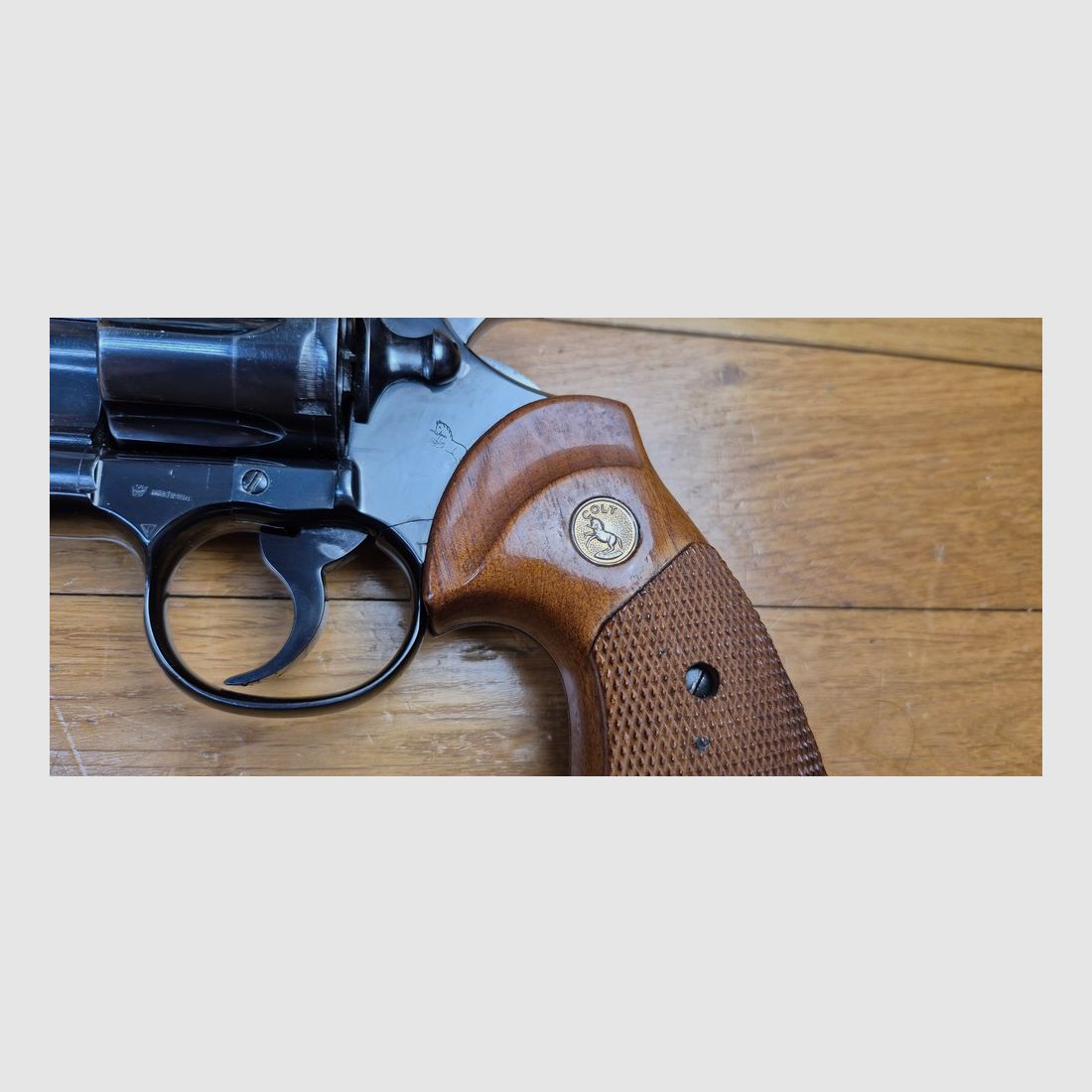
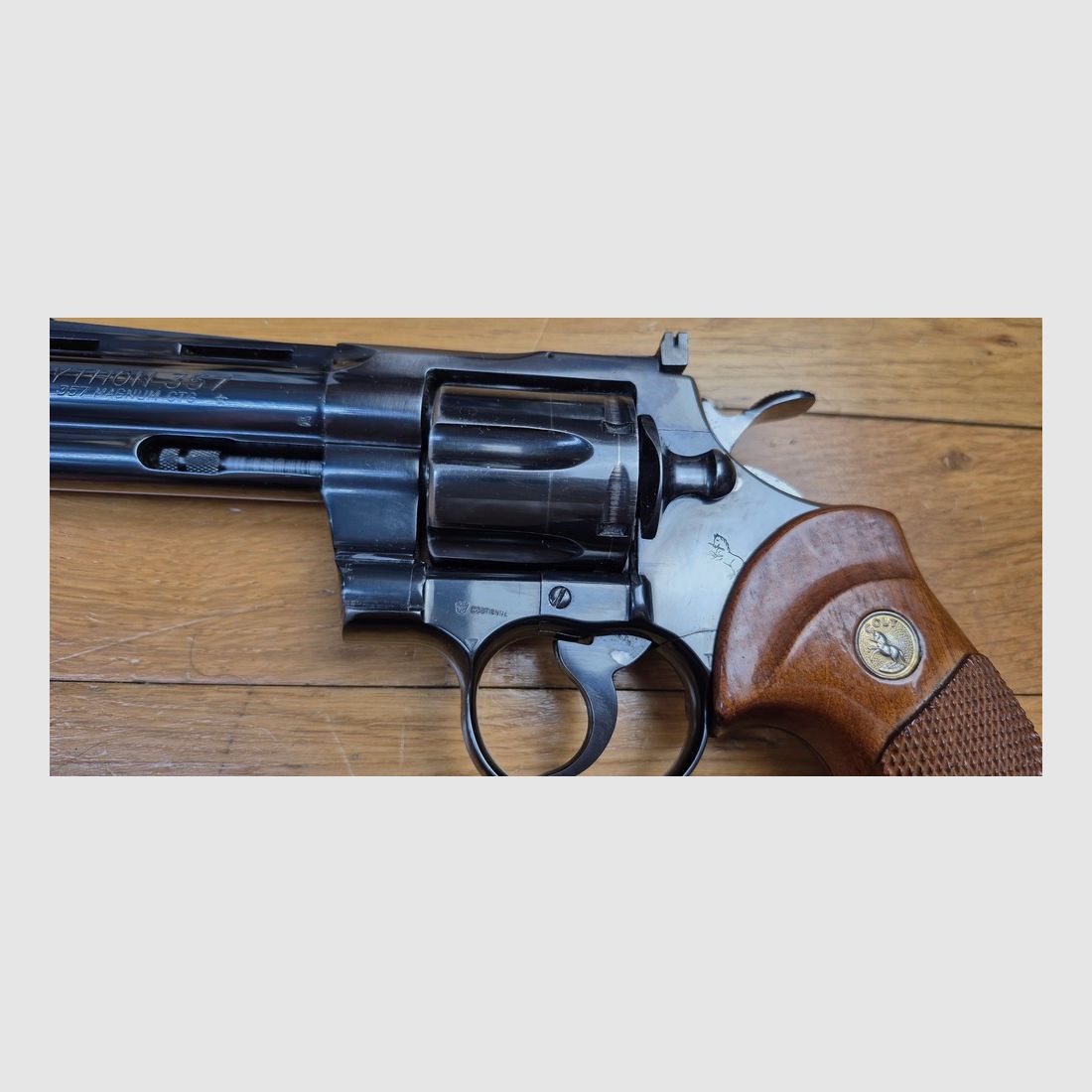
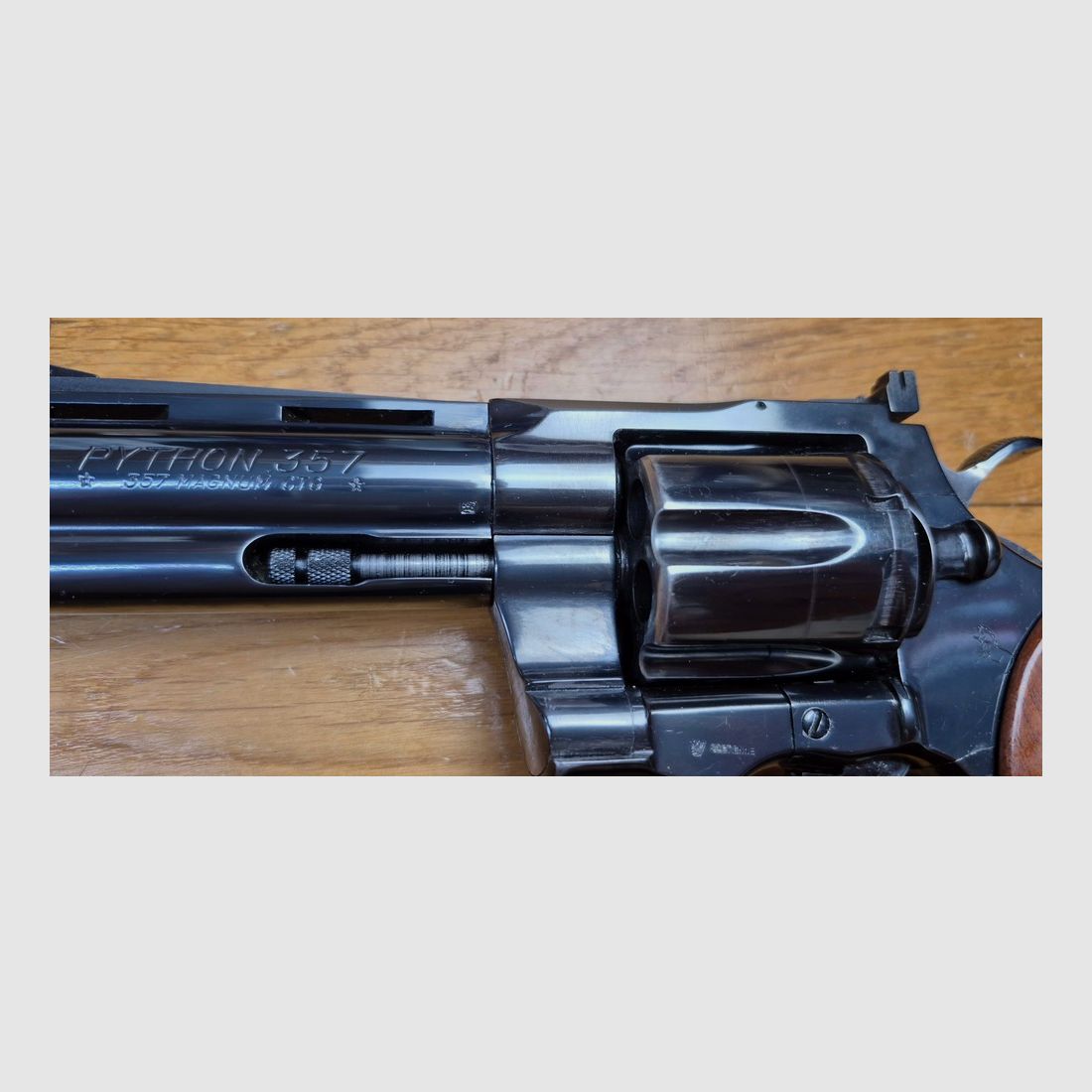
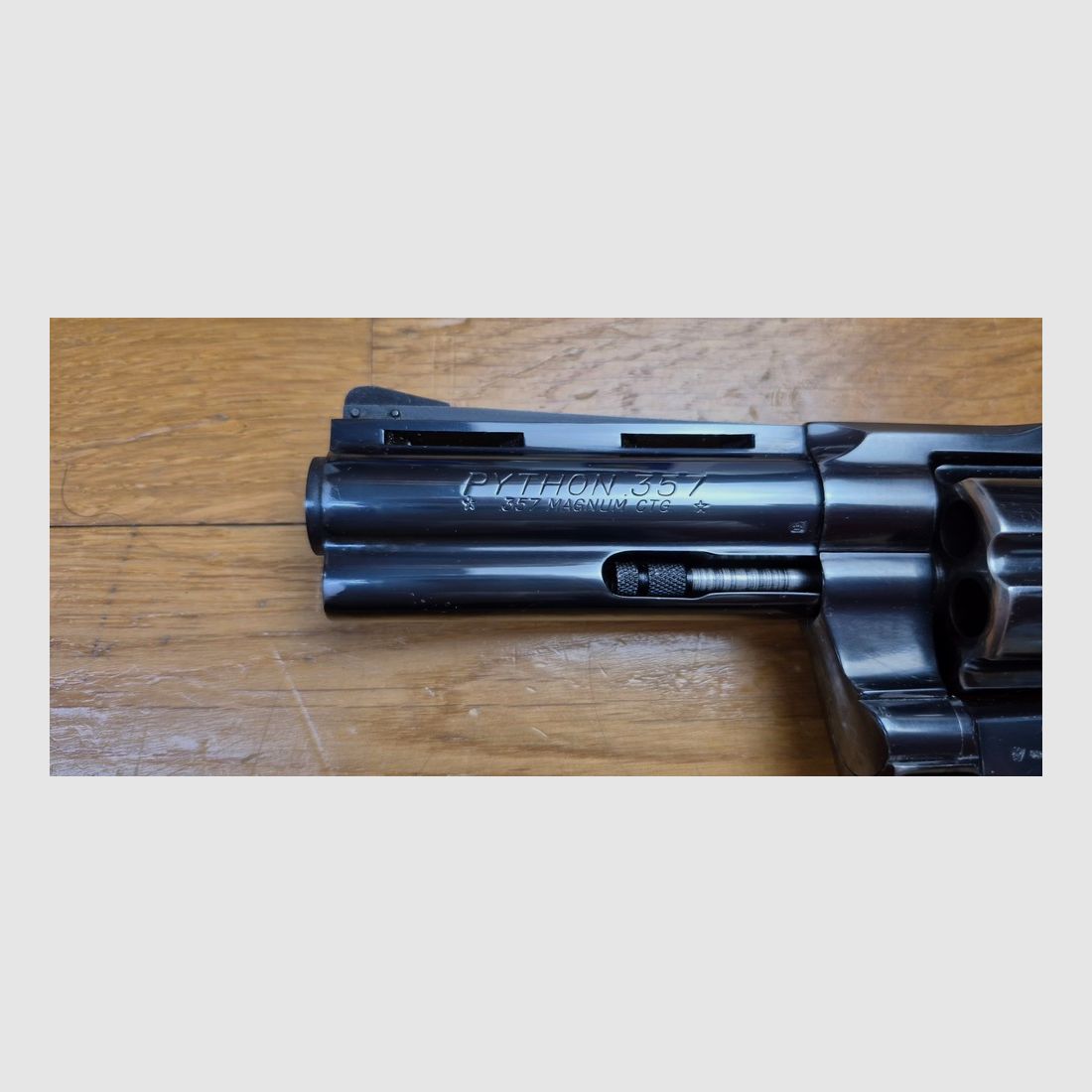
Splendid Colt Python 357 Magnum – Barrel 4 inches – Beginner's gun 1973 in top finishes – Second set of Pachmayr grips – Used gun in more than very good condition – TBE+
≈ $1,484
Price at the dealer: 1,350 €. Converted at the ECB rate as of November 20, 2026.
Purchase permit required
75002 Paris, France
40
ID: 10338532
This item is currently unavailable.
Purchase from outside the EU: The firearm goes through an importer in your country, the dealer handles the export.
How buying from Europe works
Shop safely with Gunfinder
Our AI-powered seller identity verification makes Gunfinder the safest marketplace online.
Learn more
Details
- Original language
- French
- Brand
- Colt
- Product
- Colt Python
- Category
- Purchase eligibility
- Required
- Caliber
- .357Mag
- Condition
- Used
- Location
- 🇫🇷 75002 Paris, France
- Availability
- Out of stock
Freshness
This listing is based on a mirrored offer, where the listing data was synced to us from a shop, dealer, or external marketplace. Please note that temporary price discrepancies may occur due to possible delays in data transmission.
- Source
- Flingus Maximus
- Last checked with the dealer
- 40 minutes ago
Description
Note:
The item is located abroad. Please note that delivery conditions, shipping times, and/or the purchase process may differ.
I don’t see it that often in these good pre-1982 productions.
The Python is somewhat the revolver that symbolizes all modern revolvers. The emblem of modern revolvers.
Yet, from its birth in 1955, it was reserved for a high-end niche at Colt and therefore intended to remain rather limited in distribution. Which in principle does not favour popularity. And yet…
1955 was a great year for handguns, as our fine colt was born the same year as another very serious competitor: the Smith&Wesson 29 in 44 mag (one of Maître Flingus’s favourites).
There has been a lot of talk about the Python, its 1.2 kg weight (if you have girl arms, you don’t buy a Python, you settle for a slow worm!).
Some have also spoken of a very supposed loss of accuracy in intensive shooting, the heating of the metal supposedly leading to imperfect alignment of the chambers with the forcing cone which could also lead to slight gas leakage, and, in very rare cases (never seen at the range!), to having to resynchronise the gun.
What’s the truth?
It amuses me a bit because, to get there (2005 test), you had to fire several hundred cartridges in a row (!) in rapid fire, without any pause (!), which I have never seen done with a Python, nor even with a Smith, neither at the range nor elsewhere. Something you never do.
In reality, and since 1955, it is probably the most reliable gun on the market along with Smiths from the great years (up to 1982-1986) and Ruger GP 100 types. An exceptional weapon perfectly justifying its reputation for power and solidity. Never a firing incident with a Python.
The Python is rightly renowned for its accuracy (it doesn’t miss the 10 at 25 metres), the smoothness of its mechanics, especially in cocking the hammer, and for its cylinder locking system. We’ll come back to that. “Details” that make the difference.
Moreover, these are “gunsmith” details, very aware of the concrete mechanical constraints specific to a powerful weapon. A weapon made by highly skilled workers.
Because this is one of the little-known things about this gun and which explains many things: the Colt Python did not benefit from a development programme in a design office.
It was created in the field by two professional gunsmiths from Colt’s great qualitative era who worked directly on the production line. They tried to create a match revolver in 357 mainly using already existing parts.
Getting caught up in the game, and as tests and improvements went on, they ended up creating one of the most beautiful and impressive handguns ever made.
So let’s pay tribute to Al De John, who had been a gunsmith at Colt since 1946, and another production line gunsmith, who became Production Director, Al Gunther.
Our lads actually started from the Special Officer’s Model Match in 38 Sp.
Trying to make it even more accurate while adapting it to the 357, they had to solve problems of reinforcing the cylinder and frame as well as the reliability of the firing pin which regularly broke. The switch to the formidable 357 mag at very high pressure demanded it.
Because the Python, like our Manurhin or the Smith 27, is truly a weapon designed to shoot 357 at very high pressure.
But they also came to create a new cylinder locking mechanism. When the hammer is fully cocked, at the very moment you press the trigger, the cylinder locks and remains locked throughout the hammer’s travel until it falls. This is a fundamental point of improvement in accuracy. The Python is more “forgiving” in this regard.
The machining of the moving parts is
also designed so that, when coming into firing position, the space between the cylinder and the forcing cone reduces just a bit more, which further improves accuracy and velocity. The locking of the Python’s cylinder has thus earned a reputation as one of the toughest on the market.
In short, they completely redesigned the gun, adding along the way that famous ventilated rib, another novelty at the time on a revolver, which, besides its heat dissipation benefit for intensive shooting, also gave it an iconic look that many have tried to imitate. A success.
Its complex double-action mechanism, its finishing qualities, notably its famous Colt Royal Blue finish (“Royal Blue finish” – reminder: “Blue” in gunsmithing English does not mean blue but bluing) which requires very careful prior polishing, and its machining that rivals that of Smith from the golden era, made it a special firearm from birth.
Initially, only Al De John and another top craftsman on the line, Don Bedford, were authorised to work on the Pythons. This complex manual fitting and polishing work took more time for these highly skilled and very fast gunsmiths: just under 25 minutes per gun compared to 15 minutes on other Colt revolvers.
The Python was initially sold for $125 (the average weekly income of an American household around 1955 was $68), the same price as the Single Action Army reintroduced in 1956.
Only one (!) Python was built in 1955 and just over 300 units were produced in 1956. It wasn’t until 1968 that the 100,000 Pythons produced milestone was finally reached. It was expensive.
It was initially produced only in 6 and 4 inches, the 2.5 inch model appearing only in the 1970s. An 8 inch barrel appeared in 1980.
In the meantime, the Python had earned its stripes as an exceptional firearm, certainly expensive to produce and sell, but with a reputation that rightly became worldwide. The ultimate from Colt.
Note that from the early 1970s, Colt Pythons were the first firearms to be laser-aligned barrel-chambers, a first in all global production. This shows the care Colt has always taken with its Python babies from production, always seeking to perfect them.
Pythons were produced from 1956 to 1997.
From that year until 2004, they were only produced on order, with early 2005 marking the definitive end of production. The drop in manufacturing standards, the pistol’s competition for shooters’ hearts, and Colt’s missteps with their Boa, King Cobra, Grizzly and other Kodiak models had commercially ended this magnificent firearm.
However, the legend of this exceptional firearm remained so strong that Colt… resumed production in 2020.
Objectively, at €3,200 or more new in 6 or 4 inches, made with laser manufacturing that can snag, it’s better to go for a used one in excellent condition from the good years. The gun is indestructible.
In terms of quality and finishing, American collector shooters agree to favour models from the 1960s (hard to find any earlier) to the early 1980s. Much like with Smith, actually. After that, you enter another world… That of overwhelmed after-sales services to the point that new ones had to be created.
Beyond its immense intrinsic qualities and peerless finishing, the Colt Python also owes its reputation as an exceptional firearm to its look, both aggressive and massive, timeless, and iconic.
Its adoption, with many TV series telling their exploits in the 60s/80s, by the Harley Davidson motor patrols of Colorado and Georgia played a big part.
With its adoption by the Florida Highway Patrol, the Sunshine State’s highway motorised brigade, it definitively acquired its iconic status as a Police and bike
er-voyou des États du Sud.
Surprisingly in the era of the pistol, but logically given its reliability qualities in particular, our Python also became a military weapon.
It served in Vietnam within the special forces of the formidable MACV-SOG and the Marines (the Marines guarding the US embassy in Saigon threw theirs into the sea while landing with the ambassador on the deck of the USS Blue Ridge during the chaotic evacuation in 1975).
In cinema, it has been seen in hands as varied as Charles Bronson in "Love and Bullets," Brad Pitt in "Fight Club," Christophe Lambert in "Subway," Belmondo in "Flic ou voyou," Bruce Willis in "12 Monkeys," and of course, at the top, in the hands of the iconic John Wayne in "McQ."
The Colt Python is also one of the few firearms to have a film dedicated to its glory ("Police Python 357" with Montand) bearing the exact model name (dozens of films feature the words Colt and Winchester without specifying model or caliber). The other two are, to my knowledge, a film titled "Winchester 1873" recently joined by the (good) film "MR73," our own myth, which certainly deserves this noble cinematic company.
Your humble servant has counted no less than 360 appearances of our hero in cinema. Not counting commercials, TV series, and games. A star of all screen formats, our Python.
Among its famous owners are King Hassan II, King Fahd of Saudi Arabia, King Hussein of Jordan, King Juan Carlos of Spain, and of course, of course, the king of kings, Elvis Presley, who collected them. In short, a weapon of crowned heads.
To see what you can do with a Python, take a look at the King’s. Men will always dream of weapons…
Between Wilson’s judgment, the unofficial Colt historian, calling it the "Rolls-Royce of Colts," and Hogg’s judgment, one of the most serious firearms historians, simply calling it the best revolver in the world, my heart wavers. With a position closer to Wilson’s. Because the best revolver in the world will always be the one that suits you.
This is a very beautiful version from the good years of construction of the legendary Python that Maitre Flingus offers you today. It is from early 1973. The great era of Colt.
Our example has had only one owner and although it has been fired, it remains impeccable mechanically. Almost like new from this point of view. And it is overall in excellent condition.
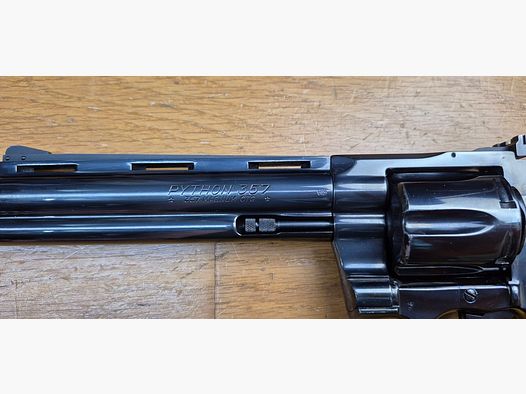
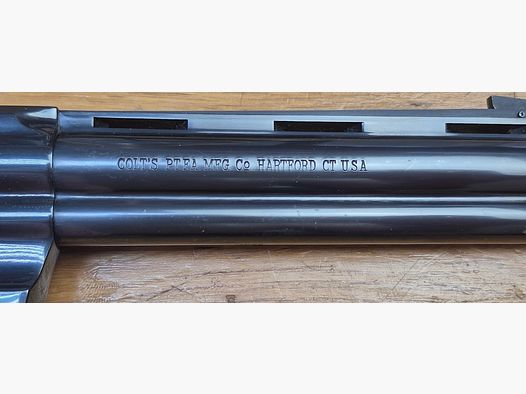
External condition very good. Just some bluing wear because, according to the fashion of the time, it was carried for a long time in a leather holster. So as usual in these cases, it shows lightening at the barrel tip, frame, and in front of the cylinder but only on the left side (so it is not due to excessive heat). This wear from carrying is its only flaw.
Not the slightest trace of rust anywhere, needless to say.
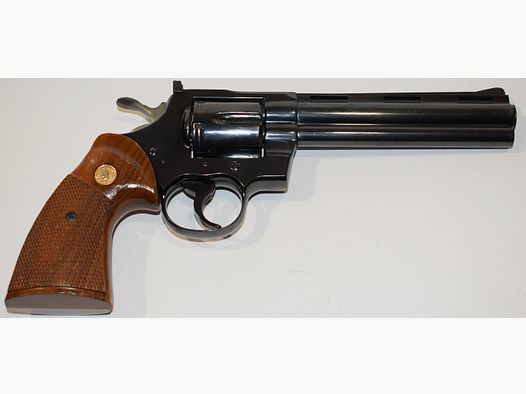
Its bluing is a deep black leaning towards navy and of fortress-like thickness, simply splendid. Superb original Colt Royal Blue bluing at 90%. Very beautiful weapon.
Moreover, the weapon shows almost no visible scratches on the bluing when held, just a little on the right side. The ones you see huge in my photos or the "spots" due to my dirty fingers are exaggerated far more than exaggerated by my damned "gigantic" close-ups as usual. So check the overall photo with the Pachmayr grips to convince yourself.
It has been very well cared for and remains more than very beautiful. And yet it is celebrating over 52 years. Exactly the kind of weapon Maitre Flingus searches everywhere for you. The weapon will be very accurate.
It will obviously handle the 38 SP. But even shooting 357 Mag like a madman, it’s hard to imagine you could wear it out. A weapon for life. And to pass on. Of the same caliber as the 27-2 or 29-
2, my little favourites from the other brand. And even mechanically, we’ll come back to that.
The original Colt grips in red walnut from over there are in perfect condition with no dents or missing parts and barely any handling marks, which are exaggerated by my close-ups. In hand, it’s almost like new.
Mechanically, the firearm is flawless. Lockup like day one. Pulling the hammer is an experience that a Colt owner post-2020 will never know…
Very nice smoothness in double action. These guns were still individually fitted on all contact parts. The difference with modern manufacturing is striking.
Adjustable and flawless sights like the screws. And all of this is 100% steel including the rear sight. Also indestructible.
To give an idea of its mechanical condition, I went to get my gauges to measure the forcing cone / cylinder gap. It’s 0.15mm with some force. That’s a like-new value. These guns are truly indestructible…
The barrel is just splendid as are the chambers, although I suggest a good run with my favourite product to do so, the “Bore Tech Inc” with the big pink pig on the bottle. I like pigs. And sows too.
The firearm needs a thorough cleaning (comes from an elderly person who didn’t shoot much and not at all since their illness and didn’t clean it before moving on to a better world) but very beautiful.
A Python at this price won’t depreciate. Treat yourself to excellence at a used price. A real Flingus bargain (expect 3200 euros new and less well finished at a gun shop if you find it).
Owning a Python also means joining a very, very exclusive circle in excellent company with Ian Fleming, the father of James Bond, and Lieutenant Ken Hutchinson from “Starsky and Hutch”…
A legend, I tell you. As much as an exceptional firearm at the range.
CATEGORY B FIREARM UNDER CSI: SUBJECT TO AUTHORIZATION, VALID ID COPY AND MANDATORY LICENSE – SIA ACCOUNT OPENED OF COURSE – Shipment against signature in two separate packages at least 48 hours apart mandatory.
***********************************************************************************************************************
Let’s repeat it! The Flingus Maximus gun shop in Paris and throughout France is also here for buying collections of firearms and other militaria, your firearm appraisals, your questions about firearm regulations, estates and inheritance. Contact your favourite gunsmith via our contact form or at [email protected] (Show description in original language)
Que voilà un très bel exemplaire du Python (on pourrait dire Royal !) de chez Colt – Un magnifique réticulé en 6 coups et 4 pouces en finition bronzée et en 357 Magnum bien sûr. Une bête de scène et de concours !
Je ne le vois pas si souvent dans ces bonnes fabrications d’avant 1982.
Le Python, c’est un peu le revolver qui symbolise tous les révolvers modernes. L’emblème des revolvers modernes.
Pourtant, dès sa naissance en 1955, il fut réservé à un créneau haut de gamme chez Colt et donc destiné à rester plutôt restreint en diffusion. Ce qui en principe ne favorise pas la popularité. Et pourtant…
1955 fut une grande année pour les armes de poing, car notre beau poulain naissait la même année qu’un autre concurrent des plus sérieux : le Smith&Wesson 29 en 44 mag (un des chouchous de Maître Flingus).
On a beaucoup glosé sur le Python, son kilo deux en poids (si on a des bras de fillette, on n’achète pas un Python, on se rabat sur un orvet !).
D’aucun ont aussi parlé d’une très supposée perte de précision en tir intensif, l’échauffement du métal conduisant, parait-il, à un alignement imparfait des chambres face au cône de forçage pouvant conduire en outre à une légère projection de gaz, et, dans de très rare cas (jamais vu en stand!), à devoir resynchroniser l’arme.
Qu’en est-il ?
Ça m’amuse un peu car, pour en arriver là (test de 2005), il avait fallu tirer plusieurs centaines cartouches d’affilé (!) en tir rapide, sans pose aucune (!), ce que je n’ai jamais vu faire avec un Python, ni même avec un Smith, et ni en stand ni ailleurs. Ce qu’on ne fait jamais.
En réalité, et depuis 1955, c’est sans doute l’arme la plus fiable du marché avec les Smith des grandes années (jusque 1982-1986) et les Ruger type GP 100. Une arme d’exception justifiant parfaitement sa réputation de puissance et de solidité. Jamais d’incident de tir avec un Python.
Le Python est à juste titre réputé pour sa précision (il ne sort pas du 10 à 25 mètres), la souplesse de sa mécanique, notamment à l’armement du chien, et pour son système de verrouillage de barillet. On va y revenir. Des « détails » qui font la différence.
D’ailleurs des détails « d’armuriers », très au fait des contraintes mécaniques concrètes propres à une arme puissante. Une arme d’ouvriers très qualifiés.
Car c’est une des choses peu connues sur cette arme et qui explique elle-même bien des choses: le Colt Python n’a pas bénéficié d’un programme de développement en bureau d’études.
Il a été créé sur le terrain par deux armuriers de métier de la grande époque qualitative de Colt qui travaillaient directement sur la chaine de production. Ils essayaient de créer un revolver de match en 357 en utilisant principalement des pièces déjà existantes.
Se prenant au jeu, et au fur et à mesure des tests et améliorations, ils ont fini par créer une des plus belles et des plus impressionnantes armes de poing jamais fabriquées.
Alors rendons hommage à Al De John, qui était armurier chez Colt depuis 1946 et à un autre armurier de la chaine de production, devenu Directeur de la Production, Al Gunther.
Nos gaillards sont en fait partis du Special Officer’s Model Match en 38.Sp.
Essayant de le rendre encore plus précis tout en l’adaptant au 357, ils durent résoudre des problèmes de renforcement du barillet et du cadre ainsi que de fiabilité de la percussion qui cassait régulièrement. Passage au redoutable 357 mag à très haute dose oblige.
Car le Python, à l’image de notre Manurhin ou du Smith 27, est réellement une arme conçue pour tirer du 357 à très haute dose.
Mais ils en vinrent également à créer un nouveau mécanisme de verrouillage du barillet. Quand le chien est totalement à l’armé, au moment même où l’on appuie sur la détente, le barillet se verrouille et continue de l’être pendant toute la durée du parcours du chien jusqu’au tomber du marteau inclus.C’est un point fondamental d’amélioration en précision. Le Python en est plus « facile ».
L’usinage des pièces mobiles est en outre conçu pour que, à l’arrivée en position feu, l’espace entre le barillet et le cône de forcement se réduise encore d’un poil, ce qui améliore encore précision et vélocité. Le verrouillage du barillet du Python a ainsi la réputation d’être un des plus costauds du marché.
Bref, ils repensèrent totalement l’arme en lui ajoutant au passage cette fameuse bande ventilée, autre nouveauté à l’époque sur un révolver, qui, outre son intérêt de dispersion de chaleur pour les tirs intensifs, lui donna aussi un look iconique que beaucoup on essayé d’imiter. Une réussite.
Sa platine double action de construction complexe, ses qualités de finitions, notamment son fameux bronzage Colt Royal (« Royal Blue finish » – rappel: « Blue » en anglais d’armurerie ne signifie pas bleu mais bronzage) qui suppose un très soigneux polissage préalable, et son usinage qui n’a rien à envier à celui des Smith de la grande époque, en ont fait une arme particulière dès sa naissance.
Initialement, seuls Al De John et une autre pointure de la chaîne, Don Bedford, étaient autorisés à travailler sur les Python. Ce travail d’ajustement et de polissage manuels complexes demandait plus de temps à ces armuriers pourtant ultra qualifiés et ultra rapides: un peu moins de 25 minutes de travail par arme contre 15 minutes sur les autres revolvers Colt.
Le Python était initialement vendu à 125 $ (le revenu moyen hebdomadaire d’un ménage américain vers 1955 était de 68 $), soit le même prix que le Single Action Army réintroduit en 1956.
Un seul (!) Python fut construit en 1955 et un peu plus de 300 exemplaires seulement sortirent en 1956. Il fallu attendre 1968 pour que le cap des 100.000 pythons produits soit enfin atteint. Il était cher.
Il ne fut produit initialement qu’en 6 et 4 pouces, le 2.5 pouces n’apparaissant que dans les années 70. Un canon 8 pouces apparu en 1980.
Entre temps, le Python avait gagné ses galons d’arme d’exception, certes chère à produire et à la vente, mais d’une réputation fort justement devenue mondiale. Le nec plus ultra de chez Colt.
A noter qu’à partir du début des années 70, les colts Python furent les premières armes à être alignées canon-chambres au laser, une première dans toutes les productions mondiales. C’est dire le soin que Colt a toujours pris de ses bébés Python dès la production et cherchant toujours à les parfaire.
Les Python ont été produits de 1956 à 1997.
A partir de cette année-là et jusque 2004, ils ne furent plus produits que sur commande, début 2005 marquant l’arrêt définitif de la production. La baisse des critères de fabrication, la concurrence du pistolet dans le cœur des tireurs, les errements de Colt avec leurs histoires de Boa, King Cobra, Grizzly et autres Kodiak avaient eu raison commercialement de cette arme magnifique.
Toutefois la légende de cette arme d’exception est restée si forte que Colt a… repris la production en 2020.
Objectivement, à 3.200 euros ou plus neuf en 6 ou 4 pouces, en fabrication laser qui accroche, autant passer sur une occasion en excellent état des bonnes années. L’arme est inusable.
En termes de qualité et de finitions, les collectionneurs tireurs américains s’accordent à privilégier les fabrications allant des années 60 (difficiles d’en trouver d’avant) au début des années 80. Un peu comme pour Smith d’ailleurs. Après, on rentre dans un autre monde… Celui des SAV débordés au point qu’il a fallu en créer.
Au delà de ses immenses qualités intrinsèques et de ses finitions hors pair, le Colt Python doit aussi sa réputation d’arme d’exception à son look à la fois agressif et massif, hors du temps, devenu iconique.
Son adoption, avec force séries télévisées racontant leurs exploits dans les années 60/80, par les patrouilles motorisées Harley Davidson du Colorado et de Georgie y fut pour beaucoup.
Avec son adoption par la Florida Highway Patrol, la brigade motorisée d’autoroute du Sunshine State, il acquit définitivement son statut iconique d’arme de Police et de biker-voyou des États du Sud.
Surprenamment à l’ère du pistolet, mais logiquement compte tenu de ses qualités de fiabilité notamment, il se fit aussi militaire notre Python.
Il a servi au Vietnam au sein des forces spéciales du redoutable MACV-SOG et des Marines (les marines qui gardaient l’ambassade US à Saïgon ont balancé les leurs à la mer en atterrissant avec l’ambassadeur sur le pont de l’USS Blue Ridge dans le foutoir de l’évacuation en catastrophe de 1975).
Au cinéma, on l’a vu dans des mains aussi différentes que celle de Charles Bronson dans « Love and bullets », de Brad Pitt dans « Fight Club », de Christophe Lambert dans « Subway », de Belmondo dans « Flic ou voyou », de Bruce Willis dans « L’Année des 12 Singes » et bien sûr, au sommet, dans les mains de l’iconique John Wayne dans « McQ ».
Le Colt Python est aussi une des seules armes à avoir un film à sa gloire (« Police Python 357″avec Montand) au nom exact du modèle (des dizaines de films portent les mots Colt et Winchester sans précision de modèle ou de calibre). Les deux autres sont, à ma connaissance, un film intitulé « Winchester 1873 » rejoint il y a peu par le (bon) film « MR73 », notre mythe à nous, qui mérite bien cette noble compagnie cinématographique.
Votre humble serviteur n’a pas dénombré moins de 360 apparitions au cinéma de notre héros. Sans les pubs, les séries télévisées et les jeux. Une star des écrans tous formats, notre Python.
Parmi ses propriétaires célèbres, on trouve le Roi Hassan II, le Roi Fahd d’Arabie Saoudite, le Roi Hussein de Jordanie, Le Roi d’Espagne Juan Carlos et bien sûr, bien sûr, le roi des rois, le King Elvis Presley qui les collectionnait. Bref une arme de tête couronnée.
Pour voir ce qu’on peut faire avec un Python, regardez un peu celui du King. Les hommes rêveront toujours d’armes…
Entre le jugement de Wilson, l’historien non officiel de la marque Colt, le qualifiant de « Rolls-Royce des Colt » et le jugement de Hogg, un des plus sérieux historiens des armes à feu, le qualifiant tout simplement de meilleur revolver du monde, mon cœur balance. Avec une position plus proche de celle de Wilson. Parce que le meilleur revolver du monde, sera toujours celui qui vous correspond.
C’est une très belle version des bonnes années de construction du mythique Python que Maitre Flingus vous propose ce jour.Il est de début 1973. La grande époque encore de Colt.
Notre exemplaire n’a connu qu’un seul propriétaire et s’il a tiré, il est resté impeccable en mécanique. Quasi neuf de ce point de vue. Et il est globalement en excellent état.
État externe très bon. Juste des manques de bronzage car, selon la mode de l’époque, il a été porté longtemps en étui cuir. Donc comme d’habitude dans ces cas -là, il porte des éclaircissements en bout de canon et en carcasse et en avant de barillet mais seulement coté gauche (ce n’est donc pas du à un excès de chaleur). Cette usure de port est son seul défaut.
Pas la moindre trace d’oxydation, nulle part, cela va sans dire.
Son bronzage d’un noir profond tirant sur le marine et d’une épaisseur de château-fort est juste splendide. Bronzage superbe Colt Royal Blue d’origine à 90%. Très belle arme.
D’ailleurs l’arme ne porte, en bronzage, quasiment aucune rayure visible arme en main juste un peu coté droit. Celles que vous verrez en énormes sur mes photos ou les « tâches » du à mes doigts sales sont exagérées plus qu’exagérées par mes damnées « gigantissimes » plans comme d’habitude. Regardez donc la photo d’ensemble avec les plaquettes Pachmayr pour vous en convaincre.
Il a été fort bien traité et reste plus que très beau.Et pourtant il fête donc ses 52 ans passés. Tout à fait le genre d’armes que Maître Flingus cherche partout pour vous. L’arme sera très précise.
Il avalera le 38 SP bien évidemment. Mais, même en tirant du 357 Mag comme un forcené, difficile d’imaginer que vous puissiez arriver à l’user. Une arme pour la vie. Et à transmettre. De la même eau que les 27-2 ou 29-2, mes petits chouchous de l’autre marque. Et même en mécanique, on va y revenir.
Les plaquettes d’origine Colt en noyer rouge de là-bas sont en parfait état sans coups ni manques et à peine de traces de manipulation qui sont grossies par mes gros plans. En main, c’est quasi neuf.
Mécaniquement, l’arme est impeccable. Verrouillage comme au 1er jour. Tirer sur le chien est une expérience qu’un possesseur d’une fabrication Colt post 2020 ne connaitra jamais…
Très belle souplesse en double action. Ces armes là étaient encore ajustées une par une sur toutes les pièces de contacts. La différence avec une fabrication moderne est flagrante.
Organe de visées réglables et impeccables comme les vis. Et tout ça est en 100% acier y compris en hausse. Indestructible aussi.
Pour donner une idée de son état mécanique, je suis allé chercher mes cales pour mesurer l’entrefer cône de forcement / barillet. On est à 0.15mm en forcant. C’est une valeur à neuf. Ces armes sont réellement increvables…
Le canon est juste splendide comme les chambres même si je suggère un bon passage à mon produit fétiche pour le faire soit le « Bore Tech Inc » au gros cochon rose sur la bouteille. J’aime les cochons. Et les cochonnes aussi.
L’arme est à nettoyer de fond en comble (vient d’une personne âgée qui ne tirait beaucoup et plus du tout depuis sa maladie et ne l’a pas nettoyée avant de partir vers un monde meilleur) mais très belle.
Un Python à ce tarif ne décotera pas. Offrez vous de l’excellence pour un prix d’occasion. Une vraie occasion Flingus (comptez 3200 euros en neuf et moins bien fini en armurerie si vous le trouvez).
S’offrir un Python, c’est aussi rentrer dans un cercle très très fermé et d’excellente compagnie avec Ian Fleming le papa de James Bond et le Lieutenant Ken Hutchinson de « Starsky et Hutch »…
Un mythe vous-dis-je. Autant qu’une arme d’exception au stand.
ARME DE CATÉGORIE B AU CSI : SOUMISE À AUTORISATION, PHOTOCOPIE DE LA PIÈCE D’IDENTITÉ EN COURS DE VALIDITÉ ET DE LA LICENCE OBLIGATOIRE – COMPTE SIA OUVERT BIEN ÉVIDEMENT – Expédition contre signature en deux colis séparés d’au moins 48 heures obligatoire.
***********************************************************************************************************************
Répétons le ! L’armurerie Flingus Maximus à Paris et partout en France est là aussi pour le rachat de collections d’armes et d’autre militaria, vos estimations d’armes, vos questions relatives à la règlementation des armes, les successions et héritage. Contactez votre armurier préféré via notre formulaire de contact ou à [email protected]