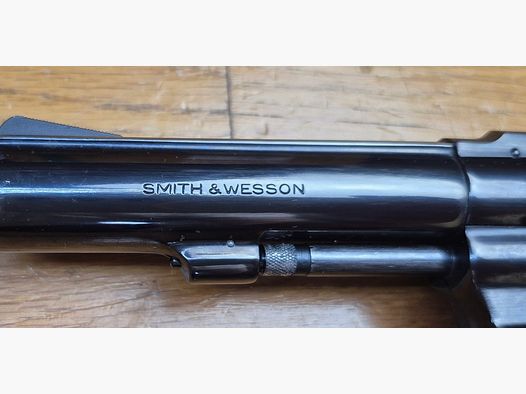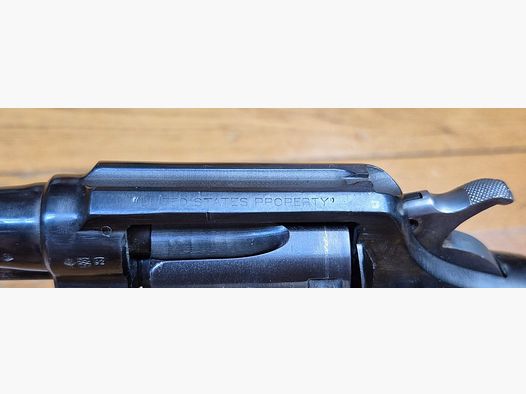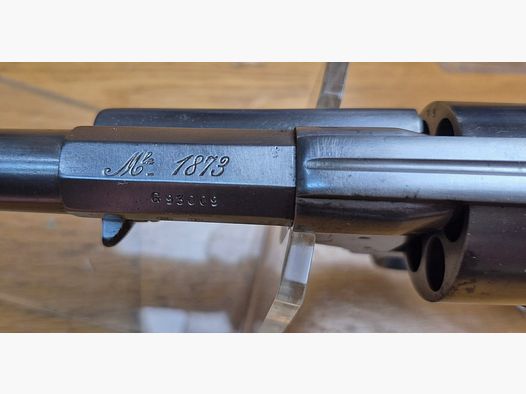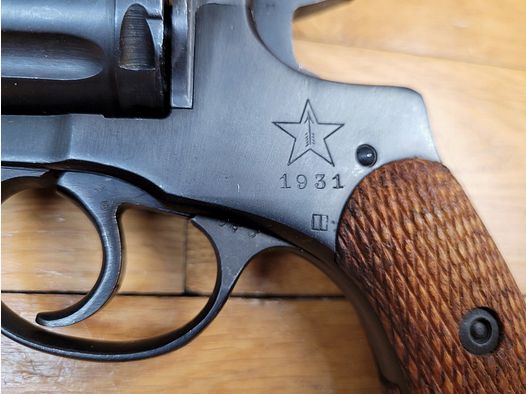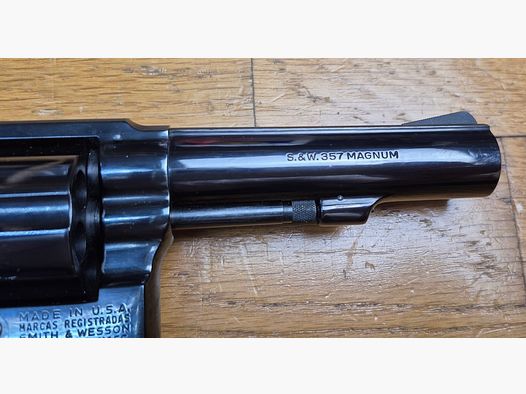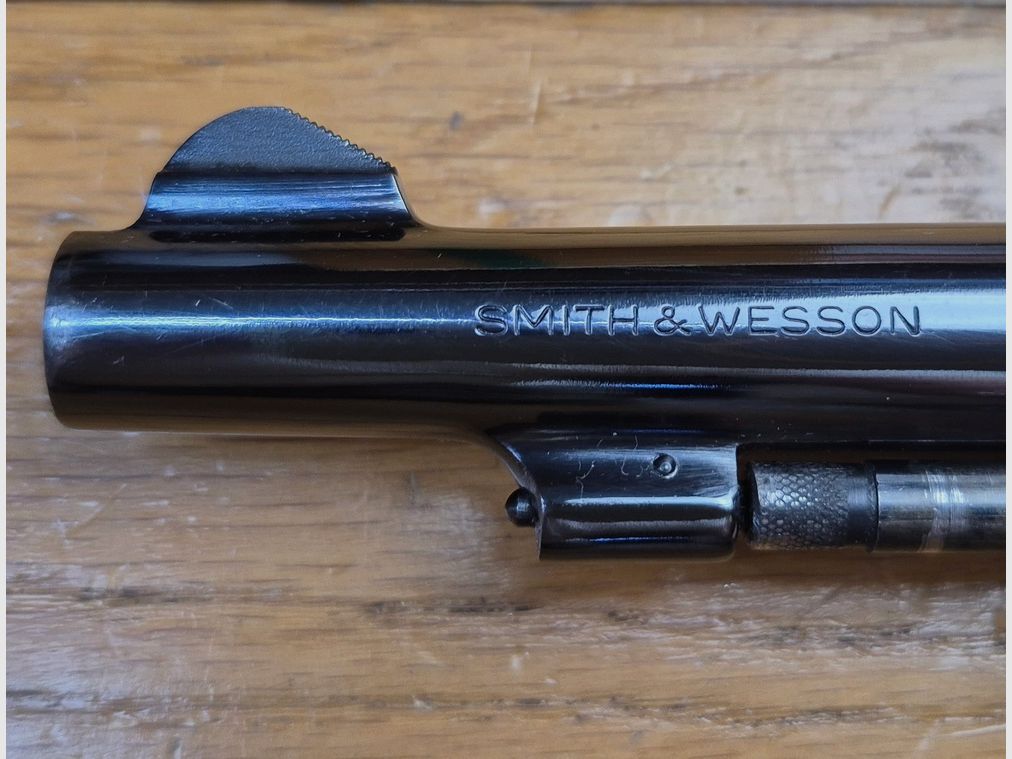

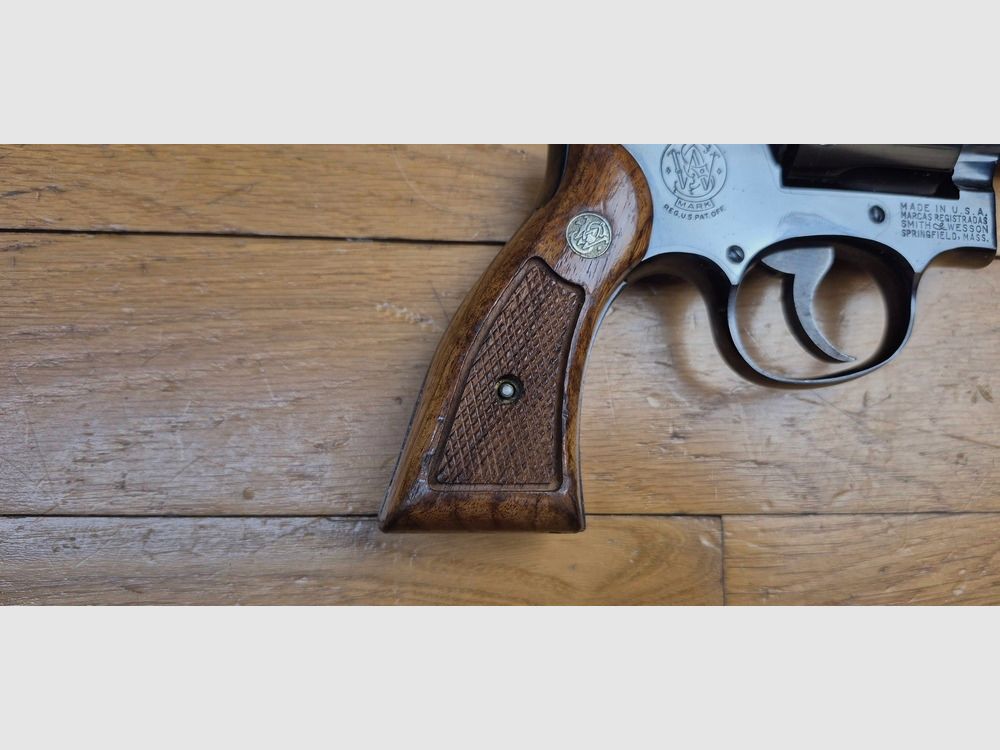

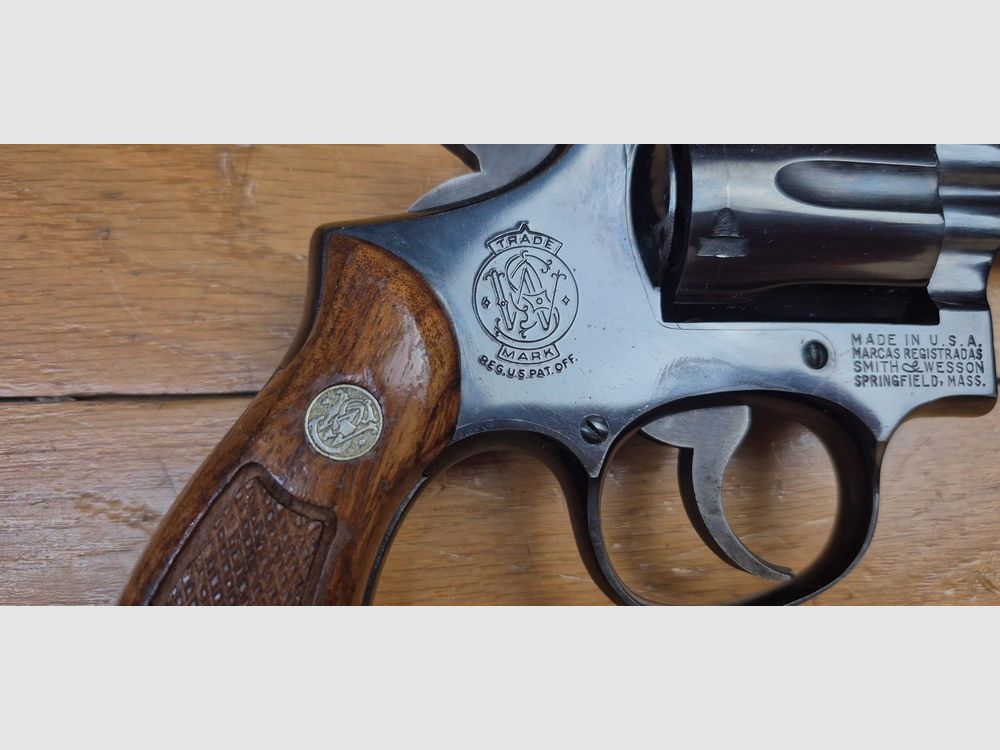

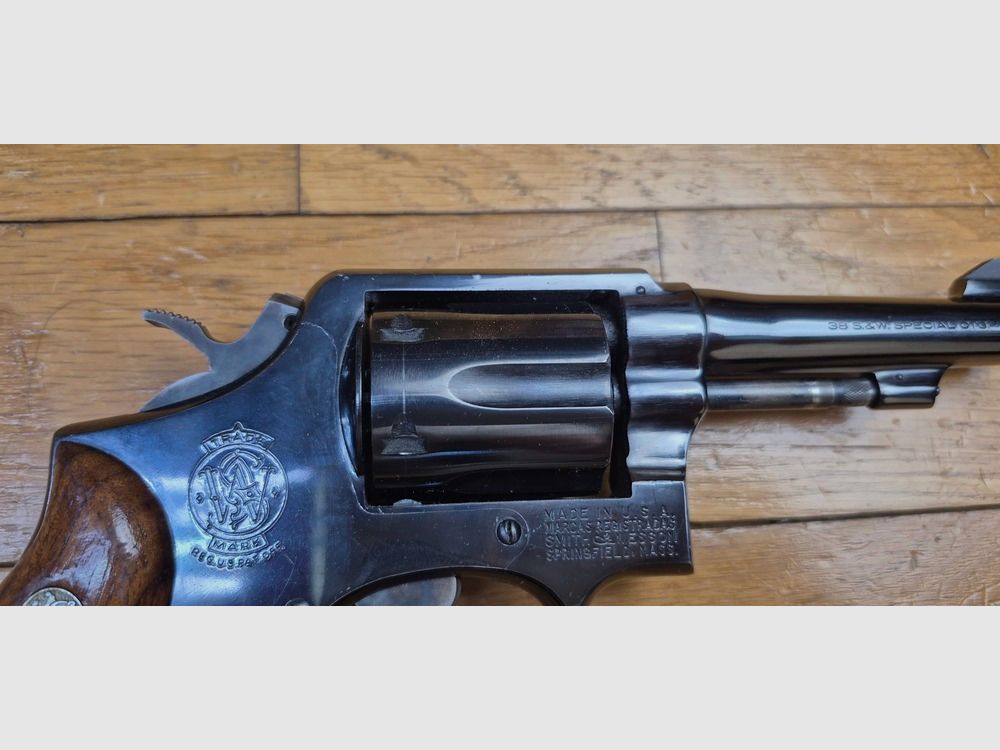
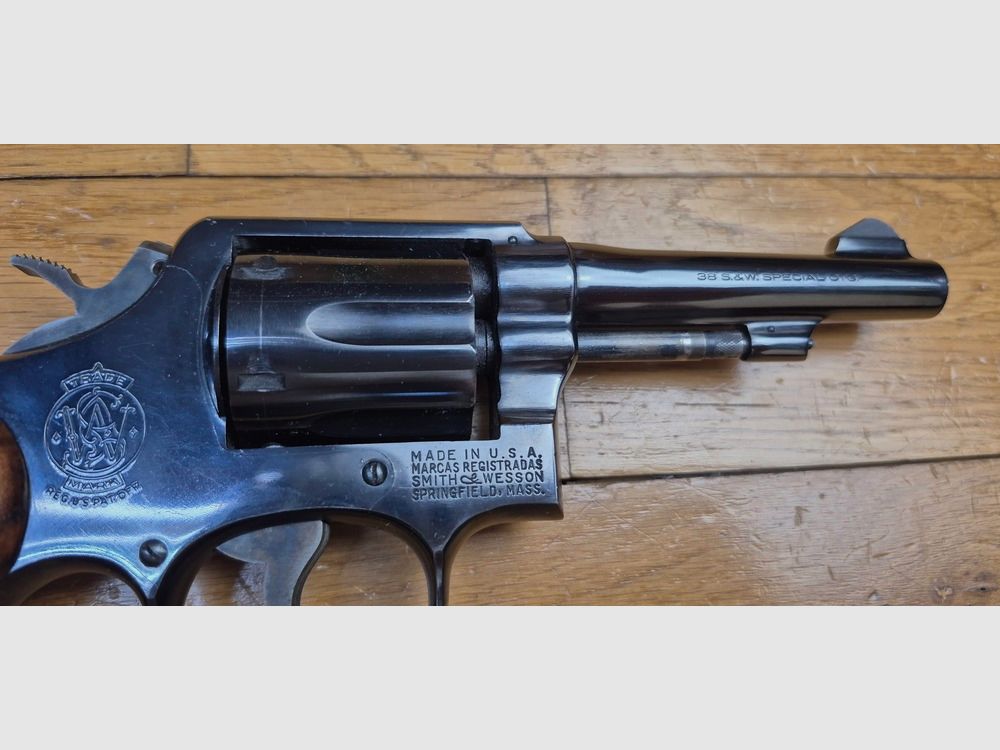


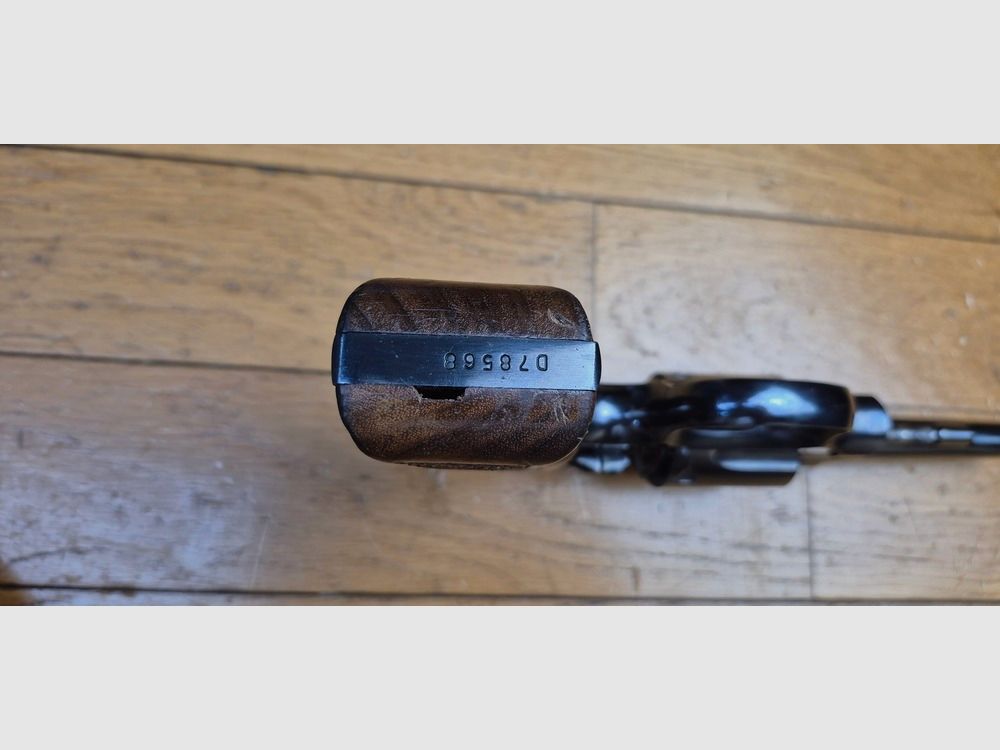

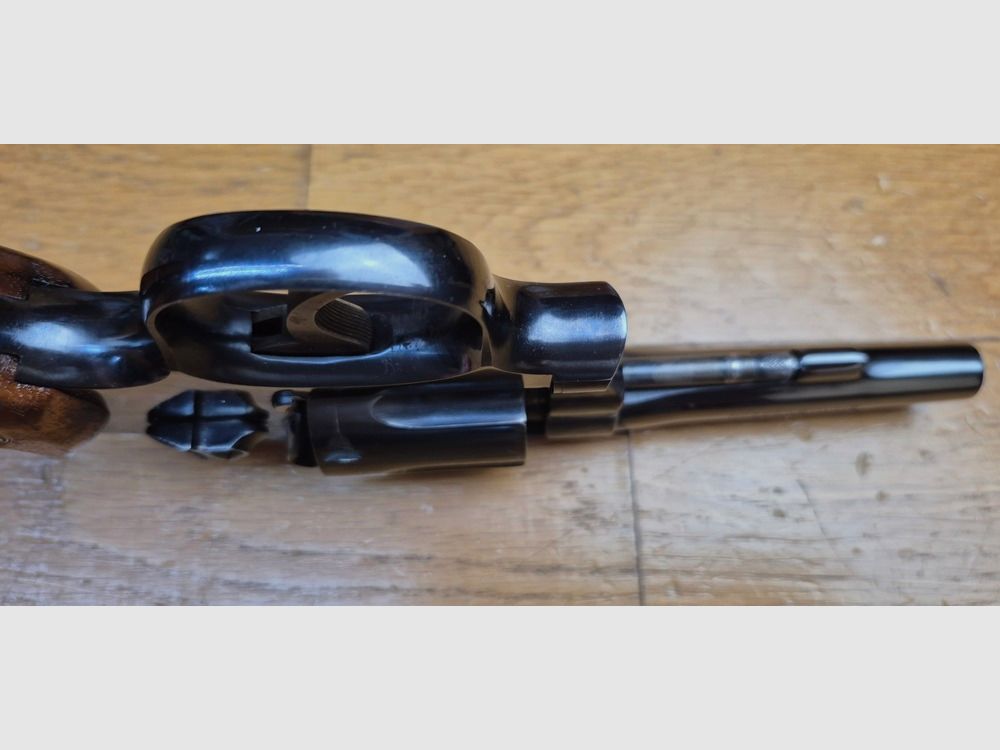

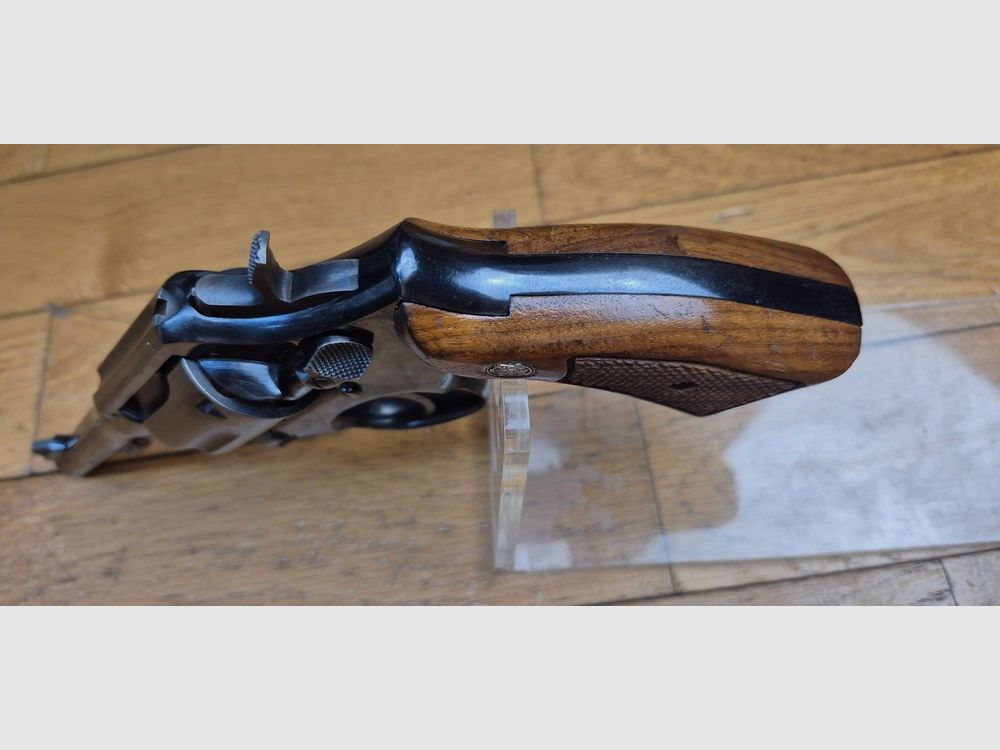

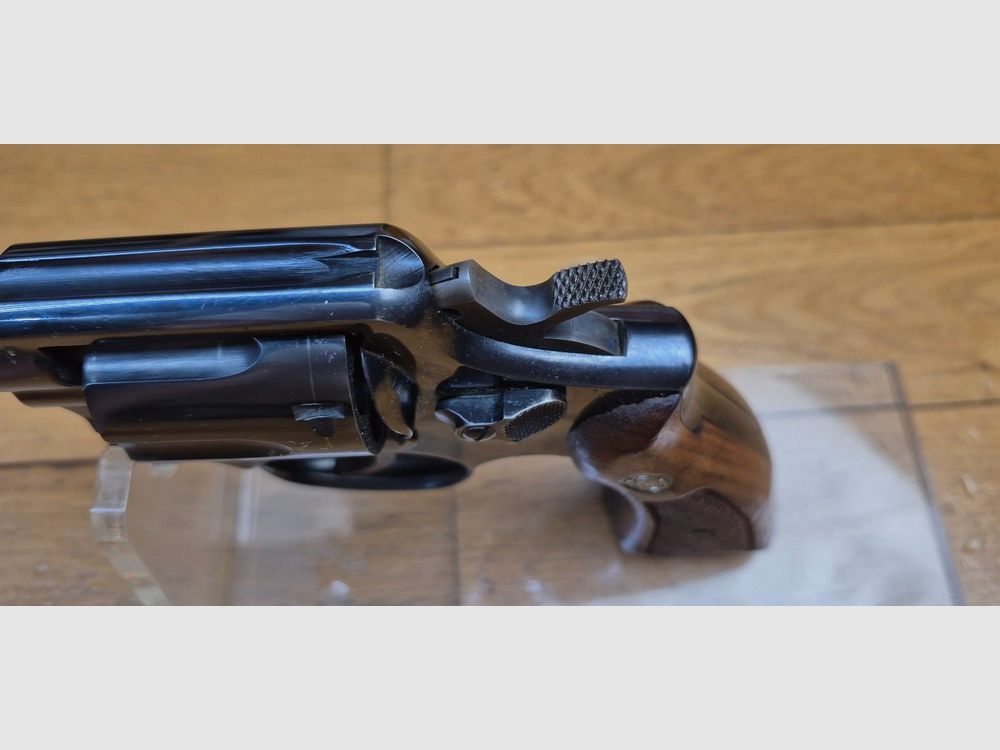
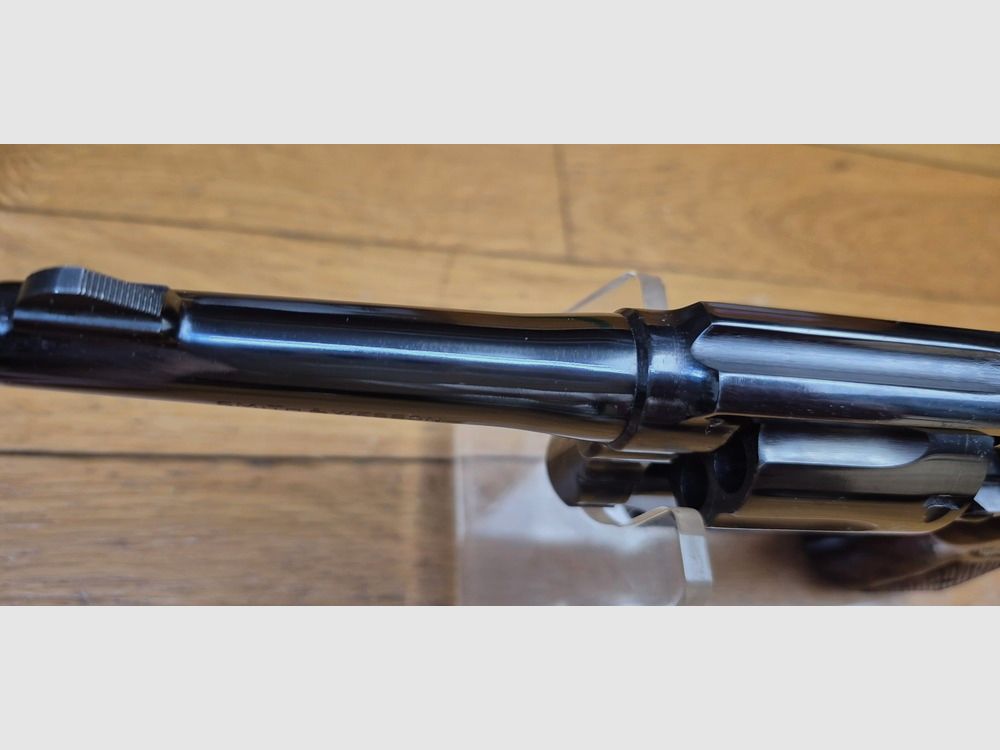


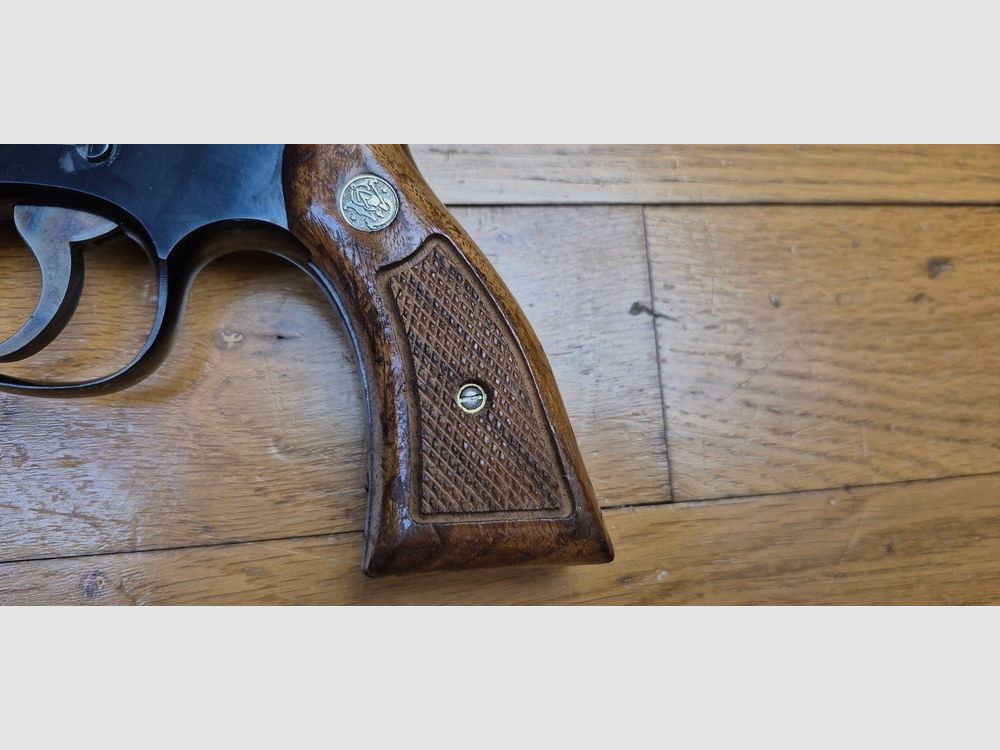
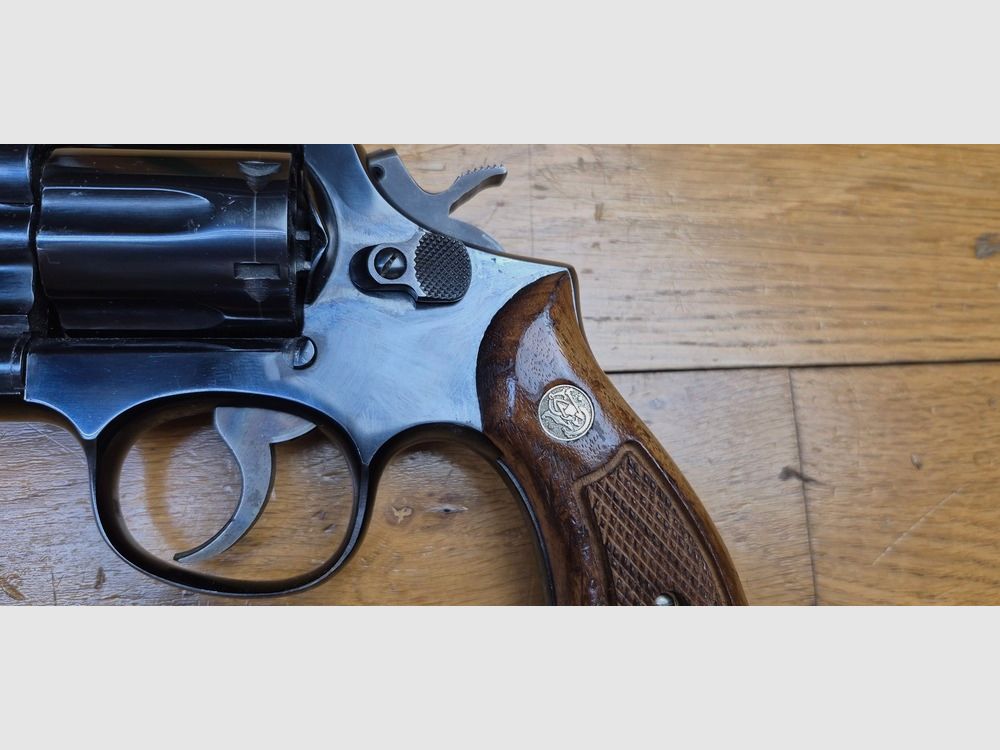
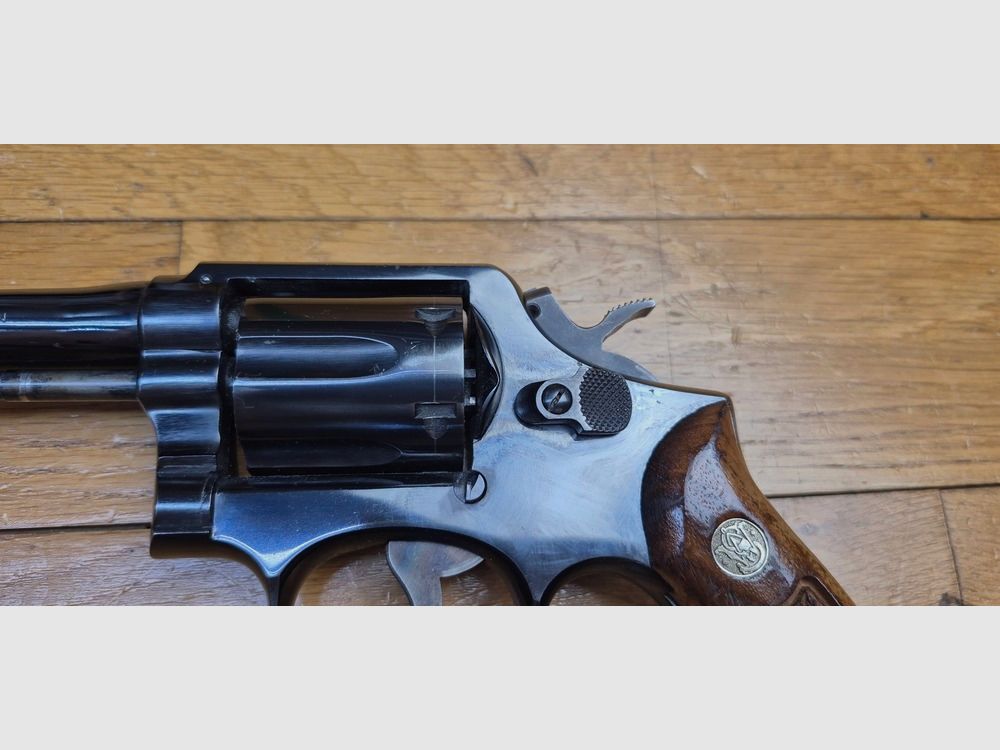

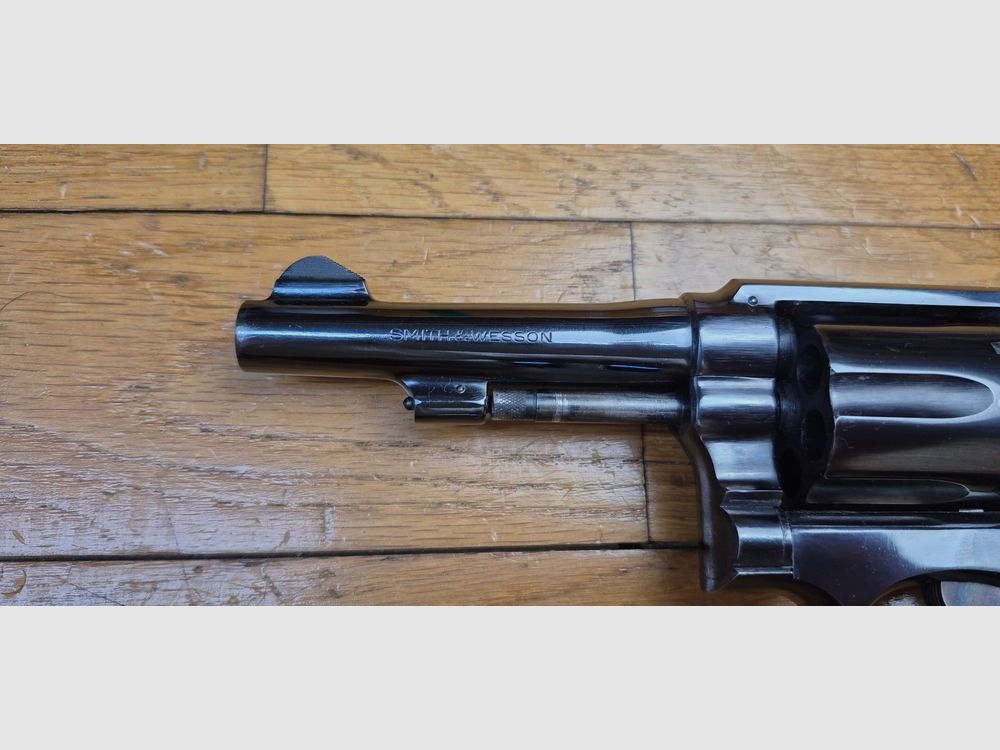
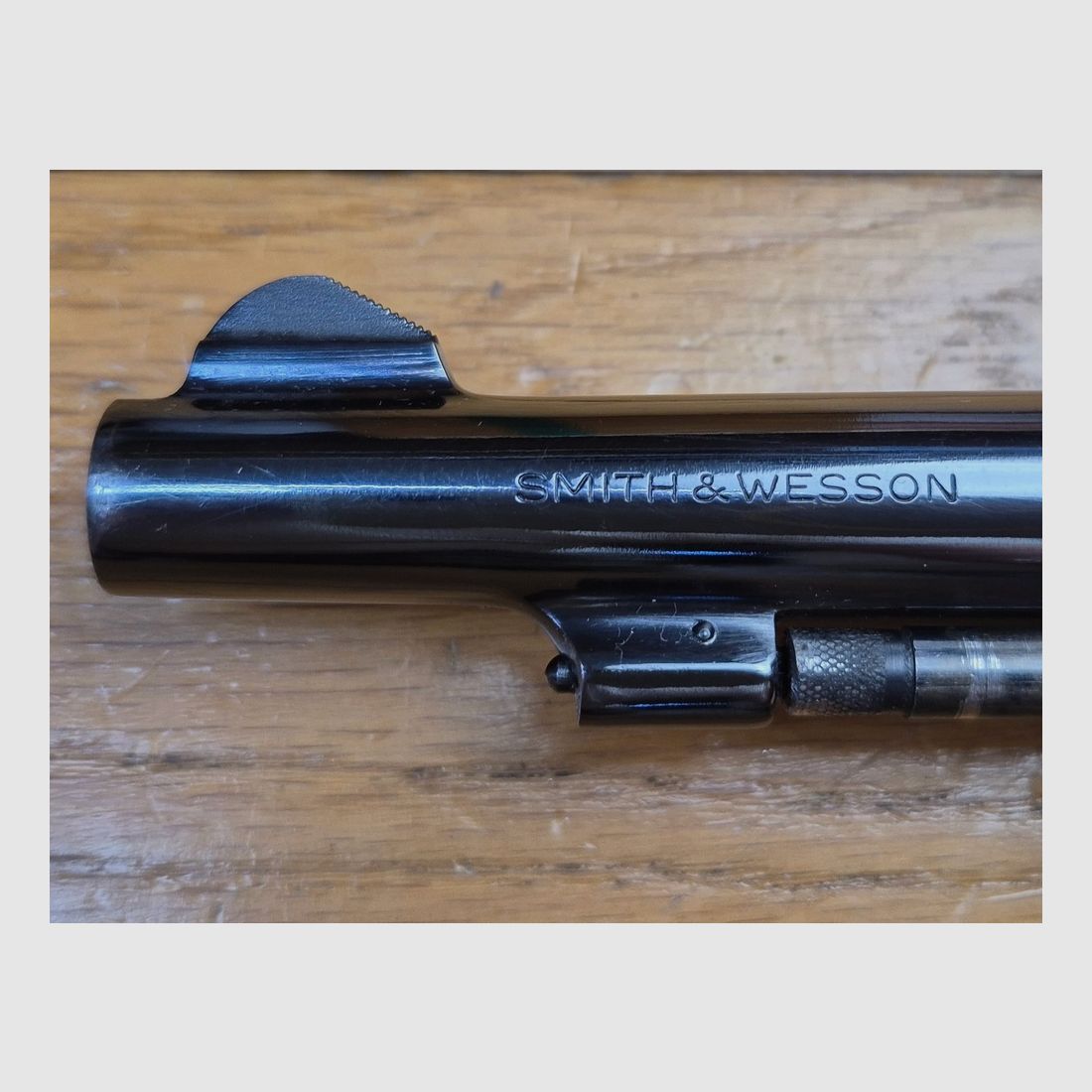

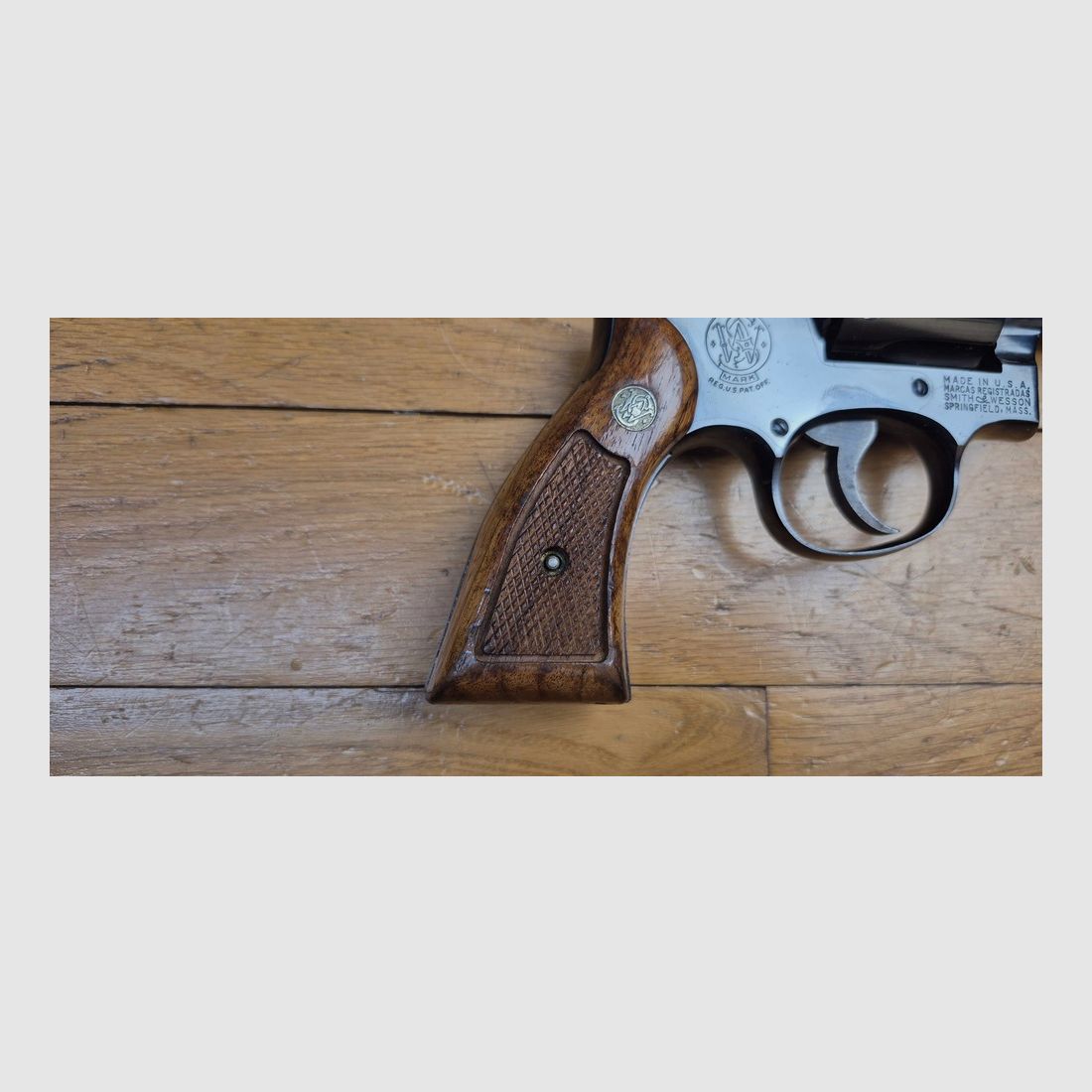
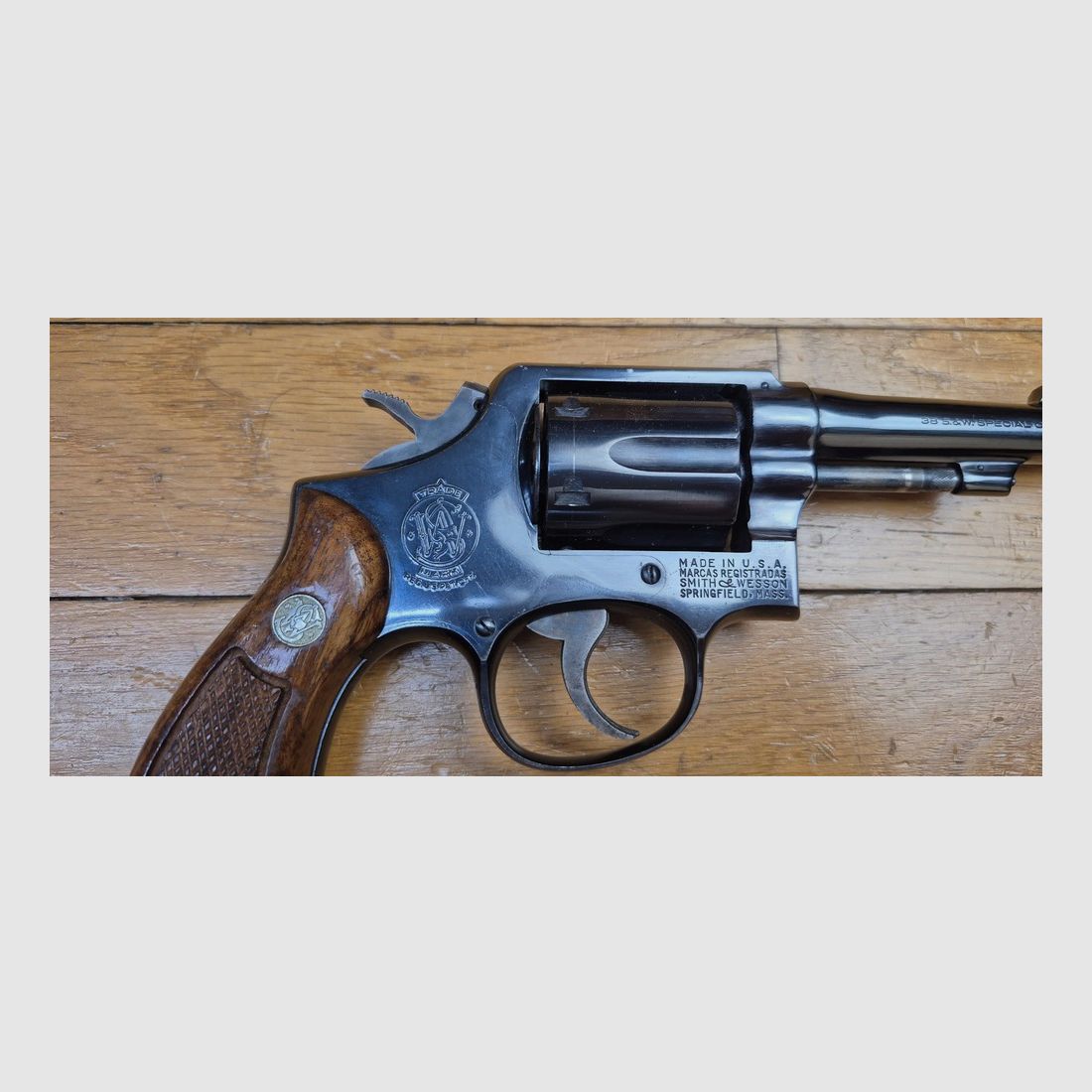

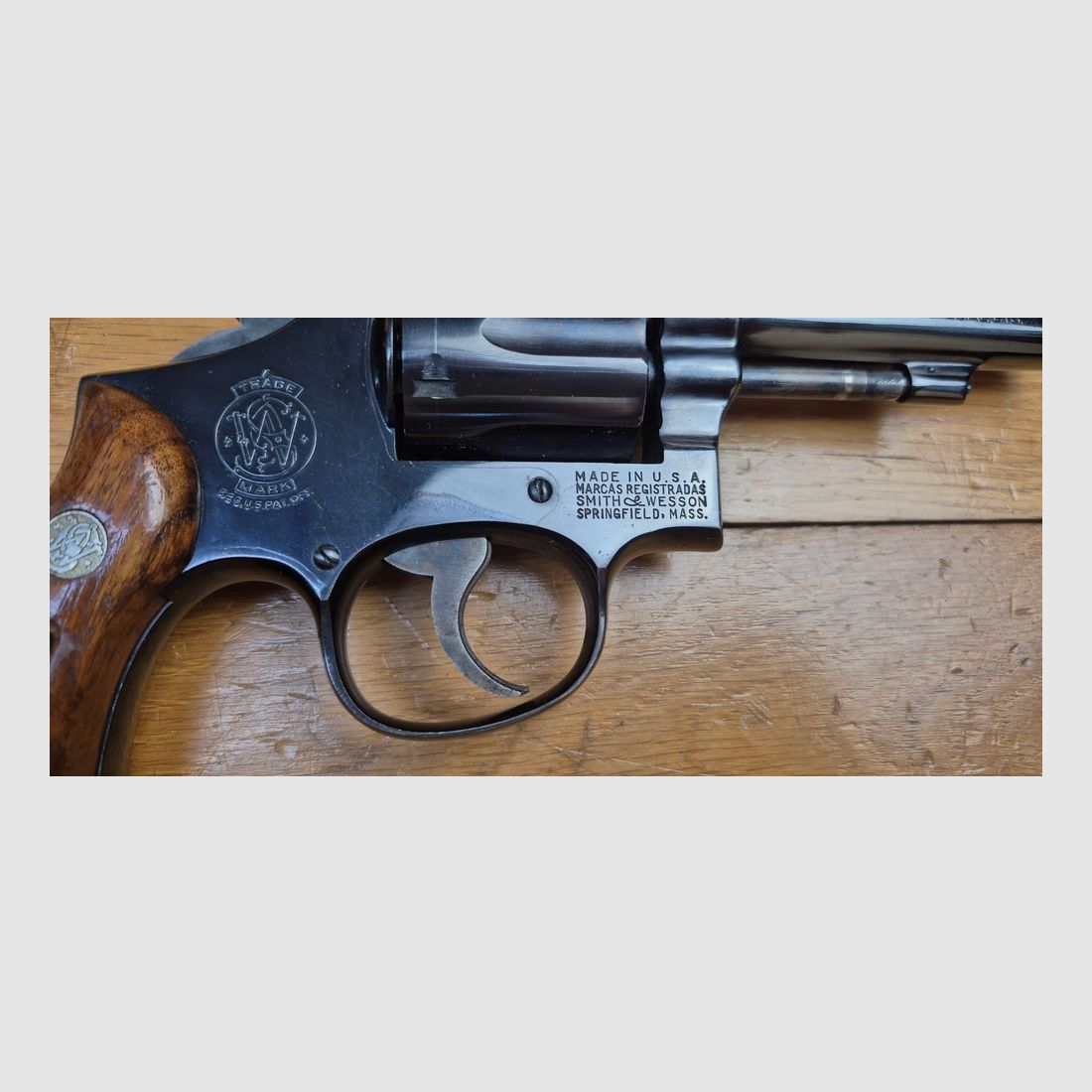


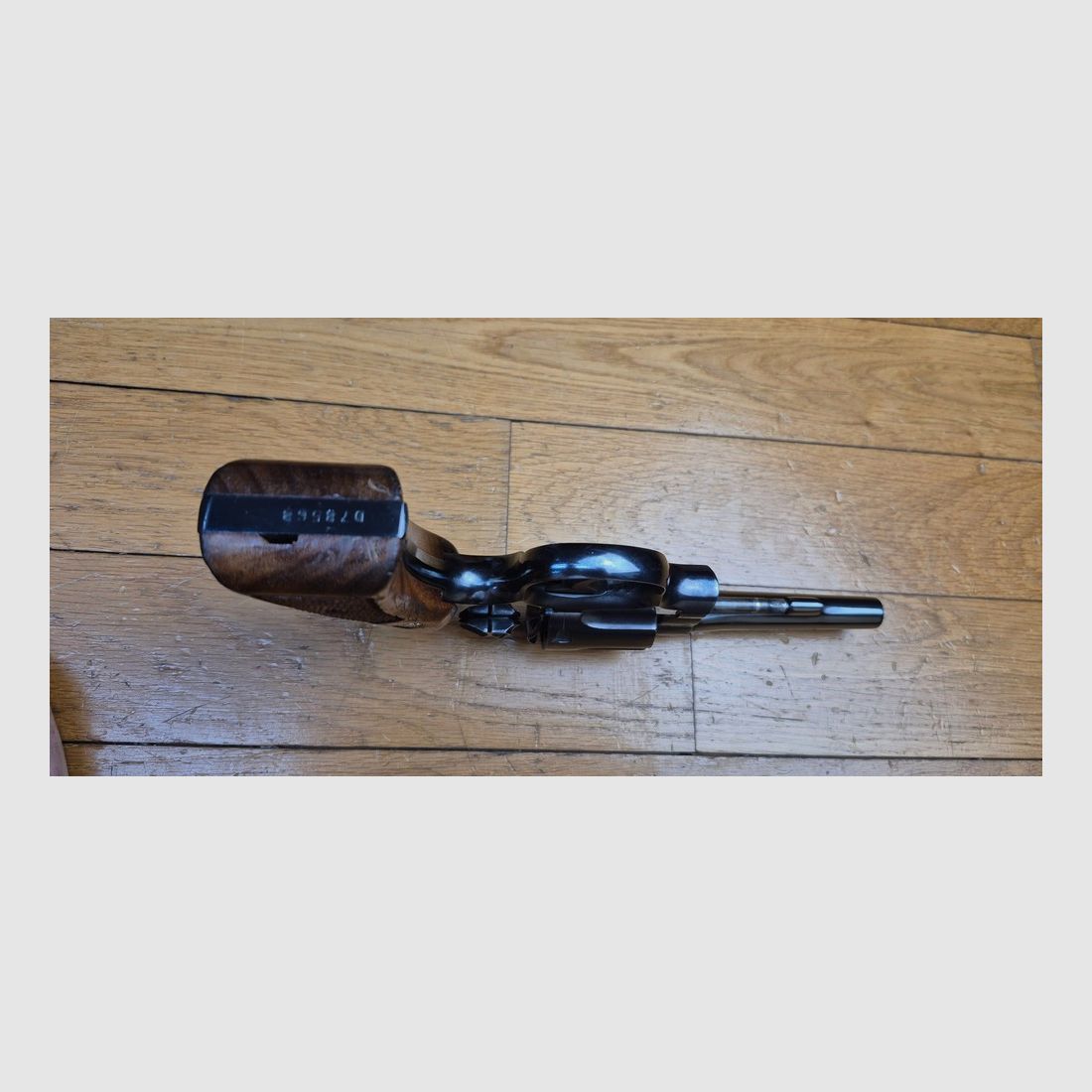


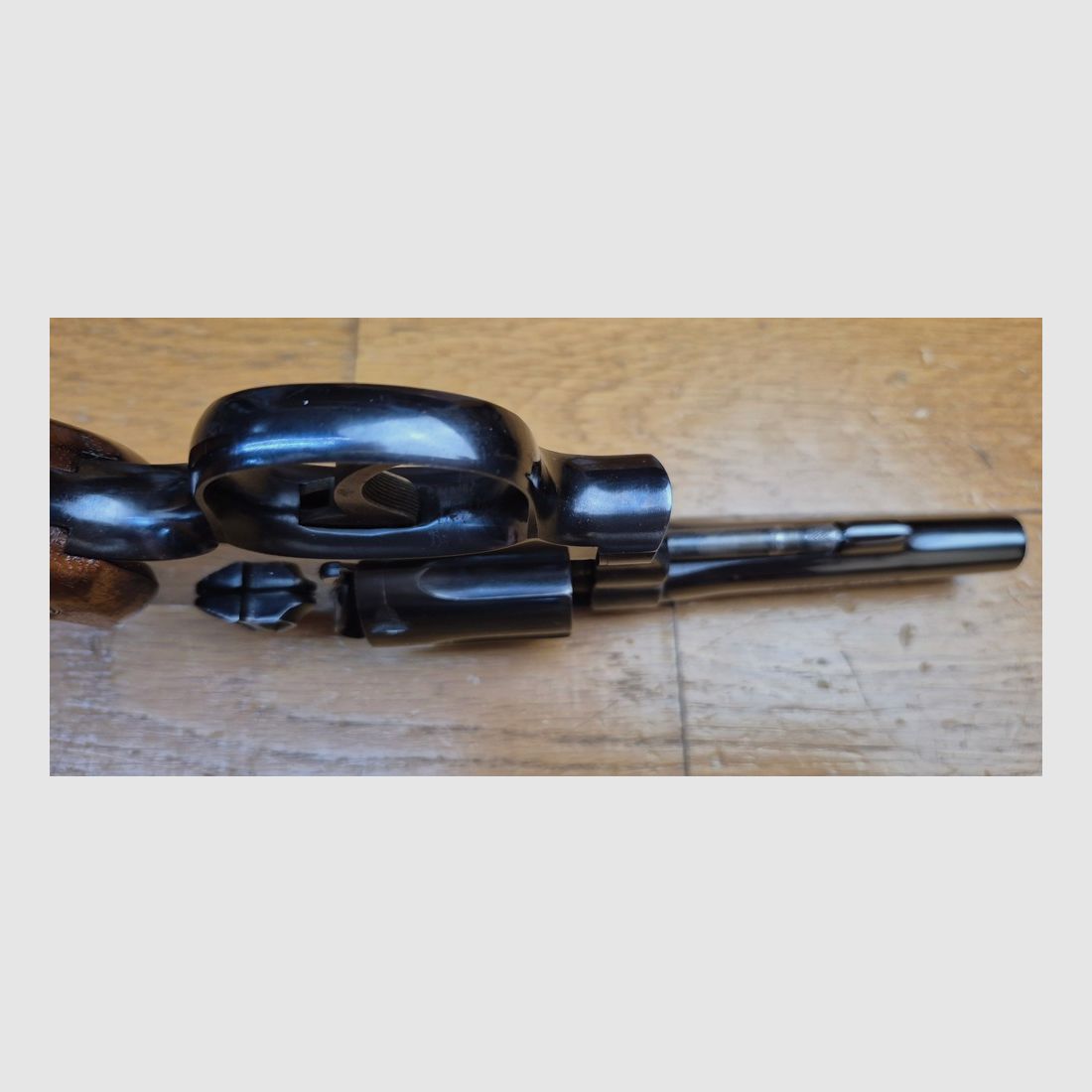


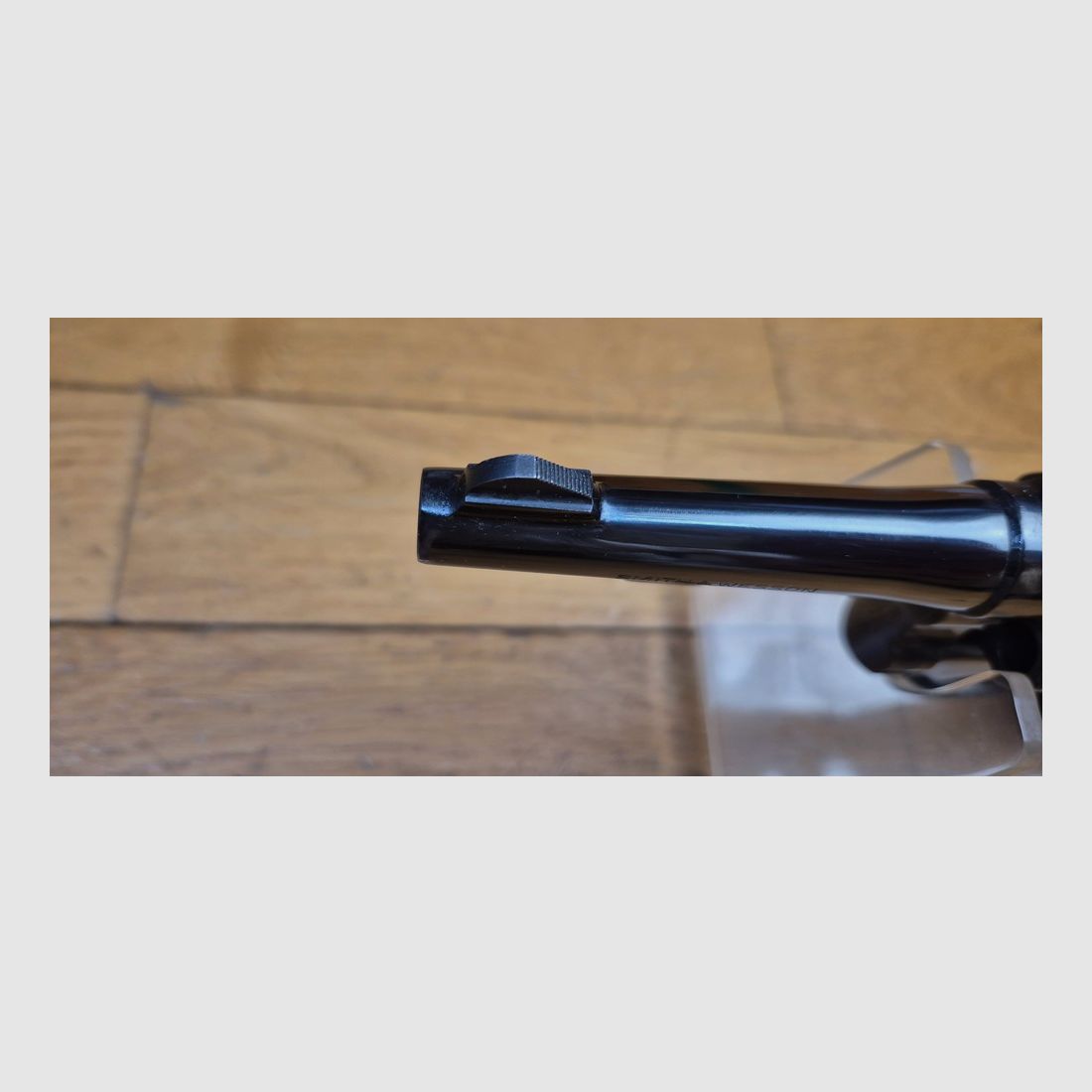


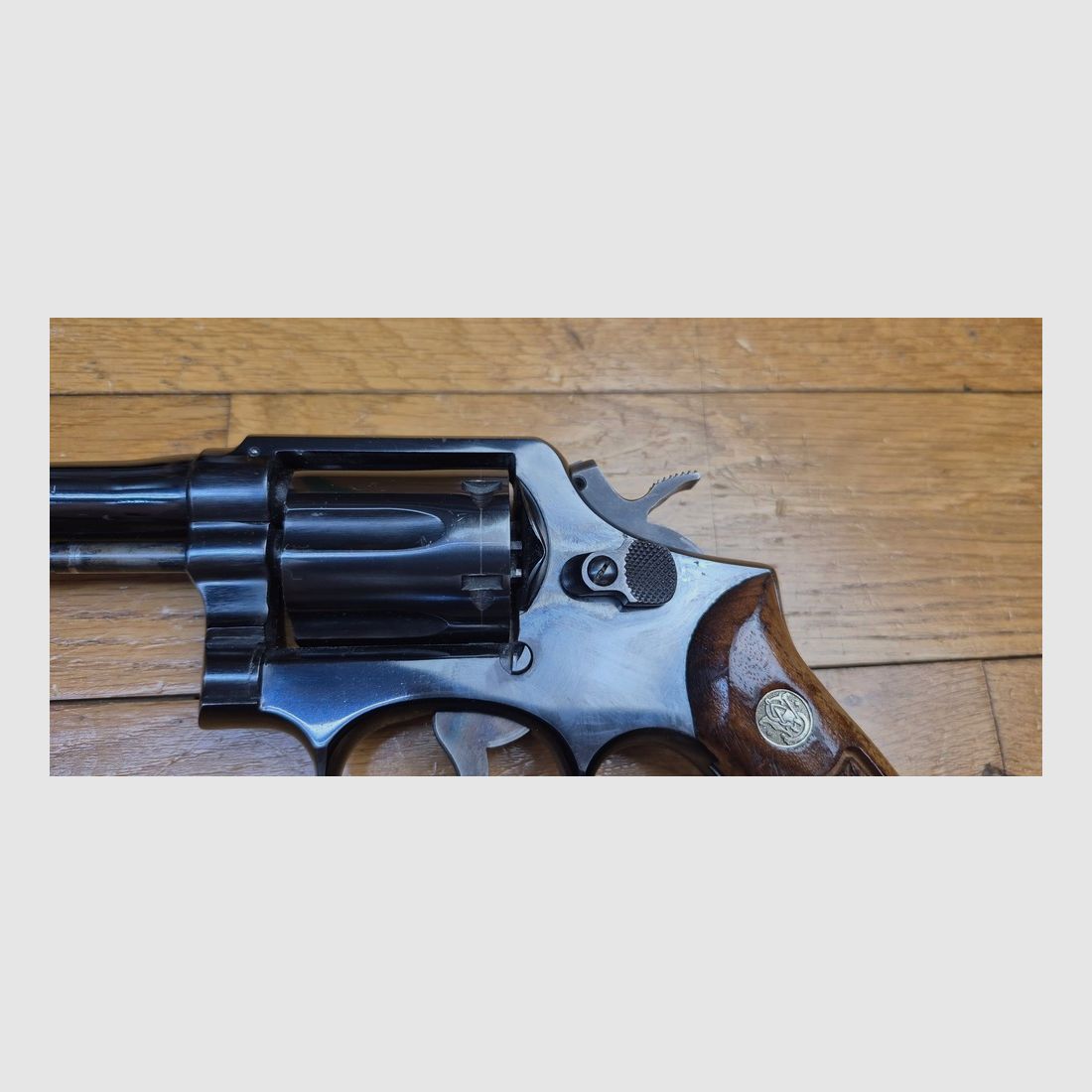


Very beautiful revolver Smith&Wesson model 10-5 – The direct descendant of the Hand Ejector Military & Police from 1899 – Legendary police and shooting weapon, one of the stars from Springfield – Weapon from 1968 – Very nice bluing – Excellent mechanics – Very good barrel – Excellent stand weapon with a glorious past – TBE/TBE+
≈ $374
Price at the dealer: 340 €. Converted at the ECB rate as of November 20, 2026.
Purchase permit required
75002 Paris, France
7
ID: 10338406
This item is currently unavailable.
Purchase from outside the EU: The firearm goes through an importer in your country, the dealer handles the export.
How buying from Europe works
Shop safely with Gunfinder
Our AI-powered seller identity verification makes Gunfinder the safest marketplace online.
Learn more
Details
- Original language
- French
- Brand
- Smith & Wesson
- Category
- Purchase eligibility
- Required
- Condition
- New
- Location
- 🇫🇷 75002 Paris, France
- Availability
- Out of stock
Freshness
This listing is based on a mirrored offer, where the listing data was synced to us from a shop, dealer, or external marketplace. Please note that temporary price discrepancies may occur due to possible delays in data transmission.
- Source
- Flingus Maximus
- Last checked with the dealer
- 1 day ago
Description
Note:
The item is located abroad. Please note that delivery conditions, shipping times, and/or the purchase process may differ.
In fact, you all know it in one version or another. A legend.
It all began with a timely order, placed in the middle of the Spanish-American War, when the federal government ordered three thousand revolvers—two thousand for the Navy and one thousand for the Army.
The conflict ended too quickly for the order to be fulfilled in full. But the spark for a great adventure that would last until 1998 had been lit: starting in March 1899, Smith & Wesson delivered a revolver with a swing-out cylinder, a 6.5-inch barrel for military use and a 4-inch barrel for police use.
This first model was chambered in .38 Long Colt, and the cartridge didn’t make much of an impression in the field.
During the Philippine-American War, facing the Moro fighters in the south of the archipelago (they fought under the influence of hallucinogenic mushrooms and other drugs), American troops found that a .38 Long Colt bullet would only stop a determined attacker in his tracks if it hit the heart or brain. And that stressed our American friends out. Especially when an attacker suddenly appeared from nowhere, hidden behind a tree in the jungle, right behind you, machete in hand…
So the Army urgently brought back its old Colt SAA 1873 revolvers chambered in .45LC, and Smith & Wesson realized it would have to rethink the ammunition too, not just keep improving the revolver. It was also based on the US experience in the Philippines, and for the same reasons, that our Saint Browning would invent the 45ACP.
The answer came as early as 1902, from Daniel B. Wesson himself: the .38 S&W Special, with more powder and a heavier bullet than the old 38SW. The gun that went with it was the Military and Police Model of 1902. This revolver had a new cylinder latch at the front and a spring-loaded rod housed under the barrel to protect it—a mechanical detail Colt never adopted, even after the patent expired.
In 1905, the “Second Model,” or “Military and Police of 1905,” added a passive firing pin block and larger sights. The design was now set. It would remain the benchmark for police service revolvers for more than half a century.
World War I interrupted production for 249 days, between June 1918 and February 1919—a reminder that even a well-oiled production line has blind spots in wartime… Incidentally, these very Smith Military and Police revolvers were copied in Spain well before 1915 to supply our famous “Spanish 92s” when they copied Smiths (the others copied Colts).
Between 1942 and 1944, the same revolver was militarized under the name Victory Model. We still see these from time to time here, brought out of our homes because they were parachuted in to our brave resistance fighters. Parkerized finish, lanyard ring, and serial numbers with a “V” prefix are sure ways to recognize one.
More than five hundred thousand were sent to the Allies under Lend-Lease, in .38/200 for British and Commonwealth forces. Others also equipped airmen and submariners in the US Navy and US Marine Corps (but those were in 38 Special), valued for being easy to handle one-handed—a useful feature when a pilot has to defend himself after a crash and use his other hand for something else, like opening the cockpit or cutting a strap while the Japs rush toward the wreck. Pappy Boyington, who commanded the Black Sheep squadron VMF 314 in the Pacific, carried one throughout his campaigns. You can see a magnificent and rare example here.
The Victory Model survived the war: it would turn up in Korea, Vietnam, and in US Navy security units until the mid-1990s…
In 1957, Smith & Wesson abandoned the literary names and sta
guns that make you dream of a dry, numbered nomenclature. Marketing is beginning to work its way into the firearms world. Our Military & Police officially becomes the Model 10, the model we’re looking at today. And every tiny technical change now gets a “dash” number — 10-1, 10-2, and so on. An almost administrative way to document a mechanism that continues to evolve in tiny increments.
Our 10-5 appears in 1962.
The change that defines it is minor on paper: the front sight width goes from 1/10 to 1/8 inch on the standard-barrel version. But this variant remains in the catalog for about fifteen years, until 1977, before giving way to the 10-7.
The frame that houses this mechanism is the famous K-frame, which was born with the gun in 1899: it wasn’t a size designed separately, but a mid-sized format that effectively became the standard for service revolvers, balancing strength and concealability, and descended from the antique I-frame.
From the 1920s to the late 1970s, this revolver became the quiet standard of American law enforcement, carried from Omaha to Honolulu, but also beyond the United States, to Canada, Brazil, Hong Kong, Iran, and many other places in the world of policing. The United States armed forces also bought 133,000 over a 12-year period between the 1960s and 1970s.
The NYPD made it a symbol of longevity, quite unintentionally: the last twenty-nine New York officers still equipped with a Model 10 didn’t turn in their sidearms until August 31, 2018, more than a century after the first Military and Police revolvers entered service there!
It was in New York, in fact, that the Model 10 found its “most active” police user, if you will: Officer Jim Cirillo of the Stakeout Squad, the unit tasked with watching businesses open day and night and regularly targeted by robbers, often with tragic results.
Cirillo took part in more than twenty gunfights armed with his standard-issue Model 10 (!), wrapping electrical tape around the stock to fit his hand. Rather than reload in the middle of a gunfight, he would draw a second revolver — a practice that the profession in the US eventually nicknamed the “New York reload”…
So this is what our 10-5 of the day carries with it, without saying so: a cartridge that became legendary, designed in response to a colonial failure; a mechanism tested by two world wars; a frame that became the benchmark for a century of law enforcement; and the quiet imprint of everyone who, one day, drew it from its holster for real.
Our Smith 10-5 isn’t exactly a spring chicken, but it wears its nearly sixty years with youthful elegance. With its serial number, D785XX, I’d date it to around 1968.
This gun is still “pinned.” In 1968, Smith hadn’t yet cut corners on machining. The barrel is not only screwed into the frame, but also secured by a reinforcing pin at the top of the frame, one of the hallmarks of the finest manufacturing.
This feature helps make the gun more rigid and, above all, more durable. But it requires special machining and assembly of the barrel. Smith discontinued this pinning process across its entire range in 1982 for production cost reasons… The downward slide had begun.
The barrel is 4 inches long. This is THE quintessential American police revolver length, the one you find on duty belts from the 1920s and 1930s onward, when the Military & Police — not yet renamed the Model 10 — became the service weapon of police departments in major American cities. A quintessential 10-5, then.
Neither the discreet but less accurate 2-inch barrel designed for concealment, nor the more martial 6-inch barrel reserved for government agencies or precision shooting, the 4-inch is the compromise that made a career — enough sight radius to shoot
r just, short enough to fit in a belt holster for a full day on duty. So our 10-5 has, in its very proportions, the exact silhouette of the revolver generations of American police officers drew from their holsters when the weather turned.
The bluing covers almost the entire firearm, let’s say 95%, with just one concession to the passage of time: a slight loss around the cylinder pin. It’s the original factory bluing from those years, thick and durable, and above all, beautiful.
The metal parts show no trace of oxidation or “orange peel.” Few handling marks and almost no scratches. This firearm hasn’t spent twenty years on a patrol officer’s belt—it’s been carried a little, but not worn at all. An excellent specimen.
A word of warning: my EXTREME close-up photos magnify every flaw—that’s their “job,” and that’s why I take them. But they exaggerate everything, too. Look at the overall photos instead: it’s a beautiful firearm, aesthetically more than just good-looking, and that’s what matters once you have the revolver in your hand. Also, the firearm is very dirty and needs a thorough cleaning. All the white spots, odd reflections and other marks are my greasy fingerprints and the dust in my place.
The hammer and trigger are case-hardened, as they should be on firearms made in the golden age. And the case hardening is still 98% intact—a detail that matters all the more because this heat treatment, originally as functional as it is attractive, is the first thing to disappear on neglected firearms or those cleaned too aggressively.
The grips are original, solid American walnut with a reddish hue, and in very good condition. There’s a small chip in the recess beneath the grip, visible only if you look for it: completely invisible in hand. The grips are in excellent shape, sturdy, with no chips or cracks. They’re also an excellent fit for small and medium-sized hands. If the size makes recoil harder to manage, larger hands may need to invest in something wider. Luckily, all kinds of grips for K-frame revolvers are readily available.
Mechanically, there’s nothing to fault. Quite the opposite. No excessive wear gap between the barrel and cylinder, no play when the hammer is down, and a crisp, positive strike. The trigger does what you’d expect from a Smith of this generation: smooth and progressive in double action; crisp, with virtually no take-up and a glass-like break in single action.
A true Smith trigger from the golden years, when all the action parts were hand-fitted at every contact point. That’s exactly why you should prefer these excellent-condition used firearms over new ones, quite apart from the fact that their finishes are far superior to what’s standard today…
The barrel still has sharp, mirror-bright rifling, despite a few traces of baked-on powder here and there that you’ll have to remove with a few rounds of .38 Special. No time—almost perfect as it is. All that remains is to find the ammunition that will do it justice. The cylinder chambers are immaculate, too.
In short, a nearly sixty-year-old 10-5 that has stood the test of time without ever losing what made it such a fine little Smith: functionality, a smooth action, accuracy, durability, and lasting good looks. An excellent revolver that every shooter or collector should own at least one of, if only to appreciate just how much we’ve lost since those blessed days of fine craftsmanship.
CATEGORY B FIREARM UNDER THE CSI: FIREARM REQUIRING A PERMIT – PHOTOCOPIES OF A VALID ID AND FIREARMS LICENSE REQUIRED – SIA ACCOUNT MUST BE OPEN, OF COURSE – SHIPPING WITH SIGNATURE REQUIRED IN TWO SEPARATE PARCELS AT LEAST 48 HOURS APART.
*****************************************************************************************************************************************
Let’s repeat it.
! Flingus Maximus gun shop in Paris and throughout France is also here to help with firearm paperwork for private sales, buying firearm and militaria collections, firearm appraisals, and questions about firearms in estates and inheritances. Contact your favorite gunsmith using our contact form or at [email protected] (Show description in original language)
Comprendre un 10-5, c’est d’abord remonter à l’arme dont il n’est qu’une variante tardive : le .38 Hand Ejector Military & Police, apparu en 1899.
En fait vous le connaissez tous sous l’une ou l’autre de ses versions. Une légende.
Tout commence par une commande de circonstance, née en pleine guerre hispano-américaine, quand le gouvernement fédéral passe commande de trois mille revolvers — deux mille pour la Navy et mille pour l’Army.
Le conflit s’achève trop vite pour que la commande puisse être totalement honorée. Mais l’élan vital d’une grande aventure qui durera jusque 1998, lui, est donné : Smith & Wesson livre à partir de mars 1899 un revolver à barillet basculant, canon de 6 pouces et demi pour l’usage militaire, et en 4 pouces pour la police.
Ce premier modèle chambre le .38 Long Colt, et la cartouche n’impressionne pas trop sur le terrain.
Pendant la guerre américano-philippine, face aux combattants Moros du sud de l’archipel (ils combattaient sous l’effet de psychotropes type champignons hallucinogènes), les militaires américains constatent qu’une balle de .38 Long Colt n’arrête net un assaillant décidé que si elle touche le cœur ou le cerveau. Et ça les stresse nos amis américains. Surtout quand l’assaillant sort de nulle part caché derrière un arbre dans votre dos au fond d’une jungle et machette à la main…
L’armée ressort donc en urgence ses vieux Colt SAA 1873 chambrés en .45LC, et Smith & Wesson comprend qu’il va falloir aussi revoir la munition et pas seulement améliorer encore le revolver. C’est aussi sur la base de l’aventure US aux Philippines et pour les mêmes raisons que notre Saint Browning inventera son 45ACP.
La réponse vient dès 1902, signée de Daniel B. Wesson en personne : le .38 S&W Special, avec plus de poudre et une balle plus lourde que l’ancien 38SW. L’arme qui l’accompagne est le Military and Police Model of 1902. Ce revolver reçoit un nouveau verrou de barillet à l’avant et une tige à ressort logée sous le canon pour l’abriter — un détail mécanique que Colt ne reprendra jamais, même après l’expiration du brevet.
En 1905, le « Second Model » ou « Military and Police of 1905 » ajoute un bloc de percuteur passif et des organes de visée agrandis. La formule est désormais fixée. Elle restera la référence du revolver de service de police pendant plus d’un demi-siècle.
La Première Guerre mondiale interrompt la production pendant 249 jours, entre juin 1918 et février 1919 — un rappel que même une chaîne de production bien rodée a ses angles morts en temps de guerre… Au passage ce sont bien ces armes Military and Police de Smith qui seront copiées bien avant 1915 en Espagne pour fournir nos fameux « 92 espagnols » quand ceux-ci copient des Smith (les autres copient des Colt).
Entre 1942 et 1944, le même revolver se militarise sous le nom de Victory Model. Celui-là on le voit de temps à autres chez nous sortis de nos foyers car il a été parachuté à nos braves résistants. Finition parkérisée, anneau de dragonne, numéros de série à préfixe « V » sont des moyens infaillibles de le reconnaitre.
Plus de cinq cent mille exemplaires partent vers les Alliés au titre du prêt-bail, en .38/200 pour les forces britanniques et du Commonwealth. D’autres équiperont aussi aviateurs et sous-mariniers de l’US Navy et de l’US Marine Corps (mais eux en 38 spécial), appréciés pour leur maniement facile à une seule main — un critère qui compte quand un pilote doit se défendre après un crash et doit faire autre chose de l’autre main comme ouvrir le cockpit ou couper une sangle alors que les japs accourent près de l’épave. Pappy Boyington, qui commandait l’escadrille Black Sheep VMF 314 dans le Pacifique en portera un tout au long de ses campagnes. Vous en avez un magnifique et rare exemplaire ici
Le Victory Model survit à la guerre : on le retrouvera en Corée, au Vietnam, et dans les rangs de sécurité de l’US Navy jusqu’au milieu des années 1990…
En 1957, Smith & Wesson abandonne les noms littéraires et imagés qui font rêver pour une aride nomenclature chiffrée. Le marketing commence ses ravages dans le domaine des armes. Notre Military & Police devient donc officiellement le Modèle 10, notre modèle de ce jour. Et chaque micro modification technique reçoit désormais un numéro de « dash » — 10-1, 10-2, ainsi de suite. Une façon presque administrative de documenter une mécanique qui, elle, continue d’évoluer par toutes petites touches.
Notre 10-5 apparaît en 1962.
La modification qui le définit est mineure sur le papier : la largeur du guidon passe de 1/10 à 1/8 de pouce sur la version à canon standard. Mais cette déclinaison reste au catalogue une quinzaine d’années, jusque 1977, avant de céder la place au 10-7.
Le châssis qui porte cette mécanique est le fameux K-frame, qui est né avec l’arme en 1899 : ce n’est pas un gabarit pensé à part, mais un format médian qui s’impose de fait comme le standard du revolver de service, compromis de solidité/dissimulabilité et venu de l’antique carcasse I.
Entre les années 1920 et la fin des années 1970, ce revolver devient la norme silencieuse du maintien de l’ordre américain, porté de Omaha à Honolulu mais aussi hors des États-Unis, au Canada, au Brésil, à Hong Kong ou Iran et à bien d’autres endroits de la planète policière. 133.000 seront aussi achetés, sur une période de 12 ans entre les années 60 et 70, par les forces armées des États-Unis.
Le NYPD en a fait, sans le vouloir, un symbole de longévité : les vingt-neuf derniers officiers new-yorkais encore équipés d’un Modèle 10 n’ont rendu leur pétard que le 31 août 2018, plus d’un siècle après l’introduction des premiers Military and Police dans leur service!
C’est d’ailleurs à New York que le Modèle 10 trouvera son utilisateur policier « le plus actif » si je puis dire : l’officier Jim Cirillo, de la Stakeout Squad, l’unité chargée de surveiller des commerces ouverts jours et nuits et régulièrement braqués avec beaucoup de drames à la clé.
Cirillo participera à plus de vingt échanges de tirs armé de son Modèle 10 réglementaire (!) dont il enroulait la crosse de ruban électrique pour l’ajuster à sa main. Plutôt que de recharger en plein échange de tirs, il en dégainait un second — une pratique que le métier aux USA a fini par surnommer le « New York reload »…
Voilà donc ce que porte, sans le dire, notre 10-5 de ce jour: une cartouche devenue mythique pensée en réaction à un échec colonial, une mécanique éprouvée par deux guerres mondiales, un châssis devenu la référence d’un siècle de maintien de l’ordre, et l’empreinte discrète de tous ceux qui l’ont, un jour, sorti de son étui pour de vrai.
Notre Smith 10-5 n’est pas un perdreau de l’année mais il porte ses presque soixante ans avec une élégance de jeune homme. Avec son numéro de série en D785XX je le situe vers 1968.
Cette arme est encore « pinned ». En 1968, Smith n’avait pas encore rogné sur les usinages. Le canon est non seulement vissé en carcasse mais également doté d’une goupille de renfort de maintien du canon en sommet de carcasse qui est une des marques des meilleures fabrications.
Ce dispositif contribue à renforcer la rigidité de l’arme et surtout à sa durabilité. Mais cela oblige à un usinage et à un assemblage particuliers du canon. Ce processus de goupillage a été abandonné sur toute la gamme Smith à partir de 1982 pour des raisons de coûts de production… La pente fatale était enclenchée.
Le canon est un 4 pouces. C’est LA longueur du revolver de police américain par excellence, celle qu’on retrouve sur les ceinturons dès les années 1920-1930, quand le Military & Police — pas encore rebaptisé Modèle 10 — s’impose comme l’arme de service dans la police des grandes villes américaines. Un 10-5 archétypique donc.
Ni le canon discret mais moins précis du 2 pouces pensé pour la dissimulation, ni le 6 pouces plus martial mais réservé aux administrations ou au tir de précision, le 4 pouces, c’est le compromis qui a fait carrière — assez de visée pour tirer juste, assez court pour tenir dans un étui de ceinture toute une journée de service. Notre 10-5 porte donc, dans ses proportions mêmes, la silhouette exacte du revolver que des générations de policiers américains ont sorti de son étui quand la météo tournait.
Le bronzage est présent sur la quasi-totalité de l’arme, disons à 95%, avec une seule concession au temps qui passe : un léger manque au niveau de l’axe du barillet. C’est le bronzage usine d’origine de ces années-là, solide épais et surtout très beau.
Les fers sont sans la moindre trace d’oxydation ou « peau d’orange ». Peu de marques de manipulation quasiment pas de griffures. Cette arme n’a pas fait vingt ans de ceinturon de patrouilleur — elle a été portée, un peu, mais pas usée du tout. Un excellent spécimen.
Avertissement d’usage : mes photos en TROP GROS plans grossissent tous les défauts — c’est leur « métier », c’est pour cela que je fais ça. Mais du coup elles exagèrent tout aussi. Regardez plutôt les photos d’ensemble : c’est une belle arme, esthétiquement plus que très belle et c’est bien ça qui compte une fois le revolver en main. En plus l’arme est très sale et à nettoyer à fond. Tous les points blancs reflets bizarres et autres tâches ce sont mes doigts pleins de graisse et la poussière de ma turne.
Le chien et la queue de détente sont jaspés comme il se doit sur ces fabrications de la grande époque. Et le jaspage est encore bien là à 98% — un détail qui compte double, tant cette finition thermique, aussi esthétique que fonctionnelle à l’origine, est la première à s’effacer sur les armes mal aimées ou trop vivement nettoyées.
Les plaquettes sont d’origine, en noyer américain massif tirant sur le rouge, et en très bon état. En creux sous la crosse, un petit manque n’existe que pour l’œil qui le cherche : en main, absolument invisible arme en main et plaquettes très saines, bien solides, sans manque ni fente. Au passage une excellente poignée pour des mains petites et moyennes. En cas de moins bonne gestion du recul du fait de la taille, les grosses paluches devront peut être investir dans du plus large. Ça tombe bien il y a des poignées de tous types pour carcasse K partout.
Côté mécanique, rien à redire. Bien au contraire. Pas d’entrefer d’usage excessif entre canon et barillet, pas de jeu à l’abattu, une percussion nette et franche. La détente fait ce qu’on attend d’un Smith de cette génération : souple et progressive en double action; nette, quasiment sans course et d’une netteté cristalline en simple action.
Une vrai détente Smith des grandes années où toutes les pièces de platines étaient ajustées à la main dans tous leurs contacts. C’est même exactement pour cela qu’il faut préférer ces armes d’occasion en excellent état au neuf au-delà des finitions qui sont en plus très supérieures à ce qu’on fait aujourd’hui en standard…
Le canon, lui, garde des rayures bien nettes et miroir, malgré quelques traces de poudre figée de-ci delà qu’il vous appartiendra de chasser à coup de 38sp. Pas le temps Quasi parfait en l’état. Reste à lui trouver la munition qui lui rendra justice. Les chambres du barillet sont impeccables aussi.
Bref, un 10-5 quasi sexagénaire qui a traversé le temps sans jamais perdre ce qui faisait sa raison d’être de petit Smith des meilleures années : fonctionnalité, souplesse, précision, robustesse et rester beau longtemps. Un excellent revolver comme tout tireur /collectionneur devrait en posséder au moins un ne serait ce que pour mesurer tout le regret qu’on peut avoir de ces temps béni de belles fabrications.
ARME DE CATÉGORIE B AU CSI : ARME SOUMISE À AUTORISATION – PHOTOCOPIES DE LA PIÈCE D’IDENTITÉ ET DE LA LICENCE EN COURS DE VALIDITÉ OBLIGATOIRES – COMPTE SIA OUVERT BIEN ÉVIDEMENT – Expédition contre signature en deux colis séparés d’au moins 48 heures obligatoire.
*****************************************************************************************************************************************
Répétons le ! L’armurerie Flingus Maximus à Paris et partout en France est là aussi pour vos formalités armes entre particuliers, le rachat de collections armes et militaria, vos estimations d’armes, vos questions armes dans les successions et héritage. Contactez votre armurier préféré via notre formulaire de contact ou à [email protected]