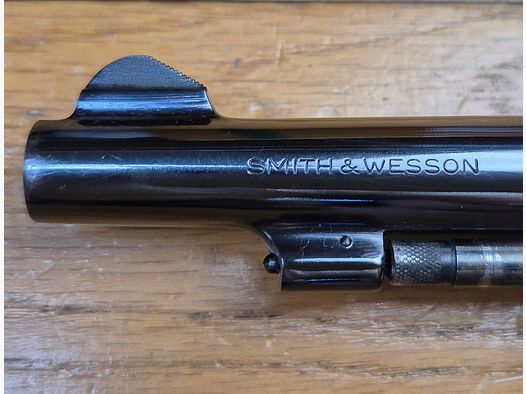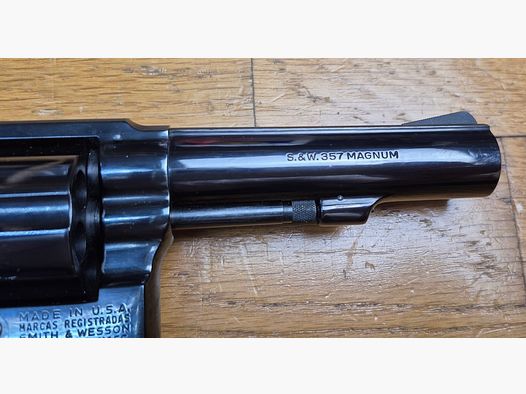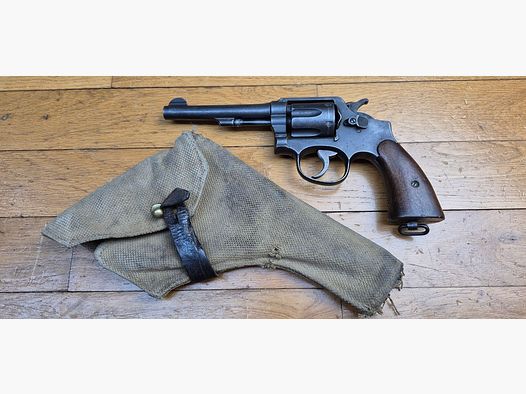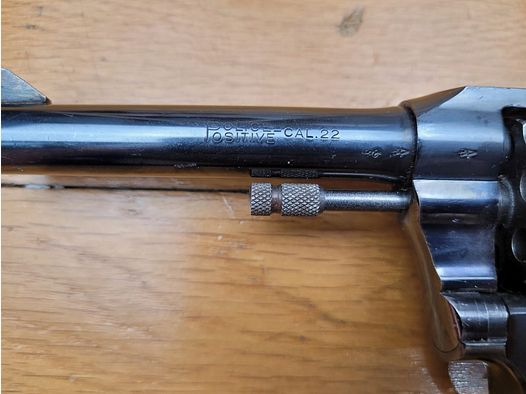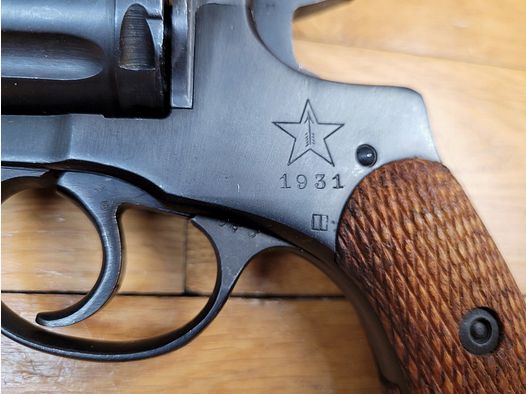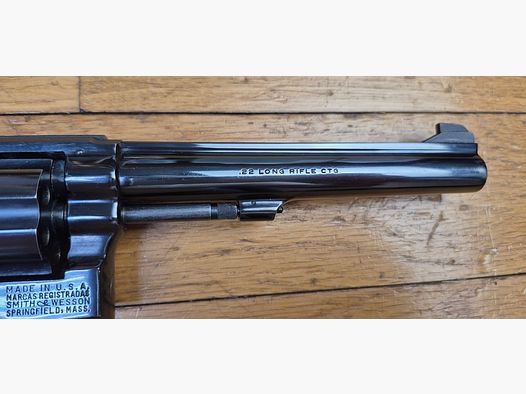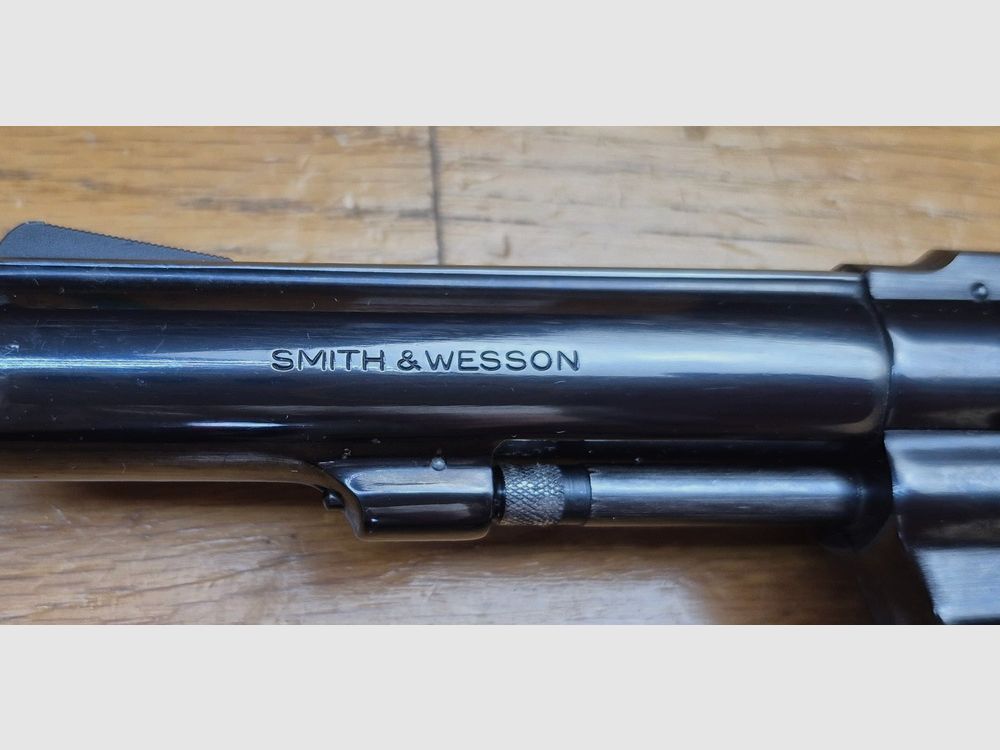
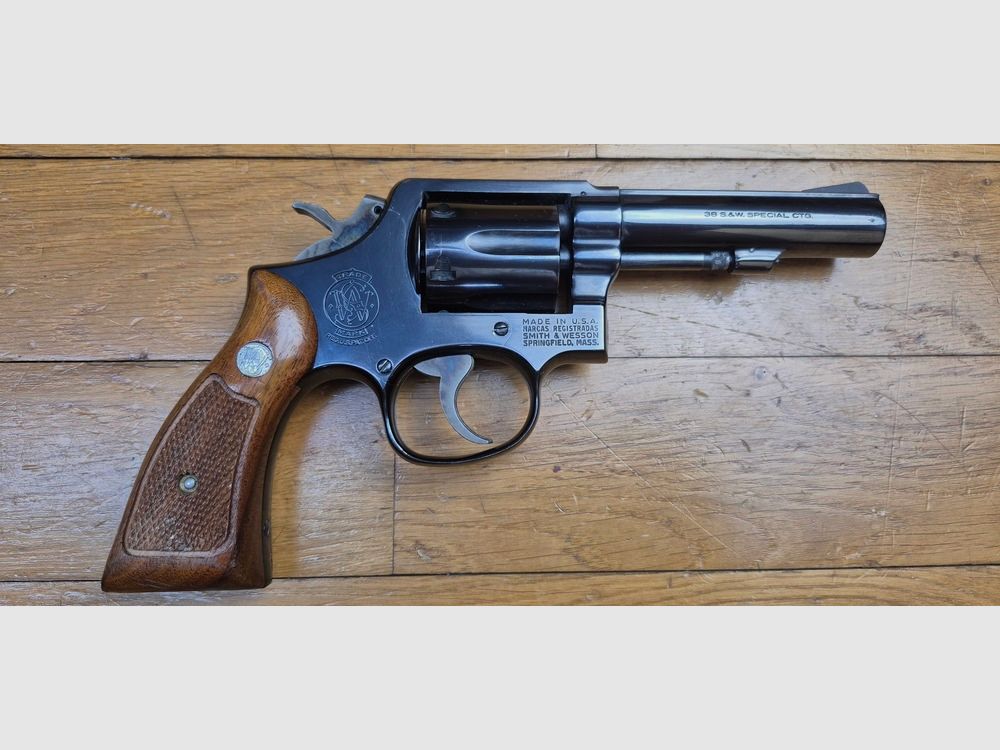
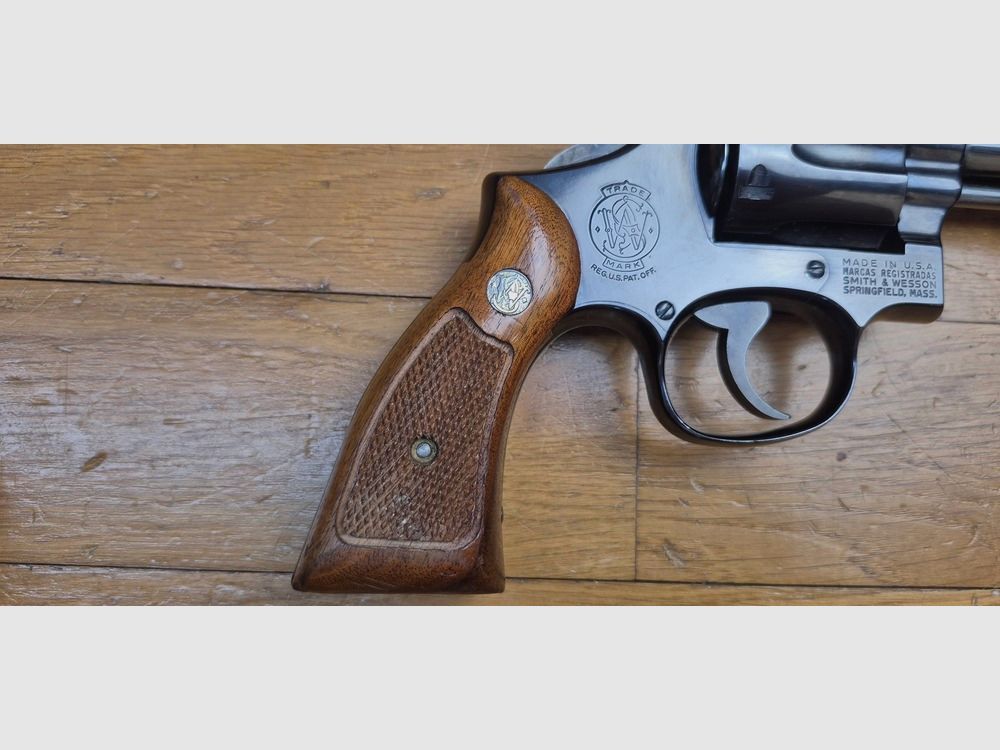
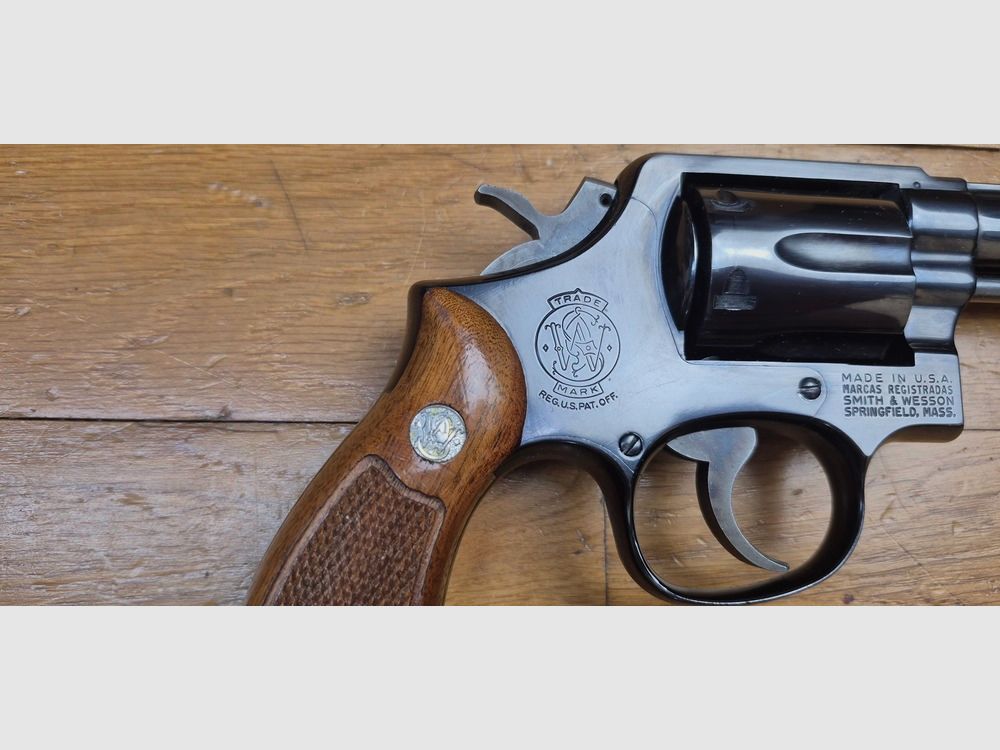

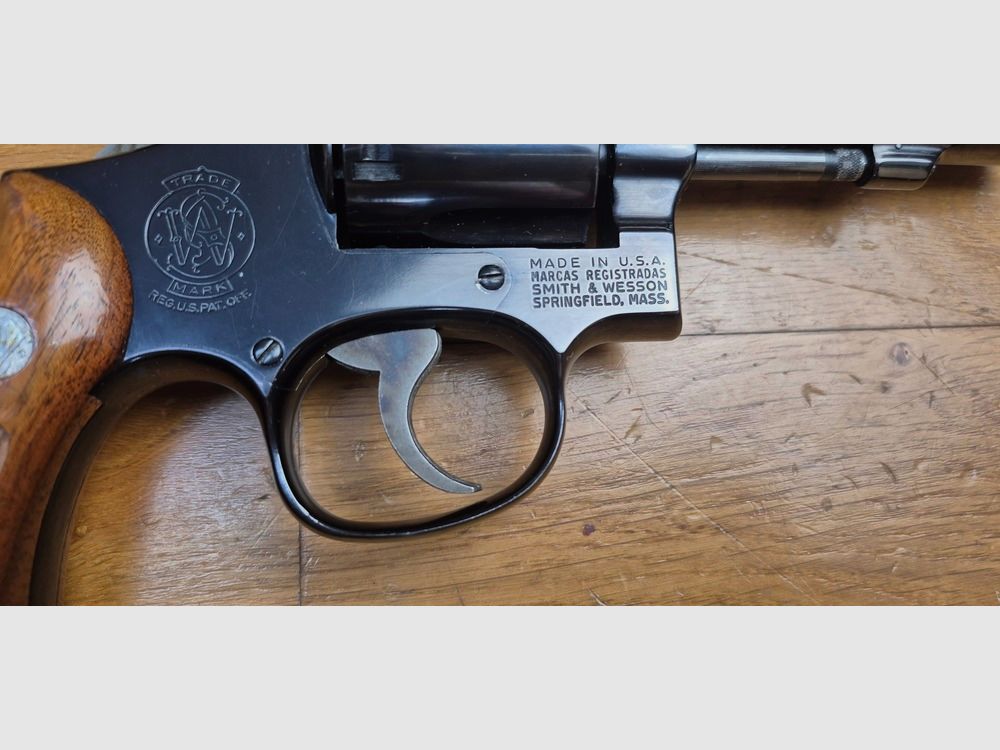
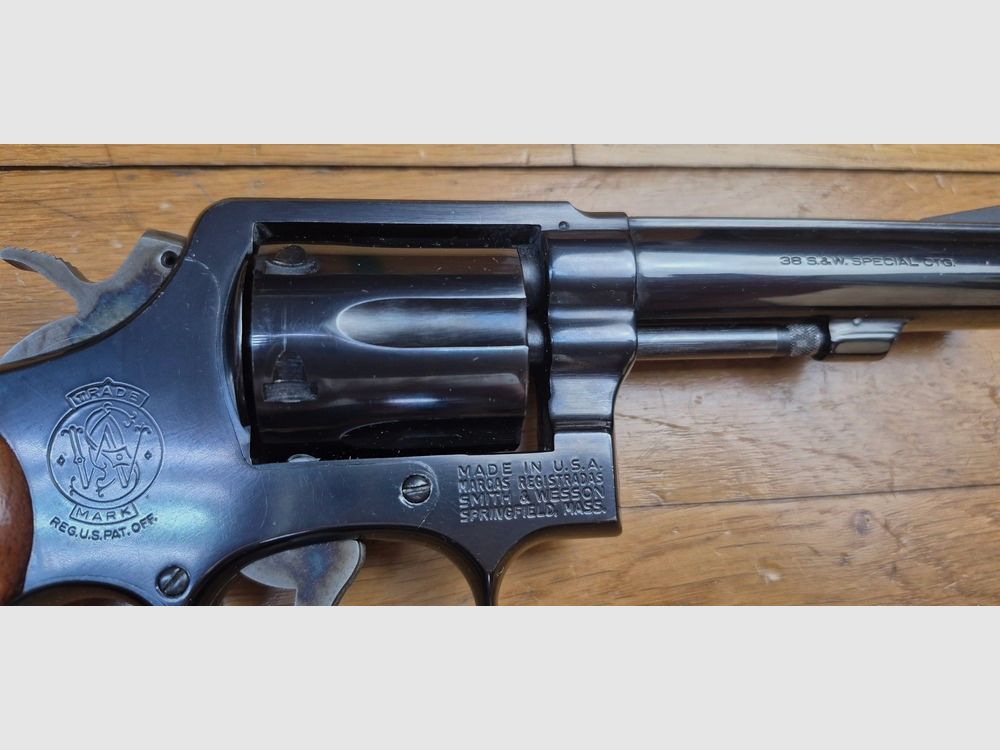

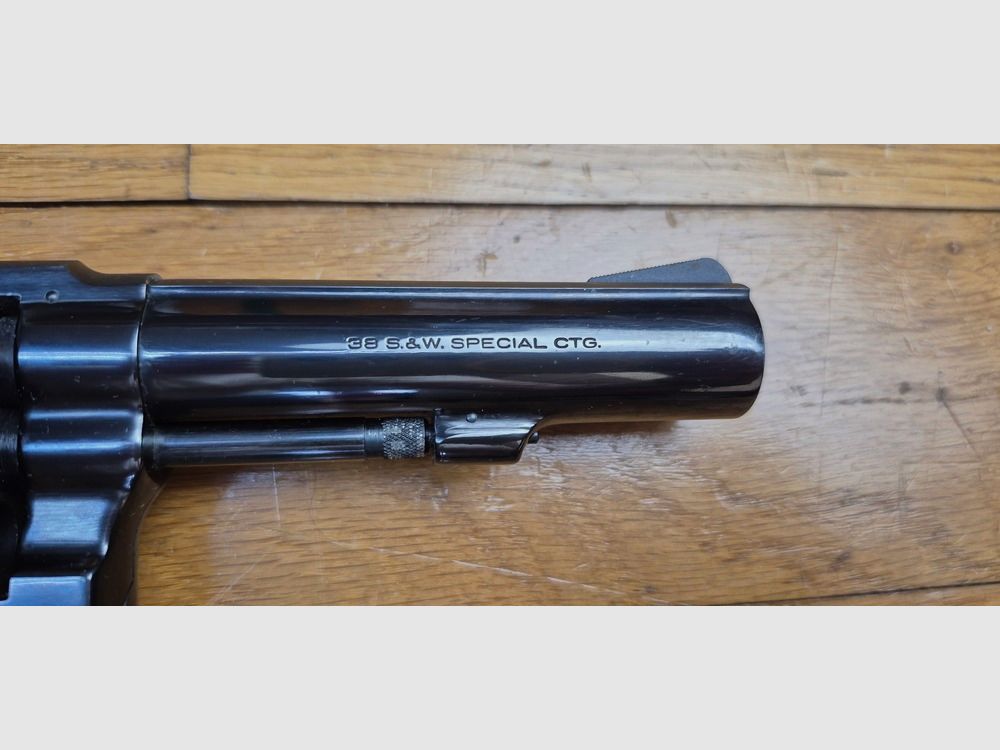
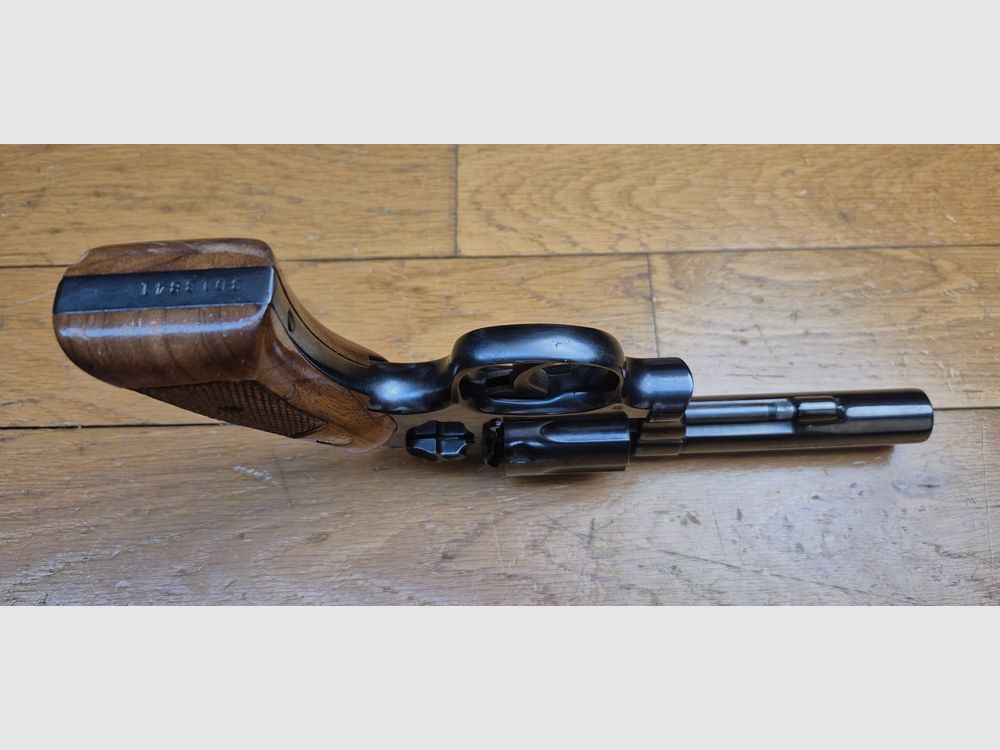

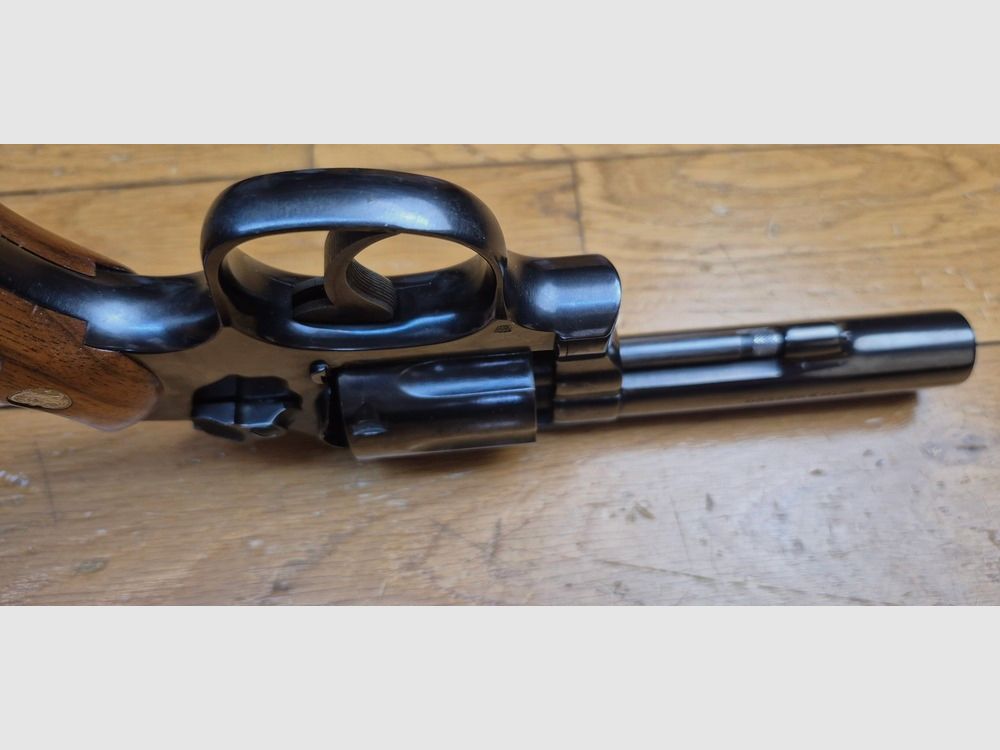

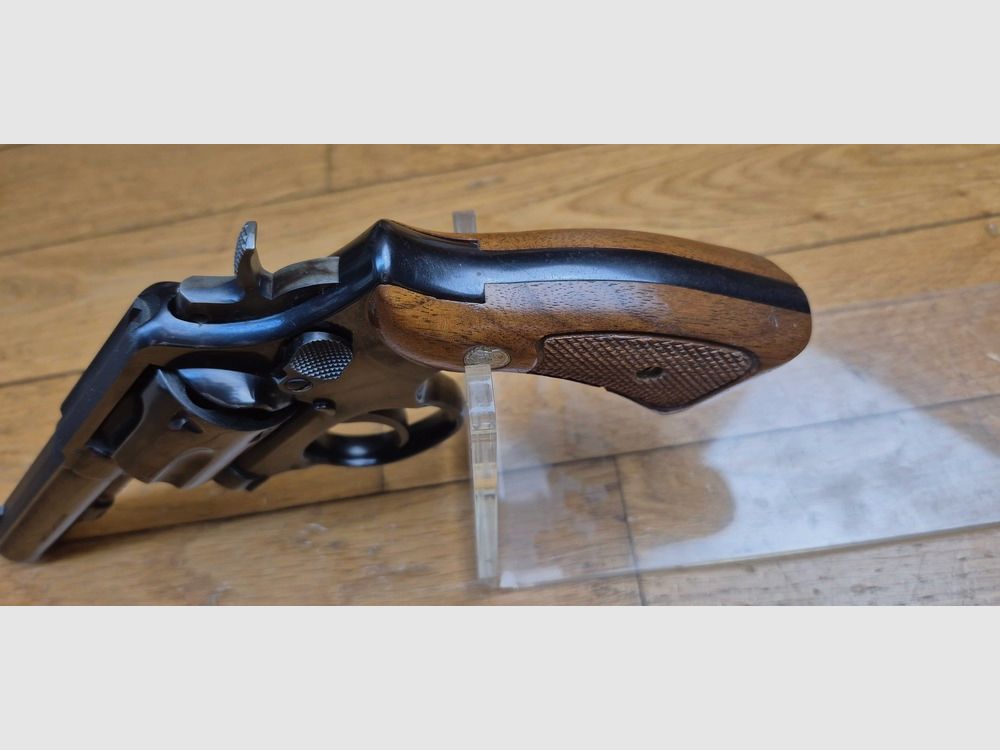
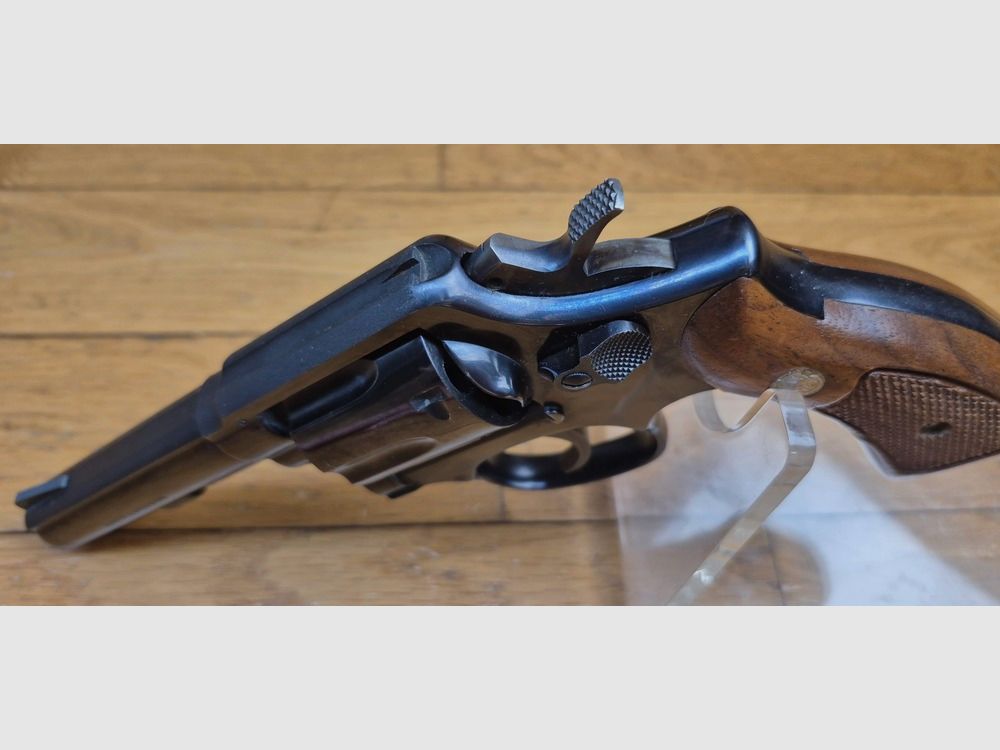

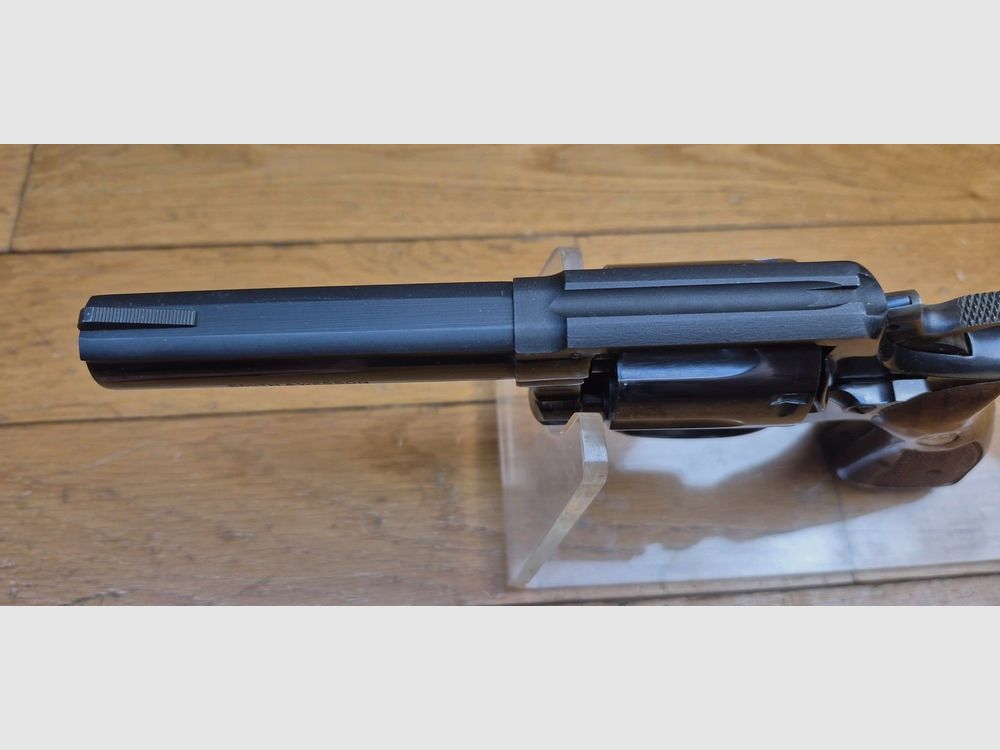
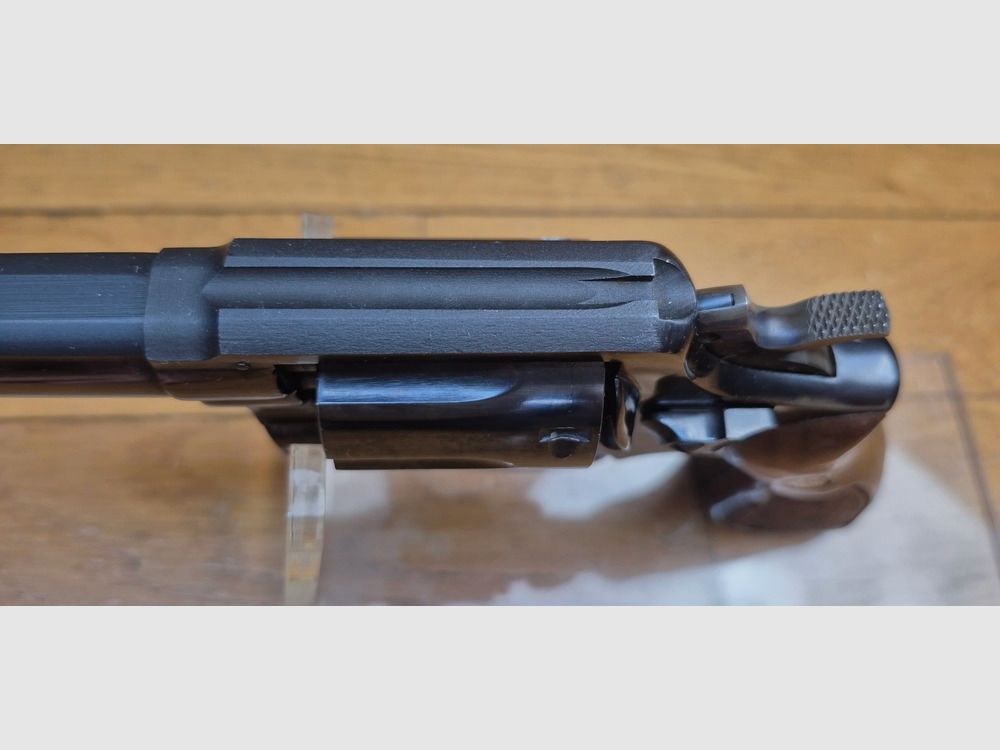
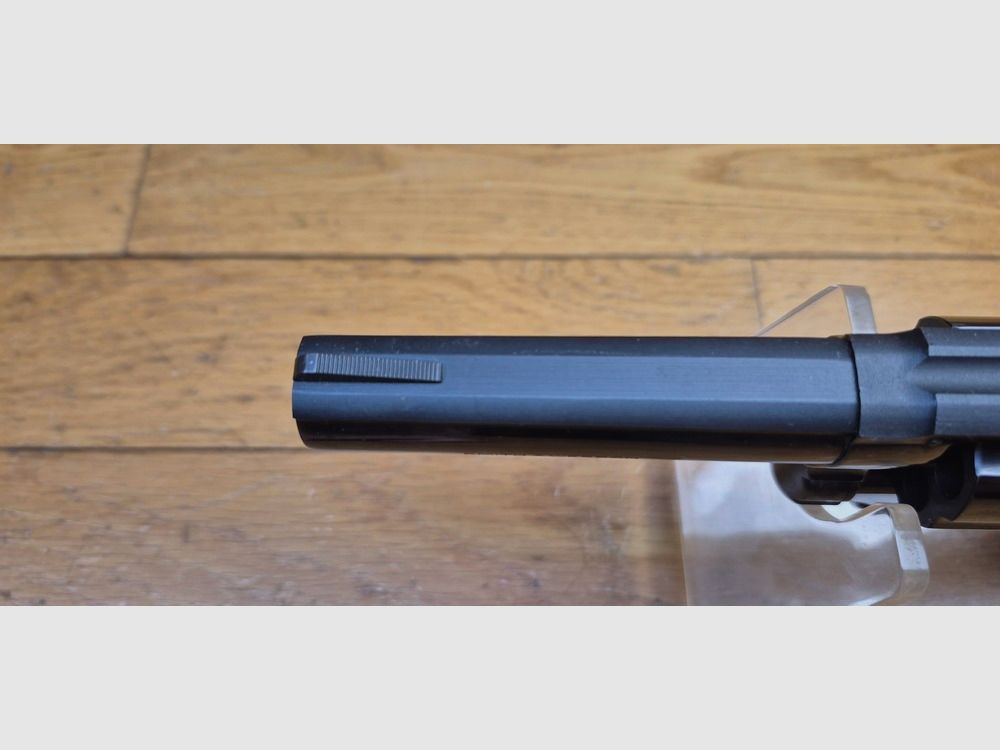
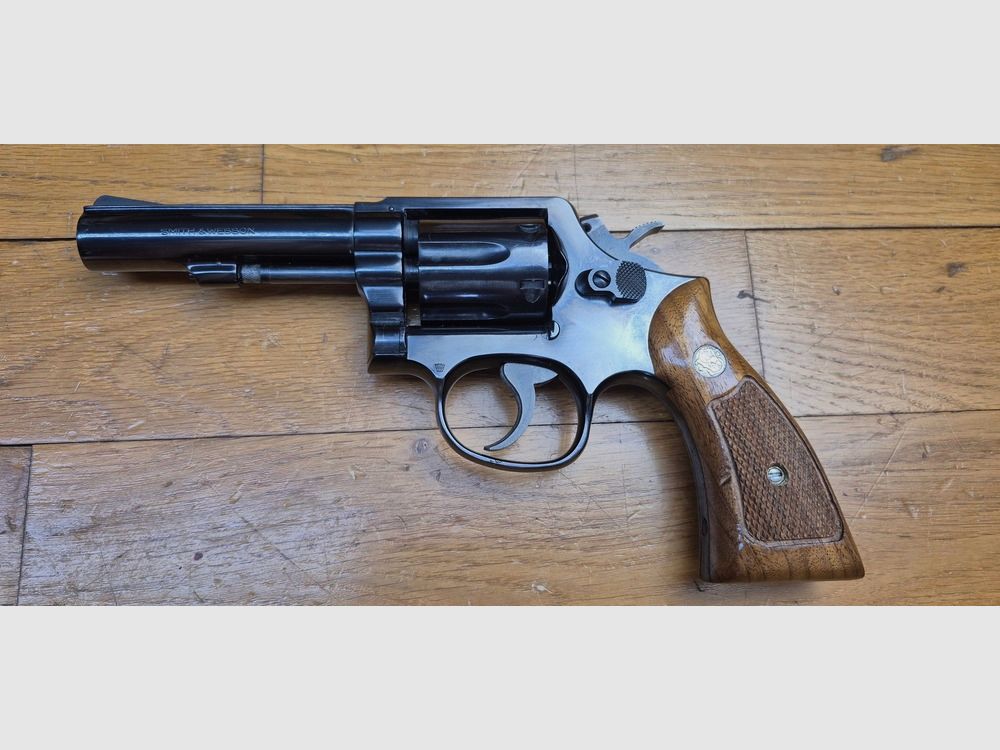

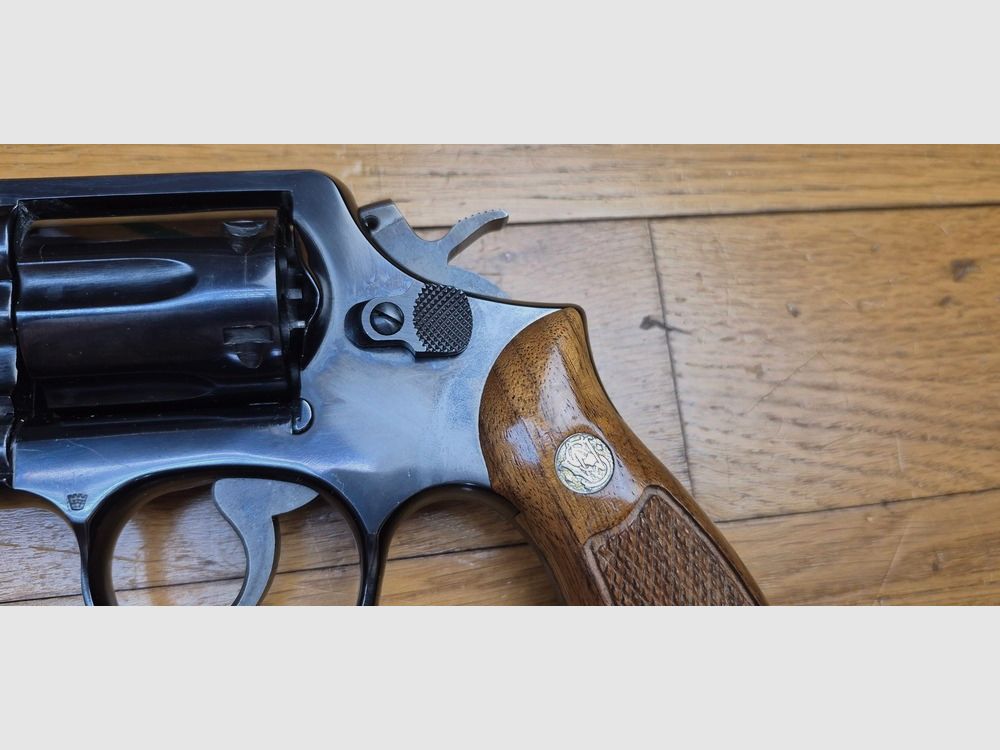

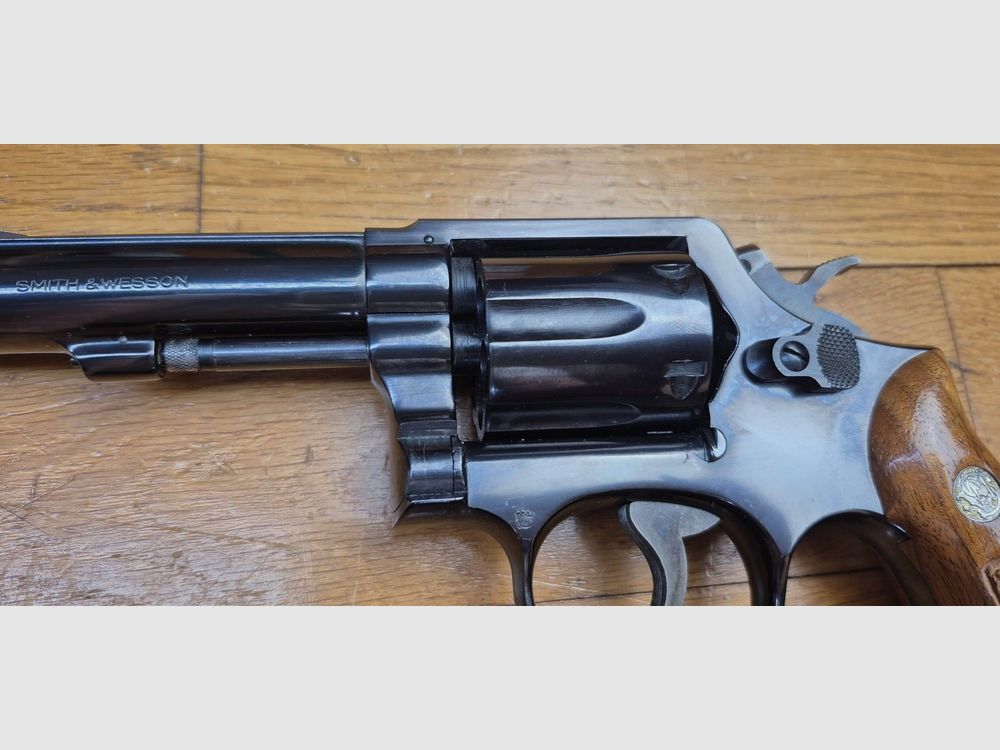
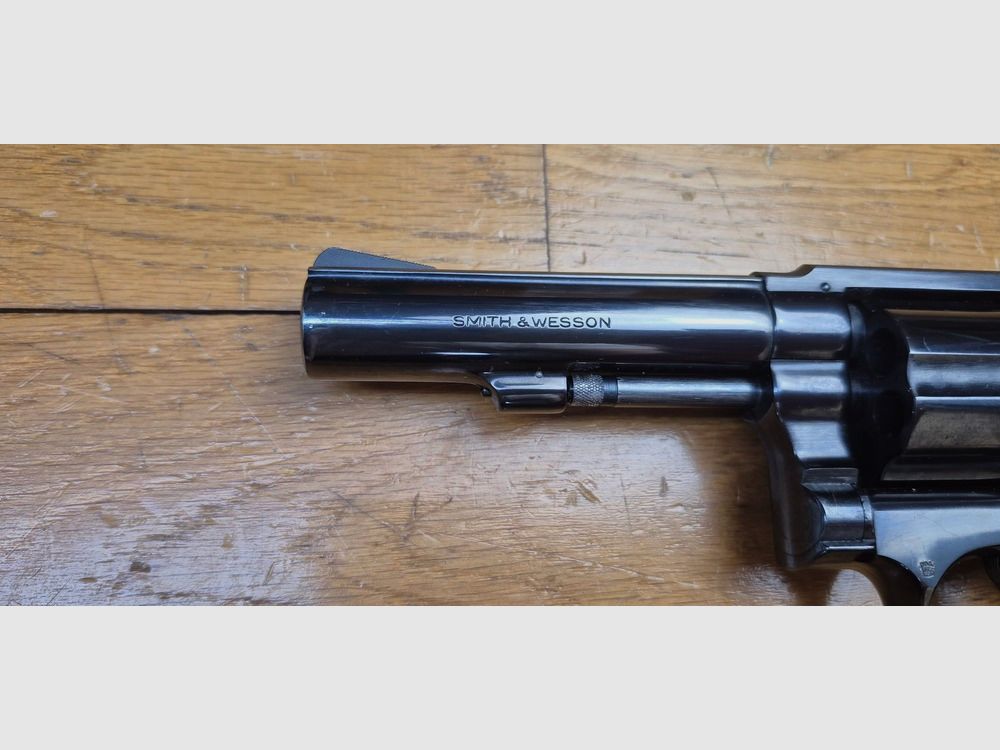

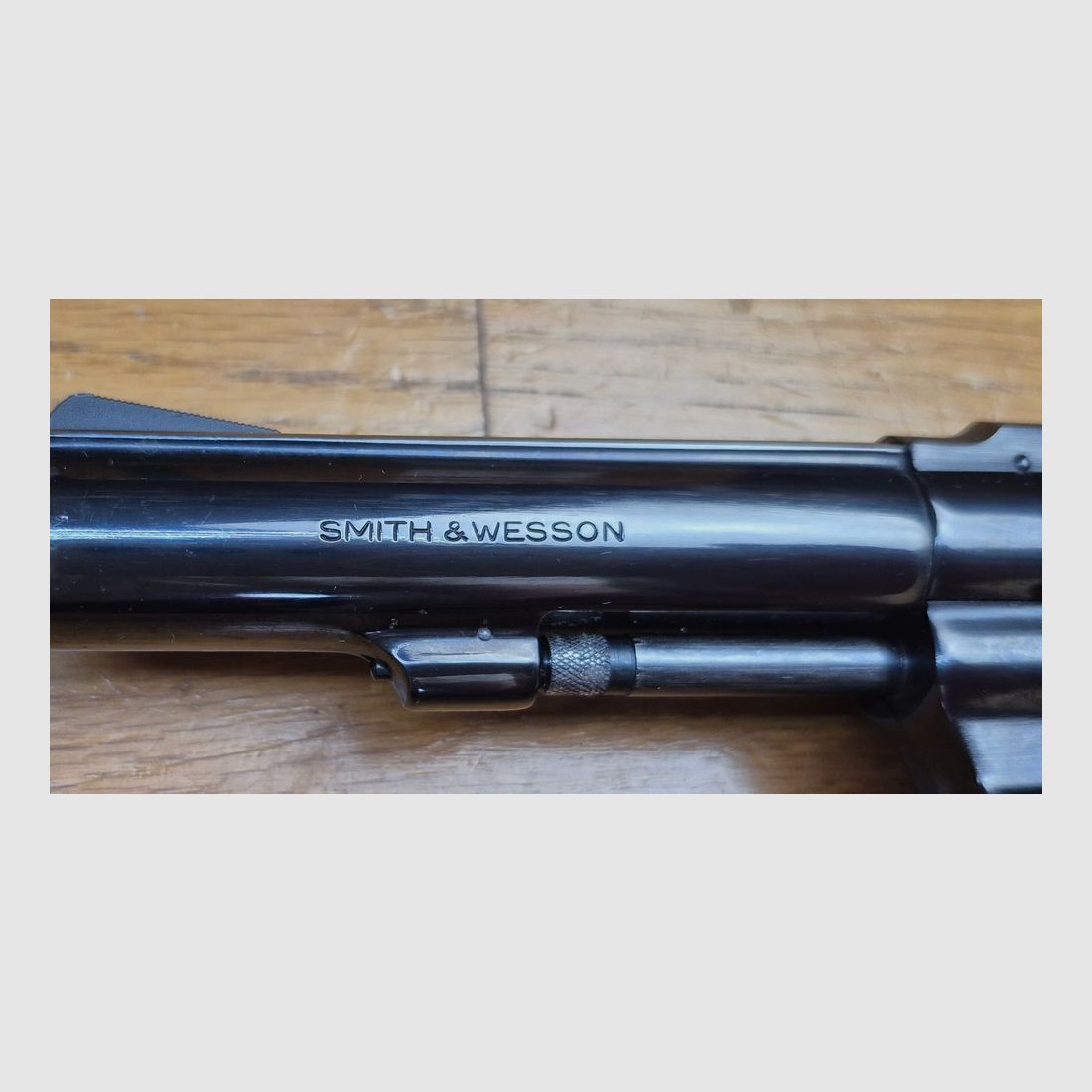


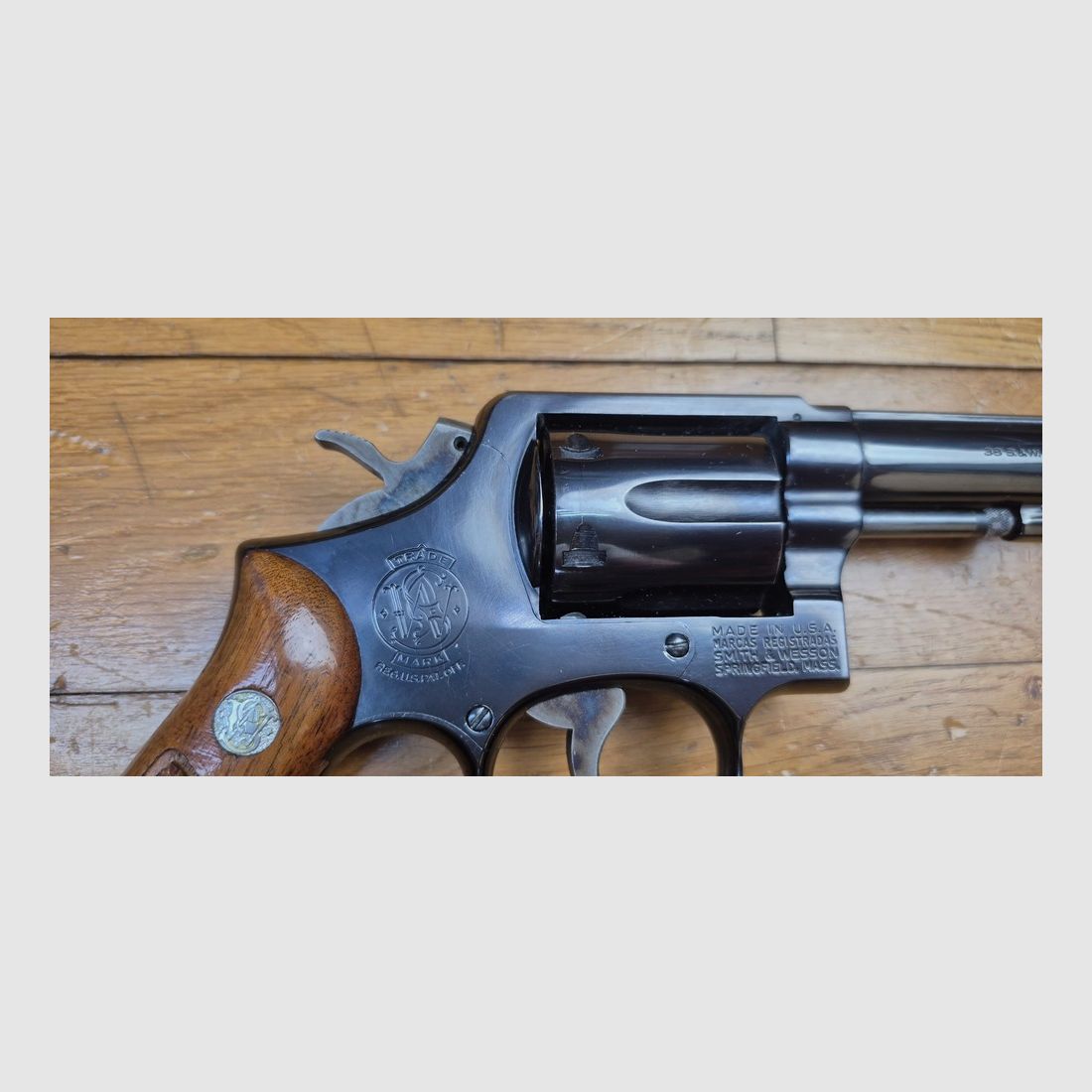
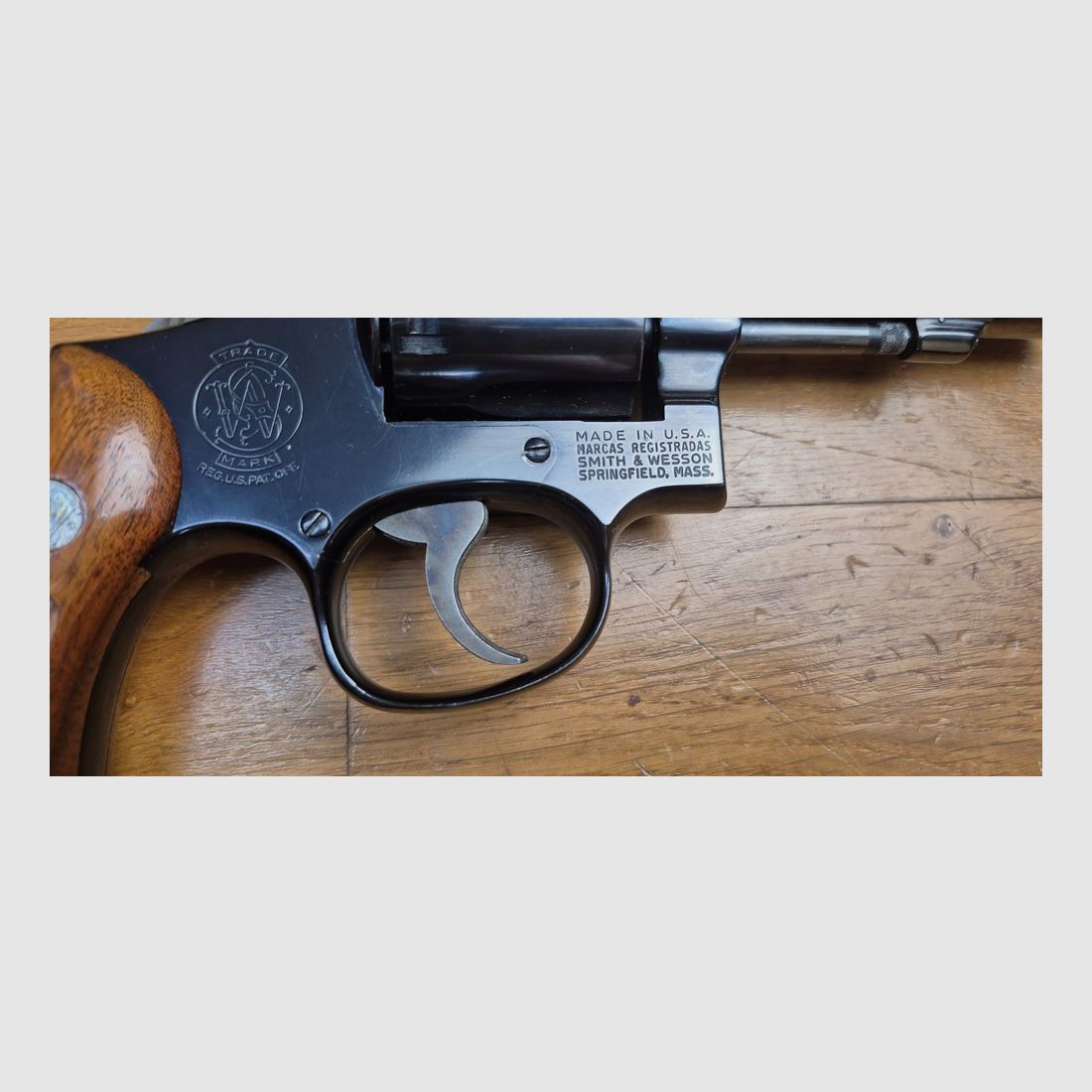

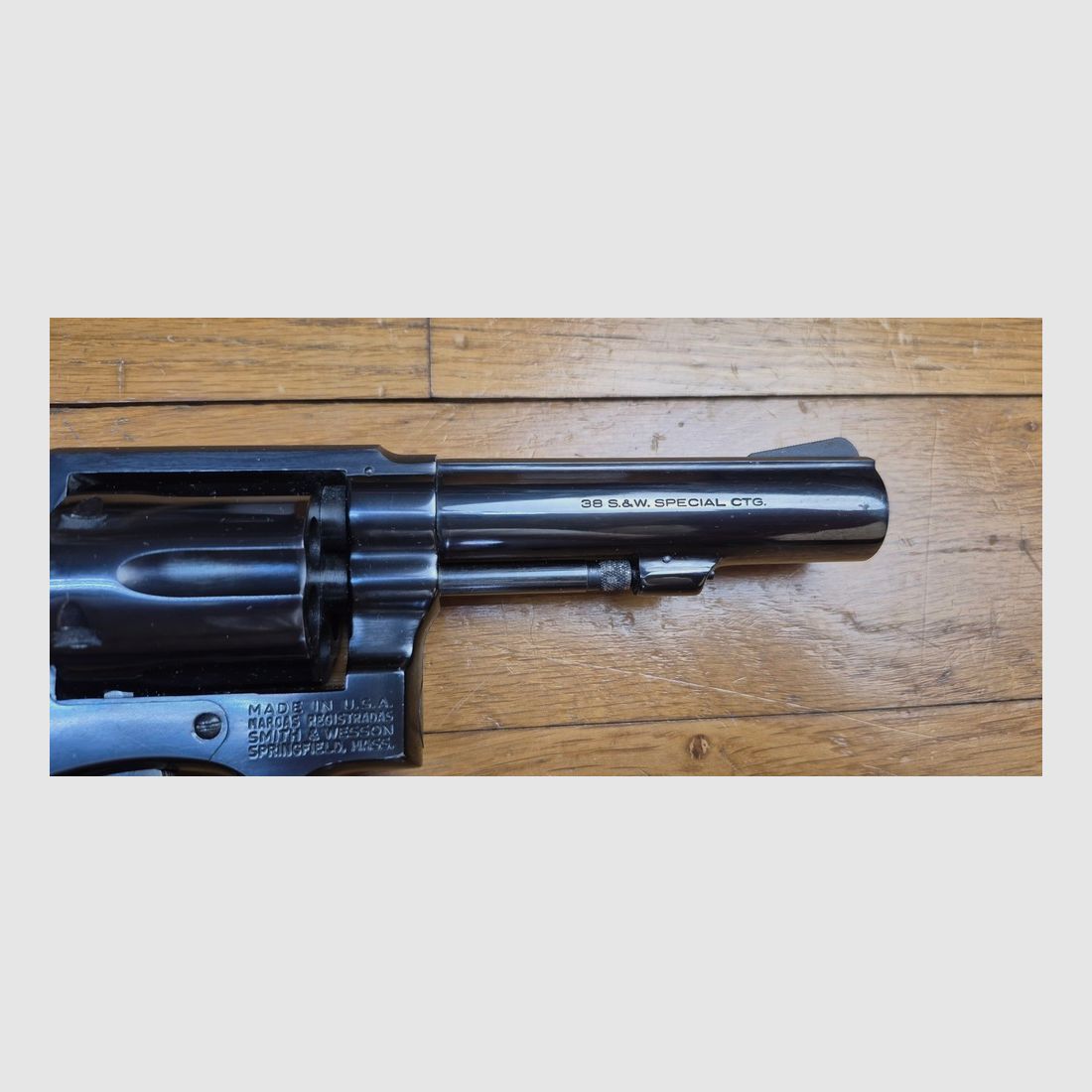

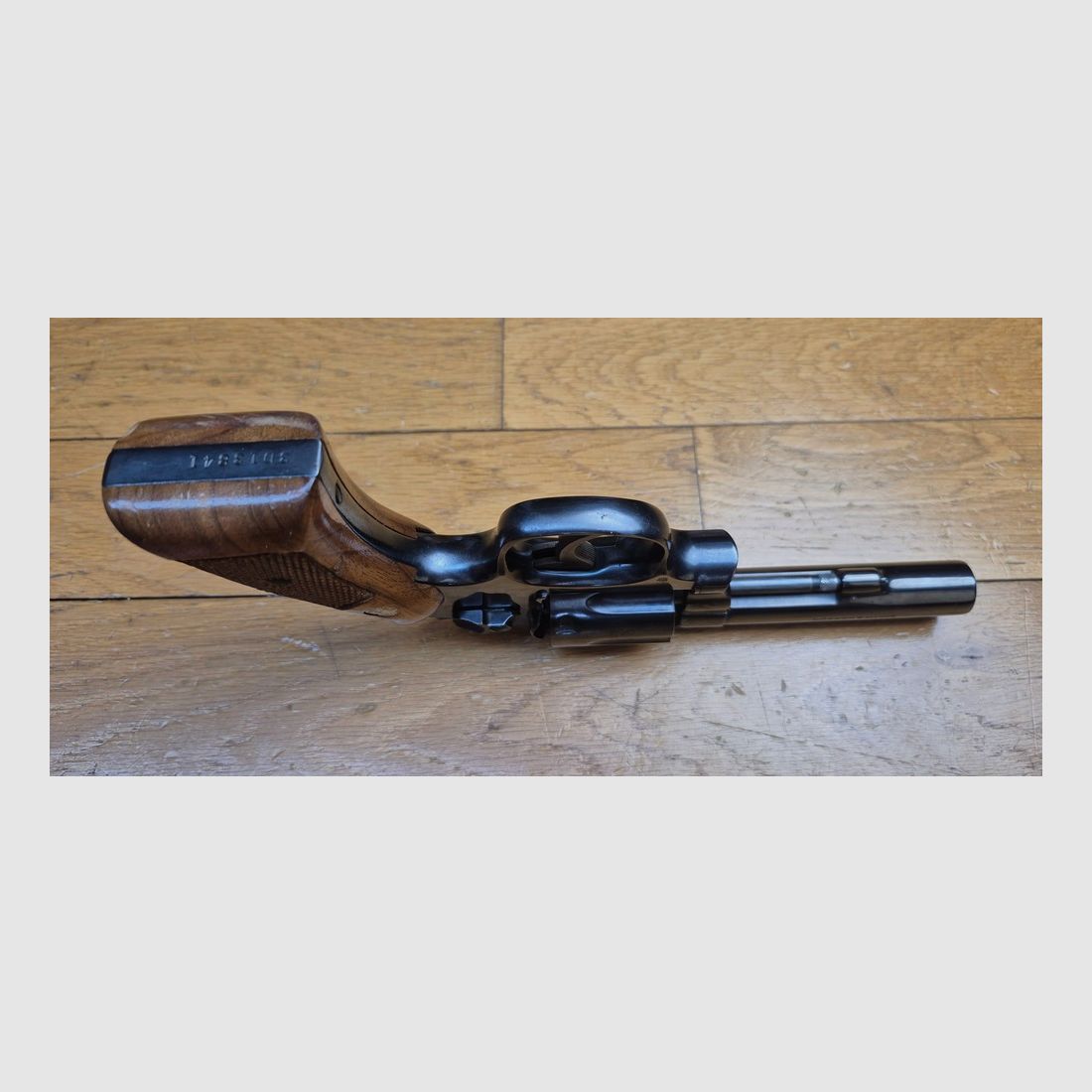


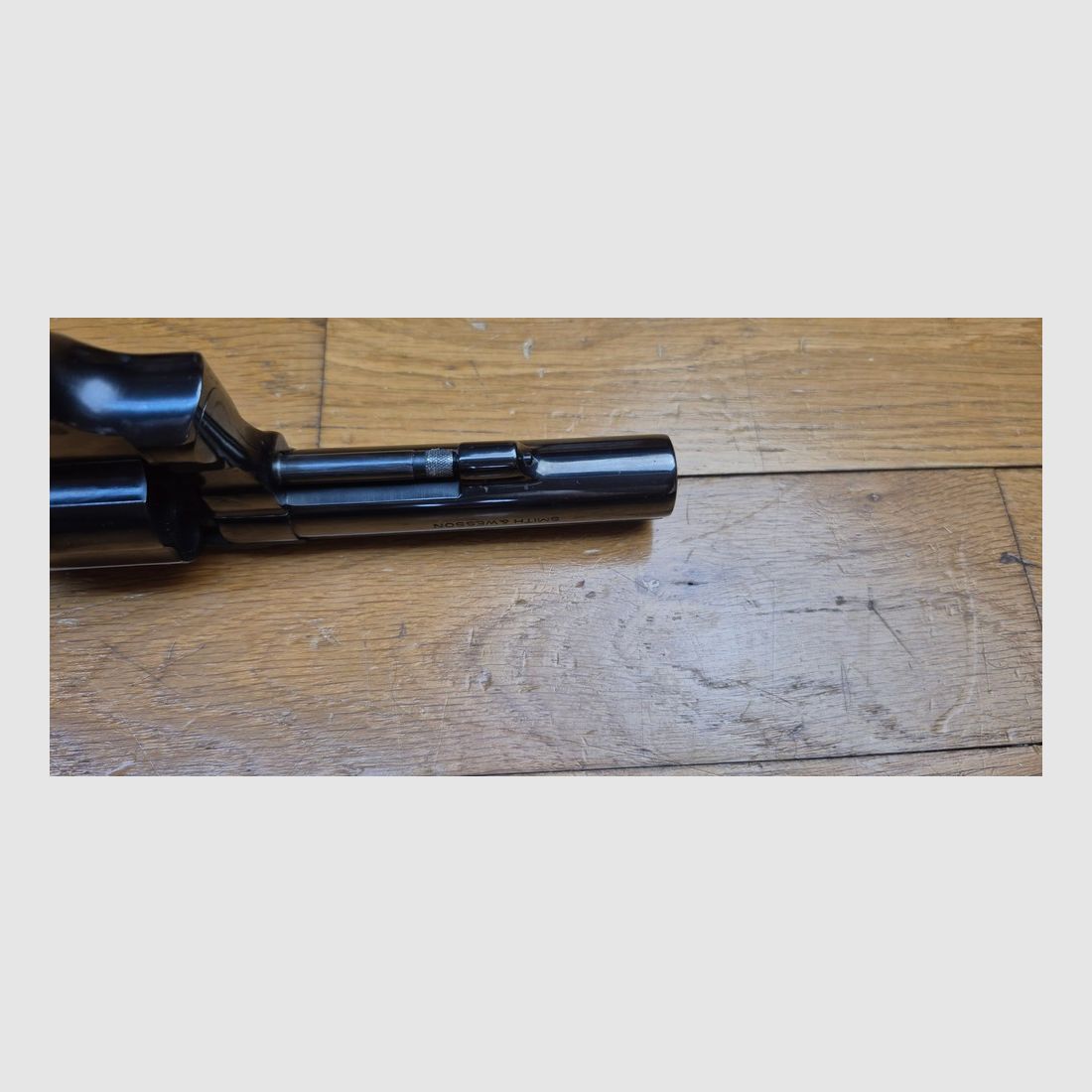
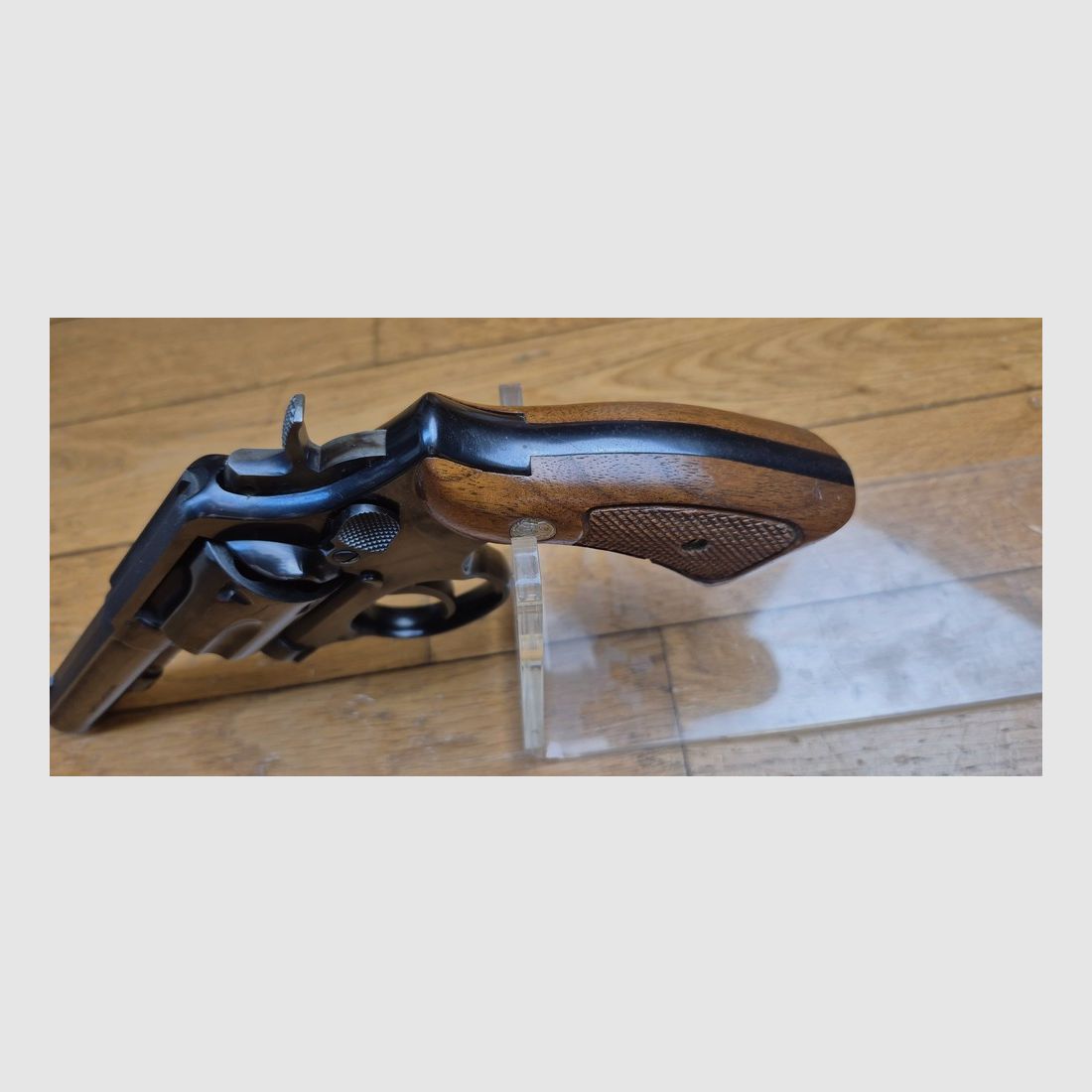
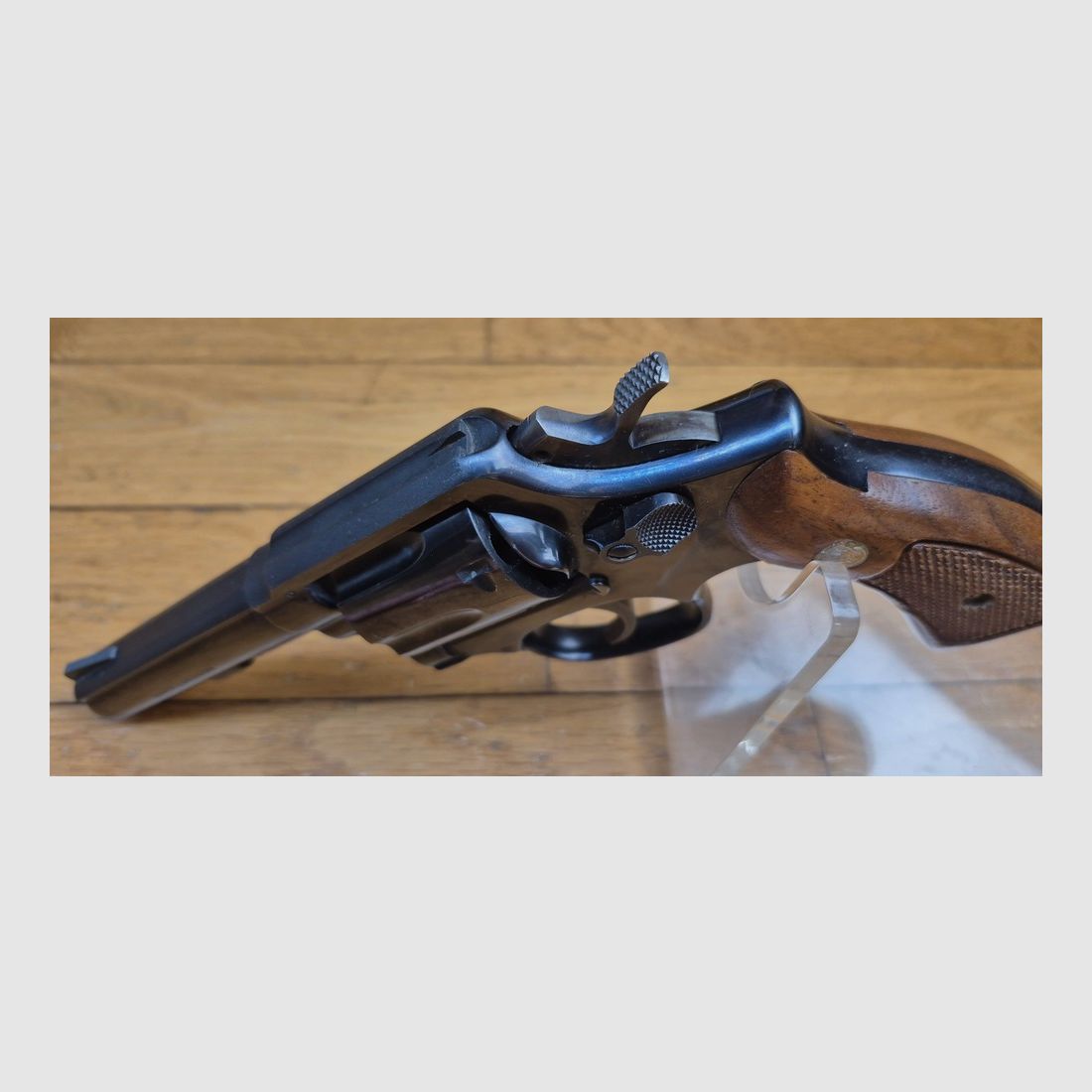


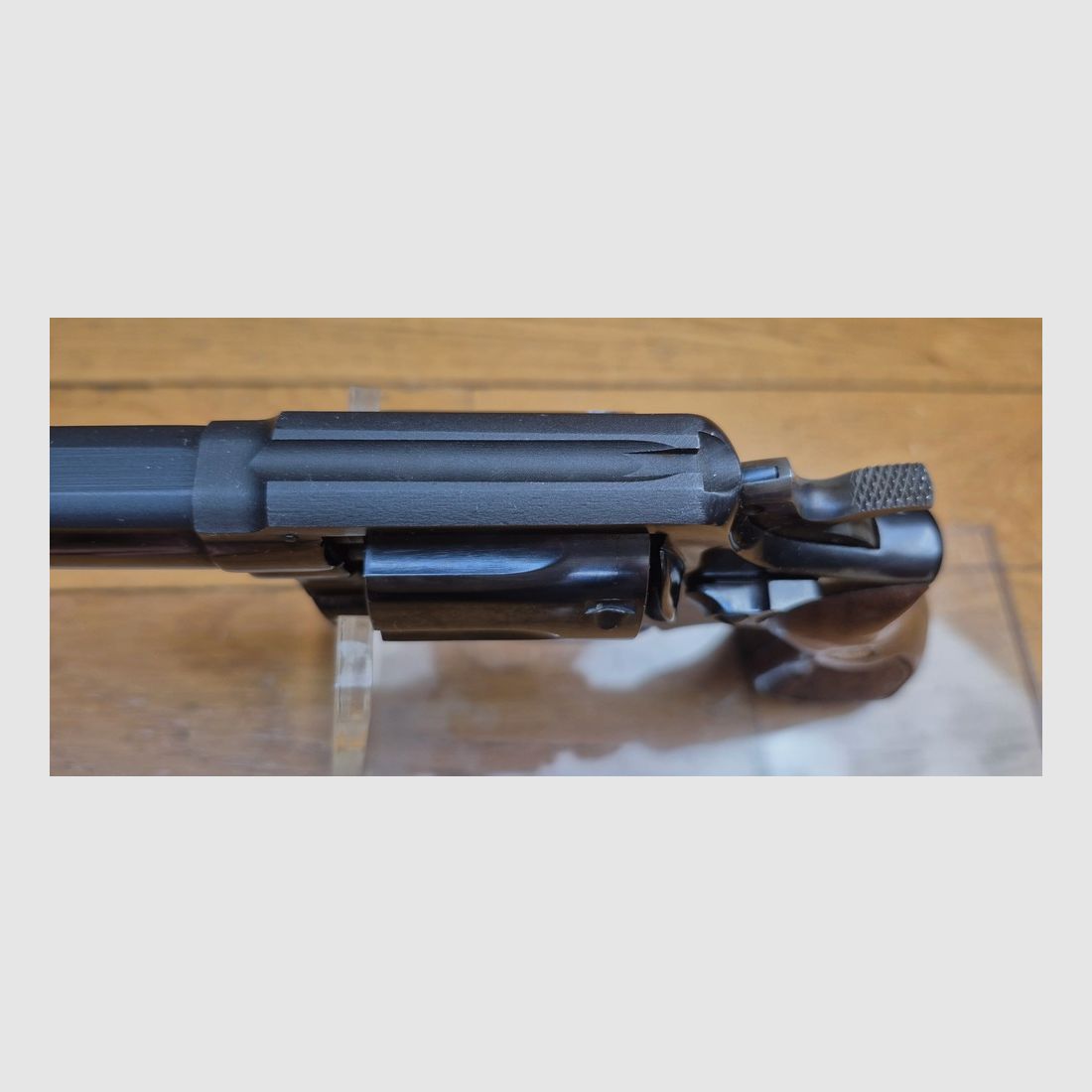

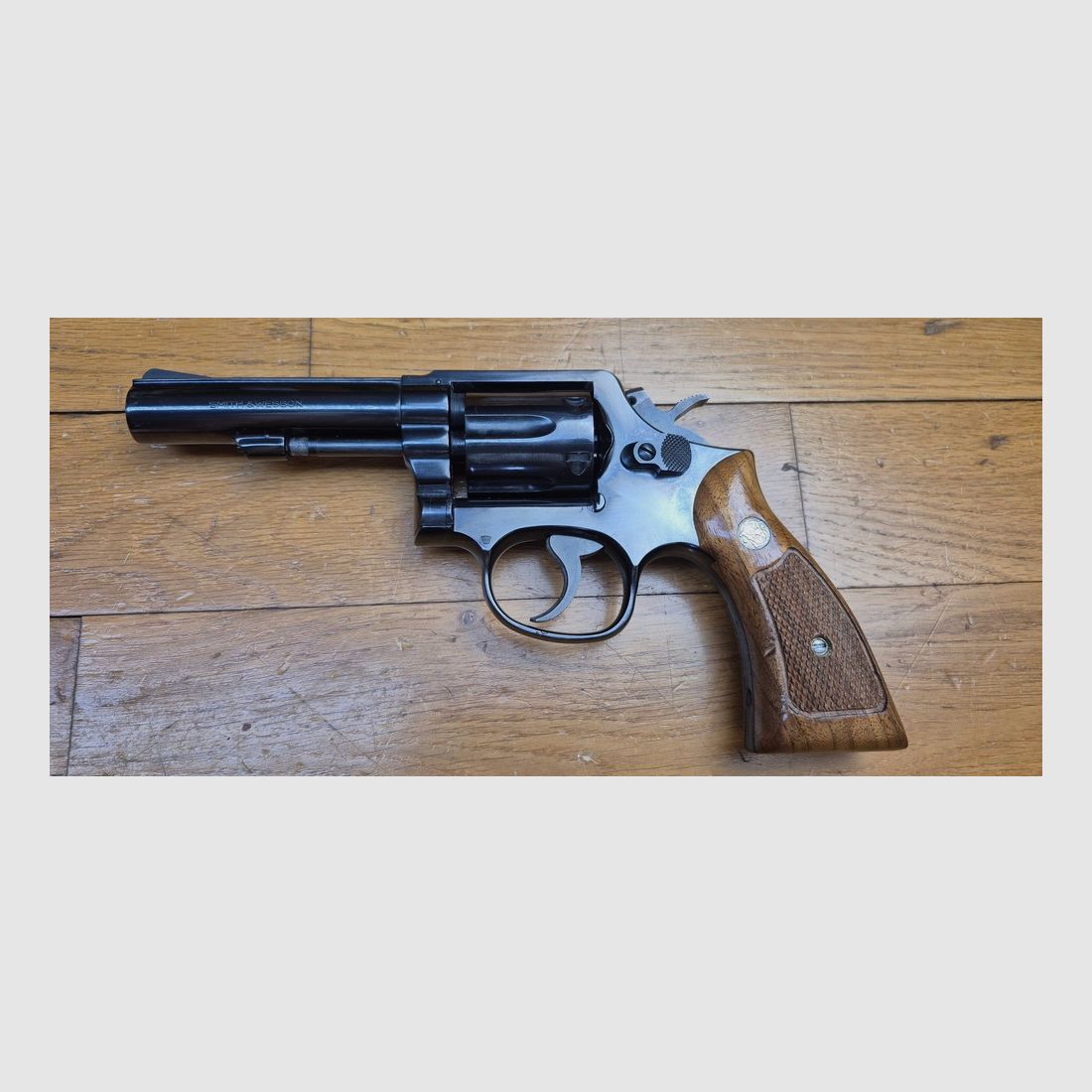
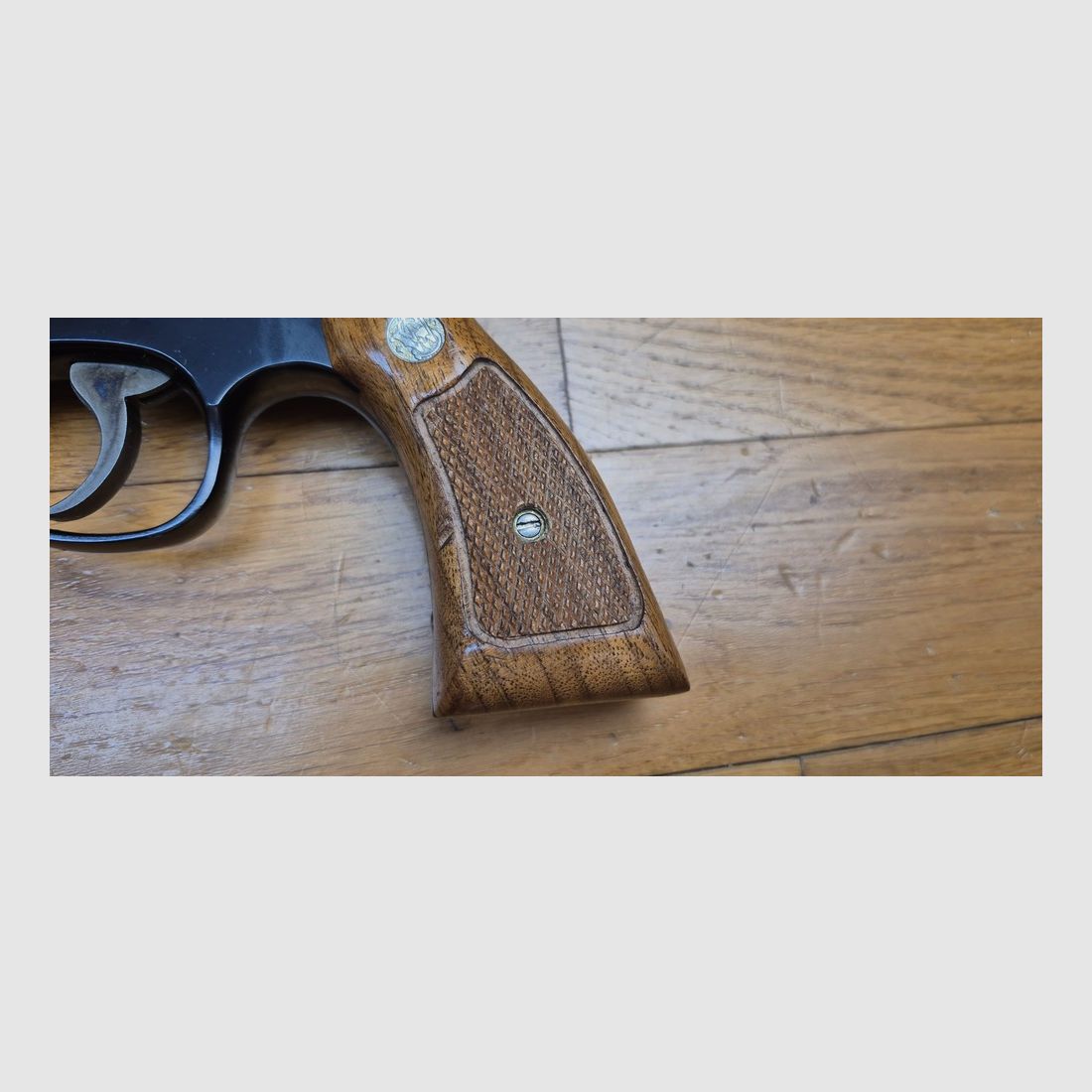
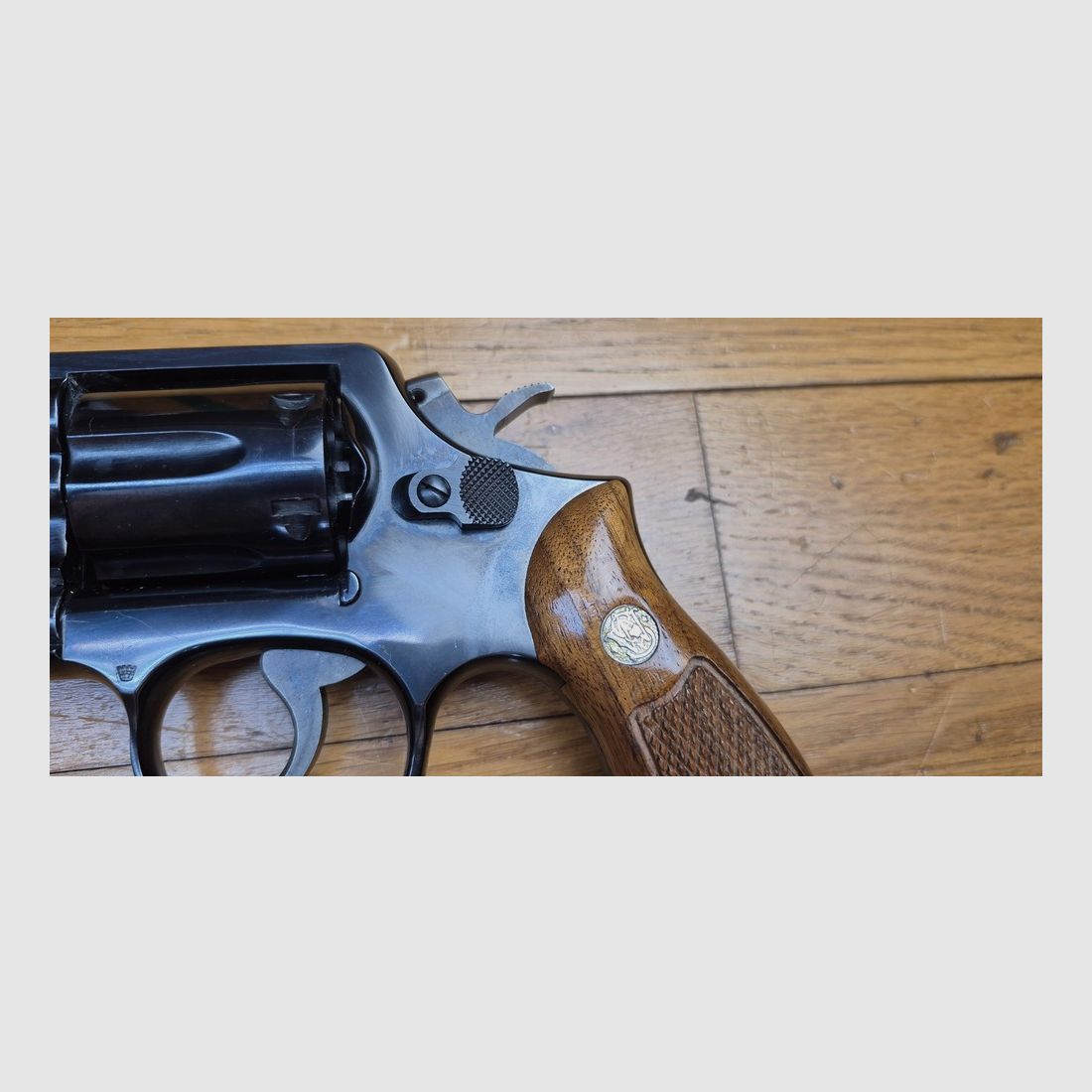
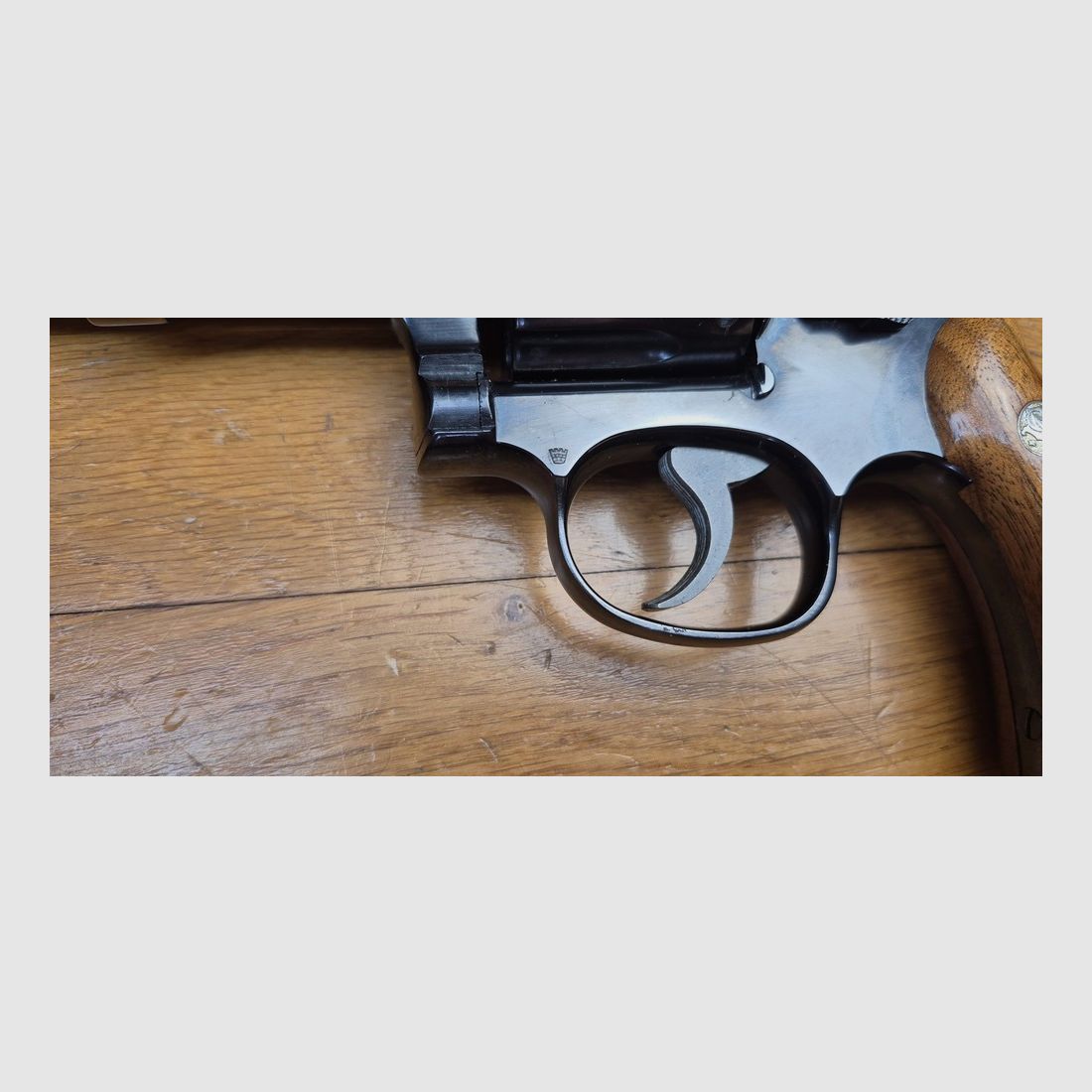


Very nice revolver Smith&Wesson model 10-6 – Direct descendant of the Hand Ejector Military & Police from 1899 – Heavy barrel variant of model 10-5 – Weapon from 1978 – Legendary police and shooting gun, one of the stars of the Springfield house – Very nice bluing at 97% – Top mechanics – New barrel – Excellent range gun with a glorious past – TBE+/TBE++
≈ $484
Price at the dealer: 440 €. Converted at the ECB rate as of November 20, 2026.
Purchase permit required
75002 Paris, France
5
ID: 10338404
This item is currently unavailable.
Purchase from outside the EU: The firearm goes through an importer in your country, the dealer handles the export.
How buying from Europe works
Shop safely with Gunfinder
Our AI-powered seller identity verification makes Gunfinder the safest marketplace online.
Learn more
Details
- Original language
- French
- Brand
- Smith & Wesson
- Category
- Purchase eligibility
- Required
- Condition
- New
- Location
- 🇫🇷 75002 Paris, France
- Availability
- Out of stock
Freshness
This listing is based on a mirrored offer, where the listing data was synced to us from a shop, dealer, or external marketplace. Please note that temporary price discrepancies may occur due to possible delays in data transmission.
- Source
- Flingus Maximus
- Last checked with the dealer
- 1 day ago
Description
Note:
The item is located abroad. Please note that delivery conditions, shipping times, and/or the purchase process may differ.
In fact, you all know it in one version or another. A legend.
It all began with a timely order, born in the midst of the Spanish-American War, when the federal government ordered three thousand revolvers—two thousand for the Navy and one thousand for the Army.
The conflict ended too quickly for the order to be fulfilled in full. But the spark for a great adventure that would last until 1998 had been lit: starting in March 1899, Smith & Wesson delivered a revolver with a swing-out cylinder and a 6.5-inch barrel for military use, and a 4-inch barrel for police use.
This first model was chambered in .38 Long Colt, and the cartridge didn’t make much of an impression in the field.
During the Philippine-American War, facing the Moro fighters in the southern part of the archipelago (they fought under the influence of hallucinogenic mushrooms and other drugs), American servicemen found that a .38 Long Colt bullet would only stop a determined attacker in his tracks if it hit the heart or brain. And that stressed our American friends out. Especially when an attacker suddenly appeared from nowhere, hidden behind a tree in the jungle, right behind you, machete in hand…
So the Army urgently brought back its old Colt SAA 1873s chambered in .45LC, and Smith & Wesson realized it would also have to rethink the ammunition, not just keep improving the revolver. It was also based on the US experience in the Philippines, and for the same reasons, that our Saint Browning would invent the 45ACP.
The answer came as early as 1902, from Daniel B. Wesson himself: the .38 S&W Special, with more powder and a heavier bullet than the old 38SW. The firearm that accompanied it was the Military and Police Model of 1902. This revolver had a new cylinder latch at the front and a spring-loaded rod housed under the barrel to protect it—a mechanical detail Colt never adopted, even after the patent expired.
In 1905, the “Second Model,” or “Military and Police of 1905,” added a passive firing pin block and larger sights. The design was now set. It would remain the benchmark police service revolver for more than half a century.
World War I interrupted production for 249 days, between June 1918 and February 1919—a reminder that even a well-oiled production line has blind spots in wartime… Incidentally, these Smith & Wesson Military and Police revolvers were the ones copied in Spain, well before 1915, to produce our famous “Spanish 92s” when they copied Smith & Wesson (the others copied Colt).
Between 1942 and 1944, the same revolver was militarized under the name Victory Model. You still see these from time to time here, brought out of our homes because they were parachuted in to our brave resistance fighters. Parkerized finish, lanyard ring, and serial numbers with a “V” prefix are sure ways to recognize one.
More than five hundred thousand were sent to the Allies under the Lend-Lease program, in .38/200 for British and Commonwealth forces. Others also equipped US Navy and US Marine Corps airmen and submariners (but those were in 38 Special), who appreciated how easy they were to handle one-handed—a useful feature when a pilot had to defend himself after a crash and use his other hand for something else, like opening the cockpit or cutting a strap while the Japs rushed toward the wreck. Pappy Boyington, who commanded the Black Sheep VMF 314 squadron in the Pacific, carried one throughout his campaigns. Here you have a magnificent and rare example.
The Victory Model survived the war: it would turn up in Korea, Vietnam, and in the security ranks of the US N
through the mid-1990s.
In 1957, Smith & Wesson abandoned the evocative, dream-inspiring names in favor of a dry numerical nomenclature. Marketing began wreaking havoc in the firearms world. Our Military & Police officially became the Model 10, the model we’re looking at today. And every minor technical change now received a “dash” number — 10-1, 10-2, and so on.
An almost administrative way of documenting a mechanism that continued to evolve in tiny increments.
In fact, the very first of these milestones, the 10-1 of 1959, introduced a heavy, untapered barrel option — a variant that would go on to have a life of its own alongside the standard barrel, under the even-numbered designations.
The 10-5 appeared in 1962, along with its heavy-barrel counterpart, the 10-6 — both were manufactured concurrently on the same frame and with the same internal changes, differing only in barrel profile.
The change that defined them was minor on paper: the front sight width increased from 1/10 to 1/8 inch on the standard-barrel version. But this variant remained in the catalog for about fifteen years, until 1977, before giving way to the 10-7 (and the 10-8 for the heavy barrel).
On the 10-6, the heavy barrel also eliminated the trigger guard screw still found on the 10-5 — a detail that simplified manufacturing.
But above all, the heavy barrel made the gun more stable when firing, an important detail for a gun whose grip was still fairly slim.
By reducing muzzle rise, the heavy barrel made follow-up shots easier, which was a useful refinement for a police firearm.
The heavy barrel became standard issue for police departments starting in the 1970s. On the American market, the vast majority of Model 10s still in circulation from police stocks have a 4-inch heavy barrel. The 10-6’s heavy barrel often gives the false impression that it can chamber .357 Magnum, when in fact the 10-6 is strictly a .38 Special firearm.
Heavy-barrel variants (notably the 10-1, 10-6, and 10-8) were widely exported in the 1960s–1980s, with identified batches in Australia, Canada, France, Jordan, Asia, and several Latin American countries. This explains why surplus examples of this model regularly turn up on the European market, sometimes bearing specific markings (foreign contracts, local police forces) that may be of collector interest and therefore affect their value. I recently saw one in the hands of a shooter, marked RHKP on the backstrap for the Royal Hong Kong Police. He was probably far from imagining the interest such a firearm, a relic of a vanished empire, might inspire elsewhere…
The frame that houses this mechanism is the famous K-frame, which was introduced with the gun in 1899: it wasn’t a size designed in isolation, but a medium frame that effectively became the standard for service revolvers, balancing strength and concealability and derived from the old I-frame.
From the 1920s to the late 1970s, this revolver became the quiet standard of American law enforcement, carried from Omaha to Honolulu and beyond the United States, in Canada, Brazil, Hong Kong, Iran, and many other corners of the policing world. The US armed forces also purchased 133,000 over a 12-year period between the 1960s and 1970s.
The NYPD made it a symbol of longevity without meaning to: the last twenty-nine New York officers still equipped with a Model 10 didn’t turn in their sidearms until August 31, 2018, more than a century after the first Military and Police revolvers entered service!
It was in New York, in fact, that the Model 10 found its “most active” police user, if I may put it that way: Officer Jim Cirillo, of the Stakeout Squad, the unit tasked with watching the co
mmerces open day and night and regularly held up, often with tragic consequences.
Cirillo would take part in more than twenty gunfights armed with his standard-issue Model 10 (!) whose stock he wrapped in electrical tape to fit his hand. Rather than reload in the middle of a gunfight, he would draw a second one—a practice that the profession eventually nicknamed the “New York reload.” His third gun (!) was a two-inch Cobra.
I’ve included a photo of the cover of his memoir, showing him holding a 10-6, to give you an idea of the man.
The unit lasted only three years, from 1968 to 1973. It took out no fewer than 43 armed robbers. It has to be said that they weren’t exactly gentle about it. Two members of the team had even been affectionately nicknamed “the Proctologists” by their colleagues because all their targets had been shot in the back while fleeing… You can imagine the “atmosphere,” which explains why the unit was disbanded fairly quickly.
Cirillo, who had faced many extremely dangerous situations during his career and always gone back for more, became an instructor at the Federal Law Enforcement Training Center for fifteen years, then an author (“Guns, Bullets, and Gunfights,” 1996) and a close-quarters shooting theorist. He is particularly known for the “Cirillo cant,” a technique for angling a firearm around cover to minimize exposure, still taught today.
Ironically, he died in a simple car accident…
So this is what our heavy-barrel 10-6 carries with it, without saying a word: a cartridge that became legendary, conceived in response to a colonial failure; a mechanism proven through two world wars; a frame that became the benchmark for a century of law enforcement; and the fading imprint of everyone who has, at some point, drawn it from its holster for real.
Our Smith 10-6 is a fifty-year-old in great shape. With its serial number, 3D138XX, I’d date it to around 1978. Its heavy barrel could be a sign of some perfectly understandable weight gain at that age. But above all, it’s one of those beautifully finished Smiths with legendary durability that I’m so fond of.
This firearm is still “pinned.” In 1978, Smith hadn’t yet cut corners on machining (though that would happen just four years later). The barrel is not only screwed into the frame, but also secured by a reinforcing pin at the top of the frame—one of the hallmarks of the best-made examples. These firearms aren’t just beautifully finished; they’re also practically indestructible.
This feature helps make the firearm more rigid and, above all, more durable. But it requires special machining and assembly of the barrel. Smith discontinued this pinning process across its entire range in 1982 to reduce production costs… The downward slide had begun.
The handsome heavy barrel is indeed four inches long. That’s THE classic length for an American police revolver, the 10-5/10-6. It’s the length found on duty belts from the 1920s and 1930s onward, when the Military & Police—before it was renamed the Model 10—became the standard service firearm for police in major American cities. A quintessential 10-6, then.
Neither the discreet but less accurate two-inch barrel designed for concealment, nor the more martial six-inch barrel reserved for agencies or target shooting, the four-inch barrel is the compromise that made its career—with enough sight radius for accurate shooting and short enough to fit in a belt holster for a full day on duty.
So, in its very proportions, our 10-6 has the exact silhouette of the revolver generations of American police officers drew from their holsters when the weather turned. The 10-6 is obviously a little heavier than its featherweight sibling, the 10-5, but compromises have to be made. It should perform a little better in very rapid strings of fire.
The bluing is present on almost the entire frame.
I’d say 98%. The firearm hasn’t been carried in a holster, and there’s no particular wear to report, even at the muzzle on this example. It has its original factory bluing from that era, still untouched, thick and durable, and above all, very beautiful.
The metal parts show no trace of oxidation or “orange peel.” Pristine, if I may say so. Few handling marks and virtually no scratches. This firearm has seen little use, with very light cylinder rotation marks that attest to limited use. An excellent specimen.
The firearm is just very dirty and deserves a thorough cleaning. All the white spots, odd reflections and other marks in the photos are from my greasy fingers and the dust in my workshop.
My EXTREME close-up photos obviously magnify every flaw, as usual—that’s exactly why I take them. So you can see everything, or at least as much as possible, across 20 or 30 photos, sometimes more. I’m the only gunsmith who happily shoots himself in the foot!
So these photos exaggerate everything, too. Take a look at the overall shots instead: this is a very good firearm, more than just beautiful aesthetically, and that’s what matters once you have the revolver in your hand.
The hammer and trigger are case-hardened, as they should be on firearms made in the golden age. And the case hardening is still 95% intact—a detail that matters twice as much, since this heat treatment, originally as functional as it is attractive, is the first thing to disappear on firearms that are neglected or cleaned too aggressively.
The grips are original, solid American walnut with a reddish hue, and in very good condition. They’re also an excellent fit for small to medium-sized hands. If the grip size makes recoil harder to manage, larger hands may want to invest in something wider. Luckily, all kinds of grips for K frames are available everywhere.
Mechanically, nothing to report. No excessive wear gap between the barrel and cylinder, no play when the hammer is down, and a crisp, positive strike. It’s barely broken in, and the springs are very firm. A thorough cleaning and lubrication will undoubtedly make it smoother, at least when closing.
The trigger is typical of Smiths from this blessed generation: smooth and progressive in double action (though still stiff because it’s not broken in), but crystal-clear and with virtually no travel in single action. A tribute to mechanical clarity. Long live firearms!
Smith triggers from the golden years didn’t come out of nowhere. Every part of the lockwork was hand-fitted at all points of contact. It took these highly skilled workers just 10–15 minutes per firearm, and they did it “by eye.” That’s exactly why you should prefer these used firearms in excellent condition over new ones, quite apart from the finishes, which are also far superior to what’s standard today…
The barrel is in like-new condition, with beautiful mirror-bright rifling. Now it just needs the right ammunition to do it justice. The cylinder chambers are grubby, but otherwise impeccable.
In short, a fifty-year-old heavyweight that has stood the test of time without ever losing what made this little Smith from the best years so special: functionality, smoothness, accuracy, durability, and the magical ability to stay beautiful for a long time. And in 38Sp, it’s economical, too.
An excellent revolver that every shooter/collector should own at least one of, if only to appreciate just how much we can regret those blessed days of fine craftsmanship.
CATEGORY B FIREARM UNDER THE CSI: FIREARM REQUIRING AUTHORIZATION – PHOTOCOPIES OF A VALID ID AND FIREARMS LICENSE REQUIRED – SIA ACCOUNT MUST BE OPEN, OF COURSE – Shipping with signature required, in two separate packages at least 48 hours apart.
******************************************************************
*********************************************************************
Let's do it again! The Flingus Maximus gun shop in Paris and throughout France is also here to help with your paperwork for private firearm sales, buying firearm and militaria collections, firearm valuations, and questions about firearms in estates and inheritances. Contact your favorite gunsmith using our contact form or at [email protected] (Show description in original language)
Comprendre un 10-5 ou bien, plus exactement ici, un 10-6 (on va voir qu’il n’est en réalité que sa variante à canon lourd), c’est d’abord remonter à l’arme dont il n’est qu’une variante tardive : le .38 Hand Ejector Military & Police, apparu en 1899.
En fait, vous le connaissez tous sous l’une ou l’autre de ses versions. Une légende.
Tout commence par une commande de circonstance, née en pleine guerre hispano-américaine, quand le gouvernement fédéral passe commande de trois mille revolvers — deux mille pour la Navy et mille pour l’Army.
Le conflit s’achève trop vite pour que la commande puisse être totalement honorée. Mais l’élan vital d’une grande aventure qui durera jusque 1998, lui, est donné : Smith & Wesson livre à partir de mars 1899 un revolver à barillet basculant, canon de 6 pouces et demi pour l’usage militaire, et en 4 pouces pour la police.
Ce premier modèle chambre le .38 Long Colt, et la cartouche n’impressionne pas trop sur le terrain.
Pendant la guerre américano-philippine, face aux combattants Moros du sud de l’archipel (ils combattaient sous l’effet de psychotropes type champignons hallucinogènes), les militaires américains constatent qu’une balle de .38 Long Colt n’arrête net un assaillant décidé que si elle touche le cœur ou le cerveau. Et ça les stresse nos amis américains. Surtout quand l’assaillant sort de nulle part caché derrière un arbre dans votre dos au fond d’une jungle et machette à la main…
L’armée ressort donc en urgence ses vieux Colt SAA 1873 chambrés en .45LC et Smith & Wesson comprend qu’il va falloir aussi revoir la munition et pas seulement améliorer encore le revolver. C’est aussi sur la base de l’aventure US aux Philippines et pour les mêmes raisons que notre Saint Browning inventera son 45ACP.
La réponse vient dès 1902, signée de Daniel B. Wesson en personne : le .38 S&W Special, avec plus de poudre et une balle plus lourde que l’ancien 38SW. L’arme qui l’accompagne est le Military and Police Model of 1902. Ce revolver reçoit un nouveau verrou de barillet à l’avant et une tige à ressort logée sous le canon pour l’abriter — un détail mécanique que Colt ne reprendra jamais, même après l’expiration du brevet.
En 1905, le « Second Model » ou « Military and Police of 1905 » ajoute un bloc de percuteur passif et des organes de visée agrandis. La formule est désormais fixée. Elle restera la référence du revolver de service de police pendant plus d’un demi-siècle.
La Première Guerre mondiale interrompt la production pendant 249 jours, entre juin 1918 et février 1919 — un rappel que même une chaîne de production bien rodée a ses angles morts en temps de guerre… Au passage ce sont bien ces armes Military and Police de Smith qui seront copiées, et bien avant 1915, en Espagne pour fournir nos fameux « 92 espagnols » quand ceux-ci copient des Smith (les autres copient des Colt).
Entre 1942 et 1944, le même revolver se militarise sous le nom de Victory Model. Celui-là on le voit de temps à autres chez nous sortis de nos foyers car il a été parachuté à nos braves résistants. Finition parkérisée, anneau de dragonne, numéros de série à préfixe « V » sont des moyens infaillibles de le reconnaitre.
Plus de cinq cent mille exemplaires partent vers les Alliés au titre du prêt-bail, en .38/200 pour les forces britanniques et du Commonwealth. D’autres équiperont aussi aviateurs et sous-mariniers de l’US Navy et de l’US Marine Corps (mais, eux, en 38 spécial), appréciés pour leur maniement à une seule main — un critère qui compte quand un pilote doit se défendre après un crash et doit faire autre chose de l’autre main comme ouvrir le cockpit ou couper une sangle alors que les japs accourent près de l’épave. Pappy Boyington, qui commandait l’escadrille Black Sheep VMF 314 dans le Pacifique en portera un tout au long de ses campagnes. Vous en avez un magnifique et rare exemplaire ici
Le Victory Model survit à la guerre : on le retrouvera en Corée, au Vietnam, et dans les rangs de sécurité de l’US Navy jusqu’au milieu des années 1990.
En 1957, Smith & Wesson abandonne les noms littéraires et imagés qui font rêver pour une aride nomenclature chiffrée. Le marketing commence ses ravages dans le domaine des armes. Notre Military & Police devient donc officiellement le Modèle 10, notre modèle de ce jour. Et chaque micro modification technique reçoit désormais un numéro de « dash » — 10-1, 10-2, ainsi de suite.
Une façon presque administrative de documenter une mécanique qui, elle, continue d’évoluer par toutes petites touches.
C’est d’ailleurs dès le premier de ces jalons, le 10-1 de 1959, qu’apparaît une déclinaison à canon lourd, non effilé — une option qui vivra sa vie propre, en parallèle du canon standard, sous les numéros toujours pairs de la nomenclature.
Le 10-5 apparaît en 1962, et avec lui son double à canon lourd, le 10-6 — les deux étant fabriqués concurremment sur le même châssis et selon les mêmes évolutions internes, seul le profil du canon les distinguant.
La modification qui les définit est mineure sur le papier : la largeur du guidon passe de 1/10 à 1/8 de pouce sur la version à canon standard. Mais cette déclinaison reste au catalogue une quinzaine d’années, jusque 1977, avant de céder la place au 10-7 (et au 10-8 pour le canon lourd).
Sur le 10-6, le canon lourd élimine au passage la vis de garde-détente encore présente sur le 10-5 — un détail qui simplifie la fabrication.
Mais surtout le dit canon lourd stabilise l’arme au tir, détail important pour une arme dont la poignée reste assez fine en outre.
Ce canon lourd, réduisant le mouvement de relèvement, facilite les tirs de suivi ce qui est quand même un raffinement utile sur une arme de police.
Ce canon lourd devient la norme sur les services de police à partir des années 70. Sur le marché américain, la grande majorité des Modèle 10 encore en circulation issus de stocks policiers ont un canon lourd en 4 pouces. Le canon lourd du 10-6 donne d’ailleurs souvent l’illusion — à tort — qu’il s’agit d’un modèle pouvant chambrer la .357 Magnum, alors que le 10-6 reste strictement une arme en .38 Special.
Les variantes à canon lourd (10-1, 10-6 et 10-8 notamment) ont été très largement exportées dans les années 1960-1980, avec des lots identifiés en Australie, Canada, France, Jordanie, en Asie et dans plusieurs pays d’Amérique latine — ce qui explique qu’on retrouve régulièrement des surplus de ce modèle sur le marché européen, parfois porteurs de marquages spécifiques (contrats étrangers, forces de police locales) qui peuvent avoir un intérêt de collection et donc influer sur la cote. J’en ai vu un récemment dans les mains d’un tireur marqué en dos de carcasse RHKP pour la Royal Hong Kong Police. Sans doute loin de se douter de l’intérêt qu’une telle arme, souvenir d’un Empire défunt, peut susciter ailleurs…
Le châssis qui porte cette mécanique est le fameux K-frame, qui est né avec l’arme en 1899 : ce n’est pas un gabarit pensé à part, mais un format médian qui s’impose de fait comme le standard du revolver de service, compromis de solidité/dissimulabilité et venu de l’antique carcasse I.
Entre les années 1920 et la fin des années 1970, ce revolver devient la norme silencieuse du maintien de l’ordre américain, porté de Omaha à Honolulu mais aussi hors des États-Unis, au Canada, au Brésil, à Hong Kong ou Iran et à bien d’autres endroits de la planète policière. 133.000 seront aussi achetés, sur une période de 12 ans entre les années 60 et 70, par les forces armées des États-Unis.
Le NYPD en a fait, sans le vouloir, un symbole de longévité : les vingt-neuf derniers officiers new-yorkais encore équipés d’un Modèle 10 n’ont rendu leur pétard que le 31 août 2018, plus d’un siècle après l’introduction des premiers Military and Police dans leur service!
C’est d’ailleurs à New York que le Modèle 10 trouvera son utilisateur policier « le plus actif » si j’ose dire : l’officier Jim Cirillo, de la Stakeout Squad, l’unité chargée de surveiller les commerces ouverts jours et nuits et régulièrement braqués avec beaucoup de drames à la clé.
Cirillo participera à plus de vingt échanges de tirs armé de son Modèle 10 réglementaire (!) dont il enroulait la crosse de ruban électrique pour l’ajuster à sa main. Plutôt que de recharger en plein échange de tirs, il en dégainait un second — une pratique que le métier a fini par surnommer le « New York reload ». Sa troisième arme (!) était un Cobra en deux pouces.
Je vous ai mis une photo de la couverture de son livre de mémoire avec un 10-6 en main pour illustrer le personnage.
L’unité n’a duré que trois ans de 1968 à 1973. Elle éliminera rien moins que 43 braqueurs. Il faut bien avouer qu’ils ne faisaient pas trop dans la dentelle. Deux membres de l’équipe avaient même été affectueusement surnommés « les Proctologues » par leurs copains parce que toutes leurs cibles avaient été touchées dans le dos en fuyant… Vous voyez « l’ambiance » et cela explique la dissolution somme toute assez rapide de l’unité.
Le bonhomme Cirillo, qui avait vécu nombre de situations très chaudes dans sa carrière et y était toujours retourné, devint instructeur au Federal Law Enforcement Training Center pendant quinze ans, puis auteur (« Guns, Bullets, and Gunfights », 1996) et théoricien du tir rapproché — On lui doit notamment le « Cirillo cant », une technique d’inclinaison de l’arme derrière un couvert pour minimiser son exposition, encore enseignée aujourd’hui.
Ironie de la vie, il mourra dans un simple accident de voiture…
Voilà donc ce que porte, sans le dire, notre 10-6 à canon lourd de ce jour: une cartouche devenue mythique pensée en réaction à un échec colonial, une mécanique éprouvée par deux guerres mondiales, un châssis devenu la référence d’un siècle de maintien de l’ordre, et l’empreinte évanescente de tous ceux qui l’ont, un jour, sorti de son étui pour de vrai.
Notre Smith 10-6 est un cinquantenaire en pleine forme. Avec son numéro de série en 3D138XX je le situe vers 1978. Son canon lourd pourrait témoigner d’une prise de poids bien légitime à cet âge. Mais c’est surtout une de ces fabrications Smith très bien finie et d’une robustesse légendaire que j’affectionne.
Cette arme est encore « pinned ». En 1978, Smith n’avait pas encore rogné sur les usinages (mais ça n’allait pas tarder 4 ans plus tard). Le canon est non seulement vissé en carcasse mais également doté d’une goupille de renfort de maintien du canon en sommet de carcasse qui est une des marques des meilleures fabrications. Mieux que bien finies, ces armes sont en plus increvables.
Ce dispositif contribue à renforcer la rigidité de l’arme et surtout à sa durabilité. Mais cela oblige à un usinage et à un assemblage particuliers du canon. Ce processus de goupillage a été abandonné sur toute la gamme Smith à partir de 1982 pour des raisons de coûts de production… La pente fatale était enclenchée.
Le beau canon lourd est bien est un 4 pouces. C’est LA longueur du revolver de police 10-5/10-6 américain par excellence. Celle qu’on retrouve sur les ceinturons dès les années 1920-1930, quand le Military & Police — pas encore rebaptisé Modèle 10 — s’impose comme l’arme de service dans la police des grandes villes américaines. Un 10-6 archétypique donc.
Ni le canon discret mais moins précis du 2 pouces pensé pour la dissimulation, ni le 6 pouces plus martial mais réservé aux administrations ou au tir de précision, le 4 pouces, c’est le compromis qui a fait carrière — avec assez de visée pour tirer juste et assez court pour tenir dans un étui de ceinture toute une journée de service.
Notre 10-6 porte donc, dans ses proportions mêmes, la silhouette exacte du revolver que des générations de policiers américains ont sorti de son étui quand la météo tournait. Le 10-6 est un poil plus lourd évidement que son frère poids plume 10-5 mais il faut bien faire des compromis. Il en sera un poil meilleur en série très rapide.
Le bronzage est présent sur la quasi-totalité de l’arme, disons à 98%. L’arme n’a pas été portée en étui et aucune usure particulière n’est à signaler même en bout de canon sur cet exemplaire. C’est bien son bronzage usine d’origine de ces années-là, encore intraitable, solide épais et surtout très beau.
Les fers sont sans la moindre trace d’oxydation ou « peau d’orange ». Nickel si je puis dire. Peu de marques de manipulations et quasiment pas de griffures. Cette arme a peu servie avec des traces de rotations en barillet encore très légères témoignant d’un usage limité. Un excellent spécimen.
L’arme est juste très sale et mérite un nettoyage complet. Tous les points blancs reflets bizarres et autres tâches sur les photos sont l’effet de mes doigts pleins de graisse et de la poussière de ma turne.
Mes photos en TROP GROS plans grossissent évidemment tous les défauts comme d’habitude — C’est d’ailleurs pour cela que je fais ça. Pour que vous voyez tout ou du moins le maximum, sur 20 ou 30 photos ou plus parfois. Je suis le seul armurier à me tirer joyeusement des balles dans le pied !
Du coup, ces photos exagèrent tout aussi. Regardez plutôt les photos d’ensemble : c’est une très bonne arme, esthétiquement plus que très belle et c’est bien ça qui compte une fois le revolver en main.
Le chien et la queue de détente sont jaspés comme il se doit sur ces fabrications de la grande époque. Et le jaspage est encore bien là à 95% — un détail qui compte double, tant cette finition thermique, aussi esthétique que fonctionnelle à l’origine, est la première à s’effacer sur les armes mal aimées ou trop vivement nettoyées.
Les plaquettes sont d’origine, en noyer américain massif tirant sur le rouge, et en très bon état. Au passage une excellente poignée pour des mains petites et moyennes. En cas de moins bonne gestion du recul à cause de la taille, les grosses paluches devront peut être investir dans du plus large. Ça tombe bien il y a des poignées de tous types pour carcasse K partout.
Côté mécanique, rien à redire. Pas d’entrefer d’usage excessif entre canon et barillet, pas de jeu à l’abattu, une percussion nette et franche. Il est à peine rodé et les ressorts sont très fermes. Un nettoyage graissage complet lui rendra sans aucun doute une souplesse nouvelle au moins en fermeture.
La détente est celle des Smith de cette génération bénie : souple et progressive en double action (même si encore dure car non rodée) mais d’une netteté de cristal et quasiment sans course en simple action. Une ode à la clarté mécanique. Vive les armes !
Ces détentes Smith des grandes années ne sortent pas de la lune. Toutes les pièces de platines étaient alors ajustées à la main dans tous leurs contacts. Ça prenait 10/15 minutes par arme seulement à ces ouvriers très qualifiés qui faisaient ça « à l’œil ». C’est même exactement pour cela qu’il faut préférer ces armes d’occasion en excellent état au neuf au-delà des finitions qui sont en plus très supérieures à ce qu’on fait aujourd’hui en standard…
Le canon lui est à l’état de neuf avec de très belle rayures miroirs. Reste à lui trouver la munition qui lui rendra justice. Les chambres du barillet sont crados mais impeccables aussi.
Bref, un cinquantenaire en version poids lourd qui a traversé le temps sans jamais perdre ce qui faisait sa raison d’être de petit Smith des meilleures années : fonctionnalité, souplesse, précision, robustesse et avec le pouvoir magique de rester beau longtemps. Et en 38Sp il est économique en plus.
Un excellent revolver comme tout tireur /collectionneur devrait en posséder au moins un ne serait ce que pour mesurer tout le regret qu’on peut avoir de ces temps béni de belles fabrications.
ARME DE CATÉGORIE B AU CSI : ARME SOUMISE À AUTORISATION – PHOTOCOPIES DE LA PIÈCE D’IDENTITÉ ET DE LA LICENCE EN COURS DE VALIDITÉ OBLIGATOIRES – COMPTE SIA OUVERT BIEN ÉVIDEMENT – Expédition contre signature en deux colis séparés d’au moins 48 heures obligatoire.
***************************************************************************************************************************************
Répétons le ! L’armurerie Flingus Maximus à Paris et partout en France est là aussi pour vos formalités armes entre particuliers, le rachat de collections armes et militaria, vos estimations d’armes, vos questions armes dans les successions et héritage. Contactez votre armurier préféré via notre formulaire de contact ou à [email protected]