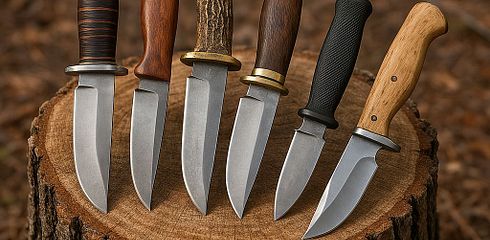
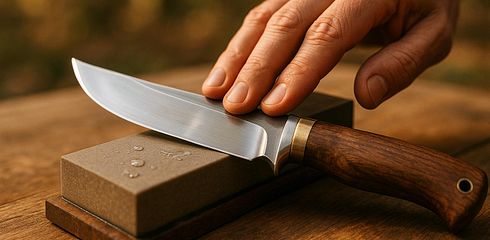
How often to sharpen knives? Questions about stropping in everyday hunting

In short: I strop my hunting knife after every use on game. Usually 5–10 strokes per side are enough. After heavy use, I take 10–20 strokes, with light use often only 3–5 strokes. If the blade still slips on skin or sinew despite stropping, sharpening is due.
That's the whole core of the topic:
- Stropping straightens the fine cutting edge again.
- Sharpening rebuilds a dull or damaged edge.
- After field dressing I check the sharpness immediately.
- First clean, then dry, then strop.
- More pressure is no plus: I work only with light strokes.
- Shiny spots, slipping, chips show me: leather is no longer enough.
A few solid guidelines help in everyday life:
- After normal game care: 5–10 strokes per side
- After much bone contact or several animals: 10–20 strokes per side
- After light everyday use: 3–5 strokes per side or check every 1–2 weeks
- If no noticeable improvement comes after stropping: stone, ceramic or diamond
| Situation | What I do | Typical extent |
|---|---|---|
| Field dressing, skinning, butchering | Stropping immediately afterwards | 5–10 strokes per side |
| Heavy use, bones, sand, lots of game | Stropping, then check | 10–20 strokes per side |
| Light use | Quick check, strop if needed | 3–5 strokes per side |
| Blade slips or tears | Sharpen instead of stropping | rebuild edge |
For me the rule of thumb is simple: If the knife still cuts but is dull, I strop. If it slips or tears, I sharpen. That’s exactly what the text is about: when leather is enough, when not, and how I keep the blade ready with little effort.
STROPPING YOUR KNIFE | Learn how to strop your knife with a strop
sbb-itb-1cfd233
What stropping does – and where the difference to sharpening lies
Stropping realigns and polishes the micro edge. Sharpening goes one step further: steel is removed so the apex is rebuilt. The difference is easy to notice in practice because you feel it directly on the edge.
Maintaining the edge vs. rebuilding the edge
A used but not yet dull blade often has small rolls and fine burrs at the apex. This happens from contact with game and dirt. The knife still cuts then, but it drags more than it glides cleanly through the material.
This is exactly where the strop comes in. It straightens these spots again and smooths the burrs. A sharpening stone is only needed when the apex has already become rounded or has small chips.
Which tools are suitable for this is shown in the overview below.
The Most Important Tools at a Glance
For maintenance in the field, these tools are mainly suitable:
| Tool | Function | Material Removal |
|---|---|---|
| Leather strop (with/without paste) | Aligning and polishing the micro edge | Minimal |
| Ceramic rod (fine grit) | Light touch-up sharpening | Low |
| Honing steel | Raising slightly rolled edges | Minimal to low |
| Fine sharpening stone | Rebuilding the apex | Significant |
How Often to Strop the Hunting Knife in the Field?
Whether the strop is enough mainly depends on how you use the knife. The short answer is simple: after every use for field dressing, skinning, or butchering. This is the usual standard in the field. Bones, connective tissue, and hide wear down the edge. Small rolls and fine burrs can usually be smoothed out well with a few strokes on the strop.
With light use, it’s different. If you only cut a cord, open packaging, or prepare your snack with the knife, it’s usually enough to check the sharpness every few uses or about every 1–2 weeks and strop the knife if needed [2][3][4][6].
A few simple guidelines help for everyday field use.
Stropping Intervals by Type of Use
A good starting point is 5–10 strokes per side after normal field dressing [5][7][1]. This is often enough to realign the edge cleanly.
After heavy use – for example with several pieces of wild boar or a lot of contact with bone – often 10–20 strokes per side are enough. Important: keep the angle steady and work only with the knife’s own weight [1]. More pressure usually doesn’t help, rather the opposite.
After light use, often 3–5 strokes per side are enough as pure maintenance [5][7][1]. It’s a bit like a quick touch-up instead of a major repair later.
What influences the frequency
How often you end up stropping is determined by a few factors.
Steel hardness and geometry make a big difference. Harder, wear-resistant steels often stay sharp longer with the same use and need stropping less often. Classic hunting steels usually want a short touch-up a bit more often. Then there’s the grind: fine edges like frequent, gentle stropping, while tougher hunting geometries with thicker edge bevels often tolerate longer intervals well.
Contact with bone, sand, and dirt noticeably shortens the interval. Especially sand in the fur acts almost like abrasive paste and can dull the edge after just a few cuts. If you often work near joints or the breastbone, you should clean the knife right after each piece and then strop it.
Moisture also plays a role. Corrosion on the edge makes the surface rougher. Such fine irregularities can often be smoothed well with the strop.
And then there’s the personal preference for sharpness. If you like an almost razor-sharp edge, you’ll reach for the strop after almost every field dressing. If a good working sharpness is enough for you, you usually wait a bit longer—until you notice more pressure is needed when cutting.
How to tell if stropping is enough or sharpening is needed
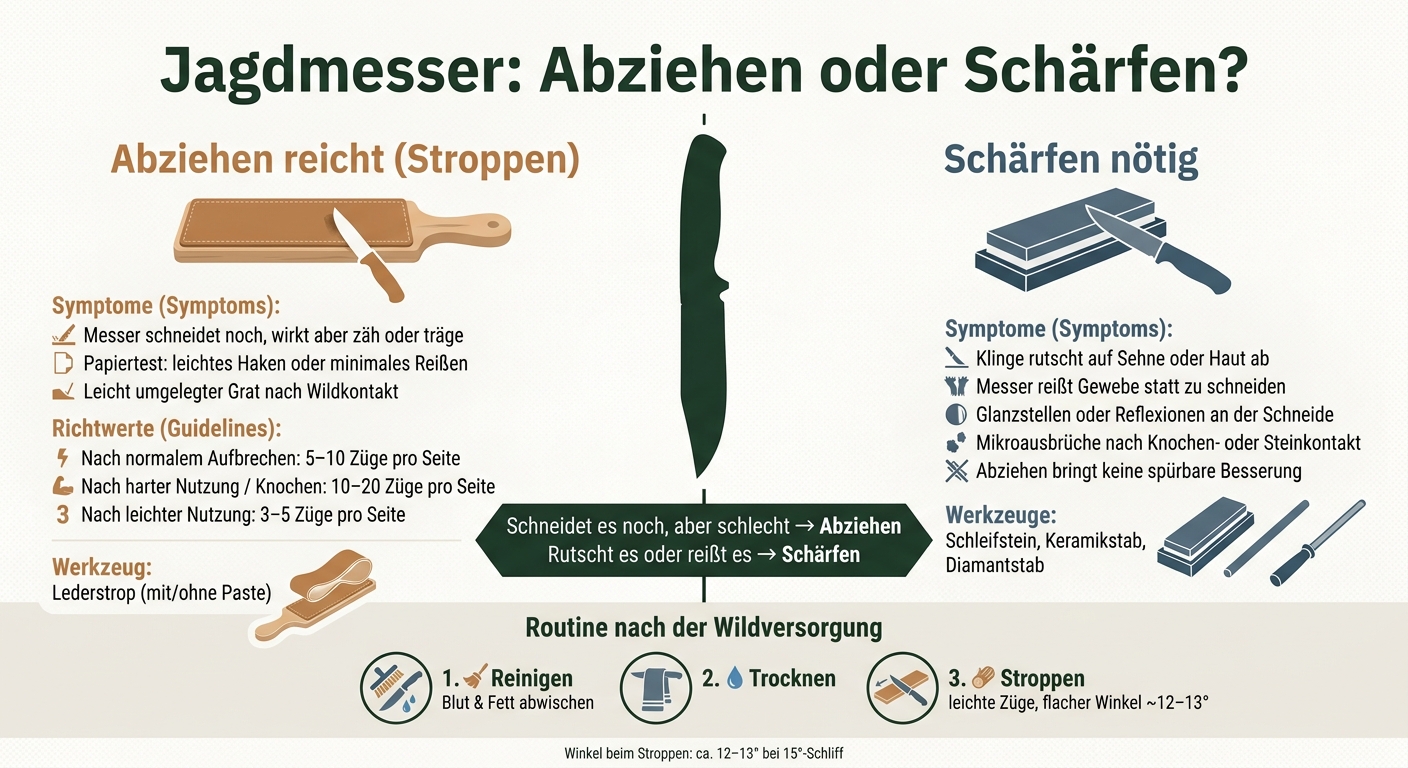
Caring for hunting knives: Stropping vs. Sharpening – When what is needed
Signs that stropping is enough
When stropping intervals are no longer sufficient, only the condition of the edge counts in the end. In the field, it’s not gut feeling but how well the blade still cuts after contact with game.
If the knife still cuts but feels tough or a bit sluggish, the edge is often just slightly rolled. A simple check is the paper test: if the blade still cleanly cuts paper but catches slightly or tears minimally, stropping is often enough.
Signs that sharpening is needed
If the blade slips on tendons or skin without biting, stropping no longer helps. This also applies if the knife tears tissue rather than cutting it or if you noticeably need more force when opening the belly cavity. Then the edge geometry must be rebuilt with a whetstone, diamond rod, or ceramic rod.
The following table shows the main signs at a glance:
| Symptom | Likely Cause | Recommended Action |
|---|---|---|
| Still cuts, but feels tough or pulls | Slightly bent burr towards spine or meat | Honing |
| Slips on sinew or skin or tears tissue | Rounded or blunt edge | Sharpening |
| Shiny spots or reflections on the edge | Flat spots or rounding | Sharpening |
| Micro-chips after bone or stone contact | Mechanical damage | Sharpening, if necessary regrinding |
A rough rule of thumb: If it still cuts, but poorly, then you hone. If it slips, tears, or shows chips, you need to sharpen. If honing doesn’t bring noticeable improvement, the edge needs abrasive treatment. This distinction decides the quick care right after field dressing.
Routine after field dressing, common mistakes and key points at a glance
Short strop routine after field dressing and on multi-day hunts
If honing is still enough, the right order after field dressing is: clean first, then dry, then strop.
Wipe off blood, fat, and coarse dirt with a clean, slightly damp cloth or paper towel. Pay special attention to the edge, as residues quickly cause corrosion there, especially on blades made of carbon steel. Then dry the blade thoroughly. If you don’t use the knife immediately again, you can apply a thin film of oil if needed before putting it back in the sheath.
If the edge has only slightly dulled, the short field routine is often enough. Pull the edge away from your body and hold the angle slightly flatter than the bevel, usually about 12–13° at 15°. For slight dullness, a few light strokes on the leather suffice. If the strop no longer works, use the fine ceramic rod. On multi-day hunts, repeat this short routine after every intense use.
In the field, usually these suffice:
- Leather strop
- Fine ceramic rod
- Cleaning cloth
Avoid mistakes and keep the essentials
To keep the strop working cleanly, avoid three things.
Too much pressure can bend or tear the burr. Then the blade feels sharp briefly but dulls quickly again. Too many strokes at the wrong angle gradually round off the edge. The knife then looks more polished than sharp. And anyone who uses a dirty strop after field dressing easily gets micro-scratches on the edge. Dried blood and fat act like fine abrasive.
Therefore, wipe the strop with a dry cloth after each use and store it clean.
Clean well, hone lightly, refine finely if needed.
FAQs
Which paste is useful for the strop?
The sources do not mention any specific paste for the strop. The focus is mainly on regular sharpening and a consistent angle of usually 20 to 25 degrees.
Therefore, no clear recommendation for a particular stropping paste can be derived from the sources.
How do I safely check the sharpness in the field?
The safest way to check sharpness in the field is with a clean work sample. After use, you should thoroughly clean the knife and only check the edge when it is dry.
For checking the cutting edge before sharpening, the marker method helps: Color the bevel and drag it over the stone. If the marker disappears evenly everywhere, the angle is correct. If spots remain, you need to slightly adjust the angle.
Regular stropping on leather keeps the edge properly aligned between uses.
When is a ceramic rod better than leather?
A ceramic rod is better if your knife is already a bit dull. It is a bit more robust and helps restore more sharpness to the blade. Leather, on the other hand, is the gentler choice for regular maintenance and fine touch-ups.
When stropping, you pull the edge backwards over the leather, so never in the cutting direction. Otherwise, the edge can catch in the leather and ruin the result. Beforehand, you should thoroughly clean the knife so that dirt or meat residues do not affect the edge.