-3 %


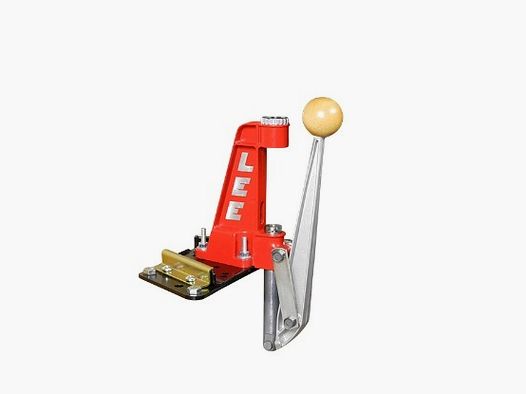
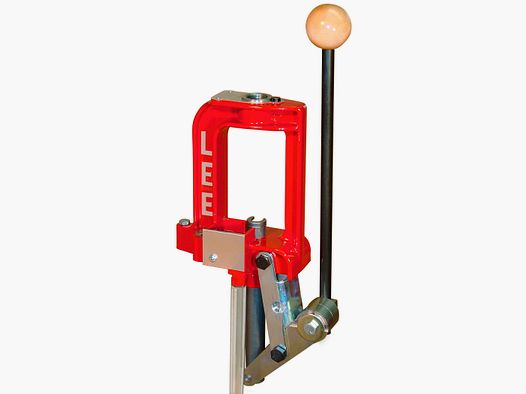
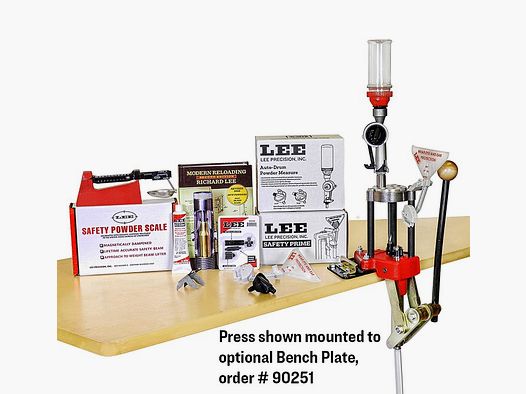
LEE PRECISION Load-All II Shotgun Reloading Press
Price at the dealer: 135.70 €. Converted at the ECB rate as of October 23, 2026.
No permit required (18+)
72479 Straßberg, Germany
28
ID: 9897296
Purchase from outside the EU: The firearm goes through an importer in your country, the dealer handles the export.
How buying from Europe works
Shop safely with Gunfinder
Our AI-powered seller identity verification makes Gunfinder the safest marketplace online.
Learn more
Details
- Original language
- German
- Category
- Condition
- New
- Location
- 🇩🇪 72479 Straßberg, Germany
- Availability
- In stock
Freshness
This listing is based on a mirrored offer, where the listing data was synced to us from a shop, dealer, or external marketplace. Please note that temporary price discrepancies may occur due to possible delays in data transmission.
- Source
- Black Raptor
- Last updated
- about 4 hours ago
Description
Note:
The item is located abroad. Please note that delivery conditions, shipping times, and/or the purchase process may differ.
.br-v3-product *{box-sizing:border-box}
.br-v3-product .br-wrap{max-width:1120px;margin:0 auto;padding:clamp(22px,4vw,48px)}
.br-v3-product .br-hero{background:linear-gradient(135deg,#101d2e 0%,#08111d 70%);border-bottom:1px solid var(--br-line)}
.br-v3-product .br-kicker{margin:0 0 10px;color:#ffd6ad;font-size:.78rem;font-weight:800;letter-spacing:.13em;text-transform:uppercase}
.br-v3-product .br-title{margin:0;max-width:900px;color:#fff;font-size:clamp(1.8rem,4vw,3.2rem);font-weight:900;line-height:1.12}
.br-v3-product .br-lead{max-width:880px;margin:18px 0 0;color:#e5edf6;font-size:clamp(1.02rem,2vw,1.2rem)}
.br-v3-product .br-grid{display:grid;grid-template-columns:repeat(2,minmax(0,1fr));gap:18px}
.br-v3-product .br-card,.br-v3-product .br-note,.br-v3-product .br-faq-item{background:var(--br-panel);border:1px solid var(--br-line);border-radius:14px;padding:20px}
.br-v3-product .br-card--good{border-color:#34734a}
.br-v3-product .br-card--warn{border-color:#8d642f}
.br-v3-product .br-section{border-top:1px solid var(--br-line)}
.br-v3-product .br-section-title{margin:0 0 16px;color:#fff;font-size:clamp(1.3rem,2.5vw,1.8rem);font-weight:900;line-height:1.25}
.br-v3-product .br-card-title{margin:0 0 8px;color:#fff;font-size:1.05rem;font-weight:800}
.br-v3-product p,.br-v3-product li{color:var(--br-text)}
.br-v3-product p{margin:0 0 14px}
.br-v3-product p:last-child{margin-bottom:0}
.br-v3-product ul{margin:0;padding-left:1.25rem}
.br-v3-product li+li{margin-top:8px}
.br-v3-product strong{color:#fff}
.br-v3-product .br-card--good .br-card-title{color:var(--br-good)}
.br-v3-product .br-card--warn .br-card-title{color:var(--br-warn)}
.br-v3-product .br-check{display:grid;grid-template-columns:repeat(4,minmax(0,1fr));gap:12px}
.br-v3-product .br-check-item{background:var(--br-panel-2);border:1px solid var(--br-line);border-radius:12px;padding:16px}
.br-v3-product .br-check-label{display:block;margin-bottom:5px;color:#ffd6ad;font-size:.78rem;font-weight:800;text-transform:uppercase;letter-spacing:.06em}
.br-v3-product .br-note{border-left:5px solid var(--br-accent)}
.br-v3-product .br-faq{display:grid;gap:12px}
.br-v3-product .br-faq-q{cursor:pointer;color:#fff;font-weight:850}
.br-v3-product .br-faq-item[open] .br-faq-q{margin-bottom:9px}
.br-v3-product a{color:#ffd0a1;text-decoration:underline;text-decoration-thickness:1px;text-underline-offset:3px}
.br-v3-product a:hover{color:#fff}
@media (max-width:760px){.br-v3-product .br-grid,.br-v3-product .br-check{grid-template-columns:1fr}.br-v3-product .br-wrap{padding:22px 18px}.br-v3-product .br-card,.br-v3-product .br-note,.br-v3-product .br-faq-item{padding:17px}}
Shotshell reloading · caliber-specific for 2¾ and 3 inch
LEE Load-All II: controlled shotshell loads instead of universal promises
The Load-All II bundles the essential steps for shotshells in a compact bench press. However, three limits are crucial before purchase: Each variant is designed for exactly one caliber, processes only 2¾- and 3-inch cases, and remains a deliberately manual system.
What makes it useful in everyday reloading
One tool holder, clear stations
Depriming and full-length resizing, primer seating, measuring, wad and shot seating, as well as preliminary and final crimping all run sequentially on the same press. This is clear for users who want to consciously see and control every step.
Tailored to manageable batches
The Load-All II is not a progressive high-performance press. Its benefit lies in
the compact, comprehensible workflow. Whether reloading is economically viable depends on components, time, and usage; our guide on training costs helps with a sober overall calculation.
The purchase check before choosing caliber
Caliber 12, 16, or 20 Gauge The chosen variant determines the built-in tool carrier.
Case length 2¾ or 3 inch 2½- and 3½-inch cases are explicitly excluded.
Mounting Stable workbench The lever needs free movement at the front edge.
Workflow Manual, station by station Suitable for inspection and small to medium batches, not for maximum throughput.
Fits well – and fits less well
Fits well
for reloaders working with shotgun cartridges in a fixed caliber,
for 2¾- and 3-inch cases with correct component and load data assignment,
for a calm, clearly visible workflow on limited workbench space,
for beginners who consistently follow the current instructions and verified load data.
Fits less well
if 2½- or 3½-inch cases are to be loaded,
if calibers are frequently switched and no complete conversion kit is planned,
if progressive series output is the most important criterion,
for metallic rifle or handgun cartridges – a different press class is required for that.
Features with practical effect
24 shot and powder bushings
The supplied bushings cover different dosing combinations. They do not replace current, verified load data nor the control of the actually dispensed amount. A precise scale like the LYMAN Accu-Touch 2000 can complement the setup.
Full calibration and primer catcher
The steel sizing ring brings the case head back to size; spent primers are caught in the base. This keeps the workspace tidier but does not exempt from regular cleaning and visual inspection.
Six- and eight-fold crimp starters
The press provides both common crimp starters. The starter used is the one that fits the existing case fold. Wrong starter, unsuitable wad length, or mixed case types are typical causes of poor crimping results.
Caliber change is a real conversion
A complete, separately available conversion kit is required for a change: 90070 for 12 Gauge, 90071 for 16 Gauge, or 90072 for 20 Gauge. Simply choosing a bushing does not make the press a different caliber variant.
Application and instructor notes
Sort cases: Do not mix manufacturer, design, and fold. Different internal lengths change wad seating and crimp; discard damaged or torn cases.
Mount stably: The instructions require firm workbench mounting with the three supplied screws. The base should be no more than 12.7 mm from the front edge so the lever runs freely.
Keep fill level constant: Do not let powder and shot fall far below the integrated partition; a consistent fill level supports reproducible dispensing.
Diagnose crimp errors first: Check starter, case type, wad length, and component assignment before applying more lever force.
No recipe adoption from product texts: Use only current load data from the component or powder manufacturer and check the dispensed amount.
Safety and clear limits
Primers and powder require a tidy workspace, safety glasses, undivided attention, and exact assignment of all components. For the Load-All I
I plastic wads are provided; buckshot must not be dosed via the shot container according to the instructions. Different settings and handling apply for 3-inch cases – the current LEE manual is authoritative for this.
Classification compared to other presses
The Load-All II belongs to the world of shotgun shells. An RCBS Turret Press or REDDING T-7, on the other hand, works with dies and components for metallic cartridges. These presses are neither conversion kits nor functional substitutes for the Load-All II. Those who want to expand their setup will find suitable measuring and working tools in the Collection Reloading; further products from the manufacturer are listed under LEE PRECISION.
Technical data with practical interpretation
Design: manual, bench-mounted shotgun reloading press.
Variants: 12 Gauge (90011), 16 Gauge (90015), 20 Gauge (90012).
Case lengths: 2¾ and 3 inches; not for 2½ or 3½ inches.
Dosing equipment: loading bar plus 24 shot/powder bushings.
Mounting: three fastening points; lever clearance at the bench edge required.
Country of manufacture: USA.
Scope of delivery
one LEE Load-All II in the chosen caliber variant,
caliber-specific tool holder with case holder, wad guide and crimp stations,
full sizer, primer seating and ignition unit as well as primer catcher,
loading bar and 24 shot/powder bushings,
bench mounting material, loading table and instruction manual.
Not included: a conversion kit for other calibers, consumable components as well as measuring and safety equipment.
FAQ about the LEE Load-All II
Can one press load 12, 16 and 20 Gauge without conversion? No. Each offered variant is set up for one caliber. A complete, separately available caliber-specific conversion kit is required for a change.
Which case lengths are approved? LEE specifies 2¾ and 3 inches. 2½- and 3½-inch cases cannot be processed with the Load-All II.
Is the Load-All II also suitable for metallic cartridges? No. It is a shotgun reloading press. Rifle and handgun cartridges require a press designed for them, suitable dies, and a different workflow.
Does the press have to be firmly mounted? Yes, for a stable, safe lever movement. The required mounting material is included. Alternatively, LEE describes mounting on a stable plate, which is then securely clamped.
Are the 24 bushings already a complete loading data approval? No. The bushings are dosing tools. Permissible components, powder type and quantity result exclusively from current, tested loading data; the actual output must be checked.
Why is the crimp uneven? Often crimp starters, case type or wad length do not match. Sort cases, check existing folds and compare component choice with the loading data instead of covering the error with additional force.
Is it the right choice for very large quantities? It can work quickly but remains a manual station-by-station press. Those primarily seeking maximum throughput should also compare progressive shotgun reloading systems before purchase. (Show description in original language)
.br-product-v3{--br-ink:#17201c;--br-muted:#54615b;--br-line:#d9e0dc;--br-soft:#f5f7f5;--br-deep:#10271d;--br-gold:#f2d58e;color:var(--br-ink);font-size:16px;line-height:1.68;max-width:1040px;margin:0 auto;overflow-wrap:anywhere}.br-product-v3 *{box-sizing:border-box}.br-product-v3 p{margin:0 0 12px}.br-product-v3 a{color:#195e43;text-decoration-thickness:1px;text-underline-offset:3px}.br-product-v3 .br-hero-v3,.br-product-v3 .br-final{background:var(--br-deep);border-radius:18px;padding:clamp(24px,5vw,48px);margin:0 0 28px}.br-product-v3 .br-hero-v3,.br-product-v3 .br-hero-v3 p,.br-product-v3 .br-hero-v3 strong,.br-product-v3 .br-hero-v3 span,.br-product-v3 .br-final,.br-product-v3 .br-final p,.br-product-v3 .br-final strong,.br-product-v3 .br-final span{color:#fff!important}.br-product-v3 .br-hero-v3 .br-eyebrow,.br-product-v3 .br-final .br-eyebrow{color:var(--br-gold)!important}.br-product-v3 .br-eyebrow{font-size:.78rem;line-height:1.3;letter-spacing:.12em;text-transform:uppercase;font-weight:800;margin-bottom:10px}.br-product-v3 .br-hero-title{display:block;font-size:clamp(1.65rem,4vw,2.55rem);line-height:1.13;margin-bottom:14px;font-weight:850}.br-product-v3 .br-section-title{display:block;font-size:clamp(1.18rem,2.5vw,1.42rem);line-height:1.25;font-weight:850;margin:30px 0 13px;color:var(--br-ink)}.br-product-v3 .br-box{background:var(--br-soft);border:1px solid var(--br-line);border-radius:14px;padding:20px;margin:0 0 18px}.br-product-v3 .br-grid{display:grid;grid-template-columns:repeat(2,minmax(0,1fr));gap:14px;margin:0 0 18px}.br-product-v3 .br-card{border:1px solid var(--br-line);border-radius:14px;padding:18px;background:#fff}.br-product-v3 .br-card-title{display:block;font-size:1rem;line-height:1.35;font-weight:850;margin-bottom:8px;color:var(--br-ink)}.br-product-v3 details{border:1px solid var(--br-line);border-radius:12px;background:#fff;padding:0 16px;margin:10px 0}.br-product-v3 summary{cursor:pointer;font-weight:800;padding:14px 0;color:var(--br-ink)}.br-product-v3 details p{padding:0 0 14px;color:var(--br-ink)}.br-product-v3 .br-note{border-left:4px solid #b78c2c}@media(max-width:640px){.br-product-v3{font-size:15.8px;line-height:1.62;max-width:100%;overflow:hidden}.br-product-v3 .br-grid{grid-template-columns:1fr}.br-product-v3 .br-hero-v3,.br-product-v3 .br-final{padding:24px 20px;border-radius:14px}.br-product-v3 .br-box,.br-product-v3 .br-card{padding:16px}}
Schrotladen · 12, 16 oder 20 Gauge
LEE Load-All II: kompakte Schrotladepresse mit klarer Kaliberentscheidung Die Load-All II bündelt die wesentlichen Arbeitsschritte für Schrotpatronen in einer manuellen Werkbankpresse. Vor dem Kauf zählen vor allem drei Punkte: die richtige Gauge-Variante, 2¾- oder 3-Zoll-Hülsen und die bewusste Entscheidung für einen kontrollierten Station-für-Station-Ablauf statt maximalem Durchsatz.
Black-Raptor-Einordnung: sinnvoll für überschaubare Chargen und Anwender, die jeden Arbeitsschritt nachvollziehen wollen; nicht die richtige Wahl für häufige Kaliberwechsel oder progressive Serienfertigung.
Passt gut / passt eher nicht
Passt gut, wenn … du Schrotpatronen in einem festen Kaliber lädst, 2¾- oder 3-Zoll-Hülsen verwendest und einen kompakten, manuellen Arbeitsablauf mit klar sichtbaren Stationen bevorzugst.
Passt eher nicht, wenn … du 2½- oder 3½-Zoll-Hülsen verarbeiten willst, regelmäßig zwischen 12/16/20 Gauge wechselst oder maximalen Durchsatz als Hauptkriterium hast.
Variantenwahl ohne Fehlkauf
12 Gauge: Variante 90011 · Shopify-SKU 100010000.
16 Gauge: Variante 90015 · Shopify-SKU 100010002.
20 Gauge: Variante 90012 · Shopify-SKU 100010001.
Die Kaliberwahl bestimmt den Werkzeugträger. Ein Wechsel erfolgt nicht durch eine andere Dosierbuchse allein, sondern erfordert einen vollständigen kaliberspezifischen Umbausatz.
Was die Presse praktisch leistet
Mehrere Arbeitsschritte auf einer Basis Entzündern und Vollkalibrieren, Zündhütchensetzen, Dosieren, Wad- und Schrotsetzung sowie Vor- und Endcrimp laufen nacheinander auf derselben Presse.
24 Schrot- und Pulverbuchsen Die Buchsen ermöglichen unterschiedliche Dosierkombinationen. Sie sind Dosierwerkzeuge, keine Ladedatenfreigabe; die tatsächlich abgegebene Menge muss kontrolliert werden.
Sechs- und Achtfach-Crimpstarter Der passende Starter richtet sich nach der vorhandenen Hülsenfaltung. Hülsentyp, Wad-Länge und Crimpstarter müssen zusammenpassen, sonst leidet das Ergebnis.
Stabile Werkbankmontage Der Hebel benötigt freien Weg an der Vorderkante. Eine feste Montage verhindert unnötige Bewegung und macht den Arbeitsablauf reproduzierbarer.
Grenzen, Nachteile und typische Fehlkäufe
Keine Universalpresse: Sie ist für Schrotpatronen ausgelegt, nicht für metallische Büchsen- oder Kurzwaffenpatronen.
Kein Hochdurchsatzsystem: Die Presse arbeitet manuell, Station für Station. Für sehr große Stückzahlen sind progressive Systeme die passendere Vergleichsklasse.
Hülsenlänge beachten: bestätigt sind 2¾ und 3 Zoll; 2½ und 3½ Zoll gehören nicht in diesen Arbeitsbereich.
Kaliberwechsel kostet Umbauzeit: Wer ständig zwischen 12, 16 und 20 Gauge wechselt, sollte den zusätzlichen Umrüstaufwand vor dem Kauf einkalkulieren.
Sichere Anwendung
Verwende ausschließlich aktuelle, geprüfte Ladedaten für die konkret eingesetzten Komponenten. Pulver, Zündhütchen, Wad, Schrot und Hülse müssen exakt zur gewählten Ladung passen. Schutzbrille, ein aufgeräumter Arbeitsplatz und die Kontrolle der tatsächlichen Pulver- und Schrotabgabe gehören zum Arbeitsablauf. Produktbeschreibungen ersetzen keine Ladedaten.
Technische Daten mit Praxisdeutung
Bauart Manuelle, werkbankmontierte Schrotladepresse – übersichtlich und kompakt, aber bewusst nicht progressiv.
Varianten 12 Gauge (90011), 16 Gauge (90015), 20 Gauge (90012) – die Gauge muss vor dem Kauf passend gewählt werden.
Hülsenlängen 2¾ und 3 Zoll – damit ist der Einsatzbereich klar abgegrenzt.
Dosierung Ladebalken plus 24 Schrot-/Pulverbuchsen – flexibel innerhalb bestätigter Ladedaten, aber kein Ersatz für eine Waagenkontrolle.
Crimp Sechs- und Achtfach-Crimpstarter – passend zur vorhandenen Faltung auswählen.
Herkunft USA – Herstellerangabe aus der vorhandenen Produktquelle.
Lieferumfang
Geliefert wird eine LEE Load-All II in der gewählten Kalibervariante mit kaliberspezifischem Werkzeugträger, Vollkalibrierer, Zündhütchensetz- und Entzündereinheit, Primerfang, Ladebalken, 24 Schrot-/Pulverbuchsen, Werkbank-Befestigungsmaterial, Ladetabelle und Bedienungsanleitung. Ein Umbausatz für andere Kaliber, Verbrauchskomponenten sowie Mess- und Sicherheitsausrüstung sind nicht Bestandteil der gewählten Grundvariante.
FAQ
Kann eine Variante alle drei Gauge-Größen laden? Nein. 12, 16 und 20 Gauge sind separate Varianten. Für einen Kaliberwechsel ist ein vollständiger Umbausatz erforderlich. Welche Hülsenlängen sind vorgesehen? 2¾ und 3 Zoll. 2½- und 3½-Zoll-Hülsen sind nicht für diesen Arbeitsbereich vorgesehen. Ersetzen die 24 Buchsen geprüfte Ladedaten? Nein. Die Buchsen dosieren, sie geben keine Komponenten- oder Ladungsfreigabe. Maßgeblich sind aktuelle geprüfte Ladedaten. Ist die Load-All II für hohe Stückzahlen gedacht? Sie kann zügig arbeiten, bleibt aber eine manuelle Station-für-Station-Presse. Für maximalen Durchsatz sollte eine progressive Schrotladepresse verglichen werden. Ist sie für Büchsen- oder Kurzwaffenpatronen geeignet? Nein. Dafür benötigt man eine dafür ausgelegte Wiederladepresse mit passenden Matrizen.
Black Raptor Kaufberatung
Die richtige Load-All II ist zuerst eine Kaliberentscheidung. Wenn du in einem festen Gauge arbeitest, 2¾- oder 3-Zoll-Hülsen lädst und einen kontrollierten manuellen Ablauf möchtest, ist die Load-All II schlüssig. Wer häufig umrüstet oder Serienausstoß priorisiert, sollte vor dem Kauf eine andere Pressenklasse prüfen.