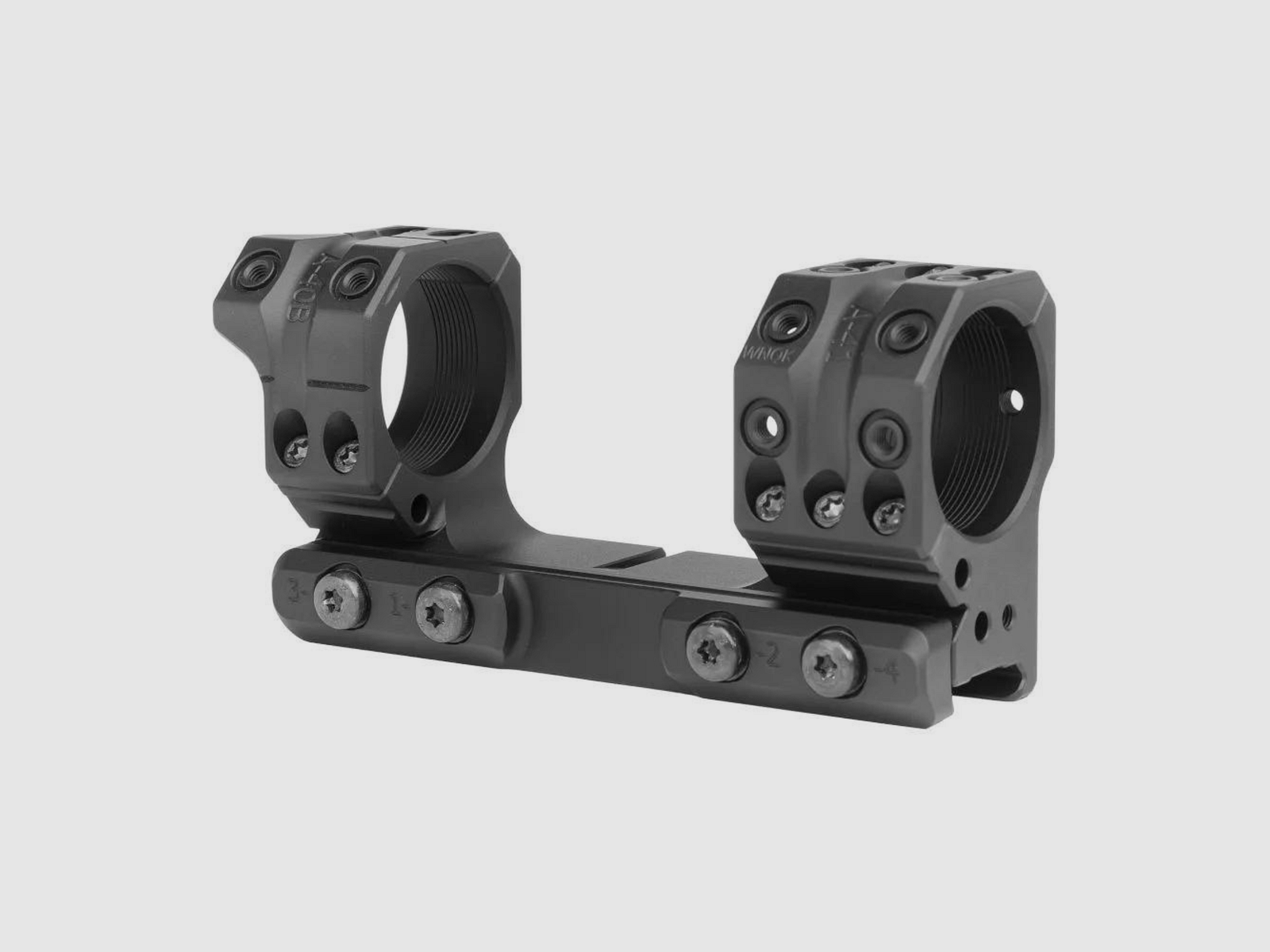
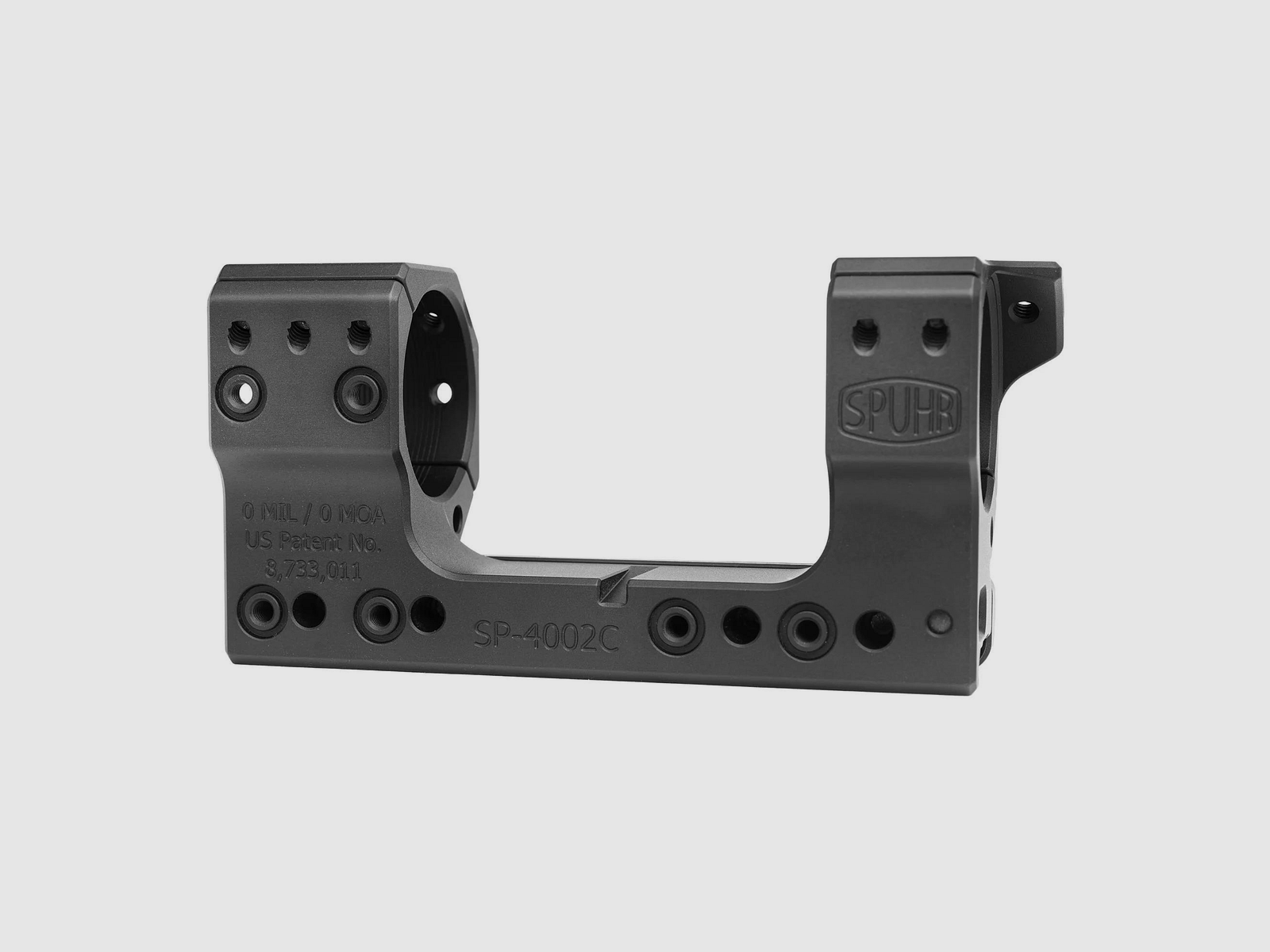
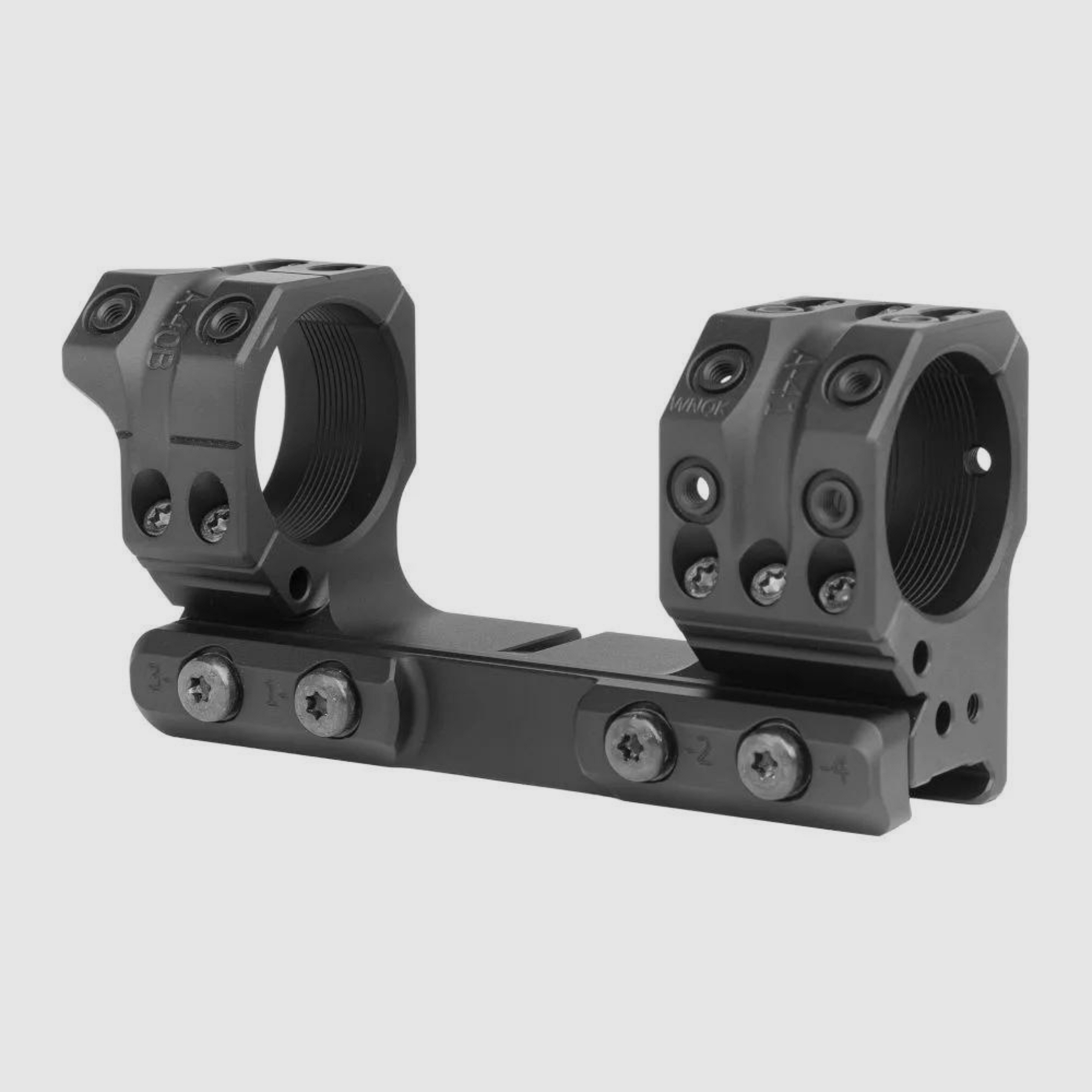
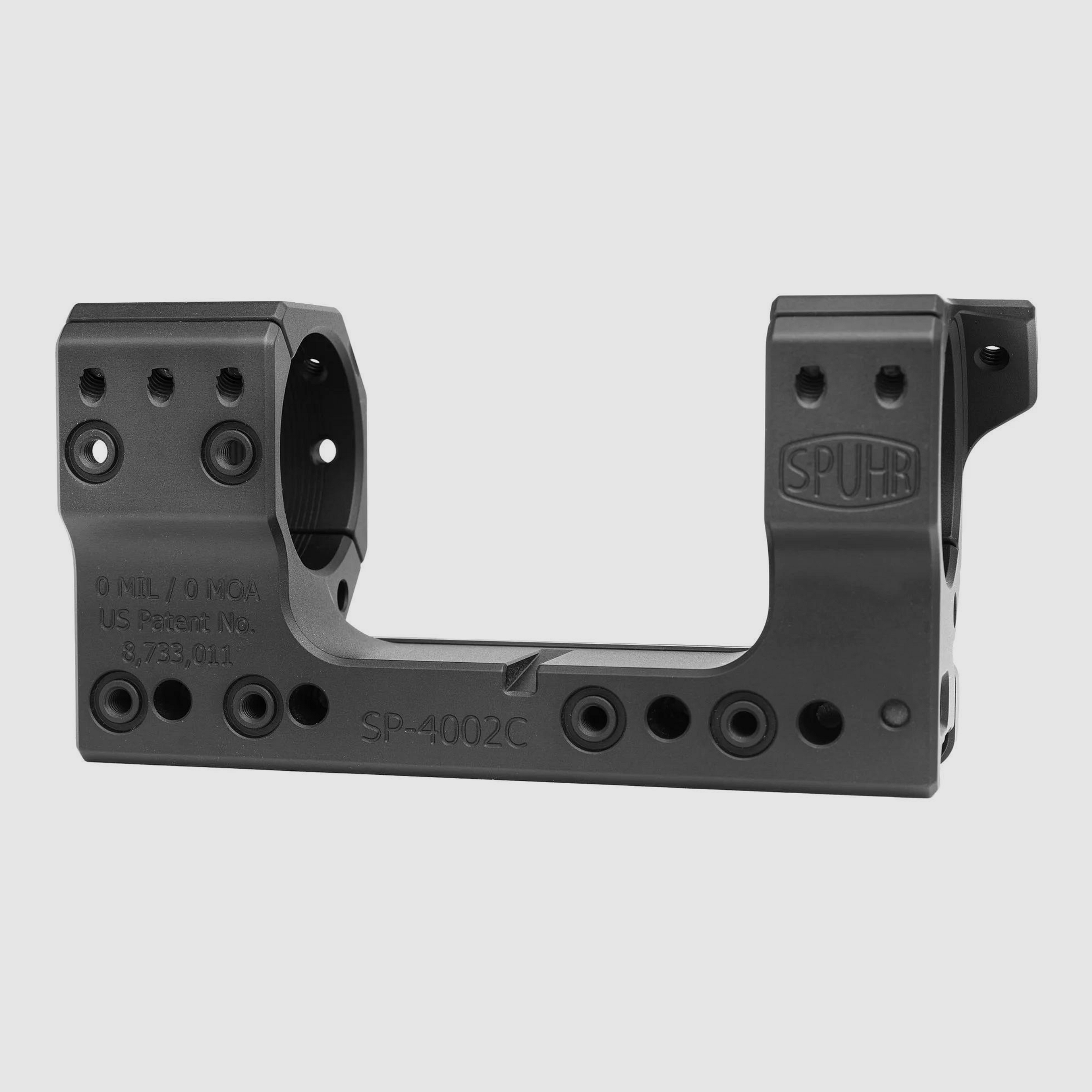
Spuhr Scope Mount, 34 mm / 38 mm / 10.3 MOA Gen 3
449.92 €
72479 Straßberg, Germany
3
ID: 9897181
Shop safely with Gunfinder
Our AI-powered seller identity verification makes Gunfinder the safest marketplace online.
Learn more
Details
- Original language
- German
- Category
- Condition
- New
- Location
- 🇩🇪 72479 Straßberg, Germany
- Availability
- In stock
Freshness
This listing is based on a mirrored offer, where the listing data was synced to us from a shop, dealer, or external marketplace. Please note that temporary price discrepancies may occur due to possible delays in data transmission.
- Source
- Black Raptor
- Last updated
- about 19 hours ago
Description
Note:
The item is located abroad. Please note that delivery conditions, shipping times, and/or the purchase process may differ.
Spuhr · Buying Guide
Choose ring size, height, and cant as a coordinated system
Spuhr scope mount, 34 mm / 38 mm / 10.3 MOA Gen 3 is not just categorized by features here: Fit, variant, and the practical consequence for your setup are decisive.
Check fit first
Does the product fit your setup?
- Fits well if tube diameter, Picatinny interface, desired height, cant, and if applicable, forward offset match exactly.
- Does not fit well if only the tube diameter was checked or if objective, turret, case ejection, or eye relief collide.
Purchase check before ordering
34 mm rings, height, MOA/MIL cant, QD version, forward offset, and rail standard. Check the chosen variant against the designation on the existing system and the manufacturer’s documentation.
Between a neutral mount and a strongly canted long-range solution often lies the most reasonable working range. Three MIL can shift the usable elevation path towards longer targets without affecting zero and image quality as much as larger angles. The advan...
it only arises when rail and mount are added together.
The SP-4302C sets a 34-mm scope on the rear ring to 38 mm and tilts its axis by 3 MIL or 10.3 MOA. Spuhr positions this high profile for large objective classes and extended Picatinny rails, on which a separately mounted attachment device can also be used.
Before buying, four sizes belong together: rail tilt + 3 MIL mounting angle = total tilt. The actual counter-adjustment range must allow the desired zero point. The 38-mm line must fit the stock cheek and clip-on axis. The actual outer dimension of the objective including cap determines the clearance.
What 3 MIL changes in the system
The mount aligns the optic forward sloping relative to the rail. When zeroing, correction is made in the opposite direction. If the zero point remains reachable, a larger portion of the already existing elevation adjustment range can then be used for more distant targets.
The mechanical total adjustment range does not increase. On a neutral rail, 3 MIL system tilt arises; on a rail already tilted by 6 MIL, it totals 9 MIL. Zero-stop, actual counter travel, and zeroing correction decide whether this combination works.
For a setup that covers its distance range neutrally, the SP-4002C is more honest. If significantly more than 3 MIL is needed and the zero point remains reachable, the SP-4602C with 6 MIL is the more suitable step.
Trainer tip: Treat the near zero point as a hard limit
First determine rail angle and available counter travel with zero-stop set up. Only when rail plus 3 MIL safely allow the intended zero point is the additional elevation range evaluated at distance. A turret knock cannot be solved by tightening the mount harder.
Objective clearance along the tilted axis
Spuhr measures the 38 mm at the rear plane of the rear ring. Due to 3 MIL, the axis drops forward by about 0.3 mm per 100 mm. Over a parallel continuous rail, the calculation is: height = 38 mm minus 0.003 times distance in millimeters.
If the widest part of the objective is 150 mm further forward, the axis height there is 37.55 mm. A real outer housing with 66 mm allows 4.55 mm; with 70 mm outer diameter, 2.55 mm remain. Protective cap, tolerance, dirt, and safety margin must still be deducted from this.
A 56-mm objective class refers to the front lens and not the outer dimension. Spuhr’s alignment for 56-mm objectives is therefore not a universal promise for every housing and every cap.
User tip: Don’t measure by model name
Measure the largest diameter with the actually used cap and its distance to the rear ring plane. Subtract 0.3 mm per 100 mm from the 38-mm axis and then half the outer diameter. Only the remaining clearance is decisive for purchase.
Attachment device: same axis, own mount
The tall SP-4302C can be part of a system with night vision or thermal attachment but only carries the scope. Needed are an extended front base, the approved clip-on mount, and a front device whose axis height fits the tilted scope axis.
Since the optic drops by 3 MIL, the front mount must not only be nominally “38 mm.” The real axis at the position of the attachment device is decisive. Operating space for focus, battery compartment, and locking is added. A height specification without measurement reference to the rail and without longitudinal position is not sufficient for this.
User tip: Align front device at its position
Calculate the scope axis where the attachment device actually sits. At 200 mm distance, it has dropped about 0.6 mm relative to the rear measuring plane. A purely nominal height specification without longitudinal reference can therefore lead to axis offset despite free mechanics.
38 mm height without cantilever
The raised line fits large objectives, adjustable chassis backs, and front devices.
On a low hunting stock, it may require a cheek riser. Stable cheek contact remains more important than maximum clearance.
The mount has no forward offset. On AR platforms, the height may be right while the eye relief remains too short. Then a cantilever design is technically more correct than placing the rear ring on an unsuitable tube area.
Gen3 ring space and solid clamping
The C suffix marks Gen3. According to the dimension drawing, the 34 mm version offers 66 mm of free space between the ring areas and 32 mm ring width. This also fits many scopes with extended erector housings, provided both rings sit fully on straight tube surfaces.
The SP-4302C is firmly screwed onto MIL-STD-1913 or STANAG 4694. It has no QD levers and according to Spuhr does not fit SAKO S20 or two-piece rails. Seven interfaces and the integrated bubble level remain part of the common mount body.
According to the current ISMS instructions, the clean, lightly oiled mount is pressed forward against the groove flank. The M5 Tx20 clamping screws receive 5 Nm; for the waxed M4 ring screws, 2.0 Nm or the lower optics manufacturer value applies.
User tip: Set ring zones before eye relief
Place the turret block and straight tube surfaces first into the 66 mm free space and under the two 32 mm rings. Then the entire body is positioned on the rail. This keeps the clamping fully surface-contacting.
Our assessment
The strongest buying reason is the balanced combination of 38 mm line, moderate 3 MIL, and Gen3 ring space. It suits shooters who use large optics or front devices but do not need aggressive long-range inclination.
Its most common purchase risk is an already inclined rail. What seems like a moderate 3 MIL can then become a total angle of 9 MIL. Therefore, the SP-4302C is not a general compromise but a calculated system component.
Black-Raptor short summary:
Buy if: 34 mm tube, 38 mm head position, and 3 MIL total planning fit together, the zero point remains reachable, and the objective or front device runs freely along the inclined axis.
Don’t buy if: 0 MIL is sufficient, 6 MIL is needed, the rail is already too steeply inclined, or QD or cantilever take priority.
Scope of delivery
1 × Spuhr SP-4302C Gen3
1 × 10-degree leveling wedge with screw length gauge
1 × Manufacturer’s manual
Scope, firearm, rail, front device, clip-on mount, interface accessories, and torque tool are not included.
Suitable alternatives
SP-4002C: same height without additional inclination
SP-4602C: same height with 6 MIL
SP-4902C: same height with 9 MIL
QDP-4602: 38 mm and 6 MIL with QD levers
Technical data
Model: SP-4302C Gen3
Middle tube: 34 mm
Axis height: 38 mm / 1.5 inch at rear ring
Inclination: 3 MIL / 10.3 MOA
Mount: MIL-STD-1913 / STANAG 4694
QD / Cantilever: no / no
Body / total: 120 mm / 130 mm
Ring space / ring width: 66 mm / 32 mm
Weight: 255 g / 9.0 oz
Material: 7000 series aluminum, hard anodized
Interfaces: seven sets, integrated bubble level
EAN: 7340150701970
Torque: 5 Nm rail; 2.0 Nm or lower optics manufacturer value on rings
FAQ
Does 3 MIL increase the total adjustment range? No. They only shift the working position within the existing range.
How do 3 MIL work on an inclined rail? The angles add up. A 6 MIL rail results in 9 MIL total system inclination with this mount.
Does every 56 mm objective fit? No. The number refers to the lens, not the actual housing including cap.
Is a clip-on mount included? No. Front base, mount, and front device are needed separately.
Is the SP-4302C a QD mount? No. It is firmly screwed.
When is the SP-4002C better? When 38 mm height fits but no additional mounting angle is needed.
Technical data practically read
Critical purchase data 34 mm rings, build height
, MOA/MIL cant, QD design, forward offset and rail standard.
Practical sequence The correct geometry ensures clearance and usable adjustment range; too much cant can limit the close range.
Avoid limits and bad purchases
Important before assembly and use Mount according to Spuhr specifications with a torque wrench. Tighten ring caps evenly and check zero retention after initial assembly.
Scope of delivery The scope of delivery exclusively includes the version explicitly named in the existing product text and in the selected variant. Depicted firearms, optics, or other accessories are not included unless explicitly listed.
Black-Raptor classification: This version makes sense when the critical purchase dimensions and interfaces are clearly confirmed in advance. If fit is unclear, first check the model designation and existing mount. (Show description in original language)
.br-product-v3{--br-ink:#17201c;--br-muted:#54615b;--br-line:#d9e0dc;--br-soft:#f5f7f5;--br-deep:#10271d;--br-gold:#f2d58e;font-family:Arial,Helvetica,sans-serif;color:var(--br-ink);line-height:1.65;max-width:1180px;margin:0 auto;overflow-wrap:anywhere}
.br-product-v3 *{box-sizing:border-box}.br-product-v3 p{margin:0 0 14px}.br-product-v3 ul{margin:8px 0 14px;padding-left:20px}.br-product-v3 li{margin:0 0 7px}
.br-product-v3 .br-hero-v3{background:linear-gradient(135deg,var(--br-deep),#183c2c);color:#fff;border-radius:24px;padding:34px;margin:0 0 24px;box-shadow:0 16px 38px rgba(16,39,29,.18)}
.br-product-v3 .br-eyebrow-v3{color:var(--br-gold);font-size:.76rem;font-weight:800;letter-spacing:.12em;text-transform:uppercase;margin-bottom:10px}
.br-product-v3 .br-title-v3{font-size:clamp(1.8rem,4vw,2.65rem);line-height:1.08;font-weight:850;letter-spacing:-.035em;margin:0 0 16px}
.br-product-v3 .br-pill-v3{display:inline-block;background:var(--br-gold);color:var(--br-deep);font-weight:800;border-radius:999px;padding:9px 14px}
.br-product-v3 .br-section-title{font-size:1.28rem;line-height:1.25;font-weight:850;color:var(--br-deep);margin:32px 0 13px}
.br-product-v3 .br-grid{display:grid;grid-template-columns:repeat(2,minmax(0,1fr));gap:14px;margin:14px 0 22px}
.br-product-v3 .br-card,.br-product-v3 .br-box{border:1px solid var(--br-line);background:#fff;border-radius:16px;padding:18px;min-width:0}
.br-product-v3 .br-box{background:var(--br-soft);border-left:5px solid var(--br-gold);margin:16px 0 22px}
.br-product-v3 .br-card strong,.br-product-v3 .br-box strong{display:block;color:var(--br-deep);margin-bottom:7px}
.br-product-v3 .br-limit{border:1px solid #e2c9c4;background:#fff5f2;border-radius:16px;padding:18px;margin:18px 0 24px}
.br-product-v3 .br-tech-v3{display:grid;grid-template-columns:repeat(2,minmax(0,1fr));gap:14px;margin:12px 0 22px}
.br-product-v3 .br-delivery-v3{background:#fbf7ea;border-color:#ead9aa}
.br-product-v3 details{border:1px solid var(--br-line);background:var(--br-soft);border-radius:12px;padding:12px 14px;margin:0 0 9px}
.br-product-v3 summary{font-weight:800;color:var(--br-deep);cursor:pointer}.br-product-v3 .br-video-slot{min-height:1px;margin:0}
.br-product-v3 .br-final{background:var(--br-deep);color:#fff;border-radius:20px;padding:24px;margin-top:28px}.br-product-v3 .br-final strong{color:var(--br-gold)}
.br-product-v3 table{width:100%;border-collapse:collapse;display:block;overflow-x:auto}.br-product-v3 td,.br-product-v3 th{border-bottom:1px solid var(--br-line);padding:9px;text-align:left}
@media(max-width:760px){.br-product-v3 .br-grid,.br-product-v3 .br-tech-v3{grid-template-columns:1fr}.br-product-v3 .br-hero-v3{padding:24px 20px;border-radius:18px}.br-product-v3 .br-card,.br-product-v3 .br-box,.br-product-v3 .br-limit{padding:15px}.br-product-v3{max-width:100%;overflow:hidden}}
Spuhr · Kaufberatung
Ringmaß, Bauhöhe und Vorneigung als abgestimmtes System wählen
Spuhr Zielfernrohrmontage, 34 mm / 38 mm / 10,3 MOA Gen 3 wird hier nicht nur über Merkmale eingeordnet: Entscheidend sind Passung, Variante und die praktische Folge für dein Setup.
Passung zuerst prüfen
Passt das Produkt zu deinem Setup?
Passt gut wenn Rohrdurchmesser, Picatinny-Schnittstelle, gewünschte Höhe, Vorneigung und gegebenenfalls Vorversatz exakt passen.
Passt eher nicht wenn nur der Rohrdurchmesser geprüft wurde oder Objektiv, Turm, Hülsenauswurf beziehungsweise Augenabstand kollidieren.
Kaufcheck vor dem Bestellen 34-mm-Ringe, Bauhöhe, MOA/MIL-Vorneigung, QD-Ausführung, Vorversatz und Schienenstandard. Prüfe die gewählte Variante gegen die Bezeichnung am vorhandenen System und gegen die Herstellerunterlagen.
Zwischen einer neutralen Montage und einer stark geneigten Long-Range-Lösung liegt oft der vernünftigste Arbeitsbereich. Drei MIL können den nutzbaren Höhenweg in Richtung weiter Ziele verschieben, ohne den Nullpunkt und die Bildqualität so stark zu belasten wie größere Winkel. Der Vorteil entsteht aber nur, wenn Rail und Montage zusammen gerechnet werden.
Die SP-4302C setzt ein 34-mm-Zielfernrohr am hinteren Ring auf 38 mm und neigt dessen Achse um 3 MIL beziehungsweise 10,3 MOA. Spuhr positioniert diese hohe Bauform für große Objektivklassen und verlängerte Picatinny-Rails, auf denen auch ein separat montiertes Vorsatzgerät genutzt werden kann.
Vor dem Kauf gehören vier Größen zusammen: Neigung der Waffenrail + 3 MIL Montagewinkel = Gesamtneigung. Der reale Gegenverstellweg muss den gewünschten Nullpunkt zulassen. Die 38-mm-Linie muss zur Schaftbacke und Clip-on-Achse passen. Das reale Objektivaußenmaß samt Kappe bestimmt den Freiraum.
Was 3 MIL im System verändern
Die Montage richtet die Optik gegenüber der Rail nach vorn abfallend aus. Beim Einschießen wird in Gegenrichtung korrigiert. Bleibt der Nullpunkt erreichbar, kann anschließend ein größerer Anteil des bereits vorhandenen Höhenverstellwegs für weiter entfernte Ziele genutzt werden.
Der mechanische Gesamtverstellweg wird nicht größer. Auf einer neutralen Rail entstehen 3 MIL Systemneigung; auf einer bereits um 6 MIL geneigten Rail sind es zusammen 9 MIL. Zero-Stop, tatsächlicher Gegenweg und Einschießkorrektur entscheiden, ob diese Kombination funktioniert.
Für einen Aufbau, der seinen Distanzbereich neutral abdeckt, ist die SP-4002C ehrlicher. Werden deutlich mehr als 3 MIL gebraucht und bleibt der Nullpunkt erreichbar, ist die SP-4602C mit 6 MIL die passendere Stufe.
Ausbilder-Tipp: Den Nahnullpunkt als harte Grenze behandeln Bestimme zuerst Railwinkel und verfügbaren Gegenweg mit eingerichtetem Zero-Stop. Erst wenn Rail plus 3 MIL den vorgesehenen Nullpunkt sicher zulassen, wird der zusätzliche Höhenweg auf Distanz bewertet. Ein Turmanschlag lässt sich nicht durch festeres Anziehen der Montage lösen.
Objektivfreiheit entlang der geneigten Achse
Spuhr misst die 38 mm an der hinteren Ebene des hinteren Rings. Durch 3 MIL fällt die Achse nach vorn ungefähr 0,3 mm je 100 mm. Über einer parallelen durchgehenden Rail lautet die Rechnung: Höhe = 38 mm minus 0,003 mal Abstand in Millimetern.
Liegt die breiteste Stelle des Objektivs 150 mm weiter vorn, beträgt die Achshöhe dort 37,55 mm. Ein reales Außengehäuse mit 66 mm lässt rechnerisch 4,55 mm; bei 70 mm Außendurchmesser bleiben 2,55 mm. Schutzkappe, Toleranz, Schmutz und Sicherheitsreserve sind davon noch abzuziehen.
Eine 56-mm-Objektivklasse bezeichnet die Frontlinse und nicht das Außenmaß. Spuhrs Ausrichtung auf 56-mm-Objektive ist deshalb keine Universalzusage für jedes Gehäuse und jede Kappe.
Nutzer-Tipp: Nicht am Modellnamen messen Miss den größten Durchmesser mit der tatsächlich verwendeten Kappe und seinen Abstand zur hinteren Ringebene. Ziehe je 100 mm 0,3 mm von der 38-mm-Achse ab und anschließend den halben Außendurchmesser. Nur die verbleibende Reserve ist kaufentscheidend.
Vorsatzgerät: gleiche Achse, eigene Aufnahme
Die hohe SP-4302C kann Teil eines Systems mit Nachtsicht- oder Wärmebildvorsatzgerät sein, trägt aber nur das Zielfernrohr. Benötigt werden eine verlängerte Frontbasis, die freigegebene Clip-on-Aufnahme und ein Frontgerät, dessen Achshöhe zur geneigten Zielfernrohrachse passt.
Da die Optik um 3 MIL fällt, muss die Frontaufnahme nicht nur nominell „38 mm“ heißen. Entscheidend ist die reale Achse an der Position des Vorsatzgeräts. Bedienraum für Fokus, Batteriefach und Verriegelung kommt zusätzlich hinzu. Eine Höhenangabe ohne Messbezug zur Rail und ohne Längsposition ist dafür nicht ausreichend.
Nutzer-Tipp: Frontgerät an seiner Position ausrichten Berechne die Zielfernrohrachse dort, wo das Vorsatzgerät tatsächlich sitzt. Bei 200 mm Abstand ist sie gegenüber der hinteren Messebene um rund 0,6 mm abgesunken. Eine rein nominelle Höhenangabe ohne Längsbezug kann deshalb trotz freier Mechanik zu Achsversatz führen.
38 mm Höhe ohne Cantilever
Die erhöhte Linie passt zu großen Objektiven, verstellbaren Chassisbacken und Frontgeräten. Auf einem niedrigen Jagdschaft kann sie einen Wangenaufsatz erfordern. Stabiler Wangenkontakt bleibt wichtiger als maximaler Freiraum.
Die Montage besitzt keinen Vorversatz. Auf AR-Plattformen kann die Höhe stimmen, während der Augenabstand zu kurz bleibt. Dann ist eine Cantilever-Ausführung technisch richtiger, statt den hinteren Ring auf eine ungeeignete Rohrzone zu setzen.
Gen3-Ringraum und feste Klemmung
Das C-Suffix kennzeichnet Gen3. Die 34-mm-Ausführung bietet laut Maßzeichnung 66 mm freien Raum zwischen den Ringbereichen und 32 mm Ringbreite. Dadurch passen auch viele Optiken mit verlängertem Erektorgehäuse, sofern beide Ringe vollständig auf geraden Rohrflächen sitzen.
Die SP-4302C wird fest auf MIL-STD-1913 oder STANAG 4694 verschraubt. Sie besitzt keine QD-Hebel und passt laut Spuhr nicht auf SAKO S20 oder zweiteilige Rails. Sieben Interfaces und die integrierte Libelle bleiben Teil des gemeinsamen Montagenkörpers.
Nach aktueller ISMS-Anleitung wird die saubere, leicht geölte Montage nach vorn gegen die Nutflanke gedrückt. Die M5-Tx20-Klemmschrauben erhalten 5 Nm; für die gewachsten M4-Ringschrauben gelten 2,0 Nm oder der niedrigere Optikherstellerwert.
Nutzer-Tipp: Ringzonen vor Augenabstand festlegen Lege Turmblock und gerade Rohrflächen zuerst in den 66-mm-Freiraum und unter die beiden 32-mm-Ringe. Danach wird der gesamte Körper auf der Rail positioniert. So bleibt die Klemmung vollflächig.
Unsere Einschätzung
Der stärkste Kaufgrund ist die ausgewogene Verbindung aus 38-mm-Linie, moderaten 3 MIL und Gen3-Ringraum. Sie passt zu Schützen, die große Optiken oder Fronttechnik einsetzen, aber keine aggressive Long-Range-Neigung benötigen.
Ihr häufigstes Fehlkaufrisiko ist eine bereits geneigte Rail. Aus vermeintlich moderaten 3 MIL können dann 9 MIL Gesamtwinkel werden. Die SP-4302C ist deshalb kein pauschaler Mittelweg, sondern eine berechnete Systemkomponente.
Black-Raptor-Kurzfazit: Kaufen, wenn: 34-mm-Rohr, 38-mm-Kopfposition und 3 MIL Gesamtplanung zusammenpassen, der Nullpunkt erreichbar bleibt und Objektiv oder Frontgerät entlang der geneigten Achse frei laufen. Nicht kaufen, wenn: 0 MIL genügen, 6 MIL benötigt werden, die Rail bereits zu stark geneigt ist oder QD beziehungsweise Cantilever Vorrang haben.
Lieferumfang
1 × Spuhr SP-4302C Gen3
1 × 10-Grad-Nivellierkeil mit Schraubenlängenlehre
1 × Herstelleranleitung
Zielfernrohr, Waffe, Rail, Vorsatzgerät, Clip-on-Aufnahme, Interface-Zubehör und Drehmomentwerkzeug sind nicht enthalten.
Passende Alternativen
SP-4002C: gleiche Höhe ohne zusätzliche Neigung
SP-4602C: gleiche Höhe mit 6 MIL
SP-4902C: gleiche Höhe mit 9 MIL
QDP-4602: 38 mm und 6 MIL mit QD-Hebeln
Technische Daten
Modell: SP-4302C Gen3
Mittelrohr: 34 mm
Achshöhe: 38 mm / 1,5 Zoll am hinteren Ring
Neigung: 3 MIL / 10,3 MOA
Aufnahme: MIL-STD-1913 / STANAG 4694
QD / Cantilever: nein / nein
Körper / gesamt: 120 mm / 130 mm
Ringraum / Ringbreite: 66 mm / 32 mm
Gewicht: 255 g / 9,0 oz
Material: Aluminium der 7000er-Serie, harteloxiert
Interfaces: sieben Sätze, integrierte Libelle
EAN: 7340150701970
Drehmoment: 5 Nm Rail; 2,0 Nm oder niedrigerer Optikherstellerwert an den Ringen
FAQ
Vergrößern 3 MIL den Gesamtverstellweg? Nein. Sie verschieben nur die Arbeitslage innerhalb des vorhandenen Bereichs. Wie wirken 3 MIL auf einer geneigten Rail? Die Winkel addieren sich. Eine 6-MIL-Rail ergibt mit dieser Montage 9 MIL Gesamtsystemneigung. Passt jedes 56-mm-Objektiv? Nein. Die Zahl bezeichnet die Linse, nicht das reale Gehäuse samt Kappe. Ist eine Clip-on-Aufnahme enthalten? Nein. Frontbasis, Aufnahme und Vorsatzgerät werden separat benötigt. Ist die SP-4302C eine QD-Montage? Nein. Sie wird fest verschraubt. Wann ist die SP-4002C besser? Wenn 38 mm Höhe passen, aber kein zusätzlicher Montagewinkel benötigt wird.
Technische Daten praktisch gelesen
Kaufkritische Daten 34-mm-Ringe, Bauhöhe, MOA/MIL-Vorneigung, QD-Ausführung, Vorversatz und Schienenstandard.
Praxisfolge Die richtige Geometrie schafft Freigängigkeit und nutzbaren Verstellweg; zu viel Vorneigung kann den Nahbereich einschränken.
Grenzen und Fehlkauf vermeiden
Wichtig vor Montage und Nutzung Nach Spuhr-Vorgabe mit Drehmomentschlüssel montieren. Ringdeckel gleichmäßig anziehen und Nullhaltung nach Erstmontage kontrollieren.
Lieferumfang Zum Lieferumfang gehört ausschließlich die im bestehenden Produkttext und in der gewählten Variante ausdrücklich benannte Ausführung. Abgebildete Waffen, Optiken oder weiteres Zubehör sind nicht enthalten, sofern sie nicht ausdrücklich aufgeführt sind.
Black-Raptor-Einordnung: Sinnvoll ist diese Ausführung dann, wenn die kaufkritischen Maße und Schnittstellen vorab eindeutig bestätigt sind. Bei unklarer Passung zuerst Modellbezeichnung und vorhandene Aufnahme prüfen.
.br-product-v3 *{box-sizing:border-box}.br-product-v3 p{margin:0 0 14px}.br-product-v3 ul{margin:8px 0 14px;padding-left:20px}.br-product-v3 li{margin:0 0 7px}
.br-product-v3 .br-hero-v3{background:linear-gradient(135deg,var(--br-deep),#183c2c);color:#fff;border-radius:24px;padding:34px;margin:0 0 24px;box-shadow:0 16px 38px rgba(16,39,29,.18)}
.br-product-v3 .br-eyebrow-v3{color:var(--br-gold);font-size:.76rem;font-weight:800;letter-spacing:.12em;text-transform:uppercase;margin-bottom:10px}
.br-product-v3 .br-title-v3{font-size:clamp(1.8rem,4vw,2.65rem);line-height:1.08;font-weight:850;letter-spacing:-.035em;margin:0 0 16px}
.br-product-v3 .br-pill-v3{display:inline-block;background:var(--br-gold);color:var(--br-deep);font-weight:800;border-radius:999px;padding:9px 14px}
.br-product-v3 .br-section-title{font-size:1.28rem;line-height:1.25;font-weight:850;color:var(--br-deep);margin:32px 0 13px}
.br-product-v3 .br-grid{display:grid;grid-template-columns:repeat(2,minmax(0,1fr));gap:14px;margin:14px 0 22px}
.br-product-v3 .br-card,.br-product-v3 .br-box{border:1px solid var(--br-line);background:#fff;border-radius:16px;padding:18px;min-width:0}
.br-product-v3 .br-box{background:var(--br-soft);border-left:5px solid var(--br-gold);margin:16px 0 22px}
.br-product-v3 .br-card strong,.br-product-v3 .br-box strong{display:block;color:var(--br-deep);margin-bottom:7px}
.br-product-v3 .br-limit{border:1px solid #e2c9c4;background:#fff5f2;border-radius:16px;padding:18px;margin:18px 0 24px}
.br-product-v3 .br-tech-v3{display:grid;grid-template-columns:repeat(2,minmax(0,1fr));gap:14px;margin:12px 0 22px}
.br-product-v3 .br-delivery-v3{background:#fbf7ea;border-color:#ead9aa}
.br-product-v3 details{border:1px solid var(--br-line);background:var(--br-soft);border-radius:12px;padding:12px 14px;margin:0 0 9px}
.br-product-v3 summary{font-weight:800;color:var(--br-deep);cursor:pointer}.br-product-v3 .br-video-slot{min-height:1px;margin:0}
.br-product-v3 .br-final{background:var(--br-deep);color:#fff;border-radius:20px;padding:24px;margin-top:28px}.br-product-v3 .br-final strong{color:var(--br-gold)}
.br-product-v3 table{width:100%;border-collapse:collapse;display:block;overflow-x:auto}.br-product-v3 td,.br-product-v3 th{border-bottom:1px solid var(--br-line);padding:9px;text-align:left}
@media(max-width:760px){.br-product-v3 .br-grid,.br-product-v3 .br-tech-v3{grid-template-columns:1fr}.br-product-v3 .br-hero-v3{padding:24px 20px;border-radius:18px}.br-product-v3 .br-card,.br-product-v3 .br-box,.br-product-v3 .br-limit{padding:15px}.br-product-v3{max-width:100%;overflow:hidden}}
Spuhr · Kaufberatung
Ringmaß, Bauhöhe und Vorneigung als abgestimmtes System wählen
Spuhr Zielfernrohrmontage, 34 mm / 38 mm / 10,3 MOA Gen 3 wird hier nicht nur über Merkmale eingeordnet: Entscheidend sind Passung, Variante und die praktische Folge für dein Setup.
Passung zuerst prüfen
Passt das Produkt zu deinem Setup?
Passt gut wenn Rohrdurchmesser, Picatinny-Schnittstelle, gewünschte Höhe, Vorneigung und gegebenenfalls Vorversatz exakt passen.
Passt eher nicht wenn nur der Rohrdurchmesser geprüft wurde oder Objektiv, Turm, Hülsenauswurf beziehungsweise Augenabstand kollidieren.
Kaufcheck vor dem Bestellen 34-mm-Ringe, Bauhöhe, MOA/MIL-Vorneigung, QD-Ausführung, Vorversatz und Schienenstandard. Prüfe die gewählte Variante gegen die Bezeichnung am vorhandenen System und gegen die Herstellerunterlagen.
Zwischen einer neutralen Montage und einer stark geneigten Long-Range-Lösung liegt oft der vernünftigste Arbeitsbereich. Drei MIL können den nutzbaren Höhenweg in Richtung weiter Ziele verschieben, ohne den Nullpunkt und die Bildqualität so stark zu belasten wie größere Winkel. Der Vorteil entsteht aber nur, wenn Rail und Montage zusammen gerechnet werden.
Die SP-4302C setzt ein 34-mm-Zielfernrohr am hinteren Ring auf 38 mm und neigt dessen Achse um 3 MIL beziehungsweise 10,3 MOA. Spuhr positioniert diese hohe Bauform für große Objektivklassen und verlängerte Picatinny-Rails, auf denen auch ein separat montiertes Vorsatzgerät genutzt werden kann.
Vor dem Kauf gehören vier Größen zusammen: Neigung der Waffenrail + 3 MIL Montagewinkel = Gesamtneigung. Der reale Gegenverstellweg muss den gewünschten Nullpunkt zulassen. Die 38-mm-Linie muss zur Schaftbacke und Clip-on-Achse passen. Das reale Objektivaußenmaß samt Kappe bestimmt den Freiraum.
Was 3 MIL im System verändern
Die Montage richtet die Optik gegenüber der Rail nach vorn abfallend aus. Beim Einschießen wird in Gegenrichtung korrigiert. Bleibt der Nullpunkt erreichbar, kann anschließend ein größerer Anteil des bereits vorhandenen Höhenverstellwegs für weiter entfernte Ziele genutzt werden.
Der mechanische Gesamtverstellweg wird nicht größer. Auf einer neutralen Rail entstehen 3 MIL Systemneigung; auf einer bereits um 6 MIL geneigten Rail sind es zusammen 9 MIL. Zero-Stop, tatsächlicher Gegenweg und Einschießkorrektur entscheiden, ob diese Kombination funktioniert.
Für einen Aufbau, der seinen Distanzbereich neutral abdeckt, ist die SP-4002C ehrlicher. Werden deutlich mehr als 3 MIL gebraucht und bleibt der Nullpunkt erreichbar, ist die SP-4602C mit 6 MIL die passendere Stufe.
Ausbilder-Tipp: Den Nahnullpunkt als harte Grenze behandeln Bestimme zuerst Railwinkel und verfügbaren Gegenweg mit eingerichtetem Zero-Stop. Erst wenn Rail plus 3 MIL den vorgesehenen Nullpunkt sicher zulassen, wird der zusätzliche Höhenweg auf Distanz bewertet. Ein Turmanschlag lässt sich nicht durch festeres Anziehen der Montage lösen.
Objektivfreiheit entlang der geneigten Achse
Spuhr misst die 38 mm an der hinteren Ebene des hinteren Rings. Durch 3 MIL fällt die Achse nach vorn ungefähr 0,3 mm je 100 mm. Über einer parallelen durchgehenden Rail lautet die Rechnung: Höhe = 38 mm minus 0,003 mal Abstand in Millimetern.
Liegt die breiteste Stelle des Objektivs 150 mm weiter vorn, beträgt die Achshöhe dort 37,55 mm. Ein reales Außengehäuse mit 66 mm lässt rechnerisch 4,55 mm; bei 70 mm Außendurchmesser bleiben 2,55 mm. Schutzkappe, Toleranz, Schmutz und Sicherheitsreserve sind davon noch abzuziehen.
Eine 56-mm-Objektivklasse bezeichnet die Frontlinse und nicht das Außenmaß. Spuhrs Ausrichtung auf 56-mm-Objektive ist deshalb keine Universalzusage für jedes Gehäuse und jede Kappe.
Nutzer-Tipp: Nicht am Modellnamen messen Miss den größten Durchmesser mit der tatsächlich verwendeten Kappe und seinen Abstand zur hinteren Ringebene. Ziehe je 100 mm 0,3 mm von der 38-mm-Achse ab und anschließend den halben Außendurchmesser. Nur die verbleibende Reserve ist kaufentscheidend.
Vorsatzgerät: gleiche Achse, eigene Aufnahme
Die hohe SP-4302C kann Teil eines Systems mit Nachtsicht- oder Wärmebildvorsatzgerät sein, trägt aber nur das Zielfernrohr. Benötigt werden eine verlängerte Frontbasis, die freigegebene Clip-on-Aufnahme und ein Frontgerät, dessen Achshöhe zur geneigten Zielfernrohrachse passt.
Da die Optik um 3 MIL fällt, muss die Frontaufnahme nicht nur nominell „38 mm“ heißen. Entscheidend ist die reale Achse an der Position des Vorsatzgeräts. Bedienraum für Fokus, Batteriefach und Verriegelung kommt zusätzlich hinzu. Eine Höhenangabe ohne Messbezug zur Rail und ohne Längsposition ist dafür nicht ausreichend.
Nutzer-Tipp: Frontgerät an seiner Position ausrichten Berechne die Zielfernrohrachse dort, wo das Vorsatzgerät tatsächlich sitzt. Bei 200 mm Abstand ist sie gegenüber der hinteren Messebene um rund 0,6 mm abgesunken. Eine rein nominelle Höhenangabe ohne Längsbezug kann deshalb trotz freier Mechanik zu Achsversatz führen.
38 mm Höhe ohne Cantilever
Die erhöhte Linie passt zu großen Objektiven, verstellbaren Chassisbacken und Frontgeräten. Auf einem niedrigen Jagdschaft kann sie einen Wangenaufsatz erfordern. Stabiler Wangenkontakt bleibt wichtiger als maximaler Freiraum.
Die Montage besitzt keinen Vorversatz. Auf AR-Plattformen kann die Höhe stimmen, während der Augenabstand zu kurz bleibt. Dann ist eine Cantilever-Ausführung technisch richtiger, statt den hinteren Ring auf eine ungeeignete Rohrzone zu setzen.
Gen3-Ringraum und feste Klemmung
Das C-Suffix kennzeichnet Gen3. Die 34-mm-Ausführung bietet laut Maßzeichnung 66 mm freien Raum zwischen den Ringbereichen und 32 mm Ringbreite. Dadurch passen auch viele Optiken mit verlängertem Erektorgehäuse, sofern beide Ringe vollständig auf geraden Rohrflächen sitzen.
Die SP-4302C wird fest auf MIL-STD-1913 oder STANAG 4694 verschraubt. Sie besitzt keine QD-Hebel und passt laut Spuhr nicht auf SAKO S20 oder zweiteilige Rails. Sieben Interfaces und die integrierte Libelle bleiben Teil des gemeinsamen Montagenkörpers.
Nach aktueller ISMS-Anleitung wird die saubere, leicht geölte Montage nach vorn gegen die Nutflanke gedrückt. Die M5-Tx20-Klemmschrauben erhalten 5 Nm; für die gewachsten M4-Ringschrauben gelten 2,0 Nm oder der niedrigere Optikherstellerwert.
Nutzer-Tipp: Ringzonen vor Augenabstand festlegen Lege Turmblock und gerade Rohrflächen zuerst in den 66-mm-Freiraum und unter die beiden 32-mm-Ringe. Danach wird der gesamte Körper auf der Rail positioniert. So bleibt die Klemmung vollflächig.
Unsere Einschätzung
Der stärkste Kaufgrund ist die ausgewogene Verbindung aus 38-mm-Linie, moderaten 3 MIL und Gen3-Ringraum. Sie passt zu Schützen, die große Optiken oder Fronttechnik einsetzen, aber keine aggressive Long-Range-Neigung benötigen.
Ihr häufigstes Fehlkaufrisiko ist eine bereits geneigte Rail. Aus vermeintlich moderaten 3 MIL können dann 9 MIL Gesamtwinkel werden. Die SP-4302C ist deshalb kein pauschaler Mittelweg, sondern eine berechnete Systemkomponente.
Black-Raptor-Kurzfazit: Kaufen, wenn: 34-mm-Rohr, 38-mm-Kopfposition und 3 MIL Gesamtplanung zusammenpassen, der Nullpunkt erreichbar bleibt und Objektiv oder Frontgerät entlang der geneigten Achse frei laufen. Nicht kaufen, wenn: 0 MIL genügen, 6 MIL benötigt werden, die Rail bereits zu stark geneigt ist oder QD beziehungsweise Cantilever Vorrang haben.
Lieferumfang
1 × Spuhr SP-4302C Gen3
1 × 10-Grad-Nivellierkeil mit Schraubenlängenlehre
1 × Herstelleranleitung
Zielfernrohr, Waffe, Rail, Vorsatzgerät, Clip-on-Aufnahme, Interface-Zubehör und Drehmomentwerkzeug sind nicht enthalten.
Passende Alternativen
SP-4002C: gleiche Höhe ohne zusätzliche Neigung
SP-4602C: gleiche Höhe mit 6 MIL
SP-4902C: gleiche Höhe mit 9 MIL
QDP-4602: 38 mm und 6 MIL mit QD-Hebeln
Technische Daten
Modell: SP-4302C Gen3
Mittelrohr: 34 mm
Achshöhe: 38 mm / 1,5 Zoll am hinteren Ring
Neigung: 3 MIL / 10,3 MOA
Aufnahme: MIL-STD-1913 / STANAG 4694
QD / Cantilever: nein / nein
Körper / gesamt: 120 mm / 130 mm
Ringraum / Ringbreite: 66 mm / 32 mm
Gewicht: 255 g / 9,0 oz
Material: Aluminium der 7000er-Serie, harteloxiert
Interfaces: sieben Sätze, integrierte Libelle
EAN: 7340150701970
Drehmoment: 5 Nm Rail; 2,0 Nm oder niedrigerer Optikherstellerwert an den Ringen
FAQ
Vergrößern 3 MIL den Gesamtverstellweg? Nein. Sie verschieben nur die Arbeitslage innerhalb des vorhandenen Bereichs. Wie wirken 3 MIL auf einer geneigten Rail? Die Winkel addieren sich. Eine 6-MIL-Rail ergibt mit dieser Montage 9 MIL Gesamtsystemneigung. Passt jedes 56-mm-Objektiv? Nein. Die Zahl bezeichnet die Linse, nicht das reale Gehäuse samt Kappe. Ist eine Clip-on-Aufnahme enthalten? Nein. Frontbasis, Aufnahme und Vorsatzgerät werden separat benötigt. Ist die SP-4302C eine QD-Montage? Nein. Sie wird fest verschraubt. Wann ist die SP-4002C besser? Wenn 38 mm Höhe passen, aber kein zusätzlicher Montagewinkel benötigt wird.
Technische Daten praktisch gelesen
Kaufkritische Daten 34-mm-Ringe, Bauhöhe, MOA/MIL-Vorneigung, QD-Ausführung, Vorversatz und Schienenstandard.
Praxisfolge Die richtige Geometrie schafft Freigängigkeit und nutzbaren Verstellweg; zu viel Vorneigung kann den Nahbereich einschränken.
Grenzen und Fehlkauf vermeiden
Wichtig vor Montage und Nutzung Nach Spuhr-Vorgabe mit Drehmomentschlüssel montieren. Ringdeckel gleichmäßig anziehen und Nullhaltung nach Erstmontage kontrollieren.
Lieferumfang Zum Lieferumfang gehört ausschließlich die im bestehenden Produkttext und in der gewählten Variante ausdrücklich benannte Ausführung. Abgebildete Waffen, Optiken oder weiteres Zubehör sind nicht enthalten, sofern sie nicht ausdrücklich aufgeführt sind.
Black-Raptor-Einordnung: Sinnvoll ist diese Ausführung dann, wenn die kaufkritischen Maße und Schnittstellen vorab eindeutig bestätigt sind. Bei unklarer Passung zuerst Modellbezeichnung und vorhandene Aufnahme prüfen.