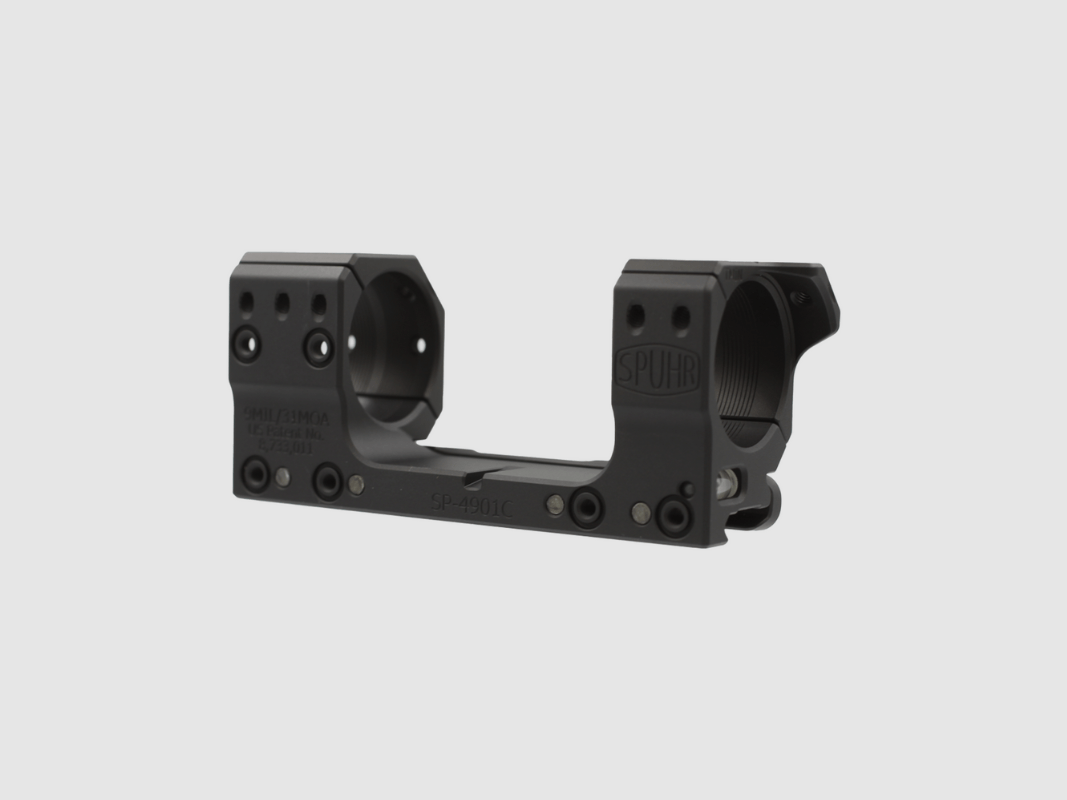
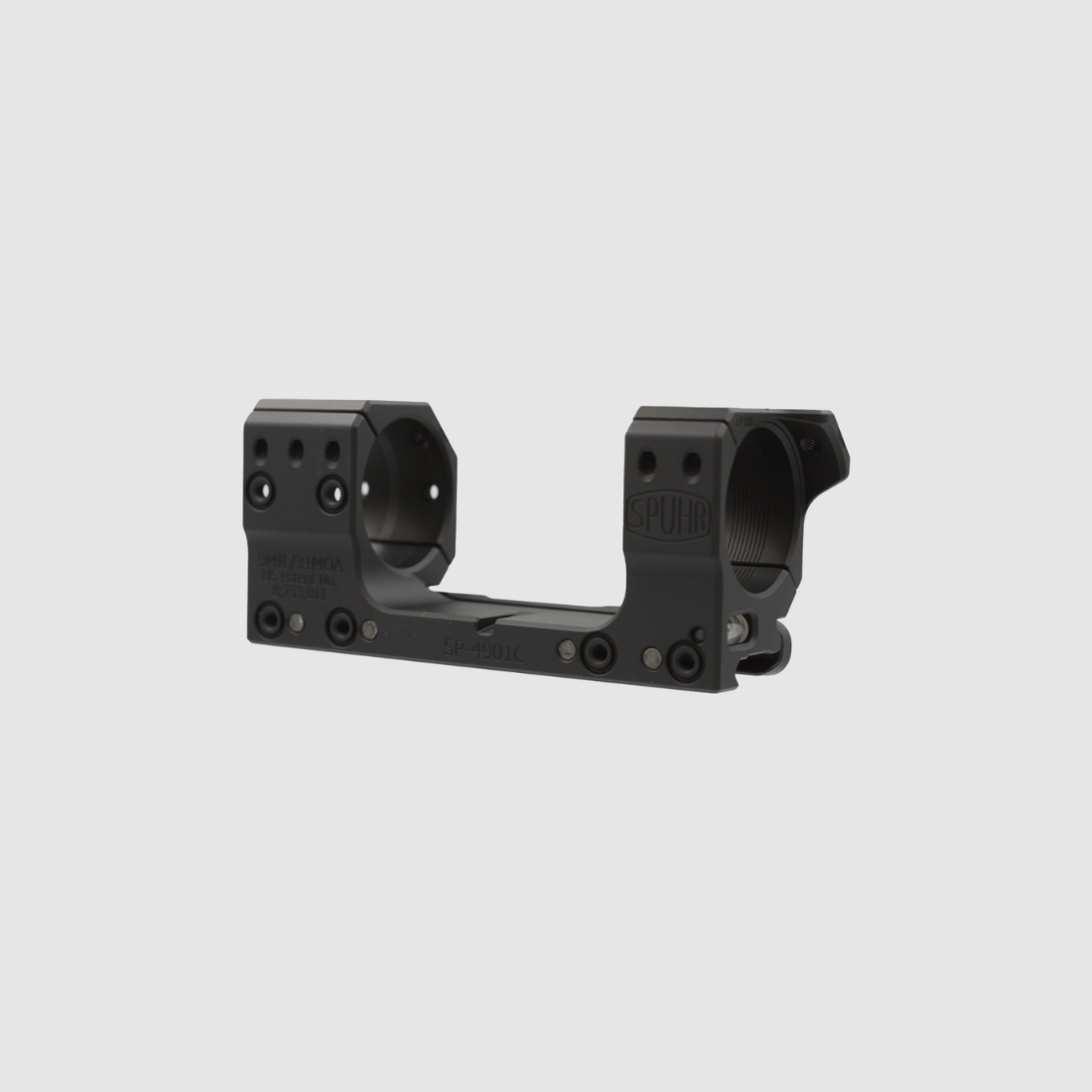
Spuhr Scope Mount, 34 mm / 30 mm / 30 MOA Gen 3
449.92 €
72479 Straßberg, Germany
3
ID: 9897168
Shop safely with Gunfinder
Our AI-powered seller identity verification makes Gunfinder the safest marketplace online.
Learn more
Details
- Original language
- German
- Category
- Condition
- New
- Location
- 🇩🇪 72479 Straßberg, Germany
- Availability
- In stock
Freshness
This listing is based on a mirrored offer, where the listing data was synced to us from a shop, dealer, or external marketplace. Please note that temporary price discrepancies may occur due to possible delays in data transmission.
- Source
- Black Raptor
- Last updated
- about 19 hours ago
Description
Note:
The item is located abroad. Please note that delivery conditions, shipping times, and/or the purchase process may differ.
.br-product-v3 *{box-sizing:border-box}.br-product-v3 p{margin:0 0 14px}.br-product-v3 ul{margin:8px 0 14px;padding-left:20px}.br-product-v3 li{margin:0 0 7px}
.br-product-v3 .br-hero-v3{background:linear-gradient(135deg,var(--br-deep),#183c2c);color:#fff;border-radius:24px;padding:34px;margin:0 0 24px;box-shadow:0 16px 38px rgba(16,39,29,.18)}
.br-product-v3 .br-eyebrow-v3{color:var(--br-gold);font-size:.76rem;font-weight:800;letter-spacing:.12em;text-transform:uppercase;margin-bottom:10px}.br-product-v3 .br-title-v3{font-size:clamp(1.8rem,4vw,2.65rem);line-height:1.08;font-weight:850;letter-spacing:-.035em;margin:0 0 16px}.br-product-v3 .br-pill-v3{display:inline-block;background:var(--br-gold);color:var(--br-deep);font-weight:800;border-radius:999px;padding:9px 14px}
.br-product-v3 .br-section-title{font-size:1.28rem;line-height:1.25;font-weight:850;color:var(--br-deep);margin:32px 0 13px}.br-product-v3 .br-grid,.br-product-v3 .br-tech-v3{display:grid;grid-template-columns:repeat(2,minmax(0,1fr));gap:14px;margin:14px 0 22px}
.br-product-v3 .br-card,.br-product-v3 .br-box{border:1px solid var(--br-line);background:#fff;border-radius:16px;padding:18px;min-width:0}.br-product-v3 .br-box{background:var(--br-soft);border-left:5px solid var(--br-gold);margin:16px 0 22px}.br-product-v3 .br-card strong,.br-product-v3 .br-box strong{display:block;color:var(--br-deep);margin-bottom:7px}
.br-product-v3 .br-limit{border:1px solid #e2c9c4;background:#fff5f2;border-radius:16px;padding:18px;margin:18px 0 24px}.br-product-v3 .br-delivery-v3{background:#fbf7ea;border-color:#ead9aa}.br-product-v3 details{border:1px solid var(--br-line);background:var(--br-soft);border-radius:12px;padding:12px 14px;margin:0 0 9px}.br-product-v3 summary{font-weight:800;color:var(--br-deep);cursor:pointer}
.br-product-v3 .br-video-slot{min-height:1px;margin:0}.br-product-v3 .br-final{background:var(--br-deep);color:#fff;border-radius:20px;padding:24px;margin-top:28px}.br-product-v3 .br-final strong{color:var(--br-gold)}.br-product-v3 table{width:100%;border-collapse:collapse;display:block;overflow-x:auto}.br-product-v3 td,.br-product-v3 th{border-bottom:1px solid var(--br-line);padding:9px;text-align:left}
@media(max-width:760px){.br-product-v3 .br-grid,.br-product-v3 .br-tech-v3{grid-template-columns:1fr}.br-product-v3 .br-hero-v3{padding:24px 20px;border-radius:18px}.br-product-v3 .br-card,.br-product-v3 .br-box,.br-product-v3 .br-limit{padding:15px}.br-product-v3{max-width:100%;overflow:hidden}}
Spuhr · Buying Guide
Select optic mount by ring size, height, and cant
Spuhr scope mount, 34 mm / 30 mm / 30 MOA Gen 3 is categorized by fit, variant, and practical effect – without claimed self-testing.
Check fit first
Does the product fit your setup?
Fits well If barrel diameter, Picatinny interface, build height, cant, and if applicable, offset exactly match optic and firearm.
Rather does not fit If only the ring diameter was checked or objective, turret, case ejection, or eye relief may collide.
Purchase check before ordering Ring diameter, rail standard, build height, MOA/MIL cant, offset, and QD version. Compare the chosen variant with the marking on the existing system and with the manufacturer’s documents.
More cant is only an advantage if the setup can use it. For a long-range system, the desired zero point must still be reachable, the image quality of the optic must not unnecessarily suffer at the edge of its adjustment range, and the objective needs mechanical clearance despite the falling axis. That’s exactly why a 9-MIL mount is not categorized by range promi
chen, but selected according to system data.
The SP-4901C is Spuhr's low 34 mm Gen3 block mount with 9 MIL tilt. It is aimed at bolt-action rifles with a one-piece MIL-STD-1913 or STANAG-4694 rail and open space in front of the base. Its combination of only 30 mm axis height and strong angle is specialized: it can combine a clean low head position and more usable elevation travel but does not forgive an unclear base or objective geometry.
Four values decide together:
Rail tilt: added to the 9 MIL of the mount.
Counter adjustment range: must be sufficient for zero distance and sighting correction.
30 mm axis: must fit the cheekpiece and natural head position.
Objective geometry: calculated from the real outer diameter and its position in front of the rear ring.
9 MIL is a system decision
Spuhr designates the exact model on the product page and datasheet as 9 MIL / 30 MOA. The mount tilts the scope axis forward relative to the rail. When zeroing, the optic must compensate for this angle in the opposite direction. If the zero point remains reachable, a larger portion of the already existing internal elevation travel is then available for more distant targets.
The mechanical total adjustment range of the scope does not become larger. Only its working position is shifted. A zero-stop, an asymmetric real adjustment range, the correction needed for zeroing, and the tilt of the weapon base therefore determine how much counter travel is actually available.
Spuhr generally recommends as little tilt as necessary in its selection guide. This is especially relevant for the SP-4901C: those who safely cover the same target distance with 3 or 6 MIL gain no precision bonus from 9 MIL. It only provides more counter travel and more geometric height in front of the objective.
Rail angle and mount angle add up
On a neutral rail, the system tilt is 9 MIL. If the rail already has 6 MIL, a total of 15 MIL results. This total angle is compared with the accessible elevation adjustment range of the specific optic, not with a general brochure figure.
The reliable sequence is: determine rail angle, determine real counter adjustment range with zero-stop set, consider required zeroing correction, and only then choose the mount. If the zero point is not reachable, the mount is tilted too much. A stop on the elevation turret is not a mounting error that can be solved by higher torque or more clicks.
For many setups, the SP-4601C with 6 MIL is the more balanced limit. The SP-4901C makes sense when the ballistic task really requires the additional angle and the optic can demonstrably handle it.
Objective clearance at 30 mm and 9 MIL
Spuhr measures the 30 mm on tilted mounts from the rail top edge to the optical center at the rear plane of the rear ring. From there, the axis falls by 9 MIL by about 0.9 mm per 100 mm horizontal distance.
Over a continuous rail parallel to the mount, the approximation is: axis height at the considered point = 30 mm minus 0.009 times distance in millimeters. If the widest point of the objective housing is 150 mm in front of the rear measuring plane, 28.65 mm axis height remains there.
With an actual outer diameter of 56 mm, only 0.65 mm remain to the rail in this example. A housing with 58 mm outer diameter would theoretically already protrude 0.35 mm into the rail plane. Protective cap, manufacturing tolerance, dirt, and a reasonable safety margin are not yet considered.
The number on the objective is not its outer dimension. A scope designated as 56 mm optic has a 56 mm front lens; the housing is larger and varies depending on the model. The decisive factor is the largest diameter measured with the cap.
Trainer tip: First exclude the zero point, then gain range
Set rail angle
l, zeroing and real available travel side by side. If the optic cannot reliably compensate Rail plus 9 MIL, the selection ends here. The theoretically larger elevation range at long distance is worthless if the rifle cannot be zeroed cleanly in the intended close range.
User tip: Calculate the objective at its real position Measure the horizontal distance from the rear ring plane to the widest part of the objective. Subtract 0.9 mm from the 30-mm axis height for every 100 mm, then subtract half the real outer diameter. Only the remaining number shows whether there is room for the cap and safety margin.
Why an open barrel area helps
The exact datasheet assigns the SP-4901C especially to bolt-action rifles without covered barrel. This means the geometry in front of the mounting base: If the rail ends behind the objective, there is often a lower system or barrel contour underneath. A large objective can remain free there, even if it would collide over a continuous chassis or handguard rail.
This is not a blanket clearance for large objectives. Barrel contour, base height, objective position and cap remain part of the calculation. The low mount is particularly attractive when the setup has this open geometry and the cheek rest supports a compact sight line.
8 mm bridge clearance is not an objective dimension
Spuhr specifies 8 mm distance from the underside of the 34-mm main tube to the bridge of the mounting body. This value describes the space inside the ring block under the straight main tube. It says nothing about the distance of the objective housing further forward to the weapon rail.
A turret block can therefore sit cleanly between the rings, while the objective hits before the mount. The two areas are assessed separately: erector housing and turret block inside the mount, objective and cap along the forward falling axis.
Gen3 creates space in the main tube area
The C suffix marks the Gen3 version. For the 34-mm models, Spuhr increased the ring spacing and uses the rear A-40B ring cover. The dimension drawing of the SP-4901C specifies 66 mm free space between the ring areas and 32 mm ring width each.
The datasheet clears the mount for most 34-mm scopes including extended erector housings. “Most” is deliberately not a universal approval: Both ring zones require straight, free clamping surfaces, and turret block, cone and magnification ring must not get under the rings. Additionally, the eye relief must be adjustable within tube and rail length.
User tip: Define ring zones before eye relief First position turret block and straight tube surfaces in the 66-mm free space and under the two 32-mm rings. Then the complete mounting body is shifted on the rail for the eye relief. This preserves the full clamping surface instead of placing a ring partially on a housing transition.
Fixed clamping instead of quick release
The SP-4901C is mounted with five lateral M5 Tx20 screws on a one-piece Picatinny or STANAG rail. It has neither QD levers nor a constructive cantilever. This suits a permanently set up bolt-action rifle; the QDP series is intended for frequent tool-free removal.
Seven Spuhr interface sets accept approved accessories. The bubble level is integrated in the rear plane of the body and helps detect canting in the cheek weld. Slant-split rings keep the view of elevation and windage turret freer than horizontally split caps.
The current ISMS manual requires a clean, lightly oiled rail. The fully mounted body is pressed forward against the groove flank; the M5 clamping screws are tightened in the manufacturer’s sequence to 5 Nm. For the factory waxed M4 ring screws, 2.0 Nm or the lower value of the optic manufacturer applies.
User tip: Reference marks instead
t Retightening by feel After correct installation, place small control marks on clamping screws and ring caps. If they remain aligned, there is no reason for routine retightening. This prevents the preload from being unintentionally increased during every check.
Our assessment
The strongest buying reason for the SP-4901C is the rare combination of 9 MIL cant, low repeater line, and long Gen3 ring space. It’s interesting if a 34 mm scope should provide a lot of usable elevation for long distance without unnecessarily raising the cheek rest.
The most common misconception would be to consider 30 MOA as a blanket long-range upgrade. This mount is not automatically better than the 6 MIL version. It is only better if rail, optic, zero distance, and objective contour exactly allow this stronger cant.
Black-Raptor short summary: Buy if: You demonstrably need a 9 MIL mounting angle for a 34 mm scope on a low repeater, the one-piece rail is known, the desired zero remains in the return path, and the objective has enough clearance along the falling axis. Don’t buy if: 3 or 6 MIL are sufficient, the rail is already strongly canted, a higher head position is needed, or QD, forward offset, or more objective clearance are more important.
Why Spuhr states 9 MIL / 30 MOA: The exact product page and the SP-4901C datasheet list 9 MIL / 30 MOA. The general Spuhr model key rounds 9 MIL up to 31 MOA. For the technical system calculation, 9 MIL is the clear manufacturer value; the 30 MOA designation remains the official model name of the specific product.
Scope of delivery
1 × Spuhr SP-4901C Gen3 scope mount
1 × 10-degree leveling wedge with screw length gauge
1 × Manufacturer’s manual
Scope, firearm, Picatinny base, interface accessories, and torque tool are not included.
Suitable alternatives
Select by angle and height:
SP-4301C: same low Gen3 class with 3 MIL cant
SP-4601C: 30 mm Gen3 version with moderate 6 MIL
SP-4902C: same 9 MIL cant with 38 mm axis height
SP-4001: low 34 mm version without additional cant
Technical data
Manufacturer: Spuhr
Model: SP-4901C Gen3
Design: one-piece fixed block mount without QD
Weapon interface: MIL-STD-1913 / STANAG 4694
Main tube: 34 mm
Axis height: 30 mm / 1.181 inch at rear ring plane
Cant: 9 MIL / 30 MOA according to exact model page and datasheet
Cantilever: no
Body length: 120 mm / 4.72 inch
Overall length: 130 mm / 5.12 inch
Bridge clearance: 8 mm under main tube
Free space between rings: 66 mm
Ring width: 32 mm
Weight: 215 g / 7.6 oz
Material: 7000 series aluminum
Finish: black hard anodized
Screws: Torx 20, zinc-nickel coated and factory waxed
Spuhr interfaces: seven sets
Integrated bubble level: yes
EAN: 7340150701956
Torque for rail clamping: 5 Nm for M5 Tx20
Torque for ring screws: 2.0 Nm or lower release by optic manufacturer
Clear exclusions: Spuhr explicitly excludes the SAKO S20 and rifles with two-piece rails for this model. The SP-4901C has no QD levers and no cantilever. Its low, strongly canted geometry does not replace checking zero, stock line, and objective contour.
FAQ
Does 9 MIL increase the entire elevation adjustment range? No. The mount shifts the working position within the existing adjustment range. The mechanical total travel of the scope remains unchanged.
Why does Spuhr state 9 MIL and 30 MOA? The exact product page and datasheet use this model designation. The general model key rounds 9 MIL to 31 MOA. For system calculation, the clear value is 9 MIL.
What happens on an already canted rail? The angles add up. A 6 MIL rail plus SP-4901C result in 15 MIL sys
cantilever. The actual counter-adjustment travel must still allow the desired zero point.
Does a scope with a 56 mm objective fit? That cannot be derived from the lens size. In the calculation example with 150 mm distance, the axis is at 28.65 mm. A real 56 mm outer housing there leaves only about 0.65 mm clearance over a parallel rail before cap and reserve.
What do the specified 8 mm mean? They describe the distance from the bottom of the main tube to the bridge of the mounting body. This is not the clearance of the objective over rail, barrel, or handguard.
When is the SP-4601C more sensible? When the low 30 mm line and the Gen3 ring space fit, but 9 MIL deliver more angle than needed or endanger the zero point or objective clearance. The SP-4601C reduces the additional cantilever to 6 MIL.
Technical data practically read
Purchase-critical data Ring diameter, rail standard, build height, MOA/MIL cantilever, offset, and QD version.
Practical consequence The right geometry ensures clearance, clean eye relief, and usable elevation adjustment travel; a wrong height or too much cantilever can significantly limit use.
Avoid limits and bad purchases
Important before mounting and use Mount only on a fully unloaded firearm. Tighten screws diagonally with a suitable torque wrench according to manufacturer specifications; check QD tension and point of impact after initial mounting.
Scope of delivery Only the version explicitly named in the existing product text and in the chosen variant is included. Depicted firearms, optics, or other accessories are only included if explicitly listed.
Black-Raptor classification: This version makes sense if the purchase-critical dimensions and interfaces are clearly confirmed in advance. If fit is unclear, first check model designation and existing mount. (Show description in original language)
.br-product-v3{--br-ink:#17201c;--br-muted:#54615b;--br-line:#d9e0dc;--br-soft:#f5f7f5;--br-deep:#10271d;--br-gold:#f2d58e;font-family:Arial,Helvetica,sans-serif;color:var(--br-ink);line-height:1.65;max-width:1180px;margin:0 auto;overflow-wrap:anywhere}
.br-product-v3 *{box-sizing:border-box}.br-product-v3 p{margin:0 0 14px}.br-product-v3 ul{margin:8px 0 14px;padding-left:20px}.br-product-v3 li{margin:0 0 7px}
.br-product-v3 .br-hero-v3{background:linear-gradient(135deg,var(--br-deep),#183c2c);color:#fff;border-radius:24px;padding:34px;margin:0 0 24px;box-shadow:0 16px 38px rgba(16,39,29,.18)}
.br-product-v3 .br-eyebrow-v3{color:var(--br-gold);font-size:.76rem;font-weight:800;letter-spacing:.12em;text-transform:uppercase;margin-bottom:10px}.br-product-v3 .br-title-v3{font-size:clamp(1.8rem,4vw,2.65rem);line-height:1.08;font-weight:850;letter-spacing:-.035em;margin:0 0 16px}.br-product-v3 .br-pill-v3{display:inline-block;background:var(--br-gold);color:var(--br-deep);font-weight:800;border-radius:999px;padding:9px 14px}
.br-product-v3 .br-section-title{font-size:1.28rem;line-height:1.25;font-weight:850;color:var(--br-deep);margin:32px 0 13px}.br-product-v3 .br-grid,.br-product-v3 .br-tech-v3{display:grid;grid-template-columns:repeat(2,minmax(0,1fr));gap:14px;margin:14px 0 22px}
.br-product-v3 .br-card,.br-product-v3 .br-box{border:1px solid var(--br-line);background:#fff;border-radius:16px;padding:18px;min-width:0}.br-product-v3 .br-box{background:var(--br-soft);border-left:5px solid var(--br-gold);margin:16px 0 22px}.br-product-v3 .br-card strong,.br-product-v3 .br-box strong{display:block;color:var(--br-deep);margin-bottom:7px}
.br-product-v3 .br-limit{border:1px solid #e2c9c4;background:#fff5f2;border-radius:16px;padding:18px;margin:18px 0 24px}.br-product-v3 .br-delivery-v3{background:#fbf7ea;border-color:#ead9aa}.br-product-v3 details{border:1px solid var(--br-line);background:var(--br-soft);border-radius:12px;padding:12px 14px;margin:0 0 9px}.br-product-v3 summary{font-weight:800;color:var(--br-deep);cursor:pointer}
.br-product-v3 .br-video-slot{min-height:1px;margin:0}.br-product-v3 .br-final{background:var(--br-deep);color:#fff;border-radius:20px;padding:24px;margin-top:28px}.br-product-v3 .br-final strong{color:var(--br-gold)}.br-product-v3 table{width:100%;border-collapse:collapse;display:block;overflow-x:auto}.br-product-v3 td,.br-product-v3 th{border-bottom:1px solid var(--br-line);padding:9px;text-align:left}
@media(max-width:760px){.br-product-v3 .br-grid,.br-product-v3 .br-tech-v3{grid-template-columns:1fr}.br-product-v3 .br-hero-v3{padding:24px 20px;border-radius:18px}.br-product-v3 .br-card,.br-product-v3 .br-box,.br-product-v3 .br-limit{padding:15px}.br-product-v3{max-width:100%;overflow:hidden}}
Spuhr · Kaufberatung
Optikmontage nach Ringmaß, Höhe und Vorneigung auswählen
Spuhr Zielfernrohrmontage, 34 mm / 30 mm / 30 MOA Gen 3 wird nach Passung, Variante und praktischer Wirkung eingeordnet – ohne behaupteten Eigentest.
Passung zuerst prüfen
Passt das Produkt zu deinem Setup?
Passt gut Wenn Rohrdurchmesser, Picatinny-Schnittstelle, Bauhöhe, Vorneigung und gegebenenfalls Vorversatz stimmen exakt mit Optik und Waffe überein.
Passt eher nicht Wenn nur der Ringdurchmesser wurde geprüft oder Objektiv, Turm, Hülsenauswurf beziehungsweise Augenabstand können kollidieren.
Kaufcheck vor dem Bestellen Ringdurchmesser, Schienenstandard, Bauhöhe, MOA/MIL-Vorneigung, Versatz und QD-Ausführung. Vergleiche die gewählte Variante mit der Kennzeichnung am vorhandenen System und mit den Herstellerunterlagen.
Mehr Neigung ist nur dann ein Vorteil, wenn der Aufbau sie auch nutzen kann. Bei einem Long-Range-System muss der gewünschte Nullpunkt weiterhin erreichbar bleiben, die Abbildungsqualität der Optik darf am Rand ihres Verstellbereichs nicht unnötig leiden und das Objektiv braucht trotz fallender Achse mechanischen Freiraum. Genau deshalb wird eine 9-MIL-Montage nicht nach Reichweitenversprechen, sondern nach Systemdaten ausgewählt.
Die SP-4901C ist Spuhrs niedrige 34-mm-Gen3-Blockmontage mit 9 MIL Neigung. Sie richtet sich an Repetierer mit einteiliger MIL-STD-1913- oder STANAG-4694-Rail und offenem Bereich vor der Basis. Ihre Kombination aus nur 30 mm Achshöhe und starkem Winkel ist spezialisiert: Sie kann eine saubere niedrige Kopfposition und mehr nutzbaren Höhenweg verbinden, verzeiht aber keine ungeklärte Basis- oder Objektivgeometrie.
Vier Werte entscheiden gemeinsam: Railneigung: wird zu den 9 MIL der Montage addiert. Gegenverstellweg: muss für Nullentfernung und Einschießkorrektur reichen. 30-mm-Achse: muss zur Schaftbacke und natürlichen Kopfposition passen. Objektivgeometrie: wird am realen Außendurchmesser und an ihrer Position vor dem hinteren Ring berechnet.
9 MIL sind eine Systementscheidung
Spuhr bezeichnet das exakte Modell auf Produktseite und Datenblatt als 9 MIL / 30 MOA. Die Montage neigt die Zielfernrohrachse gegenüber der Rail nach vorn. Beim Einschießen muss die Optik diesen Winkel in Gegenrichtung ausgleichen. Bleibt der Nullpunkt erreichbar, steht anschließend ein größerer Anteil des bereits vorhandenen internen Höhenwegs für weiter entfernte Ziele zur Verfügung.
Der mechanische Gesamtverstellweg des Zielfernrohrs wird dadurch nicht größer. Verschoben wird nur seine Arbeitslage. Ein Zero-Stop, ein asymmetrischer realer Verstellbereich, die zum Einschießen benötigte Korrektur und die Neigung der Waffenbasis bestimmen daher mit, wie viel Gegenweg tatsächlich verfügbar ist.
Spuhr empfiehlt in seinem Auswahlleitfaden grundsätzlich so wenig Neigung wie nötig. Das ist bei der SP-4901C besonders relevant: Wer dieselbe Zielentfernung mit 3 oder 6 MIL sicher abdeckt, gewinnt durch 9 MIL keinen Präzisionsbonus. Er gibt lediglich mehr Gegenweg und mehr geometrische Höhe vor dem Objektiv auf.
Railwinkel und Montagewinkel addieren
Auf einer neutralen Rail beträgt die Systemneigung 9 MIL. Besitzt die Rail bereits 6 MIL, entstehen insgesamt 15 MIL. Dieser Gesamtwinkel wird mit dem zugänglichen Höhenverstellbereich der konkreten Optik verglichen, nicht mit einer pauschalen Prospektzahl.
Die belastbare Reihenfolge lautet: Railwinkel bestimmen, realen Gegenverstellweg mit eingerichtetem Zero-Stop ermitteln, benötigte Einschießkorrektur berücksichtigen und erst dann die Montage wählen. Ist der Nullpunkt nicht erreichbar, ist die Montage zu stark geneigt. Ein Anschlag am Höhenturm ist kein Montagefehler, den man durch höheres Drehmoment oder weitere Klicks lösen kann.
Für viele Setups ist die SP-4601C mit 6 MIL die ausgewogenere Grenze. Die SP-4901C ist dann sinnvoll, wenn die ballistische Aufgabe den zusätzlichen Winkel wirklich verlangt und die Optik ihn nachweislich verarbeiten kann.
Objektivfreiheit bei 30 mm und 9 MIL
Spuhr misst die 30 mm bei geneigten Montagen von der Rail-Oberkante bis zur optischen Mitte an der hinteren Ebene des hinteren Rings. Von dort fällt die Achse mit 9 MIL rechnerisch um etwa 0,9 mm je 100 mm horizontaler Strecke.
Über einer durchgehenden, zur Montage parallelen Rail gilt näherungsweise: Achshöhe an der betrachteten Stelle = 30 mm minus 0,009 mal Abstand in Millimetern. Liegt die breiteste Stelle des Objektivgehäuses 150 mm vor der hinteren Messebene, verbleiben dort 28,65 mm Achshöhe.
Bei einem tatsächlichen Außendurchmesser von 56 mm bleiben in diesem Beispiel nur 0,65 mm zur Rail. Ein Gehäuse mit 58 mm Außendurchmesser würde rechnerisch bereits 0,35 mm in die Railebene hineinragen. Schutzkappe, Fertigungstoleranz, Schmutz und eine vernünftige Sicherheitsreserve sind dabei noch nicht berücksichtigt.
Die Zahl auf dem Objektiv ist nicht sein Außenmaß. Ein als 56-mm-Optik bezeichnetes Zielfernrohr besitzt eine 56-mm-Frontlinse; das Gehäuse ist größer und je nach Modell unterschiedlich. Entscheidend ist der mit Kappe gemessene größte Durchmesser.
Ausbilder-Tipp: Erst den Nullpunkt ausschließen, dann Reichweite gewinnen Lege Railwinkel, Nullentfernung und real verfügbaren Gegenweg nebeneinander. Kann die Optik Rail plus 9 MIL nicht sicher kompensieren, endet die Auswahl an dieser Stelle. Der theoretisch größere Höhenbereich auf weite Distanz ist wertlos, wenn das Gewehr im vorgesehenen Nahbereich nicht sauber genullt werden kann.
Nutzer-Tipp: Das Objektiv an seiner echten Position rechnen Miss den horizontalen Abstand von der hinteren Ringebene bis zur breitesten Stelle des Objektivs. Ziehe je 100 mm 0,9 mm von der 30-mm-Achshöhe ab und danach den halben realen Außendurchmesser. Erst die verbleibende Zahl zeigt, ob Raum für Kappe und Sicherheitsreserve vorhanden ist.
Warum ein offener Laufbereich hilft
Das exakte Datenblatt ordnet die SP-4901C besonders Repetierern ohne abgedeckten Lauf zu. Gemeint ist die Geometrie vor der Montagenbasis: Endet die Rail hinter dem Objektiv, liegt darunter häufig eine niedrigere System- oder Laufkontur. Ein großes Objektiv kann dort frei bleiben, obwohl es über einer durchgehenden Chassis- oder Handschutzrail kollidieren würde.
Das ist keine pauschale Freigabe für große Objektive. Laufkontur, Basishöhe, Objektivposition und Kappe bleiben Teil der Rechnung. Die niedrige Montage ist gerade dann attraktiv, wenn der Aufbau diese offene Geometrie besitzt und die Schaftbacke eine kompakte Visierlinie unterstützt.
8 mm Brückenfreiheit sind kein Objektivmaß
Spuhr nennt 8 mm Abstand von der Unterseite des 34-mm-Mittelrohrs zur Brücke des Montagenkörpers. Dieser Wert beschreibt den Raum innerhalb des Ringblocks unter dem geraden Mittelrohr. Er sagt nichts über den Abstand des weiter vorn liegenden Objektivgehäuses zur Waffenrail aus.
Ein Turmblock kann deshalb sauber zwischen den Ringen sitzen, während das Objektiv vor der Montage anstößt. Die beiden Bereiche werden getrennt beurteilt: Erektorgehäuse und Turmblock innerhalb der Montage, Objektiv und Kappe entlang der nach vorn fallenden Achse.
Gen3 schafft Platz im Mittelrohrbereich
Das C-Suffix kennzeichnet die Gen3-Ausführung. Bei den 34-mm-Modellen vergrößerte Spuhr den Ringabstand und verwendet den hinteren A-40B-Ringdeckel. Die Maßzeichnung der SP-4901C nennt 66 mm freien Raum zwischen den Ringbereichen und jeweils 32 mm Ringbreite.
Das Datenblatt gibt die Montage für die meisten 34-mm-Zielfernrohre einschließlich verlängerter Erektorgehäuse frei. „Die meisten“ ist bewusst keine Universalzusage: Beide Ringzonen benötigen gerade, freie Klemmflächen, und Turmblock, Konus sowie Vergrößerungsring dürfen nicht unter die Ringe geraten. Zusätzlich muss sich der Augenabstand innerhalb von Rohr- und Schienenlänge einstellen lassen.
Nutzer-Tipp: Ringzonen vor Augenabstand festlegen Positioniere zuerst Turmblock und gerade Rohrflächen im 66-mm-Freiraum und unter den beiden 32-mm-Ringen. Danach wird der komplette Montagenkörper auf der Rail für den Augenabstand verschoben. So bleibt die volle Klemmfläche erhalten, statt einen Ring teilweise auf einen Gehäuseübergang zu setzen.
Feste Klemmung statt Schnellwechsel
Die SP-4901C wird mit fünf seitlichen M5-Tx20-Schrauben auf einer einteiligen Picatinny- oder STANAG-Rail befestigt. Sie besitzt weder QD-Hebel noch einen konstruktiven Cantilever. Das passt zu einem dauerhaft eingerichteten Repetierer; für häufiges werkzeugloses Abnehmen ist die QDP-Serie vorgesehen.
Sieben Spuhr-Interface-Sätze nehmen freigegebenes Zubehör auf. Die Libelle ist in der hinteren Ebene des Körpers integriert und hilft, Seitenverkantung im Anschlag zu erkennen. Schräg geteilte Ringe halten den Blick auf Höhen- und Seitenturm freier als waagerecht geteilte Deckel.
Die aktuelle ISMS-Anleitung verlangt eine saubere, leicht geölte Rail. Der vollständig aufgesetzte Körper wird nach vorn gegen die Nutflanke gedrückt; die M5-Klemmschrauben werden in der Herstellerreihenfolge mit 5 Nm angezogen. Für die ab Werk gewachsten M4-Ringschrauben gelten 2,0 Nm oder der niedrigere Wert des Optikherstellers.
Nutzer-Tipp: Referenzmarken statt Nachziehen nach Gefühl Setze nach korrekter Montage kleine Kontrollmarken an Klemmschrauben und Ringdeckeln. Bleiben sie deckungsgleich, besteht kein Anlass für routinemäßiges Nachziehen. So wird die Vorspannung nicht bei jeder Kontrolle unbemerkt erhöht.
Unsere Einschätzung
Der stärkste Kaufgrund der SP-4901C ist die seltene Verbindung aus 9 MIL Neigung, niedriger Repetierer-Linie und langem Gen3-Ringraum. Sie ist interessant, wenn ein 34-mm-Zielfernrohr viel nutzbaren Höhenweg für große Distanz bereitstellen soll, ohne den Wangenanschlag unnötig anzuheben.
Die häufigste Fehlannahme wäre, 30 MOA als pauschales Long-Range-Upgrade zu betrachten. Diese Montage ist nicht automatisch besser als die 6-MIL-Version. Sie ist nur dann besser, wenn Rail, Optik, Nullentfernung und Objektivkontur genau diese stärkere Neigung zulassen.
Black-Raptor-Kurzfazit: Kaufen, wenn: Du für ein 34-mm-Zielfernrohr auf einem niedrigen Repetierer nachweislich 9 MIL Montagewinkel brauchst, die einteilige Rail bekannt ist, der gewünschte Nullpunkt im Gegenweg bleibt und das Objektiv entlang der fallenden Achse genügend Reserve besitzt. Nicht kaufen, wenn: 3 oder 6 MIL ausreichen, die Rail bereits stark geneigt ist, eine höhere Kopfposition benötigt wird oder QD, Vorversatz beziehungsweise mehr Objektivfreiheit wichtiger sind.
Warum Spuhr 9 MIL / 30 MOA schreibt: Die exakte Produktseite und das SP-4901C-Datenblatt führen 9 MIL / 30 MOA. Der allgemeine Spuhr-Modellschlüssel rundet 9 MIL dagegen auf 31 MOA. Für die technische Systemrechnung ist deshalb 9 MIL der eindeutige Herstellerwert; die 30-MOA-Bezeichnung bleibt die offizielle Modellangabe des konkreten Produkts.
Lieferumfang
1 × Spuhr SP-4901C Gen3 Zielfernrohrmontage
1 × 10-Grad-Nivellierkeil mit Schraubenlängenlehre
1 × Herstelleranleitung
Zielfernrohr, Waffe, Picatinny-Basis, Interface-Zubehör und Drehmomentwerkzeug sind nicht enthalten.
Passende Alternativen
Nach Winkel und Höhe auswählen:
SP-4301C: gleiche niedrige Gen3-Klasse mit 3 MIL Neigung
SP-4601C: 30-mm-Gen3-Ausführung mit moderateren 6 MIL
SP-4902C: gleiche 9-MIL-Neigung mit 38 mm Achshöhe
SP-4001: niedrige 34-mm-Ausführung ohne zusätzliche Neigung
Technische Daten
Hersteller: Spuhr
Modell: SP-4901C Gen3
Bauart: einteilige feste Blockmontage ohne QD
Waffenaufnahme: MIL-STD-1913 / STANAG 4694
Mittelrohr: 34 mm
Achshöhe: 30 mm / 1,181 Zoll an der hinteren Ringebene
Neigung: 9 MIL / 30 MOA laut exakter Modellseite und Datenblatt
Cantilever: nein
Körperlänge: 120 mm / 4,72 Zoll
Gesamtlänge: 130 mm / 5,12 Zoll
Brückenfreiheit: 8 mm unter dem Mittelrohr
Freier Abstand zwischen den Ringen: 66 mm
Ringbreite: 32 mm
Gewicht: 215 g / 7,6 oz
Material: Aluminium der 7000er-Serie
Oberfläche: schwarz harteloxiert
Schrauben: Torx 20, Zink-Nickel-beschichtet und ab Werk gewachst
Spuhr-Interfaces: sieben Sätze
Integrierte Libelle: ja
EAN: 7340150701956
Anzugsmoment Rail-Klemmung: 5 Nm für M5-Tx20
Anzugsmoment Ringschrauben: 2,0 Nm oder niedrigere Freigabe des Optikherstellers
Klare Ausschlüsse: Spuhr schließt die SAKO S20 und Gewehre mit zweiteiligen Rails für dieses Modell ausdrücklich aus. Die SP-4901C besitzt keine QD-Hebel und keinen Cantilever. Ihre niedrige, stark geneigte Geometrie ersetzt keine Prüfung von Nullpunkt, Schaftlinie und Objektivkontur.
FAQ
Vergrößern 9 MIL den gesamten Höhenverstellweg? Nein. Die Montage verschiebt die Arbeitslage innerhalb des vorhandenen Verstellbereichs. Der mechanische Gesamtweg des Zielfernrohrs bleibt unverändert.
Warum nennt Spuhr 9 MIL und 30 MOA? Die exakte Produktseite und das Datenblatt verwenden diese Modellangabe. Der allgemeine Modellschlüssel rundet 9 MIL auf 31 MOA. Für die Systemrechnung ist der eindeutige Wert 9 MIL.
Was passiert auf einer bereits geneigten Rail? Die Winkel werden addiert. Eine 6-MIL-Rail plus SP-4901C ergeben 15 MIL Systemneigung. Der reale Gegenverstellweg muss den gewünschten Nullpunkt trotzdem ermöglichen.
Passt ein Zielfernrohr mit 56-mm-Objektiv? Das lässt sich aus der Linsengröße nicht ableiten. Im Rechenbeispiel mit 150 mm Abstand liegt die Achse bei 28,65 mm. Ein reales 56-mm-Außengehäuse lässt dort über einer parallelen Rail nur etwa 0,65 mm vor Kappe und Reserve.
Was bedeuten die angegebenen 8 mm? Sie beschreiben den Abstand von der Unterseite des Mittelrohrs zur Brücke des Montagenkörpers. Das ist nicht der Freiraum des Objektivs über Rail, Lauf oder Handschutz.
Wann ist die SP-4601C sinnvoller? Wenn die niedrige 30-mm-Linie und der Gen3-Ringraum passen, 9 MIL aber mehr Winkel als nötig liefern oder den Nullpunkt beziehungsweise Objektivfreiraum gefährden. Die SP-4601C reduziert die zusätzliche Neigung auf 6 MIL. Technische Daten praktisch gelesen
Kaufkritische Daten Ringdurchmesser, Schienenstandard, Bauhöhe, MOA/MIL-Vorneigung, Versatz und QD-Ausführung.
Praxisfolge Die passende Geometrie schafft Freigängigkeit, sauberen Augenabstand und nutzbaren Höhenverstellweg; eine falsche Höhe oder zu starke Vorneigung kann die Nutzung deutlich einschränken.
Grenzen und Fehlkauf vermeiden
Wichtig vor Montage und Nutzung Montage nur an vollständig entladener Waffe. Schrauben über Kreuz mit geeignetem Drehmomentschlüssel nach Herstellerangabe anziehen; QD-Spannung und Treffpunktlage nach der Erstmontage kontrollieren.
Lieferumfang Enthalten ist ausschließlich die im bestehenden Produkttext und in der gewählten Variante ausdrücklich benannte Ausführung. Abgebildete Waffen, Optiken oder weiteres Zubehör gehören nur dazu, wenn sie ausdrücklich aufgeführt sind.
Black-Raptor-Einordnung: Diese Ausführung ist sinnvoll, wenn die kaufkritischen Maße und Schnittstellen vorab eindeutig bestätigt sind. Bei unklarer Passung zuerst Modellbezeichnung und vorhandene Aufnahme prüfen.
.br-product-v3 *{box-sizing:border-box}.br-product-v3 p{margin:0 0 14px}.br-product-v3 ul{margin:8px 0 14px;padding-left:20px}.br-product-v3 li{margin:0 0 7px}
.br-product-v3 .br-hero-v3{background:linear-gradient(135deg,var(--br-deep),#183c2c);color:#fff;border-radius:24px;padding:34px;margin:0 0 24px;box-shadow:0 16px 38px rgba(16,39,29,.18)}
.br-product-v3 .br-eyebrow-v3{color:var(--br-gold);font-size:.76rem;font-weight:800;letter-spacing:.12em;text-transform:uppercase;margin-bottom:10px}.br-product-v3 .br-title-v3{font-size:clamp(1.8rem,4vw,2.65rem);line-height:1.08;font-weight:850;letter-spacing:-.035em;margin:0 0 16px}.br-product-v3 .br-pill-v3{display:inline-block;background:var(--br-gold);color:var(--br-deep);font-weight:800;border-radius:999px;padding:9px 14px}
.br-product-v3 .br-section-title{font-size:1.28rem;line-height:1.25;font-weight:850;color:var(--br-deep);margin:32px 0 13px}.br-product-v3 .br-grid,.br-product-v3 .br-tech-v3{display:grid;grid-template-columns:repeat(2,minmax(0,1fr));gap:14px;margin:14px 0 22px}
.br-product-v3 .br-card,.br-product-v3 .br-box{border:1px solid var(--br-line);background:#fff;border-radius:16px;padding:18px;min-width:0}.br-product-v3 .br-box{background:var(--br-soft);border-left:5px solid var(--br-gold);margin:16px 0 22px}.br-product-v3 .br-card strong,.br-product-v3 .br-box strong{display:block;color:var(--br-deep);margin-bottom:7px}
.br-product-v3 .br-limit{border:1px solid #e2c9c4;background:#fff5f2;border-radius:16px;padding:18px;margin:18px 0 24px}.br-product-v3 .br-delivery-v3{background:#fbf7ea;border-color:#ead9aa}.br-product-v3 details{border:1px solid var(--br-line);background:var(--br-soft);border-radius:12px;padding:12px 14px;margin:0 0 9px}.br-product-v3 summary{font-weight:800;color:var(--br-deep);cursor:pointer}
.br-product-v3 .br-video-slot{min-height:1px;margin:0}.br-product-v3 .br-final{background:var(--br-deep);color:#fff;border-radius:20px;padding:24px;margin-top:28px}.br-product-v3 .br-final strong{color:var(--br-gold)}.br-product-v3 table{width:100%;border-collapse:collapse;display:block;overflow-x:auto}.br-product-v3 td,.br-product-v3 th{border-bottom:1px solid var(--br-line);padding:9px;text-align:left}
@media(max-width:760px){.br-product-v3 .br-grid,.br-product-v3 .br-tech-v3{grid-template-columns:1fr}.br-product-v3 .br-hero-v3{padding:24px 20px;border-radius:18px}.br-product-v3 .br-card,.br-product-v3 .br-box,.br-product-v3 .br-limit{padding:15px}.br-product-v3{max-width:100%;overflow:hidden}}
Spuhr · Kaufberatung
Optikmontage nach Ringmaß, Höhe und Vorneigung auswählen
Spuhr Zielfernrohrmontage, 34 mm / 30 mm / 30 MOA Gen 3 wird nach Passung, Variante und praktischer Wirkung eingeordnet – ohne behaupteten Eigentest.
Passung zuerst prüfen
Passt das Produkt zu deinem Setup?
Passt gut Wenn Rohrdurchmesser, Picatinny-Schnittstelle, Bauhöhe, Vorneigung und gegebenenfalls Vorversatz stimmen exakt mit Optik und Waffe überein.
Passt eher nicht Wenn nur der Ringdurchmesser wurde geprüft oder Objektiv, Turm, Hülsenauswurf beziehungsweise Augenabstand können kollidieren.
Kaufcheck vor dem Bestellen Ringdurchmesser, Schienenstandard, Bauhöhe, MOA/MIL-Vorneigung, Versatz und QD-Ausführung. Vergleiche die gewählte Variante mit der Kennzeichnung am vorhandenen System und mit den Herstellerunterlagen.
Mehr Neigung ist nur dann ein Vorteil, wenn der Aufbau sie auch nutzen kann. Bei einem Long-Range-System muss der gewünschte Nullpunkt weiterhin erreichbar bleiben, die Abbildungsqualität der Optik darf am Rand ihres Verstellbereichs nicht unnötig leiden und das Objektiv braucht trotz fallender Achse mechanischen Freiraum. Genau deshalb wird eine 9-MIL-Montage nicht nach Reichweitenversprechen, sondern nach Systemdaten ausgewählt.
Die SP-4901C ist Spuhrs niedrige 34-mm-Gen3-Blockmontage mit 9 MIL Neigung. Sie richtet sich an Repetierer mit einteiliger MIL-STD-1913- oder STANAG-4694-Rail und offenem Bereich vor der Basis. Ihre Kombination aus nur 30 mm Achshöhe und starkem Winkel ist spezialisiert: Sie kann eine saubere niedrige Kopfposition und mehr nutzbaren Höhenweg verbinden, verzeiht aber keine ungeklärte Basis- oder Objektivgeometrie.
Vier Werte entscheiden gemeinsam: Railneigung: wird zu den 9 MIL der Montage addiert. Gegenverstellweg: muss für Nullentfernung und Einschießkorrektur reichen. 30-mm-Achse: muss zur Schaftbacke und natürlichen Kopfposition passen. Objektivgeometrie: wird am realen Außendurchmesser und an ihrer Position vor dem hinteren Ring berechnet.
9 MIL sind eine Systementscheidung
Spuhr bezeichnet das exakte Modell auf Produktseite und Datenblatt als 9 MIL / 30 MOA. Die Montage neigt die Zielfernrohrachse gegenüber der Rail nach vorn. Beim Einschießen muss die Optik diesen Winkel in Gegenrichtung ausgleichen. Bleibt der Nullpunkt erreichbar, steht anschließend ein größerer Anteil des bereits vorhandenen internen Höhenwegs für weiter entfernte Ziele zur Verfügung.
Der mechanische Gesamtverstellweg des Zielfernrohrs wird dadurch nicht größer. Verschoben wird nur seine Arbeitslage. Ein Zero-Stop, ein asymmetrischer realer Verstellbereich, die zum Einschießen benötigte Korrektur und die Neigung der Waffenbasis bestimmen daher mit, wie viel Gegenweg tatsächlich verfügbar ist.
Spuhr empfiehlt in seinem Auswahlleitfaden grundsätzlich so wenig Neigung wie nötig. Das ist bei der SP-4901C besonders relevant: Wer dieselbe Zielentfernung mit 3 oder 6 MIL sicher abdeckt, gewinnt durch 9 MIL keinen Präzisionsbonus. Er gibt lediglich mehr Gegenweg und mehr geometrische Höhe vor dem Objektiv auf.
Railwinkel und Montagewinkel addieren
Auf einer neutralen Rail beträgt die Systemneigung 9 MIL. Besitzt die Rail bereits 6 MIL, entstehen insgesamt 15 MIL. Dieser Gesamtwinkel wird mit dem zugänglichen Höhenverstellbereich der konkreten Optik verglichen, nicht mit einer pauschalen Prospektzahl.
Die belastbare Reihenfolge lautet: Railwinkel bestimmen, realen Gegenverstellweg mit eingerichtetem Zero-Stop ermitteln, benötigte Einschießkorrektur berücksichtigen und erst dann die Montage wählen. Ist der Nullpunkt nicht erreichbar, ist die Montage zu stark geneigt. Ein Anschlag am Höhenturm ist kein Montagefehler, den man durch höheres Drehmoment oder weitere Klicks lösen kann.
Für viele Setups ist die SP-4601C mit 6 MIL die ausgewogenere Grenze. Die SP-4901C ist dann sinnvoll, wenn die ballistische Aufgabe den zusätzlichen Winkel wirklich verlangt und die Optik ihn nachweislich verarbeiten kann.
Objektivfreiheit bei 30 mm und 9 MIL
Spuhr misst die 30 mm bei geneigten Montagen von der Rail-Oberkante bis zur optischen Mitte an der hinteren Ebene des hinteren Rings. Von dort fällt die Achse mit 9 MIL rechnerisch um etwa 0,9 mm je 100 mm horizontaler Strecke.
Über einer durchgehenden, zur Montage parallelen Rail gilt näherungsweise: Achshöhe an der betrachteten Stelle = 30 mm minus 0,009 mal Abstand in Millimetern. Liegt die breiteste Stelle des Objektivgehäuses 150 mm vor der hinteren Messebene, verbleiben dort 28,65 mm Achshöhe.
Bei einem tatsächlichen Außendurchmesser von 56 mm bleiben in diesem Beispiel nur 0,65 mm zur Rail. Ein Gehäuse mit 58 mm Außendurchmesser würde rechnerisch bereits 0,35 mm in die Railebene hineinragen. Schutzkappe, Fertigungstoleranz, Schmutz und eine vernünftige Sicherheitsreserve sind dabei noch nicht berücksichtigt.
Die Zahl auf dem Objektiv ist nicht sein Außenmaß. Ein als 56-mm-Optik bezeichnetes Zielfernrohr besitzt eine 56-mm-Frontlinse; das Gehäuse ist größer und je nach Modell unterschiedlich. Entscheidend ist der mit Kappe gemessene größte Durchmesser.
Ausbilder-Tipp: Erst den Nullpunkt ausschließen, dann Reichweite gewinnen Lege Railwinkel, Nullentfernung und real verfügbaren Gegenweg nebeneinander. Kann die Optik Rail plus 9 MIL nicht sicher kompensieren, endet die Auswahl an dieser Stelle. Der theoretisch größere Höhenbereich auf weite Distanz ist wertlos, wenn das Gewehr im vorgesehenen Nahbereich nicht sauber genullt werden kann.
Nutzer-Tipp: Das Objektiv an seiner echten Position rechnen Miss den horizontalen Abstand von der hinteren Ringebene bis zur breitesten Stelle des Objektivs. Ziehe je 100 mm 0,9 mm von der 30-mm-Achshöhe ab und danach den halben realen Außendurchmesser. Erst die verbleibende Zahl zeigt, ob Raum für Kappe und Sicherheitsreserve vorhanden ist.
Warum ein offener Laufbereich hilft
Das exakte Datenblatt ordnet die SP-4901C besonders Repetierern ohne abgedeckten Lauf zu. Gemeint ist die Geometrie vor der Montagenbasis: Endet die Rail hinter dem Objektiv, liegt darunter häufig eine niedrigere System- oder Laufkontur. Ein großes Objektiv kann dort frei bleiben, obwohl es über einer durchgehenden Chassis- oder Handschutzrail kollidieren würde.
Das ist keine pauschale Freigabe für große Objektive. Laufkontur, Basishöhe, Objektivposition und Kappe bleiben Teil der Rechnung. Die niedrige Montage ist gerade dann attraktiv, wenn der Aufbau diese offene Geometrie besitzt und die Schaftbacke eine kompakte Visierlinie unterstützt.
8 mm Brückenfreiheit sind kein Objektivmaß
Spuhr nennt 8 mm Abstand von der Unterseite des 34-mm-Mittelrohrs zur Brücke des Montagenkörpers. Dieser Wert beschreibt den Raum innerhalb des Ringblocks unter dem geraden Mittelrohr. Er sagt nichts über den Abstand des weiter vorn liegenden Objektivgehäuses zur Waffenrail aus.
Ein Turmblock kann deshalb sauber zwischen den Ringen sitzen, während das Objektiv vor der Montage anstößt. Die beiden Bereiche werden getrennt beurteilt: Erektorgehäuse und Turmblock innerhalb der Montage, Objektiv und Kappe entlang der nach vorn fallenden Achse.
Gen3 schafft Platz im Mittelrohrbereich
Das C-Suffix kennzeichnet die Gen3-Ausführung. Bei den 34-mm-Modellen vergrößerte Spuhr den Ringabstand und verwendet den hinteren A-40B-Ringdeckel. Die Maßzeichnung der SP-4901C nennt 66 mm freien Raum zwischen den Ringbereichen und jeweils 32 mm Ringbreite.
Das Datenblatt gibt die Montage für die meisten 34-mm-Zielfernrohre einschließlich verlängerter Erektorgehäuse frei. „Die meisten“ ist bewusst keine Universalzusage: Beide Ringzonen benötigen gerade, freie Klemmflächen, und Turmblock, Konus sowie Vergrößerungsring dürfen nicht unter die Ringe geraten. Zusätzlich muss sich der Augenabstand innerhalb von Rohr- und Schienenlänge einstellen lassen.
Nutzer-Tipp: Ringzonen vor Augenabstand festlegen Positioniere zuerst Turmblock und gerade Rohrflächen im 66-mm-Freiraum und unter den beiden 32-mm-Ringen. Danach wird der komplette Montagenkörper auf der Rail für den Augenabstand verschoben. So bleibt die volle Klemmfläche erhalten, statt einen Ring teilweise auf einen Gehäuseübergang zu setzen.
Feste Klemmung statt Schnellwechsel
Die SP-4901C wird mit fünf seitlichen M5-Tx20-Schrauben auf einer einteiligen Picatinny- oder STANAG-Rail befestigt. Sie besitzt weder QD-Hebel noch einen konstruktiven Cantilever. Das passt zu einem dauerhaft eingerichteten Repetierer; für häufiges werkzeugloses Abnehmen ist die QDP-Serie vorgesehen.
Sieben Spuhr-Interface-Sätze nehmen freigegebenes Zubehör auf. Die Libelle ist in der hinteren Ebene des Körpers integriert und hilft, Seitenverkantung im Anschlag zu erkennen. Schräg geteilte Ringe halten den Blick auf Höhen- und Seitenturm freier als waagerecht geteilte Deckel.
Die aktuelle ISMS-Anleitung verlangt eine saubere, leicht geölte Rail. Der vollständig aufgesetzte Körper wird nach vorn gegen die Nutflanke gedrückt; die M5-Klemmschrauben werden in der Herstellerreihenfolge mit 5 Nm angezogen. Für die ab Werk gewachsten M4-Ringschrauben gelten 2,0 Nm oder der niedrigere Wert des Optikherstellers.
Nutzer-Tipp: Referenzmarken statt Nachziehen nach Gefühl Setze nach korrekter Montage kleine Kontrollmarken an Klemmschrauben und Ringdeckeln. Bleiben sie deckungsgleich, besteht kein Anlass für routinemäßiges Nachziehen. So wird die Vorspannung nicht bei jeder Kontrolle unbemerkt erhöht.
Unsere Einschätzung
Der stärkste Kaufgrund der SP-4901C ist die seltene Verbindung aus 9 MIL Neigung, niedriger Repetierer-Linie und langem Gen3-Ringraum. Sie ist interessant, wenn ein 34-mm-Zielfernrohr viel nutzbaren Höhenweg für große Distanz bereitstellen soll, ohne den Wangenanschlag unnötig anzuheben.
Die häufigste Fehlannahme wäre, 30 MOA als pauschales Long-Range-Upgrade zu betrachten. Diese Montage ist nicht automatisch besser als die 6-MIL-Version. Sie ist nur dann besser, wenn Rail, Optik, Nullentfernung und Objektivkontur genau diese stärkere Neigung zulassen.
Black-Raptor-Kurzfazit: Kaufen, wenn: Du für ein 34-mm-Zielfernrohr auf einem niedrigen Repetierer nachweislich 9 MIL Montagewinkel brauchst, die einteilige Rail bekannt ist, der gewünschte Nullpunkt im Gegenweg bleibt und das Objektiv entlang der fallenden Achse genügend Reserve besitzt. Nicht kaufen, wenn: 3 oder 6 MIL ausreichen, die Rail bereits stark geneigt ist, eine höhere Kopfposition benötigt wird oder QD, Vorversatz beziehungsweise mehr Objektivfreiheit wichtiger sind.
Warum Spuhr 9 MIL / 30 MOA schreibt: Die exakte Produktseite und das SP-4901C-Datenblatt führen 9 MIL / 30 MOA. Der allgemeine Spuhr-Modellschlüssel rundet 9 MIL dagegen auf 31 MOA. Für die technische Systemrechnung ist deshalb 9 MIL der eindeutige Herstellerwert; die 30-MOA-Bezeichnung bleibt die offizielle Modellangabe des konkreten Produkts.
Lieferumfang
1 × Spuhr SP-4901C Gen3 Zielfernrohrmontage
1 × 10-Grad-Nivellierkeil mit Schraubenlängenlehre
1 × Herstelleranleitung
Zielfernrohr, Waffe, Picatinny-Basis, Interface-Zubehör und Drehmomentwerkzeug sind nicht enthalten.
Passende Alternativen
Nach Winkel und Höhe auswählen:
SP-4301C: gleiche niedrige Gen3-Klasse mit 3 MIL Neigung
SP-4601C: 30-mm-Gen3-Ausführung mit moderateren 6 MIL
SP-4902C: gleiche 9-MIL-Neigung mit 38 mm Achshöhe
SP-4001: niedrige 34-mm-Ausführung ohne zusätzliche Neigung
Technische Daten
Hersteller: Spuhr
Modell: SP-4901C Gen3
Bauart: einteilige feste Blockmontage ohne QD
Waffenaufnahme: MIL-STD-1913 / STANAG 4694
Mittelrohr: 34 mm
Achshöhe: 30 mm / 1,181 Zoll an der hinteren Ringebene
Neigung: 9 MIL / 30 MOA laut exakter Modellseite und Datenblatt
Cantilever: nein
Körperlänge: 120 mm / 4,72 Zoll
Gesamtlänge: 130 mm / 5,12 Zoll
Brückenfreiheit: 8 mm unter dem Mittelrohr
Freier Abstand zwischen den Ringen: 66 mm
Ringbreite: 32 mm
Gewicht: 215 g / 7,6 oz
Material: Aluminium der 7000er-Serie
Oberfläche: schwarz harteloxiert
Schrauben: Torx 20, Zink-Nickel-beschichtet und ab Werk gewachst
Spuhr-Interfaces: sieben Sätze
Integrierte Libelle: ja
EAN: 7340150701956
Anzugsmoment Rail-Klemmung: 5 Nm für M5-Tx20
Anzugsmoment Ringschrauben: 2,0 Nm oder niedrigere Freigabe des Optikherstellers
Klare Ausschlüsse: Spuhr schließt die SAKO S20 und Gewehre mit zweiteiligen Rails für dieses Modell ausdrücklich aus. Die SP-4901C besitzt keine QD-Hebel und keinen Cantilever. Ihre niedrige, stark geneigte Geometrie ersetzt keine Prüfung von Nullpunkt, Schaftlinie und Objektivkontur.
FAQ
Vergrößern 9 MIL den gesamten Höhenverstellweg? Nein. Die Montage verschiebt die Arbeitslage innerhalb des vorhandenen Verstellbereichs. Der mechanische Gesamtweg des Zielfernrohrs bleibt unverändert.
Warum nennt Spuhr 9 MIL und 30 MOA? Die exakte Produktseite und das Datenblatt verwenden diese Modellangabe. Der allgemeine Modellschlüssel rundet 9 MIL auf 31 MOA. Für die Systemrechnung ist der eindeutige Wert 9 MIL.
Was passiert auf einer bereits geneigten Rail? Die Winkel werden addiert. Eine 6-MIL-Rail plus SP-4901C ergeben 15 MIL Systemneigung. Der reale Gegenverstellweg muss den gewünschten Nullpunkt trotzdem ermöglichen.
Passt ein Zielfernrohr mit 56-mm-Objektiv? Das lässt sich aus der Linsengröße nicht ableiten. Im Rechenbeispiel mit 150 mm Abstand liegt die Achse bei 28,65 mm. Ein reales 56-mm-Außengehäuse lässt dort über einer parallelen Rail nur etwa 0,65 mm vor Kappe und Reserve.
Was bedeuten die angegebenen 8 mm? Sie beschreiben den Abstand von der Unterseite des Mittelrohrs zur Brücke des Montagenkörpers. Das ist nicht der Freiraum des Objektivs über Rail, Lauf oder Handschutz.
Wann ist die SP-4601C sinnvoller? Wenn die niedrige 30-mm-Linie und der Gen3-Ringraum passen, 9 MIL aber mehr Winkel als nötig liefern oder den Nullpunkt beziehungsweise Objektivfreiraum gefährden. Die SP-4601C reduziert die zusätzliche Neigung auf 6 MIL. Technische Daten praktisch gelesen
Kaufkritische Daten Ringdurchmesser, Schienenstandard, Bauhöhe, MOA/MIL-Vorneigung, Versatz und QD-Ausführung.
Praxisfolge Die passende Geometrie schafft Freigängigkeit, sauberen Augenabstand und nutzbaren Höhenverstellweg; eine falsche Höhe oder zu starke Vorneigung kann die Nutzung deutlich einschränken.
Grenzen und Fehlkauf vermeiden
Wichtig vor Montage und Nutzung Montage nur an vollständig entladener Waffe. Schrauben über Kreuz mit geeignetem Drehmomentschlüssel nach Herstellerangabe anziehen; QD-Spannung und Treffpunktlage nach der Erstmontage kontrollieren.
Lieferumfang Enthalten ist ausschließlich die im bestehenden Produkttext und in der gewählten Variante ausdrücklich benannte Ausführung. Abgebildete Waffen, Optiken oder weiteres Zubehör gehören nur dazu, wenn sie ausdrücklich aufgeführt sind.
Black-Raptor-Einordnung: Diese Ausführung ist sinnvoll, wenn die kaufkritischen Maße und Schnittstellen vorab eindeutig bestätigt sind. Bei unklarer Passung zuerst Modellbezeichnung und vorhandene Aufnahme prüfen.