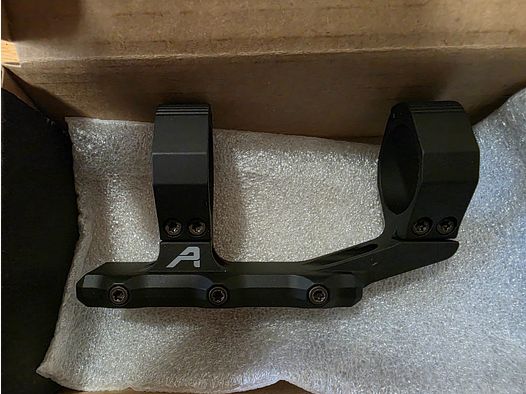
Spuhr Scope Mount, 35 mm / 30 mm / 20.6 MOA
≈ $505
Price at the dealer: 449.92 €. Converted at the ECB rate as of October 21, 2026.
No permit required (18+)
72479 Straßberg, Germany
9
ID: 9897166
Purchase from outside the EU: The firearm goes through an importer in your country, the dealer handles the export.
How buying from Europe works
Shop safely with Gunfinder
Our AI-powered seller identity verification makes Gunfinder the safest marketplace online.
Learn more
Details
- Original language
- German
- Category
- Condition
- New
- Location
- 🇩🇪 72479 Straßberg, Germany
- Availability
- In stock
Freshness
This listing is based on a mirrored offer, where the listing data was synced to us from a shop, dealer, or external marketplace. Please note that temporary price discrepancies may occur due to possible delays in data transmission.
- Source
- Black Raptor
- Last updated
- about 7 hours ago
Description
Note:
The item is located abroad. Please note that delivery conditions, shipping times, and/or the purchase process may differ.
When using an inclined mount, it’s not just about how much angle it has. What really matters is what this angle does to the existing weapon rail’s zero point and how much the scope axis has already dropped at the objective lens. A low mount makes this second question more critical because its geometric margin is smaller from the start.
The SP-5601 therefore combines two deliberate choices: 30 mm axis height at the rear ring and 6 MIL / 20.6 MOA inclination. It’s not a universal long-range mount but a fixed 35 mm solution for bolt-action rifles with a one-piece MIL-STD-1913 or STANAG-4694 rail.
Before buying, two margins must be ensured: The optic needs enough adjustment travel for the intended close zero. At the same time, the objective lens must remain free over the rail, barrel, and protective cap despite the forward-tilted axis.
6 MIL shift the working range
The mount tilts the scope 6 MIL relative to its rail attachment. When zeroing, this angle is compensated via the elevation turret. If the desired zero remains reachable, more of the existing adjustment range is then available in the direction needed for long distance.
The total mechanical adjustment range doesn’t increase. On a neutral rail, there are 6 MIL total. A rail already tilted by 3 MIL results in 9 MIL total; with a 6 MIL rail, the total inclination grows to 12 MIL. The second case can be useful but consumes significantly more counter-adjustment when zeroing.
Spuhr recommends as little inclination as necessary in their selection guide. If the total inclination exceeds half the available elevation range, a zero at short distance may become impossible. Therefore, not only the nominal total range is considered but the actual available counter-adjustment with zero-stop set and the turret’s specific starting position.
Trainer tip: Set total angle before zeroing Write down the weapon rail’s angle and the mount’s 6 MIL separately. Next to it, note the optic’s real counter-adjustment range. Only if the planned zero lies within this margin is the inclination functional. A neutral SP-5001 is the better choice if the rail already provides the needed angle fully.
Front clearance: 30 mm applies only at the rear ring
For inclined Spuhr mounts, the height is measured at the rear plane of the rear ring. With 6 MIL, the optical axis drops forward approximately 0.6 mm per 100 mm length distance. This is often uncritical with a high mount; with only 30 mm starting height, it can decide the model choice.
If the largest objective diameter is 150 mm in front of the rear ring plane, the axis height there is calculated at 29.1 mm. A real outer housing with 56 mm diameter leaves only 1.1 mm theoretical clearance over a parallel continuous rail. With 58 mm outer diameter, only 0.1 mm remains, practically no usable margin.
At 200 mm length distance, the axis drops to 28.8 mm theoretically. Even a 56 mm outer diameter then leaves only 0.8 mm theoretical clearance. Protective cap, tolerances, and dirt are not yet considered. If the rail ends before the objective, ca
nn the real setup offers more space; this must be assessed exactly at this longitudinal position.
The 6.5 mm bridge clearance mentioned by Spuhr refers to the distance between the underside of the 35 mm main tube and the bridge of the mounting body. This dimension is not a guarantee for the clearance under the objective housing.
User tip: Calculate with the longitudinal position, not just the diameter
Measure from the rear ring to the widest point of the objective or cap. Subtract 0.6 mm per 100 mm distance from the rear 30 mm and then half the outer diameter. If only a fraction of a millimeter remains, the 38 mm version should be considered more closely.
35 mm ring geometry without offset
The SP-5601 clamps exclusively 35 mm main tubes. A 34 mm or 36 mm tube is not suitable. Additionally, both 32 mm wide rings require completely straight tube zones; the free area between the ring surfaces is 62 mm according to the datasheet.
Spuhr explicitly excludes scopes with extended erector housing and cites US Optics TPAL/EREK as an example. Therefore, even a correct 35 mm nominal dimension does not guarantee fit if turret block, reinforcement, or cone protrude into the ring surfaces.
The 126 mm long body has no cantilever. The eye relief is adjusted by the position of the entire body on the rail, without shifting the rings onto unsuitable tube zones. If the one-piece rail is not sufficient for this, more torque does not solve the actual geometry problem.
User tip: Define ring zones before the rail position
Place the optic first in the open body so that both rings sit completely on cylindrical surfaces and the turret block remains free. Then shift the mount as a unit for the eye relief. This immediately shows whether the rail offers enough positioning range.
Low sight line and stock contact
The 30 mm line is attractive on many bolt actions because it can allow direct cheek contact without unnecessarily high cheek rest. This supports a repeatable head position, provided the objective and bolt area leave enough space.
On straight AR stocks, the natural sight line is usually higher. There, this mount can force the head too low and additionally lacks the typical offset of a cantilever solution. Therefore, the SP-5601 should be judged according to its original purpose: low, inclined setup on a bolt-action rifle with one-piece rail.
ISMS body, bubble level, and mounting sequence
The exact datasheet specifies 7075-T651 aluminum with hard anodizing, 238 g weight, and seven Spuhr interface sets. The integrated bubble level is located in the rear area; the diagonally split rings keep the view on elevation and windage turrets clearer.
According to the current ISMS instructions, the body is pressed forward against the rail system when clamping. The M5 clamping screws are tightened from the center outward in a consistent sequence with 5 Nm. For the factory waxed M4 ring screws, 2.0 Nm or the lower approved value of the optic manufacturer applies.
The supplied 10-degree wedge can align a suitable flat underside of the optic to the integrated bubble level. Its back serves as a screw length gauge for interface accessories. Too long accessory screws can reach the main tube and damage it; interface and screw length therefore always belong together.
Our assessment
The strongest reason to buy is the combination of 6 MIL and low head position. Those planning a long-range setup with 35 mm optics on a neutral one-piece rail and wanting to keep cheek contact compact get a very clearly defined solution.
The biggest risk of a bad purchase lies at the front at the objective. The rear 30 mm seem sufficient on the datasheet, but 6 MIL reduce the height with every millimeter forward. For large housings or long optics, the SP-5602 with 38 mm axis height is often the technically cleaner choic
l.
Black-Raptor-Short Summary: Buy if: 35 mm barrel, one-piece rail, low stock line, and a total of 6 MIL plus existing rail angle fit the zero point and the front clearance is calculated at the actual scope position. Don’t buy if: the rail already has enough tilt, the adjustment range is tight, the scope or cap almost touch, or QD, cantilever, or a higher AR sight line is needed.
Scope of Delivery
1 x Spuhr SP-5601 scope mount
1 x 10-degree leveling wedge with screw length gauge
1 x Manufacturer’s manual
Scope, firearm, rail, interface accessories, and torque tool are not included.
Suitable Alternatives
SP-5001: same low height without additional tilt
SP-5002: 35 mm barrel, neutral and 38 mm high
SP-5602: same 6 MIL with 38 mm axis height
SP-4601C: low 6 MIL alternative for 34 mm barrels
Technical Data
Model: SP-5601
Main tube: 35 mm
Axis height: 30 mm / 1.18 inch at the rear ring plane
Tilt: 6 MIL / 20.6 MOA
Mount: MIL-STD-1913 / STANAG 4694
QD / Cantilever: no / no
Overall length: 126 mm / 4.96 inch
Ring width / free ring space: 32 mm / 62 mm
Bridge clearance: 6.5 mm from lower barrel edge to body bridge
Weight: 238 g / 8.4 oz
Material: 7075-T651 aluminum, hard anodized
Interfaces: seven sets, integrated bubble level
EAN: 7340150700447
Torque: 5 Nm rail; 2.0 Nm or lower optics manufacturer value on the rings
Manufacturer Disclaimer: According to Spuhr, the SP-5601 does not fit the SAKO S20 or rifles with two-piece rails. Scopes with extended erector housing, explicitly named are US Optics TPAL/EREK, are also excluded.
FAQ
Does 6 MIL increase the elevation adjustment range? No. The tilt shifts the usable position within the existing mechanical range. The achievable near zero point is limited by the adjustment range.
How does an inclined weapon rail add up? The angles add up. On a neutral rail, it results in 6 MIL, on a 3 MIL rail a total of 9 MIL, and on a 6 MIL rail a total of 12 MIL.
Is 30 mm height enough for a scope with 56 mm outer diameter? That depends on the longitudinal position. 150 mm in front of the rear ring plane, only 1.1 mm remain above a parallel continuous rail due to the 6 MIL tilt.
Are the mentioned 6.5 mm the scope clearance? No. This measure applies between the underside of the 35 mm main tube and the body bridge. Scope clearance is calculated from axis height at the specific longitudinal position and actual outer diameter.
Does every scope with a 35 mm barrel fit? No. Both ring zones must be straight and free. Extended erector housings like US Optics TPAL/EREK are explicitly excluded by Spuhr.
When is the SP-5602 the better choice? When 6 MIL is needed but the scope, cap, attachment tech, or head position require more height. The SP-5602 raises the rear axis to 38 mm. (Show description in original language)
.br-product-v3{--br-ink:#17201c;--br-muted:#54615b;--br-line:#d9e0dc;--br-soft:#f5f7f5;--br-deep:#10271d;--br-gold:#f2d58e;font-family:Arial,Helvetica,sans-serif;color:var(--br-ink);line-height:1.65;max-width:1180px;margin:0 auto;overflow-wrap:anywhere}
.br-product-v3 *{box-sizing:border-box}.br-product-v3 p{margin:0 0 14px}.br-product-v3 ul{margin:8px 0 14px;padding-left:20px}.br-product-v3 li{margin:0 0 7px}
.br-product-v3 .br-hero-v3{background:linear-gradient(135deg,var(--br-deep),#183c2c);color:#fff;border-radius:24px;padding:34px;margin:0 0 24px;box-shadow:0 16px 38px rgba(16,39,29,.18)}
.br-product-v3 .br-eyebrow-v3{color:var(--br-gold);font-size:.76rem;font-weight:800;letter-spacing:.12em;text-transform:uppercase;margin-bottom:10px}.br-product-v3 .br-title-v3{font-size:clamp(1.8rem,4vw,2.65rem);line-height:1.08;font-weight:850;letter-spacing:-.035em;margin:0 0 16px}.br-product-v3 .br-pill-v3{display:inline-block;background:var(--br-gold);color:var(--br-deep);font-weight:800;border-radius:999px;padding:9px 14px}
.br-product-v3 .br-section-title{font-size:1.28rem;line-height:1.25;font-weight:850;color:var(--br-deep);margin:32px 0 13px}.br-product-v3 .br-grid,.br-product-v3 .br-tech-v3{display:grid;grid-template-columns:repeat(2,minmax(0,1fr));gap:14px;margin:14px 0 22px}
.br-product-v3 .br-card,.br-product-v3 .br-box{border:1px solid var(--br-line);background:#fff;border-radius:16px;padding:18px;min-width:0}.br-product-v3 .br-box{background:var(--br-soft);border-left:5px solid var(--br-gold);margin:16px 0 22px}.br-product-v3 .br-card strong,.br-product-v3 .br-box strong{display:block;color:var(--br-deep);margin-bottom:7px}
.br-product-v3 .br-limit{border:1px solid #e2c9c4;background:#fff5f2;border-radius:16px;padding:18px;margin:18px 0 24px}.br-product-v3 .br-delivery-v3{background:#fbf7ea;border-color:#ead9aa}.br-product-v3 details{border:1px solid var(--br-line);background:var(--br-soft);border-radius:12px;padding:12px 14px;margin:0 0 9px}.br-product-v3 summary{font-weight:800;color:var(--br-deep);cursor:pointer}
.br-product-v3 .br-video-slot{min-height:1px;margin:0}.br-product-v3 .br-final{background:var(--br-deep);color:#fff;border-radius:20px;padding:24px;margin-top:28px}.br-product-v3 .br-final strong{color:var(--br-gold)}.br-product-v3 table{width:100%;border-collapse:collapse;display:block;overflow-x:auto}.br-product-v3 td,.br-product-v3 th{border-bottom:1px solid var(--br-line);padding:9px;text-align:left}
@media(max-width:760px){.br-product-v3 .br-grid,.br-product-v3 .br-tech-v3{grid-template-columns:1fr}.br-product-v3 .br-hero-v3{padding:24px 20px;border-radius:18px}.br-product-v3 .br-card,.br-product-v3 .br-box,.br-product-v3 .br-limit{padding:15px}.br-product-v3{max-width:100%;overflow:hidden}}
Spuhr · Kaufberatung
Optikmontage nach Ringmaß, Höhe und Vorneigung auswählen
Spuhr Zielfernrohrmontage, 35 mm / 30 mm / 20,6 MOA wird nach Passung, Variante und praktischer Wirkung eingeordnet – ohne behaupteten Eigentest.
Passung zuerst prüfen
Passt das Produkt zu deinem Setup?
Passt gut Wenn Rohrdurchmesser, Picatinny-Schnittstelle, Bauhöhe, Vorneigung und gegebenenfalls Vorversatz stimmen exakt mit Optik und Waffe überein.
Passt eher nicht Wenn nur der Ringdurchmesser wurde geprüft oder Objektiv, Turm, Hülsenauswurf beziehungsweise Augenabstand können kollidieren.
Kaufcheck vor dem Bestellen Ringdurchmesser, Schienenstandard, Bauhöhe, MOA/MIL-Vorneigung, Versatz und QD-Ausführung. Vergleiche die gewählte Variante mit der Kennzeichnung am vorhandenen System und mit den Herstellerunterlagen.
Bei einer geneigten Montage zählt nicht nur, wie viel Winkel sie mitbringt. Entscheidend ist, was dieser Winkel auf der vorhandenen Waffenrail mit dem Nullpunkt macht und wie stark die Zielfernrohrachse am Objektiv bereits abgesunken ist. Eine niedrige Montage verschärft diese zweite Frage, weil ihre geometrische Reserve von Anfang an kleiner ist.
Die SP-5601 kombiniert deshalb zwei bewusste Entscheidungen: 30 mm Achshöhe am hinteren Ring und 6 MIL / 20,6 MOA Neigung. Sie ist keine universelle Long-Range-Montage, sondern eine feste 35-mm-Lösung für Repetierbüchsen mit einteiliger MIL-STD-1913- oder STANAG-4694-Rail.
Vor dem Kauf müssen zwei Reserven stehen: Die Optik braucht genügend Gegenverstellweg für den vorgesehenen Nahnullpunkt. Gleichzeitig muss das Objektiv trotz der nach vorn fallenden Achse frei über Rail, Lauf und Schutzkappe bleiben.
6 MIL verschieben den Arbeitsbereich
Die Montage neigt das Zielfernrohr gegenüber ihrer Railaufnahme um 6 MIL. Beim Einschießen wird dieser Winkel über den Höhenturm ausgeglichen. Bleibt der gewünschte Nullpunkt erreichbar, steht anschließend mehr des bereits vorhandenen Verstellbereichs in der für große Distanz benötigten Richtung zur Verfügung.
Der mechanische Gesamtverstellweg wird nicht größer. Auf einer neutralen Rail entstehen insgesamt 6 MIL. Eine bereits um 3 MIL geneigte Rail ergibt zusammen 9 MIL; mit einer 6-MIL-Rail wächst die Gesamtneigung auf 12 MIL. Der zweite Fall kann sinnvoll sein, verbraucht aber deutlich mehr Gegenweg beim Einschießen.
Spuhr empfiehlt in der eigenen Auswahlhilfe so wenig Neigung wie nötig. Liegt die Gesamtneigung über der Hälfte des verfügbaren Höhenbereichs, kann ein Nullpunkt auf kurze Distanz unmöglich werden. Deshalb wird nicht nur der nominelle Gesamtweg betrachtet, sondern der real verfügbare Gegenweg mit eingerichtetem Zero-Stop und der konkreten Ausgangslage des Turms.
Ausbilder-Tipp: Gesamtwinkel vor dem Einschießen festlegen Schreibe den Winkel der Waffenrail und die 6 MIL der Montage getrennt auf. Stelle daneben den realen Gegenverstellweg der Optik. Erst wenn der geplante Nullpunkt innerhalb dieser Reserve liegt, ist die Neigung funktional. Eine neutrale SP-5001 ist die bessere Wahl, wenn die Rail den benötigten Winkel bereits vollständig liefert.
Frontfreiheit: 30 mm gelten nur am hinteren Ring
Bei geneigten Spuhr-Montagen wird die Höhe an der hinteren Ebene des hinteren Rings gemessen. Mit 6 MIL fällt die optische Achse nach vorn näherungsweise um 0,6 mm je 100 mm Längsabstand. Das ist bei einer hohen Montage oft unkritisch; bei nur 30 mm Ausgangshöhe kann es die Modellwahl entscheiden.
Liegt der größte Objektivdurchmesser 150 mm vor der hinteren Ringebene, beträgt die Achshöhe dort rechnerisch 29,1 mm. Ein reales Außengehäuse mit 56 mm Durchmesser lässt über einer parallelen durchgehenden Rail nur 1,1 mm theoretischen Abstand. Bei 58 mm Außendurchmesser bleiben lediglich 0,1 mm und damit praktisch keine brauchbare Reserve.
Bei 200 mm Längsabstand sinkt die Achse rechnerisch auf 28,8 mm. Selbst ein Außendurchmesser von 56 mm lässt dann nur 0,8 mm theoretische Luft. Schutzkappe, Toleranzen und Schmutz sind darin noch nicht berücksichtigt. Endet die Rail vor dem Objektiv, kann der reale Aufbau mehr Platz bieten; das muss an genau dieser Längsposition beurteilt werden.
Die von Spuhr genannten 6,5 mm Brückenfreiheit beziehen sich auf den Abstand zwischen Unterseite des 35-mm-Mittelrohrs und der Brücke des Montagenkörpers. Dieses Maß ist keine Zusage für den Freiraum unter dem Objektivgehäuse.
Nutzer-Tipp: Mit der Längsposition rechnen, nicht nur mit dem Durchmesser Miss vom hinteren Ring bis zur breitesten Stelle von Objektiv oder Kappe. Ziehe pro 100 mm Abstand 0,6 mm von den hinteren 30 mm ab und danach den halben Außendurchmesser. Bleibt nur ein Bruchteil eines Millimeters, gehört die 38-mm-Version in die engere Wahl.
35-mm-Ringgeometrie ohne Vorversatz
Die SP-5601 klemmt ausschließlich 35-mm-Mittelrohre. Ein 34-mm- oder 36-mm-Rohr ist nicht passend. Zusätzlich benötigen beide 32 mm breiten Ringe vollständig gerade Rohrzonen; der freie Bereich zwischen den Ringflächen beträgt laut Datenblatt 62 mm.
Spuhr schließt Zielfernrohre mit verlängertem Erektorgehäuse ausdrücklich aus und nennt US Optics TPAL/EREK als Beispiel. Auch ein korrektes 35-mm-Nennmaß garantiert daher keine Passung, wenn Turmblock, Verstärkung oder Konus in die Ringflächen ragen.
Der 126 mm lange Körper besitzt keinen Cantilever. Der Augenabstand wird über die Position des gesamten Körpers auf der Rail eingestellt, ohne die Ringe auf ungeeignete Rohrzonen zu verschieben. Reicht die einteilige Rail dafür nicht aus, löst mehr Drehmoment das eigentliche Geometrieproblem nicht.
Nutzer-Tipp: Ringzonen vor der Railposition festlegen Lege die Optik zuerst so in den offenen Körper, dass beide Ringe vollständig auf zylindrischen Flächen sitzen und der Turmblock frei bleibt. Verschiebe danach die Montage als Einheit für den Augenabstand. So wird sofort sichtbar, ob die Rail ausreichend Positionierweg bietet.
Niedrige Visierlinie und Schaftkontakt
Die 30-mm-Linie ist auf vielen Repetierern attraktiv, weil sie einen direkten Wangenkontakt ohne unnötig hohe Schaftbacke ermöglichen kann. Das unterstützt eine wiederholbare Kopfposition, sofern Objektiv und Verschlussbereich genügend Platz lassen.
Auf geradlinigen AR-Schäften liegt die natürliche Visierlinie meist höher. Dort kann diese Montage den Kopf zu tief zwingen und zusätzlich fehlt der typische Vorversatz einer Cantilever-Lösung. Die SP-5601 sollte deshalb nach ihrem ursprünglichen Einsatzzweck beurteilt werden: niedriger, geneigter Aufbau auf einer Repetierbüchse mit einteiliger Rail.
ISMS-Körper, Libelle und Montagefolge
Das exakte Datenblatt nennt 7075-T651-Aluminium mit Harteloxal, 238 g Gewicht und sieben Spuhr-Interface-Sätze. Die integrierte Libelle sitzt im hinteren Bereich; die diagonal geteilten Ringe halten den Blick auf Höhen- und Seitenturm freier.
Nach aktueller ISMS-Anleitung wird der Körper beim Klemmen nach vorn gegen die Railanlage gedrückt. Die M5-Klemmschrauben werden von der Mitte nach außen in gleichbleibender Reihenfolge mit 5 Nm angezogen. Für die ab Werk gewachsten M4-Ringschrauben gelten 2,0 Nm oder der niedrigere freigegebene Wert des Optikherstellers.
Der mitgelieferte 10-Grad-Keil kann eine geeignete plane Unterseite der Optik zur integrierten Libelle ausrichten. Seine Rückseite dient als Schraubenlängenlehre für Interface-Zubehör. Zu lange Zubehörschrauben können bis an das Mittelrohr reichen und es beschädigen; Interface und Schraubenlänge gehören deshalb immer zusammen.
Unsere Einschätzung
Der stärkste Kaufgrund ist die Kombination aus 6 MIL und niedriger Kopfposition. Wer auf einer neutralen einteiligen Rail einen Long-Range-Aufbau mit 35-mm-Optik plant und den Wangenkontakt kompakt halten will, bekommt eine sehr klar definierte Lösung.
Das größte Fehlkaufrisiko liegt vorn am Objektiv. Die hinteren 30 mm wirken auf dem Datenblatt ausreichend, doch 6 MIL reduzieren die Höhe mit jedem Millimeter nach vorn. Bei großen Gehäusen oder langer Optik ist die SP-5602 mit 38 mm Achshöhe häufig die technisch sauberere Wahl.
Black-Raptor-Kurzfazit: Kaufen, wenn: 35-mm-Rohr, einteilige Rail, niedrige Schaftlinie und insgesamt 6 MIL plus vorhandener Railwinkel zum Nullpunkt passen und die Frontfreiheit an der realen Objektivposition berechnet ist. Nicht kaufen, wenn: die Rail bereits genug Neigung besitzt, der Gegenverstellweg knapp wird, Objektiv oder Kappe nahezu aufliegen oder QD, Cantilever beziehungsweise eine höhere AR-Visierlinie benötigt werden.
Lieferumfang
1 x Spuhr SP-5601 Zielfernrohrmontage
1 x 10-Grad-Nivellierkeil mit Schraubenlängenlehre
1 x Herstelleranleitung
Zielfernrohr, Waffe, Rail, Interface-Zubehör und Drehmomentwerkzeug sind nicht enthalten.
Passende Alternativen
SP-5001: gleiche niedrige Höhe ohne zusätzliche Neigung
SP-5002: 35 mm Rohr, neutral und 38 mm hoch
SP-5602: gleiche 6 MIL mit 38 mm Achshöhe
SP-4601C: niedrige 6-MIL-Alternative für 34-mm-Rohre
Technische Daten
Modell: SP-5601
Mittelrohr: 35 mm
Achshöhe: 30 mm / 1,18 Zoll an der hinteren Ringebene
Neigung: 6 MIL / 20,6 MOA
Aufnahme: MIL-STD-1913 / STANAG 4694
QD / Cantilever: nein / nein
Gesamtlänge: 126 mm / 4,96 Zoll
Ringbreite / freier Ringraum: 32 mm / 62 mm
Brückenfreiheit: 6,5 mm vom unteren Rohrrand zur Körperbrücke
Gewicht: 238 g / 8,4 oz
Material: 7075-T651-Aluminium, harteloxiert
Interfaces: sieben Sätze, integrierte Libelle
EAN: 7340150700447
Drehmoment: 5 Nm Rail; 2,0 Nm oder niedrigerer Optikherstellerwert an den Ringen
Herstellerausschluss: Die SP-5601 passt laut Spuhr nicht auf die SAKO S20 oder auf Gewehre mit zweiteiligen Rails. Zielfernrohre mit verlängertem Erektorgehäuse, ausdrücklich genannt werden US Optics TPAL/EREK, sind ebenfalls ausgeschlossen.
FAQ
Vergrößern 6 MIL den Höhenverstellweg? Nein. Die Neigung verschiebt die nutzbare Lage innerhalb des vorhandenen mechanischen Bereichs. Der erreichbare Nahnullpunkt wird durch den Gegenverstellweg begrenzt.
Wie addiert sich eine geneigte Waffenrail? Die Winkel werden addiert. Auf neutraler Rail ergeben sich 6 MIL, auf einer 3-MIL-Rail insgesamt 9 MIL und auf einer 6-MIL-Rail insgesamt 12 MIL.
Reichen 30 mm Höhe für ein Objektiv mit 56 mm Außendurchmesser? Das hängt von der Längsposition ab. 150 mm vor der hinteren Ringebene bleiben wegen der 6-MIL-Neigung rechnerisch nur 1,1 mm über einer parallelen durchgehenden Rail.
Sind die genannten 6,5 mm der Objektivfreiraum? Nein. Dieses Maß gilt zwischen Unterseite des 35-mm-Mittelrohrs und Körperbrücke. Objektivfreiheit wird aus Achshöhe an der konkreten Längsposition und realem Außendurchmesser berechnet.
Passt jedes Zielfernrohr mit 35-mm-Rohr? Nein. Beide Ringzonen müssen gerade und frei sein. Verlängerte Erektorgehäuse wie US Optics TPAL/EREK schließt Spuhr ausdrücklich aus.
Wann ist die SP-5602 die bessere Wahl? Wenn 6 MIL benötigt werden, aber Objektiv, Kappe, Vorsatztechnik oder Kopfposition mehr Höhe verlangen. Die SP-5602 hebt die hintere Achse auf 38 mm an. Technische Daten praktisch gelesen
Kaufkritische Daten Ringdurchmesser, Schienenstandard, Bauhöhe, MOA/MIL-Vorneigung, Versatz und QD-Ausführung.
Praxisfolge Die passende Geometrie schafft Freigängigkeit, sauberen Augenabstand und nutzbaren Höhenverstellweg; eine falsche Höhe oder zu starke Vorneigung kann die Nutzung deutlich einschränken.
Grenzen und Fehlkauf vermeiden
Wichtig vor Montage und Nutzung Montage nur an vollständig entladener Waffe. Schrauben über Kreuz mit geeignetem Drehmomentschlüssel nach Herstellerangabe anziehen; QD-Spannung und Treffpunktlage nach der Erstmontage kontrollieren.
Lieferumfang Enthalten ist ausschließlich die im bestehenden Produkttext und in der gewählten Variante ausdrücklich benannte Ausführung. Abgebildete Waffen, Optiken oder weiteres Zubehör gehören nur dazu, wenn sie ausdrücklich aufgeführt sind.
Black-Raptor-Einordnung: Diese Ausführung ist sinnvoll, wenn die kaufkritischen Maße und Schnittstellen vorab eindeutig bestätigt sind. Bei unklarer Passung zuerst Modellbezeichnung und vorhandene Aufnahme prüfen.
.br-product-v3 *{box-sizing:border-box}.br-product-v3 p{margin:0 0 14px}.br-product-v3 ul{margin:8px 0 14px;padding-left:20px}.br-product-v3 li{margin:0 0 7px}
.br-product-v3 .br-hero-v3{background:linear-gradient(135deg,var(--br-deep),#183c2c);color:#fff;border-radius:24px;padding:34px;margin:0 0 24px;box-shadow:0 16px 38px rgba(16,39,29,.18)}
.br-product-v3 .br-eyebrow-v3{color:var(--br-gold);font-size:.76rem;font-weight:800;letter-spacing:.12em;text-transform:uppercase;margin-bottom:10px}.br-product-v3 .br-title-v3{font-size:clamp(1.8rem,4vw,2.65rem);line-height:1.08;font-weight:850;letter-spacing:-.035em;margin:0 0 16px}.br-product-v3 .br-pill-v3{display:inline-block;background:var(--br-gold);color:var(--br-deep);font-weight:800;border-radius:999px;padding:9px 14px}
.br-product-v3 .br-section-title{font-size:1.28rem;line-height:1.25;font-weight:850;color:var(--br-deep);margin:32px 0 13px}.br-product-v3 .br-grid,.br-product-v3 .br-tech-v3{display:grid;grid-template-columns:repeat(2,minmax(0,1fr));gap:14px;margin:14px 0 22px}
.br-product-v3 .br-card,.br-product-v3 .br-box{border:1px solid var(--br-line);background:#fff;border-radius:16px;padding:18px;min-width:0}.br-product-v3 .br-box{background:var(--br-soft);border-left:5px solid var(--br-gold);margin:16px 0 22px}.br-product-v3 .br-card strong,.br-product-v3 .br-box strong{display:block;color:var(--br-deep);margin-bottom:7px}
.br-product-v3 .br-limit{border:1px solid #e2c9c4;background:#fff5f2;border-radius:16px;padding:18px;margin:18px 0 24px}.br-product-v3 .br-delivery-v3{background:#fbf7ea;border-color:#ead9aa}.br-product-v3 details{border:1px solid var(--br-line);background:var(--br-soft);border-radius:12px;padding:12px 14px;margin:0 0 9px}.br-product-v3 summary{font-weight:800;color:var(--br-deep);cursor:pointer}
.br-product-v3 .br-video-slot{min-height:1px;margin:0}.br-product-v3 .br-final{background:var(--br-deep);color:#fff;border-radius:20px;padding:24px;margin-top:28px}.br-product-v3 .br-final strong{color:var(--br-gold)}.br-product-v3 table{width:100%;border-collapse:collapse;display:block;overflow-x:auto}.br-product-v3 td,.br-product-v3 th{border-bottom:1px solid var(--br-line);padding:9px;text-align:left}
@media(max-width:760px){.br-product-v3 .br-grid,.br-product-v3 .br-tech-v3{grid-template-columns:1fr}.br-product-v3 .br-hero-v3{padding:24px 20px;border-radius:18px}.br-product-v3 .br-card,.br-product-v3 .br-box,.br-product-v3 .br-limit{padding:15px}.br-product-v3{max-width:100%;overflow:hidden}}
Spuhr · Kaufberatung
Optikmontage nach Ringmaß, Höhe und Vorneigung auswählen
Spuhr Zielfernrohrmontage, 35 mm / 30 mm / 20,6 MOA wird nach Passung, Variante und praktischer Wirkung eingeordnet – ohne behaupteten Eigentest.
Passung zuerst prüfen
Passt das Produkt zu deinem Setup?
Passt gut Wenn Rohrdurchmesser, Picatinny-Schnittstelle, Bauhöhe, Vorneigung und gegebenenfalls Vorversatz stimmen exakt mit Optik und Waffe überein.
Passt eher nicht Wenn nur der Ringdurchmesser wurde geprüft oder Objektiv, Turm, Hülsenauswurf beziehungsweise Augenabstand können kollidieren.
Kaufcheck vor dem Bestellen Ringdurchmesser, Schienenstandard, Bauhöhe, MOA/MIL-Vorneigung, Versatz und QD-Ausführung. Vergleiche die gewählte Variante mit der Kennzeichnung am vorhandenen System und mit den Herstellerunterlagen.
Bei einer geneigten Montage zählt nicht nur, wie viel Winkel sie mitbringt. Entscheidend ist, was dieser Winkel auf der vorhandenen Waffenrail mit dem Nullpunkt macht und wie stark die Zielfernrohrachse am Objektiv bereits abgesunken ist. Eine niedrige Montage verschärft diese zweite Frage, weil ihre geometrische Reserve von Anfang an kleiner ist.
Die SP-5601 kombiniert deshalb zwei bewusste Entscheidungen: 30 mm Achshöhe am hinteren Ring und 6 MIL / 20,6 MOA Neigung. Sie ist keine universelle Long-Range-Montage, sondern eine feste 35-mm-Lösung für Repetierbüchsen mit einteiliger MIL-STD-1913- oder STANAG-4694-Rail.
Vor dem Kauf müssen zwei Reserven stehen: Die Optik braucht genügend Gegenverstellweg für den vorgesehenen Nahnullpunkt. Gleichzeitig muss das Objektiv trotz der nach vorn fallenden Achse frei über Rail, Lauf und Schutzkappe bleiben.
6 MIL verschieben den Arbeitsbereich
Die Montage neigt das Zielfernrohr gegenüber ihrer Railaufnahme um 6 MIL. Beim Einschießen wird dieser Winkel über den Höhenturm ausgeglichen. Bleibt der gewünschte Nullpunkt erreichbar, steht anschließend mehr des bereits vorhandenen Verstellbereichs in der für große Distanz benötigten Richtung zur Verfügung.
Der mechanische Gesamtverstellweg wird nicht größer. Auf einer neutralen Rail entstehen insgesamt 6 MIL. Eine bereits um 3 MIL geneigte Rail ergibt zusammen 9 MIL; mit einer 6-MIL-Rail wächst die Gesamtneigung auf 12 MIL. Der zweite Fall kann sinnvoll sein, verbraucht aber deutlich mehr Gegenweg beim Einschießen.
Spuhr empfiehlt in der eigenen Auswahlhilfe so wenig Neigung wie nötig. Liegt die Gesamtneigung über der Hälfte des verfügbaren Höhenbereichs, kann ein Nullpunkt auf kurze Distanz unmöglich werden. Deshalb wird nicht nur der nominelle Gesamtweg betrachtet, sondern der real verfügbare Gegenweg mit eingerichtetem Zero-Stop und der konkreten Ausgangslage des Turms.
Ausbilder-Tipp: Gesamtwinkel vor dem Einschießen festlegen Schreibe den Winkel der Waffenrail und die 6 MIL der Montage getrennt auf. Stelle daneben den realen Gegenverstellweg der Optik. Erst wenn der geplante Nullpunkt innerhalb dieser Reserve liegt, ist die Neigung funktional. Eine neutrale SP-5001 ist die bessere Wahl, wenn die Rail den benötigten Winkel bereits vollständig liefert.
Frontfreiheit: 30 mm gelten nur am hinteren Ring
Bei geneigten Spuhr-Montagen wird die Höhe an der hinteren Ebene des hinteren Rings gemessen. Mit 6 MIL fällt die optische Achse nach vorn näherungsweise um 0,6 mm je 100 mm Längsabstand. Das ist bei einer hohen Montage oft unkritisch; bei nur 30 mm Ausgangshöhe kann es die Modellwahl entscheiden.
Liegt der größte Objektivdurchmesser 150 mm vor der hinteren Ringebene, beträgt die Achshöhe dort rechnerisch 29,1 mm. Ein reales Außengehäuse mit 56 mm Durchmesser lässt über einer parallelen durchgehenden Rail nur 1,1 mm theoretischen Abstand. Bei 58 mm Außendurchmesser bleiben lediglich 0,1 mm und damit praktisch keine brauchbare Reserve.
Bei 200 mm Längsabstand sinkt die Achse rechnerisch auf 28,8 mm. Selbst ein Außendurchmesser von 56 mm lässt dann nur 0,8 mm theoretische Luft. Schutzkappe, Toleranzen und Schmutz sind darin noch nicht berücksichtigt. Endet die Rail vor dem Objektiv, kann der reale Aufbau mehr Platz bieten; das muss an genau dieser Längsposition beurteilt werden.
Die von Spuhr genannten 6,5 mm Brückenfreiheit beziehen sich auf den Abstand zwischen Unterseite des 35-mm-Mittelrohrs und der Brücke des Montagenkörpers. Dieses Maß ist keine Zusage für den Freiraum unter dem Objektivgehäuse.
Nutzer-Tipp: Mit der Längsposition rechnen, nicht nur mit dem Durchmesser Miss vom hinteren Ring bis zur breitesten Stelle von Objektiv oder Kappe. Ziehe pro 100 mm Abstand 0,6 mm von den hinteren 30 mm ab und danach den halben Außendurchmesser. Bleibt nur ein Bruchteil eines Millimeters, gehört die 38-mm-Version in die engere Wahl.
35-mm-Ringgeometrie ohne Vorversatz
Die SP-5601 klemmt ausschließlich 35-mm-Mittelrohre. Ein 34-mm- oder 36-mm-Rohr ist nicht passend. Zusätzlich benötigen beide 32 mm breiten Ringe vollständig gerade Rohrzonen; der freie Bereich zwischen den Ringflächen beträgt laut Datenblatt 62 mm.
Spuhr schließt Zielfernrohre mit verlängertem Erektorgehäuse ausdrücklich aus und nennt US Optics TPAL/EREK als Beispiel. Auch ein korrektes 35-mm-Nennmaß garantiert daher keine Passung, wenn Turmblock, Verstärkung oder Konus in die Ringflächen ragen.
Der 126 mm lange Körper besitzt keinen Cantilever. Der Augenabstand wird über die Position des gesamten Körpers auf der Rail eingestellt, ohne die Ringe auf ungeeignete Rohrzonen zu verschieben. Reicht die einteilige Rail dafür nicht aus, löst mehr Drehmoment das eigentliche Geometrieproblem nicht.
Nutzer-Tipp: Ringzonen vor der Railposition festlegen Lege die Optik zuerst so in den offenen Körper, dass beide Ringe vollständig auf zylindrischen Flächen sitzen und der Turmblock frei bleibt. Verschiebe danach die Montage als Einheit für den Augenabstand. So wird sofort sichtbar, ob die Rail ausreichend Positionierweg bietet.
Niedrige Visierlinie und Schaftkontakt
Die 30-mm-Linie ist auf vielen Repetierern attraktiv, weil sie einen direkten Wangenkontakt ohne unnötig hohe Schaftbacke ermöglichen kann. Das unterstützt eine wiederholbare Kopfposition, sofern Objektiv und Verschlussbereich genügend Platz lassen.
Auf geradlinigen AR-Schäften liegt die natürliche Visierlinie meist höher. Dort kann diese Montage den Kopf zu tief zwingen und zusätzlich fehlt der typische Vorversatz einer Cantilever-Lösung. Die SP-5601 sollte deshalb nach ihrem ursprünglichen Einsatzzweck beurteilt werden: niedriger, geneigter Aufbau auf einer Repetierbüchse mit einteiliger Rail.
ISMS-Körper, Libelle und Montagefolge
Das exakte Datenblatt nennt 7075-T651-Aluminium mit Harteloxal, 238 g Gewicht und sieben Spuhr-Interface-Sätze. Die integrierte Libelle sitzt im hinteren Bereich; die diagonal geteilten Ringe halten den Blick auf Höhen- und Seitenturm freier.
Nach aktueller ISMS-Anleitung wird der Körper beim Klemmen nach vorn gegen die Railanlage gedrückt. Die M5-Klemmschrauben werden von der Mitte nach außen in gleichbleibender Reihenfolge mit 5 Nm angezogen. Für die ab Werk gewachsten M4-Ringschrauben gelten 2,0 Nm oder der niedrigere freigegebene Wert des Optikherstellers.
Der mitgelieferte 10-Grad-Keil kann eine geeignete plane Unterseite der Optik zur integrierten Libelle ausrichten. Seine Rückseite dient als Schraubenlängenlehre für Interface-Zubehör. Zu lange Zubehörschrauben können bis an das Mittelrohr reichen und es beschädigen; Interface und Schraubenlänge gehören deshalb immer zusammen.
Unsere Einschätzung
Der stärkste Kaufgrund ist die Kombination aus 6 MIL und niedriger Kopfposition. Wer auf einer neutralen einteiligen Rail einen Long-Range-Aufbau mit 35-mm-Optik plant und den Wangenkontakt kompakt halten will, bekommt eine sehr klar definierte Lösung.
Das größte Fehlkaufrisiko liegt vorn am Objektiv. Die hinteren 30 mm wirken auf dem Datenblatt ausreichend, doch 6 MIL reduzieren die Höhe mit jedem Millimeter nach vorn. Bei großen Gehäusen oder langer Optik ist die SP-5602 mit 38 mm Achshöhe häufig die technisch sauberere Wahl.
Black-Raptor-Kurzfazit: Kaufen, wenn: 35-mm-Rohr, einteilige Rail, niedrige Schaftlinie und insgesamt 6 MIL plus vorhandener Railwinkel zum Nullpunkt passen und die Frontfreiheit an der realen Objektivposition berechnet ist. Nicht kaufen, wenn: die Rail bereits genug Neigung besitzt, der Gegenverstellweg knapp wird, Objektiv oder Kappe nahezu aufliegen oder QD, Cantilever beziehungsweise eine höhere AR-Visierlinie benötigt werden.
Lieferumfang
1 x Spuhr SP-5601 Zielfernrohrmontage
1 x 10-Grad-Nivellierkeil mit Schraubenlängenlehre
1 x Herstelleranleitung
Zielfernrohr, Waffe, Rail, Interface-Zubehör und Drehmomentwerkzeug sind nicht enthalten.
Passende Alternativen
SP-5001: gleiche niedrige Höhe ohne zusätzliche Neigung
SP-5002: 35 mm Rohr, neutral und 38 mm hoch
SP-5602: gleiche 6 MIL mit 38 mm Achshöhe
SP-4601C: niedrige 6-MIL-Alternative für 34-mm-Rohre
Technische Daten
Modell: SP-5601
Mittelrohr: 35 mm
Achshöhe: 30 mm / 1,18 Zoll an der hinteren Ringebene
Neigung: 6 MIL / 20,6 MOA
Aufnahme: MIL-STD-1913 / STANAG 4694
QD / Cantilever: nein / nein
Gesamtlänge: 126 mm / 4,96 Zoll
Ringbreite / freier Ringraum: 32 mm / 62 mm
Brückenfreiheit: 6,5 mm vom unteren Rohrrand zur Körperbrücke
Gewicht: 238 g / 8,4 oz
Material: 7075-T651-Aluminium, harteloxiert
Interfaces: sieben Sätze, integrierte Libelle
EAN: 7340150700447
Drehmoment: 5 Nm Rail; 2,0 Nm oder niedrigerer Optikherstellerwert an den Ringen
Herstellerausschluss: Die SP-5601 passt laut Spuhr nicht auf die SAKO S20 oder auf Gewehre mit zweiteiligen Rails. Zielfernrohre mit verlängertem Erektorgehäuse, ausdrücklich genannt werden US Optics TPAL/EREK, sind ebenfalls ausgeschlossen.
FAQ
Vergrößern 6 MIL den Höhenverstellweg? Nein. Die Neigung verschiebt die nutzbare Lage innerhalb des vorhandenen mechanischen Bereichs. Der erreichbare Nahnullpunkt wird durch den Gegenverstellweg begrenzt.
Wie addiert sich eine geneigte Waffenrail? Die Winkel werden addiert. Auf neutraler Rail ergeben sich 6 MIL, auf einer 3-MIL-Rail insgesamt 9 MIL und auf einer 6-MIL-Rail insgesamt 12 MIL.
Reichen 30 mm Höhe für ein Objektiv mit 56 mm Außendurchmesser? Das hängt von der Längsposition ab. 150 mm vor der hinteren Ringebene bleiben wegen der 6-MIL-Neigung rechnerisch nur 1,1 mm über einer parallelen durchgehenden Rail.
Sind die genannten 6,5 mm der Objektivfreiraum? Nein. Dieses Maß gilt zwischen Unterseite des 35-mm-Mittelrohrs und Körperbrücke. Objektivfreiheit wird aus Achshöhe an der konkreten Längsposition und realem Außendurchmesser berechnet.
Passt jedes Zielfernrohr mit 35-mm-Rohr? Nein. Beide Ringzonen müssen gerade und frei sein. Verlängerte Erektorgehäuse wie US Optics TPAL/EREK schließt Spuhr ausdrücklich aus.
Wann ist die SP-5602 die bessere Wahl? Wenn 6 MIL benötigt werden, aber Objektiv, Kappe, Vorsatztechnik oder Kopfposition mehr Höhe verlangen. Die SP-5602 hebt die hintere Achse auf 38 mm an. Technische Daten praktisch gelesen
Kaufkritische Daten Ringdurchmesser, Schienenstandard, Bauhöhe, MOA/MIL-Vorneigung, Versatz und QD-Ausführung.
Praxisfolge Die passende Geometrie schafft Freigängigkeit, sauberen Augenabstand und nutzbaren Höhenverstellweg; eine falsche Höhe oder zu starke Vorneigung kann die Nutzung deutlich einschränken.
Grenzen und Fehlkauf vermeiden
Wichtig vor Montage und Nutzung Montage nur an vollständig entladener Waffe. Schrauben über Kreuz mit geeignetem Drehmomentschlüssel nach Herstellerangabe anziehen; QD-Spannung und Treffpunktlage nach der Erstmontage kontrollieren.
Lieferumfang Enthalten ist ausschließlich die im bestehenden Produkttext und in der gewählten Variante ausdrücklich benannte Ausführung. Abgebildete Waffen, Optiken oder weiteres Zubehör gehören nur dazu, wenn sie ausdrücklich aufgeführt sind.
Black-Raptor-Einordnung: Diese Ausführung ist sinnvoll, wenn die kaufkritischen Maße und Schnittstellen vorab eindeutig bestätigt sind. Bei unklarer Passung zuerst Modellbezeichnung und vorhandene Aufnahme prüfen.