-15 %


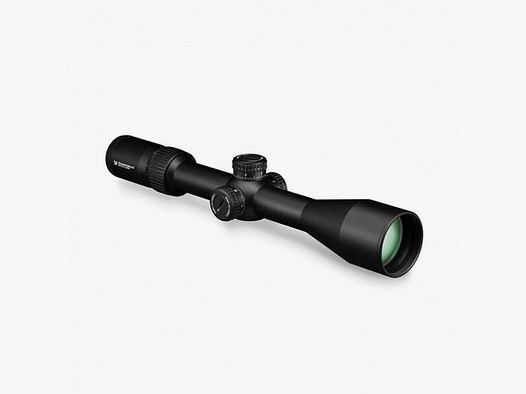
Vortex Diamondback Tactical 6-24x50 FFP
Price at the dealer: 499 €. Converted at the ECB rate as of October 21, 2026.
No permit required (18+)
72479 Straßberg, Germany
23
ID: 9896334
Purchase from outside the EU: The firearm goes through an importer in your country, the dealer handles the export.
How buying from Europe works
Shop safely with Gunfinder
Our AI-powered seller identity verification makes Gunfinder the safest marketplace online.
Learn more
Details
- Original language
- German
- Brand
- Vortex
- Category
- Condition
- New
- Location
- 🇩🇪 72479 Straßberg, Germany
- Availability
- In stock
Freshness
This listing is based on a mirrored offer, where the listing data was synced to us from a shop, dealer, or external marketplace. Please note that temporary price discrepancies may occur due to possible delays in data transmission.
- Source
- Black Raptor
- Last updated
- about 22 hours ago
Description
Note:
The item is located abroad. Please note that delivery conditions, shipping times, and/or the purchase process may differ.
font-family: Arial, Helvetica, sans-serif;
line-height:1.6;
color:#222;
}
.br-product h2{
font-size:1.2rem;
margin-top:28px;
}
.br-product ul{
padding-left:18px;
}
.br-product .info-box{
background:#ffdddd;
border-left:6px solid #c40000;
padding:12px;
margin:20px 0;
}
.br-product .tip-box{
background:#eef6ff;
border-left:6px solid #2a6fdb;
padding:12px;
margin:20px 0;
}
.br-product .trust-box{
background:#f1faf3;
border-left:6px solid #2f8f46;
padding:12px;
margin:20px 0;
}
.br-product details{
background:#f2f2f2;
padding:10px;
margin-bottom:8px;
border-radius:4px;
}
.br-product summary{
font-weight:600;
cursor:pointer;
}
The Vortex Diamondback Tactical 6-24x50 FFP is one of those scopes where you should clearly understand what you’re getting before buying: a wide magnification range, a first focal plane reticle, and your choice of MRAD or MOA adjustment – but deliberately without premium features that would significantly raise the price.
Especially interesting for range, long-range entry, training with data cards, and precise work at varying distances. The EBR-2C reticle is in the first focal plane. This means holdover marks, wind corrections, and measurement references remain proportional across the magnification range.
As a variant product, the scope is cleanly offered in MRAD and MOA. This is important because you shouldn’t choose based on gut feeling. The better option is the one that matches your ballistics app, data cards, spotter calls, and training.
Key Features
6-24x Magnification: wide range for 100 m training, longer distances, and detailed target image.
50 mm Objective: practical light reserve for a sporty precision scope.
FFP Reticle: hold marks and distances remain usable at any magnification.
EBR-2C Reticle: designed for hold points, wind corrections, and structured adjustment work.
MRAD or MOA Variant: choose according to your ballistics and training language.
30 mm Main Tube: common tube diameter with good mounting options.
Side Parallax Adjustment: from approx. 9.14 m to infinity according to manufacturer.
Exposed, low-profile turrets: adjustments are easily accessible without unnecessary bulk.
XD Glass and fully multi-coated lenses: optimized for resolution, color fidelity, and light transmission.
Etched Reticle: protected between glass layers and finely rendered.
Our Assessment
The Diamondback Tactical 6-24x50 FFP is not a luxury scope but a very sensible entry into working with FFP reticles, turrets, and data. If you want to learn to click precisely, hold properly, read wind, and apply corrections reproducibly, you get a lot of learning value for your money here.
The 6-24x magnification sounds strong but should be used realistically. At 24x, the image becomes more sensitive to shimmer, shooting errors, and poor rest. In practice, many shooters work much more often in the mid-range, for example around 12x to 18x, and use 24x more for calm conditions or detail checks.
The most important purchase decision is MRAD or MOA. MRAD fits very well if you think metrically: 0.1 MRAD equals exactly 1 cm at 100 m. MOA fits if you already work with MOA data cards, MOA turrets, and MOA spotter calls. Both work – it only becomes wrong if you constantly convert between systems.
Black-Raptor Short Summary
Buy if: you want an affordable FFP scope with 6-24x, 30 mm main tube, and sensible MRAD or MOA variant for range, training, and distance work.
Don’t buy if: you expect an illuminated reticle, premium turrets, high-end glass performance, or a particularly lightweight stalking scope.
Important Context Before Buying
The Diamondback Tactical 6-24x50 FFP is a training and precision scope with lots of function but without unnecessary luxury. It’s especially strong if you really work with the reticle...
n arbeitest und nicht nur maximale Vergrößerung suchst.
Für schnelle Drückjagd, enge Waldsituationen oder sehr leichte Jagdwaffen ist es nicht die erste Wahl. Für Schießstand, Präzisionstraining, Kleinkaliber-Training auf Distanz, Long-Range-Einstieg und Revierbereiche mit weiterem Sichtfeld ist es deutlich passender.
Praxis-Tipp: MRAD oder MOA nicht mischen
Wähle die Variante passend zu Deiner kompletten Arbeitsweise. MRAD: 0,1 MRAD = 1 cm at 100 m, 10 cm at 1,000 m. MOA: 1/4 MOA is roughly 7.3 mm at 100 m. Work consistently with ballistics app, data card, turret and reticle in one system – saves time, prevents calculation errors and makes corrections clearly traceable.
Varianten & Auswahlhilfe
MRAD version: 0.1 MRAD clicks, 6 MRAD per revolution, 19 MRAD elevation and windage adjustment according to manufacturer specs. Ideal if you work metrically or use spotter calls in MIL/MRAD.
MOA version: 1/4 MOA clicks, 15 MOA per revolution, 65 MOA elevation and windage adjustment according to manufacturer specs. Useful if your data, reticle work and shooting routine are based on MOA.
Anwendungsszenarien
Range and precision training: clean work with clicks, hold points and repeatable corrections.
Long-range entry: FFP reticle and tactical turrets offer lots of learning and training value.
Small caliber at distance: very interesting for .22-lr training, as corrections and wind become quickly visible.
Hunting distance observation: useful in open areas if weight and size fit your setup.
Training with data card: ideal to consistently apply ballistic values in MRAD or MOA.
Merkmale & Konstruktion
The one-piece 30 mm aluminum tube forms the basis of the scope. The tube diameter is mounting-friendly because there are many suitable rings and mounts. At the same time, the scope offers enough adjustment range for practical distances.
The XD glass and fully multi-coated lenses are designed for resolution, color fidelity and light transmission. Still, it should be classified properly: The Diamondback Tactical is strong in its price class but no substitute for a significantly more expensive premium scope.
The low-profile, exposed turrets are easily accessible without being as tall as some large competition turrets. The side parallax adjustment is important if you work at varying distances and want to minimize parallax errors.
Technische Daten
Manufacturer: Vortex.
Model: Diamondback Tactical 6-24x50 FFP.
Versions: MRAD and MOA.
Magnification: 6-24x – widely usable range for training, target and distance work.
Objective diameter: 50 mm – good light reserve for sporty use.
Reticle plane: first focal plane / FFP – reticle values remain proportionally usable over magnification.
Reticle: EBR-2C – for hold points, wind corrections and structured correction work.
Main tube diameter: 30 mm – common diameter with many mounting options.
Eye relief: 9.9 cm – important for secure head position and consistent cheek weld.
Adjustment turrets: Tall Exposed Tactical – well-grippable, exposed correction turrets.
Field of view at 100 m: approx. 6 m to 1.5 m – more overview at 6x, more detail at 24x.
Parallax adjustment: approx. 9.14 m to infinity – relevant for short training distances up to long range.
MRAD adjustment unit: 0.1 MRAD – equals 1 cm at 100 m.
MRAD adjustment per revolution: 6 MRAD – fast, clear turret work.
MRAD elevation and windage adjustment: 19 MRAD each according to manufacturer specs.
MOA adjustment unit: 1/4 MOA – roughly 7.3 mm at 100 m.
MOA adjustment per revolution: 15 MOA according to manufacturer specs.
MOA elevation and windage adjustment: 65 MOA each according to manufacturer specs.
Length: 36.8 cm – typical build for a 6-24x50 scope.
Weight: 697 g – well classified for an FFP scope of this class.
Outer diameter objective: 5.72 cm – important for
Ring height, flip-up cover, and clearance.
Outer diameter of the eyepiece: 4.39 cm – relevant for accessories, caps, and operating space.
Protection: nitrogen-filled and O-ring sealed according to manufacturer specifications – waterproof and fog-proof.
Contents
1x Vortex Diamondback Tactical 6-24x50 FFP, MRAD or MOA depending on the chosen variant.
Objective lens covers.
Cleaning cloth.
Sunshade.
Choose the variant consciously before purchase:
MRAD and MOA are not just a matter of preference but different working systems. Choose the variant that matches your data card, ballistics app, training language, and previous optics. Using MRAD reticle, MOA turret, or mixed data makes corrections unnecessarily difficult.
FAQ
What is the difference between MRAD and MOA?
MRAD works metrically very directly: 0.1 MRAD corresponds to 1 cm at 100 m. MOA works in minutes of angle: 1/4 MOA corresponds roughly to 7.3 mm at 100 m. It is important that reticle, turret, and data card match.
What does FFP bring with this scope?
With FFP, the reticle is in the first focal plane. The reticle marks remain proportionally usable over the magnification range, which is important for holdovers and corrections at varying distances.
Is the glass suitable for long range?
It is very interesting for long-range entry and precise training. For the highest demands in glass quality, turrets, and mechanics, there are significantly higher-priced series.
Does the Diamondback Tactical 6-24x50 FFP have an illuminated reticle?
No reticle illumination is specified in the available manufacturer data. If you absolutely want an illuminated reticle, you should check another series.
What mount do I need?
The scope has a 30 mm main tube. You need suitable 30 mm rings or a suitable 30 mm mount. The ring height must fit the objective diameter, rail, firearm, and cheek weld. (Show description in original language)
.br-product-v3{--br-ink:#17201c;--br-muted:#54615b;--br-line:#d9e0dc;--br-soft:#f5f7f5;--br-deep:#10271d;--br-gold:#f2d58e;color:var(--br-ink);font:400 16px/1.65 Arial,Helvetica,sans-serif;max-width:100%;overflow:hidden}.br-product-v3 *{box-sizing:border-box}.br-product-v3 p{margin:0 0 1rem}.br-product-v3 ul,.br-product-v3 ol{margin:.55rem 0 0;padding-left:1.2rem}.br-product-v3 li{margin:.35rem 0}.br-product-v3 .br-hero-v3,.br-product-v3 .br-final{background:var(--br-deep);color:#fff;border-radius:18px;padding:clamp(24px,5vw,46px);margin:0 0 24px}.br-product-v3 .br-eyebrow{color:var(--br-gold);font-size:.78rem;font-weight:800;letter-spacing:.12em;text-transform:uppercase}.br-product-v3 .br-title{font-size:clamp(1.8rem,4vw,3rem);font-weight:800;line-height:1.08;margin:.35rem 0 1rem;max-width:24ch}.br-product-v3 .br-pill{display:inline-block;background:var(--br-gold);color:var(--br-deep);border-radius:999px;padding:.58rem .9rem;font-weight:800}.br-product-v3 .br-section-title{font-size:1.35rem;font-weight:800;line-height:1.25;margin:2rem 0 .8rem}.br-product-v3 .br-box,.br-product-v3 .br-card{border:1px solid var(--br-line);border-radius:14px;padding:18px;background:#fff}.br-product-v3 .br-box{background:var(--br-soft);border-left:5px solid var(--br-gold);margin:18px 0}.br-product-v3 .br-grid{display:grid;grid-template-columns:repeat(2,minmax(0,1fr));gap:14px;margin:14px 0}.br-product-v3 .br-card-label{display:block;font-weight:800;margin-bottom:.4rem}.br-product-v3 .br-spec{display:grid;grid-template-columns:minmax(125px,.8fr) minmax(0,1.5fr);gap:8px 16px;padding:11px 0;border-bottom:1px solid var(--br-line)}.br-product-v3 .br-spec:last-child{border-bottom:0}.br-product-v3 details{border:1px solid var(--br-line);border-radius:12px;padding:12px 14px;margin:9px 0;background:#fff}.br-product-v3 summary{cursor:pointer;font-weight:800}.br-product-v3 details p{margin:.75rem 0 .15rem;color:var(--br-muted)}.br-product-v3 .br-final{margin:26px 0 0}.br-product-v3 .br-final .br-section-title{margin-top:0;color:var(--br-gold)}@media(max-width:720px){.br-product-v3 .br-grid{grid-template-columns:1fr}.br-product-v3 .br-spec{grid-template-columns:1fr;gap:2px}.br-product-v3 .br-hero-v3,.br-product-v3 .br-final{border-radius:14px;padding:22px 18px}.br-product-v3{font-size:16px}}
VORTEX DIAMONDBACK TACTICAL · 6–24×50 FFP
FFP-Einstieg für sauberes Arbeiten mit MRAD oder MOA
6–24x, 50-mm-Objektiv, 30-mm-Mittelrohr und EBR-2C in der ersten Bildebene. Entscheidend ist hier nicht nur die Vergrößerung, sondern die Wahl des durchgängigen Systems: MRAD zu MRAD oder MOA zu MOA.
FFP · 30 mm · MRAD oder MOA
Black-Raptor-Einordnung Ein starkes Trainingsglas für Nutzer, die Türme, Haltepunkte und Daten systematisch lernen wollen. Es bietet viel Funktion fürs Budget, ist aber kein Premiumglas mit beleuchtetem Absehen oder High-End-Turmmechanik.
Passt das zu deinem Vorhaben?
Passt gut, wenn …
du Range, Präzisionstraining oder Long-Range-Einstieg planst
du FFP für proportionale Haltemarken über den Zoombereich willst
du MRAD oder MOA konsequent in Absehen, Turm und Datenkarte führst
Passt eher nicht, wenn …
du ein beleuchtetes Absehen zwingend brauchst
du ein sehr leichtes Pirsch- oder Drückjagdglas suchst
du Premiumglasleistung und High-End-Türme erwartest
Variantenwahl ohne Fehlkauf
MRAD · DBK-10029 0,1-MRAD-Klicks, 6 MRAD pro Umdrehung und 19 MRAD Gesamtverstellung in Höhe und Seite. Sinnvoll, wenn App, Spotter und Daten metrisch/MIL arbeiten.
MOA · DBK-10028 1/4-MOA-Klicks, 15 MOA pro Umdrehung und 65 MOA Gesamtverstellung in Höhe und Seite. Richtig, wenn dein vorhandenes System bereits MOA nutzt.
Merkmale mit Praxisnutzen
FFP / EBR-2C Subtensionen bleiben über die Vergrößerung proportional nutzbar – hilfreich für Halte- und Windkorrekturen.
6–24x / 50 mm Viel Detailreserve; 24x zeigt aber auch Flimmern, Puls und instabile Auflage deutlicher.
Seitenparallaxe Ab ca. 9,14 m bis unendlich, damit kurze Trainingsdistanzen und weite Ziele sauber eingestellt werden können.
30-mm-Mittelrohr Gängiger Montagedurchmesser mit breiter Auswahl an Ringen und Blockmontagen.
Grenzen, Nachteile und Fehlkaufvermeidung
MRAD und MOA nicht mischen: Absehen, Turm, Datenkarte und Spotteransagen sollten dasselbe System sprechen. Das Absehen ist unbeleuchtet. 697 g und 36,8 cm Länge machen das Glas für sehr leichte Jagdsetups weniger attraktiv. Maximalvergrößerung ist kein Qualitätsmodus – häufig ist 12–18x ruhiger und praktischer.
Technische Daten mit Praxisdeutung
Vergrößerung / Objektiv 6–24x / 50 mm.
Bildebene FFP – Absehenwerte bleiben proportional nutzbar.
Absehen EBR-2C, je nach Variante MRAD oder MOA.
Mittelrohr 30 mm.
Augenabstand Ca. 9,9 cm.
Parallaxe Ca. 9,14 m bis unendlich.
MRAD 0,1 MRAD Klick · 6 MRAD/U · 19 MRAD Verstellweg.
MOA 1/4 MOA Klick · 15 MOA/U · 65 MOA Verstellweg.
Länge / Gewicht 36,8 cm / 697 g.
Beleuchtung Keine Absehenbeleuchtung in den vorliegenden Herstellerdaten.
Montage und sichere Anwendung
Am entladenen System 30-mm-Ringdurchmesser, Bauhöhe, Augenabstand und freien Objektiv-/Laufabstand prüfen. Vor dem Training Nullpunkt und Turmrichtung sauber dokumentieren. MRAD und MOA niemals in einer Datenkette vermischen.
Lieferumfang
1 × Vortex Diamondback Tactical 6–24x50 FFP in der gewählten MRAD- oder MOA-Variante, Objektivabdeckungen, Reinigungstuch und Sonnenblende.
Häufige Fragen
Was ist der wichtigste Unterschied zwischen MRAD und MOA? Es sind unterschiedliche Winkel- und Arbeitssysteme. Wähle das System, das bereits in App, Datenkarte und Trainingssprache verwendet wird. Was bringt FFP? Die Absehenmarken bleiben über den Vergrößerungsbereich proportional nutzbar. Ist das Absehen beleuchtet? Nein, in den vorliegenden Herstellerdaten ist keine Beleuchtung angegeben. Welche Montage brauche ich? Eine passende 30-mm-Montage mit ausreichender Höhe für 50-mm-Objektiv und konkrete Waffenplattform. Ist 24x immer die beste Einstellung? Nein. Je nach Licht, Flimmern und Stabilität kann eine niedrigere Vergrößerung ein ruhigeres Bild liefern. Klare Kaufentscheidung
Sehr sinnvoll als FFP-Trainingsglas, wenn du dein Korrektursystem konsequent in MRAD oder MOA aufbaust. Nicht das richtige Produkt, wenn Beleuchtung, geringes Gewicht oder Premiummechanik Priorität haben.
Varianten: DBK-10029 MRAD · DBK-10028 MOA.