-13 %


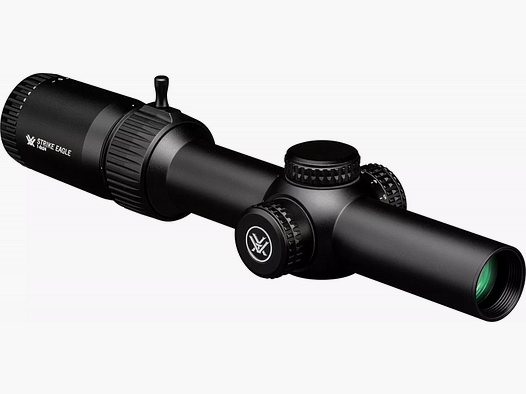
Vortex Strike Eagle 5-25x56 EBR-7C
Price at the dealer: 899 €. Converted at the ECB rate as of October 21, 2026.
No permit required (18+)
72479 Straßberg, Germany
43
ID: 9896163
Purchase from outside the EU: The firearm goes through an importer in your country, the dealer handles the export.
How buying from Europe works
Shop safely with Gunfinder
Our AI-powered seller identity verification makes Gunfinder the safest marketplace online.
Learn more
Details
- Original language
- German
- Brand
- Vortex
- Category
- Condition
- New
- Location
- 🇩🇪 72479 Straßberg, Germany
- Availability
- In stock
Freshness
This listing is based on a mirrored offer, where the listing data was synced to us from a shop, dealer, or external marketplace. Please note that temporary price discrepancies may occur due to possible delays in data transmission.
- Source
- Black Raptor
- Last updated
- about 22 hours ago
Description
Note:
The item is located abroad. Please note that delivery conditions, shipping times, and/or the purchase process may differ.
font-family: Arial, Helvetica, sans-serif;
line-height:1.6;
color:#222;
}
.br-product h2{
font-size:1.2rem;
margin-top:28px;
}
.br-product h3{
font-size:1rem;
margin:0 0 8px;
}
.br-product ul{
padding-left:18px;
}
.br-product .info-box{
background:#ffdddd;
border-left:6px solid #c40000;
padding:12px;
margin:20px 0;
}
.br-product .tip-box{
background:#eef6ff;
border-left:6px solid #2a6fdb;
padding:12px;
margin:20px 0;
}
.br-product .trust-box{
background:#eef7ee;
border-left:6px solid #3f8f3f;
padding:12px;
margin:20px 0;
}
.br-product details{
background:#f2f2f2;
padding:10px;
margin-bottom:8px;
border-radius:4px;
}
.br-product summary{
font-weight:600;
cursor:pointer;
}
The Vortex Strike Eagle 5-25x56 EBR-7C is a scope for shooters who want to seriously get into long range, precise range work, or PRS-like applications without immediately going into the top price and weight class. You get 5-25x magnification, an FFP reticle, 34mm tube, open lockable turrets, and the RevStop™ Zero System in a package clearly designed for distance work.
The big advantage lies in the combination of features and accessibility. The Strike Eagle is not a Razor and does not want to replace one. It is a practical workhorse for shooters looking for a modern long-range optic with clean reticle logic but consciously want to avoid a very expensive premium optic.
The right variant is important: The scope is available in MRAD and MOA versions. Both use the EBR-7C reticle in the first focal plane but differ in the working language. MRAD fits perfectly with metric correction logic. MOA suits shooters who already work with MOA data cards, MOA turrets, or corresponding spotter calls.
Key Features
5-25x magnification: wide range for zeroing, target analysis, long range, and precise range work.
56mm objective: good light and image reserve at high magnification.
EBR-7C reticle: fine FFP working reticle for holdover, wind correction, and shot observation.
First focal plane, FFP: reticle values remain correctly usable at any magnification.
MOA or MRAD variant: selectable to match data card, ballistics app, and training routine.
34mm main tube: allows large adjustment range and requires a suitable 34mm mount.
RevStop™ Zero System: supports controlled return to zero after elevation adjustments.
Open lockable turrets: useful for active correction work at changing distances.
Parallax from approx. 13.7 m: flexible for short control distances, training, and long distances.
862 g weight: clearly classifiable as a precision optic but lighter than many large high-end long-range optics.
Delivery includes Throw Lever: faster switching between magnification ranges.
Our Assessment
The Vortex Strike Eagle 5-25x56 EBR-7C is a strong choice if you are looking for a serious long-range optic but don’t want to invest directly in a Razor HD Gen II or Gen III. It brings many features that are important in practice: FFP reticle, clean usable turrets, zero-stop solution, 34mm tube, and sensible magnification reserve.
For long-range beginners, the scope is especially interesting because it not only delivers “more magnification” but a real working platform. You learn to read impact points in the reticle, make corrections on the turret, and combine data card, reticle, and spotter calls. That is more important than the pure number “25x.”
The most important purchase decision is MOA or MRAD. There is no generally better option here. Better is the system that fits your environment. If your training partners, ballistics app, and data card run in MRAD, choose MRAD. If you already work in MOA or train with MOA calls, choose MOA. Mixing costs time and produces errors.
Black-Raptor short summary
Buy if: You want a modern FFP sco
scope for Long Range, PRS entry or precise range setups and want to consciously choose between MOA and MRAD.
Do not buy if: You expect a lightweight hunting scope, an LPVO, a pure stalking scope, or a premium scope at Razor level.
Important classification before purchase
The Strike Eagle 5-25x56 is not a classic hunting scope. With 37.1 cm length, 862 g weight, 56 mm objective, and 34 mm main tube, it belongs on a setup built for distance work. On a lightweight stalking repeater, it quickly feels large. On a stable repeater, chassis, or range setup, it makes much more sense.
The mounting is crucial. Due to the 56 mm objective and 34 mm tube, you need suitable rings or a suitable mount. Pay attention to objective clearance, eye relief, height, cant, and correct torque. Especially for long-range setups, a canted mount can be useful to better utilize the available elevation adjustment range.
The EBR-7C reticle is in the first focal plane. This is an advantage for distance work because the subtensions remain correct at every magnification. At low magnification, the reticle appears finer; at high magnification, more readable. This is normal for FFP scopes and should be considered during training.
MOA or MRAD – which variant fits?
The MRAD variant works with 0.1 MRAD per click. This corresponds to 1 cm at 100 m, 3 cm at 300 m, 5 cm at 500 m, and 10 cm at 1000 m. For shooters who think metrically, this is very direct. Ballistic app, data card, turret, and reticle should then consistently use MRAD.
The MOA variant works with ¼ MOA per click. 1 MOA roughly equals 3 cm at 100 m. ¼ MOA is therefore about 0.7 cm at 100 m, about 2.2 cm at 300 m, and about 3.6 cm at 500 m. MOA is not worse, but you should use it as its own working language and not constantly convert back to centimeters.
MRAD variant: useful if you work metrically and note corrections directly in MRAD.
MOA variant: useful if your data card, app, or training group already works in MOA.
Most important rule: Ballistic app, data card, turret, reticle, and calls must use the same unit.
MRAD practice: “0.4 MRAD up” instead of calculating centimeters.
MOA practice: “Hold 1.5 MOA” instead of constantly converting distance and point of impact.
Avoid wrong purchase: don’t buy MRAD if your entire training runs in MOA – and vice versa.
Instructor principle: One working language, no mixed logic
Choose MOA or MRAD not by gut feeling but by your real environment. If spotter, app, data card, and turret run in the same unit, the system becomes fast. If you constantly switch in your head between centimeters, clicks, MOA, and MRAD, even a good scope becomes unnecessarily slow.
Practical tip: consciously zero the Zero Stop
Take your time zeroing with the RevStop™ Zero System. First a clean zero, then set the Zero Stop cleanly, then carefully turn several elevation values and back to zero. If returning to zero in training works, you avoid typical errors after distance corrections later.
Application scenarios
Long-range entry: FFP reticle, 5-25x magnification, and Zero Stop system give you a solid platform to learn.
PRS-near range use: suitable for target transitions, holdover, elevation corrections, and wind work.
Repeater and chassis setups: 34 mm tube and 56 mm objective fit well with stable precision rifles.
MRAD or MOA training: both variants allow clean work if the unit system is used consistently.
Specialized hunting distance work: possible if weight, size, and reticle logic are consciously accepted.
Features & construction
The Strike Eagle 5-25x56 uses a directly etched, illuminated EBR-7C reticle in the first focal plane. This makes it significantly more practical for distance work than simple SFP sc...
äser, because holdover values and corrections are correct regardless of the chosen magnification.
The large open turrets with lock function fit the intended use. With a scope of this class, the elevation is often actively adjusted, while wind or follow-up corrections are held via the reticle depending on the situation. The RevStop™ Zero system helps to return controlled to zero after corrections.
According to the manufacturer, the housing is made from a single piece of aircraft aluminum. ArmorTek® protects the external lenses, and the nitrogen filling is supposed to prevent fogging. Dust and water protection make the scope significantly more robust for regular use on the range and in the field than pure fair-weather optics.
Technical data
Produkttyp: FFP scope – for long range, PRS entry, range and precision setups.
Variants: MOA SE-52503 and MRAD SE-52504 – same basic optics, different click and reticle logic.
Magnification: 5-25x – versatile range for target analysis, distance work, and precise zeroing.
Objective diameter: 56 mm – more image and light reserve at higher magnification.
Image plane: first focal plane, FFP – reticle values remain correct at any magnification.
Reticle: EBR-7C, illuminated – depending on variant in MOA or MRAD.
Eye relief: approx. 9.3 cm – important for repeatable cheek weld and recoil clearance.
Adjustment turrets: Tactical locked – open turrets with locking for active correction work.
MRAD adjustment unit: 0.1 MRAD – corresponds to 1 cm at 100 m per click.
MRAD adjustment per revolution: 10 MRAD – clear turret logic for distance corrections.
MRAD elevation adjustment: 31 MRAD, with installed zero stop according to data sheet 18 MRAD usable.
MRAD windage adjustment: 23 MRAD – sufficient for clean zeroing and setup alignment.
MOA adjustment unit: ¼ MOA – fine correction, roughly 0.7 cm at 100 m per click.
MOA adjustment per revolution: 25 MOA – lots of correction per turret turn.
MOA elevation adjustment: 110 MOA, with installed zero stop according to data sheet 47 MOA usable.
MOA windage adjustment: 78 MOA – reserve for zeroing and lateral setup alignment.
Parallax: from approx. 13.7 m to infinity – flexible for short control distances and long range.
Field of view at 100 m: approx. 8 m to 1.72 m – overview below, focused target image above.
Length: approx. 37.1 cm – large scope with corresponding space requirement on the firearm.
Weight: approx. 862 g – still more manageable than many large premium long-range scopes, but clearly no lightweight.
Objective outer diameter: approx. 64 mm – relevant for mounting height and objective clearance.
Main tube: 34 mm – requires suitable 34 mm mount or 34 mm rings.
Battery: CR2032 – powers the illuminated reticle.
Delivery contents
Vortex Strike Eagle 5-25x56 EBR-7C in chosen variant
Throw Lever
Eyepiece and objective covers
Sunshade
Cleaning cloth
CR2032 battery
Instructions for optics and reticle
Note on variant selection:
This product has two variants: MOA and MRAD. Choose the variant that fits your ballistics app, data card, spotter call, and training routine. Both systems are technically sensible. Errors usually do not arise from MOA or MRAD themselves, but from mixing both systems in training.
FAQ
What is the main difference between MOA and MRAD?
Both variants use the same basic optics but different correction systems. MRAD fits especially well with metric work, MOA for shooters who already train with MOA data cards, MOA turrets, or MOA calls.
Is the Strike Eagle 5-25x56 suitable for long-range beginners?
Yes, it is especially interesting for that. It offers FFP reticles, high magnification, zero-stop system, and tactical turrets without going directly into the most expensive premium class.
Is the scope sensible for hunting?
Only in specialized setups. For classic stalking, driven hunts, or light bolt-action rifles, it is too large.
. For controlled distance shooting from a stable setup, it can be useful for hunting.
Why is the EBR-7C reticle in the first focal plane important?
Because the reticle values remain correct at every magnification. So you can also work with valid holdovers and corrections below 25x.
What mount do I need?
You need a high-quality 34mm mount or matching 34mm rings. Pay attention to objective clearance, eye relief, height, cant, and correct torque. (Show description in original language)
.br-product-v3{--br-ink:#17201c;--br-muted:#54615b;--br-line:#d9e0dc;--br-soft:#f5f7f5;--br-deep:#10271d;--br-gold:#f2d58e;color:var(--br-ink);font-size:16px;line-height:1.68;max-width:1040px;margin:0 auto}
.br-product-v3 *{box-sizing:border-box}
.br-product-v3 p{margin:0 0 12px}
.br-product-v3 a{color:#195e43;text-decoration-thickness:1px;text-underline-offset:3px}
.br-product-v3 .br-hero-v3,.br-product-v3 .br-final{background:var(--br-deep);border-radius:18px;padding:clamp(24px,5vw,48px);margin:0 0 28px}
.br-product-v3 .br-hero-v3,.br-product-v3 .br-hero-v3 p,.br-product-v3 .br-hero-v3 strong,.br-product-v3 .br-hero-v3 span,.br-product-v3 .br-hero-v3 a,.br-product-v3 .br-final,.br-product-v3 .br-final p,.br-product-v3 .br-final strong,.br-product-v3 .br-final span,.br-product-v3 .br-final a{color:#fff!important;opacity:1!important}
.br-product-v3 .br-hero-v3 .br-eyebrow,.br-product-v3 .br-final .br-eyebrow{color:var(--br-gold)!important}
.br-product-v3 .br-eyebrow{font-size:.78rem;line-height:1.3;letter-spacing:.12em;text-transform:uppercase;font-weight:800;margin-bottom:10px}
.br-product-v3 .br-hero-title{display:block;font-size:clamp(1.65rem,4vw,2.55rem);line-height:1.13;margin-bottom:14px;font-weight:850}
.br-product-v3 .br-hero-v3 a.br-cta{display:inline-block;margin-top:8px;padding:11px 16px;border-radius:999px;background:var(--br-gold);color:#102119!important;font-weight:800;text-decoration:none}
.br-product-v3 .br-section-title{display:block;font-size:clamp(1.18rem,2.5vw,1.42rem);line-height:1.25;font-weight:850;margin:30px 0 13px;color:var(--br-ink)}
.br-product-v3 .br-box{background:var(--br-soft);border:1px solid var(--br-line);border-radius:14px;padding:20px;margin:0 0 18px}
.br-product-v3 .br-grid{display:grid;grid-template-columns:repeat(2,minmax(0,1fr));gap:14px;margin:0 0 18px}
.br-product-v3 .br-card{border:1px solid var(--br-line);border-radius:14px;padding:18px;background:#fff}
.br-product-v3 .br-card-title{display:block;font-size:1rem;line-height:1.35;font-weight:850;margin-bottom:8px;color:var(--br-ink)}
.br-product-v3 details{border:1px solid var(--br-line);border-radius:12px;background:#fff;padding:0 16px;margin:10px 0}
.br-product-v3 summary{cursor:pointer;font-weight:800;padding:14px 0;color:var(--br-ink)}
.br-product-v3 details p{padding:0 0 14px;color:var(--br-ink)}
.br-product-v3 .br-note{border-left:4px solid #b78c2c}
@media(max-width:640px){.br-product-v3{font-size:15.8px;line-height:1.62}.br-product-v3 .br-grid{grid-template-columns:1fr}.br-product-v3 .br-hero-v3,.br-product-v3 .br-final{padding:24px 20px;border-radius:14px}.br-product-v3 .br-box,.br-product-v3 .br-card{padding:16px}}
5–25×56 · FFP · EBR-7C
Vortex Strike Eagle 5–25×56: Distanzglas mit konsequenter MOA- oder MRAD-Logik
Das Strike Eagle 5–25×56 ist auf Präzision, PRS-nahe Abläufe und weitere Distanzen ausgelegt. EBR-7C in erster Bildebene, 34-mm-Tubus, Parallaxeverstellung und RevStop/Zero-Stop machen es zu einem Arbeitsglas – nicht nur zu einem Zielfernrohr mit viel Vergrößerung.
Kaufentscheidend: Shopify führt zwei klar getrennte Varianten: SE-52504 in MRAD und SE-52503 in MOA. Absehen, Turmwerte, Range Card und Ballistik-App sollten im selben Einheitensystem bleiben.
Variantenwahl prüfen
Unsere ehrliche Einordnung
FFP bedeutet, dass das Absehen gemeinsam mit dem Zielbild skaliert. Dadurch bleiben die Subtensionen über den Vergrößerungsbereich sinnvoll interpretierbar – hilfreich für Haltewerte und Korrekturen. Der Preis dafür ist ein anspruchsvolleres System, das nur dann Mehrwert liefert, wenn Parallaxe, Turmkorrektur und Absehen bewusst genutzt werden.
56-mm-Objektiv und 34-mm-Tubus bringen Licht- und Verstellreserve, benötigen aber passende Montagehöhe und erhöhen Größe sowie Masse des Gesamtaufbaus.
Passt gut, wenn … du Long Range, Präzision oder PRS-orientiertes Training planst und bewusst mit FFP-Absehen, Parallaxe, Turmkorrektur und einem einheitlichen MOA- oder MRAD-Workflow arbeitest.
Passt eher nicht, wenn … du ein leichtes Pirsch-/Drückjagdglas, schnelle Kurzdistanz oder eine möglichst einfache Optik ohne aktives Korrekturmanagement suchst.
Merkmale mit Praxiswirkung
EBR-7C in FFP Haltewerte bleiben über den Zoombereich konsistent interpretierbar. Das ist besonders nützlich, wenn nicht immer auf 25× geschossen wird.
5–25× Vergrößerung Viel Detailreserve für Distanz. Gleichzeitig verstärkt hohe Vergrößerung Mirage, Zielbewegung und Anschlagsfehler – 25× ist nicht automatisch die beste Einstellung.
34-mm-Tubus Benötigt passende 34-mm-Ringe beziehungsweise Montage. Rohrdurchmesser und Objektivfreiheit müssen gemeinsam geprüft werden.
RevStop / Zero Stop Unterstützt die definierte Rückkehr zur Nullreferenz nach Höhenkorrekturen. Das ersetzt nicht die saubere Einrichtung und Nullpunktkontrolle.
MOA oder MRAD?
SE-52503 · MOA: sinnvoll, wenn vorhandene Optiken, Dope und Kommunikation bereits MOA nutzen.
SE-52504 · MRAD: sinnvoll, wenn dein bestehender Workflow MRAD-basiert ist.
Nicht mischen: Ein MIL-/MRAD- oder MOA-Klickwert allein beweist nichts über eine andere Skala. Bei diesen beiden Varianten ist die Einheit über die konkrete Shopify-Variante getrennt; genau diese Auswahl muss zur Arbeitsweise passen.
Grenzen, Nachteile und Fehlkaufvermeidung
56 mm brauchen Platz: Objektivfreiheit, Montagehöhe und Wangenauflage am realen Setup prüfen.
25× nicht erzwingen: Bei Mirage oder instabilem Anschlag kann eine geringere Vergrößerung mehr verwertbare Information liefern.
Einheitenmix vermeiden: Spotter-Kommunikation, Ballistik-App und Optik sollten dasselbe System verwenden.
Kein Kurzdistanzspezialist: 5× Mindestvergrößerung setzt einen klaren Distanzschwerpunkt.
Technische Daten mit Praxisdeutung
Vergrößerung / Objektiv 5–25× / 56 mm – Distanzfokus mit hoher Detail- und Lichtreserve, aber entsprechend großem Aufbau.
Bildebene / Absehen FFP mit EBR-7C. Das Absehen skaliert mit dem Zielbild und unterstützt Halte- und Korrekturarbeit über unterschiedliche Vergrößerungen.
Tubus 34 mm. Eine 30-mm-Montage ist nicht kompatibel.
Varianten SE-52504 = MRAD; SE-52503 = MOA. Beide werden in Shopify separat geführt.
Parallaxe Verstellbar laut hinterlegtem Produktdatensatz – bei Distanz und hoher Vergrößerung aktiv in den Ablauf einbeziehen.
Montage und Anwendung
Waffe vollständig entladen, 34-mm-Montage passend zur Plattform und Objektivfreiheit wählen, Augenabstand im natürlichen Anschlag festlegen und das Glas spannungsfrei montieren. Nullpunkt und RevStop anschließend kontrolliert einrichten.
Für den Einsatz Range Card, Ballistik-App und Spotter-Kommunikation auf die gewählte Einheit abstimmen. Korrekturen dokumentieren und nach Montageänderungen erneut nullen beziehungsweise bestätigen.
Lieferumfang
Geliefert wird das Vortex Strike Eagle 5–25×56 in der gewählten Shopify-Variante MOA oder MRAD.
Weiteres Zubehör ist im aktuell gespeicherten Shopify-Datensatz nicht vollständig eindeutig als Packliste ausgewiesen und wird deshalb hier nicht zusätzlich zugesagt.
FAQ zum Strike Eagle 5–25×56
Ist das EBR-7C in erster Bildebene? Ja. Beide hier geführten Varianten sind FFP-Ausführungen.
Welche Variante ist MRAD? SE-52504. Die MOA-Variante ist SE-52503.
Ist 25× immer die beste Einstellung? Nein. Mirage, Licht, Zielbewegung und Anschlag können eine geringere Vergrößerung sinnvoller machen.
Welche Ringe brauche ich? Eine Montage beziehungsweise Ringe für 34-mm-Mittelrohr; zusätzlich muss die Höhe genügend Objektivfreiheit bieten.
Wofür ist RevStop sinnvoll? Für eine definierte Rückkehr zur eingerichteten Nullreferenz nach Höhenkorrekturen.
Black Raptor · Kaufentscheidung
Ein Distanzglas für einen konsequenten Workflow.
Das Strike Eagle 5–25×56 lohnt sich, wenn du FFP, Parallaxe, Zero Stop und ein einheitliches MOA- oder MRAD-System tatsächlich nutzt. Wer nur maximale Vergrößerung sucht, kauft am Kern des Produkts vorbei.
.br-product-v3 *{box-sizing:border-box}
.br-product-v3 p{margin:0 0 12px}
.br-product-v3 a{color:#195e43;text-decoration-thickness:1px;text-underline-offset:3px}
.br-product-v3 .br-hero-v3,.br-product-v3 .br-final{background:var(--br-deep);border-radius:18px;padding:clamp(24px,5vw,48px);margin:0 0 28px}
.br-product-v3 .br-hero-v3,.br-product-v3 .br-hero-v3 p,.br-product-v3 .br-hero-v3 strong,.br-product-v3 .br-hero-v3 span,.br-product-v3 .br-hero-v3 a,.br-product-v3 .br-final,.br-product-v3 .br-final p,.br-product-v3 .br-final strong,.br-product-v3 .br-final span,.br-product-v3 .br-final a{color:#fff!important;opacity:1!important}
.br-product-v3 .br-hero-v3 .br-eyebrow,.br-product-v3 .br-final .br-eyebrow{color:var(--br-gold)!important}
.br-product-v3 .br-eyebrow{font-size:.78rem;line-height:1.3;letter-spacing:.12em;text-transform:uppercase;font-weight:800;margin-bottom:10px}
.br-product-v3 .br-hero-title{display:block;font-size:clamp(1.65rem,4vw,2.55rem);line-height:1.13;margin-bottom:14px;font-weight:850}
.br-product-v3 .br-hero-v3 a.br-cta{display:inline-block;margin-top:8px;padding:11px 16px;border-radius:999px;background:var(--br-gold);color:#102119!important;font-weight:800;text-decoration:none}
.br-product-v3 .br-section-title{display:block;font-size:clamp(1.18rem,2.5vw,1.42rem);line-height:1.25;font-weight:850;margin:30px 0 13px;color:var(--br-ink)}
.br-product-v3 .br-box{background:var(--br-soft);border:1px solid var(--br-line);border-radius:14px;padding:20px;margin:0 0 18px}
.br-product-v3 .br-grid{display:grid;grid-template-columns:repeat(2,minmax(0,1fr));gap:14px;margin:0 0 18px}
.br-product-v3 .br-card{border:1px solid var(--br-line);border-radius:14px;padding:18px;background:#fff}
.br-product-v3 .br-card-title{display:block;font-size:1rem;line-height:1.35;font-weight:850;margin-bottom:8px;color:var(--br-ink)}
.br-product-v3 details{border:1px solid var(--br-line);border-radius:12px;background:#fff;padding:0 16px;margin:10px 0}
.br-product-v3 summary{cursor:pointer;font-weight:800;padding:14px 0;color:var(--br-ink)}
.br-product-v3 details p{padding:0 0 14px;color:var(--br-ink)}
.br-product-v3 .br-note{border-left:4px solid #b78c2c}
@media(max-width:640px){.br-product-v3{font-size:15.8px;line-height:1.62}.br-product-v3 .br-grid{grid-template-columns:1fr}.br-product-v3 .br-hero-v3,.br-product-v3 .br-final{padding:24px 20px;border-radius:14px}.br-product-v3 .br-box,.br-product-v3 .br-card{padding:16px}}
5–25×56 · FFP · EBR-7C
Vortex Strike Eagle 5–25×56: Distanzglas mit konsequenter MOA- oder MRAD-Logik
Das Strike Eagle 5–25×56 ist auf Präzision, PRS-nahe Abläufe und weitere Distanzen ausgelegt. EBR-7C in erster Bildebene, 34-mm-Tubus, Parallaxeverstellung und RevStop/Zero-Stop machen es zu einem Arbeitsglas – nicht nur zu einem Zielfernrohr mit viel Vergrößerung.
Kaufentscheidend: Shopify führt zwei klar getrennte Varianten: SE-52504 in MRAD und SE-52503 in MOA. Absehen, Turmwerte, Range Card und Ballistik-App sollten im selben Einheitensystem bleiben.
Variantenwahl prüfen
Unsere ehrliche Einordnung
FFP bedeutet, dass das Absehen gemeinsam mit dem Zielbild skaliert. Dadurch bleiben die Subtensionen über den Vergrößerungsbereich sinnvoll interpretierbar – hilfreich für Haltewerte und Korrekturen. Der Preis dafür ist ein anspruchsvolleres System, das nur dann Mehrwert liefert, wenn Parallaxe, Turmkorrektur und Absehen bewusst genutzt werden.
56-mm-Objektiv und 34-mm-Tubus bringen Licht- und Verstellreserve, benötigen aber passende Montagehöhe und erhöhen Größe sowie Masse des Gesamtaufbaus.
Passt gut, wenn … du Long Range, Präzision oder PRS-orientiertes Training planst und bewusst mit FFP-Absehen, Parallaxe, Turmkorrektur und einem einheitlichen MOA- oder MRAD-Workflow arbeitest.
Passt eher nicht, wenn … du ein leichtes Pirsch-/Drückjagdglas, schnelle Kurzdistanz oder eine möglichst einfache Optik ohne aktives Korrekturmanagement suchst.
Merkmale mit Praxiswirkung
EBR-7C in FFP Haltewerte bleiben über den Zoombereich konsistent interpretierbar. Das ist besonders nützlich, wenn nicht immer auf 25× geschossen wird.
5–25× Vergrößerung Viel Detailreserve für Distanz. Gleichzeitig verstärkt hohe Vergrößerung Mirage, Zielbewegung und Anschlagsfehler – 25× ist nicht automatisch die beste Einstellung.
34-mm-Tubus Benötigt passende 34-mm-Ringe beziehungsweise Montage. Rohrdurchmesser und Objektivfreiheit müssen gemeinsam geprüft werden.
RevStop / Zero Stop Unterstützt die definierte Rückkehr zur Nullreferenz nach Höhenkorrekturen. Das ersetzt nicht die saubere Einrichtung und Nullpunktkontrolle.
MOA oder MRAD?
SE-52503 · MOA: sinnvoll, wenn vorhandene Optiken, Dope und Kommunikation bereits MOA nutzen.
SE-52504 · MRAD: sinnvoll, wenn dein bestehender Workflow MRAD-basiert ist.
Nicht mischen: Ein MIL-/MRAD- oder MOA-Klickwert allein beweist nichts über eine andere Skala. Bei diesen beiden Varianten ist die Einheit über die konkrete Shopify-Variante getrennt; genau diese Auswahl muss zur Arbeitsweise passen.
Grenzen, Nachteile und Fehlkaufvermeidung
56 mm brauchen Platz: Objektivfreiheit, Montagehöhe und Wangenauflage am realen Setup prüfen.
25× nicht erzwingen: Bei Mirage oder instabilem Anschlag kann eine geringere Vergrößerung mehr verwertbare Information liefern.
Einheitenmix vermeiden: Spotter-Kommunikation, Ballistik-App und Optik sollten dasselbe System verwenden.
Kein Kurzdistanzspezialist: 5× Mindestvergrößerung setzt einen klaren Distanzschwerpunkt.
Technische Daten mit Praxisdeutung
Vergrößerung / Objektiv 5–25× / 56 mm – Distanzfokus mit hoher Detail- und Lichtreserve, aber entsprechend großem Aufbau.
Bildebene / Absehen FFP mit EBR-7C. Das Absehen skaliert mit dem Zielbild und unterstützt Halte- und Korrekturarbeit über unterschiedliche Vergrößerungen.
Tubus 34 mm. Eine 30-mm-Montage ist nicht kompatibel.
Varianten SE-52504 = MRAD; SE-52503 = MOA. Beide werden in Shopify separat geführt.
Parallaxe Verstellbar laut hinterlegtem Produktdatensatz – bei Distanz und hoher Vergrößerung aktiv in den Ablauf einbeziehen.
Montage und Anwendung
Waffe vollständig entladen, 34-mm-Montage passend zur Plattform und Objektivfreiheit wählen, Augenabstand im natürlichen Anschlag festlegen und das Glas spannungsfrei montieren. Nullpunkt und RevStop anschließend kontrolliert einrichten.
Für den Einsatz Range Card, Ballistik-App und Spotter-Kommunikation auf die gewählte Einheit abstimmen. Korrekturen dokumentieren und nach Montageänderungen erneut nullen beziehungsweise bestätigen.
Lieferumfang
Geliefert wird das Vortex Strike Eagle 5–25×56 in der gewählten Shopify-Variante MOA oder MRAD.
Weiteres Zubehör ist im aktuell gespeicherten Shopify-Datensatz nicht vollständig eindeutig als Packliste ausgewiesen und wird deshalb hier nicht zusätzlich zugesagt.
FAQ zum Strike Eagle 5–25×56
Ist das EBR-7C in erster Bildebene? Ja. Beide hier geführten Varianten sind FFP-Ausführungen.
Welche Variante ist MRAD? SE-52504. Die MOA-Variante ist SE-52503.
Ist 25× immer die beste Einstellung? Nein. Mirage, Licht, Zielbewegung und Anschlag können eine geringere Vergrößerung sinnvoller machen.
Welche Ringe brauche ich? Eine Montage beziehungsweise Ringe für 34-mm-Mittelrohr; zusätzlich muss die Höhe genügend Objektivfreiheit bieten.
Wofür ist RevStop sinnvoll? Für eine definierte Rückkehr zur eingerichteten Nullreferenz nach Höhenkorrekturen.
Black Raptor · Kaufentscheidung
Ein Distanzglas für einen konsequenten Workflow.
Das Strike Eagle 5–25×56 lohnt sich, wenn du FFP, Parallaxe, Zero Stop und ein einheitliches MOA- oder MRAD-System tatsächlich nutzt. Wer nur maximale Vergrößerung sucht, kauft am Kern des Produkts vorbei.