-15 %


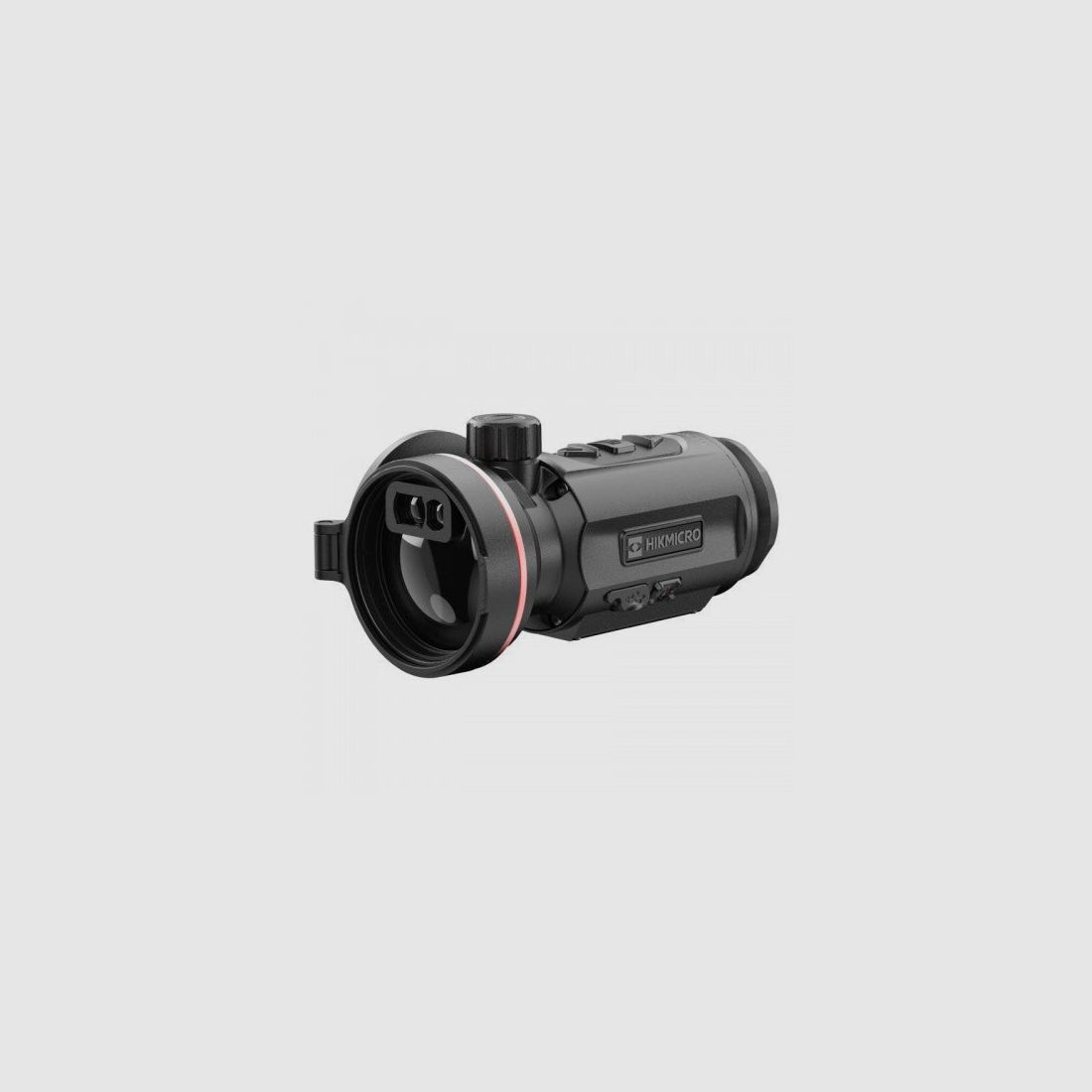


Hikmicro Clip-On Thunder TQ50CL 3.0
Price at the dealer: 2,679 €. Converted at the ECB rate as of October 16, 2026.
No permit required (18+)
72479 Straßberg, Germany
23
ID: 9894092
Purchase from outside the EU: The firearm goes through an importer in your country, the dealer handles the export.
How buying from Europe works
Shop safely with Gunfinder
Our AI-powered seller identity verification makes Gunfinder the safest marketplace online.
Learn more
Details
- Original language
- German
- Brand
- Hikmicro
- Product
- Hikmicro Thunder TQ50CL 3.0
- Category
- Condition
- New
- Location
- 🇩🇪 72479 Straßberg, Germany
- Availability
- In stock
Freshness
This listing is based on a mirrored offer, where the listing data was synced to us from a shop, dealer, or external marketplace. Please note that temporary price discrepancies may occur due to possible delays in data transmission.
- Source
- Black Raptor
- Last updated
- about 15 hours ago
Description
Note:
The item is located abroad. Please note that delivery conditions, shipping times, and/or the purchase process may differ.
font-family: Arial, Helvetica, sans-serif;
line-height:1.6;
color:#222;
}
.br-product h1{
font-size:1.4rem;
margin-bottom:10px;
}
.br-product h2{
font-size:1.2rem;
margin-top:28px;
}
.br-product ul{
padding-left:18px;
}
.br-product .info-box{
background:#ffdddd;
border-left:6px solid #c40000;
padding:12px;
margin:20px 0;
}
.br-product .tip-box{
background:#eef6ff;
border-left:6px solid #2a6fdb;
padding:12px;
margin:20px 0;
}
.br-product .trust-box{
background:#eaf7ea;
border-left:6px solid #2f8f2f;
padding:12px;
margin:20px 0;
}
.br-product .compare-box{
background:#f5f5f5;
border-left:6px solid #444;
padding:12px;
margin:20px 0;
}
.br-product details{
background:#f2f2f2;
padding:10px;
margin-bottom:8px;
border-radius:4px;
}
.br-product summary{
font-weight:600;
cursor:pointer;
}
Hikmicro Clip-On Thunder TQ50CL 3.0 – Thermal Imaging Clip-On / Clip-On practically classified
A thermal imaging clip-on is not just an observation device – it’s part of your optical system.
Hikmicro Clip-On Thunder TQ50CL 3.0 is used in front of the existing daytime optics. Therefore, not only the image counts, but also the correct mounting, alignment, adapter choice, and point of impact check.
Technically, this model is designed with a 640×512 sensor, <15 mK NETD, and 50 mm optics for field hunting, wide clearings, and longer distances with existing daytime optics.
Why exactly this model?
✔ Technical data is not only listed here but practically classified
✔ Clear distinction: baiting, forest, field edge, or field hunting
✔ Sensor, focal length, and sensitivity are explained as purchase decisions
✔ No blanket “more is better” logic, but real scenario recommendations
Key features
640×512 sensor – high-resolution thermal imaging class
<15 mK NETD – better separation of small temperature differences
50 mm optics – field hunting, wide clearings, and longer distances with existing daytime optics
Detection up to approx. 2600 m according to the manufacturer – real performance depends on weather, target size, and contrast
Integrated LRF up to approx. 1000 m – don’t estimate distance, measure it
LRF up to approx. 1000 m – important because distances in thermal imaging at night are often misjudged
Designed for: field hunting, wide clearings, and longer distances with existing daytime optics
Our assessment
Hikmicro Clip-On Thunder TQ50CL 3.0 is especially useful if your usage profile matches the technical data. 640×512 is the class where thermal imaging becomes noticeably more relaxed: more pixels on game, more background structure, and more reserves for digital zoom. Particularly suitable for field hunting, larger clearings, wide meadows, and users who want not only to detect but also to classify accurately.
50 mm is clearly designed for distance. This provides more detail over a wide area but is less comfortable for very tight forest situations. Ideal for field hunting, large meadows, wide clearings, and territories with long sight lines.
Honest classification: It’s not ideal as a handheld scanner for hours of searching; a monocular is more comfortable for that. As a clip-on device, it relies on precise mounting, suitable daytime optics, and controlled point of impact.
Thermal imaging technology clearly explained
Sensor resolution: 640×512 is the class where thermal imaging becomes noticeably more relaxed: more pixels on game, more background structure, and more reserves for digital zoom. Particularly suitable for field hunting, larger clearings, wide meadows, and users who want not only to detect but also to classify accurately.
Focal length: 50 mm is clearly designed for distance. This provides more detail over a wide area but is less comfortable for very tight forest situations. Ideal for field hunting, large meadows, wide clearings, and territories with long sight lines.
NETD: NETD around 15 mK or below is very strong: The device separates small temperature differences better. This exactly helps in warm weather, high humidity, fog
, drizzle or when game and background are thermally close together.
The most important purchase decision:
❌ Small sensor + short focal length: don’t buy for long-range field hunting.
✔ Small sensor + short focal length: ideal for baiting sites, forest, quick overview and short control glances.
❌ Large focal length: not automatically better if you work in dense forest.
✔ Large focal length: strong when you need to cover open areas, field edges and longer distances.
When is this model useful?
Practical profile: field hunting, wide clearings and longer distances with existing daytime optics.
Baiting site / short stand: Here, a large field of view, quick overview and low weight matter more than maximum range.
Forest edge / mixed terrain: Here you need a middle ground between field of view and detail depth – 19 to 35 mm is often especially practical.
Field hunting / wide meadows: Here larger sensors and longer focal lengths win, because more pixels on the target and more base magnification are available.
Difficult weather: The lower the NETD value, the more structure remains in the image in moist air, rain, fog or warm background.
Practical tip: Don’t just buy range
The manufacturer’s range tells you that a standard target can be detected – but it doesn’t automatically say how comfortably you work in the field.
For baiting sites, a wide field of view is often more important than 2,000 m range. For field hunting it’s the other way around: more focal length and more sensor resolution bring significantly more reserves.
Clip-On practice: point of impact, adapter and check
With a thermal imaging clip-on device, the mounting decides the benefit. A strong image is of little use if the device doesn’t fit cleanly to the daytime optic or doesn’t work reproducibly after mounting.
Adapter choice: must fit the objective diameter and optical axis.
Point of impact: always check after mounting and after transport.
35 mm vs. 50 mm: 35 mm is more flexible for forest edge and mixed terrain; 50 mm is more focused on field and distance.
384 vs. 640: 384 is enough for many stand situations; 640 brings more detail reserve and a more relaxed image with digital zoom.
Practical tip: Don’t try it out only before the stand
Mount clip-on, adapter and daytime optic calmly beforehand. Check fit, image position and point of impact under controlled conditions.
In the field, the device should only be used – not explained anymore.
Operation in real use
First overview, then zoom: Start with base magnification. Use digital zoom only when the target is already found.
Focus consciously: Poor focus looks like poor sensor performance. Especially with 35, 50 or 60 mm optics, clean focusing is crucial.
Don’t overrate palettes: White Hot/Black Hot are usually the working modes. Color palettes help situationally but don’t replace clean image adjustment.
Plan for weather: Moist air, drizzle, fog and warm ground reduce contrasts. Then NETD and image processing are especially important.
Plan batteries realistically: Cold, display brightness, WLAN, recording and LRF shorten runtimes. Spare battery or power bank belong to longer nights.
Important note:
Ranges, runtimes, NETD values and detection specifications are manufacturer data and depend in practice on weather, target size, humidity, temperature contrast, settings and stability.
For clip-on, attachment or hunting use, legal requirements, mounting, adapter, point of impact and safe use must always be checked before use.
Technical data
Model: Hikmicro Clip-On Thunder TQ50CL 3.0
Product type: thermal imaging clip-on device / clip-on
Sensor: 640×512
Thermal sensitivity: <15 mK
Objective/focal length: 50 mm F1.0
Detection/detection range: up to approx. 2600 m la
ut Manufacturer
Laser rangefinder: up to approx. 1000 m according to Manufacturer
Display: 1920×1080
Weight: approx. 540 g
Runtime: up to approx. 5 h according to Manufacturer
FAQ
Is this model more suitable for baiting or field hunting?
Field hunting, wide clearings and longer distances with existing day optics. The decisive factors are mainly sensor resolution and focal length: short focal lengths provide overview, long focal lengths bring distance detail.
What does the sensor resolution mean in practice?
640×512 is the class where thermal imaging becomes noticeably easier: more pixels on game, more structure in the background, and more reserves for digital zoom. Especially useful for field hunting, larger clearings, wide meadows, and users who want not only to detect but also to classify accurately.
Why is the focal length so important?
50 mm is clearly designed for distance. This provides more detail depth over a wide area but is less comfortable for very tight forest situations. Ideal for field hunting, large meadows, wide clearings, and territories with long sight lines.
What does NETD mean?
NETD around 15 mK or below is very strong: The device separates small temperature differences better. This is exactly what helps in warm weather, high humidity, fog, drizzle, or when game and background are thermally close together.
When is a larger device still not better?
If you work in dense forest, at baiting sites, or at short distances, a wide field of view can be more important than maximum range. A large objective is strong at distance but not automatically more comfortable up close.
Especially with thermal imaging technology, it’s not the highest number that counts, but the right combination of sensor resolution, focal length, NETD, field of view, and real use profile. (Show description in original language)
Hikmicro Clip-On Thunder TQ50CL 3.0 Wärmebild-Vorsatzgerät Hochwertiges Hikmicro-Wärmebildprodukt für Jagd, Revierbeobachtung und den mobilen Outdoor-Einsatz. Das jeweilige Modell unterstützt eine zuverlässige Bilddarstellung und ist für die vorgesehene Anwendung ausgelegt.
Modell und Einsatzart vor Bestellung prüfen
Objektiv, Sensor, Akku und Montage gemäß Herstellerangaben
SKU: 50-2-130
Lieferumfang, technische Daten und rechtliche Nutzungshinweise bitte vor dem Einsatz anhand der Herstellerunterlagen abgleichen.
Modell und Einsatzart vor Bestellung prüfen
Objektiv, Sensor, Akku und Montage gemäß Herstellerangaben
SKU: 50-2-130
Lieferumfang, technische Daten und rechtliche Nutzungshinweise bitte vor dem Einsatz anhand der Herstellerunterlagen abgleichen.