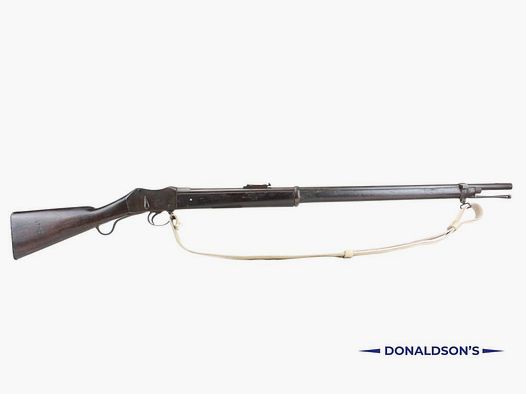
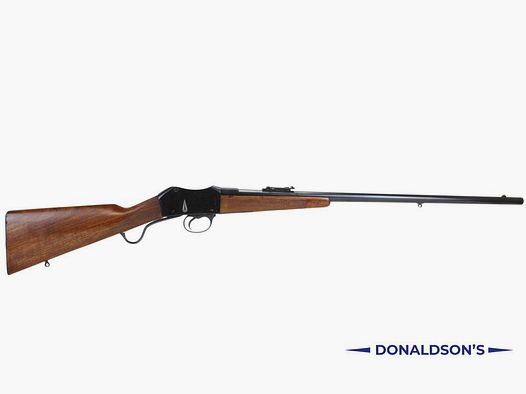
.577/.450 Martini-Henry (H) Martini Henry Ic1 Rifle (Obsolete Calibre) – S/H
≈ $2,379
Price at the dealer: £1,799. Converted at the ECB rate as of November 13, 2026.
Purchase permit required
MK2 2AZ Bletchley, United Kingdom
0
ID: 11996773
Purchase from outside the EU: The firearm goes through an importer in your country, the dealer handles the export.
How buying from Europe works
Shop safely with Gunfinder
Our AI-powered seller identity verification makes Gunfinder the safest marketplace online.
Learn more
Details
- Category
- Purchase eligibility
- Required
- Caliber
- .577/.450Martini
- Condition
- New
- Location
- 🇬🇧 MK2 2AZ Bletchley, United Kingdom
- Availability
- In stock
Freshness
This listing is based on a mirrored offer, where the listing data was synced to us from a shop, dealer, or external marketplace. Please note that temporary price discrepancies may occur due to possible delays in data transmission.
- Source
- Donaldson's Guns
- Last checked with the dealer
- about 17 hours ago
Description
Note:
The item is located abroad. Please note that delivery conditions, shipping times, and/or the purchase process may differ.
The Martini-Henry was a breech-loading single-shot rifle with lever action that first entered British service in 1871, eventually replacing the Snider-Enfield. It combined the dropping-block action developed by Henry O. Peabody and improved by Swiss designer Friedrich von Martini, with polygonal rifling designed by Scotsman Alexander Henry. The carbine fired 410-grain bullets made from tin and lead alloy, propelled by 71 grains of RFG2 black powder, delivering considerable stopping power with manageable recoil compared to the full rifle load.
Martini-Henry variants served throughout the British Empire for 47 years, seeing extensive action in colonial campaigns including the Anglo-Zulu War in 1879, notably at Isandlwana and Rorke's Drift. Between 1878 and 1889, RSAF Enfield manufactured 130,000 IC1 carbines before production ceased with the adoption of .303 calibre. This example represents a significant piece of Victorian military engineering and British imperial history.
Model
Ic1
Type
Rifle (Obsolete Calibre)
Mechanism
Martini
Calibre
.577/.450 Martini-Henry (H)
Make
Martini Henry
Origin
unknown
Orientation
Barrel Length
Stock Length
Condition
S/H
Stock Number
260526/001
Licence
No Licence