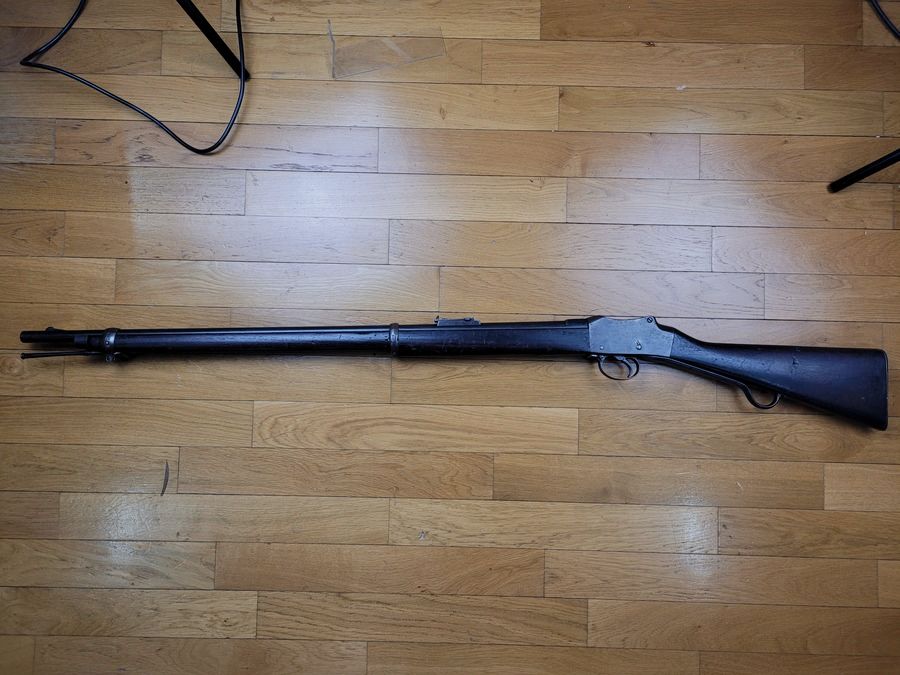










Rare and very good Martini-Henry MKIV rifle – Caliber .45 original – 1887 – Enfield – British Empire – TBE+
Price on Request
Purchase permit required
75002 Paris, France
18
ID: 10339427
This item is currently unavailable.
Purchase from outside the EU: The firearm goes through an importer in your country, the dealer handles the export.
How buying from Europe works
Shop safely with Gunfinder
Our AI-powered seller identity verification makes Gunfinder the safest marketplace online.
Learn more
Details
- Original language
- French
- Category
- Purchase eligibility
- Required
- Condition
- New
- Location
- 🇫🇷 75002 Paris, France
- Availability
- Out of stock
Freshness
This listing is based on a mirrored offer, where the listing data was synced to us from a shop, dealer, or external marketplace. Please note that temporary price discrepancies may occur due to possible delays in data transmission.
- Source
- Flingus Maximus
- Last checked with the dealer
- 1 day ago
Description
Note:
The item is located abroad. Please note that delivery conditions, shipping times, and/or the purchase process may differ.
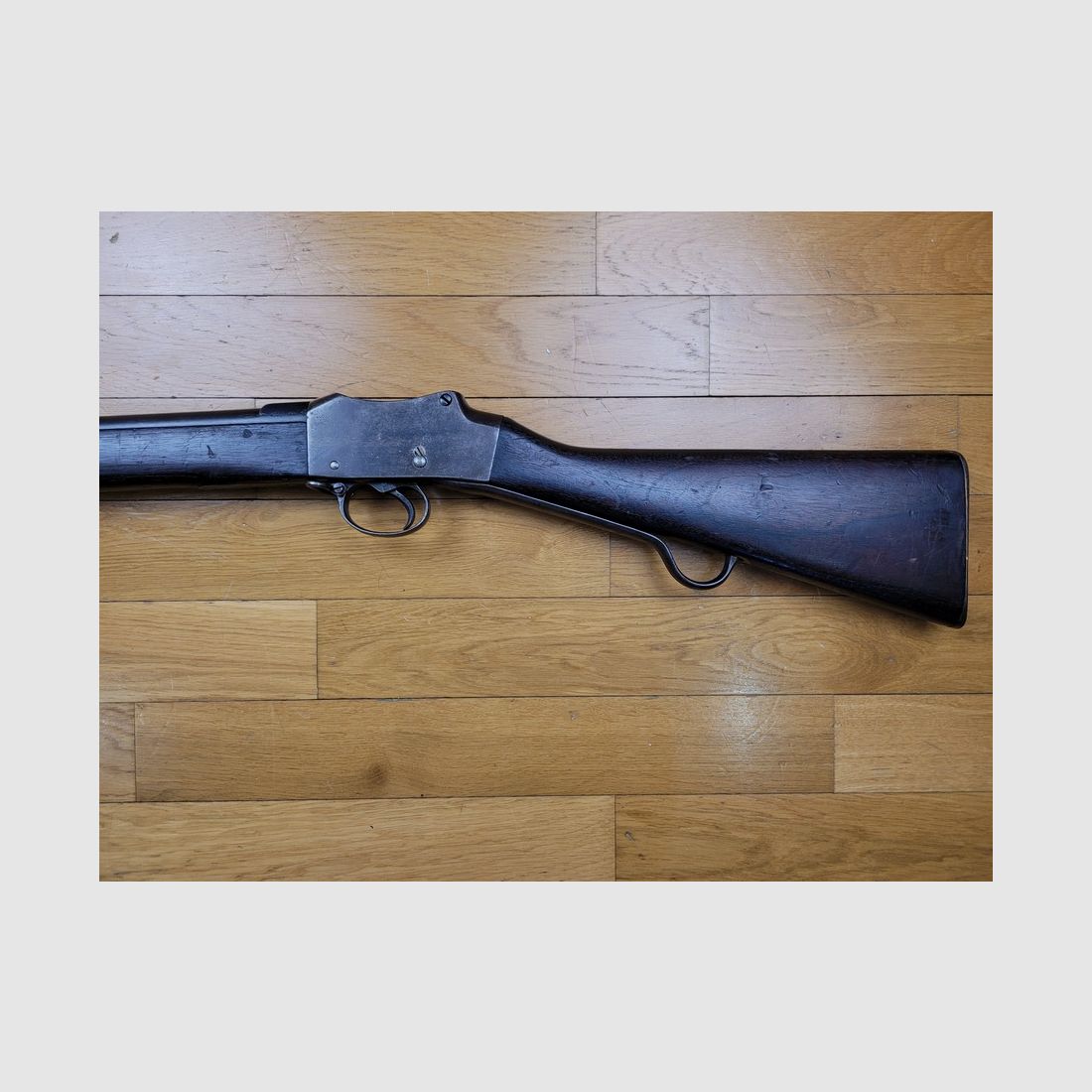
This firearm operates around a tilting block designed by the Swiss engineer Friedrich Von Martini. In appearance, it is similar to the American Peabody rifle, but Martini had the idea of linking the internal striker’s cocking to the movement of the underlever, whereas with the Peabody, the soldier also had to cock the hammer after reloading and before firing.
This simple, innovative and reliable mechanism was paired with an excellent .45-caliber barrel, with seven double or bordered grooves, designed by the Scottish engineer Henry and particularly well suited to black powder.
The result? A rate of fire of 12 rounds per minute, with excellent accuracy, deadly at 400 m and with a maximum range of 1,700 m—something the Zulus and other Sudanese Mahdists at Omdurman still remember. Hollywood has made a few good movies…
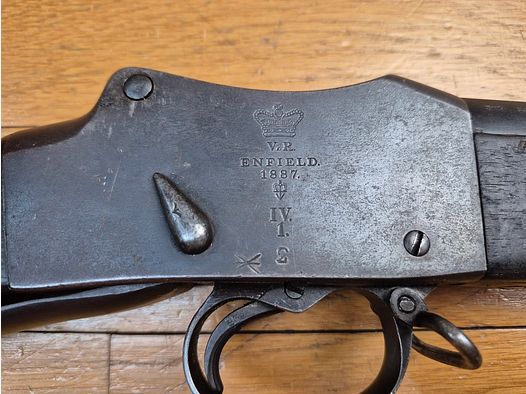
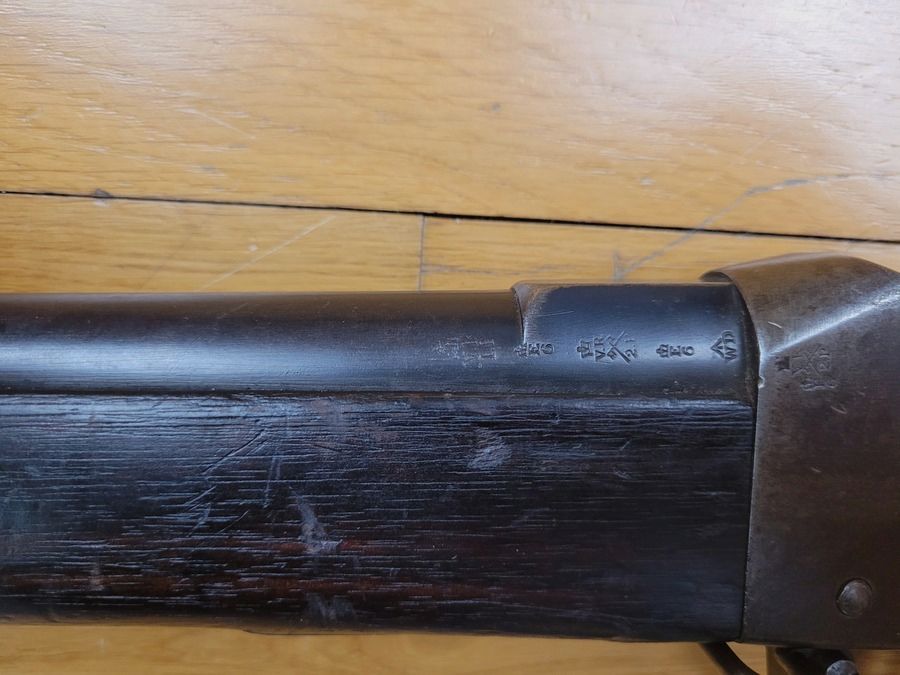
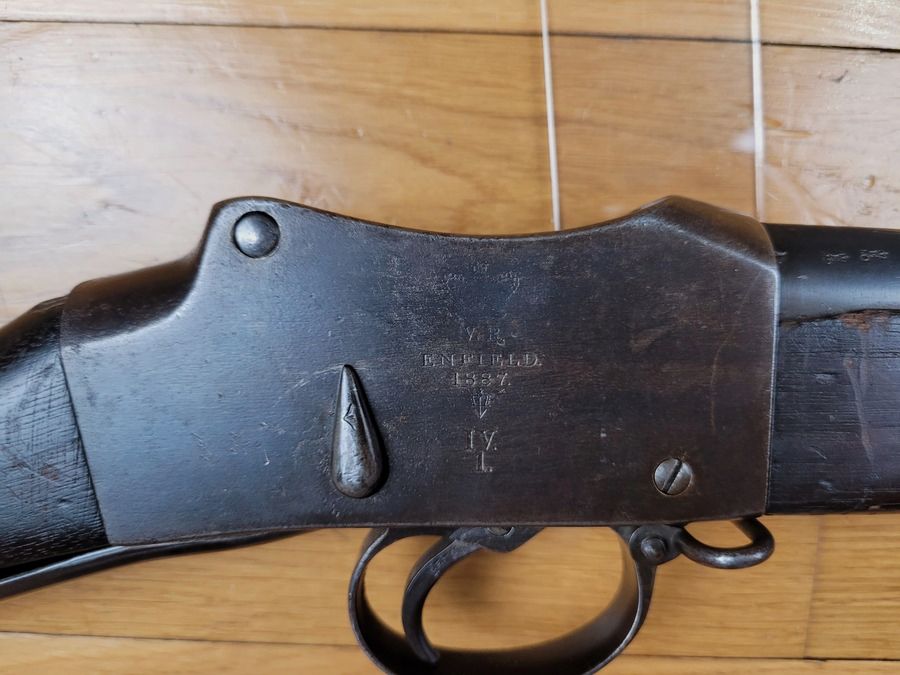
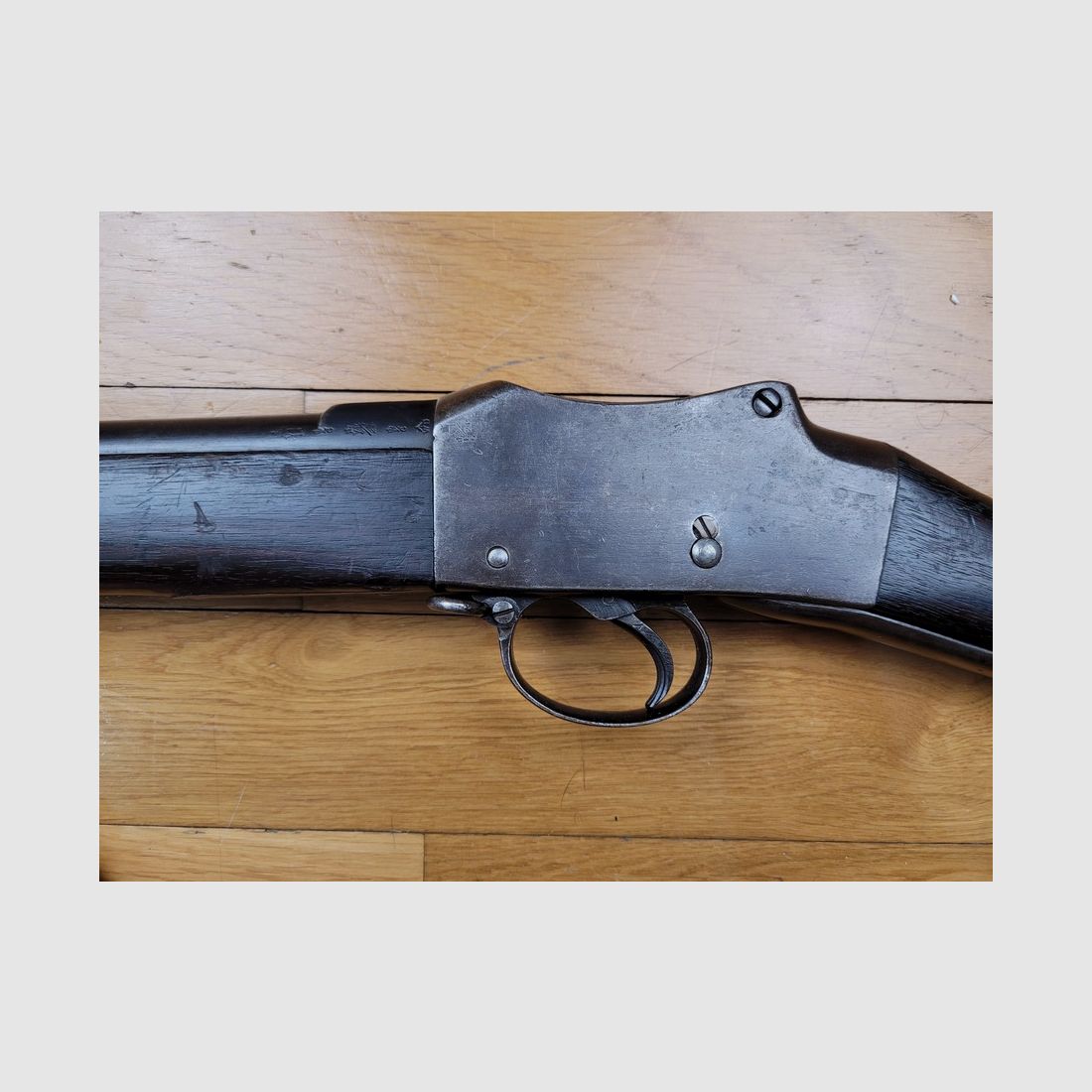
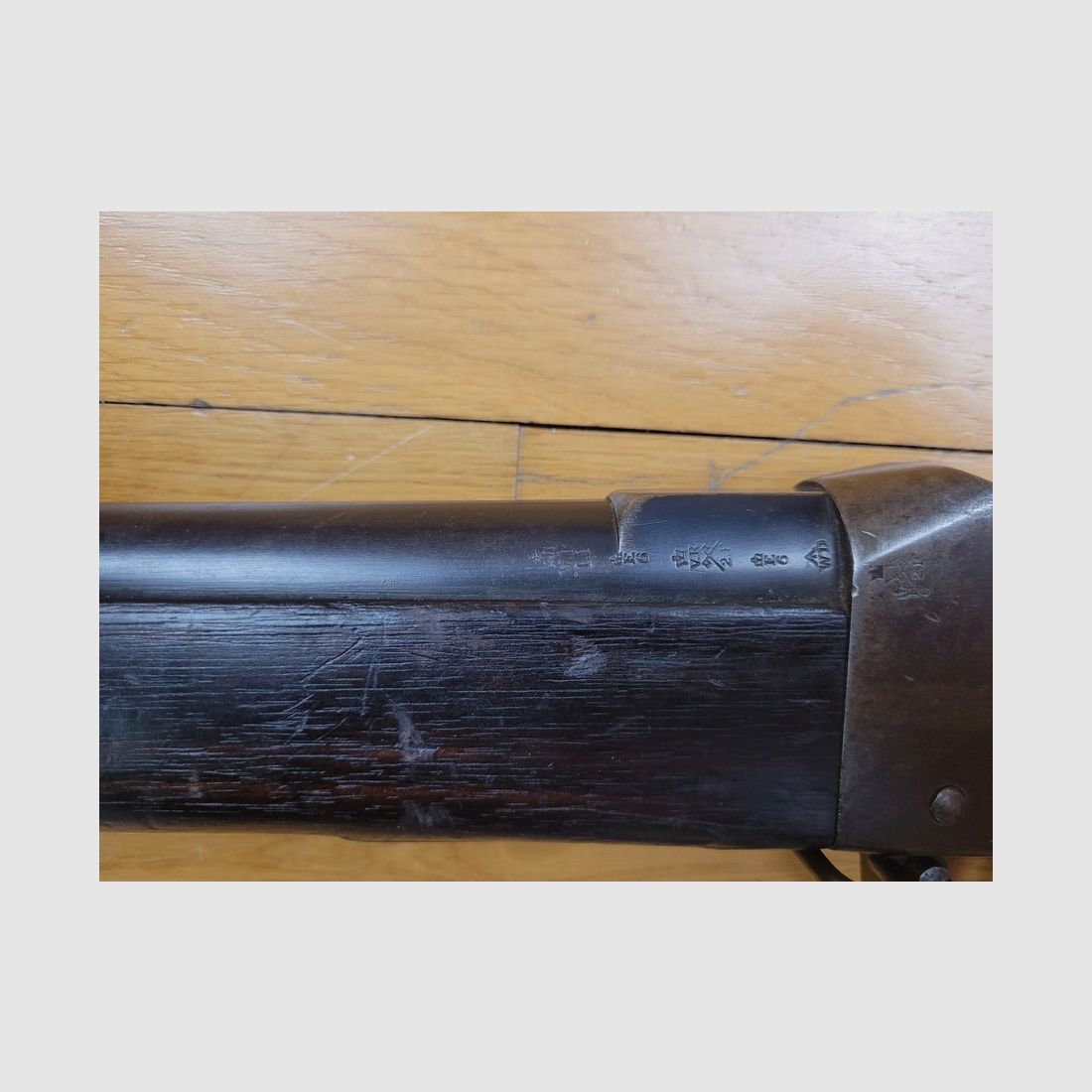
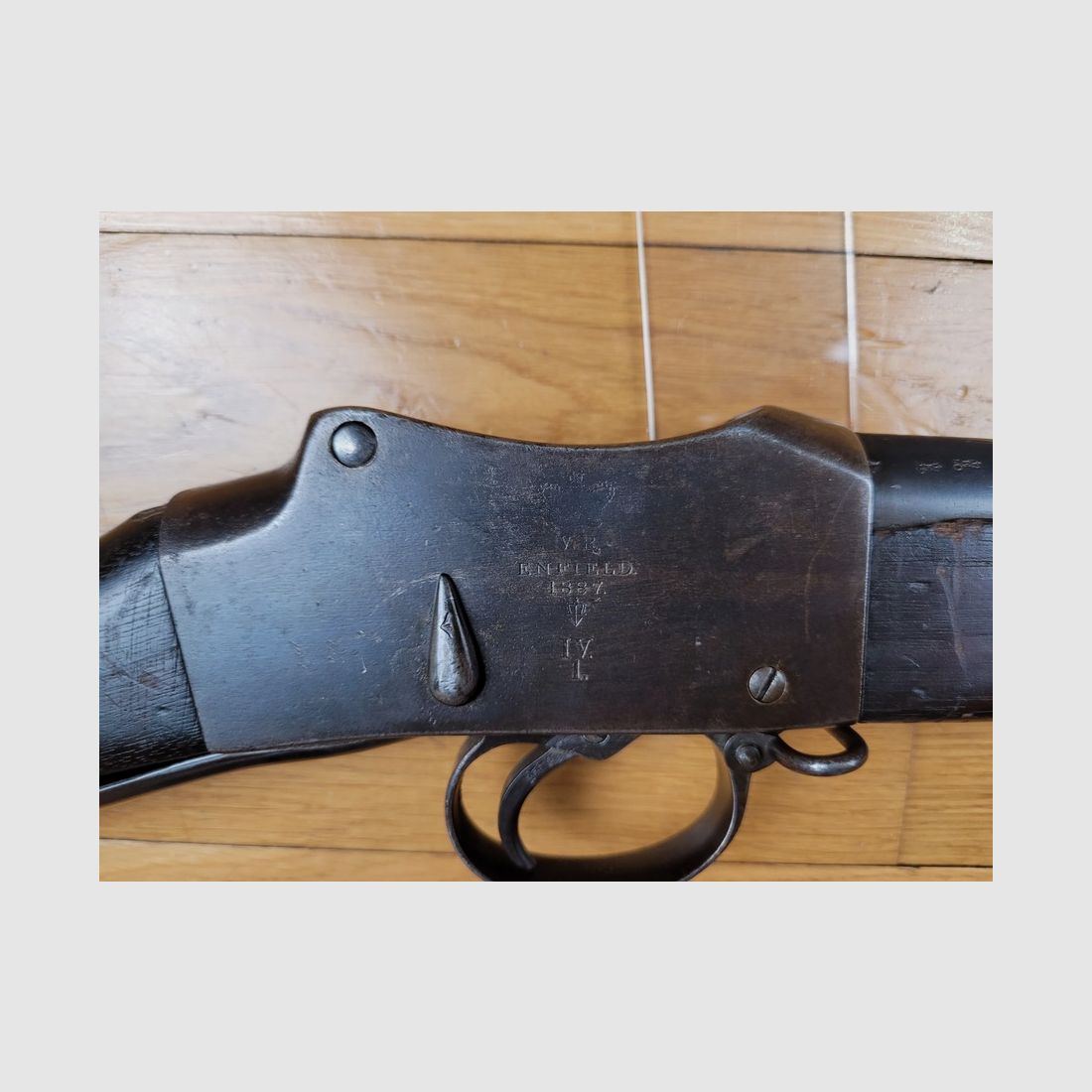
Our 1887 example is highly representative of this period—it is also marked with the British Crown and Queen Victoria’s monogram “V . R” for “Victoria Regina”. It is in very good “+” condition, especially considering what it must have seen in 135 years…
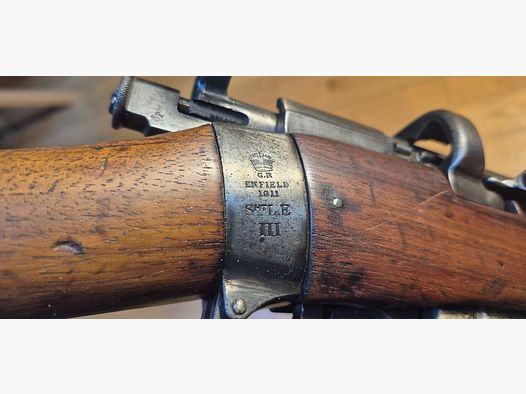
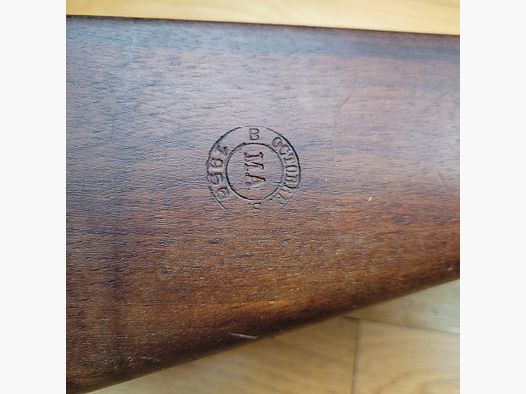
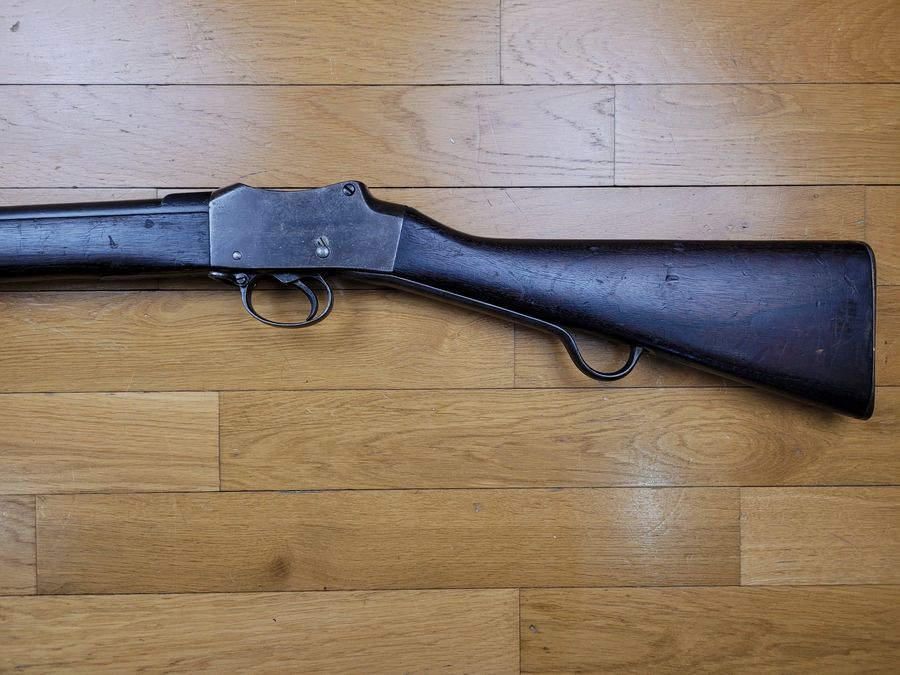
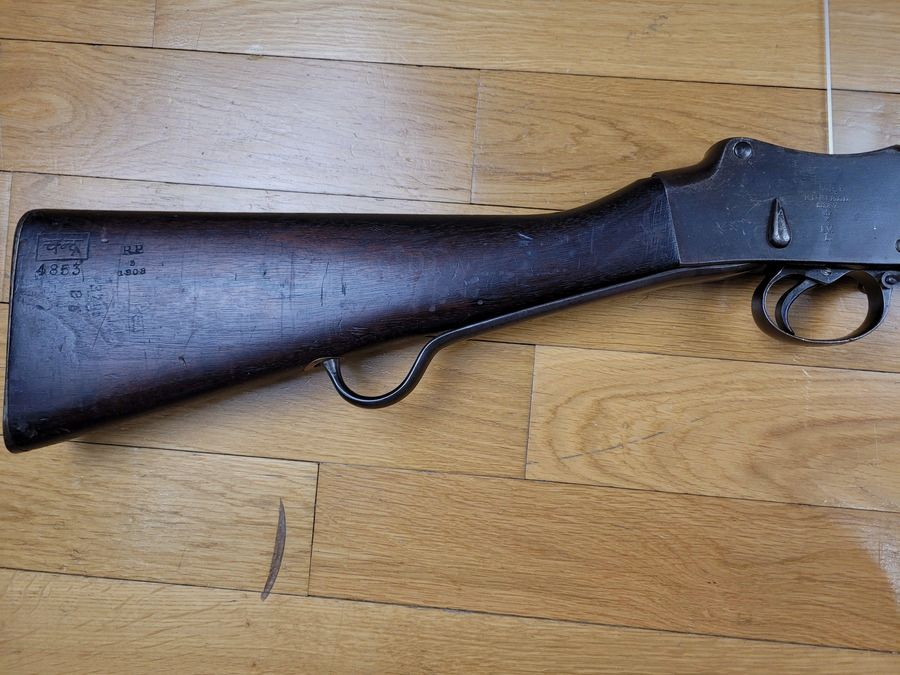
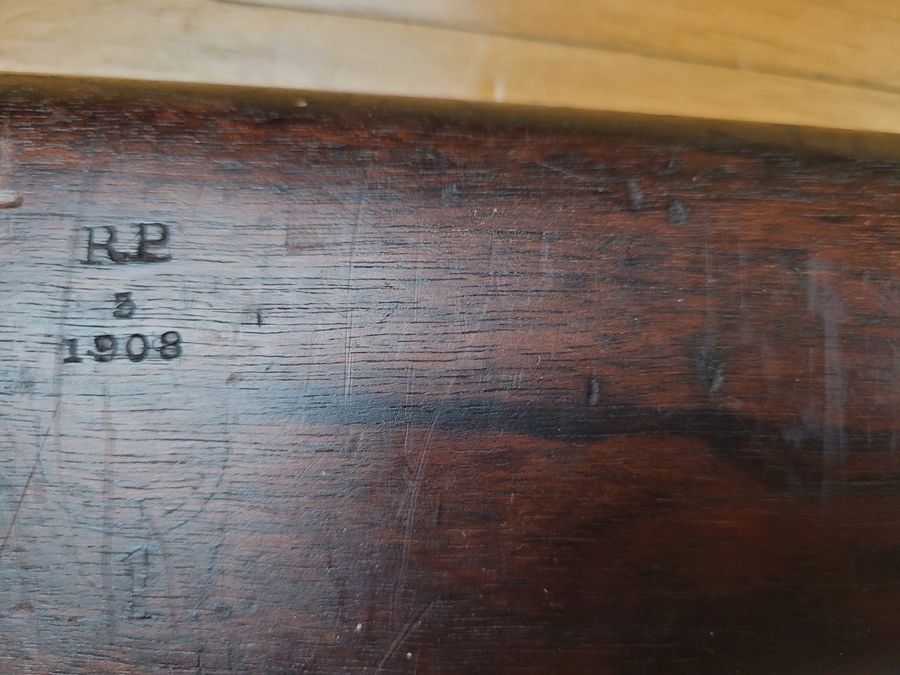
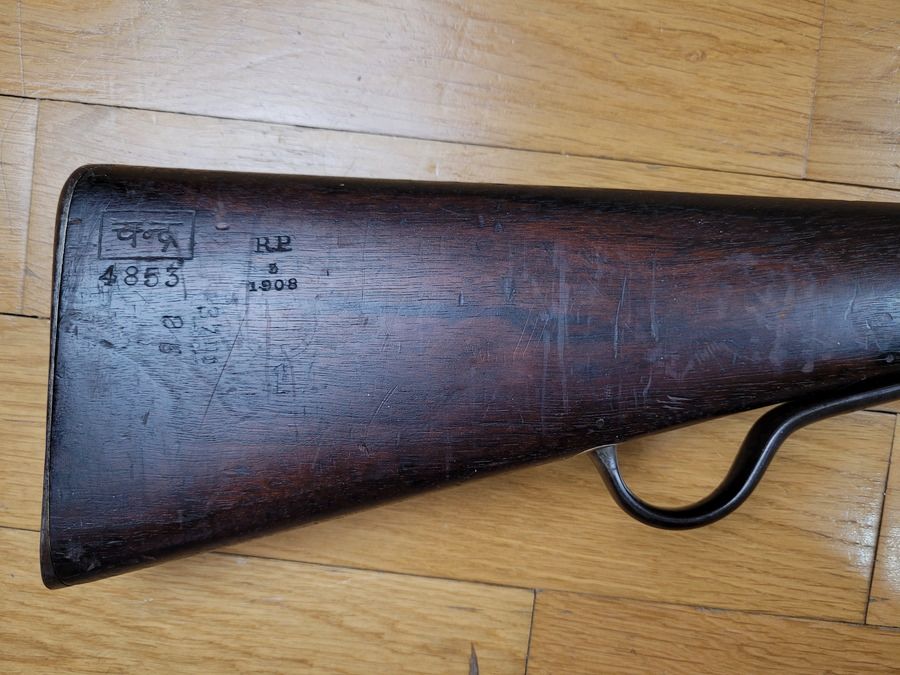
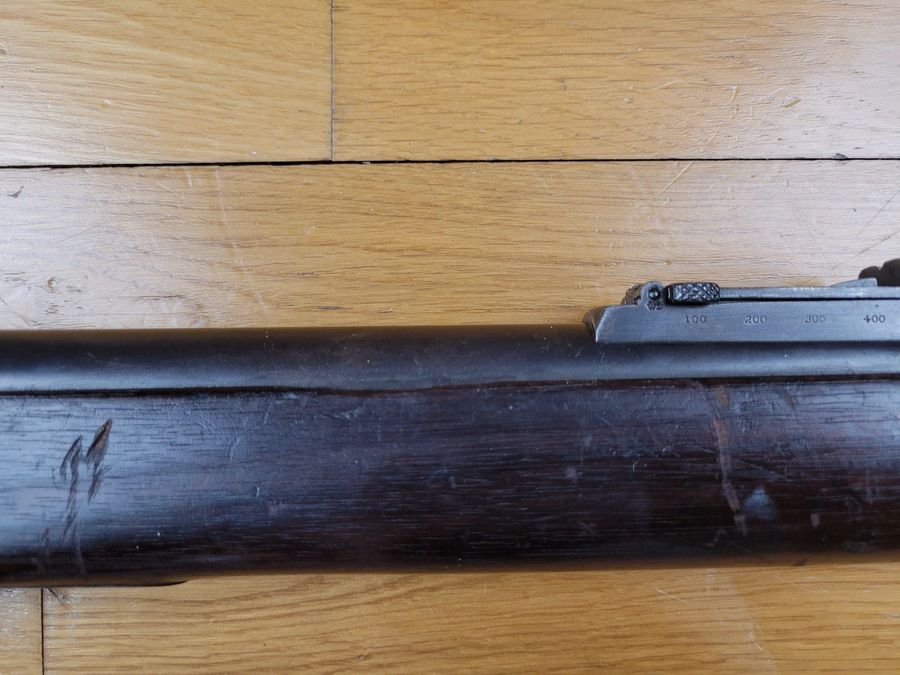
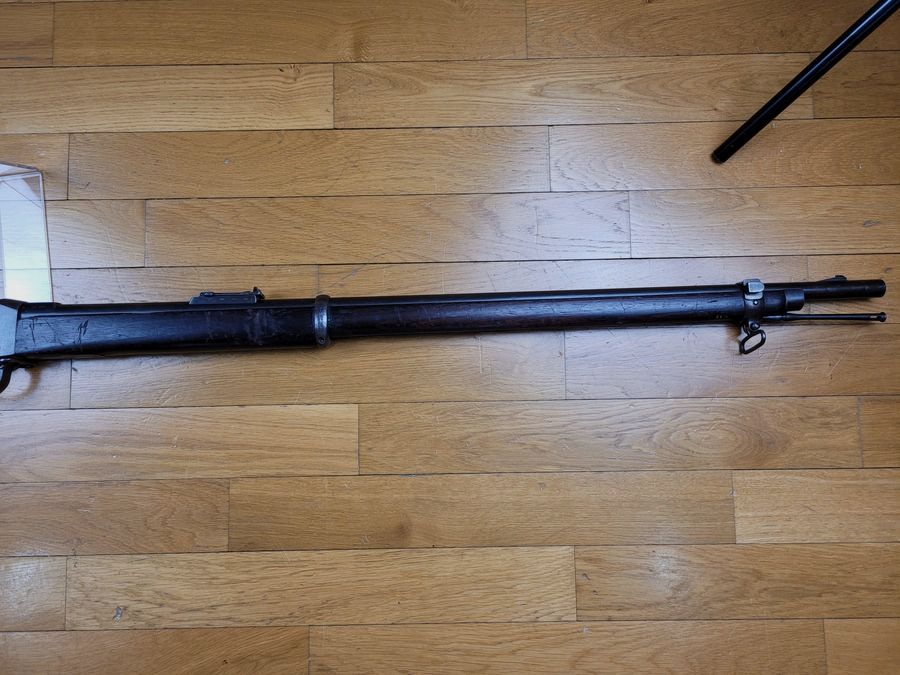
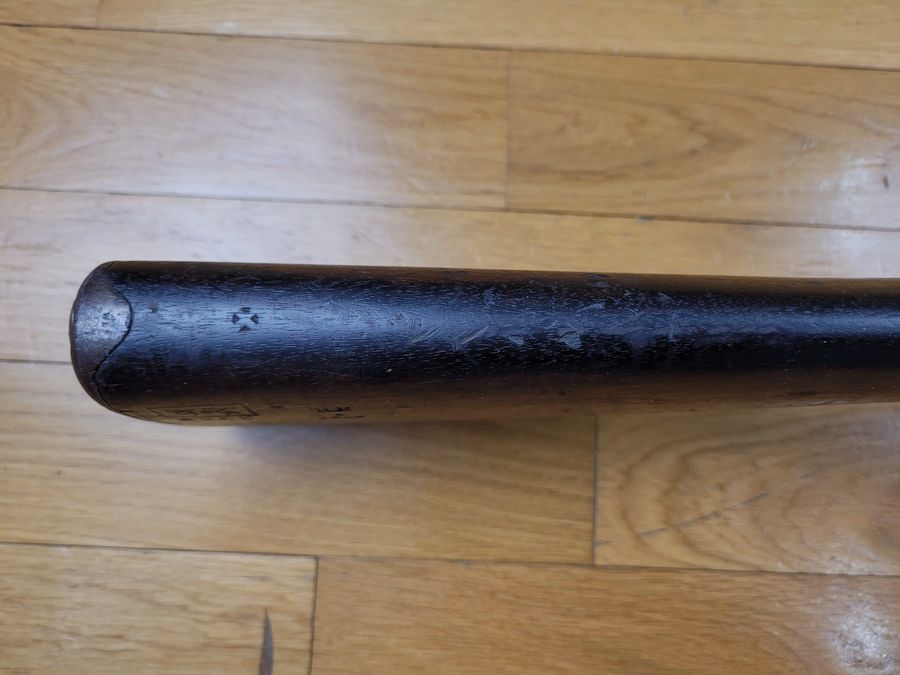
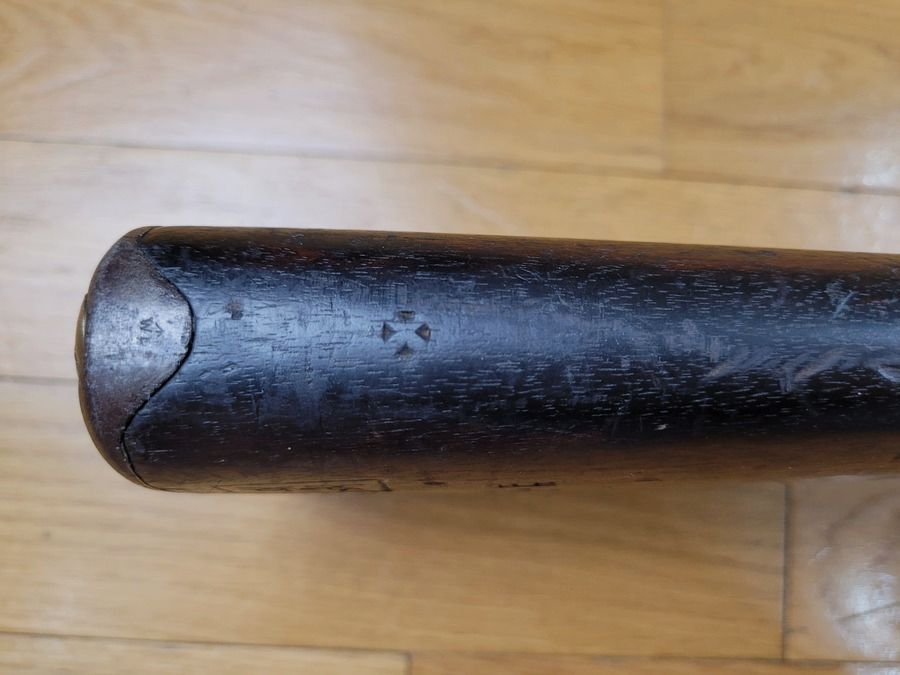
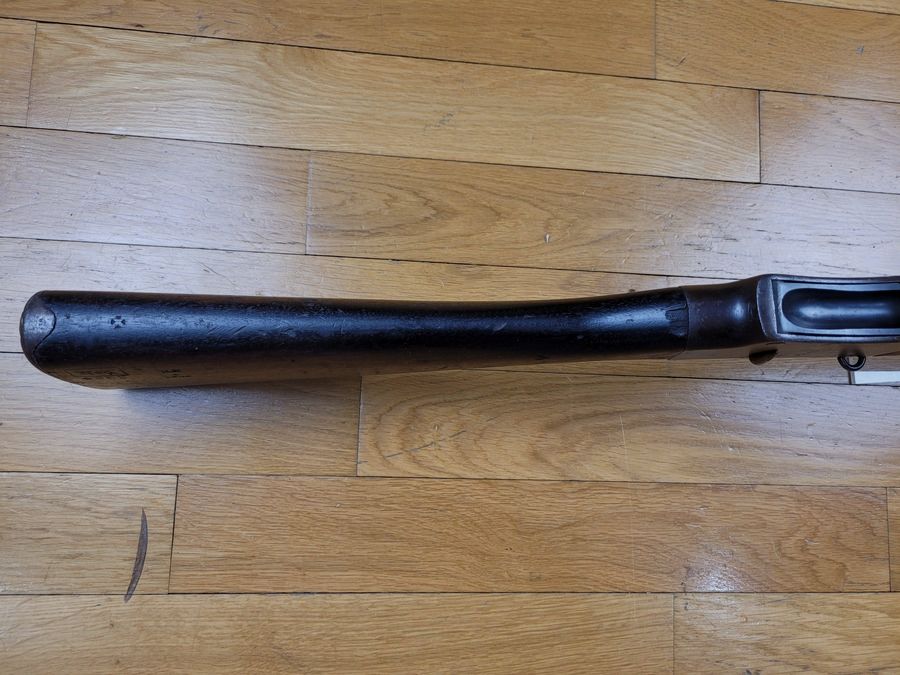
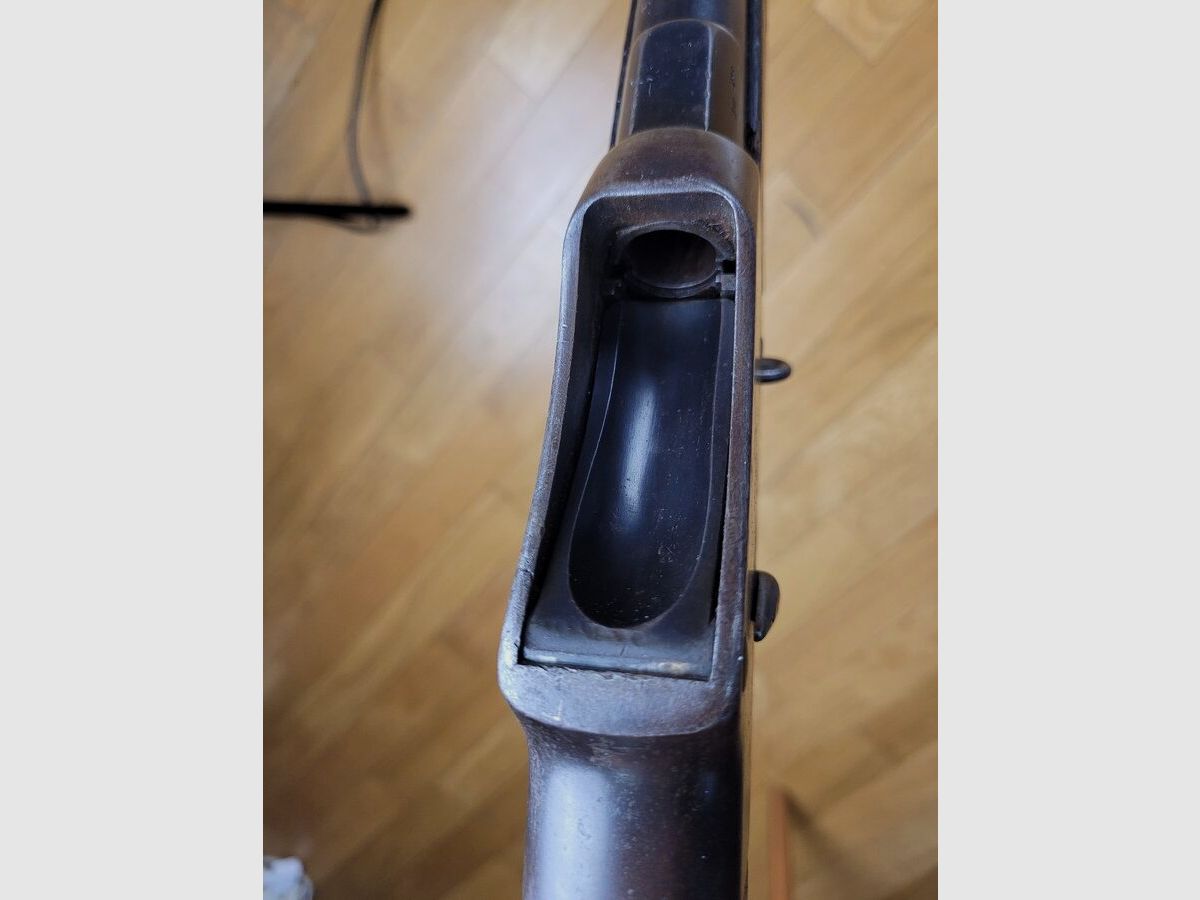
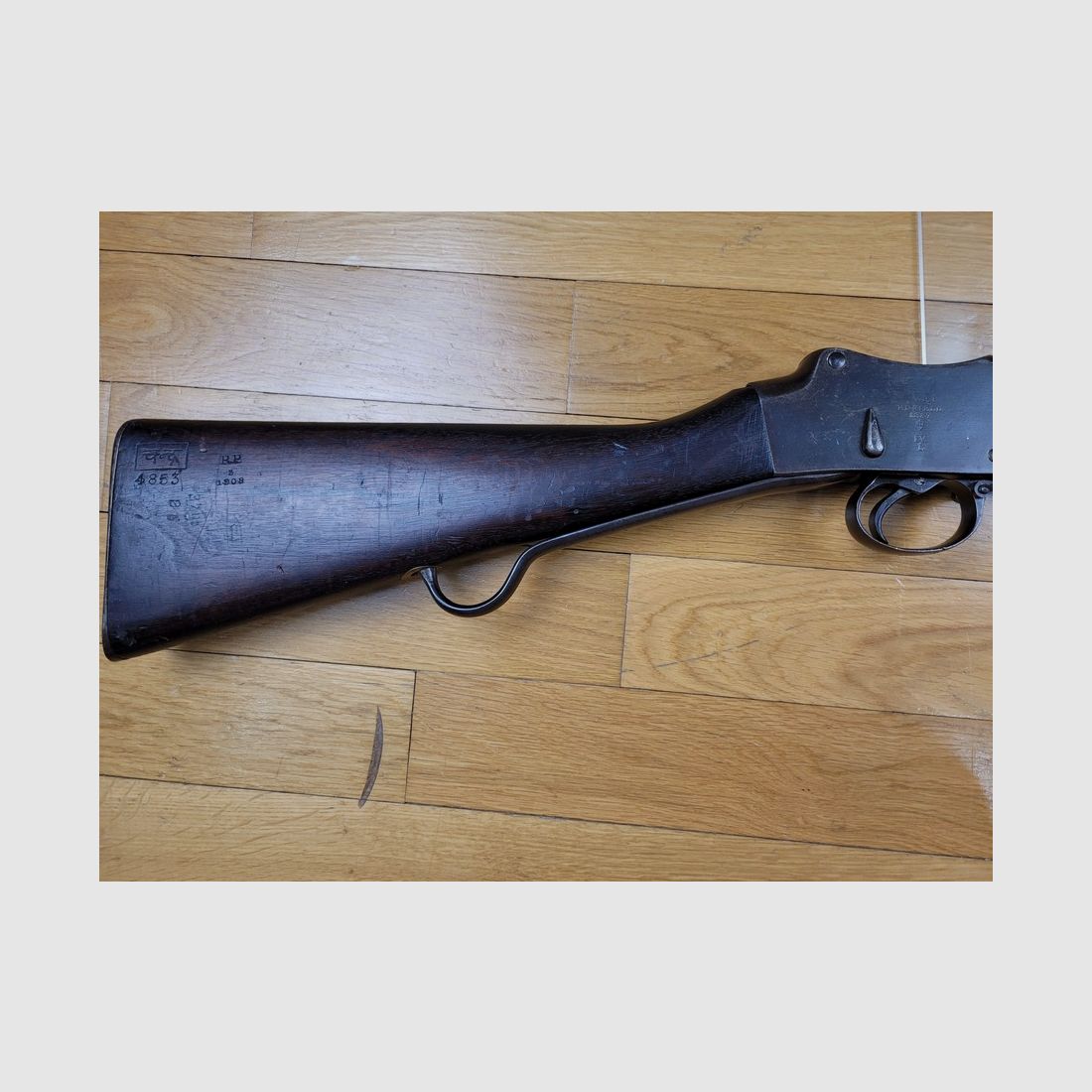
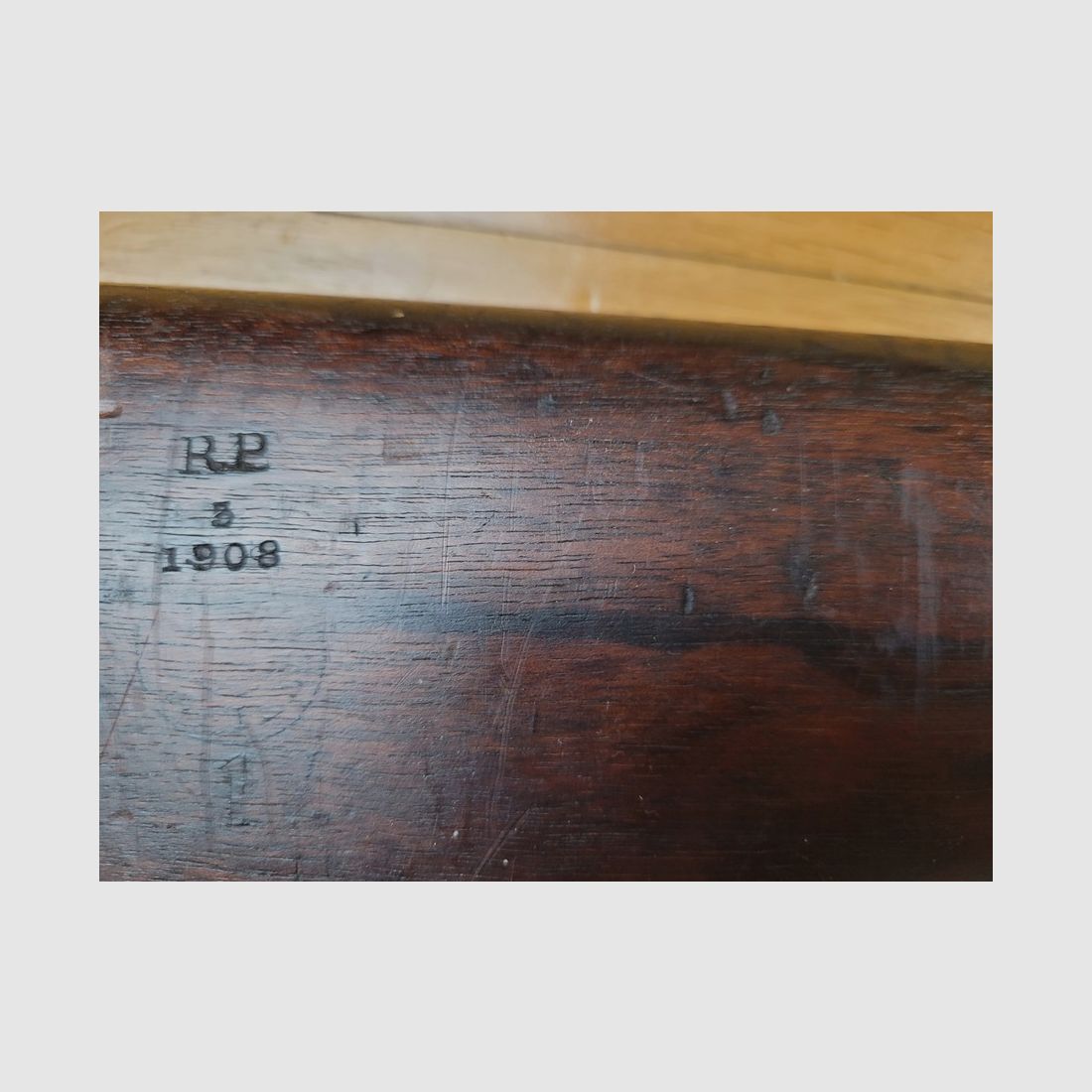
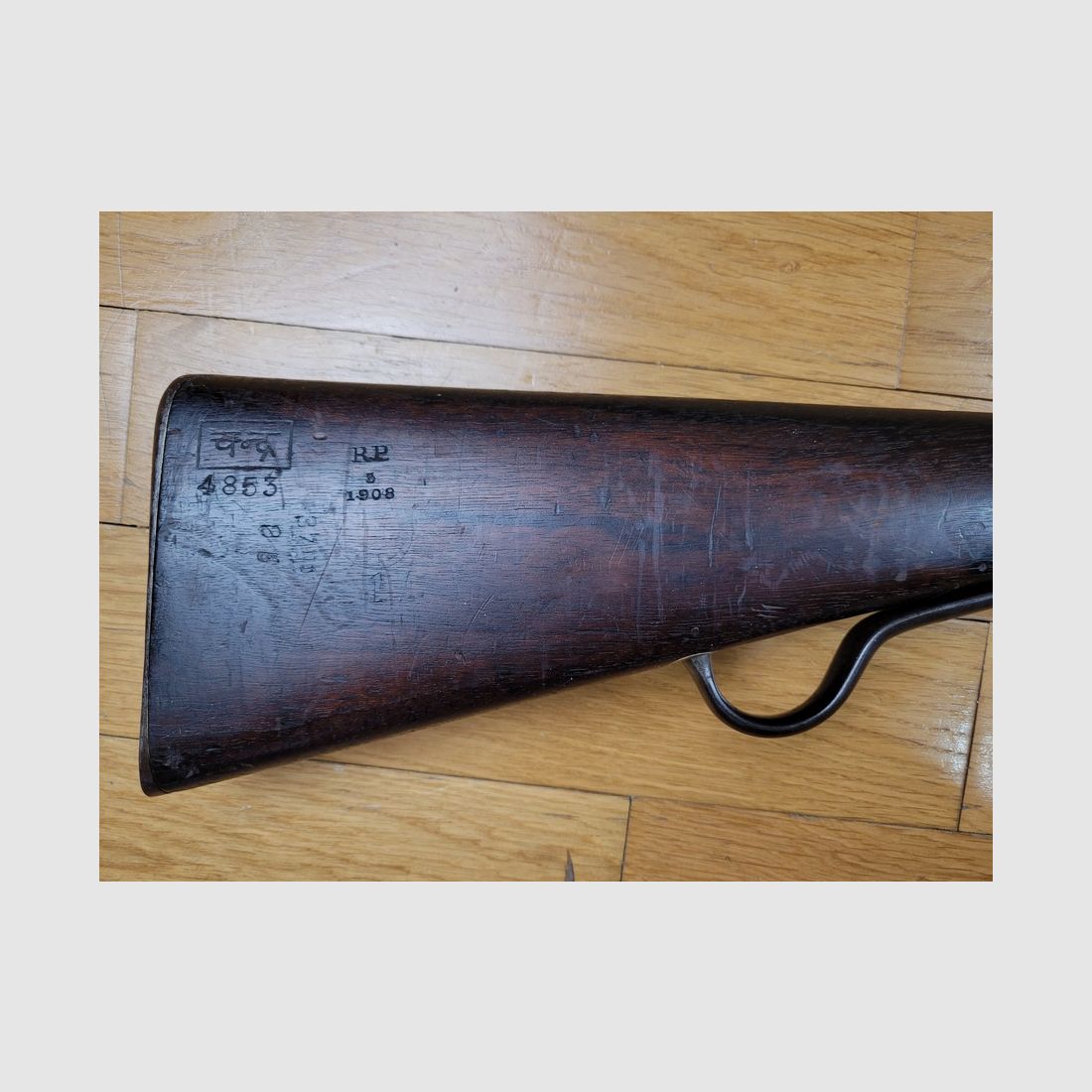
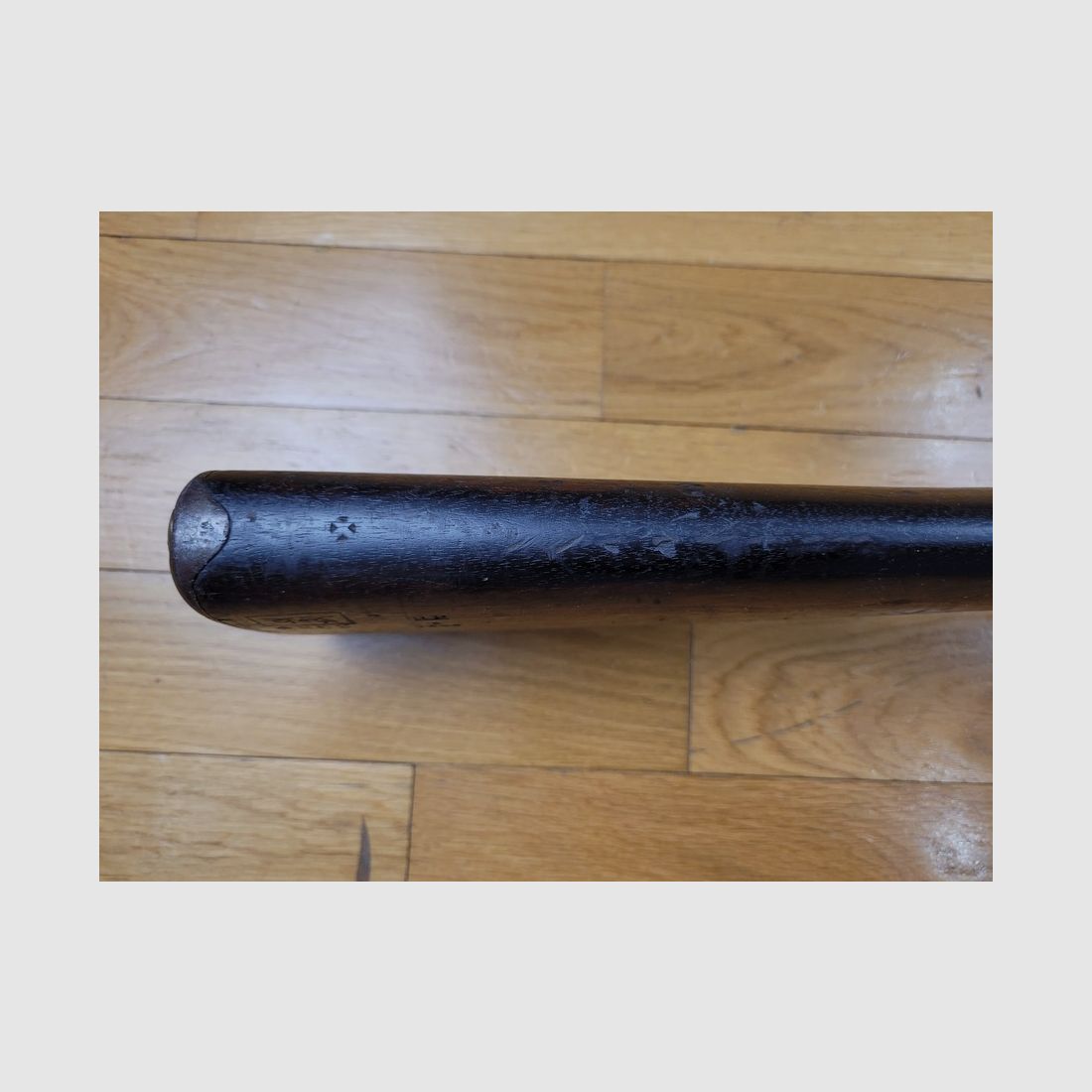
Stock: Very good condition, with handling marks and just one tiny chip behind the receiver, barely visible in the photos, which I mention for completeness. Good English markings and a clearly visible Nepalese marking. Remains of an illegible roundel. The British 1908 serial number and decommissioning stamp are clearly visible on the stock. Overall, very attractive. Much better than 95% of those I’ve seen for sale in recent years.
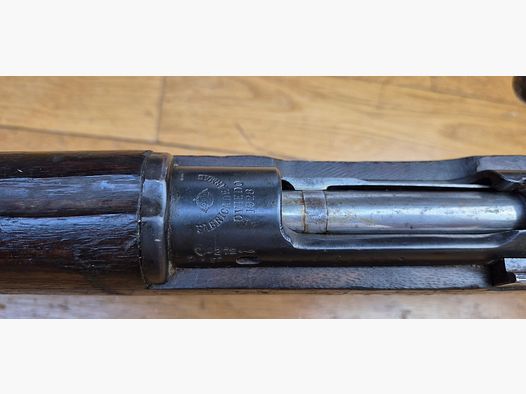
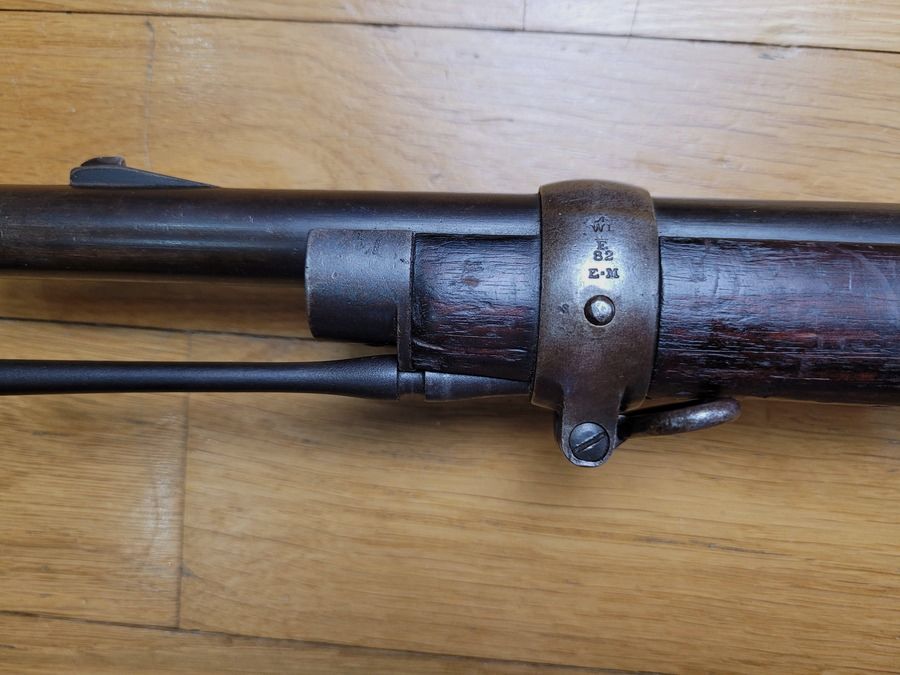
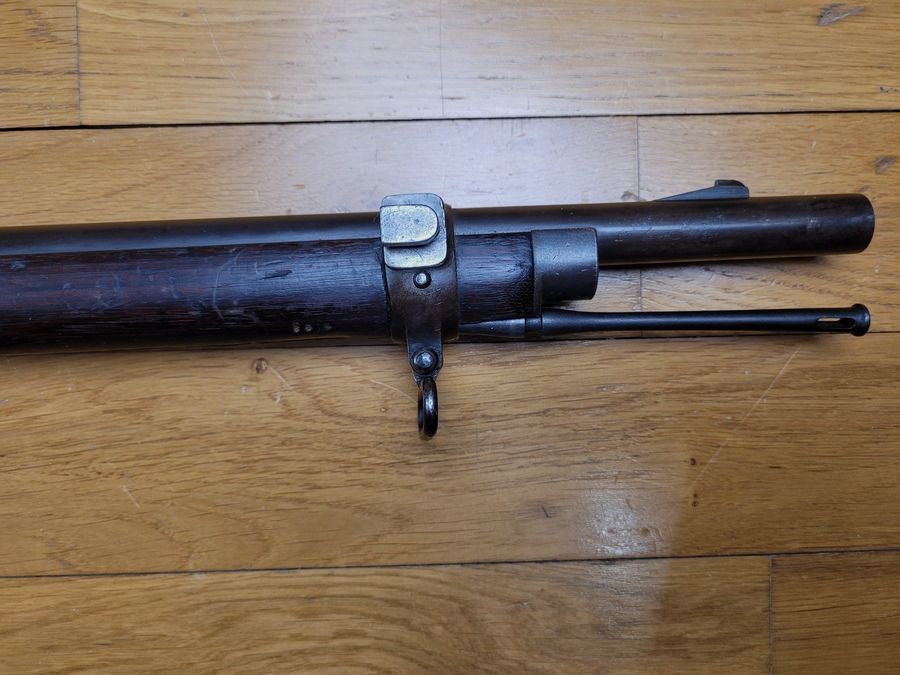
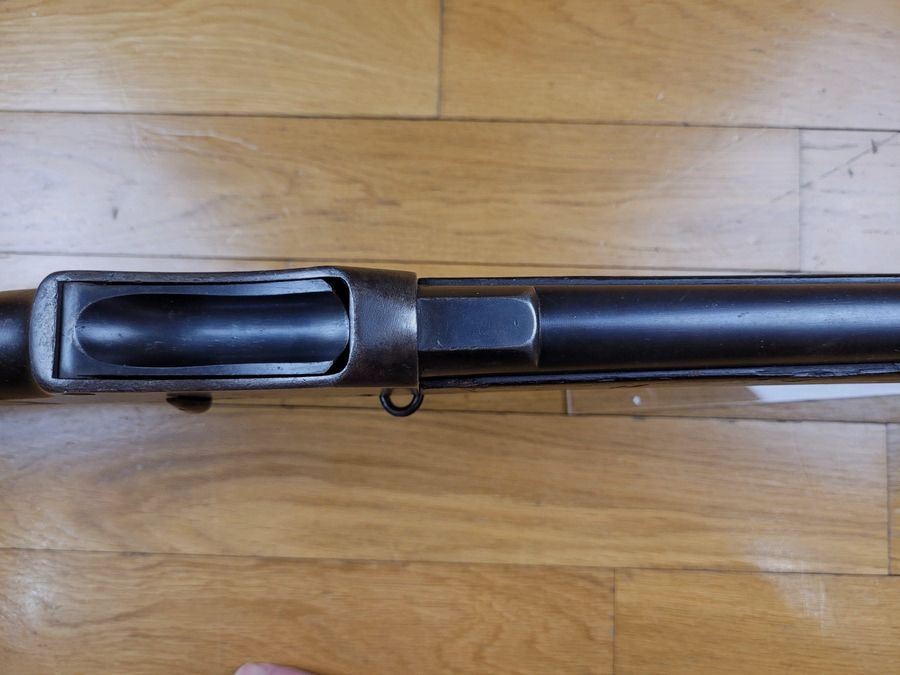
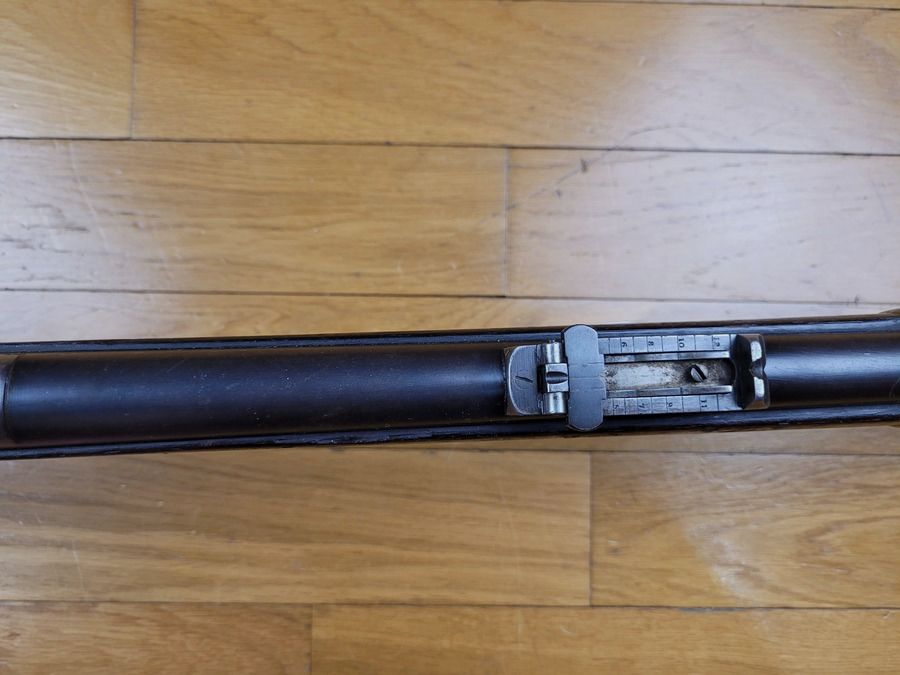
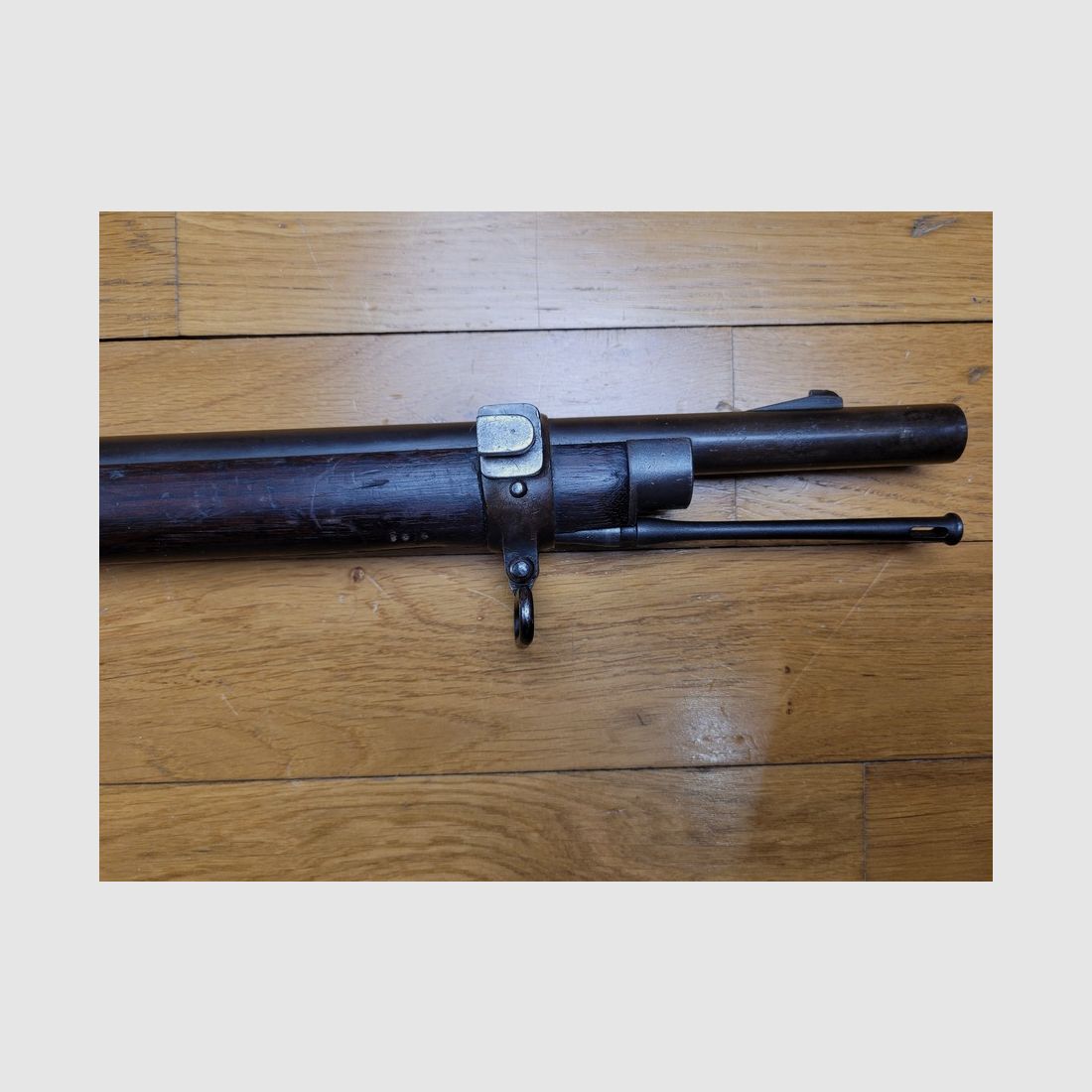
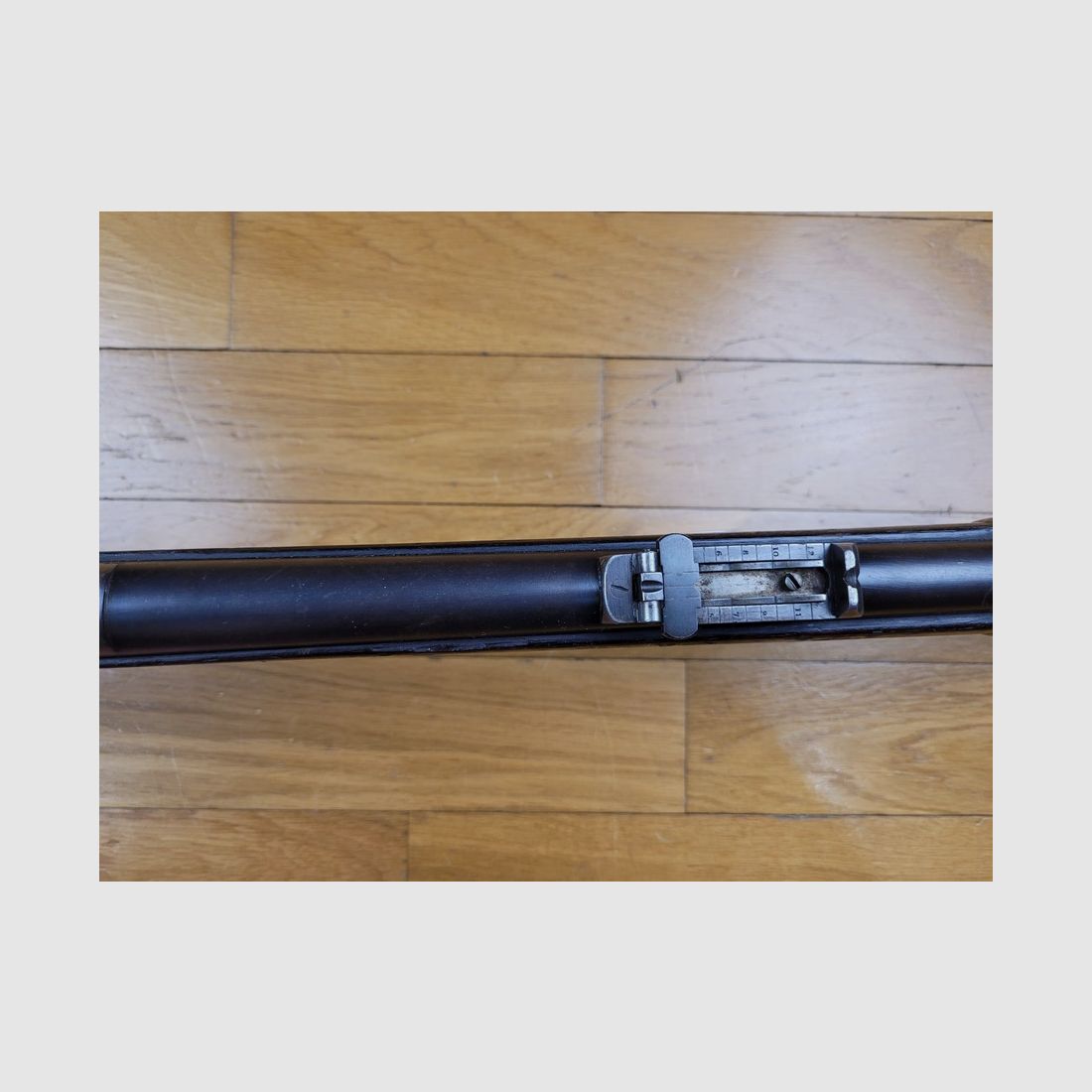
Metal parts in very good condition, with 85–90% of the original bluing remaining. All proof marks are attractive, sharp and clearly legible. No pitting / no oxidation (very rare on this highly colonial model, which has seen service in every climate). In particular, the English proof marks are consistent across the fittings. The screws are in very good condition. The firearm has not been tampered with. The receiver is clearly marked “MK IV.1.” and everything is legible. The original cleaning rod is present.
It has retained all its British markings on the wood and metal. None have been scraped off, as is often the case.
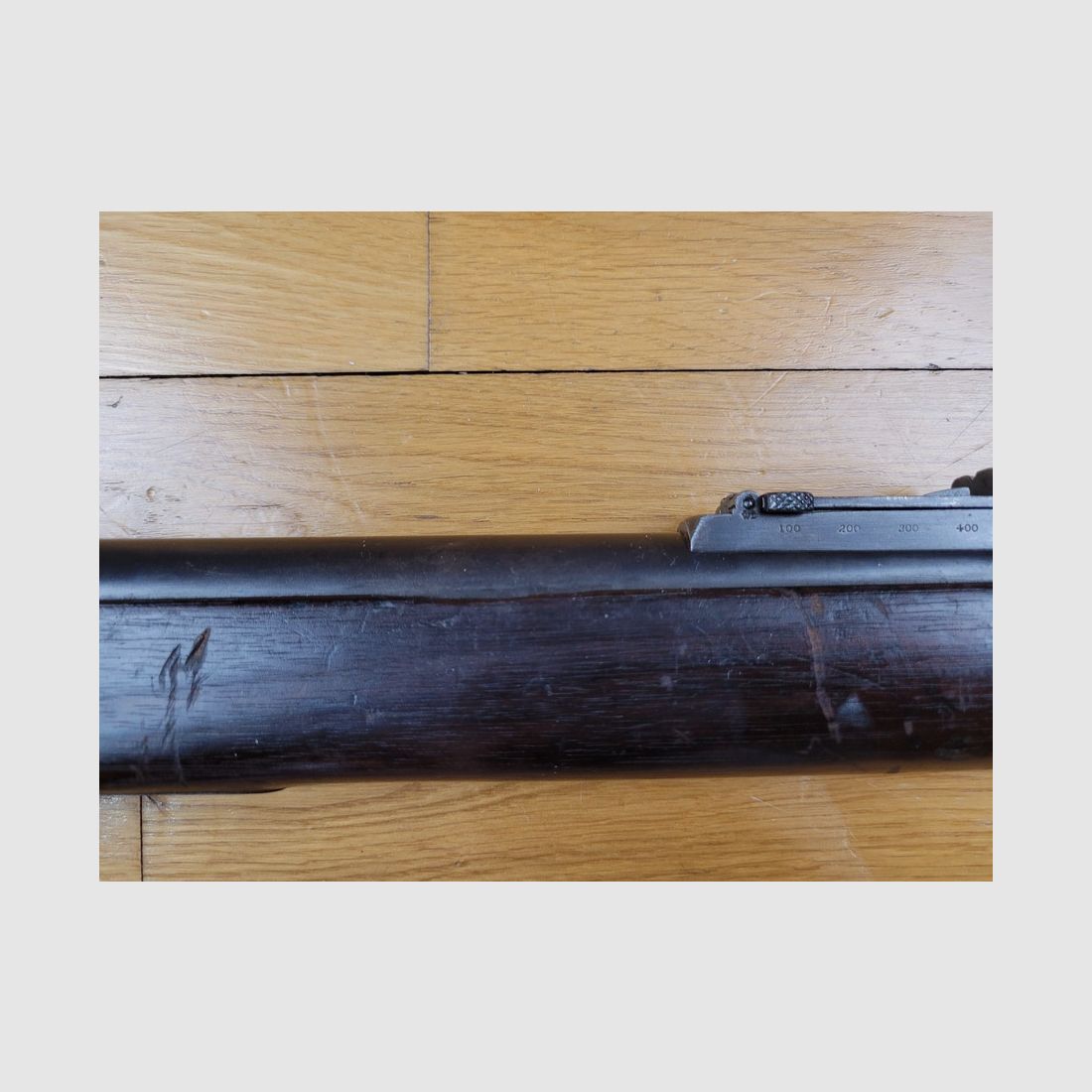
The mechanical condition is excellent. The bolt mechanism works perfectly. The firing action is crisp and clean. All springs are strong. No play. Excellent mechanical condition, and the barrel is also in excellent condition, with all its characteristic bordered grooves clearly defined right to the muzzle.
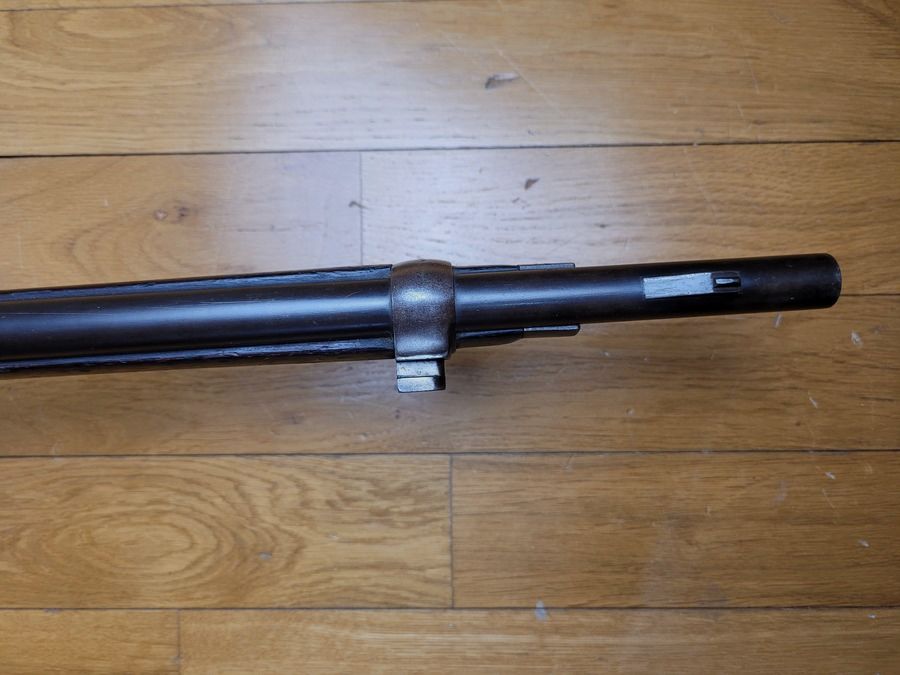
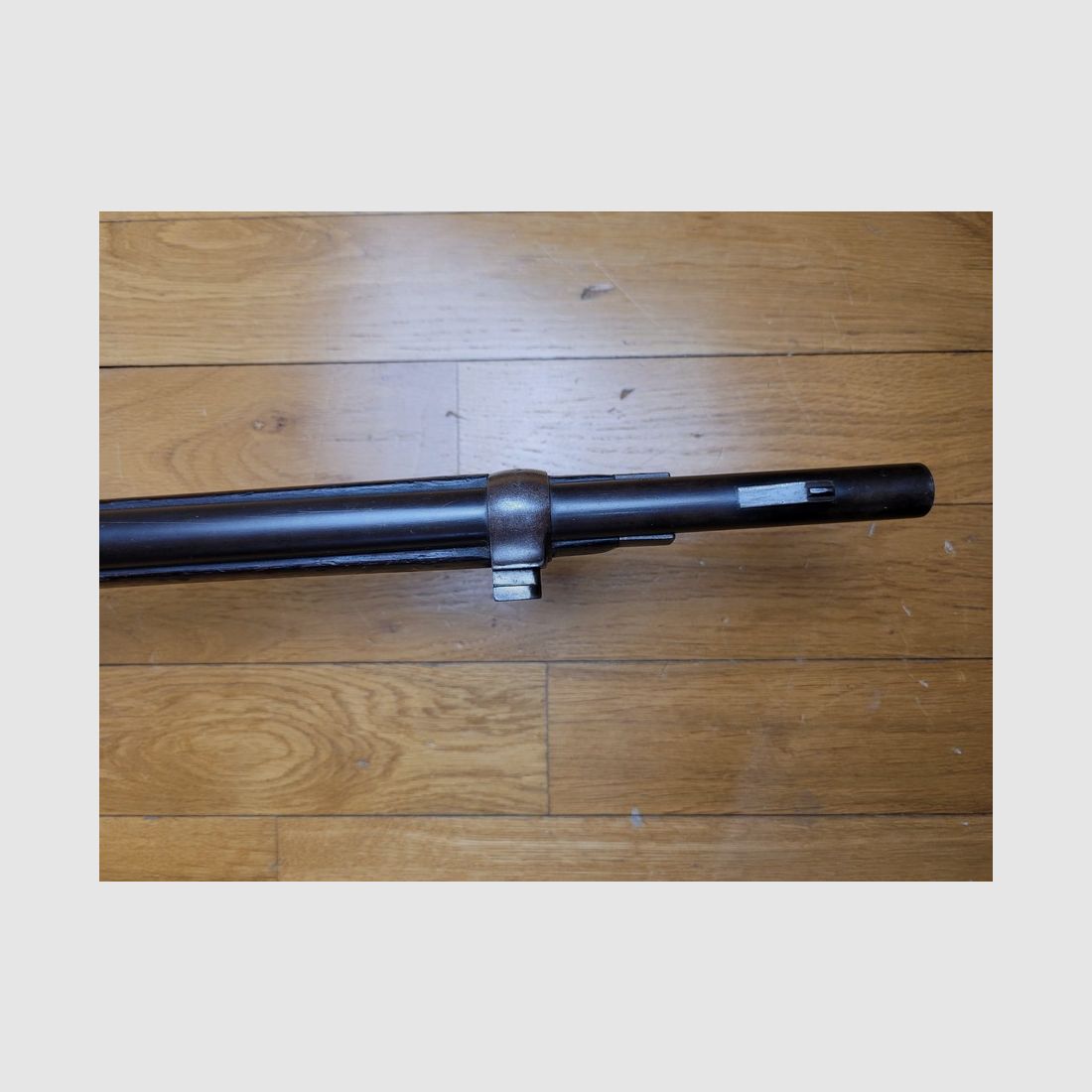
It has retained its bayonet lug.
Most of these firearms served in the Empire (India, Nepal, Afghanistan, Indonesia, China, South Africa, etc.) as reserve weapons after being withdrawn from frontline service in the British Army, and remained there—hence their foreign markings, which replaced the British ones, and their often pitiful condition. Our example escaped that fate. It’s a survivor…
It needs cleaning, but it really is very attractive. And uncommon.
The Martini-Henry is a legendary firearm in the history of weaponry, both for its mechanism and its destiny. It served during the two Anglo-Afghan Wars, the Anglo-Zulu War and the Mahdist revolt in Sudan; it supported Gordon in besieged Khartoum, put down revolts in China, Burma and India, and was still in service during both Boer Wars until 1901. It is the firearm mentioned most often in Kipling’s stories and the one used in “The Man Who Would Be King” with Sean Connery and Michael Caine…
It is a whole chapter in the history of Great Britain and its Empire.
And the good old “Martini” is still going strong: believe it or not, in 2011, US Marines found some…
three in a Taliban hideout in Marjah, in the south of the country… “Old soldiers never die!” as the Brits say!
Very few made it back from the Empire in good condition, and the firearm has become quite uncommon. Ours is also in excellent overall condition for a firearm that saw long service overseas.
It will make a beautiful addition that’s hard to find for a collector of European military firearms; a firearm as legendary as the Chassepot or the Lebel is here. A very fine piece.
Category D firearm under the CSI: sale restricted to adults; valid ID, national ID card or passport required.
Reminder: All collectible, hunting, and shooting firearms are used and sold as-is, without warranty.
All antique firearms sold as category C or D, “Collection” or “Cowboy shooting,” are collectible firearms that have not been proof-tested for shooting or tested at a range. They have been visually inspected for their overall condition, but none has been used for shooting, so they are sold as untested. Anyone wishing to use a firearm for shooting must first contact the National Proof House of Saint-Étienne, the only body authorized to issue proof certificates before use for shooting. (Show description in original language)
Très bon et peu courant fusil britannique Martiny-Henry dans son bon calibre .45/.577 (11,5mm) d’origine. l’arme est sortie de l’Arsenal d’Enfield en 1887 et réformée en… 1908. Arme emblématique, pour ne pas dire mythique, de la période la plus glorieuse de l’Empire britannique en son ère victorienne.
Cette arme fonctionne autour d’un bloc pivotant conçu par le Suisse Friedrich Von Martini Elle est proche en apparence de celle du fusil Peabody américain mais Martini a eu l’idée de lier l’armement du percuteur interne au mouvement du levier de sous-garde alors que sur le Peabody le soldat devait en plus armer le chien après avoir rechargé et avant de tirer.
Ce mécanisme simple, novateur et fiable s’alliait à un excellent canon de calibre 45, à sept rayures doubles ou à bordure, conçu par l’ingénieur écossais Henry et particulièrement bien adapté à la poudre noire
Résultat ? Une cadence de tir de 12 coups minutes très précis, redoutable à 400 m et de portée maximale à 1700, dont se souviennent encore zoulous et autres madhistes soudanais d’Ondourman. Hollywood a fait quelques bons films…
Notre exemplaire de 1887 et bien représentatif de cette période – il est d’ailleurs marqué de la Couronne Britannique avec le monogramme « V . R » de la reine Victoria pour « Victoria Regina ». Il est en très bon état « + »; surtout si l’on pense à ce qu’il a du voir en 135 ans….
Bois : TBE avec traces de manipulation et juste un tout petit éclat peu gênant en arrière de culasse à peine visible sur les photos et que je signale pour être complet – bon marquages anglais et un marquage népalais bien visibles – reste de macaron illisible – Numéro et tampon de réforme britannique de 1908 bien lisible sur la crosse. Globalement très beau. Bien meilleurs que 95% que ceux que j’ai vu en vente ces dernières années.
Parties métalliques en TTBE avec 85/90% de son bon bronzage d’origine – tous les poinçons sont beaux, nets et bien lisibles – Aucune piqure / Aucune oxydation (très rare sur ce modèle très colonial ayant trainé sous tous les climats) – surtout les poinçons anglais sont bien homogènes entre les garnitures. Les vis sont en très bon état. L’arme n’a pas été bricolée. Il est bien marqué du modèle « MK IV.1. sur le boitier et tout est bien lisible. La baguette d’origine est bien présente.
Il a conservé tout ses marquages britanniques bois et métal. Aucun n’a été gratté pour être effacé comme c’est souvent le cas.
L’état mécanique est excellent – le mécanisme de culasse fonctionne parfaitement – la percussion est franche et nette – tous les ressorts sont fermes – Aucun jeu. Excellent état mécanique comme le canon en excellent état aussi qui possède toutes ses rayures à bordures typique de cette arme bien marquées jusqu’au bout du canon.
Il a conservé son tenon de baïonnette.
La plupart de ces armes ont servi dans l’Empire (Inde, Népal, Afghanistan, Indonésie, Chine, Afrique du Sud ….) en arme de réserve après son dé commissionnement de la première ligne dans l’armée britannique et ils y sont restés – d’où leurs marquages étrangers qui ont remplacé les britanniques et leur état souvent pitoyable. Notre exemplaire en a réchappé. C’est un miraculé…
Il est à nettoyer mais il est réellement très beau. Et c’est peu courant.
Le Martini Henry est une arme mythique de l’Histoire de l’armement par son mécanisme et sa destinée. Elle a servi durant les deux guerres anglo-afghanes, la guerre anglo-zoulou, la révolte des Madhistes au Soudan, elle a soutenue Gordon dans Khartoum assiégée, elle a maté les révoltes en Chine, en Birmanie et en Inde et elle a encore servi lors des deux guerres des Boers jusque 1901. C’est l’arme la plus citée dans les récits de Kipling et c’est celle de « l’Homme qui voulait être Roi » avec Sean Connery et Michael Caine…
C’est un pan complet de l’Histoire de la Grande-Bretagne et de son Empire.
Et il bouge encore ce bon vieux « Martini » : croyez le ou pas mais, en 2011, des marines américains en ont trouvés encore trois dans une cache talibane à Marjah dans le sud du pays… « Old soldiers never die ! » comme disent les british !
Très peu sont revenus en bon état de l’Empire et l’arme est devenue somme toute assez peu courante. La notre est en plus dans un excellent état général pour une arme qui a servi longtemps outre-mer.
Elle sera une très belle addition pas facile à trouver pour un collectionneur d’armes réglementaires européennes; une arme aussi mythique que le Chassepot ou le Lebel chez nous. Très bonne pièce.
Arme de catégorie D au CSI : vente réservée aux majeurs, pièce d’identité, CNI ou passeport, en cours de validité obligatoire
Rappel : Toutes les armes de collection, de chasse, et de tir sont d’occasion et sont vendues dans l’état, sans garantie.
Toutes les armes historiques de fabrication ancienne vendues en tant que C ou D, “Collection” ou “Cow-boy shooting” , sont des armes de collection non éprouvées pour le tir et non testées en stand. Elles ont été inspectées visuellement relativement à leur état général mais aucune n’a été utilisée au tir et elle sont donc vendues comme non testées. L’acquéreur désirant utiliser une arme pour le tir devra impérativement se rapprocher préalablement du banc National d’Épreuve de Saint Étienne, seule entité habilitée à délivrer des certifications d’épreuves préalable à un usage de tir.