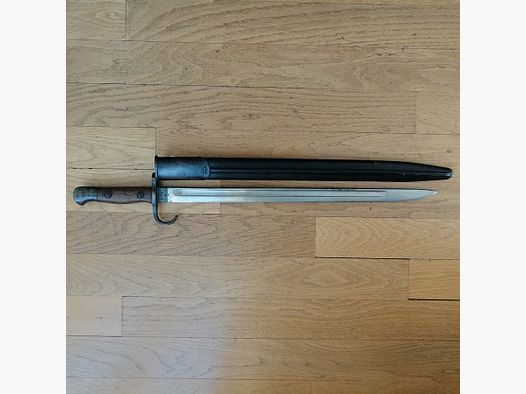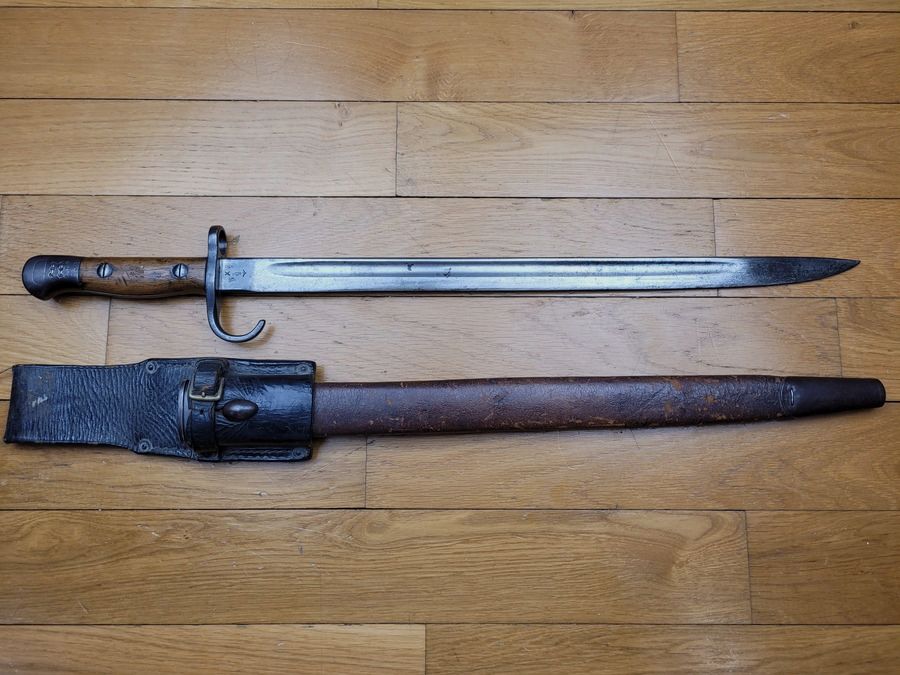

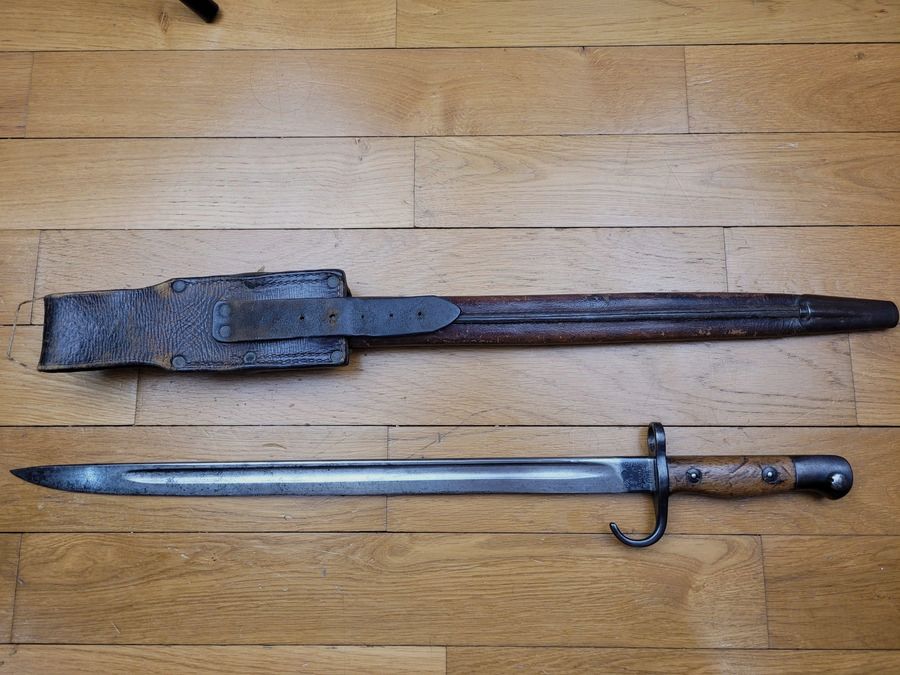
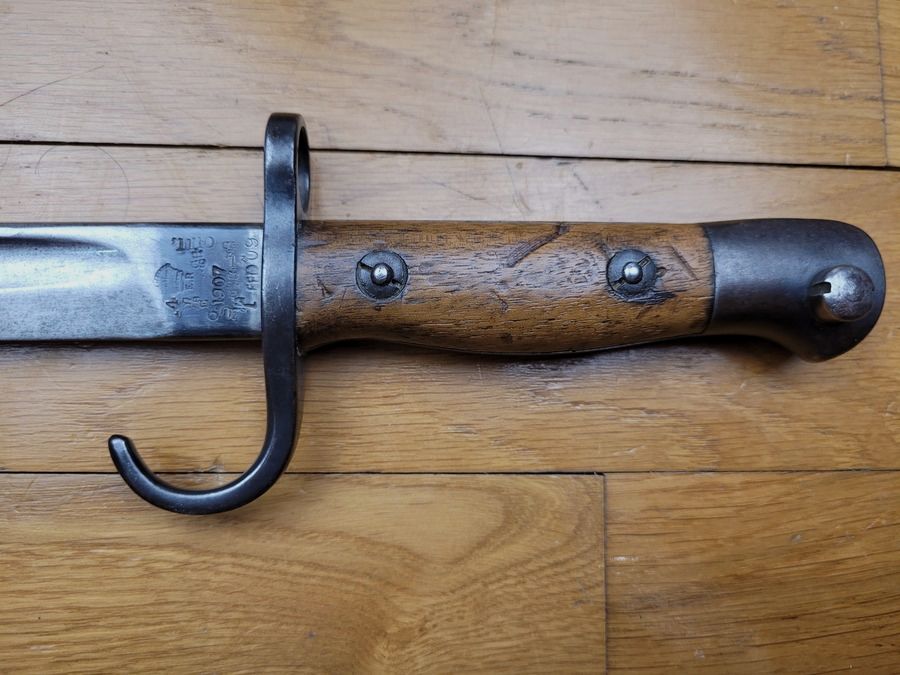




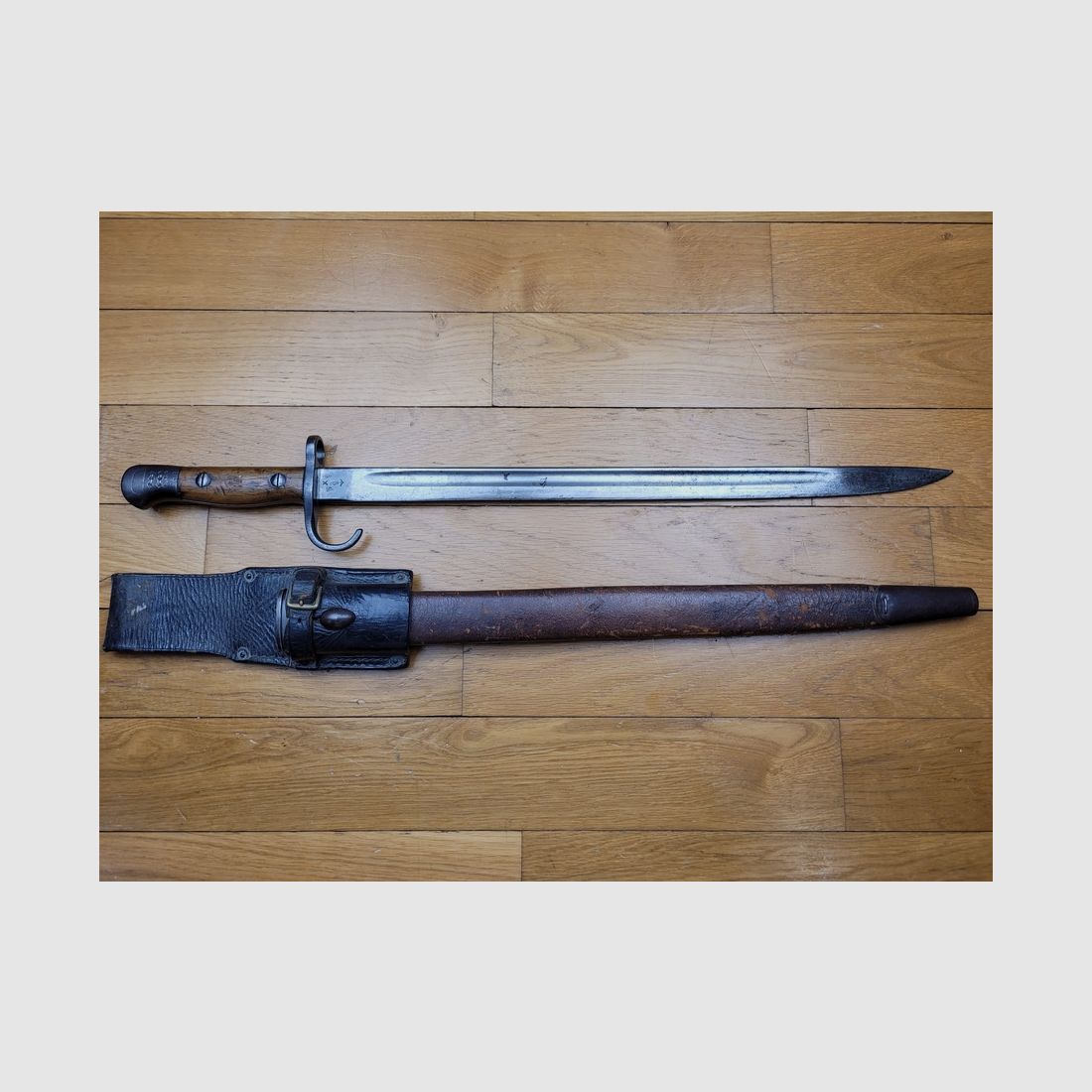



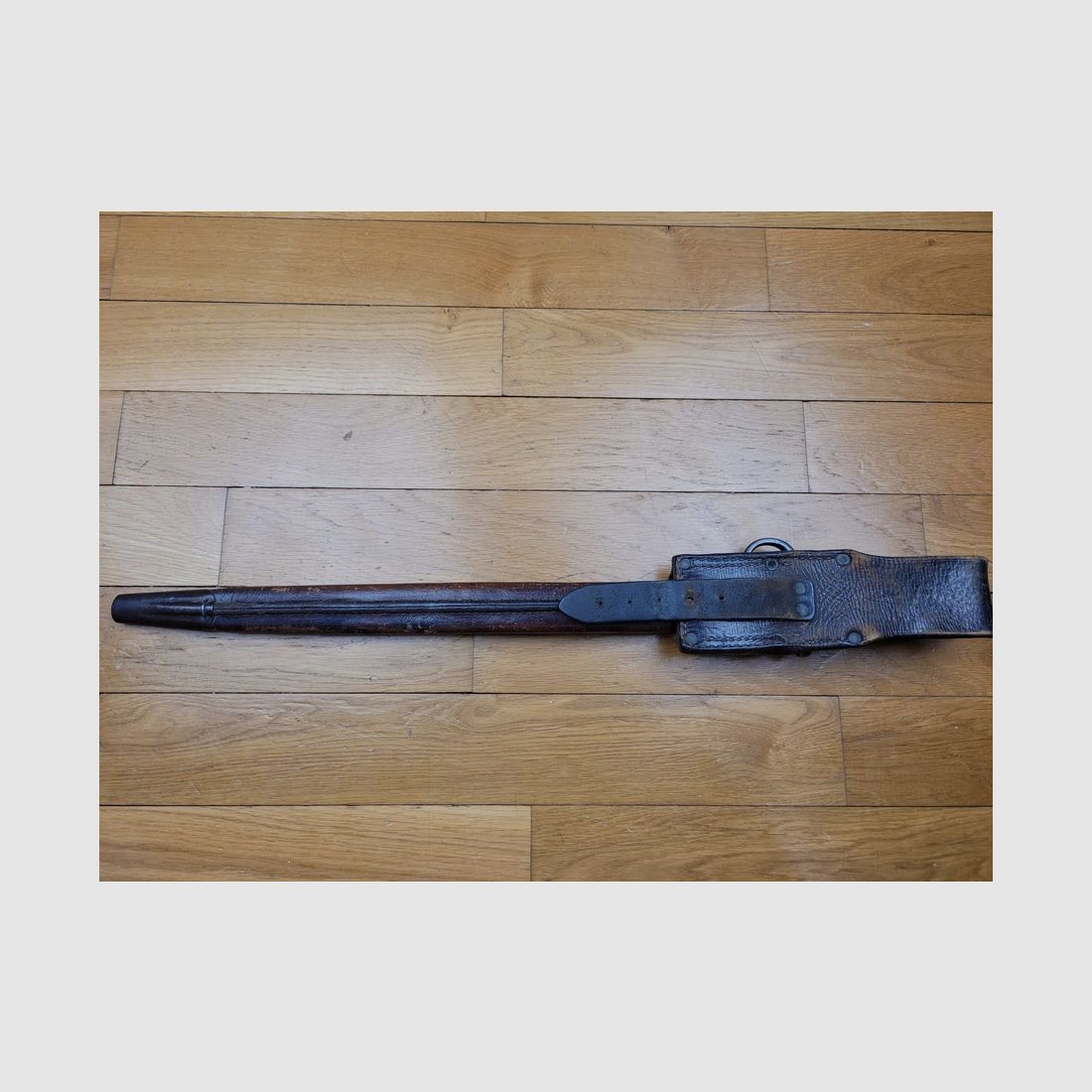
Very rare British bayonet 1907 with quillon – scabbard 2nd type – Rifle Brigade – carry scabbard – TBE
≈ $989
Price at the dealer: 900 €. Converted at the ECB rate as of November 20, 2026.
No permit required (18+)
75002 Paris, France
5
ID: 10339288
This item is currently unavailable.
Purchase from outside the EU: The firearm goes through an importer in your country, the dealer handles the export.
How buying from Europe works
Shop safely with Gunfinder
Our AI-powered seller identity verification makes Gunfinder the safest marketplace online.
Learn more
Details
- Original language
- French
- Category
- Condition
- New
- Location
- 🇫🇷 75002 Paris, France
- Availability
- Out of stock
Freshness
This listing is based on a mirrored offer, where the listing data was synced to us from a shop, dealer, or external marketplace. Please note that temporary price discrepancies may occur due to possible delays in data transmission.
- Source
- Flingus Maximus
- Last checked with the dealer
- about 23 hours ago
Description
Note:
The item is located abroad. Please note that delivery conditions, shipping times, and/or the purchase process may differ.
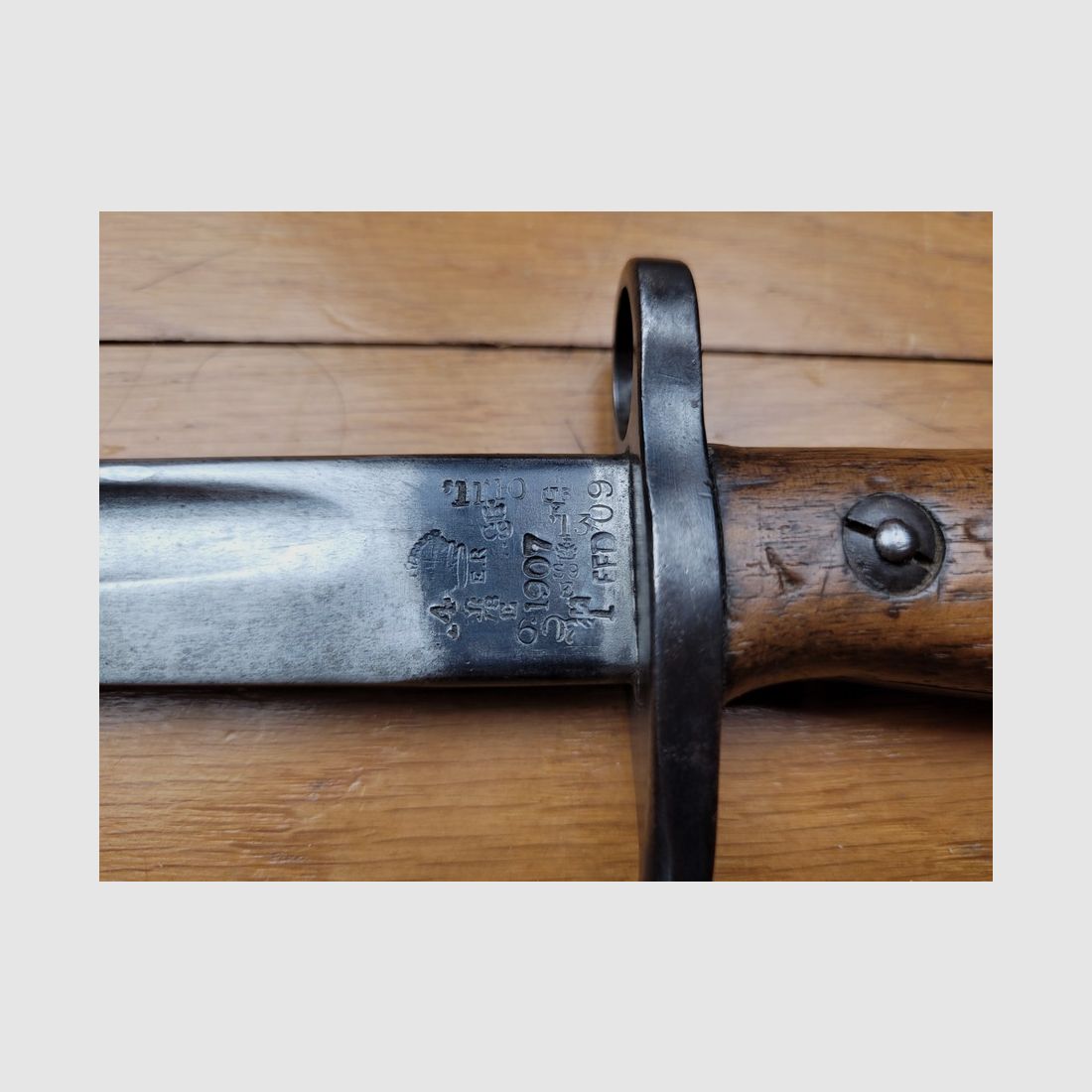
The Enfield Arsenal produced only 175,000 quillon bayonets, 99% of which had their quillons removed after 1913 (+ Chapmann, which produced only 14,250!). This explains their rarity compared with the million or so 1907 bayonets produced without quillons during the two world wars. Remember that before 1914, the British Army was a very small professional force of 240,000 men, including officers and support services (who did not carry bayonets), and there was no conscription, so there were very few weapons…
Source: Skennerton, British & Commonwealth Bayonets, pages 186 and 187.
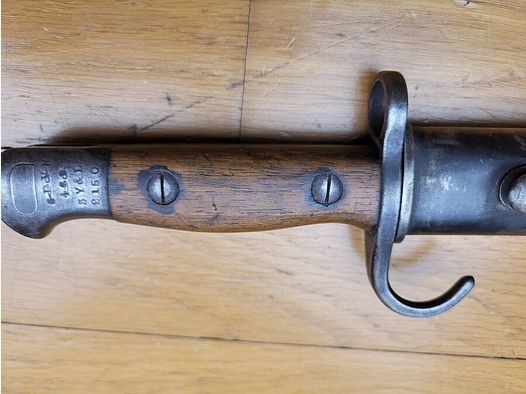
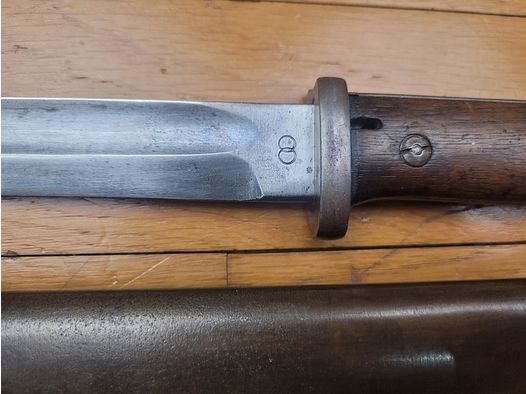
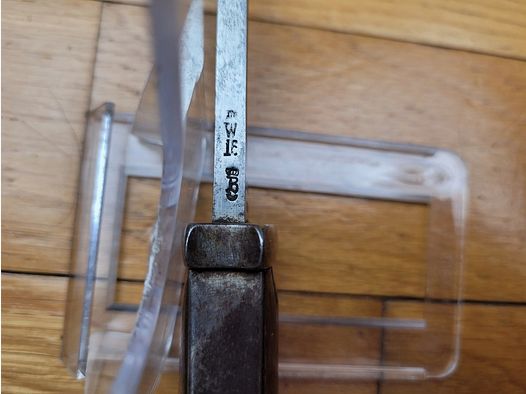
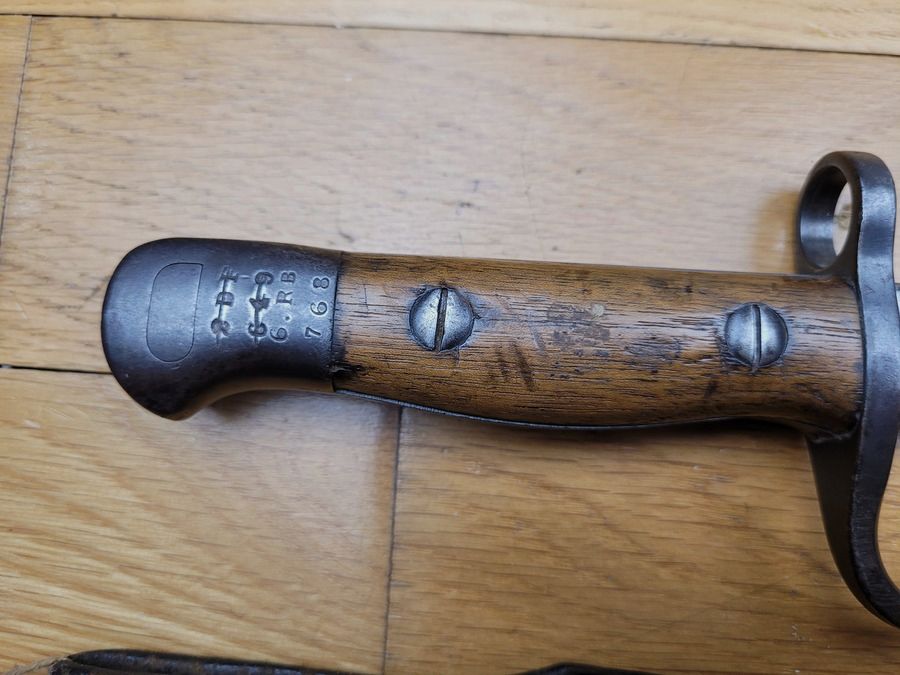
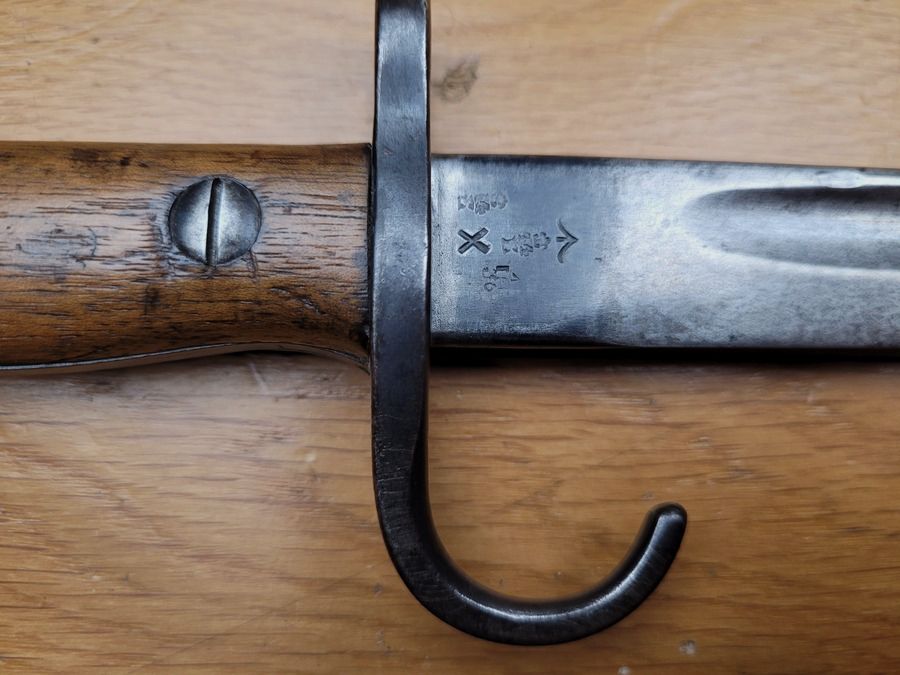
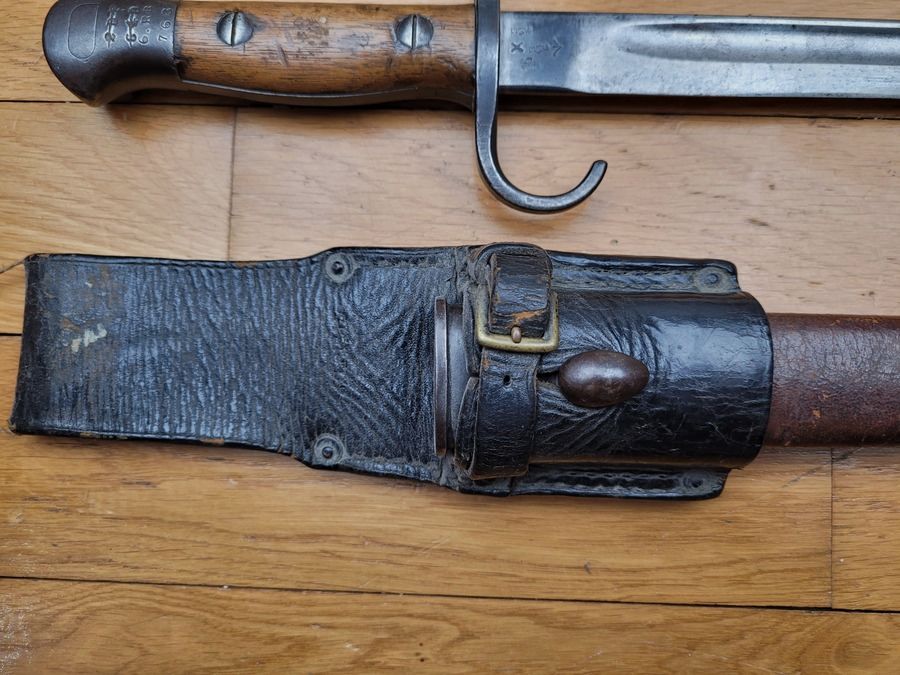
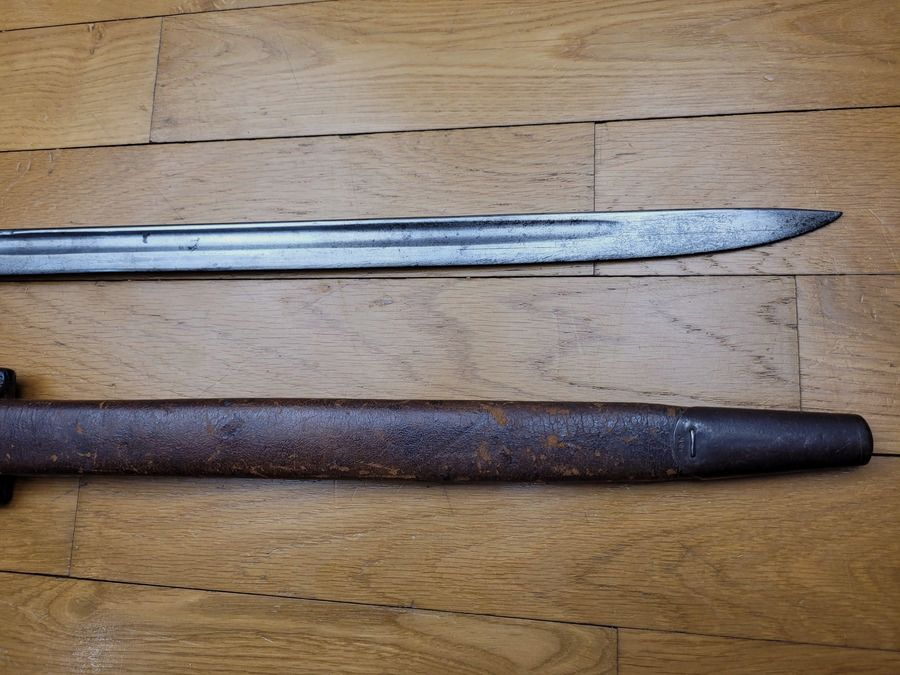
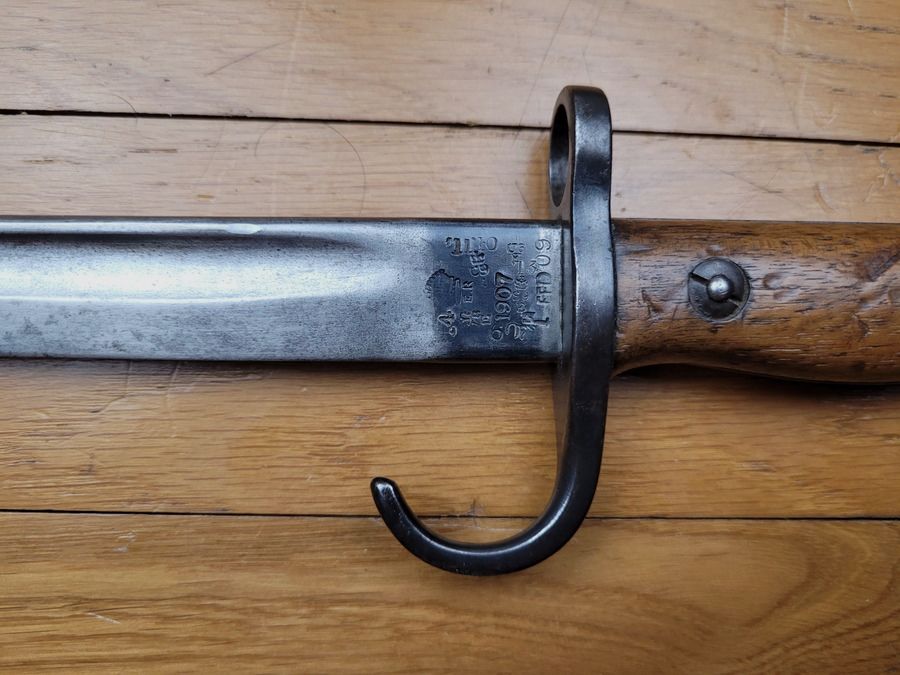
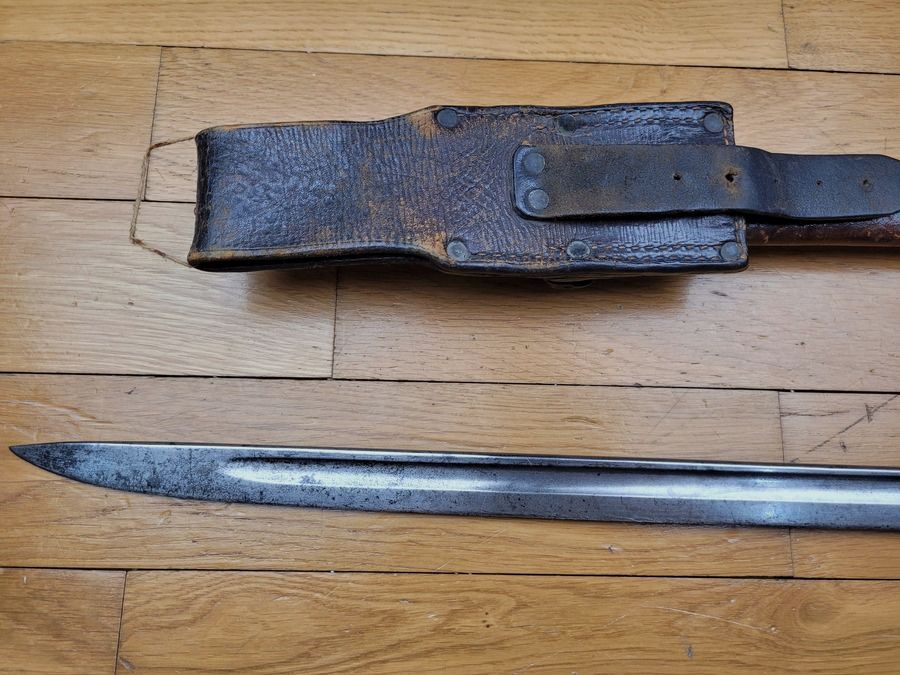
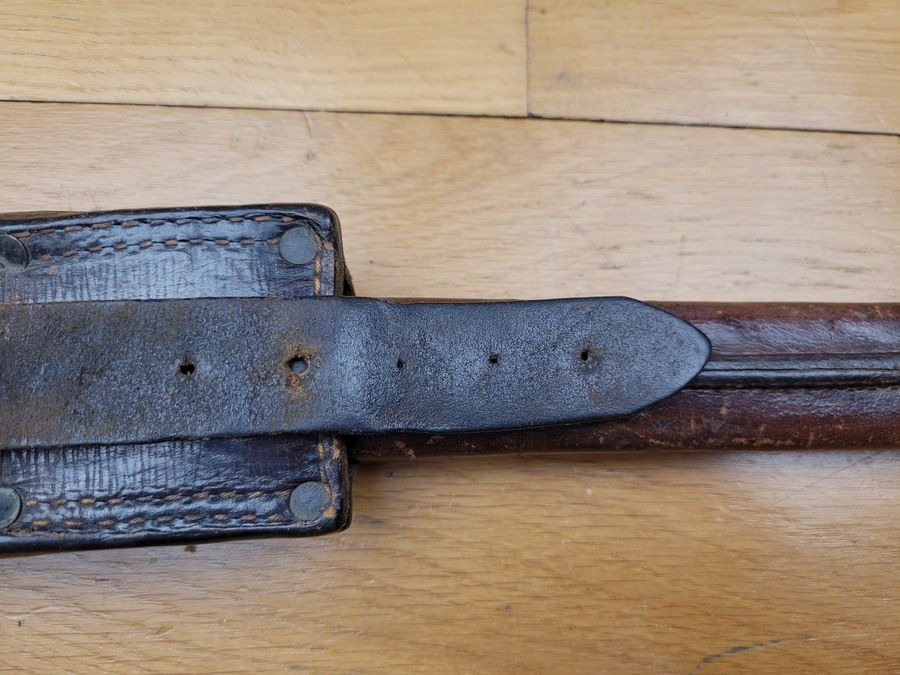
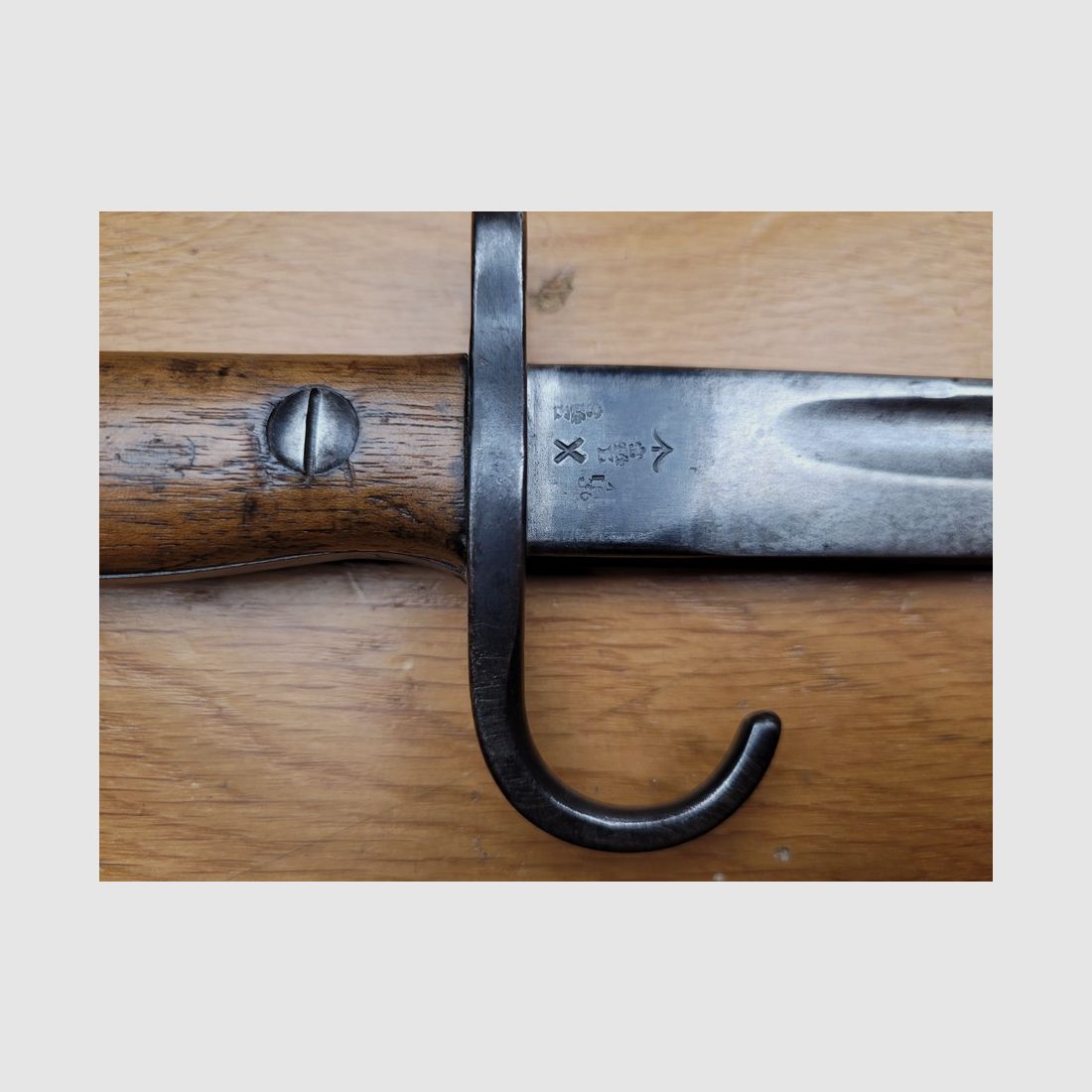
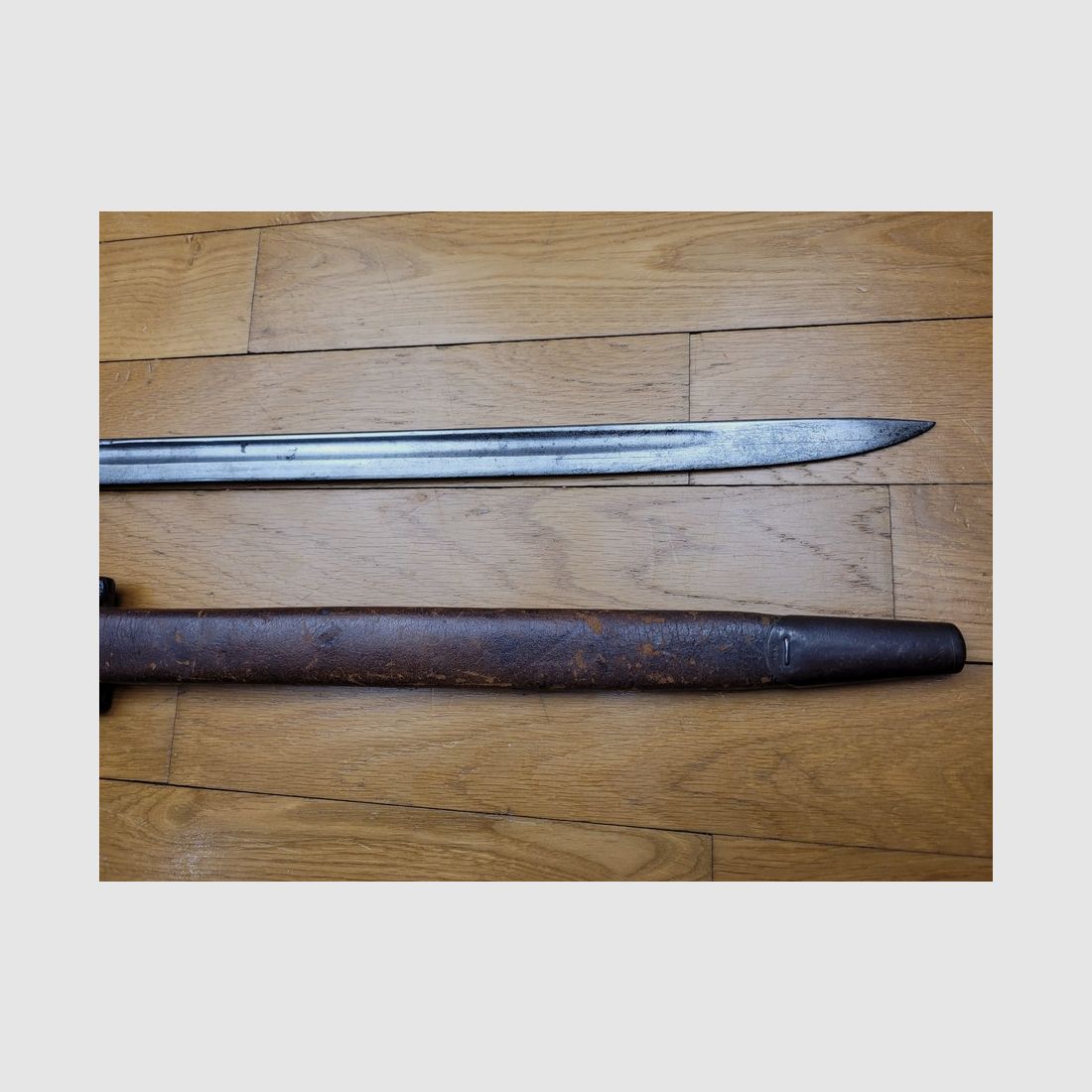
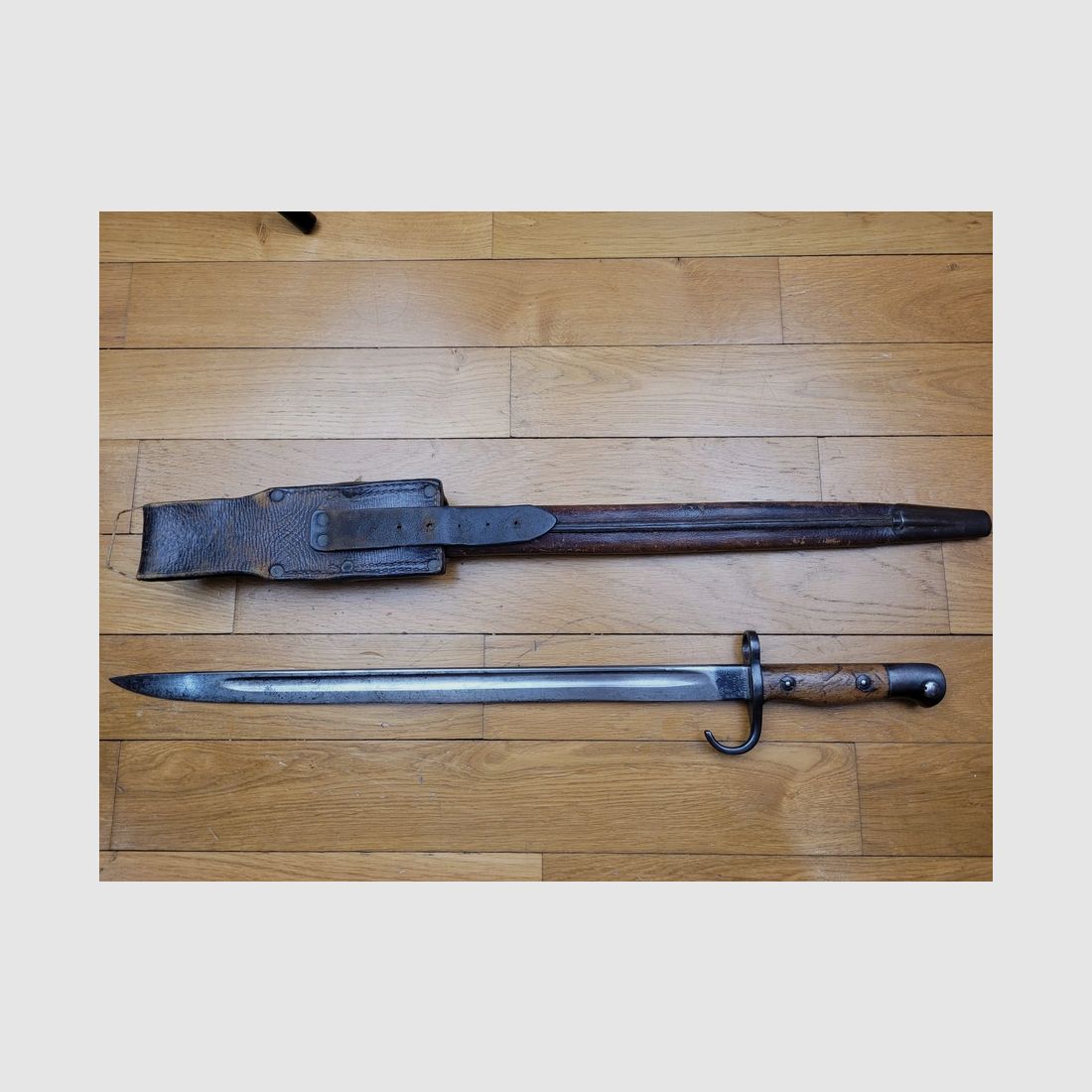
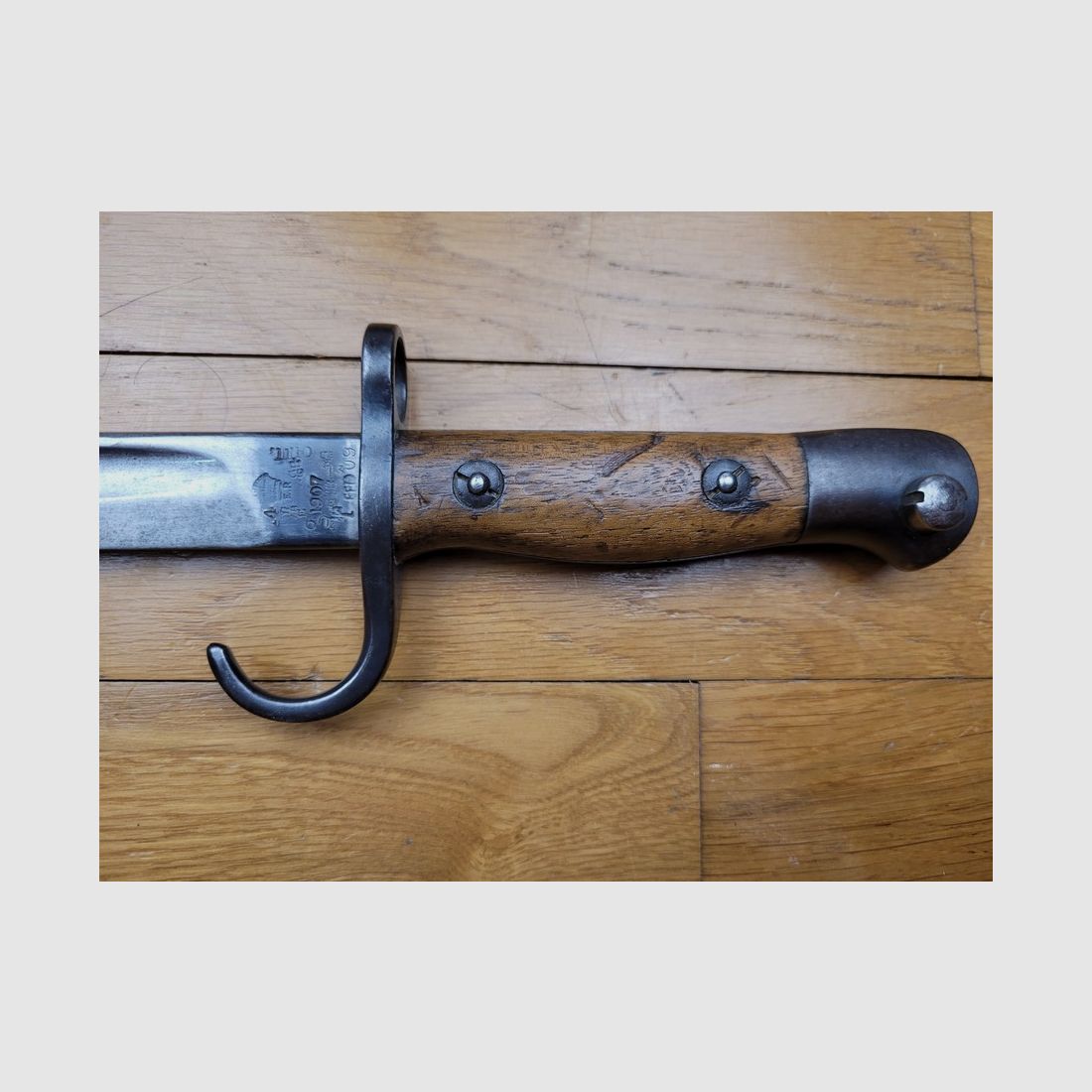
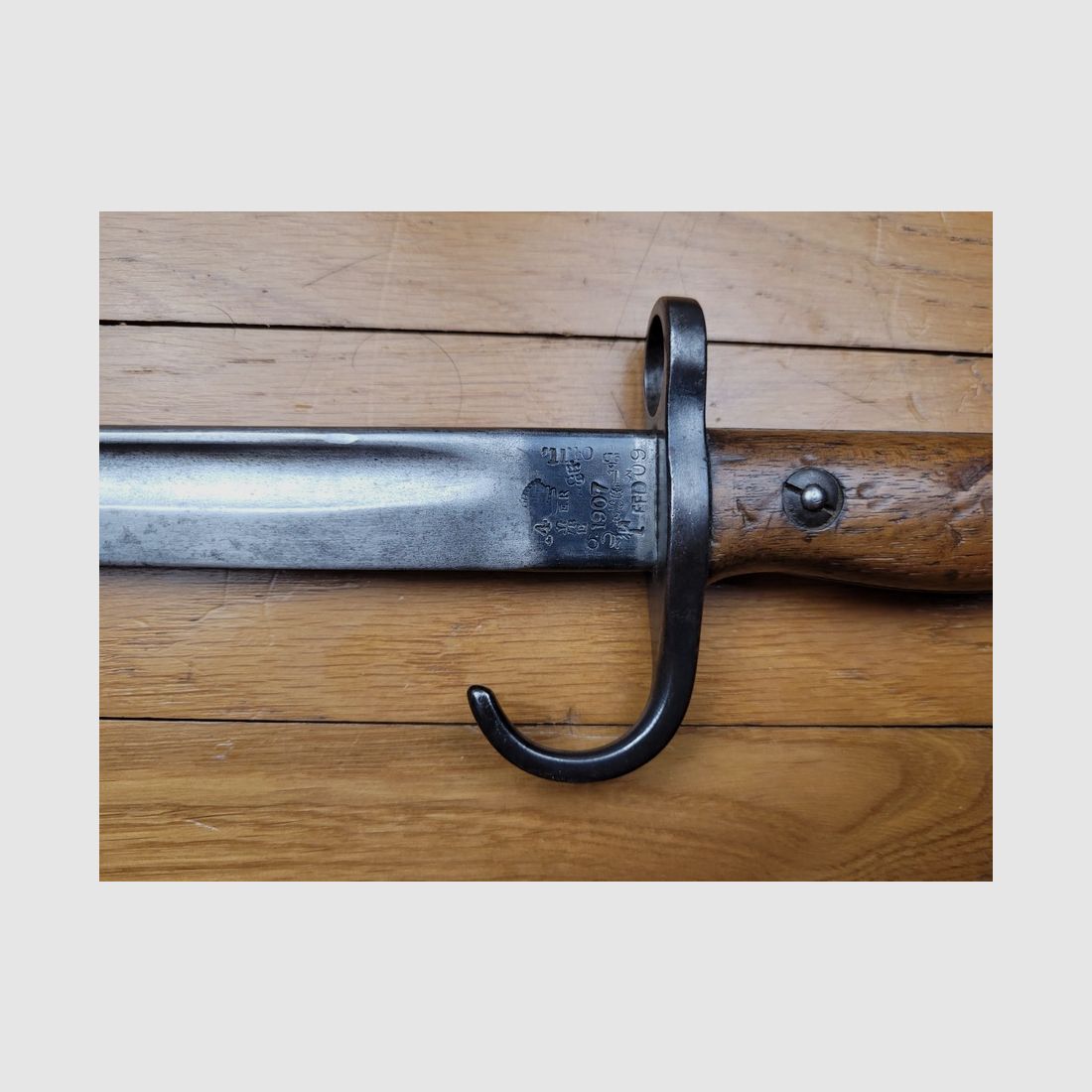
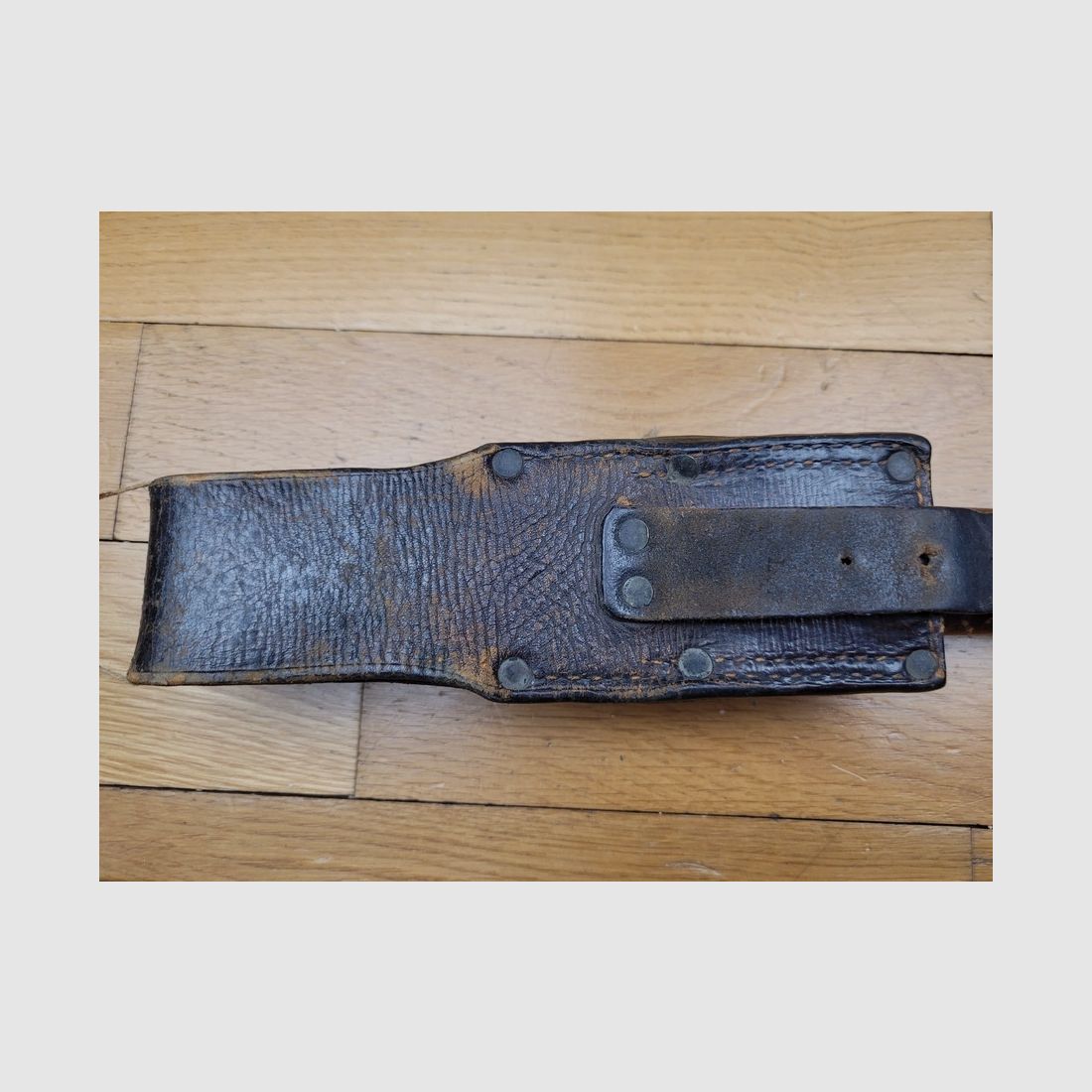
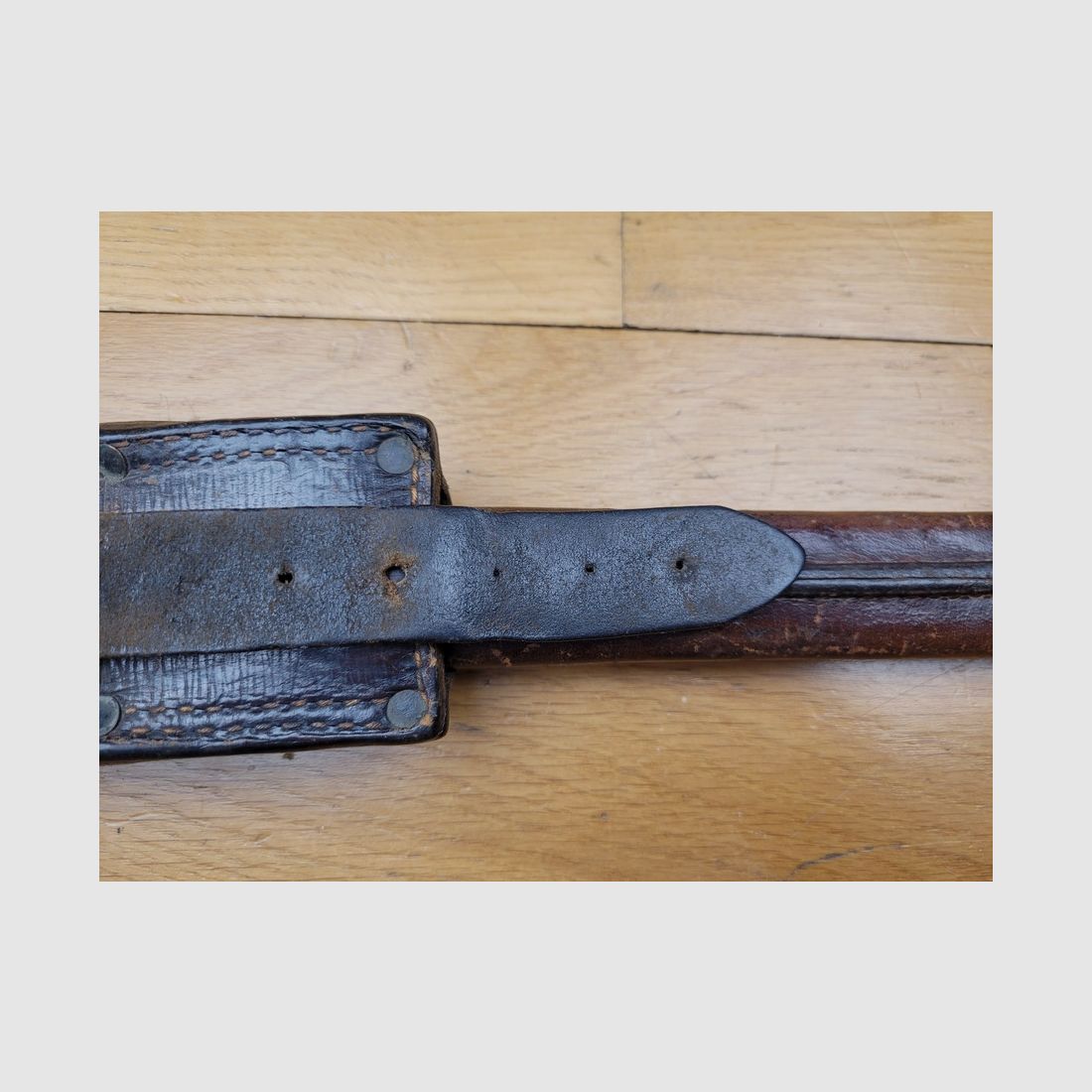
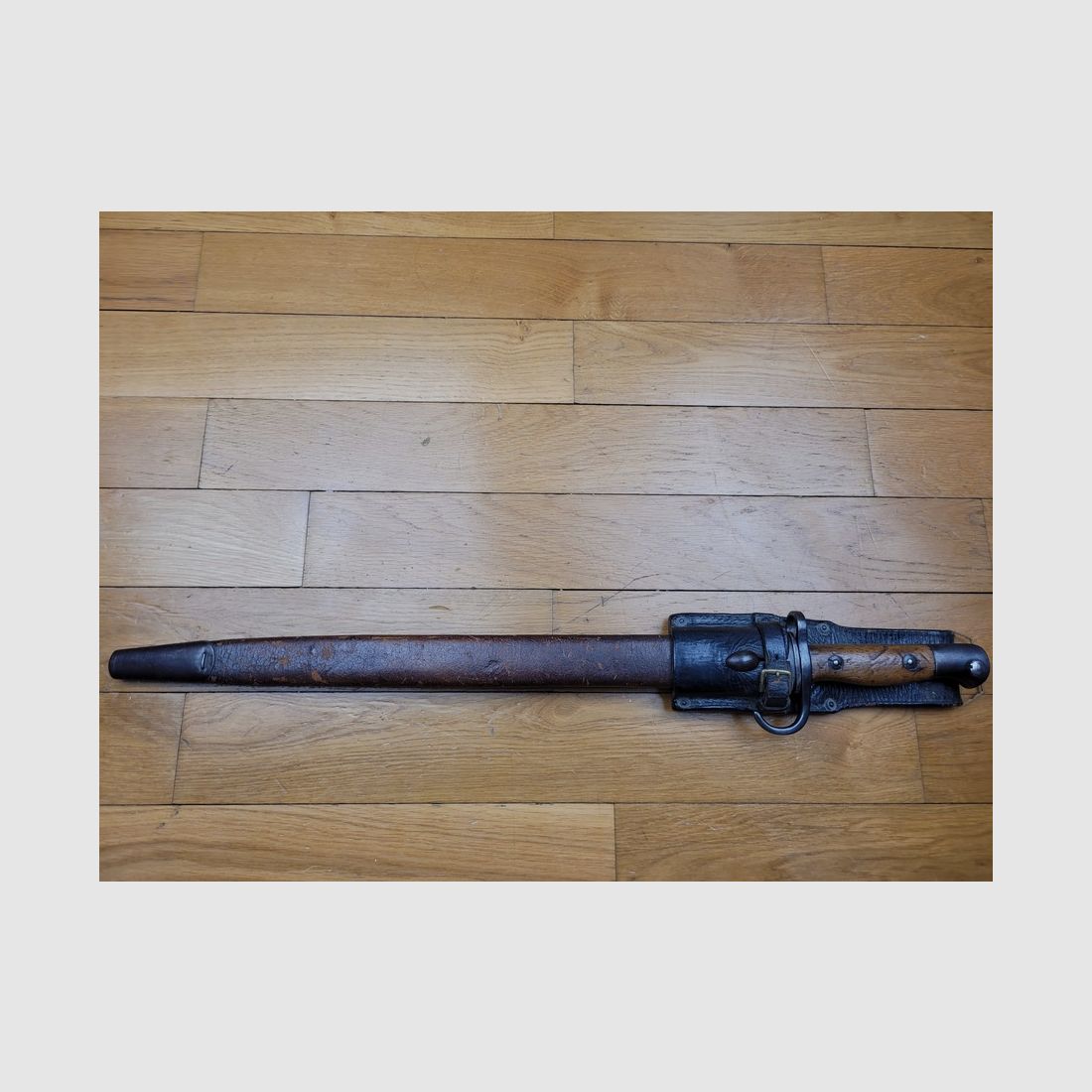
The piece is in exceptional condition – all stamps and markings are crisp – the blade is almost perfect, at its correct length and not sharpened – a little patina at the tip, but guaranteed free of pitting – the wood is in the same condition. A few signs of handling, but original and in very good condition. The scabbard is also in excellent condition, including the stitching. Mechanism is impeccable. A very fine piece, too, thanks to its exceptional state of preservation.
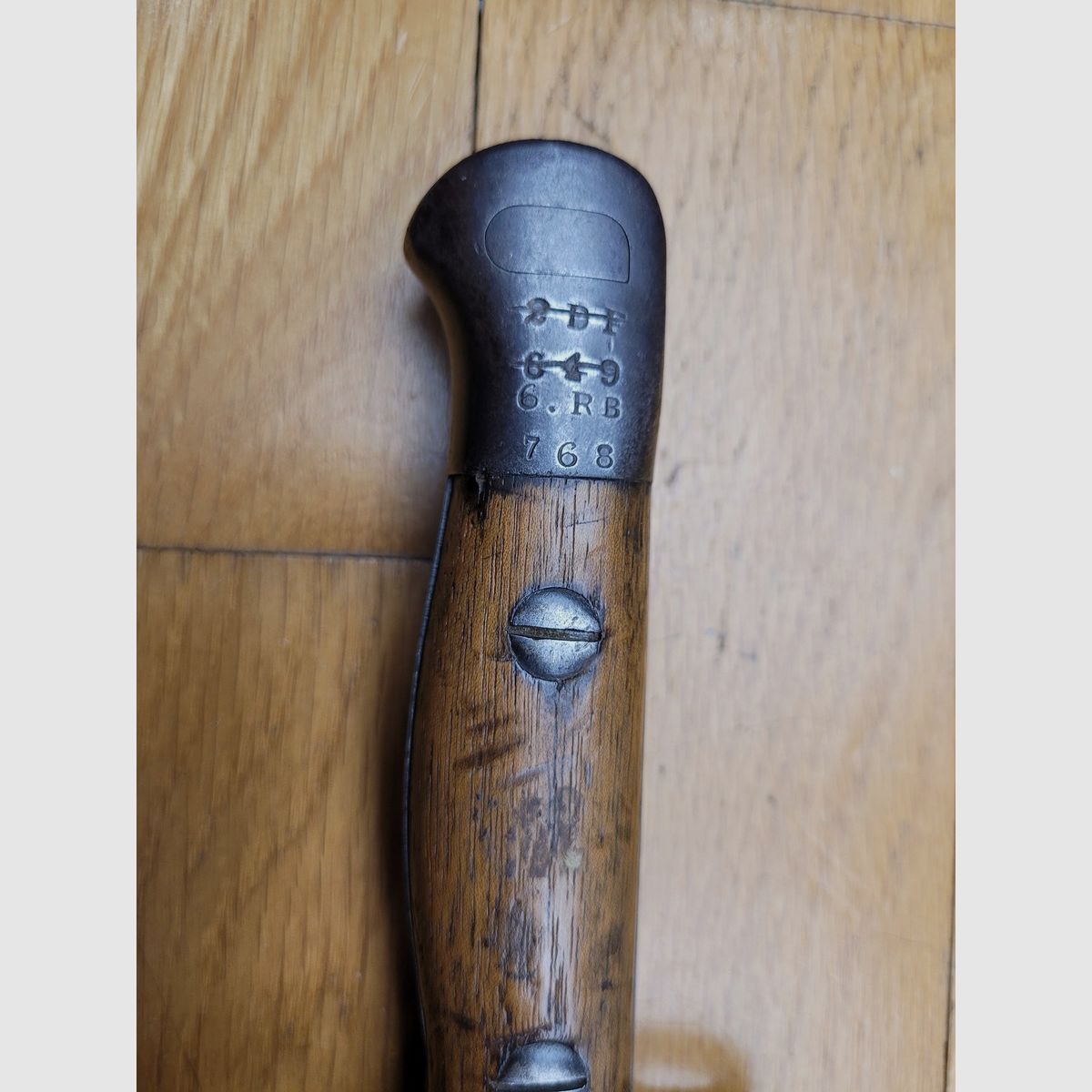
The weapon left the Enfield Arsenal in September 1909 and was inspected again in November 1910, probably when it was transferred between units. It bears all its inspection marks and no extraneous marks indicating reuse during the Second World War or abroad. 100% Johnny English!
The pommel bears a crossed-out regimental assignment, “2.D.F .649”, meaning the 2nd Battalion, Royal Dublin Fusiliers. Then, probably around November 1910, it was reassigned to the 6th Battalion, The Rifle Brigade (The Prince Consort’s Own), with the marking 6.R.B.768 (these units were in India and South Africa before 1914). These multiple assignments far from Britain explain why a few rare bayonets retained their quillons.
These units were mobilized in August 1914 and sent straight to the French front. They were part of what the British proudly call the “Old Contemptibles” because they were old British regiments in a small professional army. Wilhelm II, Emperor of Germany, had dared to describe the small professional British Army as “contemptible” (negligible), and the British, contemptible as they may have seemed to him, had nevertheless inflicted heavy losses on his army at Mons and elsewhere. They adopted the nickname “Old Contemptibles” as a proud defiance of the Kaiser’s arrogance…
The scabbard frog is leather (not webbing) and is the wartime 1915 pattern.
A legendary British bayonet – one of the rarest from the First World War. There are photos of British soldiers using these quillon bayonets in the Dardanelles in 1915 and in Belgium in the summer of 1914.
A must-have for any serious collector of rare or British bayonets…
Weapon not classified under the CSI, but sale to minors is prohibited: CNI required.
PS: We have the same model in an even rarer version, made by Chapman and with its extremely rare first-type scabbard with an internal terminal chape, ON THIS PAGE
**********************************************************************************************************************************************************************************************
Let’s say it again! Flingus Maximus gun shop in Paris and throughout France is also here to help with your private firearm transfer paperwork, buying firearm and militaria collections, firearm valuations, and your questions
firearms in estates and inheritance. Contact your preferred gunsmith via our contact form or at [email protected] (Show description in original language)
Très rare baïonnette du modèle 1907 du modèle à quillon pour fusil Lee Enfield Mk I et III (pas III*) – venue dans son fourreau d’origine fourreau MKII du second type. Cette baïonnette n’a donc exceptionnellement pas subi la modification d’octobre 1913 de suppression du quillon qui a affecté la totalité de la production de ces premières 1907 à quelques rares exceptions près. Une des rares rescapées donc…
L’Arsenal de Enfield n’a sorti 175.000 armes à quillon dont 99 % ont été amputée de leur quillon après 1913 (+ Chapmann qui en a sorti seulement 14.250 !). Ce qui explique leur rareté comparé au million et quelques de baïonnettes 1907 sorties directement sans quillon pendant les deux guerres mondiales. Rappelons qu’avant 1914, l’armée britannique est une toute petite armée de professionnels de 240.000 hommes avec les officiers et les services (sans baïonnette) et qui ne connait pas le service militaire donc très peu d’armes …
Source: Skennerton British & Commonwealth Bayonets pages 186 et 187.
La pièce est dans un état exceptionnel – tous les poinçons et marquages sont nets – une lame quasi parfaite dans sa bonne longueur et non épointée – un peu tabac au bout de lame mais garantie aucune piqûre – bois idem. Qq traces de manipulation mais d’origine et TBE. Fourreau en état excellent aussi coutures comprises. Mécanisme impeccable. Une très belle pièce aussi par son état de conservation exceptionnel.
L’arme est sortie de l’arsenal de Enfield en septembre 1909, a été revue en novembre 1910 probablement à l’occasion de son transfert d’unité, porte tous ses poinçons de test et ne porte aucun poinçon parasite de réutilisation pendant la seconde guerre mondiale ou à l’étranger. 100% johnny English !
L’arme porte au pommeau une affectation régimentaire biffée au « 2.D.F .649 » soir le 2ème Bataillon Royal Dublin Fusiliers. Puis probablement vers novembre 1910, elle a été réaffectée au 6th Battalion The Rifle Brigade (The Prince Consort’s Own) avec le marquage 6.R.B.768 (ces unités étaient en en Inde et en Afrique du Sud avant 1914). Ce sont ces affectations multiples loin de la métropole qui expliquent que quelques rares baïonnettes aient conservé leur quillon.
Ces unités ont été mobilisées en août 1914 et expédiées illico sur le front de France. Elles font partie de ce que les anglais appellent avec fierté les « Old Contemptibles » ( les vieux « méprisables ») car vieux régiments anglais d’une armée professionnelle réduite, Guillaume II, Empereur d’Allemagne s’était permis de décrire la petite armée anglaise professionnelle comme « méprisable/négligeable » (Contemptibles)et les anglais, tout méprisables qu’ils fussent à ses yeux, avaient quand même infligé de lourdes pertes à son armée à lui à Mons et ailleurs. Et ils avaient adopté ce surnom de « Old Contemptibles » en signe de fierté et de défiance à l’arrogance du Kaiser…
Le porte-fourreau est en cuir (et pas en web) et il est du modèle 1915 de guerre.
Une baïonnette britannique mythique – une des plus rares pour la première guerre mondiale – il existe des photos de soldats britanniques avec ces baïonnettes à quillon en action dans les Dardanelles en 1915 ou en Belgique à l’été 14.
Un must indispensable pour tout collectionneur ambitieux de baïonnettes rares ou de baïonnettes britanniques..
Arme non classée au CSI mais interdite de vente aux mineurs : CNI obligatoire.
PS : Nous avons le même modèle dans une version encore bien plus rare puisque de la fabrication Chapman et avec son rarissime fourreau à bouterolle terminale interne du 1ièr type SUR LA PAGE ICI
**********************************************************************************************************************************************************************************************
Répétons le ! L’armurerie Flingus Maximus à Paris et partout en France est là aussi pour vos formalités armes entre particuliers, le rachat de collections armes et militaria, vos estimations d’armes, vos questions armes dans les successions et héritage. Contactez votre armurier préféré via notre formulaire de contact ou à [email protected]