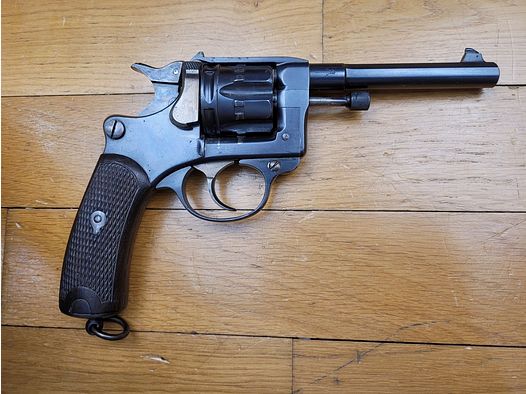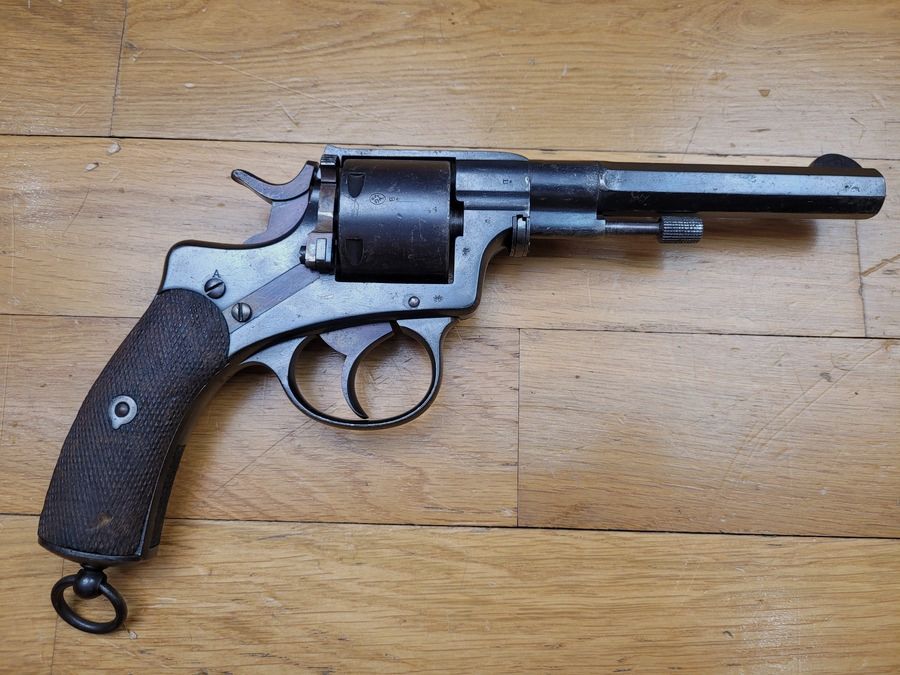















Rare and excellent Nagant Revolver Model 1893 – Uncommon caliber 44 Nagant / Henry – Army order from Brazil – Single serial number – Excellent condition
Price on Request
Purchase permit required
75002 Paris, France
6
ID: 10338957
This item is currently unavailable.
Purchase from outside the EU: The firearm goes through an importer in your country, the dealer handles the export.
How buying from Europe works
Shop safely with Gunfinder
Our AI-powered seller identity verification makes Gunfinder the safest marketplace online.
Learn more
Details
- Original language
- French
- Category
- Purchase eligibility
- Required
- Condition
- New
- Location
- 🇫🇷 75002 Paris, France
- Availability
- Out of stock
Freshness
This listing is based on a mirrored offer, where the listing data was synced to us from a shop, dealer, or external marketplace. Please note that temporary price discrepancies may occur due to possible delays in data transmission.
- Source
- Flingus Maximus
- Last checked with the dealer
- 1 day ago
Description
Note:
The item is located abroad. Please note that delivery conditions, shipping times, and/or the purchase process may differ.
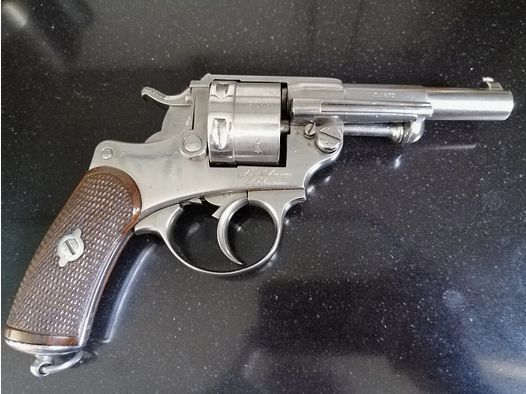
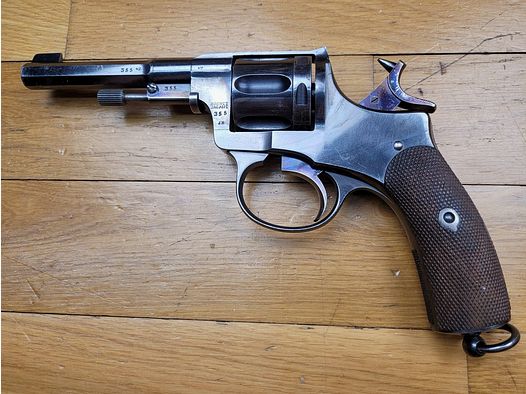
Probably one of the rarest, and certainly the least known, along with its little brother the Argentine Nagant: the Nagant Revolver model 1893 for Brazil.
To be honest, it’s the first time I’ve seen one.
And also the first time such a caliber on a Nagant. The gun chambers the “44 Nagant” (or 11.2 x 20R) according to their 1910 catalogue!
It’s actually the largest caliber you can find on a Nagant revolver. In fact, it’s a direct copy of the 44 Henry Centerfire and there’s a real explanation for that. We’ll see.
The history of this revolver is unusual in the history of service firearms:
In 1883, the Brazilian government was looking for a new handgun for its army. It informed its agent in Europe that it wanted to buy 3,000 Mauser Zig Zag model 1878 revolvers.
Very curiously, their agent didn’t order anything at all. Mauser, cursed in handguns, was unlucky with its Zig-Zag already rejected by the German army in favour of the Reichrevolver 1879 then 1883. Even military orders for which it had a positive reputation “a priori” eventually slipped away.
In this case, the buyer for the Brazilian army organised a series of tests and declared himself dissatisfied with the Zig-zag. Step by step, he tested other guns and the file dragged on to only resurface around 1890 with our Nagant 1893!
The manufacturing conditions of these special guns for Brazil were lost with the destruction of Nagant’s archives after 1931. All we know is that these guns from the Brazilian contract were all produced before the end of 1893 at Nagant and in Liège because all known examples, including ours, bear the famous “ELG” proof mark on the cylinder, on a star, in an oval and without crown, which characterises Liège productions before 1893.
This Nagant production at Nagant wasn’t so obvious: Swedish Nagants were 90% produced at Husqvarna in Sweden, all Argentine Nagants were made by Simson & Co in Suhl, Germany, etc…
What about the gun?
Massive, solid, made from excellent steels like all Nagant military productions, it’s actually a gun based on the frame of the 1878 revolver for the Belgian army but fitted with the mechanism of the 1878-86 double-action revolver intended for the Norwegian army (in 7.5 Nagant there) and which was nevertheless lengthened by a good centimetre. This makes it quite a large gun.
After some surprise in Brazil to see something very different from the Zig-zag arrive, the gun was finally adopted by the Brazilian Army after delivery in 1893 and, even if its .44 caliber and black powder were no longer really state-of-the-art at the time. The firm’s 1910 catalogue assigns them to the Cavalry and Navy of this beautiful country.
How to distinguish a Nagant 93 for the Army from those for the Brazilian Navy? The Brazilian Navy Nagant 93 “Marine” are marked “Marinha Dos E.U. do Brasil” on the loading gate and the serial number typography differs slightly from those for the cavalry (probably produced in two series, the second around 1892 for the Navy and after the 1889 revolution there because this marking is not monarchical). That’s all. Everything else is identical. Both variants often bear the same acceptance proofs in the Brazilian Army.
The gun, very solid, functional and with proven mechanics, nevertheless remained in service in some administrations (notably courts) until… 1957! It was sometimes rechambered in 44 S&W and even… in 45 ACP. That shows the gun’s strength to withstand such pressures!
How many were made?
Here too, mystery.
3,000 guns ordered by the Brazilian Army (maybe a bit more with the exempla
Second series models intended for the Navy) plus a few very rare identified civilian examples and a firearm that is only very rarely seen even in the USA. I doubt it was produced in more than 5,000 units in total. That’s very few and even significantly less than its rare Argentine brother (9,200 units). For comparison, the Swedish Nagant totals 14,200 firearms including the first 2,600 made in Liège.
In short, a great rarity, this Brazilian Nagant.
Why the .44 Henry caliber, by the way?
You should know that Brazil loved the Winchester 1866 and ordered a bunch from the USA in 1874, first in .44 Henry rimfire, later converted to centerfire. This Brazilian order had actually helped the New Haven company get started.
Curiously, in 1891, even though the Winchester 1873 model had already been out and popular for almost 20 years (!), the Brazilian army ordered another batch of old model 1866 Winchesters still in .44 Henry CF, probably to use up its stocks of .44 cartridges which it produced locally. So the cartridge for the new service revolvers had to be compatible with the carbines. Hence the choice of the .44 Nagant for the 1893 revolver. Quite simply.
So this is one of those rare Nagant Model 1893 Revolvers that Maître Flingus has found for you.
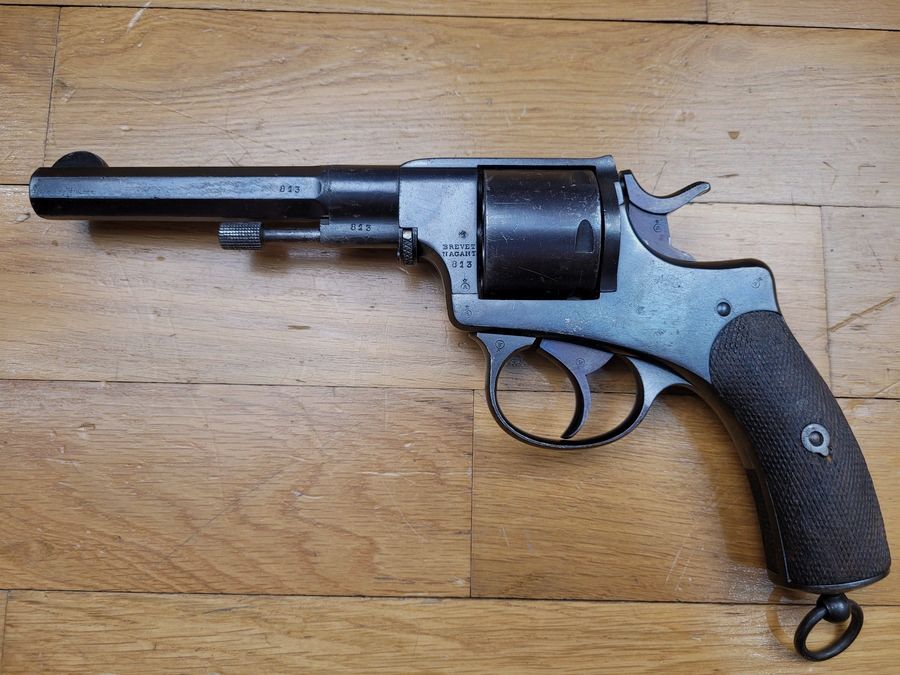
The firearm is in excellent condition. But very dirty as often. And like the others, I absolutely don’t have time to clean it.
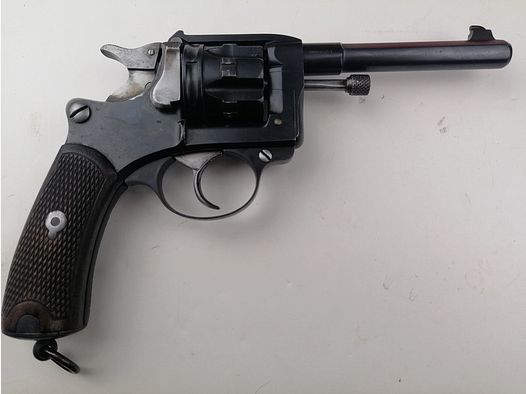
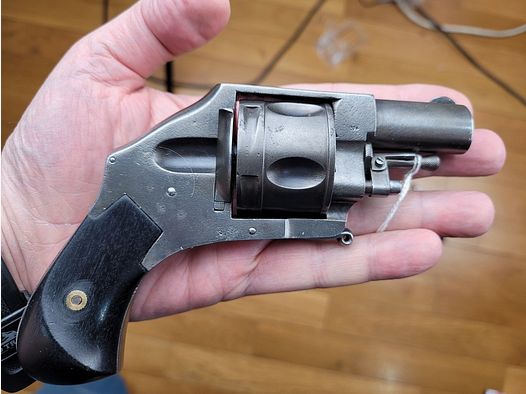
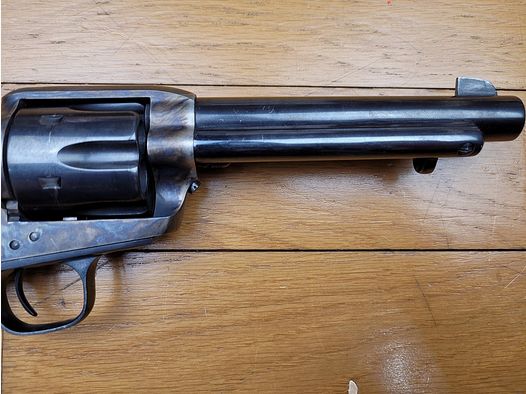
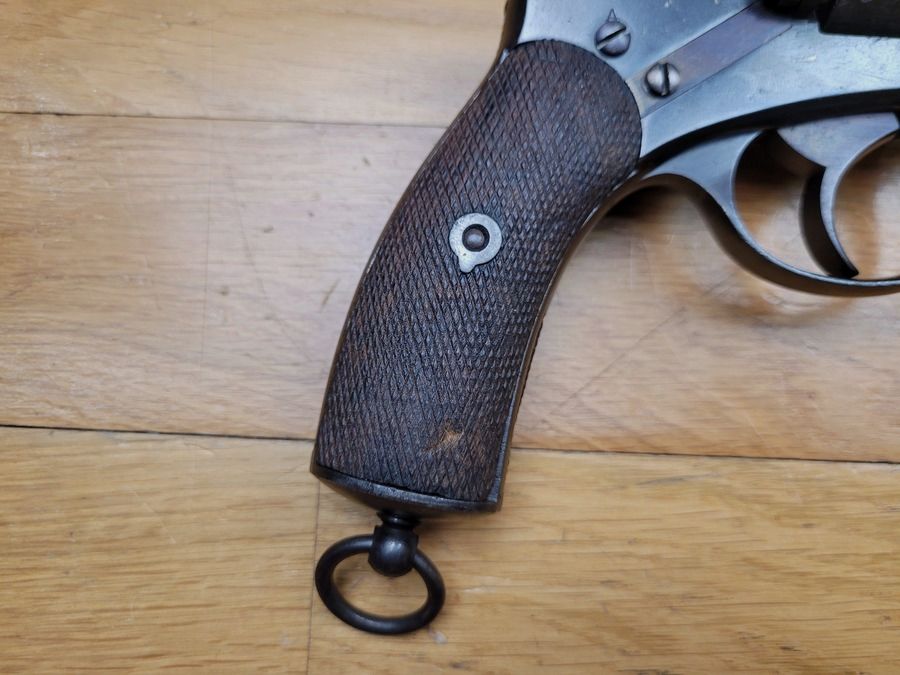
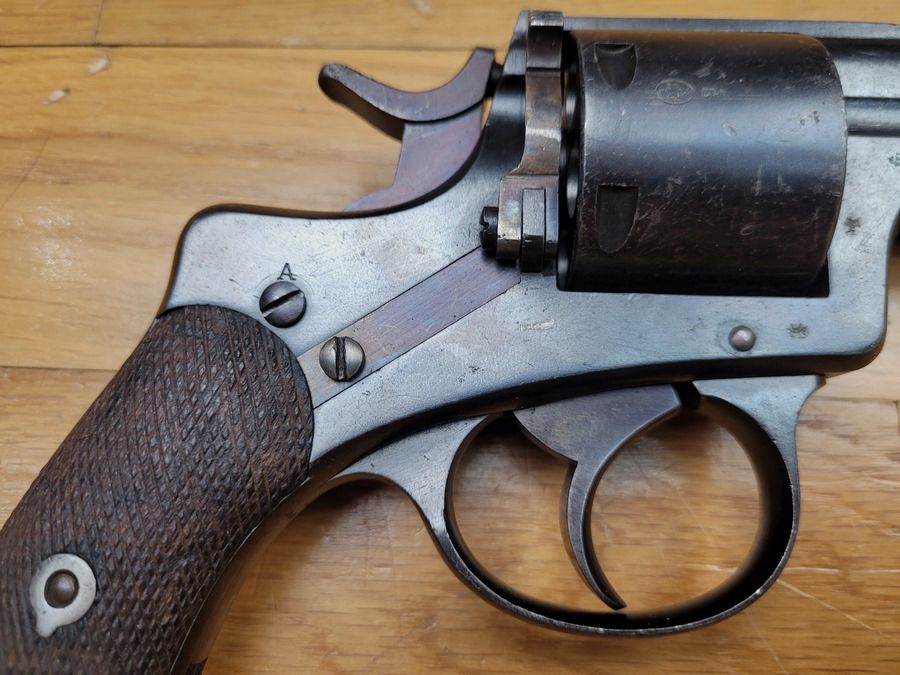
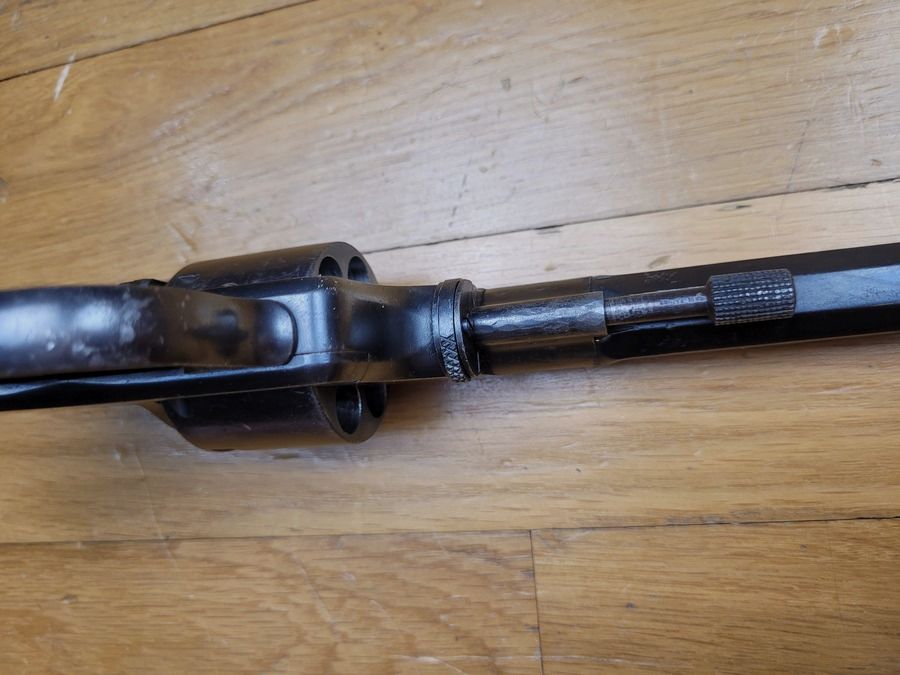
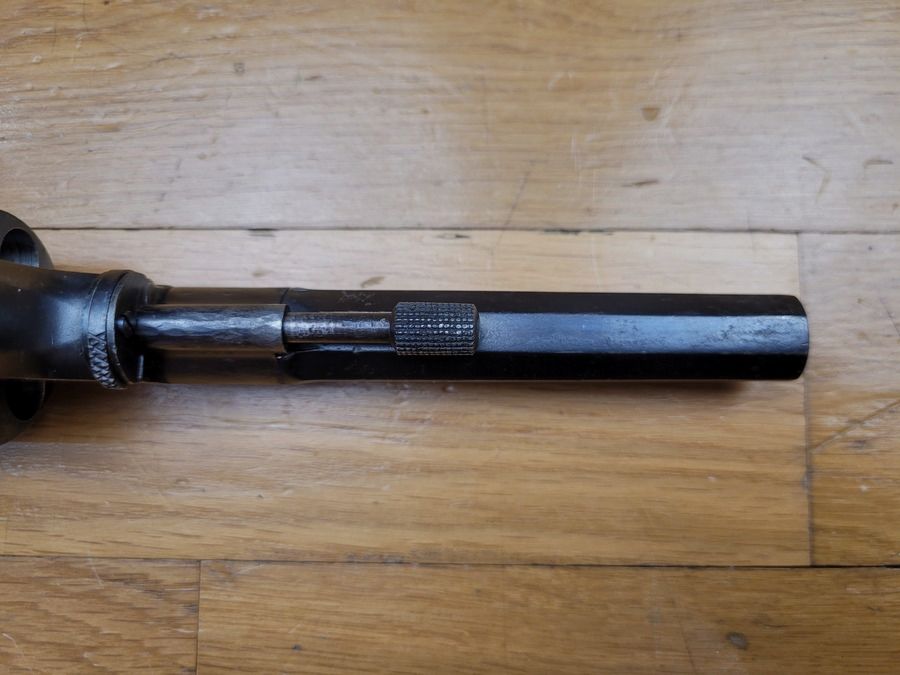
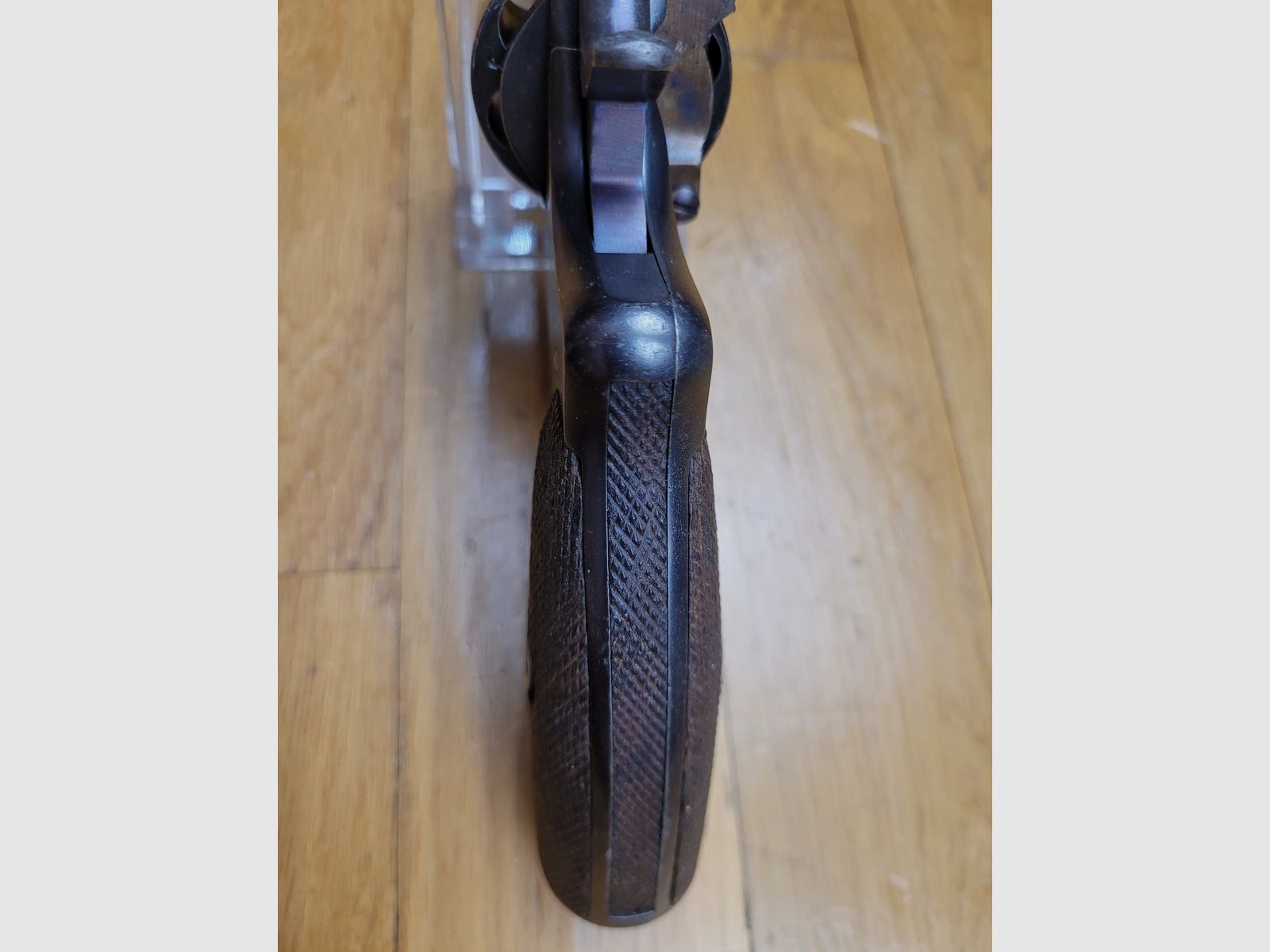
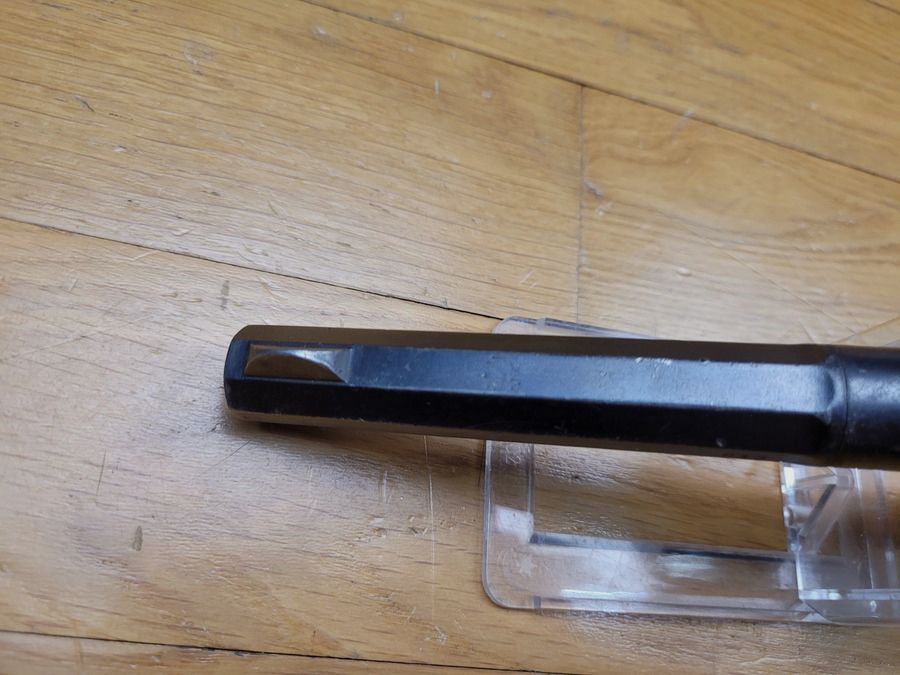
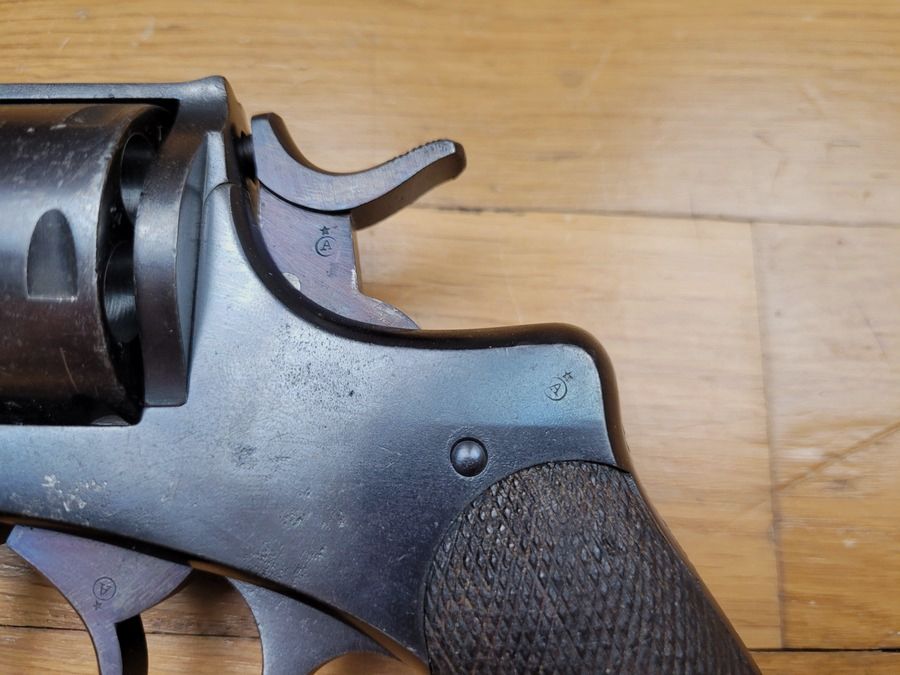
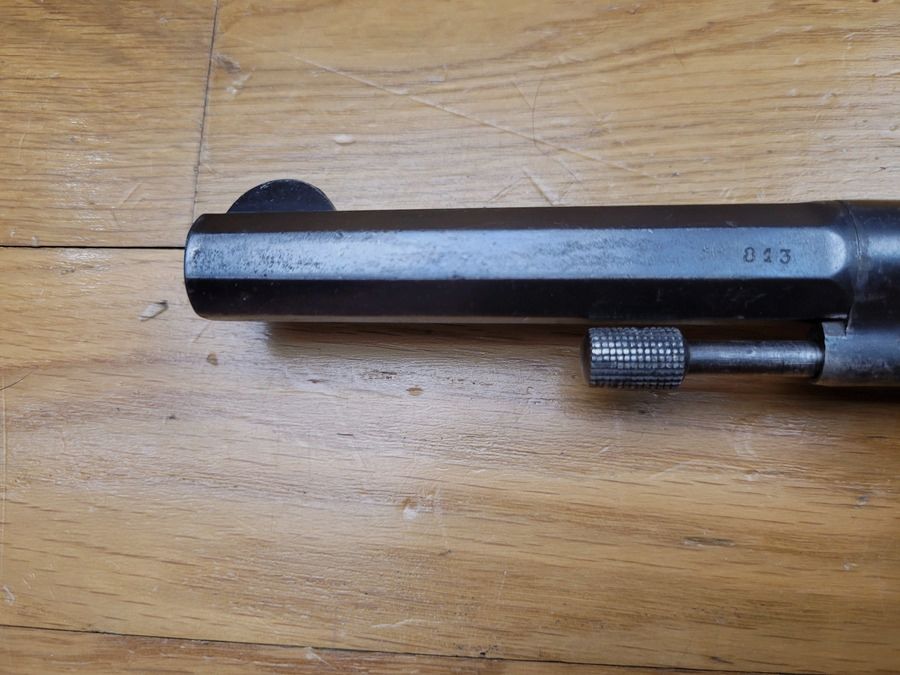
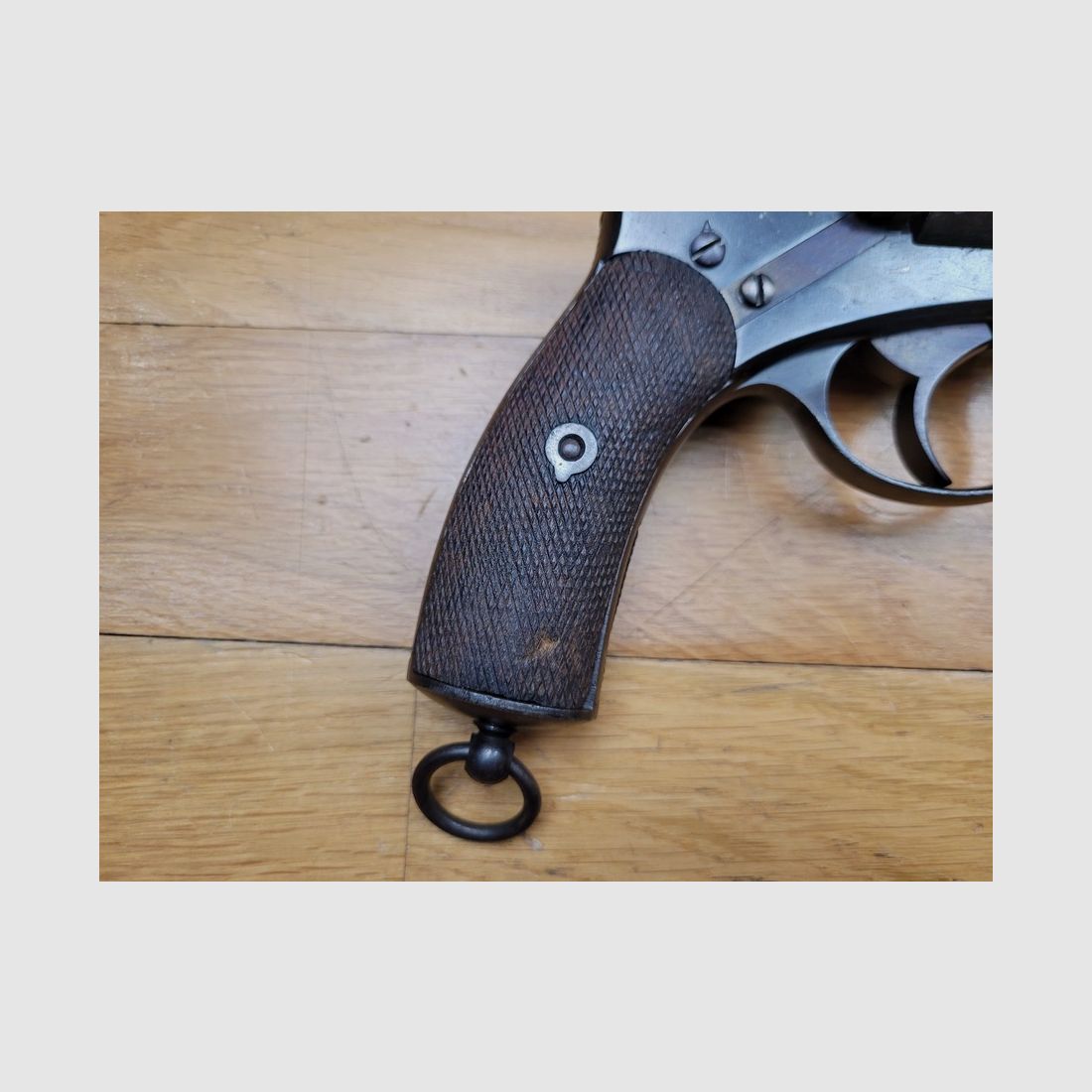
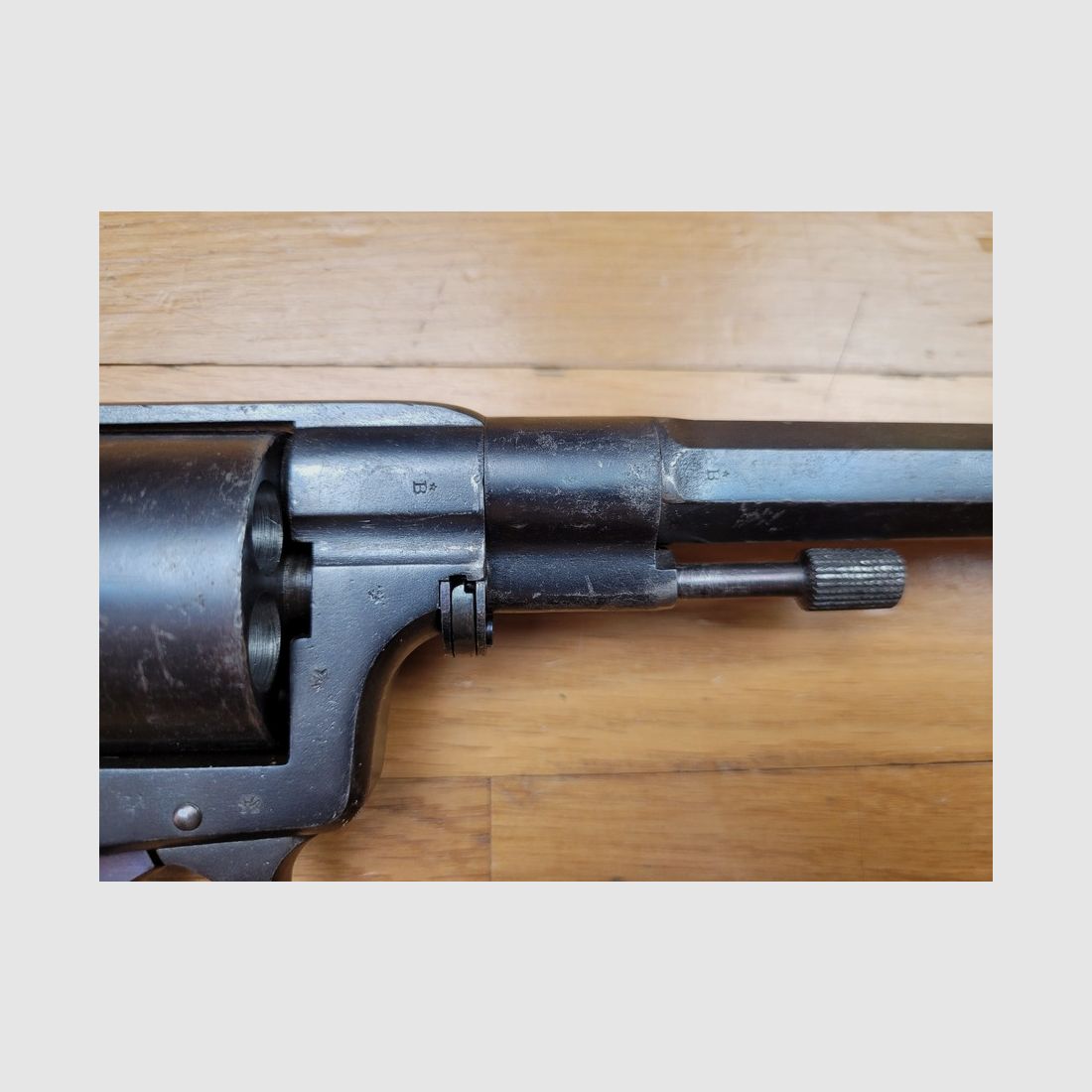
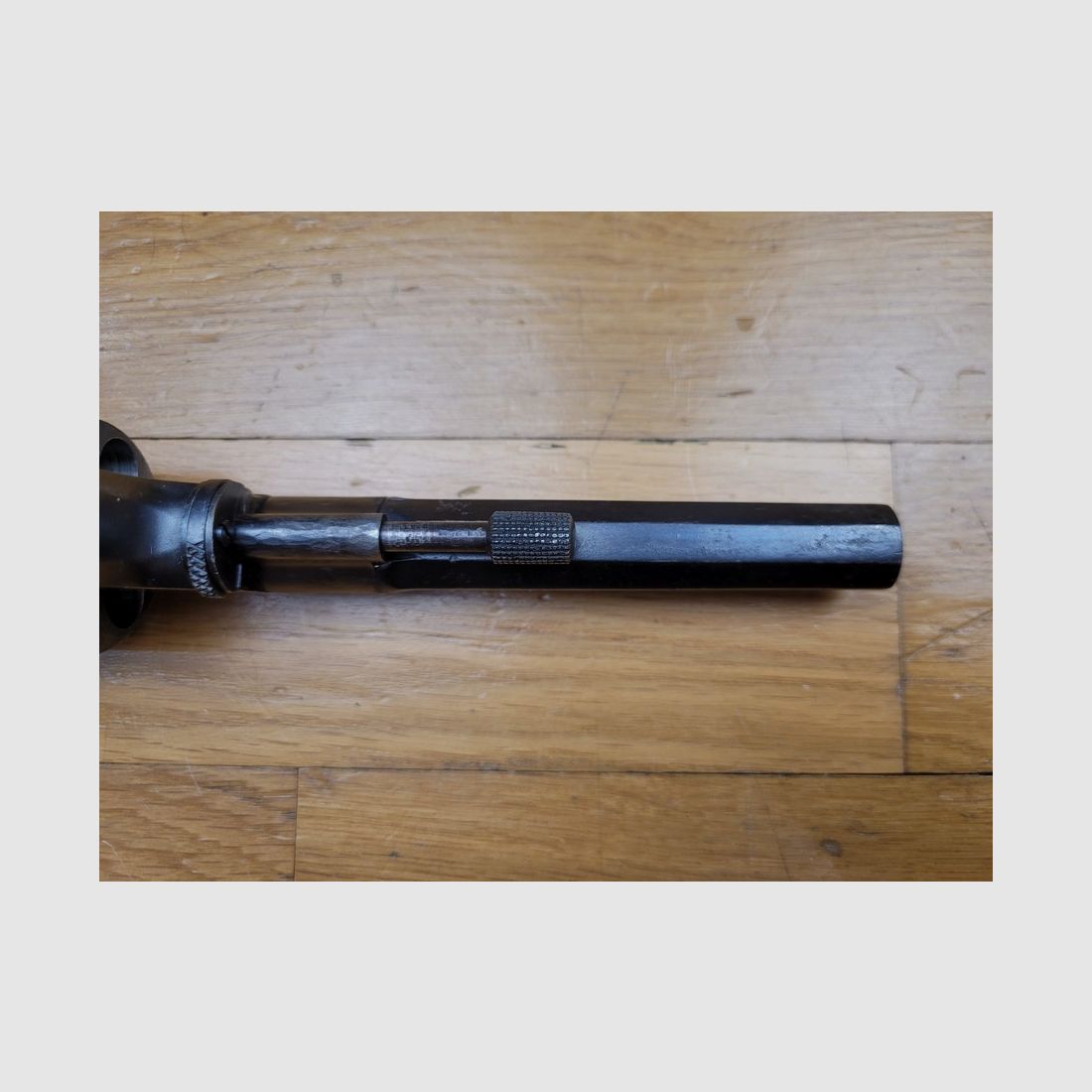
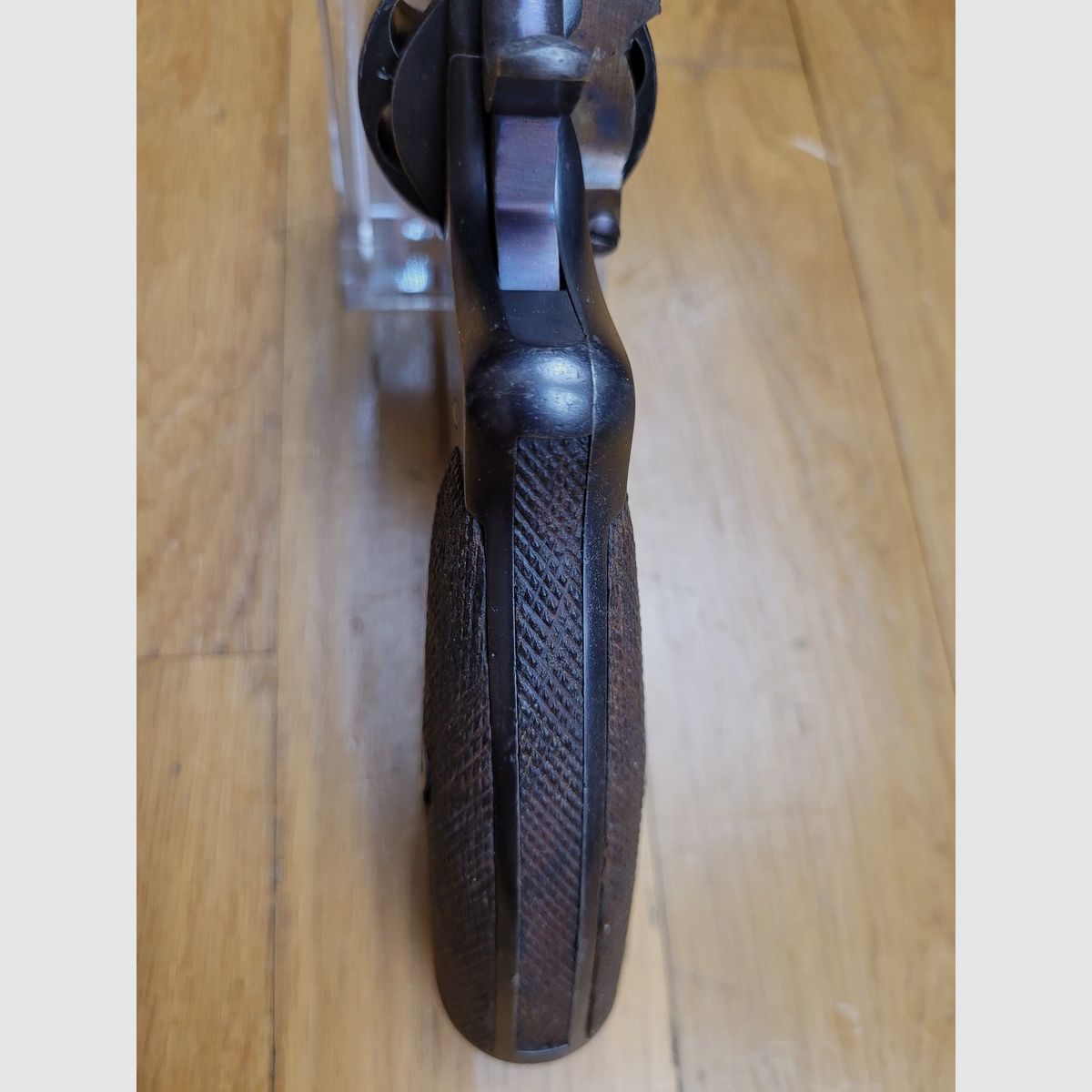
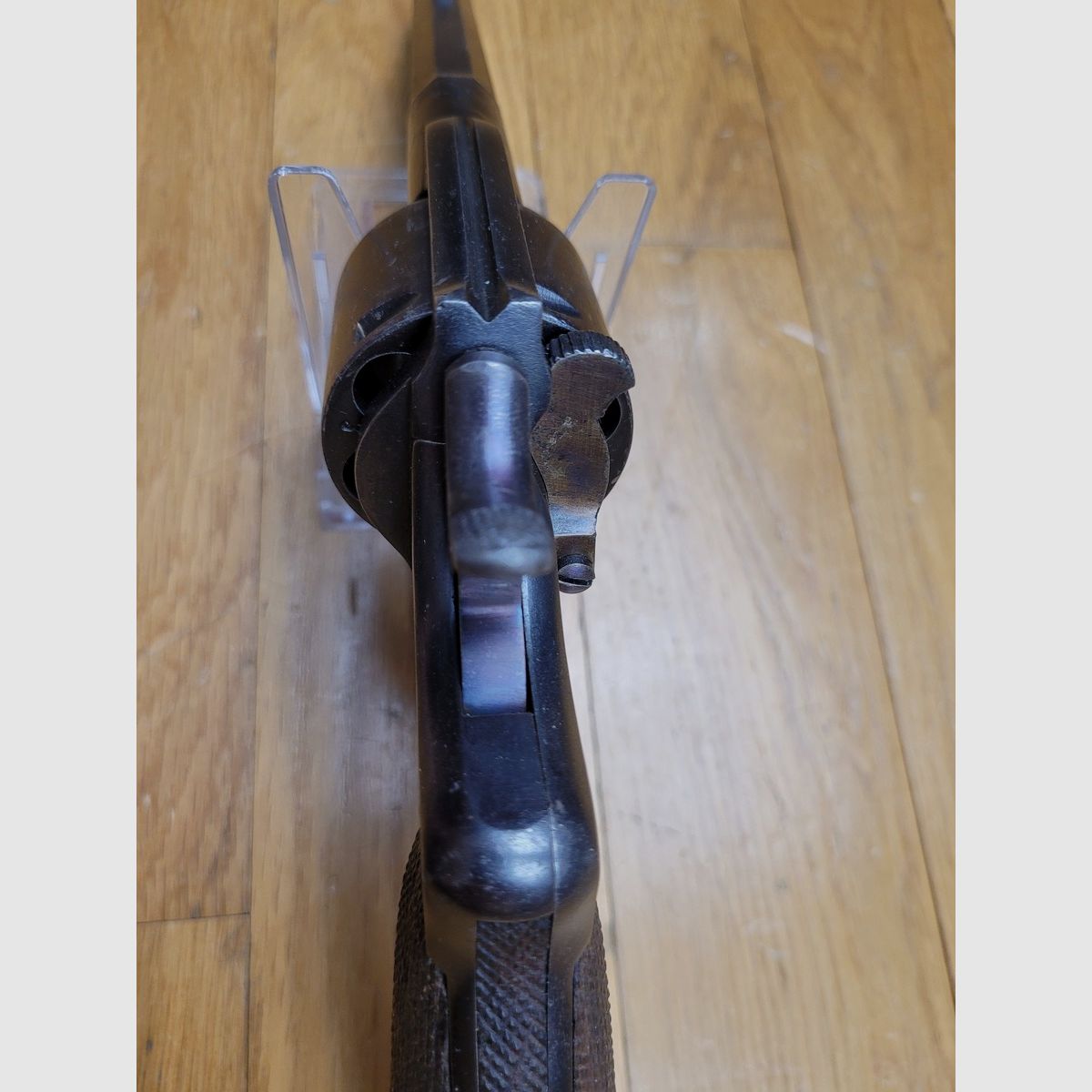
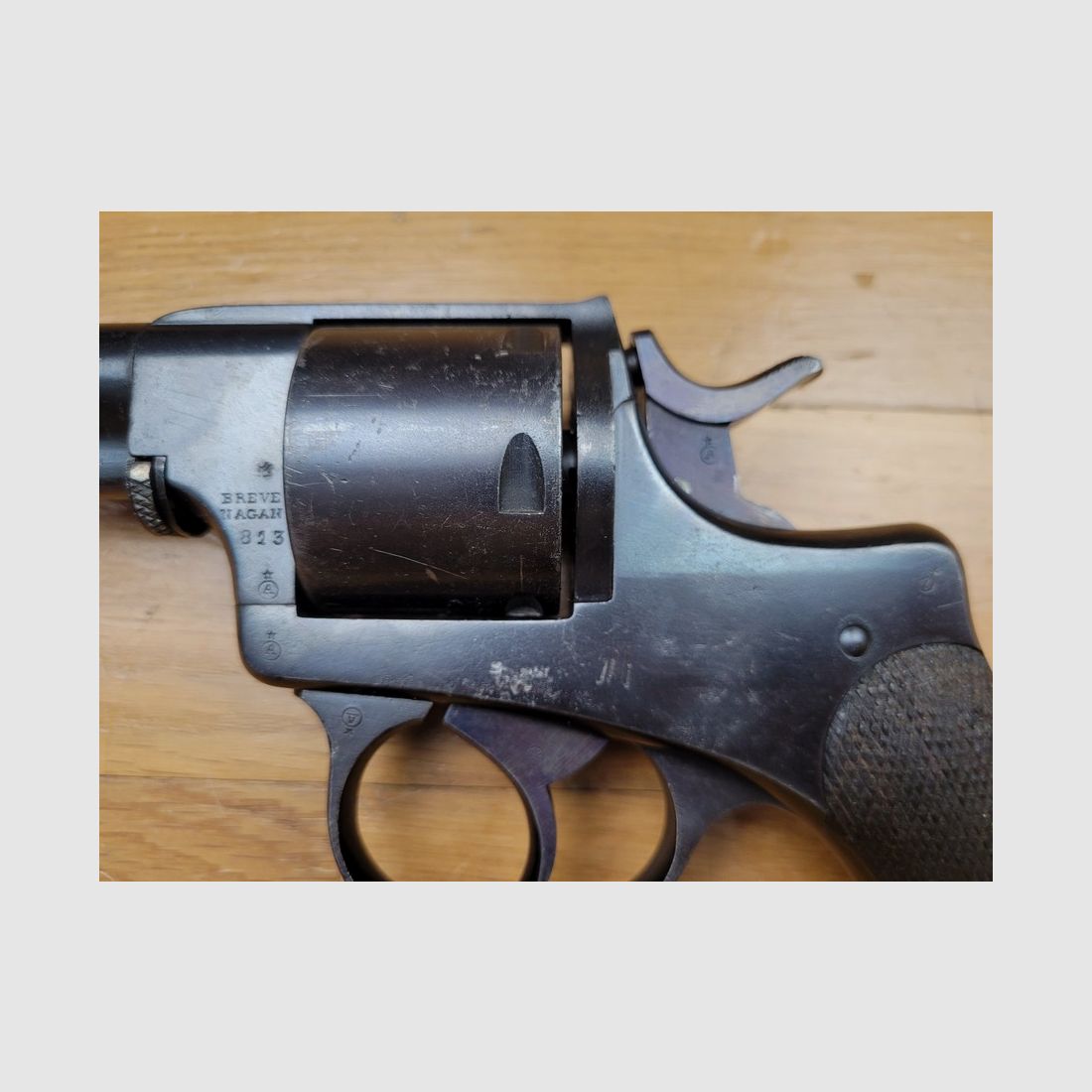
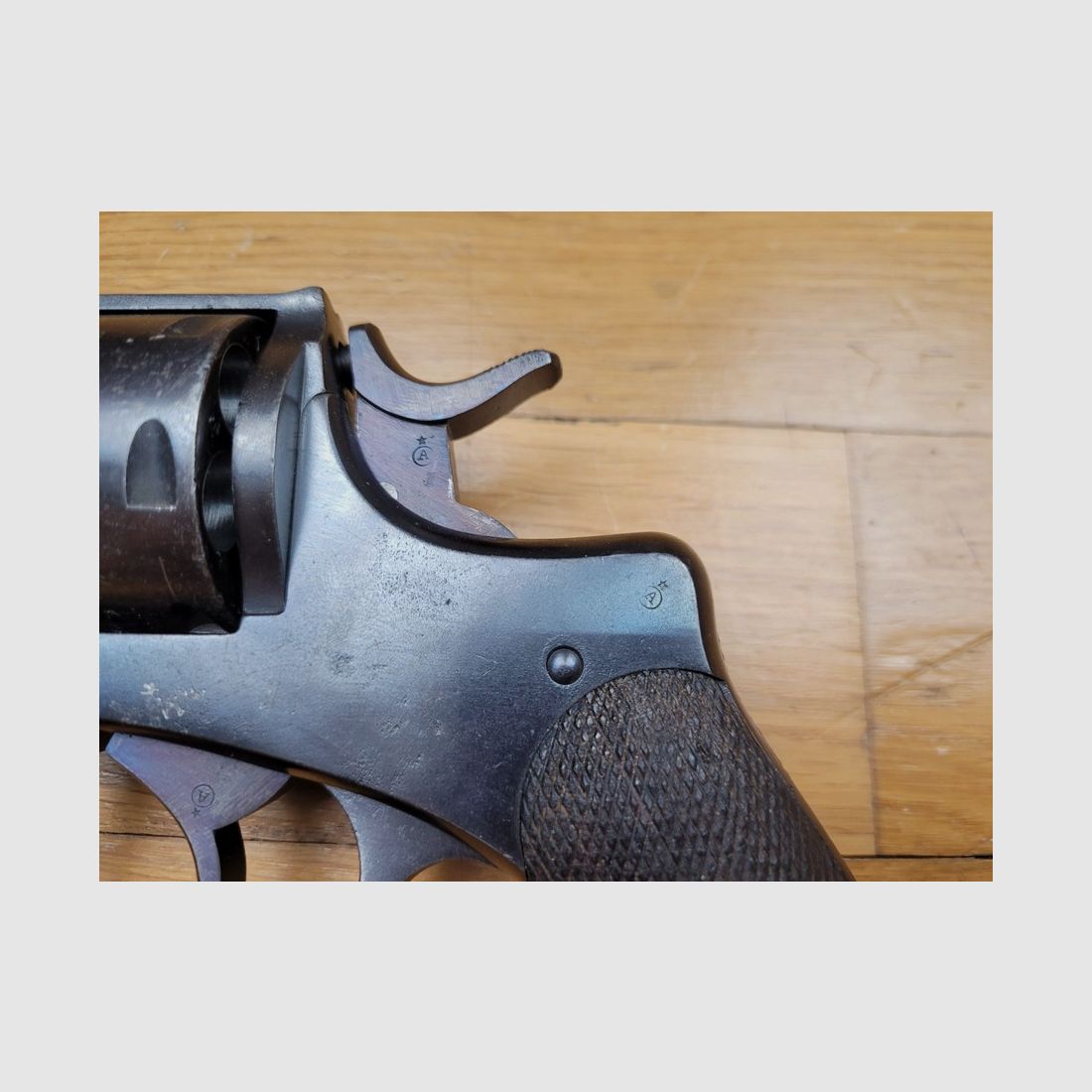
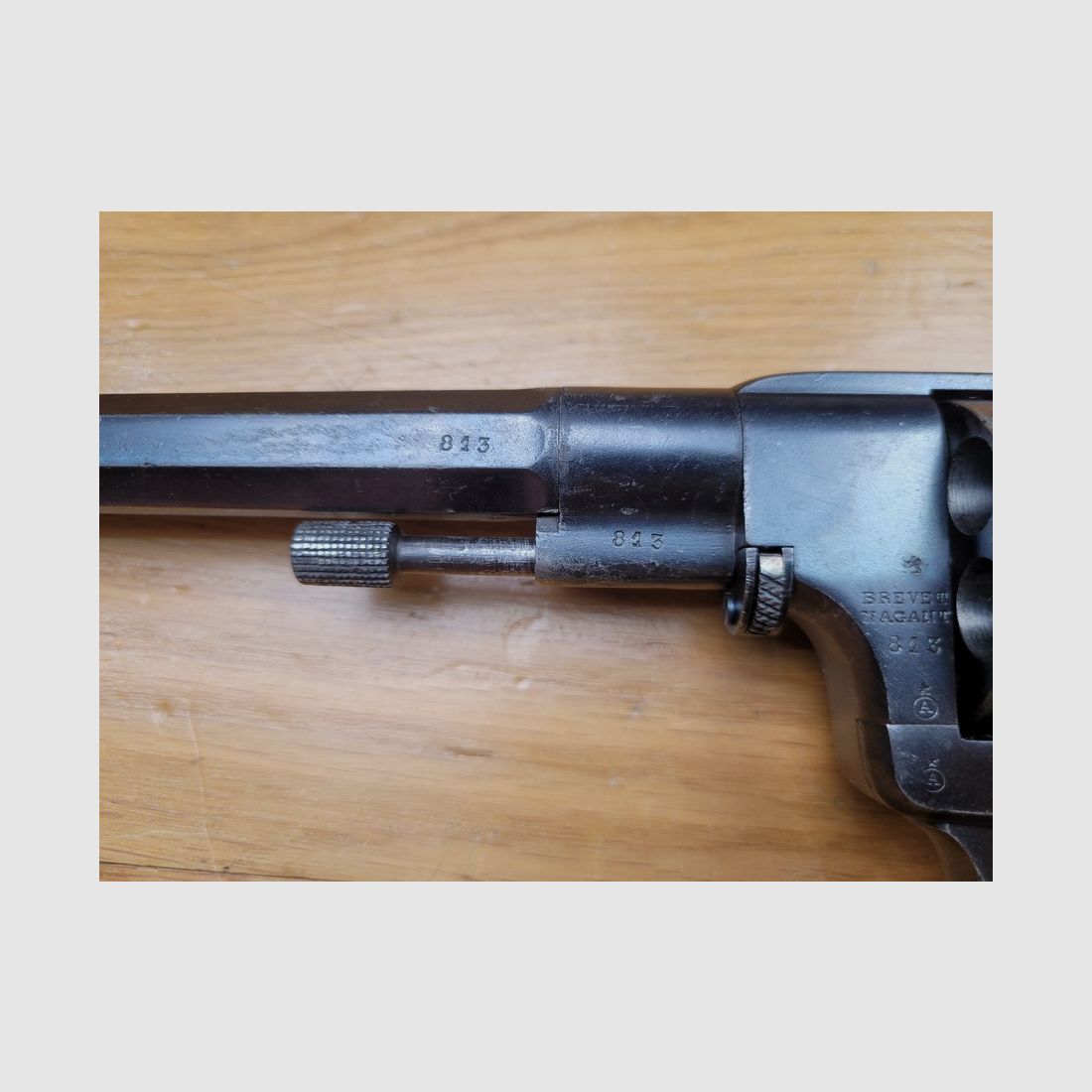
Its original bluing is present at 98-99% despite some rare lightening and handling scratches mainly on the outside of the barrel. A very very slight oxidation spot at the barrel-frame junction on the right side, totally exaggerated by my close-ups(!). It even still has original blue on the parts that should be blued (hammer, loading gate, trigger tail…). The grips are in very good condition, not cracked or reglued. Really very very nice external condition. It just needs a good cleaning.
Mechanically flawless. No excessive firing gap – no play – excellent barrel with nice sharp rifling on a mirror finish background.
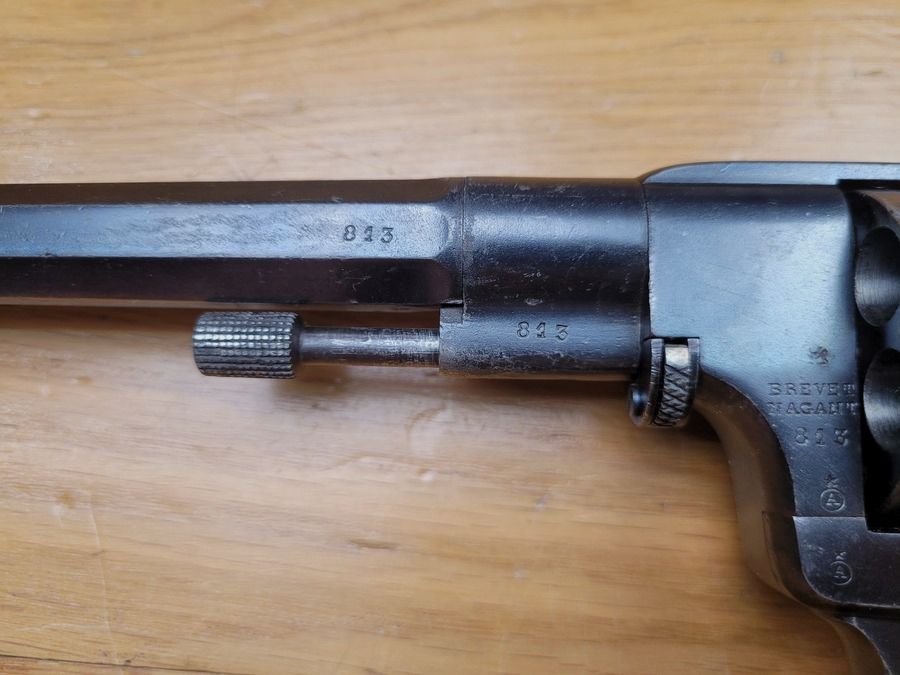
It has retained its lanyard ring which shows its military use. The few rare ones existing in Europe are mostly military guns re-entered on the civilian market after removal of the lanyard ring mount and renumbering. Ours is 100% in its original military state with its butt cap and ring, no later renumbering and with its correct original single serial number everywhere. It’s one of the first with number “813”.
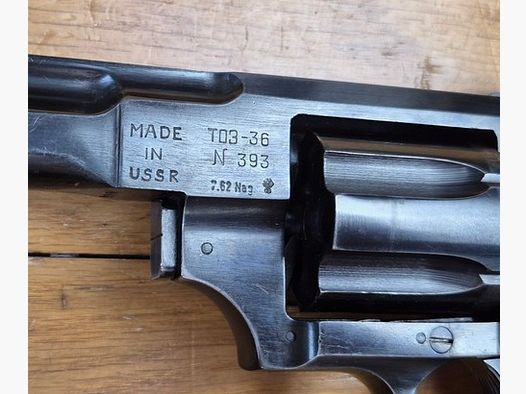
It is clearly marked “Brevet Nagant” on the left side of the frame in front of the cylinder, a marking always found on Nagant military orders as long as they were produced in their Liège workshops.
The “B” star stamp is the Production Controller’s mark at Nagant. Like all good firearms from this rare Brazilian order, the “A” stamp, in a circle and under a star, is stamped on all parts. This is the acceptance mark by the Brazilian army.
In short, an untouched piece from the Nagant galaxy in more than excellent condition.
Ultimately a rare service firearm from a prestigious and sought-after manufacturer. Black powder obviously and category D. An essential addition for a collector of European or South American service firearms. Or for a Nagant fan looking for an exceptional piece.
Category D firearm at CSI: valid ID, national identity card or passport required
***********************************************************************************************************************************************
Let’s repeat it! Armurerie Flingus Maximus in Paris and throughout France is also here for your private party firearm formalities, collection buybacks, and military...
taria, your firearm appraisals, your firearm questions in successions and inheritance. Contact your favourite gunsmith via our contact form or at [email protected]
Reminder: All collectible, hunting, and shooting firearms are used and sold as is, without warranty.
All historic firearms of old manufacture sold as C or D, “Collection” or “Cow-boy shooting” are collectible firearms not proof-tested for shooting and not tested at the range. They have been visually inspected regarding their general condition but none have been used for shooting and are therefore sold as untested. Buyers wishing to use a firearm for shooting must first contact the National Proof House of Saint Étienne, the only entity authorised to issue proof certifications prior to shooting use. (Show description in original language)
Une rare pièce de collection dans l’univers très select des révolvers Nagant.
Probablement un des plus rares, et certainement le moins connu, avec son petit frère le Nagant argentin: le Révolver Nagant modèle 1893 pour le Brésil.
A vrai dire, c’est la première fois que je le vois.
Et la première fois aussi un tel calibre sur un Nagant. L’arme chambre du « 44 Nagant » (ou 11,2 x 20R) selon leur catalogue de 1910 !
C’est d’ailleurs le plus gros calibre que l’on puisse trouver sur un révolver Nagant. Concrètement, c’est en fait une copie conforme du 44 Henry Centerfire et il y a une vraie explication à cela. On va le voir.
L’Histoire de ce revolver est peu courante dans l’histoire des armes réglementaires:
En 1883, le gouvernement brésilien est à la recherche d’une nouvelle arme de poing pour son armée. Elle fait savoir à son agent en Europe qu’elle souhaite acheter 3.000 révolvers Mauser Zig Zag modèle 1878.
Très curieusement, leur agent ne commande rien du tout. Mauser, maudit dans les armes de poing, n’aura pas eu de chance avec son Zig-Zag déjà repoussé par l’armée allemande au profit du Reichrevolver 1879 puis 1883. Même les commandes militaires pour lesquelles il bénéficiait d’un « a priori » positif de réputation finiront par lui échapper.
En l’espèce, l’acheteur pour l’armée brésilienne a organisé une batterie de tests et s’est déclaré insatisfait du Zig-zag. De fil en aiguille, il teste d’autres armes et le dossier traîne pour ne ressortir que vers 1890 avec notre Nagant 1893 !
Les conditions de fabrication de ces armes spéciales pour le Brésil ont été perdues avec la destruction des archives de Nagant après 1931. Tout ce qu’on sait, c’est que ces armes du contrat brésilien ont toutes été produites avant fin 1893 chez Nagant et à Liège car tous les exemplaires connus, dont le notre, portent au barillet le fameux poinçon « ELG » sur étoile, en ovale et sans couronne qui caractérise les production liégeoises d’avant 1893.
Ce n’était pas si évident cette production de Nagant chez Nagant : les Nagant suédois ont été à 90% produits chez Husqvarna en Suède, tous les Nagant argentins ont été fabriqué par Simson &co à Sühl en Allemagne, etc…
Qu’en est-il de l’arme ?
Massive, solide, construite dans d’excellents aciers comme toutes les productions militaires de Nagant, c’est en fait une arme basée sur la carcasse du révolver 1878 pour l’armée belge mais dotée du mécanisme du revolver 1878-86 à double action destiné à l’armée norvégienne (en 7,5 Nagant lui) et qu’on aurait néanmoins rallongé d’un bon centimètre. Ce qui en fait une arme assez imposante.
Après un peu de surprise au Brésil de voir arriver quelque chose de très différent du Zig-zag, l’arme est finalement adoptée par l’Armée brésilienne après livraison en 1893 et, même si son calibre .44 et sa PN ne sont plus vraiment à la pointe de la modernité de l’époque. Le catalogue de 1910 de la firme les attribue à la Cavalerie et à la Marine de ce beau pays.
Comment distinguer un Nagant 93 de l’Armée de ceux pour la Marine du Brésil ? Les Nagant 93 de la Marine brésilienne « Marine » sont marqués « Marinha Dos E.U. do Brasil sur la portière de recouvrement et la typographie des numéros de séries diffère légèrement de ceux pour la cavalerie (production probablement en deux séries, la seconde vers 1892 pour la Marine et après la révolution de 1889 là-bas car ce marquage n’est pas monarchique). C’est tout. Tout le reste est identique. Les deux variantes portent souvent les mêmes poinçons de réception dans l’Armée brésilienne.
L’arme, très solide, fonctionnelle et d’une mécanique éprouvée, restera tout de même en service dans certaines administrations (tribunaux notamment) jusque… 1957 ! Elle sera parfois re chambrée en 44S&W et même … en 45 Acp. C’est dire la résistance de l’arme pour résister à de telle pressions !
Combien d’exemplaires fabriqués ?
Là aussi mystère.
3.000 armes commandées par L’Armée brésilienne (peut-être un peu plus avec les exemplaires de la seconde série destinés à la Marine) plus quelques très rares exemplaires civils identifiés et une arme qu’on ne voit que très exceptionnellement même aux USA. Je doute qu’elle ait été produite à plus de 5.000 exemplaires en tout. C’est très peu et même nettement moins que son rare frère argentin (9.200 exemplaires). Pour comparaison, le Nagant suédois, c’est 14.200 armes en tout y compris les 2.600 premiers fabriqués à Liège
Bref une grande rareté que ce Nagant brésilien.
Pourquoi le calibre 44 Henry au fait ?
Il faut savoir que le Brésil avait adoré la Winchester 1866 et en avait commandé un paquet aux USA en 1874 d’abord en 44 Henry rimfire transformées ensuite à percussion centrale. Cette commande brésilienne avait d’ailleurs puissamment aidé la firme de New Haven dans son démarrage.
Curieusement, en 1891, alors même que le modèle Winchester 1873 était déjà sortie et popularisée depuis presque 20 ans (!), l’armée brésilienne avait à nouveau commandé un lot de winchesters ancien modèle 1866 toujours en 44 Henry CF sans doute pour pouvoir utiliser ses stocks de cartouches en .44 qu’elle produisait localement d’ailleurs. Il fallait donc que la cartouche des nouveaux revolvers règlementaires soit compatible avec celle des carabines. D’où le choix du .44 Nagant pour le révolver 1893. Tout simplement.
C’est donc un de ces rares Révolver Nagant modèle 1893 que Maître Flingus vous a déniché.
L’arme est en excellent état. Mais très sale comme souvent. Et comme les autres, je n’ai absolument pas le temps de la nettoyer.
Son bronzage d’origine est présent à 98-99% nonobstant de rares éclaircissements et griffures de manipulations essentiellement en extérieur de canon. Un très très léger point d’oxydation à la jonction canon-carcasse coté droit totalement exagéré par mes gros plans(!). Il possède même encore de son bleu d’origine sur les pièces qui doivent être bleutées (chien, portière, queue de détente…) . Les plaquettes sont en très bon état, non fendues ou recollées. Vraiment très très bel état externe. Il mérite juste un bon nettoyage.
Mécaniquement impeccable. Pas d’entrefer de tir excessif – pas de jeu – excellent canon avec de belles rayures bien nettes sur fond miroir.
Il a conservé son anneau de dragonne qui témoigne de son usage militaire. Les quelques rares existants en Europe sont le plus souvent des militaires repassés sur le marché civil après ablation du plot de support d’anneau de dragonne et renumérotation. Le notre est 100% dans son état militaire d’origine avec sa calotte et son anneau, sans renumérotation postérieure et avec sa bonne numérotation mono matricule d’origine de partout. C’est un des premiers avec le numéro « 813 ».
Il est bien marqué » Brevet Nagant » sur la carcasse coté gauche en avant du barillet, mention que l’on trouve toujours sur les commandes militaires Nagant pour peu qu’elles aient été produites dans leurs ateliers de Liège.
Le poinçon « B » étoilé est celui du Contrôleur de Production chez Nagant. Comme toutes les bonnes armes de cette rare commande brésilienne, le poinçon « A », dans un cercle et sous étoile, est frappé sur toutes les pièces. C’est celui de sa réception par l’armée brésilienne.
Bref une pièce intouchée de la galaxie Nagant dans un état plus qu’excellent.
In fine une arme réglementaire rare d’un fabricant prestigieux et recherché. Poudre noire évidement et catégorie D. Un complément indispensable pour un collectionneur d’armes réglementaires européennes ou sud-américaines. Ou pour un fan des Nagant recherchant une pièce exceptionnelle.
Arme de catégorie D au CSI : pièce d’identité, CNI ou passeport, en cours de validité obligatoire
***********************************************************************************************************************************************
Répétons le ! L’armurerie Flingus Maximus à Paris et partout en France est là aussi pour vos formalités armes entre particuliers, le rachat de collections armes et militaria, vos estimations d’armes, vos questions armes dans les successions et héritage. Contactez votre armurier préféré via notre formulaire de contact ou à [email protected]
Rappel : Toutes les armes de collection, de chasse, et de tir sont d’occasion et sont vendues dans l’état, sans garantie.
Toutes les armes historiques de fabrication ancienne vendues en tant que C ou D, “Collection” ou “Cow-boy shooting” , sont des armes de collection non éprouvées pour le tir et non testées en stand. Elles ont été inspectées visuellement relativement à leur état général mais aucune n’a été utilisée au tir et elles sont donc vendues comme non testées. L’acquéreur désirant utiliser une arme pour le tir devra impérativement se rapprocher préalablement du banc National d’Épreuve de Saint Étienne, seule entité habilitée à délivrer des certifications d’épreuves préalable à un usage de tir.