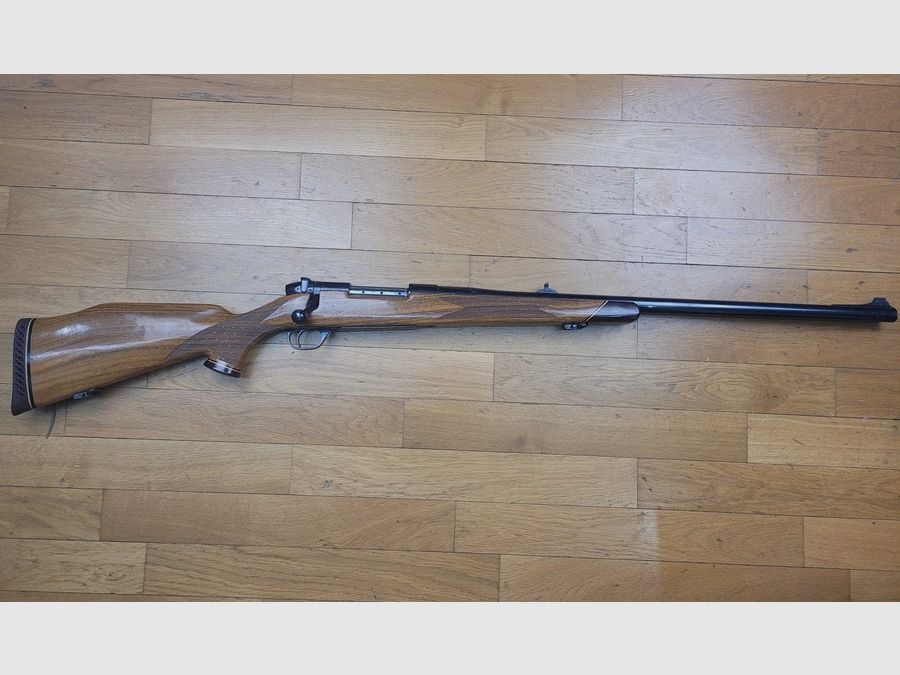






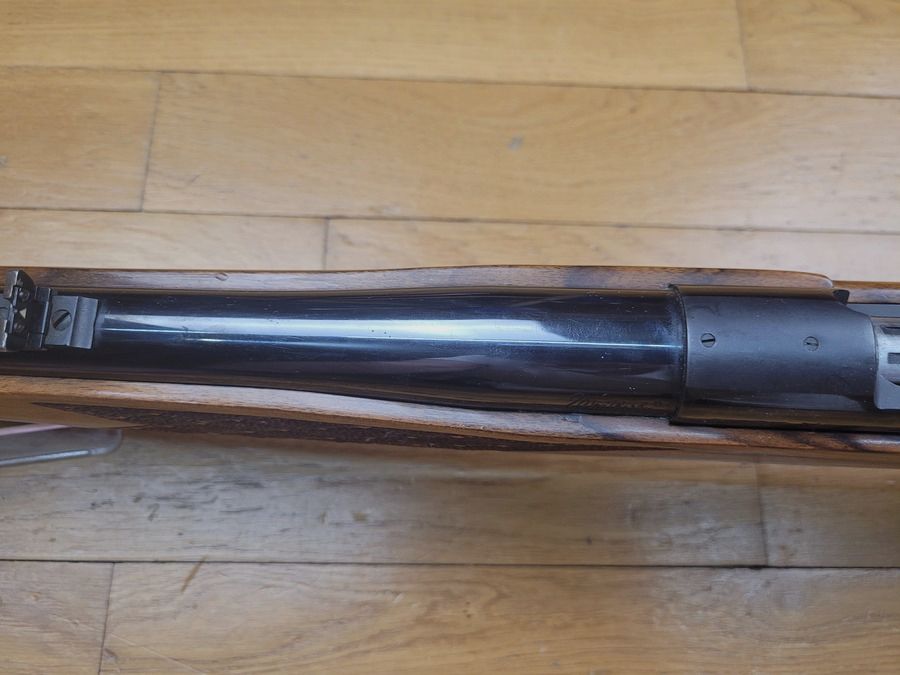
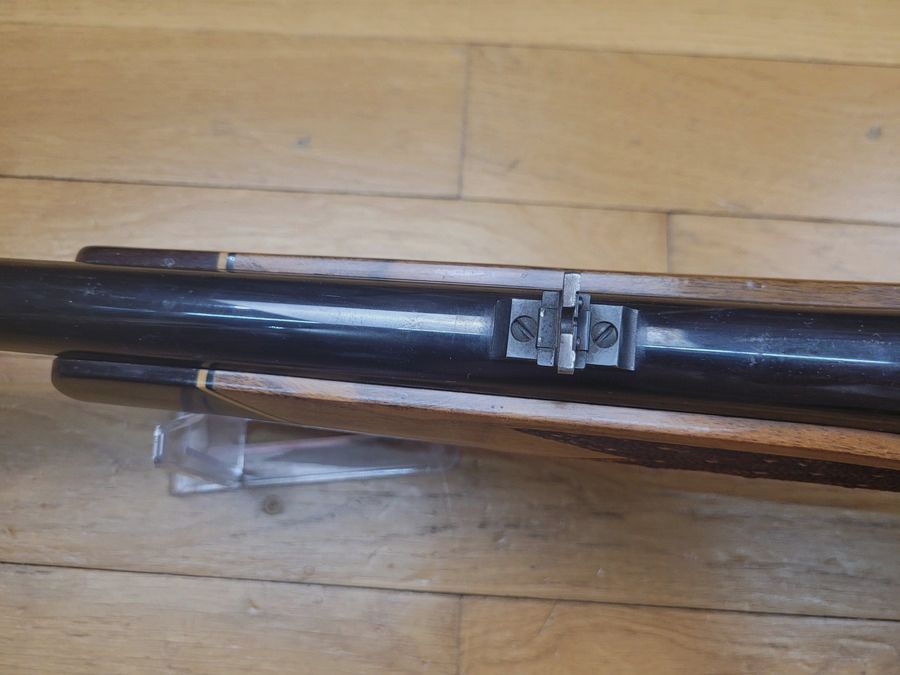

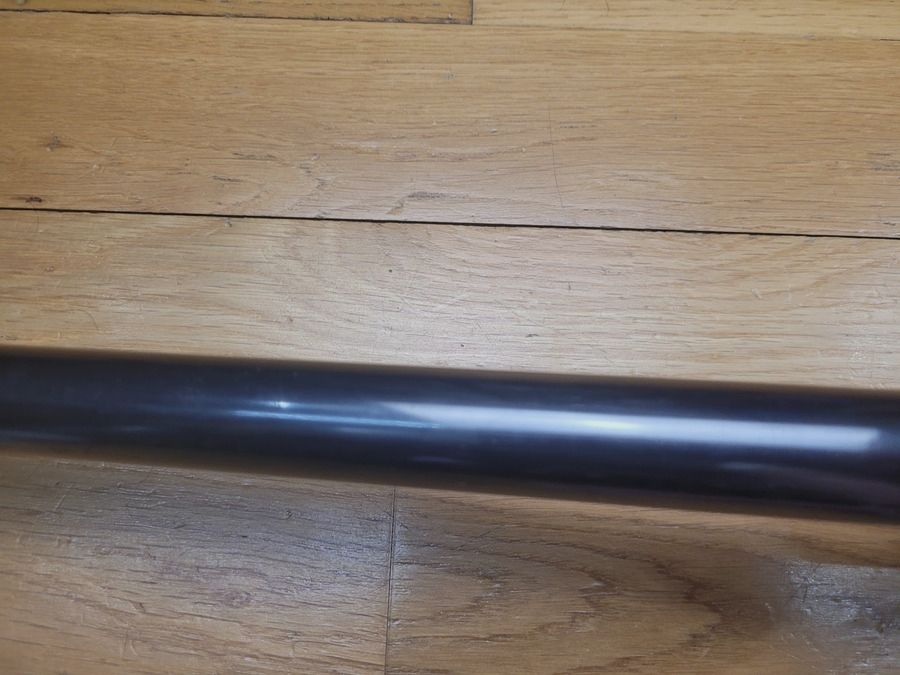
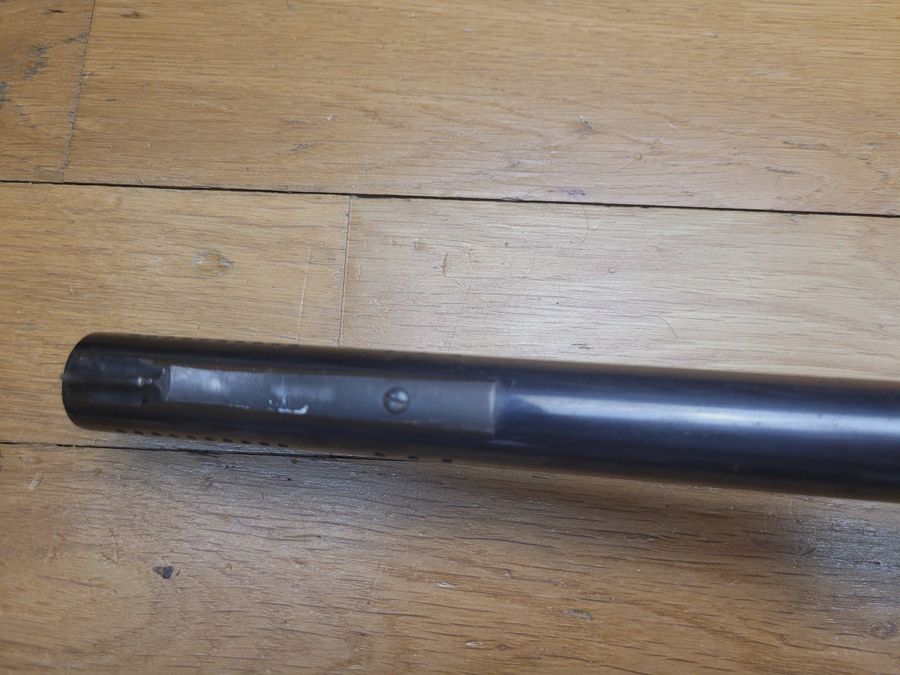


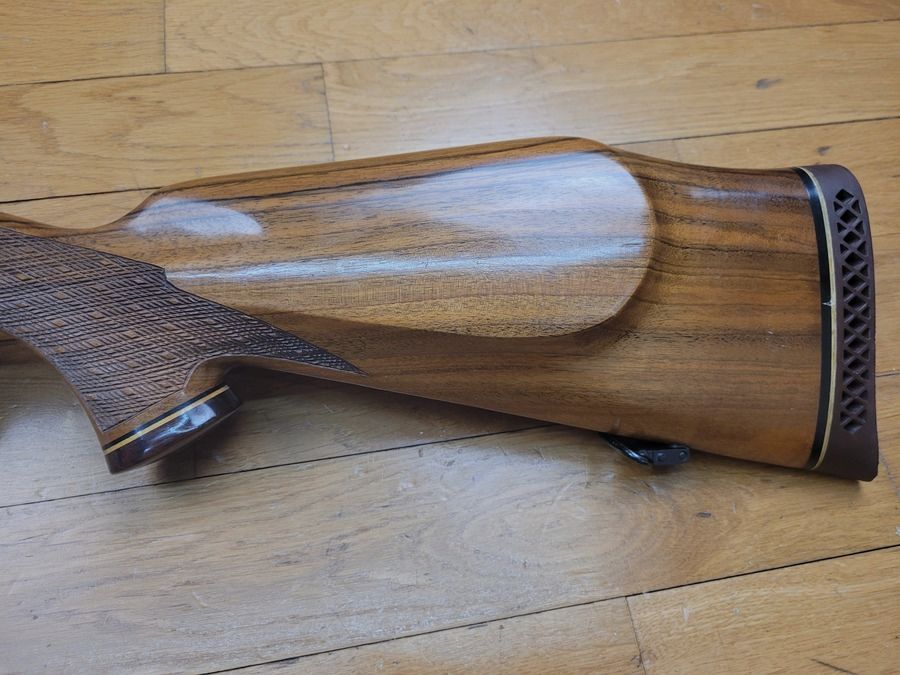
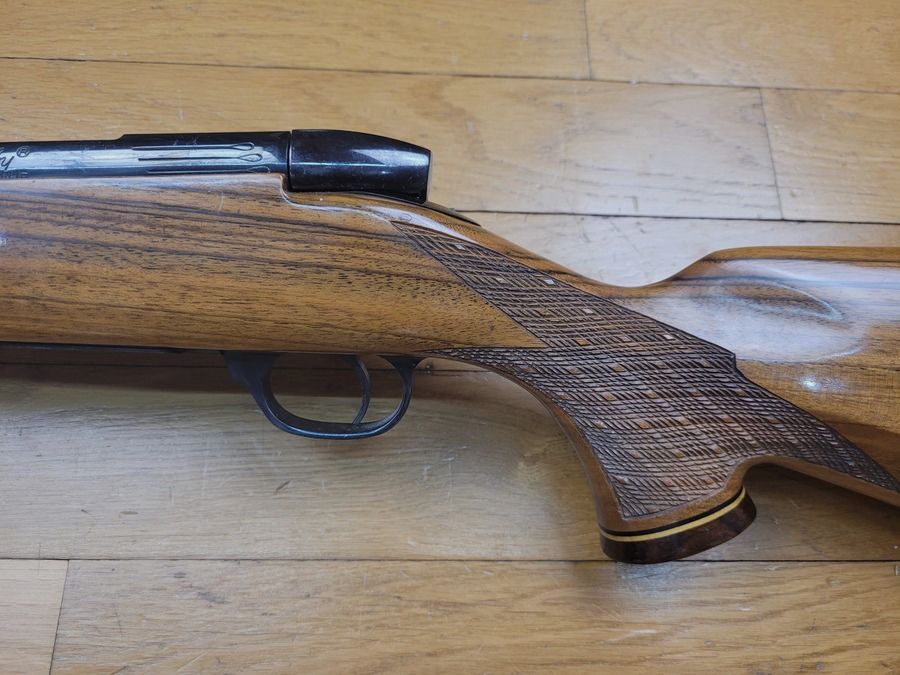

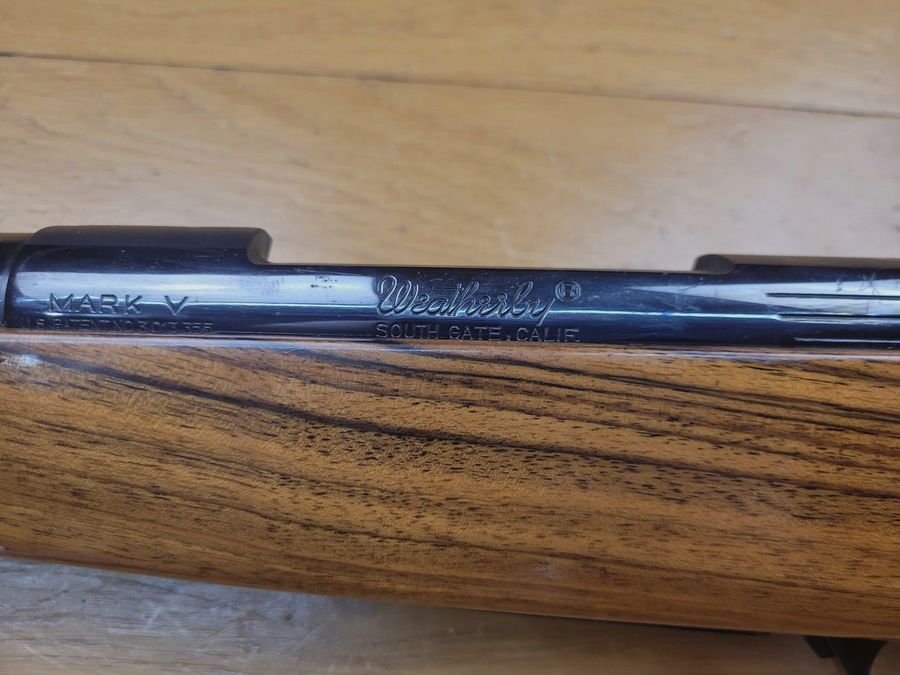
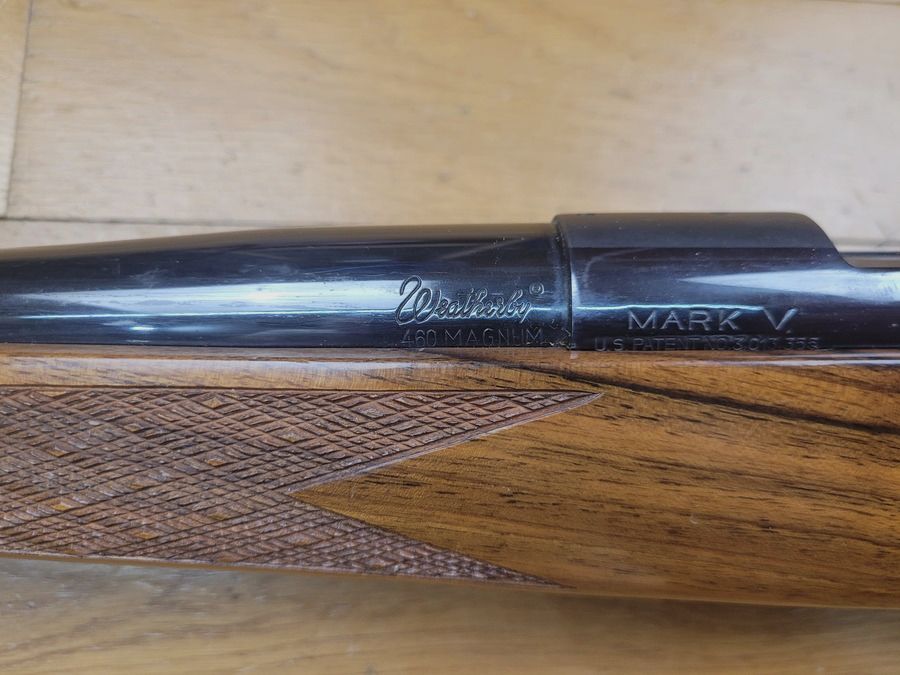

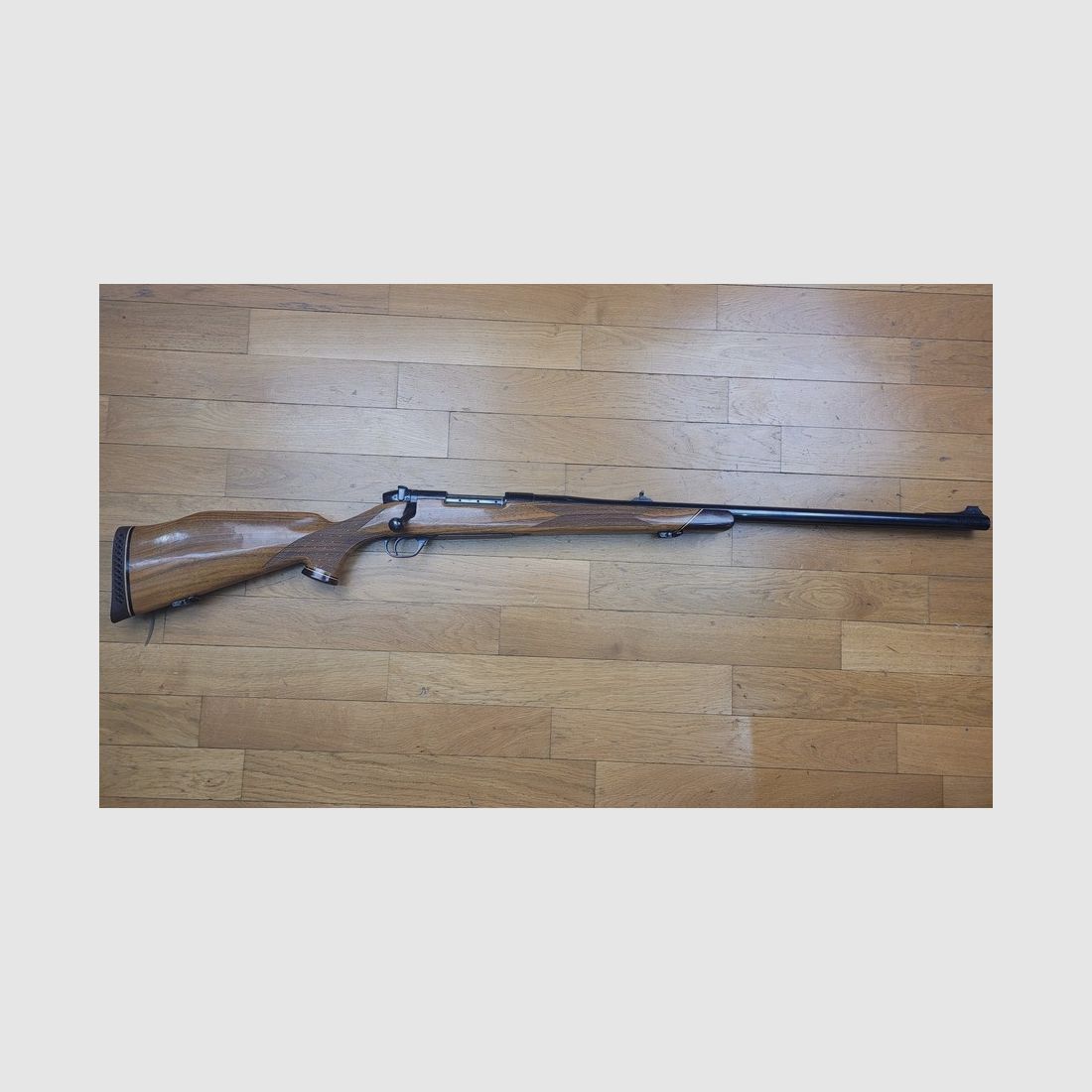

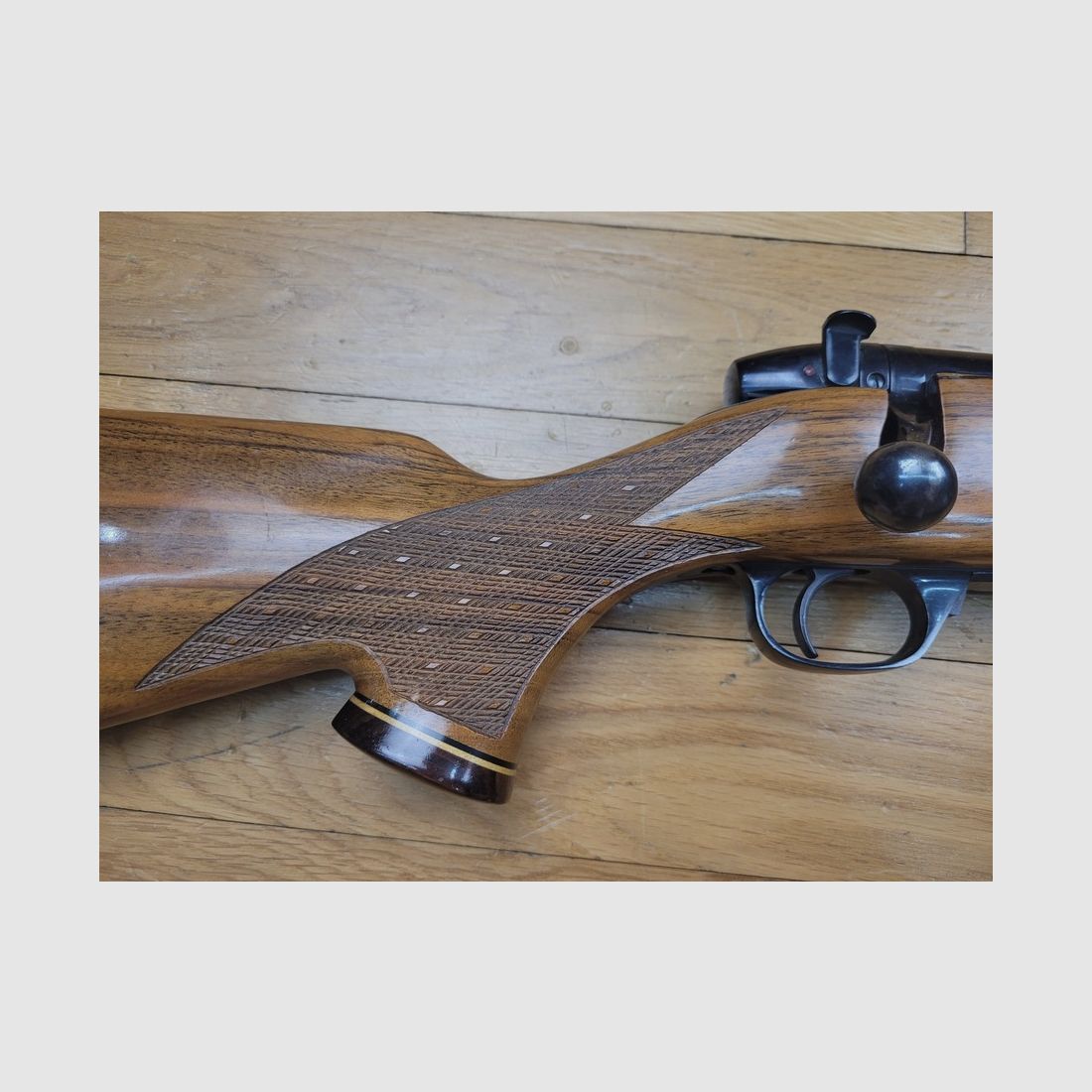
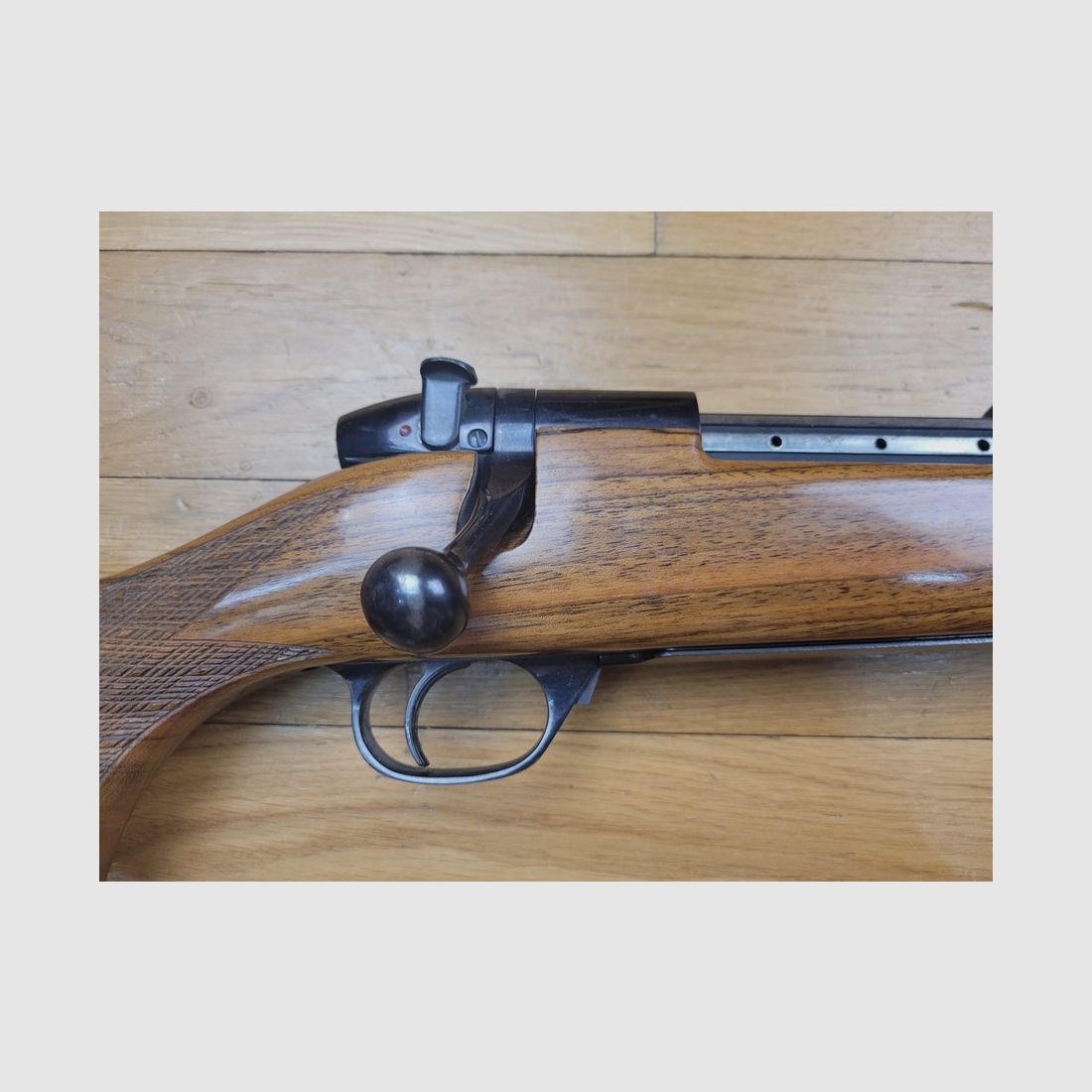
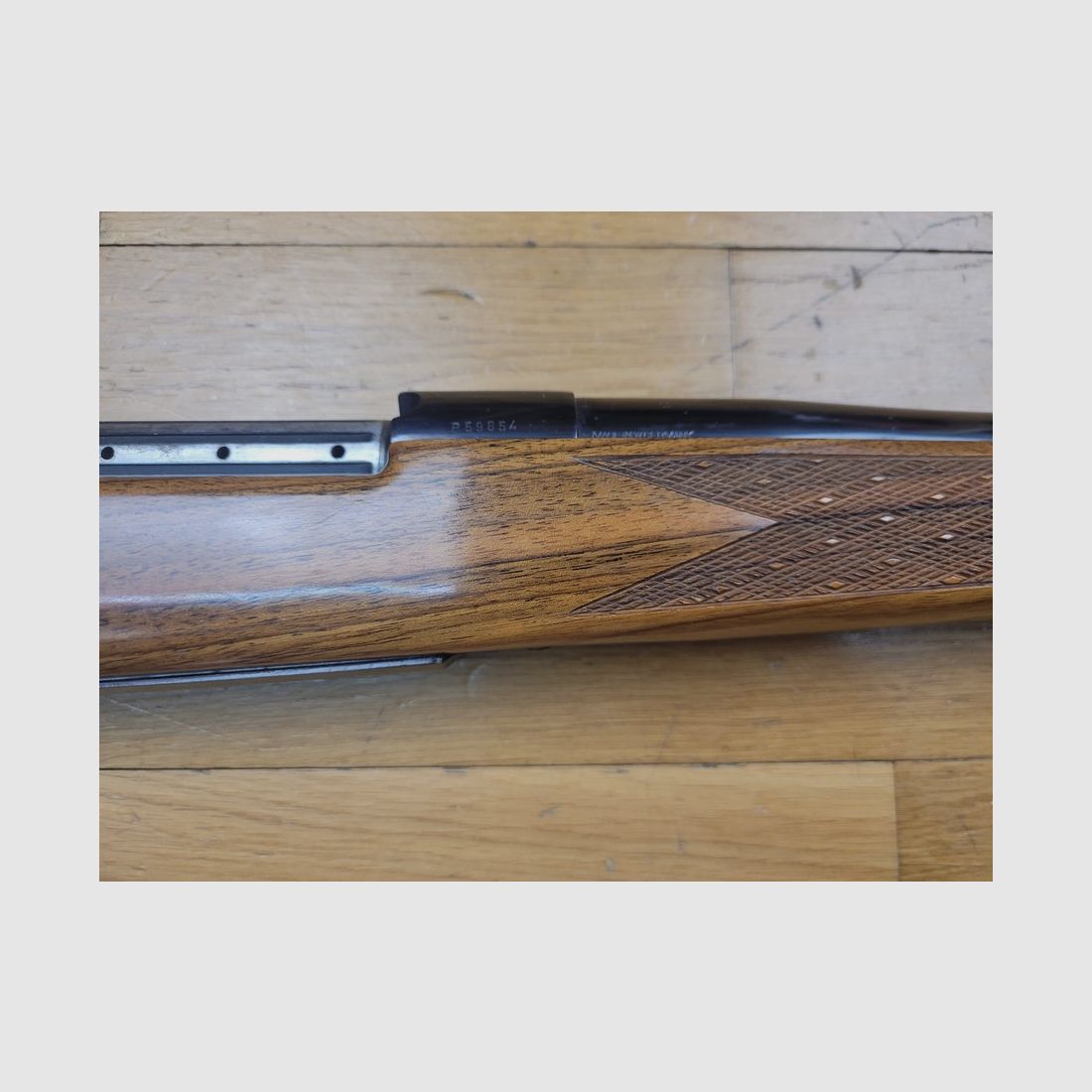


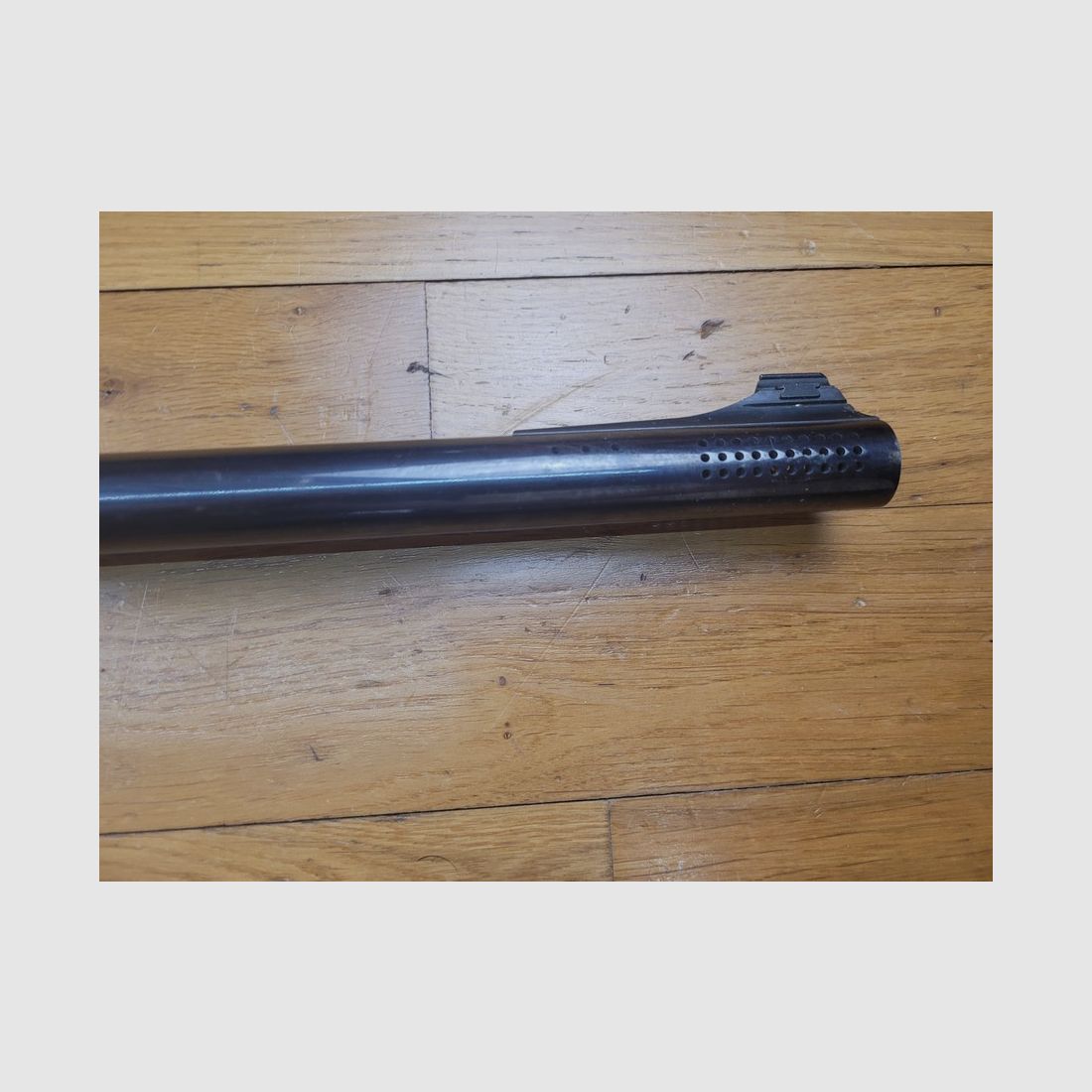








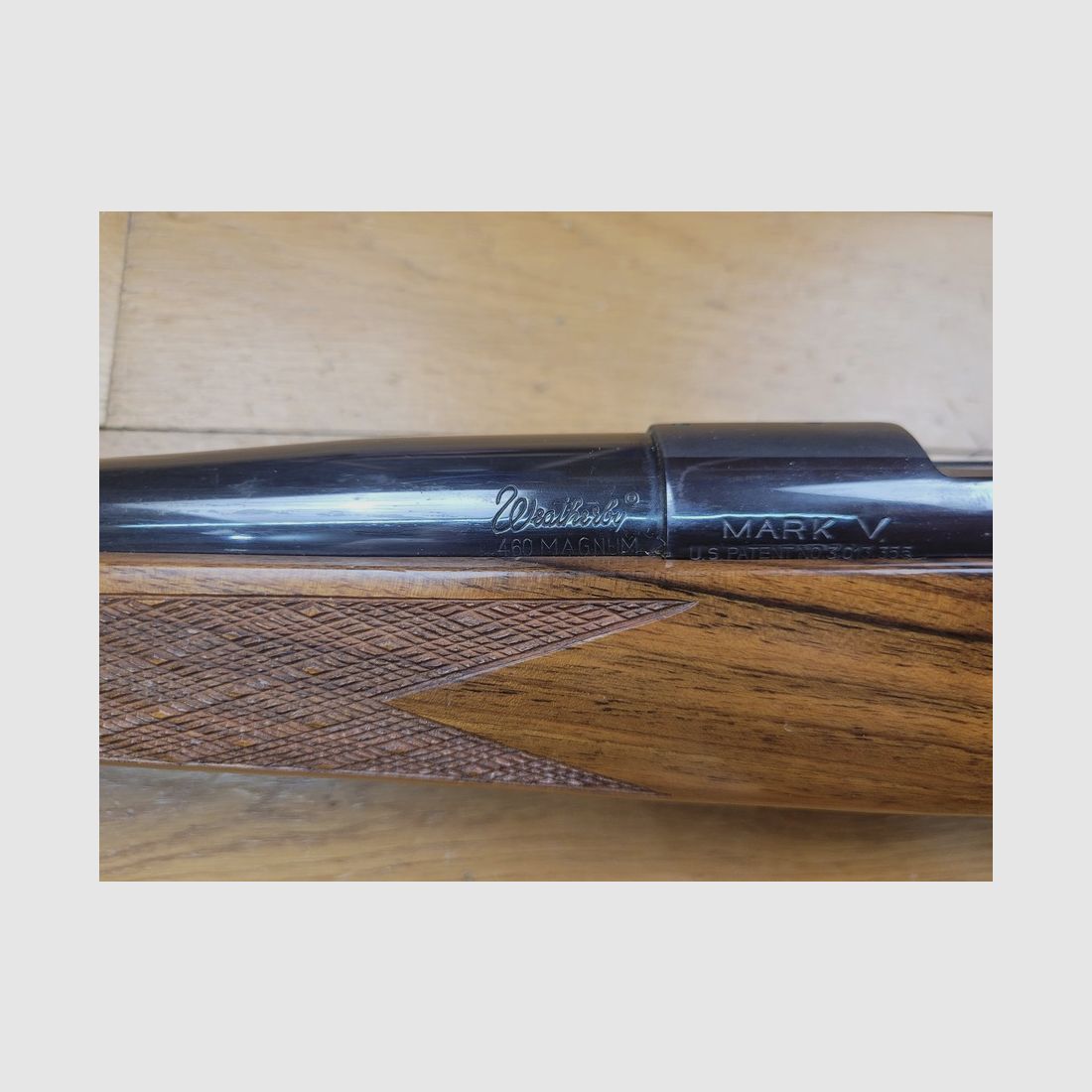
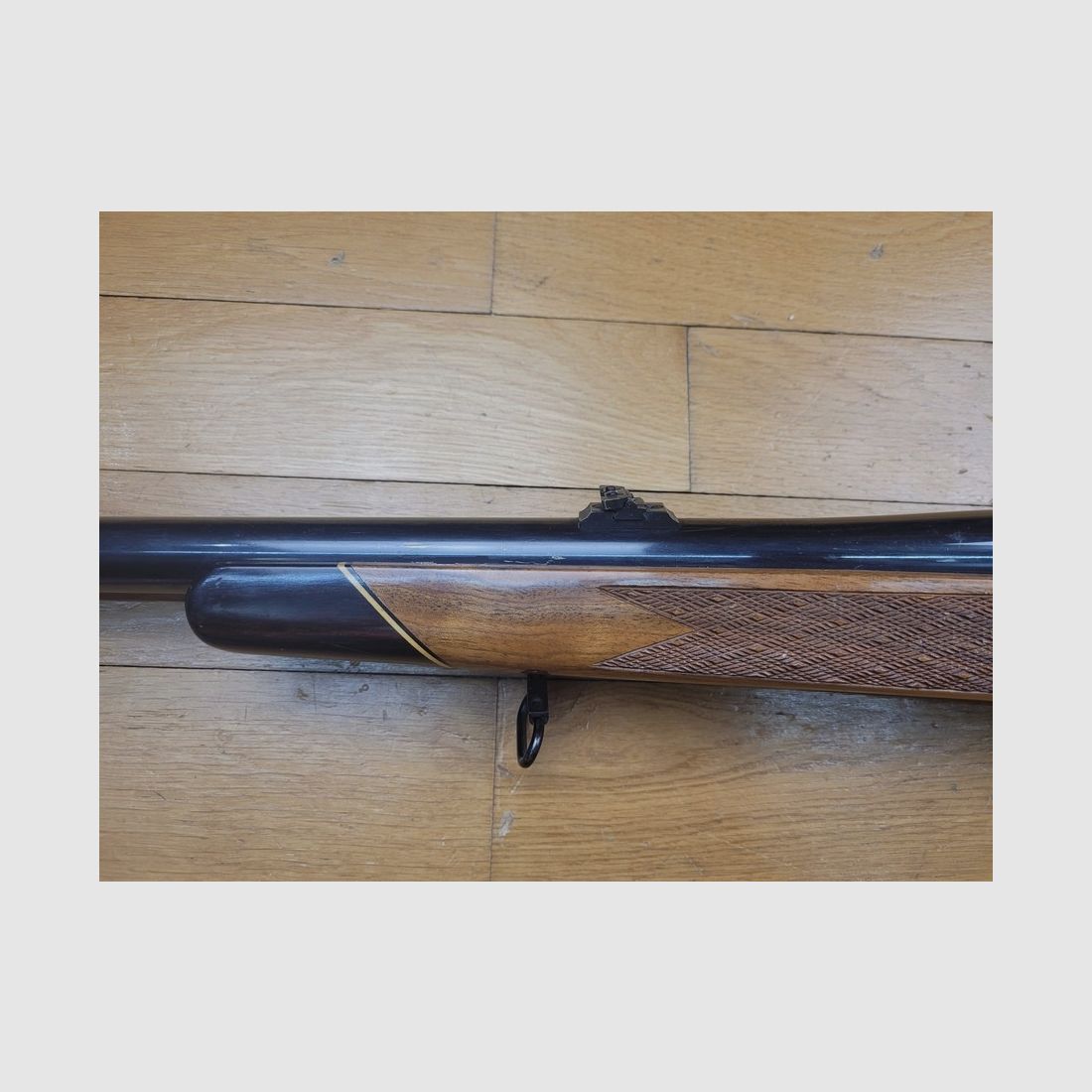

Magnificent Weatherby big game rifle – Caliber 460 Weatherby – Premium manufacturing by Sauer & Sohn in Germany – First choice walnut wood – Sumptuous bluing – New barrel – Impeccable mechanical condition – Exceptional weapon for the greatest challenges – TBE++
Price on Request
Purchase permit required
75002 Paris, France
7
ID: 10338888
This item is currently unavailable.
Purchase from outside the EU: The firearm goes through an importer in your country, the dealer handles the export.
How buying from Europe works
Shop safely with Gunfinder
Our AI-powered seller identity verification makes Gunfinder the safest marketplace online.
Learn more
Details
- Original language
- French
- Brand
- Weatherby
- Category
- Purchase eligibility
- Required
- Condition
- New
- Location
- 🇫🇷 75002 Paris, France
- Availability
- Out of stock
Freshness
This listing is based on a mirrored offer, where the listing data was synced to us from a shop, dealer, or external marketplace. Please note that temporary price discrepancies may occur due to possible delays in data transmission.
- Source
- Flingus Maximus
- Last checked with the dealer
- 6 minutes ago
Description
Note:
The item is located abroad. Please note that delivery conditions, shipping times, and/or the purchase process may differ.
Master Flingus has indeed unearthed something heavy—very heavy. In every sense of the word. Looking at this beast, Inspector Harry could probably have slapped him on the back and offered him a beer at the Shangri-La, where his cousin Paulette works…
A record-breaker in both caliber and game, there’s no denying that the rifles made by the company that gave its name to the cartridge are among the finest you’ll find on the market.
For 30 years, the .460 Weatherby remained the most powerful commercially produced caliber on the market. It helped make the Mauser bolt-action rifle a success and spread its use in big-game hunting around the world.
A medium-sized roe deer takes 1,000 joules at 100 m to bring down. The .460 Weatherby delivers 10,000 joules at 200 m…
Developed specifically for use against animals with some of the toughest hides around and weighing several tons—true forces of nature—there’s no question, for both ethical and survival reasons, that you need the right firearms. When facing a charge from a very large animal, the .460 Weatherby is as good as it gets.
Hunting in Africa has its own rules and calls for its own kind of organization. You need a battery of firearms. Alongside your big-game rifle, a bush gun—often a pump-action or semi-automatic shotgun loaded alternately with Sauvestre slugs and buckshot—can be a valuable ally when hunting big cats.
It’s also recommended that you always keep a more powerful firearm close at hand than the one suited to the game you’re hunting that day. As the saying goes: “When you set out to hunt gazelle, take your elephant gun.”
For a long time, these animals were beyond the reach of Western hunters. At most, wall guns might have done some damage. Traditionally, George Blond tells us, they could be hunted with a spear, but that took plenty of courage—and the skill to aim as deep into the neck as possible…
Sometimes old percussion guns were used. Their barrels were heavily shortened and loaded with long iron slugs shaped with a hammer (!). The idea was to mortally wound the animal, then stay right on its heels until it fell on its own, taking great care during the follow-up.
The second half of the 19th century saw the arrival of percussion 4-bore firearms (26 mm in diameter, 120 g of lead). But that’s artillery. The recoil was so fierce that a regular user like Frédéric Selous—the legendary hunter and, incidentally, African hunting guide to President Theodore Roosevelt—could be knocked to the ground and needed several hours of massage after firing before he could walk normally again… Once, when he failed to shoulder his gun properly, the hammer spur on his 4-bore tore open his cheek, leaving him with one of the most famous scars on the continent.
These muzzleloaders remained in use until the 1880s, when they shared the field with magnificent British-made express rifles and single-shots with breech-loading actions.
While firing two powerful shots in quick succession had its advantages, the need for repeating firearms was keenly felt. Buffaloes also claimed many hunters. Take Hubert Latham, for example: the great aviation pioneer and record-holder was dismembered by a buffalo in 1912, while almost all his fellow pioneers met the same fate at the hands of their machines. But Latham had always been a great original…
The days of Hemingway are also long gone.
, by Theodore Roosevelt and Percy Powell, where a simple service rifle was carried to complement, or even replace, the large nitro-loaded express rifles (smokeless powder), to see whether “it works.” In fact, it’s not uncommon to find accounts in the relevant literature recommending the 6.5 of Carcano rifles for crocodile, or the .303 British of a Lee Enfield for elephant, carefully placed behind the pachyderm’s ear.
These “medium” calibers, especially .30-06, are perfectly suited to the game on this continent, a source of adventure and fantasy. After all, some say it’s home to the finest grey partridges…
A colorful character, Roy Weatherby (1910–1988) is the Elmer Keith of the hunting firearms world. A field ballistics expert and talented industrialist, he had a major influence on hunting and big-game hunting in the second half of the 20th century.
Using cases with very large internal capacities, such as the 300 and 375 Holland, he topped them with “small”-diameter bullets. He insisted to anyone who would listen that the key to a good hunting caliber lay in its hydrostatic shock—a theory that would find followers even in the military world.
To create this hydrostatic shock at the required distances, his torpedoes had to travel not only on a very flat trajectory, but also at speeds exceeding 800 m/s with 500-grain bullets…
To put the figures in perspective, a 9 Para travels at 330 m/s with a roughly 120-grain bullet, while a powerful military cartridge such as the 8×57 travels at 700 m/s with a 180-grain bullet.
Creating these cartridges was already a feat, but using them required the development of suitable platforms.
A simple action with three locking lugs, like a classic Mauser or surplus Winchester 70, would not have held up for long and, besides, was not worthy of the elite clientele they were intended for.
This is where Roy Weatherby’s designs once again enter the realm of artillery, adopting bolt faces with nine locking lugs arranged in three successive rows. This makes it possible to multiply the bearing surface of the lugs without making them too massive, while keeping the receiver ring to a reasonable diameter.
Another advantage is that the bolt handle rotation is reduced from 90° to 54°, almost halving the movement.
Taking a second shot at a large animal will no longer be a hunter’s myth.
It was from this research and these considerations about the cartridge and the firearm chambered for it, in a very Elmer Keith-like approach once again, that our Weatherby MKV rifle was born: an exceptional firearm for exceptional game and adventures.
Weatherby could entrust the execution and manufacture of this extraordinary firearm only to the best.
Starting in 1957, he turned to none other than Germany’s most prestigious manufacturer, Sauer & Sohn, joined seven years later by the Japanese manufacturer Howa, whose reputation speaks for itself. One of their excellent products is here.
The firearm thus created has lines that are both distinctly German and very 1950s. It sits somewhere between a Thunderbird and the hunting rifle of a Saxon aristocrat.
This magnificent beast we’re presenting here is one of Sauer’s top-tier German-made firearms. It hasn’t been worn down by the years; they’ve only enhanced it.
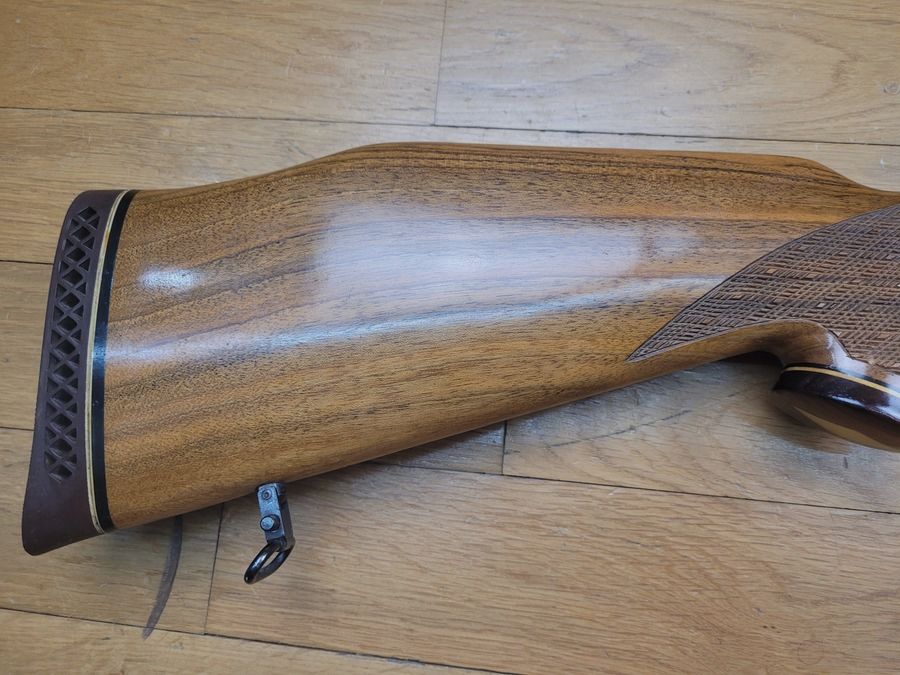
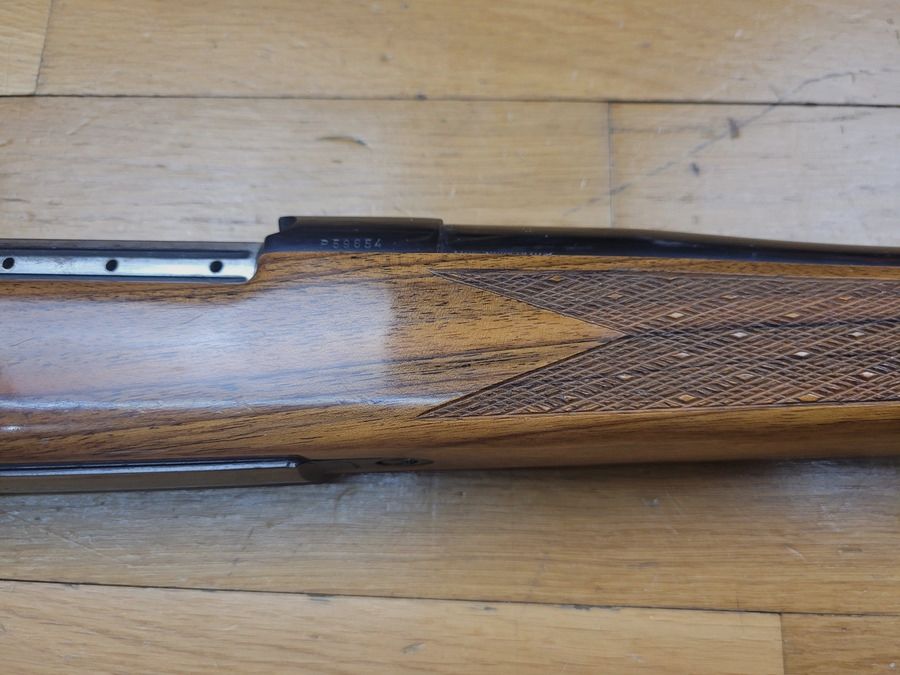
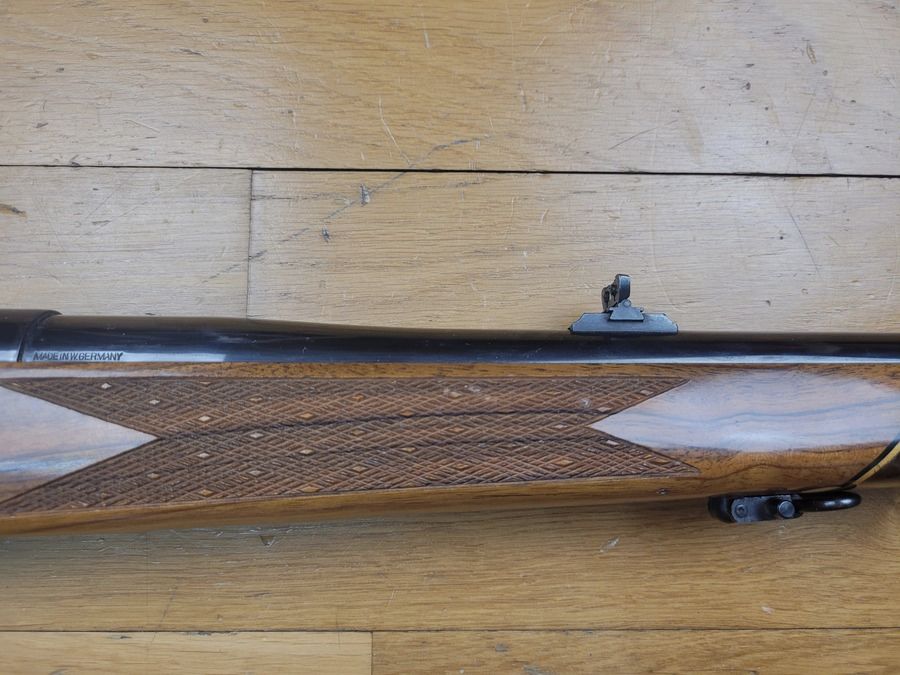
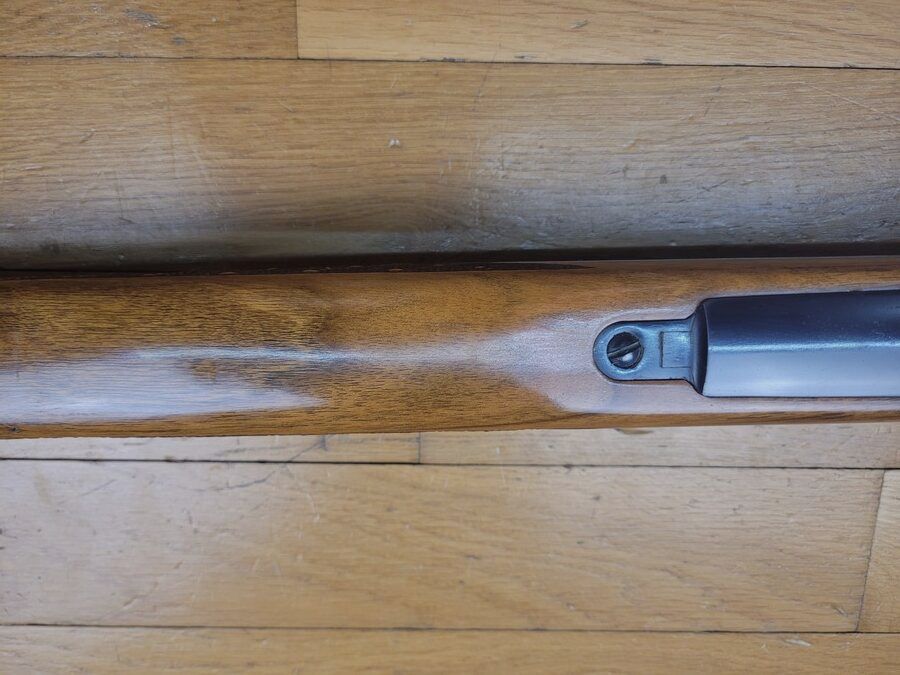
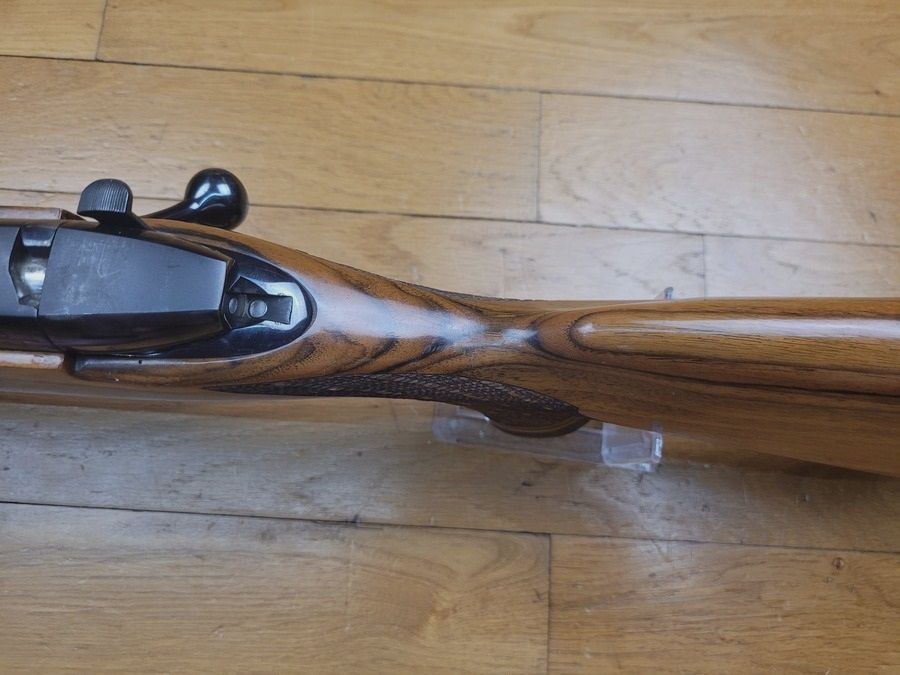
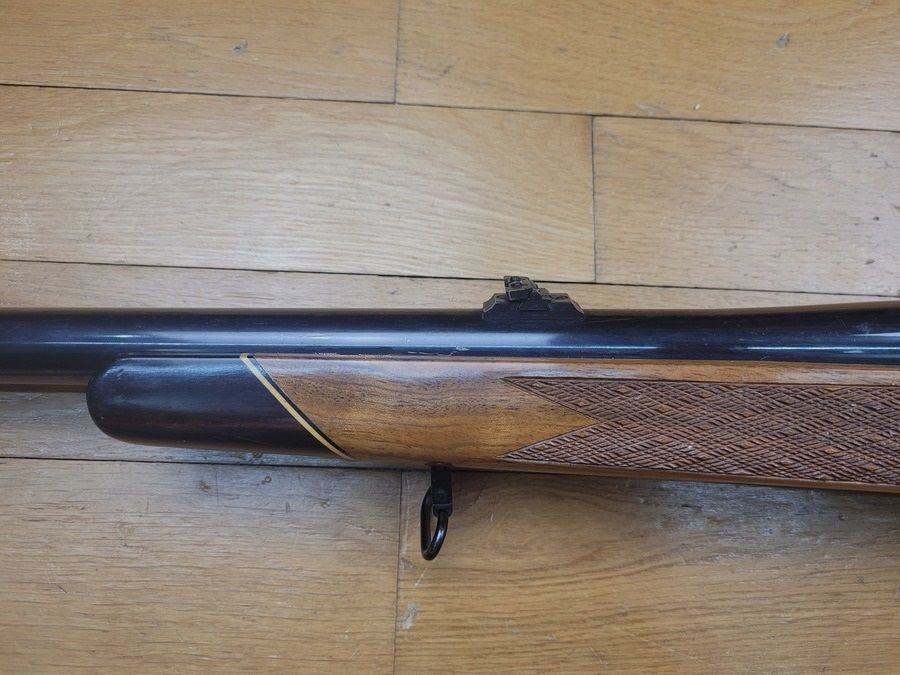
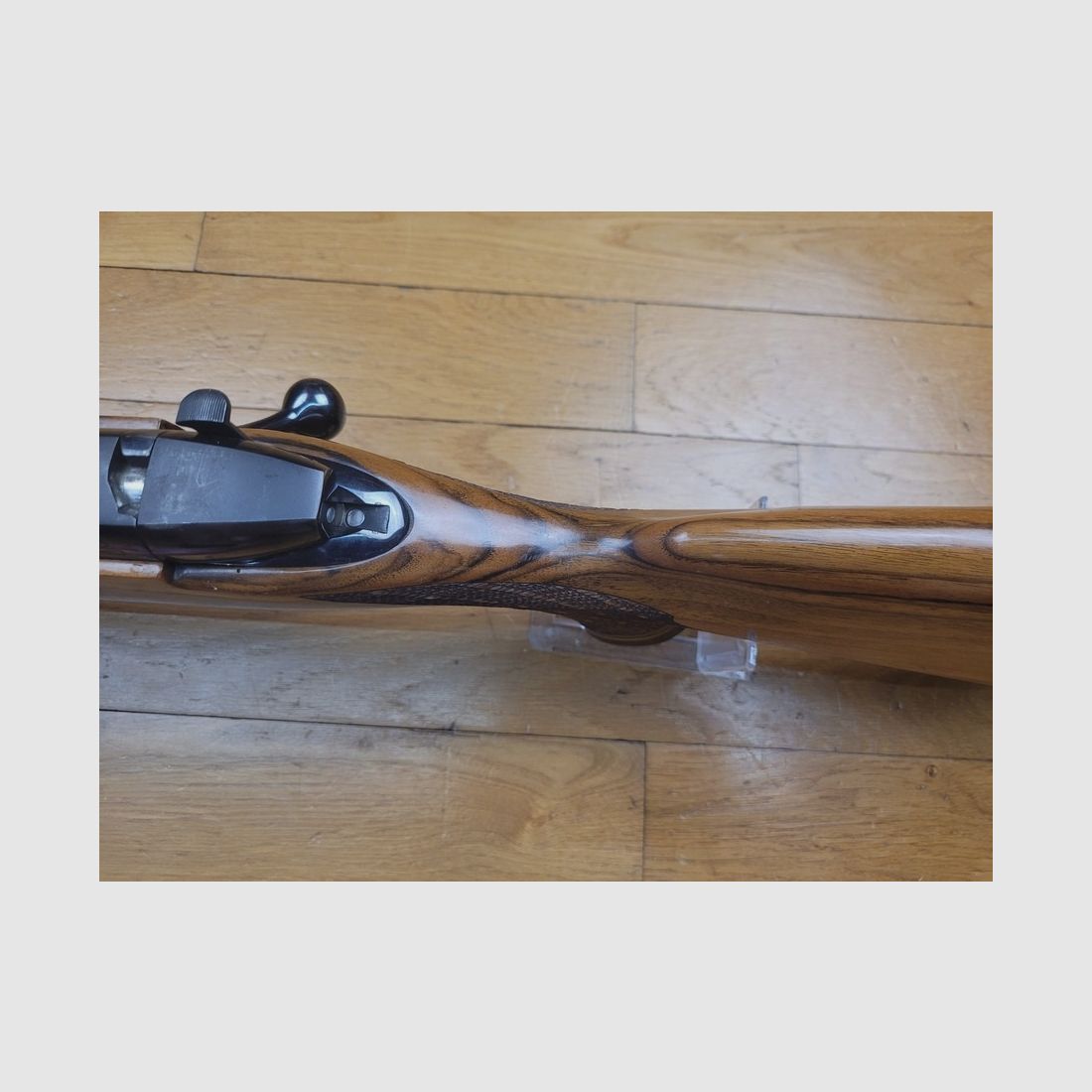
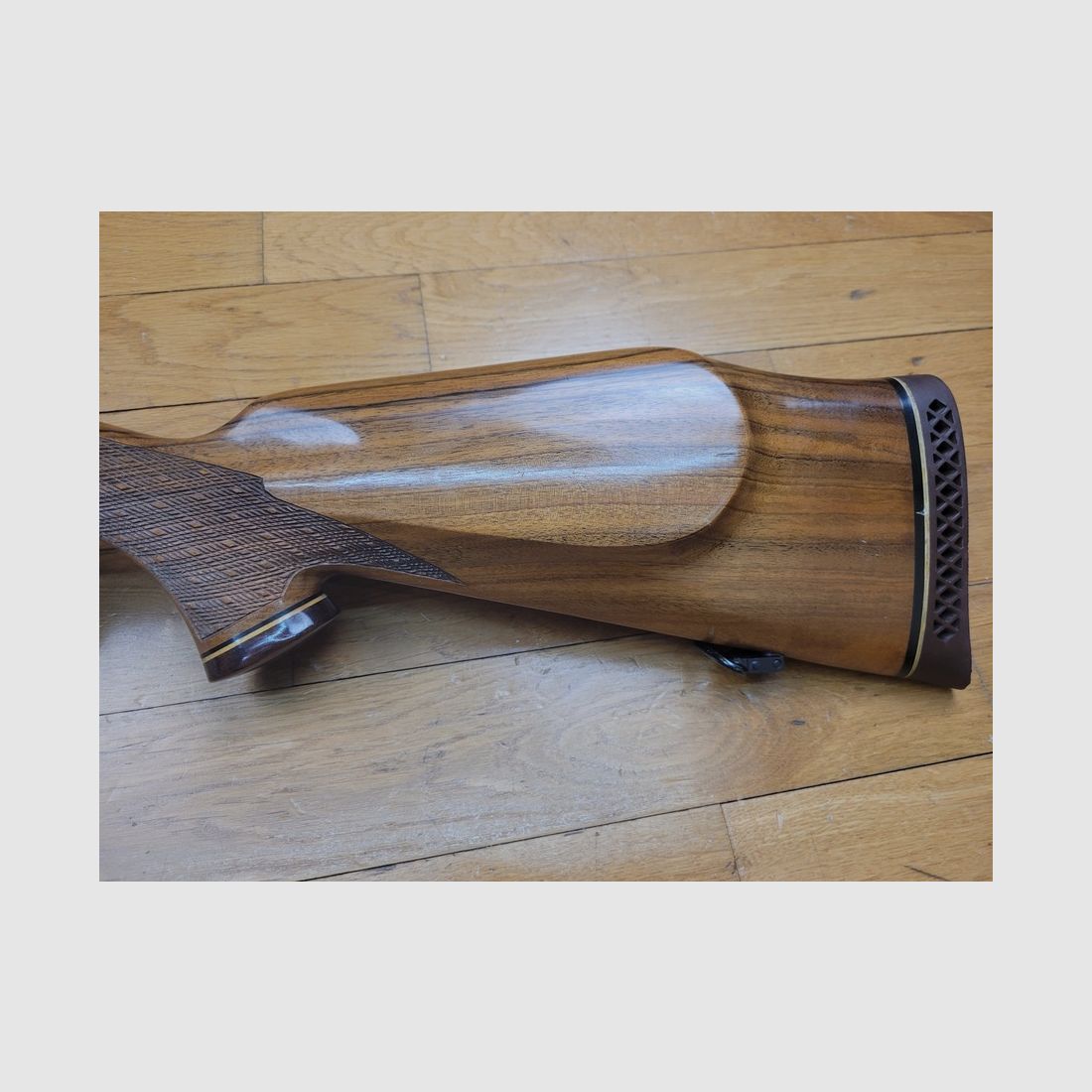
The wood is beautiful blond walnut, with fine grain and lovely brown figuring, top quality. It’s a masterclass in fitting and in working with the direction of the wood grain.
A slightly glossy varnish protects the whole, ideal both for shielding it from the elements and for avoiding excessive glare.
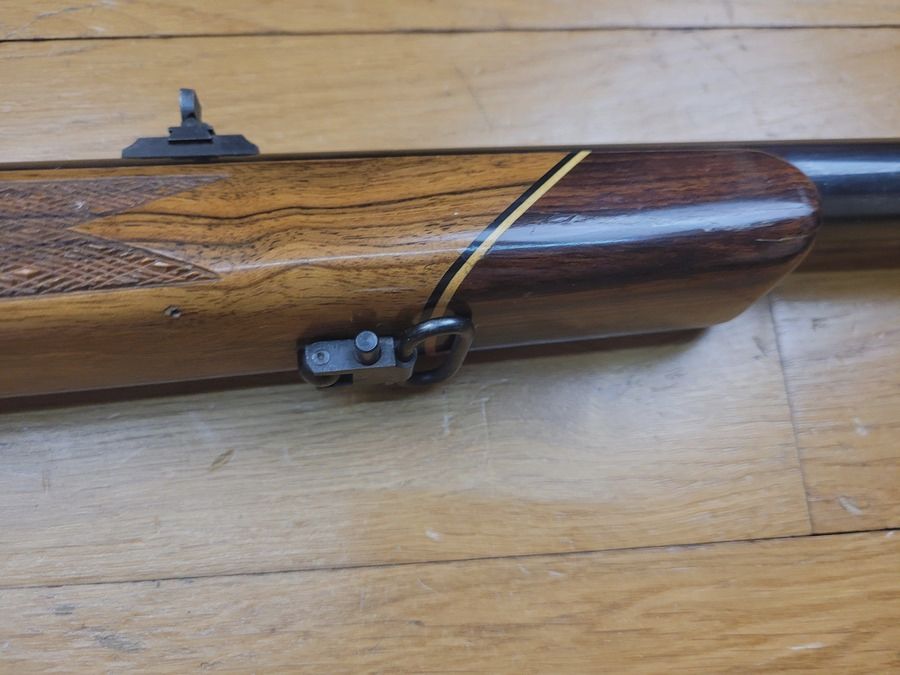
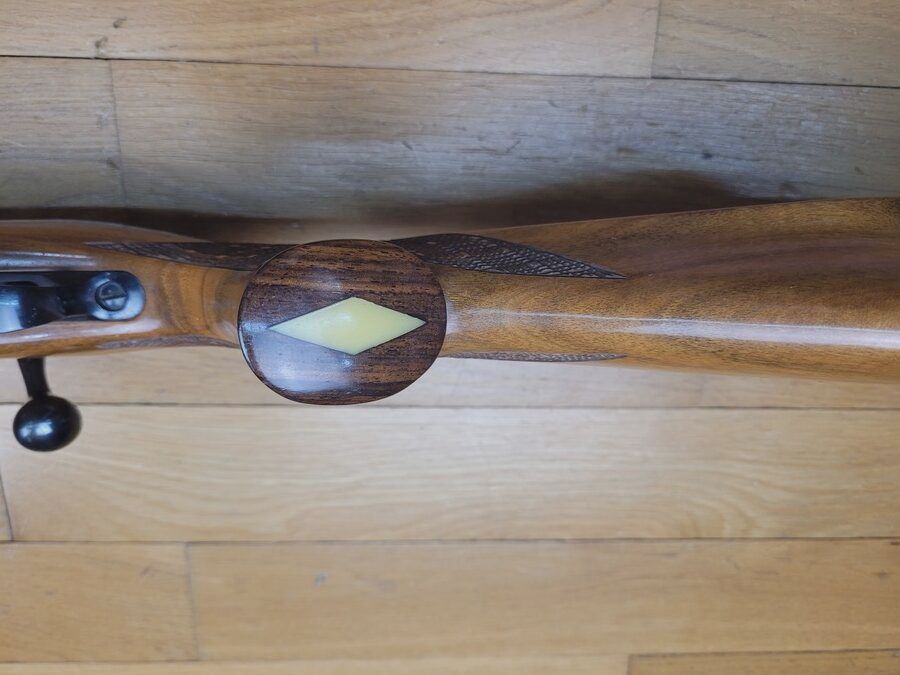
The height of elegance on this German-style stock with its Viennese cheekpiece is the very pronounced pistol grip (Kaiser clif), its tip carved with a bone insert whose alignment and centering are perfect.
The heart
Master Flingus’s heart races as his fingers caress the fine hand-cut Scottish-style checkering that makes the grip areas completely non-slip.
A delightful vintage touch, the fore-end tip is made from darker, denser walnut.
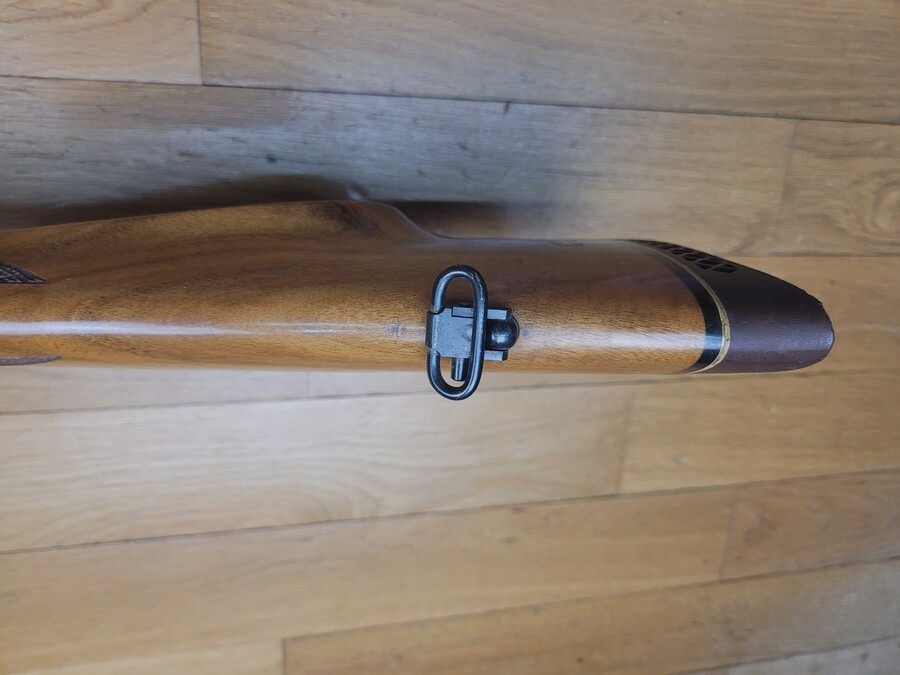
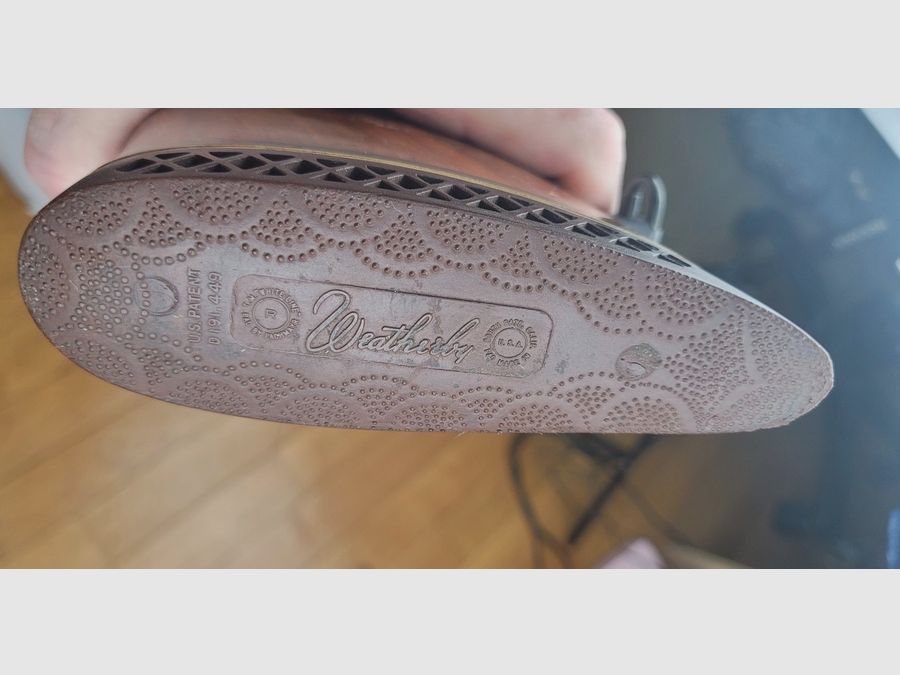
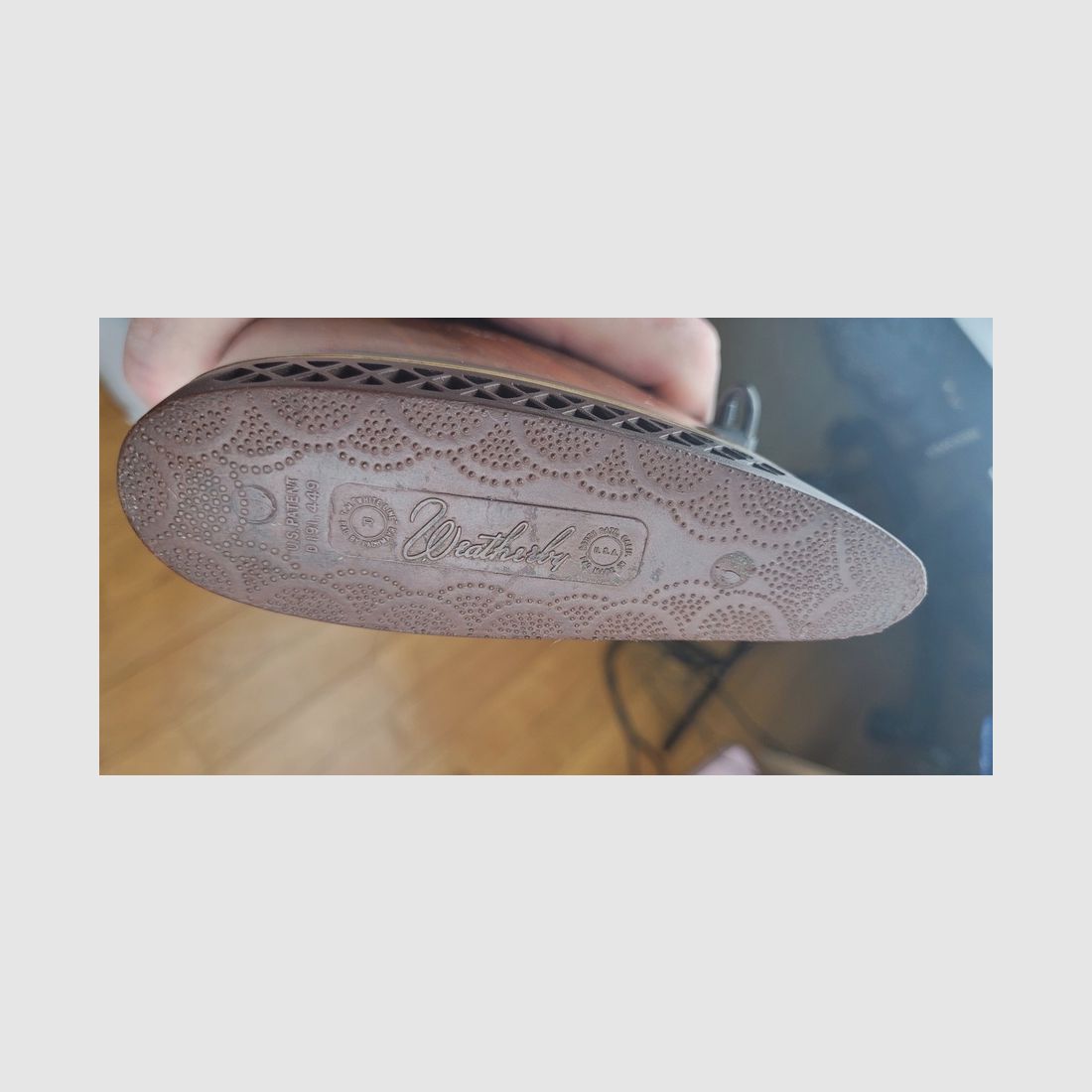
The user’s shoulder is well looked after with a custom Paychmair recoil pad, specially decorated for Weatherby.
Master Flingus has simply added quick-detach sling swivels to the sling studs, allowing you to attach a wide, reinforced sling—ideal for long walks—or use it to absorb some of the recoil, which is nowhere near as impressive as you might think. The weight of the steel and the muzzle brake see to that…
This type of setup lets you switch to a Rhodesian carry in an instant, stowing the sling in a pocket and holding the firearm by the stock.
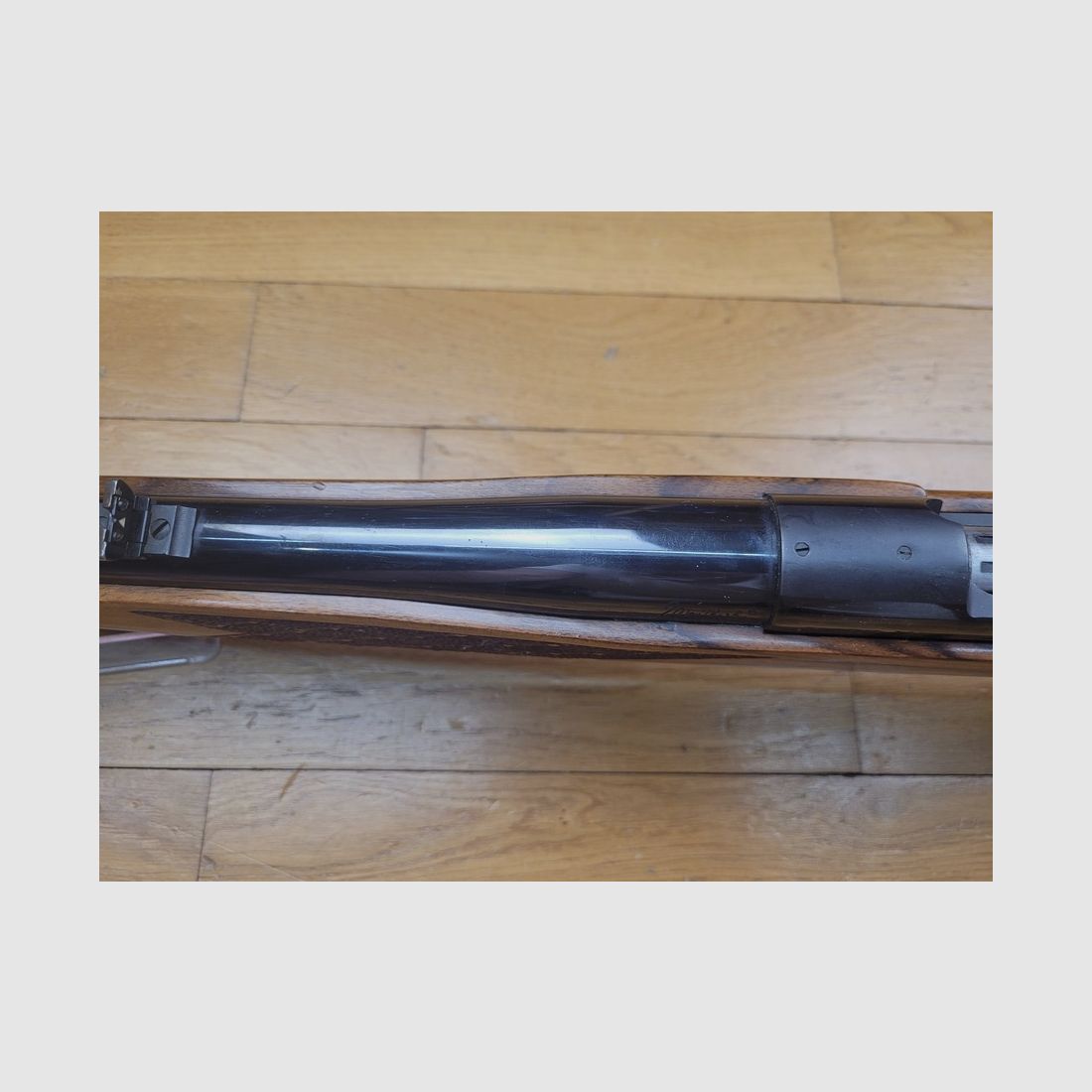
The mass of steel formed by the barrel and receiver is seamlessly integrated with the wood. The fit and finish are exceptional.
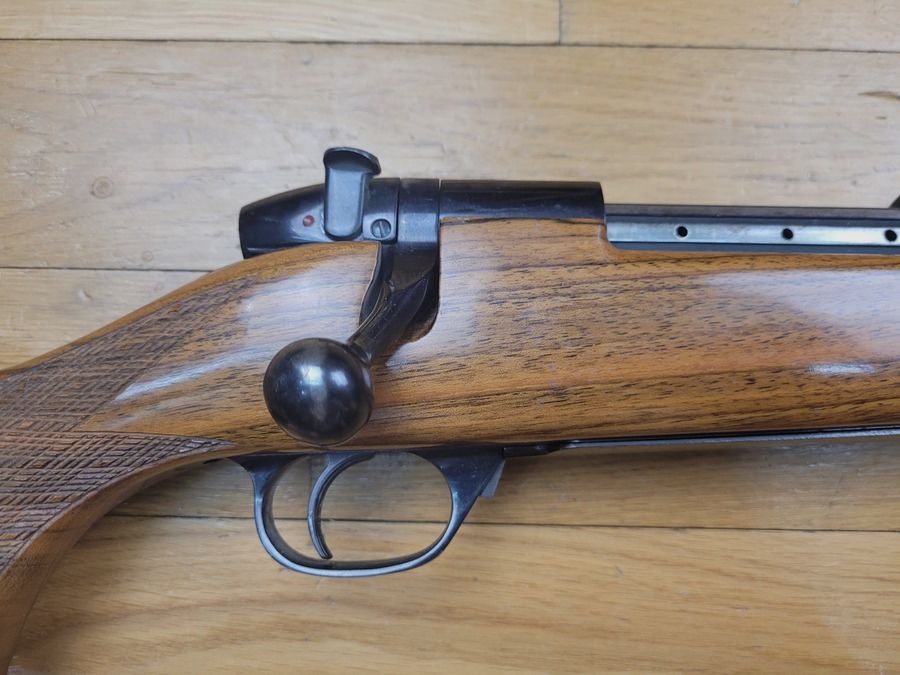
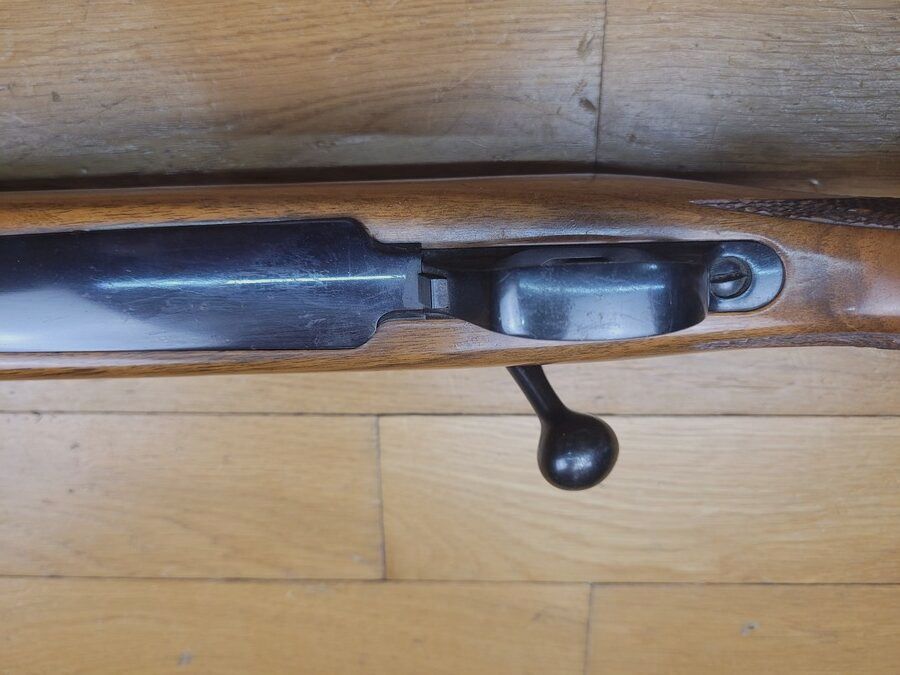
The action is a Winchester 70 type, with an adjustable trigger. Grooved trigger shoe. A smooth pull, like an antelope.
A magazine release button is built into the trigger guard, so you can open it without tools and without risking losing the follower plate and the three very large cartridges it lifts.
The manual safety is on the right side of the receiver. The action’s cock-on-opening design lets you use the trick of chambering a cartridge with the trigger pressed, leaving the firing pin spring uncocked. If an opportunity arises, a simple two-centimeter movement of the bolt handle takes you from “completely safe” to “ready to fire.” Master Flingus will always be fascinated by the practical genius of certain firearm designers…
The bolt comes out as simply as can be by pressing the trigger. Fine grooves help reduce friction and improve lubrication throughout. The nine lugs, arranged in three groups of three, are exceptionally uniform and show no peening.
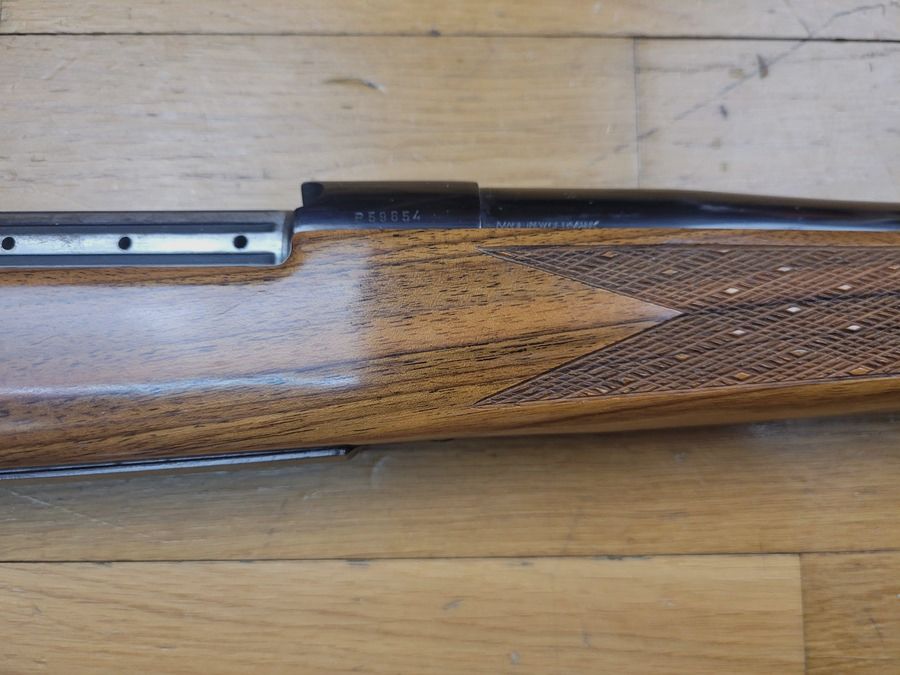
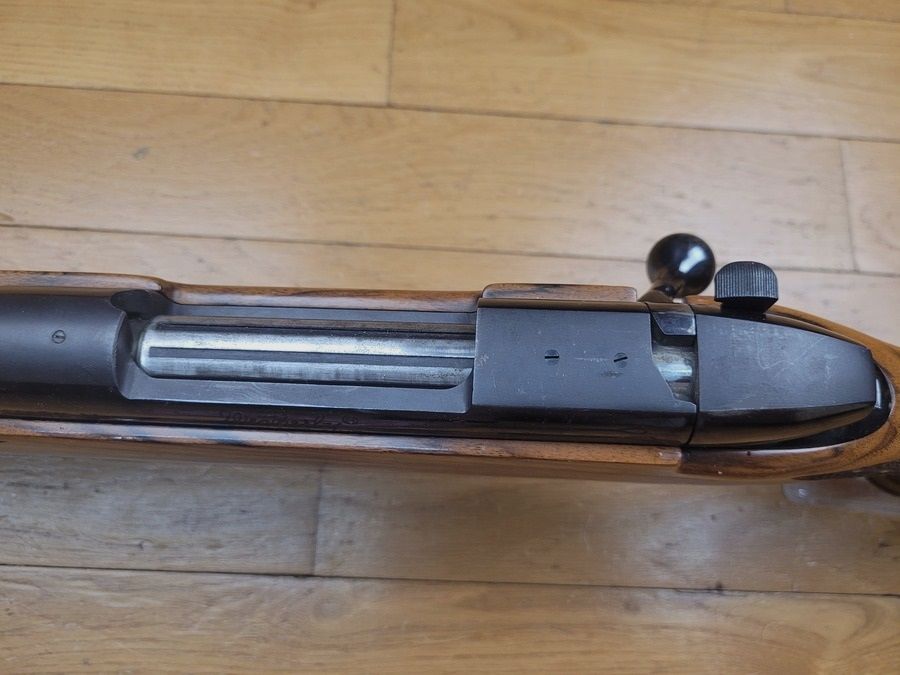
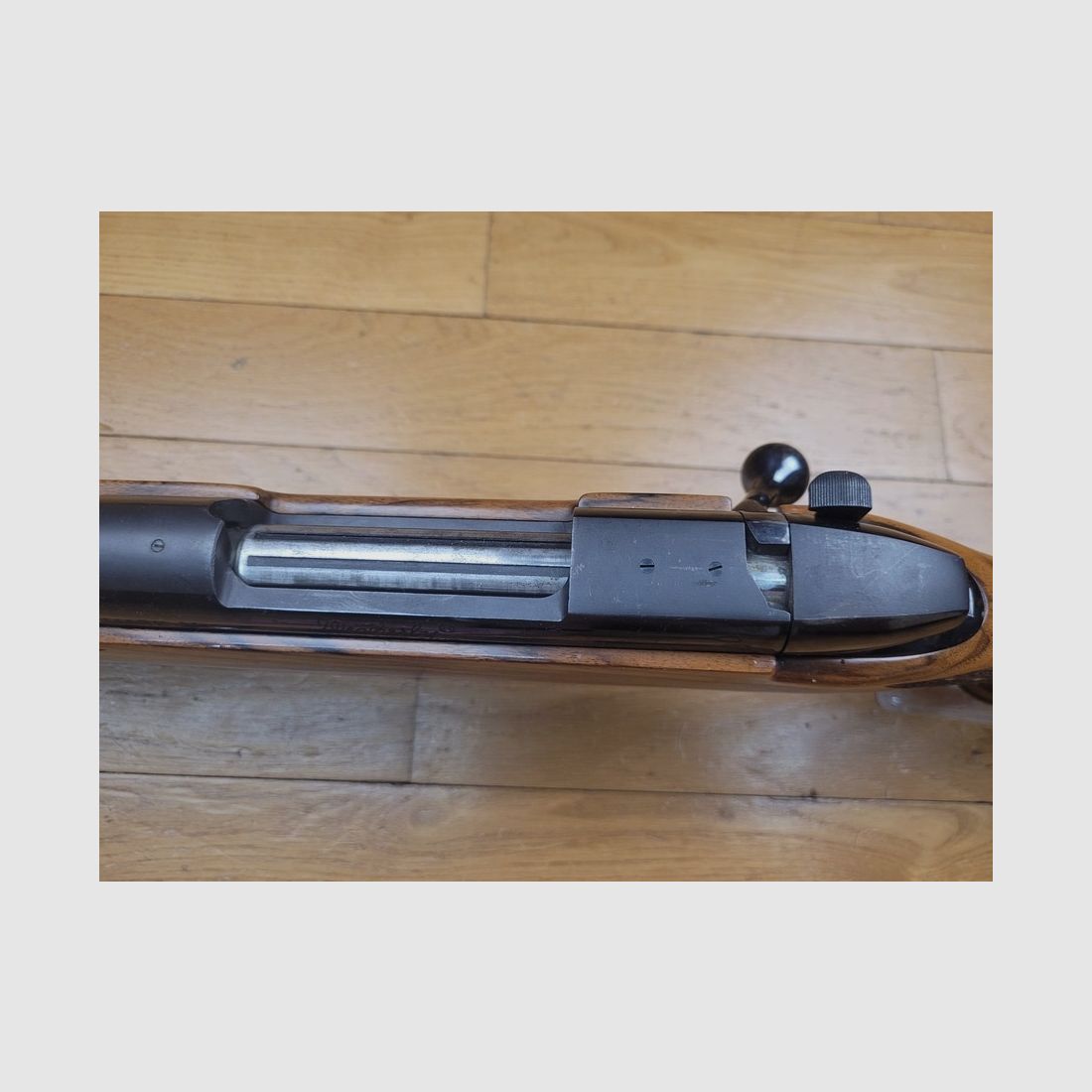
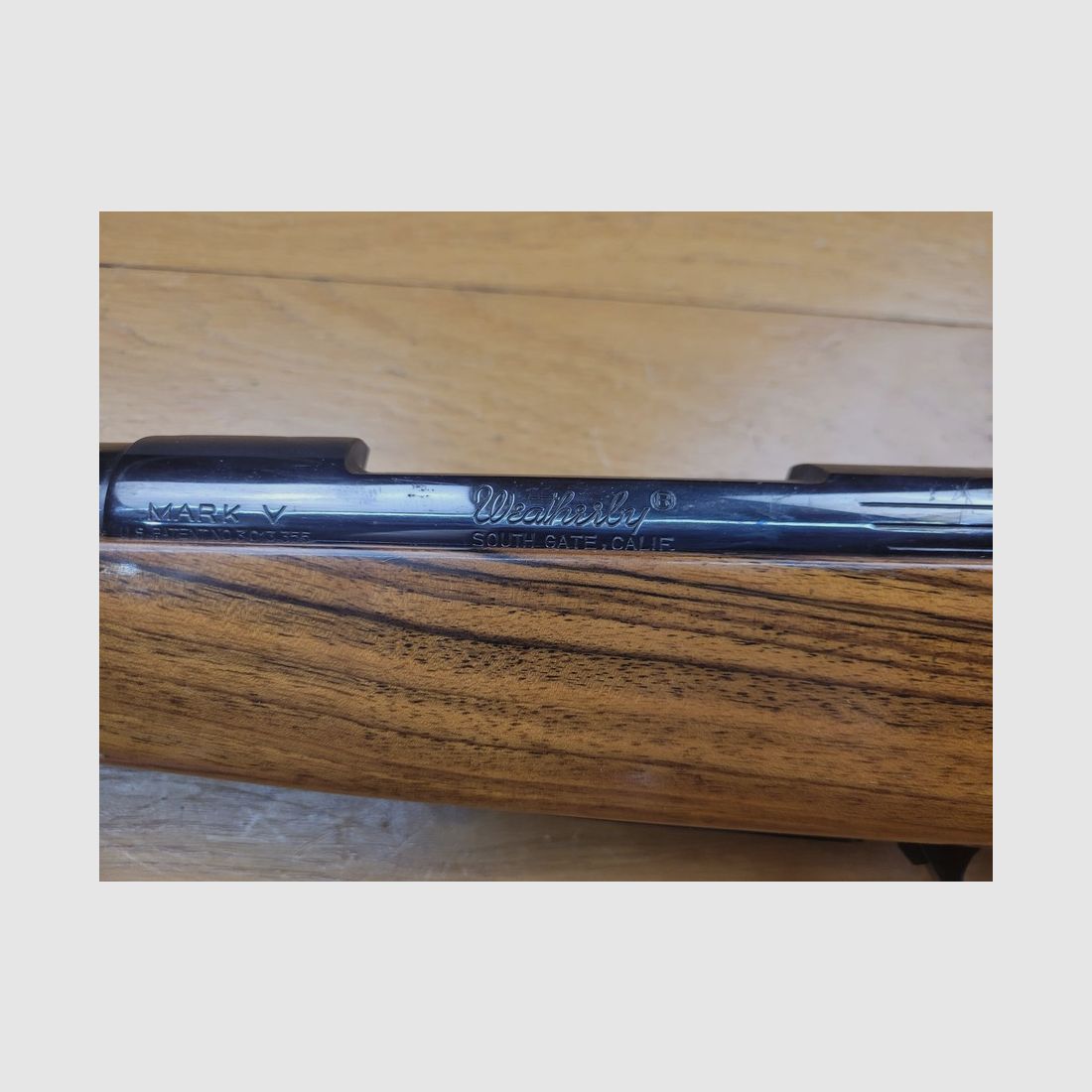
The receiver has a thick, glossy blued finish, almost lacquer-like, of exceptional quality, with beautiful 1940s-style lettering, almost “streamline.” Virtually no signs of handling. In very good condition.
Its appearance is enhanced by three fine lines ending in teardrops. The receiver is drilled at four points to mount a scope directly, or to fit Weaver (11 mm) or Picatinny rails. Traditional sights can also be used, thanks to a discreet but very effective metal leaf rear sight.
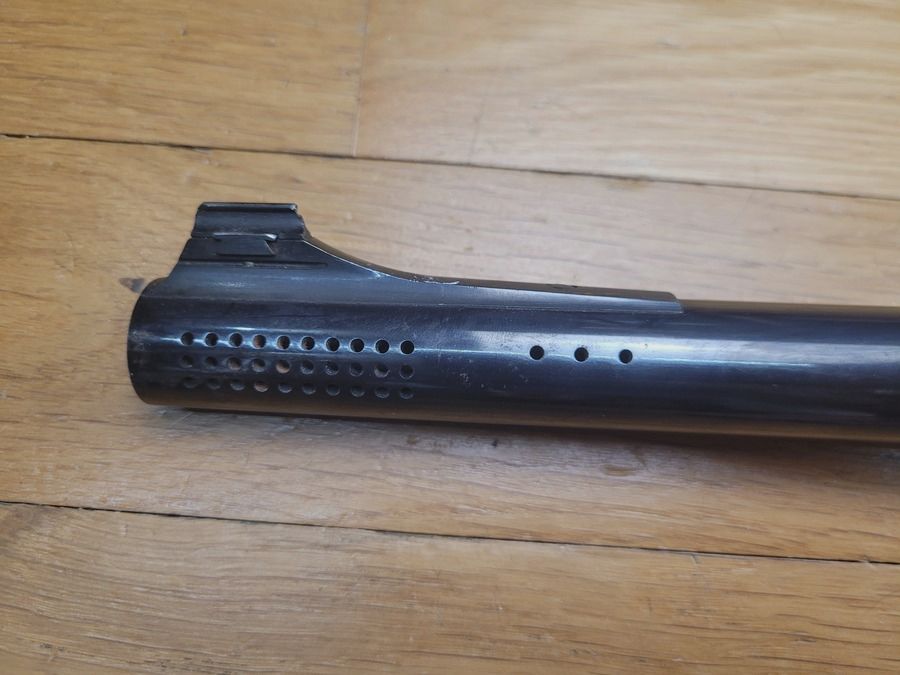
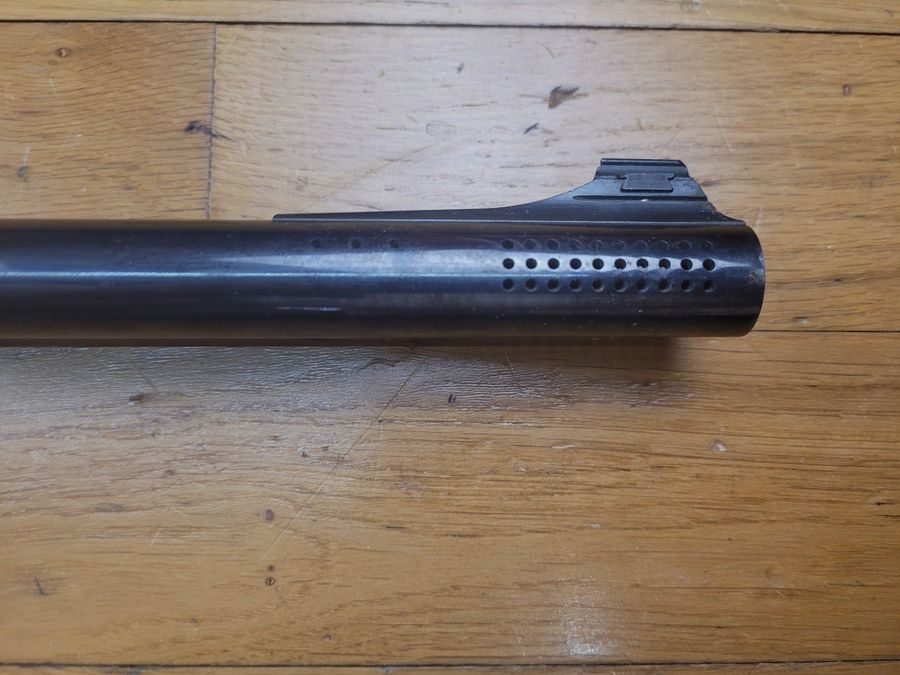
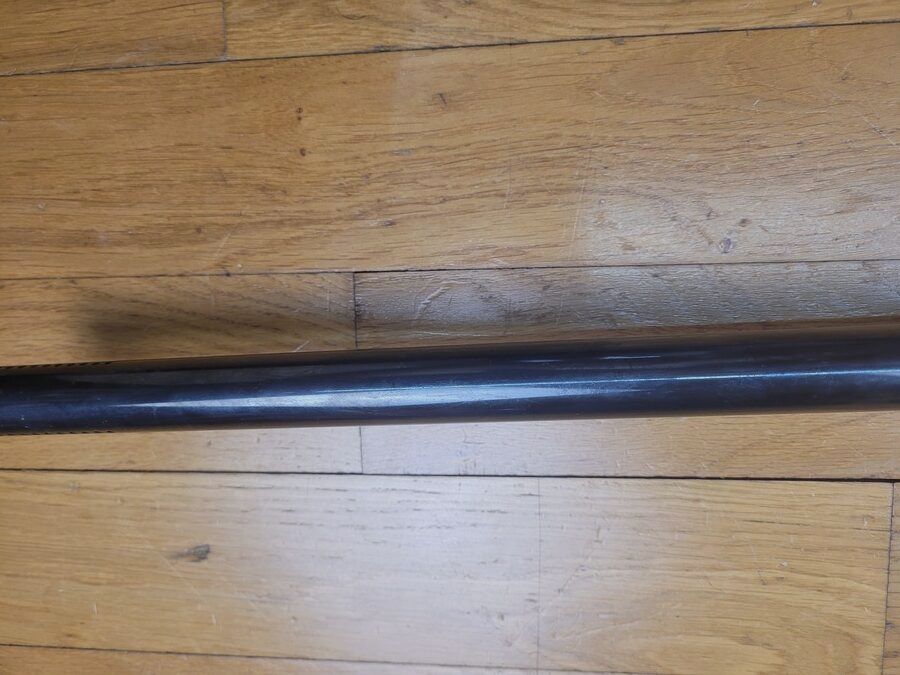
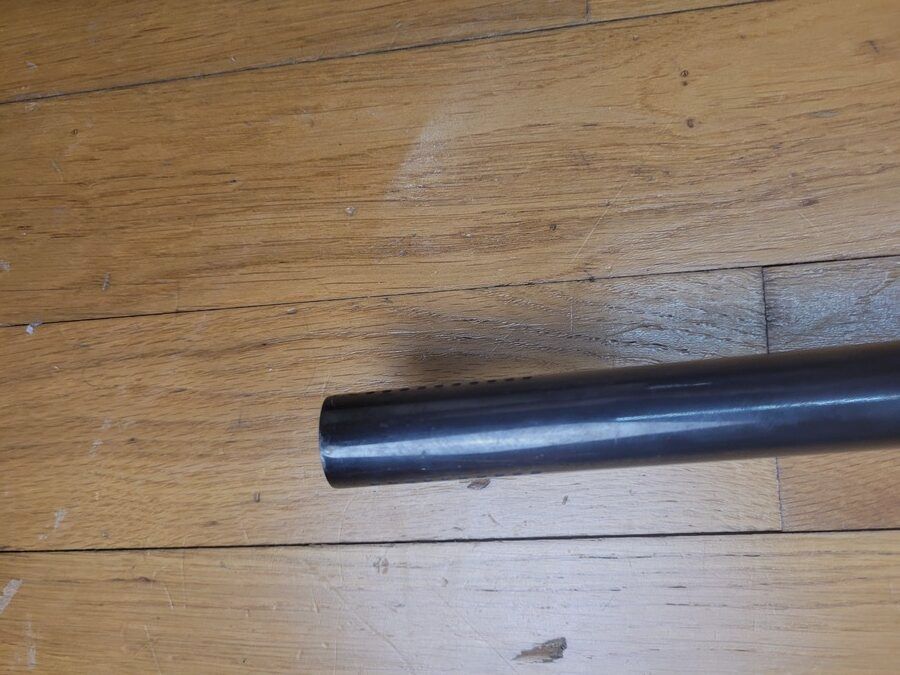
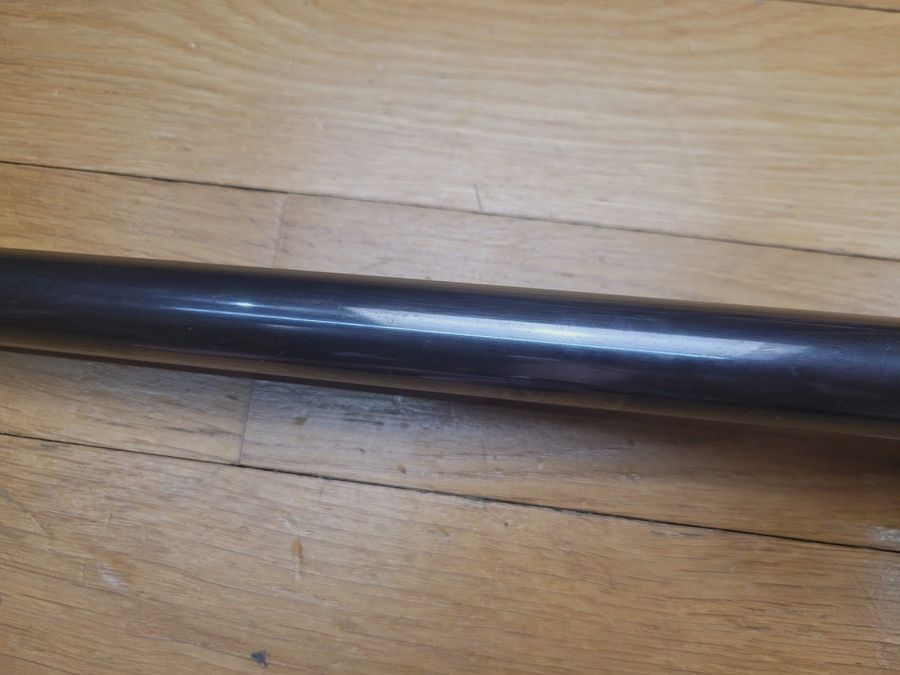
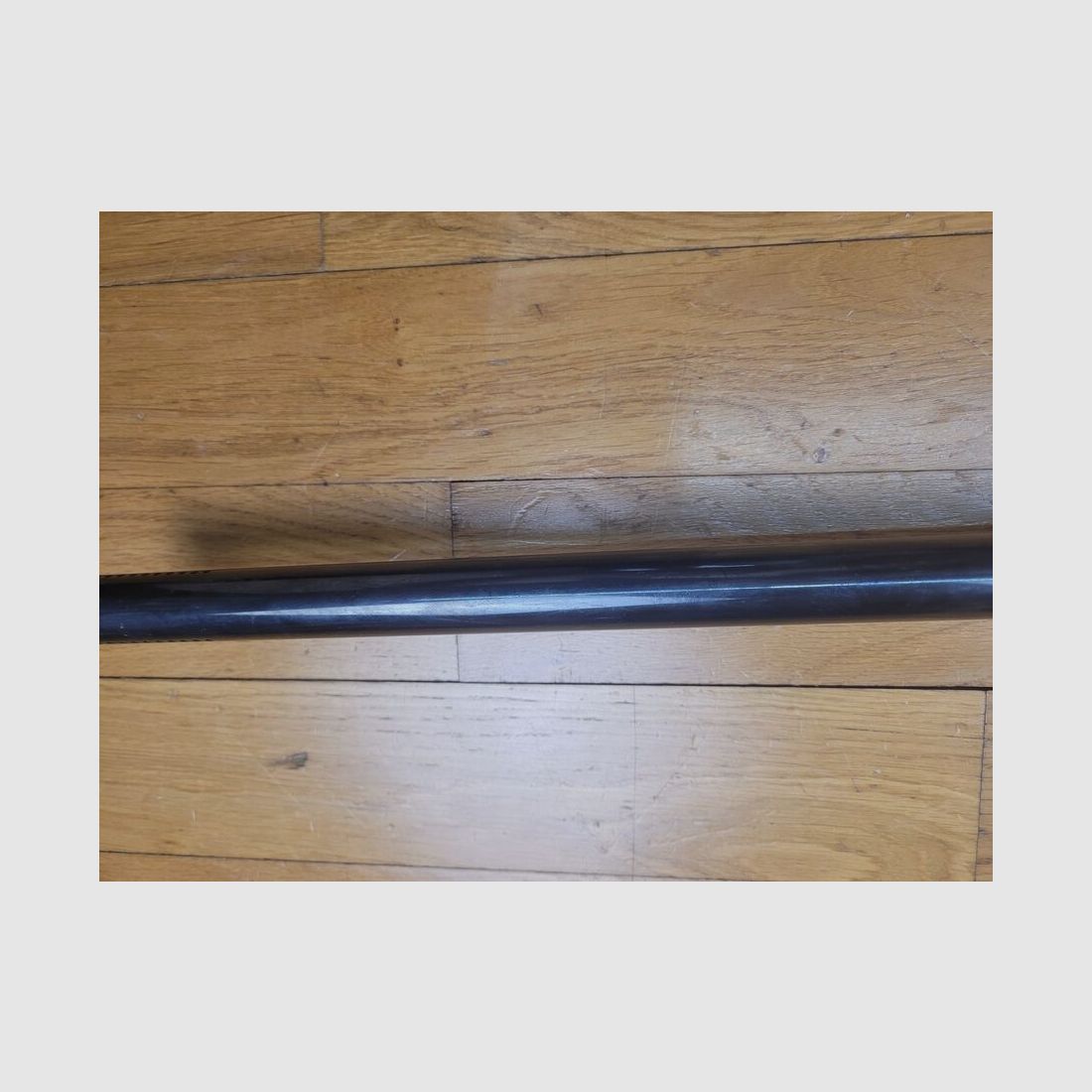
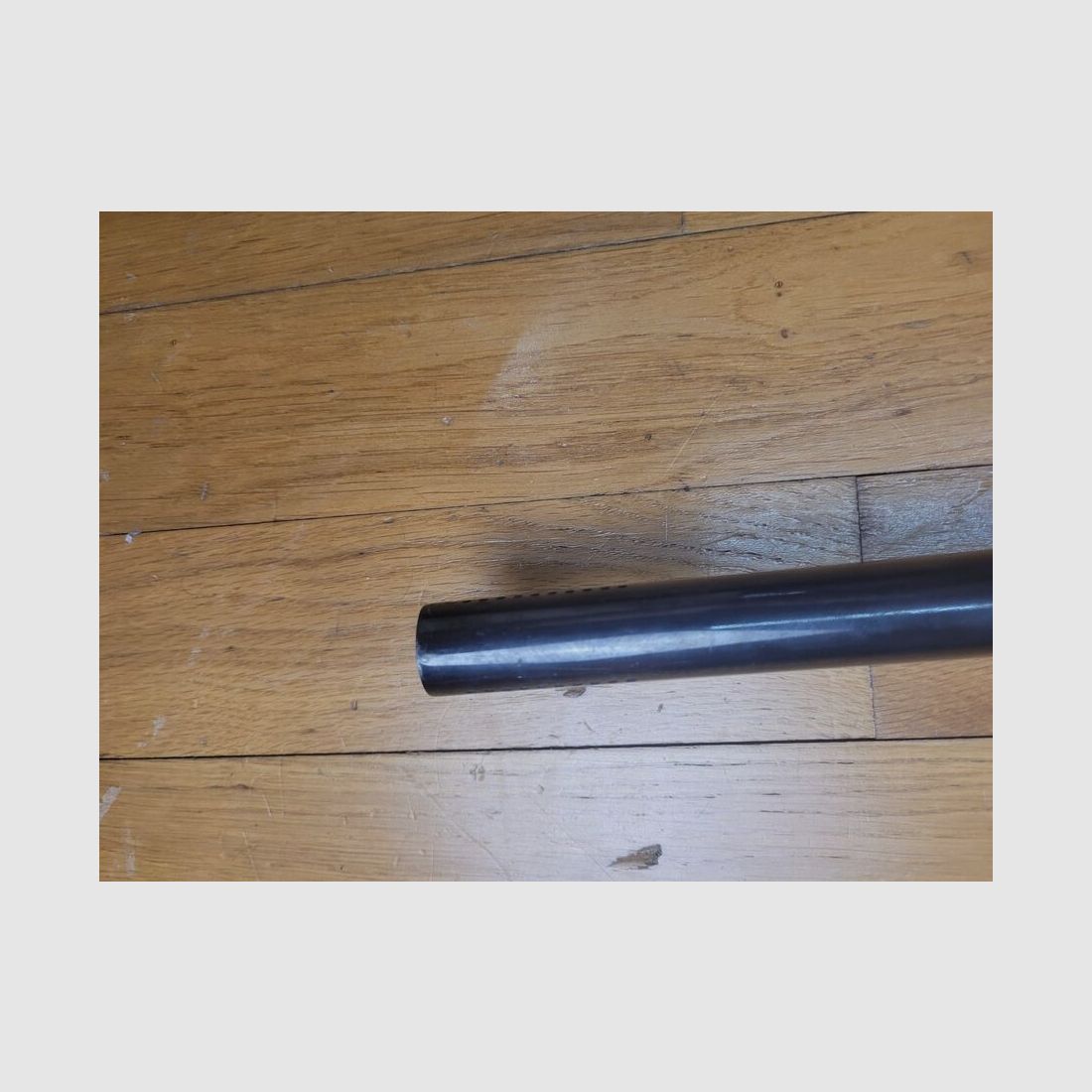
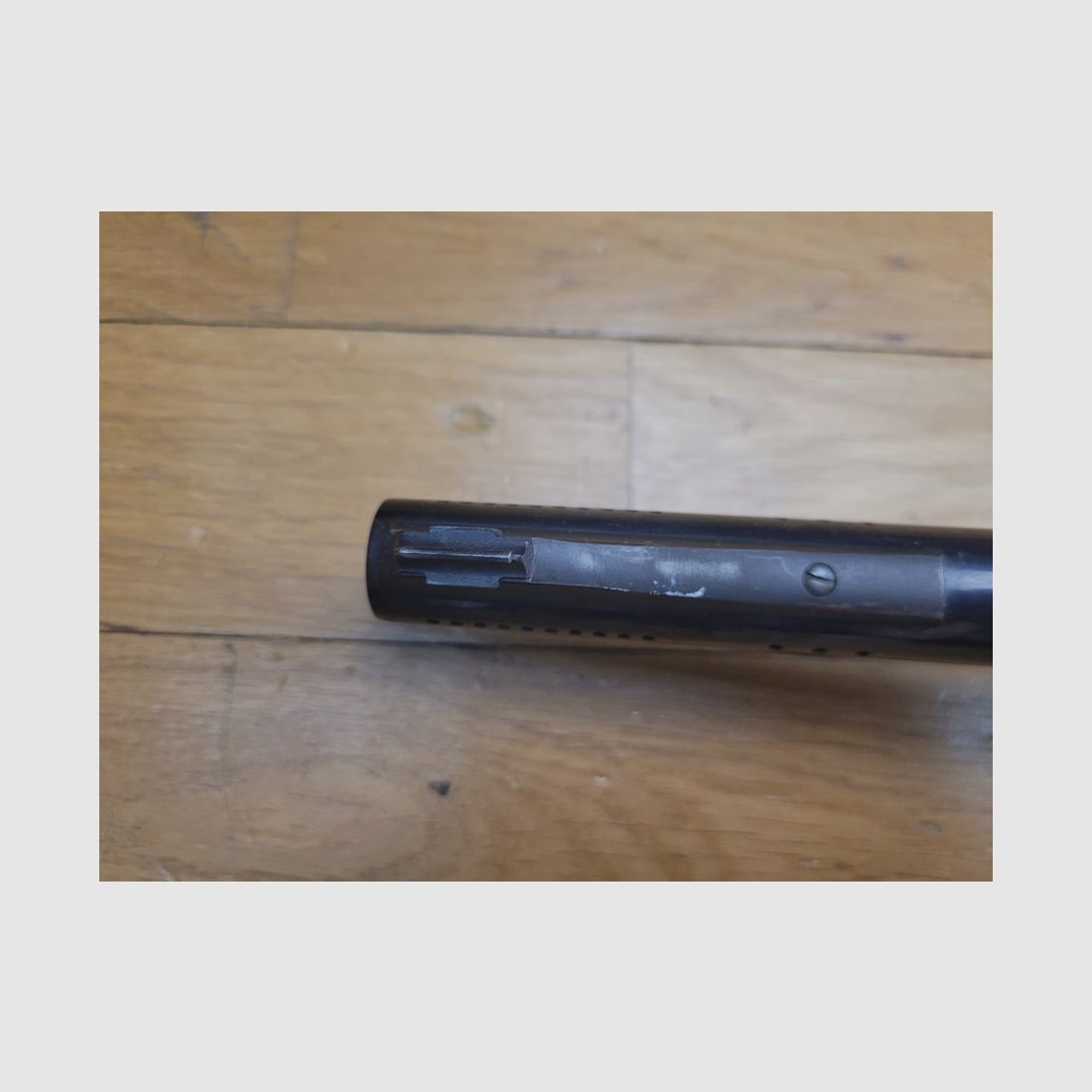
The barrel is in impeccable, mirror-bright condition, with magnificent rifling. It ends in a discreet yet highly effective muzzle brake, with three rows of ports machined directly into the barrel. A work of art! Hats off to Sauer & Son! This muzzle brake and its integration into the barrel itself, together with the steel, help explain the exceptional accuracy that remains the hallmark of firearms like this, despite their somewhat crazy calibers.
In short, an extraordinary firearm, in an extraordinary caliber, made to exceptional standards!
For lovers of fine things, travel and outstanding mechanics, owning a firearm like this is a pleasure in itself, like owning a sports car or a luxury watch. Whether you take it across one of the world’s most beautiful and majestic continents in search of the extraordinary, or simply admire it among your other possessions, this firearm will serve you—and, above all, be an intangible legacy, an ode to quality to pass on to the next generation.
Ps: This magnificent firearm belonged to a very well-known Frenchman and great hunter, whose identity will only be revealed to the buyer.
Category C firearm under the CSI: SIA account required – valid shooting licence or hunting licence with…
c valid for the current or previous year AND a valid ID card or passport. Reminder: with your shooting license or hunting license, you can own an unlimited number of category C firearms.
******************************************************************************************************************
Let’s say it again! Flingus Maximus gun shop in Paris and throughout France is also here to help with private firearm transfers, buying firearm and militaria collections, firearm appraisals, and questions about firearms in estates and inheritances. Contact your favorite gunsmith using our contact form or at [email protected] (Show description in original language)
Si la frontière entre arme légère et artillerie lourde est en général assez facilement perceptible, surtout pour ceux d’en face, avec cette carabine Weatherby en .460 du même nom, nous sommes à un cheveux du canon César…
Maître Flingus vous a en effet déniché du lourd, du très lourd. Dans tous les sens. Au vu de la bête, l’inspecteur Harry aurait sans doute pu lui taper dans le dos en lui proposant une bibine au Shangri-la où travaille sa cousine Paulette…
Arme de tous les records, tant par son calibre que par son gibier, on ne peut nier que les fabrications issues de la maison mère qui a donné son nom à la cartouche éponyme, sont d’un niveau d’excellence parmi les plus élevés que l’on puisse trouver sur le marché.
Resté 30 ans le calibre manufacturé le plus puissant du marché, le .460 Weatherby a contribué au succès et à la diffusion de la carabine à culasse Mauser dans le monde de la chasse au très gros gibier.
Alors qu’il faut 1000 joules à 100m pour terrasser un chevreuil moyen, le .460 Weatherby, c’est 10 000 joules à 200m…
Développée spécialement pour être employé face à des animaux à la peau parmi les plus dures qui soient et dont la masse de plusieurs tonnes fait de véritables forces de la nature, il est hors de question, tant sur le plan éthique que sur celui de la survie, de faire autre chose que de se munir d’armes appropriées. Face à la charge d’un très gros animal, le .460 Weatherby est ce qui se fait de mieux.
La chasse en Afrique a ses propres règles et repose sur une organisation qui lui est propre. Elle nécessite une batterie d’armes. En plus de la carabine de grande chasse, un fusil de brousse (souvent un pompe ou un semi-auto chargé en alternance de Sauvestres et de chevrotines) s’avère un allié précieux sur le félin.
Il est également recommandé d’avoir toujours à portée de main un fusil plus puissant que celui adapté au gibier prévu ce jour. Comme dit le proverbe : « quand tu pars chasser la gazelle, prends ton fusil à éléphant ».
Pendant longtemps, ces derniers restèrent hors de portée des chasseurs occidentaux. Seuls les fusils de rempart auraient à la rigueur pu faire quelques dégâts. De façon traditionnelle, George Blond nous décrit que sa chasse peut se faire à la sagaie, mais cela demande une bonne dose de courage et aussi de savoir viser au plus profond possible de l’encolure…
Parfois de vieux fusils à pistons se voyaient utilisés. Leurs canons fortement raccourcis étaient chargés de longs lingots de fer façonnés au marteau ( !). L’idée était de blesser mortellement l’animal puis de ne pas le lâcher d’une semelle jusqu’à ce qu’il tombe de lui-même tout en faisant très attention dans la phase de suivi.
La seconde moitié du XIXème siècle vit apparaître les armes au calibre 4 (26mm de diamètre, 120g de plomb) à percussion. Mais on est là dans l’artillerie. Le recul était tel qu’un utilisateur régulier comme Frédéric Selous, chasseur mythique et accessoirement guide de chasse africaine du Président Théodore Roosevelt, pouvait en être projeté au sol et devait se faire masser pendant plusieurs heures après le tir pour pouvoir remarcher normalement… Un jour, qu’il n’épaulait pas correctement, la crête du chien de son calibre 4 lui lacéra la joue au point de lui laisser une cicatrice parmi les plus célèbres du continent.
Ces armes à chargement par la bouche se maintinrent jusqu’aux années 1880 où elles côtoyèrent de magnifiques express et mono-coups à chargement par la culasse de fabrication britannique.
Or si l’enchaînement de deux coups très puissants avait son intérêt, disposer d’armes à répétition se faisait cruellement sentir. Les buffles prélevaient eux-aussi nombre de chasseurs. Pensons par exemple à Hubert Latham, grand pionnier et recordman de l’aviation, qui finit disloqué par un buffle en 1912 là où la quasi-totalité de ses compagnons pionniers finirent, eux, disloqués par leur machine. Mais Latham avait toujours été un grand orignal…
Il est aussi désormais révolu le temps d’Hemingway, de Théodore Roosevelt et de Percy Powell, où un simple fusil réglementaire était emporté pour compléter, voir remplacer, les gros express chargés à la nitro (coton poudre), afin de voir si « cela fonctionne ». De fait, il n’est pas rare de trouver dans la littérature idoine des récits recommandant le 6,5 des fusils Carcano pour le crocodile ou bien le 303 british d’un Lee Enfield pour l’éléphant à placer avec soin derrière l’oreille du pachyderme.
Ces calibres « moyens », en particuliers le 30.06 ont tout à fait leur place pour le gibier de ce continent, sources d’aventures et de fantasmes. Après tout on y trouve les plus belles gallinettes cendrées selon certains…
Personnage haut en couleur, Roy Weatherby (1910-1988) est le Elmer Keith du monde des armes de chasse. Balisticien de terrain et industriel de talent, la seconde moitié du XXème siècle lui doit beaucoup en matière de chasse et grande chasse.
Utilisant des étuis à très grand volume intérieur comme les 300 et 375 Holland, il y place au sommet des ogives de « petits » diamètres. Il martèle à qui veut l’entendre que la clef d’un bon calibre de chasse réside dans son choc hydrostatique, une théorie qui fera des émules jusque dans le monde militaire.
Pour créer ce choc hydrostatique aux distances nécessaires ses torpilles doivent se déplacer non seulement sur une trajectoire très tendue mais également à des vitesses dépassant les 800m/s avec des balles de 500 grains…
Pour donner les échelles du sujet, une 9 para c’est 330m/s pour 120 grains de balle en gros et une cartouche militaire puissante type 8×57 c’est 700 m/s avec un boulet de 180 grains.
Créer ces cartouches était déjà un exploit, mais les exploiter exigeait de développer des plateformes adaptées.
Un simple boîtier de Mauser classique à trois tenons ou de Winchester 70 de surplus ni auraient pas résisté longtemps et n’étaient, en plus, pas digne de la clientèle élitiste à laquelle ils étaient destinés.
C’est ici que les créations de Roy Weatherby rejoignent à nouveau le domaine de l’artillerie en reprenant les culasses à 9 tenons disposés sur trois rangs successifs. Il est ainsi possible de démultiplier la surface d’appui des tenons sans pour autant les rendre trop massifs et pouvoir circonscrire le tonnerre dans un diamètre encore raisonnable.
Autre avantage, nous passons ainsi d’une rotation du levier d’armement de 90° à 54°, réduisant quasiment de moitié l’amplitude du geste.
Doubler un gros animal ne sera désormais plus un mythe de Nemrod.
C’est de ces recherches et considérations sur la cartouche et l’arme qui la chambrait, dans une méthode très Elmer Keith encore une fois, qu’est née notre carabine Weatherby MKV, une arme d’exception pour des gibiers et des aventures d’exceptions.
Weatherby ne pouvait confier l’exécution et la fabrication de cette arme hors normes qu’aux meilleurs.
A partir de 1957, ce n’est rien moins qu’au plus prestigieux des fabricants allemands, Sauer & Sohn, qu’il s’adresse, rejoint 7 ans plus tard, par le fabricant japonais Howa dont les éloges ne sont plus à faire. Un de leur très bon produit est ici.
L’arme ainsi crée possède des lignes à la fois très germaniques et très fifties. Nous sommes entre la Thunderbird et la carabine de chasse allemande d’aristocrate saxon.
Ce beau monstre que nous vous présentons ici fait partie des fabrications top niveau allemandes de chez Sauer. Elle n’a pas subit pas le poids des années, elle en est magnifiée.
Le bois est d’un très beau noyer blond, au grain fin avec de jolies veines brunes de premier choix. C’est un modèle d’ajustage et de maîtrise du sens des fibres du bois.
Un verni légèrement brillant protège le tout, idéal tant pour le protéger des éléments que d’éviter de faire trop de reflets.
Summum de l’élégance sur cette crosse à l’allemande à joue viennoise, la poignée pistolet, très prononcée (Kaiser clif), est ciselée en son extrémité par un insert en os dont l’alignement et le centrage sont parfaits.
Le cœur de Maître Flingus palpite quand ses doigts caressent le fin quadrillage manuel à l’écossaise qui rend les emplacements des mains totalement antidérapants.
Petit élément vintage très plaisant, l’extrémité du fut est réalisée dans un noyer plus sombre et plus dense.
Le souci de l’épaule de l’utilisateur a pris la forme d’un sabot amortisseur Paychmair personnalisé et décorés spécialement pour Weatherby.
Maitre Flingus s’est simplement permis de compléter les grenadiers par des passants à libération rapide (quick detach) dans lesquelles vous pouvez placer une large bretelle renforcée idéale pour les longues marches ou s’en servir pour amortir une partie du recul loin d’être aussi impressionnant que l’on le pense. Poids des aciers et frein de bouche obligent…
Ce type de montage permet de passer à un port rhodésien, en un instant, en rangeant la bretelle dans une poche et tenant l’arme par la crosse.
La masse d’acier que constitue l’ensemble canon et boîtier ne font qu’un avec le bois. Qualité extrême des ajustements.
La mécanique est de type winchester 70 avec un départ réglable. Queue de détente striée. Départ doux comme celui d’une antilope.
Un bouton d’ouverture du magasin est intégré au pontet ce qui permet de l’ouvrir sans outil ni risquer de perdre sa planchette élévatrice et les trois très grosses cartouches qu’elle soulève.
La sécurité manuelle est située sur la droite du boîtier. Le fonctionnement de ce dernier avec un armement à l’ouverture permet d’utiliser l’astuce de chambrer une cartouche détente pressée ce qui permet d’avoir le ressort de percuteur désarmé. Si une opportunité se présente, un simple mouvement du levier de deux centimètres et vous passez de « sûreté totale » à « prêt à faire feu ». Le génie pratique de quelques concepteurs d’armes fascinera toujours Maître Flingus…
La culasse s’extrait le plus simplement du monde en pressant la détente. De fines gouttières permettent de limiter les surfaces de frottement et de lubrifier davantage l’ensemble. Les neuf tenons disposés en trois ensemble de trois sont d’une régularité exemplaire et sans matage.
Le boîtier est d’un bronzage glacé, épais, presque laqué d’une qualité exceptionnelle avec une très belle police de style années 40, quasi « streamline ». Quasiment aucune marque de manipulation. Très bel état.
L’esthétisme est renforcé par la présence de trois fines lignes se terminant en gouttes d’eau. Le dit boitier est percé en quatre points pour fixer directement un montage de lunette ou bien des rails weaver (11mm) ou picatiny. L’option d’utiliser les organes de visée traditionnelle est également possible grâce à une hausse métallique à planchette, discrète, mais très efficace.
Le canon est dans un état impeccable, miroir, avec de magnifiques rayures. Il se termine par discret mais très efficace un frein de bouche à trois rangées d’évents directement usinés dans la masse du canon. Du grand art! Chapeau Sauer & son ! Ce frein de bouche et son insertion dans le corps même du canon, alliés aux aciers, explique entre autres choses l’extrême précision qui reste l’apanage de telles armes en dépit de calibres un peu fous.
Bref une arme hors-normes, dans un calibre hors-normes et dans une fabrication d’exception !
Amateurs de belles choses, de voyages et de mécanique hors pairs, s’offrir une arme telle que celle-ci est un plaisir en soi comme s’offrir une voiture de sport ou une montre de luxe. Que ce soit pour parcourir l’un des plus beaux et majestueux continent du monde à la recherche de l’exceptionnel ou bien pour l’admirer souvent parmi d’autres, cette arme sera à votre service mais surtout un patrimoine immatériel, ode à la qualité à transmettre à la génération suivante.
Ps : cette arme somptueuse appartenait d’ailleurs à un français très connus et très grand chasseur dont l’identité ne sera révélée qu’à l’acquéreur
Arme de catégorie C au CSI : Compte SIA obligatoire – Licence de tir en cours de validité ou bien un permis de chasse avec sa validation pour l’année en cours ou l’année précédente ET CNI ou passeport en cours de validité. Rappel avec votre licence ou permis de chasse vous pouvez détenir sans limite de nombre des armes de catégorie C.
******************************************************************************************************************
Répétons le ! L’armurerie Flingus Maximus à Paris et partout en France est là aussi pour vos formalités armes entre particuliers, le rachat de collections armes et militaria, vos estimations d’armes, vos questions armes dans les successions et héritage. Contactez votre armurier préféré via notre formulaire de contact ou à [email protected]