

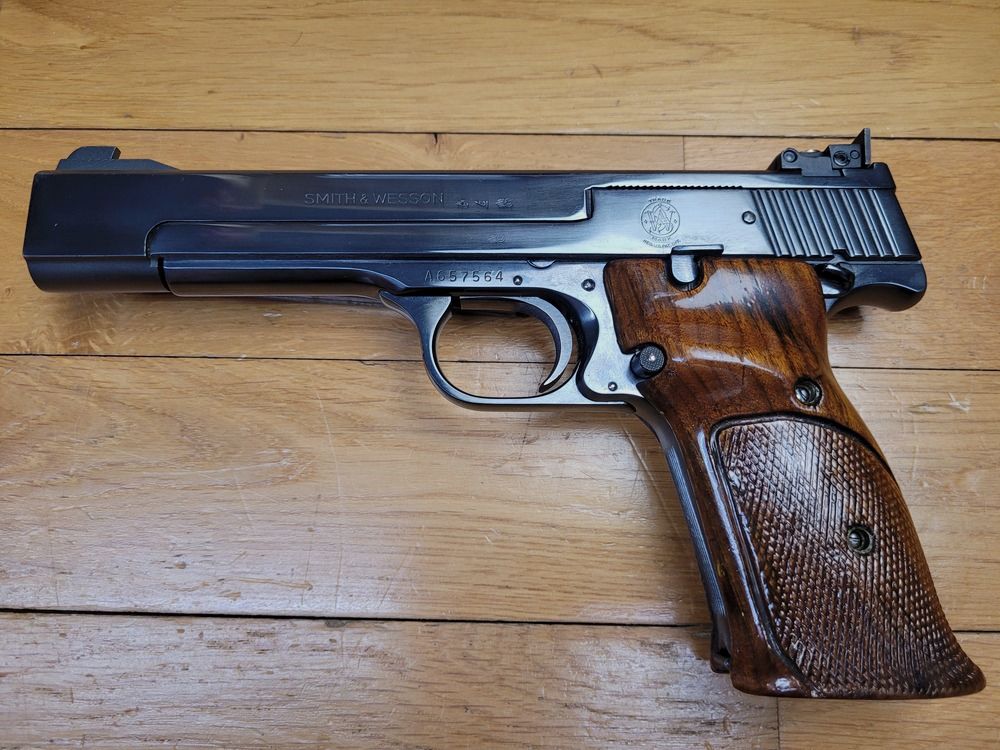

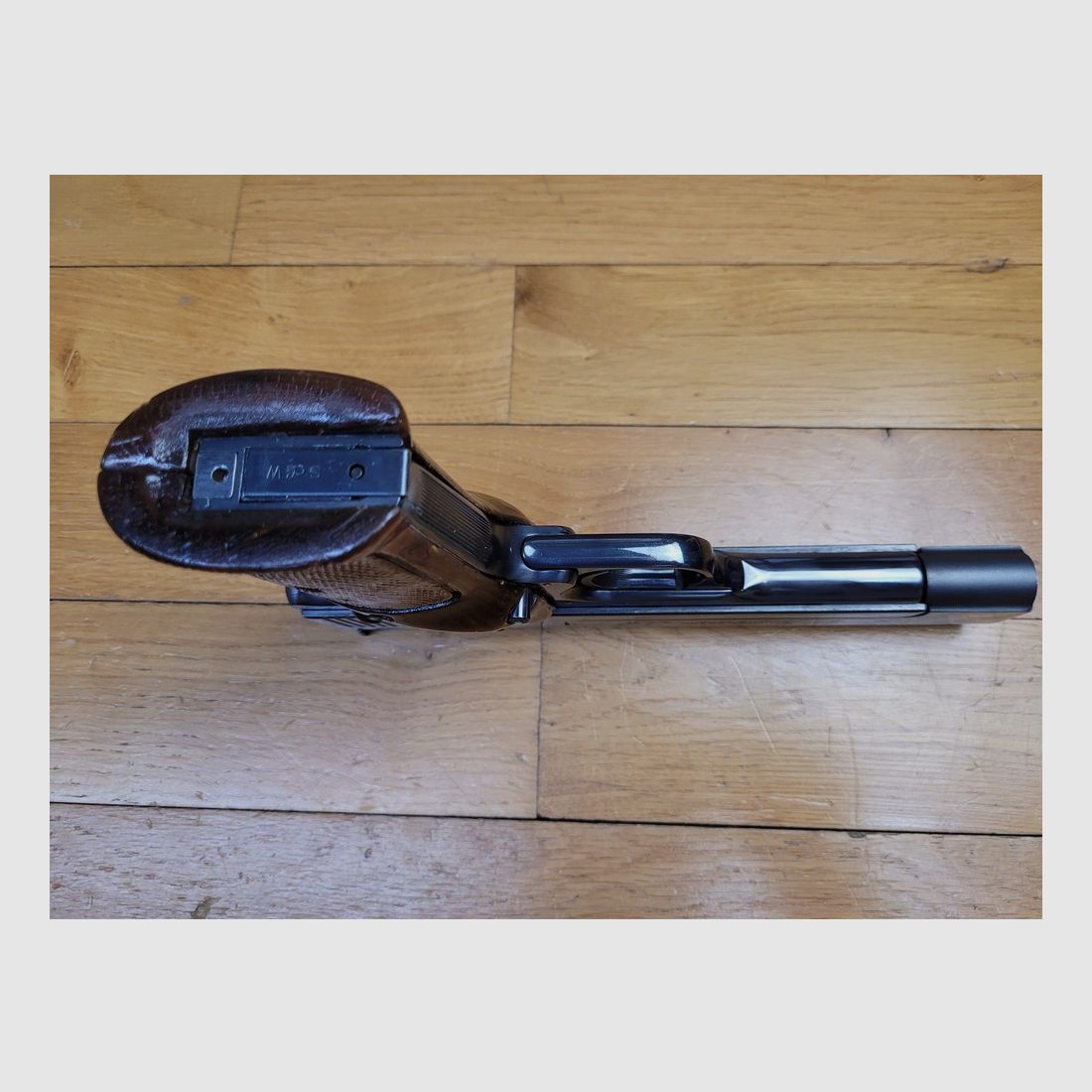
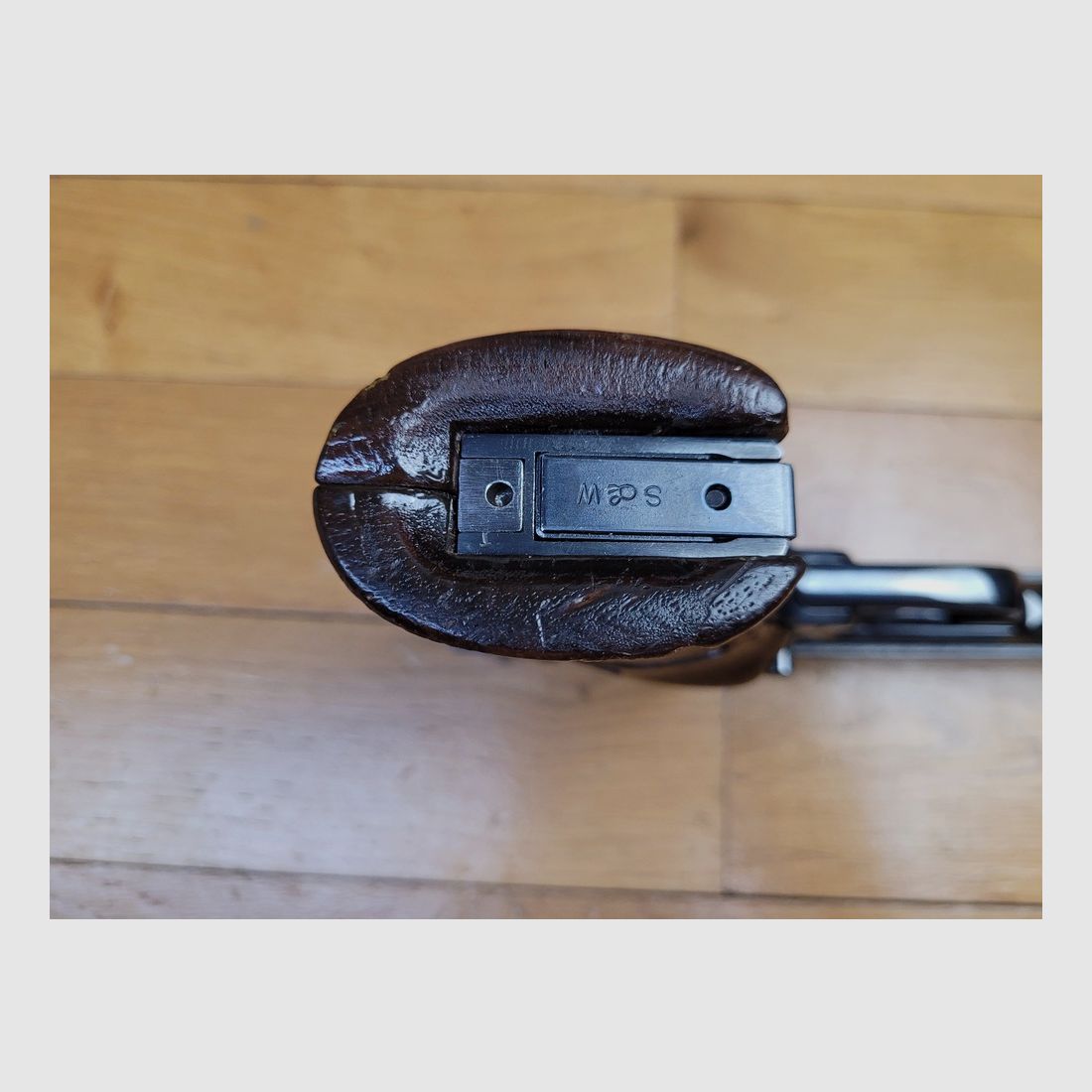
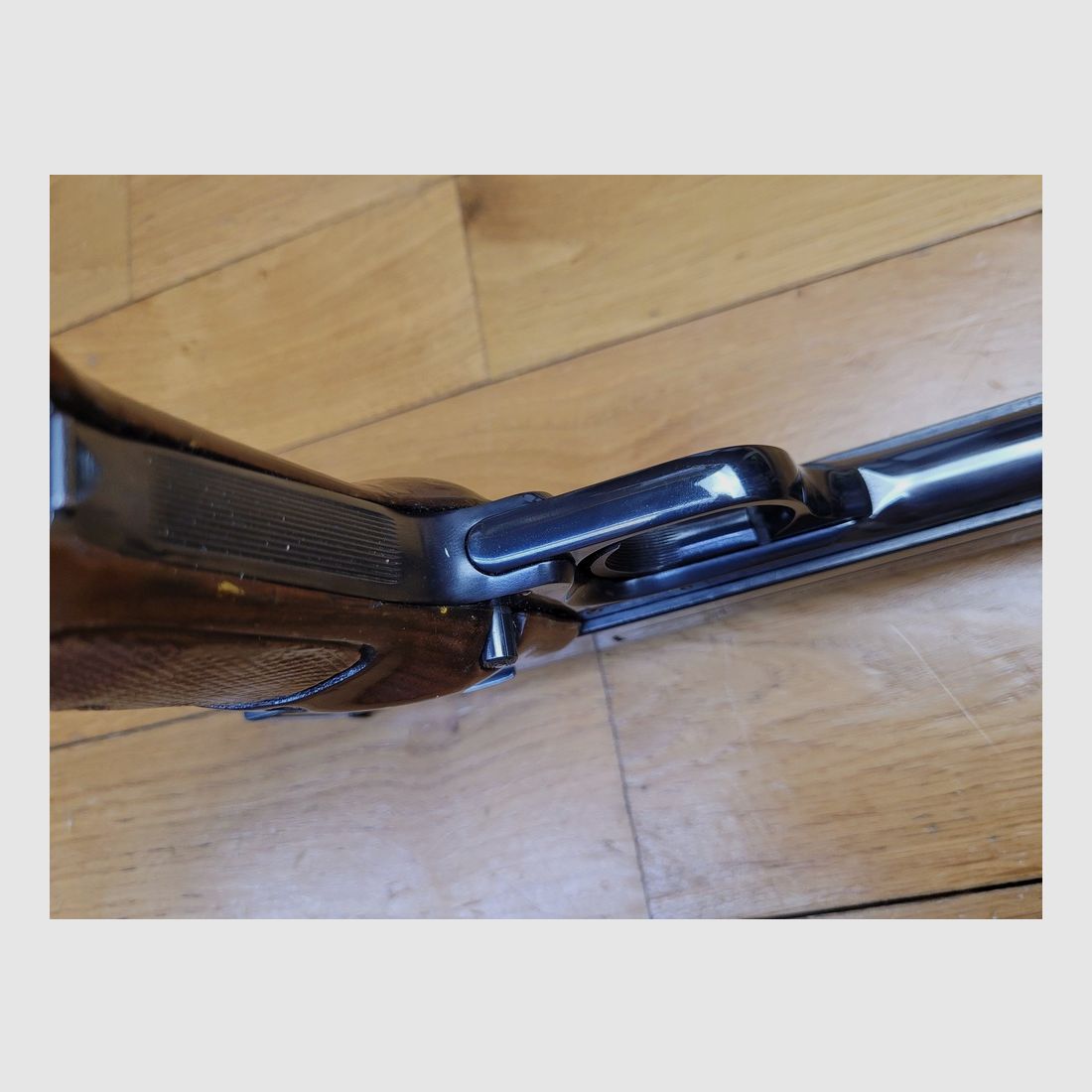
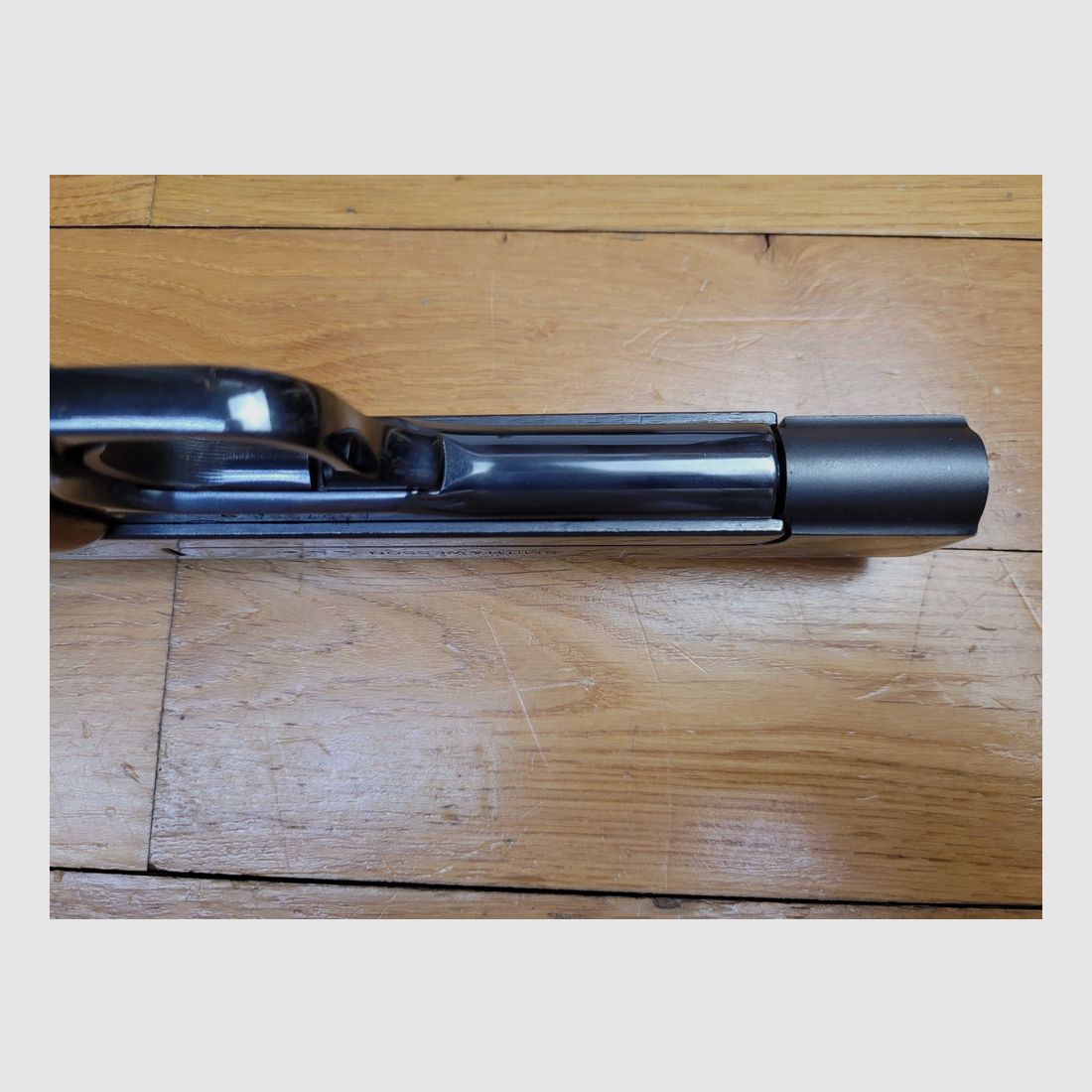



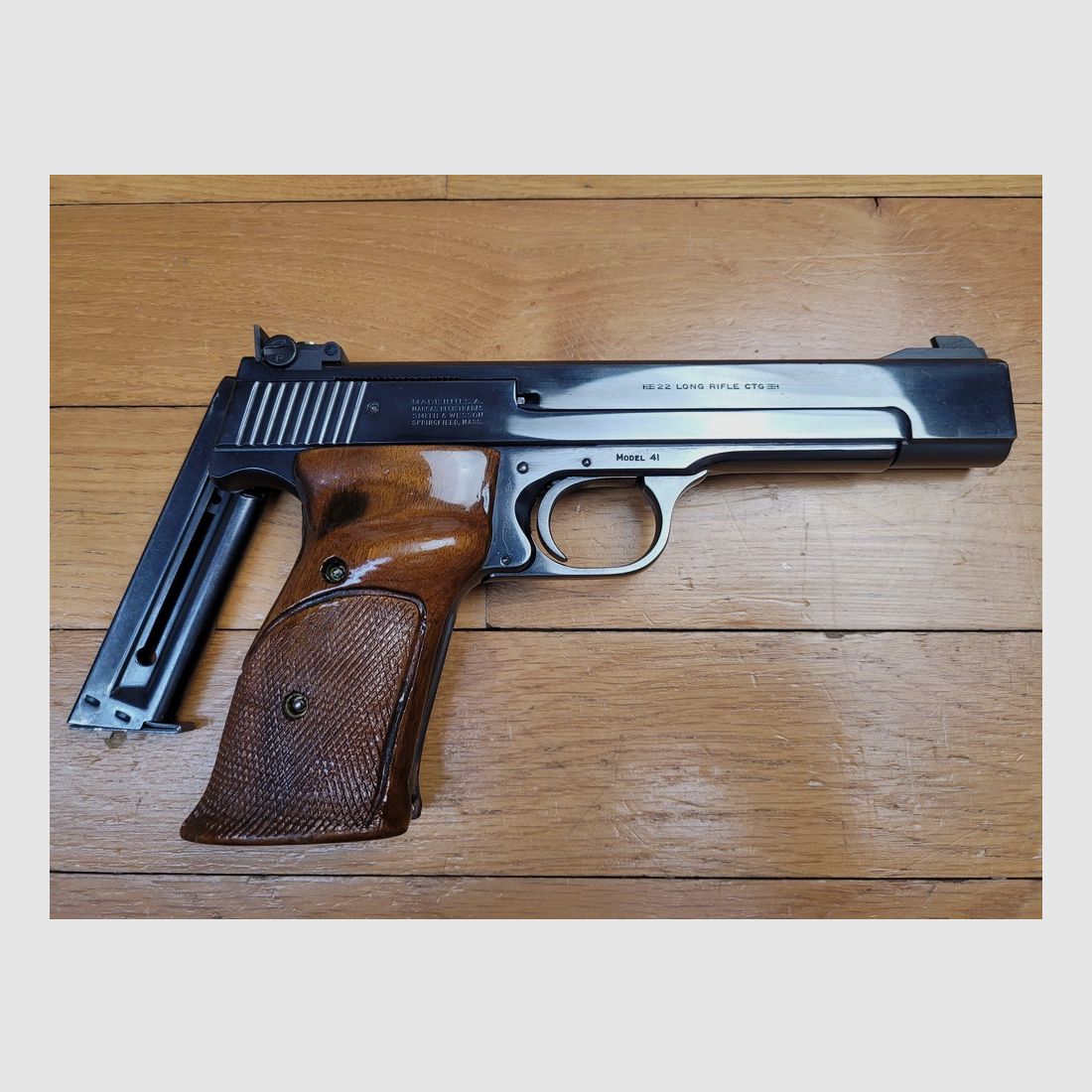
Superb Smith & Wesson Mod.41 pistol – cal.22LR – All in real steel – 100% bluing – Mechanism and barrel outstanding – 2 Smith magazines – one of the lowest handguns ever made – TBE++
≈ $1,539
Price at the dealer: 1,400 €. Converted at the ECB rate as of November 20, 2026.
Purchase permit required
75002 Paris, France
13
ID: 10338824
This item is currently unavailable.
Purchase from outside the EU: The firearm goes through an importer in your country, the dealer handles the export.
How buying from Europe works
Shop safely with Gunfinder
Our AI-powered seller identity verification makes Gunfinder the safest marketplace online.
Learn more
Details
- Original language
- French
- Brand
- Smith & Wesson
- Category
- Purchase eligibility
- Required
- Caliber
- .22lr
- Condition
- New
- Location
- 🇫🇷 75002 Paris, France
- Availability
- Out of stock
Freshness
This listing is based on a mirrored offer, where the listing data was synced to us from a shop, dealer, or external marketplace. Please note that temporary price discrepancies may occur due to possible delays in data transmission.
- Source
- Flingus Maximus
- Last checked with the dealer
- 6 minutes ago
Description
Note:
The item is located abroad. Please note that delivery conditions, shipping times, and/or the purchase process may differ.
Set down on a table among all those .22 automatics with their Luger-like looks, it stands out, makes an impression, and hits the mark.
When it comes to designing top-quality handguns and mass-produced precision monsters, you can count on Smith and Wesson. From their earliest .22 models, followed by the .32 rimfire, the build quality and accuracy of Smith revolvers were far above what anyone else was making.
The hearts of precision shooters really began to be won over in the 1870s with the No. 3 American models and the famous .44 Russian.
The great Parisian gunsmith Gastinne Renette, based at 39 allée d’Antin (now Franklin D. Roosevelt, though it’s not quite the same thing anymore!), was so successful with his Smiths specially prepared for target shooting that he even got a telling-off from the Springfield firm itself!
A long tradition had begun, producing wonderful target versions of the brand’s best models, as well as firearms specially designed for small-caliber shooting, such as the Straigth Line.
So although Smith had long had a foot in the very exclusive world of precision shooting, by the end of World War II it had been more than twenty years since Smith had introduced anything new in this field. And nothing semi-automatic at all…
The time had come to roll up their sleeves. Fans of Smith’s precision pistols had to wait 21 years between the release of the last example of the iconic Straigth Line in 1936 and the first Model 41 going on sale in … 1957!
Yet as early as 1947, a pair of prototypes had been handed over to the in-house gunslingers. All champions, with a knack for engineering and a good understanding of Smith’s manufacturing processes.
Better still, Carl Helström himself, President of Smith&Wesson, came to hear the shooters’ opinions on what could be improved. He was known for taking copious notes during these meetings and immediately looking with production managers at how to incorporate them into Smith’s production lines.
Helström actually worked through iterations after testing (for example, testing a bolt on its own before incorporating it into the project), rather than testing an overall concept and then making corrections. Master Flingus, contrary to the culture of national engineers, humbly thinks that this is probably how the greatest firearms, from the Colt 1911 to the Luger, were made, even if it seems a little laborious to “very intelligent” people. Creating a beautiful theoretical firearm and then correcting its main practical flaws doesn’t produce the same result as these iterations. Theoreticians can’t explain it. But that’s how it is. In this case, every detail and every comment was examined and analyzed to create a truly exceptional firearm. One worthy of the name it would bear.
And the shooters’ patience was rewarded: in its first year, just over 10,000 Smith 41s were sold right away. And they couldn’t fill all the orders!
Amusingly, they didn’t start with a No. 1 but with serial number 1401. Typical of Smith. And they’ve done much worse. Master Flingus told you to always be wary of serial numbers. And not just with Smith. I caught Manufrance pulling the same tricks. For sure.
Two barrel lengths were offered: 8 and 5 inches. One was intended more for pure precision shooting, the other more for military-style training—a precursor to the Model 46, which would later be used by the Air Force.
So Hi-Standard wouldn’t be the only one to get a piece of the pie…
In terms of ergonomics, and apart from its grip angle
With its 105° grip angle, exceptional ergonomics and controls identical to those of the Colt 1911, it stands out from other top .22s because its barrel is easy to remove and machined as a single piece with the “upper.”
This makes it possible to customize the firearm as you like, choosing a longer or thicker barrel—an option that could also be ordered from the factory. A risky choice, but one that paid off, given the firearm’s excellent fit and finish. Cleaning is also easier, much like a Walther PP (which Smith also manufactured for a while!) or a Makarov, if you’re more of a Warsaw Pact fan.
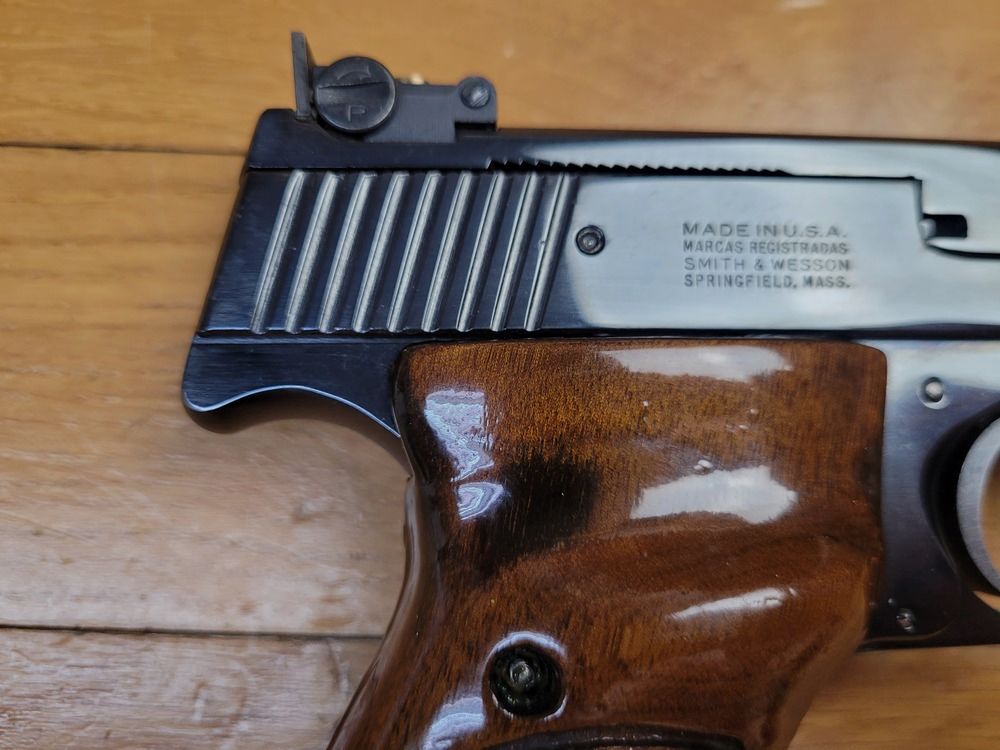
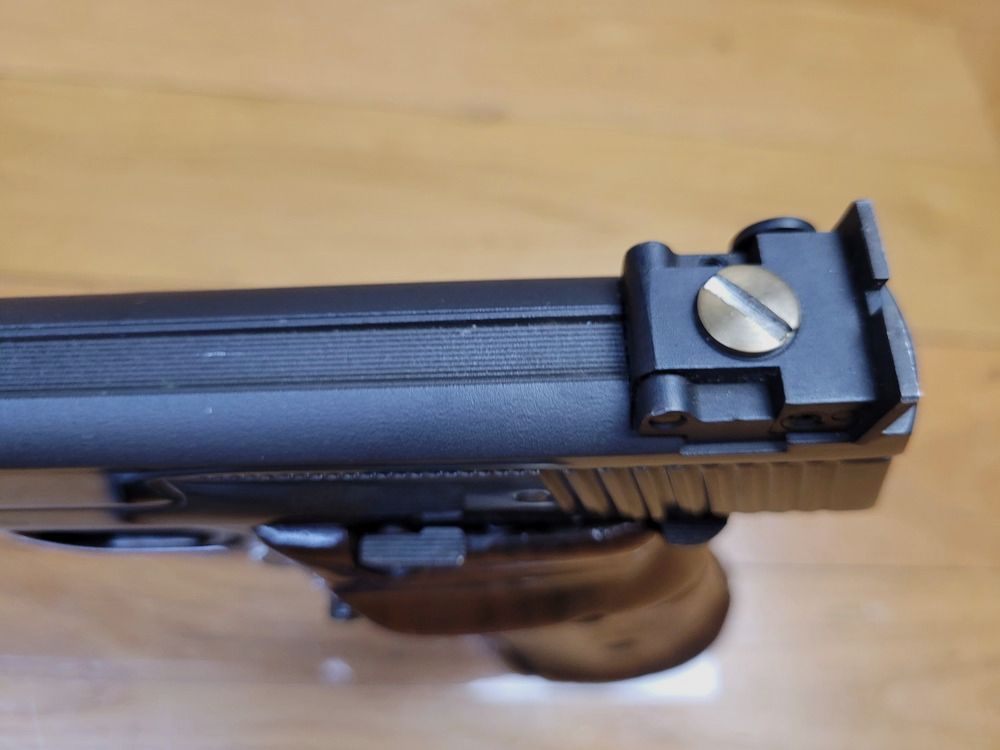
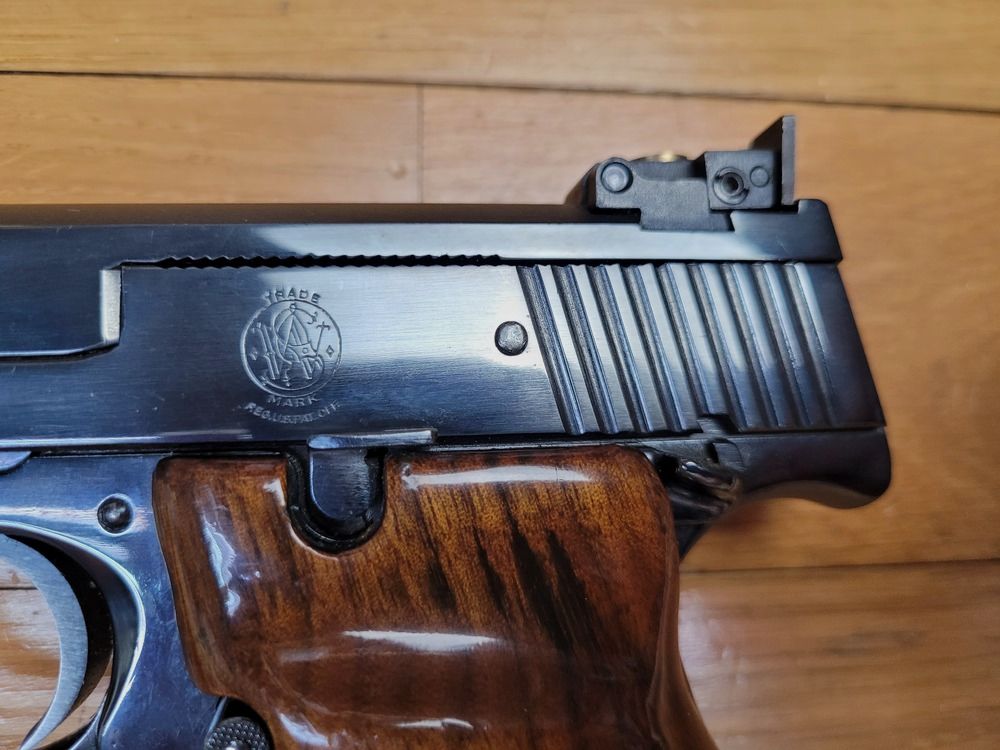
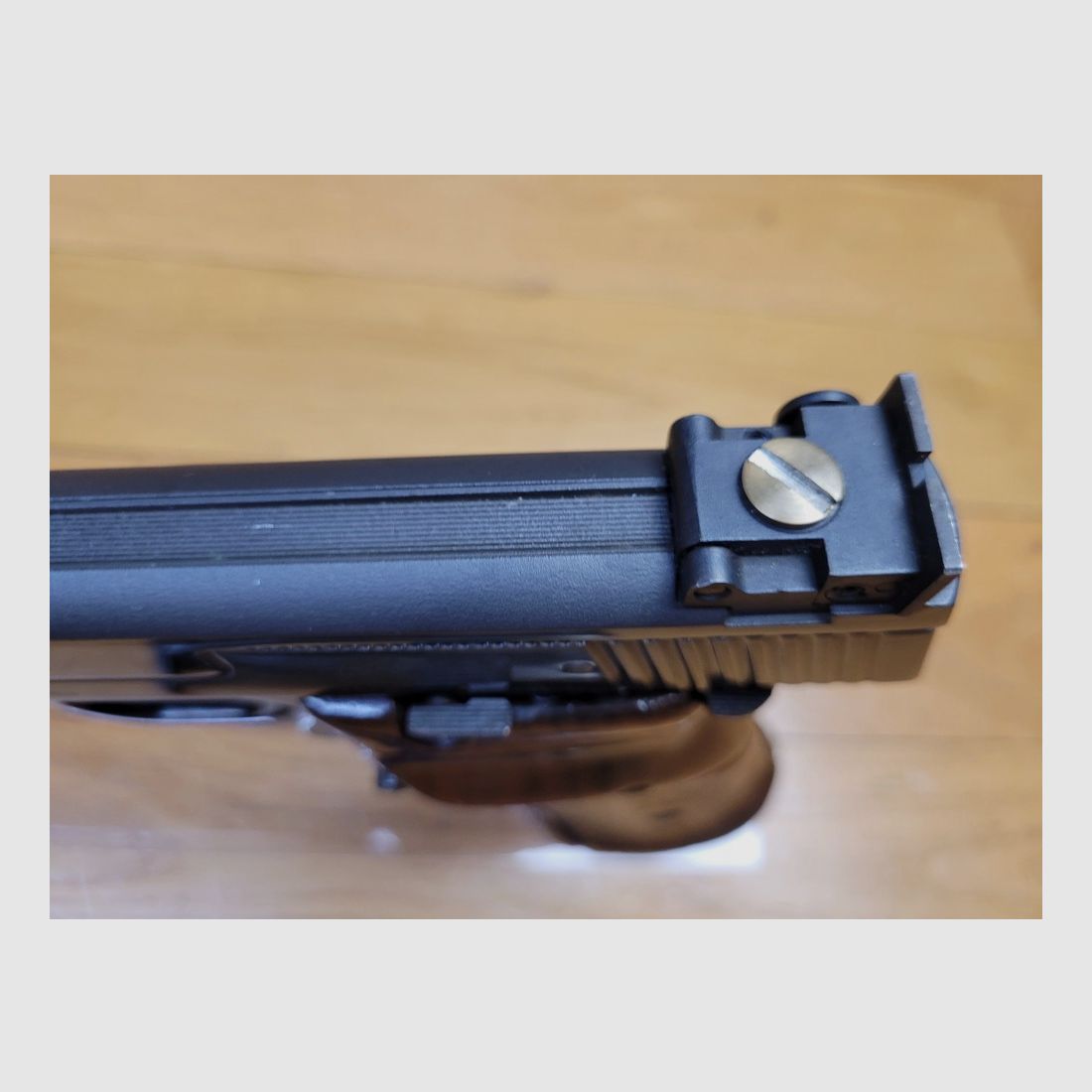
Another advantage of the Model 41 is that the rear sight is not mounted on the slide and is independent of it. It therefore stays perfectly still when firing, avoiding any shift in zero or distraction from seeing it move constantly.
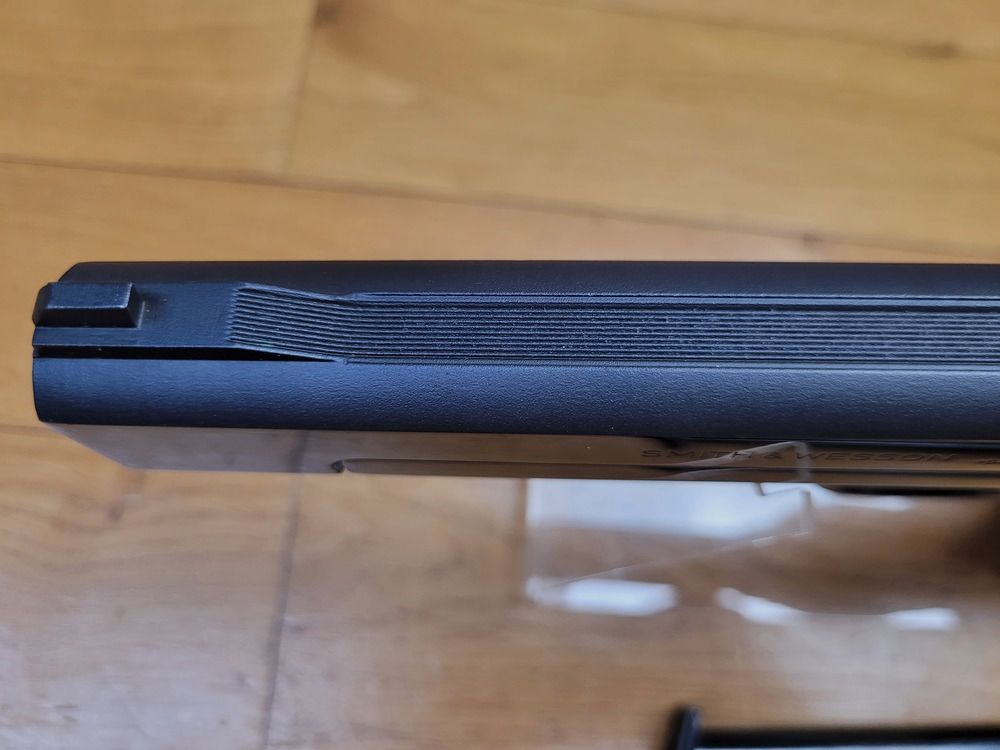
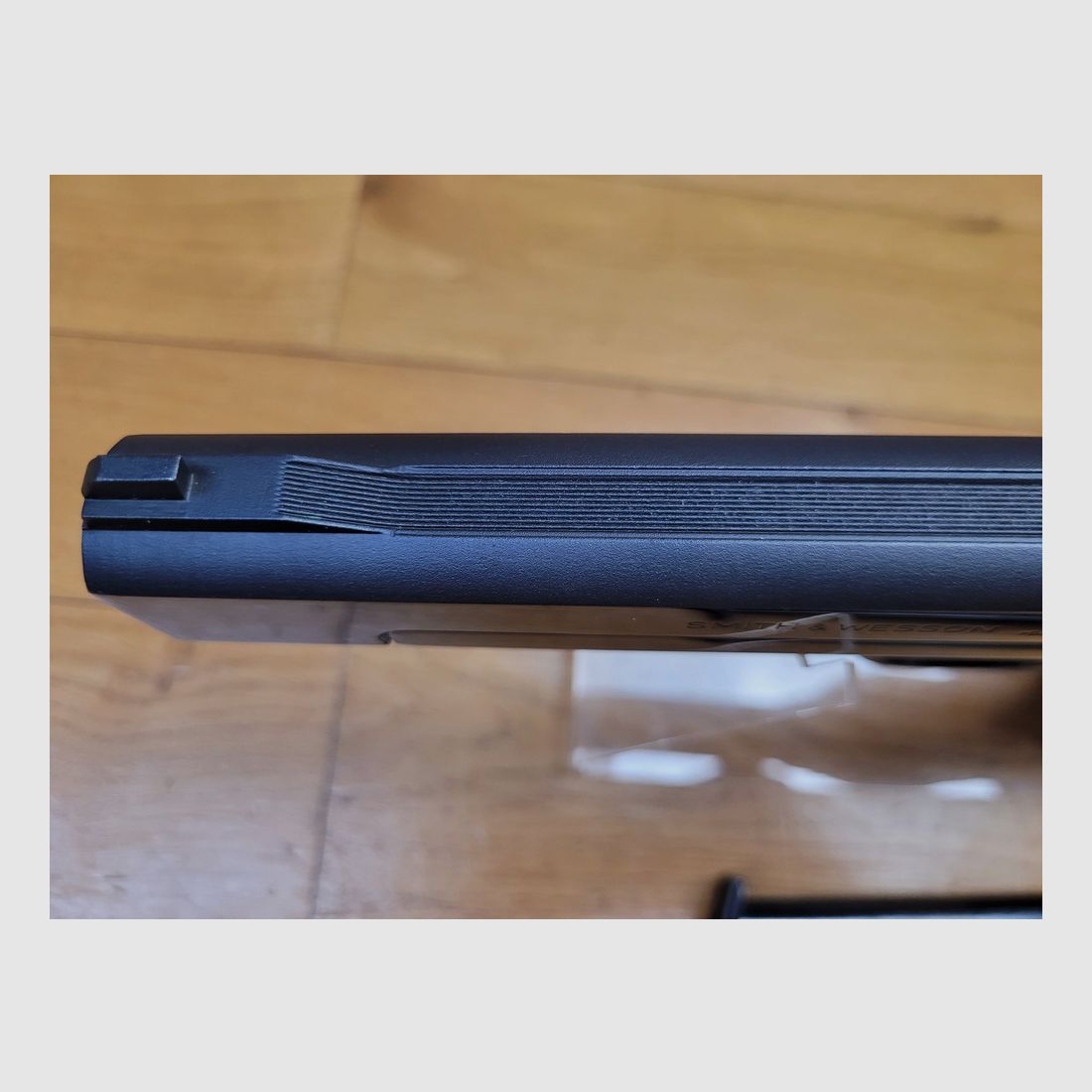
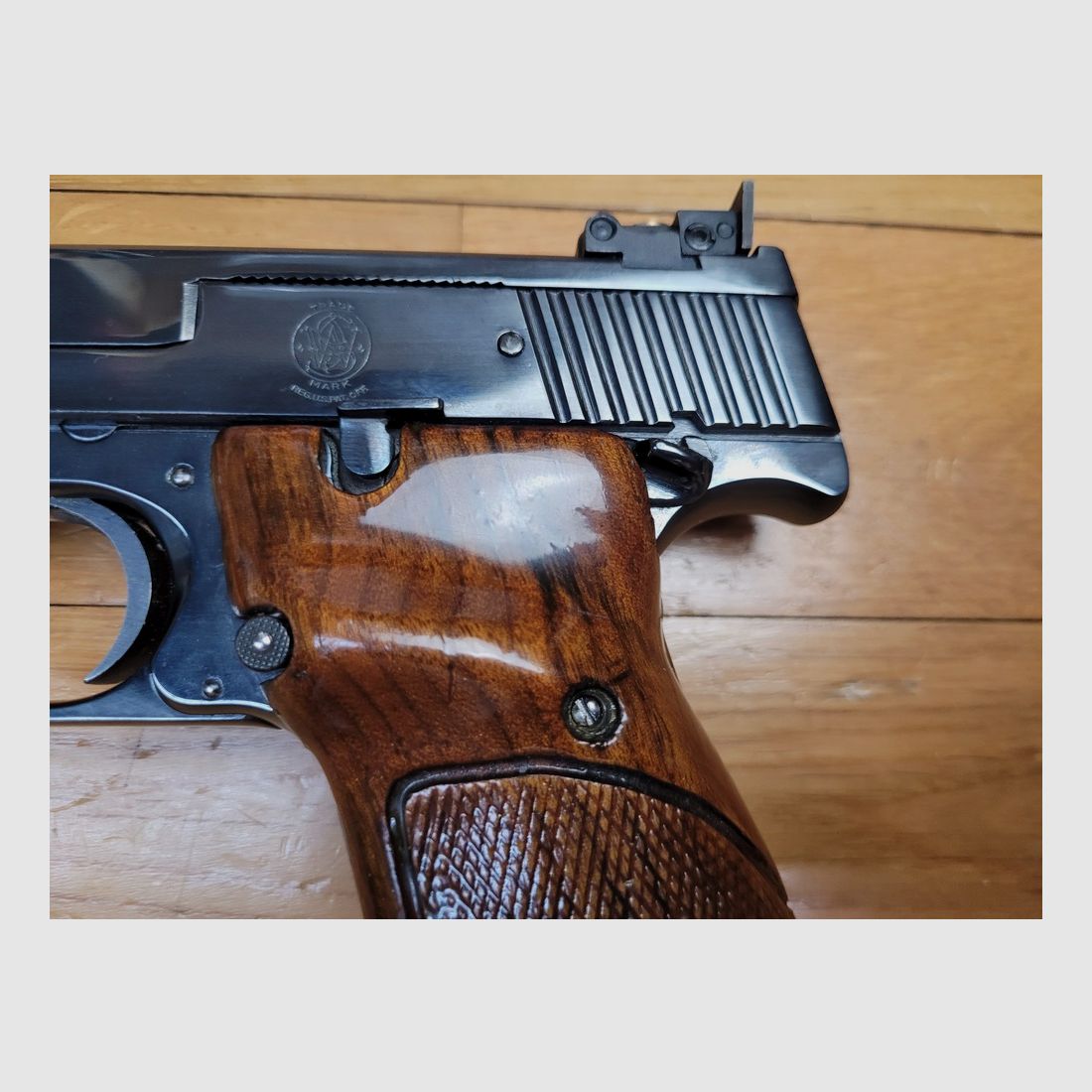
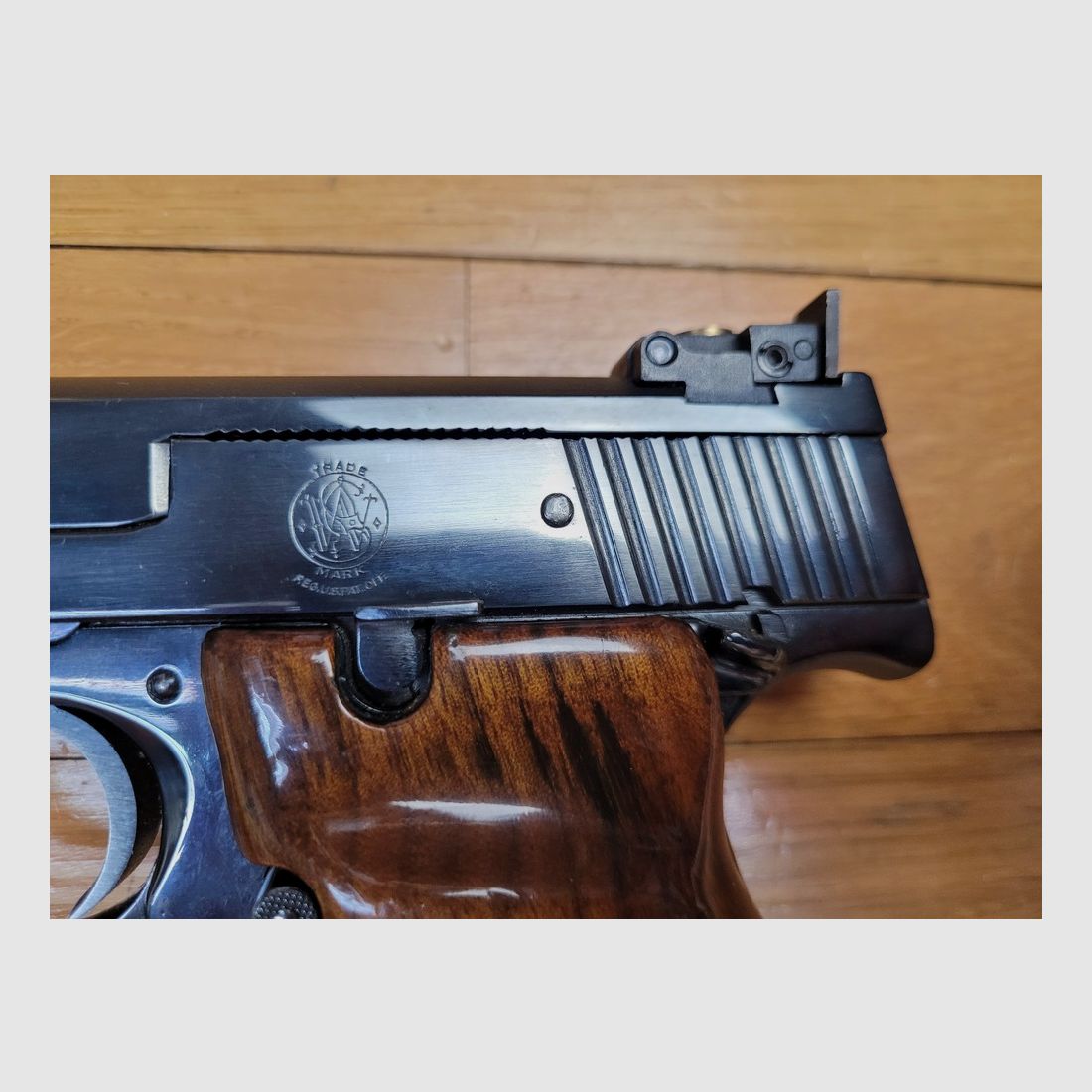
The slide is almost entirely enclosed in steel, yet remains very easy to operate thanks to serrations that are cleverly adapted to the overall design of the Smith 41.
In short, our Smith 41 had everything it needed from the start to become what it is today: a sought-after star at shooting ranges around the world. Add to that Smith’s almost unbelievable build quality from its golden years. A top-notch pistol from the masters of the craft!
As an aside, you may know that Maître Flingus is a fan of Smith revolvers from the “first two generations,” roughly “1900–1947” and “1947–1992.” And he knows exactly why. So do his clients who have had the chance to take part in the “Smith Experience” with him.
Well, believe it or not, production of the all-steel, well-fitted Smith 41 pistol ended in 1992. That was also the year production of the “Pinned and Recessed” revolvers that had made Smith’s name disappeared from the radar.
Coincidence?
I don’t think so. The days of fitters with thirty years’ experience were already over. The focus had shifted to maximum profitability (a short-sighted move, given the competition it created for the once-great manufacturers) and cheaper laser cutting that could be moved elsewhere. But every time I pull the trigger on a modern 686, my heart feels as dry as its mechanism…
Holding this Smith 41, I get that curious feeling I sometimes have when picking up a piece from a safe: suddenly, I have a firearm in my hands. A real one.
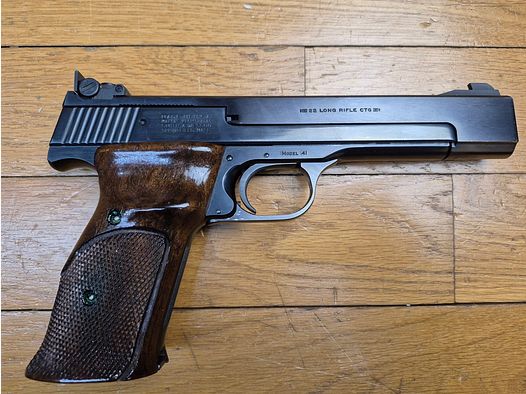
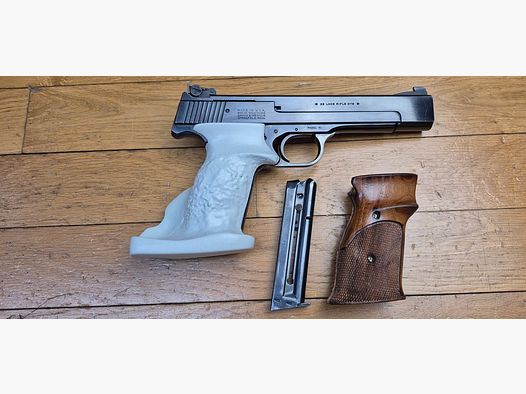
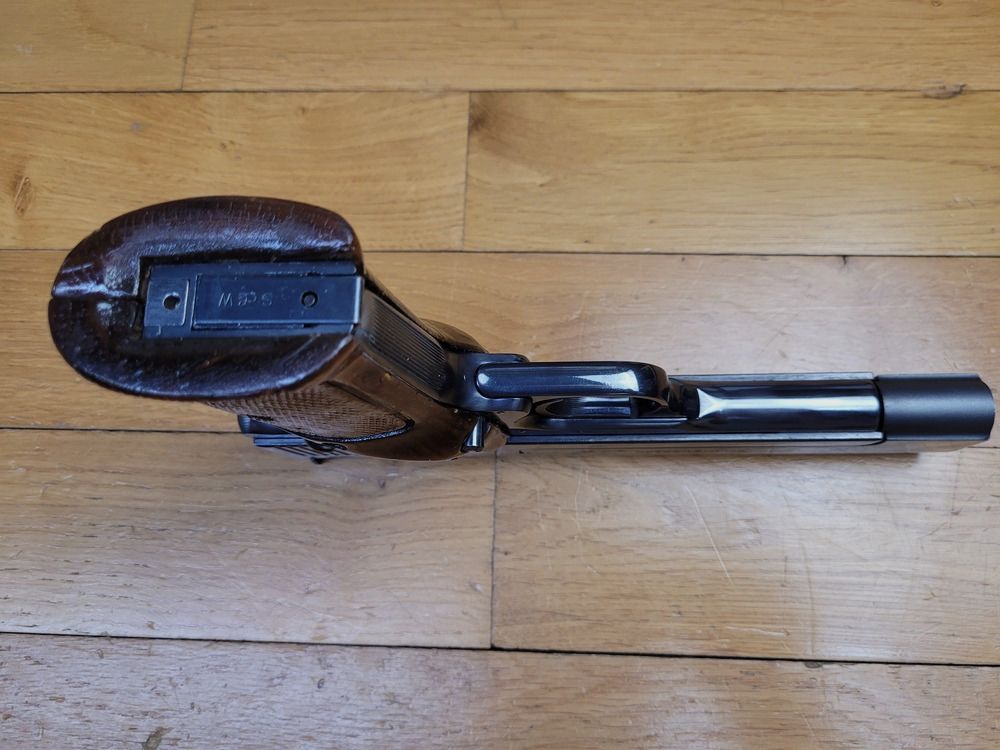
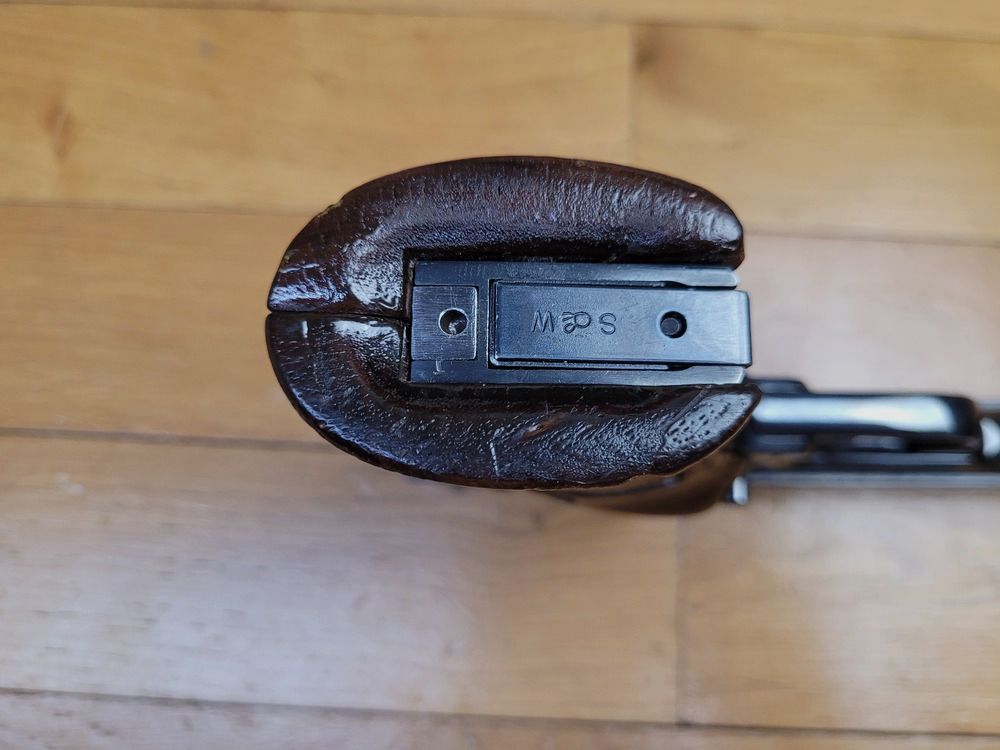
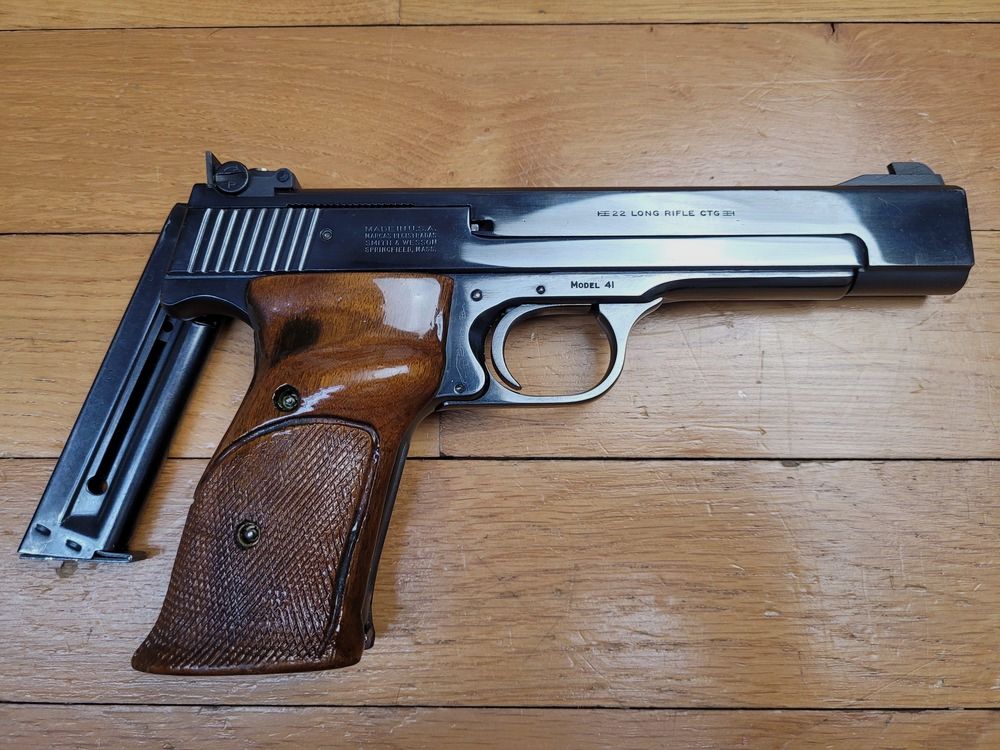
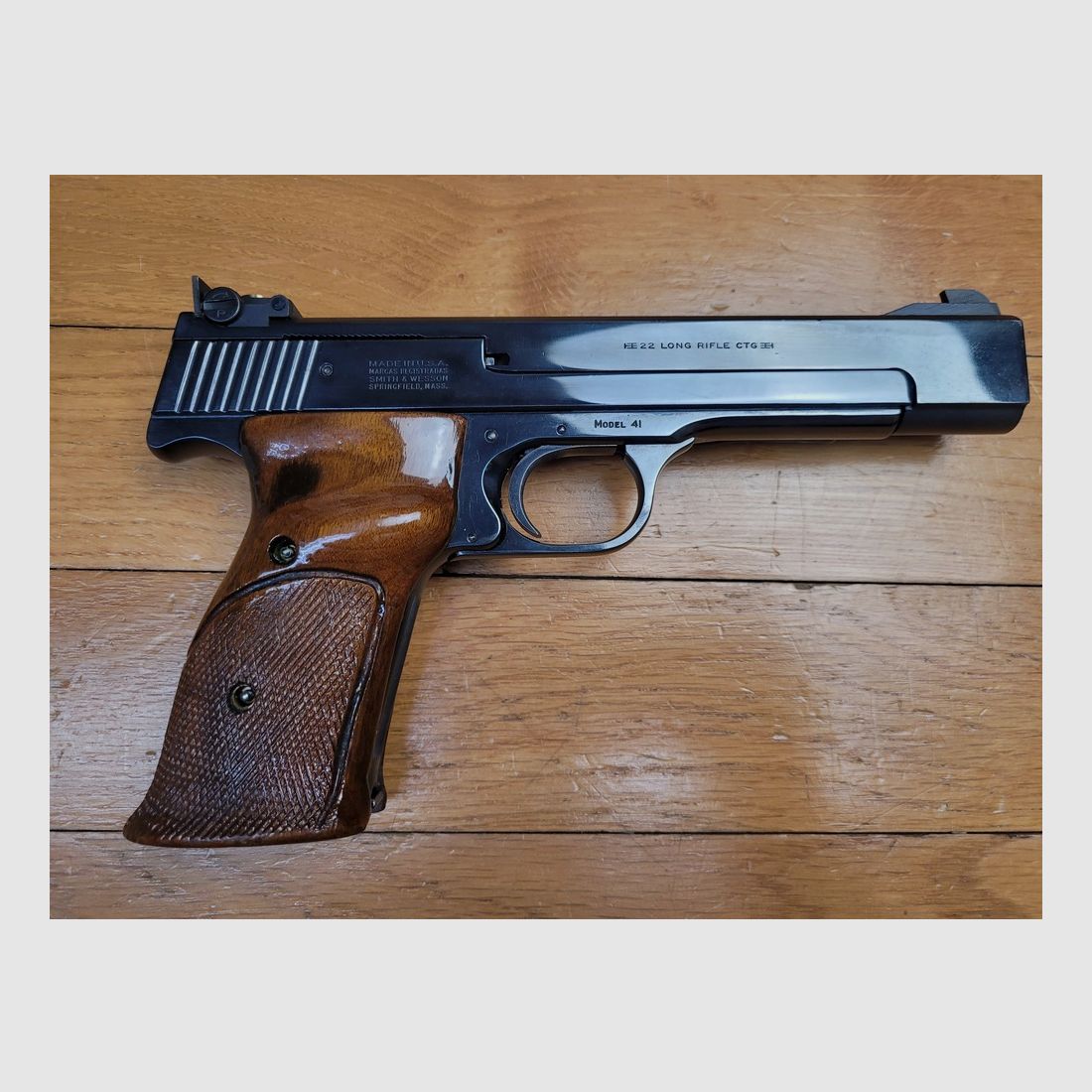
This very fine example was made in 1981. It comes to us in remarkably fresh condition, with not one but two factory magazines from Smith.
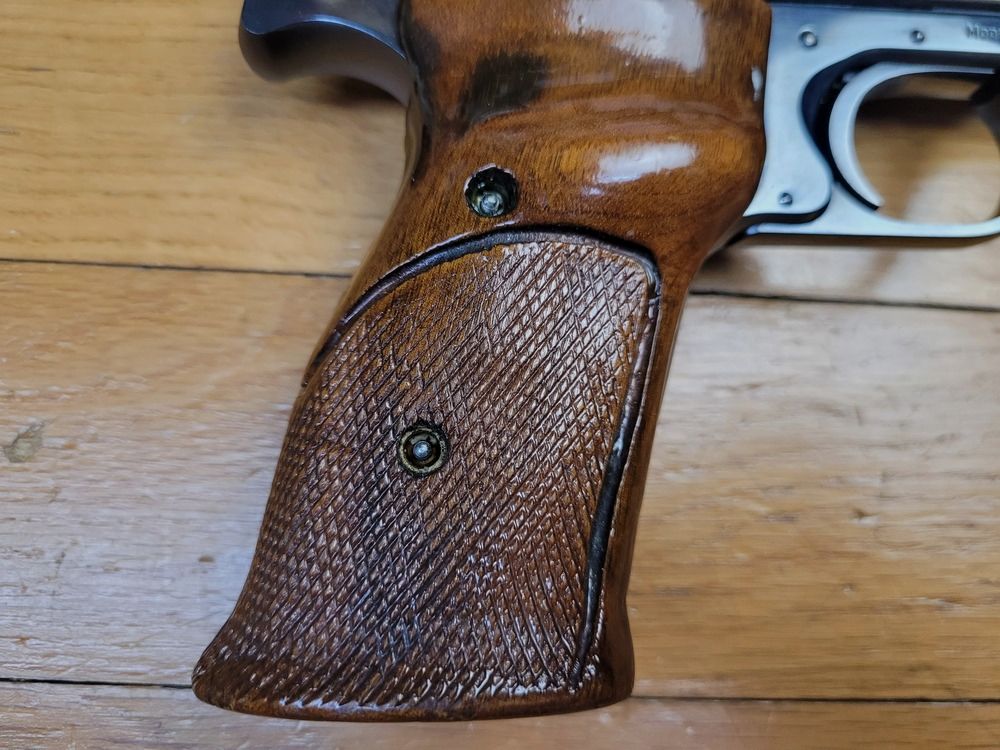
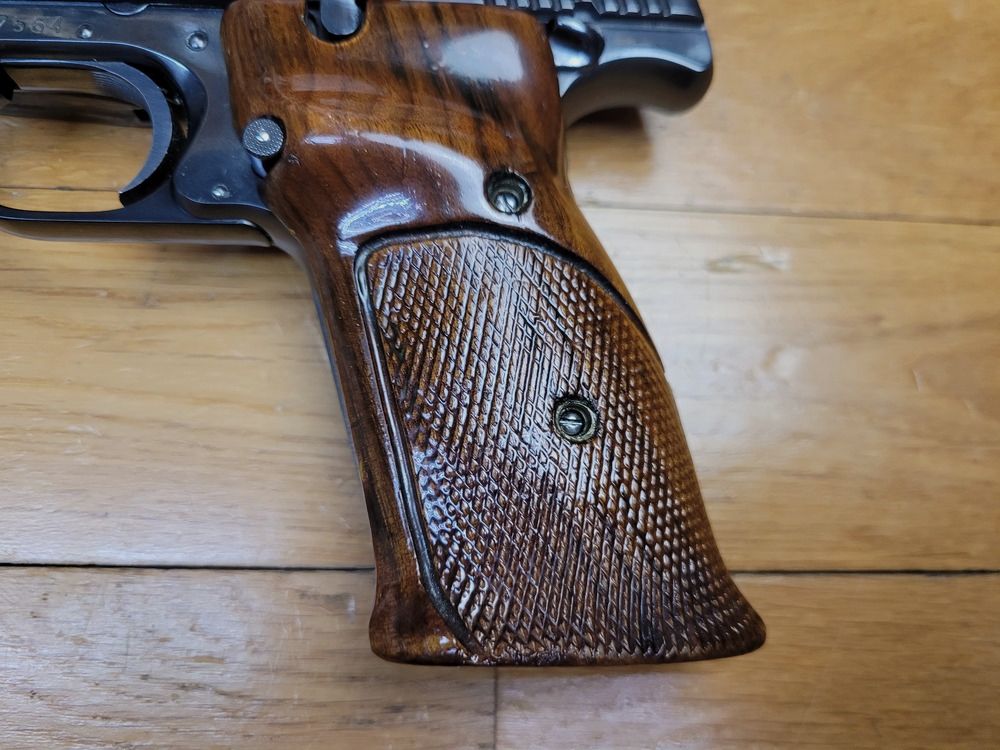
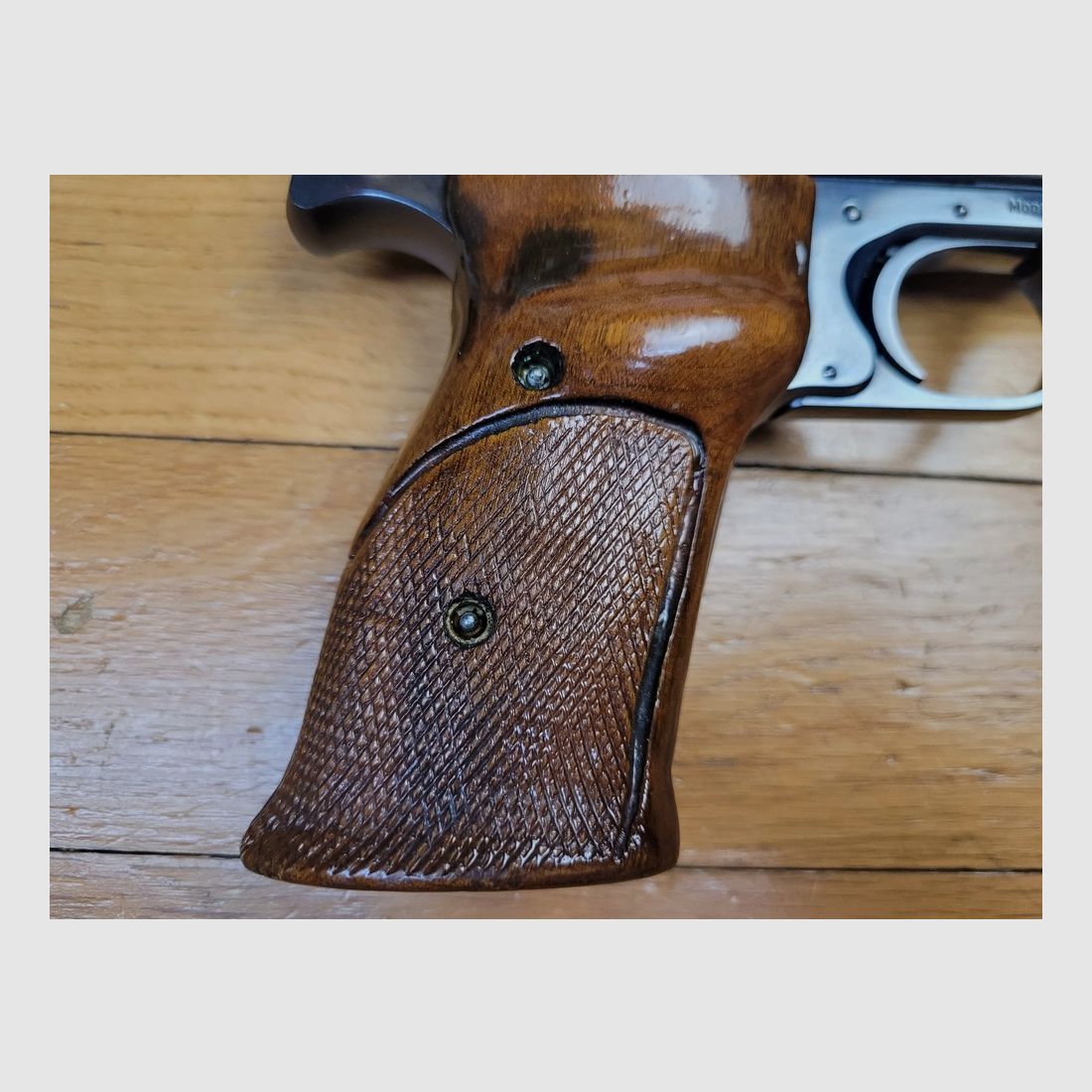
The grip is excellent, with a slight thumb rest that works for both right- and left-handed shooters. The grips are varnished walnut. Their checkering is a little worn, but nothing serious. Many replacement models are easy to find, making it easy to change the look too (because being a precision firearm doesn’t mean you can’t have style in every situation).
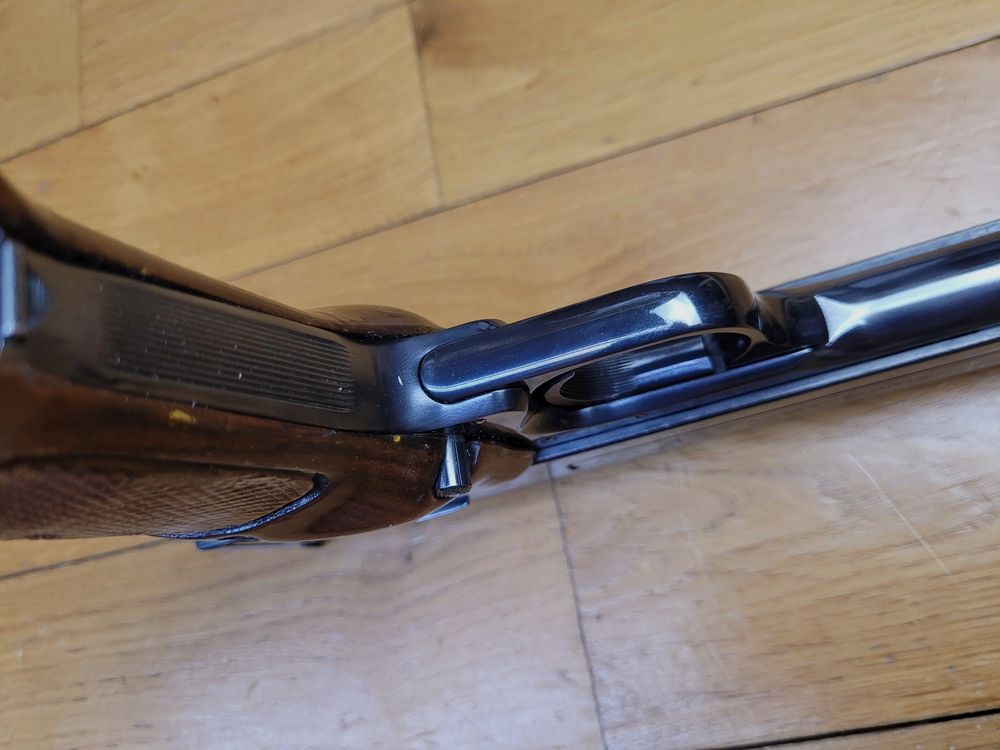
The front of the grip is serrated to prevent canting errors.
One thing the Smith 41 has going for it is that it’s one of the lowest-sitting semi-automatic pistols on the market.
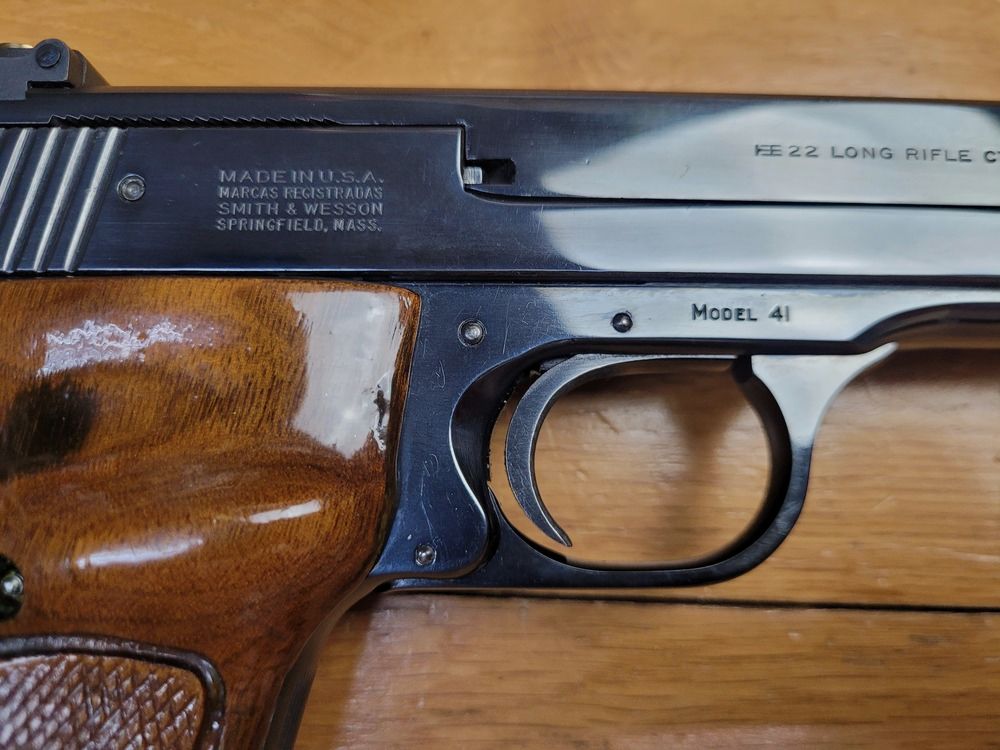
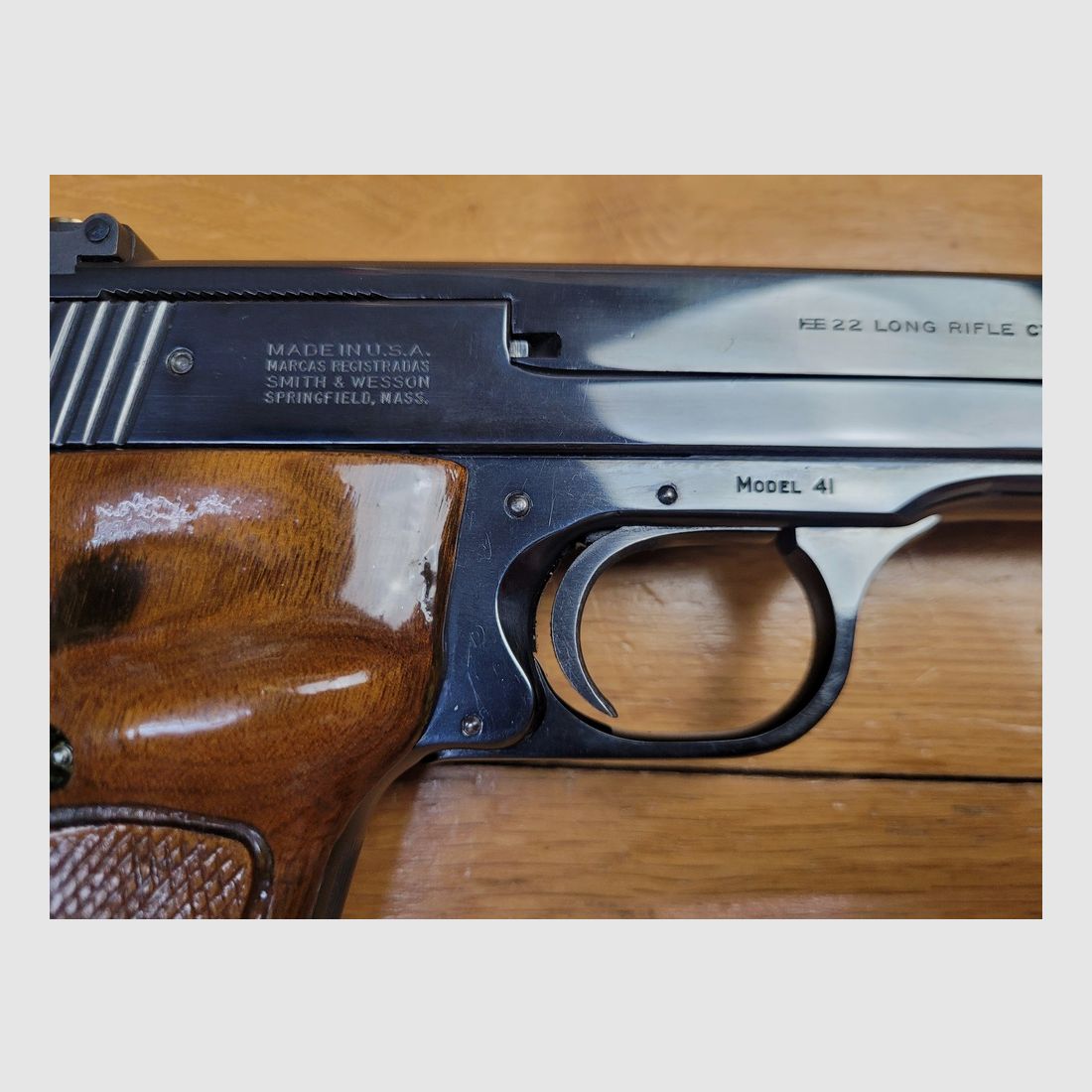
The single-action trigger provides a very smooth pull and a clean, linear break. The trigger position is carefully designed for maximum comfort and control. Fans of the 1911A1 will notice the fine cut in the frame behind the trigger, which makes it easier to reach for shooters with small to medium-sized hands. Quality is in the details.
A manual safety is located on the left side of the firearm, allowing it to be carried “cocked and locked,” but above all ensuring compliance with older international competition rules. Smith thought of everything.
The slide is easy to rack, with no squeaking or sticking. You can really feel the extreme care in the s.
oin de l’ajustage.
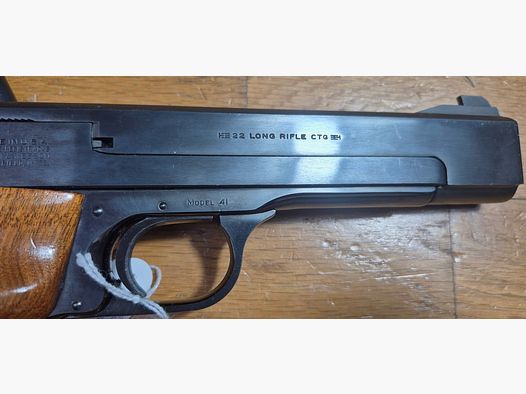
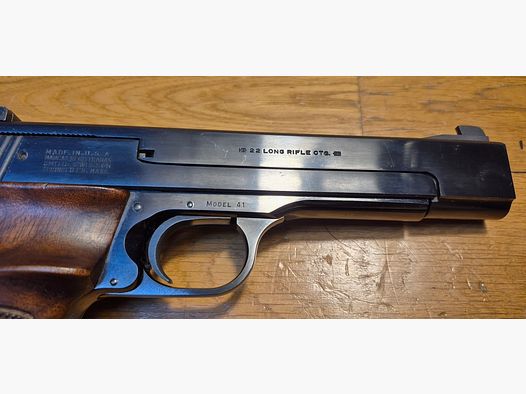
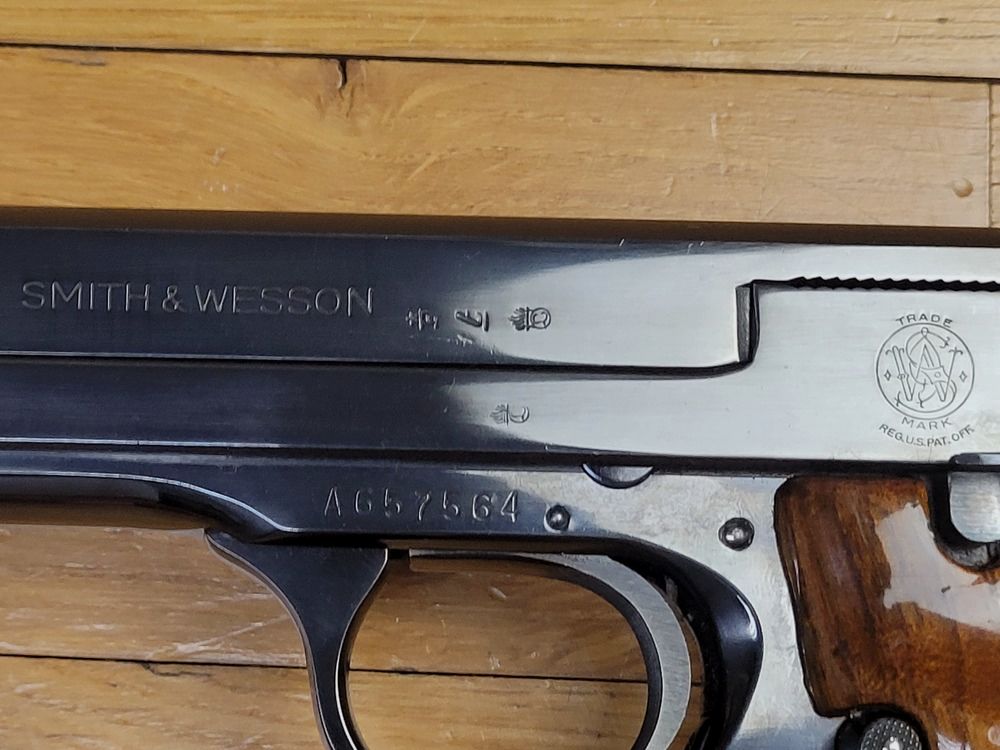
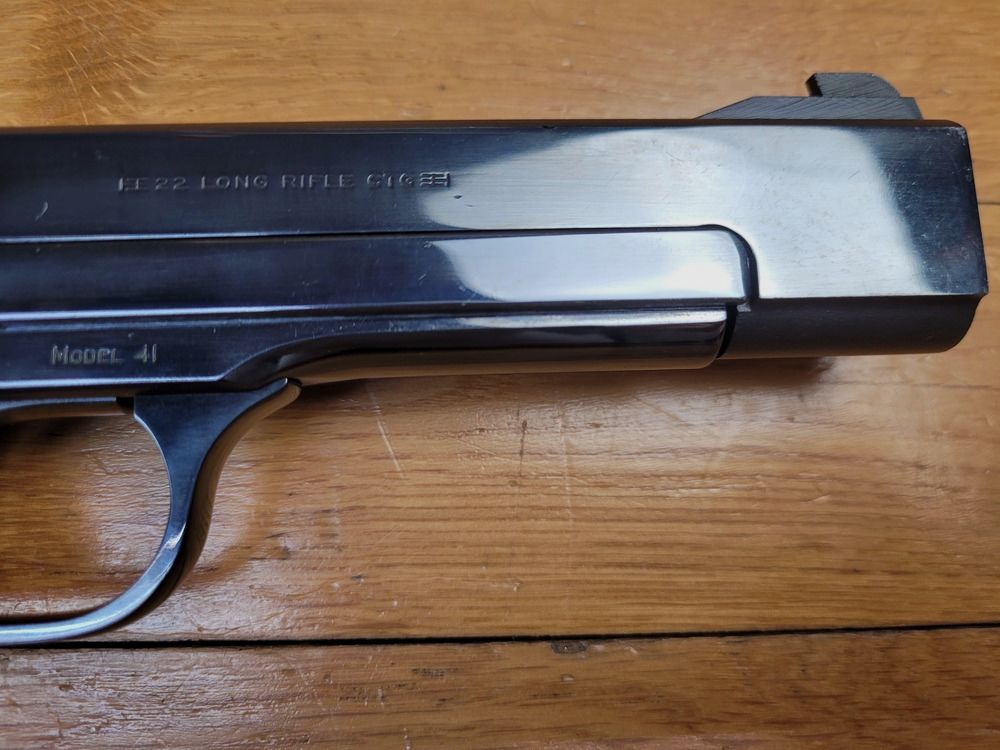
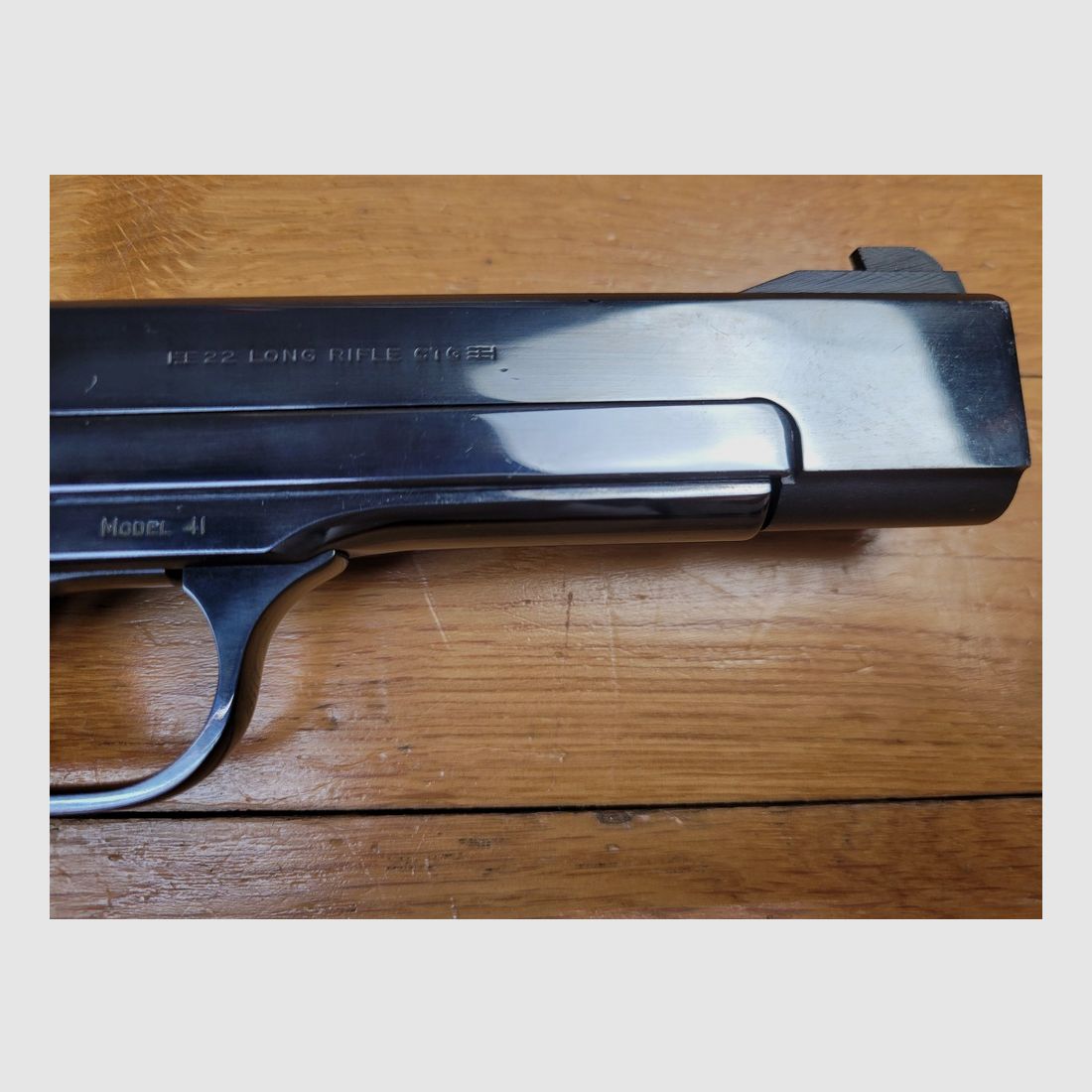
The exterior is in the finest condition, with 100% of its finish intact, somewhere between glossy and matte. Not a single scratch. Magnificent!
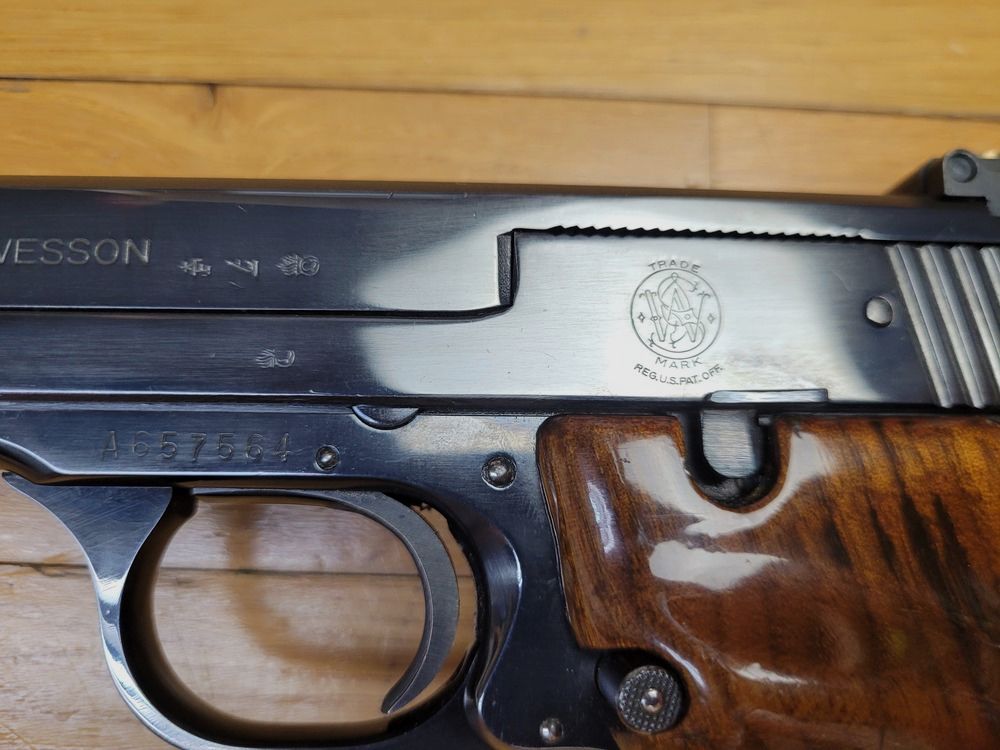
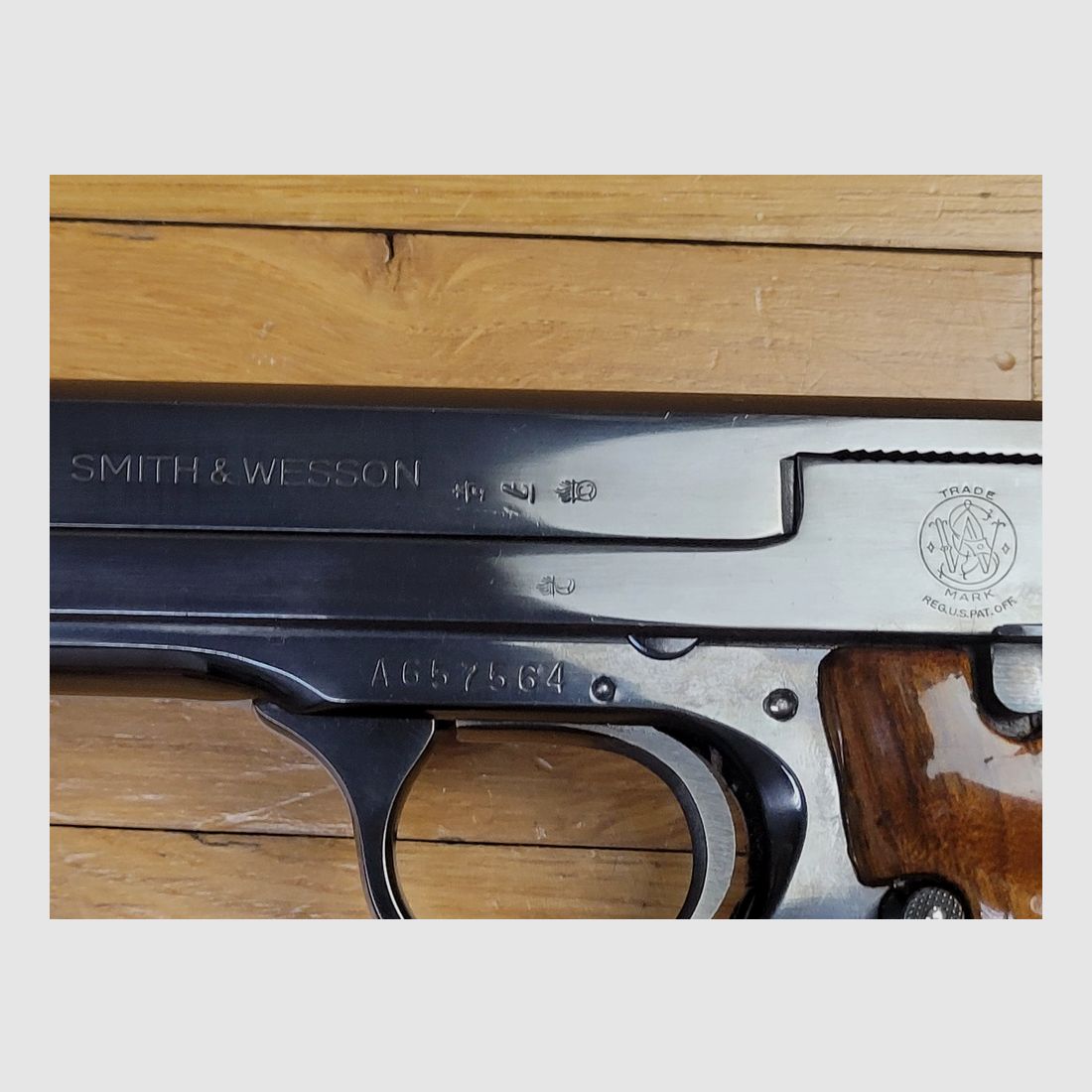
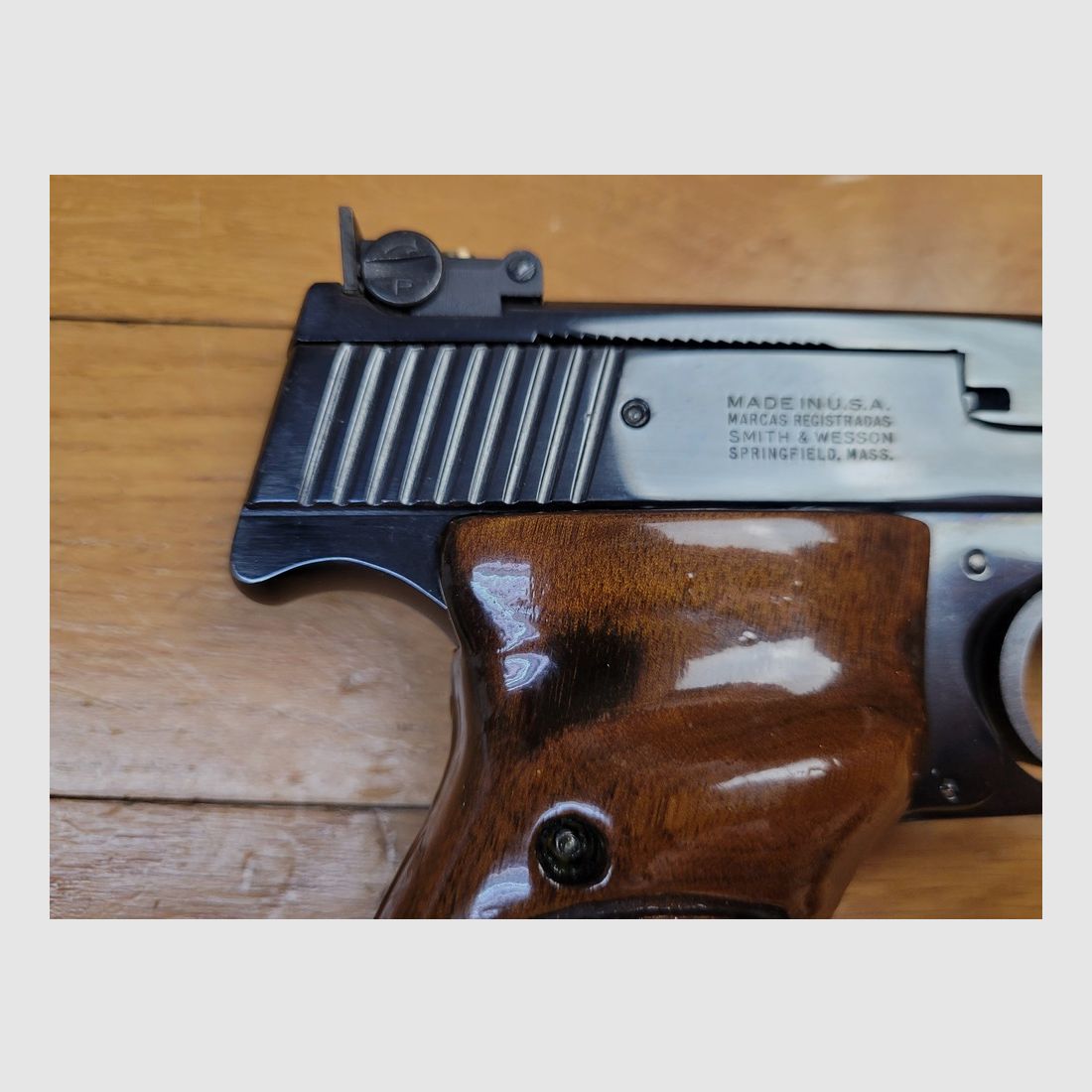
All markings are in excellent condition, and it proudly bears the “Made in USA” marking. The only addition since it left the factory is the elegant Belgian proof marks in cursive lettering.
The barrel is impeccable, bright and with tens of thousands of rounds left in it. Two Smith magazines.
As for the sights, we’re spoiled with an adjustable rear sight operated by a large, sturdy flat-head screw, which you can also adjust with the base of a cartridge case if you’ve forgotten your tool kit!
Its very square design lets you perfectly “isolate” and frame the Patridge-style front sight (an easy way to remember how to spell it is to think that with an “r” before the “t,” you’re talking about a peRdix, not a firearm). The top of the slide is also sandblasted and grooved, so no reflection can distract you from your target.
A target pistol designed down to the last detail, and an exceptional range gun thanks to its build quality, this Smith 41 is a top-notch pistol and a collector’s item that bears witness to Smith’s golden age and will become increasingly rare. A must-have. Classy, too.
CATEGORY B FIREARM AT THE CSI: PERMIT REQUIRED, COPY OF A VALID ID AND LICENSE REQUIRED – SIA ACCOUNT MUST OF COURSE BE OPEN – Shipping with signature required in two separate packages at least 48 hours apart.
***********************************************************************************************************************
Let’s say it again! Flingus Maximus gun shop in Paris and throughout France is also here to help with private firearm transfers, buying firearm and militaria collections, firearm appraisals, and questions about firearms in estates and inheritances. Contact your favorite gun dealer via our contact form or at [email protected] (Show description in original language)
Classique parmi les classiques, le Smith et Wesson Modèle 41 a vu le jour en 1957.
Posé sur une table au milieu de tous ces automatiques en .22 aux faux airs de Luger, il se distingue, il frappe et il fait mouche.
Pour ce qui est de la conception d’armes de poing d’excellence et de monstres de précision fabriqués en série, on peut faire confiance à Smith et Wesson. Dès leurs premiers modèles en .22, puis en .32 annulaire, les qualités de fabrication et de précision des revolvers Smith sut être largement au dessus de ce qui se faisait ailleurs.
Le cœur des tireurs de précision commença à être vraiment conquis à partir des années 1870 avec les modèles N°3 American et les célèbres Russian en 44.
Le grand arquebusier parisien, Gastinne Renette, installé au 39 allée d’Antin (maintenant Franklin D. Roosevelt, mais c’est plus la même chose !) eut un tel succès avec ses Smith spécialement préparés pour le tir, qu’il se prit des remontrances de la firme de Springfield elle même !
Une longue tradition avait débutée, produisant de merveilleuses versions target des meilleurs modèles de la marque ainsi que des armes spécialement pensées pour le tir en petit calibre comme avec le Straigth line.
Si Smith avait donc un pied dans le cercle très fermé du tir de précision depuis fort longtemps, à la sortie de la 2° Guerre Mondiale, cela faisait plus de vingt ans qu’aucune nouveauté Smith n’était sortie dans ce domaine. Et rien d’automatique en général…
L’heure était donc venue de se remonter les manches. Les tireurs fans des pistolet Smith de précision avaient donc du attendre 21ans entre la sortie du dernier exemplaire de l’iconique Straigth Line en 1936 à celle du premier modèle 41 sera commercialisé en … 1957 !
Pourtant, dès 1947, une paire de prototypes avaient été confiées à l’équipe des flingueurs maison. Que des champions ayant en outre de bonnes dispositions d’ingénierie et connaissant bien les modalités de fabrications de Smith.
Mieux, Carl Helström lui-même, le Président de Smith&Wesson venait recueillir en direct l’opinion des tireurs sur les points d’améliorations. Il était connu pour prendre de copieuses notes lors des entretiens et cherchait immédiatement avec les responsables de production comment les insérer dans les lignes de production de Smith.
Helström fonctionnait en fait par itérations après tests (on teste, par exemple, une culasse à part puis on l’insère dans le projet) plutôt que par test d’un concept global suivi de corrections. Maître Flingus, à rebours, de la culture des ingénieurs nationaux, pense modestement que c’est sans doute comme cela, même si cela semble un peu besogneux aux gens « »très intelligents, qu’ont été produites les plus grandes armes du Colt 1911 au Luger. Créer une belle arme théorique puis en corriger les principaux défaut pratiques ne permet pas d’arriver au même résultat que ces itérations. Inexplicable à des théoriciens. Mais c’est comme cela. En l’espèce, chaque point, chaque remarque fut observé et analysé, afin de proposer une arme vraiment exceptionnelle. Digne du nom quelle porterait.
Et l’attente des tireurs fut récompensée car, pour sa première année, un peu plus de 10 000 exemplaires de Smith 41 furent immédiatement vendus. Et toutes les commandes n’avaient pas pu être satisfaite !
Chose amusante, ils ne commencèrent pas par sortir un N°1 mais l’exemplaire 1401. Typique de chez Smith. Et ils ont fait bien pire. Quand Maître Flingus vous disait qu’il faut toujours se méfier des numéros de série. Et pas que chez Smith. J’ai chopé Manufrance qui nous a fait les mêmes carabistouilles. Certain.
Deux versions de longueurs de canon différentes étaient proposées : 8 et 5 pouces, un destiné plutôt au tir de précision pur et le second plutôt destiné à un entraînement de type militaire, un précurseur du modèle 46 qui sera d’ailleurs employé dans l’Air Force.
Il n’y avait donc pas que Hi-Standard qui aurait droit à sa part du gâteau…
En termes d’ergonomie et en dehors de sa pente de crosse de 105° de prise en main exceptionnelle et de ses contrôles, identiques au Colt 1911, il se distingue des autres ténors du .22 par le fait que son canon est facilement démontable et soit usiné d’une seule pièce avec le « upper ».
Ainsi, il devient possible de customiser l’arme à sa guise, avec un canon plus long ou plus épais selon son choix, et qu’il était possible de commander d’usine. Choix risqué mais payant au vu de la qualité d’ajustage de la bête. Le nettoyage en est également simplifié, assez proche somme toute d’un Walther PP (qui sera aussi fabriqué par Smith pendant un temps!) ou d’un Makarov si vous êtes plutôt Pacte de Varsovie.
Avantage aussi pour le modèle 41, la hausse n’est pas située sur la culasse et en est indépendante. Elle reste ainsi parfaitement fixe lors du tir, évitant tout dérèglement ou perturbation en la voyant se déplacer constamment.
La culasse est ainsi quasi-entièrement enveloppée d’acier mais reste très facile à manipuler grâce à des stries de préhension très intelligemment adapté à l’architecture générale du Smith 41.
Bref, notre Smith 41 avait dès le départ tous les atouts pour devenir ce qu’il est devenue: une star recherchée des Stand de Tir du monde entier. Avec, en plus, la qualité de fabrication Smith, un peu folle, des grandes années. Un top de pistolet venu de chez les as du rouleau !
A titre accessoire, vous savez que Maître Flingus est un aficionados des révolvers Smith des « deux premières générations » en gros « 1900-1947 » et « 1947 – 1992 ». Et lui sait parfaitement pourquoi. Comme ceux de ses clients, qui ont eu la chance de faire avec lui la « Smith Expérience », le savent aussi.
Et bien figurez vous que la production du pistolet Smith 41 tout en acier et bien ajusté a très exactement cessé en 1992. Cette même année où a disparu des radars la fabrication « Pinned and Recessed » qui avait fait la gloire de ses revolvers.
Un hasard ?
Je ne le pense pas. L’heure n’était déjà plus aux ajusteurs de trente ans d’expérience mais à la rentabilité maximale (à courte vue, au vu de la concurrence que cela a suscité pour les ex-grandes maisons) et à la découpe laser meilleur marché et transportable ailleurs. Mais à chaque fois que je tire le chien d’un 686 moderne, mon cœur est aussi sec que leur mécanique…
En ayant ce Smith 41 dans les main, il me vient ce curieux sentiment, que j’ai parfois en attrapant une pièce dans un coffre, d’avoir soudainement une arme entre les mains. Une vraie.
Ce très bel exemplaire a été produit en 1981. Il nous parvient dans un état de fraîcheur remarquable, non pas avec un mais deux chargeurs maison en provenance de chez Smith.
La prise en main est excellente, avec un léger rebord pour le pouce, fonctionnant pour droitier comme pour gaucher. Les plaquettes sont en noyer verni. Leur quadrillage est un poil usé sans gravité. De nombreux modèles de remplacement sont facilement trouvable permettant également de changer son look (car ce n’est pas parce que l’on est une arme de précision que l’on ne peut pas avoir du style en toutes circonstances).
Le devant de la crosse est strié, évitant les erreurs de devers.
Le Smith 41 a pour lui d’être un des pistolets automatiques les plus bas sur la main qu’il existe sur le marché.
La platine à simple action permet un départ des plus doux et avec un lâché très linéaire. La position de la détente est savamment étudiée pour un maximum de confort et de contrôle. Les amoureux de 1911A1, remarqueront la fine découpe de la carcasse derrière la détente qui facilitent son accès pour les mains de tailles petites à moyennes. La qualité est dans le détail.
Une sûreté manuelle est placée sur le côté gauche de l’arme, offrant la possibilité de la porter en « cock and lock » mais surtout pour se conformer aux anciens règlements de compétitions internationales. Smith pense à tout.
L’armement de la culasse est très accessible, rien ne grince, rien ne coince. On sent vraiment attention extrême dans le soin de l’ajustage.
L’aspect extérieur est des plus beaux, avec 100% d’un bronzage jouant entre le « glossy » et le mat. Pas une rayure. Magnifique!
Tous les marquages sont en excellent état, il porte fièrement sa mention « Made in USA ». Seul ajout depuis sa sortie d’usine, les élégants marquages d’épreuves belge en lettres cursives.
Le canon est impeccable, bien brillant avec des dizaines de milliers de cartouches devant lui. Deux chargeurs Smith.
Côté visée, nous sommes gâtés avec une hausse réglable au moyen d’une large et solide vis plate, accessible aussi avec le culot d’une douille si vous avez oublié votre trousse à outils !
Son dessin très carré permet de parfaitement « isoler » et encadrer le guidon de type Patridge sight (un moyen facile de ne pas se tromper en l’écrivant est de se dire qu’avec un « r » avant le « t » on parle de peRdix et non d’armes à feu). Le dessus de la culasse est d’ailleurs sablé et strié, afin qu’aucun reflet ne vienne vous détacher de votre cible.
Arme de tir pensée jusqu’au bout dans sa conception et une arme de stand d’exception par sa qualité de fabrication, ce Smith 41 est un top de pistolet doublé d’un collector témoignant de l’âge d’or de Smith qui se fera de plus en plus rare. Un must have. La classe en plus.
ARME DE CATÉGORIE B AU CSI : SOUMISE À AUTORISATION, PHOTOCOPIE DE LA PIÈCE D’IDENTITÉ EN COURS DE VALIDITÉ ET DE LA LICENCE OBLIGATOIRE – COMPTE SIA OUVERT BIEN ÉVIDEMENT – Expédition contre signature en deux colis séparés d’au moins 48 heures obligatoire.
***********************************************************************************************************************
Répétons le ! L’armurerie Flingus Maximus à Paris et partout en France est là aussi pour vos formalités armes entre particuliers, le rachat de collections armes et militaria, vos estimations d’armes, vos questions armes dans les successions et héritage. Contactez votre armurier préféré via notre formulaire de contact ou à [email protected]