Black Week
-15 %

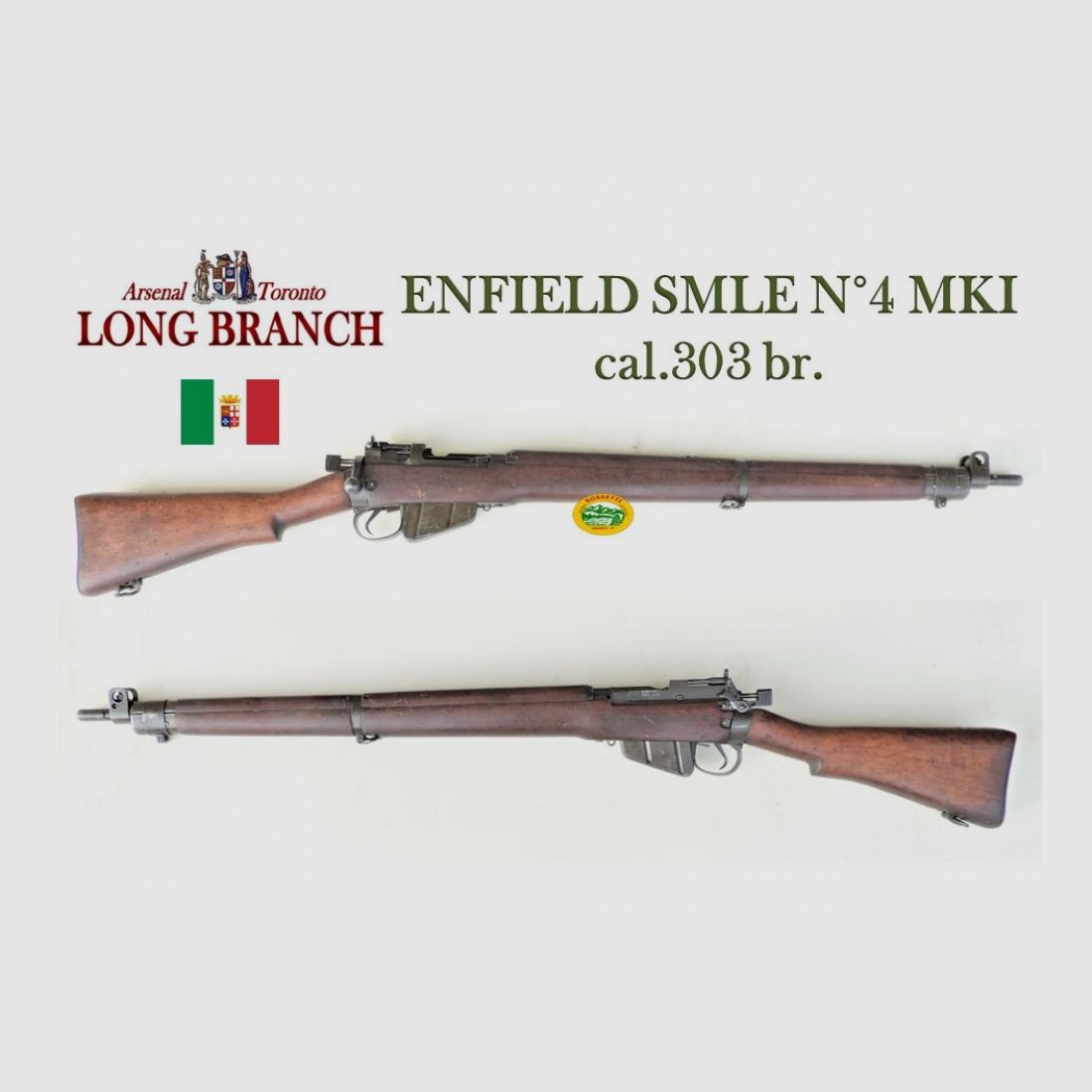
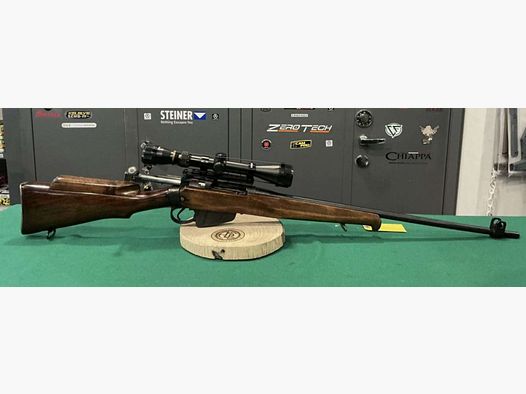
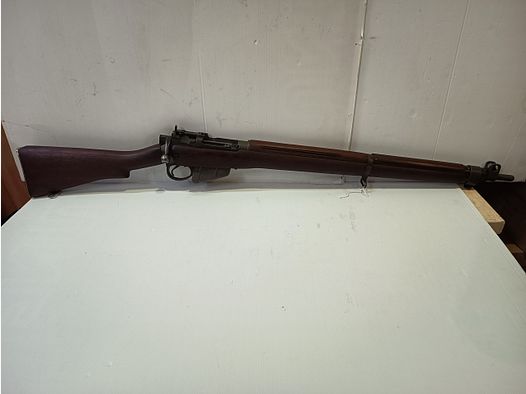
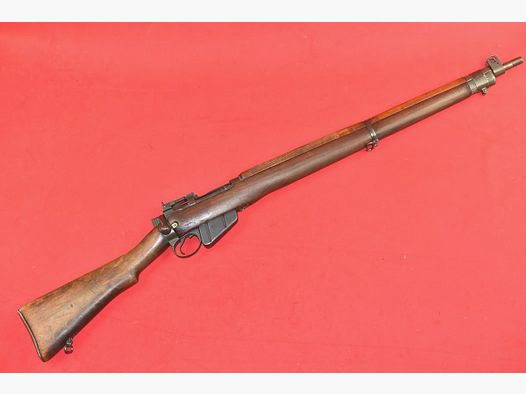
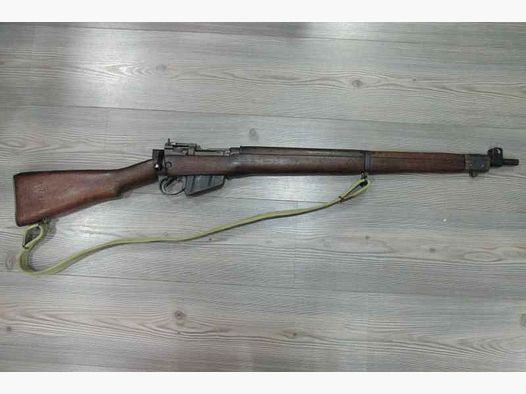
LEE ENFIELD N.4 MKI Long Branch cal.303 british R.15759
Price at the dealer: 590.75 €. Converted at the ECB rate as of November 20, 2026.
Purchase permit required
51039 Quarrata, Italy
11
ID: 10056412
Purchase from outside the EU: The firearm goes through an importer in your country, the dealer handles the export.
How buying from Europe works
Shop safely with Gunfinder
Our AI-powered seller identity verification makes Gunfinder the safest marketplace online.
Learn more
Details
- Original language
- Italian
- Category
- Purchase eligibility
- Required
- Caliber
- .303 British
- Condition
- Used
- Location
- 🇮🇹 51039 Quarrata, Italy
- Availability
- In stock
Freshness
This listing is based on a mirrored offer, where the listing data was synced to us from a shop, dealer, or external marketplace. Please note that temporary price discrepancies may occur due to possible delays in data transmission.
- Source
- Armeriarossetti
- Last checked with the dealer
- 1 day ago
Description
Note:
The item is located abroad. Please note that delivery conditions, shipping times, and/or the purchase process may differ.
Like all British colonies, Canada initially relied on England to supply its arsenal of small arms for its army. In 1899, many Canadians began to question Canada’s dependence on the motherland. The Boer War (Second South African War, 1899-1901) was particularly frustrating for Canadians, who were proud to fight alongside the English but felt they were treated as a second-class force by the British War Department when it came to supplying them with weapons. Sir Charles Ross stepped forward, promising that the new Ross Rifle Company would supply weapons exclusively to Canadians. Canadian troops left for France and Flanders in 1914 with Ross rifles and returned home in 1918 carrying the Lee-Enfield (SMLE). By the end of World War I, Canada’s brief experience with small arms production was already over. Twenty years later, with a new war on the horizon, the Canadian Department of National Defence, determined not to repeat past mistakes, began a detailed study in 1937 on arms production in the United Kingdom. In June 1940, the supply department of the Department of National Defence was authorised to build a small arms factory at Long Branch, a suburb of Toronto, Ontario. The Department of National Defence named the new factory Dominion Small Arms. About two months later, the project was transferred to another department that did not hesitate to set up a federal company, Small Arms Ltd., known as Long Branch Arsenal, to manage wartime operations. Most of the machinery was new, purchased in the United States, as were many materials recovered from the Ross Rifle Company. By June 1941, the first five N.4 rifles were produced. The war ended in April 1945 in Europe and in August of the same year in the Pacific. Small Arms Ltd. ceased operations in December 1945 and on January 1 of the following year was succeeded by the division of another federal corporation, the Small Arms Division of Canadian Arsenal Limited. The Long Branch factory closed on June 30, 1976. The Toronto suburb known as Long Branch in the 1930s is now the city of Etobicoke. ********At the beginning of the twentieth century, Sir James Paris Lee, an American living in Scotland, created a weapon intended for the English infantry, developed in collaboration with the Royal Small Arms Factory in the town of Enfield, on the outskirts of London. The first model originated in 1907, after discarding a couple of prototypes MKI and MKII, the SMLE (Short Magazine Lee Enfield) was made, renamed N°1 MkIII (Number 1 Mark 3). During the Great War, to meet the pressing wartime needs, the United Kingdom commissioned the American Winchester a new model, the P14 (Pattern). Based on the Springfield M1903 but chambered with the English .303 British cartridge. In 1926 it was officially named Enfield N°3. It was not adopted by His Majesty’s forces who were already thinking of resuming and improving their initial project. In fact, at the outbreak of the Second World War, Great Britain and the Commonwealth countries received new service rifles: the N°4, and the N°5 called Jungle. Always very similar to each other and to their predecessors, with the fundamental characteristic of also being produced in the USA (Savage), Canada (Longbranch) and Pakistan (POF).¬¬ Compared to the number one from which it retains the fundamental characteristics. Aesthetically, the first modification that catches the eye was the removal of the terminal part of the stock, that is the “nose” that protected the muzzle of the barrel and gave it its unmistakable profile. The other modifications concern the bolt and especially the t
Sight system, more suitable for new field uses. The No. 4 MKI, like its predecessor, has a removable 10-round double-stack magazine, a 64 cm barrel, and was produced with three different rifling types: 2, 5, or 6 grooves, all with a 1:10 twist rate. The overall length is 112 cm with a weight of about 4.080 kg. The bolt features a head screwed onto the main body that slides horizontally without rotating. In the last part of the closing stroke, the firing pin is cocked before the cocking handle is fully lowered. For disassembly, press the button on the right side of the receiver, which releases the bolt head allowing it to rotate 45 degrees counterclockwise, aligning it with the rest of the bolt body. The sighting system, located behind the stripper clip guide, consists of a double aperture sight, calibrated for 300 and 600 yards. (Adjustable up to 1300 yards via a screw running the length of the sight for the No. 4 MkI. Adjustable up to 1300 yards via a spring lever for the No. 4 MkIII and MkIV). The characteristic buttplate is brass with a central hatch that houses a compartment for the cleaning kit, consisting of a bakelite oiler and a cord that replaces the usual rigid cleaning rod. History has spoken about the value of this firearm in the military field; you can verify its real potential at the range, marveling at how it can hit targets at 100 and 200 meters producing groupings that rival modern rifles equipped with scopes. (Show description in original language)
ottime condizioni, canna originale perfetta 5 righe, anno di produzione 1950, Marina Italiana
Come tutte le colonie britanniche, il Canada inizialmente contava sull’Inghilterra per rifornire il proprio arsenale di armi leggere per il proprio esercito. Nel 1899, molti Canadesi avevano iniziato a mettere in discussione la dipendenza del Canada dalla madrepatria. La Guerra Boera (Seconda Guerra Sudafricana, 1899-1901) fu particolarmente frustrante per i canadesi, che erano fieri di combattere fianco a fianco degli inglesi, ma sentivano di essere trattati come una forza di seconda classe dal Dipartimento di Guerra britannico quando si trattava di fornire loro le armi. Sir Charles Ross fece un passo avanti, promettendo che la nuova Ross Rifle Company avrebbe fornito armi unicamente ai canadesi. Le truppe canadesi partirono per la Francia e le Fiandre nel 1914 con i fucili Ross e tornarono a casa nel 1918 portando il Lee-Enfield (SMLE). Alla fine della Prima Guerra Mondiale, la breve esperienza del Canada con la produzione di armi leggere era già finita. Vent’anni dopo, con una nuova guerra all’orizzonte, il Dipartimento per la Difesa Nazionale del Canada, determinato a non ripetere gli errori del passato, iniziò nel 1937 uno studio dettagliato sulla produzione di armi nel Regno Unito. Nel giugno del 1940 il reparto di sussistenza del Dipartimento per la difesa nazionale fu autorizzato a costruire una piccola fabbrica di armi a Long Branch, un sobborgo di Toronto, in Ontario. Il Dipartimento per la difesa nazionale chiamò la nuova fabbrica Dominion Small Arms. Circa due mesi dopo il progetto fu trasferito a un altro dipartimento che non esitò a mettere su una compagnia federale, la Small Arms Ltd. Conosciuta come Long Branch Arsenal, per gestire le operazioni belliche. La maggior parte dei macchinari era nuova, acquistata negli Stati Uniti, cosi come molti materiali recuperati dalla Ross Rifle Company. Entro il giugno 1941 furono prodotti i primi cinque fucili N.4. La guerra finì nell’aprile 1945 in Europa e in agosto dello stesso anno nel Pacifico. La Small Arms Ltd. cessò di operare nel dicembre 1945 e il 1 gennaio dell’anno successivo fu succeduta dalla divisione di un’altra corporazione federale, la Small Arms Division della Canadian Arsenal Limited. La fabbrica di Long Branch chiuse il 30 giugno 1976. Il sobborgo di Toronto noto come Long Branch negli anni ’30 è adesso la città di Etobicoke. ********All´inizio del ventesimo secolo Sir James Paris Lee, un americano residente in Scozia, diede vita ad un´arma destinata alla fanteria inglese, sviluppata in collaborazione con la Royal Small Arms Factory nella città di Enfield, alla periferia di Londra. Il primo modello ebbe origine nel 1907, dopo lo scarto di un paio di prototipi MKI e MKII, venne realizzato lo SMLE (Short Magazine Lee Enfield) ribattezzato N°1 MkIII (Number 1 Mark 3). Durante la Grande Guerra per far fronte alle pressanti esigenze belliche il Regno Unito, commissionò alla statunitense Winchester un nuovo modello, il P14 (Pattern). Basato sullo Springfield M1903, ma camerato con cartuccia inglese il .303 British. Nel 1926 fu ufficialmente denominato Enfield N°3. Non ebbe seguito fra le forze di sua Maestà che pensavano già a riprendere e migliorare il loro progetto iniziale. Infatti allo scoppio del secondo conflitto mondiale, la Gran Bretagna e i paesi del Commonwealth ricevettero nuovi fucili d´ordinanza: il N°4, ed il N°5 denominato Jungle. Sempre molto somiglianti tra loro ed ai loro predecessori, con la caratteristica fondamentale di essere prodotti anche negli USA (Savage), Canada (Longbranch) e Pakistan (POF).¬¬ Rispetto al numero uno di cui conserva le caratteristiche fondamentali. Esteticamente la prima modifica che salta all’occhio è stata l’eliminazione della parte terminale della calciatura, ovvero del “naso” che proteggeva la bocca della canna e che ne determinava l’inconfondibile profilo. Le altre modifiche riguardano l’otturatore e soprattutto il sistema di mira, più consono ai nuovi impieghi sul campo. Il N°4 MKI come il predecessore ha un caricatore bifilare da 10 colpi removibile, una canna lunga 64 cm ed è stata prodotta con tre tipologie di rigature diverse: 2 , 5 o 6 principi, tutti quanti con un passo di 1:10 la lunghezza complessiva è di 112 cm per un peso di 4,080 kg circa. L´otturatore è dotato di una testa avvitata al corpo principale che scorre orizzontalmente senza ruotare. Nell´ultima tratto di corsa in chiusura, il percussore viene armato prima che la maniglia di armamento sia abbassata del tutto. Per lo smontaggio si preme il tastino a lato destro della carcassa che sgancia la testina otturatrice concedendogli una rotazione antioraria di 45 gradi portandola in asse con il resto del corpo di otturazione. Il sistema di puntamento, posto dietro la guida delle lastrine di carica, è costituito da una doppia diottra, tarata a 300 e 600 yard. (Regolabile fino a 1300 yard da una vite che percorre la lunghezza della stessa per il N°4 MkI. Regolabile fino a 1300 yard da una levetta a molla per i N°4 MkIII e MkIV). il calciolo caratteristico è di ottone con al centro un portellino che custodisce un vano per il kit di pulizia formato da un oliatore in bachelite ed uno spago che sostituisce la bacchetta rigida che si usa di solito. Sul valore di quest’arma in campo militare ha parlato la storia, potete verificarne al poligono le reali potenzialità, meravigliandovi di come riuscirà a impattare bersagli situati a 100 e 200 metri producendo rosate che niente hanno da invidiare ad armi moderne munite di ottica.