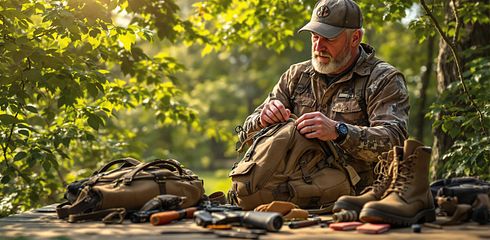
Ultimate Guide: Distributing Weight in a Hunting Backpack
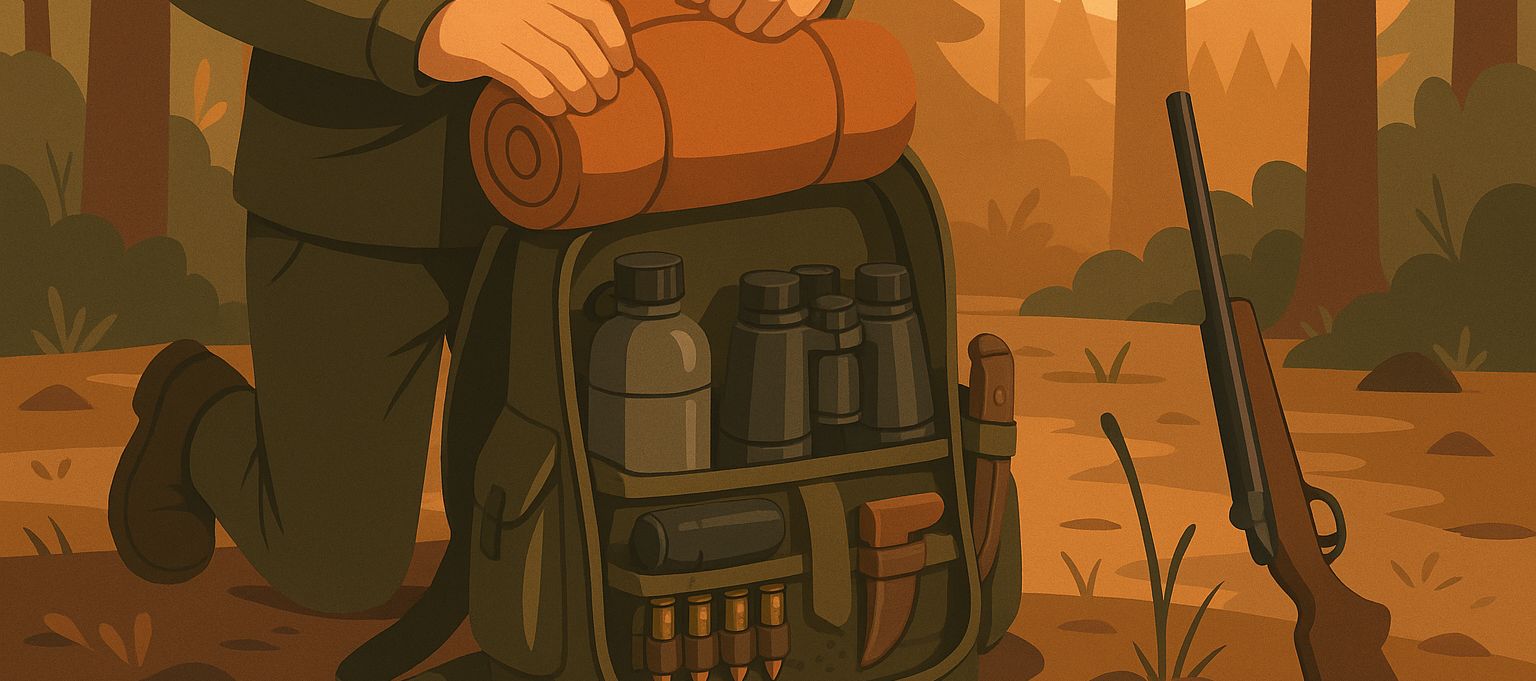
The right weight distribution in your hunting backpack is crucial for comfort and safety. A poorly packed backpack can cause back pain, quick fatigue, and limited mobility – especially on longer hunting trips or in uneven terrain.
The Most Important Rules at a Glance:
- Heavy items (e.g., ammunition, optics) should be stored close to your back and at hip height.
- Medium-weight gear (e.g., clothing, first aid kit) should be placed in the middle area.
- Light gear (e.g., hunting horn, gloves) should be packed at the top or in external pockets.
- The hip belt should carry most of the weight, not the shoulders.
- Frequently needed items should always be stored within easy reach.
Dangers of Poor Packing:
- Back pain and muscle tension due to improper weight distribution.
- Restricted breathing with too much weight on the shoulders.
- Increased risk of injury due to lack of stability.
Overview of Packing Methods:
| Method | Advantages | Disadvantages | Suitable for |
|---|---|---|---|
| Layering Method | Good balance, organized | Difficult access to lower layers | Multi-day hunts, mountainous terrain |
| Zone Method | Quick access, flexible distribution | Less efficient use of space | Day hunts, flat terrain |
| Modular Packing | Protection from moisture, easy repacking | Additional bags increase weight | Rainy weather, variable conditions |
| Compression | Space-saving, stable fit | Limited access, more complicated | Long sits, expeditions |
Tip: Regularly check the fit of your backpack, especially after breaks or when adding extra gear. With the right technique and a well-adjusted backpack, you can fully concentrate on the hunt.
Driven Hunt: What Belongs in the Hunting Backpack? | Our Territory ...
Basic Rules of Weight Distribution
The right weight distribution ensures more comfort on long tours and spares your back. With a well-packed backpack, you can move safely and relaxed in the terrain.
Where Heavy Items Belong
Heavy items like ammunition or optics should be stored close to your back and at hip height. This keeps the center of gravity low and the balance optimal. Lighter or frequently needed gear can be placed in easily accessible outer compartments.
Formula for Weight Distribution
The majority of the weight should be carried over the hips, while the shoulders should only bear a small part of the load. This distribution relieves your back and ensures a natural posture – even with a full load.
Effects of Poor Packing on Health
A poorly packed backpack can harm your body:
- Overloading of the intervertebral discs due to a center of gravity that is too far outside
- Muscle tension due to unevenly distributed weight
- Restricted breathing with too much weight on the shoulders
Ensure a close fit and an even distribution of the load. In the next section, you will learn how to implement these principles concretely when packing.
How to Pack Your Backpack
Equipment Groups and Their Placement
Divide your hunting gear into three main areas to organize weight and access sensibly:
Heavy Gear (lower back area):
- Ammunition and optics
- Heavy tools
- Emergency equipment
Medium-weight Gear (middle area):
- Clothing and rain protection
- First aid kit
- Food supplies
Light Gear (upper area and outer pockets):
- Hunting horn
- Gloves
- Small tools
Step-by-Step Packing Method
1. Prepare Basic Equipment
Sort your gear by weight. Use waterproof bags to protect sensitive items.
2. Pack from Bottom to Top
Place heavy items close to your back so that the center of gravity remains at hip height and the backpack sits stably.
3. Utilize Empty Spaces
Fill empty spots with smaller items to save space and prevent shifting of the gear.
In the next section, you will learn how to place frequently needed items within easy reach.
Quick Access Gear
Frequently used items should be stored in the outer pockets or the top compartment of your backpack. This way, you have everything important quickly at hand. Pay attention to a balanced distribution:
Side Pockets:
- Left: Binoculars or spotting scope
- Right: Drink or snacks
Top Pocket:
- Hunting license and documents
- Multitool
- Mobile phone
Hip Pockets:
- Small first aid items
- Compass
- Hunting horn
With this arrangement, your backpack not only fits better, but you are also well organized. In the next section, you will learn how to optimally adjust the backpack to your back.
Adjusting and Fitting the Backpack
Correctly Adjusting the Straps
How to adjust the straps:
- Hip Belt: Place the hip belt directly on your hip bone and tighten it. It should carry the main weight.
- Shoulder Straps: Adjust the shoulder straps so that the backpack sits close and stable against your back.
- Chest Strap: Position the chest strap at the level of your sternum and fasten it to increase stability.
- Load Control Straps: Adjust these straps to optimally distribute the weight between hips and shoulders.
Adjusting Frame and Size
A suitable frame is crucial to avoid fatigue. Many modern hunting backpacks offer adjustable back systems that allow for individual customization.
Steps for Adjustment:
- Back System: Set it to your height to ideally fit the backpack.
- Shoulder Pads: Adjust them according to your shoulder width for comfortable fit.
- Hip Pads: Align the pads so that they fit comfortably and provide support.
Ensuring Comfort During Use
During the hunt, it may happen that the settings change, especially due to movement or additional gear. Therefore, regularly check the fit of the backpack.
Things to Watch Out For:
- The hip belt must still sit securely on the hip bone.
- The shoulder straps should lie evenly and not dig in.
- Ensure that no pressure or chafing points develop.
- The weight should remain evenly distributed to avoid back pain.
It is especially important to recheck the settings after longer breaks or when adding extra gear. A well-adjusted backpack ensures that you can fully concentrate on the hunt without being distracted by discomfort.
sbb-itb-1cfd233
Choosing a Hunting Backpack
Important Features of a Hunting Backpack
A good hunting backpack ensures optimal weight distribution and high carrying comfort. Pay attention to the following features:
- Stable hip belt for better load distribution
- Ergonomic shoulder straps to relieve the shoulders
- Durable materials such as 600D polyester or Cordura
- MOLLE attachment system for additional gear
- Adjustable back system that can be adapted to your height
Finding the Right Size
The size of the backpack depends on the duration and type of your hunt:
- For day hunts: 20–35 liters
- For multi-day hunts: 45–65 liters
- For longer expeditions: 65 liters and more
Remember that you may need to plan space for game meat. A backpack that is too large can lead to packing more than necessary, while one that is too small may restrict your mobility.
Discover Hunting Backpacks on Gunfinder
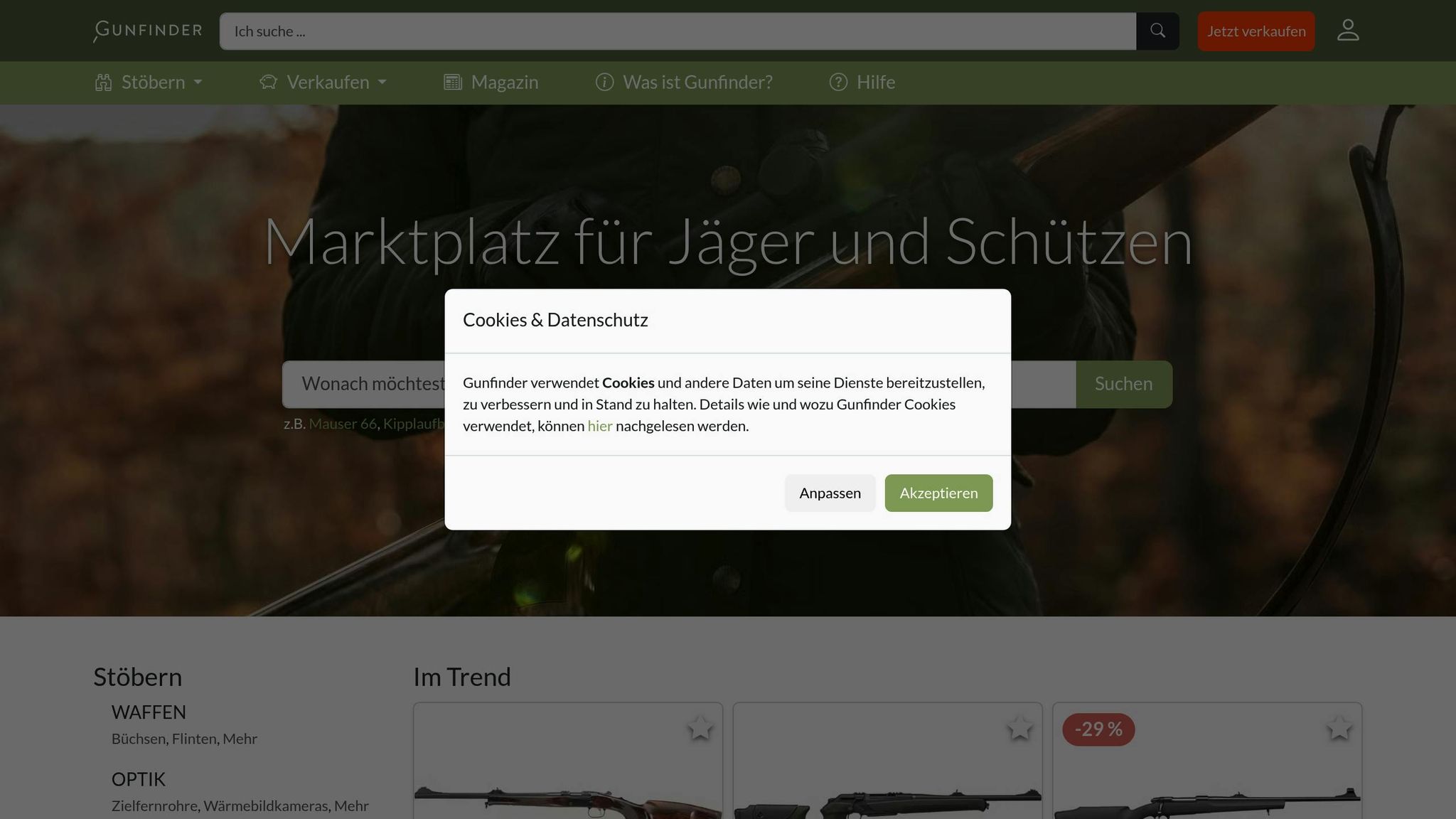
On Gunfinder, you can specifically search for backpacks that meet your requirements. Thanks to the filtering options, you can quickly find suitable models.
Filtering options on Gunfinder:
- Backpack sizes
- Price ranges
- Usage purposes
- Special equipment details
A helpful feature: You can sort models by their load distribution systems. The detailed product descriptions make it easier for you to choose the ideal hunting backpack.
Comparing Packing Methods
After the packing tips, let's take a look at different packing methods for your hunting backpack.
Depending on the hunting situation, choosing the right packing method can significantly influence comfort and success.
Comparison of Packing Methods
Here is an overview to help you find the right packing method for your needs:
| Packing Method | Description | Advantages | Disadvantages | Suitable for |
|---|---|---|---|---|
| Layering Method | Gear is packed in horizontal layers, heavy items close to the back | - Good weight distribution - Clarity - Organized |
- Difficult access to lower layers - Time-consuming to pack |
- Multi-day hunts - Heavy loads - Mountainous terrain |
| Zone Method | The backpack is divided into three vertical zones (left, middle, right) | - Quick access - Flexible weight distribution - Balance |
- Less efficient use of space - More complex organization |
- Day hunts - Frequent gear changes - Flat terrain |
| Modular Packing | Gear organized in waterproof bags | - Protection from moisture - Easy repacking - Clarity |
- Additional bags increase weight - Higher costs |
- Hunts in rain - Variable conditions - Team hunts |
| Compression | Maximum compression through straps and bags | - Space-saving - Stability of the load - Less movement |
- Complicated to pack - Limited access - Material wear |
- Long sits - Large equipment - Expeditions |
Important Factors for Choosing the Packing Method
- Type of Hunt: Moving hunts require quick access, while sitting hunts allow for systematic packing.
- Terrain: In steep terrain, good weight distribution is crucial.
- Duration: Multi-day hunts require more thoughtful organization.
- Weather: Waterproof packing is essential in rain.
Practical Tip: You can combine methods to be optimally prepared. For example, use the layering method as a base and add modular elements for frequently needed items.
Experience shows that the layering method often provides a solid foundation that complements other approaches well.
Conclusion
The right weight distribution in your hunting backpack not only ensures more comfort but also spares your back. As shown, there are various packing methods that offer different advantages depending on the application area. These principles help you pack your backpack ergonomically and practically.
Three Important Basic Rules for Comfort:
- Place heavy items close to your back: This ensures better stability.
- Distribute the weight evenly: This avoids one-sided strain.
- Store important gear within easy reach: No long searching in stressful situations.
A well-packed hunting backpack has clear advantages:
- You can cover long distances without fatigue.
- Important items are quickly at hand.
- Your gear remains safe from damage and bad weather.
The layering method is ideal for longer tours, while the zone method excels in moving hunts. In unstable weather, modular packing is particularly practical.
In the end, it matters that you choose the packing method that best suits your hunting style and the respective conditions. There is no universal solution – what works for one may be impractical for another.
On Gunfinder, you will find the right equipment to optimally pack your backpack. With the right combination of backpack and packing technique, you are well prepared for your next hunt.
FAQs
How do I pack my hunting backpack to ensure it remains comfortable on long trips?
To ensure that your hunting backpack remains comfortable even on longer hunting trips, the right weight distribution is crucial. Heavy items should be placed close to your back and as centrally as possible in the backpack to distribute the load evenly. Lighter gear can be stored higher up or on the outside.
Make sure that the straps and hip belt are properly adjusted so that the weight is optimally distributed between the shoulders and hips. Good padding and breathable materials can further enhance carrying comfort. If you are looking for high-quality hunting gear, you will find a wide selection of accessories on Gunfinder that will help you with optimal preparation.
What are the advantages of the layering method when packing a hunting backpack?
The layering method offers several advantages when packing your hunting backpack. By strategically distributing the weight in different layers, you can relieve your back and shoulders while simultaneously increasing carrying comfort. Heavier items are placed close to the back and centrally in the backpack, while lighter gear is stored at the top or outside.
This method not only provides better balance but also allows you to access important gear more quickly. Especially on longer hunting trips, the right weight distribution can be crucial for your endurance and mobility.
What features should a hunting backpack have to sit comfortably and protect your gear securely?
A good hunting backpack should be ergonomically designed to relieve the back and remain comfortable even during longer outings. Look for padded shoulder straps, a stable hip belt, and good weight distribution. Additionally, the backpack should be made of durable, weather-resistant material to protect your gear from rain and other weather conditions.
Practical features such as organized compartments, a separate compartment for game or ammunition, and attachment options for weapons or accessories can also significantly enhance comfort and functionality. Remember that the right size and weight of the backpack are important – it should be large enough for your gear but not overloaded to avoid restricting your mobility.